University of Central Florida University of Central Florida
STARS
STARS
Electronic Theses and Dissertations, 2004-20192019
Describing Images by Semantic Modeling using Attributes and
Describing Images by Semantic Modeling using Attributes and
Tags
Tags
Mahdi Mahmoudkalayeh
University of Central Florida
Part of the Computer Sciences Commons
Find similar works at: https://stars.library.ucf.edu/etd University of Central Florida Libraries http://library.ucf.edu
This Doctoral Dissertation (Open Access) is brought to you for free and open access by STARS. It has been accepted for inclusion in Electronic Theses and Dissertations, 2004-2019 by an authorized administrator of STARS. For more
information, please contact [email protected].
STARS Citation STARS Citation
Mahmoudkalayeh, Mahdi, "Describing Images by Semantic Modeling using Attributes and Tags" (2019). Electronic Theses and Dissertations, 2004-2019. 6296.
DESCRIBING IMAGES BY SEMANTIC MODELING USING ATTRIBUTES AND TAGS
by
MAHDI M. KALAYEH
M.S. Illinois Institute of Technology, 2010
B.S. Amirkabir University of Technology (Tehran Polytechnic), 2009
A dissertation submitted in partial fulfilment of the requirements for the degree of Doctor of Philosophy
in the Department of Computer Science in the College of Engineering and Computer Science
at the University of Central Florida Orlando, Florida
Spring Term 2019
c
ABSTRACT
This dissertation addresses the problem of describing images using visual attributes and textual tags, a fundamental task that narrows down the semantic gap between the visual reasoning of hu-mans and machines. Automatic image annotation assigns relevant textual tags to the images. In this dissertation, we propose a query-specific formulation based on Weighted Multi-view Non-negative Matrix Factorization to perform automatic image annotation. Our proposed technique seamlessly adapt to the changes in training data, naturally solves the problem of feature fusion and handles the challenge of the rare tags. Unlike tags, attributes are category-agnostic, hence their combination models an exponential number of semantic labels. Motivated by the fact that most attributes de-scribe local properties, we propose exploiting localization cues, through semantic parsing of human face and body to improve person-related attribute prediction. We also demonstrate that image-level attribute labels can be effectively used as weak supervision for the task of semantic segmentation. Next, we analyze the Selfie images by utilizing tags and attributes. We collect the first large-scale Selfie dataset and annotate it with different attributes covering characteristics such as gender, age, race, facial gestures, and hairstyle. We then study the popularity and sentiments of the selfies given an estimated appearance of various semantic concepts. In brief, we automatically infer what makes agood selfie. Despite its extensive usage, the deep learning literature falls short in understanding the characteristics and behavior of the Batch Normalization. We conclude this dissertation by providing a fresh view, in light of information geometry and Fisher kernels to why the batch nor-malization works. We propose Mixture Nornor-malization that disentangles modes of variation in the underlying distribution of the layer outputs and confirm that it effectively accelerates training of different batch-normalized architectures including Inception-V3, Densely Connected Networks, and Deep Convolutional Generative Adversarial Networks while achieving better generalization error.
EXTENDED ABSTRACT
The real world image databases such as Flickr, Tumblr, Google Images, Instagram or Facebook are characterized by continuous addition of new images. The recent approaches for automatic image annotation,i.e. the problem of assigning tags to images, have two major drawbacks. First, either models are learned using the entire training data, or to handle the issue of dataset imbalance, tag-specific discriminative models are trained. Such models become obsolete and require relearning when new images and tags are added to database. Second, the task of feature-fusion is typically dealt using ad-hoc approaches. In this dissertation, we propose a weighted extension of Multi-view Non-negative Matrix Factorization (NMF) to address the aforementioned drawbacks. The key idea is to learn query-specific generative model on the features of nearest-neighbors and tags where a consensus constraint is imposed on the coefficient matrices across different features. This results in coefficient vectors across features to be consistent and, thus, naturally solves the problem of feature fusion, while the weight matrices introduced in the proposed formulation alleviate the issue of dataset imbalance. Furthermore, our approach, being query-specific, is unaffected by addition of images and tags to the database.
Semantically describing visual content using tags has an inherent problem though. That is the number of concepts that a machine can describe is in one-to-one correspondence with its dictio-nary of learned textual tags. Instead, attributes provide a much more powerful tool. Attributes are semantically meaningful characteristics whose applicability widely crosses category boundaries (e.g“happy” can describe both a “dog” and a “person”), and their combinations allow describing an exponential number of concepts. They are particularly important in describing and recognizing concepts for which no explicit training example is given, e.g., zero-shot learning. Additionally, since attributes are human describable, they can be used for efficient human-computer interaction. Furthermore, attributes once decently modeled, have shown to assist more natural forms of
de-scription like image and video captioning. However, robustly detecting visual attributes is still far from being solved in computer vision. In this dissertation, we propose to employ semantic seg-mentation to improve person-related attribute prediction. The core idea lies in the fact that many attributes describe local properties. In other words, the probability of an attribute to appear in an image is far from being uniform in the spatial domain. For example, we expect one to focus on the “hair” region once detecting if someone “has wavy hair”; similarly to the “mouth” region if detecting “having goatee” is of interest. We build our attribute prediction model jointly with a deep semantic segmentation network. This harnesses the localization cues learned by the semantic seg-mentation to guide the attention of the attribute prediction to the regions where different attributes naturally show up. As a result of this approach, in addition to prediction, we are able to localize the attributes despite merely having access to image-level labels (weak supervision) during training. We first propose semantic segmentation-based pooling and gating, respectively denoted as SSP and SSG. In the former, the estimated segmentation masks are used to pool the final activations of the attribute prediction network, from multiple semantically homogeneous regions. This is in contrast to global average pooling which is agnostic with respect to where in the spatial domain activations occur. In SSG, the same idea is applied to the intermediate layers of the network. Specifically, we create multiple copies of the internal activations. In each copy, only values that fall within a certain semantic region are preserved while outside of that, activations are suppressed. This mechanism allows us to prevent pooling operation from blending activations that are associated with semanti-cally different regions. SSP and SSG, while effective, impose heavy memory utilization since each channel of the activations is pooled/gated withall the semantic segmentation masks. To circum-vent this, we propose Symbiotic Augmentation (SA), where welearnonly one mask per activation channel. SA allows the model to either pick one, or combine (weighted superposition) multiple se-mantic maps, in order to generate the proper mask for each channel. SA simultaneously applies the same mechanism to the reverse problem by leveraging output logits of attribute prediction to guide the semantic segmentation task. We evaluate our proposed methods for facial attributes on CelebA
and LFWA datasets, while benchmarking WIDER Attribute and Berkeley Attributes of People for whole body attributes. Our proposed methods achieve superior results compared to the previous works. Furthermore, we show that in the reverse problem, semantic face parsing significantly im-proves when its associated task is jointly learned, through our proposed Symbiotic Augmentation, with facial attribute prediction. We confirm that when few training instances are available, indeed image-level facial attribute labels can serve as an effective source of weak supervision to improve semantic face parsing. That reaffirms the need to jointly model these two interconnected tasks.
We can now exploit both tags, in form of concept scores, and attributes, to study how state-of-the-art computer vision techniques can facilitate understanding the Selfie phenomenon. This massive number of self-portrait images taken and shared on social media is revolutionizing the way people introduce themselves and the circle of their friends to the world. While taking photos of oneself can be seen simply as recording personal memories, the urge to share them with other people adds an exclusive sensation to the selfies. Due to the Big Data nature of selfies, it is nearly impossible to analyze them manually. In this dissertation, we provide, to the best of our knowledge, the first selfie dataset for research purposes with more than 46,000 images, annotated with 36 different attributes. We address interesting questions about selfies, including how appearance of certain objects, concepts and attributes influences the popularity of selfies. We also study the correlation between popularity and sentiment in selfie images. In a nutshell, from a large scale dataset, we automatically infer what makes a selfie agood selfie.
Finally, we change gear and shift our focus towards a better understanding of fundamentals of deep learning. This is extremely important as deep learning is the basis of almost all today’s computer vision techniques, including those that are proposed in this dissertation. Particularly, we look into Batch Normalization (BN) [1], which is essential to effectively train state-of-the-art deep Convolu-tional Neural Networks (CNN). It normalizes the layer outputs during training using the statistics of each mini-batch. BN accelerates training procedure by allowing to safely utilize large learning
rates and alleviates the need for careful initialization of the parameters. In this dissertation, we study BN from the viewpoint of Fisher kernels that arise from generative probability models. We show that assuming samples within a mini-batch are from the same probability density function, then BN is identical to the Fisher vector of a Gaussian distribution. That means batch normalizing transform can be explained in terms of kernels that naturally emerge from the probability density function that models the generative process of the underlying data distribution. Consequently, it promises higher discrimination power for the batch-normalized mini-batch. However, given the rectifying non-linearities employed in CNN architectures, distribution of the layer outputs shows an asymmetric characteristic. Therefore, in order for BN to fully benefit from the aforementioned properties, we propose approximating underlying data distribution not with one, but a mixture of Gaussian densities. Deriving Fisher vector for a Gaussian Mixture Model (GMM), reveals that batch normalization can be improved by independently normalizing with respect to the statistics of disentangled sub-populations. We refer to our proposed soft piecewise version of batch nor-malization as Mixture Nornor-malization (MN). Through extensive set of experiments on CIFAR-10 and CIFAR-100, using both a 5-layers deep CNN and modern Inception-V3 architecture, we show that mixture normalization reduces required number of gradient updates to reach the maximum test accuracy of the batch-normalized model by∼31%-47% across a variety of training scenarios. Replacing even a few BN modules with MN in the 48-layers deep Inception-V3 architecture is suf-ficient to not only obtain considerable training acceleration but also better final test accuracy. We show that similar observations are valid for 40 and 100-layers deep DenseNet architectures as well. We complement our study by evaluating the application of mixture normalization to the Genera-tive Adversarial Networks (GANs), where “mode collapse” hinders the training process. We solely replace a few batch normalization layers in the generator with our mixture normalization. Our ex-periments using Deep Convolutional GAN (DCGAN) on CIFAR-10 show that mixture-normalized DCGAN not only provides an acceleration of∼58% but also reaches lower (better) “Fréchet In-ception Distance” (FID) of 33.35 compared to 37.56 of its batch-normalized counterpart.
To the one and only
who is friend of he who has no friend.
∼
To the love of my life
whose smile is the most beautiful thing in the world.
∼
To my beloved parents
whom I owe everything I am and will be.
∼
To my little brother whom I miss so much.
∼
To my grandma
ACKNOWLEDGMENTS
I would like to thank my advisor, Prof. Mubarak Shah for his great support throughout this jour-ney. He taught me how to conduct research systematically, and reminded me to always maintain the highest expectations of myself. Also, I would like to thank Prof. Gita Sukthankar, Prof. Nazanin Rahnavard, and Prof. Teng Zhang for accepting to be a part of my committee, and their helpful guidance throughout the process of proposing and defending my dissertation. I am thankful to Dr. Rahul Sukthankar who, despite the short period of our collaboration, showed me that one’s humbleness and knowledge must only simultaneously grow. I will always remember and cherish interesting conversations I had with Dr. Ulas Bagci over coffee. Finally, I would like to thank all of the past and present members of the Center for Research in Computer Vision (CRCV), Tonya LaPrarie, Kenneth Davis, Amir Roshan Zamir, Afshin Dehghan, Subhabrata Bhattacharya, Enrique Ortiz, Haroon Idrees, Nasim Souly, Gonzalo Vaca, Berkan Solmaz, Khurram Soomro, Waqas Sul-tani, Sarfaraz Hussein, Shayan Modiri, Shervin Ardeshir, Amir Mazaheri, Aidean Sharghi, Aisha Orooj Khan, Krishna Regmi, Dong Zhang, Yonatan Tariku, Ruben Villegas, and Emrah Basaran for their support, the good times, and the great memories.
TABLE OF CONTENTS
LIST OF FIGURES . . . xv
LIST OF TABLES . . . .xxiii
CHAPTER 1: INTRODUCTION . . . 1
1.1 Automatic Image Annotation . . . 2
1.2 Person-related Attribute Prediction . . . 5
1.3 Describing Selfies . . . 11
1.4 Mixture Normalization . . . 13
1.5 Summary . . . 16
CHAPTER 2: LITERATURE REVIEW . . . 17
2.1 Image Annotation . . . 17
2.2 Attribute Prediction . . . 19
2.3 Semantic Segmentation . . . 22
2.4 Batch Normalization . . . 24
CHAPTER 3: AUTOMATIC IMAGE ANNOTATION . . . 31
3.1 Methodology . . . 32
3.1.1 Weighted Multi-view Non-negative Matrix Factorization . . . 32
3.1.2 Boosting Mechanism for Rare Tags . . . 35
3.1.3 Recovering Tags of Query . . . 35
3.2 Experiments . . . 36
3.2.1 Datasets, Evaluation Metrics and Features . . . 36
3.2.2 Results . . . 38
3.2.3 Computational Complexity . . . 41
3.3 Summary . . . 42
CHAPTER 4: ON SYMBIOSIS OF ATTRIBUTE PREDICTION AND SEMANTIC SEG-MENTATION . . . 44
4.1 Methodology . . . 45
4.1.1 SSP: Semantic Segmentation-based Pooling . . . 46
4.1.2 SSG: Semantic Segmentation-based Gating . . . 47
4.1.3 A Simple Unified View to SSP and SSG . . . 49
4.1.5 Basic Attribute Prediction Network . . . 53
4.1.6 Backbone Architecture for Symbiotic Augmentation(SA) . . . 54
4.2 Experiments . . . 56
4.2.1 Datasets and Evaluation Measures . . . 56
4.2.2 Evaluation of Facial Attribute Prediction . . . 58
4.2.3 Evaluation of Person Attribute Prediction . . . 65
4.2.4 Visualizations . . . 66
4.2.5 Attribute Prediction for Semantic Segmentation . . . 70
4.3 Summary . . . 72
CHAPTER 5: ANALYSIS OF SELFIE IMAGES . . . 75
5.1 Selfie Dataset . . . 76
5.2 Attribute Prediction . . . 78
5.3 Experiments . . . 79
5.3.1 What Makes a Selfie Popular? . . . 79
5.3.2 Sentiment-Popularity Correlation . . . 80
5.3.3 Effect of Post-processing on Popularity . . . 82
CHAPTER 6: TRAINING FASTER BY SEPARATING MODES OF VARIATION IN
BATCH-NORMALIZED MODELS . . . 84
6.1 Methodology . . . 85
6.1.1 Kernels from Generative Probability Models . . . 85
6.1.2 Mixture Normalization . . . 88 6.2 Experiments . . . 97 6.2.1 Datasets . . . 99 6.2.2 CIFAR CNN . . . 99 6.2.3 Inception-V3 . . . 104 6.2.4 DenseNet . . . 110
6.2.5 Mixture Normalization in GANs . . . 111
6.3 Computational Complexity and Detailed Analysis . . . 114
6.3.1 Computational Complexity Analysis . . . 114
6.3.2 Evolution of Mixture Components . . . 117
6.3.3 Effective Number of Mixture Components . . . 118
6.4 Summary . . . 120
7.1 Conclusion . . . 121
7.2 Future Work . . . 122
LIST OF FIGURES
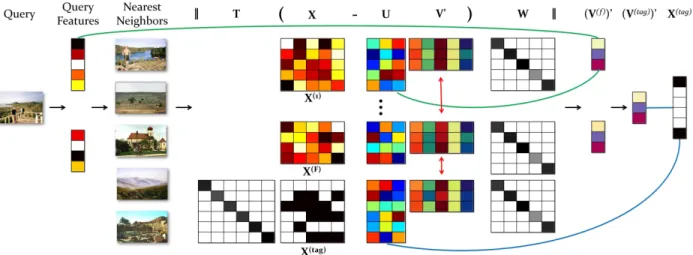
Figure 1.1: Schematic illustration of the proposed method: Given a query image, we ex-tract different features which are used to find its nearest-neighbors. Then, using Non-negative Matrix Factorization using all the features X,
includ-ing tags, we find basisU and coefficient matrices V0. The factorization for all matrices is done in a joint fashion by imposing a consensus constraint (red double arrows). Furthermore, to handle dataset imbalance, we introduce weight matricesT andW within the formulation. Using the basis matrices
and corresponding features of the query, we find coefficient vector for each view (green lines). The matrix product of the tag-basis U(tag) and mean of
coefficient vectors from all views gives score for each tag (blue lines). . . 3
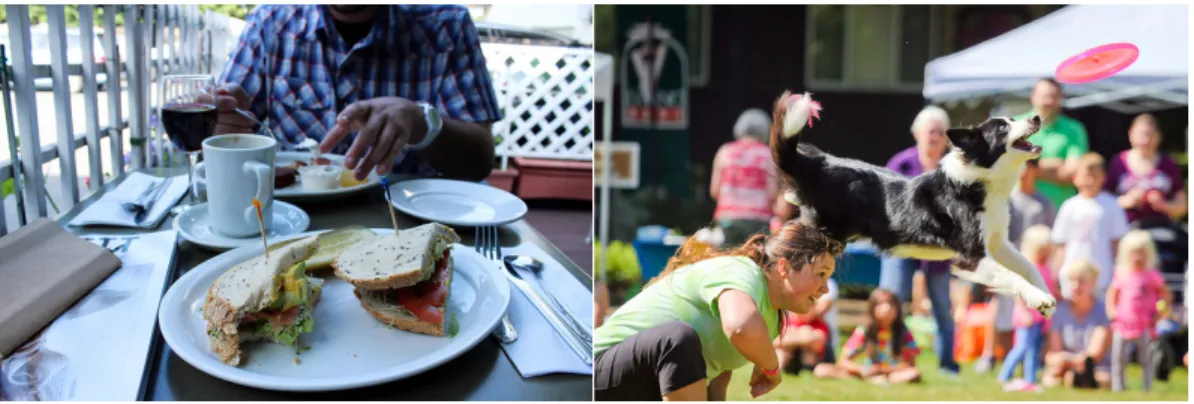
Figure 1.2: Examples of how contextual layout assists attribute prediction in wild. The
person(on left) and the dog (on right) should be respectively labeled with the attributes eating and catching. This is hard to agree upon if we would have taken these object instances in isolation, out of their contextsi.e food and frisbee. . . 6
Figure 1.3: Examples of the segmentation masks generated by our semantic segmenta-tion network [2] for previously unseen images. From left to right: back-ground, hair, face skin, eyes, eyebrows, mouth and nose. . . 7
Figure 3.1: Example images from ESP Game dataset are illustrated in 3.1(a). Figures 3.1(b) and 3.1(c) share many tags, although they are conceptually and visu-ally different. . . 37
Figure 3.2: Example images from ESP Game dataset and the corresponding top 5 tags predicted using NMF-KNN are shown in this figure. Predicted tags ingreen appear in the ground truth whileredones do not. In many cases, even though the proposed method has predicted relevant tags to the image, those tags are missing in the ground truth. That is because the tag lists are not complete and are generally a subset of relevant tags. . . 38
Figure 3.3: Evaluating the effect of Weight Matrices: Evaluated on Corel5k dataset, 3.3(a) shows the effect of using weight matrices, before (blue) and after (yellow), on the annotation performance. Tags are grouped based on their frequency of appearance in the dataset. The first bin groups words that have between 1 to 5 images related to them. The second bin is associated with tags with the images between 6 to 10, and so on. In 3.3(b) we show the same for first group of 3.3(a) to analyze the recall of tags with 1 to 5 related images. 3.3(c) and 3.3(d) give the fraction of tags in each bin of 3.3(a) and 3.3(b), respectively. This shows that we can improve the recall of rare tags without sacrificing that of frequent tags. . . 41
Figure 4.1: Left: Semantic based Pooling (SSP). Right: Semantic segmentation-based Gating (SSG). K indicates the number of semantic regions andCout in SSP equals the number of labels in the main task. We assume that the output tensor of activations from the previous layer to either SSP or SSG is of shape
Cin×Hin×Win whereCin, Hin andWin, respectively represent the number of channels, height and width of the activations. . . 47
Figure 4.2: Architecture of the Symbiotic Augmentation (SA). The embedding layers,
ΦS andΦA, respectively utilize the output of semantic segmentation and
at-tribute prediction classifiers, to augment the other task. Details of their com-ponents are shown in the bottom.FSandFA, are the corresponding classifiers with NS and NA number of output labels. Similarly, lS and lA indicate the loss functions of semantic segmentation and attribute prediction tasks respec-tively. For self-expressiveness, we have used different notations here than in Figure 4.1, but in fact NS and NA, respectively equal K and Cout of SSP in
Figure 4.1. . . 49
Figure 4.3: Backbone architecture used in the Symbiotic Augmentation (SA) experi-ments. For attribute prediction, we use the final representation obtained at the end of the Inception-V3 architecture. It is indicated asXA. For semantic segmentation, we first concatenate final activations of the backbone with two intermediate representations, but only after scaling (with learnable parame-ters) them usingϕ0,ϕ1andϕ2. Then, we reduce the dimensionality of repre-sentation to 2048 using a 1×1 convolution, followed by batch normalization and ReLU.Ψrepresents the concatenation and dimensionality reduction
Figure 4.4: Examples of the Helen face dataset [3] supplemented with segment label an-notations [4] and then grouped into 7 semantic classes. In bottom row, colors indicate different class labels. . . 58
Figure 4.5: Contribution of semantic regions in predicting different attributes as learned by the localization branch of SSP. Values are averaged over multiple random mini-batches of 32 images. . . 69
Figure 4.6: Top fifty activation maps of the last convolution layer sorted in descending or-der w.r.t the average activation values. Top: Basic attribute prediction model using global pooling. Bottom: SSP. . . 69
Figure 4.7: Learned weights ofΦAin Symbiotic Augmentation (SA), trained on CelebA
and Helen. Note: 9 values associated with 3×3 kernels are averaged. For better visualization, values in each row are normalized between 0 and 1. . . . 70
Figure 4.8: Learned weights of embedding convolution layers in Symbiotic Augmenta-tion (SA), trained on WIDER and LIP. Note: 9 values associated with 3×3 kernels are averaged. For better visualization, values in each row are normal-ized between 0 and 1. . . 71
Figure 4.9: Learned weights ofΦS in Symbiotic Augmentation (SA), trained on CelebA
and Helen. Note: 9 values associated with 3×3 kernels are averaged. For better visualization, values in each row are normalized between 0 and 1. . . . 74
Figure 5.1: Number of labeled positive and negative images in the Selfie dataset for dif-ferent attributes. . . 76
Figure 5.3: Normalized regression coefficients of SVR for popularity score prediction. . . 81
Figure 5.4: Importance of different attributes in predicting popularity, employing differ-ent Instagram filters.Originalindicates no filter is applied. . . 81
Figure 5.5: Sentiment-popularity scatter plot. . . 82
Figure 6.1: Visualizing Mixture Normalization: Given a random mini-batch in the mid-way of training on CIFAR-100, we illustrate the underlying distribution of activations (output of convolution) associated with a random subset of 128 channels in the layer “conv2” of CIFAR CNN architecture (detailed in Ta-ble 6.1). Solid teal curve indicates the probability density function. Dashed curves represent different mixture components shown in various colors. Note that similar colors across multiple subfigures, simply index mixture compo-nents and do not indicate any association. We observe that mixture normal-ization, shown by MN:2 and MN:3 (2 and 3 respectively represent the number of components in the mixture of Gaussians), provides better approximation,
p(x), illustrated by solid teal curve, to the underlying distribution. Also, mixture normalized activations, in comparison to the batch normalized ones, are considerably closer to the normal distribution and illustrate less skewed probability densities. . . 97
Figure 6.2: Test error curves when CIFAR CNN architecture (ref. Table 6.1) is trained under different learning rate and weight decay settings. We observe that on CIFAR-10 and CIFAR-100, MN performs consistently in both small and large learning rate regimes. . . 102
Figure 6.3: Left: effect of the number of EM iterations on test error. Right: effect of uti-lizing MN at different layers, on test error. We show that more EM iterations and utilizing MN at multiple layers, increase the convergence rate of mixture normalized models. . . 103
Figure 6.4: Test error curves when Inception-V3 architecture is trained under different settings. Figures 6.4(a) and 6.4(b) show the small learning rate regime, re-spectively, on CIFAR-10 and CIFAR-100. Figure 6.4(c) shows the large learning rate regime on CIFAR-100. Figure 6.4(d) illustrates test error curves of CIFAR-100 when Inception-V3 architecture is trained using Nesterov’s accelerated gradient [5] (all other experiments use RMSprop [6]), with two different learning rate drop policies. Mixture normalization modules have been employed in “inc2/1” and “inc3/0” layers. We observe that across a variety of choices such as the number of mixture components, number of EM iterations, learning rate regime and drop policy, optimization technique, and the layer where MN is applied, mixture normalized models consistently accelerate their batch normalized counterparts and achieve better final test accuracy. . . 106
Figure 6.5: DenseNet [7] experiments on CIFAR-100. Figures 6.5(a) and 6.5(b) respec-tively illustrate the training error and cross entropy loss. Figures 6.5(c) and 6.5(d) respectively illustrate the test error and cross entropy loss. We observe from 6.5(a) and 6.5(b) that mixture normalization facilitates the training pro-cess by accelerating the optimization. Meanwhile it provides better general-ization (ref. 6.5(c), and 6.5(d)) by continuously maintaining a large gap with respect to its batch normalized counterpart. We show 1 standard deviation (shaded area) computed within a window of 3 epochs for all the curves. . . . 112
Figure 6.6: Mixture normalization in deep convolutional GAN (DCGAN)[8]. We ob-serve that employing our proposed mixture normalization in the generator of DCGAN (DCGAN-MN) facilitates the training process. In comparison with the standard DCGAN which uses batch normalization (DCGAN-BN), DCGAN-MN not only converges faster (a reduction of∼58%) but also achieves better (lower) FID (33.35 versus 37.56). For better visualization, we show one standard deviation (shaded area) computed within a window of 30K iter-ations (3 adjacent FID evaluation points). . . 113
Figure 6.7: Samples of generated images by batch and mixture normalized DCGAN models, at their best (lowest) evaluated FID, are respectively illustrated in Figure 6.7(a) and 6.7(b). DCGAN-BN and DCGAN-MN, respectively achieve FID of 37.56 and 33.35. . . 114
Figure 6.8: Evolution of mixture normalization associated to “inc2/0/2/4” layer as train-ing MN-4 on CIFAR-100 progresses. As argued before, we observe that the underlying distribution is comprised of multiple modes of variation. While these sub-populations are of relatively uniform importance at the beginning, as training procedure goes on, mixture components evolve where some get closer, while others are pushed away from each other creating more distinct components. Here, different colors index mixture components, when sorted according toλkvalues. . . 118
Figure 6.9: Effect of the number of mixture components in MN-4 using Inception-V3 when trained on CIFAR-10 and CIFAR-100. For the sake of better visualiza-tion, curves are smoothed using running average and one standard deviation is shown as the shaded area. We can see that the majority of MN modules fully utilize all (K=5) their mixture components, indicating that the need for better approximation using mixture model does not disappear, rather slightly diminishes, as the training procedure continues. . . 119
LIST OF TABLES
Table 3.1: Performance evaluation on Corel5k dataset . . . 40
Table 3.2: Performance evaluation on ESP Game dataset . . . 40
Table 4.1: Configuration of the Semantic Segmentation Network. For all the convolu-tion and deconvoluconvolu-tion layers, kernel size and stride value are respectively set to 3 and 1. We compute the semantic segmentation loss at four different scales and aggregate them prior to the backpropagation. To prevent confu-sion, we are not showing the side loss layers, namely Deconv43, Deconv33 and Deconv23. . . 51
Table 4.2: Attribute prediction performance evaluated by the classification error, aver-age precision and balanced classification accuracy [9] on the CelebA [10] original and pre-cropped image sets. . . 60
Table 4.3: Attribute prediction performance evaluated by the classification error and the average precision (AP) on LFWA [10] dataset. . . 61
Table 4.4: Detailed per-attribute classification accuracy(%) and average precision(%) results of our proposed models for facial attribute prediction. Note that SSP+SSG?indicates the experiment using pre-cropped images of CelebA. . . 64
Table 4.5: Attribute prediction performance evaluated by the average precision(%) on WIDER Attribute [11] dataset. . . 65
Table 4.6: Attribute prediction performance evaluated by the average precision(%) on Berkeley Attributes of People [12] dataset. . . 66
Table 4.7: Detailed per-attribute AP(%) results of our proposed models for person at-tribute prediction. . . 67
Table 4.8: Effect of leveraging image-level attribute supervision for semantic face pars-ing, evaluated on the test split of Helen face [3][4]. Here, all the models were trained with the input image resolution of 448×448. . . 72
Table 6.1: CIFAR CNN architecture . . . 100
Table 6.2: Experiments on CIFAR-10 and CIFAR-100 using CIFAR CNN architecture (ref. Table 6.1). We observe that irrespective of the weight decay and learning rate, not only MN models converge faster but also achieve better final test accuracy, compared to their corresponding BN counterparts. When mixture normalization is applied to multiple layers (i.e MN-8), we use the same K and EM iter. values for all the corresponding layers. . . 101
Table 6.3: For batch normalization and the mixture-normalized variants using CIFAR CNN architecture (ref. Table 6.1), the number of training steps required to reach the maximum accuracy of batch-normalized model alongside with the maximum accuracy achieved by each variant. . . 104
Table 6.4: Experiments on CIFAR-10 and CIFAR-100 using Inception-V3 architecture. Notation: “red1” (“red2”) refers to the first (second) grid reduction mod-ules. Similarly “inc2/0” (“inc3/0”) refers to the first inception layer in sec-ond (third) inception block of the architecture. In MN-∗ settings, we only replace the last batch normalization in each branch of the corresponding In-ception layer with our mixture normalization. When mixture normalization is applied to multiple layers, we use the same K and EM iter. values for all the corresponding layers. . . 107
Table 6.5: For batch normalization and the mixture-normalized variants using Inception-V3, the number of training steps required to reach the maximum accuracy of batch-normalized model, and the maximum accuracy achieved by each variant.108
Table 6.6: Training Inception-V3 using Nesterov’s accelerated gradient [5] on CIFAR-100, the number of training steps required to reach the maximum accuracy of batch-normalized model along with the maximum accuracy achieved by each model. . . 108
Table 6.7: Computation cost comparison of mixture normalization against natively im-plemented (no CUDA-kernel) batch normalization [1]. Experiments are con-ducted on a Titan X (Pascal) GPU. . . 116
CHAPTER 1: INTRODUCTION
An extremely large number of images is being created at this very moment by different people from all around the world. And this only adds to what has been aggregated and preserved so far. Hence, it is very much expected to ask how are we going to represent, organize and search through our images? The scenario can be as simple as finding a particular photo on our cellphones from a backpacking trip, which we enthusiastically want to show it to a friend. Given the scale of the problem, we have no choice but to design algorithmic techniques which effectively harness the modern computation power. Meanwhile, to shrink the semantic gap and moving towards more seamless and natural human-computer interaction, we should prioritize models that provide a se-mantic description of images. Such perspective facilitates our understanding of how machines infer visual content and paves the way for explainability of well-performing but complex models. It is in this spirit that the current dissertation addresses the problem of semantically describing im-ages. It mainly does so through the lens oftextual tagsandvisual attributesas means for semantic modeling of visual content.
This dissertation contributes to semantic modeling of images by proposing: (1) an automatic image annotation framework that assigns relevant textual tags (e.g. “car”, “building”, “sunny”, “old”) to images, allowing for natural content-based search through a large and continuously growing collection of images, (2) effective person-related attribute prediction models that robustly detect the appearance of fine-grained visual traits (e.g. “big lips”, “mouth slightly open”, “wearing long sleeves”) in human images, (3) the first large-scale Selfie dataset, and exploring the limits of current algorithms to automatically analyze the popularity and sentiment of Selfies, which very well reflect the mood, preferences and interests of our society, (4) a simple yet effective approach to accelerate training of deep convolutional neural networks, as the backbone of all today’s computer vision frameworks.
1.1 Automatic Image Annotation
Image annotation refers to the task of assigning relevant tags to query images based on their visual content [13, 14]. The problem is difficult because an arbitrary image can capture a variety of visual concepts, each of which would require separate detection. Each image can be represented using multiple features which may be low-level,e.g. RGB histograms and HOG, or mid-level such as object concepts, e.g. human, dog, sky etc., or even high-level denoting the broader class to which the image belongs,e.g., structures, animal, food. These different features capture different aspects or views1 of the image, thereby, providing complementary information. However, since each feature represents the same image, they all capture the same underlying latent structure. That is, it is possible to transform feature vectors for each image so that the new representations, with respect to some pre-defined distance metric, are consistent across all the views.
Automatic image annotation is crucial for searchable databases like Flickr, Tumblr, Google Images, Instagram or Facebook. One of the key characteristics of real world databases is the continuous addition of new images, which contain new tags as well. Till 2011, 6 billion images had been uploaded to Flickr2while almost a quarter trillion images have been shared on Facebook3 with a total of 300 million images uploaded every day. For a method to be practical for such databases, it has to rely on minimal training as the addition of new images and tags can render the learned models less effective over time. This holds true for both the methods that learn a direct mapping from features to tags [15, 16], or those that learn tag-specific discriminative models [14, 17, 18] where positive set is comprised of images which contain a particular tag and the negative set include images which do not have that tag.
1For consistency with Machine Learning literature, “views” means features in this Section. 2http://tinyurl.com/q4zdshq
Figure 1.1: Schematic illustration of the proposed method: Given a query image, we extract dif-ferent features which are used to find its nearest-neighbors. Then, using Non-negative Matrix Factorization using all the featuresX, including tags, we find basisUand coefficient matricesV0. The factorization for all matrices is done in a joint fashion by imposing a consensus constraint (red double arrows). Furthermore, to handle dataset imbalance, we introduce weight matricesTandW
within the formulation. Using the basis matrices and corresponding features of the query, we find coefficient vector for each view (green lines). The matrix product of the tag-basisU(tag) and mean of coefficient vectors from all views gives score for each tag (blue lines).
Obviously, as new images and tags are introduced into the database, the positive set for each tag will change, requiring retraining of the models. Inspired by the success of the recent nearest-neighbor approaches for image annotation [13, 14], we propose a novel method that learns a query-specific generative model using the nearest-neighbors. The proposed approach is illustrated in Figure 1.1.
The key idea of our approach is to treat tags as another view in addition to visual features, and find a joint factorization of all views into basis and coefficient matrices such that the coefficients of each training image are similar across views. This forces each basis vector to capture same latent concept in each view as well. After the factorization, the tags are transferred using both the model (basis) and the visual features of the query. Thus, given a query image, we first extract different visual features and find its nearest-neighbors. Then, using Non-negative Matrix Factorization on
all views,i.e., visual features as well as tags, we find basis and coefficient matrices. The coefficient vectors from all views, recovered using visual features of the query and the corresponding basis, are then averaged to get a unique coefficient vector. The matrix product of the final vector with basis for tags gives the scores for individual tags.
Non-negative Matrix Factorization [19] is a well-studied problem where the aim is to decompose a matrix into non-negative basis and coefficient matrices. The non-negative coefficients can then be seen as a soft assignment in terms of discovered basis [20, 21]. For the case of image annotation where multiple views are available, this problem requires NMF across all views. This is severely under-constrained and since the views capture the same latent structure, a consensus regularization can enforce the solution to discover a consistent latent structure for all views [22]. Each basis in each view then represents the same latent concept across views. In this work, we treat annotated tags as another view of the image and learn a set of basis across all views that correspond to the same underlying concepts. Note that, these concepts may not have any semantics associated with them, all that is implied is consistency in terms of the abstraction they capture.
One important issue in image annotation as encountered by all previous works is that of rare tags, those that do not occur frequently in the training data. For that, we introduce two weight matrices within the Multi-view NMF framework that increase the importance of both the rare tags and the images that contain rare tags. By assigning suitable weights, the NMF learns consistent latent concepts that are forced to capture the rare tags well, thus, allowing us to alleviate the issue of dataset imbalance by increasing recall for the rare tags. In summary, we propose to use Multi-view NMF for image annotation which learns a generative model specific to a particular query. The factorization is performed in such a way that ensures consistency in coefficients across features. This yields an elegant solution to the problem of feature fusion. Furthermore, we introduce weight matrices which increase the recall of the rare tags, without requiring tag-specific discriminative models. The proposed solution is practical for real world datasets characterized by continuous
addition of images and tags.
Although effective, using tags to describe images imposes certain inherent limitations. Next, we explain these challenges, and will describe how attributes as sharable concepts can provide a better alternative. We focus on person-related attributes and propose to employ semantic face and body parsing to harness localization cues in order to improve attribute prediction task.
1.2 Person-related Attribute Prediction
Nowadays, state-of-the-art computer vision techniques allow us to teach machines different classes of objects, actions, scenes, and even fine-grained categories. However, to learn a certain notion, we usually need positive and negative examples from the concept of interest. This creates a set of challenges as the instances of different concepts are not equally easy to collect. Also, the number of learnable concepts is linearly capped by the cardinality of the training data. Therefore, being able to robustly learn a set of sharable concepts that go beyond rigid category boundaries is of tremendous importance. Visual attributes are one particular type of thesesharable concepts. They are human describable and machine detectable. We can use attributes to describe a variety of objects, scenes, actions, and events. For example, we associate a person who is lying on a beach with the attributerelaxedor a cat that is chasing after a wool ball with the attributeplaying.
Attributes are different from category labels in three major aspects. First, category labels are agnostic with respect to the intra-class variations that exist among different instances of a single category. Such flat representation cannot distinguish between agrumpycat and a joyfulone as it only sees them as cats.
Figure 1.2: Examples of how contextual layout assists attribute prediction in wild. Theperson(on left) and thedog(on right) should be respectively labeled with the attributeseatingandcatching. This is hard to agree upon if we would have taken these object instances in isolation, out of their contextsi.efood and frisbee.
Second, attributes go across category boundaries. Hence, they can be used to potentially describe an exponential number of object categories (via different combinations) even if the associated cat-egory has never been observed before (e.gzero-shot learning). Third, unlike category labels that can be effectively inferred from the object itself, humans heavily rely on the contextual cues for the attribute prediction. Take the examples shown in Figure 1.2. If we only consider the bounding box around the dog, one would not assigncatching to it. Instead, running may even be a valid attribute. However, leveraging contextual layout where the dog is floating in air, and close to a frisbee, provides human with sufficient indications to not only rule out the attribute runningbut also confidently label the dog withcatching. Similarly, the table, food and plate, collectively serve as the context, building the ground to attribute the person witheating. Considering the aforemen-tioned characteristics of attributes, we hypothesize that the attribute prediction task would benefit from contextual cues if they are properly represented. One can organize the context supervision into three levels: image-level, instance-level and pixel-level. Image-level supervision represents the context as a binary vector indicating whether an instance of a certain category appears some-where in the context.
Figure 1.3: Examples of the segmentation masks generated by our semantic segmentation network [2] for previously unseen images. From left to right: background, hair, face skin, eyes, eyebrows, mouth and nose.
Therefore, it is blind to the spatial relationships that exist between underlying components i.e
object instances in the scene. In the instance-level supervision, context is available in terms of a set of category label and bounding box tuples. That is, unlike the image-level, instance-level context supervision can model the spatial relationships in the scene. Lastly, in the pixel-level context supervision, we have access to the category labels in a per-pixel fashion. Obviously, this provides a much stronger supervision signal compared to the other two alternatives. In this work, we propose augmenting attribute prediction by transferring weakly pixel-level context supervision, from an auxiliary semantic segmentation task.
So far, we’ve explained attributes in general when they describe an instance of an object in a scene. However, the same is valid when attributes characterize variations of a certain object category. In this dissertation, we are interested in person-related, specifically facial and full body attributes. We view the concept of contextual cues, previously detailed for attributes of objects in the scene, as the natural correspondence of object attributes to the object parts and their associated layout in the spatial domain of the object boundary. Naturally, attributes are “additive” to the objects (e.g., glasses for person). It means that an instance of an object may or may not take a certain attribute, while in either case the category label is preserved (e.g., a person with or without glasses is still labeled as person). Hence, attributes are especially useful in problems that aim at modeling intra-category variations such as fine-grained classification. Despite their additive character, attributes do not appear in arbitrary regions of the objects (e.g., hat if appears, is highly likely to show up on the top of person’s head). This notion is the basis of our work. We hypothesize that the attribute prediction can benefit from localization cues. Specifically, to detect an attribute, instead of processing the entire spatial domain at once, one should focus on the region in which that attribute naturally shows up. However, not all attributes have precise correspondences. For example, it is ambiguous from where in the face, we as humans, infer if a person isyoungorattractive. Hence, instead of hard-coding the correspondences, even where those seem clear (e.g. glasses with nose and eyes), we allow the model tolearnhow to leverage the localization cues that are transferred from a relevant auxiliary task to the attribute prediction problem.
Using bounding boxes to show the boundary limits of objects is a common practice in computer vision. However, regions that different attributes are associated to drastically vary in terms of appearance. For example, in a face image, one cannot effectively put a bounding box around the region associated to “hair”. In fact, the shape of the region can be used as an indicative signal on the attribute. On top of that, we have the partial occlusion of object parts which introduces further challenges by arbitrarily deforming visible regions. Therefore, we need an auxiliary task that learns
detailed pixel-wise localization information without restricting the corresponding regions to be of certain pre-defined shapes. Semantic segmentation has all the aforementioned characteristics. It is the problem of assigning class labels to every pixel in an image. As a result, a successful semantic segmentation approach has to learn pixel-level localization cues which implicitly encode color, structure, and geometric characteristics in fine detail. In this dissertation, since we are interested in person-related attributes, we take face [4] and human body [23] semantic parsing problems as auxiliary tasks to steer the spatial focus of the attribute prediction methods accordingly.
To perform attribute prediction, we feed an image to a fully convolutional neural network which generates feature maps that are ready to be aggregated and passed to the classifier. However, global pooling [24] is agnostic to where, in spatial domain, the attribute-discriminative activations occur. Hence, instead of propagating the attribute signal to the entire spatial domain, we funnel it into the semantic regions. By doing so, our model learnswhereto attend andhowto aggregate the feature map activations. We refer to this approach as Semantic Segmentation-based Pooling (SSP), where activations at the end of the attribute prediction pipeline are pooled within differ-ent semantic regions. Alternatively, we can incorporate the semantic regions into earlier layers of the attribute prediction network with a gating mechanism. Specifically, we propose augment-ing max poolaugment-ing operations such that they do not mix activations that reside in different semantic regions. Our approach generates multiple versions of the activation maps that are masked differ-ently and presumably discriminative for various attributes. We refer to this approach as Semantic Segmentation-based Gating (SSG).
Since the semantic regions are not available for the attribute benchmarks, we learn to estimate
them using a deep semantic segmentation network. For semantic face parsing [2], we take a con-ceptually similar approach to [25] in which an encoder-decoder model is built using convolution and deconvolution layers. However, considering the relatively small number of available data for the auxiliary segmentation task, we have to modify the network architecture. Despite being much
simpler than [25], we found our semantic segmentation network [2] to be very effective in solv-ing the auxiliary task of semantic face parssolv-ing. Examples of the segmentation masks generated for previously unseen images are illustrated in Figure 1.3. Once trained, such network is able to provide localization cues in the form of masks (decoder output) that decompose the spatial domain of an image into mutually exclusive semantic regions. We show that both SSP and SSG mecha-nisms outperform almost all the existing state-of-the-art facial attribute prediction techniques while employing them together results in further improvements.
One issue with SSP and SSG is their memory utilization. Since both architectures use the output of semantic segmentation to create K (referring to the number of semantic regions) copies of the previous convolution layer activations. Given limited GPU memory budget, this can restrict the application of these layers when K grows to large values. Instead, we can circumvent this by learn-ing the proper mask per channel. In contrast to SSP and SSG which mask each and every channel of activations withallthe K semantic probability maps, we propose to learn one mask per channel, as weighted superposition of different semantic probability maps (output of semantic segmentation network). Such workaround that can be simply implemented by a 1×1 convolution, adds mini-mum memory utilization overhead and also allows simplifying the SSP and SSG, yielding a single unified architecture which based on where it is applied in the architecture, mimics the behavior of SSP and SSG.
Following the recent trend in semantic segmentation, instead of an encoder-decoder approach, we then move to a fully convolutional architecture, specifically Inception-V3 [26]. Hence, we can unify attribute prediction and semantic segmentation networks by full weight sharing. This results in significant reduction in the number of model parameters and we no more need to pretrain the semantic segmentation network prior to deploying it in the attribute prediction pipeline. Instead, both tasks are learned simultaneously in an end-to-end fashion within a single architecture. We go beyond facial attributes and demonstrate the effectiveness of employing semantic segmentation in
person-related attributes on multiple benchmarks (ref. Chapter 4). Furthermore, we provide com-prehensive quantitative evaluation for the case where attributes are jointly trained with semantic segmentation with the aim to boost the latter task.
So far, we have covered how visual attributes and textual tags can be used to describe visual content in images. We also briefly introduced our proposed methods for automatic image annotation and person-related attribute prediction. Next, we explain how both tags, in form of concepts and object scores, along with attributes can automate understanding and facilitate describing Selfies, a global socio-cultural phenomenon, that is beyond traditional computer vision problems.
1.3 Describing Selfies
According to the Oxford Dictionary,Selfie is a photograph that one has taken of oneself, typically one taken with a smartphone or webcam and shared via social media. In the past few years, taking selfies has become very popular. People from different socio-economic, gender, race and age groups take selfies in various occasions. Google recently reported4that there are 93 million selfies taken every day only on Android devices. This gigantic data can reveal interesting statistics about the preferences, moods and feelings of the members of our society, if it is properly analyzed. Due to the large scale and continuous growth of the data, it is appropriate to employ machine learning and computer vision techniques to study selfie images. We assume that when someone takes a selfie, he/she considers two major aspects among many possible others to make it a good selfie, popularity and sentiment. Popularity refers to the log2 normalized view counts while sentiment indicates the feeling that viewers infer by looking at a selfie. Typically, a social media user desires to increase the popularity of his/her selfie and imply a positive sentiment.
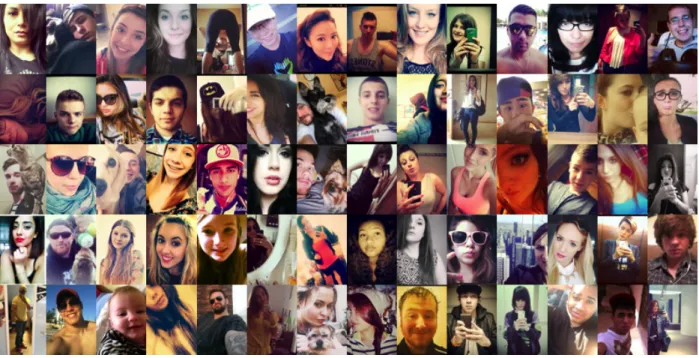
Figure 1.4: Examples of images in the Selfie dataset.
In this work, we introduce, to the best of our knowledge, the first selfie dataset for research pur-poses with more than 46,000 images, annotated with 36 different attributes (ref Figure 1.4). We also address the following questions: (1) How do different attributes, such as gender, race or hair color, influence the popularity of selfies? (2) How does the appearance of certain objects or par-ticular concepts affect the popularity of selfies? (3) Is there a relationship between the sentiment inferred from a selfie and its popularity? (4) How does post-processing, such as applying different Instagram filters, influence the popularity of selfies?
Recently, Khosla et al. [27] proposed a framework to predict the popularity of a photograph before being uploaded on social media. They use about 2.3 million images from Flickr to predict the normalized number of views for images. Exploiting both visual content and social cues, Khosla et al. predict the popularity of an image with about 0.81 rank correlation to its ground truth. Borth et al. [28] have proposed sentiment prediction based on both visual content and tags associated
to the images. They [28] use SentiBank, a library of visual concept detectors based on more than 2,000 Adjective Noun Pairs (ANP) to predict the implied emotion of a photograph. While these studies are valuable, they deal with photographs in general. We believe that studying selfies as the current most popular type of shared content on social media deserves an exclusive study. Knowing that photos with human faces are respectively 38% and 32% more likely to receivelikes
and comments, Bakhshi et al. [29], further demonstrate the importance of this work. Our study does not focus on improving the popularity score prediction or boosting the sentiment prediction performance. Instead, we are using state-of-the-art techniques in these areas to simply answer the four aforementioned questions.
Almost all today’s deep convolutional neural architectures, including those that we propose in this dissertation, use Batch Normalization [1], yet the characteristics of it are not sufficiently studied in the literature. In the next section, we introduce a novel approach to the batch normalization [1] from the viewpoint of Fisher kernels [30] that suggests acceleration in training batch-normalized models can be achieved via disentangling modes of variation in the layer outputs.
1.4 Mixture Normalization
In the context of deep neural networks, the distribution of inputs to each layer is not only heav-ily dependent on the the previous layers but it also changes as the the network evolves through the training procedure. Ioffe and Szegedy [1] referred to this phenomenon as internal covariate shift. Another source of variation comes from the family of optimization techniques, specifically Stochastic Gradient Descent (SGD), that is used to train the deep neural networks. Although we can normalize a mini-batch at the input to the network, it will not remain normalized after multiple rounds of non-linear operations as we proceed from early layers to deeper ones. Batch Normaliza-tion (BN) [1] was proposed to alleviate the internal covariate shift by normalizing layer outputs
for each training mini-batch with respect to its very own statistics, specifically mean and variance. Batch normalization has been successful in dramatically accelerating training procedure of deep neural networks and is now a standard component in almost all deep convolutional architectures. In fact, it is hard to imagine the possibility of effectively training state-of-the-art architectures such as Inception [26][31], Residual [32] and Densely connected [7] networks, with hundreds of layers, without employing batch normalization.
Batch normalization [1] and its few extensions [33][34][35][36], follow a general form (ref. Equa-tion 2.6) to normalize a mini-batch, yet differ in the construcEqua-tion of the populaEqua-tion over which mini-batch statistics are computed. In this dissertation, we provide a fresh view on the aforemen-tioned general form of normalization, demonstrating its strong relation to the natural kernels that arise from generative probability models. Specifically, we show that assuming samples within a mini-batch are from the same probability density function, the general form of normalization is identical to the Fisher vector of a Gaussian distribution. Jaakkola and Haussler [30] proved that given classification labels as latent variables, Fisher kernel is asymptotically never inferior to the maximuma posteriori(MAP) decision rule. Therefore, the general form of normalization used in BN and its extensions, not only naturally emerges from the probability density function that mod-els the generative process of the underlying data distribution, but also improves the discrimination power of the representation5.
However, for BN [1] to truly enjoy theses properties, its input activations should follow a Gaussian distribution. We argue that due to the rectifying non-linearities employed in deep neural networks, it is unlikely that such condition is fully satisfied. Specifically, it is hard to believe that, in expec-tation, a linear combination (convolution operation) of multiple (different channels) distributions
5This is established on the basis of the discriminative derivations of Fisher kernel (ref. Theorem 1 of [30]). The
mathematical derivations can be found in Appendix A of the longer version of [30], available athttps://people. csail.mit.edu/tommi/papers/gendisc.ps.
with semi-infinite support (output of previouse.gReLU [37]), with at least two modes of variation one for the rectified values mapped to zero and one for the positive values, results in a single Gaus-sian distribution. We visualize internal activations of both a shallow and very deep architecture, and observe that indeed corresponding activations very often illustrate asymmetric characteristic and are better approximated by a mixture model rather than a single Gaussian distribution. This observation builds the core of our work.
To equip batch normalization with characteristics which Fisher kernel promises, we must first properly approximate the probability density function of the internal representations. From [38], we know that any continuous distribution can be approximated with arbitrary precision using a Gaussian Mixture Model (GMM). Hence, instead of computing one set of statistical measures from the entire population (of instances in the mini-batch) as BN does, we propose normalization on sub-populations which can be identified by disentangling modes of the distribution, estimated via GMM. We refer to our proposed technique as Mixture Normalization (MN). While BN can only scale and/or shift the whole underlying probability density function, mixture normalization operates like a soft piecewise normalizing transform, capable of completely re-structuring the data distribution by independently scaling and/or shifting individual modes of distribution.
We show that mixture normalization can effectively accelerate its batch normalization [39] coun-terpart, through reducing required number of gradient updates to reach the maximum test accuracy of the batch normalized model by∼31%-47%, across a variety of training scenarios on CIFAR-10 and CIFAR-100. Mixture normalization handles training in large learning rate regime considerably better than batch normalization, and in majority of cases reaches even a better final test accuracy. It is worth pointing out that such acceleration in training procedure is obtained by solely replacing
a fewbatch normalization modules with mixture normalization along the depth of the architecture. This is true both for shallow and very deep and modern architectures such as Inception-V3 [26] and DenseNet [7].
1.5 Summary
In this Chapter, we introduced the automatic image annotation problem in Section 1.1 where the task is to assign relevant tags to the query images based on their visual content. We then explained the limitations of describing images using textual tags and discussed how attributes provide more powerful alternative in Section 1.2. This section was focused on person-related attribute prediction and provided a glimpse to our proposed method which exploits cues obtained via semantic face and body parsing. Section 1.3 presented application of tags and attributes in describing Selfie images. Finally, we introduced Mixture Normalization (MN) in Section 1.4. Our proposed view to the batch normalization [1] puts this widely-used deep learning component in a completely novel light and suggests how it can be improved in a diverse set of applications.
The rest of this dissertation is structured as follows:
In Chapter 2, we review existing literature on automatic image annotation, attribute prediction, semantic segmentation as well as batch normalization. In Chapter 3, we present our proposed approach for automatic image annotation based on weighted non-negative matrix factorization. In Chapter 4, we begin by detailing our novel methods which employ semantic segmentation to improve person-related attribute prediction. We then extend to its reverse problem where visual attributes are utilized to boost semantic segmentation. Chapter 5 explains how textual tags and vi-sual attributes can be leveraged to computationally address the Selfie phenomenon in large-scale. Finally, in Chapter 6, we propose mixture normalization where disentangling modes of variation accelerates training batch-normalized deep convolutional neural networks. We conclude this dis-sertation in Chapter 7.
CHAPTER 2: LITERATURE REVIEW
Here, we provide comprehensive literature review for three computer vision tasks, namely auto-matic image annotation in Section 2.1, attribute prediction in Section 2.2, and semantic segmenta-tion in Secsegmenta-tion 2.3. These are the major research problems, studied in this dissertasegmenta-tion, which focus on semantically describing visual content in images. We then discuss batch normalization, a very widely-used component in all the modern deep neural network architectures. We detail in Section 2.4, how batch normalization and its various extensions are related through a general normalization formulation and what factors distinguish them from each other. These would build the ground for the next few chapters where we detail our novel methods to address the aforementioned problems.
2.1 Image Annotation
Over the past decade, significant efforts have been devoted to the task of image annotation. Many approaches are generative in nature consisting of either the topic or mixture models. In mixture model-based approaches, each annotated image is modeled as a mixture of topics over visual and tag features, where the mixture proportions are shared between different features or views. Exam-ples include latent Dirichlet allocation [40], probabilistic latent semantic analysis [41], hierarchi-cal Dirichlet processes [42], machine translation methods [43], and canonihierarchi-cal correlation analysis [44]. The approach by Xiang et al. [45] also performs query-specific training using Markov ran-dom fields but it has expensive testing as one MRF is generated per tag. Mixture models define a joint distribution over image features and annotations. Given a query image, these models compute the conditional probability over tags given the visual features by marginalizing the joint likelihood. Carneiro et al. [46] use a fixed number of mixture components over visual features per tag, while in [47], it is defined by using the training images as components over visual features and tags.
Yavlinsky et al. [48] annotate images using only global features and perform nonparametric den-sity estimation over the features. Besides generative approaches, discriminative models have also been used including SVM [49, 17], ranking SVM by Grangier et al. [50] and the method by Hertz et al. [51] which uses boosting.
A number of recent papers have reported better results with simple data-driven approaches by finding visually similar training images for a given query followed by transfer of tags from those images. Joint Equal Contribution (JEC) by Makadia et al. [13] was one of the first papers to high-light the effectiveness of the nearest-neighbors (NN) for image annotation. The paper presented an ad-hoc but simple procedure to transfer annotations from NN to the query image. The authors found that equal contributions from different features (mean of distances) performs on par with computationally expensiveL1-regularized Logistic Regression (Lasso). In contrast, we propose to fuse features using Multi-view NMF and show that it improves results. Guillaumin et al. [14] in-troduced TagProp which also uses nearest-neighbors to transfer tags. They showed that using large number of features, metric learning and special handling of rare tags (tag-specific models) improve results of image annotation. The nearest-neighbors are employed both during training and testing. Verma and Jawahar [52] presented two-pass kNN to find neighbors in semantic neighborhoods be-sides metric learning which learns weights for combining different features. The nearest-neighbor search they require for their method scales superlinearly with the number of training images, as a single image can occur in multiple semantic neighborhoods.
Non-negative matrix factorization has been successfully applied to various domains including text (document clustering [53]) and vision (face recognition [54]) and, in general, is an active area of research in clustering. Unlike PCA, the non-negativity of coefficients can be readily translated as weighted-assignment to basis or clusters. To understand the relationship between PCA, VQ and single-view NMF, the reader is referred to [55, 54]. The work by [56] proposes to integrate multiple views but the optimization is not performed jointly among views. They also propose a
model selection strategy for identifying the correct number of clusters (basis). The work by Liu et al. [22] proposes a multi-view extension of NMF along with a novel normalization which makes all the basis to have unit sum permitting interpretation in terms of pLSA [20, 21]. Our approach [57] is a weighted extension of [22], and differs in three aspects. First, [22] uses Multi-view NMF for unsupervised data clustering, i.e. they assume all data is available. For the task of image annotation which is supervised multi-label concept detection, testing data is not known. Thus, we need to recover coefficients for the query image during testing. Second, in our formulation, we introduce weight matrices to handle imbalanced data. The third and most important difference is that, while [22] only uses visual features, we use tags as another feature and force Multi-view NMF to learn a set of basis across visual features and tags that are consistent across views. The key insight is that if we learn basis across features enforcing consistency on coefficients, then it is possible to use learned tag basis and query’s visual features to obtain tags.
The proposed use of Multi-view NMF, introduced in Section 1.1, is also related to Relaxed Collab-orative Representation [58], but rather than using features of training images directly as dictionar-ies, we learn a query-specific set of basis in each view and use that to transfer tags from annotated nearest-neighbors to the query image. One can also see our proposed approach as a multi-view extension with multiple weight matrices of the weighted but single-view NMF [59].
2.2 Attribute Prediction
Early works in modeling attributes [60][61][62] came around with the intention to change the recognition paradigm from naming objects to describing them. Therefore, instead of directly learn-ing the object categories, one begins with learnlearn-ing a set of attributes that are shared among different categories. Object recognition can then be built upon the attribute scores. Hence, novel categories
are seamlessly integrated, via attributes, with previously observed ones. This can be used to ame-liorate label misalignment between train and test data. Considering the importance of human cat-egory, research in person-related attribute prediction [63][64][10][65][66][12] has flourished over the years. To perform attribute prediction, some of the previous works have invested in model-ing the correlation among attributes [67][68][69][70], while others have focused on leveragmodel-ing the category information [71][72][73]. There are also efforts to exploit the context [11].
Another way to view the attribute prediction literature is to divide it into holistic versus part-based methods. The common theme among the holistic models is to take the entire spatial domain into account when extracting features from images. On the other hand, part-based methods begin with an attribute-related part detection and then use the located parts, in isolation from the rest of spatial domain, to extract features. It has been shown that part-based models generally outperform the holistic methods. However, they are prone to the localization error as it can affect the quality of the extracted features. Although, there are works that have taken a hybrid approach benefiting from both the holistic and part-based cues [74][10]. Our proposed methods fall in between the two ends of the spectrum. While we process the image in a holistic fashion, we employ localization cues in form of pixel-level semantic representations.
Among earlier works we refer to [63][66][12][75] as successful examples of part-based attribute prediction models. More recently, in an effort to combine part-based models with deep learning, Zhang et al. [75] proposed PANDA, a pose-normalized convolutional neural network (CNN) to infer human attributes from images. PANDA employs poselets [12] to localize body parts and then extracts CNN features from the located regions. These features are later used to train SVM classifiers for attribute prediction. Inspired by [75], while seeking to also leverage the holistic cues, Gkioxariet al. [74] proposed a unified framework that benefits from both holistic and part-based models through utilizing a deep version of poselets [12] as part detectors. Liuet al. [10] have taken a relatively different approach. They show that pre-training on massive number of object categories
![Figure 1.3: Examples of the segmentation masks generated by our semantic segmentation network [2] for previously unseen images](https://thumb-us.123doks.com/thumbv2/123dok_us/1996571.2796530/33.918.288.634.160.638/figure-examples-segmentation-generated-semantic-segmentation-network-previously.webp)


![Table 3.1: Performance evaluation on Corel5k dataset Method P R F 1 N + CRM[116] 16 19 17.3 107 InfNet[117] 17 24 19.9 112 NPDE[48] 18 21 19.3 114 SML[46] 23 29 25.6 137 MBRM[47] 24 25 24.4 122 TGLM[118] 25 29 26.8 131 JEC[13] 27 32 29.2 139 TagProp-ML[14]](https://thumb-us.123doks.com/thumbv2/123dok_us/1996571.2796530/66.918.297.620.225.527/table-performance-evaluation-corel-dataset-method-infnet-tagprop.webp)