Some pages of this thesis may have been removed for copyright restrictions.
If you have discovered material in Aston Research Explorer which is unlawful e.g. breaches
copyright, (either yours or that of a third party) or any other law, including but not limited to
those relating to patent, trademark, confidentiality, data protection, obscenity, defamation,
libel, then please read our Takedown policy and contact the service immediately
1
Enhancing the Interactivity of a Clinical Decision
Support System by using Knowledge
Engineering and Natural Language Processing
Mohammed Ashrafull Islam
Doctor of Philosophy
Aston University
June 2018
©Mohammed Ashrafull Islam, 2018.
Mohammed Ashrafull Islam asserts his moral right to be identified as the author of this thesis.
This copy of the thesis has been supplied on condition that anyone who consults it is understood to recognise that its copyright rests with its author and that no quotation from the thesis and no information derived from it may be published without appropriate permission or acknowledgement.
2
Acknowledgements
I would like to express my sincere gratitude to my advisor Dr. Christopher Buckingham for the effort he put into guiding me throughout this work, for his patience, motivation, and immense knowledge.
Many thanks to the GRiST team members for delivering such a great project. I would also like to thank my work colleagues for their kind support.
I would like to dedicate this work to my late father and to my mother for their unconditional love and inspiration. I would not have been able to endure these years without the love and support of my family, siblings and in-laws. A great big thank you to my three little boys Zakariya, Yusuf and Saleh for postponing so many fun things until I finished my dissertation. Above all, I lovingly thank my wife for all her support, understanding, and continued help over the years.
3
Mental illness is a serious health problem and it affects many people. Increasingly, Clinical Decision Support Systems (CDSS) are being used for diagnosis and it is important to improve the reliability and performance of these systems. Missing a potential clue or a wrong diagnosis can have a detrimental effect on the patient's quality of life and could lead to a fatal outcome. The context of this research is the Galatean Risk and Safety Tool (GRiST), a mental-health-risk assessment system. Previous research has shown that success of a CDSS depends on its ease of use, reliability and interactivity. This research addresses these concerns for the GRiST by deploying data mining techniques. Clinical narratives and numerical data have both been analysed for this purpose.
Clinical narratives have been processed by natural language processing (NLP) technology to extract knowledge from them. SNOMED-CT was used as a reference ontology and the performance of the different extraction algorithms have been compared. A new Ensemble Concept Mining (ECM) method has been proposed, which may eliminate the need for domain specific phrase annotation requirements. Word embedding has been used to filter phrases semantically and to build a semantic representation of each of the GRiST ontology nodes.
The Chi-square and FP-growth methods have been used to find relationships between GRiST ontology nodes. Interesting patterns have been found that could be used to provide real-time feedback to clinicians. Information gain has been used efficaciously to explain the differences between the clinicians and the consensus risk. A new risk management strategy has been explored by analysing repeat assessments. A few novel methods have been proposed to perform automatic background analysis of the patient data and improve the interactivity and reliability of GRiST and similar systems.
Keywords: Clinical Decision Support Systems, Concept Extraction, Risk Classification, Information gain, Word embedding, Galatean Model, Decision Tree, SNOMED-CT
4 ACKNOWLEDGEMENTS ... 2 ABSTRACT ... 3 1 INTRODUCTION...16 1.1 INTRODUCTION ... 16 1.2 ETHICAL APPROVAL ... 18 1.3 RESEARCH AIM ... 19 1.4 RESEARCH QUESTIONS ... 19 1.5 CONTRIBUTIONS TO KNOWLEDGE ... 20 1.6 CONTRIBUTIONS TO PRACTITIONERS ... 23
1.7 SOFTWARE TOOLS DEVELOPED ... 24
1.8 REPORT ORGANISATION ... 25
2 BACKGROUND AND LITERATURE REVIEW ...27
2.1 INTRODUCTION ... 27
2.2 MENTAL HEALTH PROBLEMS ... 27
2.2.1 The Impact of Mental Illness ... 27
2.2.2 The Importance of Risk Assessment ... 28
2.3 APPROACHES TO RISK ASSESSMENT ... 29
2.3.1 The Clinical Approach ... 29
2.3.2 The Actuarial Approach ... 30
2.3.3 Structured Professional Judgement ... 30
2.4 CLINICAL DECISION SUPPORT SYSTEMS ... 31
2.4.1 Example of CDSS ... 32
2.4.2 CDSS for Mental Health ... 35
2.4.3 CDSS and NLP Technology ... 36
2.4.4 CDSS and Knowledge Representation ... 37
2.4.5 CDSS and Reasoning Methods ... 38
2.5 SCOPE AND CHALLENGES OF CDSS ... 39
2.6 CLINICAL TEXT PROCESSING ... 41
2.6.1 Key Phrase Extraction ... 42
2.6.2 Symptom Extraction ... 44
2.6.3 Phrase Filtering Methods ... 46
2.7 SUICIDE RISK PREDICTION ... 47
5
2.9 RELIABILITY OF RISK ASSESSMENT... 53
2.10 SUMMARY ... 56
3 THE GRIST CDSS ...57
3.1 INTRODUCTION ... 57
3.1.1 Commencement of the GRiST Project ... 58
3.1.2 GRiST Innovation... 60
3.2 THE GALATEAN MODEL ... 61
3.2.1 Risk Calculation Example ... 62
3.3 THE GRISTONTOLOGY ... 64
3.3.1 Generic Concepts ... 66
3.3.2 Question and Datatype ... 67
3.4 GRISTDATASET FOR EXPERIMENTS ... 68
3.5 IMPROVEMENT OF THE GRISTSYSTEM... 71
3.6 SUMMARY ... 72
4 CONCEPT EXTRACTION...74
4.1 INTRODUCTION ... 74
4.2 PHRASE EXTRACTION METHODOLOGY ... 75
4.2.1 N-gram Method ... 75 4.2.2 Term Frequency ... 75 4.2.3 TF-IDF ... 76 4.2.4 Weirdness ... 76 4.2.5 C-value Method ... 77 4.2.6 GlossEx ... 78 4.2.7 TermEx ... 79 4.2.8 Sentic Algorithm ... 80
4.2.9 Other ATE Methods ... 81
4.3 UMLS AND SNOMED-CTCONCEPT EXTRACTION... 81
4.3.1 Metamap ... 82 4.3.2 Apache CTAKES ... 83 4.4 WORD EMBEDDING ... 83 4.4.1 Word2Vec ... 84 4.4.2 Phrase Vector ... 86 4.4.3 Cosine Similarity ... 86
6
4.5.3 Results and Analysis ... 90
4.6 THE ENSEMBLE CONCEPT MINING (ECM)METHOD ... 92
4.6.1 Description of the ECM Method... 93
4.6.2 Automatic Domain Relevancy Filtering... 96
4.7 VALIDATION BY USING THE GRIST DATASET ... 97
4.8 VALIDATION BY USING THE I2B2 DATASET ... 99
4.8.1 Step1: Relevant Keywords Extraction ... 100
4.8.2 Step2: Validation and Comparison ... 101
4.9 SEMANTIC PHRASE RANKING ... 104
4.10 SUMMARY ... 106
5 SEMANTIC PROCESSING (EXPLORATORY)... 107
5.1 INTRODUCTION ... 107
5.2 DEPENDENCY BASED SIMILARITY ... 108
5.3 PHRASE REDUCTION ... 112
5.3.1 Software Setup ... 112
5.3.2 String Stemming ... 113
5.3.3 Semantic Stemming ... 114
5.3.4 Experimental Results ... 115
5.4 SEMANTIC PROFILE REPRESENTATION ... 117
5.4.1 Bag of Concepts ... 117
5.4.2 OpenIE tuples ... 118
5.4.3 Document Vector ... 121
5.4.4 Profile Representation Summary ... 122
5.5 SEMANTIC REPRESENTATION OF GRISTNODES ... 122
5.5.1 Experiment 1: Finding Relevant Phrases within a Node ... 123
5.5.2 Experiment 2: Clustering Phrases by Semantic Vector ... 125
5.5.3 Experiment 3: Finding Phrases Similar to a Node ... 127
5.5.4 Experiment 4: Clustering Nodes by Vector ... 131
5.5.5 Experiment 5: Inter Node Cosine Similarity ... 133
5.5.6 Node Representation Summary ... 136
5.6 GRIST AND SNOMED-CT(EXPLORATORY) ... 136
5.6.1 Structure of SNOMED-CT ... 139
5.6.2 Information Extraction by cTAKES ... 140
5.6.3 Parsing Text with cTAKES ... 140
7
5.7 SUMMARY ... 148
6 RISK PREDICTION ... 150
6.1 INTRODUCTION ... 150
6.2 METHODOLOGY FOR RISK PREDICTION ... 150
6.3 DATASET ... 151
6.4 PREDICTIONS USING FULL TEXT ... 152
6.4.1 Predictions Using Mallet ... 152
6.4.2 Predictions Using Stanford Classifier ... 153
6.4.3 Predictions Using LibshortText ... 154
6.5 PREDICTIONS USING EXTRACTED CONCEPTS ... 155
6.5.1 Experiments and Methods ... 156
6.5.2 Results of the Experiments: ... 158
6.6 PREDICTIONS WITH SNOMEDCODE ... 159
6.7 PREDICTIONS WITH DOCUMENT VECTOR ... 159
6.8 PREDICTIONS WITH NODE SIMILARITY ... 161
6.9 PREDICTION WITH NUMERICAL DATA ... 162
6.9.1 Dynamic Regression ... 162
6.9.2 Prediction with Scale Data Type ... 164
6.10 ANALYSIS OF PREDICTION RESULTS ... 165
6.11 ANALYSIS OF REPEAT ASSESSMENTS... 167
6.12 SUMMARY ... 170
7 ASSOCIATION RULE MINING ... 172
7.1 INTRODUCTION ... 172
7.2 DATASET ... 173
7.3 NODE RELATIONSHIPS BY CHI-SQUARE ... 174
7.3.1 Explanation of the Terminology ... 174
7.3.2 Introduction to Pearson's Chi-square Test ... 175
7.3.3 Relationship by Phrase ... 177
7.3.4 Relationships by Node Value ... 179
7.3.5 Ch-Square Relationships Analysis ... 181
7.4 FREQUENT ITEMSET MINING ... 182
7.4.1 Theoretical Background ... 182
7.4.2 FP-Growth Algorithm ... 184
8
7.5.1 Using the CORI Algorithm ... 191
7.5.2 Using the TopKRules ... 192
7.6 THE MULTI-RULE RISK PREDICTION METHOD ... 194
7.7 SUMMARY ... 196
8 RELIABILITY OF RISK JUDGEMENT ... 197
8.1 INTRODUCTION ... 197
8.2 DATASET ... 198
8.3 METHOD A:INFORMATION GAIN ... 201
8.3.1 Introduction to Entropy ... 201
8.3.2 Information Gain (IG) ... 203
8.3.3 Gain Ratio ... 204
8.3.4 Example of IG Calculation ... 204
8.3.5 Gain Ratio Calculation ... 206
8.3.6 Experimental Results and Analysis ... 207
8.3.7 Adjustment of the Clinical Judgement ... 211
8.4 METHOD B:R-SQUARE (VARIANCE)ANALYSIS ... 214
8.4.1 Calculation of Relative Weights ... 215
8.4.2 Relative Weight for Reliability Analysis ... 216
8.5 METHOD C:USING NUMBER OF QUESTIONS ... 218
8.6 COMPARISON OF DIFFERENT METHODS ... 219
8.7 THE RELIABILITY ASSESSMENT METHOD ... 220
8.8 APPLICATIONS OF THE METHOD ... 221
8.9 SUMMARY ... 222 9 CONCLUSION ... 224 9.1 INTRODUCTION ... 224 9.2 EMPIRICAL FINDINGS ... 224 9.2.1 Concept Extraction ... 224 9.2.2 Semantic Processing ... 226 9.2.3 Risk Prediction ... 227
9.2.4 Association Rule Mining ... 228
9.2.5 Reliability of Risk Judgement ... 230
9.3 THE PRACTICAL IMPLICATIONS ... 231
9.4 CURRENT LIMITATIONS AND FUTURE WORKS ... 234
9
APPENDIX B GRIST NODE RELATIONSHIPS ... 265
APPENDIX C RISK ANALYSIS RESULTS ... 277
List of Tables
TABLE 1CLINICAL DECISION SUPPORT SYSTEMS AND THEIR METHODS ... 32TABLE 2EXAMPLE OF CDSS IN THE MENTAL HEALTH DOMAIN ... 35
TABLE 3RULE-BASED CDSS EXAMPLE ... 36
TABLE 4:RULE-BASED APPROACH ... 36
TABLE 5CDSS SYSTEM AND THEIR TECHNOLOGY ... 37
TABLE 6:MACHINE LEARNING BASED APPROACH ... 37
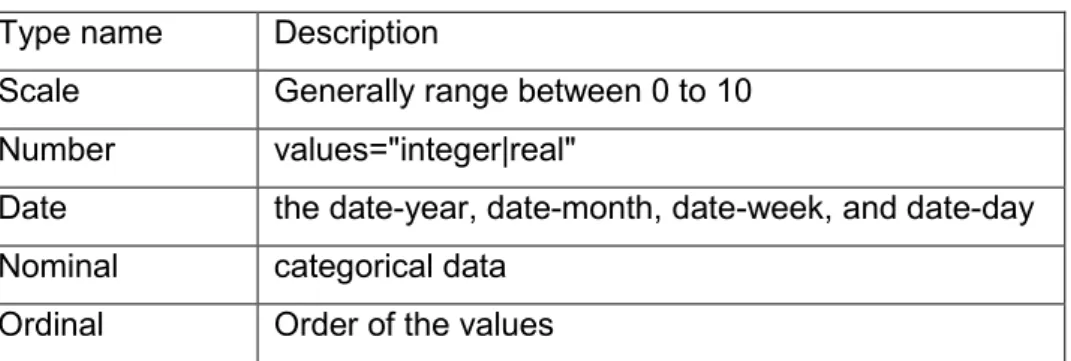
TABLE 7GRIST DATA TYPE ... 67
TABLE 8GRIST ASSESSMENT DATA WITH RISK LEVEL ... 68
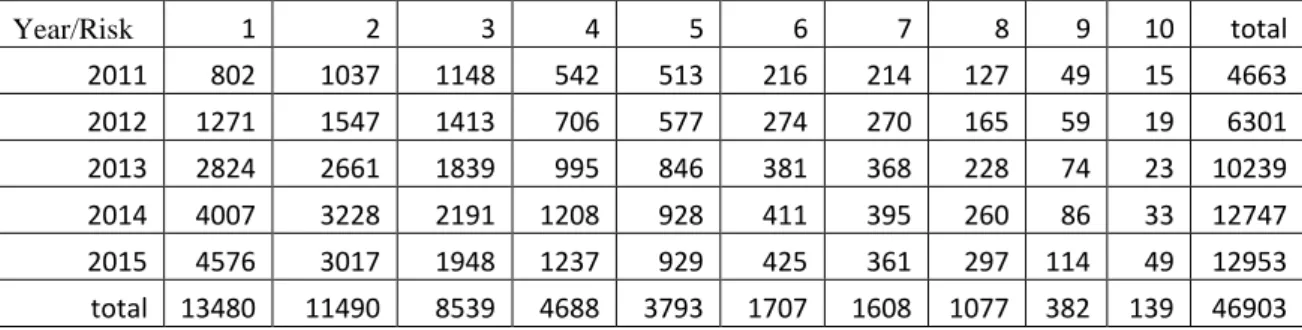
TABLE 9GRIST DATA DISTRIBUTION ACROSS RISK LEVELS ... 69
TABLE 10TEST AND TRAINING DATASET FROM GRIST ... 70
TABLE 11:WORD VECTOR EXAMPLE ... 84
TABLE 12SIMILAR WORD AND COSINE DISTANCE ... 87
TABLE 13PRECISION AND RECALL OF PHRASE EXTRACTION ALGORITHMS ... 91
TABLE 14RESULTS OF PHRASENESS ALGORITHM ... 98
TABLE 15SINGLE WORD DOMAIN RELEVANCY FILTERING RESULTS ... 101
TABLE 16 I2B2 ACCURACY WITHOUT ECM ... 102
TABLE 17 I2B2 ACCURACY WITH ECM ... 103
TABLE 18SEMANTIC SCORE AND RAKE SCORE EXTRACTED CORRECT KEYWORDS ... 105
TABLE 19DEPENDENCY TUPLE IN TABLE ... 110
TABLE 20SIMILARITY BY DEPENDENCY AND WORD VECTOR ... 110
TABLE 21PHRASE REDUCTION RESULTS ... 115
TABLE 22PHRASE STEMMING BY STRING MATCH AND VECTOR SIMILARITY ... 116
TABLE 23OPENIE TUPLES ... 118
TABLE 24OPENIE PARSED RESULTS ... 119
TABLE 25OPENIE PARSE RESULTS OF THE SECOND SENTENCE ... 119
10
TABLE 29PHRASE CLUSTERING 50 CLUSTERS ... 126
TABLE 30PHRASES SIMILAR TO A NODE ... 128
TABLE 31GRIST NODE CLUSTERING 10 CLUSTERS ... 131
TABLE 32GRIST NODE CLUSTERING 20 CLUSTERS ... 132
TABLE 33GRIST INTERNODE NODE SIMILARITY ... 133
TABLE 34NODE TO NODE CORRELATION ... 135
TABLE 35AVERAGE UNIQUE SNOMED OCCURRENCE ... 142
TABLE 36PHRASE STEMMING RESULTS ... 143
TABLE 37SNOMED CATEGORY PER SUICIDE RISK LEVEL ... 143
TABLE 38GRIST NODE TO SNOMED-CT NODE MAPPING ... 147
TABLE 39GRIST ASSESSMENT DATA WITH RISK LEVEL... 152
TABLE 40RESULTS FROM THE MALLET CLASSIFIER ... 153
TABLE 41CONFUSION MATRIX OF LIBSHORTTEXT RESULTS ... 154
TABLE 42CONFUSION MATRIX OF LIBSHORTTEXT 3 CATEGORY ... 155
TABLE 43SUICIDE RISK PREDICTIONS WITH EXTRACTED PHRASES ... 158
TABLE 44DOCUMENT VECTOR CLASSIFICATION RESULTS ... 160
TABLE 45GRIST HARD AND SOFT NODE EXAMPLES ... 167
TABLE 46REPEAT NODE EXAMPLE DATA ... 168
TABLE 47RISK INCREASE AND NODE VALUE CHANGE ... 169
TABLE 48GRIST ASSESSMENT DATA WITH RISK LEVEL... 173
TABLE 49CORRELATION BETWEEN CLINICAL AND CALCULATED RISK ... 173
TABLE 502 BY 2 CONTINGENCY TABLE ... 176
TABLE 51: 2 BY 2 CONTINGENCY TABLE ... 177
TABLE 52 NODE TO NODE RELATIONSHIP BY SNOMED CONCEPT PHRASES ... 178
TABLE 53NODE TO NODE RELATIONSHIP AND RISK ... 178
TABLE 54NODE RELATIONSHIPS BY MG-VALUE ... 180
TABLE 55NODE RELATION AND RISK CATEGORY BY MG-VALUE ... 180
TABLE 56A TRANSACTIONAL DATABASE FOR FP-TREE EXAMPLE ... 185
TABLE 57SOME SAMPLE RULES EXTRACTED BY THE FP-GROWTH ALGORITHM ... 187
TABLE 58PRECISION AND RECALL OF HIGH RISK PREDICTION ... 189
TABLE 59HIGH RISK PREDICTION WITH MULTIPLE RULES ... 190
TABLE 60HIGH RISK PREDICTION WITH CORI ... 192
TABLE 61HIGH RISK PREDICTION WITH TOP K RULES ... 193
TABLE 62GRIST DATA DISTRIBUTION ACROSS RISK LEVELS ... 199
11
TABLE 66GAIN RATIO OF GRIST NODES... 207
TABLE 67GAIN RATIO AND AVERAGE RISK DIFFERENCE... 208
TABLE 68TOTAL GAIN VS RISK DIFFERENCE ... 210
TABLE 69RISK ADJUSTMENT BY INFORMATION GAIN ... 212
TABLE 70ADJUSTED RISK EXAMPLE ... 213
TABLE 71RELATIVE WEIGHTS OF GRIST SAMPLE NODES ... 215
TABLE 72CORRELATION BETWEEN RISK DIFFERENCE AND THE TOTAL SUM OF R-SQUARE ... 216
TABLE 73ADJUSTED CLINICAL RISK BY TOTAL SUM OF R-SQUARE ... 217
TABLE 74CORRELATION BETWEEN NO OF QUESTIONS AND RISK DIFFERENCE ... 218
TABLE 75RISK ADJUSTMENT BY NO OF QUESTIONS ... 218
TABLE 76COMPARISONS AMONGST THE DIFFERENT APPROACHES ... 219
TABLE 77GRIST ONTOLOGY NODE NAME AND DESCRIPTION... 260
TABLE 78NODE TO NODE COSINE SIMILARITY ... 265
TABLE 79NODE TO NODE CORRELATION BY MG-VALUE ... 267
TABLE 80NODE TO NODE RELATIONSHIP BY SNOMED PHRASE ... 269
TABLE 81NODE TO NODE RELATIONSHIP BY NODE MG VALUE ... 270
TABLE 82NODE NODE CONNECTIONS AND CORRELATION ... 272
TABLE 83GRIST NODE TO SNOMED-CT CONCEPT MAPPING ... 275
TABLE 84REPEAT ASSESSMENT SOFT NODE DATA ... 283
12
FIGURE 1GRIST ONTOLOGY DEVELOPMENT PROCESS REPRODUCED WITH PERMISSION FROM (BUCKINGHAM ET AL.,2007) .. 59
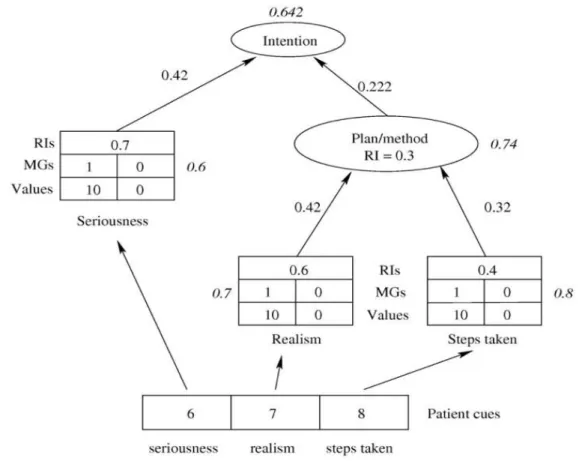
FIGURE 2EXAMPLE OF RISK CALCULATION, REPRODUCED WITH PERMISSION FROM (BUCKINGHAM,2002) ... 63
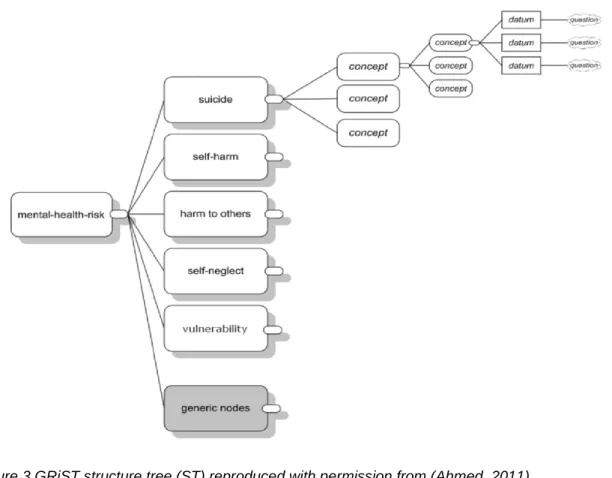
FIGURE 3GRIST STRUCTURE TREE (ST) REPRODUCED WITH PERMISSION FROM (AHMED,2011)... 64
FIGURE 4SCREENSHOT OF GRIST USER INTERFACE ... 65
FIGURE 5SUICIDE RISK DISTRIBUTIONS IN THE GRIST DATASET ... 69
FIGURE 6EXAMPLE OF A COMMENT INPUT FIELD ... 70
FIGURE 7AIMED IMPROVEMENT OF THE GRIST SYSTEM (IN BLUE) ... 72
FIGURE 8WORD2VECTOR TRAINING ALGORITHM TYPES, REPRODUCED FROM (MIKOLOV, ET AL.2013) ... 85
FIGURE 9PRECISION AND RECALL ... 89
FIGURE 10ENSEMBLE CONCEPT MINING (ECM)METHOD ... 93
FIGURE 11 STRING VS SEMANTIC STEMMING RESULTS ... 116
FIGURE 12AVERAGE SNOMED CONCEPTS PRESENCE PER ASSESSMENT ... 142
FIGURE 13SUICIDE RISK VS SNOMED CATEGORY ... 144
FIGURE 14RISK VS SNOMED CATEGORY ... 145
FIGURE 15GRIST RISK ASSESSMENT BY DYNAMIC REGRESSION... 164
FIGURE 16RISK LEVEL VS HIGH RISK RELATIONSHIPS ... 181
FIGURE 17FP-GROWTH CREATION EXAMPLE ... 186
FIGURE 18ASSOCIATION RULES CONFIDENCE AND ACCURACY ... 189
FIGURE 19NO OF RULES VS RECALL AND PRECISION... 190
FIGURE 20THE MULTI-RULE RISK PREDICTION METHOD ... 194
FIGURE 21PROPOSED ALERTING MECHANISM FOR GRISTCDSS ... 195
FIGURE 22DECOMPOSITION OF A CHOICE FROM THREE POSSIBILITIES REPRODUCED FROM (SHANNON,1948) ... 202
FIGURE 23INFORMATION GAIN CALCULATION EXAMPLE ... 205
FIGURE 24SUM TOTAL GAIN FOR DIFFERENT RISK LEVEL ... 209
FIGURE 25THE IMPROVEMENT OF RISK JUDGEMENT ... 217
FIGURE 26IMPROVEMENT OF ASSESSMENT ACCURACY BY DIFFERENT METHODS ... 220
FIGURE 27RELIABILITY OF THE RISK ASSESSMENT ... 221
FIGURE 28APPLICATION OF INFORMATION GAIN ANALYSIS ... 222
FIGURE 29 THE PROPOSED NEW GRISTCDSS WORKFLOW ... 233
FIGURE 30MALLET RESULTS FOR 10 CATEGORY OF RISK ... 277
FIGURE 31MALLET RESULTS FOR 3 CATEGORY OF RISKS ... 278
FIGURE 32RESULTS FROM STANFORD CLASSIFIER ... 278
FIGURE 33PREDICTION BY SNOMED 10 CLASSES ... 279
13
FIGURE 37PREDICTION BY SNOMED STRING STEMMING ... 281
FIGURE 38PREDICTION BY SNOMED SEMANTIC STEMMING ... 282
FIGURE 39SCEENSHOT OF PREDICTION BY DOCUMENT VECTOR ... 282
14
A
ATE - Automatic Term Extraction 81
C
CDSS - Clinical Decision Support System 16
cTAKES - clinical Text Analysis and Knowledge Extraction System 140
D
DIKpE - Domain Independent Keyphrase Extraction 43
F
FP-tree - Frequent Patterns tree 52
G
GPRD - General Practice Research Database 45
H
HITECH- Health Information Technology for Economic and Clinical Health 32
I
IAPT- improving access to psychological therapy 40
ICNS - Intelligent Clinical Notes System 44
L
LSA - Latent Semantic Analysis 43
M
MedIE - MEDical Information Extraction 44
N
15
S
SNOMED-CT - Systematized Nomenclature of Medicine -- Clinical Terms 138 SyMSS - Syntax-based Measure for Semantic Similarity 138
U
UIMA - Unstructured Information Management Architecture 140
V
VSM - Vector Space Models 83
W
WEKA - Waikato Environment for Knowledge Analysis 156
X
16
1 Introduction
1.1
Introduction
Clinical Decision Support Systems (CDSSs) can improve both patient care outcomes and reduce the cost of care (Berner & La Lande, 2007). CDSSs are interactive expert systems, which use embedded clinical knowledge to help health professionals analyse patient data and make decisions regarding diagnosis, prevention, and the treatment of health problems (Wu, Lu and Duan, 2008). A systematic review of CDSSs found that over 90% of the systems significantly improved clinical care (Kawamoto, Del Fiol, Lobach and Jenders, 2010). They have shown great promise and contributed towards reducing medical errors and improving patient care (Kawamoto, Houlihan, Balas and Lobach, 2005).
Despite increasing emphasis on CDSS in improving care and reducing costs, evidence supporting its widespread use is limited (Bright et al., 2012). The acceptance of the widespread applications of CDSS is hampered by factors such as complexity of the system, time consuming for the doctors and lack of decision accuracy (Al-gamdi, 2014). The GRiST is a CDSS for mental health risk assessment. This research uses GRiST as a test case and proposes new methods to improve the interactivity and accuracy of the GRiST or similar expert systems.
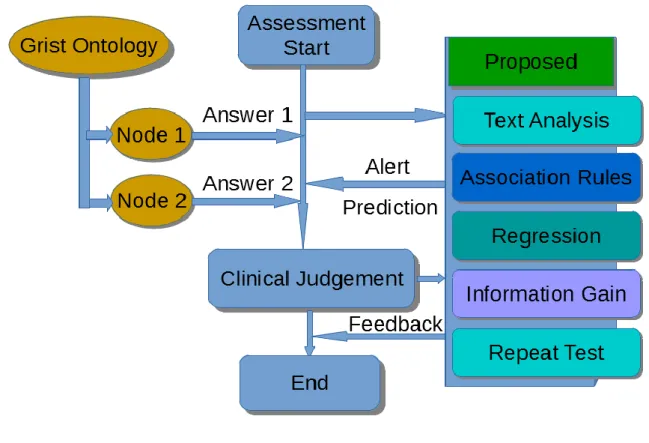
Firstly, we looked at how we can use textual data to identify risk and alert the clinician. Secondly, how we could use potential relationship among attributes (GRiST ontology nodes) and identify risk at an early stage of the assessment. Thirdly, we looked at how we can validate the clinical judgement and provide feedback. Application of these techniques may improve the overall performance of the GRiST by making it more interactive and increase its acceptance among clinicians. This in turn can enhance patient safety.
Key phrase extraction is an important first step for Natural Language Processing (NLP) tasks. We have reviewed many well-known phrase extraction methods. Many of these phrase extraction systems need training with domain specific data and some of them
17
can extract key phrases; however, those phrases may not be domain relevant. To overcome this problem, we propose a two-stage generic method. At the first stage, it extracts key phrases by using linguistic patterns and then at the second stage those extracted phrases are filtered for semantic similarity with the domain by using word embedding. We have shown that our method can perform better than existing well-known key-phrase extraction systems. Many other exploratory semantic analysis tasks have been carried out which may help with future NLP research.
In the existing literature, there are encouraging mentions of predicting diseases from clinical notes. We have reviewed and applied many of the existing text classification methods with our dataset. A comprehensive number of experiments have been carried out from various perspective to predict suicide risk from the clinical narratives. We have experienced many similar difficulties as previous researchers. Predicting different levels of risk was challenging. Using full-text data, extracted phrases, document embedding, etc. all methods have been explored, and their performances were critically reviewed. Electronic health records provide better value for clinicians by allowing clinicians to reliably identify adverse events (Jha, 2011). High suicide risk incidents are rare in the GRiST dataset and identifying them by using classification methods is challenging due to the class imbalance problem. We assume that there exist some non-linear relationships among GRiST ontology nodes, which may affect the risk judgement. It would be particularly important to help identify which of these potential relationships causes the risk to be higher. Empirical evidence suggests that statistically related nodes appear more in high-risk category patients.
Frequent itemset mining as introduced by Agrawal, Imielinski, & Swami (1993) is generally used for market basket analysis to predict users shopping habits. The technique is also applied in finding disease symptom relationships in literature. We have applied frequent itemset mining for detecting high-risk patients within GRiST dataset. This has the benefit of not needing to gather all the data prior to a calculated prediction being made. The itemset (symptoms) related to higher risks of suicide are found to be rare. We have proposed a new approach to overcome this problem and achieved better accuracy than simple frequent itemset mining.
18
The third approach to improve the GRiST system was to assess the reliability of clinical judgements and provide interactive feedback to improve accuracy. For this, we have used total information gain or relative weights of an assessment. This is a novel method to identify the difference between a clinician given and calculated risk, explain the probable reason and guide clinicians to make a better judgement. We have found that the accuracy of the clinical judgements depends on the total information gathered by the clinicians. The proposed method could notify clinicians about the accuracy of their risk judgement and provide feedback to improve it.
The focus of this research was to identify patterns in the GRiST data and knowledge structure to make the GRiST system more interactive and user-friendly. Finding clues in the comments, detecting node relationships and explaining the risk differences is a significant contribution to the GRiST project. The methods described in this research can easily be applied to other CDSS like GRiST.
1.2
Ethical Approval
Ethics of the research is covered by the GRiST project. The patient data has been kept confidential and secure at all the times. No data has been shared with any other third party.The following is the ethics clearance for analysing the GRiST database.
Title of the Database: Analysing the Galatean Risk and Safety Tool (GRiST) Database REC reference: 13/EM/0007
IRAS project ID: 119801
REC is the Research Ethics Committee and IRAS is the submission form for the ethics application.
19
1.3
Research Aim
The overall aim of this research was to analyse the GRiST data and its ontological structure to find patterns within them and enhance the system with dynamic background analysis, improve user interactivity and validate the risk judgement. The findings could also be applied to other similar systems in the future.
1.4
Research Questions
The context of this research is the GRiST system in which the data is inputted as both free text comments and numerical values. The clinical narratives can hold some clues that numerical data may be missing. Ontology node interactions may also provide useful information. It is a challenge to combine all these clues and build a comprehensive understanding of a patient’s mental health.
This research has attempted to answer the following questions:
1. How can NLP technology be used to extract concepts from clinical comments to represent a GRiST node or a patient? We were particularly interested in comparing and extending existing unsupervised methods.
2. How can phrases be stemmed by semantic similarity and how does it compare with string-based similarity? Generally, we can find a base form of a word by stemming. Stemming algorithms mostly work on the prefix or suffix variations of a word. Two words may appear completely different by character matching but semantically they might be very close. We may use semantic vectors to do semantic stemming and use these stemmed phrases for risk prediction.
3. Can semantic vector representation of GRiST nodes help us to identify any patterns that may assist us in improving the overall GRiST system? We can build
20
the semantic vector of a node or an assessment by using its constituent words vector. This may assist in risk analysis.
4. How does the data in the GRiST and its ontological structure relate to other ontology like SNOMED-CT and the implication of these relations on suicide risk?
5. How do risk predictions produced by using raw text, extracted phrases, word vectors and numerical data compare with each other? Risk calculated by alternative methods may assist in validating the clinicians given risk.
6. How can statistical measures such as chi-square, or itemset mining such as fp-growth, be used to find relationships between the GRiST nodes? How does the presence of these relationships might affect risk judgement?
7. Could the difference between the clinician given and calculated risk be explained by identifying patterns in the raw data, particularly by using information theory? If the clinician given risk is higher, or it differs significantly from the calculated risk, then it would be extremely useful to know the probable reasons for this. Knowing the answer to this question may also help us to take the necessary measures to mitigate this exceptional circumstance.
1.5
Contributions to Knowledge
The context of this research was the GRiST clinical decision support system but many of the findings and techniques can be applied to the field of natural language processing and expert system design. The following points are a summary of the contributions made by this research:
1. Previous researchers have described various methods to filter phrases such as by frequency (Pudota, et al. 2010), latent semantic analysis (J. Chen et al.,2006) or concept graph (Bleik, Xiong, Wang, & Song, 2010). We have developed an ensemble concept mining (ECM) method, which can automatically extract
21
domain specific key phrases from the text. Our method extends the previous methods by including word vector based semantic filtering. Empirical findings show that the utility of a complex method is not significantly higher than the simple n-gram phrase extraction method followed by a semantic filtering. The greatest benefit of our method is that it does not require human annotation. For the i2b2 dataset, our approach gives better results than the Rake or OpenNLP approaches.
2. The distributional hypothesis in linguistics describe that the meaning of a word can be determined by the company it keeps (Firth, 1957). Vector space model (VSM) uses word co-occurrence counts from large corpora to represent lexical meaning (Padó & Lapata, 2007). In VSM, words are represented by vectors. Two words would be closer if their meaning is similar. We have extended this idea and proposed that within a document a concept word or phrase will have lots of other words or phrases that are semantically related. We proposed a method to extract domain relevant key phrases by scoring its semantic relatedness to other words in the same document or corpus. This is a simple but fully automatic method that can save time and cost in finding relevant key words.
3. Methods for detection of suicide and other risks from clinical notes have been described by researchers for example (Thompson, Bryan, & Poulin, 2014), (O’Dea et al., 2015), (Yang, Spasic, Keane, & Nenadic, 2012), (Pestian et al., 2008) and many others. These methods include machine learning, rule-based, statistical text mining (STM), and text weighting approaches (McCart et al., 2012). We have reviewed different approaches with our dataset and additionally used document embedding and GRiST ontological structures. Use of a bigger dataset and the comparative study provides valuable information for future research.
4. Associated rule mining is being used to determine the relationships among symptoms and to predict disease. Previously researchers such as (Lacković, de Carvalho, Zhang, & Magjarević, 2014) and (Huang, Huang, Chen, Liu, & Huang (2012) described the application of frequent itemset mining to discover relationships among symptoms and mental health illness. We have used the FP-growth algorithm to predict high-risk category patients. Like others, we have
22
found that high-risk categories are rare events and normal support and confidence measures do not provide better results. We have proposed a new method by which we can apply multiple rules and achieve better accuracy in predicting high-risk patients.
5. Entropy represents the randomness of a system and information gain identifies the predictive power of an attribute. We have used the notion of information to quantify the reliability of a clinical assessment. It was assumed and subsequently observed in the GRiST data that a clinical judgement is closer to the calculated risk if it has collected more information. We have proposed a novel method to determine the probable reliability of an assessment from the information it has collected. Our method can also provide feedback to improve assessment accuracy. The technique can make a system like GRiST more dynamic and truly interactive.
The following are some minor but useful additional contributions of this research:
6. This research describes a simple technique for using dependency relationships between words to find similar words. It may be used instead of using the spanning window based approach that is generally used in distributional word embedding.
7. We have developed an algorithm to dynamically select attributes and run predictive calculations when some data may be missing. In the context of the GRiST data, the predictive performance of this technique was found to be better than before.
8. We proposed a semantic stemming technique based on the word2vector to reduce the number of extracted phrases. This can be used in conjunction with other methods such as the Levenshtein distance to reduce the list of key phrases. A method has been described to create a list of semantically relevant phrases for a GRIST node automatically.
23
9. A new method has been proposed to assist clinicians to adopt a better risk management strategy. This method uses previously completed repeat assessment data available in GRiST; it measures the increase or decrease of a symptom (attribute) over time and the implication of the symptom on suicide risk. Based on these two pieces of information it can provide feedback to the clinician to adopt a better risk management strategy.
1.6
Contributions to Practitioners
The outcome of this research could help clinical practitioners to make a better risk assessment. The following are some of the key benefits for the clinical practitioners.
1. The clinician could get early feedback / be alerted to the potential suicide risk related symptoms before the assessment is completed. The proposed automatic concept extraction method and SNOMED-CT mapping can help in this regard.
2. When a patient carried out a self-assessment using GRiST, clinicians might get feedback including the potential suicide risk automatically calculated by the proposed pattern mining method.
3. GRiST node association rules (relationships) can be used to alert clinicians in real-time about the potential suicide risk.
4. The system could provide feedback on the final risk judgement and provide specific guidance to make any possible amendments based on the proposed information gain method.
5. The proposed hard and soft node analysis method can provide feedback to choose the best options for clinical intervention.
24
6. Senior management can validate the risk judgement based on the proposed information gain method and may review a selective set of assessments.
1.7
Software Tools Developed
In the course of our research, many software tools have been developed. Some of these tools are built with other relevant open source APIs. These tools will be released as open source software in the foreseeable future.
7. A simple Java based tool has been developed, which can return a SNOMED-CT coded XML output for an inputted sentence. This allows other scripting languages such as PHP to use it as a web service.
8. A Java based web service for the Stanford parser was developed. Given a single sentence, it can output a Stanford parse tree. A similar service is available from Stanford online, but if data is confidential then our tool may be more useful as it can be run locally.
9. An ensemble phrase filtering algorithm has been developed and implemented in both PHP and Java.
10. A very fast C language based REST service has been developed that can output a word vector for a given word.
11. Many other utility tools such as SNOMED-CT and WordNET browsers have been created, which may assist other researchers. Unlike others, these tools use a database as a storage system.
12. A script to find similar words based on dependency relationships has been developed.
25
13. Scripts for calculating chi-square, PMI and Information gain have been implemented for the GRiST data.
14. A script for filtering the FP-growth extracted frequent patterns and using them for risk prediction has been implemented.
1.8
Report Organisation
The remainder of this report is organised as follows: Chapter 2: Background and Literature Review
This chapter reviews existing literature and research methods. It describes some of the existing clinical CDSS systems and their working principles. Previous works that are relevant to our research activities are described in detail. How our research extends the previous research works is described in the respective subsections.
Chapter 3: The GRiST CDSS
The data for this research came from the GRiST system and it is the primary focus of this research. A detailed description of GRiST and its working principles are given in this chapter. The Galatean model is also described in detail with examples, as this is the underlying model of the GRiST system.
Chapter 4: Concept Extraction
This chapter describes recent research in phrase extraction and concept extraction. Different phrase extraction methods were applied to the GRiST data and the results were critically reviewed. This chapter also describes our proposed ensemble concept mining (ECM) method.
Chapter 5: Semantic Processing (Exploratory)
This chapter explores different ways to represent GRiST nodes and patients semantically. We have described the method to semantically connect GRiST nodes based on the text they share. It also mapped each GRiST node to the SNOMED-CT
26
concept. This is an exploratory work to find possible patterns and improve our understanding of the GRiST dataset.
Chapter 6: Risk Prediction and Classification
In this chapter, different text classification algorithms are used to predict suicide risk. Raw texts, extracted phrases and semantic vectors etc. have all been used to predict risk. The performance of these different methods was critically analysed. A method to improve regression analysis is also described. How the GRiST nodes value changes in repeat assessments is discussed, this could be particularly useful for risk management purposes.
Chapter 7: Association Rule Mining
Literature review shows that the use of frequent itemset mining to identify disease symptoms relationships is increasing. We aim to identify high-risk patients based on the frequently occurring relationships among GRiST nodes and suicide risk. The interaction between GRiST nodes is described using the chi-square method. The FP-growth method was used for mining frequent itemset. A new method is proposed to identify the high-risk category patients effectively from the GRiST data.
Chapter 8: Reliability of Risk Judgement
The difference between a clinician given risk and a calculated risk needs to be as small as possible. In risk calculation, the relative contribution of different GRiST nodes can vary. The reliability of a risk assessment may depend on how much information is collected by the clinician. This chapter explains various methods to determine the amount of total information collected by the clinician and uses them to explain the reliability of an assessment.
Chapter 9: Conclusion
This chapter gives a concluding critical analysis of each of the activities and findings followed by suggestions for future improvements. The practical implications of this research on the GRiST system as well as on any other similar CDSS system are discussed.
27
2 Background and Literature Review
2.1
Introduction
The domain of this research is mental health risk assessment using the clinical decision support system (CDSS). This chapter briefly describes the mental health problems and importance of its assessment. We also discuss the different methods of mental health risk assessments currently in use. Popular CDSS systems have been reviewed and their underlying methods have been compared. Finally, literature related to our research, limitations in the existing methods and the formulation of our own research activities are discussed in their respective sections.
2.2
Mental Health Problems
2.2.1 The Impact of Mental Illness
According to the Mental Health Foundation (2015), one in four people in the UK will experience a mental health problem in any given year. It states that mental health problems are one of the main causes of the burden of disease worldwide. In the UK, they are responsible for 28% of the total burden of disease compared to 16% each for cancer and heart disease. Since 2009 the number of working days lost to stress, anxiety and depression has increased by 24% and those lost to serious mental illness has doubled (Bridges, 2014).
“Psychosis is characterised by hallucinations, delusions and a disturbed relationship with reality, and can cause considerable distress and disability for the person and their family or carers” (NHS England, 2016, p.6). In 2013 there were 6,233 suicides recorded in the UK for people aged 15 and over. Of these, 78% were male and 22% were female
28
(Mental Health Foundation, 2015). Mental health problems can have a serious impact on an individual’s quality of life. This can also impact the people around them.
The Mental Health Foundation (2015) claim that mental health services in the UK are overstretched, they have long waiting times and, in some regions, lack specialist services. There is a huge treatment gap in mental health care in England, with about 75% of people with mental illness receiving no treatment at all (Davies, 2013). In the UK, the estimated cost of mental health problems is roughly £70-100 billion each year and accounts for 4.5% of GDP (Mental Health Foundation, 2015).
There are strong links between physical and mental health problems. Research has found that 30% of people with a long-term physical health problem also have a mental health problem and 46% of people with a mental health problem also had a long-term physical health problem (Mental Health Foundation, 2015). A number of reviews and studies have found that the lifespan of people with severe mental illness (SMI) is shorter compared to the general population and this is attributed to the likelihood of them having a physical illness (DE Hert et al., 2011). Self-neglect or self-harm could also lead to the poor physical health conditions.
2.2.2 The Importance of Risk Assessment
Mental illness can affect anybody at any age and it can have a significant impact on an individuals’ quality of life, their family and community (Davies, 2013). Not only the human costs associated with mental illness but the economic burden it also imposes is significant (Bridges, 2014). Research shows that early intervention in psychosis produces better clinical outcomes and is also more cost-effective (Singh, 2010).
A report by NHS England (2016) mentions that people who experience psychosis can and do recover. The time from the onset of psychosis to the start of evidence based treatment could significantly influence the ultimate long-term outcomes. The sooner treatment is started the better the outcome and the lower the overall cost of care (NHS England, 2016). Early intervention can help to lessen the impact of the condition, reduce the risk of further (and often more debilitating) episodes and increase the possibility of
29
better social and functional outcomes, such as completing education and staying in employment (McDaid et al., 2016).
According to McDaid et al. (2016) better outcomes are driven by three key components: (1) well-engaged health and other sector professionals, working collaboratively to achieve long-term goals; (2) infrastructure supportive of early intervention services; and (3) the development of early intervention care pathways for people with psychosis and their families.
In this context, having a tool like GRiST available to the clinicians and service users may provide an opportunity for early intervention, which is more cost-effective. A risk assessment tool should be based on a systematic approach that is proven by research. The next section describes some of the risk assessment approaches in detail.
2.3
Approaches to Risk Assessment
Previously, risk assessment was more focused on prediction but currently risk assessment systems have attempted to unite research evidence with clinical practice and have begun to incorporate aspects of risk management (Bouch, 2005). In other words, the focus has now shifted from prediction to prevention. There are three broad approaches to risk assessment (Bouch, 2005): clinical, actuarial and structured professional judgement. The following is a short description of these three approaches adopted from (Bouch, 2005).
2.3.1 The Clinical Approach
In the clinical approach, decisions are made on the basis of a clinicians’ judgement. This judgement is based on evidence, but it is also subjective, intuitive and informed by the experience of the clinician. In suicide risk assessment, decisions are made about supervision, treatment and hospitalisation on the basis of professional opinion. Such
30
decisions may be criticised as being based on the feelings of the clinician rather than the evidence (Bouch, 2005).
2.3.2 The Actuarial Approach
The actuarial approach to risk assessment has been developed to meet the concerns of the clinical judgement. This approach uses formal, algorithmic methods and follows objective procedures for classifying risk. The ultimate objective is to calculate a risk probability of a future outcome. For example, patient A has a 50% chance of committing a violent act in the next 2 years. But this does not inform clinicians about the circumstances, severity or imminence of the act in question. The risk statement about patient A may be mathematically correct but has limited usefulness in informing management, especially in the short term (Bouch, 2005).
2.3.3 Structured Professional Judgement
Structured professional judgement (SPJ) is an approach to risk assessment where evidence base for risk factors are combined with the individual patient assessment. It assists but does not replace psychiatric opinion. Clinicians make a structured assessment for the formation of a risk management plan. This facilitates teamwork among multidisciplinary teams. Following a structure supports evidence-based practice, and also increases the transparency of decision making for the purpose of clinical governance (Bouch, 2005).
According to Petrik, Gutierrez, Berlin, & Saunders (2015) qualitative analysis produced six themes that impact suicide risk assessment. They are time, privacy, collaboration, consultation with other professionals and integration of a standard screening protocol in routine care and systemic themes. Patient engagement in the assessment process and the providers’ communication approach with the patients and other providers can affect the effectiveness of suicide risk assessment (Petrik et al., 2015).
31
A comparison between actuarial and SPJ in the case of 177 adjudicated juvenile offenders provides moderate support for the continued use of the SPJ framework (Childs, Frick, Ryals, Lingonblad, & Villio, 2014). Most of the differences in these two methods have been found to happen in higher risk categories. SPJ methods include a mix of static and modifiable factors, and rather than considering them as classification procedures but as prognostic models are more appropriate (Falzer, 2013).
Having a structured system like GRiST can help to follow a standard procedure for all the patients in an efficient manner. GRiST collects information in a structured manner and also records clinician judgements. This research has attempted to explain the risk differences between clinicians and calculated risk by using information gain measures. According to Shortliffe & Cimino (2014), clinical decision support systems can be clustered into three different types:
1. Information Management Systems, for storing and retrieving clinical knowledge. The interpretation of the stored knowledge is left to the clinician.
2. Focusing Attention Systems, which alert the user to possible conflicts or problems that might have been missed.
3. Patient Specific Recommendation Systems, which provide a personal assessment of a patient, usually following simple logical rules.
2.4
Clinical Decision Support Systems
CDSS provides clinicians, staff, patients, and other stakeholders with domain knowledge and intelligently filtered patient specific information presented at appropriate times, to enhance healthcare (Osheroff et al., 2007). CDSS may provide a standardised facility for risk assessment and management.
32
Many clinical decision support systems are in use in the biomedical sector and their use is expected to rise in the United States due to the Health Information Technology for Economic and Clinical Health (HITECH) Act, which stipulates that health care providers must demonstrate the meaningful use of health IT by 2015 (Rouse, 2010). In this chapter, we have reviewed some of the prominent CDSSs along with their technical details, which are relevant to our research.
2.4.1 Example of CDSS
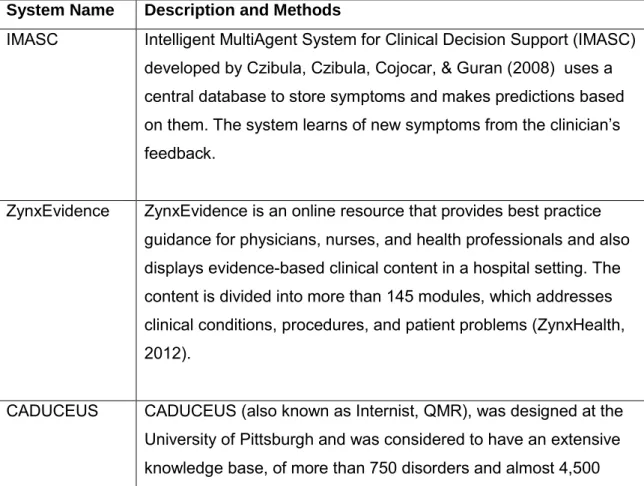
Before developing a methodology for GRiST improvement, it is important to know more about other CDSSs currently in use. The following table shows some of the prominent CDSSs along with a brief technical detail of those that are relevant to our research.
Table 1 Clinical Decision Support Systems and their methods
System Name Description and Methods
IMASC Intelligent MultiAgent System for Clinical Decision Support (IMASC) developed by Czibula, Czibula, Cojocar, & Guran (2008) uses a central database to store symptoms and makes predictions based on them. The system learns of new symptoms from the clinician’s feedback.
ZynxEvidence ZynxEvidence is an online resource that provides best practice guidance for physicians, nurses, and health professionals and also displays evidence-based clinical content in a hospital setting. The content is divided into more than 145 modules, which addresses clinical conditions, procedures, and patient problems (ZynxHealth, 2012).
CADUCEUS CADUCEUS (also known as Internist, QMR), was designed at the University of Pittsburgh and was considered to have an extensive knowledge base, of more than 750 disorders and almost 4,500
33
interrelated findings or disease manifestations. But to return a diagnosis a disease needed to be in the system. Updating the knowledge base became a huge task and it was last updated in 2001 (Moore and Loper, 2011).
MYCIN MYCIN developed by Shortliffe (1977) was a very early (1970) expert system, which used goal focussed reasoning in an IF – THEN method to search its knowledge base. MYCIN could ask additional questions about the patient, suggest appropriate testing, offer possible diagnosis and recommend a course of treatment (Moore and Loper, 2011).
Iliad Iliad was developed at the University of Utah. It uses the frame-based version of Bayesian reasoning to calculate the posterior probabilities of various diagnoses under consideration, given the findings present in a case. Iliad which was developed primarily for diagnosis in Internal Medicine, which now covers about 1500 diagnoses in this domain, based on several thousand findings (OpenClinical, 2001).
Isabel Isabel is a web-based diagnosis checklist system. Physicians enter age, gender and clinical features, either by free text or taken directly from an electronic medical record and Isabel instantly returns a list of possible diagnoses. The Isabel engine is powered by statistical natural language processing technology and is updated continually from medical textbooks and journals with 3 separate and proprietary taxonomies (Isabel, 2012).
Watson Recently the IBM Watson system became very well known. Watson
combines natural language processing, dynamic learning, and hypothesis generation and evaluation to give direct, confidence-based responses (High, 2012).
34
diseases and 30 thousand medical conditions. (Shahsavarani, Abadi, Kalkhoran, Jafari, & Qaranli, 2015).
Method: Knowledge-based.
Dxplain Diagnosis and differential diagnosis of internal diseases, educational application.
Method: Knowledge-based, pseudo-probabilistic algorithm, Bayesian logic, (Shahsavarani et al., 2015)
ESAGIL Diagnosis of diseases according to signs and symptoms, blood and urine test.
Method: Knowledge-based, dissociative reasoning (Shahsavarani et al., 2015)
Litmusdx Diagnosis and differential diagnosis of 11 thousand diseases, presentation of 300 therapeutic protocols, presentation of 50 thousand medicines, 200 thousand medicine usage cautions, medical test interpretations, medical files.
Method: Knowledge-based (Shahsavarani et al., 2015) Clinical Rules Medicine prescription, consumption monitoring.
Knowledge-based, Knowledge management, Clinical Rules Engine, G standard MFB, Andere protocollen (Shahsavarani et al., 2015) SimulConsult Diagnosis of 5300 diseases especially genetic and neurological.
Method: Knowledge-based, Bayesian inference engine, bioinformatics genome annotation, statistical pattern-matching approach (Shahsavarani et al., 2015).
There are many other CDSS systems in use, more information about them can be found in (Pawar and Patil, 2012), (Bright, Wong and Dhurjati, 2012) and (Curtain & Peterson, 2014). The underlying methodologies of different systems vary widely. In the next section, we have discussed methodologies that are used in mental health domain.
35
2.4.2 CDSS for Mental Health
The following are some of the well-known clinical decision support systems that are being used in mental health risk assessment.
Table 2 Example of CDSS in the mental health domain
System Name Description and Methods
OQ Analyst The OQ Analyst utilizes the Outcomes Questionnaires (OQ)
in electronic form to track general distress among patients.
Carepaths The Carepaths system uses the OQ Analyst functions along
with other disease-specific scales and integrates them into an online mental health electronic medical record offering.
Q-logic The Q-logic system uses the Brief Symptom Inventory
(BSI-18) for its main outcome measure. CRMT: Clinical Risk
Management
Tool/Working with Risk
The CRMT is a structured template checklist of relevant risk and contextual factors. The tool includes a structured assessment of suicide, neglect, violence and other risks FACE: Functional
Analysis of Care Environments
FACE is a portfolio of assessment tools designed for adult and older people’s mental health settings. Five sets of risk indicators are coded as present or absent and then a judgement of risk status (0–4) is given.
RAMAS: Risk Assessment
Management and Audit Systems
RAMAS consists of a framework and a set of structured professional judgement tools designed to improve quality and safety in mental health care.
START: Short-term Assessment of Risk and Treatability
START is a risk assessment and management decision support system developed in Canada. The service user’s strengths and risks on each of 20 dynamic factors are assessed on a scale of 0–2.
The above information is summarised from (Brown, 2012) and (Department of Health, 2007). In comparison to others, GRiST uses its own Galatean risk assessment model, which is discussed in Chapter 3.
36
2.4.3 CDSS and NLP Technology
According to Friedman (2005) the design of NLP based clinical decision support systems faces many issues such as availability of clinical text, confidentiality, interoperability, the expressiveness of the natural language, and abbreviated medical text. Over the last two decades, there have been efforts to develop biomedical NLP systems for mining information from clinical narratives and mainly two methods, rule-based and machine learning rule-based have been used (Liu, Weng and Yu, 2012). The two approaches are described in the following subsections.
2.4.3.1 Rule-Based Approach
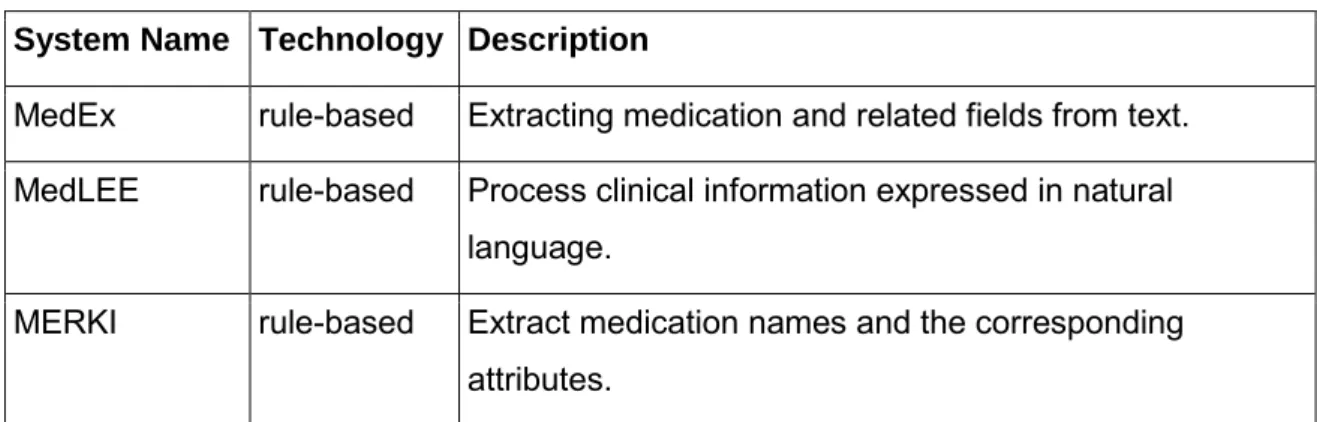
The rule-based system uses rules to make deductions or choices. Comprehensive syntactic or semantic knowledge rules are usually applied to extract encoded information from clinical narratives (Liu, Weng and Yu, 2012). Some rule-based systems are shown below:
Table 3 Rule-based CDSS example
System Name Technology Description
MedEx rule-based Extracting medication and related fields from text. MedLEE rule-based Process clinical information expressed in natural
language.
MERKI rule-based Extract medication names and the corresponding attributes.
37
2.4.3.2 Machine Learning-Based Approach
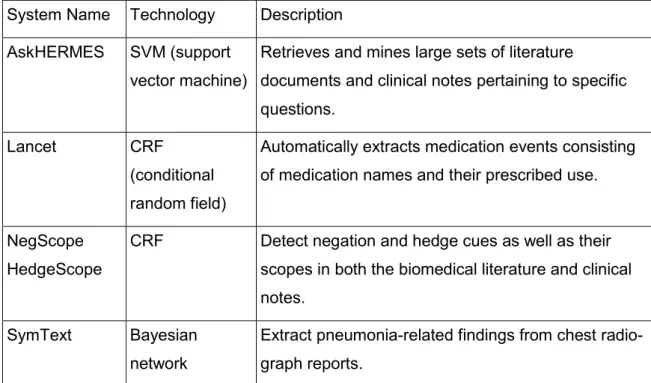
Machine learning based systems learn from their data source by using various statistical and artificial intelligence algorithms (Liu, Weng and Yu, 2012). Some machine learning-based systems are shown below:
Table 5 CDSS system and their technology
System Name Technology Description
AskHERMES SVM (support vector machine)
Retrieves and mines large sets of literature
documents and clinical notes pertaining to specific questions.
Lancet CRF
(conditional random field)
Automatically extracts medication events consisting of medication names and their prescribed use. NegScope
HedgeScope
CRF Detect negation and hedge cues as well as their
scopes in both the biomedical literature and clinical notes.
SymText Bayesian
network
Extract pneumonia-related findings from chest radio-graph reports.
Table 6: Machine Learning based approach
The above two tables are created by summarising the information provided in (Liu, Weng and Yu, 2012).
2.4.4 CDSS and Knowledge Representation
Constructing the Knowledge Base (KB) of a clinical decision support system is an important task that determines the success of the system (Stojkovska, Loskovska, & Member, 2010). Medical knowledge can be acquired and stored in many different ways for later use in a computerised system. A detailed review of the medical knowledge
38
acquisition and representation methods in CDSS has found the following common methods (Stojkovska et al., 2010):
Logical conditions: These are generally Boolean logic to check if a variable is within or outside of a bound. For example, “is the patient’s heart rate below 50 BPM?”. This is mainly used for alerts.
Rules: Contains IF-THEN rules. Reasoning process can chain together rules until a decision is reached. An example of CDSS using this method is MYCIN.
Graphs/Networks: Decision trees and artificial neural networks allow graphical representation of the medical knowledge. An example of CDSS using this method is DXplain.
Structural representations: Knowledge is stored in a well-organised structure such as ontology. An example of CDSS using this method is CENTAUR.
In GRiST, knowledge is represented using an ontology created by experts. The ontology creation process is discussed later in Chapter 3.
2.4.5 CDSS and Reasoning Methods
The reasoning is a fundamental task of the inference engine of a clinical decision support system, which is performed by combining medical knowledge with patient specific data and makes appropriate decisions (Aleksovska-Stojkovska & Loskovska, 2010). They have highlighted the following common methods of reasoning from the literature:
a) Rule-based reasoning is based on “if-then-else” rule statements.
b) A case-based reasoning searches for commonly occurring patterns that match the various stored cases.
39
c) Model-based reasoning provides a framework for diagnosing an artefact by comparing its behaviour with a model.
d) Bayesian reasoning is based on conditional probabilities. It predicts the probability of an event based on other events.
e) Heuristic reasoning methods exploit the information processing structure of the reasoning system and find reasonable answers.
f) A semantic network is a graphical representation of interconnected nodes that can be used to support automated systems for reasoning.
g) Neural networks are a black box modelling technique that model relationships by learning from historical data and pattern recognition.
h) Genetic algorithms are based on simplified evolutionary processes that search for optimal results.
Review of different modelling methods in health care can be found in (Stahl, 2008). In GRiST, the inference is performed by using the Galatean model. This research has tried to use other statistical and machine learning based techniques to predict risk and compared them with the clinicians given risk.
2.5
Scope and Challenges of CDSS
The NHS and Community Care Act (1990) had moved the emphasis from care in institutions to care in the community. As a result, scope and need for a reliable and user-friendly decision support system has increased (V. K. Sharma et al., 2010, p. 497). Research shows that clinical decision support systems improve both patient outcomes, as well as the cost of care (Berner & La Lande, 2007). Better decisions due to use of
40
CDSSs are likely to lead to higher patient safety with better treatment quality, less adverse events and reduced costs (Beeler, Bates, & Hug, 2014).
The Mental Health Taskforce published its report in February 2016, which highlighted the need to improve access to high-quality care for all. “The introduction of the access and waiting time standard for early intervention in psychosis (EIP) services and improving access to psychological therapy (IAPT) services heralded the start of a new approach to deliver this improved access and embed standards akin to those for physical health” (NHS England, 2016, p.5).
Many individuals may underreport stigmatized behaviours in person in an attempt to avoid shame or embarrassment, but web-based screening methods may encourage them to seek help (Michaels, Chu, Silva, Schulman, & Joiner, 2015). They stated that an online methodology could increase the ease by which participants at high or imminent risk of suicide access the service. According to them, the field of psychology is progressively using the internet for interventions and assessment, and it allows reaching large segments of the population easily.
A study by Kim et al. (2012) found that two information quality factors (information reliability and decision supporting capability) and one supporting factor (departmental support) significantly influence user satisfaction. They also found that the ease of use was also a significant factor. A review conducted on the performance of CDSS in literature and it is reported that electronic health records (EHRs) without clinical decision support (CDS) should not be expected to improve quality (Moore & Loper, 2011).
Despite increasing emphasis on CDSS in improving care and reducing costs, evidence supporting its widespread use is limited (Bright et al., 2012). A review of CDSS for the health industry, its success and related risk conducted by Al-gamdi (2014) reports the following factors for non-acceptance of CDSS:
• The system is complex, as a huge knowledge base needs to be searched in order to reach a decision.
• Time-consuming, for doctors and nurses as they are usually busy dealing with the complex diagnosis and do not have enough time to try new systems.
41
• Lacking decision accuracy, very few systems have reached the high level of accuracy that matched the diagnostic performance of medical professionals. • Lacking system usability, most early-developed systems were not user-friendly
and required a lot of training.
Analysis of 70 randomised controlled trials done by Kawamoto et al. ( 2005) identified four features strongly associated with a decision support system’s ability to improve clinical practice:
a) Decision support provided automatically as part of a clinical workflow, b) Decision support delivered at the time and place of decision making, c) Actionable recommendations provided, and
d) Computer based.
GRiST is a web-based, easily accessible system and based on a psychological model. However, it currently lacks background analysis and alert functionality, which is very important according to the above review. This research has endeavoured to add more notification and recommendation functionality to the GRiST system to make it more effective for its purpose. We would like to achieve this by text processing, automatic risk prediction, analysing GRiST node relationships and improving the reliability of the risk assessment. The following sections review existing literature, their shortcomings and link them to our research techniques.
2.6
Clinical Text Processing
Unstructured clinical texts may contain a rich amount of patient information but are not immediately accessible to any clinical application systems that require structured input (Y. Wu et al., 2012). Automatic extraction of concepts from the text is a prerequisite for
42
many NLP applications (Aronson, 2006). Languages are extremely expressive and often there are various different ways to describe the same medical concept (H. Chen, Fuller, Friedman, & Hersh, 2005). To use comments left in the GRiST system for further processing we have considered first extracting concepts from them. In this section, first we have reviewed generic keyphrase extraction methods, then discussed symptom extraction and phrase filtering methods in the existing literature.
2.6.1 Key Phrase Extraction
There are many approaches by which keyphrase extraction can be carried out, such as supervised and unsupervised machine learning, statistical methods, rule-based methods, domain specific methods and linguistic ones (Siddiqi & Sharan, 2015). The following paragraphs describe some of the well known systems and their methods. The KEA (Keyphrases Extraction Algorithm) calculates feature values using the lexical methods for each candidate phrase and then uses a machine-learning algorithm to predict which of the candidates are good keyphrases. It builds a prediction model using training documents with known keyphrases, and then uses the model to find keyphrases in new documents (Witten, Paynter, Frank, Gutwin, & Nevill-Manning, 1999).
H. Shi, Zhou, Qian, & Li (2009) used Semantic Role Labelling (SRL) based on the dependency trees with multi-features to extract key phrases. Rapid Automatic Keyword Extraction (RAKE) is an unsupervised, domain-independent, and language-independent method for extracting keywords from individual documents (Rose, Engel, Cramer, & Cowley, 2010). In this method, candidate phrases are generated by using stop words and phrase delimiters. RAKE ranks them by the sum of the scores for each of its words. The words are scored based on their frequency and co-occurrence.
Parameswaran (2010) used k-gram to extract concepts. He defined k-gram as a concise entity, which does not contain any extraneous words so that excluding them would identify the same entity. Sharma, Swaminathan and Yang (2010) developed an