Dowie, Jack; (2019) Shared decision making is a Preference-sensitive Formative Construct: the
Im-plications. European Journal for Person Centered Healthcare, 7 (3). pp. 506-517. ISSN 2052-5656
https://researchonline.lshtm.ac.uk/id/eprint/4655394
Downloaded from:
http://researchonline.lshtm.ac.uk/id/eprint/4655394/
DOI:
Usage Guidelines:
Please refer to usage guidelines at
https://researchonline.lshtm.ac.uk/policies.html
or alternatively
contact
[email protected]
.
506
ARTICLE
shared decision making is a Preference-sensitive Formative
Construct: the Implications
Jack Dowie PhD
Professor Emeritus of Health Impact Analysis, Faculty of Public Health and Policy, London School of Hygiene and Tropical Medicine, London, UK & Adjunct Professorof Multi-Criteria Decision Analysis at the Research Unit of General Practice, Department of Public Health, University of Southern Denmark, Odense, Denmark
Abstract
As with many constructs in healthcare (e.g., ‘evidence-based medicine’, ‘health-related quality of life’, ‘decision aid’) ‘shared decision-making’ is formative not reflective, that is, ‘it’ has no existence prior to its definition and measurement. Any particular formative construct is preference-sensitive, being based on the preferences of those who form it by their indicator selection and weighting. These preferences often reflect interests of various sorts, some material, many not (at least not directly), but often ones aligned with particular beliefs, ideologies or ideals. So cave litteras maiusculas - sdm not SDM. Since ‘shared’ is an adjectival qualifier of ‘decision-making’, fundamental preferences relevant to decision-making are relevant in any construction of sdm. We highlight two major preferences in relation to health decisions. One is for provider-controlled, direct-to-patient intermediation (inter) as contrasted with provider-independent, direct-to-person apomediation (apo). The second is for verbal deliberative reasoning (vdr) as contrasted with numerical analytical calculation (nac). From their cross-tabulation we can see that, within both practice and research - and in legal standards and ethical guidelines for both - sdm is currently being constructed exclusively within the intermediative verbal deliberative reasoning (‘inter-vdr’) frame. We compare and contrast inter-vdr with the three other possibilities - ‘inter-nac’, ‘apo-vdr’ and ‘apo-nac’. Dismissal or disregard of the latter, especially the last, on the grounds of credibility and trustworthiness, needs to be challenged by preference-based comparative evaluations, using unbiased measurement of costs and effectiveness, in order to optimise the development and delivery of personalised support for health and healthcare decisions.
Keywords
Apomediation, deliberation, formative construct, intermediation, Multi-Criteria Decision Analysis, person-centered healthcare, preference sensitivity, reflective construct, shared decision-making
Correspondence address
Professor Emeritus Jack Dowie, Faculty of Public Health and Policy, London School of Hygiene and Tropical Medicine 15-17 Tavistock Place, London WC1H 9SH, UK. E-mail: [email protected]
Accepted for publication: 24 July 2019
Introduction
The vast and expanding literature on shared decision-making in healthcare is a testament to its virtual ‘motherhood and apple pie’ status, that is, it is now such a
good thing that it cannot be seriously criticised or disparaged and one would be foolish to get into an argument about it. Concerns among healthcare professionals are widespread but mostly kept latent, with only a few serious public challenges, such as that by cardiologist Michel Accad:
Shared decision-making was conceived as a check against the paternalistic attitudes of doctors. On the surface, it may seem to promote a dialogue between patients and physicians that is too frequently neglected when doctors are inordinately self-important. However, SDM only muddies the waters of clinical decision
making and weakens the bond uniting patients and doctors. By diffusing responsibility - and therefore accountability - for medical decisions, SDM creates ambivalence and widens the distance between the two parties involved: it promotes a “hands off” attitude on the part of physicians while forcing on patients and their families a role they are neither capable of carrying out nor willing to take on [1].
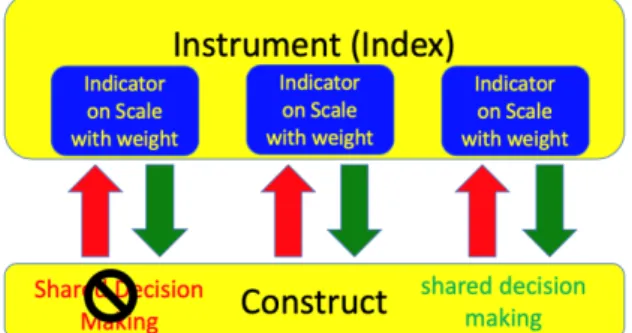
However, the purpose here is neither to praise nor bury ‘shared decision-making’. It is to affirm that ‘it’ does not and cannot exist, except as a particular manifestation of a latent, unobservable, formative construct [2-4] and to pursue the implications of this. ‘It’ does not have prior existence in the sense that a reflective construct, such as appendicitis exists and so can only be addressed and implemented through the indicators and indicator weights
used by a particular person, group or organisation to construct it (Figure 1). It is formed in the acts of definition
and measurement, so there are as many shared decision-makings as there are definitions and measures and no gold, or even base metal, standard definition or measure is possible.
Figure 1 Comparison of reflective and formative constructs
Formative constructs are essential in decision and policymaking. The point is not that they should not be used, but that selection among the various possible definitions and instruments is unavoidable and choosing to adopt and use a particular construct of (say) shared decision-making is a preference-sensitive decision. It is preference-based and, hence, given the not uncommon alignment of preferences and interests, often interest-based. It is asserted that it is up to those involved in the promotion and implementation of a particular construct of shared decision-making within a publicly-funded service for a population with heterogeneous preferences to acknowledge and disclose the role of their preferences in choosing this form, rather than one of the alternatives. We repeatedly stress in what follows that there can be no objection to the dominance of any particular construction of sdm in practice and guidelines, unless it is used, either overtly or covertly, to deny those with other preferences access to alternative constructs and the decision support tools that would be appropriate for them. In a publicly-resourced service the only valid arguments for denying these alternative forms to those who would prefer them are economic. There is therefore a strong case for the rigorous, fair and comprehensive evaluation of implementations of all the major constructs of sdm - evaluation in which particular interests and preferences (including those which may influence ethics committees) do not bias the measures of costs and effectiveness in such a way as to guarantee the overall result is in their favour.
shared decision making: cave
litteras maiusculas
The rise to prominence of shared decision-making echoes that of evidence-based medicine. David Eddy has pointed
out that the evidence-based movement arose primarily from a desire to standardise care, not to individualise it [5] and we now observe parallel efforts to standardise ‘patient-centred care’ within a particular construction of ‘shared decision-making’, in no small part as a response to the criticism of standardised ‘evidence-based medicine’. But both constructs share the same problem. Given their formative nature, the pursuit of any preference-free conclusions about either is equivalent to hunting the mythical snark with a blank map [6].
‘Shared Decision Making and Improving Health Care: The Answer Is Not In’ announced Victor Montori and colleagues in an editorial on the fifth iteration of the Cochrane review on SDM tools, the first of which appeared 16 years earlier [7]. A short summary of what they said will be useful to draw on:
In SDM, clinicians and patients work together to understand the patient’s situation and determine how best to address it … There are at least 2 distinct types of SDM tools: Patient Decision Aids (PtDAs) and conversation aids (sometimes called within-encounter decision aids) … PtDAs directly assist patients in making their own decisions, or indirectly in preparing them to participate in SDM conversations with their clinicians … Cochrane found inconsistent effects of PtDAs on health care use, outcomes, and costs … Conversation aids are designed to directly support the conversations that patients and clinicians have when making decisions together. Their aim is to improve the quality of the SDM process rather than surrogate outcomes such as patient knowledge … Conversation aids for use within the clinical encounter appear to promote patient-clinician interactions consistent with SDM … When properly designed, they offer only the information necessary to support the patient-clinician conversation (the clinician can supplement information as needed), and demand little to no work of the patient before the consultation … Future research should discover and evaluate new ways to promote patient involvement in making important health care decisions that rely on, rather than eschew, meaningful conversations between patients and clinicians [7] (p.617).
Throughout this editorial sdm is treated as a single construct - ‘SDM’ - various implementations of which, and tools for which, can be the subject of reviews, analyses and meta-analyses, employing a variety of methodologies. This construction of sdm has the sharing occurring within the clinician and patient dyad, ruling out any sharing between the person and other people or sources, in addition to (possibly) the clinician. Crucially, the explicit aim of the aid is seen as being to improve ‘the quality of the SDM process’, not to improve the quality of the decision, which is not mentioned. The idea of any significant disconnect between these two qualities is clearly not contemplated.
Even those who have major doubts about what is to count as shared decision-making continue to treat it as if it is a single construct. As a recent excellent example, Maria Clayman, Pår Gulbrandsen and colleagues seek to widen its scope, freeing it from what they see as the medical-encounter-centricity in which the sharing occurs between
‘the patient in the clinic’ and the healthcare professional, and the decision is about health, or, more likely, illness [8,9]. They want to broaden, deepen and lengthen the
construct of sdm so that it focuses on ‘the person in the world’, giving it a more external, social relationship-centric, focus. The whole human being - person not patient - is to be seen as making - and sharing - existential decisions within their living set of relationships. The relationship with the healthcare professional is a very important one, but one of many within this much expanded context. Moving to ‘the person in the clinic’ is a necessary, but not sufficient, change.
A more radical version of this suggestion, by Gulbrandsen and Gerwing, involves abandoning the term sdm altogether, replacing the verb ‘sharing’ by ‘contextualising’ and referring only to ‘contextualising decisions’ [10]. However, this would merely replace one monistic construct with another, continuing the pursuit of an unattainable umbrella definition and measure covering multiple constructs.
The debates segue between what is to count as sdm and how it is to be counted. Again, we observe most contributions to the topic assume the existence of a single underlying construct. In a Norwegian study that Clayman and colleagues cite with approval, Noralie Geessink et al. [11] note that in recent years:
… several new observer instruments covering different parts and perspectives on the SDM concept have been developed. It has been suggested that SDM should be seen in the context of broader communication skills and investigated by taking into account the entire clinical encounter or even centred on the person rather than the clinical encounter [11] (p.1768). (italicization mine)
As a result of their monistic conception of sdm, the researchers administered several measures that have been proposed as relevant to sdm - OPTION 5 and 12, SDM-Q-9, Visual Analogue Scale for Involvement (VAS-I), MAPPIN’SDM - and compared the results. However, while such comparisons may be of interest to decision-makers faced with the task of selecting one to use from among them, these instruments generate measures of different constructs of sdm, not different measures of ‘sdm’.
The simple point here is this: shared decision-making does not exist except as a socially-constructed field of inquiry and activity. Hence cave litteras maiusculas: in a one-off attempt to draw attention to this reification this paper does not use initial capitals, or the alphabetism ‘SDM’, and abbreviate shared decision-making to sdm (i.e., all lower case). The same applies to other formative constructs mentioned. This is not an attempt - which would be forlorn - to stop this styling. Nor is it a criticism of the setting up of societies or centres, with this capitalised label, in order to research the topic of sdm or implement an activity under this label. This can legitimately happen, as it does or could with thousands of other topics, such as ‘Shared Holiday Making’, ‘Shared Meal Making’ or ‘Shared Love Making’. It is simply intended to visually reinforce the point that such reification of formative constructs is far from harmless. Beyond the formal reasons
for being alert to the ontological transgression involved, notably the improper psychometric validation of instruments by Cronbach’s alpha [12], it can easily mask anti-pluralist attempts to impose particular definitions and measures in the material and/or ideological interests of some stakeholders. ‘Stakeholders’, by definition, have ‘skin in the game’, which is both desirable and problematic. Formative constructs require a pluralism that is currently too rare in all sectors of healthcare. This includes applied research, where, despite asseverations to the contrary regarding the virtues of multi-disciplinary collaboration, silos are ruthlessly competitive in the search for funding, publications and promotions. In these competitions, having one’s preferred form of a construct established as the dominant one, ideally written into law, as in Washington state (https://www.hca.wa.gov/about- hca/healthier-washington/patient-decision-aids-pdas#what-pdas-has-hca-certified), can be a major weapon, as well as a source of publication bias. It would be more appropriate - and ethical - to interpret contributions to the debate on the topic of sdm as arguing for additions to the portfolio of constructs gathered under that label, rather than as calls to revise a single construct, implicitly and inappropriately treated as reflective, for which a universal standardised measure is the holy grail.
This is not to suggest that widespread agreement on, and development of standards for, particular constructs of sdm is to be opposed. Indeed, as already stated, these are essential, as is most evidently the case with the various generic constructs - and hence various measures - of ‘health-related quality of life (hrqol)’. The key point is that each of the latter is explicitly based on a set of group preferences or ‘tariff’ for different sets of items or domains. It is attempts to impose, imply, or even contemplate a universalstandard for a formative construct such as sdm or hrqol, thereby denying its inherent preference-sensitivity, that should be resisted, because of the potential harms. These potential harms arise from a decision-maker not having available the particular construct that would be most appropriate, given their preferences. It follows that choice from a menu of sdm constructs should not only be preserved, but facilitated, in order to prevent control of the menu by those pursuing particular ideologies or interests, however well-intentioned. This pluralism will encounter resistance, mainly covert, as a result of the conflicts of interest of stakeholders, frequently material, but often, and equally if not more important, professional and/or ideological. Interpreting such interests as merely attitudinal or cultural ‘barriers’ or ‘obstacles’ to be overcome [13,14] overlooks their more fundamental bases and underestimates the magnitude of the challenge they pose. It also distracts from addressing these fundamental bases directly, the first task in which is to establish the nature of the alternative constructs of sdm.
decision making
It is both interesting and relevant that the topic of shared
interest and activity, given that decision-making processes, especially more analytic approaches to decision-making, have never been a significant concern of the healthcare professions, as exemplified in its continuing absence from medical education and training [15] and the well-documented consequences of this [16]. It would not be unfair to suggest that the medical profession has become seriously interested in decision-making processes, beyond expertise- and experience-based ‘taking into account’ and ‘clinical judgement’ modes, only since the need to ‘share’ has arisen from external demands for more ‘patient-centred’ and ‘user-engaged’ care. Demands now given increased force by the explicit and transparent elicitation and integration of patient preferences mandated by the Montgomery legal ruling (see later).
Since ‘shared’ is an adjectival qualifier of ‘making’, fundamental preferences relevant to decision-making are relevant in any construction of sdm. Two major ones may be highlighted here in relation to health decision-making, within which healthcare/service decision-making is a subcomponent. One is for provider-controlled, direct-to-patient intermediation in contrast to provider-independent, direct-to-person apomediation. The other is for verbal deliberative reasoning (vdr) in contrast to
numerical analytical calculation (nac). The second distinction contrasts ‘verbal’ and ‘numerical’, rather than ‘qualitative’ and ‘quantitative’, because qualitative approaches necessarily involve quantifying magnitudes, simply preferring to use verbal quantifiers rather than numerical ones.
In the cross-tabulation of the two distinctions in a 2 by 2 matrix it is clear that current sdm activity, both research and practice, occurs within the frame of intermediation involving verbal deliberative reasoning (‘inter-vdr sdm’ for short). Before proceeding to elaborate on this and the other the three cells of the matrix, the message of the previous section is re-emphasised. Use of a particular construct of sdm within any of these four frames is acceptable, subject to it being acknowledged as a preference-sensitive choice - not to be regarded or presented as the way to implement sdm, or even as the best way to implement it, as opposed to one based on specific preferences drawn from a set of heterogeneous possibilities. Failure to highlight this is a sign that particular interests and/or ideologies may be being protected, with or without self-awareness of those involved. In many cases these interests can be quite legitimately defended, so the only requirement is that they be disclosed and defended as preferences, not taken for granted as being ‘the right way’ on apparently value-free grounds. The key differences between the four constructs can be best established by reference to the origins, location and type of decision support that is - or is not - involved. We generalise mainly on the basis of the range of decision aids in the Ottawa inventory [https://decisionaid.ohri.ca/AZlist.html], though note that this inventory is itself based on a particular set of preferences regarding the preference-sensitive formative construct ‘decision aid’.
Following Gunther Eysenbach [17], decision support is ‘apomediative’ when the resources involved are produced independently of the provider of the good or service in
question (apo = away from) and are delivered ‘direct to the
person/citizen/consumer/user’ in the community. Familiar examples of apomediative decision support resources, based on informal multi-criteria decision analytic models, are the proliferating product and service comparison websites, such as ‘Which’ in the UK, ‘Consumer Reports’ in the US, ‘Choice’ in Australia, and ‘Taenk’ in Denmark. Apomediation is distinguished from ‘intermediation,’ where the provider develops and delivers a decision support resource on the basis of their perceptions and preference-based decisions as to what the patient will benefit from, as well as their (in)ability or (un)willingness to deliver options that could potentially be covered in the resource. Intermediation is not provider-independent and the options and criteria that would be present in an apomediative aid may be censored or filtered on the basis of the beliefs, values, interests and procedures of providers - and any other stakeholders involved in intermediative decision aid development. Open access decision support tools, which constitute the main type of apomediative resource, eschew such option and criteria censoring or filtering, seeking to supply high-quality independent guidance, without conflicts of interest of any sort. The apomediative tool will be designed to incorporate all the functional criteria of interest to the person, not only, or mainly, the ‘clinical’ ones of interest to the provider (e.g., bio or other markers).
Apomediation is also to be distinguished from ‘dis-intermediation,’ where the individual, often a dissatisfied patient, bypasses healthcare providers in an attempt to find what they want, for example, by doing anonymous internet searches. Apomediation can be seen as acknowledging some of the motivations underlying dis-intermediation, but seeking to supply a better alternative to Dr Google - one which will be superior, or inferior, to intermediation
depending on the preferences of the person. If engagement with an apomediative aid results in a decision to contact a healthcare professional, which will sometimes be the case, we have the possibility of hybrid ‘apo-intermediation’. However, in this case the clinician will engage with the empowered person in a way that is very different from that which would characterise pure intermediative engagement with a dependent patient. They will need to be prepared to discuss options in the apomediative tool that may not have appeared in an intermediative aid for the same decision. For instance, a provider may have been unwilling to include options in an intermediative aid for which their procedures require a test or scan result. In some places in Denmark, as just one example, prescription of any medication for the primary prevention of fragility fractures requires a DXA scan.
Apomediation does not deny that the clinician may know, or be able to access or acquire, more information
about the person than is available prior to a consultation. But neither does it assume that this extra information would change the preference-based opinion of the apomediative decision support tool if it were to be incorporated - as it can be in the apo-intermediative context. The tool will routinely warn that contraindications, unknown to the user, may emerge. Apomediation does not accept the idea of ‘lines of
treatment’, since any necessary trade-offs between effectiveness, side effects/toxicity and other criteria are to be made by the individual person in the decision supporting process, not pre-empted in guidelines at the service or practice level. Cost-effectiveness becomes the only legitimate basis for lines in the providing or denying of an intervention to a particular person or group in a resource-constrained service. Apomediative decision support tools will not include this as a criterion, but normally alert the person to the possibility of option denial on this basis, leaving it to the provider to implement it.
To avoid lengthy repetition, from this point we may abbreviate the four high-level types of sdm construct as follows:1
• inter-vdr = intermediation via verbal deliberative reasoning
• inter-nac = intermediation via numerical analytic calculation
• apo-vdr = apomediation via verbal deliberative reasoning
• apo-nac = apomediation via numerical analytic calculation
inter-vdr sdm
With the rare exceptions introduced in the following section, intermediative decision support is achieved through aids embedded in a decision-making process characterised by verbal deliberative reasoning. Numbers may be presented to communicate information about one or two major risks (often in visual form, such as in frequency displays of happy and sad faces), but most magnitudes are quantified verbally (e.g., ‘few’, ‘many’, ‘rare’ ‘some’). Occasionally, there is quantification of the individual’s preferences, but usually in verbal form. Synthesis of personalised evidence and personal preferences into a score for each of the various options is therefore impossible. In any case, this type of aid is not intended to produce a preliminary opinion and indeed it is usually made clear that it is deliberately avoiding doing so, in order not to interfere with the intuitive ‘making up of mind’ process that is assumed to be the correct one.
The seminal papers by Cathy Charles, Amiram Gafni, Tim Whelan and others, of which only two are cited here [18,19], are focused exclusively on ‘it takes two to tango’ inter-vdr sdm. Implementations of this construction of sdm typically incorporate aids designed to be used only in a clinical consultation, as ‘encounter aids’, though they are sometimes made available to the patient offsite or online as preparation for the encounter.
The recent review of encounter / inter-vdr aids by Scalia and colleagues covered 23 RCTs and 30 non-randomized studies [20]. In line with most previous
1 A short video introducing these constructs is available at
https://youtu.be/GxootSa1GC4.
findings they concluded that such aids significantly increased knowledge, lowered decisional conflict, increased observational-based assessment of shared decision-making and satisfaction with the decision-making process, all without increasing visit durations. But while ‘the narrative synthesis showed that encounter tools have high utility for patients and clinicians … important barriers to implementation exist (i.e., time constraints) at the clinical and organizational level’. Examples of the included aids included were those produced within the Mayo unit [21], those of the Option Grid collaborative, now taken over by EBSCO [22]. But not the NICE decision aids [23].
We can now add those under development within the recent organisation-wide adoption of sdm in the Patients’ Cancer Hospital in Vejle, Denmark [24]:
Establishing SDM was, and is, a central tenet of this vision, leading to the creation of a Centre for Shared Decision-Making in 2014 … directed by an oncologist on the hospital staff … The Centre’s leadership identified five factors likely to be instrumental in effectively implementing SDM across an organization - (1) leadership: organizational, clinical and patient leaders who will champion and facilitate SDM, including practical support to overcome obstacles; (2) skills development: awareness building, preparation, training and support for clinicians and patients; (3) tools: availability of patient decision aids and other materials to support SDM, together with a means of embedding them into clinical pathways to ensure ease of use; (4) performance measures: instruments for monitoring effect on decision quality and patient outcomes and (5) proof of concept: demonstration projects and evidence that SDM can be beneficial in the local context.
… the Centre developed criteria that all decision aids should meet: Present the options; structure the conversation; encourage dialogue on what matters most to patients; offer balanced information, including relevant statistics on pros and cons of specific options; include patient stories; and guide a shared decision in the end. Designer involvement and design research have led to the generous use of icons and illustrations, and minimal use of written words, in the Centre’s series of decision aids developed thus far. The decision aids are in-consultation tools for the use of clinicians and patients together. … The decision aid is in paper format because the patients preferred a tangible tool that they can review rather than a digital version or application which they found harder to use [24] (pp. 230,233).
It seems unlikely that this last point was true of all
patients, even if it was a majority view and no evidence is produced on the claim. The presentation of such an unqualified generalisation suggests a possible reluctance to admit preference heterogeneity in relation to decision aids. It mirrors the failure to acknowledge that the construct of shared decision-making being implemented is a preference-based one. The quotation confirms that, to have any chance of success, the Vejle initiative had to meet the preferences of affected stakeholders, which, within a hospital, unsurprisingly mandated an inter-vdr frame. The published description and design of the Vejle decision aids,
in their virtually complete rejection of numbers, let alone anything approaching calculation, confirms this.
As mentioned earlier, Clayman and colleagues [8,9] see the narrow focus on the individual patient’s autonomy in mainstream sdm as undesirable for several reasons: it excludes many facets of the roles, actions and influences of family members in decision-making; focuses solely on the medical encounter; ignores the informational environment to which patients have access and treats each encounter as independent of all others. While contemplating adding some elements of apomediation - consultation with family, friends and others who are not healthcare providers or professionals - they remain within the inter-vdr frame of sdm because the healthcare professional is still at centre stage, albeit now tasked with sharing decision-making with ‘the person in the world’. Incidentally, Clayman et al. [8,9], by omission, do not see decision aids as playing a significant role in this sharing. This may reflect their expressed wish to avoid the concept of a crunch ‘moment of decision’, whether in the consultation, or before or after it.
The current dominance of inter-vdr sdm is not surprising given that the core course ‘Introduction to Shared Decision Making and Patient Decision Aids’ provided by the leading society in the field, the Society for Medical Decision Making (SMDM), is restricted to it [25]. It makes no acknowledgement that this a preference-based choice and no materials relating to other constructs is provided:
Shared decision making provides a model for patients and their clinicians to engage in a deliberative, communicative process about health decisions in which there is no clear best option from an evidence standpoint.
This statement is highly contentious in itself, implying an unacceptable ignoring of the preference inputs into decisions, since the evidence alone can never establish ‘a clear best option’. Clinician equipoise based on population level evidence cannot ethically be translated into an assumption of personalised decisional equipoise and this is an ever-present danger in inter-vdr. What is more surprising, given that one of the other key SMDM core courses is an ‘Introduction to Medical Decision Analysis (Decision-Analytic Modeling)’, is the complete disconnect between it and that on sdm, which refers exclusively to inter-vdr with no mention of decision analysis or of any sort of numerical analytic calculation. The treatment of sdm as a single (inter-vdr) construct permeates the presentation of the course:
… participants will learn the basics about shared decision making including why it is important, how it differs from other related clinical tools … and what shared decision making has been proven to do (and not do). We will also discuss how shared decision making occurs in practice, particularly how it can be improved in patient-physician discussions and how risk communication methods can improve decision making.
inter-nac sdm
The possibility of intermediation involving numerical analytic calculation was pursued over some decades by James Dolan, using the Analytic Hierarchy Process (AHP) implementation of Multi-Criteria Decision Analysis (MCDA) [26]:
… the steps involved in using a multi-criteria method are analogous to the essential elements of a shared decision-making process. This similarity suggests that multi-criteria methods can be used as the basis for a new generation of clinical decision support systems that will facilitate the clinical implementation of high quality shared decision-making… To effectively implement clinical shared decision making, it is especially important to identify and discuss differences in values and preferences and their effect on medical decisions because we know that in many cases the decision priorities of doctors and patients differ . The development of methods that will promote efficient and effective communication among all involved stakeholders is, therefore, a high priority topic for shared decision-making research … [26] (p.419).
Despite favourable trials of aids including ones for gastrointestinal bleeding, management of neonatal group B streptococcal sepsis, and colorectal cancer screening, this work has had little impact at the clinical level. The complexity of AHP and especially of the unique pairwise comparison method used to establish criteria importance weights and performance ratings, may be contributing factors, although Dolan found that the majority of patients in the AHP group were ‘able to complete the analysis without difficulty and indicated that they liked the experience and thought it should be used routinely.’
However, there has been a development of great potential significance for inter-nac recently in the development and successful feasibility testing of a personalised evidence-based ‘health-optimization system’ based on the frameworks of shared decision-making and multi-criteria decision analysis [27]. According to Eiring and colleagues [27], it enables patients, clinicians, and caregivers to collaborate in optimizing the patient’s health on a shared platform. A crucial feature enables patients and clinicians to explore the likely value of treatments based on mathematical integration of self-reported and research data and the patient’s preferences. A comparison of the system with current standards for clinical practice guidelines and patient decision aids was performed, revealing that 18 out of 23 components of the system were not required in the prevailing international standard for patient decision aids. This can be taken as clear confirmation of the danger of seeking universal standards for such systems, when they are dominated by the inter-vdr construction of sdm.
There seems little doubt that the lack of resources being put into developing and trialing inter-nac decision support comes from those with preferences favouring ‘vdr sdm’. Among other preferences, these include the wish to avoid
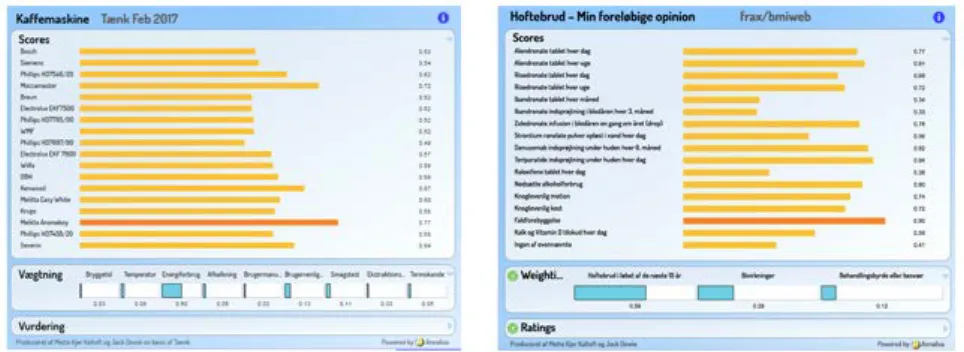
Figure 2 Comparison of Annalisa output screens for Taenk coffee machine comparison and fragility fracture decision support tool
the complete separation of preferences and evidence mandatory in MCDA, to avoid their algorithmic synthesis into a numerical score (opinion) for each option, and to avoid the consequent potential exposure of, and need to accept and resolve, dyadic discordance. In contrast, proponents of nac prefer to avoid the confounding of preferences and evidence almost inevitable in vdr; prefer to see the result of the algorithmic synthesis of preferences and evidence in a numerical score (opinion) for each option and prefer to expose, discuss and transparently resolve any dyadic discordance.
apo-vdr sdm
It might appear that the increasing number of decision aids made available by organisations and groups such as those on public access produced by NICE [23] constitute this form of sdm. However, while they may indeed be of high quality, most do not meet the fundamental criterion of apomediation, that is, provider-independence. NICE is officially an independent ‘non-Departmental Public Body’ but in all key respects it is part of the NHS. Patient-based social media groups and societies, which in principle constitute a form of apomediation, usually have major inputs from professionals and providers - indeed usually feature this as a major attraction - so are also in breach of this condition. We can therefore offer no specific example for the apo-vdr construct of sdm.
The reader will recall that we are talking of preferences here, so those who find apo-vdr or inter-nac unattractive, unwise or objectionable, are fully entitled to express their
preference in favour of inter-vdr. But that is the grounding of their position. In case there is any doubt, this point applies equally to the fourth and final high-level construct of sdm.
apo-nac sdm
As signified by its apomediative appellation, this differs from the ‘inter-nac’ approach above in its origins and
intended audience. The case for including it in the basic menu of sdm constructs is essentially the same:
The analysis-based approach has one compelling advantage in the provision of patient/person-centred care and genuinely shared decision making. In its multicriteria form, decision analysis provides a generic approach to all decisions, that is, it is not condition-specific and does not mandate the reasoning expertise and knowledge acquisition in the particular area (e.g. a disease) required to follow and share expertise-based prescriptions. As long as expertise-based prescription is the sole basis of the clinical encounter, patient empowerment will be a very difficult and demanding task. An MCDA-based approach allows the person/patient to input their preferences as importance weights for criteria in a straightforward manner and to have them transparently combined with the published evidence and the clinician’s expertise [28] (p.5).
Interestingly, the basic principles and processes of MCDA are endorsed by many people when asked how a decision should be made, even though they may follow its principles and processes only as consumers of goods and services. They have had no opportunity to experience it in relation to health and healthcare, except in relation to non-prescription items such as fish oil, headache pills and other over-the-counter products. Salkeld et al., have successfully trialed an apo-nac aid [29] and in a recent research project used the output on 18 coffee machines from the Danish consumer council comparison website (taenk.dk) as a ‘warm-up’ for a decision support tool comparing 17 options for the primary prevention of fragility fractures (Figure 2).
Within MCDA, there are lower-level preference-based choices of construct to be made. For example, in contrast to the AHP, Annalisa adopts the simple and colloquially familiar ‘weighted-sum’ approach; all attributes exist at the same level (there is no hierarchy of criteria and sub-criteria); the performance of each option is directly rated on each attribute; the importance of each attribute is directly weighted in relation to that of all the mother attributes (no pairwise comparisons) and the option scores are their expected values calculated by summing an option’s ratings on each attribute multiplied by the attribute’s importance weighting.
Given that the selection of a decision procedure or decision support system to adopt involves multiple criteria and is therefore preference-sensitive, it does not make sense to ask whether any particular instantiation ‘works’ in some overall or average sense as the basis of a clinical decision support system. The answer will vary as a function of the particular decision maker’s preferences in the particular context as well as the quality of the instantiation.
In apo-nac sdm, ‘sharing’ is with a maximally independent organisation, not a healthcare provider. This form of sdm will be attractive to that section of the population whose preferences reflect concerns - extending to distrust - about the ‘medical-industrial complex’ and the potential harms it creates, including overdiagnosis and overtreatment arising from ‘disease mongering’. The need for provider independence has become particularly obvious in cases such as screening, where the population health aims of a health service often lead to the presentation of the harms and benefits in a way that will increase uptake, rather than facilitate the optimization of an individual’s decision. The fundamental clash between these two aims is not fudged in genuinely person and citizen-centred care - or in apomediative approaches. Attempts within the healthcare professions to address such problems as ‘too much medicine’ are to be admired, but are inevitably restricted by professional commitments and loyalties.
An autonomous person may prefer to engage with the decision support provided in apo-nac sdm to decide whether or not to engage with a health provider. If they decide to so engage, they will enter the ‘apo-inter mediative’ clinical encounter empowered by ‘getting a second opinion first’.
In an attempt to assist decision makers in making this decision we have developed a decision support tool that can be used in either setting. To test a demo version go to survey 1498 at https://ale.rsyd.dk. The tool is introduced in [30].
Clinical expertise has an important place in the development of apo-nac tools. In the same way as a ‘Taenk’ evaluation of coffee machines draws on technical experts to rate the performance of the various products, apo-nac decision support tools will draw on the expertise of healthcare professionals for their expert estimates of the
performance rates of options on criteria where the evidential base is weak or non-existent. However, they will have no role in providing either preferences or overall option evaluations, since these are generated in the apo-nac engagement process.
Numerous examples of how apomediative decision support tools can be developed, either as translations of intermediative decision aids or direct from research studies, are available at http://cafeannalisa.org.uk.
Discussion
According to David Eddy, evidence-based medicine emerged to challenge medicine’s complacency. That complacency reflected a fundamental assumption:
… that through the rigors of medical education, followed by continuing education, journals, individual experiences, and exposure to colleagues, each physician always thought the right thoughts and did the right things. The idea was that when a physician faced a patient, by some fundamentally human process called the “art of medicine” or “clinical judgment,” the physician would synthesize all of the important information about the patient, relevant research, and experiences with previous patients to determine the best course of action. “Medical decision making” as a field worthy of study did not exist. Analytical methods and mathematical models were limited to research projects. Guidelines were merely a way for experts to pass occasional pieces of advice to nonexperts ... Diseases did not require any management beyond what physicians were already providing, and performancewas taken for granted … informal guidelines were playing an essential role in medicine by simplifying decisions to a point manageable by busy physicians. However, when they were tracked back to their origins, it became clear that they were simply the beliefs of the authors, or at best a consensus of experts. In none of the cases was there an explicit rationale tied to evidence … [5] (p.1).
The perceived successes of ebm in challenging this complacency have actually been a major factor in the emergence of sdm as a way of overcoming its group level option evaluations, which are inappropriate for person-centred individual decision-making [31].
How do the various constructs of sdm within each of the above frames measure up legally and ethically? A key development in this respect is the recent Montgomery ruling in the UK, which seems likely to be followed elsewhere.
According to Chan and colleagues [32], the Montgomery ruling:
… established that, rather than being a matter for clinical judgment to be assessed by professional medical opinion, a patient should be told whatever they want to know, not what the doctor thinks they should be told … it redefined the standard for informed consent and disclosure [from] whether a doctor’s conduct would be supported by a responsible body of clinicians … [to] establishing a duty of care to warn of material risks … [here] the test of materiality [is] whether “a reasonable person in the patient’s position would be likely to attach significance to the risk, or the doctor is or should reasonably be aware that the particular patient would be likely to attach significance to it [32] (p.1).
… the ethical and legal position is clear: doctors must not withhold information simply because they disagree with the decision the patient is likely to make if given that information. The doctor’s duty is simply to treat patients according to their interests, which might include being given more information than usual … the difficulties of conveying information about treatment and risks should not be taken to indicate that patients are incapable of understanding medical information or that patient autonomy in decision making is meaningless [32] (p.2).
While constructs within each of the four high-level types of sdm are potentially capable of meeting this ‘reasonable patient’ standard, inter-vdr constructs will have more difficulty providing the basic documentation required to defend a case, especially when this relates to information about options not included in the intermediative decision aid. A nac form of sdm, particularly an apo-one based on MCDA, will immediately and explicitly confirm that the benefits and harms to the individual person have been assessed, using their preferences in relation to what is important in combination with the best available evidence and clinician estimates of the option effects and side effects.
There are aspects of the Montgomery ruling which blur the line between the legal ‘reasonable patient’ standard and the ethical ‘actual patient’ standard (‘subjective patient’ in legal terminology). But whatever the case law is held to be at any moment, the clinician has an ethical responsibility to the individual person that extends beyond any legal requirement.
Ethical discussions are frequently unsatisfactory because of the reluctance of the participants to specify how they will, in practice decisions, reconcile the inevitably competing demands of observing rights and duties on the one hand and taking account of consequences (including resourcing ones) on the other. Whether they are fundamentally deontologists (roughly doing right is doing good) or consequentialists (roughly doing good is doing right), many are likely to deny that their adherence to one of these positions - or some blend of them - is fundamentally a preference-based value judgment. What we can say about our four high-level types of sdm constructs is that there is nothing inherently unethical within any of them. The quality of an apo-nac aid may not be high by normative standards - its transparency makes this relatively easy to assess - but then the quality of inter-vdr sdm cannot simply be assumed to be high either - and its lack of transparency makes it very difficult to assess.
Research suggests there are ‘many miles to go’ in the implementation, both inter- and intra-culturally of inter-vdr decision aids [13]. Current attempts to reduce the ‘barriers’ and ‘obstacles’ focus on changing the attitudes, interpretations, and resources of clinicians, patients and administrators. However, while asymmetries of power are acknowledged [33] the material and non-material interests underlying these should not be underestimated.
Maria Clayman anthropomorphises sdm as a single person:
... research on SDM and patient engagement in healthcare is in its adolescence: it has emerged but is not quite a mature field ... As with many other types of interventions, there is a clear and pressing need for research into SDM’s implementation, dissemination, and sustainability ... An adolsecent sitting at the intersection of evidence-based medicine, health communication, and cognitive psychology, SDM appears to be on the verge of transformation into its own, unique field of inquiry ... A lingering problem for the field is that SDM is measured in myriad ways [34] (p.1723).
We can applaud the insights of Clayman and her colleagues into shared decision-making, while
simultaneously pointing out that they do not address the above key distinctions in decision-making. Apomediation supplies the wider and more extended possibilities they seek, so it is crucial to see that when we endorse much of the Clayman-Gulbrandsen argument it is because, like them, we prefer a different construct of sdm to the mainstream, clinic-centric one. However, they do not see it that way and, in trying to broaden, deepen and lengthen the monistic construct of sdm and stop it being measured in a myriad of ways, they are fundamentally limited by the idea that there is a thing called ‘SDM’.
In the 2018 fifth iteration of the Cochrane systematic review of interventions for increasing the use of shared decision-making by healthcare professionals, it was concluded (on the basis of 87 studies, 45,641 patients and 3113 healthcare professionals) that it is uncertain whether any interventions of any type for increasing use of SDM by healthcare professionals (targeting either professionals, patients or both) are effective in increasing the use of SDM [35]. The reason provided for this uncertainty is that the certainty of the evidence is low or very low. The possibility that the problem is inherent in the attempt to arrive at conclusions regarding multiple constructs of sdm is not seriously contemplated.
The qualitative study of Savelberg and colleagues in the context of breast cancer care [36] highlights the current difficulties clinicians have in engaging in inter-vdr sdm constructed in the well-publicised ‘choice talk’-‘option talk’- ‘decision talk’ sequence [37]:
Most clinicians primarily focused on the first steps of SDM ignoring preference and decision talk. The remaining steps, like the uptake of the Patient Decision Aid in the clinical pathway, were regarded as challenging, with surgeons, intentionally or unconsciously, delegating this responsibility to nurses. One barrier to successfully implementing SDM seems to lie in the fact that clinicians were unaware of their lack of competency regarding SDM [36] (p.92).
As a result, non-mediative decision-making frequently occurred, leading to the conclusion that:
… the Multi-Disciplinary Team in its current form is a potential barrier to implementing SDM, as quite often, despite the preference-sensitive decisions, only one treatment option was recommended [36] (p.97).
This can be taken as further support for the contention that attempting to insert an inter-vdr decision aid into a standard vdr clinical (or clinical team) encounter cannot provide the basis for successful integration of explicitly elicited patient preferences into a multi-criterial decision. Only an inter-nac approach offers a realistic chance of success in this respect, assuming this aim is taken seriously as key to any construction of sdm.
Michael Barry and colleagues have issued a reminder that sdm is a means to the end of better, higher quality, decision-making and must not become an end itself [38], a comment particularly pertinent to the suggestion that a shared decision is the only outcome that matters when it comes to evaluating evidence-based practice [39]. They noted that of those sent an ‘inter-vdr’ aid on PSA testing as
preparation for a clinical encounter, 43% stated they no longer needed a consultation. The authors suggest that their decision should be respected. Agreed - but why not reverse the process and offer a direct-to-user apomediative aid, which can become apo-intermediative if the person decides?
As Eysenbach notes, whether consumers prefer an apomediation or intermediation approach, is highly situation-specific and key variables in determining consumer preference are autonomy, self-efficacy and knowledge in a specific area [17]. But if people do not know of, or have available, apo-nac decision support tools they cannot develop an informed preference for or against them.
Eddy has often pointed out numbers were the language developed to deal with magnitudes and if we do not have good numbers today, it is because we did not ask the right questions yesterday [40]. Those who wish to use words to quantify magnitudes, rather than numbers, should acknowledge that this is a matter of preference, nothing more, and no more or less ‘reductionist’.
The future will be characterised by widespread apomediation based on the digital technologies that are transforming the ability of individuals to access information about themselves through wearables and home kits and so self-produce their health. The intermediative constructs of sdm will be re-interpreted as the intermediative constructs of health co-creation [41].
Conclusion
While applauding much of the activity occurring under the sdm label and the research being undertaken within the field, those involved seem largely unaware that sdm, as a formative constuct, is being formed in the acts of research and implementation and necessarily reflects a set of preferences, value judgements and interests. As emphasised repeatedly, this does not undermine their usefulness, far from it, but it does make them suspect unless and until the interests underlying the determining preferences are acknowledged and disclosed.
The current dominance of what we are calling the inter-vdr construction of sdm continues largely unchallenged and its grounding in a particular set of preferences unnoticed and unacknowledged. These particular preferences are associated with interests of various sorts among the providers who, by the definition of intermediation, are responsible for the construct and the development of the decision support provided within it. There can be no objection to the dominance of inter-vdr except if it is used, either overtly or covertly, to deny access to the alternative constructs and decision support tools that would be appropriate to those with other preferences. In a publicly-resourced service the only arguments for denying these alternative forms to those who would prefer them are economic. There is a therefore a strong case for the rigorous, fair and comprehensive evaluation of all the main constructs of sdm, that is, evaluation in which particular interests and preferences do
not bias the measures of cost and effectiveness in such a way as to guarantee the overall result is in their favour. The observable domination of ethics committees by deontological proponents of inter-vdr sdm will need to be overcome in order to ensure unbiased comparative evaluation can be undertaken.
The test of a Centre or Society for Shared Decision Making is whether it embraces the diverse preference-sensitive constructs of sdm, including provider-independent apomediation via decision support tools based on numerical analytical calcuation, as well as provider-dependent intermediative decision aids based on verbal deliberative reasoning. In other words, a Centre for Shared Decision Making should not misrepresent itself in a way equivalent to a Centre for Shared Love Making restricting itself to ‘straight‘ heterosexual relationships, denying the diversity of sexual preferences. Providing balanced support for the preference-sensitive meta-decision of selecting one construct of sdm from an uncensored and balanced menu should be an important focus of such a centre or society.
Finally, in relation to the message from Victor Montori and colleagues [7], the response must be that the answer will never, and can never, be in. What can be pursued are the multiple answers for the multiple constructs of sdm that reflect the diverse preferences of a heterogeneous population.
Acknowledgements and Conflicts of
Interest
I am grateful toMette Kjer Kaltoft, Vije Kumar Rajput and Jesper Bo Nielsen, who commented extensively on earlier versions of the paper, but are not responsible for, or in agreement with, some of the observations made and opinions expressed in this version. I have a financial interest in the Annalisa software used to produce Figure 2, but do not benefit from its non-commercial use. The writing of this paper was not funded.
References
[1] Accad, M. (2018). Is shared decision-making applicable to only a minuscule fraction of encounters? KevinMD Blog 21 December. Available at:
https://www.kevinmd.com/blog/2018/12/is-shared- decision-making-applicable-to-only-a-minuscule-fraction-of-encounters.html.
[2] Kaltoft, M.K., Nielsen, J.B. & Dowie, J. (2017). Formative preference-sensitive measures are needed in person-centred healthcare at both clinical and policy levels.
European Journal for Person Centered Healthcare 5 (1) 17-20.
[3] Mikulić, J. & Ryan, C. (2018). Reflective versus formative confusion in SEM based tourism research: A critical comment. Tourism Management 68, 465469. [4] Fleuren, B.P., van Amelsvoort, L.G.P.M., Zijlstraa, F.R.H., de Grip, A. & Kant, I.J. (2018). Handling the
reflective-formative measurement conundrum: a practical illustration based on sustainable employability. Journal of Clinical Epidemiology 103, 71-81.
[5] Eddy, D.M. (2005). Evidence-Based Medicine: A Unified Approach. Health Affairs 24 (1) 9-17.
[6] Wears, R.L. (2011). The hunting of the snark. Annals of Emergency Medicine 58 (5) 465-467.
[7] Montori, V.M., Kunneman, M. & Brito, J.P. (2017). Shared Decision Making and Improving Health Care: The Answer Is Not In. Journal of the American Medical Association 318 (7) 617-618.
[8] Gulbrandsen, P., Clayman, M.L., Catherine, M., Han, P., Boss, E.F., Ofstad, E.H. & Elwyn, G.. (2016). Shared decision-making as an existential journey : Aiming for restored autonomous capacity. Patient Education and Counseling 99 (9) 1505-1510.
[9] Clayman, M.L., Gulbrandsen, P. & Morris, M.A. (2017). A patient in the clinic; a person in the world. Why shared decision making needs to center on the person rather than the medical encounter. Patient Education and Counseling 100 (3) 600-604.
[10] Gerwing, J. & Gulbrandsen, P. (2019). Contextualizing decisions: Stepping out of the SDM track.
Patient Education and Counseling 102 (5) 15-16.
[11] Geessink, N.H., Ofstad, E.H., Olde Rikkert, M.G.M., van Goor, H., Kasper, J. & Schoon, Y. (2018). Shared decision-making in older patients with colorectal or pancreatic cancer: Determinants of patients’ and observers’ perceptions. Patient Education and Counseling 101 (10) 1767-1774.
[12] Bollen, K.A. & Diamantopoulos, A. (2015). In Defense of Causal–Formative Indicators: A Minority Report. Psychological Methods 22 (3) 581-596.
[13] Elwyn, G., Scholl, I., Tietbohl, C., Mann, M., Edwards, A.G., Clay, C., Légaré, F., van der Weijden, T., Lewis, C.L., Wexler, R.M. & Frosch, D.L. (2013). “Many miles to go …”: a systematic review of the implementation of patient decision support interventions into routine clinical practice. BMC Medical Informatics and Decision Making 13 (Supplement 2)S14.
[14] Wyatt, K.D., Branda, M.E., Anderson, R.T., Pencille, L.J., Montori, V.M., Hess, E.P., Ting, H.H. & LeBlanc, A. (2014). Peering into the black box: a meta-analysis of how clinicians use decision aids during clinical encounters.
Implementation Science 9, 26.
[15] Schwartz, A. (2011). Medical Decision Making and Medical Education: Challenges and Opportunities.
Perspectives in Biology and Medicine 54 (1) 68-74. [16] Gigerenzer, G. & Gray, J.A.M. (2011). Launching the Century of the Patient. In: Better Doctors, Better Patients, Better Decisions: Envisioning Health Care 2020. (Gigerenzer, G. & Gray, J.A.M. Eds.), pp. 3-27. Cambridge, MA: MIT Press.
[17] Eysenbach, G. (2007). From intermediation to disintermediation and apomediation: new models for consumers to access and assess the credibility of health information in the age of Web2.0. Studies in Health Technology and Informatics 129, 162-166.
[18] Charles, C., Gafni, A. & Whelan, T. (1997). Shared decision-making in the medical encounter: what does it mean? (or it takes at least two to tango). Social Science and Medicine 44 (5) 681-692.
[19] Charles, C., Whelan, T., Gafni, A., Willan, A. & Farrell, S. (2003). Shared Treatment Decision Making: What Does It Mean to Physicians? Journal of Clinical Oncology 21 (5) 932-936.
[20] Scalia, P., Durand, M.A., Berkowitz, J.L., Ramesh, N.P., Faber, M.J., Kremer, J.A.M. & Elwyn, G. (2019). The impact and utility of encounter patient decision aids: Systematic review, meta-analysis and narrative synthesis.
Patient Education and Counseling 102 (5) 817-841. [21] Elwyn, G. & Montori, V. (2016).Tools to engage patients in clinical encounters. In: Shared Decision Making in Health Care:Achieving evidence-based patient choice. (Elwyn, G., Edwards, A. & Thompson, R. Eds.), pp.57-63. Oxford: Oxford University Press.
[22] Elwyn, G., Lloyd, A., Joseph-Williams, N., Cording, E., Thomson, R., Durand, M-A. & Edwards, A. (2013). Option Grids: shared decision making made easier. Patient Education and Counseling 90 (2) 207-212.
[23] NICE Decision Aids. Available at: https://www.evidence.nhs.uk/search?om=[{%22ety%22:[ %22Patient%20Decision%20Aids%22]}]&q=nice+decisio n+aids&sp=on.
[24] Steffensen, K.D., Vinter, M., Crüger, D., Dankl, K., Coulter, A., Stuart, B. & Berry, L.L. (2018). Lessons in Integrating Shared Decision-Making Into Cancer Care.
Journal of Oncological Practice 14 (4) 229-235. [25] Society for Medical Decision Making. Course introduction. Available at:
https://smdm.org/hub/page/smdm-core-course- introduction-to-shared-decision-making-and-patient-decisio/education-career-tools.
[26] Dolan, J.G. (2008) Shared decision-making - transferring research into practice: the Analytic Hierarchy Process (AHP). Patient Education and Counseling 73 (3) 418-425.
[27] Eiring, Ø., Nytrøen, K., Kienlin, S., Khodambashi, S. & Nylenna, M. (2017). The development and feasibility of a personal health-optimization system for people with bipolar disorder. BMC Medical Informatics and Decision Making 17 (1) 102.
[28] Dowie J., Kaltoft, M.K., Salkeld, G. & Cunich, M. (2015). Towards generic online multicriteria decision support in patient-centred health care. Health Expectations
18 (5) 689-670.
[29] Salkeld, G., Cunich, M., Dowie, J., Howard, K., Patel, M.I., Mann G. & Lipworth, W. (2016). The role of personalised choice in decision support: A Randomized Controlled Trial of an online decision aid for Prostate Cancer Screening. PLoS One 11 (4) e0152999.
[30] Dowie, J. & Kaltoft, M.K. (2019). The evaluation of decision support tools needs to be preference context-sensitive. Studies in Health Technology and Informatics
265, 163-168.
[31] Kaltoft, M.K., Nielsen, J.B., Eiring, Ø., Salkeld, G. & Dowie, J. (2015). Without a reconceptualisation of ‘evidence base’ evidence-based person-centred healthcare is an oxymoron, European Journal for Person Centered Healthcare 3 (4) 496-502.
[32] Chan, S.W., Tulloch, E. Cooper, E.S., Smith, A., Wojcik, W. & Norman, J.E. (2017). Montgomery and informed consent: where are we now? British Medical Journal 357, 10-12.
[33] Joseph-Williams, N., Elwyn, G. & Edwards, A. (2014). Knowledge is not power for patients: a systematic review and thematic synthesis of patient-reported barriers and facilitators to shared decision making. Patient Education and Counseling 94(3) 291-309.
[34] Clayman, M.L. (2018). Shared decision making’s adolescence and transition into adulthood. Patient Education and Counseling 101 (10) 1723-1724.
[35] Légaré, F., Adekpedjou, R., Stacey, D., Turcotte, S., Kryworuchko, J., Graham, I.D., Lyddiatt, A., Politi, M.C., Thomson, R., Elwyn, G. & Donner-Banzhoff, N. (2018). Interventions for increasing the use of shared decision making by healthcare professionals. Cochrane Database of Systematic Reviews 7: CD006732.
[36] Savelberg, W., Boersma, L.J., Smidt, M., Goossens, M.F.J., Hermanns, R. & van der Weijden, T. (2019). Does lack of deeper understanding of shared decision making explains the suboptimal performance on crucial parts of it ? An example from breast cancer care. European Journal of Oncology Nursing 38, 92-97.
[37] Elwyn, G., Durand, M-A., Song, J., Aarts, J., Barr, P.J., Berger, Z., et al. (2017). A three-talk model for shared decision making: Multistage consultation process. British Medical Journal 359, j4891.
[38] Barry, M.J., Edgman-Levitan, S. & Sepucha, K. (2018). Shared Decision-Making: staying focused on the ultimate goal. NEJM Catalyst Available at: https://catalyst.nejm.org/shared-decision-making-patient-decision-aids/.
[39] McCormack, J. & Elwyn, G. (2018). Shared decision is the only outcome that matters when it comes to evaluating evidence-based practice. BMJ Evidence-based Practice 23 (4) 137-139.
[40] Eddy, D. (1990). The Balance Sheet: Comparing Benefits and Harms. Journal of the American Medical Association 263 (18) 2493-2505.
[41] Dowie, J. & Kaltoft, M.K. (2018). The future of health is self-production and co-creation based on apomediative decision support. Medical Sciences 6 (3) pii: E66.