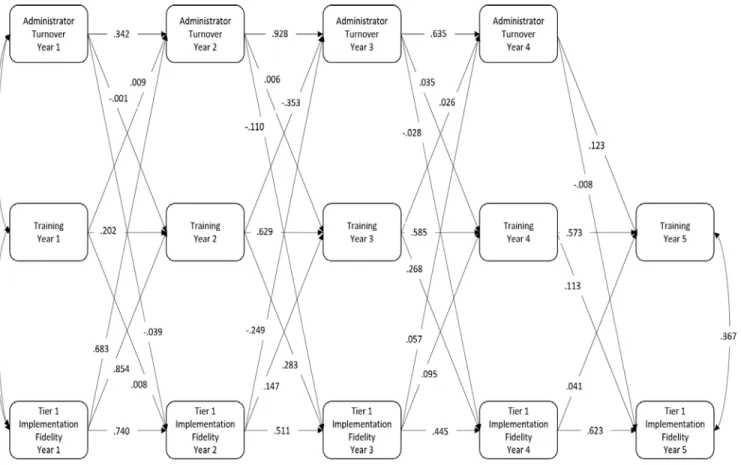
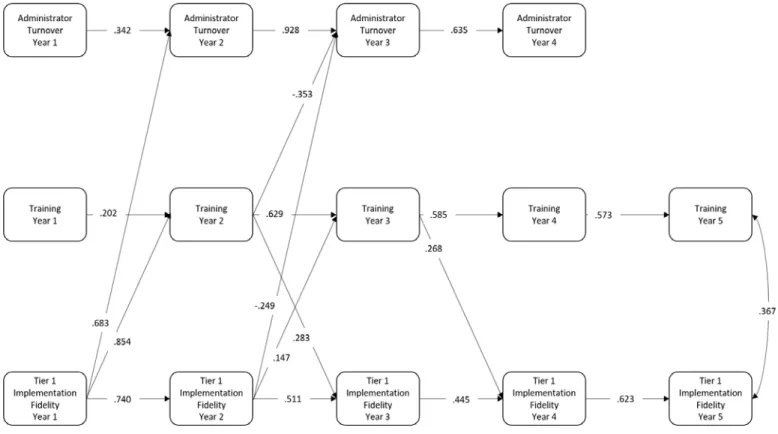
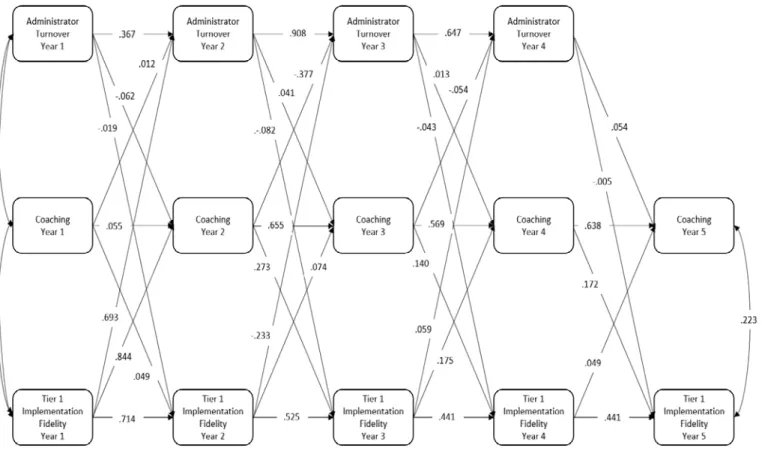
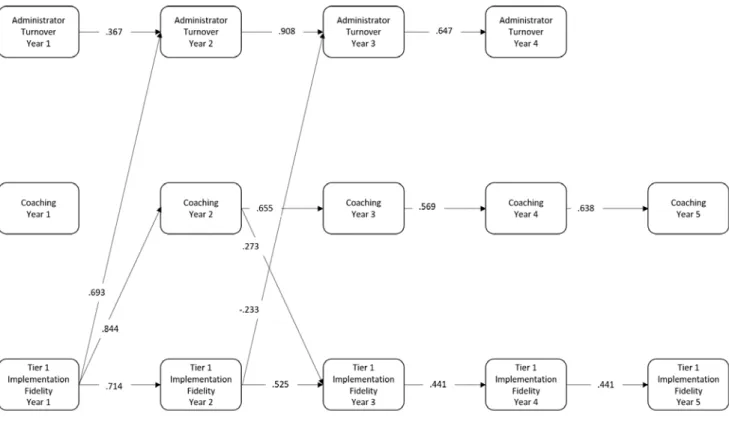
EXAMINING THE EFFECTS OF SYSTEMS BARRIERS AND IMPLEMENTATION STRATEGIES ON SCHOOL-WIDE POSITIVE BEHAVIORAL INTERVENTIONS
AND SUPPORTS TIER 1 IMPLEMENTATION FIDELITY OVER TIME
by
ANGUS KITTELMAN
A DISSERTATION
Presented to the Department of Special Education and Clinical Sciences and the Graduate School of the University of Oregon
in partial fulfillment of the requirements for the degree of
DISSERTATION APPROVAL PAGE Student: Angus Kittelman
Title: Examining the Effects of Systems Barriers and Implementation Strategies on School-Wide Positive Behavioral Interventions and Supports Tier 1 Implementation Fidelity Over Time
This dissertation has been accepted and approved in partial fulfillment of the
requirements for the Doctor of Philosophy degree in the Department of Special Education and Clinical Sciences by:
Kent McIntosh Chairperson
John Seeley Core Member
Robert Horner Core Member
Jean Kjellstrand Institutional Representative and
Janet Woodruff-Borden Vice Provost and Dean of the Graduate School Original approval signatures are on file with the University of Oregon Graduate School. Degree awarded September 2018
© 2018 Angus Kittelman
DISSERTATION ABSTRACT Angus Kittelman
Doctor of Philosophy
Department of Special Education and Clinical Sciences September 2018
Title: Examining the Effects of Systems Barriers and Implementation Strategies on School-wide Positive Behavioral Interventions and Supports Tier 1 Implementation Fidelity Over Time
It is common for evidence-based practices in schools to be implemented and discontinued before practitioners reach adequate implementing fidelity or achieved meaning educational outcomes. A number of systems barriers have been found to inhibit the successful implementation of evidence-based practices in service organizations. There are also a number of implementation strategies (e.g., Training, Coaching) found to
facilitate the successful transfer of evidence-based practices into these service
organizations. However, the extent to which these systems barriers and implementation strategies affect the fidelity that evidence-based practices are implemented in educational strategies is understudied.
The purpose of this longitudinal study was to examine the associations between Administrator Turnover, implementation strategies, and Tier 1 Implementation Fidelity using a sample of 563 schools implementing School-Wide Positive Behavioral
Interventions and Supports (SWPBIS). In addition, this study also examined whether implementation strategies buffer the negative influences of Administrator Turnover on Tier 1 implementation over time.
Results of this study indicated that implementation strategies were significantly and positively related to Tier 1 implementation fidelity; however, Administrator Turnover was not found to be significantly associated with SWPBIS Tier 1
Implementation Fidelity. Implication of these findings, limitations, and suggestions for future research are discussed.
CURRICULUM VITAE NAME OF AUTHOR: Angus Kittelman
GRADUATE AND UNDERGRADUATE SCHOOLS ATTENDED: University of Oregon, Eugene, Oregon
Oregon State University, Corvallis, Oregon Umpqua Community College, Roseburg, Oregon
DEGREES AWARDED:
Doctor of Philosophy, Special Education, 2018, University of Oregon Master of Arts, Interdisciplinary Studies, 2014, Oregon State University Bachelor of Science, Psychology, 2011, Oregon State University
Associate of Arts, 2008, Umpqua Community College
AREAS OF SPECIAL INTEREST:
School-wide Positive Behavioral Interventions and Supports Implementation Science
Vocational Rehabilitation and Behavior Support
PROFESSIONAL EXPERIENCE:
Doctoral Candidate, Special Education and Clinical Sciences, University of Oregon, Eugene, Oregon, 2016 - 2018
Behavior Consultant, Northwest Positive Network, 2014 –
Graduate Research/Teaching Assistant, Department of Psychological Sciences, Oregon State University, Corvallis, Oregon, 2011 - 2014
Child and Adolescent Treatment Specialist, Trillium Family Services, Corvallis, Oregon, 2010 - 2011
GRANTS, AWARDS, AND HONORS:
Ted Carr Student Research Poster Award, Association of Positive Behavior
ALUMNI Scholarship, College of Education, University of Oregon, 2017 Janette Gunther Drew Scholarship, College of Education, University of Oregon,
2017
Travel Award, College of Education, University of Oregon, 2015
PUBLICATIONS:
Kittelman, A., Mazzotti, V., & McIntosh, K (In Press). Toward a model for
collaborative function-based planning in work-based learning environments. Journal of Vocational Rehabilitation.
Kittelman, A., Monzalve, M. M., Flannery, K. B., & Hershfeldt, P. (In Press).
Adaptation of check in check out to meet the needs of high school students. The High School Journal.
Kittelman, A., Bromley, K., Mercer, S., & McIntosh, K (2018). Validation of a measure of sustainability of school-wide behavior interventions and supports. Remedial and Special Education. Advanced online publication. doi:
10.1177/0741932517753821
Kittelman, A., Gion, C., Horner, R. H., Levin, J. R., & Kratochwill, T. R. (2018). Establishing journalistic standards for the publication of negative results. Remedial and Special Education. Advanced online publication. doi: 10.1177/0741932517745491
McIntosh, K., Mercer, S. H., Nese, R. N. T., Strickland-Cohen, M. K., Kittelman, A., Hoselton, R., & Horner, R. H. (2018). Factors predicting sustained
implementation of a universal behavior support framework. Educational Researcher. Advanced online publication. doi: 10.3102/0013189X18776975 Nese, R. N. T., Nese, J. F. T., McIntosh, K., Mercer, S. H., & Kittelman, A. (2018).
Predicting latency of reaching adequate implementation of school-wide positive behavioral interventions and supports. Journal of Positive Behavior
Interventions. Advanced online publication. doi: 10.1177/1098300718783755 Kittelman, A., Bromley, K. W., & Mazzotti, V. L. (2016). Functional behavioral
assessments and behavior support plans for work-based learning. Career Development and Transition for Exceptional Individuals, 39, 121-127. doi: 10.1177/2165143416633682
ACKNOWLEDGMENTS
I would like to first thank my adviser Dr. Kent McIntosh for his advising, encouragement, and support. He once posted a quote on his door from Antoine de SaintExupéry that said, “If you want to build a ship, don’t drum up people together to collect wood and don’t assign them tasks and work, but rather teach them to long for the endless immensity of the sea.” Dr. McIntosh has helped to cultivate my passion for research to improve the lives of those with disabilities.
I also want to thank my committee for their guidance and feedback during the dissertation process: Drs. Kent McIntosh, Robert Horner, John Seeley, and Jean
Kjellstrand. In addition, I want to thank Jeff Gau for his methodological expertise. Next, I would like to express my gratitude to the Educational and Community Supports (ECS) staff for making my time in the doctoral program a positive one. I especially want to thank Drs. Kent McIntosh, Brigid Flannery, and Robert Horner for allowing me to participate in incredible, high-quality research opportunities during my time in the program. I have learned so much from those in ECS about the value of working hard and conducting meaningful research.
Thank you to all of the past and present doctoral students who have been my friends, mentors, and collaborators. I want to give a special thank you to Buket Erturk for putting up with me, laughing with me, and supporting me through the good times and hard times. Finally, I want to thank my family for their love and support, especially my mom for listening and reassuring me when I needed to hear it.
TABLE OF CONTENTS
Chapter Page
I. INTRODUCTION ... 1
Statement of Purpose ... 1
Literature Review... 2
Factors Affecting Implementation Fidelity ... 2
Implementation Fidelity ... 2 Implementation Science ... 4 Implementation Stages ... 5 Implementation Strategies ... 6 Leadership Strategies ... 8 Organization Strategies ... 9 Competency Strategies... 10 SWPBIS ... 16
SWPBIS and Implementation Science... 17
Systems Barriers to Adequate SWPBIS Tier 1 Implementation ... 17
Turnover ... 18
Opposition of SWPBIS Philosophy ... 20
Competing Initiatives ... 21
Experimental Analysis of Systems Barriers on Tier 1 Fidelity ... 22
Research Questions ... 25
Chapter Page Research Question 1.2 ... 25 Research Question 1.3 ... 25 Research Question 2 ... 25 Research Question 3 ... 26 Research Question 3.1 ... 26 Research Question 3.2 ... 26 Research Question 3.3 ... 26 II. METHOD ... 27
Settings and Participants ... 27
Measures ... 28
Outcome Variable ... 29
School-Wide Evaluation Tool (SET) ... 29
SWPBIS Tiered Fidelity Inventory (TFI) ... 30
Schoolwide Benchmarks of Quality (BoQ) ... 31
PBIS Self-Assessment Survey (SAS) ... 31
Team Implementation Checklist (TIC) ... 32
Comparability of Tier 1 SWPBIS Fidelity Measures ... 33
Administrator Turnover ... 34
Training and Coaching ... 38
Team Use of Data for Decision Making ... 41
School Characteristics ... 42
Chapter Page
Data Analyses ... 44
Treatment of Outcome and Predictor Variables ... 46
Model Fit ... 47
Missing Data ... 48
SEM Longitudinal Modeling ... 48
Cross-Lagged Panel Modeling ... 49
Cross-Sectional Moderation... 51
III. RESULTS ... 53
Research Question 1.1. To What Extent Are Administrator Turnover, Training, and Tier 1 Implementation Fidelity Related Over Time ... 53
Measurement Model 1.1 ... 53
Structural Relations of Model 1.1 ... 54
Research Question 1.2. To What Extent Are Administrator Turnover, Coaching, and Tier 1 Implementation Fidelity Related Over Time? ... 60
Measurement Model 1.2 ... 60
Structural Relations of Model 1.2 ... 60
Research Question 1.3. To What Extent Are Administrator Turnover, Team Use of Data for Decision Making, and Tier 1 Implementation Fidelity Related Over Time ... 66
Measurement Model 1.3 ... 66
Structural Relations of Model 1.3 ... 66
Research Question 2. To What Extent Does the Influence of Administrator Turnover and Implementation Strategies on Tier 1 Implementation Fidelity Vary Over Time Based on Grade Level and Stage of Implementation? ... 72
Chapter Page
Differences by Stage of Implementation for Model 1.1 ... 74
Differences by Grade Level for Model 1.3 ... 76
Differences by Stage of Implementation for Model 1.3 ... 79
Research Question 3.1. To What Extent Does Training Buffer the Negative Influences of Administrator Turnover on Tier 1 Implementation Fidelity Over Time? ... 81
Research Question 3.2. To What Extent Does Coaching Buffer the Negative Influences of Administrator Turnover on Tier 1 Implementation Fidelity Over Time? ... 85
Research Question 3.3. To What Extent Does Team Use of Data Decision Making Buffer the Negative Influences of Administrator Turnover on Tier 1 Implementation Fidelity Over Time? ... 86
IV. DISCUSSION ... 88
Summary of Findings ... 89
Limitations ... 94
Modeling ... 94
Participant Attrition and Missing Data ... 97
Predictor and Outcome Variables ... 99
Implications for Future Research ... 100
Developing and Validating Measures ... 100
Differential Associations Across All Tiers ... 102
Buffering Harmful Influences ... 104
Implications for Practice ... 104
Conclusion ... 108
LIST OF FIGURES
Figure Page
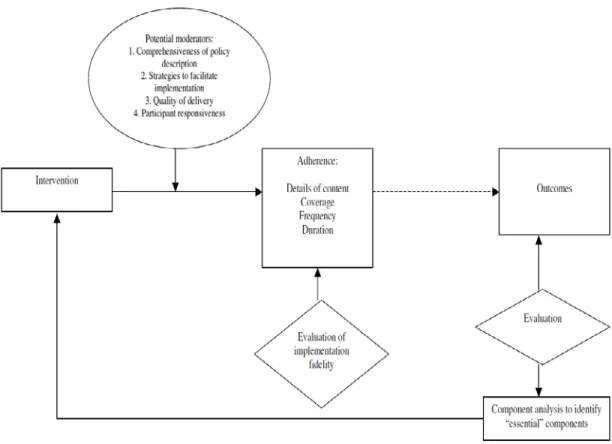
1. Conceptual framework for measuring adherence to implementation fidelity and potential moderators... 4 2. The active implementation frameworks... 7 3. Conceptual model of implementation strategies buffering the negative
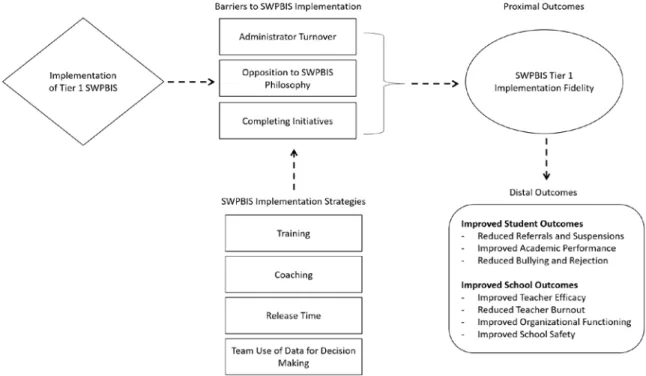
influences of systems barriers on SWPBIS Tier 1 Implementation Fidelity ... 24 4. Histograms of Administrator Turnover item with response options ranging from
1 = not true to 4 = very true.. ... 37 5. Boxplots of Administrator Turnover item with response options ranging from
1 = not true to 4 = very true. ... 37 6. Histograms of Training with categorical response options ranging from 0 =
none to 5 = over 5 full days. ... 40 7. Histograms of Coaching offered with categorical response options ranging
from 0 = none to 4 = 3 or more hours weekly. ... 40 8. Histograms of the proportion of data reports generated by SWPBIS team
members. ... 43 9. Boxplots of the proportion of data reports generated by SWPBIS team
members ... 43 10. Parameter estimates and autoregressive paths for Administrator Turnover,
Training, and Tier 1 Implementation Fidelity ... 55 11. Significant parameter estimates and autoregressive paths for Administrator
Turnover, Training, and Tier 1 Implementation Fidelity ... 56 12. Parameter estimates and autoregressive paths for Administrator Turnover,
Coaching, and Tier 1 Implementation Fidelity ... 62 13. Significant parameter estimates and autoregressive paths for Administrator
Turnover, Coaching, and Tier 1 Implementation Fidelity ... 63 14. Parameter estimates and autoregressive paths for Administrator Turnover, Team
Figure Page 15. Significant parameter estimates and autoregressive paths for Administrator
Turnover, Team Use of Data for Decision Making, and Tier 1 Implementation Fidelity ... 68 16. Estimated fidelity scores between Training and Administrator Turnover
predicting Tier 1 Implementation Fidelity ... 84 17. Estimated fidelity scores between Coaching and Administrator Turnover
predicting Tier 1 Implementation Fidelity ... 86 18. Estimated fidelity scores illustrating the interaction of Administrator Turnover
and Team Use of Data for Decision Making on Tier 1 Implementation
Fidelity ... 87 19. A program of research for assessing implementation strategies and systems
LIST OF TABLES
Table Page
1. Summary of SWPBIS Implementation Fidelity Measures With Data Across
the Five Years for the 563 Schools ... 35 2. Intercorrelations for Administrator Turnover and Tier 1 Implementation
Fidelity Across Study Years ... 36 3. Intercorrelations for Implementation Strategies and Tier 1 Implementation
Fidelity in Year 1 ... 42 4. Significant Standardized Parameter Estimates, Standard Errors, and p-Values
for Model 1.1 ... 57 5. Significant Standardized Autoregressive Parameter Estimates, Standard Errors,
and p-Values for Model 1.1 ... 58 6. R2 Estimates, Standard Errors, and p-Values for Model 1.1. ... 59 7. Significant Standardized Parameter Estimates, Standard Errors, and p-Values
for Model 1.2 ... 61 8. Significant Standardized Autoregressive Parameter Estimates, Standard Errors,
and p-Values for Model 1.2 ... 64 9. R2 Estimates, Standard Errors, and p-Values for Model 1.2. ... 65
10. Significant Standardized Parameter Estimates, Standard Errors, and p-Values
for Model 1.3 ... 69 11. Significant Standardized Autoregressive Parameter Estimates, Standard Errors,
and p-Values for Model 1.3 ... 70 12. R2 Estimates, Standard Errors, and p-Values for Model 1.3. ... 71 13. Chi-Square Difference Tests Between Administrator Turnover, Training, and
Tier 1 Implementation Fidelity for Grade Level Groups for Model 1.1 ... 75 14. Chi-Square Difference Tests Between Administrator Turnover, Training, and
Tier 1 Implementation Fidelity for Initial Implementation and
Table Page 15. Chi-Square Difference Tests Between Administrator Turnover, Training, and
Tier 1 Implementation Fidelity for Initial Implementation and Ongoing
Evolution Groups for Model 1.1 ... 78 16. Chi-Square Difference Tests Between Administrator Turnover, Team Use of
Data for Decision Making, and Tier 1 Implementation Fidelity for Grade
Level for Model 1.3 ... 80 17. Chi-Square Difference Tests Between Administrator Turnover, Team Use of
Data for Decision Making, and Tier 1 Implementation Fidelity for Initial
Implementation and Institutionalization Groups for Model 1.3 ... 82 18. Chi-Square Difference Tests Between Administrator Turnover, Team Use of
Data for Decision Making, and Tier 1 Implementation Fidelity for Initial
CHAPTER I INTRODUCTION Statement of Purpose
Schools must overcome many barriers throughout the implementation of effective practices (Forman, Olin, Hoagwood, Crowe, & Saka, 2009; Langley, Nadeem, Kataoka, Stein, & Jaycox, 2010; Pinkelman, McIntosh, Rasplica, Berg, & Strickland-Cohen, 2015). Barriers can greatly impede the fidelity to which these practices are implemented (Elliott & Mihalic, 2004; Russo-Campisi, 2017; Turri et al., 2016). Unfortunately, when these effective practices are not adequately supported and fail to demonstrate meaningful effects, practices are too often abandoned and replaced with newer ones, often without empirical support (Nese et al., 2016). Many researchers and practitioners have learned that simply adopting effective practices in schools is necessary but insufficient to produce long-term desired educational outcomes (B. G. Cook & Odom, 2013; Fixsen, Blase, Metz, & Van Dyke, 2013).
There are abundant examples of the difficulty of sustaining school initiatives. In 2017, the Institute of Education Sciences (IES) released an evaluation of the School Improvement Grants (SIG) program (Dragoset et al., 2017). The SIG program was one of the largest federally-funded educational initiatives to date, providing over $3 billion dollars for states to implement one of four types of SIG-funded universal models in their schools (transformation, turnaround, restart, or closure). Embedded within these models, included comprehensive school reform strategies (e.g., instructional reforms, increasing learning time, creating community-oriented schools, operational flexibility) intended to increase student academic, graduation, and college enrollment outcomes. Unfortunately,
findings from this evaluation indicated that the SIG-models had no overall impact on the intended student outcomes (i.e., math or reading test scores, high school graduation rates, or college enrollment rates; Dragoset et al., 2017).
Reviews of implementation and dissemination research shed light on why effective practices or programs may be ineffective in improving educational outcomes (Elliott & Mihalic, 2004; Gottfredson & Gottfredson, 2002). In their review of violence and drug prevention dissemination efforts, Elliott and Mihalic (2004) found a number of factors that negatively impact dissemination activities. For example, staff turnover was cited as being a critical barrier to dissemination activity of staff training. In addition, other factors, such as lack of resources, were found to impact multiple dissemination processes within organizations (e.g., site selection and training). In a national survey of school-based prevention programs that evaluated over 3,600 implementation activities, Gottfredson and Gottfredson (2002) found that the overall quality to which effective programs were being implemented was low and likely to impact the effectiveness of these programs on student outcomes. Among the factors perceived to impact
implementation quality was the extent to which schools integrated implementation activities into typical school operations and had access to implementation strategies, such as training, supervision, and principal support (Gottfredson & Gottfredson, 2002).
Literature Review Factors Affecting Implementation Fidelity
Implementation fidelity. The extent to which effective programs are
implemented as prescribed is defined as implementation fidelity (Carroll et al., 2007). Dane and Schneider (1998) proposed that implementation fidelity (defined as program
integrity) consists of five core components: (a) adherence, (b) exposure, (c) quality of delivery, (d) participant responsiveness, and (e) program differentiation. The authors defined adherence as the exact degree to which all intervention components and procedures are delivered as intended. Exposure refers to the number of sessions,
frequency, and duration for which components are intended to be implemented. Quality of delivery describes aspects related to the quality to which implementers deliver the intervention, such as preparedness, enthusiasm, and leadership attitudes. Participant responsiveness relates to participants’ receptiveness, participation, and engagement in the program. Also, program differentiation was defined as the extent to which specific
components of the programs are distinct from one another (Dane & Schneider, 1998; Mihalic, 2004). Dane and Schneider (1998) then conducted a systematic review to examine the extent to which these components were measured in prevention studies between 1980 to 1994. Of the 162 studies included in their review, only 39 (24%) contained procedures for measuring implementation fidelity. In addition, only 13 of the 162 (8%) measured more than one of the five components of implementation fidelity.
Expanding on Dane and Schneider’s (1998) efforts, Carroll and colleagues (2007) proposed a conceptual framework for examining potential variables (e.g., participant responsiveness, quality of delivery) that moderate implementation fidelity (Carroll et al., 2007). In addition to components defined by Dane and Schneider (1998), Carroll and contributors (2007) proposed two additional components: intervention complexity, defined as the extent to which interventions vary in implementation complexity and implementation strategies, which strengthen implementation fidelity (e.g., training, monitoring, feedback). Carroll and colleagues (2007) argued that more complex
interventions require more complex implementation strategies for adherence to
implementation fidelity; however, the authors acknowledged that there was no empirical evidence indicating that implementation strategies serve as moderating variables of adherence to implementation fidelity. Figure 1 provides an overview of Carroll and colleagues’ (2007) conceptual framework.
Figure 1. Conceptual framework for measuring adherence to implementation fidelity and potential moderators proposed by Carroll and contributors (2007).
Implementation Science
Although often undervalued in educational research (Horner & Sugai, 2018), the field of implementation science is a discipline dedicated to identifying and understanding factors that facilitate the successful transfer of effective practices into service
2014). Implementation science has taught that effective practices are more likely to be implemented successfully when organizations use implementation strategies (Fixsen, Blase, Naoom, & Wallace, 2009; Fixsen et al., 2005; Fixsen & Ogden, 2014; Horner & Sugai, 2018). In a recent commentary of the field of positive behavior support, Horner and Sugai (2018) offered several recommendations for future directions of research. Included among these was a need for the field of positive behavior support to focus on examining systems and systems variables (e.g., training, coaching, performance
feedback) that facilitate the implementation and sustained use of effective practices with high fidelity (Horner & Sugai, 2018). Others, in different disciplines, have recently echoed similar calls for experimental and rigorous research examining implementation strategies and their impact on fidelity of effective practices (Lippold & Jensen, 2017; Powell et al., 2012; Powell et al., 2014).
Implementation stages. Studies have shown certain predictors (e.g., data-based decision and evaluation systems and leadership factors) impact the implementation of effective practices differently within organizations, based on the stage of implementation (McIntosh et al., 2013; McIntosh, Mercer, Nese, Strickland-Cohen, & Hoselton, 2016; Saldana, Chamberlain, Wang, & Brown, 2012). According to Adelman and Taylor (1997), the implementation process moves through a series of four stages in schools. Stage 1 (Creating Readiness) involves establishing a willingness or need for change within schools (e.g., establishing interest, developing a feasible budget, and building an implementation team). Stage 2 is Initial Implementation, during which implementation teams work to adopt and phase in effective practices within their schools. In this stage, many of the implementation strategies are temporarily established to support the
implementation of these practices (e.g., formative evaluation procedures and coaching and mentoring). In Stage 3 (Institutionalization), schools focus more on building the infrastructure and organizational systems to support the ongoing implementation strategies needed to sustain the practices. In the final stage (Ongoing Evolution), practices go through a continuous regeneration process to improve upon the quality and efficacy to which practices are implemented over time (Adelman & Taylor, 1997).
Implementation strategies. Multiple theoretical frameworks in the field of implementation science have been developed to understand, explain, or evaluate
implementation processes. Nilsen (2015) described that there are two types of theoretical frameworks in implementation science research: evaluation frameworks and determinant frameworks. Evaluation frameworks, such as RE-AIM (i.e., reach, efficacy, adoption, implementation, and maintenance; Glasgow et al., 1999) are used to evaluate
implementation processes and interventions for adoption. Determinant frameworks, such as the active implementation drivers (Fixsen, Blase, Naoom, & Duda, 2015; Fixsen et al., 2005) and consolidated frameworks for implementation research (CFIR; Damschroder et al., 2009), are used to identify, categorize, and explain how specific implementation factors (e.g., implementation strategies, barriers) influence implementation outcomes (Nilsen, 2015).
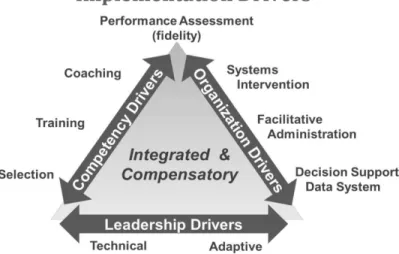
Prior to the development of the active implementation frameworks (see Figure 2; Fixsen & Blase, 2008), Fixsen and colleagues (2005) published a systematic literature of implementation science research. In their review, the authors identified implementation strategies found to facilitate the successful implementation of effective practices and programs into service organizations (e.g., education, health, business, and social
services). Powell, Proctor, and Glass (2014) defined implementation strategies as “systematic intervention processes” that are used to integrate effective practices into routine organizational operations. With the assistance of colleagues from the National Implementation Research Network (NIRN), Fixsen then organized and categorized these implementation strategies into one of three types of systems-level drivers (Fixsen et al., 2015; Fixsen & Blase, 2008; Fixsen et al., 2005). The three implementation drivers include: leadership drivers, organizational drivers, and competency drivers (Fixsen & Blase, 2008).
Figure 2. The active implementation frameworks (Fixsen & Blase, 2008).
According to the implementation frameworks (Fixsen & Blase, 2008), leadership drivers are adaptive and technical leadership strategies needed to support the
implementation and sustained use of effective practices. Fixsen, Blase, Naoom, and Duda (2015) explained that leadership approaches are likely to change over time, from being adaptive early on during initial implementation, and then shift to being more technical as
technical leadership is needed for resolving problems that already exist within organizational systems, such as future funding and resources. Organizational drivers consist of (a) systems interventions, (b) facilitative administration systems, and (c) decision support data systems (Fixsen et al., 2015; Metz & Bartley, 2012). These drivers include strategies necessary to build capacity to implement and sustain organizational systems and practices (Metz & Bartley, 2012). Competency drivers are strategies (i.e., selection, training, and coaching) intended to improve practitioners’ competence within organizations to implement effective practices (Fixsen et al., 2015; Fixsen et al., 2009; Metz & Bartley, 2012). Drawing on research in the field of implementation science and related disciplines, a number of studies have shown implementation strategies to be integral to the implementation of effective practices in service organizations and
differentially impactful based on the stage of implementation (Adelman & Taylor, 1997; Fixsen et al., 2005).
Leadership strategies. Leadership strategies have been found to affect a number of different variables related to the implementation process (Guerrero, Padwa, Fenwick, Harris, & Aarons, 2016; McIntosh, Kelm, & Delabra, 2016; Payne, Gottfredson, & Gottfredson, 2006). For example, Saldana, Chamberlain, Wang, and Brown (2012) conducted one of the first observational studies to examine the influence of system leaders’ behaviors on the successful start-up of an evidence-based foster care program, as part of a large randomized implementation trial in two U.S. states. Using an
implementation progress tool, the authors found that the proportion of implementation activities completed by system leaders and the amount of time system leaders spent completing these activities in the early stages of implementation (e.g., engagement,
consideration of feasibility, readiness planning) strongly predicted successful start-up. Payne, Gottfredson, and Gottfredson (2006) analyzed data from 544 schools that had implemented delinquency prevention programs in schools. Using structural equation modeling (SEM), the authors found principal support to be a significant predictor of implementation program intensity.
Locke and colleagues (2017) conducted semi-structured interviews with 39 staff members who participated in a randomized controlled trial examining the effects of a universal social engagement intervention for children with autism. Administrator support was found to be essential, both prior to and during implementation. Prior to
implementation, administrators were acknowledged as helping to facilitate open
communication among school personnel about the intervention and encouraged personnel to seek out further information about the intervention. During implementation,
administrators continued to engage in ongoing communications with school personnel and allocated school resources (e.g., time for planning meetings and training) to support the intervention (Locke et al., 2017).
Organization strategies. Fixsen and colleagues defined organizational drivers as system-level processes for continually evaluating, monitoring, and improving upon the overall implementation of practices within organizations (Fixsen et al., 2015). Horner, Sugai, and Fixsen (2017) noted that investing “early and intensely” in organizational systems is critical for achieving high implementation fidelity and sustainability of school practices. There is research to suggest that the use of data for decision making and evaluation by school teams, is a significant predictor of sustained implementation of universal behavior practices (Coffey & Horner, 2012; McIntosh et al., 2013). Using SEM
with a sample of 217 schools implementing School-Wide Positive Behavior Interventions and Supports (SWPBIS), McIntosh and colleagues (2013) found the construct of team use of data to be a significant and independent predictor of sustained implementation of SWPBIS. Also, Mercer, McIntosh, Strickland-Cohen, and Horner (2014) also found team use of data to be rated significantly higher for schools implementing SWPBIS for longer periods of time (five or more years) based on a sample of 860 schools, also using SEM.
In terms of organizational capacity building, there is research to suggest that the number of practitioners working together in a team to implement effective practices is an effective implementation strategy (Klest, 2014; Patras & Klest, 2016). For example, Klest (2014) surveyed 83 therapists implementing a parent training program in social service organizations in Norway. The author found that the number of therapists working within an organization positively correlated with implementation factors, such as (a) therapists’ time dedicated to the program, (b) number of families served, and (c) integration of the program within the organizations. In a related study using SEM, Patras and Klest (2016) found significant differences in the therapists’ reports of key variables related to
implementation (i.e., collective efficacy, collaboration, and teamwork) for therapists implementing the parent training program in groups of three, compared to therapists implementing in groups of two or one.
Competency strategies. Competency strategies are factors related to selecting and providing practitioners with the skills necessary to successfully implement and sustain practices with high fidelity (Fixsen et al., 2005; Metz & Bartley, 2012; Powell et al., 2014). In schools, implementation strategies related to training and coaching are
technical assistance. However, Odom (2009) noted that professional development in schools has often consisted of “stand-alone workshops or presentations without ongoing support” (p. 59). He also acknowledged that these types professional development activities often failed to consider the school organizational systems needed to implement and sustain effective practices (2009).
Prior to providing professional development and technical assistance to
implement effective practices, Fixsen and colleagues (2009) argued that it is important to consider the skills, qualifications, and attributes of those that will be responsible for implementing the practices within the service organizations. Fixsen and colleagues (2015) described certain attributes (e.g., basic interpersonal and professional skills) as often “difficult to teach in training sessions” (p. 8) but critical for implementation in terms of identifying internal leaders and selecting team members responsible for
providing professional development (Elliott & Mihalic, 2004; Fixsen et al., 2005). As an example, Kittelman, Pinkelman, Strickland-Cohen, and McIntosh (in preparation) found a lack of teaming (e.g., failing to meet and accomplish team goals/objectives) among team members to be a factor for why some schools abandoned the implementation of Tier 1 SWPBIS in their schools. To illustrate, one of the participants reported that their team leader did not want help from other team members in planning implementation activities, which limited the number of these activities completed by the team over the course of the school year. In another study, based on structured interviews with intervention developers of school mental health practices, Forman and colleagues (2009) found school
with ambiguity, respecting others) were found to be important facilitators to the successful implementation of these practices.
School personnel primarily receive two types of professional development: preservice training and in-service training (Kratochwill, Volpiansky, Clements, & Ball, 2007). However, the content in professional development provided prior to and after placement in schools is typically much different (Kratochwill et al., 2007). For example, preservice professional development provided to educators mainly involves the mastery course work and practicum experiences. Kratochwill and colleagues (2007) noted that it is common for preservice professional development programs to provide little training on how to implement and sustain effective practices or systems. Alternatively, in-service professional development is focused on training school personnel to acquire knowledge, skills, and resources to implement practices (Sandholtz, 2002). In-services and other ongoing professional development present unique opportunities for school personnel to acquire knowledge about systems processes and implementation strategies needed to implement and sustain practices over time with high fidelity (Fixsen et al., 2015; Fixsen et al., 2005).
Although training is one of the most frequently used implementation strategies (Powell et al., 2012; Powell et al., 2014), training alone without ongoing support is often insufficient for achieving high implementation of effective practices in service
organizations (Beidas et al., 2014; Beidas & Kendall, 2010; Joyce & Showers, 1982, 2002). For example, Beidas and Kendall (2010) conducted a systematic literature review of studies between 1990-2008, in which training was provided to therapists (e.g., social workers, secondary school staff, and psychologists) to implement effective practices in
clinical and other service organizations. Findings indicated that trainings were mainly impactful on therapists’ perceived behaviors, knowledge, and attitudes; however, the majority of studies indicated that training did not result in significant changes in therapists’ actual behaviors such as adherence, competence, and skill, or the newly learned behaviors did not maintain for long after study follow-up (Beidas & Kendall, 2010).
Another implementation strategy that is frequently cited as being highly important to supporting practitioners’ ongoing use of effective practices is coaching (B. G. Cook & Odom, 2013; Fixsen et al., 2009; Joyce & Showers, 2002). In Joyce and Showers’ (1982) seminal article on coaching, the authors described coaching as a necessary step for the transfer of newly acquired skills from training to practice. The authors also define coaching as process which involves providing technical feedback and opportunities to practice newly acquired skills (Joyce & Showers, 1982). Showers (1985) explained that coaching is an intensive and ongoing type of professional development that needs to be supported at the organizational school levels to ensure that sufficient resources are
allocated to this type of professional development. As evidenced by Beidas and Kendall’s study (2010), without ongoing support, training was mainly ineffective. As an example, Massar (2017) recently examined the effects of two functions of coaching (i.e.,
prompting and performance feedback) on general education elementary teachers’ use of evidence-based classroom management practices (i.e., opportunities to respond, behavior-specific praise, and precorrection) using a single-case multiple baseline design. Prior to classroom coaching, the researcher provided teachers with an online training on the use of these effective classroom management practices, which did not generate high rates of
teachers’ use in their classrooms. However, after weekly coaching sessions were provided, using prompting or performance feedback, and then a combination of both, functional relations were found between classroom coaching and increases in teachers’ use of these classroom management practices and decreases in student problem behaviors (Massar, 2017).
A few studies have examined the effects of training and ongoing professional development on implementation fidelity over time. For example, Phillips, Ingrole, Burris, and Tabulda (2017) examined factors that predicted implementation fidelity of a
vocabulary/language intervention in 39 preschool classrooms. Implementation fidelity was defined as the adherence to the intervention lessons and the quality to which lessons were implemented. Training provided for preschool teachers and assistants included two and a half days of workshops over the course of 16 weeks and covered topics related to the intervention and effective classroom behavior management practices. Ongoing
mentoring sessions were provided throughout the intervention (e.g., modeling, feedback). The authors found that teacher preparation, receptivity, consistency in implementation, and use of classroom management practices were all significantly related to
implementation fidelity (Phillips et al., 2017). In another classroom study, Stahmer and colleagues (2014) conducted a two-year investigation, as part of a randomized control trial, examining the effects of intensive training and coaching on teachers’ use of a
packaged intervention program consisting of three evidence-based strategies (i.e., discrete trail teaching, pivotal response training, functional routines) on implementation fidelity. The study included 57 teachers in kindergarten through second grade autism support classrooms that received intensive training (e.g., didactic teaching, video exemplars,
role-playing) in the first year of the study and ongoing classroom coaching (e.g., in person, phone, emails) every two weeks in the second year. Implementation fidelity was collected and examined at four time points over the course of the two years. The authors found that implementation fidelity improved over time; however, the number of hours spent
coaching was not significantly associated with overall implementation fidelity (Stahmer et al., 2014).
Although ongoing training and coaching have been cited as key strategies for the implementation of effective practices with high implementation fidelity in schools (Bambara, Goh, Kern, & Caskie, 2012; Coffey & Horner, 2012), the experimental literature examining the effects of training and coaching on implementation fidelity of universal practices over time in schools is sparse (Horner & Sugai, 2018). In a recent paper, Kittelman, Wagner, Mercer, and McIntosh (2018) examined the extent to which composite scores of days of formal SWPBIS training (i.e., individual team members, teams, building administrators, and all school staff) and hours of coaching in over 500 schools implementing SWPBIS, correlated with a latent construct of district capacity building across three years of implementation. District capacity building has been found to significantly predict sustained implementing of SWPBIS at Tier 1 (McIntosh et al., 2013; Mercer et al., 2014). The authors found training and coaching to be modestly, yet significantly, related to district capacity building (Kittelman et al., 2018); however, the extent to which training and coaching directly affected Tier 1 Implementation Fidelity was not examined.
SWPBIS
SWPBIS (Horner, Sugai, & Anderson, 2010) is an evidence-based, multi-tiered framework implemented in more than 25,000 U.S. schools (Horner et al., 2017). SWPBIS is comprised of three tiers of organizational systems and effective practices intended to support students with varying levels of needs (Horner et al., 2010; Sugai & Horner, 1999). Tier 1 SWPBIS (universal) practices are designed to support all students by defining and teaching appropriate behaviors, establishing universal acknowledgement systems to reinforce appropriate behaviors, developing proactive discipline policies, and using effective screening methods to identify students in need of additional supports (Horner et al., 2010). Tier 2 practices include the use of standardized group-based practices (e.g., Check-In Check-Out; Crone, Horner, & Hawken, 2004) for at-risk students engaging in low frequency and low-level problem behaviors. Tier 3 practices consist of individualized function-based intensive practices for students engaging in chronic high-risk problem behaviors (Horner et al., 2010; T. J. Lewis & Sugai, 1999; McIntosh, Bennett, & Price, 2011; Sugai & Horner, 1999). At each tier, school leadership teams are responsible for implementing and monitoring implementation fidelity.
Implementation of SWPBIS at Tier 1 is associated with a number of positive student and school outcomes, including positive impacts on perceptions of school safety (Horner, Sugai, Smolkowski, Todd, & Nakasato, 2009; McIntosh, Bennett, et al., 2011; Sprague et al., 2002), increases in perceptions of school organizational functioning (Bradshaw, Koth, Thornton, & Leaf, 2009), reductions in student office discipline referrals and suspensions, improvements in students’ academic performance (Bradshaw, Mitchell, & Leaf, 2010; McIntosh, Bennett, et al., 2011; Nelson, Martella, &
Marchand-Martella, 2002), improvements in student attendance (Freeman et al., 2015), decreases in peer bullying and peer rejection (Waasdorp, Bradshaw, & Leaf, 2012), increased positive perceptions of teachers’ efficacy, and decreased levels of teacher burnout (Ross, Romer, & Horner, 2012).
SWPBIS and implementation science. In an introductory article on
implementation science in special education, Cook and Odom (2013) cited SWPBIS as being an exemplar for the field of special education in terms of utilizing implementation science strategies to achieve successful implementation outcomes in school
environments. The authors also stated that “such attention to the principles of
implementation science has, no doubt, contributed to SWPB[I]S’s extensive, sustained, and effective application” (p. 140; B. G. Cook & Odom, 2013). Recent implementation efforts focused on sustaining SWPBIS within schools and scaling up within states, have identified and used a number of implementation strategies, such as creating
implementation blueprints, training and coaching, establishing school, district, and state leadership teams, and using data for continuous evaluation and decision making (Coffey & Horner, 2012; Horner et al., 2014; Horner et al., 2017; McIntosh et al., 2013). Through implementation efforts, researchers have also identified a number of barriers perceived to have negative impact on implementation and sustainability of SWPBIS.
Systems barriers to adequate SWPBIS Tier 1 implementation. It is not
uncommon for schools to face numerous and reoccurring system barriers that threaten the implementation and sustainability of effective practices (Elliott & Mihalic, 2004; Fixsen et al., 2013; Gottfredson & Gottfredson, 2002; Pinkelman, McIntosh, Rasplica, et al., 2015). Systems barriers, such as turnover, burnout, and lack of resources are common
and reoccurring among service organizations (Fixsen et al., 2013; Lippold & Jensen, 2017; McIntosh et al., 2014). Both the complexity of the organizational systems and practices present challenges for practitioners in terms of implementing with high implementation fidelity (Lippold & Jensen, 2017). In addition, Adelman and Taylor (1997) acknowledged that barriers to the implementation of effective practices (e.g., negative attitudes, institutionalized resistance) are pervasive and can occur throughout the different stages of implementation (i.e., creating readiness, initial implementation,
institutionalization, and ongoing evolution). Even when practices are supported within organizations using effective implementation strategies (e.g., training, coaching, and leadership support), systems barriers may impact the consistency to which
implementation strategies are used to implement the practices (Lippold & Jensen, 2017). Although the implementation of Tier 1 SWPBIS with fidelity is associated with positive student and staff outcomes, several large-scale implementation studies have examined systems barriers, perceived to have negatively impact the implementation of SWPBIS. These perceived barriers may occur due to variety of factors including, such as complexity of implementing universal SWPBIS practices and systems, the school
environments and organizational factors, or a lack of implementation supports throughout ongoing implementation. Commonly cited perceived systems barriers in the SWPBIS literature include turnover, competing initiatives, and opposition to SWPBIS philosophy.
Turnover. Turnover among general personnel and administrators is a reoccurring obstacle schools must take into account when implementing initiatives. Kincaid, Childs, Blase, and Wallace (2007) conducted a systematic qualitative study to identify perceived barriers and facilitators to Tier 1 SWPBIS implementation among school team members
(n = 70) in 26 Florida schools implementing SWPBIS for a minimum of one year. Teams were identified and categorized as either implementing SWPBIS to high implementation fidelity or low implementation fidelity, based on their schools’ SWPBIS Tier 1
Implementation Fidelity scores. The authors found turnover among school personnel and students to be among the top-10 perceived barriers to SWPBIS implementation, among high and low implementers. However, those in the high implementers group perceived staff and student turnover to be more problematic (Kincaid et al., 2007). One possible explanation for this finding is that turnover is less malleable than other barriers, such as a lack of training or coaching, and therefore more difficult to address than other perceived barriers, such as opposition to SWPBIS philosophy (Kincaid et al., 2007).
Responsibilities of school administrators include supporting faculty and student, managing budgets, hiring staff, and supporting the implementation of district or school initiatives. Therefore, turnover among school administrators can have significant implications for schools implementing SWPBIS (Bambara et al., 2012; McIntosh et al., 2014). For example, McIntosh and colleagues (2014) surveyed 257 school team members to identify critical features perceived as most and least important for implementing and sustaining SWPBIS. Administrator support was found to be the most important perceived factor for both implementing and sustaining SWPBIS. Furthermore, turnover among administrators, team members, general staff, and students were identified as among the most significant barriers to sustaining SWPBIS (McIntosh et al., 2014). In addition, Andreou, McIntosh, Ross, and Kahn (2015) conducted semi-structured qualitative interviews with 17 school and district personnel in a school district implementing Tier 1 SWPBIS for more than 15 years. Staff turnover was documented as one of two critical
incidents perceived to have hindered school staff’s ability to sustain the implementation of Tier 1 SWPBIS within their district (Andreou et al., 2015).
Opposition to SWPBIS philosophy. Researchers have noted that the
implementation of SWPBIS requires a cultural shift to dealing with student discipline problems, which includes moving away from using punitive and zero tolerance approaches, to more proactive and preventative approaches (T. J. Lewis & Garrison-Harrell, 1999; T. J. Lewis & Sugai, 1999). For example, implementing universal acknowledgement systems for encouraging positive behaviors is one of the core Tier 1 SWPBIS features (Horner et al., 2010). School personnel may be opposed to this approach to student discipline if they feel that it is not their responsibility to reinforce positive social behaviors.
Bambara et al. (2012) surveyed 293 school personnel, including behavior support specialists, trainers, school psychologists, administrators and others, in five U.S. states to identify perceived factors that impacted Tier 3 SWPBIS implementation in their schools. Survey items “resistance among school personnel to change their behavior management practices” and “belief among school personnel that problem behaviors should be
punished,” were found to be the top three highest rated items for the construct of “school culture: practices and beliefs.” In addition, “resistance among school personnel to change their behavior management practices” was rated as a top six overall perceived barrier to Tier 3 SWPBIS implementation (Bambara et al., 2012).
Opposition to Tier 1 SWPBIS among leadership has also been cited as perceived barrier to Tier 1 SWPBIS implementation. In an effort to explore factors that influenced school administrators’ perceptions of Tier 1 SWPBIS implementation, McIntosh, Kelm,
and Canizal Delabra (2016) conducted in-depth interviews with 10 school administrators. McIntosh and colleagues (2016) found (a) disagreement with philosophy of SWPBIS, (b) witnessing unsupportive staff, and (c) negative reaction to time commitment to hinder school leaders’ support of Tier 1 SWPBIS implementation.
Competing initiatives. Implementing multiple school initiatives over the course of a school year is likely to compete for school personnel time and resources. Coffey and Horner (2012) surveyed school personnel from 117 schools in six U.S. states
implementing SWPBIS for a minimum of three years. Among the most commonly reported barriers to sustaining SWPBIS were lack of funding and time to carry out
implementation activities. Because SWPBIS is a universal practice, there are a number of systems that can put increased demands on school personnel. For example, Pinkelman and colleagues (2015) surveyed 860 participants, each representing a school
implementing SWPBIS for varying lengths of time. The authors used a
phenomenological coding process to identify factors perceived to be the most influential to the sustained implementation of SWPBIS. The authors identified 13 themes
representing barriers and facilitators to SWPBIS implementation. Lack of time and funding were rated as the second and third most significant barriers to sustaining SWPBIS, after staff buy-in (Pinkelman, McIntosh, Rasplica, et al., 2015). In another mixed-methods survey study of 257 school and district team members implementing SWPBIS, McIntosh and colleagues (2014) found inadequate resources as the most commonly reported barrier to SWPBIS implementation. However, this and other perceived barriers (e.g., turnover, SWPBIS philosophy) were considered less impactful
for school team members implementing SWPBIS for longer periods of time (at least five or more years; McIntosh et al., 2014).
Experimental Analysis of Systems Barriers on Tier 1 Fidelity
As previously cited, a majority of the studies examining impact of perceived barriers on the Tier 1 SWPBIS implementation fidelity have been descriptive in nature (e.g., survey, semi-structured interviews, mixed methods) and do not empirically examine how barriers influence actual Tier 1 SWPBIS implementation over time. As a step
towards addressing this limitation, Turri and colleagues (2016) developed a brief experimental measure, titled the Assessment of Barriers to Implementation and Sustainability in Schools (ABISS) to assess perceived barriers impacting the
implementation of SWPBIS. Using multi-group SEM, the authors found barrier scores from 704 U.S. schools (a subsample of schools participating in Year 1 of the current proposal) to be significantly related to their schools’ SWPBIS Tier 1 Implementation Fidelity scores. Moreover, Turri and contributors also found that schools that had been implementing Tier 1 SWPBIS for longer periods of time (five or more years) reported significantly fewer barriers compared to schools implementing for shorter periods of time (2016).
Although Turri and colleagues’ (2016) study was one of the first to experimentally examine how systems barriers are related to Tier 1 SWPBIS implementation fidelity, further research is needed. For example, there is a need to examine how perceived barriers affect implementation fidelity of SWPBIS at Tier 1 longitudinally. Elliott and Mihalic (2004) noted in their review of dissemination research that a majority of replication failures were attributed to factors in the early
implementation phase; therefore it would be particularly meaningful to know if systems barriers to implementation of SWPBIS at Tier 1 are more detrimental to schools in the early stages of implementation, as opposed to the later ones (Adelman & Taylor, 1997).
Because of the dearth of experimental research examining the impact of
implementation strategies (e.g., training and coaching) on systems practices (Powell et al., 2014), there is a need to examine (a) to what extent systems-level implementation strategies provided to schools positively impact SWPBIS Tier 1 Implementation Fidelity over time (Horner & Sugai, 2018) and (b) to what extent these strategies can buffer the negative effects of systems barriers, previously cited in the SWPBIS literature as being negatively impactful to Tier 1 Implementation Fidelity over time (Pinkelman, McIntosh, Rasplica, et al., 2015; Turri et al., 2016). More specifically, there is a need to assess whether there schools that receive more training, coaching, release time for
implementation activities, and Team Use of Data for Decision Making are more likely to overcome systems barriers. In terms of resource allocation, it would be especially
meaningful to researchers and practitioners in the field of positive behavior support to evaluate whether schools that received more implementation strategies in the earlier implementation stages (Adelman & Taylor, 1997) are better equipped to overcome barriers to SWPBIS implementation over time. Furthermore, recent research has found several non-malleable school factors (e.g., school grade level, stage of implementation, school urbancity) to significantly predict adequate and sustained Tier 1 Implementation Fidelity (McIntosh et al., under review; Nese, Nese, McIntosh, Mercer, & Kittelman, under review). Therefore, it would be relevant to examine whether the impact of systems
barriers and implementation strategies on Tier 1 implementation vary these non-malleable school factors.
Based on the proposed logic model presented in Figure 3, I hypothesize that Administrator Turnover will significantly and negatively affect SWPBIS Tier 1
Implementation Fidelity and implementation strategies will significantly and positively affect Tier 1 Implementation Fidelity in schools. In addition, I also hypothesize that effects of Administrator Turnover and implementation strategies on Tier 1
Implementation Fidelity will vary based on grade level and stage of implementation. Finally, I hypothesize that implementation strategies (i.e., Training, Coaching, and Team Use of Data for Decision Making) will attenuate the negative effects of Administrator Turnover on Tier 1 Implementation Fidelity over time, and therefore result in improved proximal and distal student and staff outcomes.
Figure 3. Conceptual model of implementation strategies buffering the negative influences of systems barriers on SWPBIS Tier 1 Implementation Fidelity.
Research Questions
The purpose of this study was to examine (a) the influence of Administrator Turnover and implementation strategies on SWPBIS Tier 1 Implementation Fidelity over time, (b) whether the influence of Administrator Turnover and implementation strategies on Tier 1 Implementation Fidelity varies based on non-malleable school factors, and (c) whether school implementation strategies buffer the negative influences of Administrator Turnover on Tier 1 Implementation Fidelity. Therefore, the following research questions for this study were:
Research Question 1
To what extent are Administrator Turnover, implementation strategies (Training, Coaching, and Team Use of Data for Decision Making), and Tier 1 Implementation Fidelity related over time?
Research question 1.1. To what extent are Administrator Turnover, Training, and Tier 1 Implementation Fidelity related over time?
Research question 1.2. To what extent are Administrator Turnover, Coaching, and Tier 1 Implementation Fidelity related over time?
Research question 1.3. To what extent are Administrator Turnover, Team Use of Data for Decision Making, and Tier 1 Implementation Fidelity related over time?
Research Question 2
To what extent does the influence of Administrator Turnover and implementation strategies on Tier 1 Implementation Fidelity vary over time based on grade level and stage of implementation?
Research Question 3
To what extent do implementation strategies buffer the negative influences of Administrator Turnover on Tier 1 Implementation Fidelity over time?
Research question 3.1. To what extent does Training buffer the negative influences of Administrator Turnover on Tier 1 Implementation Fidelity over time?
Research question 3.2. To what extent does Coaching buffer the negative influences of Administrator Turnover on Tier 1 Implementation Fidelity over time?
Research question 3.3. To what extent does Team Use of Data for Decision Making buffer the negative influences of Administrator Turnover on Tier 1
CHAPTER II METHOD
Settings and Participants
This study used an open cohort of 563 U.S. schools in 11 states implementing SWPBIS across five concurrent years. Year 1 was the 2012-13 school year and Year 5 was the 2016-17 school year. For each of the years, one participant from each of the schools, either internal SWPBIS team member or an external district or regional SWPBIS coach, participated in the study. In Year 1, 64.1% of the participants identified as
SWPBIS team leaders, 23.3% school administrators, 7.1% school faculty or staff, 4.4% external district or regional coaches, and 1.1% identified as “other.” In Year 2, 62.3% identified as SWPBIS team leaders, 22.7% school administrators, 7.6% external district or regional coaches, 6% school faculty or staff, and 1.2% identified as “other.” In Year 3, 61.2% identified as SWPBIS team leaders, 21.9% school administrators, 8.8% school faculty or staff, 6.3% external district or regional coaches, and 1.9% identified as “other.” In Year 4, 62.5% identified as SWPBIS team leaders, 14.7% school administrators, 12.1% school faculty or staff, 7.8% external district or regional coaches, and 2.6% identified as “other.” In Year 5, 59.8% identified as SWPBIS team leaders, 18.5% school administrators, 13.3% school faculty or staff, 7.2% external district or regional coaches, and 0.8% identified as “other.”
Of the total number of schools, 123 (21.8%) of the schools had been
implementing SWPBIS for 0 to 1 years (initial implementation stage), 273 (48.5%) had been implementing for 2 to 4 years (institutionalization stage), and 167 (29.7%) had been implementing for 5 or more years (ongoing evolution stage; Adelman & Taylor, 1997).
School demographic data were obtained from the National Center for Educational Statistics (NCES) database for 99.5% of the participating schools in Year 1. Of the 563 schools, 380 (67.5%) were elementary schools, 108 (19.2%) were middle schools, 58 (10.3%) were high schools, and 17 (3%) were identified as “other” or unidentified. The average student enrollment was 465.89 (SD = 306.49), and the average percent of
students receiving free and eligible for reduced-priced lunch was 52% (SD = 24.2%) with 17 (2%) unidentified. Of the total number of schools, 372 (66.1%) were Title I eligible, with 3 (0.5%) unidentified. Based on the four federal categories for school urbanicity, 167 (29.7%) were located in cities, 189 (33.6%) were located in suburban areas, 87 (15.5%) were located in towns, and 120 (21.3%) were located in rural areas. Across the 11 states, 5 were from the West region, 4 were from the Midwest region, and 2 were from the South region.
Measures
Malleable variables included: (a) SWPBIS Tier 1 Implementation Fidelity, (b) Administrator Turnover, and (c) SWPBIS implementation strategies. Data on
Administrator Turnover were obtained from schools at the beginning of each school year and reflected Administrator Turnover schools encountered the previous year compared to the current year (e.g., Administrator Turnover reported at the beginning Year 2 related to Administrator Turnover encountered in Year 1). Implementation strategies included cumulative counts of (a) Training, (b) Coaching, and (c) Team Use of Data for Decision Making. Data on SWPBIS implementation strategies and SWPBIS Tier 1 Implementation Fidelity were collected at the end of each school year. Measures used to collect data on the malleable school variables and their psychometric properties are described below.
Outcome Variable
SWPBIS Tier 1 implementing fidelity data were collected across each of the years using one of five research-validated SWPBIS fidelity measurement tools. A description of each fidelity tool and their psychometric properties are presented below. In addition, a summary of the percentages of schools using the different SWPBIS fidelity measures across the five years is presented in Table 1.
School-Wide Evaluation Tool (SET). The SET (Sugai, Lewis-Palmer, Todd, & Horner, 2001) is a 28-item Tier 1 Implementation Fidelity measure organized into seven subscales (i.e., expectations defined, behavioral expectations taught, ongoing system for rewarding behavioral expectations, systems for responding to behavioral violations, monitoring and decision-making, management, and district-level support) and is intended to be completed by an external assessor using staff and student interviews. For schools to be considered meeting at-or-above adequate Tier 1 fidelity, schools are expected to score at least 80% on the expectations defined subscale and/or an 80% on overall
implementation. Horner and colleagues (2004) found the SET to contain strong psychometric properties, including an overall alpha of .96, a total average mean test-retest reliability score of 97.3% (subscales range from 89.2% - 100%), and mean
interobserver reliability of 99% (reliability across SET items ranged from 98.4% - 100%). In addition, Horner and colleagues (2004) found the SET to contain high construct
validity (r = .75) when total SET scores were correlated with total scores from another SWPBIS Tier 1 fidelity measure, the Effective Behavior Support: Self-Assessment Survey (EBS 2.0; Sugai, Horner, & Todd, 2000), using a sample of 31 schools.
SWPBIS Tiered Fidelity Inventory (TFI). The TFI (Algozzine et al., 2014) is used as an external or internal self-assessment measure to assess SWPBIS fidelity across each of the three tiers and subscales (Massar, McIntosh, & Mercer, in press). As part of the technical validation of the TFI, Massar, McIntosh, and Mercer (2017) conducted a confirmatory factor analysis and found the TFI to contain a stable factor structure across subscales within individual tiers and across tiers. Using a Likert-type format (i.e., not implemented, partially implemented, or fully implemented), SWPBIS teams rate the extent to which each item is in place in their schools. To reach adequate Tier 1 SWPBIS implementation fidelity, an overall Tier 1 implementation average of 70% or above is expected (McIntosh et al., 2017).
In a series of technical validation studies, McIntosh and colleagues (2017) used an expert panel of reviewers (n = 12) to ascertain the content validity the TFI. The authors found the TFI to contain high expert panel reliability across all three tiers (91% - 95%, overall = 93%), high item validity (96%), factor structure (96%), scoring (89%), with an overall content validity index score across all tiers to be .92 (range = .91 - .95). Using a sample of 15 schools teams and their external coaches, McIntosh and colleagues (2017) also found high interrater reliability of the TFI across raters, tiers, and items (r = .99), and high test-retest reliability (r = .99). Using another sample of 789 schools who completed the TFI, McIntosh and colleagues (2017) found the overall internal consistency
(coefficient alpha) of the TFI to be .96, with alphas ranging from .87 to .98 across individual tiers. The authors also found the Tier 1 scale of the TFI to be moderately correlated with the Benchmarks of Quality (BoQ; Kincaid, Childs, & George, 2005), when schools teams completed the TFI without an external coach (r = .42, n = 106), and
moderately-to-strongly correlated and when completed with an external coach (r = .64, n = 215).
Schoolwide Benchmarks of Quality (BoQ). The BoQ (Kincaid et al., 2005) is a 53-item measure, which internal or external school team members can use to assess Tier 1 Implementation Fidelity. Teams are expected to rate the extent to which critical elements (e.g., team has administrative support, faculty are involved in establishing and reviewing goals, problem behaviors are defined) of Tier 1 are in place, based on a 3-point rating scale (i.e., in place, needs improvement, and not in place). An overall
implementation total ratio score of 70% is expected for schools to be considered implementing to adequate Tier 1 Implementation Fidelity. The overall internal consistency (α = .96), overall test-retest reliability (r = .94), and overall interrater
reliability (r = .87) are all reported to be strong, using a sample of 28 to 42 school staff, in which two individuals completed the BoQ (Cohen, Kincaid, & Childs, 2007). Moreover, when the total BoQ scores were correlated with the total scores on the SET, a moderate correlation of .51 was found, which attests to the concurrent validity of the BoQ (Cohen et al., 2007).
PBIS Self-Assessment Survey (SAS). The SAS (Sugai et al., 2000) is a 43-item Tier 1 measure comprised of four subscales: (1) universal systems (focuses on supporting all students across all school settings), (2) non-classroom systems (focuses on supporting students in settings other than the classroom), (3) classroom systems (focuses on
supporting students in the using effective instruction and behavioral strategies), and (4) individual student support systems (focuses supporting students with more intensive and challenging needs). The self-assessment measure is intended to be completed by either a
school SWPBIS team or other school staff. An overall average implementation ratio score of 80% or higher is considered reaching adequate Tier 1 Implementation Fidelity.
Both Hagan-Burke and colleagues (Hagan-Burke et al., 2005) and Safran (2006) found the SAS to contain moderate-to-strong overall internal consistency reliability (αs = .85 - .94), with individual subscale internal consistency reliability estimates ranging from .66 (individual student support system) to .75 (individual student support system; Safran, 2006). In addition, Horner and colleagues (2004) found the SAS and to be moderate-to-strongly correlated with the SET, using a sample of 31 school staff that completed both Tier 1 Implementation Fidelity measures (r = .75; Horner et al., 2004).
Team Implementation Checklist (TIC). The TIC (Sugai, Horner, & Lewis-Palmer, 2001) self-assessment measure is intended to be completed quarterly by school teams to evaluate early and ongoing Tier 1 implementation and progress monitoring. The measure includes a number of subscales including: establish commitment, establish and maintain team, self-assessment, establish universal expectations, establish information systems, and building capacity for function-based support. An overall implementation ratio score of 80% or greater on either version of the 3.1 is considered reaching adequate Tier 1 Implementation Fidelity. The psychometric properties for both versions of the TIC, have been validated using ordinal confirmatory factor analyses (McIntosh, Mercer, et al., 2016). The authors found that internal consistency of subscales and total implementation average scores to be acceptable for both versions of the TIC. Ordinal alphas on the subscales of the TIC 2.0 ranged from .72 to .93, with an overall ordinal alpha of .94. Ordinal alphas on the subscales of the TIC 3.1 ranged between .70 to .91, with an overall ordinal alpha of .94 (McIntosh, Mercer, et al., 2016).