This version is available at
https://strathprints.strath.ac.uk/62194/
Strathprints is designed to allow users to access the research output of the University of Strathclyde. Unless otherwise explicitly stated on the manuscript, Copyright © and Moral Rights for the papers on this site are retained by the individual authors and/or other copyright owners. Please check the manuscript for details of any other licences that may have been applied. You may not engage in further distribution of the material for any profitmaking activities or any commercial gain. You may freely distribute both the url (https://strathprints.strath.ac.uk/) and the content of this paper for research or private study, educational, or not-for-profit purposes without prior permission or charge.
Any correspondence concerning this service should be sent to the Strathprints administrator: [email protected]
The Strathprints institutional repository (https://strathprints.strath.ac.uk) is a digital archive of University of Strathclyde research outputs. It has been developed to disseminate open access research outputs, expose data about those outputs, and enable the
EPRC
Progress with the 2014-20
programmes in challenging times
IQ-Net Review Paper 39(1)
Heidi Vironen
European Policies Research Centre School of Government & Public Policy
University of Strathclyde 40 George Street Glasgow G1 1QE United Kingdom Tel: +44 (0) 141 548 3672 Fax: +44 (0) 141 548 4898 Email: [email protected]
The place of useful learning
IQ-Net (Improving the Quality of Programme Management) promotes exchange of experience on the management and implementation of Structural Funds programmes among managing authorities and intermediate bodies. The network is managed by the European Policies Research Centre (University of Strathclyde, Glasgow) under the direction of Professor John Bachtler, Stefan Kah and Dr Laura Polverari. The research for this paper was undertaken by EPRC in preparation for the 41st IQ-Net meeting held in Athens, Greece on 21-23 November 2016. The paper was written by Heidi Vironen. The paper is the product of desk research and fieldwork visits during Autumn 2016 to national and regional authorities in EU Member States (notably partners in the IQ-Net Consortium). The field research team comprised:
Stefan Kah (Austria, Slovenia)
Dr Arno van der Zwet (Belgium)
Dr Vinko Muštra (Croatia)
Dr Marie Fe trová (Czech Republic)
Philip Vernon (Denmark)
Heidi Vironen (Finland, Sweden)
Timothée Lehuraux (France)
Dr Sara Davies (Germany)
Dr Eleftherios Antonopoulos (Greece)
Dr Martin Ferry (Poland)
Dr Carlos Mendez (Spain)
Viktoriya Dozhdeva (Portugal)
Dr Martin Plešivčák (Slovakia) Rona Michie (United Kingdom)
EPRC thanks all those respondents from national and regional authorities and other organisations who participated in the research. EPRC also gratefully acknowledges the financial support provided by participating Member States and regions, whose contributions are co-financed by technical assistance from the European Structural Funds. The author is also grateful for helpful advice and feedback on earlier drafts of this paper from the IQ-Net research team, particularly Rona Michie who contributed to the final version of this paper. Also, support with formatting of the paper from Alyson Ross. The report is, however, the responsibility of the authors alone.
The partners in the IQ-Net network are as follows:
Austria
ÖROK Secretariat
Belgium
Enterprise Agency Flanders
Croatia
Ministry of Regional Development & EU Funds
Czech Republic
Ministry of Regional Development
Denmark
Danish Business Authority
Finland
France
Commissariat Général à l'Égalité des Territoires (CGET)
Germany
Nordrhein-Westfalen (North Rhine-Westphalia), Ministry for Business, Energy, Industry, SMEs and the Craft Sector, EU Affairs Unit
Greece
Management Organisation Unit of Development Programmes S.A.
Poland
Marshal Office of the Pomorskie Region
Portugal
Agency for Development and Cohesion (ADC)
Spain
País Vasco (Basque Country), Provincial Council of Bizkaia
Slovakia
Central Coordination Body (Deputy Prime Minister’s Office for Investments and Informatisation of the Slovak Republic), Government Office of the Slovak Republic
Slovenia
Government Office for Development and European Cohesion Policy
Sweden
Swedish Agency for Economic and Regional Growth (Tillväxtverket)
United Kingdom
Department of Communities and Local Government
Scottish Government
Welsh European Funding Office
For further information about IQ-Net, and access to the full series of IQ-Net Papers, please visit the IQ-Net website at: http://www.eprc.strath.ac.uk/iqnet/
To cite this paper, please use the following: Vironen H (2016) ‘Progress with the 2014-20 programmes in challenging times’ IQ-Net Review Paper 39(1), European Policies Research Centre,
University of Strathclyde, Glasgow.
Disclaimer
It should be noted that the content and conclusions of this paper do not necessarily represent the views of individual members of the IQ-Net Consortium.
Progress with the 2014-20 programmes
in challenging times
TABLE
OF
CONTENTS
1. CONTEXTUAL CHANGES ... 3 2. PROGRAMME IMPLEMENTATION ... 4 2.1 Overview of implementation ... 4 2.2 Themes ... 6 2.3 Focus on results ... 82.4 Meeting the 2014-20 requirements ... 9
2.5 Pending implementation challenges ... 10
2.6 Addressing key challenges ... 15
2.7 Programme revisions ... 16
2.8 Evaluations ... 19
3. 2007-13 PROGRAMME PERIOD ... 22
3.1 State-of-play with payments ... 22
3.2 Closure ... 23
3.3 Ex-post evaluation results ... 23
COUNTRY/PROGRAMME ABBREVIATIONS
Country Abbreviation
Austria AT
Belgium BE
Belgium (Vlaanderen) Vla
Croatia HR
Czech Republic CZ
Czech Republic (Integrated Regional Operational Programme) CZ IROP
Denmark DK Finland FI France FR Germany DE Germany (Nordrhein-Westfalen) NRW Greece GR
Poland (Pomorskie) Pom
Portugal PT
Slovakia SK
Slovenia SI
Spain ES
Spain (País Vasco (Bizkaia)) Biz
Sweden SE
United Kingdom UK
United Kingdom (England) Eng United Kingdom (Scotland) Sco
EXECUTIVE SUMMARY
During the period Spring to Autumn 2016, programme implementation has progressed although
this has taken place against a background of uncertainty. The ongoing recovery from the
recession, the pressures of migration and the consequences of the UK referendum vote to leave the EU have created additional pressures, and in some instances have significant implications for the implementation of the ESIF programmes.
Despite the challenges, project generation is underway and demand is reported as good or
satisfactory by most IQ-Net partners, although there continues to be variation between the
different priority axes, instruments and the regions. With respect to themes, progress has generally been good across the more ‘familiar’ themes that were already embedded into the programmes in the past and where there is significant experience, while ‘new’ and more complex themes tend to cause challenges, although the situation varies across the partner programmes.
Payments are limited at this stage of programme implementation, not least due to the
pending approval of the MCSs. However, funding commitments are continuing in the IQ-Net partners programmes, with good progress attributed (among other things) to well-performing instruments.
Some partners have noted a clear improvement in the quality of project applications in
2014-20, not least due to the narrower focus of the programmes and the more demanding
application criteria. Awareness-raising efforts have played a key role in this, although the added value of regulatory guidance produced by the Commission or domestic authorities has been questioned by some.
More generally, the adoption of the new requirements for the 2014-20 period varies between
the different types of regions (e.g. smaller vs. larger regions), across the instruments and themes. Although many of the new requirements are generally welcome, they have also become well-worn
with some partners noting ‘exhaustion’ amongst the various stakeholders and a cautious approach to any ‘new’ measures.
Implementation continues to be affected by various challenges, which relate to in particular:
the strict interpretation of regulations and guidelines, pending ex-ante conditionalities (EACs) and action plans, ongoing development of the IT/monitoring systems, and the approval of management and control systems. Partners have introduced specific measures to address some of the pending challenges focussing on guidance, increased training and upfront checks, and the set-up of specific working groups to promote synergies.
Some OPs and PAs have or are undergoing revisions in particular concerning various
technical and financial adjustments. Programme amendments are also anticipated following the review of the Cohesion policy allocations for Member States in June 2016 for the 2017-20 period, which will alter the financial allocations of 16 Member States.
First evaluations are under way or in early stages of planning in most IQ-Net programmes,
major challenge is to ensure good quality evaluations (proposal and reports), particularly in the context of a limited evaluation market and increased requirements for the evaluation methodologies.
Payments related to the 2007-13 programme period are now in most instances well above
the 90 percent threshold. As final closure is approaching, partner programmes have progressed
with the various absorption challenges (e.g. payment suspensions in particular). As a result, timely submission of the closure reports is expected, although some partners have noted some concerns and/or delays related to audits, financial instruments, indicator data, and the resources in particular.
Discussion about the future of Cohesion policy is continuing around the ‘familiar’ themes
of added value, performance and efficiency of the policy, although progress concerning the development of more formal (written) positions in the past six months has been limited in the IQ-Net partner countries.
1. CONTEXTUAL CHANGES
Programme implementation has progressed against a background of uncertainty. In addition to
the ongoing recovery from the recession and the pressures of migration, the EU is dealing with significant economic and political challenges associated most notably with the (and as yet uncertain) consequences of the UK referendum vote to leave the EU on 23 June 2016. These events have created additional pressures at the EU level and in the individual Member States and regions, and in some instances have significant implications for the implementation of the ESIF programmes.
One of the key challenges is the uncertainty related to ESIF funding. Besides the implications of
the recession and the migration crisis for the use of ESIF, the future availability of funding has been under intense debate in the UK, while Spain and Portugal have faced the risk of funding suspensions and partners in Vlaanderen are facing co-financing challenges:
Some uncertainty of ESIF funding following the referendum on EU membership in the
UK. Since the vote, HM Treasury has given some reassurance regarding the continuation of
funding for ESIF projects. Full funding for approved projects will be honoured by the government (until the point at which the UK leaves the EU) as long as they represent good value for money and are in line with domestic priorities. However, there is some uncertainty around the intricacies of how the guarantee will work. In the meantime, HM Treasury has requested information from all the administrations regarding their ESIF programmes, including information on project pipelines and expenditure profiles to 2023.
Missing deficit targets. Spain and Portugal risked having their ESIF suspended due to
exceeding deficits over the EU’s reference value under the Stability and Growth Pact rules.
After avoiding the initial sanction of fines in summer 2016, the Commission concluded in November 2016 that there is no need for payment suspensions, as the countries had taken sufficient measures to correct their imbalances.
Budgetary cuts in Vlaanderen have meant that there is less central government funding
available for co-financing. This affects particularly the so-called Hermes fund, which is being reduced and has provided co-financing in the past. It has become increasingly clear that Vlaanderen will not meet its deficit targets and that further cuts will be necessary.
Efforts to boost economic recovery, promote investment and address sudden structural
challenges remain at centre stage in many Member States and regions:
In Portugal, efforts are focussed on the promotion of business investments through the
opening of new tenders and the launch of specific measures by streamlining the access to ESIF.
Greece has received a kick-start for investments as a result of the recent Commission
which entails a temporary increase in ESIF payments by 10 percent (‘top-up’) until 30 June
2016.1
In Sweden, the authorities are discussing the options for using ESIF to address specific
challenges related to a major (forthcoming) business closure. The telecoms giant Ericsson (which employs 15,000 people in the country) is planning to close all manufacturing in the country. While a formal notification is yet to be received, the authorities are working to see whether ESIF can be used to counteract some of the anticipated challenges.
Legislative (e.g. CZ) and institutional changes have also taken place (e.g. DK, SK, Vla, UK), including
regional reforms, which are expected to have a significant effect on ESIF implementation. For
instance, in France, regional mergers, which have entailed also the merger of the MAs (although the OPs remain separate), are anticipated in some instances to result in more harmonised processes between the OPs of the new regions (e.g. regarding the selection criteria) in order to ensure a more consistent implementation of ESIF.
The debate on the future of Cohesion policy has also intensified, and in the past six months
discussion of the future of EU spending after 2020 has been stimulated by the Mid-Term Review of the Multiannual Financial Framework (MFF) published by the European Commission in mid-September 2016. Discussion about the future of Cohesion policy is continuing around the ‘familiar’
themes of added value, performance and efficiency of the policy.
2. PROGRAMME IMPLEMENTATION
2.1 Overview of implementation
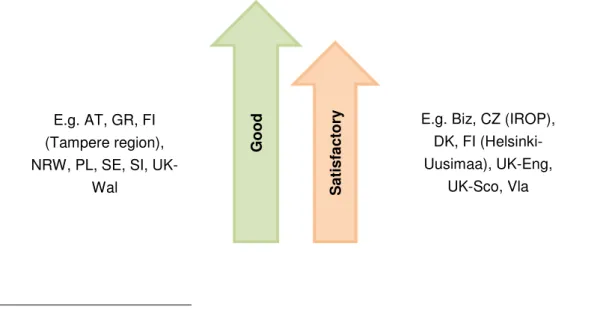
Two and a half years into the 2014-20 programme period, project generation is progressing and
project demand is reported as good or satisfactory (see Figure 1) by most IQ-Net partners,
although there is some variation between the different priority axes, instruments and the regions.
Figure 1: Project demand in the IQ-Net programmes
1 European Commission, Daily News 26/10/2016 http://europa.eu/rapid/press-release_MEX-16-3547_en.htm
(accessed 7 November 2016). G o o d S atisf a cto ry E.g. AT, GR, FI (Tampere region), NRW, PL, SE, SI,
UK-Wal
E.g. Biz, CZ (IROP), DK, FI (Helsinki-Uusimaa), UK-Eng,
As reported in past IQ-Net Review Papers 37(1)2 and 38(1)3, programme managers have established
various demand (capacity of beneficiaries) and supply side measures (capacity of programme authorities focussing on efficiency, transparency, coordination) to promote project generation. These efforts have continued and some new measures have been adopted in the past six months (e.g. reduction of project selection stages in HR due to difficulties to generate demand for the call for SMEs in the tourism sector; and focus on launching several calls in the IROP in CZ).
While project generation has progressed without major problems, project appraisal has been
time-consuming in some cases:
In England, there is backlog of projects waiting for approval, as the MA was not able to
approve projects between the end of June and August 2016 while they waited for the Treasury to announce the next steps after the EU Referendum.
In Denmark, the screening processes are time consuming, not least due to the new
requirements, such as results orientation. Hence, the cycle from project idea to the receipt of a grant takes a long time. Furthermore, there is no common process for screening, but Regional Growth Fora utilise a variety of different methods.
In the Czech Republic, the high volume of calls and consequently the large number of
submitted proposals in the IROP is creating pressures on the appraisal processes, particularly as these are carried out under limited human resources of the MA and IB (external appraisal is not found to be beneficial).
The political situation in some countries is also creating a level of uncertainty regarding the
approach to implementation:
In Scotland there are some signs of a potential impact on spending due to the uncertainty
with the future of ESIF funding in the UK and consequently, some partners have delayed contracts and procurement.
In Poland, there is pressure to speed up implementation (e.g. contracting and payments),
although there is no sufficient evidence to suggest that the MA is ineffective in implementation. Generally, this can be seen as part of political actions at the national level which may result in reversal of decentralisation processes that have taken place. Marshalls of all regions were due to meet in October 2016 to discuss this with the government.
In the Czech Republic, the regional government election (autumn 2016) has resulted in a
lack of political will towards large projects and consequently the IROP has suffered from a low demand in some priority axis. This is because such projects require strong long-term political support and the current political representation (of certain regions) lacks commitment, not least as the new leaders are yet to be announced and there is also uncertainty whether the new political representation would continue to support the already launched projects.
2
See more in Ferry M (2015) ‘New OPs, new instruments: progress with the 2014-20 programmes’, IQ-Net Review Paper 37(1), European Policies Research Centre, University of Strathclyde, Glasgow.
3 See more in Vironen H and Lehuraux T (2016) ‘First signs of growth: progress with the 2014-20 programmes’
2.2 Themes
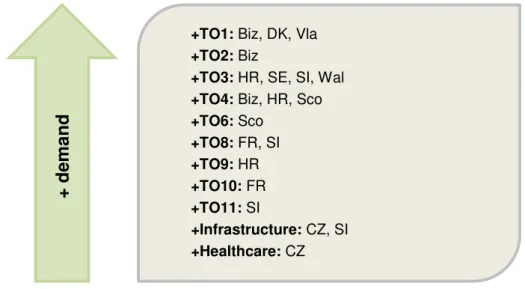
The uptake of themes varies between the programmes. While generally, progress has been good
across the ‘familiar’ themes that were already embedded into the programmes in the past and where there is hence significant experience (see Table 1), ‘new’ themes tend to cause more challenges, although as noted the situation varies across the IQ-Net partner programmes.
Table 1: Examples of themes with positive demand in the IQ-Net programmes
‘New’ themes may be complex, require significant upskilling, and mobilisation of new target
groups (see Table 2). Challenges may also be faced with themes that are supported from domestic
sources (e.g. support for school leavers in DK or low carbon priority in Vla) and actors may be reluctant to get involved due to lack of experience or the additional requirements associated with EU funds. The MAs have responded to such challenges through various measures such as organising repeated calls (e.g. PL), events or issuing guidance and targeted advice. For instance, in Finland, new guidance material on the theme low carbon economy was published in September 2016. The material is intended to open up the concept of low carbon by providing concrete examples both to the project applicants and the authorities dealing with the applications.
+
dem
a
nd
+TO1: Biz, DK,Vla +TO2: Biz
+TO3: HR, SE, SI, Wal +TO4: Biz, HR, Sco +TO6: Sco +TO8: FR, SI +TO9: HR +TO10: FR +TO11: SI +Infrastructure: CZ, SI +Healthcare: CZ
Table 2: Examples of themes with challenging demand
Thematic objective IQ-Net programme
TO1 R&I
SK: Slow start with the R&I OP due to problems with the implementation of the RIS3
strategy.
Sco: Spending is slower, partly attributed to nervousness amongst potential
beneficiaries in investing due to uncertainty surrounding the decision to exit from the EU.
TO3 SMEs Sco: Spending slowed by the uncertain economic / political climate.
TO4 Low carbon
SE:Scope for improvement. Part of the problem has been the mobilisation of ‘new’
actors at the regional and national level.
Vla: Slow demand as the theme involves projects that depend on multiple funding sources. Competition with domestic funds. The projects also very technical and applications take longer to prepare.
Wal: The priority axis on energy in East Wales lacks the marine energy projects
available in West Wales, and relies on projects for energy efficiency, housing stock and small scale community renewable energy schemes. Hence, a transfer out of this priority may be forthcoming.
TO6 Environment
DK: Resource efficiency is not a new area, but the MA and the regions are uncertain on how to progress in this area and how to drive change, largely due to the complexity of the topic. Critically, indicators are proving difficult to measure effectively, which can slow project selection and monitoring.
HR: partners have noted slower progress concerning the water and the waste sectors,
not least due to lack of political consensus on the optimal model (waste).
TO7 Transport
HR: Slower demand under the theme has been linked to lack of capacities amongst the beneficiaries and complex preparatory procedures for major projects, such as property rights, alignment with environmental impact assessment requirements etc.
TO9 Social inclusion
CZ: The theme is in low demand, not least because it is a topic in which the regional
governments are the project applicants and there is a lack of political will to commit to such projects (see Section 0).
DK: Progress remains slow due to the newness of the theme.
PL: This is most problematic area for the ESF, explained at least in part by shifting
guidance from DG EMPLOI and different approaches in comparison to DG REGIO. In response, partners are organising repeated calls for proposals and organising more meetings with beneficiaries.
TO10 Education
DK: The priority axis supporting school leavers to gain qualifications has not progressed
well due to support being provided also from domestic sources. In addition, a national reform is under way in Denmark, which affects involvement of schools.
Besides the above TOs, also other types of projects are causing challenges. Some partners
have faced difficulties with projects related to e-government (e.g. CZ) and larger scale projects, particularly in terms of their cost efficiency and rationale (e.g. SI). Some of the new programme elements are also requiring more attention. This includes the theme of sustainable urban development, which has attracted fewer applications in some partner programmes (e.g. DK, Vla). In
Greece (Attiki OP) delays have occurred in the issuing of calls due to unfulfilled EACs in the Priority Axes 2 and 4. Delays have also been reported due to the complexity of infrastructure projects.
2.3 Focus on results
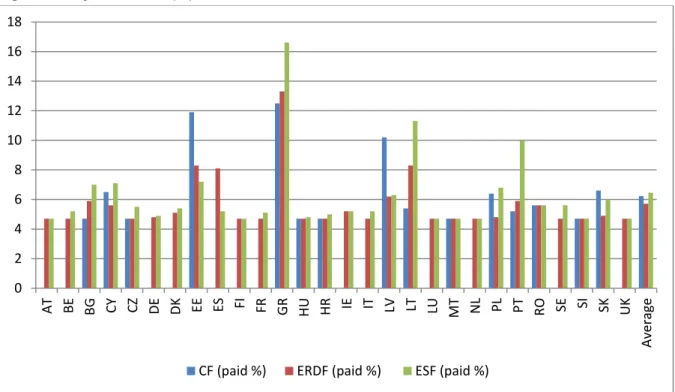
Payments are very limited at this stage of programme implementation. This is not surprising given
pending arrangements, such as the approval of the MCSs. Other reasons include delayed programme adoption, delayed selection processes, and funding of projects in areas with less experience. Commission data from 7 November 2016 shows the state-of-play with payments across the three funds (see Figure 2). Average payment rate for ERDF is 5.71 percent, for ESF 6.46 percent, and for CF 6.22 percent.
Figure 2: Payment rates (%) in the EU28, November 2016
Source: European Commission data, REGIO.A.3 – Budget and Financial Management, 7 November 2016.
Although payments have not been made in all cases, IQ-Net partners have been more active in
ensuring that funding is committed, although the picture remains very mixed. For instance, half of
the resources have been committed (based on Autumn 2016 fieldwork data) in many Swedish programmes (50 percent) followed by Vlaanderen (46.7 percent) Wales (45 percent), Picardie, Basse-Normandie OP in France (45 percent, which is the best performing ROP in France), and Scotland (44 percent in ERDF). Good financial progress has been attributed among other things to well-performing instruments (e.g. FIs in Pomorskie). Other programmes are lagging significantly behind, such as Guadeloupe and Réunion in France (4 percent, which are the lowest performing ROPs in France).
No major problems are foreseen regarding future progress. Even in the UK, with the extended
deadline of the Treasury guarantees for ESIF projects, OPs appear quite confident that most programme resources can be committed within the timescale. For instance, in Wales, the MA would expect to have 90 percent of their programmes approved by March 2019.
0 2 4 6 8 10 12 14 16 18 A T B E B G CY CZ DE DK EE ES FI F R G R HU HR IE IT LV LT LU MT NL LP PT RO SE SI SK UK A v e rag e
Regarding the indicator data, partners are generally cautious with the early results, not least as
there is some evidence that targets have been set too low (e.g. FI, SE, Wal). For instance, in Wales there are some indications that beneficiaries have been overly cautious, particularly if they have previously experienced problems with audits.
2.4 Meeting the 2014-20 requirements
Some partners have noted a clear improvement in the quality of project applications in 2014-20. Quality has improved not least due to the narrower focus of the programmes (in some cases the
reduced levels of funding has meant clearer focusing on larger and more thought-through projects) and the more demanding application criteria (e.g. thematic objectives, results-orientation etc.), with awareness-raising efforts playing a key role. In many countries and regions, guidance has been prepared for the beneficiaries with the aim of ensuring consistent and evidence-based reporting and monitoring (e.g. HR, PT), and training and meetings are being held to empower beneficiaries (e.g. PL) and to inform on calls and funding opportunities more generally (e.g. PT). Awareness of the new changes requires to be embedded in the institutions,which is, however, not necessarily the case in all countries and regions.
The adoption of the new requirements varies between the different types of regions, across
the instruments and themes. For instance, in Finland, the interpretation of the requirements differ
between the regions (University regions vs. other regions) reflecting their specific needs. Many smaller regions have a more limited pool of applicants and this may be reflected in project quality (e.g. projects are less diverse and compromises need to be made), while in the larger regions, requirements are stricter as demand tends to be higher. In Vlaanderen, the ITIs are of some concern as they already have a strategy with projects and are not always fully aware for instance of the necessity to have result indicators. Similarly, competition is very strong for the theme of innovation (and as such less than half of the applications are successful), whereas for instance there is considerably less competition for the theme of low carbon economy.
Although the new requirements such as results-orientation are generally welcome, many of the ‘new’
terms for the 2014-20 period have become well-worn. Some partners have noted ‘exhaustion’
amongst the various stakeholders and a cautious approach to any ‘new’ measures. Indeed, there is some disappointment that the rhetoric surrounding the 2014-20 period is not being seen through in implementation. In the run-up to the current period, there were expectations that the strategic merit rather than financial progressing alone would guide implementation. For instance, in the past in Pomorskie, partners had favoured implementation based on ‘pure competition’ (i.e. first come first
served) and this has guaranteed strong financial performance in terms of absorption. For 2014-20, the MA has taken a more strategic approach, investing in integrated projects (e.g. to improve areas to attract investment, support for the education systems that draws in several infrastructure and training project strands etc.). However, these types of projects are no longer procured using open calls, but they involve an intensive preparation stage. For instance, all districts in the region are now obliged to prepare a position on the needs of their area in terms of vocational training. This process takes time, but there are also pressures to absorb funding, symbolised by the use of the performance reserve.
At the same time it is important to note that some of the requirements are not entirely new. For
instance in Portugal, results-orientation has been pursued also in the past under the NSRF (e.g. with repayable support converted into non-repayable support in case of achievement of specific
performance conditions). In the 2014-20 period, the results-orientation has simply been taken further by extending the logic to all levels of Portugal 2020, including integrated development strategies. Partners have also reported on some good practice examples, which facilitate the adoption of the 2014-20 requirements (see Box 1) or go beyond these requirements (see Box 2).
Box 1: Implementation plan in Slovenia
In Slovenia, to enable the best allocation of funding, the MA has introduced a so-called implementation plan, which is the actual breakdown of the OP by the planned measures. The aim is to enable greater synergies between measures, avoid overlaps, and to achieve the maximum possible results (performance framework, indicators, n+3 etc.). The implementation plan is approved by the government and is a pre-condition for project applications, calls for proposals etc.
Box 2: Streamlining horizontal criteria in the Swedish programmes
In Sweden, the implementation of the horizontal criteria of equal opportunities, non-discrimination and accessibility in 2014-20 programme period has been successful. There are specific guidelines for the applicants and the authorities dealing with the applications. The demands are higher from the past with respect to what needs to be achieved in terms of the criteria. For instance, there are no longer simply questions at the end of the application form, but these are integrated into every question. Hence, horizontal issues are no longer just horizontal but rather have become embedded into the planning process.
2.5 Pending implementation challenges
Whilst the understanding of the new requirements for the 2014-20 period has improved, there
continues to be various other challenges that affect the implementation of the programmes.
The key issues relate to the strict interpretation of regulations and guidelines, pending ex-ante conditionalities (EACs) and action plans, ongoing development of the IT/monitoring systems, and the approval of management and control systems.4
(i) Strict interpretation of regulations and guidelines
Many partners view that the Commission (and in some cases domestic authorities) create stricter/additional rules when interpreting the regulations/guidelines. The fact that regulations are often difficult to interpret creates uncertainty amongst the authorities and therefore results in more demanding approaches not least with the future audits in mind. Some of the specific issues mentioned include:
4 Implementing EU Cohesion policy 2014-2020: the state of play, presentation by Normunds Popens of the DG
Eligibility period for the expenditure / costs incurred by the beneficiary. Some partners
have noted that the Commission interprets the regulation in a way that the costs and expenditure related to a new beneficiary are eligible only after the OP modifications have been sent to the Commission (previously only the expenditure had to be in place after sending the OP modification to the Commission).
Different interpretation of eligible costs or selection criteria. In Poland, a particular issue,
according to the MA, is guidance from the Ministry of Development in Warsaw, for instance concerning eligible costs or selection criteria for projects in the fields of education, labour market and health. Under the selection criteria, the focus from central government is on technical assessment while the MA prefers more strategic emphasis.
SCOs and the actual value needed. Some partners have also noted that the actual value for
the SCO has to be evident in the contract with the beneficiaries. However, according to the guidelines, the formula for SCOs should be sufficient and in accordance with the guidelines.
State aid rules. Many partners have noted difficulties with State aid rules, which reportedly
continue to hamper implementation, forming a significant and greater barrier than in the past. Due to the complexities, partners are experiencing difficulties in describing the State aid regime to beneficiaries. For instance in Greece, before a call is issued, there is a repeated
procedure of exchange of documents between the ministry and the regional MAs in order to confirm compliance with State aid. Partners in Greece are therefore promoting an idea of a call template that could be developed by State aid experts at the EU level.
Guidance or responses concerning the correct interpretation of regulatory framework
of FIs are generally delayed, which has lengthened the process and affected the timetable of
FI implementation.
(ii) Ex-ante conditionalities
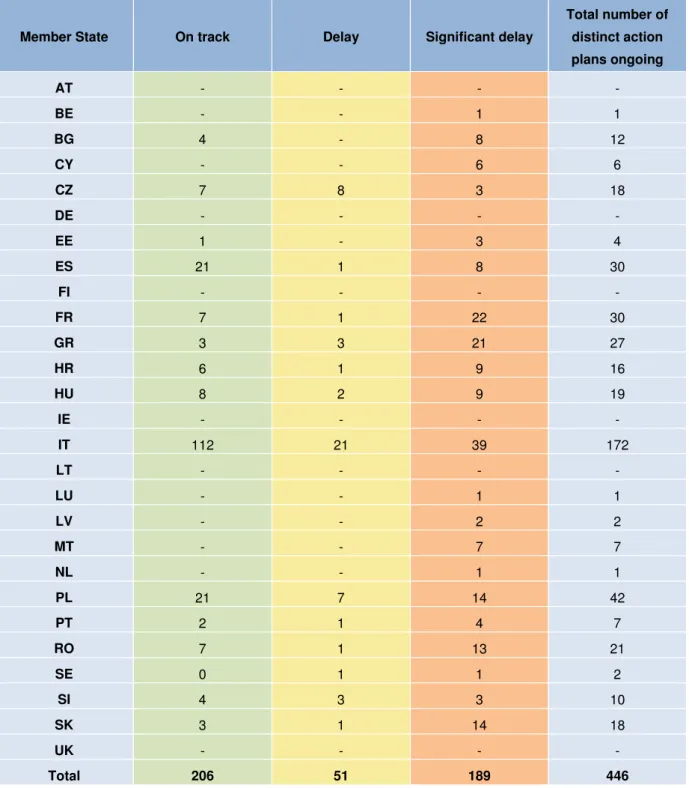
As reported in the last IQ-Net Review Paper 38(1)5, an ongoing challenge affecting the
implementation of the programmes has been the fulfilment of the EACs. According to European
Commission data of 11 October 2016 (see Table 3) the total number of ongoing distinct action plans in the Member States is 446. Of these, 206 are on track, while the remainder are delayed (51), with most action plans facing significant delays (189). There is some urgency, as failure to have EACs or
action plans fulfilled by the set deadline can result in a suspension of payments in 2017.6
For the time being, funding has been released in stages. For instance, in Greece, due to the
pending EAC 1.2 on research infrastructure, 50 percent of the resources have been released, and the release of the remaining 50 percent is still to be concluded. While the EACs overall are perceived to drive change in the public administration in Greece and to address systemic deficiencies, the self-suspensions imposed by the Commission are viewed to create enormous problems for the programmes and be detrimental to the effective delivery of ESIF interventions.
5
See more in Vironen H and Lehuraux T (2016) ‘First signs of growth: progress with the 2014-20 programmes’ IQ-Net Review Paper 38(1), European Policies Research Centre, University of Strathclyde, Glasgow.
6 Gilland M, de Keersmaecker S, Dimovne Keresztes E and Weber A (2016)
State of play in completion of action plans to fulfil ex ante conditionalities in the European Structural and Investment Funds' programmes.
Table 3: ExAC action plans monitored by REGIO
Member State On track Delay Significant delay
Total number of distinct action plans ongoing AT - - - - BE - - 1 1 BG 4 - 8 12 CY - - 6 6 CZ 7 8 3 18 DE - - - - EE 1 - 3 4 ES 21 1 8 30 FI - - - - FR 7 1 22 30 GR 3 3 21 27 HR 6 1 9 16 HU 8 2 9 19 IE - - - - IT 112 21 39 172 LT - - - - LU - - 1 1 LV - - 2 2 MT - - 7 7 NL - - 1 1 PL 21 7 14 42 PT 2 1 4 7 RO 7 1 13 21 SE 0 1 1 2 SI 4 3 3 10 SK 3 1 14 18 UK - - - - Total 206 51 189 446
Source: European Commission (ExAC action plans monitored by REGIO), 11 October 2016.
Amongst the IQ-Net partners, specific problems in the fulfilment of the EACs include:
Delays in the fulfilment of the EACs. This may occur due to the adoption of specific
strategic documents, i.e. laws and bylaws necessary for the fulfilment of certain EACs, which may be caused by changes in sectoral policies and / or changes of government (e.g. HR). Delays may also occur due to the fact that EACs need to be fulfilled both at the national and regional levels, but fulfilment of the national EACs need to be done first, which in turn may
result in delays at the regional level (e.g. in PL concerning conditionalities on health and waste management).
Lack of or insufficient coordination among the authorities responsible for fulfilling the
specific EACs (particularly where there are multiple bodies responsible for certain activities);
Ambitious deadlines;
Limited ability to influence the work of sectoral authorities in fulfilling the EACs as
adoption of most EACs is not in the jurisdiction of the IQ-Net partners.
Unfamiliarity and inadequate capacity of sectoral authorities to respond to EU
requirements;
Lack of adequate systems for strategic planning.
(iii)
Pending IT systems
IT / monitoring systems were required to be operational by the end of last year. Despite this
deadline, many IT / monitoring systems are not yet fully developed. The coordination of different systems (e.g. AT, FI, SI) or inputs from the various actors has created additional challenges. For instance in Poland, an important challenge for the MA is incorporating and coordinating inputs from the three IBs in the programme: the regional labour office, the regional business support agency and the ITI IB. For the ITI in particular, the process has been challenging as it is a new body and the selection and implementation process is complicated. The MA has invested considerable effort in the monitoring system but an assessment of efficiency will only be possible when the implementation process is fully underway. In Finland, data from TUKI (business aid data) is still not transferable to the main EURA 2014 system. This delay has implications on reporting, with reports compiled separately. Due to the need to rely on two different monitoring systems, the tracing of errors has become more difficult.
Figure 3: Successes (+) and challenges (-) related to the monitoring systems
(i) Pending management and control systems
The management and control system (MCS) needs to be approved by the Commission before
any payment applications can be submitted. Despite progress with the MCSs, the advancement
amongst the IQ-Net programmes varies. A majority of IQ-Net programmes have been able to submit the required documentation for the Commission’s approval in the course of summer 2016, although
+NRW: Monitoring system working well. Various
changes have been made to make it more focussed and tighter, and to allow direct access by the (more limited number) IBs.
+SE: Monitoring system (NYPS) working well due to
changes that were made for 2014-20.
-FI: Transfer of data between the monitoring
systems has been delayed.
-PL: Coordination of IB input has been challenging. -SI: All three IT systems are interlinked, which has
some are still awaiting feedback from their domestic Audit Authorities before submission to the Commission can take place. The MCSs have been approved at least in Greece, Sweden, Nordrhein-Westfalen ERDF OP, Scotland and Wales as well as in the case of certain OPs in Portugal, Slovakia and France. Approval is also expected in England (by the end of October 2016). Additional MCS checks are taking place in those instances where a high number of changes were introduced to the MCSs in 2014-20 period (e.g. NRW).7 Concerns regarding delays in adopting the MCSs are justified,
given the implications on programme implementation and consequently on performance.
IQ-Net members have continued to report problems, which are largely related to the complexity of
the MCS process due to the increased Commission’s requirements. The complexities have
grown to an extent that some are questioning the added value of the process, as it has not brought any benefits in terms of improvements to the administrative systems or procedures. Developing the system has been reported as requiring an enormous amount of capacity and is generally considered to be disproportional, particularly for the smaller programmes. One example concerns the drawing up of an annual summary of the final audit reports and of controls carried out, and a yearly transmission of the certified accounts to the Commission. Implementing anti-fraud measures is also viewed to be complex and onerous. Another example relates to the expansion of the MCSs to new programme elements, such as CLLD, ITIs and FIs, which may lack clear definition by the Commission. Partners have also noted other reasons including the e-claims system. For instance the English Audit Authority and the Certifying Authority are currently testing the system due to concerns about its security. Despite the fact that much of the blame is directed to the strictness of the Commission officials, the
domestic authorities have also been particularly demanding during the MCS process
(sometimes more so than in the past). The domestic Audit Authorities have a checklist from the Commission and are reported to follow this very thoroughly. There are also concerns about the
approaches adopted by the domestic authorities. For instance, in Austria, the MA has some
concerns about the approach of the AA, which took a sample of four IBs (of the total of 16 IBs in Austria) for further checking. For the remaining 12 IBs the AA will only carry out more limited checks (i.e. double-checking what the MA has already checked). According to the MA this creates some uncertainties as not all 16 IBs are checked directly by the AA.
In some instances the difficulties with the MCS are related to the complexities of the
programme structure. For instance, in Slovenia, the system is very complex with a single multi-fund
OP. The OP entails all possible combinations (two cohesion regions and three funds) and the system is decentralised with national ministries performing the IB roles. There are also reported concerns with programme delivery bodies (e.g. second level IBs) adapting to the new system. In Finland, the future regional reform will require changes to be made to the MCS (starting the process of the MCS approval all over again).
(ii) Other challenges
IQ-Net partners have also noted challenges with the high volume of calls (e.g. ITIs in Vla, CZ), which have led to certain management challenges and considerable resource pressures. In addition, issues have been reported concerning public procurement (e.g. FR, SK), simplified cost options (e.g. Sco, Wal), financial instruments (e.g. SI), and indicators. With respect to indicators, the key challenges
7 In NRW, there was a very significant reduction in the number of IBs; the shift of some tasks from the NRW Bank
reported include their large number, obscure nature, lack of ambition in the targets (e.g. FI, SE), the over-ambitious targets (e.g. CZ) or the transfer of indicator data from the different monitoring systems (e.g. FI).
Box 3: Output indicator on CO2 reduction in the NRW ERDF OP
In the NRW ERDF OP, the MA is examining the output indicator on CO2 reduction (Priority axis 3) and specifically the methods to be used for calculating this reduction, especially in the case of interventions where the effects on CO2 reduction are indirect and/or where interventions involve the provision of information and advice to businesses and consumers.
2.6 Addressing key challenges
Member States and the regions have introduced specific measures to address some of the pending implementation challenges:
Responding to challenges with indicators: For instance, in Slovenia, the provisions on
result-orientation led to the MA upgrading the draft of the co-financing contract. It introduced compulsory provisions for all IBs that define more precisely the obligations regarding the achievement of outputs and the recovery of funds.
Box 4: Approach to indicators in the Swedish programmes in 2014-20
In Sweden, the authorities decided to use the Commission’s set indicators as far as possible, supplemented by ten additional indicators (of which not all are used). Concerning the results indicators, a decision was taken to focus on those where data was already available (e.g. most notably data that was available through the Swedish statistical agency (SEB)). Consequently, some of the indicators are rather broad and do not necessarily measure exactly what was intended. However, this approach turned out to be the best (and easiest) method to measure results.
Guidance and training for specific themes: Partners have issued guidance to help with the
specific themes and procedures. For instance, in Vlaanderen partners have formulated guidance and development a self-assessment tool for State aid (partially based on those used in the UK, which is considered a good practice example). The MA has also provided training for staff and appointed one member of staff with a specific responsibility over State aid.
Increase in training and upfront checks has also been reported in the case of SCOs, not
least due to problems related to the understanding of SCOs (e.g. Wal).
Working groups: Working groups have been established to promote synergies and
complementarity between RIS3 and the individual OPs (e.g. SK). Working groups have also been created to develop a system of context/result indicators. This was done for instance in Portugal under Portugal 2020 for ERDF and CF result indicators. The aim is to establish a method to improve and ensure consistency with regard to the result indicators.
While awareness-raising efforts are important, not all partners are convinced of the added
value of regulatory guidance produced by the Commission or domestic authorities. The reason
is that such guidance is often based on a single way of interpretation, while in practice many other methods are accepted. Also specific projects often need tailored support rather than general guidance. In some instances, there can be a level of hesitation by the MA to produce guidance due to
fear of giving ‘incorrect’ interpretations which are then found to be wrong when projects are audited
(even if the Commission approves such a stance). One suggestion is to have guidance that is
preapproved by the ECA to avoid audit failures (as opinions from the Commission’s desk officers
are not binding and they can still fail an audit).
2.7 Programme revisions
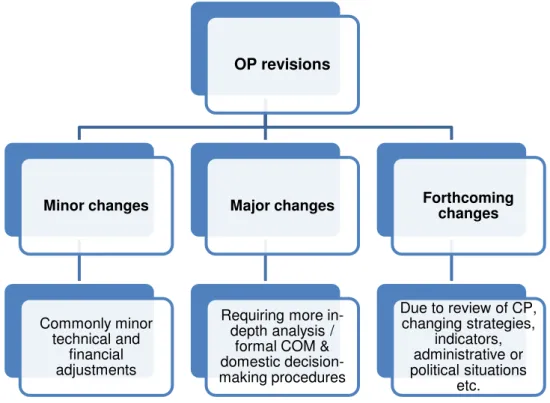
Implementation has now progressed to the point where some OPs as well as PAs have or are
undergoing revisions. In many instances, these concern various technical and financial adjustments
(e.g. changes to private and public funding rates, reallocations of funding etc.) and are unlikely to have broader implications, such as changes to the overall thematic focussing (see Figure 4). Such adjustments have been necessary to accommodate geographic eligibility (e.g. in PT under the
investment priority 5.2 in the OP Sustainability and Efficient use of Resources); sustainable urban
development following the Commission’s guidelines on the SUD (e.g. DK); or other project-related
changes (e.g. in PT where a major project that was initially not foreseen was included into the
Competitiveness and Internationalisation OP or the introduction of repayable grants for low carbon projects in Sco).
Generally minor programme revisions have taken place without any difficulties. The domestic
authorities have notified changes to the Commission and received validation in a relatively short time (although not in all cases) and thus avoided formal (and often lengthy) decision procedures. For instance, in Portugal, the process of notifying the Commission on minor changes to the OPs (e.g. aimed at addressing missing information in the OPs, such as in relation to the typology of
Figure 4: Programme revisions in the IQ-Net partner programmes
In terms of more substantial changes, more comprehensive analyses may be needed. For
instance, in Portugal more profound changes are expected in relation to ensuring greater alignment with the NRP. An analysis is currently being carried out and a proposal for changes is expected in the course of 2017. Similarly in Slovenia, discussions have taken place with the desk officer in DG REGIO regarding possible larger OP modifications in 2017. As reported in the previous Review Paper 38(1)8, programme modification has also taken place in Finland regarding the introduction of the SME
initiative, which was approved by the Commission in May 2016.
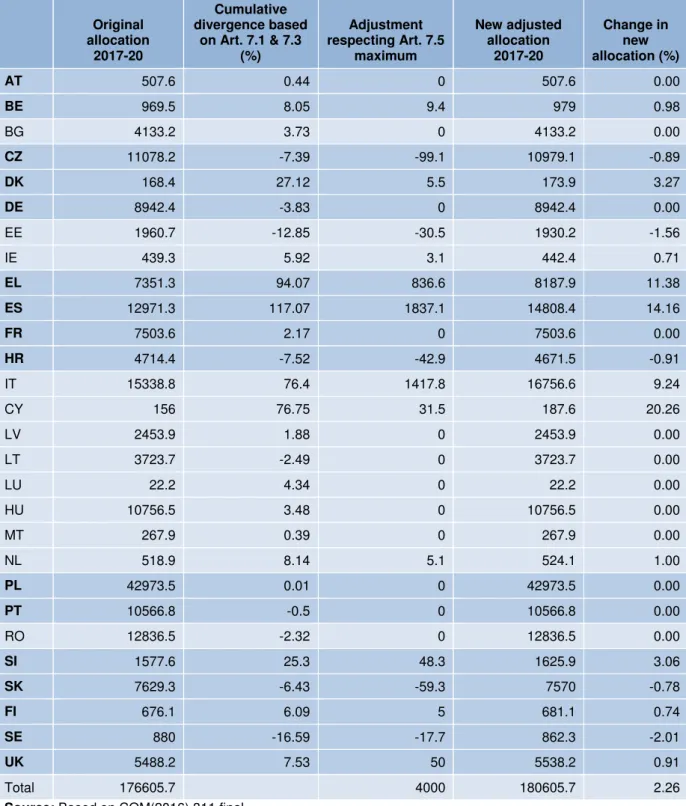
Programme amendments are also anticipated following the review of the Cohesion policy
allocations for Member States in June 2016 for the 2017-20 period. The results of the review alter
the financial allocations of 16 Member States (see Table 4). For most of the countries, the impact on allocations is relatively small. The largest increases in allocations will be in Southern European Member States. In terms of the programming of these reallocations, the Commission is encouraging the largest beneficiaries (Spain, Italy and Greece) to focus the additional allocations on addressing major EU challenges, namely youth unemployment and, in the case of Italy and Greece, the migration challenges.9
In the UK, an extra £50 million is expected following the review, and changes to the PA and OPs are anticipated to take advantage of the extra funds. In Wales, an extra £4.8 million may be allocated to the West Wales and the Valleys programmes, to be split proportionately between the ERDF and ESF programmes, and c. £2 million may be allocated to the priority axis for R&D&I. In Belgium, there will be a discussion about the division between the three regions (Wallonie, Vlaanderen and Brussels)
8 See more in
Vironen H and Lehuraux T (2016) ‘First signs of growth: progress with the 2014-20 programmes’ IQ-Net Review Paper 38(1), European Policies Research Centre, University of Strathclyde, Glasgow.
9
Bachtler J, Mendez J and Wishlade F(2016) Evolution or Revolution? Exploring New Ideas for Cohesion Policy 2020+, EoRPA Paper 16/4 prepared for the 37th meeting of the EoRPA Regional Policy Research Consortium at Ross Priory, Loch Lomondside, 2-4 October 2016.
OP revisions Minor changes Commonly minor technical and financial adjustments Major changes
Requiring more in-depth analysis /
formal COM & domestic decision-making procedures Forthcoming changes Due to review of CP, changing strategies, indicators, administrative or political situations etc.
and the different funds (ERDF and ESF) and some small changes will be implemented. In addition, in Vlaanderen, some more funding may be shifted to the innovation priority. In the case of Finland partners are yet not certain where the additional funding will be focussed on.
Table 4: Results of the review of Cohesion policy envelopes for 2017-20
Original allocation 2017-20 Cumulative divergence based on Art. 7.1 & 7.3 (%) Adjustment respecting Art. 7.5 maximum New adjusted allocation 2017-20 Change in new allocation (%) AT 507.6 0.44 0 507.6 0.00 BE 969.5 8.05 9.4 979 0.98 BG 4133.2 3.73 0 4133.2 0.00 CZ 11078.2 -7.39 -99.1 10979.1 -0.89 DK 168.4 27.12 5.5 173.9 3.27 DE 8942.4 -3.83 0 8942.4 0.00 EE 1960.7 -12.85 -30.5 1930.2 -1.56 IE 439.3 5.92 3.1 442.4 0.71 EL 7351.3 94.07 836.6 8187.9 11.38 ES 12971.3 117.07 1837.1 14808.4 14.16 FR 7503.6 2.17 0 7503.6 0.00 HR 4714.4 -7.52 -42.9 4671.5 -0.91 IT 15338.8 76.4 1417.8 16756.6 9.24 CY 156 76.75 31.5 187.6 20.26 LV 2453.9 1.88 0 2453.9 0.00 LT 3723.7 -2.49 0 3723.7 0.00 LU 22.2 4.34 0 22.2 0.00 HU 10756.5 3.48 0 10756.5 0.00 MT 267.9 0.39 0 267.9 0.00 NL 518.9 8.14 5.1 524.1 1.00 PL 42973.5 0.01 0 42973.5 0.00 PT 10566.8 -0.5 0 10566.8 0.00 RO 12836.5 -2.32 0 12836.5 0.00 SI 1577.6 25.3 48.3 1625.9 3.06 SK 7629.3 -6.43 -59.3 7570 -0.78 FI 676.1 6.09 5 681.1 0.74 SE 880 -16.59 -17.7 862.3 -2.01 UK 5488.2 7.53 50 5538.2 0.91 Total 176605.7 4000 180605.7 2.26
Source: Based on COM(2016) 311 final.
Note: IQ-Net partners highlighted in darker shade of blue.
Other changes are forthcoming as a result of evolving programme strategies (see Box 5),
adjustment of indicators (e.g. baseline and target values), because of regional mergers or shifts in political leadership (e.g. FR, NRW), intervention logic (e.g. GR) and targets for the performance framework (e.g. GR, SE, Eng). In addition, in Greece, changes are anticipated in the future (after
2017) following the expected change of the CPR to include the investment priority on support to
refugees. The additional €1 billion foreseen will have to be allocated, which entails revisions to the PA
and OPs.
Box 5: Strategic changes in Poland
The government’s new Strategy for Responsible Development, which is expected to be approved by the Polish Council of Ministers in November 2016, could prompt some changes to the regional OPs, but the situation is uncertain. There are some limitations in the strategy, mainly relating to a lack of detail on strategic focus, implementation plans and funding sources. For instance, Pomorskie and Wielkopolskie have already made it clear to the government that they see no need to change their ROPs as they are in line with the strategy’s approach.
2.8 Evaluations
First evaluations are under way or in early stages of planning in most IQ-Net programmes (see
Table 5). In many cases, current evaluation activities are focussed on the ex-post evaluations of the 2007-13 programme period, which will contribute to the 2007-13 closing procedures and to the implementation of the 2014-20 programmes. In addition, in Poland, a Ministry of Development-led evaluation of Cohesion policy in 2007-13 is planned to support the activities of Pomorskie in participating in the future Cohesion policy debate.
A major challenge is to ensure good quality evaluations (proposal and reports), particularly in the
context of a limited evaluation market and increased requirements for the evaluation methodologies. In Portugal, partners view two specific guidance documents as helpful in this respect: (1) Guidelines for the planning and preparation of the evaluations under Portugal 2020 (May 2015); and (2) Guidelines for monitoring the implementation of the recommendations of the evaluations of Portugal 2020 (July 2016). The former document has been useful particularly in the elaboration of the terms of reference.
Table 5: Progress with evaluations in the IQ-Net partner programmes in 2014-20
Country /
programme Title of evaluation Methodology State of play
CZ -IROP
Analysis of absorption capacity of the
programme (internal assessment) Process-related Finalised (May 2016) Evaluation of verification of a change in
development needs (PA relevance) Theory-based In planning
CZ - National coordination authority
Evaluation of verification of a change in
development needs (PA relevance) Theory-based In planning Identifying the progress towards the
indicators of satisfaction of employees / relevant actors
Ongoing evaluation
(focus on results) Launched
CZ - National coordination authority and Ministry of Transport and Development of Poland (leading)
Ex post evaluation and forecast of benefits to the EU – 15 countries resulting from the implementation of the
Cohesion Policy in the Visegrád Group countries
Ex-post (focus on
results) Finalised
DE - NRW Ongoing evaluation Process-related Launched
DK
Thematic evaluations for each Priority
axis n/a In planning Evaluation of large projects n/a Launched
FI n/a Process-related In planning
FR n/a n/a In planning
PL - Pomorskie
Evaluation of impact indicators (long term) – emergency medical services
(2007-13) Mixed approach Launched ROP’s impact on EU2020 Strategy
objectives delivery (2007-13) Theory-based Launched Overall ROP’s impact on the region
(2007-13) Theory-based Launched Evaluations for 2014-20 period n/a In planning
PT
Evaluation of the YEI Process-related Launched (in final stages) Evaluation of ESIF impact on the
performance of Portuguese enterprises (2007-13)
Impact-related, counterfactual
evaluation In planning Evaluation of the implementation of the
incentive schemes Process-related In planning Evaluation of the ESIF contribution to
the dynamics of knowledge transfer, cooperation and clustering
Impact-related (2007-13), process-related (2014-20),
theory-based evaluation
In planning Evaluation of the contribution of
Portugal 2020 to advanced education Impact-related, theory-based evaluation In planning Evaluation of the impact of local
contracts for social development Impact-related, theory-based evaluation In planning Evaluation of the ESIF contribution to
increased public administration capacity
Impact-related (2007-13), process-related (2014-20),
theory-based evaluation
Postponed (to 2017) Evaluation of measures promoting the
quality of education and training Process-related Postponed (to 2017) Evaluation of the implementation of
CLLD strategies: operationalisation and
first achievements Process-related Postponed (to 2017)
Ongoing thematic evaluation: TO4 Thematic Launched Ongoing thematic evaluation: TO1 Thematic Launched Ongoing thematic evaluation: green
fund and the fun-of-fund (TO3) Thematic In planning Ongoing thematic evaluation: TO3 Thematic Launched Ongoing thematic evaluation of the
regional risk capital funds: TO3 Thematic Launched Thematic evaluation: sustainable urban
development Thematic Launched Thematic evaluation: TO2 Thematic In planning Thematic evaluation: TO7 Thematic In planning
Evaluation of effects Thematic n/a
SI
Final evaluation of the communication
strategy (2007-13) Focus on effectiveness, efficiency and impact
Launched (to be finalised at the end of
2016)
Ex post evaluation of 2007-13 OPs
Process-related (also focus on results and synergies). In-depth analysis of themes that
have not been evaluated.
In planning
Evaluation of active employment policy / connecting people with jobs
Analysis on how well activation policies are
performing Finalised
SK
Qualitative analysis of recommendations from performed evaluations of NSRF/OP/HP in 2007-13
Desk research, statistical analysis of
completed evaluations Finalised Evaluation of communication and
information activities in 2014-20 Process-related, theory-based Launched Methodology for the evaluation of
synergic effects and interventions of
ESIF Meta-analysis Launched Evaluation of the progress achieved in
the implementation of PA analysis of time series Desk research, Launched Interim evaluation of progress in the
implementation of HP at OP level analysis of time series Desk research, Launched Evaluation of the impacts of NSRF
implementation on meeting the NSRF strategic objective
Desk research,
analysis of time series In planning
UK - Scotland
Mid-term review n/a In planning YEI evaluation Focus on lessons learned Finalised (Jan 2016) Second YEI evaluation n/a In planning (2018)
UK - Wales
ESF beneficiaries survey Focus on surveys Launched Ex post evaluation of 2007-13 OPs Meta evaluation Launched Communications n/a Launched Evaluation of infrastructure under
previous ERDF programmes
Effects of 2000-06 projects and start of
2007-13 period. In planning Evaluation of ERDF business support n/a published soon) Finalised (to be
Additional analysis of (ESF) Leavers
3. 2007-13 PROGRAMME PERIOD
3.1 State-of-play with payments
Payment rates are in most instances well above the 90 percent threshold. Across the EU28, the
state-of-play with interim payments at the end of September 2016 reached €292 billion (representing an increase of €1.2 billion from the previous month) and the submission of new payment applications
€10.1 billion.10 Overall, the average EU28 payment rate has increased from 90.2 percent to an
average of 93.3 percent in the past six months (see Table 6).
Table 6: EU28 average payment rates
May-Oct 2014 Oct-May 2015 May-Oct 2015 Oct-May 2016 May-Oct 2016
EU28 average
(%) 73.2 81.9 87.3 90.2 93.3
Source: European Commission data.
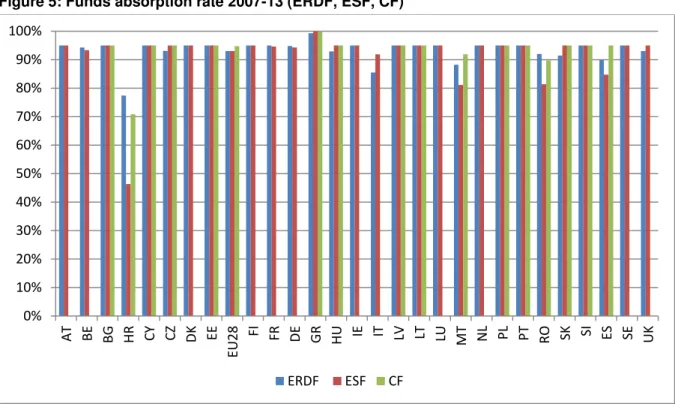
Figure 5 shows the absorption rate across the three funds (ERDF, ESF and CF) in the EU28.
The number of countries that have reached total payment rates of 95 percent and
above has increased in the past six months from eight to 18 (AT, BG, CY, DK, EE, FI, FR,
DE, GR, IE, LV, LT, LU, NL, PL, PT, SI, SE).
Total payment rates remain under 90 percent in five Member States: HR (69.7 percent),
IT (87.1 percent), ES (89.2 percent), MT (88.5 percent), RO (89.1 percent).
Figure 5: Funds absorption rate 2007-13 (ERDF, ESF, CF)
Source: European Commission data ( https://cohesiondata.ec.europa.eu/dataset/Total-Percentage-of-Available-Funds-Paid-Out-by-th/w8x7-cqjd), 8 November 2016.
10 European Commission (2016) State of execution of interim payments and submission of payment applications
for Heading 1b (programmes 2007-13), 20 October 2016.
0% 10% 20% 30% 40% 50% 60% 70% 80% 90% 100% A T B E B G HR CY CZ DK EE E U 2 8 FI FR D E G R HU IE IT LV LT LU MT N L PL P T RO SK S I E S S E U K ERDF ESF CF
As final closure is approaching, partner programmes have progressed with the various
absorption challenges. For instance, in Scotland payment suspensions have been lifted in the case
of three programmes. These payment suspensions have been ongoing since the 2014 Annual Control Report, which contained error rates above the acceptable level. However, payments continue to be suspended in the case of Slovakia and Austria.
3.2 Closure
IQ-Net partners are making good progress with the final closure reports and all expect timely
submission to their Audit Authorities and subsequently to the Commission by the set deadline of 31 March 2017.11 In Nordrhein-Westfalen for example, a draft closure report has already been submitted
to the Commission. Although there are not major issues, clarifications to the Commission have been provided on (i) some indicators where the target values were not reached and (ii) projects which were not completed under the 2007-13 OP.
Other concerns and/or delays reported by partners in the closure process relate to:
Audits. The auditing of the final projects has in some instances taken longer than anticipated
and consequently delayed the closure process (e.g. Vla). In the case of the English ERDF OP, some delays have been experienced with Article 16 issues with closed projects as a result of the audit discovering irregular expenditure after project closure.
Financial instruments. In Denmark, the closure of FIs presents something of a challenge as
a small loan fund is taking longer to be closed than anticipated. (The fund operated longer than typical projects due to Denmark taking advantage of the Commission’s flexibility on the
closure for FIs).
Indicator data. In Greece, the key challenge is to prevent large deviations in the indicators
(25 percent).
Closure takes time and resources, which have been cited as the key challenges in the past IQ-Net
Review Papers. For instance, the Czech OP 2004-06 was not officially closed until 2016. Hence, for the future period, an annual closure has been mentioned as a good practice example for the future for instance by partners in Scotland.
3.3 Ex-post evaluation results
The European Commission has released the findings of an independent evaluation of EU investments in the 2007-13 period. Besides identifying the key results achieved across the EU and the Member States, the evaluation provides insights how to further strengthen efficiency and performance in 2014-20 period and beyond:12
11 Does not apply to Croatia.
12 European Commission (2016) Commission Staff Working Document, Ex post evaluation of the ERDF and