میحرلا نمحرلا الله مسب
Faculty of Science & Technology
Department of Computing and Informatics
Mohammad Heydari, PhD Thesis
Indeterminacy-Aware Prediction Model for
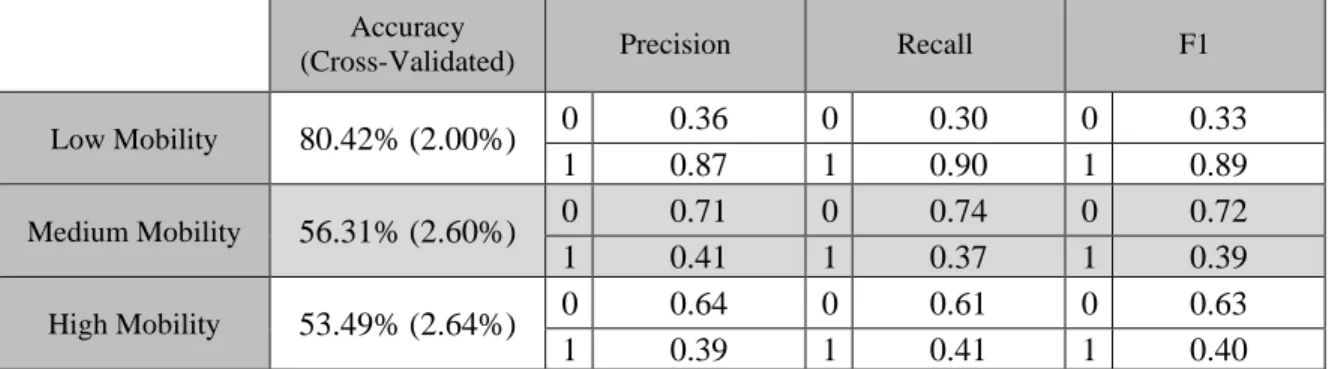
Authentication in IoT
2
Copyright Statement
This copy of the thesis has been supplied on condition that anyone who consults it is understood to recognise that its copyright rests with its author and due acknowledgement must always be made of the use of any material contained in, or derived from, this thesis.
3
Abstract
The Internet of Things (IoT) has opened a new chapter in data access. It has brought obvious opportunities as well as major security and privacy challenges. Access control is one of the challenges in IoT. This holds true as the existing, conventional access control paradigms do not fit
into IoT, thus access control requires more investigation and remains an open issue. IoT has a number of inherent characteristics, including scalability, heterogeneity and dynamism, which hinder access control. While most of the impact of these characteristics have been well studied in the literature, we highlighted “indeterminacy” in authentication as a neglected research issue. This work stresses that an indeterminacy-resilient model for IoT authentication is missing from the literature. According to our findings, indeterminacy consists of at least two facets: “uncertainty” and “ambiguity”. As a result, various relevant theories were studied in this work. Our proposed framework is based on well-known machine learning models and Attribute-Based Access Control (ABAC). To implement and evaluate our framework, we first generate datasets, in which the location of the users is a main dataset attribute, with the aim to analyse the role of user mobility in the performance of the prediction models. Next, multiple classification algorithms were used with our datasets in order to build our best-fit prediction models. Our results suggest that our prediction models are able to determine the class of the authentication requests while considering both the uncertainty and ambiguity in the IoT system.
4
Dedication
I would like to dedicate my thesis to “Amoo Ghasem” and children of Iranians who lost their fathers in fighting against ISIS while this research was being carried out.
5
Acknowledgements
This doctoral research was funded by the company Rasa and the Department of Computing and Informatics of Bournemouth University. I am grateful to them for the sponsorship of this work.
I would like to give special thanks to my first supervisor, Dr Alexios Mylonas, for his advice and encouragement during my PhD.
I am also grateful to Prof. Vasilis Katos for all his kind support while I carried out this research.
I would also like to thank Dr Emili Balaguer-Ballester for his valuable advice on part of my research.
I am deeply grateful to my brother, Dr Vahid Heydari, for his endless support in my academic life.
Finally, I would like to thank my parents, my wife and my little son for their support, love and patience.
6
Contents
1. Introduction ... 13 1.1 Thesis Motivation ... 13 1.2 Research Questions ... 14 1.3 Thesis Overview ... 16 1.4 Thesis Structure ... 161.5 Publications Arising from the work of the Thesis ... 17
2. Literature Review ... 19
2.1 An Introduction to Access Control in IoT ... 19
2.1.1 Access Control Models ... 21
2.1.2 Access Control Protocols and Standards... 31
2.1.3 Access Control Language ... 35
2.1.4 Resilient Access Control Approaches ... 36
2.2 Indeterminacy in Authentication ... 41
2.2.1 Uncertainty ... 42
2.2.2 Ambiguity ... 48
2.2.3 Proposed Resilient Access Control Methods in IoT ... 52
2.2.4 Findings on Resilient Access Control Methods ... 54
2.3 Chapter Summary ... 55
3. Methodology ... 57
3.1 Overview ... 57
3.2 Architecture... 58
3.3 The Process of Building an Indeterminacy-Aware Authentication Model ... 59
3.3.1 Attribute Selection ... 60
3.3.2 Dataset Synthesis ... 60
3.3.3 Uncertainty-Aware Model Building ... 61
3.3.4 Ambiguity-Aware Model Building ... 61
3.3.5 Validation ... 61
3.3.6 Model Selection ... 62
3.4 Chapter Summary ... 62
4. Dataset Synthesis ... 64
4.1 E-Health Exemplar – RASA ... 64
4.2 Threat Model ... 66
4.3 Synthesizing Process ... 67
7
4.3.2 Time ... 70
4.3.3 Location ... 72
4.3.4 Credentials ... 78
4.3.5 Authentication Decision ... 79
4.4 Los Alamos National Lab (LANL) ... 80
4.5 Chapter Summary ... 81
5. Uncertainty-Aware Prediction Model for Authentication ... 82
5.1 Preliminary Concepts ... 82
5.2 Prediction Models ... 86
5.2.1 Decision Tree ... 87
5.2.2 Random Forest ... 89
5.2.3 Support Vector Machine (SVM) ... 92
5.2.4 Logistic Regression ... 94 5.2.5 Naïve Bayes ... 96 5.2.6 K-Nearest Neighbours (K-NN) ... 98 5.2.7 Boosting Algorithms ... 100 5.2.8 Voting Classifier ... 102 5.2.9 Neural Networks ... 104 5.3 Discussion ... 110 5.4 Chapter Summary ... 114
6. Indeterminacy-Aware Prediction Model for Authentication ... 115
6.1 Trust-Based Analysis ... 115
6.2 Indeterminacy-Aware Prediction Models ... 121
6.2.1 Decision Tree ... 121
6.2.2 Random Forest ... 123
6.2.3 Support Vector Machine (SVM) ... 125
6.2.4 Logistic Regression ... 126 6.2.5 Naïve Bayes ... 128 6.2.6 K-Nearest Neighbours (K-NN) ... 130 6.2.7 Boosting Algorithms ... 132 6.2.8 Voting Classifier ... 134 6.2.9 Neural Networks ... 137 6.3 Discussion ... 141 6.4 Chapter Summary ... 145 7. Conclusion ... 146
8
7.1 Key Findings ... 146
7.1.1 Findings on IoT Adaptability of Access Control Models ... 146
7.1.2 Proposing Indeterminacy Factors for Authentication in IoT ... 147
7.1.3 DataSet Synthesis for Authentication ... 148
7.1.4 Handling Uncertainty in Authentication Using Prediction Models ... 149
7.1.5 Handling Trust in Authentication Using Prediction Models ... 149
7.2 Evaluation ... 150
7.3 Future Direction ... 151
7.3.1 Handling Indeterminacy in Authorization ... 151
7.3.2 Moving Towards Adaptive Model ... 151
Appendix A: Dataset Synthesis in MATLAB ... 153
A.1 Generating Data samples for IDs ... 153
A.2 Generating Data samples for Time ... 154
A.3 Generating Data samples for Location ... 155
A.4 Generating Data samples for Credential ... 157
A.5 Aggregating UVs to Label Datasets ... 157
Appendix B: Developing and Running Model on Raspberry Machine ... 160
B.1 Building Indeterminacy-Aware Prediction Models ... 161
B.2 Implementing Prediction Models on Raspberry Pi ... 166
B.2.1 Raspberry Pi ... 167
B.2.2 Building Prediction Model on Raspberry Pi ... 168
9
List of Figures
Figure 1.1: Thesis roadmap ... 16
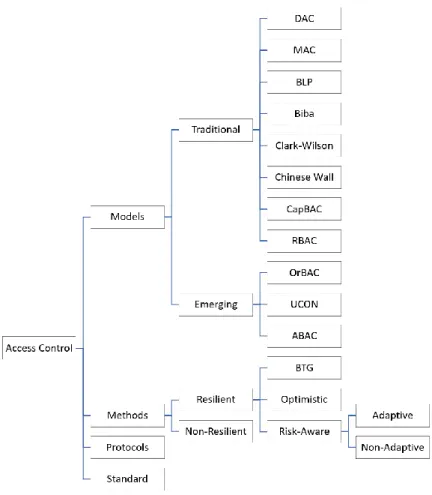
Figure 2.1: A classification of access control models, methods, protocols and language... 21
Figure 2.2: Graphical representation of evidence theory ... 46
Figure 3.1: Indeterminacy handling scheme in authentication ... 58
Figure 3.2: Proposed architecture for the indeterminacy-aware authentication model ... 59
Figure 3.3: Methodological steps ... 59
Figure 4.1: Location map of the RASA ... 65
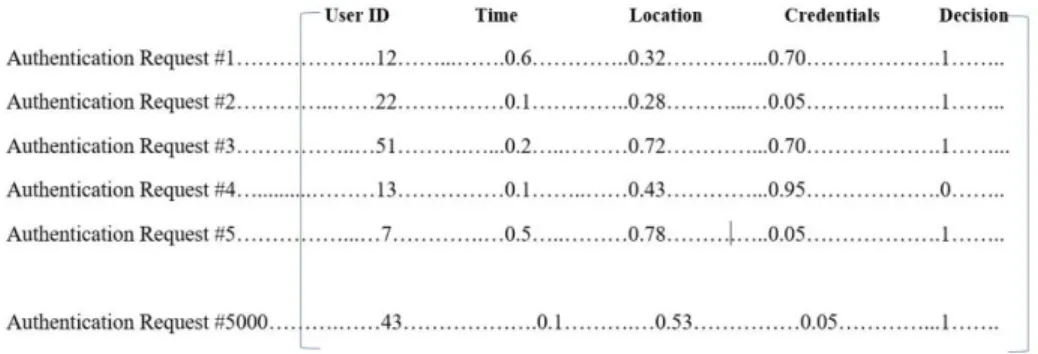
Figure 4.2: Uncertainty matrix consisting of UVs ... 68
Figure 4.3: Visualizing generated data samples using a clustered column chart ... 70
Figure 4.4: UAs and associated UVs defined for three PoIs ... 76
Figure 4.5: UVs assigned to UAs (indicated by colour) ... 76
Figure 4.6: An example of calculating a UV for a data sample (X) ... 77
Figure 4.7: Labelled uncertainty matrix ... 79
Figure 4.8: Distribution of authentication requests in LANL ... 81
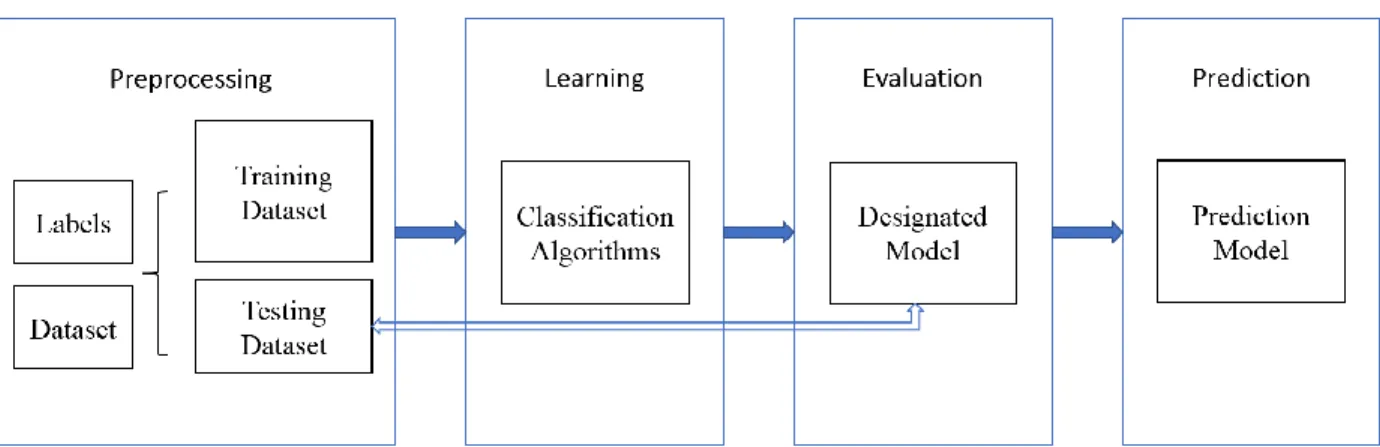
Figure 5.1: The process of building a prediction model using supervised algorithms ... 84
Figure 5.2: The structure of a confusion matrix ... 86
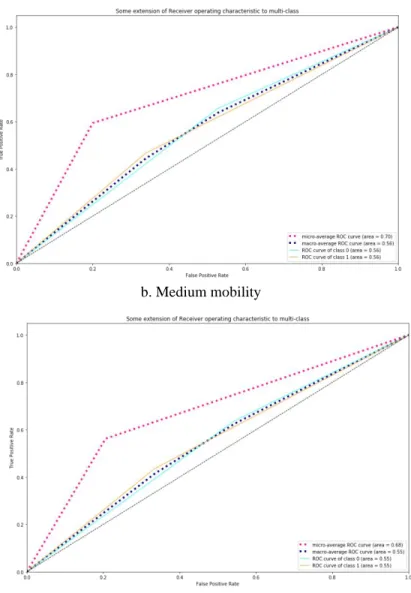
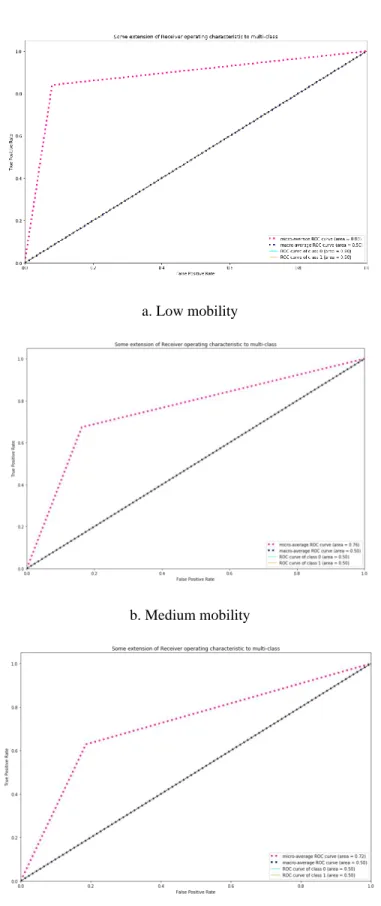
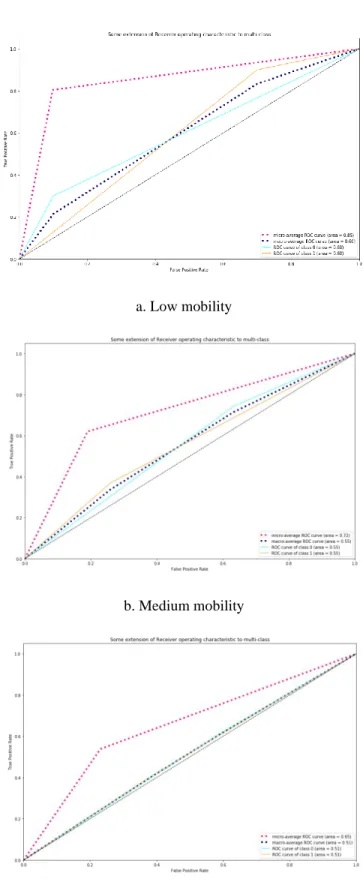
Figure 5.3: a, b and c: ROC analysis for the decision-tree-based models ... 89
Figure 5.4: a, b and c: ROC analysis for the random-forest-based models ... 91
Figure 5.5: a, b and c: ROC analysis for the SVM-based models ... 93
Figure 5.6: a, b and c: ROC analysis for the logistic-regression-based models ... 95
Figure 5.7: a, b and c: ROC analysis for the models created by the Naïve Bayesian algorithm ... 97
Figure 5.8: a, b and c: ROC analysis for the models created by K-NN algorithms ... 99
Figure 5.9: a, b and c: ROC analysis for the models created by gradient boost and AdaBoost ... 102
Figure 5.10: a, b and c: ROC analysis for the models created by voting classifiers ... 104
Figure 5.11: (a) Perceptron and (b) MLP architectures... 105
Figure 5.12: ROC analysis for prediction models in the low-mobility environment ... 111
Figure 5.13: ROC analysis for prediction models in the medium-mobility environment ... 111
Figure 5.14: ROC analysis for prediction models in the high-mobility environment ... 112
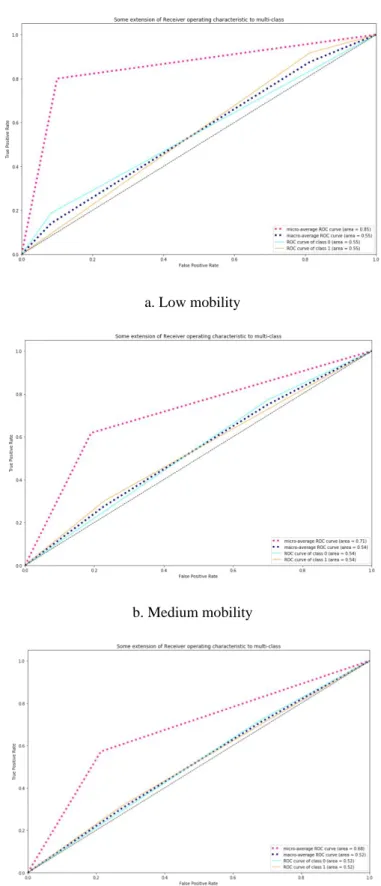
Figure 6.1: a, b and c: ROC analysis for the decision-tree-based models ... 122
Figure 6.2: a, b and c: ROC analysis for the random-forest-based models ... 124
Figure 6.3: a, b and c: ROC analysis for the SVM-based models ... 126
Figure 6.4: a, b and c: ROC analysis for the logistic-regression-based models ... 128
Figure 6.5: a, b and c: ROC analysis for the models created by the Naïve Bayesian algorithm ... 130
Figure 6.6: a, b and c: ROC analysis for the models created by the K-NN algorithms ... 132
Figure 6.7: a, b and c: ROC analysis for the models created by gradient boost and AdaBoost ... 134
Figure 6.8: a, b and c: ROC analysis for the models created by voting classifier ... 136
Figure 6.9: ROC analysis for prediction models in the low-mobility environment ... 142
Figure 6.10: ROC analysis for prediction models in the medium-mobility environment ... 143
Figure 6.11: ROC analysis for prediction models in the high-mobility environment ... 143
10
List of Tables
Table 1.1: Publications arising from the thesis ... 18
Table 2.1: Evaluation of traditional and emerging access control models ... 27
Table 2.2: Analysis of proposed access control methods for IoT ... 31
Table 2.3: Summary of widely deployed authentication protocols ... 35
Table 2.4: The pros and cons of uncertainty handling theories ... 53
Table 2.5: Analysis of resilient methods proposed in the literature ... 69
Table 4.1: Statistical analysis of generated data samples for the users in a dataset ... 72
Table 4.2: Defined time slots and associated probabilities and UVs ... 74
Table 4.3: Parameters for three Gaussian PDFs based on three degrees of mobility ... 78
Table 4.4: Assigned uncertainty values for three states of credentials ... 88
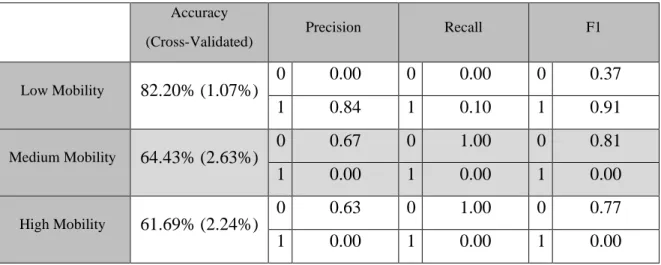
Table 5.1: Performance of the prediction model trained by three datasets (decision tree) ... 90
Table 5.2: Performance of the prediction model trained by the low-mobility dataset (random forest) 92 Table 5.3: Performance of the prediction models trained by three datasets (SVM) ... 94
Table 5.4: Performance of the prediction models trained by three datasets (logistic regression) ... 96
Table 5.5: Performance of the prediction models trained by three datasets (Naïve Bayes) ... 98
Table 5.6: Performance of the prediction models trained by three datasets (K-NN) ... 100
Table 5.7: Performance of the prediction models trained by three datasets (gradient boost)... 101
Table 5.8: Performance of the prediction models trained by three datasets (AdaBoost) ... 103
Table 5.9: Performance of the prediction models trained by three datasets (voting classifiers) ... 106
Table 5.10: Performance of neural network models trained by the low-mobility dataset ... 108
Table 5.11: Performance of neural network models trained by the medium-mobility dataset ... 109
Table 5.12: Performance of neural network models trained by the high-mobility dataset ... 109
Table 5.13: Aggregated performance of the prediction models ... 110
Table 5.14: Kruskal–Wallis test results, grouping variable: no. of hidden layers ... 113
Table 5.15: Spearman test results: correlation ... 113
Table 6.1: History profile of users in the low-mobility dataset ... 116
Table 6.2: History profile of users in the medium-mobility dataset ... 118
Table 6.3: History profile of users in the high-mobility dataset ... 120
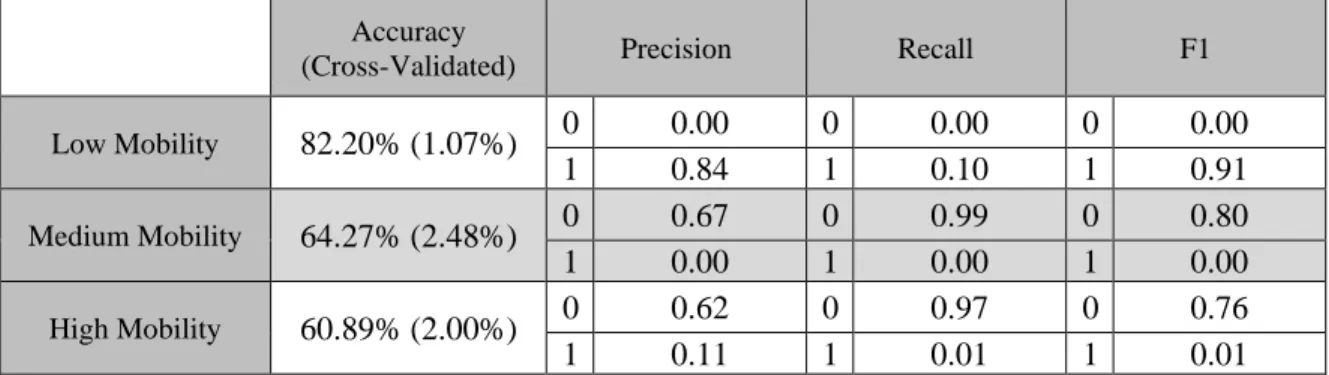
Table 6.4: Performance of the prediction model trained by the new datasets (decision tree) ... 122
Table 6.5: Performance of the prediction model trained by the low-mobility dataset ... 123
Table 6.6: Performance of the prediction models trained by three datasets (SVM) ... 125
Table 6.7: Performance of the prediction models trained by three datasets (logistic regression) ... 127
Table 6.8: Performance of the prediction models trained by three datasets (Naïve Bayes) ... 129
Table 6.9: Performance of the prediction models trained by the three datasets (K-NN) ... 130
Table 6.10: Performance of the prediction models trained by the three datasets (gradient boost) ... 132
Table 6.11: Performance of the prediction models trained by the three datasets (AdaBoost) ... 133
Table 6.12: Performance of the prediction models trained by the three datasets (voting classifier) .. 135
Table 6.13: Performance of the new neural network models trained by the low-mobility dataset .... 138
Table 6.14: Performance of the N.N models trained by the new medium-mobility dataset ... 139
Table 6.15: Performance of the neural network models trained by the new high-mobility dataset ... 140
Table 6.16: Aggregated performance of the prediction models ... 141
Table 6.17: Kruskal–Wallis test results, grouping variable: no. of hidden layers ... 144
11
List of Acronyms
Abbreviation Explanation
ABAC Attribute Based Access Control
ABE Attribute Based Encryption
ACDF Access Control Decision Facility
ACL Access Control List
AF Activation Function
AI Artificial Intelligence
ANN Artificial Neural Network
AUC Area Under the Curve
BIC Bayesian Information Criterion
BLP Bell-La Padula
BTG Break The Glass
CapBAC Capability Based Access Control CART Classification And Regression Trees
DAC Discretionary Access Control
DoS Denial of Service
ECC Elliptic Curve Cryptography
FN False Negative
FNR False Negative Rate
FP False Positive
FPR False Positive Rate
IBL Instance-Based Learning
IDS Intrusion Detection System
IEP Indeterminacy Estimation Point
IoMT Internet of Medical Things
IPS Intrusion Prevention System
IoT Internet of Things
KDC Key Distribution Centre
K-NN K-Nearest Neighbors
LANL Los Alamos National Lab
LDAP Lightweight Directory Access Protocol
MAC Mandatory Access Control
MLP Multilayer Perception
MLS Multilevel Security
Oauth Open Authorization
OrBAC Organization Based Access Control
PAP Policy Administration Point
PDF Probability Density Function
PDP Policy Decision Point
PEP Policy Enforcement Point
PIP Policy Information Point
PKI Public Key Infrastructure
PoI Point of Interest
RAAC Risk Aware Access Control
RADIUS Remote Authentication Dial in User Service
12
ReLU Rectified Linear Unit
RFID Radio Frequency Identification RoC Receiver Operating Characteristics SAML Security Assertion Markup Language
SVM Support Vector Machine
TCP Transmission Control Protocol
TLS Transport Layer Security
TN True Negative Rate
TNR True Negative Rate
TP True Positive
UA Uncertainty Area
UCON Usage Control
UV Uncertainty Value
V2V Vehicle-To-Vehicle
VO Virtual Organization
VoD Video on Demand
WoT Web of Things
WSN Wireless Sensor Network
13
1.
Introduction
In this chapter we identify the research gap and introduce the research problem. We also propose the related research questions. In accordance with the research questions, we present the main claim made by this work. Finally, we present an overview and the structure of this thesis in detail.
1.1 Thesis Motivation
The Internet of Things (IoT), which is defined as the “worldwide network of interconnected objects” [1], extends connectivity from human-to-machine to machine-to-machine communication. It also extends the platform to multiple domains including e-health. The IoT-based e-health market will reach $136.8 billion worldwide by 2021. There are 3.7 million medical devices in use all over the world that are connected to the Internet and monitor various parts of the human body to inform healthcare decisions [2]. Among several challenges for e-health in the context of IoT, security is one of the most important. This is because a security breach in this domain often directly puts the lives of patients in danger, for example if patients’ healthcare records or devices are exposed or modified.
IoT offers large-scale integration of heterogeneous networks and devices, which, apart from the obvious opportunities, introduces great security and privacy challenges. These challenges are not new as they have been well studied in the relevant literature in different IoT domains (such as e-health, smart cities, smart grids) [3], [4], [5], [6], [7]. Of the various security challenges in IoT, access control is a crucial and ongoing challenge [8].
This thesis is motivated by the growing number of access scenarios in IoT in which indeterminacy factors need to be handled in order to maximize the tradeoff between “availability” and “Confidentiality-Integrity”. This holds true as the need for sharing resources in “agile” and “collaborative” projects between “ephemeral” parties is on the rise in IoT domains. Such a resource sharing in different IoT domains (e.g., e-health, smart grids, smart cities) is inevitable [9], [10]. For example, resource sharing in grid environments through virtual organizations (VOs) creates added value by improving performance with less investment. Besides advantages, it also presents disadvantages such as permission misuse and insider threats against VOs [9]. The same
14 threats can occure in smart cities where traffic information is shared or in V2V communication where two or more vehicles share their resources (e.g., information about their locations) [10].
Moreover, technical challenges at the physicl and data link layers of IoT enabling technologies (RFID, WSN etc.) may exaggerate inditerminacy factors in access scenarios. These challenges matter If a real-time access decision depends on information that is delivered at a delay or suffers from latency [11].
In all these circumstances, “incomplete information” about the consequence of the access request or “ imprecise information” about the subject (requester) may lead to a state in which making access decision based on deterministic policy does not help the above-mentioned tradeoff.
The focus of this research is to introduce “indeterminacy”, a new and neglected challenge in IoT that affects the authentication phase of access control. Indeterminacy in IoT comes into play when an access decision needs to be made based on incomplete or imprecise information. In other words, indeterminacy is introduced in authentication when the information available about an authentication request is not sufficient or not precise enough to be used to make a correct access decision.
Both traditional and emerging access control models cannot precisely manage the tradeoff between availability and confidentiality-integrity in access scenarios including indeterminate factors. Moreover, resilient access control paradigms suffer from drawbacks that make them less effective as security measures.
To address this challenge, We propose a method to predict the future of an authentication request as well as the future of the subject who requests for authntication. Our method which benefits from machine learning suggest using data-driven prediction models to handle indeterminacy factors (uncertainty, ambiguity) in every authentication request.
1.2 Research Questions
This work is motivated by the following research questions:
• What is indeterminacy in authentication and how does it affect access control decisions?
• Are existing access control methods able to handle indeterminacy in authentication
15
• How can prediction models handle indeterminacy in authentication for e-health in
IoT?
The main claim of this research is that an indeterminacy-aware prediction model can handle indeterminacy factors in authentication for scalable, heterogeneous and dynamic environments.
Derived from the above research questions, the aims and objectives of this research are as follows:
Aims:
1. Study indeterminacy in authentication in e-health in the context of IoT.
2. Evaluate the resilience of current access control methods in terms of dealing with
indeterminacy in authentication.
3. Propose an indeterminacy-aware prediction model for the e-health domain in the
context of IoT.
Objectives:
1. A review of the current state of the art (Aims 1, 2).
2. Investigate the requirements for authentication in e-health in the context of IoT (Aim 2).
3. Define the components of indeterminacy in the authentication phase of access control (Aim 2).
4. Investigate whether existing access control models deal with the defined
components of indeterminacy in the authentication phase (Aim 2).
5. Develop, validate and evaluate an indeterminacy-aware prediction model for
16
1.3 Thesis Overview
This thesis is made up of seven chapters. Chapters 2 and 3 situate the thesis and provide the necessary literature for it. Chapter 4 presents the process of synthesizing datasets for the thesis. Chapters 5 and 6 present the process of building and evaluating indeterminacy-aware prediction models. Finally, in Chapter 7, we review the thesis. Figure 1.1 depicts the roadmap of this work.
Figure 1. 1: Thesis roadmap
1.4 Thesis Structure
Chapter 2 reviews the current state of the art of access control in IoT. The chapter begins by reviewing access control models, protocols, language and approaches. In particular it reviews the authentication mechanisms included in them. It also takes a step back and reviews the preliminary concepts in access control. Because indeterminacy in authentication as introduced by this work is a new concept, in this chapter we first survey the concept and relevant studies, and then we review prevalent resilient access control models, including risk-aware and trust-based models. We also evaluate the current state of the art against the criteria defined by this work.
17 Chapter 3 introduces the methodology used within this thesis. According to the introduced challenges in the field of authentication, an automated, resilient and scalable authentication model is vital for IoT. To address this need, we propose a machine-learning-based prediction model, which will be discussed in this chapter.
Chapter 4 discusses the process of synthesizing datasets that were used for both training and the robust testing of our indeterminacy-aware authentication model. One of the big obstacles in conducting machine-learning-based research in the field of authentication is the lack of publicly available datasets. As a result, we generated datasets consisting with the required attributes in this work. This chapter presents the process of generating such datasets, with which we built the prediction models presented in Chapters 5 and 6. In this chapter, we also analyse the only publicly available dataset, called LANL, to evaluate our findings.
Chapter 5 shows the process of building prediction models for authentication. We explain all the classification algorithms applied in this work. Before introducing these algorithms, this chapter reviews the preliminary concepts and evaluation criteria used in our methodology.
Chapter 6 introduces our indeterminacy-aware prediction model on top of the prediction models presented in Chapter 5. In the course of this chapter, we consider the historical profile of users in terms of past successful authentication in addition to other attributes. As discussed in the previous chapter, we used classification algorithms to train and build our models. We expected that enriching our datasets with a new data attribute would enable us to build more accurate prediction models.
Chapter 7 concludes this research and proposes future work to extend the contribution made.
1.5 Publications Arising from the work of the Thesis
Table 1.1 shows all the publications arising from this research, grouped by the corresponding chapters of the thesis.
18
Table 1.1: Publications arising from the thesis
No. Publication Related Chapter
1
Mohammad Heydari, Alexios Mylonas, Vasileios Katos, Dimitris Gritzalis, Book Chapter: “Towards Indeterminacy-Tolerant Access Control in IoT”, in Handbook of Big Data and IoT Security, 2019, Springer
2, 3
2
Mohammad Heydari, Alexios Mylonas, Vasilios Katos, Emili Balaguer-Ballester, Vahid Heydari Fami Tafreshi, Elhadj Benkhelifa,
Uncertainty-Aware Authentication Model for Fog Computing in IoT, 4th International Conference on Fog and Mobile Edge Computing
(FMEC), 2019
3, 4, 5
3
Mohammad Heydari, Alexios Mylonas, Vasilios Katos, Emili Balaguer-Ballester, Vahid Heydari Fami Tafreshi, Elhadj Benkhelifa,
Location-Aware Authentication Model to Handle Uncertainty in IoT, 6th IEEE International Conference on Internet of Things: Systems,
Management and Security (IoTSMS), 2019
3, 4, 5
4
Mohammad Heydari, Alexios Mylonas, Vasilios Katos, Emili Balaguer-Ballester, Vahid Heydari Fami Tafreshi, Uncertainty-Aware Authentication Model for IoT, 3rd International Workshop on SECurity
and Privacy Requirements Engineering (SECPRE), 2019
3, 4, 5
5
Mohammad Heydari, Alexios Mylonas, Vahid Heydari Fami Tafreshi, Elhadj Benkhelifa, Surjit Singh, “Known Unknowns: Indeterminacy in Authentication in IoT”, Elsevier Journal of Future Generation Computer Systems, 2020
19
2.
Literature Review
In this chapter we review the current state of the art of access control in IoT. The chapter begins by reviewing access control models, protocols, language and approaches. In particular, we review the authentication mechanisms included in them. We take a step back and review the preliminary concepts in access control.
Because indeterminacy in authentication introduced by this work is a new concept, we first survey the concept and relevant studies, and then we review prevalent resilient access control models, including risk-aware and trust-based models. We also evaluate the current state of the art against the criteria defined by the new challengesintroduced by this work.
2.1 An Introduction to Access Control in IoT
Access control is a mechanism that ensures that system resources can be used only by authorized entities based on a policy (RFC 4949 Internet Security Glossary [12]). An entity may be a user, program or process. Access control consists of the following functions [13]:
• Authentication, defined as a verification process to check whether the credentials of an entity are valid. In some texts, identification has been introduced as the process of identity verification, which should be completed before the authentication process.
• Authorization, defined as a process of granting an entity the rights to access and use a resource.
• Auditing, defined as the process of reviewing the access control system records and activities to detect any security breach. Auditing is necessary to ensure that the defined access policies are compliant with the operational security of the system.
An access control system has three basic elements [14]: 1) the subject, which is an entity that wants to access an object; 2) the object, which is a resource and a target of access requests by subjects; and 3) an access rights policy, which defines the way in which an object can be accessed by subjects. Any access control system should meet the main security objectives, known as CIA: confidentiality, by preventing unauthorized access to resources; integrity, by preventing resources
20 being modified without the required permission; and availability, by ensuring that the resource can be accessed and used on demand only by authorized subjects. Furthermore, an access control system may have some of the following characteristics, which are often used to evaluate the access control system [15]:
1. Delegation,which is the act of granting an access right (in full or in part) from one subject to another in the system.
2. Revocation,namely the act of removing from a subject the access right to a resource.
3. Granularity, i.e., the level of detail that can be used for making access decisions. If the required details are explicit and limited, then the type of granularity is referred to as coarse-grained. In contrast, fine-grained access control needs more detail, such as subject or object attributes, in order to make a decision about the access and govern it.
4. Flexibility, which is the ability of the access control system to adapt itself to different situations and to govern both planned and spontaneous interactions between subjects and objects.
5. Scalability, i.e., the ability of an access control system to be extensible in terms of the number of subjects, objects and access rights policies. Another dimension of scalability is the ability of an access control system to extend its structure and scope of operation.
6. Lightweight,which reflects the computational complexity or volume of network traffic that an access control mechanism imposes on the system.
7. Heterogeneity, which is defined as the ability of the access control system to be used in different domains, platforms, networks and technologies.
8. Context-awareness, namely the ability of the access control system to use contextual attributes of the environment, such as time and location, to make an access decision.
In the field of IoT, any access control system must be scalable, heterogeneous, lightweight and context-aware because of the characteristics of IoT itself.
We did a survey on the most widely used access control models (both traditional and emerging). We also investigated both resilient and non-resilient access control paradigms proposed in the
21 literature. According to the literature, resilient paradigms can be divided into three main categories: Break-The-Glass (BTG), Optimistic and the Risk-Aware. Moreover, the most widely used authentication/authorization protocols were analyzed against criteria discussed in 2.1.2. XACML as a standard for fine-grained and attribute-based access control policy language was also surveyed and discussed in this chapter. Figure 2.1 depicts a classification based on the surveyed models, paradigms protocols and the standard. The main motivation for such a survey was to investigate whether they are applicable to IoT.
Figure 2. 1: A classification of access control models, paradigms, protocols and the standard
2.1.1 Access Control Models
Since Lampson’s access matrix was introduced in the late 1960s, a number of access control models have been proposed. This Subsection briefly describes traditional access control models before moving on to emerging access control models. In a number of texts, Discretionary Access
22 Control (DAC), Mandatory Access Control (MAC), Biba, BLP, Clark-Wilson, Chinese Wall and Role Based Access Control (RBAC) have been classified as traditional access control models, while Attribute Based Access Control (ABAC) is considered a “relatively recent” access control model [16]. This work refers to ABAC and other models that have been proposed since ABAC, such as Access Control Based on Usage Control (UCON) and Organizational-Based Access Control (OrBAC), as emerging access control models. It also discusses their adaptability in a scalable, heterogeneous and dynamic environment such as IoT.
The traditional access control models comprise the following:
Discretionary Access Control (DAC): In DAC the access policy for any object is defined based on the discretion of the object’s owner [17]. The earliest implementation of DAC was the Access Control List (ACL), proposed in 1971. Modern operating systems such as Windows utilize this ACL-based approach. Contrary to Mandatory Access Control (MAC), in DAC a subject with certain access permissions is able to revoke its access rights and delegate them to another subject [18].
Mandatory Access Control (MAC): In MAC, which was proposed in 1973, the access policy
is enforced by the system and access to a resource is granted only if the security clearance of the subject is greater than the security level of the object. A subject that has the clearance necessary to access the object cannot delegate its access to another subject or make any change in the access policy. In this model, the multilevel security (MLS) structure is defined by the system [19]. Although traditional MAC protects the confidentiality of information, it cannot protect the integrity of information since subjects with lower clearance can modify the objects that are accessible by subjects with higher clearance [19]. To address this problem, the Bell-LaPadula
(BLP) model embodies two major principles: a) no-read-up, meaning that resources can be read
only by subjects with clearance greater than or equal to the resource’s classification, and b) no-write-down, meaning that resources can be written only by subjects with clearance less than or equal to the resource’s classification. In contrast to DAC, another major drawback of MAC is that a subject cannot revoke its access rights or delegate them to another subject [20]. Security-Enhanced Linux (SELinux) and Mandatory Integrity Control are two examples of the use of MAC.
23
Bell-LaPadula (BLP): The BLP model was proposed in 1973 to focus on the confidentiality
of data. For this reason, BLP enforces two main security policies known as no-read-up and
no-write-down. No-read-up ensures that read access is granted if the security level of the subject must dominate the security classification of the object. No-write-down is defined for both “append” and “write” operations. In the former, no-write-down ensures that the security level of objects must dominate the security level of the subject. For the latter, it ensures that the security levels of subjects and objects are equal. BLP supports both MAC, by determining the access rights from the security levels associated with subjects and objects, and DAC, by governing access rights based on the access matrix.
The Biba model [21] was proposed in 1977 to ensure the integrity of data. For this purpose, Biba rules control the transfer of data between integrity levels. To meet this goal, subjects cannot read objects at lower integrity levels, which is known as the no-read-down policy. Also, subjects at lower integrity levels cannot get write access to the objects at higher integrity levels, which is known as the no-write-up policy.
The Clark-Wilson model [22] was proposed in 1989 to protect integrity, and it uses programs as a layer between users and data items. Users are authorized to execute a specific set of programs, and data items can be accessed only via those programs. The focus of this model is on the security requirements of commercial applications.
The Chinese Wall access control model was proposed in 1989 to avoid conflicts of interest when dealing with different subjects [23]. Conflicts arise when companies are in competition and want to access the same objects, or have accessed them in the past. The model can address the “conflict of interest” for both MAC and DAC. The Chinese Wall policy combines commercial discretion with legally enforceable mandatory controls.
Role-Based Access Control (RBAC): Ferraiolo et al. [24] proposed RBAC in 1992 to address the management complexity of DAC and MAC [25]. In RBAC, access is regulated based on the roles of the individuals within an organization. In other words, individuals performing specific roles can request access to specific resources that are necessary for this role. RBAC supports scalability and granularity and enforces the principle of least privilege [26]. According to the principle of least privilege, a subject should operate using the minimum set of privileges necessary to complete the task. Enforcing this principle mitigates the damage of unintended errors.
24 Furthermore, RBAC supports separation of duties by ensuring that at least two different individuals are responsible for carrying out the various steps of any critical task [27].
The emerging access control models comprise the following:
Attribute-Based Access Control (ABAC): In the ABAC model, when a subject requests access to an object, the decision will be made based on the subject’s attributes, the object’s attributes and the environment’s attributes [28]. ABAC is widely used in the current Internet because it supports fine-grained access policies [29].
Capability-Based Access Control (CapBAC): CapBAC was introduced by Dennis [30] and
governs access requests based on tokens. The subject must have a valid token to request access to a resource and the token must be tamper-proof. In this chapter, we classify those capability-based access control models as “emerging access control” that they benefit from using lightweight encryption algorithms such as elliptic-curve cryptography (ECC) to create Attribute-Based Encryption (ABE) access control models. In CapBAC, the subject needs to show the resource owner its token prior to performing corresponding resource request operations. This model has
been used in several large-scale projects such as [email protected]
Access Control based on Usage Control (UCON): In this model, an access decision is made
using three factors [31]: a) authorization rules, which define the access policy based on the subject and object attributes, not only prior to the access but also during the access; b) obligations, which are responsible for verifying mandatory requirements for a subject before or during access; and c) conditions, which evaluate the current environment or system status. The most important aspect of this model is that if the access attributes change while the access is granted, and this change leads to a security breach, then the granted access is revoked, and the usage is cancelled. This happens because the subject and object attributes are mutable. Mutable attributes can change as a consequence of an instance of access [32].
Organizational-Based Access Control Model (OrBAC): OrBAC, proposed by Kalam et al.
[33], extends the RBAC model in such a way that organization is considered as a new dimension. Contrary to DAC, MAC and RBAC, in this model policies are not restricted to static access rules,
25 but also include contextual rules related to access permissions, prohibitions, obligations and recommendations.
We consider that, of the inherent characteristics of IoT, scalability, heterogeneity, interoperability, dynamism and resource sharing exaggerate the security challenges related to the field of access control. This holds true for the following reasons:
Scalability stems from the exponential growth in IoT that also results in an increased network connectivity requirement. According to Gartner, the number of Internet-connected devices will reach 20–50 billion by 2020 [34]. This exacerbates the security challenges in IoT by requiring more effort and resources from security controls (such as access control mechanisms) to address them [35].
Heterogeneity and interoperability in IoT derive from the different technologies and networks (such as radio-frequency identification (RFID), wireless sensor networks (WSN) and Global System for Mobile (GSM) that exist in IoT. Thus, enabling seamless and secure integration of these different platforms is a challenge, as the degree of complexity increases dramatically when different technologies are merged to form a complex network. Similarly, interoperability brings new challenges to the field of data access control [36]. For example, in vehicle-to-vehicle (V2V) communication, moving from one geographical domain (e.g., the UK) to another (e.g., France) can cause data access problems, due to the interoperability issues between inter-domain public key infrastructures (PKIs) [37].
Dynamism in IoT stems from the fact that the interconnected things need to interact with each other in a real-time manner. Therefore, the need for an appropriate response to rapid changes in the physical world that are caused by these interactions poses new technological challenges, not only for access control but also for any context-aware services [38].
The above-mentioned access control models have been introduced to address a number of challenges in technological paradigms that preceded the IoT. We consider four assessment criteria to evaluate access control models. These criteria are considered according to the discussions on the access control in IoT from literature [9], [15] and chosen based on their impacts on the performance of the access control system in IoT access scenarios:
• Dynamism: If the access decision must change, because of changes in the subject, object or environmental attributes, after the access is granted, then the access control system is classified
26 as dynamic. But if the changes do not affect the access decision, then the access control system is static. Considering dynamism in IoT access control models is important, because of the rapid changes in contextual parameters that occur in this paradigm.
• Scalability: Scalability in access control must be evaluated according to three dimensions; that is, an access control has a) subject/object (entities) scalability if increasing the number of entities does not lead to an overhead in processing time or workload; b) policy rules scalability if increasing the number of access rules does not lead to overhead in terms of processing time or workload; and c) extensibility if it has the ability to extend its structure to cover more subsystems and domains. extensibility can be achieved through building a decentralized structure rather than a centralized structure in scalable environments such as IoT.
• Heterogeneity/Interoperability: In IoT, entities have dependencies and their workflows are tightly convergent, which increases complexity. For this reason, any access control breach in
IoT can be more disruptive than in traditional networks [39]. Furthermore, as IoT is composed
of different platforms, enabling technologies and domains, designing an access control model to regulate access inter-/intra-domains or technologies is a must.
• Context-Awareness: This refers to the ability of the access control system to use contextual attributes to make an access decision. Considering contextual parameters in an access decision brings flexibility in terms of tracking subject, object and environmental changes if these changes have impacts on the decision.
The above evaluation criteria uncover limitations in the models (both traditional and emerging), making them inapplicable to IoT. As summarized in Table 2.1, the traditional access control models do not support the above-mentioned criteria and thus cannot fit into IoT. With regard to the emerging access control models, RBAC does not satisfy the interoperability criterion [40], as it cannot support the definition of roles among heterogeneous networks with different platforms and domains. Furthermore, due to the inherent scalability of IoT, defining a vast number of roles and associated permission rules is impossible and leads to “role explosion”.
Nor does RBAC take contextual parameters into account during access decisions. Despite the
advantages of ABAC, i.e., fine-grained access control, ease of use in a collaborative environment and flexibility, IoT adaptability of ABAC is hindered due to overhead. Specifically, applying ABAC in IoT is limited by computational overhead because its authorization process has high
27 complexity, as a result of the consideration of attributes of subject, object and environment in the access decision. Thus, applying ABAC in a highly dynamic, real-time environment such as IoT is infeasible because of the computational complexity that arises from the number of rules that rapidly increase with entities and contextual attributes, which may change frequently [41], [42], [43].
CapBAC is a coarse-grained access control model and does not consider contextual attributes, and therefore it cannot satisfy the flexibility criterion. Moreover, even when applying lightweight
cryptography algorithms, such as ECC, using CapBAC brings overhead to the system in scalable
scenarios. Another concern about CapBAC is the distribution of tokens in heterogeneous networks
that are not straightforward. Also, the model fails the interoperability criterion as the model cannot be applied in a heterogeneous environment. The reason is that each domain has a dedicated public key infrastructure (PKI) and there is a trust issue in inter-domain interaction between these PKIs [44]. UCON has the same limitations as ABAC in terms of scalability and extensibility. Finally, OrBAC suffers from the same limitation regarding policy rules scalability as RBAC, as well as failing the interoperability criterion. The above evaluation, which is summarized in Table 2.1, highlights the need for a new model of access control that supports the above-mentioned characteristics for IoT domains.
Table 2.1: Evaluation of traditional and emerging access control models Criteria Models Scalability Heterogeneity Interoperability Dynamism Context-Awareness Entities Policy rules Extensibility
DAC - - - - - MAC - - - - RBAC - - - - - CapBAC - - - - - ABAC - - UCON - - - - OrBAC - - -
The literature includes a number of proposed access control models that are based on an extension of the above models. The proposed methods have tried to address the limitations of the
reference models stated in Table 1. Jindou et al. [45] proposed an access control model based on
28 social media platforms such as Facebook to create access policies. This, however, opens up a new type of trust and privacy challenges for all participants in the access control model. Barka et al. [46] integrated RBAC and WoT to build an access control model with a centralized architecture. Access decisions are made by the Access Control Decision Facility (ACDF) based on an RBAC policy. Because of its centralized structure, the model cannot cope with a distributed environment such as WoT. Liu et al. [47] have adapted the RBAC model to IoT using the Elliptic Curve Cryptosystem (ECC). In this method, IoT devices should be registered to a nearby trustworthy access point or gateway (termed as a Registration Authority). Furthermore, the authentication protocol suggested in this method is based on OpenID protocol.
Waleed et al. [48] proposed an access control model based on ABAC that incorporates trust and privacy into access policy to make it reliable in a collaborative environment. This model supports the privacy of subjects by authorizing certain access requests so that the purposes of access for both the subject and the object are the same. The limitations of the method include the following: a) if the contextual parameters have changed during the access time, the access decision is nonetheless consistent, and b) the proposed approach cannot be applied to distributed architecture, including P2P platforms. Kaiwen et al. [42] proposed a hybrid access control model based on RBAC and ABAC that can resolve the large-scale dynamic problem of IoT users. This model pre-assigns roles for entities (nodes/users) based on their property expressions. The model also presents a property rule policy language and a solution to the conflict with the redundancy policy. Kaiwen et al. [41] used the WeChat App as an example to illustrate the feasibility of this model. This model simplifies the complexity of traditional ABAC in rights allocation and policy management. However, it cannot deal with policy conflict and redundancy processing as the model
still needs the administrator to manage roles and access policy. Harsha et al. [49] proposed an
access control method based on ABAC for use in healthcare. The focus of this work is on providing
both multilevel controlled access delegation and on-demand attribute revocation.Pussewalage et
al. [49] suggested using assignment tokens and digital signatures to handle delegation and revocation. The complexity of using the token-based approach in conjunction with ABAC was not investigated by the authors. Furthermore, the structure of token distribution and validation schemes was not tested against forged intra-domain authorities, which may issue fake attributes and tokens.
29
Guoping et al. [50] proposed a method based on the extension of UCON. This method governs
access by evaluating the degree of trust in the subject against the trust values of the object and the environment. If the trust value of the subject is in the range of the determined threshold for the requested object, then the access will be granted. The authors showed that their model works theoretically, but it is unclear whether it can work in a real-world scenario. Anggorojati et al. [51] proposed an access delegation method based on the context-aware CapBAC and identification. In this model, context information was added to CapBAC as a new dimension. This method used the concept of the federation in the Web for IoT by mapping identity to “thing”. Mahalle [52] proposed a novel method for authentication and access control based on the approach proposed by Gong [53]. In this method, verification of communication is done via its capability access. In other words, if any entity wants to communicate with another entity, communication is established after verifying the capability of the requesting entity. The proposed model uses a public key approach and is compatible with the lightweight, mobile, distributed and computationally limited nature of IoT. In this work, scalability, granularity and delegation were introduced as the main advantages of this method but the computational overhead of applying the model was not examined. Moreover, the interoperability of the proposed method in a heterogeneous environment such as IoT is still recognized as an ongoing challenge. Gusmeroli et al. [54] proposed another model based on CapBAC that uses a centralized approach for governing access control. The bottleneck for this method is that the majority of IoT devices have constrained resources and the overhead of
the proposed method was not studied in this work. Yeh et al. [55] proposed a CapBAC-oriented
access control framework for the e-healthcare domain. This method supports both fine-grained access control and revocation. The execution time for the encryption algorithms included in this method was compared with similar work to show its efficiency in terms of computational complexity. Although the proposed approach was proved theoretically, no experiment was conducted to show its efficiency in practice.
Li et al. [56] proposed a method that permits a user in a domain (e.g. smart city, smart grid) to send a message to a sensor in a domain that uses identity-based cryptography. The most important characteristic of this method is that it supports communication between heterogeneous environments. Furthermore, they showed that the computational cost of the sensor node in their
method is reduced and energy consumption is consequently reduced. Patel et al. [57] proposed an
30
method was evaluated using the AVISPA2 tool against attacks such as man-in-the-middle, reply
attack and DoS. Even though the proposed method mitigated all these attacks successfully, one
limitation of this work is that the method’s efficiency was not considered. Ouaddah et al. [58]
proposed a model based on an extension of OrBAC, which focuses on low power consumption. To meet this goal, part of the processing burden of the Policy Decision Point (PDP) was transferred to end-point devices to make the centralized structure more flexible. However, the overhead of the proposed method in terms of computational complexity and energy consumption was not proven experimentally. Moreover, the interoperability of the proposed scheme has not been studied. Sciancalepore et al. [59] proposed an access control framework based on OAuth 2.0, which consists of a WSN, client, gateway and authorization server. The authorization server passes the access request to the resource owner and generates the access token for the subject to which the access is granted. One of the challenges in this method is that direct communication between entities (without the presence of a gateway) is not possible due to the role of the gateway. The following conclusions arise from the study of the literature:
•In the approaches designed as an extension of RBAC, scalabilty in IoT was studied. Moreover, the interoperability issue was addressed through a Web-based interface (WoT).
•CapBAC-based approaches, even those using lightweight encryption algorithms (e.g., ECC), suffer from computational overhead in a scalable environment (e.g., cloud, IoT). Moreover, applying certificate-based authentication brings new challenges in terms of certificate validation and management in a heterogeneous environment such as IoT. In other words, moving from one domain into another makes interoperability a major concern for certificate validation.
•Although ABAC-based approaches bring flexibility by considering contexual parameters,
managing a number of attributes in a hybrid model (with roles assigned and managed in RBAC) or (by using public key encryption, e.g., in ABE) introduces overhead and interoperability issues in IoT.
31 Table 2.2 summarizes the evaluation results for the methods proposed based on the extension of the access control models.
The literature on e-health in IoT data has so far focused on two challenges that stem from the above-mentioned characteristics in IoT: i) data interchange between medical parties, and ii) wireless medical sensor communications [60]. Medical data interchange affects access control because of heterogeneity and interoperability issues in the IoT environment [61]. WSN is a key enabling technology in the Internet of Medical Things (IoMT) [62] and the offered wireless capability can be advantageous to patients and medical staff but at the same time pose threats to medical domains [63]. The security of individual wireless devices and applications from malicious access is also vitally important, in order to prevent falsification of information and impersonation with potentially fatal results [64].
Table 2.2: Analysis of proposed access control methods for IoT
Criteria Method Scalability Heterogeneity Interoperability Dynamism Context-Awareness Entities Policy rules Extensibility
[45] - - - [46] - - - - [47] - - - [48] - - [41], [42] - - - [49] - - - - [50] - - - [51] - - - - [52] - - - [54] - - - [55] - - - [56] - - - [57] - - - - - [58] - - - [59] - - -
2.1.2 Access Control Protocols and Standards
This Subsection first introduces the most widely used access control standards and protocols, followed by a discussion of their applicability in IoT. OAuth, OpenID, SAML, RADIUS, LDAP
32 and Kerberos are investigated. These protocols and standards are widely used in different domains. OAuth is used by companies like Amazon, Google, Facebook etc.in order to allow the users share their account information with third party applications. OpenID as another open protocol has more
than 1 billion accounts on the Internet3. RADIUS, LDAP and Kerberos are widely used in active
directory (both Windows and Linux) and database access for the sake of identification and access management.
In order to evaluate the protocols involved in access control the following criteria, which are proposed in RFC 2989 and RFC 4962, are used:
1. Overhead: IoT devices are resource-constrained and thus any proposed access control protocol for IoT must be lightweight. To evaluate overhead, two different parameters are
considered: a) communication overhead, which can be measured by the number of messages
exchanged in a data access scenario per access request, and b) lightness of data exchange format, which affects the amount of control traffic required per access. Increased overhead may result in power consumption. For this reason, some works have suggested using more efficient protocols for communicating over IoT, such as LoRA [65].
2. Security of data-in-transit: The confidentiality of credentials that are sent over the network should be ensured. Otherwise, the protocol is prone to breaches of confidentiality of (credential) data-in-transit.
3. Architecture: The structure of access control protocols can be centralized or decentralized. As services in the IoT environment are decentralized and distributed, centralized architecture for access control protocol does not work efficiently if the protocol is deployed in a heterogeneous environment.
The aforementioned criteria will be used to evaluate whether the following protocols fit IoT:
Open Authorization (OAuth). OAuth4 is an open protocol used to establish a secure authorization over the Web. This protocol does not offer an authentication service. OAuth provides a method for clients to access server resources on behalf of a resource owner. It also allows
end-3 See https://trends.builtwith.com/docinfo/OpenID 4 https://oauth.net/
33 users to authorize third-party access to their server resources without sharing their credentials, using user–agent redirections [66]. To date, over one billion OAuth-based user accounts exist (e.g., as used in Facebook, Google and Microsoft user accounts).
OpenID. OpenID5 is a Web-oriented single sign-on protocol that is widely used by well-known companies such as PayPal and Amazon [67]. OpenID lets applications and site developers authenticate users without storing or managing credentials. Its most recent version, i.e., OpenID Connect, is designed on top of OAuth 2.0 to provide authentication. This version of OpenID supports optional mechanisms for robust signing and encryption.
Security Assertion Markup Language (SAML). SAML is an XML-oriented and open
protocol developed by OASIS. It exchanges user authentication and authorization data among security domains. SAML 2.0 is the latest version of SAML. It has four components: 1) assertions, which express how identities are represented; 2) protocols; 3) bindings, which describe how
SAML messages are transported over HTTP or other lower-level protocols; and 4) profiles, which
consist of the participating bindings in a use case [68]. The assertion is the main component of
SAML. There are three types of assertion in SAML: i) the authentication assertion validates the
identity of the user; ii) the attribute assertion holds specific characteristics about the user; and iii) the authorization assertion indicates what kind of actions are authorized for each user.
Remote Authentication Dial-in User Service (RADIUS).6 RADIUS is an authentication network protocol that works in client/server network architecture to provide centralized access to networks (RFC 6929). The RADIUS server performs authentication, authorization and accounting (AAA) for users after it receives requests from the client. Authentication and authorization in RADIUS are bonded together. When the client device requests authentication from the server, the server replies with both authentication and authorization attributes. The security of the RADIUS protocol is based on MD5. RADIUS uses multifactor authentication. RADIUS uses User Datagram Protocol (UDP) over Internet Protocol (IP) with best-effort for delivery authentication services on the network. Moreover, RADIUS encrypts only the password, meaning that sensitive data on the
5 http://openid.net/
34 user is sent in plain text over the network. Therefore, RADIUS is not recommended for a trusted environment.
Lightweight Directory Access Protocol (LDAP).7 LDAP is a centralized and remote authentication network protocol that is used for authentication and authorization [69]. It uses a lightweight version of the X.500 networking standard. LDAP encrypts all data exchanged between a client and server using Transport Layer Security (TLS). It can allow for single sign-on services in the network. Moreover, LDAP uses Transmission Control Protocol (TCP) over IP to form reliable communication over the network. Finally, LDAP, by itself, does not support multifactor authentication.
Kerberos.8 Kerberos is a network authentication protocol developed by Massachusetts Institute of Technology (MIT) to provide access to university resources in the 1980s. Kerberos authenticates clients to services in a distributed system. In the authentication phase, instead of a password a ciphertext known as a “token” is sent over the network. The token is generated by a third party known as a Key Distribution Centre (KDC). Mutual authentication, which is done using tokens, enables clients or servers to communicate with each other.
In addition to these de facto protocols, a number of studies have suggested new protocols. Braeken et al. [70] proposed a key agreement scheme based on symmetric encryption for IoT. The approach handles the verification of authentication for communications in which entities do not have prior trust relations. These protocols suffer from vulnerabilities. Jurcut et al. [71] proposed an approach to detect exploitable vulnerabilities in authentication protocols. The proposed method used a novel logic-based technique to describe circumstances under which a weakness in authentication protocols can be exploited.
Table 2.3 summarizes the comparative study between the above-mentioned authentication protocols based on the aggregated attributes that have been discussed in the literature review.
7 https://ldap.com/
35
Table 2.3: Summary of widely deployed authentication protocols
Spec OAuth OpenID SAML RADIUS LDAP Kerberos Latest Version / Year 2.0 / 2012 OpenID Connect / 2017 2.0 / 2005 2013 (RFC 6929) LDAP V3 1995 Kerberos 5 2018
Authentication No Yes Yes Yes Yes Yes
Authorization Yes No Yes Yes Yes No
Communication Overhead Low communicati on overhead due to the use of JSON format Low communicatio n overhead due to the use
of JSON format High overhead due to XML parsing Low in terms of server processing overhead Low communicatio n overhead due to using ASN 1.0, which is lighter than JSON It imposes overhead in terms of control traffic and KDC administratio n in a scalable environment Architecture Decentralize d
Decentralized Centralized Centralized Centralized Centralized Security of
Credential Data-in-Transit
Confidential Confidential Confidential Only passwords are encrypted Confidential Username is sent in plain text, but passwords remain confidential
2.1.3 Access Control Language
Extensible Access Control Markup Language (XACML). XACML is a de facto standard
and language to express ABAC-based access control policies, which is based on XML [72]. It is developed by OASIS.9 It uses policy language to define access policies and request/response language to describe access request queries and responses.
XACML has been widely used in modelling authorization part of the ABAC based access control. XACML can reflect the power of ABAC like scalability in authorization phase. As mentioned in Subsection 2.1.1 (Table 2.1), ABAC offers greater efficiency, flexibility and scalability than traditional access control methods. According to the findings of this research, there are at least four reasons for using XACML in modelling authorization phase:
• XACML is a standard that has been reviewed by a wide community of experts and users.
36
• It offers a comprehensive framework to build policies and provides an expressive language
that supports a diverse collection of data types, functions and combining algorithms that can be easily extended.
• XACML is sufficiently generic to be deployed in any environment. It makes policy
management easier.
• It can be utilized in distributed contexts, which means that a policy can refer to other policies. In other words, XACML can combine the results from different policies into a single
decision.
2.1.4 Resilient Access Control Approaches
Traditional access control approaches operate based on a set of static policy rules that govern access. In these approaches, access is granted if the corresponding rules are fired. Each rule consists of parameters to handle a condition in the predicted access scenario. The values of these parameters should be available if the rule needs to be fired. In such a system, if some of the rule parameters are missing then the system cannot handle the access scenario. As discussed earlier, scalable and heterogeneous environments such as IoT consist of data access scenarios in which making access decisions (e.g., authentication) based on the available information is not feasible because of a lack of information. In such a non-resilient access control system, the output leads to the access request being rejected. Therefore, a new paradigm is needed to make precise access decisions based on incomplete information and bring resilience to access decision-making. This type of access control is called “resilient access control”. Three paradigms have been proposed to achieve this goal [73], [74]: i) Break-The-Glass (BTG) Access Control; ii) Optimistic Access Control; and iii) Risk-Aware Access Control (RAAC).
2.1.4.1 Break-The-Glass (BTG) Access Control
Ferreira [75] proposed BTG to allow policy overrides. The aim of this model is to allow unanticipated access to be provided in unexpected situations. The main application of this method is in emergency situations in the healthcare system [76]. One of the most important problems with BTG relates to the scalability of policy overriding. Increasing the number of instances of policy overriding in a scalable environment such as IoT means that access monitoring and detection of