Lo, Margaret Wai Ki (2013) The changing role of an
examination board: a case study of Hong Kong. EdD
thesis, University of Nottingham.
Access from the University of Nottingham repository:
http://eprints.nottingham.ac.uk/13354/1/EdD_2013_LO_W.K._Margaret.pdf
Copyright and reuse:
The Nottingham ePrints service makes this work by researchers of the University of Nottingham available open access under the following conditions.
· Copyright and all moral rights to the version of the paper presented here belong to the individual author(s) and/or other copyright owners.
· To the extent reasonable and practicable the material made available in Nottingham ePrints has been checked for eligibility before being made available.
· Copies of full items can be used for personal research or study, educational, or not-for-profit purposes without prior permission or charge provided that the authors, title and full bibliographic details are credited, a hyperlink and/or URL is given for the original metadata page and the content is not changed in any way.
· Quotations or similar reproductions must be sufficiently acknowledged.
Please see our full end user licence at:
http://eprints.nottingham.ac.uk/end_user_agreement.pdf A note on versions:
The version presented here may differ from the published version or from the version of record. If you wish to cite this item you are advised to consult the publisher’s version. Please see the repository url above for details on accessing the published version and note that access may require a subscription.
The Changing Role of an Examination Board –
A Case Study of Hong Kong
by
Margaret Wai Ki LO BA Cert Ed MBA
Thesis submitted to the University of Nottingham in partial fulfillment of the requirements for the
Degree of Ed.D in Lifelong Education July 2013
Contents Page Table of Contents……….. 2 Abstract………. 9 Acknowledgements……… 11 List of Figures………... 12 List of Acronyms………... 13 Key to Superscripts………... 15 Chapter One Introduction………. 16
Complaints about Public Examinations……… 16
- Teaching to the Test……… 16
- Rote-learning……….. 18
- Examination-oriented Education System………... 20
- Demoralization………... 22
New Expectations on Public Examinations……….. 24
- The Implications of Teachers’ Assessments………... 25
- The Relationship between Curriculum and Assessment……. 26
- Assessment of Learning vs. Assessment for Learning……... 27
The Need for a Role Clarification……… 29
Research Questions………... 29
The Significance of the Research………. 31
Organisation of this Thesis………... 34
Definitions……… 36
Chapter Two Literature Review I – An Overview of the Functions of Public Examinations and Role of Examination Boards in Modern Societies………. 39
Functions of Public Examinations……….... 39
- Selection and Certification………. 40
- Provision of a Wider Range of Information on Teaching and Learning……….. 43 - Driving Curriculum and Educational Changes………... 48
- Supporting Teaching and Learning………. 51
- Serving as Standards Monitoring Procedure……….. 54
The Role of Examination Boards………. 59
- Restricting or facilitating curriculum development?... 59
- Serving the government only or other stakeholders as well? 61 Conclusion……… 61
Chapter Three Literature Review II – The American Case………. 64
Introduction………... 64
The College Entrance Examination Board………... 65
The Birth and Growth of Intelligence Tests………. 66
The First Scholastic Aptitude Test……… 67
The Formation of the Educational Testing Service……….. 68
The Growth of the SAT……… 69
Issues Associated with the Technical Design of the SAT………. 72
Functions and Dilemmas of the SAT……… 76
Controversies Associated with the SAT………... 77
- Selection and Certification………. 77
- Validity and Reliability………... 77
- Assessment and Curriculum Demands………... 79
- Summative and Formative Use of Assessments………. 80
- Teacher Professionalism and Standards Monitoring Assessments……… 82
- Social Control and Social Liberation………. 83
The Role of ETS………... 85
- ETS as a Commercial Organisation………. 86
- Professional vs. Political Role……….. 88
- Restricting or facilitating curriculum development?... 90
Conclusion……… 92
Framework of Research into the Hong Kong Case……….. 95
Chapter Four Research Methodology………... 98
Case Study Research……… 98
A Historical Approach……….. 100 Collection of Evidence………. 102 Data Analysis……… 105 Limitations……… 105 Summary………... 107 Chapter Five Public Examinations in Hong Kong up to the Late 1990s Part I: Public Examinations before the Hong Kong Examinations Authority………... 109
Background………... 109
Functions of Public Examinations……… 111
- Admission to the University of Hong Kong………... 111
- Certification of School Education……….. 112
- Anglo-Chinese Schools……… 112
- Vernacular Schools………... 113
- Admission to the Chinese University of Hong Kong………. 114
Rationalization and Recognition of Public Examinations……… 115
Establishment of the Hong Kong Examinations Authority…….. 116
Conclusion……… 117
Part II: The Work of the Authority up to the 1990s……… 119
Background………... 119
- Driving Curriculum Changes………. 123
- Unifying Curricula………... 123
- Abolition of Language Medium Indicator………... 127
- Abolition of Fine Grades in the HKALE and HKCEE… 130 - Adopting the TOC Principles in Question Paper Design 131 - Provision of a Range of Information on Teaching and Learning………. 135
- Introduction of Teacher Assessment Scheme…………... 135
- Balanced Use of a Variety of Question Items………….. 137
- Certification ………... 141
- Basic Proficiency Test.………. 141
- Tailored Syllabus in the HKCEE Mathematics Examination ……… 146
- Introduction of Application-oriented Subjects ………… 148
The Role of the Hong Kong Examinations Authority …………. 149
- A Confident Gatekeeper ……… 149
Conclusion ………... 154
Chapter Six Public Examinations in Hong Kong in the 2000s Part I: The Work of the Authority at the Turn of the Twentieth Century………. 160
Background ………. 160
Expectations on Public Examinations ………. 161
An Examination-oriented Culture ……… 163
Sociological Implications of Public Examinations ……….. 165
Limitations of Public Examinations ……….... 167
- Norm-referenced ……….... 168
- Too Academically Focused ……… 169
- HKALE as a Single-subject Examination ………. 171
- Lack of Flexibility in the Assessment Scheme ……….. 172
- The Chemistry Committee ………... 173
- The Economics Committee ………. 174
The Impact of Sovereignty Handover on Public Examinations... 175
Conduct of the Review of Public Examination System (ROPES) ……….... 178
The Role of the Hong Kong Examinations Authority …………. 182
- In Search of a New Role in a Universal School Education System ………... 182
- Growing Tension between Assessment and Curriculum …... 183
Conclusion ………... 186
Part II: The Work of the Authority in the 2000s………. 187
Background ………. 187
Basic Competency Assessment ……… 190
- The Territory-wide System Assessment – Design and Functions ……… 191
- Measures for Containing Backwash Effects ……… 191
- Standards-referenced Assessment ……… 192
- Supports to Schools ………. 195
- The Role of the Hong Kong Examinations and Assessment Authority ……… 196
- Collaborating with Curriculum on Quality Monitoring of the Education Process ……….. 196
- Working towards Transformation of School Culture 197 New Senior Academic Structure ………. 200
The Hong Kong Diploma of Secondary Education Examination – Design and Functions ……….... 203
- Standards-referenced Reporting ……… 204
- Core and Elective Subjects ……… 205
- Liberal Studies as a Core Subject ………. 207
- Catering for the Needs of Students of Varying Abilities …... 209
- School-based Assessments ……… 211
- Have the limitations of the HKCEE and HKALE been satisfactorily dealt with? ……… 214
- The Role of the Hong Kong Examinations and Assessment
Authority ……… 216
- The Influence of Government ………... 216
- From Quality Monitoring to Quality Enhancement ……. 217
- From Gatekeeping to Provision of a Gateway – Recognition of the HKDSEE ………... 220
How far can an examination body influence the way public examinations are used? ... 223
Conclusion……… 227
Chapter Seven The Organisational Nature of the Authority……… 232
The HKEAA Strategic Review………... 232
Independence of the Authority………... 234
Governance of the Authority……… 236
Resources of the Authority………... 240
Powers and Duties of the Authority………... 242
Relationship between Assessment and Curriculum ………. 250
Conclusion ………... 262
Chapter Eight Conclusion………... 266
Introduction……….. 266
Framework of Research……… 267
What functions do public examinations serve in Hong Kong and how effectively are they serving these functions? ... 271
What is the role of the Hong Kong Examinations and Assessment Authority in the education system of Hong Kong and how effective is it in delivering this role as expected by its stakeholders? ... 277
References ……….... 287
Local Government Documents... 305
Public Documents of the Hong Kong Examinations and
Assessment Authority……… 308
Internal Documents of the Hong Kong Examinations and
Abstract of thesis entitled
The Changing Role of an Examination Board – A Case Study of Hong Kong
submitted by
Margaret Wai Ki LO
For the degree of Doctor of Education at the University of Nottingham
in July 2013
This case study examines the changing role of the Hong Kong Examinations and Assessment Authority with a view to identifying the way forward for it to enhance its effectiveness and inform future assessment development. The research questions are:
1) What functions do public examinations serve in Hong Kong and how effectively are they serving these functions?
2) What is the role of the Authority in the education system of Hong Kong and how effective is it in delivering this role as expected by its stakeholders?
A historical approach is adopted to trace and analyse the development of public examinations through literature and document review. In order to gain new insights into the implicit forces working behind public examinations and form a more balanced view of examination bodies, reference is also made to the internal documents of the Authority.
It has been found that due to an exponential growth in public education since the 1970s against a background of rapid social changes, the functions expected of public examinations have expanded from those of a selective school system to include also those of an inclusive one. Despite improvement measures introduced by the Authority over the years, it was only until the introduction of an education reform initiated by the Tung Chee Hwa Government in the 2000s that more fundamental changes towards the inclusive end have been brought
about. To enable this to be effectively done, three critical success pre-requisites on the part of the Authority can be identified: first, the technical competence to design assessments that can reconcile the traditional functions with the more progressive ones; second, the strategic competence to ensure the intended use of assessments is within the acceptability limits of the value systems of the concerned stakeholders and the society as a whole so that it is more likely that the assessments are used as expected; and third, if necessary, take steps to manage or narrow the differences.
Being structurally segregated from school education by design, the Authority was expected by the Government, its creator and the most influential stakeholder, to be the gatekeeper of the education system when it was established. Since the 2000s, with a much closer partnership with the Curriculum Development Institute, the introduction of the TSA and HKDSEE as cornerstones of the education reform, and provision of support of an unprecedented scale to schools in respect of assessment implementation, it is argued that the Authority has effectively become the Government’s quality monitoring and enhancement agent of the school education system. For other stakeholders, with the HKDSEE recognising a much broader range of student abilities while up-keeping the selection function and widely recognised internationally and locally, the Authority has transformed itself from a gatekeeper to a gateway in addition, enabling our youngsters with different potentials to pursue their future through multiple pathways.
Looking ahead, apart from continuing with the success pre-requisites, this thesis recommends that the Authority should lever its achievement in Hong Kong to establish itself internationally for further enhancement of its organisational capacities.
Acknowledgements
I owe special thanks to my thesis supervisor, Professor Roger Murphy, for his unfailing supervision. Throughout this study, I have received much inspiration, support and guidance from him, without which, it would not have been possible for me to complete the thesis. More importantly, he never fails to respond promptly to my requests for comments, and his feedback is always positive, constructive and encouraging.
I am also grateful to my colleagues of the Hong Kong Examinations and Assessment Authority. With professionalism and dedication, we together have endured the mounting expectations of various stakeholders, braved the public examination reform, and sought to diversify and enhance our services to reach new heights in the last decade. The insights gained through these experiences lie at the heart of this thesis.
Of course, I have to thank Dr. Thomas Cheung Kwong Yuen, Acting Secretary General of the Hong Kong Examinations and Assessment Authority for allowing me to make use of the internal documents of the Authority in this thesis. It is believed that the little known internal operation and decision-making processes of an examination body can help bringing about a better understanding of the implicit forces behind the delivery of public examinations and a more balanced view of examination bodies.
I would also like to thank my family, my husband Raymond and my son George in particular, for their patience and understanding throughout all these years.
List of Figures
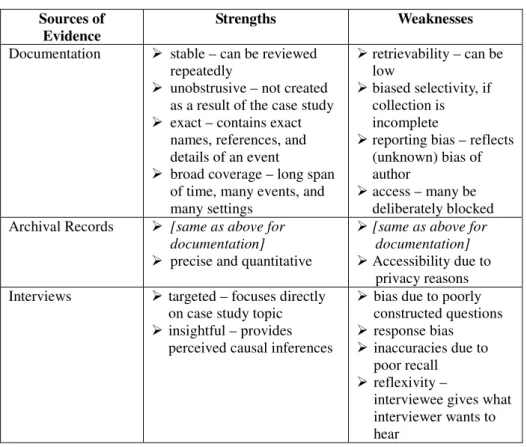
Figure 4.1 Sources of evidence for case studies
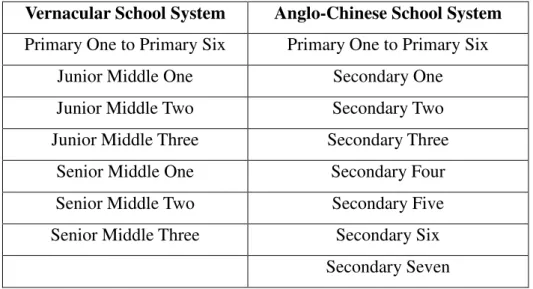
Figure 5.1 The structure of the Hong Kong school system from 1951
until 1992
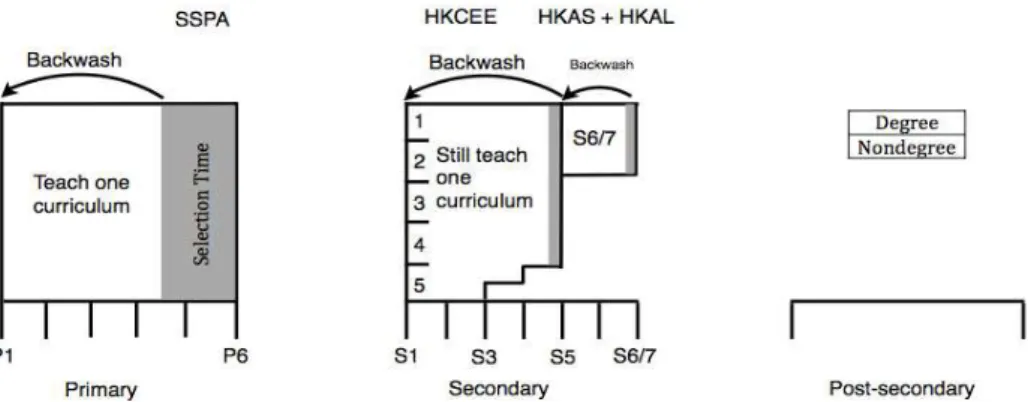
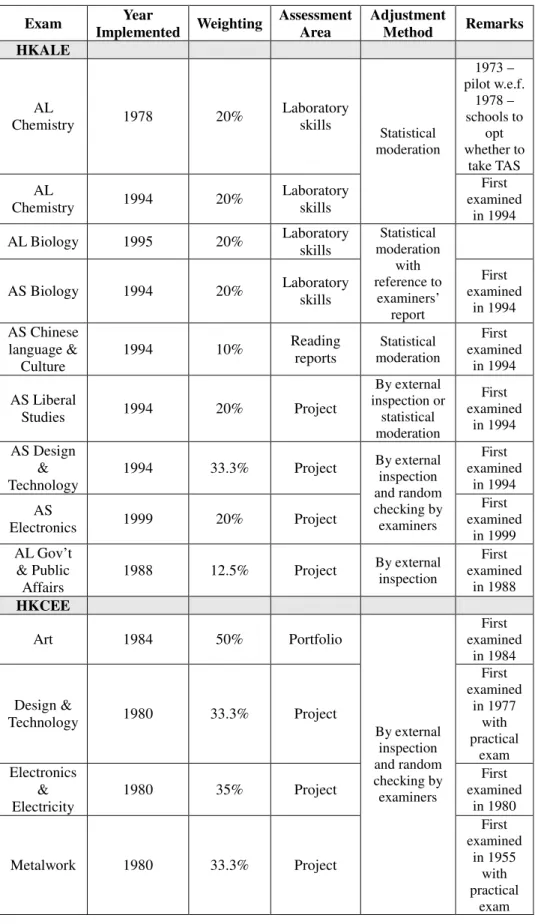
Figure 5.2 The structure of a selective school system in Hong Kong Figure 5.3 The implementation of the Teacher Assessment Scheme
up until 1999
Figure 5.4 Percentages of marks awarded to factual recall in local public examinations
Figure 5.5 Percentages of marks awarded to factual recall in public examinations in Science and Mathematics in other countries
Figure 5.6 Response from schools on the tailored HKCEE
Mathematics curriculum
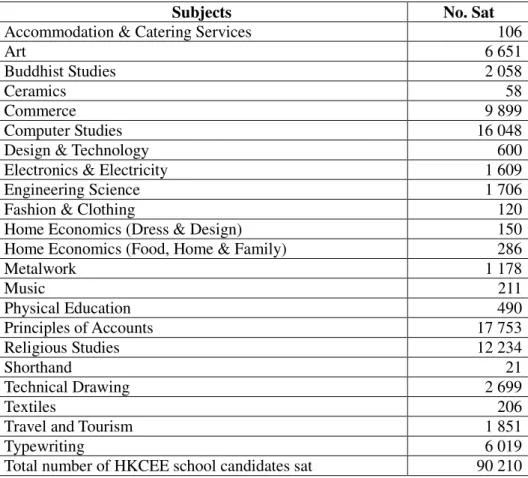
Figure 5.7 Application-oriented subjects in HKCEE with entries in 1998
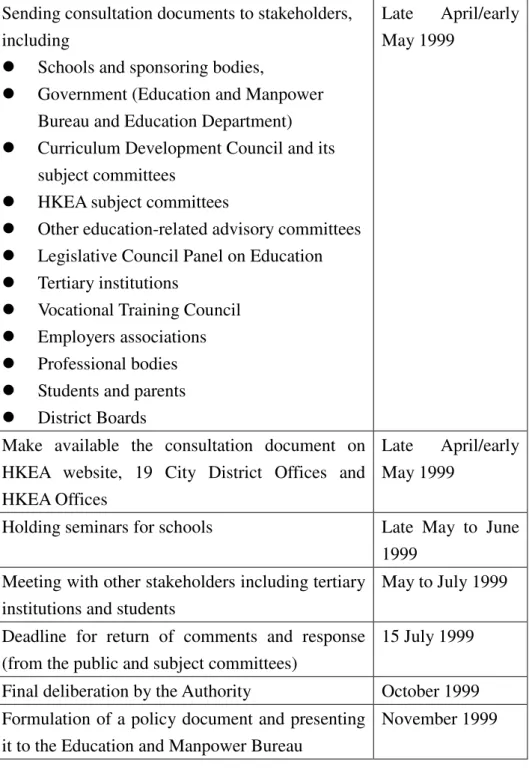
Figure 6.1 Implementation plan for consultation on the way forward as recommended by the ROPES report
Figure 6.2 Implementation timetable of the new senior secondary structure
Figure 6.3 The number of day school candidates meeting the general entrance requirements of local universities in 2012
Figure 7.1 Composition of the Authority Council in 1977 Figure 7.2 Composition of the Authority Council in 2003
List of Acronyms
ACE American Council on Education
A-level Advanced Level Examination
AP Advanced Placement Examinations
ApL Applied Learning
AS-level Advanced Supplementary Level Examination
BCA Basic Competency Assessment
BPT Basic Proficiency Test
CDC Curriculum Development Council
CDI Curriculum Development Institute
CEEB College Entrance Examination Board
CRA Criterion-referenced assessment
CUHK The Chinese University of Hong Kong
EC Education Commission
ECR7 Education Commission Report No. 7
EDB Education Bureau
EMB Education and Manpower Bureau
ETS Educational Testing Service
HKALE Hong Kong Advanced Level Examination
HKAT Hong Kong Attainment Test
HKCEE Hong Kong Certificate of Education Examination
HKDSEE Hong Kong Diploma of Secondary Education Examination
HKEA Hong Kong Examinations Authority
HKSAR Hong Kong Special Administrative Region
HKSCE Hong Kong School Certificate Examination
HKU The University of Hong Kong
HLE Higher Level Examination
ILE Intermediate Level Examination
LMI Language medium indicator
NAEP National Assessment of Educational Progress
NCLB No Child Left Behind
NRA Norm-referenced assessment
Ofqual Office of Qualifications and Examinations Regulation
O-level Ordinary Level Examination
QCA Qualifications and Curriculum Authority
ROPES Review of Public Examination System
SAT Scholastic Aptitude Test
SAT I SAT Reasoning Test
SAT II SAT Subject Tests
SBA School-based assessment
SCAA School Curriculum and Assessment Authority
SCE School Certificate Examination
SRA Standards-referenced assessment
SRR Standards-referenced reporting
SSPA Secondary School Placement Allocation System
TOC Target Oriented Curriculum
TSA Territory-wide System Assessment
Key to Superscripts
G Local Government Documents, e.g. policy documents,
consultation papers, consultation reports, publications and press releases.
HP The public documents of the Hong Kong Examinations and
Assessment Authority, e.g. publications, press releases, information flyers and examination syllabuses.
HM The minutes of meetings of the Authority Council, i.e. the
governing body or decision-making body at the highest level of the Hong Kong Examinations and Assessment Authority (internal documents of the Authority)
HA The appendices to the minutes of meetings of the Authority
Council (Internal documents of the Authority)
The above documents are listed under their corresponding headings at the end of the thesis after “References”.
Chapter One
Introduction
Complaints about Public Examinations
Public examinations are high-stakes business and their high-stakes nature can be reflected by the way incidents in public examinations often make the newspaper headlines. There is no question that public examinations can easily stir up heated debates which are typically dominated by criticisms and hence examination bodies are frequently under pressure to make improvements. Apart from those related to assessment errors, common complaints about public examinations in Hong Kong can be broadly grouped as follows.
Teaching to the Test
There is a good deal of evidence that teachers, in order to drive up examination results, tend to teach to the test, focusing on what is to be tested and developing test taking strategies, and ignoring those skills not covered in the test (Andrews et al., 2002; Shohamy et al., 1996; Smith, 1991).
There are those in Hong Kong, who believe that teaching at Secondary 6 stops in January or even earlier so as to allow a large block of time for coaching activities such as going over past examination papers or practice papers, analysing marking schemes of examination boards and
studying recent trends of examination questions, followed by mock examinations held in their own school halls in order to have an early taste of the “real” examination commencing by the end of March. Full preparation of their students for public examinations is seen in Hong Kong secondary schools as one of the most critical responsibilities of teachers and principals (Cheng, 1997 p.38 – 54; Pong & Chow, 2002 p.143 – 144).
According to Pong & Chow (2002 p.143), though there are official curriculum guidelines in Hong Kong, which are supposed to be implemented in schools for every subject at each level, every teacher knows that in practice it is the examination syllabus that really matters. Even the Secretary of the Hong Kong Examinations Authority admits that students sometimes stop their teachers from teaching certain topics or materials which are not in the examination syllabus (Choi, 1999 p.412).
Another observed phenomenon is that teachers sometimes second-guess the questions that may appear in examinations and provide model answers to students to memorize by heart. In this way, public examinations in reality can become the curriculum. A secondary school teacher comments on public examinations that:
“I have to teach students knowledge and skills which would prepare them for the examination syllabus because everybody will complain if I don’t. For example, students will complain that I am not preparing
them for the exam. If students fail, parents and the school authority will complain that I did not drill them enough for the exam….. (but) we don’t just teach for exams. I would like to refer to the fundamental aim of school education…..” (A secondary school teacher, cited in Biggs 1996, Chapter 9)
Some people argue that public examinations are amongst the strongest influences on teaching style. Examination boards in fact only stipulate what should be tested and they categorically do not stipulate how and how long teaching should be conducted. Even if they did, they are not in the position to enforce such stipulation in classrooms, and so it is very interesting to consider how the influence of examinations on teaching appears to be so very strong.
Rote-learning
Another criticism against public examinations is related to the way that students learn. Whatever the official aims of teaching, many students, in response to the examination oriented teaching style, “smartly” adjust their learning to a low cognitive level.
“……. For (Chinese) Chinese Language, we are given many School Certificate Examination questions with answers. I will study the questions and rote learn the answers as we know that the teacher will set the same questions. I know I should not do that but I have to in order to get high marks……..The problem is the format of the
examinations, which only requires (you) students to reproduce the answers…..I think to rote learn is a disgrace to myself because I am being spoon-fed and have been deprived of my right to understand….”
(A secondary student, cited in Biggs & Watkins, 1993 p.17)
Some teachers are thought to teach students to rote-learn as a strategy. With the pragmatic justification that the norm-referenced examinations in Hong Kong require inculcation of test strategy, they scan through past papers for frequently recurring questions, and train the students to rote learn model answers prepared by them. Morris found that formulating and transferring to their students test strategies is in fact the top priority of some teachers (Morris, 1985 p.3 – 18).
This happens despite the fact that the official curriculum guidelines prescribe high quality objectives such as intellectual, communicative, social and moral, personal and physical, and aesthetic development (Curriculum Development Council, 1993G). The examination syllabi published by the Hong Kong Examinations and Assessment Authority (HKEAA) do include high order skills such as application and analysis. Yet, according to Pong & Chow (2002, p.143), paradoxically, the heavy emphasis that is placed on examination grades has made it very difficult for high order thinking to be assessed. The highly selective nature of the examination has forced examiners to put fairness and objectivity of marking above all other concerns. To achieve maximum fairness, grades are based on objective scoring of quantifiable elements.
Public examinations are hence accused of exerting negative influence on the learning style of students. However, should it be the sole responsibility of examination bodies to ensure proper teaching and learning? Are public examinations really the root cause for pragmatism in teaching and learning?
Examination-oriented Education System
According to Fullilove, the Hong Kong education system is characterized as an examination-led system where what goes on in the classroom is largely dictated by what happens in the public examination halls (1992 p.131 – 147).
The examination-driven nature of the education system in Hong Kong was well expressed by an OECD review panel commissioned by the Hong Kong Government in 1982. In its report, the phenomenon is described as “obsessive concern” with testing (OECD, 1982). According to Pong & Chow (2002), when exiting from secondary school, a teenager will have gone through a total of eight major selection examinations – from interviews for gaining admission to prestigious kindergartens to the Advanced-level Examination at the end of Secondary 7. Each of these examinations has an impact on the opening up or closing off of certain doors for future. Biggs finds that at all stages, the curriculum, teaching methods, and student study methods, are focused on the next major assessment hurdles (Biggs, 1996 p.5).
The Education Commission, i.e. the highest policy advisory body on educational issues of the Hong Kong Government, upon completion of the first and second stages of its comprehensive review of the education system in Hong Kong in 1999, explicitly stated that one of the major problems of the education system was related to the heavy emphasis on examinations. Students focus so much on examination results that they cannot enjoy learning (Education Commission 1999G).
This examination-oriented culture in Hong Kong is exacerbated to a certain extent by the Chinese traditional beliefs in the reasons for success and failure. Hong Kong people, along with those in other Confucian-heritage cultures1, attribute success to effort, and failure to laziness. This deviates notably from the common Western beliefs that success and failure tend to be the natural results of possessing the necessary abilities or the lack of them respectively (Carless, 2011 p.46 – 62; Hau & Salili, 1991 p.175 – 193; Holloway, 1988 p.327 – 345). An effort attributing culture can create enormous stress on the students who might be forced to tackle unrealistic targets.
It is perhaps necessary to do something about this examination-oriented culture. However, it is problematic that, on the one hand, the Education Commission suggests that something should be done by the Government to rectify the examination-oriented culture, and on the other, in the same review, it proposed the introduction of more examinations (i.e. the Basic Competency Assessments) for monitoring education standards (Education Commission 1999G). The nature of
examinations mutates and multiplies along with this kind of quality monitoring policy agenda which, to some extent, has furthered the examination-oriented culture and complicated the work of examination bodies.
Demoralization
Literature outlining the negative consequences of high-stakes examinations on students is abundant. For instance, it is claimed that high-stakes examinations can induce test anxiety, lack of motivation for meaningful learning, and low self-esteem, just to name a few (Assessment Reform Group, 2002; Harlen, 2005). Locally in Hong Kong, it is Biggs’s observation that Primary 6 students allocated to Bands 4 and 5 (out of 5 bands altogether) secondary schools simply have no hope of completing the curriculum successfully, whatever their efforts. Those in Bands 1 and 2 to some extent, become academically oriented and positively motivated, while those in Bands 4 and 5
become less achievement oriented, drop any “deep” or
meaning-oriented approaches to learning they might have developed, and resort to simple rote learning (Biggs, 1991 p.140 – 150).
T. Tang (1993 p.35 – 53) studied Band 5 Secondary 2 and Secondary 4 students’ views of their schooling in a series of individual interviews. Most of these low-achieving students see learning simply as “memorizing” enough key terms to get them out of trouble with tests. The purpose of tests is “to force (us) students to revise and to let us
score marks to get a pass”.
The demoralizing effects on low-achievers are unintended consequences of examinations and it has become a legitimate part of the work of responsible examination boards to take into account backwash effects of its examinations. Some examination boards address this problem by offering alternative syllabuses. However, in general, if given options, students tend to choose the more difficult syllabus which may be well beyond their abilities. They do this to meet the high expectations of their parents on them, and even their teachers may find it difficult to advise them against doing so. After all, even if a student manages to pass a less difficult examination, the result may fail to bear sufficient currency for future study and career.
It is indeed the responsibility of examination boards to offer high quality examinations, but how these examinations are perceived or used seems to be something beyond the remit of these institutions.
The above complaints about public examinations in Hong Kong should clearly be handled with a sense of urgency. However, the issues involved seem to be rather complex with no ready solution. Besides, instead of being directly related to public examinations, these issues have more to do with teaching and learning, and expectations on school education. To what extent should they be tackled by an examination body offering mainly external summative assessments like the HKEAA? Is it more direct to improve teacher training and school management?
However, events in the political scene of Hong Kong in the recent decade put further pressure on the HKEAA to face up to these challenges.
New Expectations on Public Examinations
Over the past ten years, the Hong Kong Government has made a number of reform proposals related to public examinations. Different reports have brought up different issues. The first set of deliberations about assessment and examinations appeared in the “Reform Proposals for the Education System in Hong Kong” (Education Commission, 2000aG).
“Regarding public examinations, we propose that the modes, content, and assessment methods of the examinations should be reviewed. More flexible modes of examination should be adopted so that students have more room to display their independent thinking and creativity. As regards the assessment methods, an appropriate degree of teachers’ assessment should be introduced to better assess those abilities that are not easily assessed in written examinations. This would encourage students to participate in a more diversified range of learning activities.” (Paragraph 7.7)
“As a part of the curriculum, the major function of assessment is to help teachers and parents understand the learning, progress and needs of their students, as well as their strengths and weaknesses. Teachers
could take into account the results of assessment in planning the teaching syllabus, designing teaching methods and giving guidance to individual students to help them learn effectively and exploit their potentiality fully.” (Paragraph 7.12)
The first quotation proposes a diversified mode of assessments to be incorporated in public examinations, including teachers’ assessments, and the second quotation directly indicates that assessment is a part of the curriculum and highlights the importance of assessment for learning. This leads to the following issues for the HKEAA to consider in respect of its role in the education scene of Hong Kong:
1) The implications of teachers’ assessments
2) The relationship between curriculum and assessment 3) Assessment of learning vs. assessment for learning
The Implications of the Teachers’ Assessments
Two years later, a review of the academic structure of senior secondary education was completed. The report proposes the implementation of a new academic structure and the introduction of a new public examination. In addition, it points out five areas of focus for the reform of public examinations, amongst which is the introduction of school-based assessment:
individual subjects in public examinations. School-based assessment may cover students’ performance:
• during the learning process;
• independent research, project learning, experiments or assignments.
(Education Commission, 2003G Paragraph 8.3)
Regarding the introduction of school-based assessment, a large number of practical problems have to be resolved, including the attitude and reactions of school teachers. These important matters have not been addressed in the report. More importantly, what role can an examination body play to help in this respect?
The Relationship between Curriculum and Assessment
The curriculum reform proposals in 2001 highlight a number of steps for the Curriculum Development Council (CDC) to undertake to ensure consistency between curriculum and assessment. Three possible strategies for public assessment to follow are noteworthy:
1) Assess students on what and how they are expected to learn in the curriculum
2) Use different modes of assessment suited to the purposes and processes of learning (e.g. projects, observation, portfolios, tests, examinations) throughout the school years
memorization, and assessment for the sake of recording only (CDC, 2001G p.80)
It is also pointed out that the CDC should undertake the following to ensure consistency between curriculum and assessment:
1) Develop evidence-based quality criteria in line with the
curriculum framework, to help teachers judge the performance and progress of students in relation to the learning targets
2) Work with the HKEAA to develop combined curriculum and
assessment guides for various examination subjects so that the scope and modes of assessment are consistent with the learning objectives and contents
3) Liaise with the university sector and relevant agencies about broadening university admission criteria and about other means of providing information on student achievement.
(CDC, 2001G p.81)
It should be emphasized that the CDC is responsible for the curriculum and the HKEAA is responsible for assessment. These are two separate organisations. How can the linkage between curriculum and assessment be so effectively established as expected in the policy documents?
Assessment of Learning vs. Assessment for Learning
published. The advantages of assessment for learning are particularly highlighted. Another observed feature is that assessment for learning is contrasted with assessment of learning. It is hoped that students and teachers will pay due attention to the learning process itself. The Government has made this point clear in its official documents:
“The evidence collected in assessments should show clearly both the outcomes of learning (what students have learned and what students have not learned) and the processes of learning (how students learn)………The former is related to establishing how well students have achieved, the quality of education being provided, and what standards are being attained, and the assessment involved is often referred to as "assessment of learning". The latter is related to helping students to continuously improve and the assessment involved is referred to as "assessment for learning". Assessment of learning is for reporting and assessing students’ performance and progress against the learning targets and objectives. Assessment for learning is for identifying students’ strengths and weaknesses and providing quality feedback for students, which entails providing timely support and enrichment. Assessment for learning also helps teachers to review learning objectives, lesson plans and teaching strategies.” (Education Bureau, 2009G p.3 – 5)
Thus while the 2001 publication indicates some special measures for the integration of assessment of learning and assessment for learning, the different forms of integration have not been specifically dealt with
in the 2009 publication. A more fundamental question is that if assessment for learning is more related to teaching strategies, then does an examination body have a role to play in the current moves for assessment for learning?
The Need for a Role Clarification
In this age of complaints and reforms, both the public and governments are mounting more and more expectations on public examinations to tackle and even resolve educational issues. With a wide range of stakeholders making different demands which are not necessarily in line among themselves, and not necessarily within the remit of examination delivery, the author of this thesis as a staff member of the HKEAA finds that it is timely to examine the role of an examination body with a view to identify the way forward in order to maintain the effectiveness of its work and inform future development. This soul searching work is of particular relevance to the colleagues of the HKEAA as the term “assessment for learning” has now become a slogan to the extent that it is printed on the staff name cards and letterheads though its full implications for the HKEAA have yet to be found out.
Research Questions
It cannot be overemphasized that public examinations are powerful educational tools. Luijten points out that examinations are not the be-all
and end-all of education and the teaching process (Luijten, 1991 p.9). Though influential, they are not and should not be an end in themselves. However, it is because they are so dominating, it is not always clear whether they are the means or ends. Making effective use of these powerful tools has long proved mind-racking.
Hence the starting point of this research is to trace the possible functions served by public examinations, how well such functions are served, and the reasons behind the chorus of complaints. Instead of stopping at this point as most researchers on public examinations do, this thesis probes further to study the societal and educational role of the examination boards which seem to be directly controlling these powerful tools, to identify if this has any significant part to play in the overall effectiveness of public examinations in serving their purposes.
The HKEAA is chosen as the target of this case study. Two research questions have been formulated:
1) What functions do public examinations serve in Hong Kong and how effectively are they serving these functions?
2) What is the role of the Hong Kong Examinations and Assessment Authority in the education system of Hong Kong and how effective is it in delivering this role as expected by its stakeholders?
The first research question is about the work of the Authority. While some may choose to define the role of an examination body by what it
claims itself to be or the way it is perceived by others, the approach adopted here is to start with what the HKEAA actually delivers. The second research question then elicits answers in respect of the nature, capabilities, limitations and positioning of the Authority as major factors contributing to its effectiveness in delivering its role as expected by its stakeholders. It is hoped that at the end of this thesis, suggestions can be made for the possible way forward for the Authority to enhance its effectiveness.
The Significance of the Research
Literature on high-stakes public examinations is abundant, and these works concentrate mainly on three broad themes:
1) The development of public examinations and their impact on the education system and the society as a whole;
2) Constructs and purposes of public examinations arising from different assessment, psychometric, psychology and learning theories;
3) Influences of education policies and government decisions on public examinations, and how these impact on the education system.
Though many have with great conviction laid at the door of examination boards the blame for most, if not all, that they have found to be undesirable or inappropriate about teaching and learning, and
curriculum development as outlined in the earlier part of this chapter, few have gone the extra miles to analyse in more detail how examination boards have come to exert this strong influence (Murphy 1986 p.4). In fact apart from Murphy’s paper (1986) “A Changing Role for Examination Boards”, little has been written specifically on these influential organisations. “Setting the Standard: A Century of Public Examining by AQA and Its Parent Boards” by Kathleen Tattersall et al. is amongst the very few books on the work of examination bodies. This book, however, was commissioned by the examination board itself and is by no means an objective study of its work. “ACT: The First Fifty Years, 1959 – 2009” and “Examining the World: A History of the University of Cambridge Local Examinations Syndicate” are similar books on the work of ACT, Inc. and Cambridge Assessment commissioned by the examination boards to commemorate their respective anniversaries. Nicholas Lehmann’s “The Big Test” and David Hubin’s “The History of the SAT” strictly speaking, are about the SAT and not its developer – the Educational Testing Service (ETS), though both have gone to some lengths to trace the origin and
development of ETS. “Examinations in Singapore: Change and
Continuity (1891 – 2007)” explores the development of Singapore’s examination system but the societal and educational role of the Singapore Examinations and Assessment Board established in 2004 has hardly been discussed. Regarding the HKEAA, except the ones published and commissioned by the Authority, no book has been written solely on it so far. The ones published by the Authority are mainly examination documents, such as examination syllabuses,
backdated question papers, examination reports and statistics or research reports on public examinations. The only one which provides some useful information on the Authority is “The Twenty-fifth Anniversary Commemorative Issue: Examinations and Assessments in Hong Kong” published in 2002, which is a collection of reflective writings of people who have participated in various ways in the work of the Authority. The book hardly contains any academic analysis. The ones commissioned by the Authority are two consultancy reports: “Review of Public Examination System in Hong Kong” by Broadfoot et al. in 1998 and “Strategic Review of Hong Kong Examinations and Assessment Authority” by IBM Consultant in 2003. Both have a limited scope and purpose as defined by the project owner.
The significance of the study of examination boards is overshadowed by that of public examinations probably for pragmatic reasons. Public examinations seem to be far more directly related to their stakeholders. This could also be a result of the confidential or secretive nature of examination operation as concluded by Whitty:
“It is of course, hardly surprising that there has been little research in this area, since even those boards which boast a large measure of teacher participation are notoriously secretive in their operations. Access to their committee structures is generally restricted to ‘insiders’ whose loyalty to the organisation limits their freedom to discuss their experiences and the administrative procedures of the boards have remained totally impenetrable.” (Whitty, 1976, cited in Murphy, 1986
p.5)
The author of this thesis, as a staff member of the examination body under review, may well be considered an “insider”. However, it is hoped that this study will enrich the literature on examination boards by adopting a slightly different angle to provide an evidence-based account as an insider, making reference to internal documents whenever available alongside with relevant academic work and policy documents to formulate views and arguments. As these organisations are exerting direct influence over public examinations, new insights regarding their work may lead to a more comprehensive understanding of the implicit forces working behind public examinations and cast light on the critical success pre-requisites for any public examination initiatives. By adopting an insider approach, this work also aims at contributing to the demystification of examination bodies, which is probably a necessary step towards a holistic and more balanced view of their essential nature and role.
Organisation of this Thesis
The literature review in Chapter Two provides an overview of the major functions served by public examinations nowadays in modern societies, issues surrounding these examinations, the benefits they bring and their limitations, followed by a literary survey on the role of examination bodies. It is hoped to identify unified themes at a global level to provide a framework of the scope and focus of study for this
research thesis. The relevance of the findings in Chapter Two is tested on the American case in Chapter Three as an enrichment of the literature review. The United States is chosen as it is amongst the very few advanced countries where there is no national school-leaving public examination. One of the aims of this case study is to investigate if it is recommendable for public examinations to remain detached from the school system and how far an examination body can maintain a balanced approach in serving a range of stakeholders. As the SAT I or SAT Reasoning Test is still the best known high-stakes public examination in the United States, the American case concentrates only on the Educational Testing Service which offers the SAT though there are other similar examination boards in the country. Another aim of this case study is to enrich the framework of the scope and focus of the research into the Hong Kong case. The research methodology of this thesis is detailed in Chapter Four. Chapter Five is a historical study of the development of public examinations in Hong Kong, through which the functions that public examinations serve and the challenges faced by the Authority are analysed. Attempts are made specially to study changes and continuities over time and the reasons behind within a context of rapid social, political and economic developments. Chapter Six concentrates on the way the Authority has been responding to the public examination reform introduced at the turn of the twentieth century leading to the implementation of the Basic Competency Assessment in 2005 and the Hong Kong Diploma of Secondary Education Examinations in 2012. Special attention is paid to explore how effectively the Authority has been coping with stakeholders’
demands and expectations on public examinations in a time of compulsory education undergoing an education reform. Chapter Seven is an analysis of the unique nature of the Authority as the only statutory examination body in Hong Kong and whether this position is conducive to the effective implementation of its public examinations. The final chapter summarizes the findings and arguments with an eye for the future. It is hoped that suggestions can be made for informing possible courses of action for examination bodies in general and the Authority in particular to enhance their work or position in age of increasing emphasis on accountability.
Definitions
Public examinations in this thesis refer to formal large-scale state- or system-wide examinations or assessments, the results of which have direct consequences for the concerned candidates, educational programmes, teachers or institutions. These examinations are hence high-stakes in nature. Besides, for fairness sake, they are necessarily standardized, i.e. their formats, procedures or administration are uniform across examinees (Phelps, 2007 p.8 – 9).
These examinations are almost without exception administered at the end of a course or stage of study and provided externally. By external, it is implied that the source of these examinations is an entity outside the schools, mostly referred to as examination board, or awarding body in the UK. In their most pristine forms, external examinations are
devised, conducted and processed by the examination boards in the complete absence of the instructors of the candidates (Vlaardingerbroek et al., 2009 p. xi).
Some people consider that the three major stakeholders in education are the academic community, state and market (Altbach, 1999; Ball, 1998). Something is clearly missing if the learners, their parents and whoever support them in their studies are not expressly mentioned though they may be grouped under “academic community” or “market”. Stakeholders of public examinations in this thesis refer to all stakeholders of their respective education systems where public examinations exist, and all those who take part in the decision-making processes of, participate in or are directly or indirectly affected by public examinations.
Though the words “assessment”, “examination” and “test” are slightly different in terms of meaning and connotation, they are used interchangeably in this thesis if they are not a part of proper names, or not specified. The same applies to “candidate”, “examinee” and “test-taker”.
Endnote:
1. John Biggs, a significant thinker about learning and assessment in Chinese societies, has popularized the term Confucian-heritage cultures to refer to the countries or educational systems of China, Japan, South Korea, Singapore, Taiwan and Hong Kong, which have all been
influenced by the tenets of Confucianism in such a way that they are all examination-driven (Carless, 2011 p.4).
Chapter Two
Literature Review I –
An Overview of the Functions of Public Examinations
and Role of Examination Boards in Modern Societies
Introduction
This chapter aims at providing an overview of the major functions served by public examinations in modern societies, issues surrounding them, the benefits they bring and their limitations, followed by a survey on the role of examination bodies. It is hoped to identify unified themes in respect of the functions of public examinations and the role of examination bodies to provide a framework of the scope and focus of study for this research thesis.
The Functions of Public Examinations
Public examinations serve multiple purposes nowadays. Broadfoot (1996 p.10 – 11) suggests that the purposes of public examinations are associated with the themes of competence, competition, content and control. Pongi (2004) asserts that public examinations around the world are commonly used for summative, accountability and evaluation purposes which play an important and indispensable part to cater for the diverse and often competing demands of the various stakeholders and users of assessment information, for example, selecting the best students for the next level of education, monitoring school performance
or allocating limited resources. Newton (2007 p.149 – 170) puts forward eighteen uses of educational assessments, including diagnosis, placement, system monitoring and so on. According to William and Leahy (2007 p.29 – 42), public examinations should support learning, certify student achievement or potential and evaluate educational programmes, institutions or curricula. Different people may draw up different lists and express themselves in different terms depending on their standpoint, focus and purpose of discussion. However, the following is probably a representative range of purposes expected of public examinations in modern societies:
1) selection as well as certification
2) providing a wider range of information on teaching and learning 3) driving curriculum and educational changes
4) supporting teaching and learning
5) serving as a standards monitoring procedure
It should be highlighted that public examinations are almost without exception serving multi-purposes, meaning that they are serving or expected to serve more than one function listed above and there is such possibility that they are serving all of them at one time.
Selection and Certification
Public examinations are in general highly respected and that comes with a price. It is of foremost importance for a public examination to be
widely recognised and hence the importance for maintaining high standards, the importance of which, in the interest of students being provided pathways to higher education both locally and internationally, is reflected in the decision of many former colonies to continue to operate examinations of international examination boards, notably the University of Cambridge Local Examinations Syndicate (UCLES) and Edexcel International. Bray and Steward attribute this phenomenon also to concerns about technical expertise and cost-effectiveness (Bray and Steward, 1998 p.223 – 224).
Some countries simply adopt the examinations as provided by these international providers. For example, Mauritius and Brunei Darussalam, which gained independence in 1968 and 1984 respectively, choose to remain tied to UCLES (Broadfoot et al., 1998 p.67 – 68). Singapore takes a slightly different route to use a customized version of UCLES examinations with equivalent recognition as their international counterparts. Singapore in fact has all the professional expertise and financial competence to develop its own domestic national examinations, but decided to continue to peck with UCLES for respectability and neutrality considerations (Bray and Steward, 1998 p.223 – 224; IBM, 2002HP p.49).
In most countries, the contemporary system of public examinations owes its origins to the need to select a handful of elites to enter higher education so as to “refresh” the sources of leadership in due course (Vlaardingerbreok et al., 2009 p.3). However, despite examination
systems designed for this purpose have already been well recognised as being inadequate to cope with a much broader candidate abilities in an age of mass education without some devaluation of the credential gained (Eckstein and Noah, 1993 p.172 – 176), the same approach of selection is still widely adopted. If pass rates rise, it is typically assumed that standards have been watered down (Aldrich, 1998 p.42) making it difficult to recognise or certify a wider range of achievements.
Different countries may traditionally put various levels of emphasis on the use of public examinations for selection as against certification purposes, and the balance tends to be tilted to the earlier. It is however inspiring to note that it is also possible for some countries to design a more inclusive system through policy decisions to expand candidature. While China is an extreme case where students are having the least chances of success in a highly selective education system, France provides a good example of a country which has committed to widening opportunity in order to raise the overall skill threshold of the nation (Esckstein and Noah, 1993 p.174). The Baccalaureate examination – in which a pass carries with it the right to access university education – was once the national icon of an elite minority. The French government has now set 80 percent of the age cohort as the target for success in one of the several different forms of Baccalaureate. Although this ambitious target will take some time to be realised, access to these iconic qualifications has already been widened significantly in recent years without much diminution in public
confidence in them (Bonnet, 1997 p.296 – 297). In 1997, 61 percent of the 16- to 18-year-olds obtained the Baccalaureate or a baccalaureate level qualification with 88 percent of these students enrolling in some forms of higher education and 57 percent going on to university (QCA 1998, cited in Broadfoot et al., 1998HP p.68 – 69). In 2007, the Baccalaureate recipients rose to 65 percent of the relevant cohort while the overall pass rate had risen to 83 percent. That said, the high success rate does raise issues of the effectiveness of the Baccalaureate as a filtering mechanism in France as it is not only a secondary school exit
certificate but also a university entrance qualification
(Vlaardingerbroek et al., 2009 p.20 – 26).
Certification has been lumped on to the traditional selection function of public examinations in response to an expanding education system in the recent decades, resulting in a conflict between the two functions which many public examinations are serving at one time.
Provision of a Wider Range of Information on Teaching and Learning
Some countries, for example, Japan, China and United States, offer limited options in what is essentially the same examination for all candidates, whereas other countries, particularly England, France, Germany and Sweden, offer candidates options among subjects, syllabi and levels of difficulty. Uniform examinations are generally considered to be more reliable and capable of facilitating selection by enhancing
the comparability and evenhandedness of treatment for different groups, but this comes with a price. Uniformity significantly reduces the opportunities for recognising the different needs of candidates (Eckstein and Noah, 1993 p.227).
In modern societies with mass or even universal education, selection should no more be the sole purpose of school examinations and, increasingly examination systems that began with a strong commitment to uniformity and comparability for mainly selection purposes have yielded to the need to accommodate a wider spectrum of student population and broadened definitions of what should be learned at school and assessed (Eckstein and Noah, 1993 p.228). Greater emphasis is now being put on the certification of competence, i.e. what students have learned and are able to do, and how effective teaching has been in changing the competencies of students (Biggs, 1998b p.323). There is no denying that examinations will continue to play a very important role into the foreseeable future in terms of selection which brings with it the need to rank candidates’ relative levels of academic performance. Meanwhile the diversity of routes opening up within education systems catered for a range of skills and qualities about which information on candidates is sought means that the role of public examinations is more and more one of certification – providing accurate and trustworthy information on a wide range of candidates’ competencies at different levels – allowing the users themselves to make use of the information in ways that are appropriate for their own purposes (Broadfoot et al., 1998HP p.70 – 71).
In reviewing the international trend of an increasing use of public examinations for a much broader scope of certification purposes for OECD, Nisbet wrote:
“The general international trend since the early 1960’s has been the greater reliance on internal school assessments. In every OECD nation which has national examinations at the end of secondary education, the external examinations have been extensively revised since the mid 1980’s….The modifications have included school-based assessment of extended projects, attempts to test (and thus foster) problem-solving and the application of knowledge, assessing practical ability, and oral communication skills and relating examinations more precisely to clearly stated objectives.” (Nisbet, 1993 p.33)
The theory and practice of assessing learning are currently undergoing a paradigm shift, as public examinations become increasingly grounded in theories of learning and teaching rather than traditional psychometric theory (Biggs, 1998a p.375 – 378). Ironically, the move towards enhancing the certification role of assessment is also closely associated with the widespread recognition of the pressures arising from the selection role of assessment and attempts on generating positive washback effects on the priorities of teachers and students. As a result, there is a considerable impetus behind the search for alternative assessments (i.e. assessments other than external written examinations), such as “authentic” assessments (Newman & Archbald, 1992; Wiggins,
1989) or “performance-based” assessments (Moss, 1992) which, being conducted by teachers at schools, can take into account a range of skills and qualities (such as investigative skills, teamwork, oral and problem solving skills) on a continuous basis. These assessments can hardly be conducted in a valid way through traditional uniformed external written examinations which, on the contrary, are valued for its reliability as an assessment tool administered on a large-scale (Broadfoot et al., 1998HP p.71).
There is growing recognition that personal attributes such as critical thinking, problem-solving, leadership, citizenship, perseverance and creativity are important both for employment and the sustainability of a society as a whole. However, very often the narrow focus of examination systems on academic achievement works against encouraging the development of such qualities. Meanwhile, the assessment of these personal attributes is recognised as being deeply problematic within the assessment technologies currently available. Professor L. Mo, in a seminar in Guangzhou, PRC in October 1998, commented on assessing students’ social qualities as follows:
“Students’ social qualities are now treated with increasing importance. Social qualities mainly include social knowledge and social ability. The assessment of social knowledge (such as knowledge on safety etc.), of course, can be conducted in the form of an exercise; However, although assessment of social abilities (such as socializing ability, managing ability, and organising power etc.) in theory can be conducted in the
form of an exercise, generally such kind of assessment has to be conducted in exercise form under actual circumstances. This kind of exercise under actual circumstances requires a huge amount of manpower and resources. Moreover, practically it can only be used to assess a small number of people, so it is not applicable to the assessment of students’ qualities on a large scale. Therefore, in order to assess students’ qualities in this area on a large-scale, the only method to be adopted at present is either the use of questionnaire or evaluation. Since the value and meaning of assessing social qualities is relatively obvious, therefore, there exists also the problems of authenticity and objectivity etc. In this regard, the assessment of students’ social qualities lacks viable scientific methods.
To conclude, the conditions for a scientific assessment of various students’ qualities with an intention to make use of an integrated quality assessment result as the deciding selection criteria are at present not sufficient.” (Mo 1998, cited in Broadfoot et al., 1998HP p.72 – 73)
The fact that traditional external written examinations which put emphasis on reliability are still widely offered by examination bodies does not mean non-academic qualities are not valued. If well-designed, assessments developed for collecting evidence on personal attributes can be accepted as more valid than traditional external written examinations under certain circumstances. The problem lies in the difficulties in identifying effective and efficient ways that these
assessments can be used without compromising reliability in a high-stakes context. This brings another set of dilemma embedded in the implementation of public examinations – validity (measuring the intended traits) and reliability (producing consistent results across time and condition) (Phelps, 2007 p.3). The new expectation now is to enhance validity while not compromising reliability.
Driving Curriculum and Educational Changes
In a pledge to enhance validity within limits, public examinations incorporating significant practical work, such as laboratory experiment or field trip, are quite common in some places. Although most, if not all, public examinations test recall of knowledge content to some extent, these new forms of assessment, involving more than a timed, external, paper-and-pen examination, are expected to assess higher-order intellectual activities like critical thinking, problem-solving and creativity. They take into account a corpus of the candidates’ work accumulated over time. Some advocate reporting results in more detailed and diversified ways, beyond traditional grades or scores, to reflect fuller “profiles” of achievement.
Behind all these efforts is the recognition that public examinations are exerting strong motivating effects or influence in various aspects on the school curriculum, to the extent that in France, England, Japan and China, the subjects examined and the examination syllabi virtually determine the school curriculum and the objectives of teaching. Though