Ron and Kathy Assaf College of Nursing Student
Theses, Dissertations and Capstones Ron and Kathy Assaf College of Nursing
1-1-2017
Transition to Practice Experience: The Impact on
Newly Licensed RN Performance
Patricia P. Lawson
Nova Southeastern University
This document is a product of extensive research conducted at the Nova Southeastern UniversityCollege of Nursing. For more information on research and degree programs at the NSU College of Nursing, please click here.
Follow this and additional works at:https://nsuworks.nova.edu/hpd_con_stuetd Part of theNursing Commons
All rights reserved. This publication is intended for use solely by faculty, students, and staff of Nova Southeastern University. No part of this publication may be reproduced, distributed, or transmitted in any form or by any means, now known or later developed, including but not limited to
photocopying, recording, or other electronic or mechanical methods, without the prior written permission of the author or the publisher.
This Dissertation is brought to you by the Ron and Kathy Assaf College of Nursing at NSUWorks. It has been accepted for inclusion in Ron and Kathy Assaf College of Nursing Student Theses, Dissertations and Capstones by an authorized administrator of NSUWorks. For more information, please [email protected].
NSUWorks Citation
Patricia P. Lawson. 2017.Transition to Practice Experience: The Impact on Newly Licensed RN Performance.Doctoral dissertation. Nova Southeastern University. Retrieved from NSUWorks, College of Nursing. (42)
THE TRANSITION TO PRACTICE EXPERIENCE: THE IMPACT ON NEWLY LICENSED RN PERFORMANCE
Presented in Partial Fulfillment of the Requirements for the Degree of Doctor of Philosophy in Nursing Education
Nova Southeastern University
Patricia P. Lawson 2017
Copyright by Patricia P. Lawson, 2017 All Rights Reserved
v Abstract
This quantitative non-experimental descriptive correlational design sought to answer the question if there was a difference in newly licensed RN (NLRN) performance at one-year post hire after participation in a nurse residency program that offers a formalized curriculum that extends throughout the entire year, one that offers a formalized curriculum that does not extend throughout the entire year, or one that does not provide a formalized curriculum. The study utilized the Six Dimension Scale of Nursing Performance (SDNP) and evaluated NLRN performance on six subscales: leadership, critical care, teaching/collaboration, planning/evaluation, interpersonal relations/communication, and professional development at one-year post hire. Benner’s novice-to-expert model served as the theoretical framework for this study. The results of the Mann-Whitney U test revealed there was not a statistically significant difference between the type of nurse residency the NLRN participated in and his or her self-reported
performance on the individual subscale scores of the SDNP. The results of the point-biserial correlation based on how well the NLRN performed the task did not reveal any significant correlations between the nurse residency and performance. However, a negative correlation was noted within the critical care (r = -.052) and the planning/evaluation (r = -.050) subscale scores. Results from this study corroborate what the literature has previously noted. NLRNs need an experiential opportunity to transition into the practice environment and progress on the
vi
Acknowledgments
As this journey to attain my doctoral degree comes to an end, I wish to express my sincere appreciation to those individuals who assisted me in attaining this personal and professional goal. First and foremost, I wish to thank my dissertation committee, Dr. Julia Aucoin, Dr. Dana Mills, Dr. Virginia Sumrall, and Dr. Gina Reid Tinio. Dr. Aucoin served as a wonderful mentor and dissertation committee chair. Words cannot express my sincere appreciation to Dr. Aucoin as she helped guide me through this process that challenged me to learn nursing education research. Dr. Mills provided the statistical guidance I needed to understand the data from a different perspective than first
anticipated. Dr. Sumrall encouraged me to provide clarity, and Dr. Tinio offered content expertise from the practice arena. In addition to my committee members, I would also like to thank Dr. Jo Ann Kleier for her guidance in the IRB process as I added multiple sites to this study.
Beginning this journey and seeing it to its end would not have been possible without my family’s love and unwavering support. My mother, Margot, taught me that dreams are possible as long as you are willing to put forth the effort to achieve them. My two wonderful children, Nikolaus and Alexander, thank you for your support and
understanding as I embarked on this journey. Both of you allowed me the chance to be a mom and student throughout all of these years. You are two awesome young men.
Finally, to my husband, Aaron, you are my biggest cheerleader and stalwart rock. I would not be where I am today without your encouragement, support, and, most importantly love. You made sure I had the time to devote to my studies by taking on the extra tasks! Thank you for being there to see me achieve my dream.
vii Table of Contents Title Page………... Signature Pages……….. Copyright………... Abstract………v Acknowledgments..………...vi Table of Contents………...vii List of Tables………...………x List of Figures………...xi Chapter One……….1
The Problem and Domain of Inquiry ... 1
Problem Statement ... 6
Purpose of the Study ... 6
Research Question and Hypotheses ... 7
Significance ... 8 Nursing Education ... 9 Nursing Practice ... 11 Nursing Research ... 12 Public Policy ... 13 Philosophical Underpinnings ... 13 Theoretical Framework ... 15 Theoretical Assumptions ... 16 Constructs ... 17 Definition of Terms ... 19 Chapter Summary ... 21 Chapter Two ... 23 Literature Review ... 23 Search Strategy ... 23 Historical Overview ... 24 Novice-to-Expert Model ... 25
Newly Licensed Registered Nurses ... 29
NLRN Performance ... 31
The Transition to Practice Experience ... 34
Support for Transition to Practice ... 34
Lack of Support for Transition to Practice Programs ... 37
The Orientation Process ... 40
Nurse Residency Programs ... 41
Chapter Summary ... 44
Chapter Three ... 45
Methods... 45
Purpose……….45
viii Research Design………..46 Strengths………47 Weaknesses………47 Research Assumptions……….48 Setting………..48 Sampling Plan………..52 Sampling Strategy………..52 Eligibility Criteria………..52
Determination of Sample Size: Power Analysis……….……….53
Protection of Human Subjects……….54
Procedures...55
Instrumentation………....59
Instrument – Six Dimension Scale of Nursing Performance……….59
Validity………63
Reliability………64
Scoring………..…...65
General Statistical Strategy……….…66
Data Cleaning……….…...67 Descriptives……….…..67 Reliability Testing……….……68 Hypothesis Testing……….…...69 Research Question……….69 Limitations………...71
Threats to Internal Validity………71
Threats to External Validity………...71
Chapter Summary………72 Chapter Four………..73 Results……….….73 Data Cleaning ... 73 Missing Data………..74 Outliers………...74 Data Transformation………..75 Descriptives ... 76
Description of the Sample ... 76
Responses to the Measurements ... 79
Reliability Testing ... 84
Hypothesis Testing ... 94
Statistical Results of the Research Question ... 108
Chapter Summary ... 114
Chapter Five ... 115
Discussion and Summary ... 115
Summary of the Findings ... 116
Demographic Characteristics ... 116
ix
Integration of the Findings with Previous Literature ... 122
Implications of the Findings ... 124
Implications for Nursing Education ... 125
Implications for Nursing Practice ... 126
Implications for Nursing Research ... 127
Implications for Public Policy ... 128
Limitations ... 128
Recommendations for Future Research ... 130
Chapter Summary ... 131
References ... 133
Appendices………...149
A. Nova Southeastern University IRB Approval………...149
B. Template Site Approval Letter from Healthcare Organizations ... 150
C. Template Site Approval Letter from Pre-Licensure Programs ... 151
D. Letter of Introduction to Potential Participants ... 152
E. Permission to Use the Six Dimension Scale of Nursing Performance ... 154
F. Original Six Dimension Scale of Nursing Performance ... 155
G. Modified Six Dimension Scale of Nursing Performance and Demographic Data………...159
H. Six Dimension Scale of Nursing Performance Grouped According to Subscale and Item Number………163
x
LIST OF TABLES
1. Age Distribution of NLRN Participants………..…………77
2. Employment Length in Months of NLRN Participants………..…….77
3. Initial Pre-Licensure Degree Earned by NLRN Participants………..….78
4. Type of Nurse Residency in Which the NLRN Participated………...79
5. Mean and Standard Deviation of SDNP Subscale Scores Based on How Often and How Well the NLRN Performed the Item………....82
6. NLRN Performance Based on Residency Type and How Often the NLRN Performed the Item within the Different Dimensions………...83
7. NLRN Performance Based on Residency Type and How Well the NLRN Performed the Item within the Different Dimensions………...84
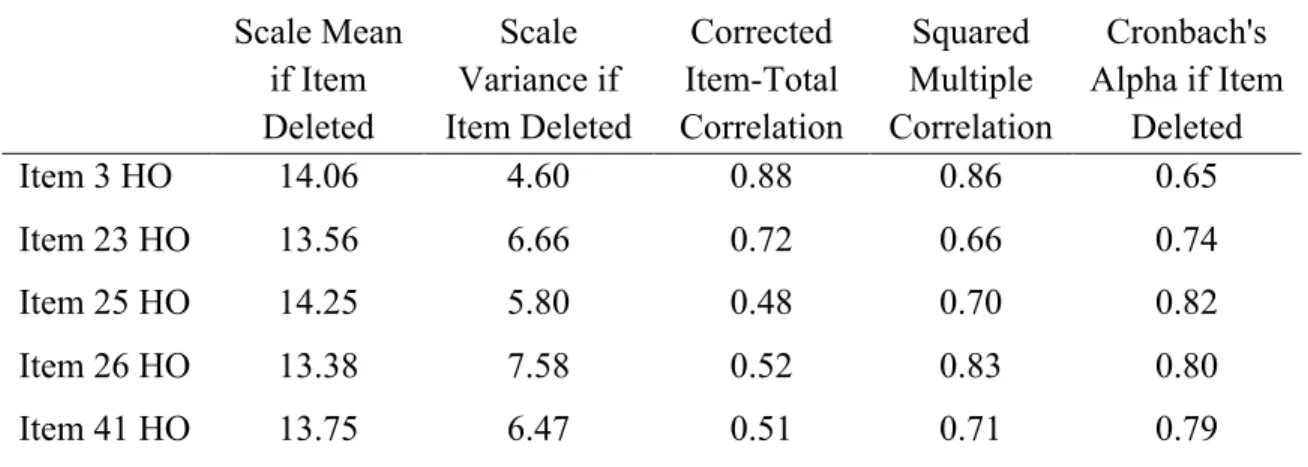
8. Leadership Subscale Item-Total Statistics for the Question How Often...86
9. Leadership Subscale Item-Total Statistics for the Question How Well...87
10. Critical Care Subscale Item-Total Statistics for the Question How Often...88
11. Critical Care Subscale Item-Total Statistics for the Question How Well...88
12. Teaching/Collaboration Subscale Item-Total Statistics for the Question How Often...89
13. Teaching/Collaboration Subscale Item-Total Statistics for the Question How Well...90
14. Planning/Evaluation Subscale Item-Total Statistics for the Question How Often...91
15. Planning/Evaluation Subscale Item-Total Statistics for the Question How Well...91
16. IPR/Communication Subscale Item-Total Statistics for the Question How Often…..92
17. IPR/Communication Subscale Item-Total Statistics for the Question How Well...93
18. Professional Development Subscale Item-Total Statistics for the Question How Well...94
19. Shapiro-Wilk Test of Normality for all Subscale Scores for the Query How Often...95
20. Shapiro-Wilk Test of Normality for all Subscale Scores for the Query How Well...101
21. Mann-Whitney Results Based on the Query How Often...110
22. Point-Biserial Correlations Between Nurse Residency Type and Subscale Scores Based on the Query How Often...111
23. Mann-Whitney Results Based on the Query How Well...113
24. Point-Biserial Correlations Between Nurse Residency Type and Subscale Scores Based on the Query How Well...114
xi
LIST OF FIGURES
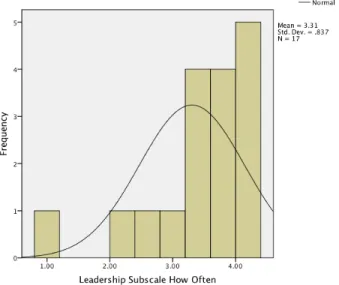
1. Leadership Subscale for the Query How Often...95
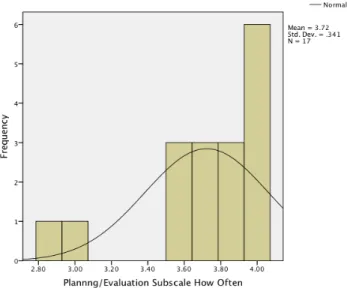
2. Planning/Evaluation Subscale for the Query How Often...96
3. IPR/Communications Subscale for Query How Often...96
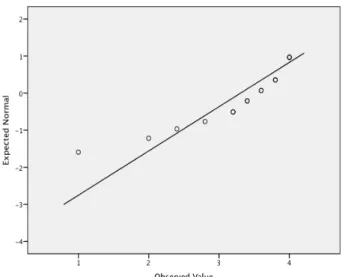
4. Normal Q-Q Plot for Leadership Subscale for the Query How Often...97
5. Normal Q-Q Plot for Planning/Evaluation Subscale for the Query How Often...97
6. Normal Q-Q Plot for IPR/Communications Subscale for the Query How Often...98
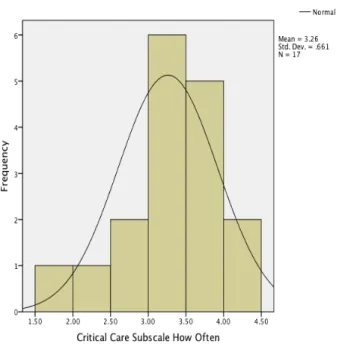
7. Critical Care Subscale for the Query How Often...98
8. Teaching/Collaboration Subscale for the Query How Often...99
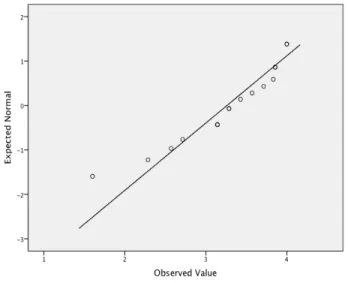
9. Normal Q-Q Plot for Critical Care Subscale for the Query How Often...99
10. Normal Q-Q Plot for Teaching/Collaboration Subscale for the Query How Often...100
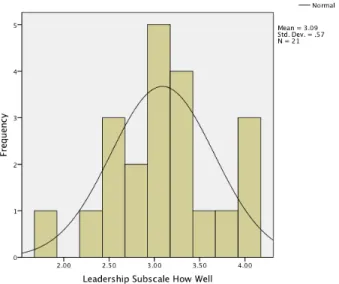
11. Leadership Subscale for the Query How Well...102
12. Critical Care Subscale for the Query How Well...102
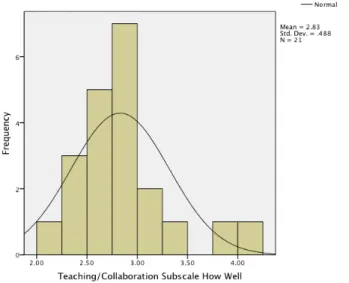
13. Teaching/Collaboration Subscale for the Query How Well...103
14. Planning/Evaluation Subscale for the Query How Well...103
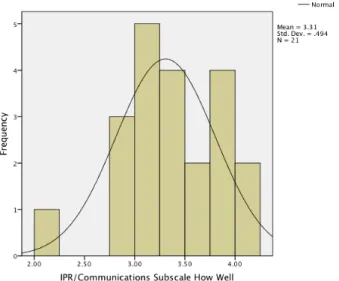
15. IPR/Communications Subscale for the Query How Well...104
16. Professional Development Subscale for the Query How Well...104
17. Normal Q-Q Plot of Leadership Subscale for the Query How Well...105
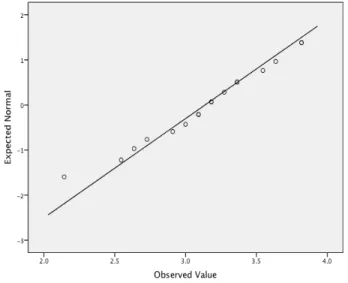
18. Normal Q-Q Plot of Critical Care Subscale for the Query How Well...105
19. Normal Q-Q Plot of Teaching/Collaboration Subscale for the Query How Well...106
20. Normal Q-Q Plot of Planning/Evaluation Subscale for the Query How Well...106
21. Normal Q-Q Plot of IPR/Communications Subscale for the Query How Well...107
22. Normal Q-Q Plot of Professional Development Subscale for the Query How Well...107
Chapter One
The Problem and Domain of Inquiry
As newly licensed registered nurses (NLRNs) transition into their first professional practice role within an acute care setting, they face many challenges in today’s dynamic healthcare environment. With the advent of computerized licensure testing in 1994, provisional nurse licensure no longer exists; today’s NLRNs often start working at their first place of employment as fully licensed practitioners, where they are expected to rapidly function at the same level as their more experienced colleagues (Clark & Springer, 2012; Dyess & Sherman, 2009; National Council of State Boards of Nursing [NCSBN], 2008). Not only are they expected to function at the same level as their more competent colleagues, they must do so within an environment that faces high patient acuity, decreased lengths of stay, staffing shortages, and new technology
(Berkow, Virkstis, Stewart, & Conway, 2009; Casey, Fink, Krugman, & Propst, 2004; Clark & Springer, 2012; Dyess & Sherman, 2009; Lawson, 2014; NCSBN, 2008; Olson, 2009; Scott, Engelke, & Swanson, 2008; Spector et al., 2015). The expectation to
function as a competent practitioner can lead to stress, which in turn affects the NLRN’s ability to provide safe patient care (Clark & Springer, 2012; Moreno & Semko, 2014; Welding, 2011). Spector et al. (2015) also noted that new nurses who are given limited support to transition into the practice environment incur more errors and negative safety practices. The inability to provide the requisite safe patient care may cause the NLRN to experience failure within the practice environment, which may lead the NLRN to
prematurely leave a place of employment (Valdez, 2008; Welding, 2011).
Newly licensed RNs come into the practice environment with a positive outlook of their abilities to function within the healthcare environment; however, within three to six months they become disenchanted, where their satisfaction and self-perception decrease dramatically (Goode, Lynn, Krsek, and Bednash, 2009; Lawson, 2014). During the transition into their practice environment, NLRNs begin to realize the work in nursing is very difficult and they have more to learn as they acclimate to their new role as a registered nurse (Goode et al., 2009; Lawson, 2014). Krugman et al. (2006) noted the transitional phase can take anywhere from nine to 12 months, where NLRNs finally regain a sense of satisfaction and confidence in their role. Some sources suggest it may take even longer for NLRNs to perform competently in their practice environment (Benner, Sutphen, Leonard, & Day, 2010; NCSBN, 2014; Scott et al., 2008; Spector et al., 2015).
A transition to practice experience should provide NLRNs with the time and experience they need to gain skills that enable them to perform at a competent level, where they are able to identify situations from a global perspective and manage the multiple demands placed upon them (Benner, 1984; Goode et al., 2009; Lawson, 2014). Other healthcare professions, such as medicine and pharmacy, provide their novice licensed practitioners with comprehensive transition to practice programs. NLRNs are not afforded the same opportunity to take part in such a formal transitional program that supports them as they begin their entry into the practice environment (Spector et al., 2015). The Institute of Medicine [IOM] (2010b), the American Association of Colleges of Nursing [AACN] (2008), the National Council of State Boards of Nursing [NCSBN]
(2008), and Benner et al. (2010) recommend nurse residency programs as an avenue to transition NLRNs to the practice environment. Benner et al. (2010) also suggest
postgraduate residency programs be at a minimum of one year in length and specific to the NLRNs’ practice setting. High quality residency programs should assist NLRNs in building the skill set they need to competently function within today’s demanding healthcare environment (AACN, 2008; IOM, 2010b; Benner et al., 2010; Lawson, 2014; Letourneau & Fater, 2015; NCSBN, 2008).
Scott et al. (2008) noted that transition to practice programs such as orientation, internships, or preceptor relationships are important toward assisting the NLRN in developing both proficiency and self-assurance. However, orientation, as defined by the American Nurses Association (2010), only provides NLRNs with the philosophy, goals, policies, procedures, and role expectations they need in order to function within that specific organization. Orientation is not intended to provide the ongoing support NLRNs need where they are able to continue building their skill level, gain insight into
professional development, and continue to transition into the practice realm (Barnett, Minnick, & Norman, 2014). Experts agree that a successful transitional experience should include some type of extended program for all NLRNs (AACN, 2008; Benner et al., 2010; IOM, 2010b; NCSBN, 2008; Spector et al., 2015; Theisen & Sandau, 2013). In a multisite study by the NCSBN, Spector et al. (2015) found there is a need to support NLRNs through structured and evidence-based transition to practice programs where they have time to learn and the opportunity to apply that learning to their practice
environment. Nurse residency programs are built upon that premise of extension and experience; they facilitate and support the continued role transition and professional
development of the NLRN, provide continued education, formal or informal
preceptorships or mentorships, extended time to learn, and guidance within their specific area of practice (Barnett, Minnick, & Norman, 2014; Rush, Adamack, Gordon, Lilly, & Janke, 2013; Spector et al., 2015).
Healthcare organizations have taken on the initiative and offer several variations of nurse residency programs (Rush et al., 2013; Scott et al., 2008). The programs differ in their requirements for participation as well as in the length of time dedicated to that transition to practice experience (Casey et al., 2004; Herdrich & Lindsay, 2006; Kramer et al., 2013 Krugman et al., 2006; Rush et al., 2013; Scott et al., 2008). Some programs require the NLRN to have a baccalaureate degree, while others do not specify a particular pre-licensure degree requirement (AACN, 2008; Versant®, 2014). At this time, there is no definitive answer as to the appropriate length of time these transition to practice experiences should be in order for NLRNs to become competent within their practice environment (Goodwin-Esola, Deely, & Powell, 2009; Rush et al., 2013; Spector et al., 2015). Spector et al. (2015) also noted there is no common evidence-based transitional component that should be included in all of these experiences.
The University HealthSystem Consortium (UHC) (2008) and the AACN (2008; Krugman et al., 2006) have developed a yearlong post-baccalaureate nurse residency program that is used in some healthcare organizations throughout the United States. This program focuses on assisting the baccalaureate graduate in the transition into the nursing workforce (AACN, 2008; Krugman et al., 2006). The joint effort between the UHC and AACN provides a standardized curriculum within nurse residency programs (AACN, 2008; Krugman et al., 2006; UHC, 2008). The major caveat to this program initiative is
the requirement of a baccalaureate degree, although some will include the associate or diploma graduate. Another nurse residency program, introduced by Versant®, allows graduates from associate, baccalaureate, or diploma nursing programs to be part of that specific nurse residency program (Al-Dossary, Kitsantas, & Maddox, 2014; Versant®, 2014). Several other organizationally developed nurse residency programs also afford NLRNs from the various pre-licensure programs to participate.
Other programs, such as the new graduate critical care nurse residency program at Massachusetts General Hospital, have been developed in response to an identified need within a specific institution (Adams et al., 2015). This six-month program provides NLRNs with classroom and simulated learning experiences, along with a preceptor supported clinical experience, to assist in their transition to being an independent practitioner within their specific critical care unit (Adams et al., 2015).
Credentialing of transition to practice programs is now available through the Commission on Collegiate Nursing Education (CCNE) (2008) and the American Nurses Credentialing Center [ANCC] (2015). These programs conduct external reviews that ensure transition programs meet a similar standard, which allows for metrics to be collected for further studies.
The major theme in providing these residency programs lies in their onboarding process, which involves an institution-specific orientation program and primary support with a trained preceptor or mentor for ongoing support both professionally and
emotionally for a specified length of time (Spector et al., 2015; Versant®, 2014). Many different types of transition to practice experiences are offered within acute care settings. They vary in length, from as little as six weeks to a full year; some may require a specific
pre-licensure preparation and others do not (Berkow et al., 2009 Rush et al., 2013). Others vary depending on the specific need of the institution (Adams et al., 2015). The variation within the different types of nurse residency programs does not demonstrate which component is most important in supporting NLRNs as they transition into the professional practice environment (Spector et al., 2015).
Problem Statement
There is lack of data to support which type of nurse residency program is most effective in supporting newly licensed RN performance at one-year post hire.
Purpose of the Study
While there are many measures of NLRN transition to practice success, the
purpose of this study was to evaluate the difference between three different types of nurse residency programs and NLRN performance at one-year post hire on the six subscales of the Six Dimension Scale of Nursing Performance (SDNP): leadership, critical care, teaching/collaboration, planning/evaluation, interpersonal relations/communication, and professional development at one-year post hire (Schwirian, 1978). Goodwin-Esola et al. (2009) found that NLRNs need more time to develop a sense of competency; the theme of time is reiterated by Rush et al. (2013) who noted there is a need for research that supports a specific time frame to support NLRNs as they transition into the practice environment. Bratt and Felzer (2011; 2012) noted job satisfaction, organizational commitment, clinical decision-making, and nursing performance significantly improved with time, especially at the 12 month time period. Their study also demonstrated a decrease in job stress at that critical one-year point (Bratt & Felzer, 2011). Thomson (2011) noted transitional experiences for baccalaureate-prepared NLRNs may need to
include more emphasis on gaining technical skills, whereas transitional experiences for associate degree-prepared NLRNs should focus on critical thinking and professional development. Spector et al. (2015) asserted there might be specific elements that are important to factor into all transition to practice experiences for NLRNs; however, these elements are not clearly identified. The researchers know that transition to practice experiences must provide support for NLRNs and be supported within the organizational structure; however, more information is needed to look at the various additional elements within nurse residency programs (Spector et al., 2015).
Research Question and Hypotheses The following research question guided this study:
Is there a difference in NLRN performance at one-year post hire after participation in a nurse residency program that offers a formalized curriculum that extends throughout the entire year, one that offers a formalized curriculum that does not extend throughout the entire year, or one that does not provide a formalized curriculum?
H0: There is no significant difference in NLRN performance at one-year post hire
after participation in a nurse residency program that offers a formalized
curriculum that extends throughout the entire year, one that offers a formalized curriculum that does not extend throughout the entire year, or one that does not provide a formalized curriculum.
Ha: There is a significant difference in NLRN performance at one-year post hire after
participation in a nurse residency program that offers a formalized curriculum that extends throughout the entire year, one that offers a formalized curriculum that
does not extend throughout the entire year, or one that does not provide a formalized curriculum.
Significance
The current literature supports the need for a transitional period that extends beyond the customary orientation and probationary period; however, the variety in the type and time of support NLRNs receive continues to exist (Benner et al., 2010; Casey et al., 2004; Krugman et al., 2006; Rush et al., 2013; Scott et al., 2008; Spector et al., 2015). Benner asserted it takes up to two years for the NLRN to become fully competent, yet most transition to practice experiences are much shorter in length (Benner, 2004). Casey et al. (2004) found it often takes NLRNs as long as one year to become confident with their performance within the practice environment. Spector et al. (2015) reiterate the need for an extended transition to practice experience, with a minimum length of six months. In order for nurse residency programs to become recognized as an important component of entry into nursing practice, nurse researchers must take an earnest look at not only the time NLRNs need to begin the transitional process into the practice environment but also the components that provide for an effective transition into practice experience.
This study supports what is already known about NLRNs and their transition into the practice environment. By evaluating NLRN performance 11 to 15 months post hire, the data are consistent with previous studies reiterating the need to provide NLRNs with opportunities to become confident in their performance within the practice environment (Casey et al., 2004). The impact this study may have on nursing education, nursing practice, nursing research, and public policy is discussed. Practice environments can
utilize this information to design transition to practice experiences that better serve the needs of NLRNs during this transitional process (Hickey, 2009).
Nursing Education
The data from this study may provide the impetus to evaluate the educational preparation nurses receive and look toward building a more focused pre-licensure curriculum that readily addresses the preparation-practice gap (Benner et al., 2010; Berkow et al., 2009). By identifying gaps in NLRNs’ performance at one year,
opportunities for improvement within the academic and practice setting will be exposed; this study provides needed information to promote innovative strategies in preparing the NLRN for knowledgeable performance within the dynamic healthcare environment.
Divergent viewpoints exist regarding NLRNs’ educational preparation and their ability to provide safe and effective patient care (Berkow et al., 2009). Ninety percent of leaders within nursing academia believe graduates are prepared for entry into the
complex healthcare environment; however, only 10% of nurse executives within healthcare organizations agree with this viewpoint (Berkow et al., 2009 The Advisory Board, 2008). Even though the two viewpoints diverge regarding preparation, Goode et al. (2009) noted nurse executives believe nursing programs provide the foundation NLRNs need to begin safe and effective practice within the healthcare arena.
The need exists to understand where the shortfalls in academic preparation lie (Berkow et al., 2009). Essential evidence-based components that afford all NLRNs success within the transition to practice experience are not well defined (Spector et al., 2015). Currently, pre-licensure education varies from program to program, with each program requiring its own specific requirements for successful completion. This type of
program specificity produces NLRNs who enter the workforce with varying skill levels, ultimately affecting quality and safety in the patient care environment (Benner et al., 2010; Rhodes et al., 2013). The data gleaned from this study provide academicians within various pre-licensure programs with information regarding the performance measures NLRNs must possess to provide safe and effective care within the practice environment. After analysis of the data, educational opportunities in the performance areas within leadership, critical care, teaching/collaboration, planning/evaluation, interpersonal relations/communications, and professional development may come to light (Schwirian, 1978). Once these areas are identified, nursing programs can begin working with
healthcare organizations to facilitate the learning process during students’ clinical experiences (Berkow et al., 2009; Hickey, 2009). Leaders in the academic and practice environment can also begin the transitional process by discussing which competencies are better addressed within the academic setting and which should be addressed during the post-graduation transitional phase within the organization itself (Berkow et al., 2009).
Another element within pre-licensure programs that must be addressed is the recommendation that nurses should enter the practice environment with a minimum of a baccalaureate degree. Benner et al. (2010) noted accessibility to professional nursing practice via multiple entry level pathways should be applauded; however, these multiple pathways do not allow for the support necessary in providing high-quality teaching and learning experiences for nurses to be adequately prepared to handle the dynamic healthcare environment and ensure improved patient outcomes.
The IOM (2010b) and AACN (2000) recommend the baccalaureate degree as the requirement for entry into professional nursing practice. The Health Resources and
Services Administration [HRSA] (2013) reports many RN candidates are still prepared at the non-bachelor’s degree level. However, progress is being made; Fineberg and
Lavizzo-Mourey (2013) noted enrollment in both RN to BSN programs and entry-level BSN programs has increased, 22.2% and 3.5% respectively. As of 2011, 50% of
employed nurses now have a baccalaureate degree (Fineberg & Lavizzo-Mourey, 2013). The data gleaned from this study will provide academicians with the necessary
information they need to provide a more uniform experience at all levels of entry into practice, thus allowing for a smoother transition into the practice environment as well as the continuation to a higher level of education (Benner et al., 2010; IOM, 2010a). Until such time as the baccalaureate degree becomes the mainstay degree for entry into nursing practice, evaluation of educational efforts for associate degree and diploma program nurse graduates exists as well.
Nursing Practice
Newly licensed RNs need the opportunity to begin the transition from advanced beginner to the competent practitioner (Benner, 1982; Benner, 1984; Benner, 2004; Benner et al., 2010; Goode et al., 2009). They are no longer at the stage of a novice nursing student in their first year of nursing school; rather, they have moved beyond that stage and function at the level of an advanced beginner or beginning level staff nurse (Benner, 2004). The literature suggests an important component in facilitating NLRN competence and confidence is through the implementation of extended transition to practice experiences; unfortunately, budgetary constraints have impacted the time frame and even the specific experiences made available to NLRNs during the transitional process (Bratt & Felzer, 2011; Kowalski & Cross, 2010; Spector et al., 2015). Newly
licensed RN transition to practice experiences can range from a period of six weeks to 12 months (Kowalski & Cross, 2010). There is no consistency in the time allowance for NLRNs to effectively transition to practice. The data from this study provide important information for healthcare organizations when making decisions regarding
implementation of a standardized time frame for their transitional (residency) programs for all NLRNs.
Klein and Fowles (2009) found lower subscale scores on three subscales of the SDNP: leadership, critical care, and teaching/collaboration. Student age is inversely related to those three subscale scores. As the authors noted, these three areas require more complex cognitive skills, and older students may be able to recognize this complexity more readily than younger students (Klein & Fowles, 2009). This information can be used to modify transitional programs to better fit the needs of the individual NLRN. Nursing Research
Nursing research has devoted much attention to transitional programs for NLRNs. In their integrative review, Rush et al., (2013) found numerous benefits of new graduate transition to practice experiences for healthcare organizations: improved retention; cost benefit of transition programs; support/satisfaction among NLRNs; and improved competency and critical thinking. However, studies have not delineated the essential components that should be included in all nurse residency programs to ensure competent performance at one-year post hire (Barnett et al., 2014; Spector et al., 2015). This study provides information that is important to the science of nursing education and provides data to improve upon or change nursing education and transition to practice experiences
for future NLRNs, and it provides opportunity for further study comparing various components within nurse residency programs.
Public Policy
Healthcare organizations have found nurse residency programs to be expensive and often cost prohibitive (Goode et al., 2009). In order to rein in costs, some healthcare organizations limit the number of NLRNs they will take into a nurse residency program (Goode et al., 2009). Unlike federal funding for residency programs within medicine, pharmacy, and pastoral care in the form of pass-through dollars from the Centers for Medicare and Medicaid Services (CMS), nurse residency funding rests upon the healthcare organizations themselves (Goode et al., 2009). This study may provide evidence to support this type of federal funding.
Barnett et al. (2014) noted variability continues to exist within different types of transition to practice nurse residency experiences. The authors noted it is important to understand which components need to be consistent within these residency programs to ensure NLRNs are provided with the best opportunity to excel (Barnett el al., 2014). They go on to note that consistency is an important component when gaining nursing policy support (Barnett et al., 2014). Evidence from this study may provide policy makers with important information about specific components of effective transition to practice experiences.
Philosophical Underpinnings
Although objectivity and prediction are the keys to pure science, the understanding of reality is such that an absolute truth of knowledge does not exist
Knowledge comes from the understanding that science is not steeped in that which we find as absolutely true but rather from the understanding that “…causes (probably) determine effects or outcomes” (Creswell, 2014, p. 7). Therefore, science must not only recognize but also evaluate how certain causes affect outcomes (Creswell, 2014).
This study is based on the philosophical underpinning of postpositivism, which assumes that absolute truth is not attainable and research must look toward developing a causal relationship between variables and find what is probably true rather than what is absolutely true (Creswell, 2014; Polit & Beck, 2006). Through this lens, postpositivism seeks to find the probable evidence within research rather than that of the absolute
evidence of its predecessor, positivism (Creswell, 2014; Polit & Beck, 2006). It takes into account that the researcher is not distinct from the study and biases must be taken into account and an evaluation of validity and reliability must occur (Creswell, 2014).
The ontological view of postpositivism is that of critical realism, which analyzes reality to the point of probability but never to that of the absolute (Guba & Lincoln, 1994). Therefore, reality must be critically examined in order to find what is probably true rather than what is absolutely true (Creswell, 2014; Guba & Lincoln, 1994). The epistemology of postpositivism is not objective in nature but rather reductionist in that it tends to reduce ideas into smaller, more manageable variables that test hypotheses (Creswell, 2014; Polit & Beck, 2008). The methodology within postpositivism is either experimental or quasi-experimental, where the inquiry of quantifiable variables tests hypotheses (Guba & Lincoln, 1994; Racher & Robinson, 2003). The goal of
postpositivism is to make generalizations and provide a link between cause and effect (Racher & Robinson, 2003).
Postpositivism came about from the inspirational genius of Karl Popper, who believed all discoveries are refutable and can only survive through testing to see if they are refuted or falsified (Godfrey-Smith, 2003, Phillips & Burbules, 2000). Therefore, knowledge is based on conjecture, where it can be refuted and reconsidered (Phillips & Burbules, 2000). Knowledge and theories can be proven wrong, which does not
necessarily mean they are totally wrong. Rather, a certain situation may warrant
reconsideration because new evidence provides the basis for that reconsideration (Phillips & Burbules, 2000).
Postpositivism is an appropriate philosophical underpinning for this study because the literature supports the need for programs that assist the NLRN in that first year of transition to practice; however, the information is conjectural and needs to be tested. The study also seeks to demonstrate a causal relationship between the variables, which are the type of nurse residency program completed with performance after one-year post hire. Through a systematic evaluation of these data, the study will describe whether there is a causal relationship between these particular variables of interest (Creswell, 2014).
Theoretical Framework
The theoretical framework used for this study is based on Benner’s (1984) novice-to-expert model for nurses’ professional development as they move through skill
acquisition stages. With this model, Benner (1984) explains the type of experiential learning process nurses move through as they develop skills and understanding through both their experience and their sound educational foundation (Benner, 1984; Dracup & Bryan-Brown, 2004). Benner’s model has been applied to nursing studies in a variety of settings, including nurse residency programs, clinical ladder programs, expert progression
of advanced practice nurses, and nursing education (Carlson, Crawford, & Contrades, 1989; Fiedler, Read, Lane, Hicks & Jegier, 2014; Jeangsaway, Malathum, Panpakdee, Brooten, & Nityasuddhi; 2012; Shapiro, 1998; Spiva et al., 2013).
Benner based her novice-to-expert model on the Dreyfus model of skill
acquisition posited by Dreyfus and Dreyfus (1986) as they studied the skill acquisition of chess players and airline pilots. This model of skill acquisition, with roots in the
philosophical doctrine of phenomenology, is leveled into five progressive stages: novice, advanced beginner, competent, proficient, and expert (Benner, 1984; Peña, 2010). As nurses move through these different levels, they change how they practice their
profession (Benner, 1984). They experience a paradigm shift, where they no longer rely on abstract principles but rather on past concrete experience to guide their practice (Benner, 1984). They shift their focus, from one where they are able to take only certain parts of a whole situation to prioritizing care for an individual situation (Benner, 1984). They also become engaged in their practice situation; they no longer stand on the outside of a situation but become engaged in what is occurring (Benner, 1984). Through the use of this model, Benner explains not only the level of skill but also the clinical judgment nurses use within these different levels (Benner, 1984).
Theoretical Assumptions
Nurses gain knowledge through experience over a period of time; with this experience, their practice evolves (Carlson et al., 1989). Their intellectual orientation changes; they incorporate and sort out knowledge based on the specific situation, and their decision making refocuses on perceptual awareness rather than process orientation
(Carlson et al., 1989). Nurses experience these changes as they progress from novice to expert (Carlson et al., 1989).
Constructs
Novice. Neophytes have no experience at all (Benner, 1982; 1984). Their behavior and actions are governed by very narrow and strict context-free task oriented rules (Benner, 1982; 1984; Carlson et al., 1989; Dracup & Bryan-Brown, 2004). Because of their limited experiences, novices must rely on those rules to guide their performance; these rules provide them with the guidance they need in order to perform a certain task (Benner, 1982; 1984). Novices, from Benner’s standpoint, can be students as well as seasoned practitioners who are transitioning into an unfamiliar role (Benner, 1982; 1984).
Advanced Beginner. Newly licensed RNs enter the practice environment at this level (Benner, 1984; Schoessler & Waldo, 2006). Nurses at this level are able to
“demonstrate marginally acceptable performance…” (Benner, 1984, p. 22). These nurses have had experiences with similar situations where they can draw upon certain aspects in order to make sound decisions (Benner, 1982; 1984). Because these aspects draw upon previous experience, advanced beginners are able to transition their practice to one that is less context-free and procedural to one where they are able to rely on their experience to guide their decisions (Benner, 1982; 1984). Although they are now able to rely on certain situational aspects, advanced beginners are not able to distinguish between certain aspects that guide practice (Benner, 1982; 1984). Advanced beginners are not yet able to
prioritize those aspects and leave out one aspect if it does not pertain to a particular situation (Benner, 1982; 1984). Advanced beginners do not see themselves as active participants in a situation but rather separate from that specific situation (Schoessler &
Waldo, 2006). They often lack the organizational skills necessary for management of patient care and cannot identify and respond to specific patient care situations (Schoessler & Waldo, 2006).
Competent. Newly licensed RNs begin to believe they are mastering their role; however, they are not yet able to do so with the speed and flexibility associated with a more proficient nurse (Benner, 1982; 1984). Nurses who transition into the competent phase are able to contemplate long-term goals (Benner, 1982; 1984). They contemplate their actions based on conscious, abstract, and analytical analysis where they are not stringently guided by stimulus-response actions (Benner, 1982; 1984). Although competent nurses still lack flexibility and speed, they have a certain level of mastery where they become confident in their practice environment (Benner, 1982; 1984). It takes advanced beginners up to two years to transition to a competent practitioner (Benner, 1982; 1984; Schoessler & Waldo, 2006). Newly licensed RNs often leave their first place of employment long before they become fully competent, which affects their ability to adjust to the practice environment (Schoessler & Waldo, 2006).
Proficient. Nurses at the proficient level are able to rely on their past experiences to guide their practice; they know how to modify plans and have a holistic view of specific situations (Benner, 1982; 1984). Proficient nurses are able to see certain aspects of care that stand out and use maxims to guide their practice (Benner, 1982; 1984).
Maxims are defined as those specific nuances within a situation, where certain aspects are taken into consideration (Benner, 1982; 1984). This level is often achieved when nurses work in a similar area for a period of three to five years (Benner, 1982; 1984).
Definition of Terms Transition to Practice Experience
Transition to practice experience, often referred to as a nurse residency program, is the process of supportive professional development for NLRNs, where they transition from the role of a student in the educational setting to the role of the professional nurse in the practice environment (Casey et al., 2004; Duchscher, 2008; NCSBN, 2008; Olson, 2009; Pennbrant, Nilsson, Öhlén, & Rudman, 2013; Spector et al., 2015). Through experiential learning, novice RNs learn to develop more effective decision-making skills essential for safe and effective professional practice and development of competent nursing practice (AACN, 2008; Benner, 1982; Rhodes et al., 2013; Scott et al., 2008). This time period allows the novice to continue the transitional process with support from their more competent colleagues (Benner, 1982; 1984). The time frame allotted for this transitional experience is variable and dependent upon each NLRN’s particular healthcare organization.
Newly Licensed Registered Nurse
A newly licensed registered nurse is a registered nurse who successfully graduates from a pre-licensure RN educational program; achieves a passing score on the National Council Licensure Examination for Registered Nurses (NCLEX-RN); and has less than 12 months of full-time work experience within the professional practice environment (Duchscher, 2008; Dyess & Sherman, 2009; Spiva et al., 2013).
Orientation
Orientation provides a time frame in which experienced or NLRNs are provided with an opportunity to become familiar with the work setting (ANA, 2010; Scott et al.,
2008). This time period is used to introduce new staff to the philosophy, goals, procedures, role expectations, and other important information necessary to function within that particular setting (ANA, 2010). The institution-based orientation is one component of the transition to practice experience (Spector et al., 2015) but does not constitute the entire program.
Nurse Residency Program
A nurse residency program is a structured post-licensure program designed to assist NLRNs in their transition from the entry-level advanced-beginner to the competent professional nurse (AACN, 2008; Benner, 1982; Clark & Springer, 2012; Pittman, Herrera, Bass, & Thompson, 2013; Spector et al., 2015). Nurse residency programs provide for an initial orientation to the healthcare organization and additional course work introducing the NLRN to practice guidelines and standards, allowing for increased use of clinical reasoning to provide safe and effective nursing care within their practice environment (Spector et al., 2015; Versant®, 2014). The program is designed to allow the NLRN to become safe, skilled, knowledgeable, and satisfied within their practice environment (Clark & Springer, 2012). The programs vary in length from three months to one year (Pittman et al., 2013).
Competence
Competence in nursing is described as the combination of “skills, knowledge, and behaviors to properly perform in a variety of patient care situations” (Kubin & Fogg, 2010, p. 28). It includes not only the technical skills but also the critical thinking, clinical judgment, clinical reasoning, and communication necessary to be a competent
It is further defined as “performance that meets defined criteria based on the specialty area, context, and model of practice in which an individual nurse is engaged” (ANA, 2010, p. 45).
Performance
Performance will be measured based on the six subscales within the Six Dimension Scale for Nursing Performance (Schwirian, 1978). As the NLRN gains
experience, performance within the professional practice areas of leadership, critical care, teaching/collaboration, planning/evaluation, interpersonal relationships/communication, and professional development will move from the level of an advanced beginner to that of a competent nurse (Benner, 1982; Schwirian, 1978).
Chapter Summary
The results of this quantitative study identified limitations in NLRN performance via self-evaluation using the Six Dimension Scale of Nursing Performance (Schwirian, 1978) after participation in different types of nurse residency programs. In order to successfully transition into professional practice, NLRNs require additional competencies beyond what they have gained in their pre-licensure programs and orientation (Goode et al., 2009; Olson, 2009). A successful transition to practice experience can provide the NLRN with the necessary tools to promote a sense of confidence, competence, and even satisfaction within the practice environment (Goodwin-Esola et al., 2009; Rush et al., 2013; Scott et al., 2008; Welding, 2011).
At this time, there is insufficient evidence to support a specific set of evidence-based essential components within nurse residency programs that promote competent NLRN performance at one-year post hire. This research may further enhance knowledge
and guide nursing education, as well as practice, in designing effective transition to practice experiences for NLRNs. It may also lead to information needed to guide funding for nurse residency programs, ultimately providing the impetus to change public policy. Lastly, this research may lead to further nursing education research in the transition to practice experience, ultimately contributing to the science of nursing education. To assist NLRNs with their transition to practice experience, the profession must take the time to evaluate best practices that will support these novice nurses as they transition into today’s dynamic healthcare environment. In order to gain more insight into the transition to practice experience and identify existing gaps in the evidence, a thorough review of the literature will be described in chapter two.
Chapter Two Literature Review
This quantitative study seeks to identify differences in NLRN performance via self-evaluation using the Six Dimension Scale of Nursing Performance (Schwirian, 1978) after participation in various types of nurse residency programs. To prepare for this research and gain a better understanding of what is already known about these variables, a review of the literature was conducted. The research included a review of all relevant literature as it relates to the aforementioned variables. Documents relevant to the
theoretical framework, Benner’s novice-to-expert model, were also reviewed to ensure a complete look at what is known and what is still unknown about the transition to practice experience.
Search Strategy
The search engines utilized for this review included CINAHL Plus with Full Text, Google Scholar, and PubMed. The search was organized based on the following terms: transition to practice, new graduate or newly licensed RN competence, new graduate or newly licensed RN performance, orientation programs, nurse residency programs, and Benner’s model novice-to-expert. The initial search was limited to peer reviewed articles in English and was inclusive of all dates. Subsequent articles were also identified from the reference lists within the initial review articles. Relevant statements from professional organizations such as the National Council of State Boards of Nursing (NCSBN), the University HealthSystem Consortium (UHC), the Institute of Medicine (IOM), the
American Nurses Credentialing Center (ANCC), and Commission on Collegiate Nursing Education (CCNE) were also utilized. The review of the literature provides a historical overview of the transition to practice experience, a review of Benner’s novice-to-expert model, a look at the newly licensed RN, and a description of the transition to practice experience.
Historical Overview
Although the transitional process novice nurses experience is not a new or unique phenomenon to the profession of nursing, it is one that has taken on renewed importance because of recent changes within healthcare itself (Craig, Moscato, & Moyce, 2012; Spector et al., 2015). The patient population novice nurses encounter within the hospital setting is much sicker and their diverse and complex healthcare needs put a strain on an already taxed nursing workforce (Spector et al., 2015). The looming nursing workforce shortage is also experiencing a shift, where there will be less experienced nurses and more novice nurses caring for this complex patient population (Benner et al., 2010; Spector et al., 2015). Along with this shift, nursing turnover continues to be problematic (Theisen & Sandau, 2013). The enduring nursing shortage, high nursing workforce turnover rates, and increased patient acuity are driving forces in guiding nursing
academia and healthcare organizations to revisit the transition to practice experience and how this experience ultimately affects NLRNs’ ability to provide safe and effective patient care (Theisen & Sandau, 2013).
Goode, Lynn, Krsek, and Bednash (2009) asserted nursing programs, healthcare organizations, and newly licensed RNs themselves know there is a need to increase the knowledge and skills of what was learned in individual nursing programs nationwide.
Pennbrant, Nilsson, Öhlén, and Rudman (2013) found that newly licensed RNs lack not only the practical knowledge but also the theoretical knowledge they need to ultimately allow them to succeed. These concerns are reiterated by the University HealthSystem Consortium (UHC) (2008) and by Smith and Crawford (2002) who noted NLRNs do not readily recognize abnormal findings, cannot respond to emergency situations in a timely manner, struggle with supervision of unlicensed personnel, and struggle in performing basic technical skills. Renewed efforts in both academia and the workforce must look at evidence-based practice efforts to support NLRNs in their transitional experiences (Lawson, 2014; Theisen & Sandau, 2013). Benner, Sutphen, Leonard, and Day (2010) asserted the time is now to focus on providing an educational path within nursing that is uniform and of the highest quality. This education must provide nurses with the requisite tools they need to succeed as they begin the transitional process from the novice student to a more competent practitioner within an oft noted chaotic healthcare environment (Benner, 1982; 1984; Benner et al., 2010).
Novice-to-Expert Model
The transitional process is likened to Benner’s novice-to-expert model, where experiential learning provides the basis for becoming an expert practitioner (Benner, 1982; 1984; Dracup & Bryan-Brown, 2004; Valdez, 2008). As RNs transition from one phase to the next, they bring their experiences forward, building upon the knowledge gained at the previous level (Morrow, 2009). Newly licensed RNs do not have the
experience upon which to draw and often make decisions based on theoretical knowledge (Hill, 2010; Morrow, 2009). This lack of previous experience and practical know-how does not allow NLRNs to look at the whole picture; rather, they focus on the technical
tasks associated with patient care (Benner, 1982; 1984; Dracup & Bryan-Brown, 2004; Hill, 2010; Morrow, 2009). At this point in their career, NLRNs are not able to see or respond to the entire picture; instead they focus on individual pieces of information and the tasks involved in providing safe patient care (Dracup & Bryan-Brown, 2004).
NLRNs enter the nursing workforce as an advanced beginner (Benner, 2004; Hickey, 2009; Theisen & Sandau, 2013). At this stage, they rely on policy and procedure to guide their practice decisions (Gentile, 2012). Although they have encountered patient care situations during their educational experiences, these limited experiences do not provide them with the variety of experiences they need to make patient care decisions (Benner, 1984; Gentile, 2012). NLRNs at the advanced beginner stage believe all information is equally important; they are not able to differentiate patient care concerns, and they ignore attributes that may not be as important as other attributes in providing safe care (Benner, 1984; McHugh & Lake, 2010).
McHugh and Lake (2010) noted nursing expertise and years of experience are an important component in providing both quality and safe patient care. Their study
intended to provide validation to the Benner model. Their conclusion comes from a secondary analysis of cross-sectional data with a final data set of 8,611 acute care nurses working in 182 acute care hospitals within the state of Pennsylvania (McHugh & Lake, 2010). The average number of respondents per hospital was noted at 86, with a range of 15-225 (McHugh & Lake, 2010). Their outcome variable was defined as nurse-reported level of expertise based on Benner’s (1982; 1984) novice-to-expert model (McHugh & Lake, 2010). The independent variables were divided at the nurse and hospital level; education and experience were analyzed at both the nurse and hospital level (McHugh &
Lake, 2010). In order to gain a sense of understanding within the practice environment, the authors included the nurse practice environment as an added independent variable at the hospital level (McHugh & Lake, 2010). The mean level of nursing experience was reported at 13.2 years at the nurse level and 13.6 years at the hospital level (McHugh & Lake, 2010). The authors surmise the difference between these two is related to an uneven distribution across hospitals (McHugh & Lake, 2010). MSN-prepared nurses had an average of 18.9 years of experience; nurses educated at a diploma level had an average of 17.7 years of experience; nurses with a BSN had an average of 10.9 years; and ADN educated nurses had 9.5 years of experience (McHugh & Lake, 2010). Twenty percent rated themselves as competent, 16% rated themselves at the expert level, and 6% rated themselves as being an advanced beginner (McHugh & Lake, 2010). At this individual level, years of experience demonstrated a significant positive correlation with expertise (rs = .48, p < .001) (McHugh & Lake, 2010).
According to Benner (1984), expertise does not lie solely in the number of years of experience but rather in the experiences themselves. Therefore, it is important to ensure NLRNs have not only the time to gain experience but also the opportunity to engage in experiences that provide them with the requisite knowledge and skill to move forward (Benner, 1984; Collins, 2008). Collins (2008) noted novice nurses must have the opportunity to apply theoretical knowledge in the real world on a daily basis. These daily opportunities allow for the professional growth that must take place for the novice to move toward competence within their practice realm (Collins, 2008).
In an exploratory case study of 33 participants, Hickey (2009) found NLRNs should be provided with opportunities to enhance their clinical skills, clinical judgment
and reasoning, and move toward independent practice during their transition into the practice environment. An analysis of qualitative responses demonstrated NLRNs noted they had little opportunity during their educational experiences to practice priority setting, time management when caring for more than one patient, and interaction with members of the healthcare team (Hickey, 2009). Their pre-licensure clinical experiences often focused on “nonnursing tasks” equated to the work of nursing aides (Hickey, 2009, p. 39). Respondents noted they did not have enough time to practice “real” nursing and that “nursing is more than taking vital signs, providing hygiene” (Hickey, 2009, p. 39). Another frequent theme noted in this study was the need to interact with preceptors where they are able to gain a more realistic view of the practice of nursing (Hickey, 2009). NLRNs must be afforded learning opportunities during their educational experiences and entry into practice experiences in an environment guided by expert clinicians who allow them the opportunities to become safe and competent practitioners (Hickey, 2009). Although NLRNs are not experts after they complete the transitional process, they begin the process of moving toward the level of a competent practitioner, where they have a broader perspective and are better able to prioritize care based on a patient’s long-term needs (Benner, 1982; 1984; Valdez, 2008.
In a review of the literature, Morrow (2009) equates the transition of the NLRN to professional practice with that of the Canadian goose. NLRNs are excited to be leaving the nest and are eager to join the flight within the professional nursing workforce
(Morrow, 2009). They have a positive outlook about their abilities to succeed within the organization (Goode et al., 2009). During this time of transition, they must have the continued support of their elders where that transitional experience from novice to
competent practitioner is nourished and simultaneously buffered to afford NLRNs with opportunities for experiential growth (Benner, 1982; 1984; Morrow, 2009). NLRNs have already achieved several milestones along the way: graduation from a nursing program and the passage of the licensure examination. Now these NLRNs are ready to enter the “real world” where they will continue to provide safe care for their patients (Morrow, 2009).
Newly Licensed Registered Nurses
Entry into the professional practice environment is often met with concurrent feelings of excitement and trepidation for newly licensed RNs (Trossman, 2009). The excitement is fostered by the fact these NLRNs have finally left behind the student phase of their chosen career and are now ready to forge ahead in the professional realm.
Trepidation occurs because the expectations placed on NLRNs lead to feelings of inadequacy and stress (Fink, Krugman, Casey, & Goode, 2008; Lawson, 2014; Scott et al., 2008 Teoh, Pua, & Chan, 2013, Trossman, 2009). Newly licensed RNs face
challenges of time management, priority setting, and communication skills within the professional realm, and, most importantly, skills competency (Casey, Fink, Krugman, & Propst, 2004; Fink et al., 2008; Lawson, 2014). They grapple with the necessary skill set needed to not only competently but also quickly make that transition to the role of competent practitioner (Goodwin-Esola et al., 2009; Lawson, 2014; Morrow, 2009; Welding, 2011; Winfield et al., 2009). Even though NLRNs are eager and excited to become part of professional nursing, many NLRNs become discouraged and often leave their first place of employment within the first year after graduation from their pre-licensure programs (Lawson, 2014; Theisen & Sandau, 2013; Trossman, 2009).
As previously noted, NLRNs are at a vulnerable stage and must be supported during the first critical year of transition (Casey et al., 2004; Fink et al., 2008; Lawson, 2014; Welding, 2011; Winfield et al., 2009). Newly licensed RNs are key to replacing an aging workforce and providing a pipeline for the continued nursing shortage that is projected to exist for many years (Pennbrant et al., 2013; Spiva et al., 2013; Theisen & Sandau, 2013; Valdez, 2008; Winfield et al., 2009). The excitement of being a newly licensed RN decreases by six months, where disenchantment takes hold; NLRNs’ self-perception and professional satisfaction with the work environment decreases
dramatically (Goode et al., 2009). Professional satisfaction significantly declines from a mean of 3.54 at the start of the participants’ nurse residency program to a mean of 3.43 at six months followed by a mean of 3.39 at the completion of the program (Goode et al., 2009).
NLRNs face the reality about the work of nursing and realize they have much more to learn (Goode et al., 2009; Lawson, 2014). As they continue the transitional process, NLRNs are faced with the challenges of nursing today, and they begin to question their abilities and the role they play within the profession (Goode et al., 2009). This transitional period continues throughout that first year of practice and often beyond that point (Benner et al., 2010; Goode et al., 2009; Spector et al., 2015). The one-year mark signifies an important milestone for the NLRN; self-confidence and the ability to cope with multiple demands are regained (Goode et al., 2009; Lawson, 2014).
Respondents report a greater ability to organize and prioritize, with a mean of 2.68 at the beginning of the nurse residency program, progressing to a mean of 2.97 at midpoint, and commencing with a mean of 3.10 at the completion of the program (Goode et al., 2009).
NLRN Performance
Newly licensed RN performance is multifaceted. Performance is not a specific skill set that must be demonstrated. Rather, it comprises the ability to perform specific technical skills, make clinical judgments, lead and manage patient care situations, communicate within the healthcare team, and demonstrate professionalism (Berkow et al., 2009; Etheridge, 2007; Fink et al., 2008; Schwirian, 1978). Roud, Giddings, and Koziol-McLain (2005) examined self-reported changes in nursing performance of newly licensed RNs who took part in a yearlong transition to practice program in New Zealand. Their longitudinal cohort study of 54 newly licensed RNs’ participation in an entry into practice program examined changes in frequency and quality of nurses’ self-perceived performance as measured using a modified version of Schwirian’s (1978) Six Dimension Scale of Nursing Performance (Roud et al., 2005). The researchers collected data at two points, at seven weeks (T1) of entry into the practice program and again at seven months (T2) post entry into the practice program (Roud et al., 2005). Participants reported
significant increases in both the frequency and quality of nursing performance from seven weeks to seven months (Roud et al., 2005). One of the most significant changes noted was that in the domain of leadership, with a mean score change of 0.44 in the frequency of leadership performance on the SDNP (p < .05) (Roud et al., 2005). Frequency scores, with a possible range of one to five, demonstrated a mean of 3.51 with a standard
deviation of 0.88 at T1 and a mean of 3.95 with a standard deviation of 0.65 at T2 (Roud et al., 2005). As the study indicates, with time and support from the healthcare
organization, newly licensed RNs readily assimilate into the healthcare environment (Roud et al., 2005).
Vanetzian and Higgins (1990) found evaluation of nursing performance of newly licensed RNs significantly increased at one year of practice. Using the Six Dimension Scale of Nursing Performance (Schwirian, 1978), this longitudinal descriptive study compared new graduate self-appraisals of nursing performance with those appraisals administered by their evaluators (Vanetzian & Higgins, 1990). Participants completed the survey at six months and one-year post graduation (Vanetzian & Higgins, 1990). At one year of practice, evaluators rated NLRNs’ performance higher in all subscales within the Six Dimension Scale for Nursing Performance than they did at six months post
graduation (Vanetzian & Higgins, 1990). The greatest change is noted in the area of planning/evaluation, where evaluators’ appraisal of new graduates’ performance demonstrated a noteworthy mean increase of 0.458, from a mean of 2.689 to a mean of 3.147 (Vanetzian & Higgins, 1990). In their comparison of new graduates’
self-evaluation, the new graduates evaluated themselves higher in the planning/evaluation subscale with a mean change of 0.225 from six months (M = 3.004) to one year [M = 3.229] (Vanetzian & Higgins, 1990). This information supports the need to provide, at a minimum, yearlong entry into practice experiences for newly licensed RNs (Vanetzian & Higgins, 1990).
Failla, Maher, and Duffy (1999) found similar results in their descriptive comparative study of new graduates from an associate degree program. The study evaluated the nursing performance of associate degree graduates by the graduates themselves, their faculty members, and employers (Failla et al., 1999). Graduates and their respective faculty members completed a modified Six Dimension Scale of Nursing Performance survey at the time of their graduation (Failla et al., 1999). Six months post
graduation, the new graduates and their employers were asked to complete the survey (Failla et al., 1999). Their findings indicate a significant inverse relationship, as perceived by the new graduates, in planning/evaluation subscale at six months post-graduation (Failla et al., 1999). A mean difference of -0.28 is noted from the graduates’
self-evaluation at the time of graduation (M = 3.47) to six months post-graduation [M = 3.19] (Failla et al., 1999). The authors question if the nurse graduates’ perception of
performance at graduation is realistic because their prior experience is limited to the learning environment, which is more controlled than their practice environment (Failla et al., 1999). This study again corroborates the need to extend transition to practice
experiences to provide newly licensed RNs with the requisite time to increase their performance. Although NLRN transition to practice remains multifaceted, time remains a constant theme throughout many studies (Failla et al., 1999; Roud et al., 2005; Vanetzian & Higgins, 1990). Newly licensed RNs must have the appropriate time to transition into their practice environments.
In their exploratory comparative analysis of nursing competency of senior level nursing students (n = 391), Klein and Fowles (2009) noted student age inversely affects three subscales within the Six Dimension Scale of Nursing Performance. With students’ increase in age, scores within the subscales of leadership, critical care, and
teaching/collaboration decreased (Klein & Fowles, 2009). The authors noted this may be related to self-confidence in relation to complex cognitive skills within those subscales, where older students recognize the complexity of these issues and younger students do not readily recognize that same complexity (Klein & Fowles, 2009). Conversely, they