DIALOGIC CODING:
A PERFORMANCE PRACTICE FOR
CO-CREATIVE COMPUTER IMPROVISATION
J F HUMMEL
PHD 2017
DIALOGIC CODING:
A PERFORMANCE PRACTICE FOR
CO-CREATIVE COMPUTER IMPROVISATION
JONAS FREDERIK HUMMEL
A thesis submitted in partial fulfilment of the requirements of the
Manchester Metropolitan University for the degree of Doctor of
Philosophy
Department of Contemporary Arts
the Manchester Metropolitan University
Abstract
This research project explores Dialogic Coding – a performance practice situated within the field of live computer music which works towards a dialogic relationship with the computer as a programmable musical instrument.
The writing articulates a Practice-as-Research (PaR) inquiry that places my practice within specific contextual, analytical and philosophical frameworks. The point of departure is the assumption that following the concept of dialogue a more reflexive way of performing music with a computer becomes possible. This approach may produce innovative results through transformations of musical ideas, embodied interactions as well as the performer's self-concept within a situation of improvised group performance. Dialogic Coding employs the concept of nontriviality to create an independent but at the same time programmable musical agent – the apparatus – which so becomes a co-creator of the improvised music.
As a context for Dialogic Coding practice serve other dialogic forms of music making such as free improvised music as well as dynamic performances of programming found in live coding practice. A dialogic approach in music performance is based on listening and the ability to speak one's voice in response to the situation. Here, listening is understood beyond the auditory domain on the level of abstract thinking and physical interaction (interface affordance). This research presents a first-hand account of a computer performance praxis and thus makes a contribution to academic knowledge. For this it makes some implicit or tacit 'knowings' contained in the practice accessible for an outside community through this writing. Dialogic Coding practice was developed through participating in free improvised music 'sessions' with other musicians as well as composing pieces in program code with which I then performed live (solo and group). This writing contextualizes the developed practice in a historic lineage, discusses it within the conceptual framework of dialogism and delineated how a dialogic approach fosters creativity, learning, surprise and flow. As a conclusion I summarise the ethical dimension of Dialogic Coding as a
Acknowledgements
In this research I developed a subjective approach to composition and improvisation with a laptop. Thus, as no human is an island this project would not have been possible without the help of others. I am indebted to my supervisory team, Adam Fairhall, Jason Woolley and particularly my director of studies, Martin Blain, whose advice has been indispensable in completing this thesis, for their patience, critical questions and encouragement in the process.
This research was made possible through the Award of a Postgraduate Studentship from The Institute for Performance Research at Manchester Metropolitan University. I was lucky to have access to the facilities of the Department of Contemporary Arts on MMU Cheshire campus including a personal office space.
The dialogic approach taken in my project relied on the contributions of other musicians and improvisers I have been fortunate to work with. Particularly inspiring have been the collaborations with Mike Walsh and Adam Fairhall as well as with Niko Lefort. I want to also thank those early projects not referenced here which are the foundation on which my practice has developed: Graham Booth (Rebellious Devices and Chinese Whispers), Jasmine Guffond and Federica Furlani (INPLD) and numerous improvisations with Hui-Chun Lin and her guests. Additionally I want to thank the band powerbooks unplugged, particularly Julian Rohrhuber, Alberto De Campo and Hannes Hoelzl who have introduced me to live coding and networked music teaching me many useful coding techniques which have inspired the development of my personal code virtuosity.
I want to thank the colleagues who have helped in the reviewing of this thesis with their critical feedback: Philipp Nielsen, Matt Wilson, Thomas McColgan, Mike Walsh, Shelly Knotts and Jasmine Guffond.
And finally, this work would not have been possible without the multi-level support of my parents and my family. Particularly, I am indebted to Miriam Gieseking for her patience, understanding and support, and our son Juri Gieseking who has kept me alert to the passing of time and incited me to finish this project.
Table of Contents
0 – Introduction 1
0.1. The Role of the Writing 1
0.2. The Research Inquiry 2
0.3. The Role of The Practice 3
0.4. Structure of the Thesis 4
0.5. Summary of Outcomes 5
1 – Dialogic Coding Practice and its Lineages 7
1.1. Setting The Frame 7
1.1.1 Live Ensemble Performance 7
1.1.2 The Apparatus: a Dialogic Musical Instrument 8
1.2. Processes of Creation with a Programmable Musical Instrument 10
1.2.1 Materials 10
1.2.2 Dialogic Code Improvisation 12
1.2.3 Performer Roles 15
1.3. Dialogic Coding Practice as a Way of Knowing 16
1.3.1 Dialogue/Dialogic 17
1.3.2 Nontriviality 19
1.3.3 Dialogic Identity 19
1.3.4 Challenging and Immersing Performance 20
1.4. The Cosmology of Dialogic Coding 21
1.4.1 Free Improvised Music 22
1.4.2 Interactive Composing 24
1.4.3 Live Coding 26
1.4.4 Participative and Networked Performance 28
1.4.5 Post-Cagean Listening 31
1.4.6 Hacking and Glitch 33
1.5. Distinctions and De fining Features 36
2 – Methodology, Conceptual Framework and Practice 38
2.1. What is the Methodological Approach? 38
2.1.1 Nelson's Practice-as-Research Model in my Research Enquiry 40
2.1.2 Additional Input 42
2.2. Developing the Practice 43
2.2.1 Trajectories Through the Multi-Mode Inquiry 44
2.2.4 Free Sessions as Laboratory 47
2.2.5 Rehearsing Dialogue 49
2.2.6 Creating Dialogic Spaces 49
2.3. Overview of Selected Cases 51
2.3.1 #A Free Sessions 51
2.3.2 #B Rehearsed Collaborations: Technospaetzle 52
2.3.3 #C1 Networked Piece: MindYourOwnBusiness 53
2.3.4 #C2 Participatory Piece: Projectionist Orchestra 54
2.3.5 #C3 Interactive Piece: SUM 55
2.4. The Conceptual Framework 56
2.4.1 Buber's Philosophy of Dialogue 56
2.4.1.1 The Dialogic Principle 57
2.4.1.2 The Twofold Existence of I-It and I-You: Distance and Relation 57
2.4.1.3 Dialogic Space: The Interhuman 58
2.4.1.4 The Problem of Mutuality in Unequal Relations 59
2.4.2 Bakhtin's Dialogism 60
2.4.3 Dialogic Intersubjectivity in the context of this research 62
2.4.3.1 Heteroglossia through algorithms 63
2.4.4 Flusser's Telematics 64
2.4.4.1 Apparatus 67
2.4.4.2 Functionary, Programmer, Envisioner 67
2.4.5 Ethics and Second-Order Cybernetics 69
2.5. Towards an Analytical Framework 71
2.5.1 Questions Towards the Dialogic in the Situation 72
2.5.2 Questions Towards the Apparatus (the nonhuman agent) 73 2.5.3 Performance & Musical Questions relating to Re flexivity 73
2.6. Summary 74
3 – Simultaneous Interactions in Dialogic Coding 76
3.1. Four Layers of Simultaneous Communication 76
3.2. Meta: Dialogue with the Non-Present 78
3.2.1 A Dialogic Sonic Vocabulary 78
3.3. Macro: Interacting with Performance Environment and Audience 81
3.3.1 Creating Dialogic Spaces through Participation 81
3.4. Meso: Performance Collaborators, Improvising Group 83
3.4.1 Compatibility of Players 83
3.4.3 Ampli fication/Silence 85
3.4.4 Strategies for Interaction 87
3.4.5 Group Intimacy as Facilitator 88
3.5. Micro: Interacting with the Apparatus 90
3.5.1 Press, Push, Click and Type: The Ontology of Interactions 90
3.5.2 Listening to the Apparatus 92
3.5.3 Speaking to the Apparatus 94
3.6. The Apparatus as Dialogic Partner 96
3.6.1 The Problem of Computational Perception 96
3.6.2 The Problem of Re flexivity and Action (Responsibility) 97
3.6.3 The Problem of Nontriviality (Alterity) 98
3.7. Summary 99
4 – Responsibilities of the Algorithmic Performer 100
4.1. A Heteroglot Performer 100
4.2. The Listener 104
4.2.1 Multimodal Listening 105
4.2.2 The Calculating and Computing Consciousness 107
4.3. The Programmer 108
4.3.1 Programmer and Functionary 109
4.4. The Actor 110
4.4.1 Visibility 111
4.4.2 Participation 113
4.4.3 Reanimating the Inanimate 114
4.5. Responsibilities for Dialogue 115
4.5.1 Dialogic Listening 115
4.5.2 The Dialogic Programmer 116
4.5.3 The Dialogic Functionary 117
4.5.4 The Dialogic Actor 118
4.6. Negotiating Responsibilities 119
4.7. Summary 120
5 – Dialogic Coding as a Re flexive Practice 122
5.1. Dialogic Quality 122
5.1.1 Outsideness and Immersion 124
5.1.2 Transformation Through a Re flexive Practice 125
5.2. Interruption and Flow with Agencies in Dialogic Coding Practice 127
5.2.1 Free Sessions 127
5.2.2 Musical Structure vs. Algorithmic Freedom: Technospaetzle 129
5.2.3 Overpowering Complexity: MindYourOwnBusiness 131
5.2.4 Participation as Autonomous Agency: Projectionist Orchestra 131
5.2.5 SUM: Acting-Performing Against the Apparatus 132
5.2.6 Summary of Immersion/Challenges in Dialogic Coding Practice 134
5.3. Virtuosity in Algorithmic Performance 138
5.3.1 Essential Skills 138
5.3.1.1 Presence 138
5.3.1.2 Preparation 139
5.3.1.3 Virtuosic Bricolage Programming 140
5.3.1.4 Fluent Translation, Programming Ef ficiency 140
5.3.1.5 Empathic Imagination 141
5.3.2 Creative Strategies For Change 142
5.3.2.1 Decision-Making 143
5.3.2.2 Divergent Thinking and Embracing Ambiguity 143
5.3.2.3 Risk-Taking and Problem-Seeking 144
5.3.2.4 Accountability and Self-Assessment 145
5.4. Conclusion: Responsibilities for Change 145
5.4.1 Slow Programming or to Embrace Asynchrony 145
5.4.2 Increase The Number of Choices 147
5.5. Summary 148
6 – Conclusion and Summary 149
6.1. Chamber Music 149
6.2. Improvising Artistic Technoscience 152
6.3. The Five Aspects of Dialogic Coding 153
6.4. Future Outlooks 156
7 – Appendix 157
7.1. Glossary of Central Terms 158
7.2. List of Online Repositories for Practice Documentation (code/audio/visual) 161 7.3. Notes from Noise Concert Experience (Ryan Jordan, 2013): 162 7.4. Conversation/Questionnaire Hans Tammen, December 2014 163 7.5. Notes and Memos from Developing the Practice (on Technospätzle) 167
7.6. Score Example for Technospaetzle (2014) 170
7.8. Memo of 'The process of live coding' in the Studio 174
7.9. Text Score for 'MindYourOwnBusiness' 175
Table of Figures
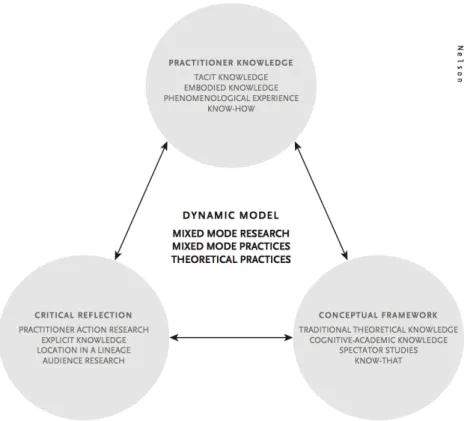
Figure 1: Nelson's multi-mode epistemological model' for PaR (2006)... 40
Figure 2: Information Sheet #A Free Sessions... 51
Figure 3: Information Sheet #B: 'Technospaetzle'... 52
Figure 4: Information Sheet #C1 'MindYourOwnBusiness'...53
Figure 5: Information Sheet #C2 'Projectionist Orchestra'...54
Figure 6: Information Sheet #C3 'SUM'... 55
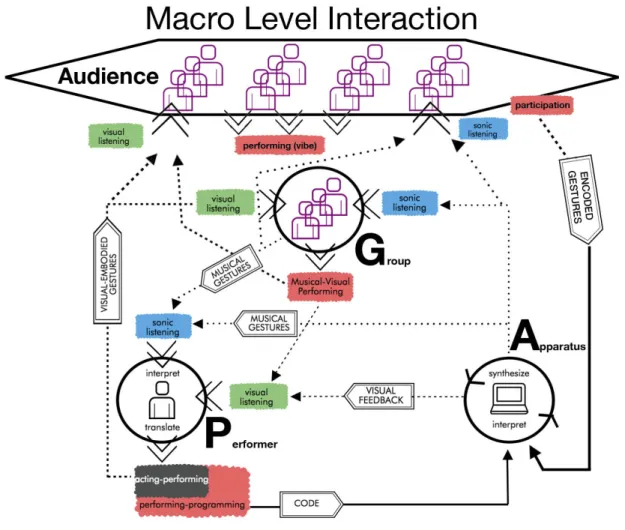
Figure 7: Macro level interaction in performance... 80
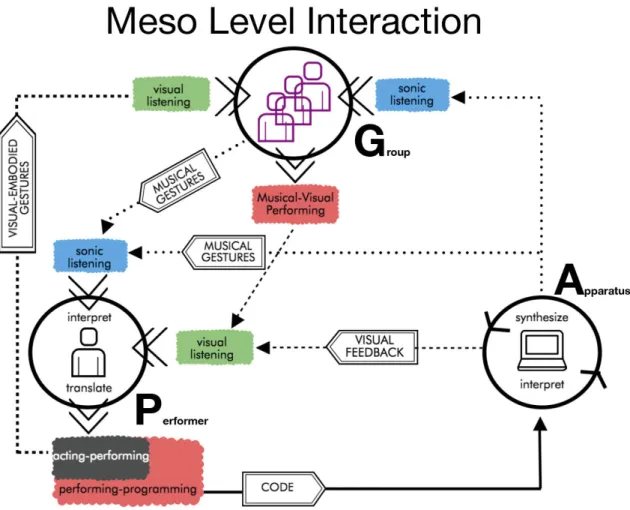
Figure 8: Meso level interaction between performer (P), apparatus (A) and group (G)...90
Figure 9: Text piece 'MIMICRY' (2013)... 107
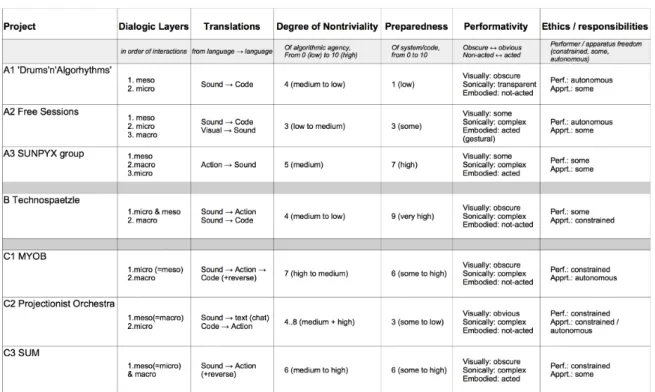
Figure 10: Summary of Dialogic Qualities in Selected Cases... 134
Figure 11: Structural Model of Flow... 137
Preface: How to Approach this Thesis
This Practice-as-Research (PaR) thesis consists of a written component, video footage, an archive of program code, as well as the Dialogic Coding practice itself. The written component is structured in six chapters which introduce the practice, its lineage and artistic context, its conceptual and philosophical framework and a discussion of central aspects. The Appendix section extends this with a glossary of terms and documents from the development of the practice.
The practice is supported and evidenced by video clips given in web links. The complete list of clips can be viewed online in a youtube playlist.1 While this video
footage serves to give a better impression of the practice and its aesthetics, the text is intended to be comprehensible also without these recordings. Furthermore, some of the code files which were used for performance can be found online.2 This
code does not work as a standalone: it first requires the installation of the elementary software (SuperCollider, version 3.7 or higher) including a few external libraries ('quarks'). The details for this can be found in the code files. Finally, as the most recent document of Dialogic Coding practice, the recordings of the performance before the oral PhD examination can be viewed online as well.3 This
includes six videos which present practice 'demonstrations' of the main concepts discussed in this thesis. The recordings connect to the writing as follows:
• video 1 & 2 interpret the roles of listener and programmer as discussed in chapter 4.1 and 4.3;
• video 3 comments on the finding a shared pulse or meter between human and nonhuman improvising agents. This refers to the general challenge of finding a balance between the individual freedoms of all agents which is a topic throughout the thesis (see summary below or chapter 6.3);
• video 4 & 5 interpret the concept of the apparatus and its implications on the micro (individual player) and the meso (group) level. This links to chapters 1.1.2; 1.3.2; 3.5 and 3.6;
• video 6 is a group improvisation following up on the idea of identity as dialogically constructed. This corresponds to chapters 1.3.3 and 5.
1https://www.youtube.com/playlist?list=PLKRUGJaqJkAflS7EXUfK8RpL1_s-ykeB_ 2http://jonashummel.de/archives/code/
The page intentionally left blank
0 – Introduction
This thesis explores the development, the conceptual framework and the practical experience of a mode of live computer music practice which I term Dialogic Coding. This practice comprises improvised interactions between a programming performer, her apparatus – the programmable yet independent musical instrument4
– and other human improvisers following the concept of a dialogic relationship (as a compositional strategy).
0.1. The Role of the Writing
The function of this thesis, as complementary writing to the research-practice, is to provide access to the new 'knowings' emerging from and contained in the Dialogic Coding practice. Therefore the practice will be positioned, clarified and analysed according to the ‘knowings’ and insights which have arisen by and through making work in this way. Through this process Dialogic Coding is presented as a distinct mode of ‘doing-thinking’ (Nelson 2013) – a performance practice which is a form of generating not only works of art but also knowledge in itself.
The main insight gained through the development of the research practice is that the dialogic approach may produce new and innovative musical results and offer a reflexive way of making music for a performer. The Dialogic Coding practice provides on one hand immersing but on the other hand challenging and distancing experiences for the performer and, through this, facilitates a transformative process guided by learning and discovery which contributes to a development of the performer's identity. The main challenge for the performer who works towards dialogic relationships withall agents participating in improvised group performance is one ofmediation and negotiation: to create a balance between the autonomies of all agents involved, the human as well as nonhuman. This is the new dialogue-oriented musicianship of the 'algorithmic'5 performer.
The emergent knowings in this thesis address the gap in current computer music scholarship by providing a conceptual approach for improvised performance in
4See section 1.1.2 for an introduction and explication of the term 'apparatus'.
5The use of the term 'algorithmic' here is intended to highlight the aspect of the performer as an inventor of computational structures which the apparatus transforms into music, thus, it points to the shift of action in performance from physical to intellectual. To make music in this way implies not only to 'perform' it on a musical instrument but also to invent and articulate it in an abstract form
practice-based form in three ways: Firstly, the conceptual framework of dialogue (combining ideas of Buber, 1965; 1970; Bakhtin, 1981; Flusser, 2011) is brought into play with a creative practice resulting in a new analytical perspective6 which is,
following Nelson (2006) 'innovative' on the level of research. Secondly, the thesis represents an addition to ethnographic research in the field of live coding performance practice (Magnusson, 2014; Mori, 2015). It presents 'insider insights' into the typically obscure creative processes taking place through interactions between a programming performer and her programmable musical instrument in situations of group performance. It thus intends to provide access for an outside reader to the 'tacit knowledge' of the practitioner (Nelson, 2006) contained in the practice. Thirdly, this thesis examines the human-computer interaction from the standpoint of the programming performer and follows a focus on roles, identities and relationships between human (performers) and nonhuman (apparatus) agents which are created and changed as part of the performance7. As an outcome, this
research offers a set of intellectual, organisational, and technical strategies for responsible live computer music performance in the pursuit of 'genuine' dialogic relationships (an ethics of the practice). Lastly, the intention of this project is furthermore, that the insights developed may become valuable beyond the context of music/arts performance for other situations of everyday human-computer interaction as well.
0.2. The Research Inquiry
This research project pursued the application of theoretical ideas of dialogue to live computer music performance with a programmable musical instrument through a practice-based approach. The terrains explored in the developed Dialogic Coding practice in practical terms are new creative musical-technological interactions, an attainment of immersive states (flow), the encounter of challenges for one's habitual ways of acting/thinking and a new identification with both the technological other and the improvising group. In one phrase the main research question for this project can be expressed as:
6 This includes new understandings of conceptual terms (i.e. dialogue) obtained from applying them in the context of human-apparatus, or nonhuman, interaction.
7With this orientation it can be considered an actor- or performance-focused more than a technology-focused research project (even though it is necessarily founded on programmable technology).
Does a dialogic approach to the computer as musical instrument in situations of group improvisation enable interactions which provide possibilities for reflexivity and transformation for the performer?
The aspects which need to be examined further in this thesis are:
• How can the computer be a dialogic partner? In which symbolic or non-symbolic forms does this manifest? How is the musical interaction with other performers dialogic?
• Which prerequisites and skills does a performer need to participate in the dialogic interactions with computer and, simultaneously, the improvising group?
• How exactly does Dialogic Coding practice create possibilities for reflexivity and transformation? What situations or conditions make these possible? What kind of transformations take place?
As a conclusion I propose a set of ethics or guiding principles for Dialogic Coding practice: theresponsibilities for dialogue of the performer (see section 4.5 and 5.3).
0.3. The Role of The Practice
The projects of the Dialogic Coding practice created as part of this doctoral project, hold the emergent knowledge and contribute each a distinct portion of the general experience (visual- and sonically), to the main research inquiry. The arguments pursued are necessarily exclusive in their nature – they do not attempt to condense and encompass all that is present within the work. Similarly the video recordings of performances referenced throughout the text do not attempt to present the full experience of a Dialogic Coding performance event but singular aspects of a complex whole. In the same way the recorded examination performance appended to this submission demonstrates a selection of partial aspects or 'knowings' from this thesis.8 This selectiveness reveals my personal
interests, engagements as well as frustrations with the practice I developed, while at the same time working towards its articulation as new knowledge in this written form.
As a practicing researcher I am privileged to speak and criticize my own work from the double perspective of being 'inside' as well as outside of the process. To
8See the previous section 'How To Approach this Thesis' and the list of online resources for the recordings (appendix, section 7.1).
counteract an overly subjective account however, this writing draws on a range of voices, perspectives and analytical moments in time to create a productive discourse which articulates the insights and knowings from this research project. These voices are in the form of personal journal reflections, audio/video documentation of past performances or rehearsals, informal conversations with collaborating improvisers and participating audience as well as the voices and practices of theorists and practitioners whose ideas and work resonate with my own.
0.4. Structure of the Thesis
Structurally, the writing begins with an overview of the Dialogic Coding practice, its ontological form, the modes of creation, underlying theoretical aspects and terms, and how it is positioned in the context of other practices. This serves to draw out resonances and differences with the work of others and make clear the intentions of Dialogic Coding practice. The second chapter outlines the methodology used in this project, and shows how its concepts have been applied within the making of the practice. It presents an overview of selected examples from my practice which serve as a reference in the discussions of the subsequent chapters. The chapter further expands on theconceptual framework of Dialogic Coding practice by introducing the the history of the terminology use and the philosophical ideas in more detail.
The more discursive sections of the writing follow in chapters 3, 4 and 5. Chapter 3 focuses on the different communicative interactions in performance, with the computer instrument as well as with the other improvisers, and whether these are dialogic in nature. Chapter 4 retraces the position of the performer to identify the distinct responsibilities for dialogic interaction, particularly in relation to the programmability of the musical instrument. Chapter 5 explores how Dialogic Coding is a reflexive practice and enables transformative experiences for the performer by revealing the factors which may facilitate or inhibit these. Finally, the conclusion draws together threads from all chapters towards a new formulation of Dialogic Coding practice in order to mark the contribution this thesis offers to the field.
In the appendix (section 7) the reader is provided with a glossary of the central terms such as 'functionary', 'programmer', 'dialogue' or 'nontriviality'. This is followed by a list of available documentation audio-visual material online (see
section 7.2) and completed by selected notes and journal entries from the development of Dialog Coding practice, i.e. early critical reflections, documents from rehearsal processes such as scores, conversations with participants.
0.5. Summary of Outcomes
Within this thesis Dialogic Coding is presented as a practice providing new points of experience within the field of contemporary live computer music performance and thus represents a form of new knowledge. The insights gained through 'doing' Dialogic Coding are located in a number of positions within the thesis as a whole. For ease of reference I categorise and position them here as follows:
• The Dialogic Coding performance practice – This is a distinctive and reflexive practice, which through its doing produces insights (an epistemological tool). It is in itself a form of new ‘knowing’ in the field, produced by the application of a philosophical framework to a field of practice. See chapter 1 for an overview and lineage, chapter 3 for an analysis of its performance situation, chapter 5 for a discussion of its reflexive qualities. How Dialogic Coding is generated and practised will become clear throughout the whole writing based on the given references.
• Responsible programming in dialogic code improvisation – a specific form of making music with a programmable musical instrument based on improvised interactions. This approach brings together and extends both the categories of live algorithmic composition and of improvised electronic music. Furthermore, it introduces an ethical perspective for the programming performer following the intention to facilitate dialogic relationships. See chapter 1.2 for overview; chapter 4 for the role of the performer; chapter 5.4 for conclusions; and code examples online.9
• The algorithmic musicianship of the performer – a deconstruction of the performer's experience into four central role(s) and their re-synthesis into a new 'dialogue-oriented' musicianship which intends reflexivity and self-challenge by ways of doing the practice: the performer's virtuosity for dialogue. See chapter 4 and 5.4.
• Insider insights – new personally informed perspectives on the process of creating and performing with programmable instruments in live situations and within a group of other performers. See Chapters 2 and 5.
• References for Dialogic Coding practice – This is the recorded documentation of the practice. It comprises rehearsals and performances10,
categorised into three approaches: (#A) free improvised sessions, (#B) structured and rehearsed improvisations, (#C) improvised performance with composed/programmed systems. The example 'cases' referred to in this writing are the following:
◦ The piece MIMICRY (2013)
◦ The Drums'n'Algorhythms session (2013)
◦ The Kuehlspot sessions (2014)
◦ The SUNPYX project (2014)
◦ The Technospaetzle project (2014)
◦ The pieceMindYourOwnBusiness (2013) and other performances with the Birmingham Laptop Ensemble (BiLE)
◦ The piece Projectionist Orchestra (2014-15)
◦ The SUM project (2014-15)
◦ The recording of the 'Live Dialogic Coding' performance before oral examination (2017)
A detailed overview of these can be found in the 'information sheets' in section 2.3. In addition, links to excerpts from performances online will also be given in footnotes in the discussion. A complete list of all online repositories for these references (including relevant program code) can be found in the Appendix.
10A detailed list of all the online resources with documentary evidence of my practice can be found in the Appendix 7.2.
1 – Dialogic Coding Practice and its Lineages
This chapter serves to establish the main concepts of my Dialogic Coding practice and position it within a lineage of relevant practices. The first three sections introduce its three main aspects: a) the situation of group performance with a programmable musical instrument which serves as the framework for the practice, b) the processes of creation and interaction in this situation and c) how this practice becomes a way of knowing on the basis of dialogic interaction. Dialogic Coding will then be positioned within a lineage of other related music and performance arts practices. Through such comparisons with resonant works in the field the distinctive nature of this approach will be delineated which at the same time represents the new knowledge gained through practice. The term definitions and context given in this chapter take up the main threads of inquiry and reflection presented in the introduction and will be elaborated on in subsequent chapters.
1.1. Setting The Frame
This research-practice has been developed in the situation of group performance, which brings together the improvised interactions between the performer and her interactive musical instrument with interactions with a group of improvisers.
1.1.1 Live Ensemble Performance
Dialogic Coding practice was purposefully developed in a context of group performance and collaboration with other improvising musicians to challenge the strong focus of the coding performer on the computer screen. The dialogic approach with an attitude of listening being (see section 1.3.1) demands direct attention towards allagents in the situation: the group of human improvisers as well as a performer's own interactive apparatus. Additionally, in those events featuring a co-present audience, the attention is simultaneously directed to these outside listeners or towards the atmosphere in the performance space in general. Hence the flows of communication and interaction create multiple dialogic spaces between different partners in parallel. I have categorized these in four main levels. First, there is the asynchronous Meta level. Communication here takes place between a performer and the history and traditions of her performance practice in the form of musical sounds, performative gestures as well as direct or indirect
references in the program code (less visible).11 Second, there are the three levels
of synchronous communication between co-present partners: The Macrolevel contains the communication between performer and audience in the form of an 'atmosphere'12 (Böhme, 2013) in the space. TheM e s olevel refers to the
exchanges between performer and other human improvisers in the group in the form of musical sounds, embodied or visual gestures (looks, nods etc). The Micro
level contains the communication between performer and her programmable yet independent instrument in multiple forms (visual, embodied, sonic and written code/data). This last level is a distinctiveness of live computer music performance with interactive instruments in general and the main site of analysis for this thesis. The details of this situated framework, particularly towards how the interactions on any level might be or become dialogic, will be analysed in chapter 3 in more detail.
1.1.2 The Apparatus: a Dialogic Musical Instrument
The musical instrument is particularly significant in Dialogic Coding practice because it is a programmable tool for the performer but also functions as a potentially autonomous partner in performance to be interacted with. Only this changing character and functionality makes the reflexivity and transformative experience possible. The complex role of this instrument termed 'apparatus'13 in
this thesis, stands in contrast to a 'traditional'14 musical instrument. While the latter
can be regarded as an extension of the performer's body who, as result of long
11This form of interaction between performances through time and space follows Bakhtin's (1981: 276) interpretation of dialogue, when he writes: 'the living utterance, having taken meaning and shape at a particular historical moment in a socially specific environment, cannot fail to brush up against thousands of living dialogic threads, woven by socio-ideological consciousness around the given object of an utterance; it cannot fail to become an active participant in social dialogue.' 12Böhme (2013: 263) defines the 'atmosphere' in the context of performance arts and theatre as 'quasi-objective emotions, spread out into the space in indeterminate ways' which happen in a specific time and require a perceiving subject to exist. It is the 'being in-between' and its tendency to bring the subject into a particular mood which is the particularity of an 'atmosphere'. This position is grounded in the philosophical understanding of listening as proposed by Nancy (cited in Heble and Caines, 2014: 21): 'To listen is to enter that spatiality by which, at the same time, I am penetrated, for it opens up in me as well as around me, and from me as well as toward me: it opens me inside me as well as outside, and it is through such a double, quadruple, or sextuple opening that a "self" can take place.'
13The term 'apparatus' in this thesis follows Flusser's understanding of a 'plaything or game that simulates thought (…) [or an] organization or system that enables something to function' (Flusser, 2000). It describes a structure which operates on a symbolic level, transforming thoughts, in automated and programmed ways. In this thesis the term 'apparatus' refers to the device(s) to make music with – ontologically (as the object on stage with all its external devices, controllers etc.) as well as conceptually (the algorithms and rule-based procedures inscribed through the activity of programming).
years of repeated rehearsing, plays the instrument in a virtuosic manner to express or convey ideas contained in the music, the former does not extend the performer's body in the same way. On one hand the interfaces built into the computer typically involve small and hardly visible body gestures (e.g. with the hands and fingers when typing), on the other hand the apparatus extends the performer in an intellectual way (again hardly visible). Because of these problems of opacity, it is necessary to deconstruct the various technological media and interfaces which make up the apparatus and 'follow the actors' (Latour, 1987) who invented it: the programming performer.
The apparatus comprises a dynamic assemblage of different objects and materials which affords the performer multiple modes of embodied as well as intellectual interaction. Ontologically, this assemblage centres around the laptop computer with its built-in keyboard, touchpad and screen. It is extended by a variety of external controllers or human interface devices (HID) ranging from MIDI controllers (o.e. a box of faders), to gamepad, mouse, or other self-built HID. Often there will be also additional external audio hardware used which sends the audio output generated by the computer to an amplification system in the performance space. The form and combinations of these objects in the practice have shifted throughout the project and are different for each of the examples provided in chapter 2. In each of these interfaces a different mode of interaction takes place:
• the computer screen affords visual monitoring of displayed information (feedback on running processes or communication with other human players);
• the computer keyboard affords the pressing of specific keys (for activation/deactivation or altering of running sound processes, for writing code words to create new algorithms);
• the touchpad/mouse pointer interacts with graphical user interfaces (GUIs) in both of the ways mentioned;
14The distinction between the apparatus and 'traditional' musical instruments serves to separate two principally different groups of objects to make music. 'Digital music instruments' (DMIs) are
systems for controlling digital sound synthesis (after Wessel,Wright and Schott, 2002) and typically exist of a multi-layered setup which 'begins with some form of input from a human performer and results in audio output, usually via algorithmic sound synthesis on a laptop computer' (Emerson, 2015: 1). The main differences are that a DMI can have any number of different input-/output relationships, as determined by the mapping design and the sound is electronically produced and needs amplification to be audible. The apparatus qualifies as a digital music instrument in principle, however, it includes the sound-generating computer and is also a conceptual term.
• the external controllers afford specific embodied and gestural interaction which typically control dedicated sound processes running in the computer.
• In all cases the audible sound plays an important role in the feedback loop which drives the evaluation of previous actions and decision-making on future actions of the performer.
The way how these interfaces with their respective modes may be interconnected in a functional structure is key for the improvised human-apparatus interaction. One of the distinctions in Dialogic Coding practice is the fact that through live coding15 these interconnections can and shall be changed dynamically in response
to the affordances of any moment in a performance. Thus, the apparatus as a whole 'ecosystem' of interacting objects is only momentary stable. Its structural changes are themselves subject of the improvised performance. In this way the apparatus provides the possibility to actually change and shift the very frame of performance within which the practice operates.
1.2. Processes of Creation with a Programmable Musical Instrument In this section I will highlight the processes of creation underpinning Dialogic coding practice: Exactly which materials are composed, deconstructed and re-composed in real-time? How does this happen and in which modes of interaction? Such processes are not fixed but have shifted throughout the project. The features which have remained will be introduced here to indicate how this work is a distinctive computer music practice.
1.2.1 Materials
The material most often used in my performances are fragments of SuperCollider (SC) code which specify single event synthesis sound processes (SC SynthDef objects or 'synths'): In addition, in some projects pre-recorded sounds are used as samples. Both of these elements are then played (triggered and sequenced) live through programmed event patterns (with SC Pdef/Pbind Objects). These patterns can be written live during performance and further be flexibly re-used with different parameters to achieve changes in the sonic material or the musical aspects of timbre, amplitude/dynamics, rhythm or others.
15'live coding' describes the practice of writing algorithms during performance and changing them while they are running. As a performance practice within live computer music it works with generative structures (sounds are created automatically/algorithmically by the computer) but includes a live programming performer who 'navigates' the algorithms on a musically feasible course.
Another type of code used are specifications for continuous synthesis sound processes (as SC Ndef objects). They are 'played' through activation and then changing the input parameters of the process either through manipulating the interactive elements on a chosen interface (the direct, embodied way of playing). Alternatively as well: processes may changed by a programmed automatic pattern (the algorithmic way of playing
embodied interaction (on some HID) or by programming a pattern which changes the parameters through automation (meta approach).
While in the early development of this research-practice my activities as performer were focusing more on the aspect of sound design and timbral development of the actual sonic material played, this has shifted to how these sounds are activated and arranged in time during performance. The development of Dialogic Coding practice produced numerous fragments of program code from improvised (live coding) studio work (SC patterns, synths, Ndefs) which I have collected and documented.16 Similar perhaps to how an improviser with a traditional acoustic
instrument trains her memory through practice, I have trained my own, however relying on the artificial memory of the apparatus in the form of an organised code archive accumulated during in the course of this project.
In a performance a large part of the algorithmic structure through which the sounds and patterns are activated is pre-programmed. In Dialogic Coding practice I have mainly used default GUIs (i.e. The ProxyMixer, TdefGui or PdefGui objects from SC-JITLib) for screen- and pointer-based interaction. Furthermore, the computer screen provides visual feedback about running sound processes and the states of interface devices. The functionality of interactive elements on external controllers (i.e. the knobs and faders of the KORG NanoKontrol2) are also pre-programmed to specific functions which acts as a proxy between the interface and the currently running sound processes (using SC MFunc objects). These functions can be flexibly assigned and re-assigned to perform any kind of sound-controlling action. The benefit of this is the possibility to control many different processes in parallel or navigate a single complex sound process with many control parameters by means of only few interaction elements. The improvisations in Dialogic Coding performance usually start from some prepared algorithmic structure offering
16See online for an archive of program code used in Dialogic Coding practice:
selected interfaces for direct interaction with particular sounds. This structure for interaction may then be rearranged in the course of a performance.
Concluding, I subsume both the code fragments which specify the actual sounds as well as the code which specifies the flow of control through human-apparatus interaction under the term 'pre-existing elements'17 (PEs). In Dialogic Coding
practice the activation, combination and re-combination of these elements is the subject of performance.
1.2.2 Dialogic Code Improvisation
From the perspective of creation the apparatus has worked for me not only as a tool to develop and articulate a compositional idea in a coded form but also as an instrument to directly play a musical idea or gesture, that is to activate sound events which are prepared for this interaction. These two forms of instrumental interaction are the main modes of performing in Dialogic Coding practice: the mode ofprogramming and that of playingthe apparatus, which I term the mode of 'functioning'18 in this thesis. These modes correspond each to a 'role' of the performer which I outline in the following section 1.2.3.
Based on the concept of dialogic interaction I have developed a compositional practice, or a way of creating and performing in these two modes – the dialogic code improvisation. In the local context of this project 'composition' is understood as an activity which produces the conditions for performance – in form of the apparatus' algorithms – through acts of thinking and programming. The creation of the music in performance then happens through the interaction with these materialised conditions in 'improvised' way.Compositionstands however not opposite toimprovisation but describes another perspectives on the same process, comparable to Nettl (1974) distinction of 'rapid' and 'slow composition'. Following Butler (2014: 120) I describe the musical creation with the apparatus as a production of sonic outcomes on a continuum between those 'that are specified onlyin time' (of performance) and 'those that are maximally specified ahead of
17Butler (2014) proposes his concept of preexistent elements as a broad term to 'be applied flexibly and to address a wide variety of phenomena' (i.e. the fact of using a 'readymade' (Sawyer, 2003) of musical structure, or – similar to Pressing's (1988: 52) 'referent' – a structure 'which guides and aids the production of musical materials'.
18The 'functionary' is a term describing a specific way of human-apparatus interaction in which the human only 'calculate[s] and compute[s] instructions as instructed' (Flusser 2011:72), in other words 'to function' means 'to act' as intended by the inventor of the computer program (the programmer). Thus a functionary can be considered part of the apparatus' program.
time'by arranging the aforementioned PEs. Dialogic Coding practice works with the approach of 'bricolage programming' (Turkle and Papert, in McLean, 2011) but with the intention of creating a dialogic relationship. In bricolage programming the process of composing (in real-time) does not follow a preconceived plan but it navigates through the algorithmic structure by arranging and recombining readily available code material (the bricolage aspect19) in response to the immediate
affordances (i.e. the generated sounds). Live coding can be regarded as a literal form of bricolage programming (see section 1.4.3). In dialogic code improvisation this approach can be used both as an improvisational method to develop a 'system-as-composition' and as an interactional strategy for exploring the possibilities in a system or interface. It works as a strategy for live performance as well as for private studio composition and practice. The dialogic aspect now extends this type of improvisation with code by giving a direction in which to travel: towards the discovery of the new and unexpected – in the musical events, the group-interaction, or the apparatus-interaction. This is has its origins in the basic concept of dialogue which pursues an open-ended encounter of the 'other' in mutual exchange (see also section 1.3.1 below). A prerequisite to 'discover' in this way is some degree of indeterminacy within the apparatus logic which describes the production of unpredictable and unexpected results through interaction. This is the feature of 'nontriviality' in the apparatus outlined in section 1.3.2. below. Consequently, dialogic code improvisation strategically utilizes chance or random-decision making operations in the mode of programming provides to create this kind of indeterminacy. When I interact with patterns or continuous sound processes I have often used code objects which generate random numbers based on probabilities within defined ranges. Once inserted into the algorithm, I then experimented with the values for probabilities, their defined ranges or moved these objects to a different position within the algorithmic structure – all guided by the general intentions: to discover unexpected sounds. An additional means to introduce uncertainty into the system is to improvise with code objects the performer knows little about (and thus cannot predict its outcomes). The programming environment used in this project has provided abundant possibilities
19Anthropologist Levi-Strauss termed the 'bricoleur' to describe practitioners who 'do not move abstractly and hierarchically from axiom to theorem to corollary (…) [but] construct theories by arranging and rearranging, by negotiating and renegotiating with a set of well-known materials' (cited in Turkle and Papert, 1990: 136).
for sound synthesis or interaction design as to always offer more unknown terrain for discovery. Moreover, there is the possibility to simply invent new 'black boxed' code objects which function in indeterminate ways. Thus, the flexibility of the environment does not only help to make actions easier and quicker by means of automation, but it provides at the same time the means to make the interaction more intricate. Dialogic code improvisation describes improvised interaction with building blocks of code which may be brought into effective action on the direct level of sound generation but also on the level of the interface, or the 'generation' of user interaction.
T h i suser interaction describes the complementary side of dialogic code improvisation: the 'functioning' mode of interaction. Depending on the particular interface, the interaction takes on a more embodied and gestural form. Dialogic code improvisation is now actually a 'dialogic interface improvisation' in which the performer explores the interface, investigating all its elements in the pursuit of the dialogic purpose: the discovery of the unknown. The main difference to the programming mode can be found in the amount of algorithmic control the performer holds. The question whether there really exists a boundary between these two modes enacted by the same person is legitimate: Perhaps the adequate picture is this: The performer is in fact in a functioningmode of interaction when directly live coding in rapid cycles of code execution, sonic feedback, and re-programming the next idea into the algorithm. The planning horizon is short, the 'navigation' follows mid-course corrections, the interaction is improvised, immediate and flexible. But whenever she raises her head above this live coding action to look into the distance with a more strategic orientation, this becomes a programming mode of interaction. Thus, the ontological activity of programming (i.e. the typing of characters and code words into a computer) does not automatically indicate a creative mode of programming. The difference is in the specific consciousness or focus of attention a performer follows in any moment. To navigate on course in dialogic code improvisation it is necessary to listen in a specific way, attending to a variety of inputs in the natural and the technological environment. This enables the performer to take various routes towards dialogic encounters – not only with the apparatus but also with the other human improvisers. Furthermore, it is helpful to have material ready-at-hand. For example by creating a pool of code fragments which allows easy retrieval and adding of
new elements to create the desired indeterminate structures and change them on-the-fly. Through this I was able to respond quicker to external inputs or introduce new challenges when required. The bricolage programming approach, situated within group improvisation, have shaped dialogic code improvisation into the direction of working with small, and repeated, but immediately audible changes rather than taking time to write lengthy code blocks which enters the improvised situation much delayed. Taking time to develop the building blocks and structures of code has happened during studio preparation or in private group improvisations with exactly this purpose.
1.2.3 Performer Roles
A characteristic of Dialogic Coding practice and a consequence of this mode of code improvisation is the specific musicianship for the performer which comprises several attitudes akin to De Bono (2000) concept of the 'thinking hats'20. I have
termed these the roles of the algorithmic performer(see chapter 4). Even though they are enacted by one and the same person in reality, it is helpful to look at these four roles separately in order to better understand the creative processes in this practice and their relation to dialogue.
Following the precondition of listening for dialogue (see section 1.3.1) the first and basic role is that of thelistener. It is present at the outset of any performer action and establishes the foundation on which decisions for actions are made. Second, in the direction of the outside audience the performer is concerned with a representation of ongoing human-apparatus interactions. This role I have termed t h eactor. It serves to communicate the negotiations of power, control and influence which are otherwise hidden from the outside. I need to note that in this research project I have focused on this attitude in only few projects (i.e. the SUM project). Additionally, there are the two roles previously mentioned. The functionary who interacts with the apparatus interfaces according to its possibilities. When performing in this attitude a dialogic relationship with the apparatus can be experienced in the most original understanding of the concept, that is to regard the technological other as an independent subject with whom the performer can interact but whose response she is not able to completely predict. Finally, there is the inventorof technology, what I term theprogrammer21, who invents the algorithms of the apparatus or the rules according to which the system
operates. The scenarios for how a 'dialogic coder' acts in performance are various: as a programmer she may me be focused on the invention of apparatus logic (while the system generates sound automatically) or as a functionary she may interact with the interfaces provided from the same logic to influence the sound generation directly/manually. This conceptual divide is further narrowed when the performer 'interacts' with the programming language in a functioning mode while simultaneously inventing new rules or when she discovers new possibilities for interaction by means of creative (or dialogic) exploration of a given interface. This highlights the fundamental paradox of Dialogic Coding practice which is at the same time its potential: The performer can interact dialogically with an independent other (this may be the apparatus but also the other improvisers) while she may alsoinvent this other to create new possibilities for dialogue. In other words: the process of performance describes a circular course starting from the invention of an autonomous nonhuman partner (possibly prior to performance) which then reveals new perspectives in the dialogic interaction with a functionary-performer which in turn motivate the programmer-functionary-performer to change the apparatus by inscribing her new intentions into it which are conditions for future transformations through practice. It is in this comprehensive and entangled way that the performer in Dialogic Coding practice develops a new musicianship in the pursuit of the unknown and unexpected – amalgamating the complementary roles of inventor and user of technology, as well as a listening focus and an embodied acting perspective. The apparatus becomes cocreative in this process in how it provides the medium through which this musicianship is developed.
1.3. Dialogic Coding Practice as a Way of Knowing
The intention and a consequence of the dialogic approachis facilitate reflexivity and transformative experiences through practice for the performer. This happens in the form of encountering challenges in the improvised interaction which in turn may produce such insights. The encounter of unexpected events poses challenges in the interactional process which produce moments of reflection (listening and reconsideration). This reflection enables the performer to reconsider her action and learn about the process.
21Flusser (2011) originally uses the term 'envisioner' to describe the 'dialogic programmer', a complementary role to that of the 'functionary'. But since his concepts were developed in a scenario of producing 'technical images' (that is images and sounds) this term seemed inappropriate in the purely musical context of this research.
To make clear the terminology of dialogue used in this thesis, the following section will sketch out the underlying philosophical ideas. A more complete elaboration of the conceptual framework follows in chapter 2.4.
1.3.1 Dialogue/Dialogic
Dialogue or a dialogic relationship22 is understood in this thesis to refer to a
specific way of interaction between two autonomous subjects – communicating through some form of symbols in any of the media: image, gesture, sound, or text. This requires each tolisten and respond to the other in an authentic way and without prejudices. In the conceptual framework of Dialogic Coding practice the ideas of Martin Buber, Mikhail Bakhtin and Vilém Flusser are brought together and complemented by perspectives from cybernetic theory and improvisation studies. This framework is then applied to practice in a distinctive way: following the assumption that a dialogic relationship with technology is possible and may (or needs to) further be programmed to emerge. A genuine dialogic relationship is described by Buber (1965b: 78) as:
I become aware of him, aware that he is different, essentially different from myself, in the definite, unique way which is peculiar to him, and I accept whom I thus see, so that in full earnestness I can direct what I say to him as the person he is.
In order to apply Buber's ideas to HCI it is necessary to create and perceive the technology as an autonomous subject. The apparatus in this practice is, strictly speaking, apseudo-subject23 for it does not perceive itself as autonomous in the way a human being would. This scenario classifies to what dialogic theory terms an 'unequal' relationship without 'mutuality'24, implying that the partners are not
perceiving and 'confirming' each other in the same way. It is obvious that a relation between an autonomous human subject and the programmed apparatus is of a
22Bakthin's theoretical concepts of dialogue are rather heterogenous and have also been referred to by scholar with the comprehensive term 'dialogism'. I avoid using this term here because it 'can mean, and indeed has meant, many things to many critics, sometimes without reference to Bakhtin' (de Man, 1983: 100)
23I term this 'pseudo-autonomy' for it is not completely independent and self-regulated in the complete sense of a human being, that is: a nontrivial or self-regulating system. Still, the term 'autonomy' or 'independence' is used without constraints to refer to the functioning of the nonhuman agency.
24Phillips (2011: 32) state that 'through presentness, authenticity and confirmation, mutuality can occur – rather than the instrumentality of subject-object relations. From mutuality, dialogue emerges. (…) We can only have a degree of mutuality, even in unequal relationships.'
different type. Based on Buber's perspective that a subject-subject relation is possible to nonhuman objects, i.e. a tree,25 Dialogic Coding practice needs to
invent the nonhuman agent with a kind of autonomy which brings the encounter closer tomutuality: by creating a nontrivialsystem (see next section). Presuming that the performer holds the capability to change how the nonhuman pseudo-subject is able to relate, an opportunity and a responsibility towards the facilitation of dialogue as inventor and the participation in dialogue as autonomous subject emerges. Throughdialogic code improvisation the performer is able to work with this dilemma in creative and productive ways by means of creating varying degrees of technological pseudo-autonomy efficiently.
Any dialogic relation rests on an ability to listen in an attentive and present way, what Lipari has termed an attitude of:
listening being [which] requires a willingness to suspend already familiar conceptions, beliefs, and understandings. (…) This form of inner emptiness facilitates a focus and attention that enables one to really absorb the other’s words beyond the confines of what has already been thought, believed, or understood. (2010:356)
Again transferring this to an HCI situation the question is: What does a listening being towards the apparatus mean if the other 'speaks' not only in the medium of musical sounds (which allows for ambiguous meaning already), but also in other coded forms such as the feedback from the programming language or the computer's operating system? And what does a 'listening apparatus' imply?
It becomes clear that alistening being attitude in Dialogic Coding requires a variety of modes of perception, understanding, and interaction (embodied, intellectual, visual and sonic) in order to enable parallel dialogic relations with both the human improvising groupas well as the nonhuman apparatus in all its interfaces. Consequently, in this thesis the performance of the attitude of listening is understood much more broadly beyond the auditory domain alone, rather in a phenomenological sense of a being present and attending towards the entire perceptible environment and all objects therein – the audible, visible and tangible.
25Buber (1937) gives the example of experiencing a tree in its single elements through an 'I-It relation' as opposed to encountering the tree in its wholeness through a dialogic relation, that is 'to glide with one’s own feeling into the dynamic structure of an object, a pillar or a crystal or the branch of a tree, or even an animal or a man, and as it were to trace it from within, understanding the formation and the motoriality of the object with the perceptions of one’s own muscles.' See section 2.4 for more detail.
This understanding is described in detail in the algorithmic performer's role of the listener, expanded on in section 4.2.
1.3.2 Nontriviality
A dialogic relationship is based on the independence of both partners. The behaviour and responses are autonomous and not predictable by the other. This property is described by cybernetics – the 'science of control and communication, in the animal and the machine' (Wiener cited in Ashby, 1956) – as the 'nontriviality' of a system. Von Foerster (2003: 208) explains the two main systemic principles of trivial/nontrivial:
A trivial machine is characterized by a one-to-one relationship between its 'input' (stimulus, cause) and its 'output' (response, effect). (…) this is a deterministic system; (…) this is also a predictable system. Non-trivial machines, however, are quite different creatures. Their input- output relationship is not invariant, but is determined by the machine’s previous output. In other words, its previous steps determine its present reactions. (…) they are unpredictable: an output once observed for a given input will most likely be not the same for the same input given later.
Therefore, in order to function in a nontrivial way (as humans do), the apparatus needs to be programmed in a way which produces a new and different result for a given input. This may be done by means of creating some kind of feedback structure which takes the output of a calculation back into the next calculation, in other words: to build circularity into the system. In Dialogic Coding practice this concept forms the basis of a performer's compositional strategy for the programming interaction with the apparatus.
1.3.3 Dialogic Identity
The reflexivity of Dialogic Coding practice is directed/oriented towards transformation (i.e. processes of learning). Following the theories of dialogue any genuine dialogic encounter holds a potential to substantially influence each partner towards a transformation of her self-concept.
Genuine dialogue (…) entails a risk, the ‘danger’ that by truly listening to the other – be the other individual, a text, a work of art – that one might, indeed, be changed transformed cognitively and existentially (Mendes-Flohr, 2015: 3). This perspective points to how identity is determined intersubjectively – through interaction of subjects. Peeren (2007) differentiates further 'dialogic intersubjectivity' which acknowledges the existence of the other as differentfrom oneself.
Dialogic intersubjectivity marks dissonance and distance rather than harmony and closeness; it is not about recognizing the other as the same, but about respecting the other as different and taking responsibility for this difference. The other does not become an object, but is recognized as another subject. Dialogism means responding to alterity without negation or assimilation.
Kanellopoulos (2011:124) concludes from this that improvised music practices are not per se a dialogic form of music making but that this should be regarded as 'a consciously sought after condition'. It is not enough to bring different previously formed identities into contact, but to collectively create something new and thereby produce alterity. Transferring this conceptual view to the local context suggests that the dialogic approach may indeed offer ways to create and alter a performer's identity through the intersubjective interaction with technology. The precondition for this being that the apparatus is programmed in a form which can be 'recognized as other' (i.e. by implementing the principle of nontriviality).
1.3.4 Challenging and Immersing Performance
Suggesting Dialogic Coding as a reflexive practice in this form is based on the specific experiences I have made through making music in this way. A more autonomous musical instrument poses a challenge for the performer who interacts with this agent: it becomes uncertain whether she can express her intentions (the responses to the musical situation) in a direct way. In other words: the apparatus challenges the performer's musicianship and mediates her musical ideas. The interfaces of the apparatus transform into sites of negotiation where the performer's flow of thinking or embodied actions is supported or interrupted (i.e. a specific manual action produces an expected and desired change in the sound, a vaguely imagined abstract musical idea is realised in code and in this way refined and developed further). The states of consciousness encountered in these interactions may be described in Bakhtin's terms of 'empathizing' with or 'stepping outside' (cited in Kannellopoulos, 2011: 125). Accordingly, I describe the experiences in Dialogic Coding practice as states of immersion or ofoutsideness. Csikszentmihalyi's model of flow (2002) provides a theoretical frame which outlines the conditions for an immersion to emerge. Any performance event consists of many such momentary states which continuously interchange with each other. While an immersive state creates an experience of losing one's self in any of the activities of listening, functioning or programming, the outside state supports a critical reflection of one's actions and thoughts and thus, an opportunity
to act differently. The details of this will be discussed in chapter 5. In the development of my practice the challenging (frustrating but also engaging) experiences with a strongly independent apparatus may have hindered immediate expression of ideas in a creative or interactional flow but have sparked off new ideas in the attempt of resolving such conflicts. Similarly, the dialogic interactions with the rest of the improvising group may produce states of immersion and outsideness leading to a reflexive quality as well. One improvisational strategy may have 'worked' with one group of improvisers while it failed to produce musically interesting results (that is, with a potential for dialogical self-transformation) in another situation.
1.4. The Cosmology of Dialogic Coding
As suggested previously Dialogic Coding practice brings together a wide variety of topics:
• historic (interactive composing) and contemporary (live coding) artistic strategies in computer music performance;
• virtual (code) and physical/gestural (controllers) computer interfaces;
• instrument building through explorative performance (sound as well as interaction design);
• live algorithmic composition and free improvisation with pre-existent elements (code);
• the performance modes of programming (inventing, composing) and functioning (playing, acting) based on listening (observing);
• human and artificial improvisers (nontrivial and programmed systems);
• music-making as a self-reflexive and knowledge generating practice.
These topics bring in an array of contextual influences which will be delineated in the following paragraphs. According to the three main aspects of Dialogic Coding practice as outlined above I have grouped the lineages in three categories: (1) improvised (and dialogic) live performance, (2) algorithmic and interactive composition and (3) music making as a reflexive practice. An overlap between these categories is unavoidable for some established practices cross-over into adjacent fields.
The most influential lineage is the conglomerate of practices summarized under the umbrella term of 'non-idiomatic' or free improvised music (FIM) which provides a paradigmatic example of a dialogic approach to music making between