The Pragmatics of Confidence in
Perceptual and Value-based Choice
Nils Erik Tomas Folke
Darwin College
9/2017
2
Declaration
This dissertation is the result of my own work and includes nothing which is the outcome of work done in collaboration except as declared in this Preface and specified in the text.
It is not substantially the same as any that I have submitted, or, is being concurrently submitted for a degree or diploma or other qualification at the University of Cambridge or any other University or similar institution except as declared in the Preface and specified in the text. I further state that no substantial part of my dissertation has already been submitted, or, is being concurrently submitted for any such degree, diploma or other qualification at the University of Cambridge or any other University or similar institution except as declared in the Preface and specified in the text
3
Preface
The data from Experiments 1 and 2 in Chapter 3 was collected by Julia Ouzia, and some of the findings from this chapter were published in the journal Cognition in 2016 in collaboration with Julia Ouzia, Peter Bright, Roberto Filipi and Benedetto De Martino. I coded the experimental tasks, analysed the data and thought about the conceptual implications of the work. I was also the lead author of the article together with Julia Ouzia. Roberto Filipi, Peter Bright and Benedetto De Martino reviewed the manuscript. Julia Ouzia reported the results of the Cognition paper in her PhD dissertation at Angela Ruskin University. I have since then
substantially added to the analyses submitted in the Cognition article, so the version of this work presented in the Chapter 3 is at this stage my own.
Experiment 3, reported in Chapter 4 was collected by Catrine Jacobsen and the results of that experiment was submitted by Catrine Jacobsen as part of a dissertation for an MSc in Cognitive Science at UCL. The joint and extended analyses of Experiment 3 and Experiment 4 were published in Nature Human Behaviour in 2016 collaboration with Catrine Jacobsen, Steven Fleming and Benedetto De Martino. I did all of the analyses for the paper and wrote the article in collaboration with Benedetto De Martino. Steven Fleming and Catrine Jacobsen reviewed the manuscript. I have revised and extended the analyses of the chapter since publication, and the text as presented in Chapter 4 is my own work.
Experiment 5 was devised and designed in collaboration with Tor Tarantola. Annika Boldt and David Omar Perez provided input on the experimental design. I wrote the experimental task, Tor and I both collected the data and he has done the computational modelling associated with the study (not reported here). This experiment will primarily be presented in the Dissertation of Tor Tarantola for a PhD at the University of Cambridge. It is only included here to report a null finding of the relationship between GSF (a novel eye tracking measure I first introduced in the Nature Human Behaviour paper) and choice accuracy.
4
Publications
Portions of this thesis appear in the following publication
1. Folke, T., Ouzia, J., Bright, P., De Martino, B., & Filippi, R. (2016). A bilingual disadvantage in metacognitive processing. Cognition, 150, 119-132.
2. Folke, T., Jacobsen, C., Fleming, S. M., & De Martino, B. (2016). Explicit representation of confidence informs future value-based decisions. Nature Human Behaviour, 1.
5
Acknowledgments
First I would like to thank Benedetto de Martino for adopting me at a time when I was not particularly confident that I would finish this PhD. Joining the BDM Lab is certainly one of the smartest decisions I have made during my time in Cambridge. While on the subject of the BDM Lab, I would like to thank Tor Tarantola, Paula Kaanders, Annika Boldt and all of the other members of the lab for making me a better thinker and for making the late evenings in the office more enjoyable than they should have been. I am also grateful to Freddy for always being there and never failing to make me laugh. For the taxing task of editing this dissertation, and for putting up with me during the writing process I am deeply indebted to Andrea Brody-Barre. While all errors of content are my own, any errors of grammar should probably be blamed on her. Finally a reluctant thank you to Kai Ruggeri for convincing me to stay in academia a bit longer than I had intended.
6
Summary
Humans can often report a subjective sense of confidence in a decision before knowing its outcome. Such confidence judgements are positively correlated to accuracy in perceptual and memory tasks, but the strength of this relationship (known as metacognitive accuracy) differs across people and contexts. Computationally, confidence judgements are believed to relate to the strength of evidence favouring each option, but it has been suggested that confidence also captures information from other sources, such as response time. This thesis explores the pragmatics of confidence: what factors influence confidence judgements, how accurate confidence judgements are, and how they might influence future behaviour.
Our knowledge of the antecedents of confidence is extended by this work in two ways, by introducing novel predictors of confidence and by increasing our understanding of well-known ones. I find that bilinguals have worse metacognitive accuracy than monolinguals. This bilingual deficiency in metacognitive accuracy cannot be explained by response time and stimulus
strength, suggesting that there is at least one important predictor of confidence that remains unaccounted for. I introduce such a predictor in a new eye tracking correlate of confidence: Gaze-shift-frequency, the number of saccades between options, negatively predicts subsequent confidence in perceptual and value-based decisions. In the value domain, the total value of the options is shown to positively relate to confidence despite being negatively related to accuracy, the first such dissociation to be recorded, as far as I am aware. The dissertation extends our understanding of response time as a predictor of confidence by showing that it influences confidence more for judgements that are made after a choice, relative to those made
simultaneously with the choice. This differential influence of response time explains the higher metacognitive accuracy of sequential confidence reports.
I explore the consequences of confidence judgements in the context of value-based choice. Lower levels of confidence are associated with changes of mind when the same options recur in subsequent trials. To test whether these changes of mind are rational, I approximate choice accuracy in the value domain. I propose a novel method based on the transitivity of the full choice set, so that choices that violate the most transitive ordering of the items can be treated as errors. I find that participants who were more metacognitively accurate showed a decrease in transitivity violations over time. These results extend prior work linking confidence judgements to error correction in the perceptual domain.
7
List of Figures
Figure 2.1. Graphical Representations of Univariate Linear Regressions ... 37
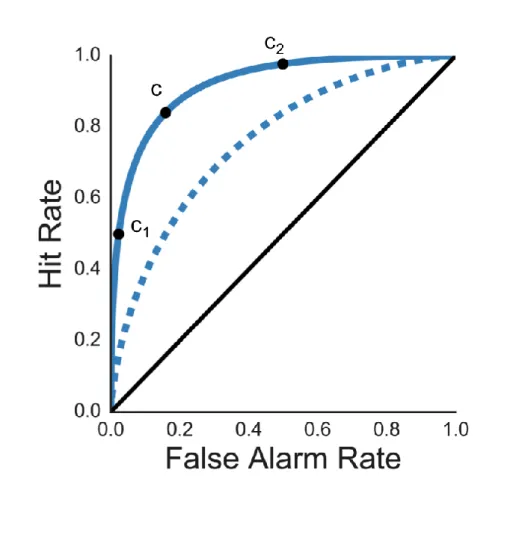
Figure 2.2. Illustration of Signal Detection Theory ... 43
Figure 2.3. ROC Curves ... 46
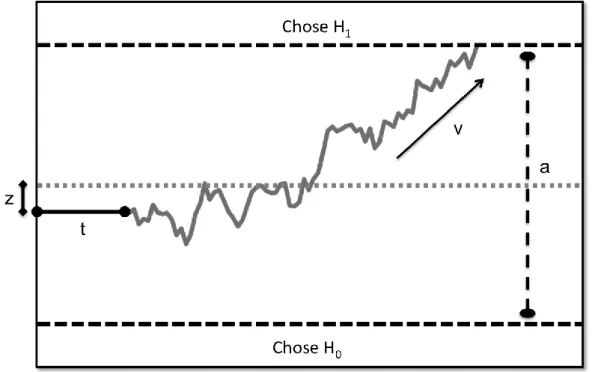
Figure 2.4. Schematic of a Drift Diffusion Process ... 48
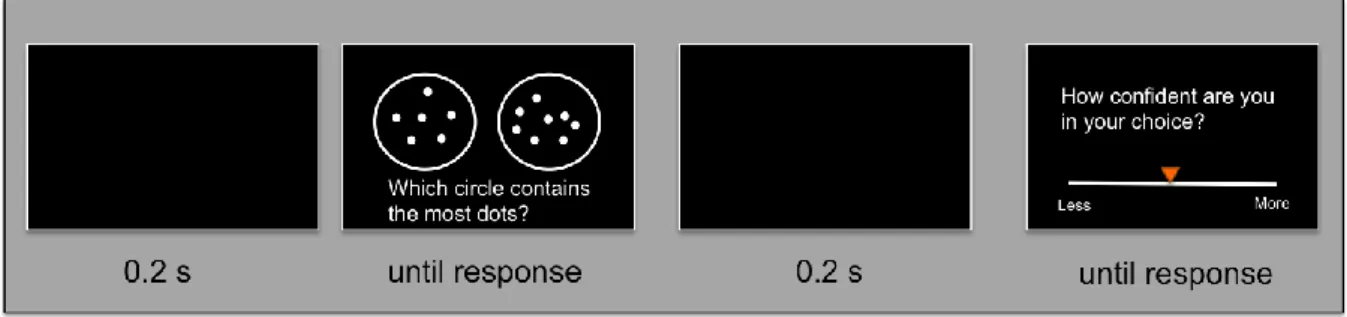
Figure 3.1. The Trial Structure of The Dot Discrimination Task for Experiment 1 ... 58
Figure 3.2. The Trial Structure of The Dot Discrimination Task in Experiment 2 ... 60
Figure 3.3. Comparing First Order Performance of Monolingual and Bilingual Participants ... 67
Figure 3.4. Predicting first order accuracy from dot difference and response time ... 68
Figure 3.5. Parameter Estimates from the DDM Model ... 69
Figure 3.6. Raw confidence judgements by monolinguals and bilinguals, as a function of the accuracy of the response ... 71
Figure 3.7. Difference in Metacognitive Efficiency Between Monolinguals and Bilinguals 73 Figure 3.8. Mratios as a function of mean response time and group affiliation ... 74
Figure 3.9. Predictors of Confidence ... 75
Figure 3.10. Predictors of Confidence by Accuracy ... 76
Figure 3.11. Map of the Non-linear Relationship between Response Time and Dot Difference in Predicting Accuracy and Confidence, Experiment 1 ... 78
Figure 3.12. Map of the Non-linear Relationship Between Response Time and Dot Difference in Predicting Accuracy and Confidence, Experiment 2... 79
Figure 4.1. The Task Structure of Experiment 5 ... 92
Figure 4.2. Relation Between Confidence and Choice ... 97
Figure 4.3. Dynamics of Information Sampling ... 99
Figure 4.4. Factors that Contribute to Confidence ... 101
Figure 4.5. Confidence Predicts Change of Mind ... 103
Figure 4.6. Link between Confidence and Transitivity ... 106
Figure 5.1. Experimental Procedure ... 118
Figure 5.2. The Relationship Between Confidence and Stimulus Strength for Simultaneous and Sequential Responses. ... 121
Figure 5.3. Sequential Confidence Responses are Associated with Higher Metacognitive Efficiency ... 122
Figure 5.4. Second-order Accuracy as a Function of Total Response Time ... 125
Figure 5.5. Predictors of First-order Accuracy and Confidence ... 127
Figure 5.6. The Relationship between RT and Confidence ... 130
Figure A1. The Response Distributions for Sequentially and Simultaneously Reported Confidence ... 179
Figure A2. Relationship Between Interjudgment Times and Confidence, First-order Accuracy, Stimulus strength and Second-order Accuracy ... 180
8
List of Tables
Table 3.1. Bilingual Participants’ Language History Information, Experiment 1 ... 62
Table 3.2. Bilingual Participants’ Language History Information, Experiment 2 ... 64
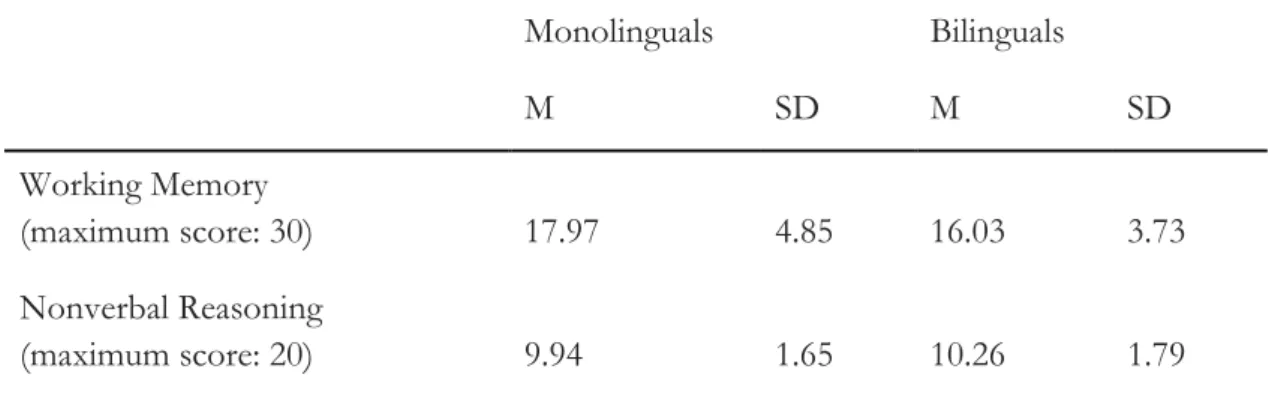
Table 3.3. Descriptive Statistics for Control measures, Experiment 1 ... 65
Table 3.4. Descriptive Statistics for Control Measures, Experiment 2 ... 66
9
List of Experiments
Experiment Description Chapter
1 Monolingual and Bilingual participants completed a two-alternative forced-choice (2AFC) perceptual discrimination task. The aim of the task was to select which one of two circles contained more dots. The difference in dots was updated online following a 1-up-2-down staircase procedure. Confidence was collected on a visual analogue scale (VAS) after each choice. Response times (RT) and
Interjudgment times (IJT) were unconstrained.
3
2 As Experiment 1 but response times were constrained to 1.5
seconds. 3
3 Hungry participants completed a 2AFC value-based task. In each trial they had to choose which one of two snack items they preferred. After each choice participants rated their confidence in their choice on a VAS. The eye movements of the participants were tracked during the choice task. RT and IJT were unconstrained. After the choice task participants completed a Becker-DeGroot-Marschak (BDM) procedure where they rated the maximum amount they would be willing to pay for each item.
4
4 Hungry participants rated 72 common snack items based on how much they would be willing to pay for them in a BDM procedure. The ratings were then used to create triplets of items based on the participant preferences. Participants then completed a choice task where they selected their preferred option from the triplet; their eye movements were tracked and stimuli presentation was gaze
contingent. After each choice confidence was tracked on a VAS. RT and IJT were unconstrained.
4
5 Participants completed a two-armed-bandit task with the aim to maximise their reward. The magnitude of the reward was constant between the bandits but reward rate differed. The reward rates were independent, so for each trial either option could win, both options could win or neither could win. After each choice participants received feedback about the outcomes from both bandits. Participant eye movements were tracked both during the choice phase and the feedback phase. RT were unconstrained.
4
6 Participants completed a 2AFC perceptual discrimination task, similar to Experiment 1. Each participant completed two sessions of the task; in one session confidence judgements were reported simultaneously with choice and in the other they were reported after choice. The order of the sessions were counterbalanced between participants. Participant eye movements were tracked during the trials and the presentation of stimuli was gaze contingent. RT and IJT were unconstrained.
10
Table of Contents
Declaration ... 2 Preface ... 3 Publications ... 4 Acknowledgments... 5 Summary ... 6 List of Figures ... 7 List of Tables ... 8 List of Experiments ... 9 Table of Contents ... 10 1. Introduction... 15 1.1. Summary ... 151.2. The Pragmatics of Confidence ... 15
1.3. What Constitutes an Accurate Confidence Judgment? ... 16
1.4. How is Confidence Computed? ... 19
1.5. Sequential Sampling Models of Decision Making and Confidence Judgments ... 21
1.6. The Consequences of Confidence ... 24
1.7. The Subfields of Metacognition Research ... 27
1.8. The Reliability of Confidence Accuracy ... 32
1.9. Remaining Questions ... 33
2. Methods ... 35
2.1. Summary ... 35
2.2. Generalised Linear Models ... 35
11
2.4. Signal Detection Theory ... 42
2.5. Extending SDT: ROC Curves and Metacognition ... 44
2.6. Extending SDT: Sequential Sampling ... 48
2.7. Software and Computational Implementation ... 51
3. Evidence of a Metacognitive Deficit in Bilinguals ... 53
3.1. Summary ... 53
3.2. Introduction ... 53
3.3. Methods ... 58
3.3.1. The Dot Discrimination Task, Experiment 1 ... 58
3.3.2. Dot Discrimination Task, Experiment 2 ... 59
3.3.3. Materials ... 60 3.3.4. Procedure ... 61 3.3.5. Participants, Experiment 1 ... 61 3.3.6. Participants, Experiment 2 ... 63 3.3.7. Hierarchical Models ... 65 3.4. Results ... 65
3.4.1. Control Measures, Experiment 1 ... 65
3.4.2. Control Measures, Experiment 2 ... 65
3.4.3. First Order Performance, Model Free Analyses ... 66
3.4.4. First Order Performance, DDM ... 69
3.4.5. Second Order Performance ... 70
3.4.6. Exploring Potential Non-linear Relationships ... 76
3.4.7. Control Analyses ... 80
3.5. Discussion ... 80
12
4.1. Summary ... 86
4.2. Introduction ... 86
4.3. Methods ... 90
4.3.1. Experimental Procedures, Experiment 3 ... 90
4.3.2. Experimental Procedures, Experiment 4 ... 90
4.3.3. Experimental Procedures, Experiment 5 ... 91
4.3.4. Participants, Experiment 3 ... 93
4.3.5. Participants, Experiment 4 ... 93
4.3.6. Participants, Experiment 5 ... 93
4.3.7. Eye Trackers ... 93
4.3.8. Preparation of the Eye Data, Experiment 3 ... 93
4.3.9. Preparation of the Eye Data, Experiment 4 ... 94
4.3.10. Preparation of the Eye Data, Experiment 5 ... 94
4.3.11. Hierarchical Models ... 94
4.3.12. Drift Diffusion Models ... 94
4.4. Results ... 95
4.4.1. Relation Between Confidence and Choice ... 95
4.4.2. Dynamics of Information Sampling ... 97
4.4.3. Factors that Contribute to Confidence ... 100
4.4.4. Confidence Predicts Change of Mind ... 101
4.4.5. Link Between Confidence and Transitivity ... 104
4.5. Discussion ... 107
5. The Timing of Confidence Judgments Influences Metacognitive Performance ... 111
5.1. Summary ... 111
13 5.3. Methods ... 116 5.3.1. Experimental Procedure ... 116 5.3.2. Participants ... 119 5.3.3. Eye Tracking ... 119 5.3.4. Hierarchical Models ... 119
4.3.5. Drift Diffusion Models... 119
5.4. Results ... 120
5.4.1. First Order Choices... 120
5.4.2. Three-way Interaction Between Confidence, Stimulus Strength and Accuracy does not Depend on Timing of Confidence Judgments ... 121
5.4.3. Metacognitive Efficiency is Higher for Sequentially Reported Confidence than Simultaneously Reported Confidence ... 122
5.4.4. Can Differences in Processing Time Account for Differences in Metacognitive Efficiency? ... 123
5.4.5. Sequentially and Simultaneously Reported Confidence Cause Differences in Sensitivity to the Variables Predicting First-order Accuracy and Confidence ... 126
5.4.6. Differential Sensitivity to Response Times Explains Differences in Metacognitive Efficiency ... 129
5.5. Discussion ... 130
6. General Discussion... 136
6.1. Summary ... 136
6.2. Overview of Findings ... 136
6.3. The Consequences of Confidence ... 137
6.4. The Causes of Confidence ... 141
6.5. The Computation of Confidence ... 144
14
References ... 149
Appendices ... 162
Appendix 1: List of stimuli in Experiment 3: ... 162
Appendix 2: List of stimuli in Experiment 4: ... 165
Appendix 3: GSF Does Not Predict Choice, but Interacts With Stimulus Strength in a Model that does not Include DDT ... 177
Appendix 4: Confidence Distributions for Simultaneous and Sequential Confidence Judgments in Experiment 6 ... 178
Appendix 5: Interjudgment Times Are Not Associated with Confidence, Accuracy or Stimulus Strength in Experiment 6 ... 179
Appendix 6: Confidence is Influenced by Both Positive and Negative Evidence for Both Sequential and Simultaneous Confidence Judgments in Experiment 6 ... 180
15
1. Introduction
1.1. Summary
This dissertation is about the role confidence plays in human decision making, where confidence is defined as a self-reported estimate of uncertainty in a choice. The introduction provides an overview of the current theories of confidence and empirical work informing those theories. It covers how accuracy is operationalised in the confidence domain and theories on the
computational foundation of confidence, with special focus on the relationship between sequential sampling theories of decision making and confidence judgments. Furthermore, the reliability of confidence judgments across testing sessions and modalities will be discussed as well as the consequences of confidence. This overview will conclude by highlighting gaps in our current knowledge, and how the empirical chapters in this dissertation address some of these gaps.
1.2. The Pragmatics of Confidence
Human life is full of uncertainty. We face uncertainty about future events (what will the weather be like tomorrow? Who will win the next election?), about other people’s mental states (what does my manager think about my performance?) and even about our own preferences (would I prefer to watch an action film or a comedy?). In order for us to make effective decisions, this uncertainty needs to be captured, and there is a wealth of evidence to suggest that estimates of uncertainty are encoded in the human brain (e.g. Bach & Dolan, 2012; Beck et al., 2008; Kepecs, Uchida, Zariwala, & Mainen, 2008; Kiani & Shadlen, 2009). Not all of these uncertainty
representations are consciously accessible. For example, our brains account for sensory and motor noise when planning and performing actions, without us ever being aware that there is any noise to begin with (Knill & Pouget, 2004; Trommershäuser, Maloney, & Landy, 2003). However, people are able to self-report the uncertainty in their decisions, in the form of
subjective accuracy, for a great variety of tasks (Fleming & Lau, 2014). These accuracy judgments are called confidence judgments in the psychological literature and tend to correlate with actual performance (though exceptions exist and will be discussed later). Confidence judgments come in two broad forms: a probability judgment that a categorical decision is correct (e.g. the “left building is taller than the right building” or “I prefer a Mars bar over a Snickers bar”) or an
uncertainty estimate around a continuous quantity (e.g. “I believe the building is about 50 meters
16
Drugowitsch, & Kepecs, 2016). Categorical confidence judgments are by far the more studied of the two, and will be the focus of the work presented here.
Confidence is closely related to metacognition, which is defined as the ability of a cognitive system to monitor its own performance (Flavell, 1979; Fleming, Dolan, & Frith, 2012). However, some researchers dislike the term metacognition, as they feel it implies the presence of a higher-order system that monitors the basic decision process, an idea that they find implausible (Kepecs & Mainen, 2014; Kiani, Corthell, & Shadlen, 2014). The presence or absence of such a higher-order system is one of the on-going controversies regarding what computations underpin
confidence judgments, which will be explored more in depth later in this introduction. However, because of its widespread usage, “metacognitive judgments” will be used interchangeably with
“confidence judgments” in this dissertation, with neither implying anything about the generative
process.
Confidence judgments have also been used to investigate consciousness, as confidence
judgments are a self-reported measure of expected performance and as such must be consciously accessible (Koriat, 2007; Nelson, 1996). While this is an interesting research area it depends on a set of complex questions relating to the nature of consciousness that is outside of the scope of this dissertation. Instead this work will emphasise the pragmatics of confidence judgments, focusing on three questions: What factors feed into confidence judgments, what computations underpin confidence judgments and what are the benefits of being able to make accurate confidence judgment? Before this last question can be explored “accuracy” must be defined in the context of confidence.
1.3. What Constitutes an Accurate Confidence Judgment?
Imagine that you notice something flying above you at high speed. Maybe it is a bird, maybe it is a plane, and, just maybe, it is Superman. You think you spotted the colours blue and red, so after careful deliberation you decide that you saw Superman. After relaying this story to a friend, they are justifiably sceptical and ask you how confident you are that you saw the Man of Steel? Confidence researchers call the original classification of what you saw a first-order choice
(though first order choices in confidence research are typically about Gabor patches and random dot kinematograms rather than super heroes). The confidence judgment, on the other hand, is referred to as a second-order choice because it is an evaluative judgment of the first choice. Similarly, a process that contributes to the first-order choice is known as a first-order process and a process that contributes to the confidence judgment is known as a second-order process.
17
At first glance it might seem trivial to assess first order-performance in this example. After all, either you did spot Superman or you did not. However, say that you always assume it is Superman whenever something flies over your head. If we only test your super hero spotting ability once, and you happen to be correct, an experimenter cannot determine if your accuracy is due to chance or if you are actually skilled at identifying high-velocity objects. By contrast, if we repeat this exercise many times (perhaps by showing you videos a various flying objects in a lab) we may notice that you always pick the Superman option. Imagine we repeat the procedure 10 times and 6 times the correct option happens to be a certain caped super hero – this would mean that you were correct 60% of the time, despite the fact that your response criterion is completely independent of the evidence presented to you! In technical language, your choices were independent of the stimulus strength of the presented stimuli. Stimulus strength denotes the strength of the presented stimulus, on the dimensions that matter for the decision, so if the stimulus is a line stimulus strength might refer to the length of the line, the orientation of the line or the colour of the line, depending of the nature of the discrimination one attempts to make. In the case of this example, the stimulus strength would capture the “supermanness” of the flying objects including some combination of colour, size and shape. To distinguish between
participants’ sensitivity to the stimulus strength of the stimuli and their response biases, it is
common to analyse decisions like these with signal detection theory (SDT; Green & Swets, 1996). Traditional SDT deals with binary choices (A and B) and assumes that for any given trial, one sample of internal evidence is drawn from a normal distribution. The mean of the normal distribution is determined by which of the two options is correct for the trial in question. Because these internal evidence distributions have arbitrary scales, standard deviations are often set to 1 for both distributions for mathematical convenience. The difference in means between
when option A is correct and when option B is correct is denoted d’ (pronounced dee-prime)
and captures the sensitivity of the respondent (or equivalently the difficulty of the trial). The choice is determined by where the randomly drawn evidence sample falls relative to a choice
criterion, denoted c, which captures the participant’s preference for either option independent of
the evidence. Because the response criterion denotes a respondent’s tendency to pick a specific option independently of the evidence it is also called the response bias, or bias for short. Assessing the accuracy of the confidence judgments becomes slightly more complicated. If the confidence judgment is expressed on a scale of probability correct, from 50% (guessing) to 100% (certain), it is meaningful to talk about the calibration of the confidence judgment. If the mean confidence judgment corresponds to the actual proportion correct, the respondent is said to be well-calibrated (Baranski & Petrusic, 1994). If the level of confidence systematically differs
18
between correct and error choices so that the level of the confidence is diagnostic of the
accuracy of the choice, the participant is said to have good confidence resolution, or confidence sensitivity. Because none of the experiments in this dissertation contains confidence judgments that are reported on a probability scale, I will ignore confidence calibration, so terms like
“confidence accuracy” or “metacognitive accuracy” will here always refer to confidence
resolution.
Historically, metacognitive accuracy has been measured by correlating the accuracy of a set of choices (coded as 1 for correct and 0 as incorrect) with their confidence judgments (on any scale where higher numbers signify higher confidence; Maniscalco & Lau, 2012). This approach is problematic because these correlations do not account for confidence bias (how likely people are to respond with high confidence independent of their accuracy), so two people whose
confidence judgments are equally sensitive to their performance, but whose biases differ can have different confidence-accuracy correlation coefficients (Masson & Rotello, 2009). Because signal detection theory separately estimates sensitivity and bias of first order judgments,
researchers tried to expand the same framework to achieve similar estimates for second order judgments (Kunimoto, Miller, & Pashler, 2001).
However, directly transferring the original SDT mathematics to the second order domain has turned out to be problematic. SDT assumes that internal evidence is drawn from two Gaussian distributions with equal variances (one distribution for when Option A is correct and the other when Option B is correct). These assumptions tend to work well for first-order choices,
especially in two alternative forced choice tasks (Fleming & Lau, 2014), but Galvin et al. showed if first-order internal evidence distributions are normal with equal variances (as traditional SDT assumes), the second order distributions have unequal variances and are highly non-normal (Galvin, Podd, Drga, & Whitmore, 2003), which means that changes in metacognitive bias influences the sensitivity measure (Evans & Azzopardi, 2007).
Recently Maniscalco and Lau solved this problem by creating a sensitivity measure for
confidence that exists in the same space as the SDT measure of first-order accuracy (Maniscalco & Lau, 2012, 2014): meta-d’. Because meta-d’ exist inthe same space as d’, the SDT assumptions hold and as a result bias and sensitivity are independent (Barrett, Dienes, & Seth, 2013). How meta-d’ is computed is discussed at length in the methods chapter of the dissertation, but the key takeaway is that it captures the implied first-order sensitivity from the confidence judgments for a participant with perfect metacognitive insight. Maniscalco and Lau assumed that meta-d’ would always be lower than d’, but the reverse pattern has been observed, and would be expected in
19
situations where the confidence judgment captures more information about the true state of the world than the choice, for example when additional information has been gained between the decision and the confidence judgment (Fleming & Daw, 2017). Because first-order sensitivity and second order sensitivity are captured on the same scale in the meta-d’ framework, it is meaningful to compare them directly, for example as a ratio: meta-d’/d’. This ratio, commonly referred to as the Mratio (pronounced em-ratio), captures a participant’s metacognitive efficiency, or how good their metacognitive performance is relative to their first-order performance. This measure is useful because confidence judgments tend to be more accurate for easy trials than for hard trials (Sanders, Hangya, & Kepecs, 2016). By extension, a person who finds the first-order task easy will be more metacognitively accurate than a peer who finds the task hard, even if their introspective ability is the same. Consequently, when introspective ability is the theoretical quantity of interest, researchers should either keep first-order performance constant between participants or compute Mratios. The relationship between first-order and second-order performance is discussed extensively in Chapter 3.
1.4. How is Confidence Computed?
So far this introduction has defined confidence as a behaviour that estimates the accuracy of a choice. This section will move forward by discussing various theories of how confidence is computed, focusing on important points of contention. The fundamental question regarding the computation of confidence is how it relates to the computation of choice. This broad question can be subdivided into more specific elements, the first being whether there are any confidence specific computations at all or whether confidence judgments are simply a by-product of the first order decision (Fleming & Daw, 2017). A theory that can account for both confidence and choice in a single process is more parsimonious and should therefore be preferred, all other things being equal. Traditional SDT treats confidence as a function of the distance between the decision variable and the criterion (Treisman & Faulkner, 1984). Dynamic extensions of signal detection theory that account for decision time as well as choice (discussed in the next section) can derive confidence from the state of the decision variable at the time of choice (Kepecs et al., 2008; Vickers & Packer, 1982). Preliminary neural evidence supports the link between self-reported confidence and the state of the decision variable at the time of choice (De Martino, Fleming, Garrett, & Dolan, 2013; Gherman & Philiastides, 2015; Kiani & Shadlen, 2009; Komura, Nikkuni, Hirashima, Uetake, & Miyamoto, 2013; Wei & Wang, 2015).
However, multiple dissociations between first-order performance and confidence performance have been observed and must be accounted for in order for single-process theories to be
20
plausible. For example, Graziano and Sigman found that varying the time window between the stimulus presentation and the response influenced first-order accuracy and second-order
accuracy differently (Graziano & Sigman, 2009). They found that confidence tended to decrease with artificially increased response times independent of first-order accuracy and trial difficulty. Similarly, Lau and Passingham showed that decreasing the time a visual stimulus was shown prior to a mask decreased confidence to a much greater extent than it decreased first order performance (Lau & Passingham, 2006). Because shorter time-windows prior to a mask make the stimuli less likely to be consciously perceived, this finding supports the potential relationship between confidence and phenomenological consciousness. This link was further investigated by Vlassova and colleagues who found that unconsciously processed visual information influenced choices but not confidence judgments (Vlassova, Donkin, & Pearson, 2014). Additionally, there are a set of studies that show that brain lesions and reversible disruptions of neural activity influence confidence judgments and first-order choices differently (Fleming, Ryu, Golfinos, & Blackmon, 2014; Rounis, Maniscalco, Rothwell, Passingham, & Lau, 2010). See Fleming and Daw, 2017 for a more extensive list of studies that have found dissociations in first-order and second order performance.
Some of the dissociations between first-order and second-order performance can be explained by additional processing time for the second-order judgment (Baranski & Petrusic, 1998; Moran, Teodorescu, & Usher, 2015; Resulaj, Kiani, Wolpert, & Shadlen, 2009) or additional evidence being made available after the choice (Bronfman et al., 2015; Navajas, Bahrami, & Latham, 2016). However, in my view the balance of evidence currently favour models that suggest that the computations underlying confidence judgments are at least partially independent from the computations underlying choices. Single process accounts are hard-pressed to explain the dissociation between confidence and accuracy reported in the Vlassova study (2014), as the trial length was the same for all trials. It is also difficult to explain why disrupting certain neural networks decreases confidence accuracy but leaves first order accuracy intact, without arguing that the two judgments rely on different brain networks and, by extension, different
computations.
Because of the recorded discrepancies between first-order and second-order performance it seems probable that confidence judgments have their own dedicated computational structure, but questions still remain about the relationship between confidence computations and first-order computations. For example, are confidence judgments computed after a choice is made or are they are computed in parallel with the choice? Baranski and Petrusic evaluated these accounts by measuring the interjudgment times between choices and confidence judgments in a perceptual
21
task (Baranski & Petrusic, 1998). They reasoned that if confidence judgments were computed after the choice, the interjudgment times should be independent of the difficulty of the trial (which does influence first order response times) but relate to the level of confidence, because it is easier to assess strong evidence for an option than weak evidence. Conversely, if the
confidence computations were parallel, little additional decision time would be necessary, as the confidence judgment had been computed in unison with the first-order decision. Their results suggest that confidence judgments might be computed sequentially when the original choice is under speed-stress but in parallel otherwise. Fleming and Daw (2017) have recently proposed a model where the internal evidence underlying confidence is drawn from a separate but correlated distribution to the internal evidence that determine choice. They show that by varying the
relative width of the two internal evidence distributions and the strength of their correlation, they can account for all the results reviewed here. However, they have failed to demonstrate that the model can theoretically be falsified, so it is possible that it is too flexible to have predictive utility.
1.5. Sequential Sampling Models of Decision Making and
Confidence Judgments
As mentioned in the previous section, SDT has been extended to account for response times as well as choices. These extensions do not treat a choice as the consequence of a single draw of evidence from a distribution; instead, choices are modelled as the result of multiple sequential draws from a set of evidence distributions. In this framework each option is associated with an evidence distribution with a mean that captures the strength of the evidence favouring that option and the variance of the evidence distribution captures uncertainty around that value. For each unit of time, one piece of evidence is drawn from each of the distributions, and this process repeats until one of the options reaches a decision-threshold at which point that option is
chosen. The distance between the starting point and the threshold captures the speed-accuracy trade-off. The further away the threshold is, the more draws will be required to reach it, increasing response time. Additionally, because the evidence distributions are assumed to be symmetric, more draws increase the probability that the noise cancels out, and so improves the signal-to-noise ratio in the decision process (see Gold & Shadlen, 2007 for a more technical discussion). Because this family of models characterises a single decision as the result of multiple sequential evidence samples, they are commonly referred to as sequential sampling models (Forstmann, Ratcliff, & Wagenmakers, 2016).
22
The most commonly used sequential sampling model is the drift diffusion model (DDM; Ratcliff, 1978; Ratcliff & McKoon, 2008). The easiest way to think of a DDM is to imagine a particle that floats between two boundaries, representing two mutually exclusive options. For each unit of time the movement of the particle is drawn from a normal distribution, where the standard deviation is conventionally set to 0.1 (Vandekerckhove, Tuerlinckx, & Lee, 2011) and the mean, referred to as the drift rate, captures the dominant option so that the mean is positive if the upper option is dominant and negative if the lower option is dominant). The ratio between the mean and the standard deviation captures how noisy the decision process is. The separation between the boundaries captures the speed-accuracy trade-off, and the starting point of the particle captures an a priori preference for one of the options. The model also contains a non-decision time parameter, which estimates the non-non-decision portion of the response time (e.g. motor preparation and actual movement). Drift diffusion models are popular because they capture both the choices and the response times of two-alternative forced choice tasks well (Forstmann et al., 2016; Ratcliff & McKoon, 2008; Vandekerckhove et al., 2011), because their parameters all have obvious psychological interpretations, and because they have been shown to be mathematically equivalent to the sequential probability ratio test (Gold & Shadlen, 2007), which is the normative to solution to sequential sampling problems with two options (Bogacz, Brown, Moehlis, Holmes, & Cohen, 2006). Additionally, a wide variety of computer packages makes them relatively easy to fit (for a systematic comparison of different fitting programs see Ratcliff & Childers, 2015). DDMs are discussed more in the methods chapter.
A wealth of choice related phenomena can be studied by allowing DDM parameters to vary between participants, between conditions, or both. One intriguing example is the work by Krajbich and Rangel, which investigated how visual attention influenced value-based decision making (Krajbich & Rangel, 2011; Krajbich, Armel, & Rangel, 2010; Lim, O’Doherty, & Rangel, 2011). In a series of experiments they found that participants’ visual attention influenced their choices, as if the options they looked at got a boost to their drift rate. Originally the researchers assumed that this fixation bias interacted with the value of the option, so that drift rate received a greater boost the greater the value difference between the options. Since then, however, another lab directly compared the original interactive model with an additive model, so that the boost in drift rate from looking at an item is constant, regardless of item value (Cavanagh, Wiecki, Kochar, & Frank, 2014). Whilst this distinction might seem like a technicality, it is practically important because the additive model implies that the visual attention bias is most powerful when we are choosing between two low-value options but that it gets marginalised when we are comparing options of greater subjective value. The interactive model makes no such distinction
23
because the fixation bias scales with the value of the options. Because of its practical and theoretical importance I will compare the additive and interactive models of the fixation bias in the experiments that involve eye tracking (Chapters 4 and 5).
One weakness of the DDM is that it cannot account for confidence judgments (Pleskac & Busemeyer, 2010). The reason for this is that the evidence accumulation for each option is perfectly anti-correlated with the other: the closer the particle gets to the upper response threshold the further it gets to the lower response threshold. As a consequence, the uncertainty in the decision-process is perfectly captured by the response time, so, according to the model, confidence should be a monotonic function of response time (Ratcliff & Starns, 2009). However, the data suggest that both response times and stimulus strength influence confidence
independently (e.g. De Martino et al., 2013; Kiani et al., 2014; Vickers & Packer, 1982). One way to address this problem is simply to treat the interjudgment time as a continuation of the random walk of the decision particle, so that a given confidence judgment is the result of the same evidence accumulation process that guided choice, just with additional processing time (Pleskac & Busemeyer, 2010). This model is an instantiation of the single-process theories reviewed above. As such, they too benefit of the parsimony of accounting for both choices and
confidence judgments from a single evidence stream. However, they also inherit the problems of these theories in that they struggle to explain dissociations in first-order and second order
performance that aren’t captured by response time. Furthermore, because this model assumes
that the same drift diffusion process that cause the first order choice then continues to cause the confidence judgment, it assumes an association between confidence accuracy and interjudgment times just as the simple DDM (correctly) predicts a relationship between choice accuracy and response times. However, these assumptions do not hold for interjudgment times which are often independent of confidence outcomes (see Baranski & Petrusic, 1998, and Chapter 5). An alternative way to capture confidence from a sequential sampling framework is to relax the DDM assumption that the accumulators for the two options are perfectly anti-correlated. The result can be conceptualised as two partially independent accumulators that “compete” with each other to reach the same decision-bound, a family of sequential sampling models known as race models. The distance between the winning accumulator and the losing accumulator at the time of decision captures the balance of evidence favouring the winning option, and is therefore a measure of confidence (Kepecs et al., 2008; Vickers & Packer, 1982; Wei & Wang, 2015). Some early models postulated a 1-1 relationship between the balance of evidence and confidence judgments, but modern models commonly involve an intermediary step where the distance between the accumulators are read out by some other process that make it accessible to
self-24
report (De Martino et al., 2013; Insabato, Pannunzi, Rolls, & Deco, 2010; Shimamura, 2000). Race models have also been extended by computing confidence from a combination of balance of evidence at time of choice and response time (Kiani et al., 2014; Van Den Berg et al., 2016). Utilising both RT and balance of evidence at time of choice does not only fit the confidence data better than other race-models, this approach is also theoretically appealing as the probability of being correct can be recovered from the model for any given balance of evidence and response time. While race-models capture confidence in an elegant way, they perform worse for capturing response time distributions and accuracy judgments than a conventional DDM (Ratcliff & Smith, 2004). Finally, simultaneous choice and confidence judgments have been modelled by
postulating one accumulator for each option (e.g, “high confidence option 1”, “low confidence
option 1”, “high confidence option 2”, etc.) but keeping all options anti-correlated so that for
any given time unit, one option moves closer to the decision boundary and all other options moves away by the same amount (Ratcliff & Starns, 2009). This model has the benefit of being an extension of traditional two alternative DDMs, and as such fits response times and accuracies well, and it can account for simultaneous choices and confidence judgments. However, it is not obvious how it translates to confidence judgments that are given on a continuous scale.
1.6. The Consequences of Confidence
The previous sections of the introduction have covered research that suggests that humans have systems devoted specifically to representing confidence, either as a readout of the uncertainty in the first order evidence accumulation (De Martino et al., 2013; Insabato et al., 2010; Shimamura, 2000) or as a process carried out in parallel with the first order choice (Baranski & Petrusic, 1998; Fleming & Daw, 2017). Furthermore, a number of published experiments suggest that even non-human animals can track uncertainty in perceptual decisions (Couchman et al., 2010; Lak et al., 2014; Smith et al., 1995) and in memory judgements (Fujita, 2009). A corpus of studies suggest that these results cannot be accounted for by simple associative mechanisms but imply second-order representations of uncertainty (See Smith, Couchman & Beran, 2014 for a review and Kepecs & Mainen, 2014 for a principled computational and methodological argument). It is then natural to wonder why there would be a system specifically devoted to confidence; what benefits do confidence judgments bestow on an agent that justify the computational cost?
A problem that face most animals is whether to forage from their current environment or whether to search for greener pastures elsewhere. These decisions benefit both from a representation of the mean value of alternatives as well as a representation of the variation around this mean (Kolling, Berhens, Mars, Rushworth, 2012). Such foraging decisions are
25
included in a broader class of problems referred to as exploration vs exploitation problems in contemporary computational neuroscience (Cohen, McClure & Yu, 2007). In environments with uncertain outcomes internal representations of uncertainty can help an agent determine whether they should exploit the option that currently has the best expected value or explore the
alternatives to get a more accurate model of the different options and maximise total reward over time (Boldt, Bundell & De Martino, 2017). There is some evidence in that certain non-human animals use uncertainty representations in this way. Washburn et al. (2006) applied an experimental paradigm where Macaques had to make a new two choice discrimination every 6 trials. On each trial they had the option to pick an uncertain response which gave no physical reward but provided information on the correct answer for that trial. The Monkeys correctly picked the uncertain option more often in the first trial of a new discrimination relative to the following trials, gaining information that helped them maximise subsequent rewards. More broadly, explicitly representing model uncertainty helps the agent accurately price the value of additional information.
Another function of representing uncertainty is that it allows agents to avoid risky decisions. A class of experimental designs that rely on optional opt-out illustrate this. Opt-out tasks are typically structured as typical two alternative choice tasks where respondents get a big reward if they are correct or a time-out punishment if they are incorrect. On some trials they also have the option to opt-out and get a small reward that is independent of the decision, the option to opt out may come after the initial decision is made, or as an independent option in the choice phase. To test whether agents use this option judiciously one can compare their performance on trials where they have the option to opt out, but chose not to (free choice trials), to those where they have no choice (forced choice trials). Rhesus monkeys, rats and humans all have shown better performance for the free choice trials than the forced choice trials, when objective difficulty is controlled for, indicating that they can use internal estimates of choice accuracy to improve their performance (Foote & Crystal, 2007; Hampton, 2001; Kiani & Shadlen, 2009; Koriat &
Goldsmith, 1996). In metamemory research this is known as the trade-off between quantity and accuracy, as no opt out typically leads to a higher total amount correct at the cost of a lower proportion correct of the trials attempted. Koriat and Goldsmith (1996) has shown that better internal monitoring enable people to maximise their accuracy without sacrificing quantity, as higher metacognitive accuracy enable people to selective use opt out for likely errors, while leaving correct trials intact. In the context of metamemory, respondents can also manage the trade-off between quantity and accuracy by adapting the granularity of their memory report to their confidence in the veracity of their memory (Koriat, Goldsmith & Pansky, 2000). This
26
relates more broadly to the link between confidence and precision, people may spread their resources to deal with a broader set of contingencies when they perceive the future to be uncertain.
But representing uncertainty may not only allow agents to avoid errors, it might also allow them to correct them: It has been suggested that the same system which is responsible for confidence judgments also triggers error correction in perceptual choice (Yeung & Summerfield, 2012, 2014). Preliminary support for this idea has come from EEG studies, where multivariate analyses showed that the EEG signature that signals errors also predicted graded confidence judgments for correct trials (Boldt & Yeung, 2015). It has also been suggested that confidence judgments help groups of people coordinate more effectively as the uncertainty associated with various observations or predictions can be shared between group members (Shea et al., 2014). Just as confidence might improve group decision making by ensuring that more reliable reports are weighted more heavily, confidence might improve learning in contexts with multiple information sources by ensuring that we learn more from sources that are consistently predictive of salient outcomes (Meyniel & Dehaene, 2017). This may explain why metacognitive accuracy predicts learning speed when general intelligence is controlled for (Veenman, Elshout, & Meijer, 1997). In fact, confidence can act as a learning signal even in the absence of external feedback, helping people to improve their performance in contexts where the outcome is not immediately observable (Guggenmos, Wilbertz, Hebart, & Sterzer, 2016).
Dehaene and Sigman (2012) have suggested that confidence plays a central role in higher-order planning, where multiple steps have to be completed successfully in order for the agent to reach their desired outcome. For example, confidence might indicate when a problem is hard so that more information should be offloaded onto the environment (Gilbert, 2015), or that more deliberation is required (Keramati, Dezfouli, & Piray, 2011). In fact, Yeung and Summerfield (2012) suggested that confidence might regulate the boundary separation in decision making task, helping respondents strike a good balance between speed and accuracy. In contexts where
rewards only follow the successful completion of multiple steps, confidence in one’s performance in the first steps dictates the effort put into subsequent steps (Van den Berg, Zylberberg, Kiani, Shadlen, & Wolpert, 2016). Van den Berg and colleagues paired two
perceptual decisions, and only rewarded participants if both choices were correct. They fitted a drift diffusion model to the second choices and found that participant confidence in the first choice predicted the boundary separation in the second choice, so participants invested more time in getting the second choice right when they were confident that the first choice was correct. This provides preliminary support of Yeung and Summerfield’s (2012) idea that
27
confidence helps improve performance by influencing the boundary separation of a drift process. There is further work to suggest that confidence help inform time and effort allocation in problem-solving. For example, when we encounter a problem our sense of confidence in the first answer that come to mind may determine whether we report it immediately or invest effort and time in trying to find a different answer (Thompson, Turner & Pennycook, 2011; Thompson et al., 2013). Conversely, the evolution of confidence over time may inform when it is time to stop effortful search, and either give our best guess or avoid responding (Ackerman, 2014). Note that the empirical work on the consequences of confidence has so far focused on the immediate consequences, be it an immediate reversal of a previous decision (Boldt & Yeung, 2015) or a change in decision criteria relative to a choice immediately prior (Van den Berg et al., 2016), so it is an open question to what extent confidence judgments influences decisions over time. Also, the consequences of confidence judgments have to the best of my knowledge solely been explored in relation to perceptual decisions. Chapter 4 will extend our current
understanding of the consequences of confidence by studying more long term consequences of confidence judgments in the value domain.
1.7. The Subfields of Metacognition Research
Confidence has been studied extensively in at least three different areas of cognitive science: perception, memory and value-based decision-making. Confidence was fist studied in relation to psychophysics (Peirce & Jastrow, 1884), and most of the work referenced here relates to
confidence of perceptual judgments. Perceptual discrimination tasks are useful when studying the neural underpinnings of confidence because we have a relatively good understanding of the neural underpinnings of perceptual (primarily visual) first order judgments (Heekeren, Marrett, Bandettini, & Ungerleider, 2004). Additionally, certain psychophysics tasks (e.g. the random-dot-kinetogram) allow for much better control of what evidence is available to an agent at any given time, as they can be set up so that the evidence at each time point can be treated as an
independent draw from a normal distribution (Gold & Shadlen, 2007). Together, our relatively advanced understanding of the neural and computational underpinnings of perceptual judgments makes disentangling the relationship between first-order and second-order networks slightly easier than in other domains (e.g. Fleming, Weil, Nagy, Dolan, & Rees, 2010).
Confidence judgments have also been extensively studied in relation to memory (Koriat, 2007; Nelson & Narens, 1990). This metamemory research has extensively dealt with two
contemporary points of contention in the perceptual choice literature, and the insights from metamemory are not widely appreciated there (but see Boldt, De Gardelle & Yeung, 2017 and
28
Shea et al, 2014). The first point of contention is whether confidence judgements depend on a direct readout of first-order evidence strength (see Section 1.4.). Metamemory researchers have discussed this topic since the 1960s (Hart, 1965) and it is now considered largely resolved in that field (Koriat, 1997). The second point of contention is how confidence judgements change based on when they are elicited in relation to the first-order choice. Finally, the combination of insights relating to the substrates of confidence and the temporal dynamics of confidence have in turn provided a more nuanced understanding of the functional properties of confidence, as
metamemory researchers appreciate that the functional significance of confidence judgements change over time (Koriat & Levy-Sadot, 2001). Each of these points will be explored more in depth below.
In metamemory research the idea that confidence judgements (referred to as feelings of knowing judgements: FOK) were the result of a direct readout of internal evidence was first put forward by Hart (1965). In his model prospective confidence judgements captured the strength of the memory trace, which in turn predicted the probability of recall at a later time. This model has the benefit that it parsimoniously explains why prospective confidence judgements tend to be
diagnostic of recall (Koriat & Levy-Sadot, 2001). The alternative account is known as the inferential account of confidence. The inferential account suggests that confidence is the result of the weighted combination of a set of cues, that are diagnostic of performance during typical circumstances. The inferential view does not imply that the agent make a conscious inference whenever they report their confidence, just that the computation that is driving confidence judgements do not have direct access to the evidence that drive the decision (Koriat, 1997). The inferential view makes a number of specific predictions (1) Cues drive confidence because they are diagnostic of accuracy under typical circumstances. (2) Metacognitive accuracy is the function of the validity of the available cues, and whether these cues are weighted appropriately. (3) Experimenters can manipulate metacognitive accuracy by changing the diagnostic validity of the cues that feed into confidence or how participants weight them.
This last point, that confidence judgements and accuracy can be manipulated independently from
one another to create so called “metacognitive illusions” provides a clear empirical test that can
arbitrate between the direct access account and the inferential account of confidence. In the context of metamemory research the inferential account has convincingly won this debate. For a review of manipulations that influence first order and second order accuracy independently see the general discussion of Koriat (1997), here I will just mention a few examples. Benjamin and colleagues (1998) first had participants answer 20 trivia questions. Each question had a single word response. After coming up with an answer participants were asked to rate the probability
29
that they would remember their answer 20 minutes later without any pointers to remind them. They then completed a 20 minute distractor task followed by 10 minutes of free-recall for the 20 responses. Time of deliberation for the trivia questions was negatively associated with confidence in subsequent recall but positively associated with actual recall, so time of deliberation had the opposite effect on confidence and accuracy. Chandler (1994) showed participants a set of target and non-target pictures (learning phase), after 15 minutes of waiting participants were
completing a 2 alternative forced choice task between the target and a previously unencountered distractor. Each choice was followed by a confidence judgement. In the two-alternative forced choice task both the targets and the distractors were scenes of lakes. In the experimental condition the non-target in the learning phase was also a lake but it in the control condition it was not. The experimental condition, where targets and non-targets in the were related in the learning phase, were associated with lower accuracy but higher confidence judgements than the control condition. Finally, Begg et al (1989) found that participants predicted that concrete and common words would be easier to recognise than abstract and rare words, however, whereas concrete words were associated with higher recognition rates, more common words were
associated with lower recognition rates. Begg and colleagues hypothesised that both concreteness and prevalence predicted ease of processing at the time of the first encounter, but only
concreteness aided memorability, whereas more common words were in fact less memorable. In sum, there is plenty of evidence that confidence can be experimentally manipulated
independently of choice accuracy, providing evidence that the computation of confidence is at least partially independent from the processes driving recall and recognition.
To understand how the temporal dynamics of confidence has been explored in memory research it might be instructive to explore a common research paradigm in meta-memory. Participants first learn lists of word pairs, with one word being the pointer word and the other being the target. Participants are subsequently presented with the pointer and asked to recall the target from memory, if they fail to recall the target they may be asked to select the target from a set of options. Confidence in accurate recall might be extracted before studying the list, after studying the list, when viewing the pointer, and after an answer has been submitted. Confidence in accurate recognition may be recorded after participants have failed to recall the target but before they are presented with a set of options. This variety in the timing of confidence judgements together with the inferential theory of confidence made metamemory researchers question how the cues that influence confidence might change over time. For example, Hertzog and
colleagues (1990) had participants learn a word list and rate their probability of recall (judgment of learning: JOL), before testing their actual recall after a delay, they repeated this procedure 3
30
times with the same participants. The JOL for the first list were predicted by participants’ self -rated memory efficacy and were only weakly predictive of memory performance. However, the JOLs of subsequent lists were driven by the performance on the preceding lists and were more accurate, as participants learned to utilise more accurate confidence cues as the task progressed. Another, more dramatic example of the relationship between metacognitive accuracy and the timing of confidence judgements is that the accuracy of JOL improve dramatically if there is delay between the learning session and when the JOLs are recorded (Rhodes & Tauber, 2011). Presumably the cause of this improvement in metacognitive accuracy is that the conditions for the delayed JOLs are more similar to the conditions during recall, so the cues participants have access to in the delayed condition are more diagnostic of actual performance. The hypothesis that delayed JOLs are associated with higher metacognitive accuracy because they are associated with more valid cues is supported by an elegant experiment by Carrol, Nelson and Kirwan (1997). They trained participants on paired word-lists in two within-participant conditions. In the first condition semantically related pairs were trained until participants demonstrated two correct recalls, in the second condition semantically unrelated words were trained until 8 correct recalls. Recall was then tested two or six weeks later. Participants who gave their JOL immediately after the training judged that they were more likely to remember the related, less practiced word pairs, whereas in reality their recall rate was worse for those pairs. However, participants who gave their JOL one day after the training correctly judged that they were more likely to remember the unrelated, more practiced word pairs. In other words, semantic relatedness was a cue that had a strong influence on confidence immediately after training, but was only weakly associated with long term retention, after a day its relative influence of confidence had decreased, resulting in higher metacognitive accuracy.
Finally, the metamemory research has not only examined how the timing of the confidence judgement in relation to the task may influence metacognitive accuracy, but also how the function of confidence may change over time. Koriat and Levy-Sadot (2001) discuss two cues influencing confidence in recall memory, familiarity and accessibility. Familiarity is the extent to which the item that prompts recall is familiar. For example, Reder (1987) first asked participants to rate the frequency of words, and then had them answer general knowledge questions. Some general knowledge questions contained words from the first task, these were associated with higher confidence judgements, but not higher recall or recognition accuracy. Accessibility is how much information comes to mind when searching for the target. For example, Koriat (1993) found that the number of letters people remembered of a target word predicted confidence judgement, regardless of whether those letters were accurate or not. Koriat and Levy-Sadot
31
(2001) argued that these two cues influence subjective confidence at different times, because they serve different functional roles. Familiarity, in their account, serves as a gating mechanism that informs the agent whether the desired information is likely to be available in memory, and therefore whether it is worthwhile to engage in effortful search. Once search is initiated the amount of information that comes to mind serves as a cue for the probability of finding an accurate response. This cue is informative because the information that comes to mind during effortful search is mostly accurate under the normal conditions (Koriat & Goldsmith, 1994; 1996). Koriat and Levy-Sadot presented two strands of supporting evidence for their model: First, when they manipulated familiarity and accessibility independently they found an interaction effect so that the effect of accessibility was more pronounced when familiarity was high. This result fit the hypothesis that participants only bothered to engage in effortful search for trials when high familiarity cues indicated that the search might be worthwhile. Second, when the response time of the confidence judgements were constrained, so participants had less time to engage in effortful search, the interaction between familiarity and accessibility diminished. This work suggests a framework for thinking about confidence where the weighting of various confidence cues depends on how predictive they are of accuracy in typical contexts and what functions they fill in relation to the task. I believe this approach could enrich both the theoretical and empirical work on confidence if it was adapted more widely.
To summarise, there are three ideas from metamemory that the broader metacognition research may benefit from: First is the idea that confidence, rather than being a direct function of first-order evidence strength, is inferred from a set of cues. Second, the relative influence of these confidence cues may vary depending on the timing of the confidence judgement. Third, the function of the confidence judgement may also evolve over time. The first idea, that different cues feed into confidence judgements, will be explored throughout this dissertation, the second idea, that the relative weight of these cues may vary with the timing of confidence judgements will be explored in relation to perceptual decision making in chapter 5. The third idea will not be directly explored in this dissertation but provides an interesting avenue for future research. Finally, confidence has recently been studied in relation to value-based choice (De Martino et al., 2013; Lebreton, Abitbol, Daunizeau, & Pessiglione, 2015). This research field has a disadvantage relative to the other two in that it is harder to evaluate first-order accuracy and, by extension, second order accuracy. For example, if a participant first shows a preference for a Mars bar over a Snickers bar but subsequently changes their mind, it is hard to determine whether the
participant made a mistake or whether they genuinely shifted their preference (ignoring the trivial cases where choices can be explained in terms of fast motor errors). However, studies that focus
32
on value-judgment have nevertheless made important contributions to the study of confidence judgments, as they have shown that the ventro-medial prefrontal cortex, that has been repeatedly implicated in first-order value computations (Basten, Biele, Heekeren, & Fiebach, 2010; Chib,
Rangel, Shimojo, & O’Doherty, 2009; De Martino et al., 2013; Hare, Camerer, & Rangel, 2009) is
also involved in confidence judgments (Barron, Garvert, & Behrens, 2015; Lebreton et al., 2015). This gives rise to interesting questions regarding the utility of certainty, and more broadly the relationship between confidence and value.
1.8. The Reliability of Confidence Accuracy
Because confidence has been studied in relation to perceptual judgments, memory judgments, and confidence judgments, it is natural to ask how domain-general metacognitive abilities are. Research over the last decade has started to provide an answer. In an early test of the
generalizability of metacognitive accuracy, Song and colleagues compared the metacognitive performance of participants across two visual discrimination tasks, and found strong correlations in metacognitive performance but not in first order-performance, and thus suggested that
metacognitive abilities might be domain general (Song et al., 2011). McCurdy and colleagues extended this research by comparing confidence performance in a memory task and a perceptual discrimination task. They found that metacognitive performance was correlated across tasks but that the two types of metacognition appeared to be associated with the morphology of different brain regions, and that the correlation in size between these regions accounted for the correlation in metacognitive performance (McCurdy et al., 2013). Further evidence that confidence in
memory judgments and confidence in perceptual judgments might be associated with different networks came from a neuropsychiatric study that found patients with anterior prefrontal lesions showed impaired metacognitive performance for perceptual discrimination but intact
metacognitive performance in a memory task (Fleming et al., 2014). The picture gets somewhat complicated by a set of studies from Baird which confirmed that separate brain regions were involved in metacognition relating to memory and metacognition relating to perception (Baird, Cieslak, Smallwood, Grafton, & Schooler, 2015; Baird, Smallwood, Gorgolewski, & Margulies, 2013) but showed no correlation in metacognitive performance between the two domains. This apparent contradiction might be resolved by recent work by Ais and colleagues, who have conducted the most systematic evaluation of the reliability of metacognitive ability to date (Ais, Zylberberg, Barttfeld, & Sigman, 2016). They compared four different tasks (two visual
discrimination tasks, one auditory discrimination task, and one short-term memory task) where each task was repeated multiple times by each participant. They found that metacognitive