United Nations Framework Convention on Climate Change
UN
FCCC
Reducing
vulneRability
to climate change, climate variability and extremes,
land degradation and loss of biodiversity:
Environmental and Developmental
Challenges and Opportunities
LEAST DEVELOPED
COUNTRIES
UN
FCCC
United Nations Framework Convention on Climate Change
ThE LEAST DEVELOPED COUNTRIES
ReduCing vulneRability to
Climate Change, Climate vaRiability
and extRemes, land degRadation
and loss oF biodiveRsity:
enviRonmental and developmental
Challenges and oppoRtunities
UNFCCC REDuCing vulnERability tO ClimatE anD EnviROnmEntal ChallEngEs
PREFACE 7
ACkNOwLEDgEmENTS 9
I. ExECUTIVE SUmmARy 10
II. INTRODUCTION 12
III. ThE LEAST DEVELOPED COUNTRIES AND ThEIR VULNERAbILITy TO NATURAL ShOCkS 15
3.1. Factors contributing to vulnerability in the least developed countries 15
3.2. assessing vulnerability in the least developed countries 16
IV. kEy mEASURES TO ADDRESS VULNERAbILITy IN ThE LEAST DEVELOPED COUNTRIES
UNDER ThE RIO CONVENTIONS AND ThE wORLD mETEOROLOgICAL ORgANIzATION 22
4.1. Focus on the least developed countries in the Rio Conventions and
by the World meteorological Organization 22
4.2. building resilience and strengthening adaptive capacities 23
4.3. Creating more meaningful participation in multilateral debates and programmes 26
4.4. support through regional and global programmes 27
4.5. Promoting public-private partnerships in addressing environmental problems 27
4.6. Promoting synergies in implementing the Rio Conventions 27
4. 7. maintaining global momentum to support the least developed countries 28
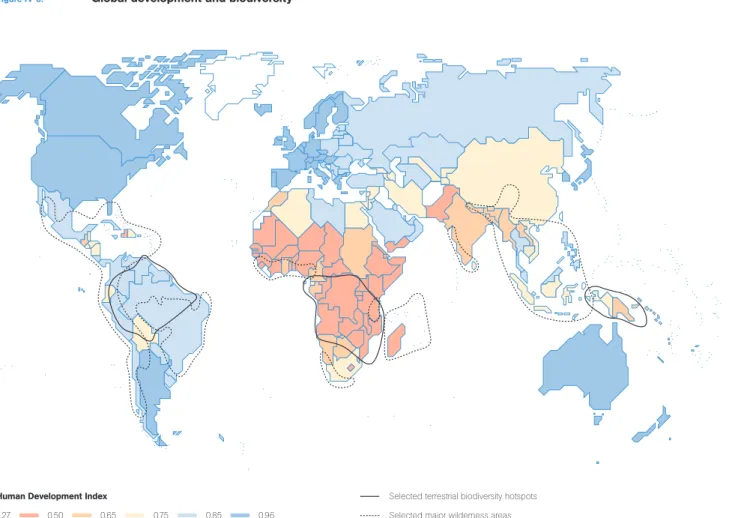
4.8. timeline of major events for the least developed countries 30
V. ChALLENgES AND gAPS 36
5.1. human and institutional capacities 36
5.2. Financial resources 36
5.3. access to technology 36
5.4. limitations in language diversity 36
VI. PRIORITIES FOR CREATINg OPPORTUNITIES FOR ThE LEAST DEVELOPED
COUNTRIES IN ThE NEw PROgRAmmE OF ACTION 39
6.1. strengthening the human and institutional capacities and resources
of the least developed countries 39
6.2. Providing large-scale opportunities for low-carbon development and
technology innovation and transfer to address social and environmental goals 42
6.3. Establishing a global framework that ensures that forests are conserved and
benefits are captured by marginal groups 42
6.4. addressing enduring inequalities in global economic relations between countries 42
6.5. strengthening the participation of the least developed countries in the Rio Conventions 43
6.6. strengthening synergistic relationships between the Rio Conventions and
other international programmes 44
VII. OVERALL INDICATORS OF SUCCESS 47
UNFCCC REDuCing vulnERability tO ClimatE anD EnviROnmEntal ChallEngEs
The challenge of adapting to climate change, particularly in the context of vulnerable and least developed countries (LDCs), is an issue that has been well recognized in the UNFCCC process. The establishment of an LDC work programme in 2001 embodies this by recognizing the urgent and immediate needs of LDCs to adapt to climate change. The work programme focuses, among others, on supporting LDCs in planning and implementing urgent and immediate adaptation actions, capacity building and increasing awareness on climate change through the national adaptation programmes of action (NAPAs). The projects identified in the NAPAs are funded through the Least Developed Countries Fund. LDCs have now prepared their NAPAs, and most have embarked on the implementation of the identified projects.
Governments at the sixteenth session of the Conference of the Parties held in Cancún, Mexico, in December 2010, further recognized that adaptation to climate change urgently requires enhanced action and international cooperation to enable and support adaptation actions aimed at reducing vulnerability and building resilience in developing countries, taking into account the urgent and immediate needs of those that are particularly vulnerable. They adopted the Cancún Agreements which comprise the Cancún Adaptation Framework. The Framework lays out important areas of cooperation between developing and developed countries for the implementation of adaptation actions. It contains provisions for support to LDCs in their transition to medium- and long-term planning and implementation of adaptation actions, building upon the experiences gained from the NAPAs.
Given the role of the UNFCCC process in providing special support to address vulnerability to climate change in LDCs, the UNFCCC secretariat took the lead in UN organizations pre-conference consultations on the theme on addressing vulnerability and protecting the environment in LDCs, as a contribution to the preparatory process for the Fourth United Nations Conference on LDCs. This publication is a result of the consultations, and provides information on support to LDCs in reducing their vulnerability to climate change, and in protecting the environment over the last decade 2001 – 2010. It further provides options for priorities on cooperation between development partners, UN agencies, multilateral development and financial institutions, and international organizations in coming up with specific proposals and deliverables in a renewed partnership for LDCs for the next decade.
I trust that this publication will enrich the substantive consultations leading to and during the Conference in Istanbul.
PREFACE
Christiana Figueres, Executive Secretary,
united nations Framework Convention on Climate Change may 2011
UNFCCC REDuCing vulnERability tO ClimatE anD EnviROnmEntal ChallEngEs
This paper has been prepared by the secretariat of the UNFCCC. It benefited from inputs from several intergovernmental and civil society organizations, including the United Nations Convention on Biological Diversity, the United Nations Convention to Combat Desertification, the United Nations Educational, Scientific and Cultural Organization, the United Nations Population Fund, the World Food Programme, the World
Meteorological Organization and the International Institute for Environment and Development. It also benefited from inputs from a pre-conference event entitled “Reducing vulnerability due to Climate Change, Climate Variability and Extremes, Land Degradation and Biodiversity Loss: Environmental and Developmental Challenges and Opportunities for LDCs” held in New York, the United States of America, on 28 February 2011.
ACkNOwLEDgEmENTS
UNFCCC
10
REDuCing vulnERability tO ClimatE anD EnviROnmEntal ChallEngEs
1. As the countries with the lowest indicators of
socio-economic development, the least developed countries (LDCs) lack many of the key elements of the adaptive capacity to respond to climate change and other environmental crises, including a stable and prosperous economy, a high degree of access to technology, clearly delineated roles and responsibilities for the implementation of adaptation activities, robust information dissemination systems and equitable access to resources. 1 On top of this, they continue to face
increasing environmental pressures and depletion of scarce natural resources, while they struggle with efforts to fight poverty and improve living standards. These efforts require higher levels of consumption and production, and this in turn would exacerbate the impacts of climate change, and lead to growth in greenhouse gas (GHG) emissions.
2. With a view to formulating and adopting policies
and measures for the sustainable development of the LDCs and their progressive integration into the world economy, the Third United Nations Conference on the LDCs adopted the Brussels Programme of Action for the Least Developed Countries for the Decade 2001–2010 (BPoA). 2 Commitment
six of the BPoA framework calls for reducing vulnerability to natural shocks and protecting the environment. This had been essential, given that LDCs are disproportionately exposed to the adverse effects of climate change, loss of biodiversity, desertification and other forms of
environmental degradation.
3. However, progress over the last decade in reducing
vulnerability and protecting the environment in the LDCs has been limited. Despite achieving the economic growth targets in the LDCs established in the BPoA, the number of people living on less than USD 1.25 a day in the LDCs actually increased by over 3 million per year from 2001 to 2007. 3 This period also saw a declining
share of manufacturing in 27 LDCs, limited transfers of technology, and increased dependence on food imports and on the export of primary commodities. 4 In addition,
minimal progress has been made towards achieving the United Nations Millennium Development Goals (MDGs) in the LDCs, on such issues as universal primary education, reducing child mortality and reducing hunger. 5
4. On the other hand, programmes for reducing
vulnerability that are specific to the three Rio Conventions, such as the least developed countries work programme (LDC work programme) under the UNFCCC, have produced some positive outcomes. However, obstacles related to the lack of financial and institutional capacity in the LDCs has made progress in increasing adaptive capacity and reducing vulnerability slow.
5. Reducing vulnerability to climate change and
environmental challenges in the LDCs over the next decade would therefore require development initiatives that are attuned to social and economic needs, and environmental sustainability. In a world constrained by ecological limits, new opportunities and technologies must be made available to the LDCs in order to achieve the goals of environmental sustainability and economic development. This will require innovative practices that depart from business-as-usual economic growth models and include strong international financial and institutional support, a shift to valuing local knowledge systems more highly, the strengthening of civil society groups, and major efforts to meet social goals in the LDCs, such as the MDGs.
6. The nature and scale support to LDCs will have
vast implications for the ability of LDCs to reduce their vulnerability to environmental crises. As an example, in terms of financial support for meeting adaptation needs, recent studies point to amounts of financing required in the range of hundreds of billions of United States dollars. 6
This reality contrasts sharply with the amount of funds that has been made available for adaptation to climate change in developing countries. Of a total USD 30 billion pledged to developing countries as fast-start finance for the 2010 – 2012 period under climate change, only between 11 and 16 per cent of the funds have been designated
for adaptation. This amounts to a meagre USD 3 billion for the entire period. 7
7. Upon this background, the UNFCCC coordinated
United Nations system preparations for the Fourth United Nations Conference on LDCs on the theme on addressing vulnerability and protecting the environment in LDCs. The preparations looked at environmental and developmental challenges and opportunities for the LDCs in reducing vulnerability due to climate change, climate variability and extremes, land degradation and loss of biodiversity. A pre-conference event on “Reducing vulnerability due to Climate Change, Climate Variability and Extremes, Land Degradation and
Biodiversity Loss: Environmental and Developmental
I. ExECUTIVE SUmmARy
UNFCCC REDuCing vulnERability tO ClimatE anD EnviROnmEntal ChallEngEs
ExECutivE summaRy
Challenges and Opportunities for LDCs” was held in New York, the United States of America, on 28 February 2011. The event reviewed the progress made in achieving Commitment 6 in the BPoA of reducing vulnerability and protecting the environment, and identified emerging priorities for the New Programme of Action. This publication presents a summary of the preparatory process, and contains priorities for creating opportunities for the least developed countries in the new programme of action on addressing vulnerability to climate and environmental challenges.
8. The publication presents that actions to support
the LDCs to reduce vulnerability and improve adaptive capacity, need to be geared towards the following goals: (a) Strengthening human and institutional capacities,
and providing adequate and predictable resources to the LDCs for reducing vulnerability to climate change and environmental degradation, and mainstreaming resilience in development planning; (b) Providing large-scale opportunities for low-carbon
development and technology innovation and transfer to address social and environmental goals; (c) Establishing a framework that ensures that forests are conserved and benefits are captured by marginal groups;
(d) Addressing enduring inequalities in global economic relations between countries;
(e) Strengthening LDC participation in the Rio Conventions and the Group of 77 and China; (f) Strengthening synergistic relationships between
the Rio Conventions and other international programmes.
9. Related to the above mentioned goals, the publication
presents the following indicators that could be used to assess the efforts of the LDCs and their development partners in addressing vulnerability of the LDCs to the impacts of climate change and environmental degradation over the next decade:
(a) Processes are established to mainstream resilience to climate change in development planning and policies, and the LDCs have developed flexible national development plans that include detailed measures to reduce their vulnerability to climate change environmental degradation;
(b) Funding provided to the LDCs is predictable, equitably distributed and adequate to meet the needs of vulnerable populations and systems as determined by science;
(c) Access to funding in relation to climate change and the environment is facilitated, and the capacity to absorb funding has been built;
(d) A global framework is established that ensures that forests are conserved and benefits are captured by marginal groups, including indigenous peoples, women and forest peoples;
(e) The objectives of the Hyogo Framework for Action 2005 – 2015: Building the Resilience of Nations and Communities to Disaster (HFA) are met by 2015 in coordination with the three Rio Conventions; (f) A global green new deal is established that
complements economic growth and employment in the LDCs, protects vulnerable groups, reduces carbon dependency and ecosystem degradation, paves the way for sustainable and inclusive growth and contributes to the achievement of the MDGs.
1 Intergovernmental Panel on Climate Change (IPCC). 2001.
Climate Change 2001: Impacts, Adaptation and Vulnerability.
2 United Nations General Assembly. 2001. Brussels Programme of Action
for the Least Developed Countries for the Decade 2001 – 2010.
3 United Nations Conference on Trade and Development (UNCTAD). 2010. The Least
Developed Countries Report 2010: Towards a New International Development Architecture for LDCs. Available at <http://www.unctad.org/en/docs/ldc2010_embargo_en.pdf>. p. 31.
4 As footnote 2 above. p. 11.
5 United Nations. 2010. The Millennium Development Goals Report.
Available at <http://www.un.org/millenniumgoals/pdf/
MDG%20Report%202010%20En%20r15%20-low%20res%2020100615%20-.pdf>.
6 World Bank. 2009. The Costs to Developing Countries of Adapting to Climate Change.
New Methods and Estimates. The Global Report of the Economics of Adaptation to Climate Change Study; and Parryet al. 2009. Assessing the costs of adaptation to climate change:
A review of the UNFCCC and other recent estimates.
7 Ciplet et al. 2010. Fast-start adaptation funding: keeping promises from Copenhagen.
UNFCCC
12
REDuCing vulnERability tO ClimatE anD EnviROnmEntal ChallEngEs
10. The LDCs are acutely vulnerable to a variety of
external shocks, including natural disasters. They are susceptible to global environmental challenges such as climate change, climate variability and extreme events, which, inter alia, exacerbate desertification and loss of biological diversity. Climate change is the world’s greatest environmental challenge – its impacts go beyond what individual states have the capacity to deal with, and the LDCs are the most exposed to these impacts. It brings heightened occurrences of extreme events such as floods, tropical cyclones, tornados, storm surges, landslides, droughts, heat stress, disease epidemics and sea level rise. The particular hazards brought about by these events are often not new; however, their intensity, magnitude and the unpredictability of their impacts have increased significantly in the recent past. 8
11. One of the commitments of the BPoA calls for
reducing vulnerability (to natural shocks) and protecting the environment. The BPoA was adopted at the Third United Nations Conference on the LDCs, which took place in May 2001. It aims at improving the human conditions of the populations of the LDCs and provides a framework for partnership between the LDCs and their development partners in order to accelerate sustained economic growth and sustainable development in the LDCs, end
marginalization by eradicating poverty, inequality and deprivation in these countries, and enable them to integrate beneficially into the global economy.
12. Actions proposed in the BPoA for reducing
vulnerability and protecting the environment in the LDCs include strengthening national strategies for sustainable development and disaster preparedness and prevention, building institutional and technological capacity, encouraging greater reliance on local knowledge systems, strengthening gender equality and integrating adaptation strategies into national development programmes. For development partners, proposed actions include providing adequate financial resources, facilitating the implementation of multilateral agreements, granting special priority to the LDCs in areas such as technology transfer, information systems and capacity-building efforts, strengthening the ability of the LDCs to participate equitably in international negotiations, and providing support for the LDCs to develop and implement national strategies for sustainable development and disaster mitigation. 9
13. Even though the BPoA did not set quantifiable goals
and targets in relation to the commitment of reducing vulnerability and protecting the environment, reports on the regional review processes from Africa and Asia-Pacific LDCs on progress in implementing the BPoA indicate that climate change is a serious challenge that threatens to wipe out development gains in many LDCs, in a number of cases posing a threat to their physical existence. 10 The
reports note that the economies of most LDCs rely heavily on climate-sensitive sectors such as agriculture, fisheries, forestry, other natural resources and tourism. They indicate that the impacts of climate change on these sectors are particularly high for the poor, who tend to live in environments that are most susceptible to droughts, floods and other extreme weather events.
14. In line with the aforementioned commitment of the
BPoA, various organizations undertook some initiatives with a specific focus on or of specific relevance to the LDCs in reducing vulnerability and increasing their adaptive capacities. For example, the Rio Conventions undertook various efforts to support countries in reducing their vulnerability to natural disasters and in protecting the environment. The UNFCCC established a special programme that focuses on implementing adaptation, capacity-building and awareness-raising in the LDCs. It also provided special support to the LDCs for them to engage in a wide range of regional and global intergovernmental initiatives to tackle climate change.
15. The United Nations Convention on Biological
Diversity (CBD) places special attention to LDCs, given that many of the LDCs are home to the world’s biodiversity hotspots. In addition, most LDCs are in Africa, a region most affected by, and most vulnerable to desertification, land degradation and droughts. The United Nations Convention to Combat Desertification (UNCCD) places special focus on LDCs and in Africa on its operations. The World Meteorological Organization (WMO, in 2003, established its Programme for the LDCs, with the objective of enhancing the capabilities of national institutions to provide relevant and timely weather, water and climate information and services to decision makers and all other users concerned.
16. However, despite these efforts, the LDCs continue
to be increasingly exposed to environmental shocks. There is, therefore, a need for renewed partnerships between the LDCs and their development partners, in order to reduce poverty and safeguard sustainable development in the LDCs.
UNFCCC REDuCing vulnERability tO ClimatE anD EnviROnmEntal ChallEngEs
intRODuCtiOn
17. In preparation for the Fourth United Nations
Conference on the LDCs, to take place in Istanbul, Turkey, in May 2011, this publication assesses the efforts made through the United Nations system, in particular through the Rio Conventions and by the WMO, to address environmental vulnerability in the LDCs over the last decade. Further, it makes recommendations for the next decade of 2011 – 2020. In addition, the paper touches on vulnerability and how the consideration of vulnerability could be improved in defining the criteria for the graduation from LDC status.
8 Bangladesh Centre for Advanced Studies. 2010. A Review and Synthesis
of National Adaptation Programmes of Action prepared by LDCs. p. 2.
9 As footnote 8 above. pp. 45 – 48.
10 Outcomes of the regional review meetings for Africa and Asia-Pacific.
UNFCCC REDuCing vulnERability tO ClimatE anD EnviROnmEntal ChallEngEs
3.1. FACTORS CONTRIbUTINg TO VULNERAbILITy IN ThE LEAST DEVELOPED COUNTRIES
18. The impacts of climate change, climate variability
and extreme events, land degradation and loss of biological diversity are experienced in multiple ways: in loss of human lives; as threats to livelihoods; in increases in the prevalence and severity of diseases; as constraints on and shocks to economic development; in increases in the magnitude and frequency of floods, droughts and other disasters; as recurring or persistent famine; as human displacement; and as disruptions to social and political systems. The LDCs are extremely vulnerable to these impacts and their consequences and have little or no means of coping with them given their structural handicaps.
19. The LDCs lack many of the key elements of the
adaptive capacity to respond to climate change and other environmental crises, including a stable and prosperous economy, a high degree of access to technology, clearly delineated roles and responsibilities for the implementation of adaptation activities, robust information dissemination systems and equitable access to resources. 11 Currently, the LDCs account for 11 per
cent of the world’s population but only 0.6 per cent of global gross domestic product. 12
20. In addition, the combination of environmental
effects and population growth has strongly undermined the capacity of the LDCs to catch up with the income levels of the more advanced developing countries. Between 2000 and 2008 real economic growth in the LDCs was almost as high as in other developing countries, 6.6 per cent per annum on average, but, adjusted for environmental effects and population growth, the real rate of economic growth in the LDCs was only about half of what it was in other developing countries.
21. The LDCs have experienced minimal progress towards
the achievement of the MDGs on such issues as universal primary education, reducing child mortality and reducing hunger. 13 Despite achieving the economic growth targets
established in the BPoA, the number of people living on less than USD 1.25 a day in the LDCs actually increased by over three million per year from 2001 to 2007. 14 This period also
saw a declining share of manufacturing in 27 LDCs, limited transfers of technology, and increased dependence on food imports and on the export of primary commodities. 15
22. Progress in strengthening adaptive capacity and
reducing vulnerability in the LDCs has also been weak, and they continue to be disproportionately exposed to the adverse effects of climate change and interrelated issues of drought, desertification, land degradation and loss of biological diversity. A 2010 report from the United Nations Conference on Trade and Development (UNCTAD) found that the frequency and intensity of extreme weather events in the LDCs (e.g. droughts, extreme temperatures and floods) have been increasing, with five times as many such incidents occurring during the period 2000 – 2010 as during the period 1970 – 1979. The number of people in the LDCs affected by these extreme events has almost doubled, rising from 100 million during the period 1970 – 1979 to 193 million over the period 2000 – 2010. 16
23. The LDCs have the largest existing burdens of
climate-sensitive diseases and the least effective public-health systems. They suffer 34 per cent of the global human deaths linked to climate change, the largest causes being the spread of malaria and waterborne diseases, and this number is expected to rise to 41 per cent by 2030. 17
III. ThE LEAST DEVELOPED
COUNTRIES AND ThEIR
VULNERAbILITy TO NATURAL
ShOCkS
11IPCC. 2001. Climate Change 2001: Impacts, Adaptation and Vulnerability. 12 UNCTAD. 2005. Statistical Profiles of the Least Developed Countries 2005.
Available at <http://www.unctad.org/Templates/Page.asp?intItemID=3713&lang=1>.
13 United Nations. 2010. The Millennium Development Goals Report.
Available at <http://www.un.org/millenniumgoals/pdf/
MDG%20Report%202010%20En%20r15%20-low%20res%2020100615%20-.pdf>.
14 UNCTAD. 2010. The Least Developed Countries Report 2010: Towards a
New International Development Architecture for LDCs.
Available at <http://www.unctad.org/en/docs/ldc2010_embargo_en.pdf>. p. 31.
15 As footnote 14 above. p. 11. 16 As footnote 14 above. p. IX.
UNFCCC
16
REDuCing vulnERability tO ClimatE anD EnviROnmEntal ChallEngEs
thE lEast DEvElOPED COuntRiEs anD thEiR vulnERability tO natuRal shOCks
24. In addition to fatalities, disasters such as floods,
excessive rainfall, droughts and cyclones cause considerable economic loss and disruption of livelihoods. In the context of a globalized economy, a lack of economic diversity and a reliance on climate-sensitive commodities for export, such as agricultural products, expose the LDCs to the double threat of economic and environmental shocks. 18 It is estimated, for example, that, for every 1 °C
rise in average global temperatures, average annual growth in poor countries could drop by 2 to 3 percentage points, with no change in the growth performance of the developed countries. 19
25. Given that many LDCs depend primarily on
agricultural activities for both economic development and the subsistence of local populations, disasters can trap them in a cycle of economic and environmental crises. Losses in crop production can exacerbate livelihood insecurity and, in turn, reduce the capacity to prepare for and respond to future disasters. A report from the Global Humanitarian Forum, led by former United Nations Secretary-General Kofi Annan, found that climate change already delivers economic losses of USD 125 billion a year, with 90 per cent of the burden experienced by developing countries. 20
26. In addition to facing disproportionate exposure
to the impacts of climate change and environmental degradation, the LDCs are the least capable of preparing for and recovering from the impacts – what is known as adaptive capacity. As measured by the United Nations, the LDCs have the lowest indicators of socio-economic development, including income, human resources such as nutrition, health, education and adult literacy, and economic vulnerability. 21
27. Many of the impacts of climate change, land
degradation and loss of biodiversity over the next few decades are unavoidable. GHG emissions that have already been released into the atmosphere will continue to warm the planet regardless of the changes that we make today. And, while a high level of harm to human populations in the LDCs is inevitable, the scale of this harm will be influenced by measures taken to build adaptive capacity in the LDCs, taking into account their vulnerability.
3.2. ASSESSINg VULNERAbILITy IN ThE LEAST DEVELOPED COUNTRIES
28. Certain groups of people may be more or less
geographically exposed to physical environmental threats, such as sea level rise, droughts, floods and diseases, than others. Various characteristics of a group of people and their context can make them more or less likely to be able to prepare for, cope with or adapt to such impacts. Characteristics that typically enable a group to have adaptive capacity, and thus be less vulnerable to adverse effects related to environmental change, include a stable and prosperous economy, a high degree of access to technology, clearly delineated roles and responsibilities for the implementation of adaptation activities, robust information dissemination systems and equitable access to resources. 22 These are all characteristics that the LDCs,
by consequence of having the lowest socio-economic indicators of development, often lack. Thus, adaptive capacity among the LDCs is generally weak.
29. The Intergovernmental Panel on Climate Change
(IPCC) defines vulnerability as the degree to which a system is susceptible to, and unable to cope with, adverse effects of climate change, including climate variability and extremes. 23 The vulnerability of a group of people
depends on the extent to which it is exposed to external change, including environmental or socio-political stress, its sensitivity or the degree to which it is affected due to exposure, and its adaptive capacity or ability to make changes necessary to avoid adverse consequences.
30. Vulnerability assessments are a useful tool for
planning local, national and global actions to respond to the impacts of climate change, climate variability and extreme events, desertification and loss of biological diversity. In the context of climate change, for instance, vulnerability assessments are used for adaptation interventions, such as for the national adaptation programmes of action (NAPAs). Vulnerability assessments may also be used to influence policymaking and the allocation of financial resources among countries or regions. They will also be an important component of the review of progress in the implementation of commitments that are aiming to reduce vulnerability. At the time of its adoption, the BPoA did not set any quantifiable goals or targets for reducing vulnerability and protecting the environment, but instead insisted that the LDC-specific objectives defined in Agenda 21 and Rio + 5, as well as commitments resulting from multilateral environmental agreements, must be the basis for actions.
UNFCCC REDuCing vulnERability tO ClimatE anD EnviROnmEntal ChallEngEs
thE lEast DEvElOPED COuntRiEs anD thEiR vulnERability tO natuRal shOCks
31. There is no right or objective method to measure
vulnerability. However, various decisions must be made in any vulnerability assessment, and much depends on the criteria, methods and data available. Decisions must be made on criteria such as: the entity or system assessed (for example, a country population distribution, a community or a forest ecosystem); the threat and its relationship to climate change (for example, sea level rise or disease); the notion of ‘worse’ or ‘better’ with respect to the entity and the threat (for example, the number of people made homeless or the cost in USD); the time frame used for the assessment (for example, 10 as compared to 50 years); and the ability of a given entity to react in response to a threat, or adaptive capacity, and how this should be measured. 24
32. The most useful vulnerability models for informing
concrete actions on the ground consider local, social and ecological systems and needs, local cultures, politics, values and knowledge systems. Such approaches actively engage various stakeholders, particularly those that are considered vulnerable. This is particularly important when vulnerability assessments are used to design interventions to increase adaptive capacity and reduce vulnerability in a particular locality.
33. Noting that vulnerability assessments play an
important role in guiding policy action and prioritizing the flow of financial resources, it is important that whatever criteria are used, they are clear about the assumptions and decisions that have been made, and that there is a strong rationale to support the decisions. 25 Most importantly, vulnerable groups must
be adequately involved in the processes of developing assessment criteria and designing and implementing plans to mitigate problems and strengthen adaptive capacity.
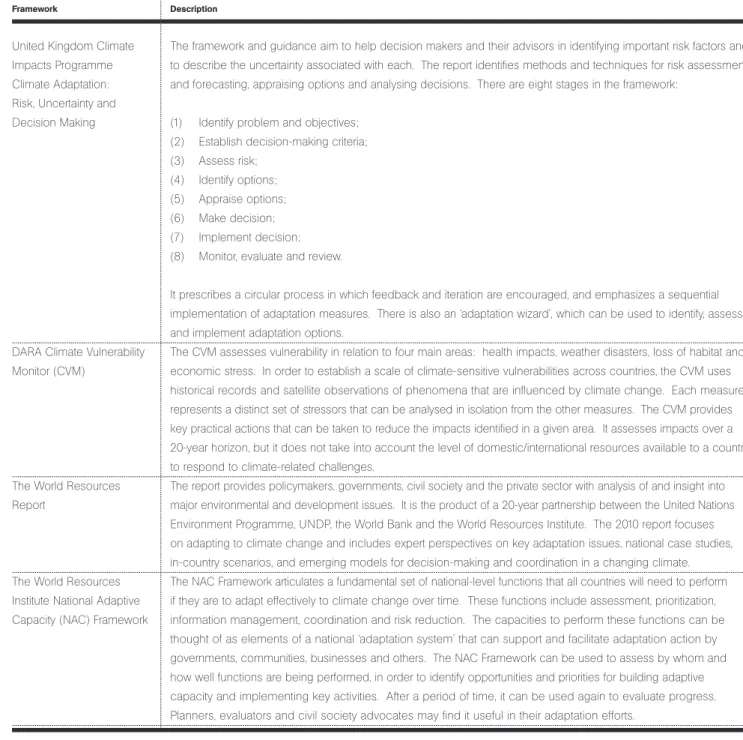
Table III-1 provides descriptions of selected frameworks available for assessing vulnerability and strengthening adaptive capacity.
18 O’Brien KL and Leichenko RM. 2000. Double exposure: assessing the impacts
of climate change within the context of economic globalization. Global Environmental Change. 10: pp. 221 – 232.
19 UNCTAD. 2010. The Least Developed Countries Report 2010: Towards a New International
Development Architecture for LDCs.
Available at <http://www.unctad.org/en/docs/ldc2010_embargo_en.pdf>. p. IX.
20 The Global Humanitarian Forum. 2010. The Anatomy of A Silent Crisis.
Available at <http://www.eird.org/publicaciones/humanimpactreport.pdf>.
21 United Nations Office of the High Representative for the Least Developed Countries,
Landlocked Developing Countries and Small Island Developing States. 2011.
The Criteria for the identification of the LDCs.
Available at <http://www.un.org/special-rep/ohrlls/ldc/ldc%20criteria.htm>.
22 IPCC. 2001. Climate Change 2001: Impacts, Adaptation and Vulnerability. 23 IPCC. 2007. Climate Change 2007: Impacts, Adaptation and Vulnerability. 24Füssel HM. 2007. Adaptation planning for climate change: Concepts, assessment
approaches, and key lessons. Sustainability Science 2(2): p. 265;
Füssel HM. 2006. Climate change vulnerability assessments: An evolution of conceptual thinking. Climatic Change. 75(3): p. 301; and
Ionescu C. 2009. Towards a formal framework of vulnerability to climate change.
Environmental Modelling Assessment. 14(1): p. 1.
25 O’Brien KL, Eriksen S, Schjolden A and Lygaard L. 2005. What’s in a word? Interpretations
UNFCCC
18
REDuCing vulnERability tO ClimatE anD EnviROnmEntal ChallEngEs
thE lEast DEvElOPED COuntRiEs anD thEiR vulnERability tO natuRal shOCks
Framework Description
intergovernmental panel on Climate Change technical guidelines for assessing Climate Change impacts and adaptations
a set of technical guidelines for the scientists to assess the impacts of potential climate change and evaluate appropriate adaptations. the guidelines outline a seven-step process:
(1) definition of the problem; (2) selection of the methods; (3) testing of the methods; (4) selection of the scenarios;
(5) assessment of biophysical and socio-economic impacts; (6) assessment of autonomous adjustments;
(7) evaluation of adaptation strategies. a range of methods is identified at each step. united nations
development programme adaptation policy Framework
the framework provides guidance on designing and implementing projects that reduce vulnerability to climate change, by both reducing potential negative impacts and enhancing any beneficial consequences of a changing climate. it emphasizes five major principles: assessing adaptation policies and measures in a developmental context; explicitly including adaptation to short-term climate variability and extreme events as a step towards reducing vulnerability to long-term change; recognizing that adaptation occurs at different levels of society, including the local level; recognizing that the adaptation strategy and the process by which it is implemented are equally important; and building adaptive capacity to cope with the current climate is one way of preparing society to better cope with the future climate. assessments of impacts
and adaptations to Climate Change in multiple Regions and sectors (aiaCC)
aiaCC aims to fill gaps in the current understanding of vulnerability and create opportunities for adaptation by funding, training, and mentoring developing country scientists to undertake multi-sector and multi-country research of priority to developing countries. While an explicit framework for undertaking vulnerability and adaptation assessments is not prescribed, a toolkit for researchers, including tools that are useful in the design of projects as well as the tenets of a general approach, is provided. the aiaCC regional studies are diverse in their objectives, scientific methods, and the sectors and systems to be investigated, but they share a common assessment approach that places understanding vulnerability at the centre of the assessment, engages stakeholders in the assessment process and gives priority to strengthening the information base for making decisions about adaptation to climate change. guidelines for the
preparation of national adaptation programmes of action (napas)
napas provide a process for the least developed countries (ldCs) to address their current and urgent adaptation needs. Countries are required to rank adaptation measures for funding on the basis of such criteria as urgency and cost-effectiveness. the napa guidelines provide some guidance on the process of compiling a document that specifies priority adaptation actions in the ldCs; however, they do not provide a structured framework. the guiding elements emphasize:
(1) a participatory approach involving stakeholders; (2) a multidisciplinary approach;
(3) a complementary approach that builds on existing plans and programmes; (4) sustainable development;
(5) gender equity;
(6) a country-driven approach; (7) sound environmental management; (8) Cost-effectiveness;
(9) simplicity;
(10) Flexibility based on country-specific circumstances.
UNFCCC REDuCing vulnERability tO ClimatE anD EnviROnmEntal ChallEngEs
thE lEast DEvElOPED COuntRiEs anD thEiR vulnERability tO natuRal shOCks
a The descriptions of the first five listed frameworks have been adapted from those available at <http://unfccc.int/2674.php>.
Framework Description
united Kingdom Climate impacts programme Climate adaptation: Risk, uncertainty and decision making
the framework and guidance aim to help decision makers and their advisors in identifying important risk factors and to describe the uncertainty associated with each. the report identifies methods and techniques for risk assessment and forecasting, appraising options and analysing decisions. there are eight stages in the framework:
(1) identify problem and objectives; (2) establish decision-making criteria; (3) assess risk;
(4) identify options; (5) appraise options; (6) make decision; (7) implement decision; (8) monitor, evaluate and review.
it prescribes a circular process in which feedback and iteration are encouraged, and emphasizes a sequential implementation of adaptation measures. there is also an ‘adaptation wizard’, which can be used to identify, assess and implement adaptation options.
daRa Climate vulnerability monitor (Cvm)
the Cvm assesses vulnerability in relation to four main areas: health impacts, weather disasters, loss of habitat and economic stress. in order to establish a scale of climate-sensitive vulnerabilities across countries, the Cvm uses historical records and satellite observations of phenomena that are influenced by climate change. each measure represents a distinct set of stressors that can be analysed in isolation from the other measures. the Cvm provides key practical actions that can be taken to reduce the impacts identified in a given area. it assesses impacts over a 20-year horizon, but it does not take into account the level of domestic/international resources available to a country to respond to climate-related challenges.
the World Resources Report
the report provides policymakers, governments, civil society and the private sector with analysis of and insight into major environmental and development issues. it is the product of a 20-year partnership between the united nations environment programme, undp, the World bank and the World Resources institute. the 2010 report focuses on adapting to climate change and includes expert perspectives on key adaptation issues, national case studies, in-country scenarios, and emerging models for decision-making and coordination in a changing climate. the World Resources
institute national adaptive Capacity (naC) Framework
the naC Framework articulates a fundamental set of national-level functions that all countries will need to perform if they are to adapt effectively to climate change over time. these functions include assessment, prioritization, information management, coordination and risk reduction. the capacities to perform these functions can be thought of as elements of a national ‘adaptation system’ that can support and facilitate adaptation action by governments, communities, businesses and others. the naC Framework can be used to assess by whom and how well functions are being performed, in order to identify opportunities and priorities for building adaptive capacity and implementing key activities. after a period of time, it can be used again to evaluate progress. planners, evaluators and civil society advocates may find it useful in their adaptation efforts.
UNFCCC
20
REDuCing vulnERability tO ClimatE anD EnviROnmEntal ChallEngEs
thE lEast DEvElOPED COuntRiEs anD thEiR vulnERability tO natuRal shOCks
the climate impacts in the least developed countries (lDCs) are quite diverse. however, to give a sense of some of the challenges that are being faced by the lDCs, the following is a short case study of climate impacts in bangladesh, based on the information included in its national adaptation programme of action. a
bangladesh has a population of about 131 million people, with 36 per cent of the people living on less than a dollar a day. most people in bangladesh live in rural areas and the main industry is agriculture. however, the proportion of people living in urban areas is growing. the geographical setting of bangladesh makes the country vulnerable to natural disasters, the most common and severe of which are related to water, including floods and cyclonic storms. in 2004, floods inundated 38 per cent of the country. the pattern and behaviour of the climate and weather play a
significant role in relation to freshwater availability, agriculture, economic growth and performance, and livelihoods. Climate change induced challenges in bangladesh include: scarcity of freshwater due to less rain and higher evapo-transpiration in the dry season; drainage congestion due to higher water levels in conjunction with the rise in sea level; river bank erosion; frequent floods and prolonged and widespread drought; and higher salinity on the surface and in the ground and soil in the coastal zones. the population living in the coastal areas is more vulnerable to
climate change impacts than the population in other areas. the overall trend in the annual mean maximum temperature showed a significant increase over the period 1961 – 1990. in addition, the adverse effects of the erratic nature of rainfall and temperature on agricultural productivity and availability
of freshwater are already quite evident in many areas. Further, the rate of sea level rise in recent years is many times higher than the mean rate of global sea level rise over 100 years, although some of this change is likely due to tectonic activity. in addition, there is clear evidence of increased saline intrusion in the coastal zones, making access to freshwater a problem.
much of the future vulnerability due to climate change will not necessarily involve the addition of any new climate-related hazards to the already well-known ones of floods, droughts and cyclones, but both the frequency and the intensity of such climatic events will increase in the future. in particular, the size of the areas prone to floods, cyclones and salinity intrusion may all increase in the future. biodiversity will also be affected, with the most pronounced impact on the sundarbans mangrove forest. the degradation of forest quality may cause a gradual depletion of the rich diversity in the forest flora and fauna of the sundarbans ecosystem.
the ultimate key impacts of climate change and variability on people in bangladesh will be on the livelihoods of the peoples depending on the natural resource base and the services of other sectors, including infrastructure and industries. many anticipated adverse impacts of climate change, including sea level rise, higher temperatures, enhanced monsoon precipitation and run-off, potentially reduced precipitation in the dry season and an increase in cyclone intensity, would in fact aggravate many of the existing stresses that already pose a serious impediment to the process of economic development in bangladesh. the most damaging effects of climate change are floods, salinity intrusion and droughts, which are found to drastically affect crop productivity almost every year.
Box III-1. A closer look at climate impacts in Bangladesh
UNFCCC
22
REDuCing vulnERability tO ClimatE anD EnviROnmEntal ChallEngEs
4.1. FOCUS ON ThE LEAST DEVELOPED COUNTRIES IN ThE RIO CONVENTIONS AND by ThE wORLD mETEOROLOgICAL ORgANIzATION
34. The Earth Summit that was held in Rio de Janeiro,
Brazil, in 1992 culminated in the establishment of three Rio Conventions, the UNFCCC, UNCCD and CBD, to support specific environmental aspects for the implementation of Agenda 21 and the principles contained in the Rio Declaration on Environment and Development and the Statement of Principles for the Sustainable Management of Forests. 26 Agenda 21 is a
comprehensive plan of actions to be undertaken globally, nationally and locally by organizations of the United Nations System, governments and major groups in every area in which humans impact on the environment. The Rio Declaration on Environment and Sustainable Development consists of 27 principles intended to guide future sustainable development around the world. Principle 6 of the declaration specifically states that “the special situation and needs of developing countries,
particularly the least developed and those most
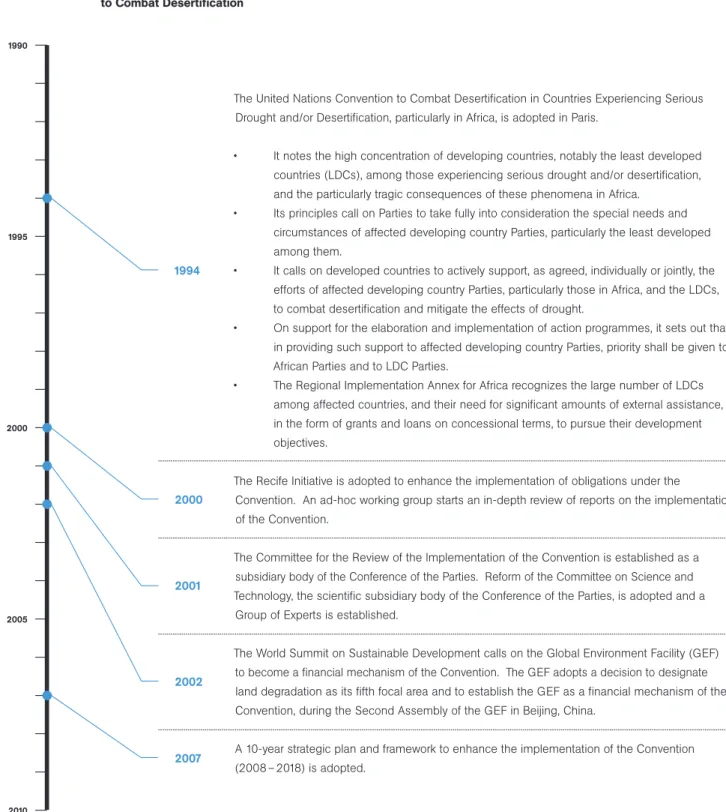
environmentally vulnerable, shall be given special priority” and that “international actions in the field of environment and development should also address the interests and needs of all countries”. The UNFCCC and CBD were adopted in 1992, while UNCCD was adopted in 1994.
35. WMO originated from the International
Meteorological Organization, which was founded in 1873. Established in 1950, WMO became the specialized agency of the United Nations for weather and climate, hydrology and related geophysical sciences. In collaboration with other United Nations agencies and the national meteorological and hydrological services (NMHSs), WMO supports the implementation of a number of environmental conventions and is instrumental in providing advice and assistance to governments on related matters. Its activities contribute towards ensuring the sustainable development and well-being of nations. 27
36. The three Rio Conventions and WMO have
individually and jointly, and in collaboration with other development partners, contributed towards achieving the goal of reducing vulnerability and protecting the environment in the LDCs over the last decade by recognizing the special situations of the LDCs in their work.
37. The UNFCCC recognizes the specific needs and
special situations of the LDCs under Article 4, paragraph 9, of the Convention. In 2001, in implementing Article 4, paragraph 9, the UNFCCC established the LDC work programme, containing actions to support the LDCs in dealing with the adverse effects of climate change. These included:
(a) Strengthening existing and, where needed, establishing national climate change secretariats and/or focal points;
(b) Providing training, on an ongoing basis, in negotiating skills and language;
(c) Supporting the preparation and implementation of NAPAs;
(d) Promotion of public awareness programmes; (e) Development and transfer of technology, particularly
adaptation technology;
(f) Strengthening the capacity of meteorological and hydrological services.
38. The LDC work programme was established together
with the Least Developed Countries Fund (LDC Fund) to support its implementation, and the Least Developed Countries Expert Group (LEG) to provide advice and technical guidance on NAPAs. The UNFCCC has therefore, in the last decade, focused its support for the LDCs on the LDC work programme and, in addition, on integrating the special needs of the LDCs into all areas of its work. 28
IV. kEy mEASURES TO
ADDRESS VULNERAbILITy
IN ThE LEAST DEVELOPED
COUNTRIES UNDER
ThE RIO CONVENTIONS
AND ThE wORLD
mETEOROLOgICAL
ORgANIzATION
UNFCCC REDuCing vulnERability tO ClimatE anD EnviROnmEntal ChallEngEs
kEy mEasuREs tO aDDREss vulnERability in thE
lEast DEvElOPED COuntRiEs unDER thE RiO COnvEntiOns anD thE WORlD mEtEOROlOgiCal ORganizatiOn
39. Many LDCs are home to the world’s biodiversity
‘hotspots’ (see figure IV-3). As a result, CBD, in its work, recognizes the special conditions of the LDCs and has made a number of decisions that call for addressing issues that are pertinent and related to the LDCs. These decisions prioritize support for the LDCs in the administration of the Convention and the budget for its programme of work, which provides funding to the LDCs for them to attend relevant meetings and capacity-building workshops.
40. UNCCD has a special focus on the LDCs and the
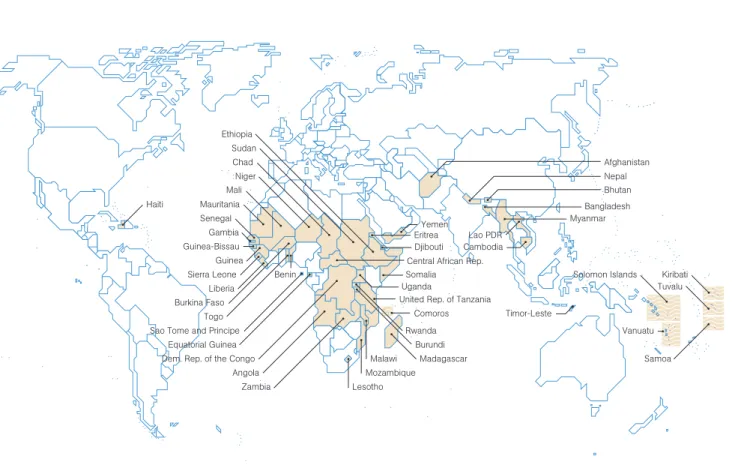
African region. Most of the world’s LDCs are in Africa
(see figure IV-5), which is also the region most affected by, and vulnerable to, desertification, land degradation and drought. As recognized in the Convention, desertification, land degradation and drought are key issues in many LDCs. The situation is expected to worsen due to climate change, with profound effects on water stress and food security. UNCCD has therefore taken steps to address the specific needs and challenges in the LDCs when addressing desertification, land degradation and drought.
41. Under WMO, in 2003 a special programme for
the LDCs was established as a contribution to the implementation of the BPoA. The WMO Programme for the LDCs aims to enhance the capacity of NMHSs to contribute effectively to the socio-economic development of these countries. This includes continually reviewing the needs of the NMHSs of the LDCs and concentrating efforts on securing funding for a number of countries at a time, in order to produce tangible and lasting results. A special WMO Trust Fund for the LDCs was also established to support the implementation of the programme. 29
42. The three Rio Conventions and WMO have
provided support to the LDCs with a view to building their resilience and strengthening their adaptive capacities to deal with climate change, climate variability and extreme events, desertification and loss of biological diversity. Their activities have supported strengthening human and institutional capacities, strengthening data- and information-related capacities, formulating national environmental plans, developing strategies for implementing the plans, accessing financial and technical support for implementing the plans, and strengthening and supporting participation in relevant intergovernmental and multilateral processes relating to the environment. They have also supported the promotion of public-private partnerships in addressing environmental problems.
4.2. bUILDINg RESILIENCE AND STRENgThENINg ADAPTIVE CAPACITIES
4.2.1. STRENgThENINg hUmAN AND INSTITUTIONAL CAPACITIES
43. The need for capacity-building to assist countries,
especially the LDCs, to respond to environmental challenges has been recognized throughout the Rio Conventions and by WMO. The UNFCCC, in establishing the LDC work programme, also established an expert group, the LEG, with a mandate to, among other things, advise on capacity-building needs for the LDCs in implementing the work programme. The result has been the formulation and implementation of specific activities and programmes in the form of training, guidelines and customized workshops targeted at addressing the specific needs of the LDCs by the LEG in partnership with various development partners and organizations.
44. As an example, in 2003, the United Nations Institute
for Training and Research, in partnership with the Global Environment Facility (GEF) and the United Nations Development Programme (UNDP), implemented a project for building the human and institutional capacities of the climate change focal points in 46 LDC Parties. The aim of the project was to equip and train, with information and communication technologies, LDC UNFCCC focal points, and to assist them in planning sustained activities to enhance their negotiating and language skills in the context of the UNFCCC. An immediate result expected from this project was improved communication between the LDC Parties and the secretariats of the UNFCCC and the GEF, and for the LDCs to have a better understanding of GEF interventions. In addition, the project aimed to improve the understanding of the secretariats of the UNFCCC and the GEF and of other involved agencies of the needs of the LDCs.
26<http://www.un.org/geninfo/bp/enviro.html>. 27<http://www.wmo.int>.
28 UNFCCC decision 5/CP.7. Available at <http://unfccc.int/resource/docs/cop7/13a01.pdf>. 29 WMO. 2003. Fourteenth World Meteorological Congress – Proceedings.
UNFCCC
24
REDuCing vulnERability tO ClimatE anD EnviROnmEntal ChallEngEs
kEy mEasuREs tO aDDREss vulnERability in thE
lEast DEvElOPED COuntRiEs unDER thE RiO COnvEntiOns anD thE WORlD mEtEOROlOgiCal ORganizatiOn
45. WMO has developed and implemented programmes
that have directly benefited the LDCs with respect to human and institutional capacities, in areas where the LDCs themselves would not have acquired the resources do so. It has helped set up a global hydrological network, the World Hydrological Cycle Observing System, for monitoring water quality and assessing water resources, an abiding prerequisite for sustainable development and for reducing water-related hazards such as floods and droughts. It has coordinated the active promotion of a consensus approach and regional networking for the development and application of climate information services and products, through Regional Climate Outlook Forums, El Niño and La Niña updates, and regional showcase projects. It has developed global- and regional-scale climate prediction infrastructure and support for capacity-building in climate information and prediction services to assist the LDCs effectively incorporate climate issues into national sustainable development agendas. The WMO Disaster Risk Reduction (DRR) Programme has assisted the LDCs to improve their understanding and assessment of impacts, vulnerability and adaptation, and to make informed decisions on practical adaptation actions and measures to respond to climate change on a sound, scientific, technical basis.
46. WMO has provided specialized training to
technicians, weather forecasters and meteorologists from a large number of LDCs through its scientific and technical programmes and a network of regional training and specialized centres.
4.2.2. STRENgThENINg DATA- AND INFORmATION-RELATED CAPACITIES
47. NMHSs play an important role in empowering
people by providing timely advice and early warnings on weather, climate and water, and information on tropical cyclones, floods, droughts, bush and forest fires, and heat waves and cold spells. This enables people to protect themselves by taking relevant preventive or mitigation measures.
48. Over the last decade, significant developments in
monitoring, detecting, analyzing, forecasting and the warning of weather-, water- and climate-related hazards have led to significant opportunities for reducing the impacts of related disasters. For example, over the last 25 years there has been an almost four-fold increase in the number of climate-related disasters and a five-fold increase in the associated economic losses, whereas the loss of lives has in fact decreased to nearly one third of its previous
value. 30 This is due to several factors. A critical factor is
the continuous development of natural-hazard monitoring and detection and the development of specific end-to-end early warning systems, such as those for tropical cyclones. The international movement in disaster risk management is supported by the HFA.
49. Under its Programme for the LDCs, WMO conducted
capacity-building activities to promote the beneficial use of weather-, climate- and water-related information, products and services in various socio-economic sectors, such as agriculture and food security, health, DRR, transport, environment, water resource management, energy and tourism. Further, WMO contributed to global efforts to monitor the environment and address potential hazards such as global warming, climate change and sea level rise, and in assessing the predictability of climate on seasonal to inter-annual timescales. WMO contributed significantly to the development and use of modern Climate Data Management Systems in 40 LDCs and to the rescue of historical records at risk of deterioration in order to secure complete and safe long-term climate records. It supported the preparation and issuance of annual global statements on the state of the Earth’s climate, paying particular attention to regional aspects, based on the regional information provided by the NMHSs and a worldwide network of experts.
50. So far, the WMO Programme for the LDCs is
supported by the World Weather Watch, the World Climate Programme, the Atmospheric Research and Environment Programme, the Applications of Meteorology Programme, the Hydrology and Water Resources Programme, the Education and Training Programme, the Technical Cooperation Programme, the Regional Programme and two cross-cutting programmes: the Natural Disaster Prevention and Mitigation Programme and the WMO Space Programme.
51. WMO and the NMHSs are providing early warnings
of extreme weather, climate or hydrological events, which are dispatched immediately to newspapers, radio and television stations, emergency services, decision makers and other users. Thanks to this information, many lives are saved through timely evacuations.
UNFCCC REDuCing vulnERability tO ClimatE anD EnviROnmEntal ChallEngEs
4.2.3. SUPPORTINg ThE DEVELOPmENT OF NATIONAL ENVIRONmENTAL ACTION PLANS OR PROgRAmmES
52. Under each of the Rio Conventions, the LDCs have
received financial and technical assistance to develop national strategies, plans or programmes for implementing specific measures aimed at reducing vulnerability and protecting the environment.
53. Under the UNFCCC, as at 12 November 2010 45 LDCs
had prepared and submitted NAPAs to the secretariat in order to receive funding for identified projects from the LDC Fund. 31 The NAPAs provide a process for the LDCs
to identify urgent and immediate needs to respond to the adverse effects of climate change in relation to which further delay could increase vulnerability or increase costs at a later stage. They provide the main avenue for translating global commitments to vulnerability reduction under the UNFCCC into tangible planning and action on the ground in the LDCs. In the NAPA preparation process, the LDCs were supported by: the guidelines for the preparation of NAPAs; 32 regional training workshops on
the preparation of NAPAs; technical guidance and advice on the preparation of NAPAs from the LEG; and funding for the preparation of NAPAs through the LDC Fund. These NAPAs have identified that most adaptation measures are urgently needed in the sectors of agriculture and food security, water resources, and coastal and marine ecosystems, followed by the areas of terrestrial ecosystems, early warning and disaster management. The NAPAs also identify the need for urgent interventions in the areas of health, energy, education, capacity-building and public awareness.
54. At least 44 LDCs had also prepared national
biodiversity strategies and action plans or equivalent instruments (NBSAPS) under CBD as at 31 December 2010. 33 These plans enable the identification of national
strategies, plans or programmes for the conservation and sustainable use of biological diversity. CBD has supported countries in preparing these plans through guidelines 34
and online training modules, 35 and regional
capacity-building workshops to strengthen national capacity for the development, implementation, review and update of NBSAPS and the integration of biodiversity-related concerns into relevant sectors and cross-sectoral strategies. These plans have been developed with funding from the GEF.
55. Under UNCCD, countries have prepared national
action programmes (NAPs) to spell out practical steps and measures to be taken to combat desertification in specific ecosystems. As at 22 February 2011 23 LDCs in Africa and
five in Asia and the Pacific had prepared and submitted their NAPs. 36 These NAPs have been strengthened by the
Action Programmes on Sub-regional and Regional levels.
56. Under its Programme for the LDCs, WMO assisted
several LDCs (Comoros, Kiribati, Liberia and Vanuatu) to develop and modernize plans for their NMHSs in order to align them with national development frameworks, including NAPAs and the MDGs, and assisted them in their consultations with government officials, United Nations country teams, funding agencies and other stakeholders.
kEy mEasuREs tO aDDREss vulnERability in thE
lEast DEvElOPED COuntRiEs unDER thE RiO COnvEntiOns anD thE WORlD mEtEOROlOgiCal ORganizatiOn
(1) 48 countries had received funding to prepare national adaptation programmes of action (naPas).
(2) 45 countries had submitted completed naPas. (3) 38 countries had submitted one or more naPa project
proposals to the global Environment Facility (gEF). (4) 19 projects had been endorsed by the Chief Executive
Officer (CEO) of the gEF.
(5) 22 donors had pledged usD 290 million to the least Developed Countries Fund (lDC Fund). Cumulative net funding allocated, committed or disbursed by the gEF Council and the CEO amounts to usD 135 million. the balance of these sums indicates the level of available funds in the lDC Fund is usD 155 million.
(6) analysis of the lDC Fund portfolio suggests that agriculture and water management have been, by far, the most important project components funded to date. Disaster preparedness, coastal zone management, health and infrastructure have also been targeted in the gEF adaptation portfolio.
Box IV-2. Key markers for the least developed countries
under the UNFCCC as at May 2011.
30 WMO. 2007. Climate information for adaptation and development needs.
WMO-No. 1025, Geneva. p. 44. Available at <http://www.wmo.int/pages/publications/ showcase/documents/WMO_1025_web_E.pdf>. 31 <http://unfccc.int/resource/docs/2010/sbi/eng/17.pdf>. 32 <http://unfccc.int/files/cooperation_and_support/ldc/application/pdf/annguide.pdf>. 33<http://www.cbd.int/doc/nbsap/nbsap-status.doc>. 34 <http://www.cbd.int/nbsap/guidance-tools/guidelines.shtml>. 35 <http://www.cbd.int/nbsap/training/>. 36 <http://www.unccd.int/actionprogrammes/menu.php>.
UNFCCC
26
REDuCing vulnERability tO ClimatE anD EnviROnmEntal ChallEngEs
kEy mEasuREs tO aDDREss vulnERability in thE
lEast DEvElOPED COuntRiEs unDER thE RiO COnvEntiOns anD thE WORlD mEtEOROlOgiCal ORganizatiOn
4.2.4. SUPPORTINg ThE ImPLEmENTATION OF NATIONAL ENVIRONmENTAL PLANS AND ThEIR INTEgRATION INTO NATIONAL DEVELOPmENT POLICIES
57. The preparation of national environmental plans is
not an end in itself. Under the Rio Conventions and WMO, the LDCs have been provided with further technical guidance and advice, including financial resources or strategies to mobilize resources, in order for them to implement the activities identified in their respective plans.
58. Under the UNFCCC, the LEG provides technical
support and guidance to the LDCs for implementing their NAPAs. Funding is provided from the LDC Fund, which as at August 2010 had received pledges amounting to USD 290 million in total. 37 The LDCs were also supported
through training workshops on the implementation of NAPAs, and a series of other reference resources. As at 15 October 2010 38 LDCs had officially submitted one or
more NAPA projects to the GEF for funding under the LDC Fund. Of the projects submitted, 19 projects had received endorsement by the Chief Executive Officer of the GEF and were ready for implementation on the ground. At least 24 more projects were at various stages of approval and endorsement for implementation. The implementation of a number of projects, from more than 450 projects identified in the NAPAs, is yet to start.
59. The increasingly strong recognition of the need to
address desertification, land degradation and drought in order to reduce vulnerability to climate change is likely to result in increased resources for implementing sustainable land management initiatives. The importance of synergies between desertification and climate change, particularly for the LDCs, has been discussed at length within the framework of the three Rio Conventions. UNCCD launched a National Synergies Workshop Programme in 2000 with the following objectives: to strengthen current coordination at the local level, including the exchange of information, in order to achieve optimal use of domestically available resources; to facilitate policy dialogue with key stakeholders, in particular with the donor community, in order to attract financial resources in support of concrete actions for effectively addressing the common objectives of the conventions; to catalyse local-level approaches to create synergies among stakeholders; and to help identify common threads in areas of issue covered in environment-related treaties to which the individual country is a signatory.
4.3. CREATINg mORE mEANINgFUL PARTICIPATION IN mULTILATERAL DEbATES AND PROgRAmmES
60. One of the only opportunities for the LDCs to
influence the rules that govern international environmental and economic behaviour is by engaging in the negotiations under the three Rio Conventions. This is always a challenging area, as the LDCs often lack the means to attend all the negotiating meetings under all the Conventions given their financial and human-capacity constraints. The three Rio Conventions and WMO have, however, established support for the LDCs to participate in all relevant meetings, albeit with a limited number of representatives at times.
61. The LDCs have benefited from measures such as
dedicated travel funds to facilitate their participation in specific intergovernmental processes regarding the three Rio Conventions and WMO as well as in other important environment-related meetings. These benefits include, among other things, financial support for air travel and subsistence allowances for them to attend sessions of the subsidiary bodies of the Conventions and of the Conferences of the Parties, meetings under various commissions and programmes of WMO, and the WMO Congress, training and workshops.
62. In addition, since 2007 the United Nations
Environment Programme has worked in collaboration with the UNFCCC to support the LDCs in holding preparatory workshops prior to the sessions of the
Conference of the Parties and those of its subsidiary bodies. The workshops are attended by climate change negotiators from the LDCs, most of whom are national focal points and delegates who are new to the process, so that they can gain experience in negotiations. The results of this initiative, plus others implemented by other organizations, can be witnessed in the strong participation of the LDCs in the UNFCCC negotiations despite the limited delegation sizes. The UNFCCC also supports pre-sessional meetings for the LDCs in order for them to prepare themselves in conjunction with all other major meetings.
63. The technical assistance provided by the LEG has
allowed the LDCs to strengthen their technical capacity and therefore articulate their needs and demands more effectively. Another improvement has been the increased use of live-stream video, so that individuals can follow the proceedings from afar. For example, the Adaptation Fund Board has streamed all of its major meetings for public viewing.