Page 410
Alternative Medicine Review
◆ Volume 7, Number 5◆2002 AbstractRecent investigations have shown that bacterial overgrowth of the small intestine is associated with a number of functional somatic disorders, including irritable bowel syndrome (IBS), fibromyalgia, and chronic fatigue syndrome. A number of controlled studies have shown that enteric-coated peppermint oil (ECPO) is of benefit in the treatment of IBS. However, despite evidence of strong antimicrobial activity, ECPO has not been specifically investigated for an effect on small intestinal bacterial overgrowth (SIBO). A case report of a patient with SIBO who showed marked subjective improvement in IBS-like symptoms and significant reductions in hydrogen production after treatment with ECPO is presented. While further investigation is necessary, the results in this case suggest one of the mechanisms by which ECPO improves IBS symptoms is antimicrobial activity in the small intestine.
(Altern Med Rev 2002;7(5):410-417)
Introduction
The small intestinal microflora of a healthy adult normally contains relatively small numbers of microorganisms. Total counts are gen-erally 104 or less/mL of fluid, except for the distal
ileum where the numbers can rise to 106 per mL.1
Small intestinal bacterial overgrowth (SIBO) has been described as any condition in which the proximal part of the small intestine contains greater than 105 microorganisms per mL for
ex-tended periods.2 Direct measurement of microbial
The Treatment of Small Intestinal Bacterial
Overgrowth With Enteric-Coated Peppermint
Oil: A Case Report
Alan C. Logan, ND, FRSH – Clinical Consultant, CFS-FM Integrative Care Centre.
Correspondence address: 3600 Ellesmere Road, Unit 4, Toronto, ON M1C 4Y8, Canada
Tracey M. Beaulne, ND – Director, CFS-FM Integrative Care Centre.
Alan C. Logan, ND, FRSH,
and Tracey M. Beaulne, ND
numbers in the small intestine is difficult and in-vasive so other methods of detection such as the lactulose hydrogen breath test (LHBT) have be-come relatively reliable indicators.3-6 Lactulose is
a non-absorbable disaccharide fermented by in-testinal bacteria causing hydrogen production.
Expansion of colonic bacteria into the small intestine is often due to intestinal stasis and/ or hypochlorhydria.7 The elderly, in particular, can
be susceptible to SIBO due to both a lack of gas-tric acid8 and the consumption of a
disproportion-ately large number of drugs that can cause hypo-motility.9 Symptoms of SIBO can resemble those
of irritable bowel syndrome (IBS) and functional dyspepsia (such as bloating, diarrhea, abdominal pain, and constipation),10 and symptoms
com-monly observed in chronic fatigue syndrome (CFS)11 and fibromyalgia (FM).12 Patients with
SIBO can have difficulty with proper absorption of proteins, fats, carbohydrates, and B vitamins and other micronutrients due to bacterial interfer-ence.13-16 Excess bacteria can successfully
com-pete for nutrients, produce toxic metabolites, and cause direct injury to enterocytes in the small in-testine.2
The presence of SIBO has been investi-gated in three distinct but overlapping illnesses known as functional somatic disorders: IBS, FM, and CFS. In the case of IBS (n=202), 78 percent of subjects had bacterial overgrowth as measured
by the LHBT.10 In a separate study, FM patients
(n=123) had the same high rate of SIBO at 78 per-cent,17 and in a third study 77 percent of CFS
pa-tients (n=31) were diagnosed with SIBO.18 In all
three studies antibiotics were administered to pa-tients with SIBO, leading to marked subjective improvements in about half of those with over-growth. Eradication of bacteria was measured by LHBT approximately 10 days after a course of antibiotics (most often Ciprofloxacin 500 mg po bid or Flagyl 500 mg po tid, for 10 days). Suc-cessful eradication of SIBO was significantly cor-related with a reduction in gastrointestinal com-plaints. Interestingly, in the CFS study, eradica-tion led to significant improvements in memory, concentration, pain, and depression. Decreased nutrient levels have been observed among CFS patients19 and SIBO may
be a contributing factor. The similar rates of SIBO across all three patient populations are not entirely surprising given the clinical overlaps.20 Research
shows that 92 percent of CFS patients and 77 percent of FM patients have a history of IBS.21
Patients reporting chronic fatigue (not the syndrome) have a high rate of IBS (73%), according to a one-year retrospective study.22 A
separate study found that 70 percent of FM patients had IBS and 65 percent of IBS patients met FM criteria, leading the authors to suggest they are different expressions of a common pathogenic process.23 Indeed, a delay
in gastric emptying has been observed in both
IBS24 and CFS.25
Intestinal microbial
overgrowth may play a direct role in altering intestinal transit via an effect on the migrating myoelectric complex, which controls transit time.26
The Potential of Enteric-Coated
Peppermint Oil
There are a number of studies demonstrat-ing that aromatic oils from plants can act as broad-spectrum antimicrobial agents.27-29 Peppermint oil
is one such agent that has been shown, at least in
vitro, to inhibit the growth of at least 22 bacterial
strains, including gram-positive cocci and rods and gram-negative rods.30-33 While menthol, the key
active ingredient in peppermint oil (constituting 36%), is effective against a number of bacteria, the entire peppermint oil is a more effective anti-microbial agent than menthol alone.31 In addition
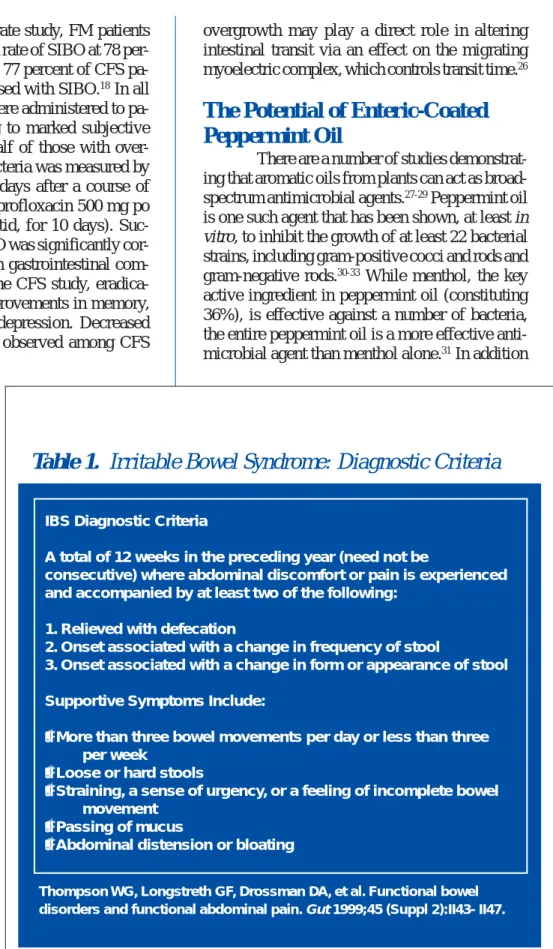
Table 1. Irritable Bowel Syndrome: Diagnostic Criteria
IBS Diagnostic Criteria
A total of 12 weeks in the preceding year (need not be
consecutive) where abdominal discomfort or pain is experienced and accompanied by at least two of the following:
1. Relieved with defecation
2. Onset associated with a change in frequency of stool
3. Onset associated with a change in form or appearance of stool Supportive Symptoms Include:
• More than three bowel movements per day or less than three
per week
• Loose or hard stools
• Straining, a sense of urgency, or a feeling of incomplete bowel
movement
• Passing of mucus
• Abdominal distension or bloating
Thompson WG, Longstreth GF, Drossman DA, et al. Functional bowel disorders and functional abdominal pain. Gut 1999;45 (Suppl 2):II43- II47.
Page 412
Alternative Medicine Review
◆ Volume 7, Number 5◆2002to inhibiting the growth of bacteria, peppermint oil has a bactericidal activity against pathogenic bacteria, including E. coli 015:H7, H. pylori, and
S. enteritidis. The antibacterial activity was
ap-parent even when tested against pathogenic, anti-biotic-resistant strains.34
Enteric-coated peppermint oil (ECPO) has been the subject of much research in the area of IBS and functional dyspepsia (FD). A number of double-blind, placebo-controlled studies have shown that ECPO can effectively treat the symp-toms of IBS, including a reduction in the severity of pain.35-38 In most of these studies, the standard
dose given was 0.2 mL ECPO three times daily. Peppermint oil has also been used, in com-bination with caraway oil, to treat the symptoms of functional dyspepsia. The symptoms of FD are
similar to those of IBS, including abdominal pain, nausea, bloating, gas, and indigestion. The clinical overlap of dyspepsia with IBS is well described39 and many of the
symp-toms are similar to SIBO. Clinical trials using enteric-coated pepper-mint and caraway oil vs. placebo have documented remarkable results in the treatment of FD, with reductions in pain, heaviness, pressure, and full-ness.40-43 In all studies, the dose
ad-ministered was 90 mg peppermint oil and 50 mg caraway oil twice daily; the combination was reported as safe and well tolerated.
The beneficial effects of pep-permint oil on gastrointestinal symp-toms led the authors to consider its usefulness in the treatment of a pa-tient who presented with IBS-like symptoms.
Case Report
D.B. is a 29-year-old female who presented to the clinic with a diagnosis (one week earlier) of IBS from her primary care medical doctor. Investigation confirmed the symptoms D.B. was experiencing the last 18 months fit the Rome II criteria (Table 1) for IBS.44 The main symptoms described were
diarrhea alternating with constipation (constipation predominant), abdominal bloating, pain (particularly post-prandial), non-acid eructation, and fatigue. Given the research connecting SIBO and IBS, the decision was made to have D.B. perform an LHBT according to established laboratory procedures (Can Lab Services, West Vancouver, BC).
After completion of the LHBT, but with-out waiting for the results, D.B. was placed on a 20-day course of ECPO at a dose of 0.2 mL three times daily. No dietary modifications or other forms of treatment were initiated. Six days after the ECPO course was completed, D.B. repeated the LHBT.
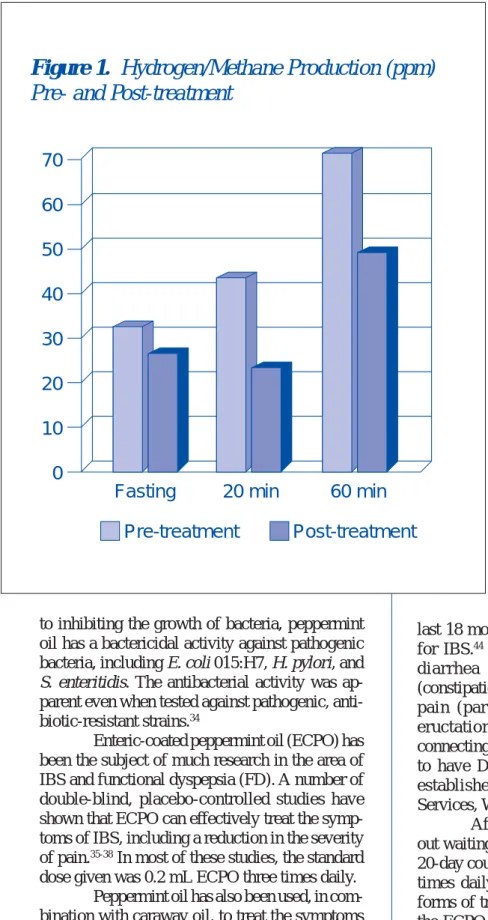
Figure 1. Hydrogen/Methane Production (ppm)
Pre- and Post-treatment
Pre-treatment Post-treatment
60
50
40
30
20
10
0
Fasting
20 min
60 min
Results of the initial LHBT indicated D.B. was in a severe state of SIBO. The initial baseline (after fasting) level of hydrogen (H2) and meth-ane (CH4) was 31 ppm, rising to 70 ppm after one hour. Fasting breath hydrogen of healthy adults and children is approximately 7 ppm and less than one percent have a breath hydrogen exceeding 30 ppm.45 A fasting level of H
2 and CH4 of greater than
20 is considered elevated46 and D.B.’s change in
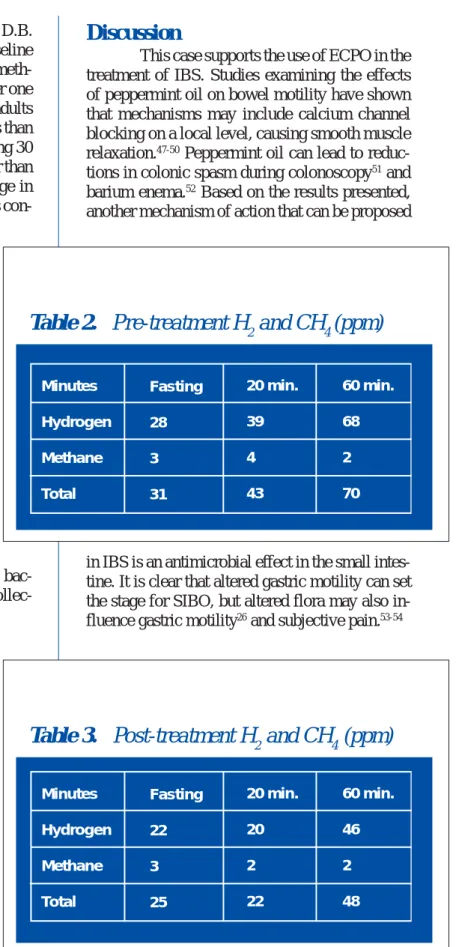
baseline gases through one hour, at 39 ppm is con-sidered severe. The follow-up LHBT (post-treatment) revealed significant reductions in H2/CH4 production at baseline and through one hour. Follow-up baseline lev-els were 25 ppm, still considered elevated but reduced to 25 percent over normal up-per limit vs. 55 up-percent at initial testing. At 20 minutes the amount of hydrogen pro-duced was almost half that of the initial test-ing. Another decrease was observed in the 60-minute H2/CH4 production at 48 ppm, a 32-percent reduction. The change from baseline through 60 minutes was 23 ppm, a 42-percent reduction from initial testing, placing D.B. into the mildly elevated labo-ratory range.The breath test results are out-lined in Tables 2 and 3 and summarized in Figure 1. Hydrogen production after sixty minutes becomes more reflective of colonic bac-teria and is therefore not included in data collec-tion.
These objective improvements were accompanied by reports from the pa-tient indicating marked improvements in bowel function. D.B. reported decreased bloating, pain, and eructation, and increased frequency of normal bowel movements. Pa-tient reported that most symptom improve-ments were observed after 10 days of treat-ment, and there was no aggravation of symptoms when the ECPO course was con-cluded.
Discussion
This case supports the use of ECPO in the treatment of IBS. Studies examining the effects of peppermint oil on bowel motility have shown that mechanisms may include calcium channel blocking on a local level, causing smooth muscle relaxation.47-50 Peppermint oil can lead to
reduc-tions in colonic spasm during colonoscopy51 and
barium enema.52 Based on the results presented,
another mechanism of action that can be proposed
in IBS is an antimicrobial effect in the small intes-tine. It is clear that altered gastric motility can set the stage for SIBO, but altered flora may also in-fluence gastric motility26 and subjective pain.53-54
Table 2. Pre-treatment H
2and CH
4(ppm)
Minutes Hydrogen Methane Total Fasting 28 3 31 20 min. 39 4 43 60 min. 68 2 70
Table 3. Post-treatment H
2and CH
4(ppm)
Minutes Hydrogen Methane Total Fasting 22 3 25 20 min. 20 2 22 60 min. 46 2 48
Page 414
Alternative Medicine Review
◆ Volume 7, Number 5◆2002In this case, through the follow-up LHBT, only the mono-therapy of ECPO was used. Al-though an antimicrobial effect was apparent in the follow-up LHBT results, the patient was still in the mildly elevated laboratory range. The thera-peutic value of berberine as an antimicrobial agent55 and the ability of hydrochloric acid (HCl)
to prevent and treat bacterial overgrowth56 have
previously been described. The addition of ber-berine and HCl would likely provide an additive effect to ECPO.
Although peppermint oil has not specifi-cally been investigated for its inhibition or bacte-ricidal effect against beneficial flora, this should be assumed due to the effect on both gram-posi-tive and -negagram-posi-tive bacteria. After the follow-up LHBT, D.B. was placed on Lactobacillus
acido-philus and Bifidobacterium lactis. Interestingly,
various strains of Lactobacillus and Bifidobactrium have been used to successfully treat SIBO57,58 and IBS.59-61 The importance of
re-storing normal intestinal flora cannot be over-em-phasized. Antimicrobials are known to have marked62 and long-term effects on bowel flora.63
Recent studies have shown that antibiotic use is actually associated with IBS onset and functional bowel symptoms, possibly due to alterations in bowel flora.64,65
IBS is the most common digestive tract disorder; symptoms consistent with IBS criteria affect almost a quarter of the general population over a lifetime.66 It has been estimated there are
between 2.4 and 3.5 million annual visits to U.S. physicians by patients with IBS;67 an editorial in
the journal Gastroenterology describes IBS as a “multibillion dollar problem.”68 Patients with
func-tional somatic disorders frequently visit practitio-ners of complementary and alternative medicine (CAM).69,70 Patients with IBS are twice as likely
to visit a CAM practitioner than the general popu-lation.71 CAM practitioners should be aware of the
effects of SIBO, a condition that is often over-looked,2 particularly in the elderly. SIBO may
become increasingly common, as acid-blocking medications, which can cause bacterial over-growth,72-74 are self-prescribed. Patients with SIBO
are at increased risk for reduced bone mineral den-sity due to interference with mineral absorption.75
This is of particular significance in patients with CFS and FM where physical activity is already decreased.
ECPO may provide cost-effective relief of gastrointestinal complaints in patients with cer-tain functional somatic disorders, including IBS, CFS, and FM. The presence of SIBO should be investigated if possible, and proper steps taken to reduce bacterial numbers. Further research is nec-essary to evaluate the use of ECPO as an in vivo antimicrobial agent.
References
1. Mitsuoka T. Recent trends in research on intestinal flora. Bifido Microflora 1982;1:3-24. 2. Toskes PP. Bacterial overgrowth of the
gastrointestinal tract. Adv Intern Med 1993;38:387-407.
3. Metz G, Gassull MA, Drasar BS, et al. Breath-hydrogen test for small-intestinal bacterial colonisation. Lancet 1976;1:668-669. 4. Rhodes JM, Middleton P, Jewell DP. The
lactulose hydrogen breath test as a diagnostic test for small-bowel bacterial overgrowth.
Scand J Gastroenterol 1979;14:333-336.
5. King CE, Toskes PP. Breath tests in the diagnosis of small intestine bacterial over-growth. Crit Rev Clin Lab Sci 1984;21:269-281.
6. Wang J, Bei L, Pan G. Lactulose hydrogen breath test in small intestinal bacterial over-growth. Zhonghua Nei Ke Za Zhi 1995;34:381-384. [Article in Chinese]
7. Holt PR. Diarrhea and malabsorption in the elderly. Gastroenterol Clin North Am 1990;19:345-359.
8. Saltzman JR, Russell RM. The aging gut. Nutritional issues. Gastroenterol Clin North
Am 1998;27:309-324.
9. Ratnaike RN, Jones TE. Mechanisms of drug-induced diarrhoea in the elderly. Drugs Aging 1998;13:245-253.
10. Pimentel M, Chow EJ, Lin HC. Eradication of small intestinal bacterial overgrowth reduces symptoms of irritable bowel syndrome. Am J
11. Komaroff AL, Fagioli LR, Geiger AM, et al. An examination of the working case definition of chronic fatigue syndrome. Am J Med 1996;100:56-64.
12. Waylonis GW, Heck W. Fibromyalgia syn-drome. New associations. Am J Phys Med
Rehabil 1992;71:343-348.
13. Donaldson RM Jr. Role of enteric microorgan-isms in malabsorption. Fed Proc
1967;26:1426-1431.
14. King CE, Toskes PP. Small intestine bacterial overgrowth. Gastroenterology 1979;76:1035-1055.
15. Simon GL, Gorbach SL. Intestinal flora in health and disease. Gastroenterology 1984;86:174-193.
16. Tabaqchali S. The pathophysiological role of small intestinal bacterial flora. Scand J
Gastroenterol Suppl 1970;6:139-163.
17. Pimentel M, Chow EJ, Hallegua D, et al. Small intestinal bacterial overgrowth: a possible association with fibromyalgia. J
Musculoskelet Pain 2001;9:107-113.
18. Pimentel M, Hallegua D, Chow EJ, et al. Eradication of small intestinal bacterial overgrowth decreases symptoms in chronic fatigue syndrome: a double blind, randomized study. Gastroenterology 2000;118:A414. 19. Werbach MR. Nutritional strategies for
treating chronic fatigue syndrome. Altern Med
Rev 2000;5:93-108.
20. Wessely S, Nimnuan C, Sharpe M. Functional somatic syndromes: one or many? Lancet 1999;354:936-939.
21. Aaron LA, Burke MM, Buchwald D. Overlap-ping conditions among patients with chronic fatigue syndrome, fibromyalgia, and temporo-mandibular disorder. Arch Intern Med 2000;160:221-227.
22. Gomborone JE, Gorard DA, Dewsnap PA, et al. Prevalence of irritable bowel syndrome in chronic fatigue. J R Coll Physicians Lond 1996;30:512-513.
23. Veale D, Kavanagh G, Fielding JF, Fitzgerald O. Primary fibromyalgia and the irritable bowel syndrome: different expressions of a common pathogenetic process. Br J Rheumatol 1991;30:220-222.
24. Caballero-Plasencia AM, Valenzuela-Barranco M, Herrerias-Gutierrez JM, Esteban-Carretero JM. Altered gastric emptying in patients with irritable bowel syndrome. Eur J Nucl Med 1999;26:404-409.
25. Burnet RB, Chatterton B. Gastrointestinal symptoms and gastric emptying studies in chronic fatigue syndrome. AHMF Clinical and Scientific Meeting. Sydney, Australia. 2001. 26. Husebye E, Hellstrom PM, Sundler F, et al.
Influence of microbial species on small intestinal myoelectric activity and transit in germ-free rats. Am J Physiol Gastrointest Liver
Physiol 2001;280:G368-G380.
27. Moleyar V, Narasimham P. Antibacterial activity of essential oil components. Int J Food
Microbiol 1992;16:337-342.
28. Delaquis PJ, Stanich K, Girard B, Mazza G. Antimicrobial activity of individual and mixed fractions of dill, cilantro, coriander and eucalyptus essential oils. Int J Food Microbiol 2002;74:101-109.
29. Dorman HJ, Deans SG. Antimicrobial agents from plants: antibacterial activity of plant volatile oils. J Appl Microbiol 2000;88:308-316.
30. Pattnaik S, Subramanyam VR, Kole C. Antibacterial and antifungal activity of ten essential oils in vitro. Microbios 1996;86:237-246.
31. Pattnaik S, Subramanyam VR, Bapaji M, Kole CR. Antibacterial and antifungal activity of aromatic constituents of essential oils.
Microbios 1997;89:39-46.
32. Farag RS, Daw ZY, Hewedi FM, El-Baroty GSA. Antimicrobial activity of some Egyptian spice essential oils. J Food Prot 1989;52:665-667.
33. Shapiro S, Meier A, Guggenheim B. The antimicrobial activity of essential oils and essential oil components toward oral bacteria.
Oral Microbiol Immunol 1994;9:202-208.
34. Imai H, Osawa K, Yasuda H, et al. Inhibition by the essential oils of peppermint and spearmint of the growth of pathogenic bacte-ria. Microbios 2001;106:31-39.
35. Rees WD, Evans BK, Rhodes J. Treating irritable bowel syndrome with peppermint oil.
Br Med J 1979;2:835-836.
36. Dew MJ, Evans BK, Rhodes J. Peppermint oil for the irritable bowel syndrome: a multicentre trial. Br J Clin Pract 1984;38:394, 398. 37. Liu JH, Chen GH, Yeh HZ, et al.
Enteric-coated peppermint-oil capsules in the treat-ment of irritable bowel syndrome: a prospec-tive, randomized trial. J Gastroenterol 1997;32:765-768.
Page 416
Alternative Medicine Review
◆ Volume 7, Number 5◆200238. Kline RM, Kline JJ, Di Palma J, Barbero GJ. Enteric-coated, pH-dependent peppermint oil capsules for the treatment of irritable bowel syndrome in children. J Pediatr 2001;138:125-128.
39. Bytzer P, Talley NJ. Dyspepsia. Ann Intern
Med 2001;134:815-822.
40. May B, Kuntz HD, Kieser M, Kohler S. Efficacy of a fixed peppermint oil/caraway oil combination in non-ulcer dyspepsia.
Arzneimittelforschung 1996;46:1149-1153.
41. Freise J, Kohler S. Peppermint oil-caraway oil fixed combination in non-ulcer dyspepsia – comparison of the effects of enteric combina-tions. Pharmazie 1999;54:210-215. [Article in German]
42. Madisch A, Heydenreich CJ, Wieland V, et al. Treatment of functional dyspepsia with a fixed peppermint oil and caraway oil combination preparation as compared to cisapride. A multicenter, reference-controlled double-blind equivalence study. Arzneimittelforschung 1999;49:925-932.
43. May B, Kohler S, Schneider B. Efficacy and tolerability of a fixed combination of pepper-mint oil and caraway oil in patients suffering from functional dyspepsia. Aliment Pharmacol
Ther 2000;14:1671-1677.
44. Thompson WG, Longstreth GF, Drossman DA, et al. Functional bowel disorders and functional abdominal pain. Gut 1999;45 (Suppl 2):II43- II47.
45. Perman JA, Modler S, Barr RG, Rosenthal P. Fasting breath hydrogen concentration: normal values and clinical application.
Gastroenterol-ogy 1984;87:1358-1363.
46. Joseph F Jr, Rosenberg AJ. Breath hydrogen testing: diseased versus normal patients. J
Pediatr Gastroenterol Nutr 1988;7:787-788.
47. Taylor BA, Luscombe DK, Duthie HL. Inhibitory effect of peppermint oil on gas-trointestinal smooth muscle. Gut
1983;24:A992.
48. Taylor BA, Luscombe DK, Duthie HL. Inhibitory effect of peppermint oil and menthol on human isolated colon. Gut 1984;25:A1168-A1169.
49. Hills JM, Aaronson PI. The mechanism of action of peppermint oil on gastrointestinal smooth muscle. An analysis using patch clamp electrophysiology and isolated tissue pharma-cology in rabbit and guinea pig.
Gastroenterol-ogy 1991;101:55-65.
50. Micklefield GH, Greving I, May B. Effects of peppermint oil and caraway oil on gas-troduodenal motility. Phytother Res 2000;14:20-23.
51. Leicester RJ, Hunt RH. Peppermint oil to reduce colonic spasm during endoscopy.
Lancet 1982;2:989.
52. Jarvis LJ, Hogg H, Houghton CD. Topical peppermint oil for the relief of colonic spasm at barium enema. Clin Radiol 1992;46:435. 53. Gerards C, Leodolter A, Glasbrenner B,
Malfertheiner P. H. pylori infection and visceral hypersensitivity in patients with irritable bowel syndrome. Dig Dis 2001;19:170-173.
54. Gasbarrini A, De Luca A, Fiore G, et al. Beneficial effects of Helicobacter pylori eradication on migraine.
Hepatogastroenterology 1998;45:765-770.
55. Birdsall TC, Kelly GS. Berberine: therapeutic potential of an alkaloid found in several medicinal plants. Altern Med Rev 1997;2:94-103.
56. Kelly GS. Hydrochloric acid: physiological functions and clinical implications. Altern Med
Rev 1997;2:116-127.
57. Vanderhoof JA, Young RJ, Murray N, Kaufman SS. Treatment strategies for small bowel bacterial overgrowth in short bowel syndrome. J Pediatr Gastroenterol Nutr 1998;27:155-160.
58. Kanamori Y, Hashizume K, Sugiyama M, et al. Combination therapy with Bifidobacterium
breve, Lactobacillus casei, and
galactooligosaccharides dramatically improved the intestinal function in a girl with short bowel syndrome: a novel synbiotics therapy for intestinal failure. Dig Dis Sci
2001;46:2010-2016.
59. Nobaek S, Johansson ML, Molin G, et al. Alteration of intestinal microflora is associated with reduction in abdominal bloating and pain in patients with irritable bowel syndrome. Am
J Gastroenterol 2000;95:1231-1238.
60. Brigidi P, Vitali B, Swennen E, et al. Effects of probiotic administration upon the composition and enzymatic activity of human fecal microbiota in patients with irritable bowel syndrome or functional diarrhea. Res
61. Niedzielin K, Kordecki H, Birkenfeld B. A controlled, double-blind, randomized study on the efficacy of Lactobacillus plantarum 299V in patients with irritable bowel syndrome. Eur
J Gastroenterol Hepatol 2001;13:1143-1147.
62. Nord CE, Heimdahl A, Kager L. Antimicrobial induced alterations of the human oropharyn-geal and intestinal microflora. Scand J Infect
Dis 1986;49:64-72.
63. Mangin I, Bourget N, Bouhnik Y, et al. Identification of Bifidobacterium strains by rRNA gene restriction patterns. Appl Environ
Microbiol 1994;60:1451-1458.
64. Mendall MA, Kumar D. Antibiotic use, childhood affluence and irritable bowel syndrome (IBS). Eur J Gastroenterol Hepatol 1998;10:59-62.
65. Maxwell PR, Rink E, Kumar D, Mendall MA. Antibiotics increase functional abdominal symptoms. Am J Gastroenterol 2002;97:104-108.
66. Jones R, Lydeard S. Irritable bowel syndrome in the general population. BMJ 1992;304:87-90.
67. Sandler RS. Epidemiology of irritable bowel syndrome in the United States.
Gastroenterol-ogy 1990;99:409-415.
68. Longstreth GF. Irritable bowel syndrome: a multibillion-dollar problem. Gastroenterology 1995;109:2029-2031.
69. Bombardier CH, Buchwald D. Chronic fatigue, chronic fatigue syndrome, and fibromyalgia. Disability and health-care use.
Med Care 1996;34:924-930.
70. Pioro-Boisset M, Esdaile JM, Fitzcharles MA. Alternative medicine use in fibromyalgia syndrome. Arthritis Care Res 1996;9:13-17. 71. Donker GA, Foets M, Spreeuwenberg P.
Patients with irritable bowel syndrome: health status and use of health care services. Br J Gen
Pract 1999;49:787-792.
72. Ruddell WS, Axon AT, Findlay JM, et al. Effect of cimetidine on the gastric bacterial flora. Lancet 1980;1:672-674.
73. Ruddell WS, Losowsky MS. Severe diarrehoea due to small intestinal colonisation during cimetidine treatment. Br Med J 1980;281:273. 74. Deane S, Youngs D, Poxon V, et al. Cimetidine
and gastric microflora. Br J Surg 1980;67:371. 75. Di Stefano M, Graziamaria V, Malservisi S,
Corazza GR. Small intestine bacterial over-growth and metabolic bone disease. Dig Dis