Doctor of Nursing Practice (DNP) Projects College of Nursing
2012
Using a DNP-Led Transitional Care Program to
Prevent Rehospitalization in Elderly Patients with
Heart Failure or Chronic Obstructive Pulmonary
Disease
Moira L. Long, DNP, MSN, FNP University of Massachusetts - Amherst
Follow this and additional works at:https://scholarworks.umass.edu/nursing_dnp_capstone Part of theNursing Commons, and theTranslational Medical Research Commons
This Open Access is brought to you for free and open access by the College of Nursing at ScholarWorks@UMass Amherst. It has been accepted for inclusion in Doctor of Nursing Practice (DNP) Projects by an authorized administrator of ScholarWorks@UMass Amherst. For more information, please [email protected].
Long,, Moira L. DNP, MSN, FNP, "Using a DNP-Led Transitional Care Program to Prevent Rehospitalization in Elderly Patients with Heart Failure or Chronic Obstructive Pulmonary Disease" (2012).Doctor of Nursing Practice (DNP) Projects. 12.
Using a DNP-Led Transitional Care Program to Prevent Rehospitalization in Elderly Patients with Heart Failure or Chronic Obstructive Pulmonary Disease
A Capstone Scholarly Project Presented By Moira Long, RN, MSN, FNPc, DNPc. University of Massachusetts, Amherst
School of Nursing Spring 2012
Approved as to style and content by: Genevieve Chandler RN, PhD
Chair, School of Nursing
Jean DeMartinis, RN, FNP, PhD Member, School of Nursing Peter M. McKay, MD
ABSTRACT: TRANSITIONAL CARE FOR PATIENTS WITH CHRONIC DISEASE BACKGROUND OF PROBLEM:
The Affordable Care Act of 2010 has put a spotlight on ensuring safe patient transfers between health care settings to prevent rehospitalization. Hospital readmissions are often influenced by a lack of outpatient transitional care programs to ensure the continuity of care during the transition from the inpatient setting to home. This gap in continuity further exacerbates the issues of patient management of medication
regimens, adverse drug events, and follow-up with providers. These exacerbations combined with ineffective symptom management can all result in decompensation and rehospitalization. An extensive review of the literature revealed that transitional care interventions provide innovative and evidence-based methods to prevent the
readmission of patients with chronic diseases. Transitional care is defined as a time-limited, patient-oriented service, intended to ensure health care continuity, reduce risk of poor outcomes among at-risk populations, and facilitate safe and effective transfer between levels of care or healthcare settings.
OBJECTIVE:
To assess the impact of a DNP-led Transitional Care Program (DNP-led TCP) designed to reduce the number of hospital readmissions of elderly patients discharged from a Cape Cod Hospital with a diagnosis of HF or COPD-related illnesses by addressing the complexities of transitions of care.
METHODS:
Twelve patients with HF or COPD related diagnoses participated in a DNP-led TCP. A prospective one group pre-test, post-test design was used to evaluate the impact of the intervention. The primary outcome measures of 30-day rehospitalization rates for HF and COPD-related illness and 30-day rehospitalization rates for all-causes were collected for the 30 days prior to implementation and 30 days post completion of the TCP. Data was obtained through patient reports and hospital and clinic records. The impact of the TCP on use of emergent or urgent care services for HF or COPD-related symptoms among clinic patients was determined by the percentage of patients in the TCP that documented or reported the use emergent or urgent care services for HF or COPD-related symptoms during the 30 days pre and post TCP.
RESULTS:
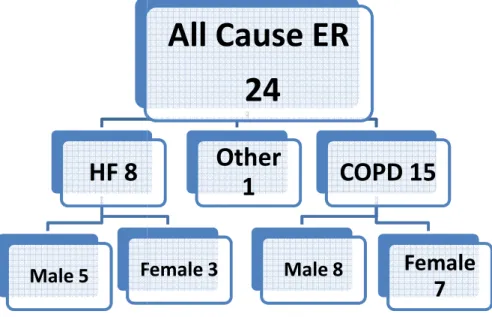
Descriptive analysis was used to examine the change. At the end of the program, the data revealed a decrease from 20 readmissions to zero readmissions in a 30 day period for HF or COPD-related illness. There was a decrease in all-cause readmissions from 21 to zero in a 30 day period. The TCP had a dramatic impact on the use of emergent or urgent care services for HF or COPD-related symptoms among clinic patients. There were 24 visits to the ER among participants in the 30-days prior to the pilot. Eight visits were related to HF, one to an allergic reaction, and 15 were related to COPD. At the day 30 post implementation data collection, ER utilization had rate dropped to zero for HR or COPD related symptoms. This meets the goal of is ≤ 5% of patients receiving the intervention.
Problem Identification and Evidence of Problem
As the Centers for Medicare and Medicaid Services (CMS) transition to the use of Accountable Care Organizations (ACOs) and medical homes, reimbursement is
expected to shift from service volume based to quality of care and patient outcomes driven (Feigle, 2011). Under this new system, payers will reward payees for high quality, low-cost care and impose penalties for failure to coordinate care or for
increasing costs to Medicare or Medicaid (Feigle, 2011). The expected change spreads the responsibility for effective management of chronic disease over both healthcare organizations and individual providers. In anticipation of such payment plans, many health care organizations and providers are seeking innovative and evidence-based methods to prevent the readmission of patients with the chronic diseases that are the most taxing on the health care system (Hines, Yu, & Randall, 2010).
The movement from one health care setting to another marks a care transition and has long been accepted as a danger zone fraught with opportunities for adverse effects and poor outcomes (Anderson & Horvath, 2004; Corbett, Setter, Daratha, Neumiller, & Wood, 2010; Thorpe & Howard, 2006). Corbett et al. (2010) found that 94% of the patients in their sample population experienced a medication discrepancy that occurred during the transition from hospital to home. Coleman (2003) notes that failure to communicate pertinent changes to the treatment plan to the patient and or the next provider is another contributor to poor outcomes. Transitional care is a
time-limited, patient-oriented service intended to ensure health care continuity, reduce the risk of poor outcomes among at-risk populations, and facilitate safe and effective
transfers between levels of care or among healthcare settings (Parry et al., 2008, Naylor et al., 2011; Stauffer, et al., 2011).
Naylor et al. (2011) stress that transitional care is meant to complement, not replace, primary care, disease management, discharge planning, or case management. The hallmark of transitional care is the time-limited nature of the program, the focus on fragile patients with chronic illness, and the strong emphasis on teaching patients and caregivers how to prevent avoidable rehospitalization by addressing the underlying causes of poor outcomes (Naylor et al., 2011). Many innovative transitional care interventions have been developed in response to persistent rises in rehospitalization rates despite the additions of “handoff communications” to the 2009 Joint
Commission National Safety Goals and discharge planning requirements to Medicare statutes (Parrish, O’Malley, Adams, Adams, & Coleman, 2009).
An analysis of hospital readmission rates among patients who reside in the outer regions of Cape Cod highlighted the vulnerability of heart failure (HF) or chronic
obstructive pulmonary disease (COPD) patients when they transition between
healthcare settings. Many of the problems identified stem from poor continuity of care and are most detrimental when patients are discharged from inpatient settings to home. These service gaps supported the need for a DNP-led transitional care intervention that is patient-centered and arms patients with the knowledge, support, and tools necessary to shift from the dependence of the inpatient setting to taking an active role in managing their disease in the outpatient setting. The opportunities for improvement fell within the concepts of post-discharge medication management, early provider follow-up, up-to-date accessible medical records, and self-care/symptom management.
To address the complexities of transition, a Doctor of Nursing Practice (DNP) candidate developed and pilot tested a community-based nurse DNP -led Transitional
Care Program (DNP-led TCP). Initially designed to prevent repeated hospitalizations of patients with heart failure, the DNP-led TCP was expanded to include patients with other chronic diseases. This paper will provide a discussion of this Doctor of Nursing Practice (DNP) candidate’s experience in designing, implementing and evaluating a program that successfully ensured that patients and families possess the tools,
knowledge, and support for self-management of their disease in partnership with their health care provider.
Problem Statement
Using Issel’s (2004) model for problem definition, the problem is defined as the increased frequency of rehospitalization of adults with exacerbation of existing HR or COPD as evidenced by the increased number of patients who were rehospitalized with HF, COPD, or a HF or COPD-related diagnosis. Hospital readmissions are influenced by a lack of outpatient transitional care programs to ensure the continuity of care during the transition home from the inpatient setting. This gap in continuity further exacerbates the issues of patient management of medication regimens, adverse drug events, and follow-up with providers. These exacerbations combined with ineffective symptom management can all result in decompensation and rehospitalization (Jencks, Williams, & Coleman, 2009; Stauffer, et al., 2011).
Evidence of Problem in Practice Setting
HF and COPD-related illnesses place a significant burden on the health care system in the United States (US). HF is the most common cause of patient
rehospitalization in the US (Jencks, Williams, & Coleman, 2009; Delgado-Passler & McCaffrey, 2006). The average annual payments per patient with COPD exceed the
annual payments per patient for HF, cancer, and diabetes (Dalal, Liu, & Riedel, 2011). The national effort towards reducing HF and COPD-related readmissions has led researchers to focus on improving the transitions from one healthcare setting to the next (Feigle, 2010). The Affordable Care Act of 2010 highlights transitional care programs as a means to reducing spending without compromising quality (Naylor, Aiken, Kurtzman, Olds, & Hirschman, 2011). The development of a Community-Based Care Transitions Program that calls for infusing $500 million into health systems and community organizations that offer transitional care interventions to high-risk Medicare beneficiaries is evidence of the priority placed on reducing preventable hospital
readmissions by healthcare reform legislation (Naylor, et al., 2011).
In 2009, the Institute for Healthcare Improvement (IHI) initiated the State Action on Avoidable Rehospitalizations (STARR) initiative to improve HF care and the
Improving Transitions in Care Collaborative with the goal of a 30 percent reduction in preventable 30-day readmission rates. These initiatives have effectively improved HF related care, but have had limited effect on reducing readmissions as evidenced by a stable national average (USDHHS, 2010). Boutwell et al. (2009) suggest that the success of transitional care programs depends on collaboration between providers in every setting.
Collaboration among providers in various settings is more likely to occur in an integrated health system (Stauffer, et al., 2011). Cape Cod Health Care (CCHC) is an integrated health system. The umbrella of CCHC encompasses the areas only two hospitals, a Visiting Nurse Association, two skilled nursing facilities (SNFs), a full
an integrated system, 23.7% of patients with Medicare discharged from CCHC facilities with a HF or COPD-related diagnosis in 2010 were readmitted within 30-days of
discharge (USDHHS, 2010). This number excludes any patient not covered by traditional Medicare. A process improvement report from Cape Cod Hospital (CCH) revealed that HF and COPD-related diagnoses accounted for 70% of Visiting Nurse Association of Cape Cod (VNA) patients who were rehospitalized or who used the emergency room during the last quarter of 2010 (CCH, 2010).
Review of Literature Supporting Transitional Care Methods
Many innovative transitional care interventions have been developed in response to persistent rises in rehospitalization rates despite the additions of “handoff
communications” to the 2009 Joint Commission National Safety Goals and discharge planning requirements to Medicare statutes (Parrish, O’Malley, Adams, Adams, &
Coleman, 2009). Before implementing a transitional care intervention, it is imperative to understand the state of the most current research pertaining to transitional care and to evaluate the strength and consistency of the evidence. An extensive internet search was conducted using nursing (Cumulative Index of Nursing and Allied Health Literature (CINAHL), medical (MEDLINE, PUBMED) and general (WORLDCAT) databases
available through the University of Massachusetts library. Study articles and systematic reviews of transitional care models or interventions were identified using various
combinations of the key words heart failure, nurse-led, nurse practitioner, APN, transitional care, rehospitalization, readmission, and care transitions. The search produced 612 articles, dissertations, theoretical papers, meta-analyses, systemic
reviews, and empirical research studies. The final article list included only studies of interventions that met the Naylor et al. (2011) definition of transitional care, targeted adults with at least one chronic disease or complex health issue, and were initiated because of an index hospitalization. Exclusion criteria were studies performed outside of the United States (US) and studies that focused on specific ages, geographic
locations, or single subgroups of a racial or ethnic group.
The final sample of 11 research articles were critiqued with attention to the following sections of each article: (a) literature reviews, (b) theoretical frameworks, (c) designs, (e) samples, (f) data analyses, and (g) authors’ discussions. Each study was read several times and a table of the pertinent details of each article was created. Next, the content included in each section of the article was examined to determine the type, strength, and consistency of the evidence using the criteria set forth by Jacox et al. (1994) in the appendix of the clinical practice guidelines of the management of cancer pain. A description of the aforementioned criteria is provided at the bottom of Table 1.
Results
Table 1of the appendix provides a summary of the citation, sample, setting, study design, intervention, theoretical framework, outcomes, results, and type and strength of the evidence presented in each study. Six of the studies in this critique are type II (experimental studies), four are type III (quasi-experimental studies), and one is type IV (non-experimental, comparative and correlation descriptive studies). The strength and consistency of evidence present in these studies ranges from A (evidence of types II, III, or IV with consistent findings) to D (little or no evidence or evidence is type V only).
The eleven articles evaluated transitional care intervention that differed in nature, time of initiation, intensity, and duration. One of the eleven studies scrutinized a
comprehensive discharge-planning intervention with no post post-discharge component (Dedhia et al., 2009). One of the studies evaluated an intensive home follow-up
program with no inpatient or comprehensive discharge-planning component (Neff, 2003). Another evaluated a comprehensive discharge-planning intervention that integrated a single post-discharge phone call from a pharmacist for medication reconciliation (Jack et al., 2009). The remaining eight articles examined transitional care interventions (Coleman et al., 2004; Coleman et al., 2006, Naylor et al., 1999; Naylor et al., 2004, Naylor & McCauley, 1999; Ornstein et al., 2010, Voss et al., 2011, Stauffer et al., 2011).
Critical Appraisal of Existing Research Evidence Supporting APN-led Transitional Care Programs
The increased use of APN-led home-based programs to reduce HF-related readmissions and the variety of interventions available, combined with a recent
explosion of research on the effectiveness of various interventions, necessitates careful evaluation of the available evidence before implementing a transitional care program. Several studies have established that APN- led transitional care programs promote disease self-management and medication compliance which reduce the risk of HF or COPD-related readmission (Naylor et al., 1999; Naylor et al., 2004, Naylor & McCauley, 1999; Naylor et al., 2004; Neff et al., 2003; Ornstein et al., 2010; Stauffer, 2011). The most effective plans for preventing readmission in this population combine optimal pharmacologic management, remote monitoring by either telephone or telemonitor, and
an individualized plan that includes strategies for self-regulation of HF, self-care skills, and managing the barriers to HF self-care (Barnason et al., 2010; Inglis et al., 2010; Stauffer, 2011, Voss et al., 2011; Yu et al., 2006).
Naylor et al. (1999) tested the first version of the model using an intervention protocol that spanned from hospital admission through 4-weeks after discharge and included APN-led intensive comprehensive discharge planning plus outpatient follow-up with both home visits and telephone contact. The APN visited the patient at least every 48-hours in the acute care setting. The APN acted as a visiting nurse for the first 4-weeks post-discharge, making a minimum of two home-visits, with the initial visit for medication reconciliation occurring within 48 hours of hospital discharge (Naylor et al., 1999).
The level of APN involvement remained intense, as the APN made weekly phone contact with the patient or caregiver, provided additional home visits as indicated, and was available to patients for telephone consults from 8 am through 10 pm on weekdays and from 8 am through 12 pm on weekends. The APN remained consistent throughout the intervention, played an active role as a provider, collaborated with the PCP or specialist to adjust the treatment plan, made referrals, and provided the patient and CG education (Naylor et al., 1999). At completion of the intervention a plan of care (POC), progress reports, and concerns were provided to the patient, caregivers, and providers.
Naylor and McCauley (1999) performed a secondary analysis of data collected in the Naylor et al. (1999) study. In this study, the researchers examined the effects of the early TCM intervention on a subsample of elderly patients with medical and surgical cardiac conditions who completed the 24-week follow-up program. The outcome
measures of the secondary analysis were number of hospital readmissions related to any cause, to recurrence or exacerbation of the index hospitalization diagnosis, to comorbid conditions identified at the index hospitalization, or to new health problems.
This early version of Naylor’s APN-led TCM increased the time to first readmission for any reason and this effect was still present even after adjusting for significant covariates (Naylor et al., 1999; Naylor & McCauley, 1999). In both of the 1999 Naylor studies, the intervention group had fewer hospital days than the control group and had lower costs per patient than the control group. There were no significant group differences in the outcome measures of post discharge acute care visits,
functional status, depression, or patient satisfaction. Naylor and colleagues note that, while several non-randomized studies claim to produce a greater reduction in
rehospitalization rates than this study, the studies making the claim either examined only readmissions to the study hospital or did not specify whether readmission to other hospitals were included.
The researchers argue that the APN’s clinical strength, combined with their proficiency as a liaison between physicians and other disciplines, makes them uniquely qualified for the role of transitional care manager. Naylor and her colleagues (1999) also suggest that the use of APNs for home visits following hospital discharge versus visiting nurses (VNs) improves outcomes because the ANP is able to tailor home visit frequency, intensity, and focus using clinical judgment about the patient and family needs. The researchers propose that the effectiveness of Naylor’s APN-led TCP hinges on the APNs unique ability to individualize the care plan by recognizing and considering the cumulative effect of the disease, comorbidities, and psychosocial issues. According
to Jacox et al. (1994), both early Naylor studies are Type II and have a strength and consistency of grade A because the findings are consistent with the results of multiple Type II, III, and IV studies that examined the effect of APN-led transitional care
interventions on reducing hospital readmissions in patients with heart disease. Naylor and colleagues continued honing their APN-led TCM to increase the duration of the effect of the intervention protocols. In a third study of the model, Naylor et al. (2004) evaluated the effectiveness of their enhanced APN-led TCM. The new intervention protocol included daily inpatient visits by the APN and a minimum of eight home-visits over three months. The initial home visit focused on medication
reconciliation and occurred within 24 hours of hospital discharge. Telephone availability was extended to 12-hours per day during the week and four hours per day on the
weekends. In Naylor’s updated APN-led TCM protocol, the APN acts as a safety net and educator. Using individualized teaching strategies, the APN teaches patients and caregivers to recognize and treat early signs and symptoms of decompensation.
Throughout the intervention period, the APN works with the patient to define goals, explore the nature and severity of HF symptoms, identify comorbid conditions, assess general health behaviors and skills, and determine the patient’s support system. The APN is responsible for performing protocol management, goal setting, and
educating both the patient and family. If the patient is rehospitalized, the APN resumes inpatient visits to facilitate the transition home at discharge. Patients are released from the program either at the end of the 3-month intervention, at anytime by request, when admitted to a skilled nursing facility, or on death.
Naylor et al. (2004) found that the enhanced version of Naylor’s APN-led TCM protocol reduced death and rehospitalization rates among HF patients over the 1-year study duration. The intervention group had lower HF-related and all-cause readmission rates and had an increased length of time between discharge and readmission than the control group. The highest rehospitalization reduction effect was during the
intervention, but there was a smaller effect on further reducing rehospitalization that lasted for 3-months after the intervention was over and remained stable through 12- months (Naylor, et al. 2004). The post-hospitalization costs were higher for the intervention group due to the use of APNs, but the reduction in readmissions offset these costs within the first six months after discharge (Naylor, et al. 2004). Applying the Jacox et al. (1994) criteria, the study is Type II and has a strength and consistency of grade A because the findings are generally consistent with the findings of previous Type I, II, III and IV studies that examine the efficacy of TCM on high-risk elderly patients and patients with HF.
Neff et al. (2003) adapted Naylor’s APN-led TCM protocol for use in the home health care setting. The intervention did not include a pre-discharge component. The protocol began when the patient was discharged from the hospital and admitted to the home health agency. The patients in the intervention group received care from an APN-directed and supervised team of nurses with special training in pulmonary disease management. An APN specialist in cardiopulmonary care was available as the educational resource for the pulmonary care RNs/LPNs. Care included home visits, telephonic visits, and 24-hour nurse specialist availability by phone. The APN provided clinical consultation for high-risk patients, made home visits for teaching, assessed
complex care needs, and assisted with patient/family issues. Data was collected at admission and again at either discharge, transfer to the hospital or another agency, or death. This modified APN-led TCM without an inpatient component for COPD patients in home care found that the intervention group had significantly less rehospitalizations or acute care visits than the control group did and all of the rehospitalizations in the intervention group were due to fall related injuries and not to COPD (Neff et al., 2003). Applying the Jacox et al. (1994) model, the Neff et al. (2003) study is Type III and has a strength and consistency of grade B because the findings are generally, but not wholly, consistent with the findings of previous Type III and IV studies that examine the efficacy of TCM in the home health setting.
Stauffer et al. (2011) examined the efficacy Naylor’s APN-led TCM protocol in a real-world health system. Stauffer’s team evaluated the effect of the TCM protocol on 30 and 60-day all-cause admission rates and length of stay for patients with HF and performed a budget impact analysis of the intervention. Stauffer et al. (2011) clearly define the types of data collected and indicate that all data used in the analysis was collected by and extracted from the BHCS administrative data sets. The primary measures were 30-day readmission rates, LOS, and total 60-day direct costs and the secondary measures were intervention costs and intervention reimbursement rates (Stauffer et al. 2011).
Stauffer et al. (2011) found that Naylor’s APN-led TCM reduced 30-day
readmissions by 48%, but the reduction in 60-day readmissions did not reach statistical significance. The costs associated with the intervention were not offset because under the current payment system the hospital lost revenue by preventing readmissions
(Stauffer et al., 2011). The researchers claim that, despite not being cost effective for the study hospital, Naylor’s APN-led TCM is both effective and beneficial to patients (Stauffer et al. 2011). Using the Jacox et al. (1994) criteria, this is a Type II study with strength and consistency of grade A because the findings are generally consistent with the findings of previous Type I, II, III and IV studies that examined the effect of Naylor’s APN-led TCM on patients with HF.
The only study to examine an APN-led intervention other than Naylor’s TCM was Ornstein et al.’s (2011) evaluation of a protocol designed to reduce hospital
readmissions among homebound patients who were enrolled in the Mount Sinai visiting doctors program. Ornstein et al. (2011) evaluated a 5-step quality improvement
protocol. The first step entails a daily crosscheck of MSH in-patients and patients
enrolled by MSVD and use of the Inpatient Communiqué (IC) form to notify the PCP of MSVD patients admitted. In the second step, the NP makes contact with the hospitalist and in-patient team and initiates an NP Progress Note. The third step involves a daily NP visit to the patient during the hospital stay to advocate for the patient and act as a liaison between the hospitalist and the PCP. All visits are documented on the NP Progress Note. The fourth step is to include the NP in discharge planning. Finally, in step five, the NP makes a single home visit to perform a physical exam, reconcile medications, and clarify instructions within 3-weeks of discharge.
The Ornstein et al. (2010) blended intervention was not as effective as the investigators expected it to be. The 1% decrease in 30-day readmission rates after the intervention period was not statistically significant. Ornstein et al. (2009) admit that, during the pilot, the first APN home visit took place an average of five days after
discharge instead of within the 48-hour protocol established by Naylor’s APN-led TCM. However, the researchers believe that, since only 5% of readmissions occurred prior to the NP home visit, the potential effect of this delay is minimal. Annual program cost for 1.6 FTE NPs was $197,000 and the NPs generated $37, 642 in billable services. At 19% of their direct costs, this was far short of the 50% of their direct costs that other NPs in the system were able to generate. Using the Jacox et al. (1994) model, this unique pilot is a Type V study with strength and consistency of grade D because it has not been reproduced and there is no similar evidence found in the literature.
In addition to the aforementioned literature, two systematic literature reviews support the implementation of an APN-led transitional care program. When performed in adherence with rigorous standards for study selection, quality assessment, and results synthesis, systematic reviews offer the highest level of evidence using the criteria set forth by Jacox et al. (1994). A literature review by Delgado-Passler and McCaffrey (2006) reviewed five studies that evaluated nurse-led, home-based, post-discharge HF management programs. Two of the programs were RN-led and three were APN-led. All of the studies reviewed used HF-related and all cause readmissions as outcome measures (Delgado-Passler & McCaffrey 2006).
The reviewers found that all of the studies that used an APN coordinated, home-based, HF management program produced significant decreases in both HF-related and all cause readmission (Delgado-Passler & McCaffrey 2006). The reviewers conclude that the use of an APN is a fundamental element in ensuring positive
outcomes in post-discharge HF programs. The reviewers suggests that HF programs are more effective in reducing HF-related and all cause readmission when run by APNs
compared to RNs because the ADN can include medication and POC adjustments to more effectively manage the symptom exacerbations common with HF patients (Delgado-Passler & McCaffrey 2006).
A more recently published systematic review illustrates that a comprehensive HF program is more effective than any single intervention and supports the need for
multifaceted programs (Naylor et al., 2011). The review by Naylor et al. (2011) reviewed twenty-one studies that examined the effect of various transitional care programs and interventions on reducing both disease-related and all cause
readmissions in adult chronically ill patients transitioning from acute care settings to home. Eighteen of the studies were nurse-led with ten being APN-led. Nine of the twenty-one interventions produced a decrease in either disease-related or all cause readmissions (Naylor, et al. 2011). Of the nine effective interventions, five were APN-led.
Evidence Supporting the Use of Coach Led Transitional Care Interventions
Boutwell, Griffen, Hwu, and Shannon (2009) note that the most effective
interventions for reducing rehospitalization engage the patients and their caregivers to take part in their own care and foster disease self-management. Despite the recent focus of hospitals on patient and caregiver education about disease self-management, patients frequently fail to follow through with scheduled aftercare appointments or medication changes (Jenks et al., 2009; Lindenfeld et al. 2010). Boutwell, et al. (2009) note that all successful interventions require cooperation among all providers involved and must involve the patient and the family in developing a plan of care that the patient can follow. Accurate up-to date information about the patient-centered plan of care
(POC) should be readily available to all health care providers to ensure consistent care in all settings (Boutwell & Hwu, 2009).
Three of the studies in the review of the literature examined interventions that involved the use of nurses or social workers, instead of APNs, who served as transition coaches acting in support roles to encourage patients to become involved in managing their disease (Coleman et al., 2004; Coleman et al., 2006; Voss et al., 2011). Of these three studies, two examined the Care Transition Intervention (CTI®) protocol (Coleman et al., 2004; Coleman et al., 2006) and one examined a modified version of CTI® (Voss et al., 2011). In each study, CTI® support staff worked with transition coaches to ensure that they understood the protocol and could effectively use the accompanying
intervention toolkit.
The CTI® protocol requires a transition coach to meet with the patient in the hospital prior to discharge to establish rapport and arrange for a home visit to occur within 48-72 hours post discharge (Coleman et al. 2004; Coleman et al., 2006).
Patients transferred to a skilled nursing facility (SNF) after hospitalization were called at least weekly to maintain care continuity, facilitate discharge preparation, and set up the home visit. At the home visit, the coach worked with the patient and caregiver on
medication reconciliation and education, teaching skills for effective communication with healthcare providers and helping patient learn the red flags that indicate a condition is worsening (Coleman et al. 2004; Coleman et al., 2006)..
After the initial home visit, the coach called the patient three times during the 28-day post hospitalization period using the standardized phone call checklist (Coleman et al. 2004; Coleman et al., 2006). Throughout the intervention period, Coleman’s
medication discrepancy tool (MDT) is used to identify problems and assist with medication self-management. The patient-centered medical record (PCMR) is an instrument initiated by the transition coach, but owned and maintained by the patient to help ensure timely follow-up with the PCP or specialist and continuity of care (Coleman et al. 2004; Coleman et al., 2006). The PCMR includes a list of red flags indicating worsening condition and an action plan (Coleman et al. 2004; Coleman et al., 2006).
Early evaluation of the CTI® intervention and toolkit found that patients who received the intervention had half the odds of rehospitalization than those who did not and the effect was sustained at 30, 90, and 180 days (Coleman et al., 2004). By using transition coaches in a supportive role, the investigators were able to achieve significant reductions in readmission rates similar to those from other studies that used APNs in the role of provider (Coleman et al., 2004). Coleman et al. (2004) suggest that the CTI® intervention is simple and inexpensive compared to APN-led TCPs. Under the Jacox et al. model, this is a Type III study with strength and consistency of grade A because the findings are generally consistent with the findings of previous Type III studies on the effect of CTI®.
In a later RCT, the Coleman et al. (2006) team found that the intervention group had a significant reduction in all-cause rehospitalization at 30 and 90 days compared to the control group. At 90 and 180 days, the intervention group was significantly less likely to be rehospitalized for the same condition that led to the initial hospitalization (Coleman et al., 2006). In both studies, patients in the intervention group reported high levels of confidence in their ability to obtain the information they needed to manage their disease and to communicate with their health care team as well as in their
understanding of their medications compared to those in the control group (Coleman et al., 2004; Coleman et al., 2006).
CTI® was designed for use within both Medicare capitated and fee-for-service payment systems, but it is less financially attractive in the later (Coleman et al., 2004; Coleman et al., 2006). A fee-for-service payment system reimburses for
rehospitalizations, thereby decreasing the incentive for health care systems to fund programs that could cost them money. Because CTI® does not require the expertise of an APN; it is more fiscally palatable in both a capitated and fee-for-service system than Naylor’s APN-led TCM (Coleman et al., 2004; Coleman et al., 2006). Interestingly, despite the insistence that the intervention does not require the expertise of an APN, the authors suggest that large ambulatory clinics may choose to assign APNs to the role of transitional coach to improve efficiency for the post hospitalization visits (Coleman et al., 2006).
Coleman and colleagues (2006) acknowledge that the APN as the coach has the benefit of insight into the hospital course, the prescriptive authority to reconcile
medications in the home, and the expertise to do extensive patient teaching prior to the in-office follow-up visit. Completing these tasks prior to the office-visit frees the provider to focus on the patient assessment and planning (Coleman et al., 2006). Applying the Jacox et al. (1994) criteria, this is a Type II study with strength and consistency of grade A because the findings are generally consistent with the findings of previous Type III and IV studies on the effect of CTI®.
Voss et al. (2011) evaluated an adaptation of the CTI® intervention that was developed with the assistance of Coleman and his team. The intervention spanned
30-days and included a hospital visit, a home visit, and two scripted follow-up phone calls. The coaching followed the CTI® protocol for improving communication with providers and for using the MDT and PCMR. In addition, the transition coaches assisted patients with enrollment in Currentcare, a statewide health information exchange, and ensured that patients understood the terms associated with advance directives and encouraged advance directive use. Voss et al. (2011) found that CTI® significantly reduced
readmission rates in non-integrated, fee-for-service hospitals. The investigators state that the results of this study are similar to those of Coleman et al. (2004; 2006).
The investigators argue that the coaching intervention appears effective despite the challenges posed by the communication difficulties inherent in open health systems. Of note is that the study was conducted in concert with 21 other Rhode Island initiatives that also focused on improving care transitions and provider-to-provider
communications and that these additional efforts may have augmented their
intervention effect (Voss et al., 2011). Translating the CTI® model into practice was hindered by problems recruiting and retaining participants that often stemmed from psychosocial factors that effected the patient’s motivation or capacity to comply with the intervention (Voss et al., 2011). Voss and colleagues (2011) note that because the CTI® model seeks to move patients to become actively invested in managing their health, it will not benefit patients who are unable or unwilling to make that commitment. Applying the Jacox et al. (1994) criteria, this is a Type III study with strength and
consistency of grade B because the findings are generally consistent with the findings of previous Type II, III and IV studies on the effect of CTI®.
The review of the literature revealed high quality evidence supporting the use of both Naylor’s APN-led Transitional Care Model and Coleman’s Care Transitions
Intervention ® to reduce HF-related 30-day readmissions (Naylor, et al., 2011). The evidence suggests that transitional care interventions are most successful when they address the physiologic, psychological, social, and health care delivery issues
associated with HF and other chronic diseases (Artinian, et al., 2002; Giamouzis et al., 2011). Transitional care interventions reduce the risk of hospital readmission by
focusing on medication management, timely provider follow-up, individualized plans of care that include strategies for disease self-management, and patient education regarding symptom management (Barnason, et al., 2010;Yu et al., 2006).
Researchers and quality improvement initiatives have noted that both Naylor’s TCM and Coleman’s CTI are well-tested in controlled settings and are consistently effective interventions for reducing hospital readmissions, decreasing the use of the emergency department for HF and COPD- related symptoms, and improving patient and caregiver perceptions about coordination of care (Stauffer, 2011; Ventura, et al., 2010; H2H, 2009). The studies that evaluated Naylor’s APN-led TCM produced significant decreases in disease-related and all cause readmission with lasting effect (Naylor et al., 1999; Naylor et al., 2004, Naylor & McCauley, 1999; Stauffer et al., 2011). Coleman’s CTI® also effectively reduced rehospitalizations, but the effect was not as enduring as the effect of Naylor’s APN-led TCM. Naylor et al. (2005) make the claim that the use of an APN is a fundamental element in the ongoing positive effect seen in TCM. Evidence strongly indicates that transitional care interventions led by APNs compared to RNs or social workers are more effective because the APN can include
medication and POC adjustments to more effectively manage the symptom
exacerbations common among patients with HF and other chronic illnesses (Delgado-Passler & McCaffrey 2006).
Recent position statements from The American College of Cardiology (ACC) and the Institute for Healthcare Improvement (IHI) endorse the use of transitional care programs to reduce rehospitalizations and smooth the transition home for patients hospitalized with cardiovascular disease. The commitment of the ACC and IHI to the use of transitional care programs to reduce HF-related readmissions is evidenced by a joint venture of the ACC and IHI called the Hospital to Home (H2H) initiative (H2H, 2009). The H2H website offers free support and information to providers and
organizations seeking to develop transitional care programs using proven interventions. These initiatives are ongoing and their effects are still under evaluation.
The Care Transitions Project is another quality improvement initiative that supports the use of transitional care interventions. Sponsored by the Centers for
Medicare & Medicaid Services (CMS), The Care Transitions Project has funded 14 pilot programs that evaluated the effect of transitional care interventions intended to reduce the risk of rehospitalization when patients transfer between health care settings
(Ventura, Brown, Archibald, Goroski, & Brock, 2010). The primary goal of this quality improvement initiative is a 2% reduction in all-cause Medicare hospital readmissions.
To reduce medication errors during care transition, 500 of the hospitals
participating in the H2H initiative, the International Transplant Nurses Society (ITNS), and The American Association of Heart Failure Nurses (AAHFN) all endorse the use of MedActionPlan.com (Buckley & Buckley, 2010; Chuang, et al., 2008; H2H, 2009,
MedActionPlan, 2011). MedActionPlan.com is a web-based, HIPPA compliant, patient education tool with disease-specific components that allows providers to create an individualized medical action plan (MAP™). MAP™ contains an easy-to-read medication list, an appointment schedule, a checklist for recording that meds were taken, and a checklist for recording vital signs and other measurements
(MedActionPlan, 2011). Patients can update their MAP™ and notify providers via secure e-mail of changes made by a specialist through MyMedSchedule.com (MMS™), a free consumer companion to MAP™ (MedActionPlan, 2011). MMS™ provides mobile applications that allow users to access their account from any Android or Apple mobile device to update their medication list. The mobile application also allows patients to set-up e-mail or text reminders of refill dates, scheduled medication times, and medical appointments.
This review of the literature, the Care Transitions Project, and the H2H initiative offer compelling evidence that two transitional care models, Naylor’s APN-led TCM and Coleman’s CTI®, have been repeatedly examined and proven extremely effective at reducing rehospitalization in patients with chronic diseases like HF and COPD. Both programs use strong theoretical frameworks. Both TCM and CTI® are now available as standardized protocols through their respective websites and through the H2H initiative. The CTI® protocol includes excellent tools that are available for download and use. MAP™ provides tools that many H2H participants have successfully incorporated into both TCM and CTI®. The evidence supporting both models suggested to this DNP(c) that Naylor’s APN-led TCM and CTI® could be combined with MedActionPlan.com and
tailored to meet the unique needs of Cape Cod patients with the goal of reducing HF and other chronic disease-related readmissions.
Overview of the DNP-led TCP
The DNP-led TCP blended the concepts of CTM® and Naylor’s APN-led TCM and modified them for use in the community setting. Both CTM® and Naylor’s APN-led TCM have an inpatient component. One of the central themes of Coleman’s CTM®
intervention is the use of a transition coach to teach patients to manage their disease and ensure that patients know how to advocate for themselves. In CTM® the transition coach is a lay person, social worker, or a nurse that acts in the sole role of coach. The coach does not have a provider role. The other major components are designed to help ensure continuity of care through the use of a patient-centered medical record (PCMR) and prevent adverse medication events by using a medication discrepancy tool [MDT] (Coleman et al., 2004).
The MDT is used to identify problems and assist with medication
self-management. The PCMR is initiated by the transition coach, but owned and maintained by the patient to help ensure continuity of care. The PCMR contains a list of the
patient’s medications, the red-flag symptoms that signify an exacerbation of symptoms, and a plan of action to deal with red-flag symptoms. Naylor’s intervention also focuses on empowering the patient and has the added benefit of expediting changes in the POC by using APNs to fill the role of both a provider and coach (Naylor et al., 2004). Naylor’s ANP-led TCM includes medication reconciliation and intensive patient teaching and goal setting, but does not use a tool that equivalent to the MDT or PCMR.
The DNP-led TCP was a patient centered and community based blend of both models. There was no inpatient component and the program was implemented by a DNP- FNPc that performed the dual roles of healthcare provider and coach during the care transition. The DNP-led program developer chose to use a FNP in place of a lay coach because nurse practitioners have advanced training in the pathophysiology of diseases and have the autonomy to change medications, adjust doses, and order testing. The TCP-FNPc provided HF and COPD patients with enhanced provider
access for the first few weeks following hospital discharge to ensure a safe and effective transition home. The provider role of the FNPc during the transition stems from Naylor’s APN-led TCM.
An integral part of the program is the use of Colman’s idea of a portable and patient-centered medical record that is managed by the patient. A patient-centered medical record was created using MedActionPlan.com. Called the Medical Action Plan (MAP), it consists of an up-to-date medications schedule complete with special dosing and timing instructions, a daily record of the specific vital signs or symptoms the patient is to monitor daily, red-flag symptoms, and an action plan for responding to them. Patients update the MAP medication list using their individual account on
MyMedSchedule.com. Both the MedActionPlan.com and MyMedSchedule.com web sites were developed by Tim Peters. Access to MAP is often free to hospital-based providers but not to individual clinics. The TCP developer was granted free access to the HF-specific tools by Donna Brooten, Marketing Director, after discussing the objectives of the project and agreeing to provide her with a copy of the written final evaluation and findings.
Project Development, Implementation, and Monitoring Community Assessment and Organizational Analysis
When developing a health program, it is important to assess the community to identify potential existing resources that can be tapped to address the problem (Issel, 2004). Prior to the development of the DNP-led transitional care program, this DNP (c) conducted a community needs assessment of the Lower and Outer regions of Cape Cod. These areas were chosen because the residents have very limited access to primary and specialty healthcare because a drastic seasonal population fluctuation creates an unpredictable demand for services that drives many providers to Hyannis and the Upper cape where there is a relatively stable year round population. The problem facing this medically underserved population is frequent hospital readmissions for HF or COPD-related symptoms among patients discharged from Cape Cod Hospital (CCH). Several existing community healthcare resources were identified that could be engaged to implement a transitional care program.
CCHC is the largest local health care organization and the only full service system serving the residents of Cape Cod. CCHC is an umbrella organization encompassing the areas only two hospitals, a Visiting Nurse Association, two skilled nursing facilities (SNFs), a full service laboratory, and a variety of specialty and primary care practices. Most of the CCHC facilities are centralized in the Mid and Upper Cape communities. Falmouth Hospital (FH) caters to residents of the upper Cape, while Cape Cod Hospital (CCH) serves predominantly the residents of the Mid, Lower, and Outer Cape towns. The islands of Martha’s Vineyard and Nantucket each have a small critical access hospital staffed by physicians affiliated with Boston hospitals. The only
CCHC facility catering to the Lower and Outer Cape is Fontaine Medical Center, a multi-service space that houses an urgent care center, a primary care practice, radiology services, a mobile cardiac catheterization lab, rehabilitation services, and a laboratory.
Cape Physicians, LLC a Local Care Organization (LCO) affiliated with the New England Quality Care Alliance (NEQCA) is comprised of thirteen private primary care practices (NEQCA, 2011). NEQCA is a network of providers, organized into LCOs and affiliated with Tufts Medical Center, that are committed to bringing quality, high tech, comprehensive, and affordable health care to local communities in Eastern
Massachusetts (NEQCA, 2011). At this time, only three of the thirteen Cape Physician affiliated practices are located on the Lower Cape and none is located on the Outer Cape.
Residents of the Outer Cape are predominantly served by Outer Cape Health Services (OCHS), a federally funded health center program that provides
comprehensive primary care, urgent care, and specialty care, along with a range of supportive services, to the rural underserved Lower and Outer Cape residents, workers, and visitors. Depending on the town, the distance to Cape Cod Hospital ranges from 30-80 miles. During the summer, the population of the Lower and Outer Cape explodes and OCHS accommodates this influx of visitors. Daily and evening urgent care at the health centers in Provincetown and Wellfleet is provided through a partnership with emergency department physicians at Beth Israel Deaconess Medical Center (BIDMC).
The majority of Outer and Lower Cape HF patients needing acute care use CCH because any alternative hospitals are situated 80 to 150 miles away. CCH provides high quality healthcare and has received national recognition. The facility was listed as
a Thomson Reuters Top 10 Health System in 2010 and 2011 (CCHC, 2011). CCH ranked first in MA in several care areas, including interventional coronary care in 2010 (CCHC, 2011). The hospital has a formal inpatient HF-program and is part of the STARR initiative to prevention hospital readmissions.
Results of Needs Assessment
Issel (2004) describes a needs assessment as a way to determine what, when, and where specific interventions need to be implemented to address an identified health problem. Determining what is needed is the starting point of program development. The needs assessment reveals that, despite involvement with the STARR initiative and formal inpatient disease management (DM) programs, the 30-day readmission rates for patients over 65 who are discharged from CCH with HF or COPD remains high. A recent pilot program, consisting of a single in-home medication reconciliation visit by an active pharmacist and daily phone calls from a nurse for 30 days, was implemented in an attempt to decrease the readmission rate. The program did reduce adverse
medication events, but did not decrease readmissions enough to warrant continuing it (CCH internal communication, 2011). The risk for rehospitalization is also evident by the number of HF and COPD patients served by the Lower and Outer Cape VNA team who are readmitted within 30 days of discharge.
As a visiting nurse, this DNP(c) observed the discharge process from the
receiving end witnessed how patients responded to the DM programs and the discharge process at CCH. The accuracy of DM-program process administration varies among nurses and interdisciplinary team members both between nursing units and from shift to shift. The variation in adherence to the DM program process is evident in the
inconsistent discharge summaries received by community providers. Patients
frequently attributed their poor understanding of the chronic nature of HF and COPD, the importance of post discharge self-monitoring of symptoms, and the need for follow-up care or to the inconsistent or inadequate DM- education provided during their hospital stay.
The process for the inpatient DM-program dictates that patient education be performed by nurses using verbal and written materials using teach-back methods to ensure the patient understands. A discharge summary documents that the patient has been provided with educational materials, but contains no indication of whether the content was reviewed with and understood by the patient or caregiver. Unfortunately, some patients reported that their teaching consisted of brief verbal interactions that did not have enough detail for the patient or family to translate into a disease management plan. Other patients reported that the DM information was provided in writing on the day of discharge, leaving little time to review and digest the information, formulate questions, and have those questions answered.
The formal discharge process for all CCH patients consists of providing a discharge summary, a medication schedule, prescriptions for a two week supply of all new or changed medications, and a disease specific education packet that addresses living with and managing their symptoms. A copy of the clinical resume is faxed to the primary provider within 24-hours of discharge. Eligible patients are referred for home health services. When admitting patients to the VNA, this DNP(c) has consistently found that the summary contains very little information and few instructions. The
it contains both a list of current medications and a notation to resume their prior medications when they return home. In addition, patients rarely receive prescriptions for any new or changed medications.
The CCH DM programs have no outpatient component to reinforce patient teaching and ensure that patients follow-up with providers. Patients are instructed to follow-up with the pulmonologist or cardiologist as well as their PCP within one week. Many Lower and Outer Cape patients do not make the specialist appointments because they are unwilling or unable to get to Hyannis, where all of the cardiologists are located.
The discharge process at CCH requires that the PCP be notified within two
weeks, not prior to or even at time, of discharge, meaning a patient can be admitted and discharged from CCH before the primary care provider is notified. The hospital EMR is remotely accessible to all providers via a secure network, but it is very cumbersome to navigate. None of the Cape Physician, LLC practices had processes in place to monitor the CCH EMR or incoming faxes for patient admissions, to contact the patient or
caregiver during the inpatient episode, or to contact the patient and schedule a follow-up office visit shortly after discharge. Prior to implementing the DNP-led TCP, the lack of post-discharge follow-up left patients vulnerable to polypharmacy, an inability to acquire medications, and poor disease self-management, all of which resulted in adverse med events, poor heart health, and frequent readmissions.
The comprehensive assessment of what elderly Outer and Lower Cape Cod residents with HF or COPD need to reduce the risk of readmission and the existing local health resources revealed two major gaps during the transition from hospital to home. First, the DM-program and discharge processes at CCH were not consistently followed.
Second, there was a lack of a formal transitional care program in place to support patients as they move between settings along the healthcare continuum. An opportunity existed to reduce the risk of rehospitalization in Lower and Outer Cape patients with HF or COPD who are discharged from CCH by implementing a DNP-led transitional care program (TCP) designed to smooth the transition home for patients hospitalized for HF-related reasons. The overriding objective of a TCP is to ensure that patients and families possess the tools, knowledge, and support to self-manage their disease in partnership with their health care provider (Boutwell, et al., 2009).
Modification of Final Target Population
The TCP initially targeted all patients of Harwich Medical Associates, Brewster Medical Associates, or Bickford Health Associates (BHA) who were discharged to home, with or without home health services, from Cape Cod Hospital (CCH) with a principle diagnosis of HF or a HF-related problem. These clinics were selected because they each served as a precepting site for the program facilitator as she navigated the DNP-FNP tract program. The providers at each site had personal knowledge of the FNPc skills of the DNPc. Because of the existing relationship, the staff provided the FNPc direct access to the providers, and this collaboration allowed the DNPc to practice at the highest level of the FNPc scope of practice.
The TCP was designed so that patients discharged with other chronic diseases that place them at high risk for rehospitalization could be included in the intervention if a wider target population was needed to ensure enough patient participation. During the two weeks prior to implementation, the project facilitator noted a decrease in the
discharged with COPD-related illness. The management at the home health agency suggested that this shift aligns with the trends seen for the past two years and often coincides with the illnesses associated with a given season.
The shift to the diagnoses that the HHA handle most frequently in the late winter and early spring prompted the DNP-FNPc to expand the inclusion criteria to increase patient enrollment. While after care of joint replacements and other surgical aftercare are very common reasons for discharge to HHA or skilled nursing facilities between January and May, these patients are facing temporary risks for rehospitalization that are likely to resolve with successful completion of the episode of care. The choice to focus on patients with HF and COPD stemmed from both the observation that those two diagnoses are consistently among the top five seen by the HHA and the evidence that more than 20% of patients in the United States who seek acute care for HF or COPD related problems are readmitted within 30 days of discharge for a preventable cause (Delgado-Passler & McCaffrey, 2006; Jencks, Williams, & Coleman, 2009).
The final modification in the target population was triggered when the first four patients who were discharge home without home services declined to participate while all of the patients who were expecting a referral to the HHA were very receptive to the TCP program. The TCP facilitator chose to narrow the inclusion criteria to only patients referred to the VNA of Cape for home services. The VNA was chosen because the DNP-FNPc has a long standing association with the agency and has received ongoing support from the leadership. The final inclusion criteria targeted patients from any the three Cape Physicians, LLC member clinics who were age 65 and older who were hospitalized for HF or COPD related illnesses and agreed to be discharged home with
home health services. Patients with cognitive impairment who did not have a reliable caregiver were excluded, as were patients whose diseases met the hospice eligibility guidelines for CHF or COPD.
Stakeholder Support
Home Health Agency (HHA):
The executive officers and nursing staff of the division of the VNA of Cape Cod, that serves patients of the Outer and Lower Cape were stakeholders in this project because the agency benefited from the reduction in readmission rates and from the convenience of the admission visit being performed by a DNP-FNPc, along with the added benefit of receiving documentation of the face-to-face visit required by Medicare, a thorough history and physical exam, a reconciled medication list, and the potential to decrease the visits per episode.
The cooperation from the clinical coordinators for the Outer and Lower Cape and team leader Stephanie Nesi, RN ensured that the DNP-FNPc was assigned all patients that met the inclusion criteria. The time used for the additional assessment, teaching, and extra care provided during the admission, subsequent visits, and phone calls made to HHA patients were performed during times designated as program implementation time and were donated in-kind. The agency billed the visits as a customary skill nursing visit.
Cape Physicians, LLC Member Practices-Harwich Medical Associates, Brewster Medical Associates, and Bickford Health Associates:
The support of the staff at the offices of HMA, BMA, and BHA was crucial to the ability of the DNPc to practice at the highest level for an FNPc. Key persons included
the Rhonda Mancini, EMT the medical assistant at HMA, Gail Rea, RN, and Kathy Kreber, RN the office nurses at BMA and BHA respectively. They were instrumental in passing on the interventions planned by the FNPc, and either getting the preceptor on the phone with the FNPc or notifying the FNPc that the preceptor approved all
medication adjustments and changes Cape Cod Hospital (CCH):
The executive officers of CCH are stakeholders in this project because the hospital benefits from the reduction in readmission rates. Their participation was not needed to complete this project. The initial TCP protocol included informational visits to patients at CCH, but the protocol was modified to start post-discharge. This
modification is discussed in another section of the paper. MedActionPlan.com (MAP ™):
The participation and support of Donna Brooten at MAP™ was crucial to the success of this program. Access to MAP™ was provided in exchange for providing the site administrators with feedback about the impact of MAP™ on the success of the intervention. The DNP(c) was provided with access to all of the sites educational tools and resources as well as 100 brochures about the free consumer site
mymedschedule.com.
Resources and Constraints
Inputs and Outputs to the Organizational Plan
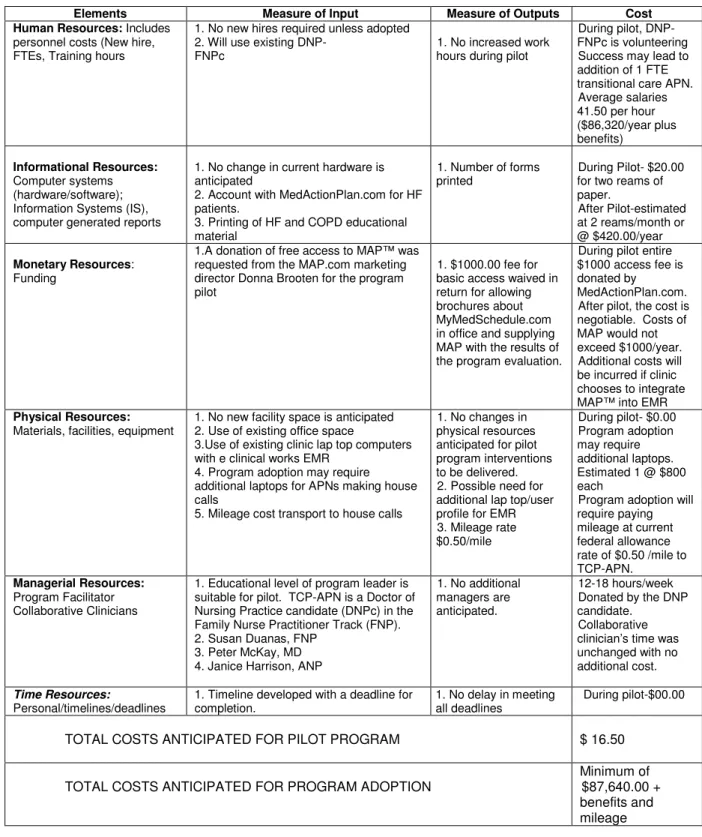
Issel (2004) describes the organizational plan as an overview of the resources required to implement a program, the process they will undergo, and the results of these processes. The inputs refer to the resources and the outputs refer to the results (Issel,
2004). The type of resources needed is dependent on many factors, including the knowledge base of the current personnel and the qualities of the program recipients. The organizational inputs for this pilot were human, informational, monetary,
managerial, physical, and time (Figure 1).
Inputs and Outputs to the Service Utilization Plan
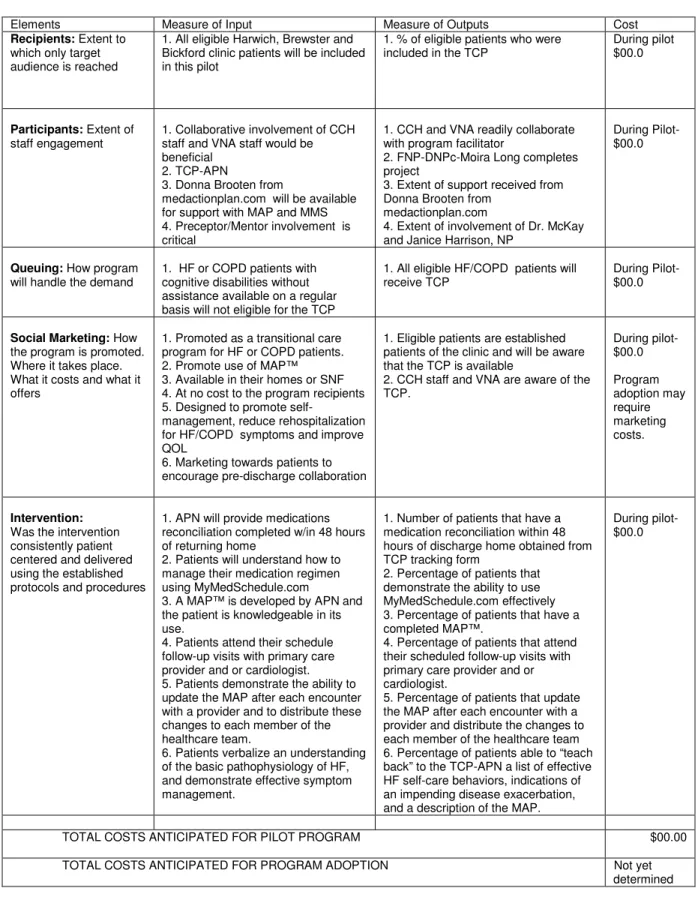
The service utilization plan describes how the program will engage the
participants and keep them engaged in a manner that will trigger the expected impact (Israel, 2010). Service utilization also refers to how the participants are screened for eligibility to ensure that those who need the program receive it (Issel, 2004). According to Issel (2004), the service utilization plan should describe the strategy for marketing the program to potential program recipients and to the providers who will be collaborating with the TCP-APN. The service utilization inputs and outputs for this pilot were program recipients and participants, social marketing, queuing, and intervention delivery (See Figure 2).
Most of the identified organizational resources needed to carry out the proposed educational intervention were in place prior to the project implementation. Each clinic used electronic scripting (eRX) technology which allows most prescriptions to be sent to the pharmacy from any mobile device by a provider with privileges and credentials that grant remote access to the eRx server. One important barrier identified during the development of this program was the non-integrated electronic medical record (EMR) systems of HMA, BMA, BHA, CCH, and the VNA. While HMA and BHA both use eClinical works, BMA, CCH, and the VNA use three different systems.
Without an integrated EMR, the home medication lists needed to be reconciled with lists from two or three additional settings and the correct information needed to be disseminated to the entire care team. This barrier was diminished by using the web-based medication/disease management tool, MedActionPlan.com. After completing training with the MAP™ staff, this DNP(c) created accounts for HMA, BMA, and BHA. The DNP(c) was the MAP™ account administrator and added all necessary patient information to the database and assigned user names to each practicethat allowed the providers or their designees to view and/or edit the medication lists of each participant from their respective practice sites. All changes were automatically stamped with date, time, and user and were distributed to every member of the patient’s care team and to the patient/caregiver. Each user could access the secure site from any computer or mobile device with internet access.
Project Protocol Design
Choosing the right design is critical to demonstrate that the pilot program made an impact and that it was the interventions, and not simply chance, that created that impact (Issel, 2004). A prospective one group pre-test FNP-led TCP, post-test design was employedto evaluate the impact of the DNP-led TCP. This design entailed gathering baseline data prior to program implementation and gathering the same data from the same population using the same measures after the program was completed (Issel, 2004). This design was chosen because it was feasible to gather baseline data, but time resources were limited and there was concern that too few patients would meet the inclusion criteria during the pilot period to attempt to form two groups. The use of a
one group- pretest posttest design was acceptable to determine the impact of a program because the resources were limited and the entire target population was expected to receive the intervention (Issel, 2004).
Goals, Objectives, and Outcome Indicators
Issel (2004) stresses the importance of both broadly defined goals and narrowly defined and measurable objectives. The broad goal of the DNP-FNPc-led TCP was to reduce preventable hospital readmissions by providing patients of HMA, BMA, and BHA that were receiving home care from the VNA and had a HF or COPD related illness with a safe, effective, and efficient transition from hospital to home using evidence based practices as measured by implementation of the program as planned. The specific and measureable objectives, outcome indicators, and outcome expectations of the program were as follows:
Program Objective 1: Reduce the number of rehospitalizations in a 30-day period among clinic patients discharged home from Cape Cod Hospital following an ER visit or inpatient stay for HF or COPD related illnesses who were receiving VNA services at home.
Program Outcome Measure 1a: Number of rehospitalizations in 30 days for HF and COPD-related illness obtained through patient reports and hospital, clinic, and VNA records.
Program Outcome Expectation 1a: A 10% decrease in number of readmissions in 30 days for HF or COPD-related illness.
Program Outcome Measure 1b: Number of readmissions in 30 days for all-causes obtained through patient reports and hospital, clinic, and VNA
records.
Program Outcome Expectation 1b: A 10% decrease in number of readmissions in 30 days for all causes.
Program Objective 2: To determine the impact of the TCP on use of emergent or urgent care services for HF or COPD-related symptoms among clinic patients
discharged home from Cape Cod Hospital following an ER visit or inpatient stay for HF or COPD related illnesses who were receiving VNA services at home.
Program Outcome Measure 2: Documented or reported use of any
hospital emergency center for HF-related symptoms.
Program Outcome Expectation 2: ER utilization rate for HR or COPD
related symptoms is ≤ 5% of patients receiving the intervention.
To ensure consistency in the administration of the program protocol, the following intervention specific objectives were developed for each patient who participated in the TCP:
Intervention Objective 1- Medications reconciled and discrepancies corrected by the DNPc-FNPc within 48 hours post-discharge.
Intervention Outcome Measure 1- Percentage of patients that have
medication reconciliation within 48 hours of discharge home
Intervention Outcome Expectation 1- Medications are reconciled and discrepancies corrected within 48 hours post-discharge 90% of the time.
Intervention Objective 2- Patients will understand how to manage their medication regimen using MyMedSchedule.com.
Intervention Outcome Measure 2- Percentage of patients who demonstrate the ability to use MyMedSchedule.com effectively
InterventionOutcome Expectation 2- 90% of the patients will demonstrate
an ability to manage their medication regimen using MyMedSchedule.com. The remaining 10% did not have consistent internet access.
Intervention Objective 3- Patients will have a medical action plan (MAP) that was developed by the DNPc-FNPc using MedActionPlan.com.
Intervention Outcome Measure 3- Percentage of patients that have a completed MAP™.
Intervention Outcome Expectation 3- 100% of the patients will have a
medical action plan (MAP™) that was developed using MedActionPlan.com.
Intervention Objective 4- Patients attend their schedule follow-up visits with primary care provider and/or cardiologist.
Intervention Outcome Measure 4- Percentage of patients that attend their schedule follow-up visits with primary care provider and/or cardiologist. Intervention Outcome Expectation 4- 90% of the patients will attend their schedule follow-up visits with primary care provider and/or cardiologist.
Intervention Objective 5- Patients demonstrate the ability to update the MAP™ after each encounter with a provider and to distribute these changes to each member of the healthcare team.