
Developing an offsite readiness framework for Indian construction organisations
286
0
0
Full text
(2) DEVELOPING AN OFFSITE READINESS FRAMEWORK FOR INDIAN CONSTRUCTION ORGANISATIONS. DEEPTHI BENDI. School of the Built Environment, College of Science and Technology, University of Salford, Salford, U.K. Submitted in Partial Fulfillment for the Requirements of the Degree of Doctor of Philosophy, June 2017.
(3) Acknowledgement I wish to express my sincere thanks to all those who have contributed to the completion of my PhD research. I sincerely thank my supervisor Prof. Mohammed Arif for providing guidance and encouraging me towards the completion of this Endeavour. His mentoring and counseling have helped me in improving various areas of my academic life. He extended valuable support through tough times. I owe a deep debt of gratitude towards my supervisor for his constant support and encouragement. I would also like to thank the supporting staff at the research office of School of the Built Environment (SOBE). I am grateful to all of my friends from the Post Graduate Research wing at SOBE for being companions during this PhD study. I am also thankful to the participants of the questionnaire survey and organisations that have participated in the case study. I am very much indebted to my family for their patience, love, support and encouragement. I would not have reached this stage without their support. Finally, I would like to thank the University of Salford for awarding me a Graduate Teaching Assistantship; this has been a great opportunity for learning and professional development.. i.
(4) Abstract The rapid growth of the construction industry and rising demand in housing and infrastructure facilities in India are challenges to the efficiency of Indian construction organisations. In view of the poor quality and under-supply of present day construction practices, the emergence of alternative and new technologies in construction have drawn the attention of many organisations. With this background, the Off-Site Construction (OSC) method has evolved as an efficient alternative approach addressing time, cost and quality concerns of the existing practices. Several construction organisations in India have recognised the need to implement OSC methods to achieve competitive advantage. In order to achieve successful implementation of OSC methods, the construction organisations must be fully aware of the operations and processes involved in working with OSC products, while the organisation itself must be prepared to customise according to the requirements of OSC methods. The concept of Off-Site Construction has been drawing more attention from scholars. Various researchers have discussed about the existence of OSC practices in India. However, scholars have been less interested in exploring the status of OSC in India and factors affecting the uptake of OSC in the country. Therefore, the current research has aimed to develop the Off-Site Construction readiness framework to assess the preparedness of Indian construction organisations towards the application of OSC methods. The researcher has investigated the drivers and barriers for adoption of OSC techniques in India, and documented the results in this thesis. Current research has adopted the epistemological position of interpretivism and the ontological position of subjectivism as a research philosophy, issues that have been widely discussed in the chapter three “research design and methodology”. The research identified that cost and time certainty, minimising on-site duration and achieving high quality are some of the driving factors towards the adoption of OSC techniques. On the other hand, longer lead times, client resistance and scepticism, along with lack of guidance and information are the potential barriers for extensive implementation of OSC methods in India. The seventeen constructs of the Off-Site Construction readiness framework are divided into four groups, entitled Operational challenges, Broad execution strategy, Certainty in planning and Operational efficiency. These groups were developed from the literature, self-administered questionnaires and semi-structured interviews in the different phases. The researcher also validated the refined framework through conducting case studies in three OSC-practicing construction organisations in India. The proposed Off-Site Construction readiness framework will guide the practitioners in assessing the OSC readiness of the construction organisations in India. The assessment ii.
(5) will enable the organisation to evaluate and to benchmark its process in strategic and operational phases. The framework will also identify the areas of concern and the scope for further development or change in order to get optimal advantage of OSC methods. Hence, the research recommends application of the proposed framework in the OSCpracticing construction organisations in India in order to evaluate their current OSC readiness and to achieve competitive advantage. Though this assessment framework was proposed for India, it has a potential to serve as a general guide for OSC practitioners, policy makers and other key stakeholders involved in improving quality of the construction industry globally. In the real world implementation, the contribution of this research will improve awareness, increase confidence and strength of organisations in the execution of OSC techniques in Architectural, Engineering and Construction domains.. iii.
(6) Declaration This thesis is presented as an original contribution based on Doctorate of Philosophy research at University of Salford, Salford, United Kingdom and has not been previously submitted to meet requirements for an award at any higher education institution under my name or that of any other individuals. To the best of my knowledge and belief, the thesis contains no materials previously published or written by another person except where due reference is made.. (Signature) Deepthi Bendi …13.06.2017 (Date). iv.
(7) Table of Contents ACKNOWLEDGEMENT.............................................................................................. I ABSTRACT....................................................................................................................II DECLARATION...........................................................................................................IV LIST OF TABLES ......................................................................................................... X LIST OF FIGURES .................................................................................................. XIII LIST OF ABBREVIATION....................................................................................... XV CHAPTER 1 | INTRODUCTION ................................................................................. 1 1. 1. Background to the research...............................................................................................................1 1.2. Off-Site Construction in India............................................................................................................4 1.3. Research Problem statement ..............................................................................................................6 1.4. Research questions ............................................................................................................................11 1.5. Research Aim and Objectives...........................................................................................................12 1.5.1. Aim ..............................................................................................................................................12 1.5.2. Objectives ....................................................................................................................................12 1.6. Research outline ................................................................................................................................12 1.7. Research scope & limitations ...........................................................................................................15 1.8. Contribution to knowledge ...............................................................................................................15 1.9. Structure of the thesis .......................................................................................................................15. CHAPTER 2 | LITERATURE REVIEW ................................................................. 18 2.1. Background........................................................................................................................................19 2.2. Off-Site Construction ........................................................................................................................20. v.
(8) 2.3. OSC Related Terms...........................................................................................................................21 2.4. Types of OSC .....................................................................................................................................23 2.5. Benefits of Off-Site construction ......................................................................................................25 2.6. Factors Influencing Off-Site Construction......................................................................................27 2.7. Drivers towards the adoption of OSC..............................................................................................32 2.8. Barriers towards the adoption of OSC ............................................................................................35 2.9. Critical Success Factors (CSF’s) of Off-Site Construction ............................................................38 2.10. Global trends in OSC ......................................................................................................................42 2.10.1. United Kingdom ........................................................................................................................44 2.10.2. United States of America...........................................................................................................47 2.10.3. Australia ....................................................................................................................................48 2.10.4. China..........................................................................................................................................49 2.10.5. Malaysia ....................................................................................................................................50 2.10.6. Singapore ...................................................................................................................................53 2.11. Readiness and readiness models in construction ..........................................................................54 2.11.1. Readiness ...................................................................................................................................54 2.11.2. Off-Site Construction readiness framework ..............................................................................55 2.11.3. Review of selected models and frameworks in construction .....................................................55 2.12. Summary of the review of models in construction........................................................................65 2.13. Chapter summary............................................................................................................................66. CHAPTER 3 | RESEARCH DESIGN AND METHODOLOGY............................. 72 3.1. Introduction .......................................................................................................................................72 3.2. Research philosophy..........................................................................................................................73 3.2.1. Ontology and the Ontological position of current research .........................................................74 3.2.2. Epistemology and the Epistemological position of current research ...........................................76 3.2.3. Pragmatism ..................................................................................................................................77 3.3. Research approach ............................................................................................................................78 3.4. Research Methodology and methods ...............................................................................................81 3.4.1. Qualitative research method ........................................................................................................81 3.4.2. Quantitative research method ......................................................................................................83 3.4.3. Mixed research method................................................................................................................84 3.5. Data collection tools...........................................................................................................................86 3.6. Population and sample ......................................................................................................................88. vi.
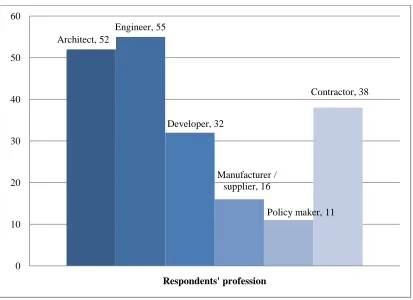
(9) 3.6.1. Sampling Techniques ..................................................................................................................89 3.7. Questionnaire design and strategy...................................................................................................89 3.8. Chapter Summary .............................................................................................................................90. CHAPTER 4 | DEVELOPMENT OF OFF-SITE CONSTRUCTION READINESS FRAMEWORK THROUGH DATA ANALYSIS ..................................................... 91 4.1. Questionnaire survey of current research.......................................................................................91 4.1.1. Overview of the questionnaire .....................................................................................................91 4.1.2. Piloting questionnaire ..................................................................................................................92 4.1.3. Selected sample and questionnaire distribution ...........................................................................93 4.1.4. Rationale of survey questionnaire................................................................................................94 4.2. Descriptive Statistical Analysis ........................................................................................................95 4.2.1. Respondent’s profession..............................................................................................................95 4.2.2. Current position in the organisation.............................................................................................96 4.2.3. Experience in the construction industry.......................................................................................97 4.2.4. Experience in OSC projects.........................................................................................................98 4.2.5. Number of completed Off-Site Construction projects .................................................................99 4.2.6. Current usage of Off-Site Construction techniques in India......................................................100 4.2.7. Organisation’s plan in terms of increasing offsite application in future projects ......................102 4.2.8. Methods involved in the current Off-Site Construction projects ...............................................103 4.2.9. Current usage of offsite techniques in the sub-sectors of construction......................................104 4.2.10. Types of Off-Site Construction products/systems used/planning to use..................................106 4.2.11. Comparison of Offsite techniques with traditional construction methods ...............................107 4.2.12. Influencing factors towards the uptake of Off-Site Construction techniques in India .............109 4.2.13. Drivers and barriers .................................................................................................................113 4.2.14. Current availability of information on offsite techniques ........................................................116 4.3. Factor Analysis using SPSS ............................................................................................................117 4.3.1. Rotated Component Matrix .......................................................................................................118 4.3.2. Reliability Analysis for factors formed through factor analysis ................................................118 4.4. Descriptive Statistics .......................................................................................................................119 4.5. The Correlation Matrix (R- Matrix)..............................................................................................120 4.6. Communalities .................................................................................................................................121 4.7. KMO and Bartlett’s Test ................................................................................................................122 4.8. Total Variance Explained ...............................................................................................................122 4.9. Scree Plot..........................................................................................................................................123 4.10. Key steps involved in developing the conceptual framework ....................................................124. vii.
(10) 4.11. Definition of Sub-factors...............................................................................................................126 4.11.1. Factor 1. Operational challenges .............................................................................................126 4.11.2. Factor 2: Strategy.....................................................................................................................128 4.11.3. Factor 3: Certainty planning ....................................................................................................129 4.11.4. Factor 4: Operational impact ...................................................................................................129 4.12. Summary of the interviews ...........................................................................................................137 4.13. Chapter Summary .........................................................................................................................145. CHAPTER 5 | VALIDATION OF REFINED OSC READINESS FRAMEWORK ....................................................................................................................................... 147 5.1. Case study guide ..............................................................................................................................147 5.2. Case study 1 .....................................................................................................................................159 5.2.1. Background of the organisation.................................................................................................159 5.2.2. Evaluation of OSC readiness of organisation A ........................................................................160 5.3. Case study 2 .....................................................................................................................................175 5.3.1. Background of the organisation.................................................................................................175 5.3.2. Evaluation of OSC readiness of organisation B ........................................................................176 5.4. Case study 3 .....................................................................................................................................189 5.4.1. Background of the organisation.................................................................................................189 5.4.2. Evaluation of OSC readiness of organisation C ........................................................................190 5.4. Chapter Summary ...........................................................................................................................204. CHAPTER 6 | DISCUSSION AND FINDINGS ...................................................... 207 6.1 Introduction ......................................................................................................................................207 6.2. Mix of Quantitative and Qualitative findings ...............................................................................207 6.2.1. Framework Development Findings.............................................................................................208 6.2.1.1. Questionnaire findings ..............................................................................................................208 6.3. Factor Analysis ................................................................................................................................210 6.4. Frame work design ..........................................................................................................................211 6.5. Findings from the framework validation ......................................................................................212 6.5.1 Organisation A............................................................................................................................212 6.5.2. Organisation B ...........................................................................................................................216 6.5.3. Organisation C ...........................................................................................................................219 6.5.4. Summary....................................................................................................................................222. viii.
(11) 6.6. Chapter Summary ...........................................................................................................................225. CHAPTER 7 | CONCLUSION .................................................................................. 226 7.1. Main research findings ...................................................................................................................229 7.1.1. Current status of Off-Site Construction in India........................................................................230 7.1.2. Drivers and barriers for Off-Site Construction techniques in India ...........................................230 7.1.3. Off-Site Construction readiness framework and advantages .....................................................232 7.1.3.2. Advantages of OSC readiness framework ..............................................................................233 7.1.4. Evaluation of OSC readiness of an organisation .......................................................................233 7.2. Contribution to knowledge .............................................................................................................234 7.3 Future Area of Research..................................................................................................................235. REFERENCES............................................................................................................ 237 APPENDIX.................................................................................................................. 258 Appendix – A . Questionnaire Survey form .........................................................................................258 Appendix – B . Participant Invitation letter.........................................................................................264 Appendix – C . Participant information Sheet.....................................................................................265 Appendix – D . Questions for the semi structured interview..............................................................267 Appendix – E . Correlation Matrix.......................................................................................................269. ix.
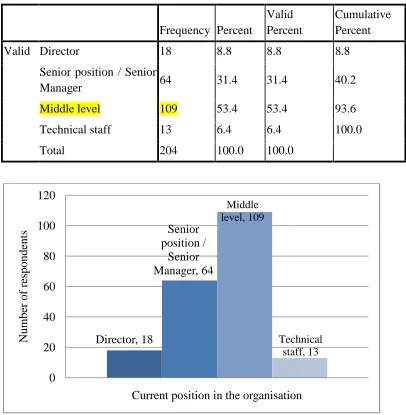
(12) List of Tables Title of the table. Pg. No.. Table 1.1: Estimated investment in Indian construction industry in billions USD. 2. Table 2.1: Categorisation of terminology. 22. Table 2.2: Levels of offsite – Definitions and examples. 23. Table 2.3: Categorisation of Off-Site systems in various countries. 24. Table 2.4: List of Attributes and sub attributes identified by (Chen et al., 2010). 28. Table 2.5: Factors influencing Off-Site Construction.. 30. Table 2.6: Drivers identified from various studies in the field of Off-Site construction. 33. Table 2.7: Barriers identified from various studies in the field of Off-Site construction. 37. Table 2.8: Summary of key features of selected readiness tools / models. 62. Table 2.9: Summary of key factors identified from the existing literature. 67. Table 3.1: Alternative names of philosophical paradigms used in literature. 75. Table 3.2: Major differences between the deductive and inductive approaches to research. 79. Table3.3: Important features, strengths and weaknesses of qualitative and quantitative research methods. 84. Table 3.4: Strengths and weaknesses of applying mixed methods. 85. Table 3.5: Research paradigm, primary methods and data collection tools. 86. Table 3.6: Research objectives with corresponding data collection tools. 87. Table 3.7: Summary of the key differences between qualitative and quantitative sampling. 89. Table 4.1: Respondents profession. 95. Table 4.2: Current position in the organisation. 97. Table 4.3: Total years of work experience in the construction industry. 98. Table 4.4: Experience in OSC projects. 99. Table 4.5: Number of completed OSC projects. 100. x.
(13) Table 4.6: View on current usage of OSC techniques in India. 101. Table 4.7: Organisation’s plan in terms of increasing offsite application in future projects. 102. Table 4.8: Methods involved in the current Off-Site Construction projects. 103. Table 4.9: Statistical representation of respondents rating for current use of Off-Site Construction techniques in various sub-sectors. 105. Table 4.10: Types of Offsite systems used / planning to use. 106. Table 4.11: Statistical representation of respondents rating Offs-Ste Construction techniques against traditional construction techniques. 108. Table 4.12: Influencing factors towards the adoption of Off-Site Construction techniques in India. 110. Table 4.13: Results of drivers and barriers towards the adoption of Off-Site Construction techniques in India. 113. Table 4.14: Drivers and barriers towards the adoption of Off-Site Construction techniques in India. 114. Table 4.15: Current availability of information on Off-Site construction techniques. 116. Table 4.16: Rotated Component Matrix. 117. Table 4.17: Reliability Analysis of Factor-1. 118. Table 4.18: Reliability Analysis of Factor-2. 119. Table 4.19: Reliability Analysis of Factor-3. 119. Table 4.20: Reliability Analysis of Factor-4. 119. Table 4.21: Descriptive Statistics. 120. Table 4.22: Communalities. 121. Table 4.23: KMO and Bartlett’s Test. 122. Table 4.24: Total Variance Explained. 122. Table 4.25: List of Factors and Sub-factors from the data analysis. 126. Table 4.26: List of factors with the proposed names. 130. Table 4.27: Conceptual OSC readiness framework. 131. Table 4.28: Refined OSC readiness framework. 139. Table 5.1: Case study guide. 147 xi.
(14) Table 5.2: Profile of the Organisation A. 159. Table 5.3: Summary of results of Organisation A. 175. Table 5.4: Profile of the Organisation B. 176. Table 5.5: Summary of results of Organisation B. 188. Table 5.6: Profile of the Organisation C. 189. Table 5.7: Summary of results of Organisation C. 203. Table 5.8: Summary of results obtained from the case studies. 204. Table 5.9: Summary of current OSC readiness of the three organisations. 205. Table 6.1: Drivers and barriers towards the adoption of Off-Site Construction techniques in India. 209. Table 6.2: Assessment of the Organisation A. 212. Table 6.3: Assessment of the Organisation B. 216. Table 6.4: Assessment of the Organisation C. 219. Table 6.5: Summary of findings in “F1. Operational challenges”. 223. Table 6.6: Summary of findings in “F2. Broad execution strategy”. 224. Table 6.7: Summary of findings in :”F3. Certainty in planning”. 224. Table 6.8: Summary of findings in “F4. Operational efficiency”. 224. xii.
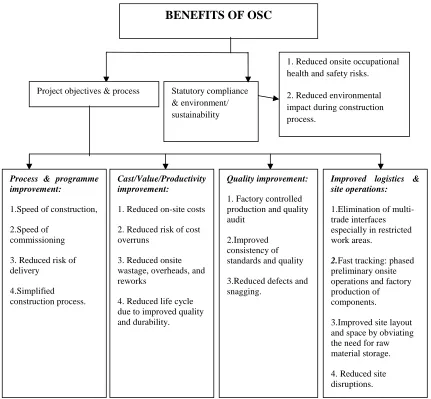
(15) List of Figures Name of the Figure. Pg. No. Figure 1.1: Structure of this thesis. 17. Figure 2.1: Outline of the literature review. 18. Figure 2.2: Benefits of Off-Site construction. 27. Figure 2.3: Identified core areas of Off-Site Construction. 29. Figure 2.4: Merged model based on Goulding and Arif (2013) and Goulding et. al., (2012) with core areas and patterns of concern in Off-Site construction. 61. Figure 3.1: Frame work for the discussion. 73. Figure 3.2: The Ontological position of current research. 75. Figure 3.3: The Epistemological position of current research.. 77. Figure 3.4: Sequential stages in deductive approach. 78. Figure 3.5: Sequential stages in inductive approach. 79. Figure 3.6: Illustration of the research approach for current study. 80. Figure 4.1: Descriptive statistics of respondents’ profession. 96. Figure 4.2: Descriptive statistics of respondents’ job level in the organisation. 97. Figure 4.3: Descriptive statistics of respondents’ experience in the construction industry. 98. Figure 4.4: Descriptive statistics of respondents’ experience in the Off-Site Construction projects. 99. Figure 4.5: Descriptive statistics of number of completed Off-Site Construction projects by respondents. 100. Figure 4.6: View on current usage of OSC techniques in India. 101. Figure 4.7: Organisation’s plan in terms of increasing Offsite application in future projects. 102. Figure 4.8: Methods involved in the current Off-Site Construction projects, India. 104. Figure 4.9: Graphical representation of current use of OSC techniques in various Sub-sectors in India. 105. Figure 4.10: Graphical representation of respondents answers on types of. 107. xiii.
(16) Offsite systems used / planning to use Figure 4.11: Graphical representation of respondents rating Offsite construction techniques against traditional construction techniques. 109. Figure 4.12: Rating of the influencing factors towards the adoption of Off-Site Construction techniques in India. 112. Figure 4.13: Drivers and barriers towards the adoption of OSC in India. 115. Figure 4.14: Current availability of information on Off-Site construction techniques. 116. Figure 4.15: Scree plot. 124. Figure 6.1: Constructs of the refined OSC readiness framework. 212. xiv.
(17) List of Abbreviation CIDB. Construction Industry Development Board. CMM. Capability Maturity Model. COA. Council Of Architecture. CSF GOI HPL. Critical Success Factors Government of India Hindustan Prefab Limited. IBS. Industrialised Building System. ICT. Information and Communication Technology. IEI. Institute of Engineers India. IIA. Indian Institute of Architects. IMMPREST. Interactive Method for Measuring PREassembly and STandrdisation. MMC. Modern Methods of Construction. OSC. Off-Site Construction. OSF. Off-Site fabrication. OSM. Off-Site Manufacturing. OSP PMMM PMO RACE. Off-Site Production Programme Management Maturity Model Process Model of Organisation Readiness Assessment for Construction Engineering. S&P SPICE. Standardisation & Pre-assembly Standardised Process Improvement for Construction Enterprises. xv.
(18) Chapter 1 | Introduction This chapter introduces the thesis and presents the overview of the research that has been undertaken. It provides a background to the research topic, which is offsite construction and Indian construction industry. It discusses about the current challenges and opportunities of the construction industry in India. It also details the research problem, aim, objectives and the need for research. The chapter provides the evidence to support the need to develop the OSC readiness framework for construction organisations in India. It also presents an outline of the research and the structure of the thesis. 1. 1. Background to the research In general, the construction industry significantly contributes to national socialeconomies (Oladinrin et al., 2012). The activities of construction industry are important to achieve the national development goals such as providing shelter, infrastructure and employment (Stasiak-Betlejewska and Potkány, 2015). In India it is considered as one of the major economic sectors, standing as the second largest industry (Auti and Skitmore, 2008 and Laskar and Murty, 2004). India is one of the growing countries in Asia. It occupies the major portion of South Asian subcontinent. It is spread of over 3.3 million sq. km. In terms of terrain, the mainland comprises of four regions (India gov, 2017). India is the second most populated country with 1.31 billion people (UN report,2015). There are five different climate zones in India (Energy Conversation Building Code, 2016). The construction industry is largely driven by Government of India investments on core infrastructure projects and creation of urban infrastructure (Maniar, 2011). India is expected to accommodate six mega cities with population of above ten millions by 2030 (NITI Ayog, 2017). Gupta et al., (2009) envisages that construction industry in India has the ability to grow further with the ongoing economic development, industrialisation, and urbanisation. In recent years, the Indian economy has grown at a rapid pace and the construction industry is playing major role in accelerating this growth. Current huge investments in infrastructure development are resulting in massive construction activities in India. Table 1.1, below illustrates the. 1.
(19) growth of investment in the construction industry. According to Arif et al, (2009), the investment in total construction is around $70 billion per year. Research by Syal et al. (2006) discussed the possible investment of around $163 billion in the next 10 years for infrastructure development. On the other hand, the working group on construction appointed by the Planning Commission of India (2007-12) envisaged this investment to reach $280 billion in a span of just five years. The magnificent growth in infrastructure investment is prominent in the existing literature, though there is difference in the estimated investment by various researchers . This also portrays the humongous expansion in industry, infrastructure, housing and other projects in India. Table 1.1. Estimated investment in Indian construction industry in billions, USD. Year. Residential. Non-Residential. Civil Engineering Total. Construction. Construction. Construction. 2008. 8.0. 5.19. 115.24. 128.43. 2009. 8.62. 5.33. 122.38. 136.33. 2010. 9.24. 5.45. 129.52. 144.21. 2011. 9.86. 5.58. 136.55. 151.99. Source: Shrivastava and Chini (2009). The Government of India allowed 100 percent Foreign Direct Investment in the real estate and infrastructure sectors (Nihas et al., 2017). This will catalyse construction activities across the country in the coming days. The growth in the construction industry during 2014-15 is estimated as 4.5% (NITI Ayog report 2014-15). According to Accenture and CIDC (2012), India will continue to be among the fastest growing countries in terms of construction output in the next ten years. The construction market is expected to grow at 4.7 percent globally during 2015-2020. During the same period, India is expected to grow at 7.6 percent (Accenture and CIDC, 2012). This shows the magnitude of construction activities in India when compared with other countries. Parallel to the development, the Indian construction industry is gradually becoming sustainable. The past decade has witnessed significant growth in the green foot print in India (Arif et. al., 2012). Sustainability was prioritised among the top issues in the sustainable development agenda 2030 as well as the research and innovation of the 2.
(20) construction industry (Government of India, 2017; Arif et. al., 2012; and Arif et. al., 2009). However, the increasing need in the housing and infrastructure in India is challenging any sustainable performance here (Shrivastava and Chini, 2009). Along with this, there are several factors that have impacted on the construction industry in the past decade (Arif and Egbu, 2010). The industry in India is expected to facilitate the growing population and increasing need for infrastructure (Arif et. al., 2012b). On the other hand, it is facing major challenges in achieving quality and speed in construction. Poor quality, delays in completion, high demand and lack of construction project management skills are challenging growth and consistency in the industry (Arif et al., 2012a). The working group report (2007-12) alerted the industry on the current time and cost over runs. The same report also recommended the adoption of alternative technologies to improve the total productivity and repair the current image of the construction industry. Along with this, new challenges due to the risks involved in design and production associated with structural reforms push towards a major shift in current practices (Liu et al., 2007 and Young et al., 2008). In this situation, the whole industry is under extreme pressure to reduce time and cost of construction and has become committed to creating a sustainable built environment.. In the global context, several researchers have documented similar trends of growth in construction activities with poor productivity in other countries. Reports like “Rethinking Construction” by Egan (1998) and “Constructing the Team” by Latham (1994) analysed the barriers to efficiency in the construction industry in the UK. These reports also recommended major reforms in current construction methods and practices. Similarly, in the U.S., a report by the Committee on Advancing the Competitiveness and Productivity of the U.S. Construction industry (Haas, 2009) acted as a catalyst for quality enhancement in construction projects. This illustrated the global concern about improving the existing practices in the industry.. In this background, offsite construction technology has evolved as one of the potential alternatives to the traditional construction methods. In practice, off-site construction itself developed as an individual concept, though it has connections to lean construction, 3.
(21) just in time and other modern theories in construction. According to Pan & Arif (2011a), off-site construction significantly addressed the environmental dimension of sustainability through reduction of waste (Jaillon and Poon, 2009); the economic dimension of sustainability through mass customisation and the social dimension of sustainability by providing better and safer working conditions (Burgen and Sansom, 2006, cited by Pan & Arif, 2011). Many research findings demonstrated that offsite construction techniques offer numerous advantages such as minimising construction schedules, reducing delays, reducing the number of skilled labour onsite, increasing project quality and improving onsite safety performance (Blismas et al., 2005; Goodier & Gibb, 2005). Various studies from the developed and developing nations reported many similar benefits in utilising OSC techniques in terms of improving quality, scheduling , safety, improved labour productivity and more efficient equipment utilisation (Blismas and Wakefield, 2009; Goodier and Gibb, 2007; Goulding et al., 2012; Lu, 2009).. The trend of offsite construction has gained momentum all over the globe (Arif et al., 2012; and Goodier and Gibb, 2007). Offsite technologies were well received by a majority of the practicing nations across the developed and developing world. Significant interest was observed in OSC trends and practices globally in research publications, as well as in industrial implementation (Blismas et al., 2006; Goulding and Arif, 2013). According to the Construction Industry Council (CIC), the UK could achieve. greater benefits from using modular buildings instead of traditional. construction practices (CIC, 2013). Similar results were documented in other nations, including Australia, USA, Europe, HongKong, China, Singapore, and Malaysia (Azhar et al., 2013; Badir et al., 2002; Gibb, 2001; Goulding & Arif, 2013; Pan & Gibb, 2004; Pasquire & Gibb, 2002). The majority of these studies also documented similar advantages in using OSC. Such overwhelming benefits made off-site construction (OSC) a viable potential alternative to existing traditional construction practices. 1.2. Off-Site Construction in India The concept of Off-Site Construction first started in India with the foundation of Hindustan Housing Factory, now known as Hindustan Prefab limited (HPL) (Smith and 4.
(22) Narayanamurthy, 2008). It was established by Jawaharlal Nehru, the first prime minister of India. It manufactures precast concrete elements for architectural and civil projects throughout the country (Smith and Narayanamurthy, 2008 and Hindprefab, 2017). Some researchers discussed about Off-Site Construction in India under the name prefabrication (Smith and Narayanamurthy, 2008 and Villaitramani and Hirani, 2014). Villaitramani and Hirani, 2014 observed that OSC materials are popular for the durability and quality in India. However, there are arguments that OSC products are yet to receive appreciation in India (Arif et al., 2012a, Smith and Narayanamurthy, 2008 and Swahney et al., 2014). Villaitramani and Hirani (2014) have suggested the use of OSC methods for optimum use of scarce resources and to address the mass housing crisis in India. Along with the government led organisation (HPL), there are some private organisations working on the OSC projects in India. L&T, Kirby international, Minaean Habitat India, Octamec group and Prefab infra are some of the providers of OSC in India. L&T owns heavy engineering workshops in five states with total fabrication capacity of over 150,000MT per year (Larsentoubro, 2017 and Villaitramani and Hirani, 2014). The Minaean Habitat India is a subsidiary of Minaean International Corporation, Canada (Minaeanindia, 2017). This organisation runs a modular building division, where structures are designed, engineered and prefabricated ready for use within four days of receipt at site (Smith and Narayanamurthy, 2008). This organisation is engaged in the development, manufacturing and construction of cost-effective low to mid-rise residential and commercial buildings in India (minaeanindia, 2017). Kirby Building Systems India Ltd. is an affiliate of Alghanim Industries, Kuwait. It has manufacturing facilities in two states with annual capacity of 200,000 MT (Kirbyinternational, 2017, Smith and Narayanamurthy, 2008). Kirby India manufactures Pre-Engineered Steel Building (PEB) solutions. This orgainsation has manufactured and delivered 65,000 buildings in 70 countries (Kirbyinternational, 2017). Existence of such organisations proves that OSC methods have been gaining popularity in India. Majority of these industry players are manufacturing trademark solutions. Smith and Narayanamurthy,. 5.
(23) (2008) also claimed the continuous growth of OSC methods in India due to the increasing demand of fast and affordable housing. 1.3. Research Problem statement The construction industry has often been criticised for its slow adoption of emerging technologies (Yang et al., 2007). The construction industry apparently lagged behind other industries in taking advantages of new technologies and innovative practices (Nadim & Goulding, 2011). However, this trend has been changing in recent years. As mentioned above, globally there is growing awareness of the use of OSC techniques. Though OSC has received wider acceptance in other practicing nations, it has yet to gain momentum in India, and the country has only began considering using these practices in the recent years (Arif et.al., 2012a). While innovation in the construction industry has often been observed as slow moving in the case of India, the technological ‘conservatism’ (Tiwari, 2001) is further hindering the shift towards new methods and innovative practices. However, Yaghoubi (2013) asserted this difference between the levels of acceptance in various nations. According to his research, the degree of implementation and level of investment varies across the world from country to country, due to the different work cultures, government policies, incentives the nature of organisations.. There are inefficiencies in the construction sector in India (Arif et al., 2012a; Sawhney et al., 2017 and Nihas et al., 2017). In the literature, several researchers reported about time and cost overruns (Singh 2010; Satyanarayana and Iyer, 1996; Swahney et al., 2014; Kumar 2016). Nihas et al., (2017) stressed that time and cost overruns exist in almost every construction project in India. According to the Planning commission report (2011) lack of standards and low use of technology across the construction supply is challenging the performance of construction sector in India. Gupta et al., (2009) pointed the poor quality of planning and engineering design, problems in land acquisition, weak performance management, and scarcity of skilled and semi skilled workers in the discussion about challenges of construction sector in India. According to Nihas et al., (2017), the construction industry comprises of 31 million people. Amongst this, only 10 percent is the skilled workforce. The research conducted by Sawhney et 6.
(24) al., (2014) identified the state of poor or no incentives for OSC practices and the use of other modern technologies as one among the top fifteen challenges being faced by Indian construction sector. The other challenges in line in the context of current research include standardisation of contracts, contractual procedures, procurement systems and project delivery methods; streamline and standardise project approvals and statutory sanctions. The time delay in Indian construction projects had been discussed by various researchers. In a comparison study of international development projects in India, China, Bangladesh and Thailand, Ahsan and Gunawan (2010) found that construction projects in India stood with worst schedule performance. Nihas et al., (2017) forecasted a serious threat in future for the construction industry due to the present inefficacy of the industry. Gupta et al., (2009) warned about the inefficiencies and potential loss of $200 billion in the GDP of the financial year 2017. Housing shortage is another major challenge for the construction industry in India. According to the National Building Organisatoins’ housing data – 2012, India needs 18.58 million houses. The eleventh five year plan had focused on the housing shortage, expanding infrastructure and need for sustainable development in India. Studies conducted by Arif et al., (2009), and Jha and Devayya, (2008) found that India is lacking international experience in construction projects, primarily in large scale projects and development of physical infrastructure. Sawhney et al., (2014) recommended a long-term strategic approach to address the socio-economic needs of the country. Further, the same research also stressed the need for a critical study of the construction sector in India. The government of India is aiming to make inclusive, safe, resilient and sustainable cities and human settlements (NITI Ayog report 2014-15). The eleventh five year plan made recommendations to use modern technology methods in construction sector to enhance energy and cost efficiency, productivity and quality. Smith and Narayanamurthy, (2008), Arif et al., (2012a), Villaitramani and Hirani, (2014) recommended successful implementation of Off-Site Construction practices to reduce cost and improve the quality of housing in slums in India.. 7.
(25) The government and researchers are suggesting improvements in the current unsustainable pattern of project delivery (Adetunji et. al., 2003 and Arif et. al., 2009). Carter et al., (2008) also highlighted the greater public demand for sustainable products and services in the contemporary construction industry. The Construction Working Commission Report- India (2007-12) made stringent recommendations on improving quality and standardisation, as well as technology upgrading and cost reduction in various construction projects. According to this report, there is an immediate need for “A national strategy and policy frame work focused particularly on productivity enhancement and cost reduction to match with work load and delivery targets while satisfying the sustainable development and growth of (the) construction industry” Working Group on Construction, Report: 2007-12, P:VI).. There are traces of similar recommendations from various policy makers and research groups. This was discussed in detail in the section titled ‘Global Trends’ in the literature review. However, to mention a few, research conducted in developed nations like U.K., U.S., and Australia, as well as developing nations like China, Malaysia and Hong Kong, have exemplary policies and strategies for enhancing construction productivity (Haas, 2009; Arif & Egbu, 2010; Scoping Report- New Zealand, 2007; Jaillon and Poon, 2008). OSC attained a huge focus in major recommendations to achieve greater productivity and pace in construction projects. Many researchers have foreseen offsite construction as the future of the construction industry. Industry advisors and experts have repeatedly recommended that the industry use more offsite and standardisation in order to increase quality and reduce cost and time (Pan et al., 2007; Arif and Egbu, 2010; Tam et al., 2007; Goodier and Gibb, 2007; Badir et. al., 2002 and Blismas et. al., 2009).. Goulding et. al., (2012a) examined the challenges and drivers for offsite uptake globally based on the literature and questionnaire surveys. They also highlighted the need for further investigations on the attributes affecting people, process and technology in the OSC context. Recent studies in India reported a lack of international exposure to construction activities, especially in large scale projects and physical infrastructure 8.
(26) development (Arif et. al., 2009; Jha and Devayya, 2008). Other remarks include the dominance of traditional practices which are highly labour intense and uncertainty in cost and time schedules (Tiwari, 2001 and Auti & Skitmore, 2008). Therefore, addressing the high demand for housing and infrastructure facilities, sustainable built environment, global knowledge transfer and exchange into Indian construction industry are the need of the hour.. The review of literature highlighted the importance and advantages of using OSC techniques, but as discussed above, the current level of OSC uptake is low in India. However, it is gradually spreading into the industry there. Some work was initiated regarding the Indian scenario in recent years (Arif et al., 2012; Smith and Narayanamurthy, 2008), but there is no comprehensive study on the status of OSC in India. Also, there is no evidence of successful implementation of OSC in the Indian context in the literature. In the highly competitive construction industry, the best organisations constantly search for proven technologies for a competitive advantage (Yang et al., 2007), but lack of information regarding the benefits from new technologies and lack of awareness discourages industry stake holders from taking up new practices (Yang et al., 2007). Hence, there is need for tangible evidence of advantages from using different levels of OSC techniques. Organisations quickly identified the potential benefits of efficient off site practices in many countries (Azman et al., 2012; Haas and Fangerlund, 2002). Researchers from other practicing nations such as the UK, USA, Australia, China and Malaysia have documented the experiences and lessons regarding OSC in the literature, but in the developing nations there is still a strong need for tangible research (Goulding et. al., 2012a; Nadim & Goulding, 2010). Many researchers have extensively studied OSC in various developed nations, and some of them demonstrated the role of strategy in implementing it. Gibb (2001) revealed that a project strategy is essential to changing the project process from ‘traditional construction’ to ‘manufacturing and installation’. Similarly, Egbu (2004) believed that organisational strategies for innovation are “path-dependent”. According to Egbu (2004) innovation strategies of organisations are strongly constrained by their current position and core competencies, as well as the specific opportunities open to them in 9.
(27) future. Aldridge et al., (2001) clarified that lack of formal measurement procedures or strategies in the context of offsite is hindering the extensive usage of OSC. While some studies demonstrated the importance of strategies, Goulding et al., (2012b) highlighted the lack of feasible business process models for promoting OSC in a meaningful way. Blismas et.al., (2006) revealed that the evaluation of the degree of industrialisation of a component or building system production in offsite construction is inadequate in the construction industry. Blismas et. al., (2006) also highlighted the need for the holistic and methodical assessments of the applicability and overall benefit of these solutions. Further, Smith & Narayanamurthy (2008) stressed the need to investigate an appropriate prefabricated building system to fulfill the housing shortage in the present context. Kamar et. al., (2009) highlighted the need for kick-starting projects in order to create more opportunities and spilling out the effect to the entire industry. It is time for rethinking about how construction projects could be conceived, planned and executed in order to achieve maximum benefits through OSC practices.. On the other hand, the current scenario of high demand for housing and shortage of skilled labour could be perceived as an opportunity for an offsite spread in India. According to Goodier and Gibb (2007) the commonly-cited lack of skilled workers in the construction industry is an ideal opportunity for the increased use of OSC. However, organisations currently lack adequate resources to facilitate and satisfy market needs if extensive offsite practices are implemented in the industry ( Goodier and Gibb, 2007). According to Pan and Arif (2011), shifting efforts from offsite to onsite might not guarantee efficient results in all cases. The construction organisations have to be mindful of several factors before selecting OSC. Regarding OSC, several researchers such as Gann (1996), Gibb (2001) and Pan and Arif (2011) articulated the prominence of various attributes at both strategic and operational levels. In many countries, the decision to use OSC methods is still based on ‘anecdotal evidence rather than rigorous data’ (Pasquire and Gibb, 2002).. As discussed above, currently there is very less research available on offsite construction in India. In addition, there is no comprehensive industry-wide study on the 10.
(28) impacts of OSC usage in the construction industry. In recent years, many Indian construction organisations are responding to the increasing interest in OSC and manufacturing construction, but lack of awareness and some confusion has discouraged any intensive implementation of it. The organisations are also sceptical about their capabilities of integrating OSC practices in their construction activities (Arif et al., 2012a). Therefore, the current research is intended to fill this gap in literature. The researcher is aiming to develop an off-site construction readiness framework for the Indian construction organisations. According to Keupp and Gassmann, (2013) it is essential to compare and test the existing knowledge/practices in an organisation before introducing any new innovation. Therefore, the researcher is investigating the current state of OSC practices in India and documenting the existing knowledge. The derived OSC readiness framework would assess the maturity level of the construction organisation in India. The mechanism of an ‘offsite construction readiness framework’ will have some similarities with the Capability Maturity Models (CMMs). According to Page et al., (2004) CMMs provide guidance to organisations on defining processes. They describe what activities must be performed in order to meet certain criteria. By exercising through the offsite readiness framework, the organisations would not only gain knowledge on OSC, but also know their capability for adopting OSC in construction projects. The model dictates the capability of the organisation in order to implement OSC in certain construction activities. Thus, the maturity level of the organisation, along with the characteristics, can be studied based on the results obtained from the OSC readiness model.. In addition to the OSC readiness framework, the research. proposes a strategy for extensive implementation of off-site practices in India. 1.4. Research questions Current research is aiming to answer the following research questions. 1. Are Indian construction organisations aware of off-site construction approach and its benefits? What is the current status of off-site construction in India?. 11.
(29) 2. What factors drive and hinder construction organisations in pursuing offsiteconstruction practices in India? 3. What is an OSC readiness framework? What are the essential constructs of it? What are the advantages of the OSC readiness framework? 4. How ready are Construction organisations to adopt OSC techniques in India? How can we evaluate an organisations’ readiness to adopt OSC? 1.5. Research Aim and Objectives 1.5.1. Aim This research aims to develop an off-site construction readiness framework for Indian construction organisations. 1.5.2. Objectives The above research aim can be achieved through the following objectives. 1. To understand and document the offsite construction paradigm and influencing factors through literature review; 2. To investigate the drivers and barriers towards the adoption of off-site construction in India and document existing practices in other countries; 3. To conceptualise a readiness framework to assess the maturity level and preparedness of construction organisations for adopting Offsite Construction (OSC) practices in India; 4. To test and validate proposed framework in construction organisations in India; 5. To demonstrate findings, reach a conclusion and suggest recommendations. 1.6. Research outline The design of this research engaged both quantitative and qualitative approaches. The researcher started with the review of literature to understand the existing research on the construction industry in India, and Off-Site Construction. This helped in gaining knowledge of the current issues in the construction industry in India, and identifying the 12.
(30) research problems. Further, the researcher developed the research questions, aim and objectives. Based on the aim and objectives, a detailed literature review was conducted to understand the concept of OSC, global practices, and the readiness assessment tools. The literature review helped the researcher in identifying influencing factors for the successful adoption of OSC, and gaining knowledge on the existing readiness assessment tools. This further directed the researcher to adopt both quantitative and qualitative approaches to data collection and analysis. Different data collection tools (questionnaires, and interviews) were used in order to develop the OSC readiness framework for construction organisations in India. The developed framework was validated through three case studies. A detailed discussion on the research methodology is provided in chapter three. The section below outlines the research methods used to achieve each of the research objectives. Objective One:. The researcher conducted literature review to achieve the first. objective. The literature review provided deep understanding on the concept of OSC, and documentary evidence of the key factors related to the application of OSC in the construction industry in general. The researcher has drawn knowledge about the definition of OSC, various terminologies, characteristics, benefits, and key issues involved in implementing OSC in construction projects. Objective Two: A combination of literature review and questionnaire survey was conducted to achieve the second objective of the research. The researcher searched the existing literature to identify potential drivers and barriers for OSC implementation in various countries. This search revealed the existing factors and current practices of OSC across the globe. The researcher then designed a questionnaire tool based on the data obtained from the literature. This questionnaire was sent to practitioners in Architecture, Engineering and Construction domain in India. This survey was conducted to obtain a full range opinions, and practical observations of the stakeholders including, architects, project managers, engineers, contractors and consultants in the construction industry in India. The results of the questionnaire survey revealed the existence of OSC, key factors, drivers and barriers towards the implementation of OSC in India. Thus the. 13.
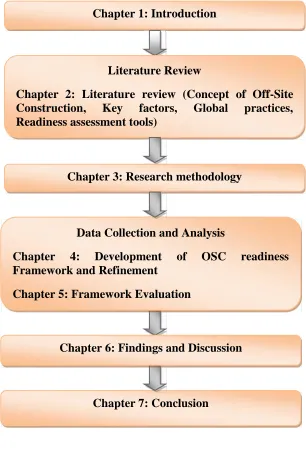
(31) results from both literature review and questionnaire survey assisted in achieving objective two. Objective Three: In order to achieve the third objective, the researcher conducted both literature review and semi-structured interviews. The literature review provided the current state – of – art – of readiness assessments used in construction industry. This helped in understanding the maturity levels and evaluation process of readiness assessment tools. The researcher then developed the conceptual OSC readiness framework based on the extracted variables from the questionnaire survey. The conceptual readiness framework comprised of 17 variables in 4 proposed groups, and three defined readiness levels. The researcher then examined the conceptual framework through semi structured interviews. The researcher interviewed five professionals in the construction industry, each with more than fifteen years of experience in the construction industry and more than five years of experience in working in OSC projects. The semi structured interview aimed to investigate the classification and nomenclature of groups, scope and definition of the sub-factors, definition of the three maturity levels, adequacy of the number of levels and their appropriateness for assessing the OSC readiness and applicability of the suggested OSC readiness framework. The results from the semi-structured interview have helped in refining the framework and thus the researcher achieved the third objective of this research. Objective Four: The researcher tested the refined OSC readiness framework through three case studies. The researcher developed a case study guide to document observation based evidence and interview based evidence. The interview guide helped in assessing the OSC readiness level of the organisation against operational challenges, broad execution strategy, certainty in planning, and operational efficiency. The results of the case studies revealed that the proposed OSC readiness framework was able to evaluate the OSC readiness of construction organisations in real scenario. Objective Five: In order to achieve this objective, the researcher documented the findings of the literature review, analysis of data obtained from questionnaire survey, semi structured interviews and case studies. The research made some recommendations based on the findings. 14.
(32) 1.7. Research scope & limitations This research study is broadly focused on developing an off-site construction readiness framework for Indian construction organisations. In the process, the research investigates the current state of OSC in India along with the drivers and barriers for adoption of its practices. The research scope and the population for data collection is limited to construction organisations in India. All required data was collected through a questionnaire survey, interviews and case studies. India is a vast country with divergent geographical, climatic and cultural phenomenon. Random sampling was used to ensure that results indicate the responses of the industry on the whole. The case studies of the proposed OSC readiness framework will be evaluated within a limited number of organisations in the Indian construction industry. 1.8. Contribution to knowledge The key contribution of this research is the off-site construction readiness framework for Indian construction organisations. Furthermore, the research provides knowledge on the drivers and barriers against implementation of offsite techniques in the Indian construction industry. No similar studies have been conducted on OSC in this context. This research anticipates filling the gaps in existing literature, particularly within this area. The researcher also attempts to learn lessons from the OSC practicing nations and customise everything for the Indian context. 1.9. Structure of the thesis Current thesis comprises seven chapters. The structure is presented in the figure 1.1 below. Chapter 1 introduces the view of this research. It presents the research background, problem statement, research questions, aim and objectives, the scope and limitations of current research and contribution to knowledge.. Chapter 2 reviews the literature on Off-Site Construction. The review explains the history, benefits and the usage of OSC in the construction industry. This chapter presents the global trends in the practice of OSC techniques and various influencing factors in implementing OSC techniques. Next, it documents the critical success factors, drivers and barriers in the adoption of OSC techniques. This helps in structuring factors 15.
(33) to investigate in the case of Indian construction organisations. The next sections focus on the readiness assessment tools in the construction industry. The researcher presents detail review of selected readiness assessment tools and maturity models in this chapter.. Chapter 3 presents and justifies the research design and methodology adopted for current study. This explains the philosophical research assumptions underpinning current study and research strategy. The chapter explains the data collection, the philosophical stance (the ontology and epistemology) and the ethical considerations of this research work.. Chapter 4 describes the development of OSC readiness assessment framework. It also presents the drivers and barriers for the adoption of OSC in India. The chapter contains the descriptive analysis of the data obtained from questionnaires, discussion of factors influencing the successful implementation of OSC methods in India, exploration of OSC readiness factors, development of OSC readiness framework and refinement through interviews. The chapter presents the refined OSC readiness framework for further validation.. Chapter 5 contains the validation process of the refined OSC readiness framework. The chapter presents the findings of three case studies of Indian construction organisations. Each case demonstrates the back ground of the organisation, and assessment results in operational challenges, broad execution strategy, certainty in planning and operational efficiency factors.. Chapter 6 discusses the findings from the three case studies and evaluates the status of OSC practices in the three Indian construction organisations. It also presents the validity of the refined OSC readiness framework in the practical scenario.. Chapter 7 presents the overall conclusions of the research. It also discusses the answers for the research questions, contribution to knowledge from this research. It concludes with suggestions for future research. 16.
(34) Figure 1.1: Structure of this thesis Chapter 1: Introduction. Literature Review Chapter 2: Literature review (Concept of Off-Site Construction, Key factors, Global practices, Readiness assessment tools). Chapter 3: Research methodology. Data Collection and Analysis Chapter 4: Development Framework and Refinement. of. OSC. readiness. Chapter 5: Framework Evaluation Chapter Chapter 6: Findings and Discussion. Chapter 7: Conclusion. 17.
(35) Chapter 2 | Literature Review This chapter presents an understanding of Off-Site Construction (OSC) and the different terms from the existing literature. The first part documents the relevant literature on OSC, the terminology, the various practices, global trends and development strategies. The chapter portrays the larger picture of the application of OSC techniques across the globe, and also attempts to identify the similarities that can be drawn with respect to the current research area, India. In detail, it provides a discussion of the major types of OSC techniques, the various methods involved, the benefits, the influencing factors, the drivers and barriers towards OSC adoption and the critical success factors of OSC. The second part covers the literature review in regards to the definition of readiness model, and the various readiness models in the construction industry, their processes and methods. Thus, the chapter reviews the current state of OSC in various countries across the globe and the readiness tools available in the literature. The outline of this literature review is shown in the figure 2.1 below. Literature review. Off- Site Construction (OSC). -OSC related terms - Types of OSC -Benefits of OSC. -Factors influencing the uptake of OSC -Drivers and barriers towards successful implementation of OSC - Critical Success Factors in OSC. Readiness framework. Global trends. Figure 2.1 Outline of the literature review. 18. -Assessment tools and models - Readiness tools in construction and in OSC. -Review of selected assessment tools.
(36) 2.1. Background Off-Site Construction has emerged as a new paradigm to attend the growing needs of the construction industry. There is significant amount of literature available on the OffSite Construction methods. Several researchers have discussed about the diversification of the concept, the terminology and definition of OSC in multiple contexts and backgrounds. Gibb (2001) has documented the existence and prominence of OSC in history. In ancient times there were also traces of adoption of offsite techniques. For instance, as mentioned by Arif (2009), smaller bricks were replaced by big boulders in the construction of pyramids in ancient times. This is similar to the modern day’s practices of using pre-fabricated panels. Gibb (2001) has documented the existence and prominence of OSC in history, recording the traces of manufactured construction in history. His research has also identified that OSC was extensively used post-World War II due to the acute shortage of housing. Statements from famous architects were documented in the literature. Walter Gropius stated that “the idea of industrialisation can be translated into reality by repeating individual parts. This makes mass-production possible and promotes low cost (Davies, 2005). Gropius and Le Corbusier have stated that, “OSC is to achieve better architecture for a better world”. Davies (2005) explored the history of houses, houses-on-wheels, and link between the offsite factory production and prefabricated housing in the twentieth century. During the 1990’s, potential techniques. from. other. industries,. such. as. manufacturing. in. construction. (prefabrication), were adopted in construction industry to improve performance (Garnett and Pickrell, 2000). Construction-manufacturing relations were needed immediately after the Industrial Revolution and have been widely debated over the past few decades (Pan and Arif, 2011). Various researchers (Gann, 1996; Egan, 1998; Blismas et al., 2006; and Nadim et al., 2011) have discussed about the learning phenomenon and knowledge transfer from other industries, especially from the manufacturing industry to achieve optimal results in construction industry. Off-Site Construction (OSC) is one such technology that was driven from the manufacturing industry. The manufacturing technology and its 19.
(37) processes seek to produce a greater number of different products while using a single systemised approach; this is also known as product flexibility. The ‘production’, instead of the ‘project’, approach of manufacturing allows the analysis and design of each phase of the production process in bringing maximum efficiency (Blismas et al., 2010). Kamar et al., 2009 stated that industrialization of construction industry can be observed all over the globe. In further sections, this research discusses about the concept of OffSite Construction in detail. 2.2. Off-Site Construction In simple terms, Off-Site Construction (OSC) is a different approach to the traditional construction methods. OSC can be understood as the manufacturing and prefabrication of building components and systems assembly away from site, perhaps in off-Site locations (Gibb, 2001; Pan et al., 2007; Arif and Egbu, 2010). Goodier and Gibb (2007) defined offsite as the manufacture and pre-assembly of components, elements or modules before installation into their final location. According to Gibb and Pendlebury (2006) Off-Site Construction refers to the part of the construction process that is carried out away from the building site, such as in factories or in specially created production facilities close to the construction site. There are several arguments on the OSC methods, observations and adoption in the existing literature. Comparing pre-assembled building with a motor car is one amongst them. Mechanisation and robotisation of the construction process were the reasons for this comparison with car manufacturing industry (Gann, 1996). Gropius (cited in Gibb, 2001) has stated that “industrial production of complete buildings could be analogous with the mass production of the motor car”. Other arguments include: maximum OSC is always for the best; and standardisation means standard and therefore boring buildings (Gibb, 2001). On the other hand, Le Corbusier considered standardisation as philosophical, artistic and practical concept (Davies,2005). Pan and Sidwell, (2011) highlighted the dimension of introducing Off-Site Construction as an innovation attempt to improve the efficiency of construction in the UK. According to research by Blismas et al., (2006), the uptake of OSC in construction is limited, despite the well documented benefits. One of the major reasons behind this was 20.
Figure

+7




Related documents
The qualified contract is defined as “a bona fide contract to acquire (within a reasonable period after the contract is entered into) the nonlow-income portion of the building for
In South Africa, compared to a child growing up in the richest income quintile, a child in the poorest quintile is two times less likely to have access to adequate sanitation
Various techniques of NILM had been brought up by the researchers that discovered a lot regarding the load identification accuracy, signature extraction and
Risky and/or unlawful activities such as drink driving, damage to properties and physical abuse under the influence of alcohol are more likely to be linked to drinkers of
- Social Entrepreneurship: Criteria for the evaluation of solutions to societal problems are entrepreneurial settings (strategy, business model, forms of financing), the
Use of more than one type of hydrogel dressing (filler, cover or impregnated gauze) on the same wound at the same time is not medically necessary.... unless there is documentation
In particular a low-flip angle proton density weighted sequence was not included in the hyperoxaemia study protocol so that correction method was not used for analysis for the
State information includes prior processing results, intermediate results, execution time, and the number of reduce tasks.. Input data, acting as the observation, will change
