Constructing Professional Identity in
Child Protection Social Work: A
Comparative Ethnography.
Jadwiga Leigh
Department of Social Work,
School of Nursing, Midwifery and Social Work
University of Salford, Salford, UK.
Contents
Abstract Page 1
Glossary of terms Page 2
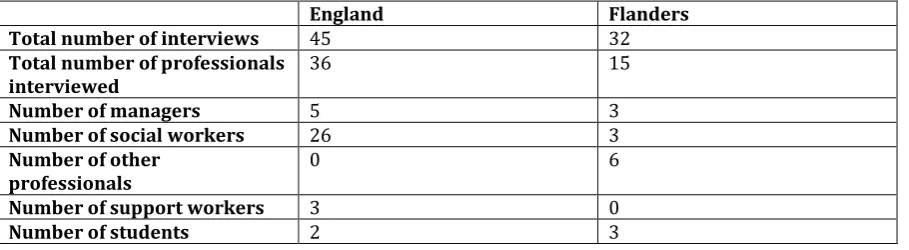
Tables Page 3
Figures Page 4
Acknowledgements Page 5
Chapter 1: Introduction Page 6
1.1 Research Focus Page 8
1.2 Rationale for the study- why this?
Why now? Page 9
1.3 The structure of the thesis Page 13
Professionalisation, discourse and
identity Page 14
1.4 The nature of profession Page 14
1.5 Defensive techniques of professions Page 16
1.6 Constructing professional identity Page 18
1.7 The inauguration of child protection
social work in the UK Page 20
1. 8 The emergence of a defensive blame
culture Page 22
1.9 The Flemish approach to child protection
Page 27
Chapter 2: Literature Review Page 31
2.1 Agencies influencing the culture of
child protection. Page 33
2.2 Organisational culture in child
protection social work Page 40
2.3 Defensiveness and discourse Page 46
2.4 Personal agency Page 53
2.5 Constructing identity in child protection practice
Page 57
2.6 Categorisation and processing Page 61
2.7 Messages from the social welfare
approach Page 65
2.8 Conclusion Page 77
Chapter 3: Methodology Page 81
3.1 Research design Page 81
3.2 Why ethnography? Page 82
3.2.1 The intimate inside v the profession Stranger
Page 85 3.2.2 So why a comparative
ethnography? Page 87
3.2.3 Applying social constructionism to
ethnography Page 88
3.3.1 Access Page 93
3.4 Research strategy Page 97
3.4.1 England Page 98
3.4.2 Flanders Page 101
3.4.3 Document analysis Page 104
3.4.4 Observations & reflexivity:
Searching for the golden nugget Page 105
3.4.5 Interviews Page 108
3.4.6 Field relations Page 110
3.5 Analysis of the written word Page 113
3.5.1 Using visual methods and analysing
photography Page 117
3.6 Writing Page 120
3.7 Validity Page 122
3.8 My own biography and the research Page 125
3.9 Ethics Page 128
3.9.1 Ethical approval Page 128
3.9.2Ethics of being an intimate insider Page 129
3.9.3 Ethics and emotions of ethnography
at home Page 131
3.9.4 Experiencing the other side of the
coin Page 135
3.9.5 Managing confidentiality Page 137
3.9.6 Conclusion Page 138
Chapter 4:Constructing culture in
child protection social work Page 140
4.1 The role society plays Page 140
4.1.1 The do goody thing has faded
(England) Page 141
4.1.2 We do have a lot of credibility within our society (Flanders)
Page 144 4.1.3 Our client is society and not the
service user (England) Page 147
4.1.4 Our clients are the parents and their children (Flanders)
Page 149
4.1.5 Parents don’t treat us with
respect (England) Page 153
4.1.6 I can trust them and they can trust me (Flanders)
Page 156
4.1.7 Summary Page 161
4.2 The role the media plays Page 163
4.2.1 Hindsight is a wonderful thing
(England) Page 163
4.2.2 Covering your arse (England) Page 164
4.2.3 From ‘behind closed doors’
4.2.3 Our papers are not as extreme as
your tabloids (Flanders) Page 167
4.2.4 Summary Page 169
4.3 The role the Government plays Page 166
4.3.1 Mr Macho and his kangaroo courting (England)
Page 171
4.2.4 We are insignificant (England) Page 172
4.2.5 The grassroots of the organisation
(Flanders) Page 173
4.2.6 We have built up some kind of expertise that is recognised by society
Page 177
4.2.7 Summary Page 179
4.3.6 Discussion Page 180
Chapter 5:The use of space and environment in child protection practice
Page 183
5.1 Comparing and contrasting the child
protection settings Page 185
5.2 Summary Page 203
5.3 Discussion Page 205
Chapter 6: The impact of an incongruent micro culture on the identity of the professional
Page 207
6.1 There is something very disguised
here Page 208
6.2 The outcome of the Fenton
department’s last inspection Page 214
6.3 The impact of the Ofsted inspection
on the Fenton department Page 219
6.4 I don’t know if we work in a blame service or a protective service
Page 220
6.5 It’s just a nod and smile culture Page 223
6.6 The bullied, the bully and the
bystander Page 224
6.7 We have started covering for each
other Page 228
6.8 The grass ain’t greener anywhere else Page 229
6.9 Discussion Page 232
Chapter 7: The impact of a congruent micro culture on the identity of the professional
7.1 Just go, you can swim Page 235
Page 235 7.2 We have never had one fatal case, I
can say that loudly and be proud of it Page 236
7.4 If you are never able to trust people
things cannot grow Page 244
7.5 Organisational hierarchy Page 246
7.5.2 That’s the habit here Page 244
7.6 We need to bring science into our work
Page 251
7.7 The supervision and training of support workers
Page 255
7.8 Summary Page 258
Chapter 8: Summary and conclusion Page 261
8.1 Summary Page 261
8.2 Limitations Page 264
8.3 Conclusion Page 268
Appendices
Appendix A: Literature search Page 273
Appendix B: Ethical approval Page 273b
Appendix C: Interview consent and data
processing Page 274
Appendix D: Letter informing
participants of study Page 276
Appendix E: Transcription of sub meeting
Page 277
Appendix F: Interview with manager Page 282
Appendix G: Organisational hierarchy of
the Fenton department Page 288
Appendix H: Organisational hierarchy of the VK agencies.
Appendix I: The story of the PPO Queen and the production of a spoiled identity.
References
Page 289 Page 290
1
Abstract
This doctoral study explores what being a professional in child protection social work actually means to those working within this context. In an attempt to unravel the meaning of professional identity for social workers, I carried out an ethnography ‘at home’. But in order to create that passage of space and time between me and the discourse I currently employed, I also decided to observe the Flemish child protection system. This study has, therefore, a comparative element.
My analytic focus has been drawn towards certain cultural factors which impact upon and influence the ways practitioners construct their identities. By considering where professionals are located, in the North West of England and
Flanders, I wanted to explore the systems for which they work; systems embedded in unique yet diverse cultures which collectively impact on the practitioner in some shape or form.
Data analysis has involved material from interviews, naturally occurring talk, electronic information (case notes, reports and emails), photographs, organisational policy and procedures. The findings demonstrate that social workers in England are firmly situated within an incongruent agency which is entrenched in a context of blame. Subsequently, a blame posture has been established which further encourages various forms of destructive discourse to emerge. Practitioners also find they are stigmatised and labelled as professional failures by both society and the agency they work for. In Flanders, however, by drawing from a discourse which evokes
compassion for abusers, child protection professionals perceive themselves
differently. As well as feeling confident and passionate about their practice they feel valued and revered by their agency and society.
2
Glossary of terms used in the analysis chapters
The terms ‘child protection’ and ‘safeguarding’ will be used throughout the following chapters to define the work that aims to prevent, respond and resolve issues relating to children who experience abuse, neglect, exploitation and violence.
England
‘England’ is used, in this thesis, to refer to the area in which this study took place. ‘UK’ is used to refer to the national points of discussion.
Fenton department: the children and families department in England where I carried out the study
SW: social worker
Manager: for all managers in all tiers of the organization
Client: a term used for parents/carers or children who are in receipt of a service from a Children’s Services.
Flanders
VK agency: Vertrouwenscentrum kindermishandling (the child protection agency where I carried out the study)
K.G: Kind en gezin (child and family agency)
3
Tables
4
Figures
5
Acknowledgements
Although only my name appears on this thesis, a great many people have contributed to its production, participants I am not able to identify but who, hopefully, know who they are and how much giving up their time, being relentlessly patient and humorous has meant to me. Knowing you and working with you all has been an honour.
This PhD study would not have been at all possible without my best friend and partner Mike, who has never once complained or grumbled when I have disappeared “to study” or jetted off to Flanders for weeks at a time leaving him in charge of the house, the boys and the dog. This thesis is dedicated to you. This leads me on to thanking Henry and Hugh (and Pebble) who have allowed me to do all of the above without making me feeling guilty but, instead, showering me with plenty of love and affection upon my return. Another rather large thank you to Doreen and John, who have not only tended to my domestic duties but also helped Mike in times of need. I have meant it when I have said “We would be lost without you”. I am also grateful to Andrea, Emma, Maria, Sara and Helen who have, on a number of occasions, managed to drag me away from my work to remind me what friends are for. In addition, the Konarski family have been a constant source of love and support throughout for which I am eternally grateful.
I am forever indebted to Dr. Stephen Hicks and Dr. Julie Wray, my supervisors. Steve for being a great source of wisdom and insight and for making me laugh when I have wanted to cry. Julie, for stepping in at the last minute, and for being so organised and dedicated to a project that was already half completed. And I cannot conclude this section without thanking Lisa Morriss who I only met in the first few days of starting my PhD but who I know I will know forever. Lisa has read and commented on so much of this thesis (and other work) and been completely supportive throughout all its ups and downs- it would have been a very, lonely journey without her.
Finally, I would like to thank the social work team at the Faculty of Health and Social Care, Edge Hill University who have welcomed me with open arms and
6
CHAPTER 1: INTRODUCTION
Once upon a time (in the early 1900s) social workers in Britain were considered by members of the public as ‘inspirational’ practitioners. They were ‘deeply respected’ and ‘valued’ for the work they carried out with children and their families (Ferguson, 2011: 25). When a child died, it was not the fault of the social worker but a failure in what was known about child protection practice. These practitioners were referred to as ‘experts’ and saw their work as a science; furthermore they quashed public doubts by reporting on the successes in their social work practice (2011: 28).
These tales are hard to believe given what social workers are known to experience today. The reputation and standing of the profession has declined in recent years (Ayre, 2001; Ferguson, 2011; Lonne et al. 2008; Wattam, 1992; Wise, 1988). Social work is now regularly subjected to superfluous repudiation and
vilification from a myriad of agencies within society. Gagged by confidentiality, social workers are unable to report on the good practice they have carried out with children and families. They not only feel the pressure from ‘countervailing forces’ outside of their own profession (see Freidson, 1986: 202) but also have to deal with hostility and control evident from within their organisation (Ayre, 2001; Cooper et al. 1995; Ferguson, 2011; Hetherington, 1998;). This not only has a negative impact on the way they conduct their practice (Cooper et al. 1995; Hetherington, 1998) but also distorts the way they construct their identities as social workers within this context.
7
experience and skills. It also has an extraordinary effect on how I perceive myself as a professional and how I construct my identity within a culture which is entrenched in blame.
In Flanders (Northern Belgium), however, there is theory to suggest that social workers are revered and respected (Cooper et al. 1995; Desair andAdriaenssens, 2011; Hetherington, 1998; Marneffe, 1996), much like they were in Britain in the early 1900s. These professionals work within a ‘welfare system’, a system which inherently focuses on working closely with the child, their parents and the judge so that joint mutual decisions are made; issues such as ‘accountability’ and ‘blame’ are secondary, if existent at all (Cooper et al. 1995).
Although there are many other authors who have discussed the subjective experiences of the social worker within the context of child protection (see Cooper et al. 1995; de Montigny, 1995; Ferguson, 2011; Wise, 1988) and others who have analysed the impact the media has had on the child protection process (see Ayre, 2001; Collins, 2000; Edwards and Soetenhorts, 1994), this study does not intend to repeat these forms of investigation but instead contribute to the debate by exploring how professionals, in a culture which is deeply ‘entrenched in blame’, construct their own identity (Ferguson, 2011: 34). Hicks (2008) has argued that contemplating an individual’s identity is important within the practice of social work if it is to teach practitioners something interesting and innovative about the way we think of human relationships, intimacy and care. If this study can also encourage others to
8
1.1Research focus
The main focus of this study is the professional identity of child protection social workers. The epistemological position that I draw on throughout this project is that of social constructionism. By approaching literature with the view point that ‘without culture we could not function’- humans do not only inhabit a pre-existing system but become inhabited by it (Crotty, 1998: 53). By using this perspective I have developed the following three aims:
1. To establish the meaning of professional identity for child protection social workers. That is what being a social worker actually means to those working within this context by gaining an understanding of how they perceive
themselves as professionals.
2. By drawing from the theory of social constructionism, I also want to consider where the social worker is located. In this context it is the child protection system in the UK and the social welfare system in Flanders. These systems are embedded in separate cultures which are made up of certain agencies and influenced by various discursive regimes, all of which collectively impact on the social worker in some shape or form.
3. Furthermore by understanding where social workers are located, I then plan to use the method of ethnography to explore how certain circulating
9
these symbolic codes not only impact on their own professional identity but also influence the way they behave and practice.
The empirical basis of this doctoral study is that of a comparative ethnography which took place in two child protection settings, one here in England, UK and one in Flanders, Belgium. Foucault (1972) contended that it is impossible for a person on the inside to see the discourse they use and are subjected to and the only way to
understand it would be through a period of time and separation. I argued above that practitioners are oblivious to that which goes on around them, yet I too am a
practitioner and part of the very same culture I wish to explore. Therefore to create that passage of space and time between me and the discourse I employ, I have chosen to observe the Flemish child protection system and use it as a comparative element to this study. In doing so, I wanted to find out the following: what does it mean to be a social worker in practice today? How do professionals describe the context within which they work? And how does their culture influence the way they then perceive their identity?
1.2 Rationale for the study- why this? And why now?
10
not end up like Lisa Arthurworry: the last social worker to have worked with Victoria Climbié, the professional found culpable for her death.
It is easy to miss the story of Lisa Arthurworry when, in my experience, you are starting out as a newly qualified eager to make a difference. For it isn’t a story that was shared with me when I was studying social work and it isn’t one that I was told when I started in my first post as a social worker. I learned about what happened to Lisa purely by chance one day when scouring the internet for more information on the Victoria Climbié case. When Lisa Arthurworry started in her new post at Haringey Social Services she had no idea that just some weeks later she would not only be dismissed from her job but barred from practising social work altogether. Lisa had only been qualified three months when she was allocated Victoria’s case. Following the Climbié Inquiry Lisa was also placed on the Protection of Children Act list (PoCA)2. Later that year she was referred to a psychiatric service for 20% loss of
faculties and was sectioned under the Mental Health Act. Her weight dropped to five and half stone. Out of all the professionals involved in the tragedy of Victoria Climbié, only Lisa Arthurworry lost her job (Taylor, 2007).
So becoming a social worker post- Climbié Inquiry (2003) significantly shaped the way I constructed my identity as a newly qualified practitioner. Not only was I, as a student, taught to scrutinise the Laming Report (2003) for the “errors” that were made by all professionals at that time, but on the very first day in my new post as a qualified social worker, I was also asked to read it again in order to “refresh” my memory as well as to prepare me for what lay ahead. My practice was thereon
subsequently shaped by the vigilant decisions I went on to make whilst working with the knowledge and apprehension of what might happen to me if one of those
2 Protection of Children Act (1999) is a system which has been created to prevent persons considered
11
decisions turned out to be the “wrong” one. I also found that by trying to draw from and implement the “ideal” social work theories I had learned during my degree, in the hope of becoming a “better” social work practitioner, was not as straight forward as I had originally thought it would be. I was not naïve as to what lay ahead. I was fully aware that ‘the role of social work in society’ had been ‘a matter of controversy since its inception’ (Dominelli, 1996: 154). Yet despite the debate that the profession had become ‘deprofessionalized’ (see Dominelli, 1996; Healey and Meagher, 2004; Orme, 2001) I remained hopeful that ‘post-professionalization’ would prevail and persuaded myself that due to the resilient nature of social work, this profession would be one which would be able to resist professional decline through the process of
‘restratification3’ (Randall and Kindiak, 2008: 351).
Despite this hope, I found that I was, instead, in a profession which had to deal with certain unexpected pressures, tensions which were evident and seemed to take precedence both within and outside of the organisation. It started to occur to me that the original path I had chosen had somehow changed en route and was no longer the path I was following. Doing what I wanted to do, ‘social work’ with children and families, had turned into a distant memory, for somewhere along the way I had become lost and confused. I soon realised that no matter how many text books I read to try and improve my practice, my views of safeguarding children remained the same: significantly distorted. Protecting my reputation and defending my practice were now the primary ‘social work’ activities that seemed to take priority over that of building relationships with children, learning to trust parents and taking informed risks.
3 Restratification is a term used here to define how a profession can evolve and expand its scope of
12
The reason for this study, therefore, is to contribute to the wealth of research already in circulation in the child protection field by not aiming to find a better solution for the way social workers currently practise. Instead its relevance is to understand the composition of those who do ‘do’ social work. My argument will be throughout that if we do not understand who social workers are and where they are located, we will never be able to understand why they practise in the way that they do, for as White (1997: 6) has argued ‘social workers may be free and purposeful but not in conditions of their own making’.
By employing an infrequently used method in sociology and in social work, that of a comparative ethnography, this study hopes to contribute to the field by showing how other child protection practitioners in Europe go onto assemble their professional identity in a different way to the social workers in the England. This thesis is also concerned with the construction of the images, reputations and stereotypes of child protection social workers in the UK. Its findings will therefore contribute to the profession’s debate by demonstrating that professional ‘social shelters’, a concept first developed by Freidson (1970-2001) and later Pithouse (1998) hold different meanings to those intended for some practitioners working in the child protection field in the UK.
13
My plan, therefore, as a writer, analyst and narrator for all those who have taken part in this study and who still do practise in the field, is to explore their experiences from the stories they have shared with me and the day to day activities which I have also observed. I will form arguments as I go along, assertions that I hope will persuade the reader just how and why social workers from England construct their own professional identities so considerably differently from those in Flanders.
1.3 The structure of the thesis
The remaining part of this chapter will focus on the background of the professions debate and discuss how certain defensive techniques and discourses can emerge within certain professional fields. I also plan to explain my use of particular social constructionist concepts within the forthcoming text and I will summarise how this theory can be used to understand how professional identity may be constructed.
Chapter two is a literature review that explores and analyses research which has been carried out in the child protection setting in the UK and abroad within the past 30 years. Key themes will be discussed and summarised with a particular focus on professional identity in social work practice.
Chapter three outlines the methodological orientation of this project and delineate the research process I have undertaken in this study. I also explain how the data for this study was generated and detail why the preferred approach of a
comparative ethnography was selected.
14
perceive child abuse and how they hold certain expectations of the professionals who then carry out the work of child protection practice.
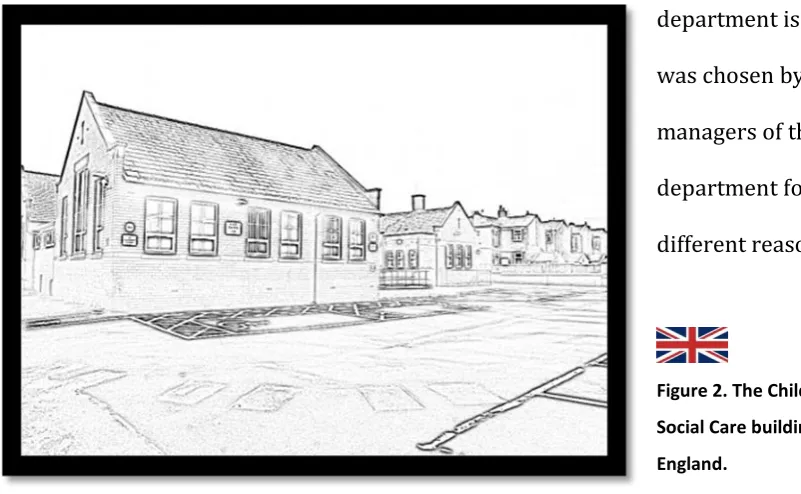
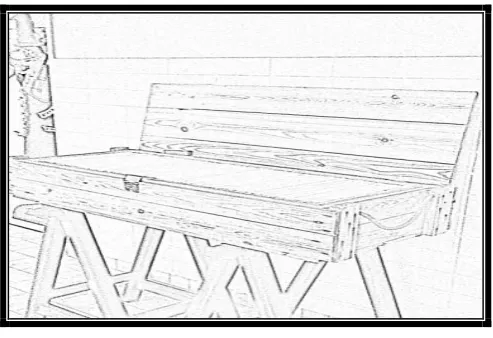
Chapter five uses visual imagery to analyse the space and environment in which child protection practice is carried out. In ‘The use of space and environment’ photographs have been used in order to create a form of visual dialogue with the reader by drawing attention to the difference in settings in which the two agencies in England and Flanders are located.
Chapter six focuses specifically on the micro culture of England participants. In ‘The impact of an incongruent micro culture on the professional identity of the social worker’ I explore how certain cultural factors impact on the way professionals construct their identity in the Fenton department.
Chapter seven, the final of the analysis chapters, focuses on the same theme as that of chapter six, but in relation to the Flemish professionals. In ‘The impact of a congruent micro culture of the professional identity of the social worker’ I continue to use social constructionist theory to examine the culture of the two Flemish agencies and how these impact on the practitioners from these organisations.
The thesis will end with a conclusion of the findings.
Professionalisation, discourse and identity.
1.4 The nature of professions
Child protection is a specialist area within the profession of social work. Only by appreciating how social work has become a profession and how child protection as a practice has evolved within various contexts of adversity, change and uncertainty will we then be able to explore what professional identity means to social workers
15
The study surrounding the development of professions has always tended to be on the periphery of conventional sociological theory and research. As Burrage and Torstendahl (1990: 2) highlight, Karl Marx and Max Weber, two of sociology’s
founding fathers said virtually nothing about it during their lifetimes. For Marx (1818- 1883) the professions were insignificant participants in the class conflicts of capitalist societies. Sometimes he aligned them with the bourgeoisie and at others, the proletariat. Weber (1864- 1920) on the other hand ignored professions
altogether, making them indistinguishable from any other work group. However, Marx and Weber did provide society with two powerful concepts: class and
bureaucracy, which as social phenomena have haunted the study of professions ever since. By Marx and Weber simply placing the professions in a class system and
identifying them as a ruling class with a service class attached, future sociologists had two powerful concepts to confront and overcome when seeking to introduce a new theoretical or conceptual paradigm for the meaning of profession.
The professions debate has continued over the years with various authors developing specifications to argue for a set of criteria that could fit all (see Cogan, 1953; Goode, 1960; Millerson, 1964) or identifying a process of professionalisation which white collar occupations could aspire to (see Wilensky, 1964). It was not until Freidson (1970) that a new perspective to the argument was introduced. In his seminal study Profession of medicine, Freidson challenged the belief that certain criteria needed to be met before an occupation could be deemed a profession. He created a distance from previous opinion by arguing that a ‘profession’ was an
occupation but it was different in that it enabled particular practitioners the capacity to create social shelters in the labour market through the monopolisation of
16
1.5 Defensive techniques of professions
Trist and Bamforth (1951) recognised that in developing a profession, or a social organisation, interacting components such as structure, culture and mode of functioning were required in order for it to perform its tasks and meet the
psychological needs of the members. Following on from this concept, Freidson (1986) broadened his initial focus and in doing so noticed that in England and the United States there was a tendency for each profession to develop its own movement for recognition and protection for the needs of its members. In turn this created an occupational distinctiveness, one that held exclusive and elite memberships for those involved and led to members forming groups within their professions as a means of defending their discipline.
These group formations served to exclude all those who failed to possess the required credentials but include all those who did. Freidson (1986: 202) referred to this formation as a ‘social closure’, which he described as a defensive technique, one which rewarded its members, not through financial gain or peerage, but by meeting their cultural, social and psychological needs. This ‘social closure’ created an elite membership, which Flexner (1915: 156) had also identified many years earlier, when questioning whether social work was a profession or an occupation, but back then he had referred to it as ‘a brotherhood’ or ‘a caste’. In 1998, Pithouse also observed this form of social closure in his ethnography of a child protection setting and described it as ‘a social world that is a structure of meanings and relationships that provide secure
boundaries and a creditable identity’ (p. 27) [own emphasis added].
17
‘without closure there can be no discipline’. This elite group also provided a social shelter for professionals by encouraging formal bodies of knowledge to develop, be nourished, practised, refined and further expanded upon. Freidson argued that these defensive techniques were used by professional institutions, not to exploit or
dominate outsiders, but as support devices for growth, refinement and quality for insiders.
It is important to note that prior to Freidson’s work Menzies-Lyth (1960) carried out a study which explored the profession of nursing in hospitals. She found that socially constructed defense systems were being developed over time through collusive interaction and agreement, often unconsciously, between its members. These defense mechanisms became an aspect of professional reality which old and new members adapted to and embraced. Menzies Lyth found that these defensive techniques appeared not only in the structure of the organisation itself but also permeated through the whole of its functioning.
The defensive techniques identified by Freidson (1986) and Menzies Lyth (1960) also created a shared language that was unique to that specific social group. This rhetoric was rich with codes and meanings, which Flexner (1915) recognised absorbed the social and personal identities of its members. This language has since been phrased by other writers as ‘discourse’ (see Burr, 2003; Foucault, 1972;
Holloway, 1984; Parker, 1992). The concept of discourse is defined by Parker (1992: 5) as ‘a system of statements which construct an object’. In this instance, discourse refers to a shared rhetoric introduced by a profession for the use of its elite members to create codes or signifiers that support the construction of new identities.
18
Freidson (1986). He felt that critics who attacked the professions faced a futile task because challenging the elite did not evoke serious changes within institutions, it actually effected the reverse. For Freidson (1986) found that these elite groups were not designed to crumble when confronted by countervailing forces but encouraged to rely upon and use their defensive mechanisms in order to survive.
1.6 Constructing professional identity
In contrast with essentialism, or rather Cartesian or post-Darwinian belief, where identity is conceptualised as something that is always already present within a
person, anti-essentialism argues that there can be no unitary notion when it comes to identity formation. Instead anti-essentialists from the sociological, structuralist and post-structuralist approaches assert that identity is ‘variously fragmented and de-centred’ as well as being ‘endlessly interrupted’ by external discursive practices or positions which are made available in language or wider representational regimes (such as photography which is used in this thesis) (Du Gay et al. 2000: 3).
In this thesis I will draw from some of these anti-essentialist theories (Althusser, 1971; Bourdieu, 1987; Davies and Harre, 1999; Foucault,
19
Child protection discourse has emerged from a number of complex ethical issues. Freidson (1986: 230) analysed the impact a profession might have on its workers by using the term ‘professionalism’. He recognised that through ‘the process of professionalism’, otherwise known as ‘professionalization’, the professional’s attitude and their commitment to their career became that of their own identity. Freidson went as far as saying that ‘professionalism’ could not actually exist
independently of the professional thus inferring that professionals are their areas of practice; they represent their profession through who they are and what they do.
Payne (2006: 29) has described ‘the identity of social work’ as that of a welfare service which aims to provide services for those in need (through problem solving, liaison and coordination) and to bring out social change and human empowerment with the use of social and psychological knowledge. For the professionals involved in the field of child protection, learning to make difficult decisions and handle conflicting values during pressured times is a stressful process, one which has been referred to by Cooper et al. (1995:viii) as a ‘feeling of stuckness’. In trying to understand how professional identity might emerge during such times of change, uncertainty and persistent restructuring, Bernstein (1996) refers to the narratives of retrospective identities. These are told in the form of narratives by practitioners who have experience of what has happened (those already present within a social shelter) as exemplars for new arrivals to conform to in the present and the future.
20
particular person composes their identity, we must first consider, in depth, the macro and micro cultural context within which they work.
1.7 The inauguration of child protection social work in the UK.
Having identified and unpacked the meaning of profession with the support of
Freidson and others, I now want to explore the meaning of professionalisation within the profession of social work, in particular the child protection discipline. As we shall see, much of what Freidson (1970-2001) has described can also be applied to the field of child protection practice which, as a profession, often finds it has to defend itself against certain ‘countervailing forces’ (Freidson, 1986: 202).
Whilst Freidson was defending the status of professionals, the social work profession found itself defending its own credentials following the tragic death of Maria Colwell. In 1973, Maria was killed by her stepfather, William Kepple, after being returned to the care of her mother. For the thirteen months before she died, she had been cruelly mistreated, starved and used as a scapegoat (Munro, 2002; Parton et al. 1997). Following her death, this ‘individual tragedy’ soon transformed into a ‘public scandal’ as media reportage condemned the social services department whom they felt were culpable for her death (Butler and Drakeford, 2012: 5). This form of sensationalism captured the public’s awareness and culminated in national outrage.
As well as being present in the public gallery and in the queues outside on certain days, the ‘public’ were to be ‘represented’ at the Inquiry through the evidence provided to it by family members and by the Kepples’ neighbours on the Whitehawk Estate. The
21
‘common sense’ against which the practice of social work would, in part, be judged and found wanting.
(Butler and Drakeford, 2012: 91)
In order to make sense of Maria’s death, after a number of ‘putative heroes and villains’ had already been populated by the public, an inquiry was set up to
investigate the practice of the professionals who were involved in her case (Butler and Drakeford, 2012: 94). The outcome of the inquiry led to a modern child
protection system being introduced into this country. It established child protection registers5 and created case conferences. It also recognised that social workers had
failed to identify the classic signs of neglect (Munro, 2002; Parton et al. 1997; Parton, 2004).
Prior to these events, social work had operated as a generic profession but following the Colwell Inquiry a specialist discipline of ‘child protection’ was created. As well as a number of changes being effected into the practice of social work, it was also the first time a social worker was seen as culpable for the death of a child. For despite setting up an inquiry to try find out exactly what had happened to Maria, ‘from the outset …public perception was shaped, and determined, by the prior knowledge of the events themselves’. Media reportage represented a disgruntled public who were not only threatening and aggressive towards the mother of Maria Colwell, Pauline Kepple, but also towards Maria’s social worker, Diana Lees (Butler and Drakeford, 2012: 113). Maria’s social worker was not only castigated by those heading the Inquiry for trying to keep the family together, despite this being general policy at the time, but was also vilified by the public for failing to protect a child (Munro, 2002). The social work profession suddenly found itself in unknown
5 A child protection register is a confidential list of all children in the area who had been identified as at risk
22
territory, defending itself against public outrage and finding it was now accountable to a new agency: the media.
1.8 The emergence of a defensive, blame culture.
On the panel of the Colwell Inquiry was Olive Stevenson, a qualified social worker and academic, who did not agree with the consensus agreement of the core narrative which emerged from the Inquiry. Her main struggle had been with the Chair of the panel, Mr Field Fischer, whose focus she felt had been on the excessive use of ‘purple prose’- phrases she thought had been included simply to provide the papers with headlines (Butler and Drakeford, 2012: 161). Her point was that the facts of the case were clouded with a media sensationalism, contributed to by not only the public’s interest but by the lead person of what was supposed to have been an informative process, the Inquiry. The outcome of the Colwell Inquiry was to have an everlasting effect on the profession of social work with the Government implementing the Children Act 1975, not only to ensure ‘better communication’ and ‘strengthening of the safety-net’ but also to put social work back ‘in its place’, ‘reined in and confined within a forum where other more mature voices could not be sidelined or ignored’ (Butler and Drakeford, 2012: 174).
In a bid not to miss a single case of abuse, child protection practice has become, over the years, skewed towards investigations of any allegation of
maltreatment (Parton et al. 1997). In addition, media coverage has often been centred on ‘criticism of the competence or motivations of child protection workers’ by
generating reports which portray the social worker as ‘sometimes too weak,
23
Members of society could be forgiven for believing that the world has become a more dangerous place, that there are more child abusers around now than there ever has been before, especially when ‘moral panic’ episodes occur which add
‘cultural strain and uncertainty’ and ‘threaten communities’ cherished values (Cohen, 1972:50). However, Giddens (1999) has pointed out that this does not reflect the true state of affairs within society but instead demonstrates that society has become progressively more preoccupied with risk and safety. And when these two factors start to affect the political and social climate, Adams et al. (2002: 271) argue that critical social work thus becomes a challenge:
In a blame culture there are pressures to proceduralise how
uncertainty is dealt with, to ensure that there is always something or someone to blame when things go wrong. Workers can be blamed for not following the procedures correctly, or, if procedures were
followed, the procedures can be blamed for not being adequate.
In recent years a growing number of authors (see Ayre, 2001; Campbell, 1988;
24
In the final progress report, Moving towards a child centred system (2012: 3), Munro concluded that child protection had become too focused on compliance and procedures and had lost its focus of children’s needs. She called for a ‘fundamental change’ in attitude towards social workers, reminding readers that child protection work involves uncertainty, having to work alongside ‘expectations’ that have become ‘unrealistic’ and, as a result, have strengthened the belief that if a tragedy occurs ‘some professional must be to blame’.
Munro also recognised that the practice of child protection social work had developed into a ‘defensive culture’ focused on compliance, targets, rules and procedures and failing to consider whether the services that were actually being provided were even effective in supporting children and families. To overcome these issues, Munro made a number of recommendations that have been accepted by the Government. They include: reducing statutory guidance to provide more scope for professional autonomy; the removal of fixed assessment timescales and the plan for Government to appoint a Chief Social Worker and for local authorities to appoint Principal Social Workers (advanced, experienced practitioners).
In addition to the Munro report the Social Work Reform Board6 aims to ‘drive
up the quality of social work’ practice in order to improve services for children and families whilst the College of Social Work7 is focused on building relationships with
certain agencies by acting as a powerful voice for social workers in order to develop a strong profession with a clear sense of value, ethics and purpose.
6 The Social Work Reform Board (SWRB) was set up to take forward the recommendations of the Social
Work Task Force for the reform of social work. Reform is led by the social work sector itself. Employers of social workers, educators, regulators, service users, government and the social work profession itself have worked collaboratively to develop tools that will drive up standards of social work practice and improve services for children, adults and families.
7 In 2009 the Social Work Task Force called for the creation of an independent and strong organisation
25
At the time of writing this thesis, although the College of Social Work has been established and the Social Work Reform Board’s agenda is being implemented within universities across the UK not all of Munro’s recommendations have yet been
implemented within local authorities nationally. Parton (2012: 158) has argued that these recommended changes are ‘far from auspicious’ due to the current political, economic and social context and has warned that the size of the challenge faced by the Review should not be underestimated due to having to deal with an over proceduralised defensive and bureaucratic system. Yet there is sign of another change, one that has taken place without any of the Boards or Reviews mentioned above.
26
writing approximately 30 have) and the Government have not, yet, made the model mandatory, a recent evaluation carried out by Cross, Hubbard and Munro (2010) described it as successful and have recommended others follow suit. It is significant to note at this stage that the Fenton department, the local authority observed in this doctoral study, is one of the 403 local authorities in the UK which has not adopted this model.
Although the model has been praised by Professor Munro (see Cross, Hubbard and Munro 2010) it has been criticised by others for trying to make one model fit all (see Measures, 2012) and for being unable to handle organised child abuse (see Davies, 2013). The only concern I have is that, in contrast to the Flemish approach, there is still only one person, the consultant social worker, who is ‘accountable for all the work in the unit’. Given the reputation of social workers today this is a risk for the whole project should a tragedy occur (Mason, 2012:114). Although, in my opinion, this model is the first positive possible change for child protection social work, it is still uncertain at the moment whether this model will prove to be effective and provide all local authorities nationwide with the confidence to implement this new way of thinking and working into their own organisations.
27
advocates will respond to the pressure that will be wielded upon them, and the profession, by society.
1.9 The Flemish approach to child protection
In March 2012, at the European Social Work Conference in Basel, Switzerland, Professor Sue White gave a key note speech to the audience in which she discussed the current state of child protection services in statutory authorities in England. It was, for many British academics who attended, “a powerful” presentation. I agreed with them; it was indeed compelling, for as Sue White talked about hot desking, parents making complaints about social workers, managers trying to deal with ever rising referrals and the premature closing of cases, it felt as if she were talking to me about the daily chaos which ensued from the department I worked in.
During the break, however, I bumped into one of the Flemish participants from this PhD study. He had also been present during the presentation but, I was surprised to find, held dramatically different views to me and the other British listeners. He confided that he had been “unable to relate” to a lot of what Sue White had said. He understood that what she had said may have had significance in the UK but, he went onto explain, he had never personally experienced, or heard of, such practices being present in Flanders.
28
is rather unremarkable news. Desair and Adriaenssens (2011) confirm this in the section of the book they wrote for editors Gilbert et al. in Child Protection Systems: international trends and orientations.
In it, they begin by providing the reader with a synopsis of the Belgian system and its background. In principle, the Belgian approach aims to meet the requirements of the United Nations (UN) Convention on the Rights of the Child as this highlights the duty for Government to intervene, prevent, and ‘repair in cases of child abuse and neglect’ (Desair and Adriaenssens, 2011:206). As an agency they do not believe in categorising abuse, they instead work with a model which does not focus on forms of abuse for they believe that ‘victims suffer a couple of mutually related forms of violence and neglect’ and they feel that this ‘insight can be lost when a system is organized around categories’ (p.214). The authors believe their approach to child protection practice to be ‘located on a continuum between a disciplinary or
criminalising and an emancipatory or caring system’ with judicial intervention being regarded as the last resort in prevention (p.206). They also go on to discuss the Dutroux8 case which they describe as ‘a traumatic experience for Belgium’ (p.216).
However, the ending of the Dutroux affair is not one the British reader would anticipate. For the authors state that ‘[e]ven though the Dutroux case was horrible and traumatic for the whole country, it did not lead to a witch hunt or a moral panic’ (p.217) (own emphasis added). Although there was a protest in October, 1996, which saw some 300,000 people walk the streets of Brussels to express their indignation at what had happened with the Dutroux case, the aim of their march was to send a message to the Government that changes were indeed needed in Belgium but that it
8 Marc Dutroux is a Belgian serial killer and child abuser who was convicted of having kidnapped, tortured
29
was ‘the judicial authorities and the police [who] should pay more attention to “the child”’ (p.217). It was because of the ‘worthy responses of the parents of the missing children and the symbolic power of the White March’ 10 that constructive changes
were subsequently made in favour of the protection and well being of children in Belgian Society (own emphasis added).
So why is it that the Flemish approach to child protection seems to be so very different to the one we follow in Britain? Green (2008: 212) would argue that it is ‘the significance of events [which are] contingent and can only be interpreted with an appreciation of the event’s cultural context’. When comparing the Bulger (1993) 12
murder with the Norwegian Silje (1994) 14case, Green (2008) found that although the
two cases shared remarkable parallels (they both involved the death of a young child, a child who was murdered by children) the main difference was that in the Silje case child welfare professionals intervened and took over the case, instead of the police. In contrast to Jon Venables and Robert Thompson, the Norwegian boys were not
punished in any way but were returned to school and supported by teachers and psychologists to enable them to come to grips with, and get past, what they had done.
Green (2008) asserted that there were four differences between the two countries responses to the tragedies. The first was the different construction of childhood. In Norway the murderers were treated as children, in Britain, on the other hand, they were seen as evil and thus treated as criminals. The second difference was the level of faith each society had in their system. The Silje case was left to the social
10 It was called the White March as everyone carried something white: a balloon, a coat or their faces were
painted white as a symbol of hope (Desair and Adriaenssens, 2011:217).
12James Patrick Bulger was a two year old boy from Kirkby, England. He was abducted, tortured and
murdered by two ten year old boys in 1993 (Green, 2008).
14 In 1994, Trondheim, five year old Silje Redergard was murdered by two boys aged 6 years old (Green,
30
welfare professionals to deal with whereas in Britain, where there is a lack of public trust and confidence in the social care system, it was left to the criminal system to deal with. The third difference was the competitive newspaper market in Britain compared with ‘the two large circulation national dailies in Norway’ (p.213). With many papers competing to get the best story, the British practice in journalism often leans towards there being an emphasis on the sensational rather than the factual. The fourth difference is the way in which moral panics are created through alarmist rhetoric used in politics in Britain in comparison with Norwegian political culture which is based upon a consensus model, ‘as power is shared amongst political parties, there is less to gain by using crime as a political issue’ (p. 213). In Britain, on the other hand, the public witnessed opposition politicians become motivated in exploiting this tragedy by using it as ‘a political weapon to discredit the party in power’ (p. 211).
If these reasons for such differences provided by Green (2008) are veritable, then it suggests that in order to understand why the approach to child protection is so different between the UK and Flanders we need to first appreciate and consider the political-cultural context in which these two systems are embedded. For it appears that when society’s anxieties become heightened during a child abuse inquiry these are conditioned by not only the levels of confidence the public have in their
31
CHAPTER 2: LITERATURE REVIEW
I have carried out this literature review by focusing on empirical material from Flanders (and other European countries which use a similar social welfare system). I have also searched for literature from the UK, and other English speaking countries whose model of child protection practice we often refer to and adopt within child protection practice here in the UK, such as the USA, Canada and Australia in order to build a larger and more comprehensive picture of the settings I wished to study. I did not limit the literature search and therefore searched for all publications (theses articles and books) which were in circulation prior to June 2012. In order to get broad range of literature I used the following key words: ‘child protection’, ‘children’, ‘social work’, ‘discourse’, ‘defensive’, ‘profession’, ‘identity’, ‘blame’, ‘culture’, ‘ethnography’, ‘qualitative/ quantitative’ and ‘moral panic’ in conjunction with one another when searching academic databases, journals, theses and grey literature (see Appendix A). These words were chosen to reflect: the area of social work I was interested in, the substantive element of the study, the methodological aspect of the research and the themes I thought might emerge from the data from the literature I had previously read.
32
previously considered, that of defensiveness (which I then used as a key word). It became a prominent theme within the child protection context and as a result, is covered within this review.
From the mass of literature on child protection, a total of 22 sources, consisting of nine articles, four theses and nine books were selected and assessed as being those most closely related to the specific focus of this empirical research. Using the method advocated by Wallace and Wray (2011: 41) each of these were read and then
scrutinised with the ‘critical synopsis of text’ template. By using this tool my aim was ‘to evaluate the logical coherence of theories, methodologies and findings in a context of informed scholarship’ (Hart, 1998: 44) and not to judge one piece of work as ‘better than another’ (1998: 45).
A comparative critical summary of all the texts was then created and I identified the following themes:
1. Agencies influencing the culture of child protection
2. Organisational culture
3. Defensiveness and discourse
4. Personal agency
5. Constructing identity
6. Categorisation and processing
7. Messages from the social welfare system.
For the purpose of clarity and structure each theme has been considered
33
more detail at the end of the review. The studies reviewed explored aspects of the child protection system, the culture within which this system is located, the
discursive regimes that emerge from this setting and the impact the media has not only on child protection practice but also the professionals who find themselves subjected to an episode of moral panic.
Although the sources collectively provide the reader with a better understanding of the child protection system, they tend to focus on how the competency of the practitioner can be improved or how the system can be made more rigorous. They do not consider how professionals within this setting might construct their social work identity.
2.1 Agencies influencing the culture of child protection
Wise (1988), Edwards and Soethenhorst (1994) and Ayre (2001) analysed the roles of certain external agencies which not only influence the culture of child protection but manipulate it to create an adversarial process that has negative implications for the professionals and families who find themselves subjected to it. I use the word ‘external’ in this context to represent those organisations which are outside of the local authority agency (within which Children’s Services are located) but which nonetheless impact on the culture of child protection.
In her PhD thesis Child abuse procedures and social work practice: an ethnographic approach Wise used the method of ‘institutional ethnography’ 16 to
carry out her research. In this study, Wise reflected on her experience of being a social worker by referring to notes she assembled when she was a practitioner. She also textually analysed data from two media stories which reported on the deaths of
16 A methodology which was developed by Dorothy Smith (1985) and can be translated as a tool for
34
Tyra Henry (1985) and Heidi Koseda (1985) and examined the theoretical account from the Commission of Inquiry into child abuse following the death of Kimberlie Carlile (1986). As a result, her research provided an account of the different voices within child abuse discourse that affect the culture of child protection.
Through her analysis of various texts and media excerpts, Wise developed a number of theories. She suggested that for a story to become popular in the press and snowball into a moral panic a child needed to have first been known to social services and been allocated a female social worker; secondly, the mother needed to be
involved in a monstrous relationship with the child’s (step) father. Wise recognised that Cohen’s (1972) notion of ‘moral panic’17 and Becker’s (1963) work on ‘moral
entrepreneurs’18 were also both concepts which were usefully employed in the
discussion surrounding child abuse.
The notion of moral panic is also the theme that Edwards and Soethenhorst (1994) focus on in The impact of “moral panic” on professional behaviour in cases of child sexual abuse. Their aimwas to explore the notion of moral panic by using discourse analysis to examine the narratives from a number of media sources which reported on two child abuse epidemics: the Cleveland Inquiry in the UK and the Vlaardingen Inquiry in the Netherlands.
The authors noticed that, with the Cleveland incident, the media created an image for Dr. Marietta Higgs as a ‘She folk-devil’ symbol by describing her as a militant, feminist with radical views (1994: 117). The chain of events from both inquiries identified a spiralling effect synonymous with that described by Cohen
17 ‘a condition, episode, person or group of persons emerges to become defined as a threat to societal
values and interest’ which are then ‘presented in a stylised and stereotypical fashion by the mass media’ (Cohen, 1972: 9).
35
(1972). Both demonstrated how the moral panic began with a shocking story which was sensationalised by the media, enforced further still by society and culminated with the ‘She folk- devil’ scapegoat being dismissed from practice.
By using the metaphor ‘She folk-devil’ Edwards and Soethenhorst successfully highlight that in both inquiries the scapegoats were women simply by inserting the word ‘she’ in front of the term ‘folk-devil’. By exposing the gender of the guilty party, they are then able to draw on the feminist perspective which considers the unequal power imbalances within families and society in general (see Stanley and Wise, 1983; Tong, 1995).
Unfortunately, although their original aim was to examine the impact these incidents had on ‘all professionals’ their focus throughout the text remains firmly fixed on only medical professionals. By drawing explicitly from the feminist perspective and exposing the media as a gender biased form of reportage, they inadvertently contradict their own epistemology by eliding the experience of the social workers who, in the case of Cleveland, were also known to have been
ostracised by their profession and subjected to taunts from the public. Subsequently, the context of this phenomenon and the impact it had not only on social workers but on the political reaction following the Inquiry in respect of the child protection culture is overlooked.
36
Throughout her work, Wise referred to the concept of ‘textually mediated relations of ruling’ 19(1988: 181) and used this to demonstrate how the NSPCC use
their ‘ideological dominance’ in a public field where they are revered as ‘the expert of child abuse’ mainly as a result of marketing and fundraising strategies (1988: 130). Wise revealed how their powerful and established positioning not only exploits the vulnerable by making promises to society that they cannot keep but creates
unobtainable and unachievable goals for the local authorities- the agencies that actually carry out the majority of direct work with children who have been abused.
By highlighting who the main agencies and influences are (the Government, the Media and the NSPCC) in the child abuse debate, Wise carefully illustrated how these organisations have created a dominant rhetoric for child abuse, promoting themselves in the eyes of the public as helpers not hinderers in uncovering ‘the facts’ (1988: 105), and in doing so, have successfully managed to damage the reputation of social workers by perpetuating themselves as a rather ‘discordant cacophony’
overriding and ignoring the voices of the real experts in child abuse: the child, the parent and the social worker (1988: 6).
However, so focused is Wise on these three organisations and the detrimental impact they have effected upon the profession of child protection she inadvertently overlooks another significant agency which plays an instrumental part when
considering the rhetoric and subsequent discourses circulating child abuse- the Social Services Department for whom she worked (more commonly known today as the Local Authority in which Children’s Services is located). Although Wise is explicit in her work about her bias towards this agency, she does not appear to consider the implicit function of this institution and as a result does not separate the Local
19 A concept developed by Dorothy Smith (1985) which refers to a practice which is more often than not
37
Authority from the Government, as it is an agency which not only takes direct instructions from the Government but could not survive financially without it.
Ayre (2001), on the other hand, has a different perspective to Wise (1988) and does explore the function of the Local Authority in his article Child protection and the media: the last three decades. Through the use of discourse analysis,20 Ayre examined
a variety of theoretical sources that he felt identified the different climates affecting the culture of child protection work: fear, mistrust and blame. Ayre’s argument contrasted with that presented by Wise in several places.
First of all, by analysing the explicit role of external agencies, such as the press and central government, he demonstrated how these organisations can create an adversarial system which places professionals against their families instead of for
them. But by also identifying the implicit role of the internal agency, the Local
Authority, he has presented a valid argument in how this organisation can also play a key part in the same process. Ayre identified that there is a distinction between the Local Authority and the social worker. The copious amounts of policies and
procedures written for professionals to follow play an implicit part in creating a culture of blame as the local authority can then use these standardised processes to fall back on in child abuse inquiries: by exonerating themselves from any
accountability and then pointing the finger at the practitioner who failed to follow the routine drill.
As a consequence, Ayre contended, workers lose their confidence as they rely on being told what to do by a system that is so wrapped up in policies and procedures that it loses sight of its own original aims and objectives. This means the worker is
20 Discourse analysis is where accounting practices in interviews or in naturally occurring talk is an
38
much less likely to think about the client as they become more concerned with protecting the system than protecting their own clients.
Secondly, Ayre held a different perspective of the role of the voluntary agency (such as the NSPCC). He suggested that they actually have a beneficial impact on the culture of child protection. Whereas Wise (1988: 21) argued that the NSPCC is a ‘discordant cacophony’ when it comes to the debate on child abuse, Ayre believes that the NSPCC has actually been successful in providing the public with an awareness of what child abuse is and, in doing so, have also created an exemplar for other child protection agencies, as to how the media should be managed.
However, whilst I agree with much of Ayre’s argument, I do believe that in focusing on the benefits of voluntary agencies he has overlooked the point Wise was trying to make and ignored the false hope some of their marketing incentives can instill in society. An example of this is the ‘Full Stop’ campaign that is rallied by the NSPCC and creates the belief that child abuse can be brought to end. Although some years later Ayre did admit that this campaign has been ‘unhelpful’ in swaying the public’s perception of front line social workers (Ayre and Calder, 2010:40).
Nevertheless, in analysing the role of the media Ayre created a valid argument by demonstrating the integral part they play in shaping the culture of child
39
line. This influential style of discourse has created a ‘who dunnit?’ style of reporting (Ayre, 2001: 890).
But Ayre does create a solution as to how this dilemma can be overcome. He recommended that the Local Authority start to defend its professionals by learning to manage the media. He recommended the methods used by the police and the NSPCC and argued that when a story does break the agency needs to respond quickly and effectively rather than slowly and defensively. In doing so, they would be the ones in control of the media rather than the other way round.
The three authors in this theme collectively identify the media, the
Government, the NSPCC (and other voluntary agencies) and the Local Authority as being the main agencies influencing the culture of child protection. Instead of
producing a positive effect on child protection practice, these agencies have together had a negative impact by introducing ‘unhelpful biases and misplaced emphases’ (Ayre, 2001: 887). All the studies have indicated that through their reportage a certain style of child protection discourse has emerged, one that can create instances of moral panic and lead to a ‘She- folk devil’ character being generated who is then subsequently dismissed from practice. However, all three articles have limitations of their own, shortcomings that may have emerged as a result of the methods that have been chosen. Through primarily the use of discourse analysis, or textually mediated analysis, not one of the authors has interviewed a social worker: a vital agency whose voice needs to be considered when discussing the culture of child protection and one, I argue, will, as a result, impact on their professional identity.
40
in more detail in order to gain a more thorough understanding of how the organisational culture of this profession might be constructed.
2.2 Organisational culture in child protection social work.
The following three studies by Dingwall et al. (1983), Pithouse (1998) and White (1997), have been grouped together under the theme of organisational culture as, individually, they all carried out ethnographies within various local authorities in England. Although they approached each of their settings with different aims, their chosen methodology has enabled them to create an informative picture of what actually takes place within the culture of child protection social work.
From these three studies, only White in Performing social work: an ethnographic study of talk and text in a Metropolitan Social Services Department
(1997) carried out an ethnography ‘at home’, or as Taylor (2011: 8) has described it, as an ‘intimate insider’, a term used to denote carrying out research in one’s own backyard, having regular ongoing contact with friends and colleagues and being deeply embedded as a social actor in a setting where the narrative of the researcher and the researched become entwined. The difference between them being that at the time of the research, only White worked for the authority, as a Team Leader, whilst carrying out her research.
41
this, there is little exploration as to how her actual role may have impacted on the data that emerged from the social workers. It is possible that practitioners may have been aiming to please her by saying or doing what they thought a manager may have wanted to hear, rather than saying what they really thought.
As a Team Leader White wholly identified with Pithouse (1987) who found team leaders, in the setting he observed, to be loyal and protective towards their team. White shared this view, as we will go on to see shortly, but she also spoke of how a collective identity could be affirmed through ‘story telling sessions’ that were carried out through routines and linguistic practices conducted within the
department (1997: 194).These stories were interspersed with humour, which could have appeared rather inappropriate to outsiders, but within the service enabled workers to detach familiarity ‘with the dirty and dangerous as well as affirming their mandate as protectors of children’ (1997:233). Although White focused mainly on collective identity, she skillfully described the professional identity of the social worker as that which consisted of detective, scientist-lawyer, moral judge, seasoned intuition, watching my back and child expert (1997: 332).