I
The impact of an interactive educational programme on children’s nurses’
knowledge, attitudes, beliefs and perceptions of children’s pain,
self-efficacy, and perceptions of barriers to optimal post-operative pain
management in children
By
Nahar Mohammad AlReshidi
School of Nursing, Midwifery, Social Work & Social Sciences
THESIS SUBMITTED IN FULFILMENT OF THE REQUIREMENTS OF THE
DEGREE OF DOCTOR OF PHILOSOPHY AT THE UNIVERSITY OF SALFORD,
i
TABLE OF CONTENTS
LIST OF FIGURES ... vii
LIST OF TABLES ... viii
LIST OF APPENDICES ... ix
LIST OF ABBREVIATIONS ... x
DEFINITION OF TERMS ... xii
ACKNOWLEDGEMENTS ... xiii
ABSTRACT ... xv
CHAPTER ONE ... 1
INTRODUCTION AND BACKGROUND ... 1
INTRODUCTION ... 1
OVERVIEW OF PAIN ... 3
CONTEXT OF THE STUDY ... 5
The Kingdom of Saudi Arabia (KSA) ... 6
Demographic profile of the Saudi population ... 6
Health care system and health care workers in Saudi Arabia ... 8
Other governmental hospitals ... 8
THE STUDY LOCATION ... 9
Hail context ... 9
THE CLINICAL IMPORTANCE OF THE PROBLEM ... 11
SIGNIFICANCE OF THE STUDY ... 12
THE RESEARCHER’S ENGAGEMENT WITH THE ISSUE ... 12
AIM AND RESEARCH QUESTIONS ... 15
Study Aim ... 15
Research Questions ... 15
OVERVIEW OF THE THESIS ... 15
CHAPTER TWO ... 17
SYSTEMATIC REVIEW OF POST-OPERATIVE PAIN MANAGEMENT ... 17
INTRODUCTION ... 17
THE PURPOSE OF A SYSTEMATIC REVIEW ... 17
ii
INCLUSION AND EXCLUSION CRITERIA FOR SELECTING PAPERS ... 19
Inclusion Criteria ... 20
Exclusion criteria ... 20
DATABASES INTERROGATED ... 21
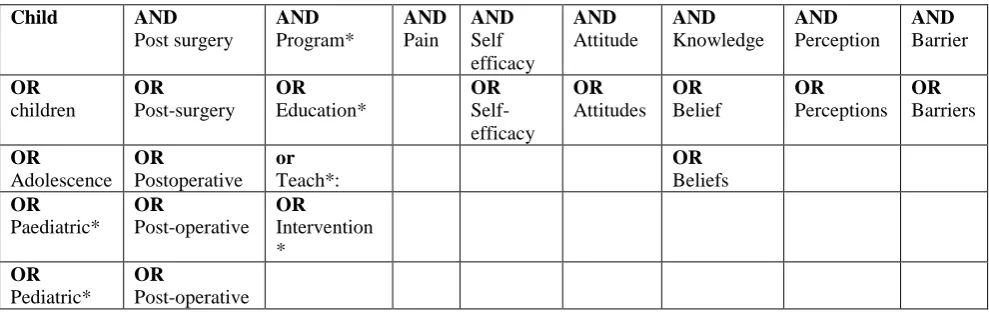
SEARCH TERMS ... 22
RESULTS OF THE SEARCH ... 22
DATA EXTRACTION ... 26
ANALYSING THE QUALITY OF RESEARCH MATERIAL ... 28
OVERVIEW OF THE INCLUDED STUDIES ... 30
OUTCOMES OF THE REVIEW ... 30
Knowledge about children’s pain ... 31
Attitudes towards children’s pain ... 32
Beliefs and perceptions of children’s pain ... 34
Nurses’ self-efficacy in relation to pain management for children ... 34
Perceived barriers to optimal post-operative pain management in children ... 34
LIMITATIONS OF THE REVIEW ... 35
CONCLUSION ... 35
CHAPTER THREE ... 36
ONLINE LEARNING: A LITERATURE REVIEW ... 36
INTRODUCTION ... 36
SEARCH STRATEGY ... 36
NURSES’ NEED FOR CONTINUING EDUCATION ... 37
HISTORY OF ONLINE LEARNING ... 37
DRIVING FORCES FOR ESTABLISHING ONLINE LEARNING PACKAGES ... 38
ADVANTAGES OF ONLINE LEARNING OVER TRADITIONAL LEARNING METHODS ... 39
BARRIERS TO ONLINE LEARNING ... 41
(1) Motivation ... 42
(2) Technical Support ... 42
(3) Gender ... 43
ELEMENTS OF SUCCESSFUL ONLINE LEARNING PACKAGE ... 44
STEPS IN DEVELOPING ONLINE LEARNING PACKAGE ... 45
iii
SUMMARY ... 47
CHAPTER FOUR ... 48
DEVELOPING THE INTERVENTION ... 48
INTRODUCTION ... 48
THE DECISION TO ESTABLISH ONLINE LEARNING PACKAGE... 48
SELECTING THE TYPE OF EDUCATION PROGRAMME ... 49
BARRIERS TO ONLINE LEARNING PACKAGE ... 49
STEPS IN DEVELOPING THE EDUCATION PACKAGE ... 50
ENHANCING THE EDUCATION PACKAGE ... 57
CHAPTER FIVE ... 62
STUDY DESIGN ... 62
INTRODUCTION ... 62
SELECTING A STUDY DESIGN ... 62
Positivist Paradigm ... 62
Qualitative Paradigm ... 63
THIS STUDY... 64
DESIGNS THAT ARE COMMENSURATE WITH THE POSITIVIST PARADIGM ... 64
A QUASI-EXPERIMENTAL APPROACH ... 65
STUDY AIM ... 65
RESEARCH VARIABLES ... 66
Independent variable ... 66
Dependent variables ... 66
Demographic variables ... 66
THE STUDY LOCATION ... 67
King Khalid Hospital ... 68
Baqa General Hospital ... 68
Moqaq General Hospital ... 68
Alshamali General Hospital ... 68
Hail General Hospital ... 68
Samara General Hospital ... 68
Alsulami Hospital ... 69
AlGazalah General Hospital... 69
iv
SAMPLE ... 69
Target Population ... 69
Sampling... 69
Inclusion Criteria ... 69
Exclusion criteria... 70
OUTCOME MEASURES ... 71
Demographics... 71
Paediatric Nurses’ Knowledge and Attitudes Survey Regarding Pain (PNKAS) ... 71
Children and Pain Survey ... 72
Nurses Perceived Barriers to Optimal Pain Management ... 73
Nurses’ Self-Efficacy ... 73
RELIABILITY AND VALIDITY ... 74
POTENTIAL RISKS OF USING NON-EQUIVALENT CONTROL GROUP DESIGN ... 74
Internal validity ... 74
External validity ... 76
DATA COLLECTION ... 76
ETHICAL ISSUES ... 78
The risk of perceived coercion ... 79
The risk of breaching confidentiality ... 79
DATA ANALYSIS ... 80
THE FOLLOWING HYPOTHESES WERE TESTED: ... 81
CHAPTER SIX ... 83
RESULTS ... 83
INTRODUCTION ... 83
DATA DISTRIBUTION ... 83
RESEARCH QUESTIONS ... 85
DEMOGRAPHICS ... 85
KNOWLEDGE AND ATTITUDES SCORE ... 87
Changes in scores after intervention ... 87
BELIEFS AND PERCEPTIONS SCORES ... 88
Changes in beliefs and perceptions ... 88
PERCEIVED BARRIERS TO OPTIMAL PAIN MANAGEMENT ... 90
v
THE IMPACT OF DEMOGRAPHICS ON STUDY VARIABLES ... 92
Knowledge and attitudes of post-operative pain management ... 92
Perception of children’s reports of pain ... 93
Barriers to optimal pain management ... 93
The impact of experience ... 94
Highest educational qualification ... 95
Statistically significant findings in other demographic variables ... 96
CONCLUSION ... 96
CHAPTER SEVEN ... 98
DISCUSSION ... 98
INTRODUCTION ... 98
LIMITATIONS ... 98
DEMOGRAPHICS ... 99
KNOWLEDGE AND ATTITUDES ABOUT CHILDREN’S PAIN ... 101
BELIEFS AND PERCEPTIONS ABOUT CHILDREN’S PAIN ... 103
PERCEIVED BARRIERS TO OPTIMAL CHILDREN PAIN MANAGEMENT ... 106
NURSES’ SELF-EFFICACY ... 109
REFLECTIONS ON USING THE ONLINE LEARNING PACKAGE... 109
Crucial elements for success ... 109
Cost-effectiveness ... 110
CHAPTER EIGHT ... 112
CONCLUSION AND RECOMMENDATIONS ... 112
SUMMARY OF THE STUDY ... 112
KEY MESSAGES ... 112
1) Use of online interactive education programme ... 112
2) Cost-effectiveness and widespread populations ... 112
3) Multiple variables in a pain-management education programme ... 113
4) Self-efficacy in pain-management ... 113
IMPLICATIONS FOR FURTHER RESEARCH ... 113
Replication of the study ... 113
Establishing the impact on children’s quality of life ... 113
Establishing further nursing research priorities ... 114
vi
IMPLICATIONS FOR NURSE EDUCATION ... 114
Improving technical competence ... 114
Provision of IT support ... 114
Addressing poor knowledge of pain management and communication skills ... 115
Education-clinical liaison ... 115
POLICY IMPLICATIONS ... 115
Addressing nursing culture ... 115
A MOH learning portal and CPD structure ... 107
CPD accreditation ... 108
Policy creation and update strategy ... 108
Family-centred care... 116
Pain management teams ... 116
REFERENCES ... 118
vii
LIST OF FIGURES Page
Figure 1 The location of Saudi Arabia and its regions 6
Figure 2 Saudi population according to age group 7
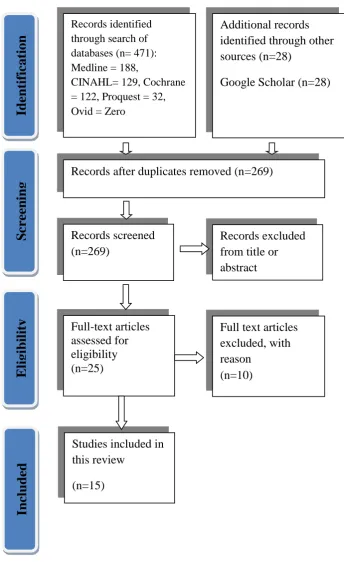
Figure 3 Flow chart of study selection process PRISMA 23
Figure 4 Logical map of the content of education programme 51 Figure 5 An example of section one from learning packages 52 Figure 6 Example screen shot of a web pages with hyperlinks 54 Figure 7 Minimum requirements for use of the education package 55
Figure 8 Instruction for using the education package 55
Figure 9 Example of page with links to helpful resources 57 Figure 10 Example of organising the package material into small chunks 57 Figure 11 A map of intervention and control group hospitals in Hail hospitals 66
Figure 12 Summary of the data collection procedure 77
Figure 13 Data distribution of studied variables in the intervention and control groups
83 Figure 14 Data distribution of studied variables in the intervention and
control groups
83 Figure 15 Data distribution of studied variables in the intervention and
control groups
83 Figure 16 Data distribution of studied variables in the intervention and
control groups
83 Figure 17 Data distribution of studied variables in the intervention and
control groups
viii
LIST OF TABLES Page
Table 1 Consequences of unrelieved pain (Twycross et al., 2009, p.2) 4 Table 2 Hospitals and bed numbers in all health sectors (Saudi Ministry
of Health, 2012)
8 Table 3 Number of bed capacity and surgical words beds in Hail Region 10 Table 4 Number of Hospitals in Hail Regions, Saudi Arabia 11
Table 5 Search criteria 21
Table 6 Details of the selected studies 24
Table 7 Summary of the studies 25
Table 8 NHMRC evidence Hierarchy: designations of ‘levels of evidence’ according to type of research design
27 Table 9 Level of evidence and quality of the included studies 28 Table 10 Merits of classical teaching (class-room) and distant learning 40 Table 11 Pain education topics extracted from review of the literature
without logical order
50 Table 12 Summary of IASP curriculum outline on pain (IASP 2014) 50
Table 13 Example of Units Objective 52
Table 14 Summary of the elements of an effective online learning courses 56 Table 15 Characteristics of qualitative and quantitative research 63 Table 16 The number of participants in each phase of the study 69 Table 17 Non-equivalent, pre-test post-test control group design 76 Table 18 Demographic characteristics of the study sample 85 Table 19 Change in Knowledge and Attitude Score in Intervention and
Control Groups across Pre-test and Post-tests
87 Table 20 Change in Belief Alignment Score in Intervention and Control
Groups across Pre-test and Post-tests
88 Table 21 Change in Perception Awareness Score in Intervention and
Control Groups across Pre-test and Post-tests
89 Table 22 Change in Barriers to Optimal Pain Management Score in
Intervention and Control Groups across Pre-test and Post-tests
90 Table 23 Change in Self-Efficacy Score in Intervention and Control
Groups across Pre-test and Post-tests
91 Table 24 Comparison between age categories of the intervention group in
relation to the study variables
92 Table 25 Comparison between lengths of experience categories in the
intervention group in relation to the study variables
93 Table 26 Comparison between highest educational qualifications of the
intervention group in relation to the study variables
ix
LIST OF APPENDICES Page
Appendix 1 Results of Search strategies 133
Appendix 2 Total number of articles extracted from all databases 142
Appendix 3 Hawker’s Assessment Tool 143
Appendix 4 Examples of appraising articles using Hawker’s Assessment Tool
146 Appendix 5 Certificate for participants 149
Appendix 6 Pain Assessment Card 150
Appendix 7 Instruction on how to use the learning package (CD) 153 Appendix 8 A copy of communication between the researcher and
companies to solve copy rights issues
154
Appendix 9 Feedback on the education programme 158
Appendix 10 Demographic 162
Appendix 11 Paediatric Nurses Knowledge and Attitudes Survey Regarding Pain (PNKAS)
163 Appendix 12 Permission for Using The Paediatric Nurses Knowledge
and Attitude Survey Regarding Pain (PNKAS)
170
Appendix 13 Children and Pain Survey 171
Appendix 14 Permission for Using Children and Pain Survey 172 Appendix 15 Nurses Perceived Barriers to Optimal Pain Management
Survey
173 Appendix 16 Permission for Using Nurses Perceived Barriers to
Optimal Pain Management
174
Appendix 17 Nurses Self-Efficacy 175
Appendix 18 Permission for Using Nurses Self-Efficacy Survey 176 Appendix 19 Letter to Ethics Committee at Saudi Hospitals (Hail
Region)
177
Appendix 20 Participant Information sheet 178
Appendix 21 Flyer 182
Appendix 22 University of Salford Ethical Committee Approval 183 Appendix 23 Permission from Ministry of Health Committee in Hail
Region
184
Appendix 24 Participants Consent Forum 185
x
LIST OF ABBREVIATIONS
ADDIE Analysis, Design, Development, Implementation, Evaluation AHCPR
ANOVA
Agency for Health Care Policy and Research Analysis of Variance
ARAMCO Arabian American Oil Company BSc Bachelor of Science
CASP Critical Appraisal Skills Programme
CINAHL Cumulative Index of Nursing and Allied Health Literature CRD Centre for Reviews Dissemination
DHHS Department of Health and Human Services DVD
ERIC
Digital Video Disc
Education Resources Information Center
GPA Grade Point Average
IASP International Association for the Study of Pain IOM The Institute of Medicine
JCAHO Joint Commission Accreditation Health Care Organization KSA Kingdom of Saudi Arabia
MEDLINE MOH
Medical Literature Analysis and Retrieval System Online Ministry of Health
MSc Master of Science
NANDA North American Nursing Diagnosis Association NHMRC National Health Medical Research Council NIPS Neonatal Infant Pain Scale
PICOS Population, Intervention, Comparison, Outcomes, Study design PIPP Premature Infant Pain Profile
PNKAS The Paediatric Nurses Knowledge and Attitudes Survey Regarding Pain PRISMA Preferred Reporting Items for Systematic Reviews and Meta-Analyses RCT Randomised controlled trial
SCHS Saudi Commission for Health Specialties UCSF University of California San Francisco
UK United Kingdom
xii
DEFINITION OF TERMS
Children: A young person of either sex below the age of 19 years.
Nurse: A person who has completed a 4 years’ educational programme and is registered by
the Saudi Commission for Health Specialties (SCHS).
Pain: Physical or bodily suffering; a continuous, strongly unpleasant or agonizing sensation
in the body (usually in a particular part), such as arises from post-operative injury.
Attitude: Settled behaviour, or manner of acting, as representative of feeling or opinion that
the nurse holds about the pain experience and post-operative pain management practices.
Knowledge: The possession of information about pain assessment and management and
post-operative pain management practices.
Belief: A set of propositions held by nurses about pain assessment and management and
post-operative pain management practices.
Perception: The interpretation or impression that nurses hold about the pain experience and post-operative pain management practices.
Barriers: The obstacles that impede nurses from providing optimal post-operative pain management.
Self-Efficacy: The confidence, power or capacity to provide optimal post-operative pain
xiii
ACKNOWLEDGEMENTS
In the name of God, I would like to thank God for making all things possible for me, for granting me health, and for giving me the great chance to be able to complete this work successfully. In Arabic language: Elhumddoullah.
Pursuing a PhD journey is a both a painful and an enjoyable experience. It was like climbing a high peak, step by step, faced with resentment, hardships and frustration, but with encouragement, trust and kind help from so many people I found myself at the top enjoying the beautiful scenery. Though it will not be enough to express my gratitude in words to all those people who helped me, I would still like to give many thanks to all these people.
I would like to express my sincere appreciation and thanks to my honoured first supervisor Professor Tony Long who accepted me as his PhD student without any hesitation when I presented my research proposal to him. Thereafter, he offered me continual advice, patiently supervising me and always guiding me in the right direction. I have learned many things from him, and without his help and support I could not have finished my PhD successfully. I would like to give special thanks to my second supervisor Dr Angela Darvill for her encouragement and helping me to feel confident enough so that I was able to fulfil my desire and overcome every difficulty encountered. Even though she has left the University to take up a post in another university, she agreed to continue to be part of my supervision team.
I would like to give special appreciation to Dr Joan Livesley, Dr Janice Grant, Amanda Miller and the students who helped me and participated with me while creating the interactive education programme for my study. I would like to give special thanks to statistician Dr Hassan Qassim for his guidance and kind support in helping with statistical analysis. His feedback and expertise made my journey shorter. Further, I wish to acknowledge and thank the Ministry of Health in Saudi Arabia which granted me the scholarship to do my studies in the United Kingdom. I would like to thank also all the nurses in Hail region hospitals without whose support this study would never have been possible.
xiv
They always had faith in me, and their pride in me made me more motivated and kept me working hard to do my best.
To my wife Aeshah and my children Dhai, Yzen and my baby girl Diala who was born during my PhD study in United Kingdom, I thank all of you for your support and patience during this journey. You are my backbone and the origin of my happiness. Your love and support without any complaints or regrets has enabled me to complete this PhD. Thanks more and more for my wife for taking the huge responsibilities and suffering all the worries taking care of our children.
xv ABSTRACT
Background
Although post-operative pain management has been researched extensively, it does not receive the same attention from paediatric nurses in Saudi Arabia. Practices are not based on sound evidence, but there is a willingness to improve. The factors addressed in this study had not been considered together in any study, and each in turn was supported by only minimal evidence of variable quality. No work of significance had been undertaken in the context of Saudi Arabia or other Gulf nations.
Aims
The aim was to test the impact of an interactive online post-operative pain management education programme on paediatric nurses’ knowledge, attitudes, beliefs and perceptions of children’s pain; self-efficacy; and perceptions of barriers to optimal practice.
Study Design
A non-equivalent groups pre-test post-test design was used. A sample of 229 paediatric nurses working in surgical wards in Hail region hospitals was recruited (intervention n=135; control n=94) and completed four instruments to test the study variables on three occasions: before the intervention, and at one and three months afterwards. The intervention was an interactive educational programme on DVD with explanations, exercises, video presentations and self-check games. Analysis of categorical variables was undertaken using descriptive statistics, and ANOVA inferential statistics were used to compare the results within and between groups.
Results
In the intervention group statistically significant, positive changes were seen in all attributes other than nurses’ perceptions of children’s pain. Such changes were not observed in the control group. Participants were explicit in approval of the intervention.
Conclusion
xvi
1
CHAPTER ONE
INTRODUCTION AND BACKGROUND
INTRODUCTION
In 2012, 38,441 operations were undertaken on children in Saudi hospitals (Saudi Ministry of Health (MOH), 2012). Although the characteristics of children who undergo surgery are different, post-operative pain is a common experience and almost inevitable. Pain can be defined as “an unpleasant sensory and emotional experience associated with actual or potential tissue damage, or described in terms of such damage” (International Association for the Study of Pain [IASP], 2012a). Post-operative pain results from a combination of different conditions, including the disease or medical condition, the incision, and the surgical procedure, as well as the type and dose of anaesthesia used during the surgery, the positioning of the patient during surgery, and the length of time spent on the theatre table during prolonged surgery (eMedicineHealth, 2014; University of California San Francisco (UCSF) Medical Center, 2014).
2
(Van Hulle Vincent, 2005; Van Hulle Vincent & Denyes, 2004; Wiroonpanich & Strickland, 2004). Furthermore, nurses prefer untested traditional pain relief methods over pharmacological treatment to treat children’s pain (McCaffery, 2002). Miscommunication between family, physician and nurses regarding pain is common (Griffie, 2003; Van Niekerk & Martin, 2003). The outcome is that children continue to suffer moderate to severe post-operative pain.
Effective pain management from the nurse’s perspective depends on multidimensional factors such as good communication skill between nurses and patients, and appropriate nursing knowledge, attitudes and beliefs about pain and pain medications (McDonald, McNulty, Erickson, & Weiskopf, 2000; Rejeh et al., 2009; Taylor, 2002). A deficit in any of these factors can compromise the delivery of optimal pain management (McDonald et al., 2000). For instance, The Institute of Medicine [IOM](2011) reported the need to change health care provider attitudes toward pain management as there was a discrepancy between this and patients’ attitudes toward pain management. It found that this can be achieved through research and continuing education. Perceptions of heavy workload, lack of time, and the child’s inability to cooperate have been found to be the most important factors (He et al., 2010).
3
This chapter will outline an overview of pain, the context of the study, the clinical importance of the problem, the potential significance of the study, the researcher’s engagement with the issue, aim and research questions, and ending with a summary and overview of the organisation of the thesis.
OVERVIEW OF PAIN
This section gives a detailed background to pain. A definition of pain is offered, together with discussion of major pain theories, classification of pain, the consequences of untreated pain, pain assessment, and pain management. Pain can be defined as any obnoxious feeling or experience related to actual or potential tissue damage ([IASP, 2012b). Pain is an absolute subjective phenomenon. Neonates and children who are unable to communicate vocally require additional skills in the nurse to recognise their needs (Twycross et al., 2009).
Pain theories and classification of pain
Several theories have been formulated to describe the physiology of pain. These include Central Inhibition Theory, Pattern Theory, Specificity Theory and Gate Control Theory. Of these, Gate Control Theory is the most popular in nursing literature and still receives global support since it was first proposed in 1965 (Twycross et al., 2009). In short, this theory suggests that stimulation of the skin arouses nervous impulses which then flow along the peripheral nerves to the spinal cord and on up to the brain. The spinal cord contains a neurological "gate" that either blocks pain signals or allows them to continue on to the brain. Pain signals travelling via small nerve fibres are allowed to pass through, while signals sent by large nerve fibres are blocked (Brunner, Smeltzer, Bare, Hinkle, & Cheever, 2010). While Gate Control Theory has been found to be erroneous in some aspects, particularly with regard to the hypothesised neural pathways and structures (Treede, 2006), it offers a framework to reconcile the apparent contradictions between Specificity Theory and Pattern Theory (Moayedi & Davis, 2013). In the absence of an alternative and more convincing theory, it was adopted to influence the theoretical part of this study.
4
healing time and can rarely be attributed to a specific cause or injury. Chronic pain is any pain prolonged to more than six months. Cancer-related pain, may be either acute or chronic and is associated specifically with cancer (Brunner et al., 2010).
Consequences of untreated pain
Untreated pain can be responsible for varied physical and psychological effects which are summarized in Table 1 below. Post-operative pain can result in negative health outcomes: increased morbidity; increased hospital stays; increased recovery time; delayed return to normal life activities; and increased risk of chronic pain (Kehlet, Jensen, & Woolf, 2006; Twycross et al., 2009).
Table 1: Consequences of unrelieved pain (Twycross et al., 2009, p.2)
Rapid, shallow, splinted breathing, which can lead to hypoxaemia and alkalosis
Inadequate expansion of lungs and poor cough, which can lead to retention of secretions and atelectasis
Increased heart rate, blood pressure and myocardial oxygen requirements, which can lead to cardiac morbidity and ischaemia
Increased stress hormones (e.g. cortisol, adrenaline, catecholamines), which in turn increase the metabolic rate, impede healing and decrease immune function
Slowing or stasis of gut and urinary systems, which leads to nausea, vomiting, ileus and urinary retention
Muscle tension, spasm and fatigue, which lead to reluctance to move spontaneously and refusal to ambulate, further delaying recovery
Behavioural disturbances – fear, anxiety, distress, sleep disturbance, reduced coping, developmental regression
5 Assessing and managing pain
Three critical steps have been identified for effective pain assessment practices in children. Nurses should record a detailed history for children before, during and after the pain experience. Nurses should use developmentally appropriate pain assessment tools of which there are many. These include, for example, verbal rating scales; faces pain scales; numerical pain scales; graphic rating scales; visual analogue scales; Neonatal Infant Pain Scale (NIPS), and Premature Infant Pain Profile (PIPP) (McCaffery & Pasero, 1999). Health care practitioners should be trained to know which one is the most appropriate to the case circumstances. Finally, nurses should re-assess the pain after intervention to ensure that pain is controlled (McCaffery & Pasero, 1999; Twycross et al., 2009). This last step is vital since there is no advantage in using strategies that fail to eliminate or decrease the intensity of pain.
Pain management may be either pharmacological or non-pharmacological (Anderson & Palmer, 2006; Ball, Shapiro, Monheim, & Weydert, 2003; Berde et al., 2005; Brunner et al., 2010; Gold et al., 2006; He, Pölkki, Pietilä, & Vehviläinen‐Julkunen, 2006; He, Pölkki, Vehviläinen‐Julkunen, & Pietilä, 2005; Pölkki, Vehviläinen‐Julkunen, & Pietilä, 2001). Pharmacological pain management relies on the use of medication, while non-pharmacological pain management methods may include acupuncture, biofeedback, distraction, cognitive behavioural therapy, heat and cold, hypnosis, massage, and relaxation. In practice, both pharmaceutical and non-pharmaceutical strategies are commonly used in order to achieve effective pain management (Twycross, 2002). Effective pain management needs collaboration from the multidisciplinary health care team members and the combination of pharmacological and non-pharmacological techniques to achieve positive outcomes (Brunner et al., 2010; Twycross, 2002; Warrén Stomberg & Haljamäe, 2003).
CONTEXT OF THE STUDY
6 The Kingdom of Saudi Arabia (KSA)
[image:23.595.87.512.179.465.2]The Kingdom of Saudi Arabia, commonly known as Saudi Arabia, is a developing country in the Middle East, bordering the Persian Gulf to the East and the Red Sea to the West. It has borders with Yemen and Oman to the South, and Jordan, Iraq and Kuwait to the North (Mufti, 2000). (See Figure 1)
Figure 1: The location of Saudi Arabia and its regions (World Atlas, 2016)
Demographic profile of the Saudi population
Saudi Arabia is a member of the Gulf Cooperation Council. It is the largest country in the Arabic region, with an area of more than 2.149 million square kilometres. However, desert covers approximately 95% of the Saudi country, including Alrub’Alkhali, the largest sand mass in the world. The country consists of thirteen regions and has one of the largest oil reserves in the world (United Nations International Children's Emergency Fund [UNICEF], 2014). Arabs are the main ethnic group of Saudi Arabia and account for 90% of the population, with the remaining 10% percent comprised of Afro-Asian ethnic groups (General Authority for Statistics of Saudi Arabia, 2016).
7
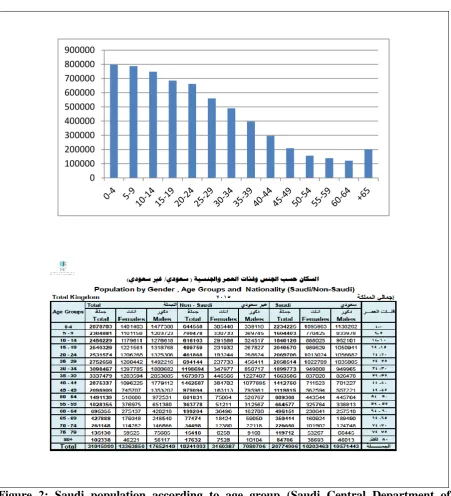
classification indicates that the male population was 18.37 million (56%), and the female population was 13.36 million (44%) in 2016 (General Authority for Statistics of Saudi Arabia, 2016). Twenty million are Saudi and the remainder are expatriates (General Authority for Statistics of Saudi Arabia, 2016). Young people of 19 years or younger make up 30.1% of the total Saudi population. (General Authority for Statistics of Saudi Arabia, 2016). More detail of the Saudi population according to age groups is presented in Figure 2. Islam is the official religion in Saudi Arabia, and Arabic is the first spoken language (Aboul-Enein, 2002; Luna, 1998).
Figure 2: Saudi population according to age group (Saudi Central Department of
Statistics & Information, 2011; General Authority for Statistics of Saudi Arabia, 2016) 0
[image:24.595.87.539.232.729.2]8
Health care system and health care workers in Saudi Arabia
The Saudi Ministry of Health was established in 1951 (Saudi Ministry of Health, 2014) and it is responsible for providing health care through primary health care centres and referral hospitals. The Ministry of Health is the responsible authority that is able to resolve any conflicts related to health at the national level (Saudi Ministry of Health, 2014). It is also responsible for developing strategic plans and policies, supervising and monitoring all health-related activities (Aldossary, While, & Barriball, 2008).
In 2012, the total governmental expenditure on health was 3.2% of the total gross domestic product of the country (World Health Organization [WHO], 2012). The ultimate goal of the Saudi government is to provide free health insurance to all Saudi nationals and to provide health care insurance to non-Saudi nationals with the support of their employers (Al-Yousuf, Akerele, & Al-Mazrou, 2002). In order to do this, Saudi Arabia has three main types of health care providers: Ministry of Health hospitals, other governmental hospitals (Military hospitals, Educational hospitals, and Arabian American Oil Company (ARAMCO) hospitals), and private hospitals (Al-Yousuf et al., 2002; Saudi Ministry of health, 2012). (See Table 2)
Table 2: Hospitals and bed numbers in all health sectors (Saudi Ministry of Health, 2012)
Number of hospitals Number of beds
Ministry of Health hospitals 259 35828
Other governmental hospitals 40 11043
Private hospitals 137 14165
ARAMCO 1 400
Total 437 61436
[image:25.595.80.540.416.549.2]9
government is striving to fill the gap in the indigenous nursing workforce through its own Bachelor of Nursing programme. In 2014, more than 34 private and public institutions were awarding Bachelor degrees to male and female Saudi nurses (Saudi Ministry of Higher Education, 2014a). Three universities also offer Masters Degrees to Saudi nurses (Saudi Ministry of Higher Education, 2014b, 2014c). Through the King Abdullah scholarship programme, the Ministry of Health offers Saudi nurses the chance to continue into postgraduate study.
The health sector in Saudi Arabia is still young compared with western countries. Therefore, the system is accepting of any new evidence-based practice knowledge in order to promote patients’ health through enhancing the skills of health care team members.
THE STUDY LOCATION
This study was undertaken in Hail City located in northern Saudi Arabia, 700 kilometres north-west of the capital, Riyadh. Hail lies between the mountains of Aja (1400 metres) and Salma (1100 metres), part of the northern end of the Najd highlands of the Arabian Peninsula. It is 400 kilometres north-east of Medina Al-Manwarah, 300 kilometres south-west of the settlement of Rafha near the Iraq border, and 600 kilometres south of Qurayyat close to the border with Jordan. The estimated population of Hail is 597,144, and the land area is about 125,000 km2: 6% of the total land area of Saudi Arabia (Ministry of Economy and Planning, 2010). Hail city experiences continental desert weather, but due to the height of its location, it has more moderate weather conditions compared with other cities in Saudi Arabia. During summer, mid-day temperature reaches up to 45°C, but during the winter months’ temperature can fall below 2°C. Humidity is very low, with average rainfall of less than 125 millimetres per year. Most of the rain falls during March.
Hail context
10
Table 3: Number of bed capacity and surgical words beds in Hail Region
Hospital name Group Bed Capacity Surgical beds
King Khalid Hospital Intervention 280 80
Hail General Hospital Control 245 30
Baqa General Hospital Intervention 50 15
Moqaq General Hospital Intervention 50 17
Samara General Hospital Control 50 15
AlShamali General Hospital Intervention 50 15
AlGazalah General Hospital Control 50 16
AlSulami Hospital Control 50 15
AlShanan General Hospital Control 50 10
Regardless of the size of hospitals, all are managed and directed through the Ministry of Health. They have the same rules and regulations. These hospitals have qualified general surgeons and registered nurses who have met the Saudi Commission for Health Specialties requirements and have been interviewed by a Ministry of Health committee in order to ensure their competence before employment. As a general rule in Saudi Arabia, children under 13 years are admitted to children’s surgical wards while children older than this are accommodated in adult surgical wards.
Health care facilities are accessed by patients based on their residential address. The corresponding doctors evaluate cases and refer them either to the local hospital or to the referral hospital based on the circumstances of each case. Although most operations are planned and scheduled, the system allows for urgent cases to receive medical review and intervention without any previous appointment.
[image:27.595.97.512.76.223.2]11 Table 4: Hospitals in Hail Region, Saudi Arabia
Hospital Names Surgical
Ward
Surgical Nurses Children’s
Surgical Nurses
M F
King Khalid Hospital Yes 7 45 15 surgery
6-day surgery
Hail General Hospital Yes 7 25 -
Maternity Hospital No - - -
Psychiatric Hospital No - - -
Baqa General Hospital Yes 4 15 -
Moqaq General Hospital Yes 3 18 -
Samara General Hospital Yes 4 15 -
AlShamali General Hospital Yes 3 20 -
AlGazalah General Hospital Yes 1 25 -
AlSulami Hospital Yes 1 20 -
AlHayat Hospital No - - -
AlShanan General Hospital Yes 7 10 -
Total 12 37 193 21
THE CLINICAL IMPORTANCE OF THE PROBLEM
The clinical importance of pain management cannot be disputed. Health care professionals are charged with the professional and ethical responsibility of reducing pain, yet it is also a fundamental human right that patients be entitled to a life free from pain (Cousins et al., 2004). Being free from pain is associated with faster post-operative recovery, fewer pulmonary and cardiac complications, accelerated wound healing, earlier mobilisation, and increased comfort for children. This in turn increases satisfaction and decreases the cost of care (Bristol-Myers Squibb, 2009; Dolin et al., 2002; Michaels, Hubbartt, Carroll, & Hudson-Barr, 2007; Ramsay, 2000; Twycross et al., 2009).
12
mortality (Katz, Jackson, Kavanagh, & Sandler, 1996; Ramsay, 2000; Sharrock, Cazan, Hargett, Williams-Russo, & Wilson, 1995).
As a general rule, any unpleasant experiences that challenge children during hospitalisation will exert an impact on any subsequent admission, and this could make children uncooperative and frightened. Therefore, addressing children’s nurses’ understanding and ability to undertake effective post-operative pain management should promote immediate and lasting effects on children’s experience of surgery.
SIGNIFICANCE OF THE STUDY
Although post-operative pain management has been researched extensively, it does not receive the same attention from children’s nurses in Saudi Arabia. Furthermore, globally most research is focused on chronic pain and particularly in cancer patients, and not on acute post-operative pain. Moreover, there is a general dearth of research in this field in the Arabic region and even more scarcity of research in Saudi Arabia. Practices are not based on sound evidence, but there is a willingness among nurses to improve. This research study is designed to address the deficit and to find an effective, culturally appropriate solution specifically for Saudi children’s nurses.
This study will provide decision makers in Saudi Arabia with crucial information about nurses’ knowledge, attitudes, beliefs, and perceptions of post-operative pain management for children and their perceptions of barriers to optimal pain management. This new understanding should facilitate the development of new educational plans, protocols and tools for use in controlling or eliminating post-operative pain for child patients.
Another significant contribution of the study is that it will enable the use of an alternative, non-traditional method of teaching in Saudi Arabia in the form of a digital, interactive online education programme. This approach will be more convenient as the hospitals are geographically separated and shift patterns make attendance at educational events difficult.
THE RESEARCHER’S ENGAGEMENT WITH THE ISSUE
13
protocols and competent practice in assessing, preventing, treating, and sometimes eradicating children’s pain. Nurses were concerned to reduce or avoid pain, especially post-operatively, and they took pride in ensuring that they managed the issue effectively and in a timely manner. They were largely in control of the clinical issue, with the ability to make professional choices about interventions, and to insist on stronger or alternative prescriptions when needed. They enjoyed a positive professional relationship with doctors, working as a team to ensure the best care for the children.
Currently, I work in Hail region as a Nursing Director (Manager). Nursing managers have the responsibility of managing employees to the benefit of consumers, the organisation and the employees themselves. Their decisions are goal-oriented and based on logical thinking and solid evidence. This in turn will reflect on the quality of service provided to consumers. In fulfilling the requirements of my job, I observed consistently that children did not receive optimal pain management treatment post-operatively compared to their counterparts in the UK, US and Australia. My observation was based on recurrent complains of pain experienced by children as well as reports from parents that pain management was inadequate for their children. I observed that patients did not receive effective pain assessment or intervention from nurses. Nurses were hesitant to give children pharmacological treatment to treat their post-operative pain, although physicians ordered medication as needed. Yet they did not avail themselves of alternative or complementary non-pharmacological strategies, either. At the managerial level, this compromised the quality of service provided to the children and the reputation of the hospitals. I felt compelled to intervene. Saudi nurses are caring and professional, yet there were failing to act effectively in this situation, and, moreover, felt disempowered to improve the child’s treatment.
14
I determined to educate children’s nurses about pain management, but could find no existing educational packages that were culturally sensitive to the Saudi community and to nurses’ needs in Saudi hospitals. I did not find any previous study that evaluated the variables that were demonstrated in the literature to be of relevance to the problem that I had identified. A further problem that I faced was the current educational system in Ministry of Health hospitals in which grouping nurses together in a single class for postgraduate education was difficult. The nature of work patterns and the distance between hospitals posed further problems to achieving the required outcomes.
15 AIM AND RESEARCH QUESTIONS
Study Aim
To test the impact of implementing an interactive online post-operative pain management education programme on children’s nurses’ knowledge, attitudes, beliefs and perceptions of children’s pain, self-efficacy, and perceptions of barriers to optimal practice.
Research Questions
1. How do nurses’ knowledge and attitudes of post-operative pain management change following administration of a pain management educational programme: one month and three months later?
2. How do nurses’ beliefs about pain in childhood change following administration of a pain management educational programme: one month and three months later?
3. How do nurses’ perceptions of children’s reports of pain change following administration of a pain management educational programme: one month and three months later?
4. How do nurses’ perceptions of the barriers to optimal pain management change following administration of a pain management educational programme: one month and three months later?
5. How does nurses’ self-efficacy regarding post-operative pain management change following administration of a pain management educational programme: one month and three months later?
6. Is there a significant difference between demographic subcategories in the intervention group in relation to all variables under study?
OVERVIEW OF THE THESIS
Chapter two is a systematic review following established guidelines of the existing literature
on post-operative pain management by children’s nurses, including the study variables of knowledge, beliefs, attitudes, perceptions, self-efficacy and barriers to optimal pain management.
Chapter three is a report of a detailed review of the literature regarding online learning. It
16
packages, advantages of online learning over traditional learning methods, barriers to online learning, elements of a successful online learning package, steps in developing online learning package, and quality of online learning package.
Chapter four details the practical steps taken to develop the education programme and the
content of the education programme. Steps considered to monitor the quality of this programme are also detailed in this chapter.
Chapter five details the study design adopted in this research study. A discussion of the
non-equivalent groups quasi-experimental design is presented followed by the description of the sampling techniques, reliability and validity measures, data collection methods and ethical issue related to this study.
Chapter six presents a summary of the major findings.
Chapter seven provides a discussion of important aspects of the study design and the findings in the light of the existing literature. The limitations and strengths of the study are also considered.
Chapter eight is the final chapter of this thesis. It presents the key messages from the thesis
17
CHAPTER TWO
SYSTEMATIC REVIEW OF POST-OPERATIVE PAIN MANAGEMENT
INTRODUCTION
This chapter is a report of the outcomes of a systematic review of the evidence about post-operative pain management by nurses of children. The chapter starts with justification of the use of systematic review methods, and then the search strategy is detailed. There follows justification of the judgements that were made in selection of the research reports for review, and details of the methods of assessing the quality of included studies are presented. The chapter concludes with a discussion of the gaps in current evidence based on the reviewed studies.
THE PURPOSE OF A SYSTEMATIC REVIEW
The aim of a systematic literature review is to identify, evaluate and summarise the results of all related individual studies in a predefined area in order to synthesise and present the outcome in an accessible format (University of York & Centre for reviews dissemination (CRD), 2009; Tacconelli, 2010). A systematic review is defined as “a review of a clearly formulated question that uses systematic and explicit methods to identify, select and critically appraise relevant research, and to collect and analyse data from the studies that are included in the review” (Higgins &Green, 2008). In a systematic review, the question and eligibility criteria are set beforehand, and related studies are identified through these. Careful evaluation of rigour and the level of evidence of each study is carried out before synthesising the results of the review (Higgins & Green, 2008). To do this, researchers have to adhere to meticulous, scientific, chronological steps to increase the rigour of the review, which must itself be reported in the review to minimise bias (Abalos et al., 2001).
18 SEARCH STRATEGY
Researchers have to follow a clear, systematic search strategy to answer the review question and to identify quality evidence (Khan, Kunz, Kleijnen, & Antes, 2011). An important step before carrying out a systematic review is to set clear questions and a detailed search strategy beforehand (University of York & Centre for Reviews and Dissemination, 2009). In accordance with CRD guidelines, the search questions should follow the PICO or PICOS framework to structure the literature search (Santos, Pimenta, & Nobre, 2007). PICOS stands for population, intervention, comparators, outcomes and study design (Akobeng, 2005; Santos et al., 2007). It is a method of analysing the phenomenon under study and it works well for questions concerned with medical research (Beecroft, Booth, & Rees, 2010). It was applied in the following way in this review.
P: Population: refers to the sample under study to which the result of literature review will be
generalised. In this review, the population was nurses who work with children post-operatively.
I: Intervention: refers to the main intervention used to enhance or improve certain outcomes.
In this systematic review, the intervention of interest was the post-operative pain management educational programme that nurses receive.
C: Comparison: it is important to specify the comparison group studied alongside the
experimental group in order to establish the effect of the intervention. The comparison group of relevance in this review was nurses who did not receive an educational programme.
O: Outcomes: This relates to the impact of the intervention on declared variables related to
the population under study. In this review, the impact of a post-operative pain-management educational programme was sought on nurses’ knowledge, attitudes, beliefs and perceptions of children’s pain, nurses’ self-efficacy and nurses’ perceptions of the barriers to optimal pain management.
S: Study design: refers to which kind of studies should be included in literature search. In this
review only experimental or quasi-experimental studies were included.
19
What is the impact of an interactive educational programme (I) on children nurses’
knowledge, attitudes, beliefs and perceptions of children’s pain, self-efficacy, and
perceptions of barriers to optimal post-operative pain management (O) in children (P)
when measured over time (S) compared to the usual practice of no planned intervention
(C)?
The Centre for Reviews and Dissemination signify the importance of choosing quality studies as this will reflect on the quality of the literature review that emerges from these studies (University of York & Centre for Reviews and Dissemination, 2009). The assessment of the quality of studies is discussed later in this chapter. Limiting the review to higher quality designs (randomised controlled trials (RCT) and quasi-experimental studies) means that the number of studies included from the literature will be limited and even further reduction in the number of items from which to gain worthwhile evidence occurs as quality criteria are applied. However, the aim of this study was to test the impact of implementing an interactive online post-operative pain management education programme on certain variables related to children and therefore only experimental and quasi-experimental studies were included in this review.
There is another advantage of restricting the review to RCTs and quasi-experimental studies designs. The only two research designs that are able to establish a cause and effect relationship are experimental and quasi-experimental research designs. Focusing upon evidence from this sort of study allows researchers to establish a clear clinical evidence base about the impact of education programmes. Furthermore, the homogeneity between the selected articles with regard to their designs decreases the risk of bias and increases the reliability of data extracted from the selected articles (Higgins & Green, 2008).
INCLUSION AND EXCLUSION CRITERIA FOR SELECTING PAPERS
20 Inclusion Criteria
All items had to meet all of the inclusion criteria of being focused on at least one of the variables stated in the review question; prepared in English; reporting the outcome of experimental or quasi-experimental research; and focused on post-operative pain in children.
The restriction to items published in English was applied as the official academic and medical language in Saudi Arabia is the English language. In Saudi Arabia, researchers, and health care professionals use English as the main language of communication, and scientific medical journals choose English as the main adopted language to publish findings of research conducted in Saudi Arabia.
A number of issues were found when testing the articles against the inclusion criteria. Articles included populations that were broader than the population at issue in this study. The study population included nurses not only working with children surgical patients but in many other wards such as medical wards, intensive care unit and an oncology wards (Dowd, 2009; Habich et al., 2012; He et al., 2010; Johnston et al., 2007; Swain, 2008; Textor, 2003; Van Hulle Vincent, Wilkie, & Wang, 2010). In these studies, nurses who worked in surgical wards were included as part of whole nursing populations.
The study populations included nurses who were working in surgical wards but possibly in both children and adult surgical wards (Abdalrahim, Majali, Stomberg, & Bergbom, 2011; He, Vehviläinen-Julkunen, Pietilä, & Pölkki, 2008; Smith, 2007; Swain, 2008; Textor, 2003). Finally, this study focussed on children post-operative pain management in general, but some studies focussed on only a single aspect of pain management such as non-pharmacological treatment (He et al., 2008; He et al., 2010) or relaxation technique (Lin, Chiang, Chiang, & Chen, 2008). After careful deliberation, it was decided to include these studies as they offered insights at least into part of the evidence base.
Exclusion criteria
21
differentiated from other aspects of the study. If the focus was found to be on chronic pain following surgery rather than acute post-operative pain, this would result in exclusion.
DATABASES INTERROGATED
For the purpose of this review, an extensive search was made of online databases: Cumulative Index of Nursing and Allied Health Literature (CINAHL), and the Database of the National Library of Medicine (MEDLINE) via (EBSCO); Ovid SP (Ovid MEDLINE(R) 1946 to present with daily update); The COCHRANE Library; ProQuest database; and Google Scholar. All these databases contain a large number of articles related to the question of this review and they have advanced search strategies and filtering tools.
22 SEARCH TERMS
The following keywords were applied.
Child, children, Adolescence+, Paediatric, Paediatrics, Pediatric, Pediatrics
Post surgery , Post-surgery, Postoperative , Post-operative, Post operative
Pain
Self efficacy, Self-efficacy
Attitude, Attitudes
Knowledge
Belief, Beliefs
Perception, Perceptions
Barrier, Barriers
In 2016 the following keywords were added to the previous search terms in accordance with reviewers’ suggestions: program*, education*, intervention*, teach*.
[image:39.595.80.575.497.653.2]A combination of these terms using Boolean operators "AND" "OR" were made in order to generate a comprehensive search and maximise the number of studies retrieved from databases, which related to this study (See Table 5). More details are supplied in appendices one and two.
Table 5: Search criteria
Child AND
Post surgery AND Program* AND Pain AND Self efficacy AND Attitude AND Knowledge AND Perception AND Barrier OR children OR Post-surgery OR Education* OR Self-efficacy OR Attitudes OR Belief OR Perceptions OR Barriers OR Adolescence OR Postoperative or Teach*: OR Beliefs OR Paediatric* OR Post-operative OR Intervention * OR Pediatric* OR Post-operative
RESULTS OF THE SEARCH
23
24
Figure 3: Flow chart of study selection process PRISMA Records identified
through search of databases (n= 471): Medline = 188,
CINAHL= 129, Cochrane = 122, Proquest = 32, Ovid = Zero
Additional records identified through other sources (n=28)
Google Scholar (n=28)
Records after duplicates removed (n=269)
Records screened (n=269)
Records excluded from title or abstract
Full-text articles assessed for eligibility (n=25)
Full text articles excluded, with reason
(n=10)
Studies included in this review
(n=15)
Ident
ifi
ca
ti
o
n
Screen
ing
El
ig
ibi
li
ty
Inc
25 Table 6: Details of the selected studies
1. Johnston, C. C., Gagnon, A., Rennick, J., Rosmus, C., Patenaude, H., Ellis, J., . . . Byron, J. (2007). One-on-one coaching to improve pain assessment and management practices of pediatric nurses. Journal of Pediatric Nursing, 22(6), 467-478.
2. Smith, C. M. (2007). Comparison of Web-Based Instructional Design Strategies in a Pain Management Program for Nursing Professional Development. (Doctor of Nursing Science), The State University of New York, Buffalo.
3. Abdalrahim, M. S., Majali, S. A., Stomberg, M. W., & Bergbom, I. (2011). The effect of postoperative pain management program on improving nurses’ knowledge and attitudes toward pain. Nurse Education in Practice, 11(4), 250-255.
4. Dowd, J. (2009). Impact of an Educational Program on Pediatric Nurses’ Knowledge and Attitudes About Pain Management. (Master of Science in Nursing), Northern Kentucky University, Kentucky. Retrieved from ProQuest database
5. Ellis, J. A., McCleary, L., Blouin, R., Dube, K., Rowley, B., MacNeil, M., & Cooke, C. (2007). Implementing best practice pain management in a pediatric hospital. Journal for Specialists in Pediatric Nursing, 12(4), 264-277.
6. He, H.-G., Vehviläinen-Julkunen, K., Pietilä, A.-M., & Pölkki, T. (2008). Increasing nurses' knowledge and behavior changes in nonpharmacological pain management for children in China. Journal of Nursing Care Quality, 23(2), 170-176.
7. He, H. G., Jahja, R., Lee, T. L., Ang, E. N. K., Sinnappan, R., Vehviläinen‐Julkunen, K., & Chan, M. F. (2010). Nurses’ use of non‐pharmacological methods in children’s postoperative pain management: educational intervention study. Journal of Advanced Nursing, 66(11), 2398-9. 240
8. Huth, M. M., Gregg, T. L., & Lin, L. (2010). Education changes Mexican nurses' knowledge and attitudes regarding pediatric pain. Pain Management Nursing, 11(4), 201-208.
9. Habich, M., Wilson, D., Thielk, D., Melles, G. L., Crumlett, H. S., Masterton, J., & McGuire, J. (2012). Evaluating the effectiveness of pediatric pain management guidelines. Journal of Pediatric Nursing, 27(4), 336-345.
10. Lin, P. C., Chiang, H. W., Chiang, T. T., & Chen, C. S. (2008). Pain management: evaluating the effectiveness of an educational programme for surgical nursing staff. Journal of Clinical Nursing, 17(15), 2032-2041.
11. Paul, A. (2013). A study to assess the effectiveness of planed teaching program on knowledge an practice of pediatric nursing regarding post operative pain management in a selected hospital, Bangalore. (MSc in Nursing ), Rajiv Gandhi University of Health Sciences.
12. Swain, M. R. (2008). The Effect of Education About Pain Management on the Knowledge and Attitudes of Nurses. (MSc in Nursing), California State University, Long Beach. 13. Textor, L. H. (2003). Pain Management Knowledge of Nurses Practicing In A Rural
Midwest Retirement Community. (Master of Science), University of Missouri-Columbia, ProQuest.
14. Van HulleVincent, C., Wilkie, D. J., & Wang, E. (2010). Pediatric nurses' beliefs and pain management practices: An intervention pilot. Western Journal of Nursing Research, 33(6): 825-845.
26 DATA EXTRACTION
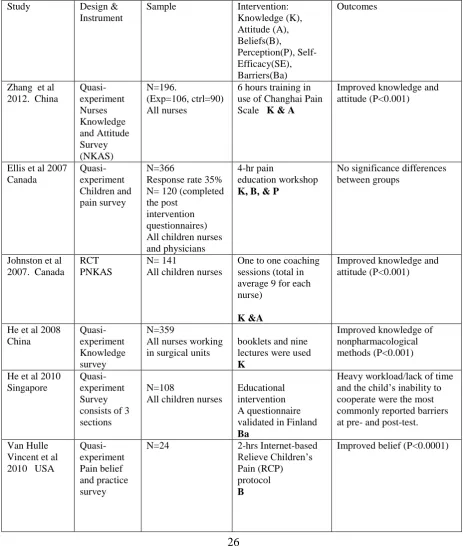
[image:43.595.78.542.243.790.2]Data extraction is the activity carried out by the researcher to collect relevant information about the characteristics of the included studies (University of York & Centre for Reviews Dissemination [CRD], 2009). A data extraction sheet helps researchers in carrying out the systematic review and reducing bias (University of York & CRD, 2009; Elamin et al., 2009). A data extraction sheet was generated for this study for application to the 15 articles (See Table 7).
Table 7: Summary of the studies
Study Design & Instrument
Sample Intervention: Knowledge (K), Attitude (A), Beliefs(B), Perception(P), Self-Efficacy(SE), Barriers(Ba) Outcomes
Zhang et al 2012. China
Quasi-experiment Nurses Knowledge and Attitude Survey (NKAS) N=196. (Exp=106, ctrl=90) All nurses
6 hours training in use of Changhai Pain Scale K & A
Improved knowledge and attitude (P<0.001)
Ellis et al 2007 Canada Quasi-experiment Children and pain survey N=366
Response rate 35% N= 120 (completed the post
intervention questionnaires) All children nurses and physicians
4-hr pain
education workshop K, B, & P
No significance differences between groups
Johnston et al 2007. Canada
RCT PNKAS
N= 141
All children nurses
One to one coaching sessions (total in average 9 for each nurse)
K &A
Improved knowledge and attitude (P<0.001)
He et al 2008 China Quasi-experiment Knowledge survey N=359
All nurses working in surgical units
booklets and nine lectures were used K
Improved knowledge of nonpharmacological methods (P<0.001)
He et al 2010 Singapore
Quasi-experiment Survey consists of 3 sections
N=108
All children nurses
Educational intervention A questionnaire validated in Finland Ba
Heavy workload/lack of time and the child’s inability to cooperate were the most commonly reported barriers at pre- and post-test.
Van Hulle Vincent et al 2010 USA
Quasi-experiment Pain belief and practice survey
N=24 2-hrs Internet-based Relieve Children’s Pain (RCP) protocol B
27 Swain 2008 USA Quasi-experiment NKAS N= 482 All nurses
small group sessions discussing case scenarios and online self-learning modules K &A
Improved knowledge and attitude (P=0.001) Textor 2003 Columbia Quasi-experiment NKAS T1, N=65 T2, N = 45 T2, N= 36 All nurses
Traditional education programme
K & A
Improved knowledge and attitude (P<0.001) Dowd 2009 USA Quasi-experiment PNKAS N=53
All children nurses
active pain management educational program K & A
No significant differences between groups Smith 2006 USA RCT Basic knowledge assessment Tool N= 106 All nurses 2-hrs Web-Based Instructional Design Strategies Vs constructivist learning design
K & A
No significant differences between groups Paul 2013 India Quasi-experiment Knowledge Questionnaire N= 60 Children nurses working at surgical units Planned teaching programme K Improved knowledge (P<0.01) Abdalrahim et al 2011. Jordan 21 items knowledge and attitudes towards pain Quasi-experiment 21 items knowledge and attitude survey N= 65 All postoperative nurses postoperative pain management program was implemented for three months
K & A
Improved knowledge and attitude (P<0.05)
Lin et al 2008 Taiwan Quasi-experiment Knowledge and attitudinal of pain management, scale N=81
All nurses working at surgical units
15 hrs pain management programme
K & A
Improved knowledge (P=0.001) and attitude (P=0.005)
Huth et al 2010 Mexico
Quasi-experiment PNKAS
N=106 4-hr paediatric Pain Education Program (PPEP)
K & A
Improved knowledge and attitude (P<0.0001)
Habich et al 2012. USA
Quasi-experiment PNKAS
T1, N =27 T2, N=11 T3, N=15
All children nurses
Implementing a comprehensive Pediatric Pain Assessment and Management Guidelines K & A
28
ANALYSING THE QUALITY OF RESEARCH MATERIAL
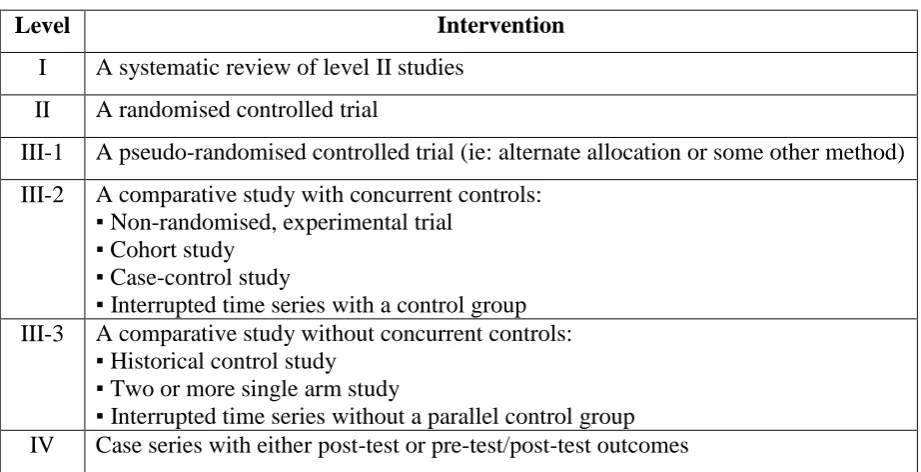
[image:45.595.85.546.321.557.2]Best practice should be based on high-quality research evidence whenever possible (Facchiano & Hoffman Snyder, 2012). Rigorous appraisal of research reports exposes the strength and weakness in studies, which reflect on the quality of evidence produced (Facchiano & Hoffman Snyder, 2012). Such appraisal is vital in translating research to practice (Hill & Spittlehouse, 2001). Critical appraisal is the procedure of evaluating research evidence methodically to assess its validity, rigour, and relevance to clinical practice (Hill & Spittlehouse, 2001). A part of this process is to understand the notion of levels of evidence. The following table (Table 8) shows The National Health and Medical Research Council in Australia (NHMRC) evidence hierarchy (Coleman et al., 2005).
Table 8: NHMRC evidence Hierarchy: designations of levels of evidence according to type of research design (Coleman et al., 2005, p.15).
Level Intervention
I A systematic review of level II studies II A randomised controlled trial
III-1 A pseudo-randomised controlled trial (ie: alternate allocation or some other method) III-2 A comparative study with concurrent controls:
▪ Non-randomised, experimental trial ▪ Cohort study
▪ Case-control study
▪ Interrupted time series with a control group III-3 A comparative study without concurrent controls:
▪ Historical control study ▪ Two or more single arm study
▪ Interrupted time series without a parallel control group IV Case series with either post-test or pre-test/post-test outcomes
29
Many instruments are available to evaluate the quality of research (Brink & Louw, 2012; Creswell, 2013; Hawker, Payne, Kerr, Hardey, & Powell, 2002; Higgins & Green, 2008). Of these, Hawker et al’s Assessment Tool was selected for use in this study because it enables researchers to quantify and measure the quality of reviewed reports. Furthermore, compared with some other appraisal tools such as the rigorous Critical Appraisal Skills Programme (CASP) that has special forms for each research design (CASP UK, 2013), Hawker et al’s Assessment Tool has only one format for all studies regardless of design, allowing for consistency in appraisal. Hawker et al’s assessment tool entails assessment of nine categories: abstract and title, introduction and aims, methods and data, sampling, data analysis, ethics and bias, findings, transferability, implications and usefulness (Hawker et al., 2002) (See Appendix 3).
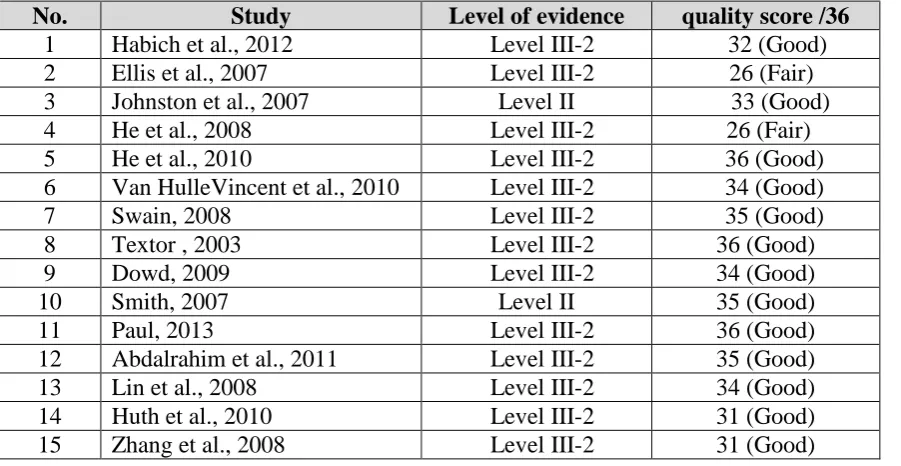
[image:46.595.92.543.498.731.2]The assessment is based on a point system for each category, which ranges from 1 to 4, with 1 indicating a very poor score and 4 indicating a good score, thus allowing a maximum score of 36 points. An example of appraising an article using Hawker’s Assessment Tool can be seen in Appendix 4. Each included study was awarded a total score falling into one of the following categories: very poor (0-10points), poor (11-20 points), fair (21-30 points) and good (31-36 points). Table 9 summarises the level of evidence and the quality of the included studies according to Hawker’s et al Assessment Tool.
Table 9: Level of evidence and quality of the included studies
No. Study Level of evidence quality score /36
1 Habich et al., 2012 Level III-2 32 (Good)
2 Ellis et al., 2007 Level III-2 26 (Fair)
3 Johnston et al., 2007 Level II 33 (Good)
4 He et al., 2008 Level III-2 26 (Fair)
5 He et al., 2010 Level III-2 36 (Good)
6 Van HulleVincent et al., 2010 Level III-2 34 (Good)
7 Swain, 2008 Level III-2 35 (Good)
8 Textor , 2003 Level III-2 36 (Good)
9 Dowd, 2009 Level III-2 34 (Good)
10 Smith, 2007 Level II 35 (Good)
11 Paul, 2013 Level III-2 36 (Good)
12 Abdalrahim et al., 2011 Level III-2 35 (Good)
13 Lin et al., 2008 Level III-2 34 (Good)
14 Huth et al., 2010 Level III-2 31 (Good)