
Designing mobile learning activities in the Malaysian HE context: A social constructivist approach
395
0
0
Full text
(2) Designing Mobile Learning Activities in the Malaysian HE Context: A Social Constructivist Approach. Sakina Sofia BAHAROM. Salford Business School University of Salford, Salford, UK. Submitted in Partial Fulfilment of the Requirements of the Degree of Doctor of Philosophy, February 2013.
(3) Table Of Contents Table of Contents. i. List of Diagrams. ix. List of Tables. x. List of Screenshots. xi. List of Graphs. xi. List of Abbreviations and Terms. xii. Acknowledgement. xv. Dedication. xvi. Abstract. xvii. 1. 1.1. Introduction Overview Background of the Study. 1.2. Key Concepts Definitions. 3. 1.3. Research Rationale. 8. 1. 1. 1.3.1 Personal Motivations. 8. 1.3.2 The Need for Student-Focused Research on Adoption of ICT in HEIs 1.3.3 The Need for Research on Mobile Learning to Support Learning in HEIs 1.3.4 The Need for Mobile Learning Research in Malaysia. 9. 1.3.5 The Need for Learning Design Research for HEIs. 13. 10 12. 1.4. Research Aims. 14. 1.5. Research Questions. 15. 1.6. Scope and Significance of the Study. 16. 1.7. Thesis Guide. 18. 2. Literature Review: Learning Design for Mobile Learning 23 Activities Overview Design for Learning 24. 2.1. i.
(4) 2.2. Learning Activity Design. 27. 2.3. Learning Environment. 31. 2.3.1 HEI and ICT. 32. 2.3.2 Malaysian HEI Background. 37. 2.3.3 Malaysian HEI and ICT. 40. Learners (HE Students). 43. 2.4. 2.4.1 Digital Learners in HEIs. 43. 2.4.1.1 Digital Learners Literature: A Critical Perspective. 45. 2.4.1.2 Characteristics of Digital Learners. 47. 2.4.2 Malaysian HE Students Background. 50. 2.4.2.1 Descriptions of Asian HE Students. 52. 2.4.2.2 Descriptions of Malaysian HE Students. 55. 2.4.3 Malaysian HE Students and ICT. 57. 2.5. Tools (Mobile Learning Affordances). 58. 2.5.1. Potential of Mobile Learning in HEIs. 61. 2.5.1.1 Mobile Learning Mobility Aspects. 66. Mobile Learning Activities in HEI. 68. 2.5.2.1 Administrative Learning Activities. 70. 2.5.2.2 Communicative and Collaborative Learning Activities – SMS. 71. 2.5.2.3 Accessibility to Content Learning Activities. 72. 2.5.2.4 Reflective Learning Activities – Podcast. 73. 2.5.2.5 Reflective Learning Activities – Moblog. 75. 2.5.2. 2.5.2.6 Multiple-Perspective and Contextual Learning Activities – Mobile 75 Camera 2.5.2.7 Possible Mobile Learning Activities 76 2.5.3. Issues and Challenges of Mobile Learning in HEIs ii. 78.
(5) 2.5.3.1 Physical and Technical Issue. 78. 2.5.3.2 Mobile Network Reliability Issue. 80. 2.5.3.3 Cost Issue. 80. 2.5.3.4 Device Ownership Issue. 81. 2.5.3.5 Technical Knowledge of HE Students Issue. 82. 2.5.3.6 Disruptions and Security Issue. 83. 2.5.3.7 Usability Issue. 84. 2.5.3.8 Student Personal Space Issue. 85. 2.5.3.9 Review of Issues and Challenges. 85. 2.5.4. Designing Mobile Learning Environment. 86. 2.6. Summary of Literature Review on the Learning Design for Mobile Learning Research Paradigm and Theoretical Perspective Overview Research Paradigm. 90. 3 3.1. 3.2. 93 94. 3.1.1 Positivist Research Paradigm. 97. 3.1.2 Interpretivist Research Paradigm. 99. 3.1.3 Critical Theorist Research Paradigm. 101. 3.1.4 Summary of Research Paradigm. 103 104. 3.3. Interpretivist Research Paradigm for Mobile Learning Activities Research Theoretical Framework – Social Constructivism. 3.4. Social Constructivist and Mobile Learning Activities. 116. 3.5. Social Constructivist Learning Principles. 119. 109. 3.5.1 Contextual Learning Principle. 124. 3.5.2 Reflective Learning Principle. 127. 3.5.3 Collaborative Learning Principle. 129. 3.5.4 Multiple-Perspective Learning Principle. 131. iii.
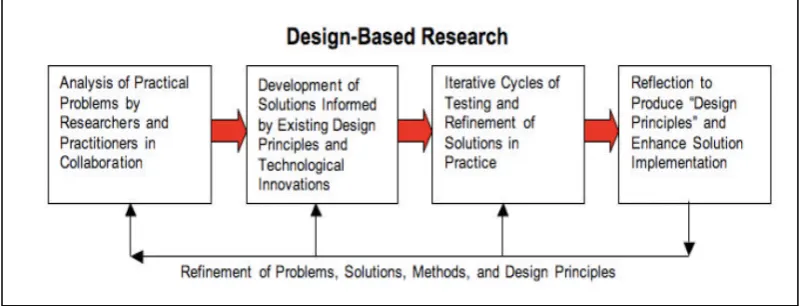
(6) 3.5.5 Summary of Social Constructivist Learning Principles. 134. Research Process and Design Process Overview Methodology – Design Based Research (DBR). 136. 4.1.1 Differences Between DBR and Action Research (AR). 140. 4.1.2 Problems in DBR. 142. 4.1.3 Process and Methods in DBR. 144. 4 4.1. 137. 4.2. Research Design Process – ADDIE Model. 148. 4.3. Research Process and Design Process. 149. 4.3.1. First Stage. 150. 4.3.1.1 Analysis Phase (Need Analysis). 150. 4.3.1.1.1 The Pre-Analysis Phase. 150. 4.3.1.1.2 Analysis Phase. 151. 4.3.1.2 Design and Development Phase. 151. 4.3.1.3 Implementation Phase (Stage 1: Mobile Learning Workshop). 152. 4.3.1.3.1 Pre-Workshop. 152. 4.3.1.3.2 During Workshop. 153. 4.3.1.3.3 Post Workshop. 155. 4.3.1.4 Evaluation Phase 4.3.2. 155. Second Stage. 156. 4.3.2.1 Analysis Phase (Need Analysis). 156. 4.3.2.2 Design and Development Phase. 156. 4.3.2.3 Implementation Phase (Stage 2: Mobile Learning Workshop). 157. 4.3.2.3.1 Pre-Workshop. 157. 4.3.2.3.2 During Workshop. 157. 4.3.2.3.3 Post Workshop. 158. iv.
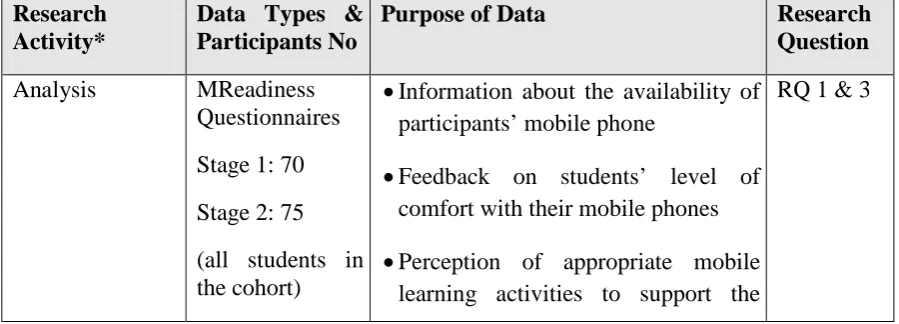
(7) 4.3.2.4 Evaluation Phase 4.4. 158. Mobile Learning Environment. 159. 4.4.1 Contextual Activities. 159. 4.4.2 Reflective Activities. 161. 4.4.3 Collaborative Activities. 162. 4.4.4 Multiple-Perspective Activities. 163. 4.5. 165. Data Collection Methods 4.5.1 Questionnaire. 166. 4.5.2 Students’ Reflective Blog. 169. 4.5.3 Online Interview. 172. 4.6. Context of Study. 174. 4.7. Participants. 177. 4.8. Ethical Issues. 178. 4.9. Challenges. 180. 4.10. Data Analysis Strategy. 184. 4.11. Summary of Research Process and Design Process. 189. 5. 191. 5.1. Stage 1 Results and Findings Overview MReadiness Questionnaire for Stage 1. 5.2. Mobile Learning Workshop for Stage 1. 197. 5.3. Students’ Blog Posts for Stage 1. 198. 192. 5.3.1 Mobile Learning Activities. 199. 5.3.2 Contextual Activities. 200. 5.3.3 Reflective Activities. 200. 5.3.4 Collaborative Activities. 201. 5.3.5 Multiple-Perspective Activities. 201. v.
(8) 5.4. 5.3.6 Communication Activities. 202. 5.3.7 Learning-Management Activities. 202. Students’ Interviews for Stage 1. 203. 5.4.1 Contextual Activities. 204. 5.4.2 Reflective Activities. 205. 5.4.3 Collaborative Activities. 205. 5.4.4 Multiple-Perspective Activities. 206. 5.4.5 Communication Activities. 206. 5.4.6 Learning-Management Activities. 207. 5.5. Design for Stage 2 Mobile Learning Activities. 207. 6. 212. 6.1. Stage 2 Results and Findings Overview MReadiness Questionnaire for Stage 2. 6.2. Mobile Learning Workshop for Stage 2. 218. 6.3. Students’ Blog Posts for Stage 2. 222. 6.4. 213. 6.3.1 Contextual Activities. 223. 6.3.2 Reflective Activities. 223. 6.3.3 Collaboration Activities. 224. 6.3.4 Multiple-Perspective Activities. 224. 6.3.5 Communication Activities. 225. 6.3.6 Learning-Management Activities. 225. 6.3.7 Summary of Students’ Blog Posts. 227. Students’ Online Interviews for Stage 2. 227. 6.4.1 Contextual Activities. 228. 6.4.2 Reflective Activities. 229. 6.4.3 Collaboration Activities. 231. vi.
(9) 6.4.4 Multiple-Perspective Activities. 232. 6.4.5 Communication Activities. 233. 6.4.6 Learning-Management Activities. 234. 6.5. Review of Design for Mobile Learning Activities. 236. 7. Discussion Overview Research Question 1 (Preparedness of Students). 238. 7.1. 239. 7.1.1 Students Device Readiness: Access to Tool. 239. 7.1.2 Students Skills on Mobile Phone Applications. 241. 7.1.3 Students Understanding of Mobile Learning Concept. 244. 7.1.4 Students Reception of Mobile Learning Concept. 245. 7.2. Research Question 2 (Design of Mobile Learning Activities). 246. 7.2.1 Contextual Activities. 247. 7.2.2 Reflective Activities. 248. 7.2.3 Collaborative Activities. 250. 7.2.4 Multiple-Perspective Activities. 251. 7.2.5 Communication Activities. 252. 7.2.6 Learning-Management Activities. 254. 7.2.7 Review of Mobile Learning Environment. 256. 7.3. Research Question 3 (Issues and Challenges). 258. 7.3.1. HE Students. 259. 7.3.1.1 Malaysian HE Students’ Culture. 259. 7.3.1.2 Inappropriate Use of Mobile Phone. 260. 7.3.2. Learning Designer. 261. 7.3.2.1 Different Types of HE Students. 261. 7.3.2.2 Different Types of Phone and Problems Surrounding Common Mobile Phone Issues. 261. vii.
(10) 7.3.3. Higher Education Institutions. 262. 7.3.3.1 Infrastructure. 262. 7.3.3.2 Device Support. 263. 8. 264. 8.1. Conclusion, Limitation and Recommendation Overview Review of Mobile Learning Activities Design. 8.2. Limitation and Future Research. 271. 8.3. Reflection of Design Process. 272. 8.4. Reflection of Research Process. 275. 8.5. Recommendations for Mobile Learning Initiatives for HE Students. 279. 8.6. Review of Research Contributions. 280. Bibliography. 283. 265. Appendices Appendix A: Course Information. 351. Appendix B: MReadiness Questionnaire. 356. Appendix C: GSOE (University of Bristol) Ethical Form. 362. Appendix D: List of Mobile Learning Applications Introduced in Mobile Learning Workshop. 365. Appendix E: Part 1 – Descriptive Code. 371. Appendix F: Part 2 – Categories Code. 372. Appendix G: MReadiness Raw Data. 373. viii.
(11) List Of Diagrams Diagram 1: Concepts Map of Thesis. 7. Diagram 2: Structure of Thesis for Designing Mobile Learning Activities for HE Students. 19. Diagram 3: Design Learning Model Gorard and Taylor (2004). 26. Diagram 4: Outline of Learning Activity (Adapted from Beetham, 2007). 29. Diagram 5: Mobile Learning Design Guide. 90. CHAP 3. Diagram 6: Summary Process Social Constructivist Learning Principles. 120. CHAP 4. Diagram 7: Design-Based Research Approaches in Educational Technology Research (Reeves, 2006). 145. Diagram 8: The Design Process of the Study. 149. Diagram 9: Data Collection Process. 185. Diagram 10: Qualitative Data Process. 188. Diagram 11: Pedagogical Guidelines for the Design of Mobile Learning Environment. 267. CHAP 1. CHAP 2. CHAP 5. ix.
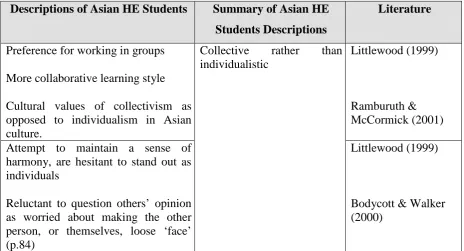
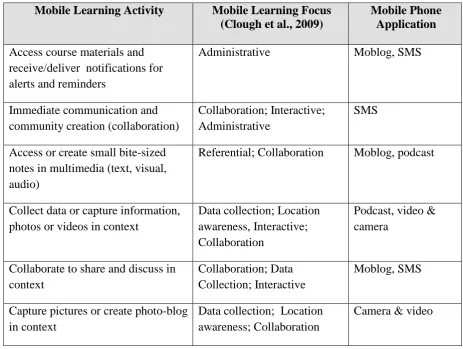
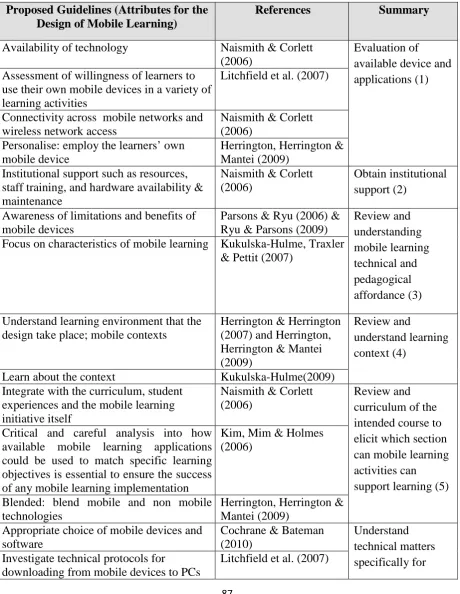
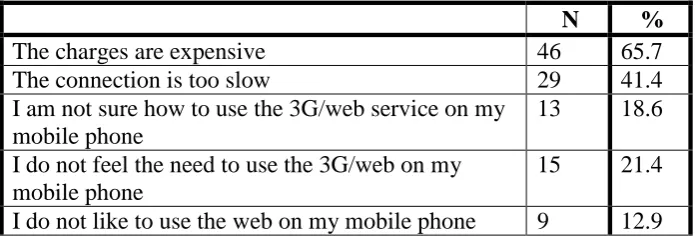
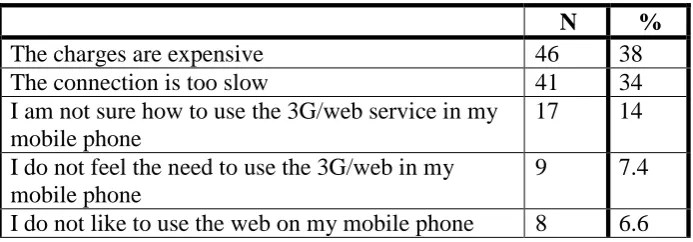
(12) List Of Tables Table 1: Summary of Digital Learners Characteristics. 47. Table 2: Descriptions of Asian HE Students. 53. Table 3: Characteristics of Mobile Learning. 63. Table 4: Classification of Possible Mobile Learning Activities. 77. Table 5: Review of Mobile Learning Design Guide. 87. Table 6: Different Types of Research Paradigm. 96. Table 7: Characteristics of Interpretivist Research Paradigm for this Study. 106. Table 8: First Summary of Learning Principles for Social Constructivist. 121. Table 9: Second Summary of Learning Principles for Social Constructivist. 123. Table 10: Phases of DBR Mapped Against the Thesis. 145. Table 11: Summary of Data Collection Methods. 165. CHAP 5. Table 12: Reasons for Not Using Internet in Mobile Phone (Stage 1). 195. CHAP 6. Table 13: Reasons for Not Using Internet in Mobile Phone (Stage 2). 216. CHAP 8. Table 14: Revised Mobile Learning Design Guide. 274. CHAP 2. CHAP 3. CHAP 4. x.
(13) List Of Screenshots CHAP 4. CHAP 6. Screenshot 1: Webpage of the SMS Blast Platform. 160. Screenshot 2: Webpage of the Discussion Forum. 162. Screenshot 3: Webpage for Podcast (Example). 163. Screenshot 4: PKEY3101/2010 Moblog. 164. Screenshot 5: Pictures of Mobile Learning Workshop from Students’ Blog (Example). 220. Screenshot 6: Photos Taken by Participants for Online Repository (Example). 221. List Of Graphs CHAP 5. CHAP 6. Graph 1: Frequency of Syncing Mobile Phone to Computer (Stage 1). 193. Graph 2: Frequency of Use of Mobile Phone Applications (Stage 1). 194. Graph 3: Initial Perception of Mobile Learning Activities (Stage 1). 196. Graph 4: Frequency of Syncing Mobile Phone to Computer (Stage 2). 213. Graph 5: Frequency of Use of Mobile Phone Applications (Stage 2). 215. Graph 6: Initial Perception of Mobile Learning Activities (Stage 2). 217. xi.
(14) List of Abbreviations and Terms Bluetooth. a wireless technology in the form of a short-range radio technology. Bluetooth makes it possible to transmit signals over short distances between telephones, computers and other devices, and thereby simplify communication and synchronization between devices (Georgiev, Georgieva, & Smrikarov, 2004). Caudill (2007) describe it as device-to-device data transfer technology.. Delivery platform/ mechanism. is the method being used to deliver the course to the targeted students. These platforms take many forms from face-to-face lectures to delivery by the web.. Digital learner. students who are familiar with using digital technologies in their daily life. eBook. a text-based publication in digital format which can be read through various digital devices. HE HEI. higher education higher education institution. Hotspot. Wi-Fi in public places (Caudill, 2007). ICT. information communication technology, a term used widely in education to refer to the variety of technological equipment used in schools and HEIs to support student learning, or to the policy and curriculum for implementation in order to manage, create, store and propagate learning with computer technology. Pelgrum & Law (2003) and Naidu (2003) assert that ICT in education will widen the possibilities for learning and educators will need to re-think their educational practices. In this study, I perceive that ICT in education is defined as the use of computer and technological tools to engage students in their learning.. JPEG file. JPEG stands for Joint Photographic Experts Group. JPEG File Interchange Format is a minimal file format which enables JPEG bitstreams to be exchanged between a wide variety of platforms and applications (Hamilton, 1992). It is a standard method of compressing photographic images.. Learning designer. a person to adopt, adapt, test and improve design learning for technological initiatives. This person needs to translate instructional needs and articulate pedagogy.. Learning management system (LMS). also known as virtual learning environment (VLE). It is a software application for the administration, documentation, tracking, and reporting of virtual classroom and online events.. Learning principles similar to goals of learning. It emphasises certain learning activities and these activities support certain learning aims usually based on a learning theory.. Microblogging. is a new form of communication in which users can describe their current status in short posts distributed by instant messages, mobile phones, email or the Web. Microblogging can also be described as “asynchronous, and xii.
(15) collaborative communication technology” (Cochrane & Bateman, 2010, p.6). More specifically it is “a variant of blogging which allows users to quickly post short messages on the web for others to access” (Costa et al., 2008).. Moblog. a blend of the words mobile and weblogging (Mielo, 2005). Moblogs are actually blogs but are designed to be specifically accessed via a mobile device. Just like web blogs, moblogs allow students to make instant comments on the mobile web pages. Blogs are posts and not pages of a book, hence moblogs usually holds micro-content (Wilen-Daugenti, 2009).. Mobile broadband. implies the establishment of a universal system architecture, capable of cost effectively handling a wide range of equipment with diverse service attributes, in a wide range of applications, involving high data-rates and mobile terminals. This approach allows mobile communications (Fernandes, 1995). Generally it is noted as internet access to mobile phone through a wireless mobile network (Caudill, 2007).. Mobile phone applications. also known as mobile app, is a term used to describe software that runs on smartphones and mobile phones. Mobile applications are designed to educate, entertain, or assist consumers in their daily lives. In some countries the mobile phone is known as cell phones or handphones.. MP3 file. digital audio that encodes format which uses a form of data compression. It is a common audio format for audio storage, as well as a standard of digital audio compression for the transfer and playback of music on most digital audio players.. Notebook. also known as laptops. This is a mobile personal computer that easily be transported and conveniently used in temporary spaces.. Ordinary phone. a basic mobile phone with usually the call function and the texting function. PDA. Personal Digital Assistant. PDA combines computing capability, Internet access, and networking features in one system with a calendar, notepad, address book, and productivity tools. It is a programmable, Bluetooth-enabled, Wi-Fi–equipped device with a pen/stylus input interface (Corbeil & ValdezCorbeil, 2007).. PDF file. Portable Document Format (PDF) is the global standard for capturing and reviewing rich information from almost any application on any computer system and sharing it with virtually anyone, anywhere (About Adobe PDF, 2012).. Pedagogical. guidelines within educational sector vary in purpose from those produced to guide and inform development to those that evaluate the nature of existing resources (Beck, 1997). Guidelines for pedagogy recommends integrating a mix of educational experiences and strategies to meet a variety of learning. Guidelines. xiii.
(16) outcomes.. Podcast. is a digital media file which could either be an audio file that could be downloaded through the web.. Podcasting. is the process of capturing audio then posting the digital file on a website or a blog from which students can download the files onto their computers or devices to listen to them at anytime and anywhere they want.. Small bite notes. chunks of information or content of a course delivered to the students.. Smartphone. hybrid devices which combine the abilities of the mobile phones and PDA. Typically they do not have full sized keyboard and can recognise handwritten text. They use Symbian, Windows Mobile or other operating system. As they have Internet browsers they have the potentiality to be successfully in the mobile multimedia education (Georgiev, Georgieva, & Smrikarov, 2004). A smart phone combines telephone capability with a PDA, camera, video, mass storage, MP3 player, Internet access, and networking features in one compact system. (Corbeil & Valdez-Corbeil, 2007).. SMS. short messaging system or at times also known as text messages (Peters, 2009).. SMS blast. short messaging system that is delivered simultaneously to many intended receivers. Widget. a software system for small applications that can be embedded on the web or a mobile phone. A widget also means the small programme that is written in order to describe how it behaves, and how it interacts in response to user actions. Most operating systems include a set of ready-to-tailor widgets can incorporate in an application. New widgets can be created without skill of computer programming language.. Wi-Fi. is wireless fidelity. It is a series of access points which are transmitter/receiver stations that wireless devices can connect to via a mobile device Wi-Fi networking card to the internet (Caudill, 2007). It is used for certain types of wireless local area network (WLAN). Wi-Fi has gained acceptance in many businesses, schools, institutions and homes as an alternative to a wired LAN. Many charge a daily or hourly rate for access, but some are free.. 3G/4G Web Service. all smartphones can access the web, but not all can do so at the same speed. 3G broadband networks can offer speeds of 3.1 megabits per second (Mbps) or more. (Cassavoy, 2012). 4G wireless is the term used to describe the fourth-generation of wireless service. 4G is a step up from 3G, which is currently the most widespread, high-speed wireless service. 4G is only available in limited areas. (Cassavoy, 2012). xiv.
(17) Acknowledgement First of all, I would like to dedicate my heartfelt thanks to “Mighty Allah SWT” for the strength, wisdom and health to complete this research. I would also like to thank my main sponsor Majlis Amanah Rakyat (MARA) under the Government of Malaysia for giving me the opportunity to further my studies. There are many people that made an impact on my journey to finish the research which I am indebted to. I am grateful for the mentors that guided me. Namely Chris Procter, my supervisor who rescued me from one of the darkest moments in my life. Through him, I found back my self-worth and self-confidence. My second supervisor, Dr Heinze for supporting me towards the end of the line, which made a big impact. A special mention to Prof Dr Raja Maznah that have always given solid support to me. I appreciate all the hours spent on comments that stretches my thinking further. I am blessed for the support of my family. To my mum, Hjh Salbiah who has always been encouraging me from afar. To my dear husband, Mohd Zahar Harun for all the sacrifices made and taking his stride to manage everything else without me. To the jewels of my life, my children, Shafiq, Shazmin and Shariq for understanding when I am not around and always ready to give me a much needed hug. To my sister, Selina who could bring me back to the ground when I needed it. To my brother, Dr Azwan who keeps me afloat in his many ways. Their love and support know no bound. I am honoured to have meaningful friends. There were many from pompom girls in 218, the Malaysian Community of Bristol (MCB), and Facebook support groups. Personally, I would to thank Khairul Yusri for his just-in-time helps. I am also in awe for my very own ‘Superwoman’, Cristina Costa who is always ever ready to save the day. Their kindness and passion cuts across all borders. Being there for me has helped me go further and better than I ever thought I was able to. This is indeed a journey of many perils and triumphs. The experience teaches me not only about the mechanics of research but also about people, culture and politics in general. I started to want to learn in depth about research, but I ended up learning about myself too.. xv.
(18) Dedication. This tribute is to my dad, Lt. Col. (R) Baharom Bin Sukon, the embodiment of an educator. He only saw me half way through this journey, but I know this is what he wanted as he did not manage to finish his own journey. So daddy, I finished this for us.. xvi.
(19) Abstract The introduction of mobile learning in higher education institutions (HEIs) in Malaysia is an instinctive course of action in response to the high increase in rates of mobile phone ownership amongst higher education (HE) students. Mobile learning encapsulates learning opportunities undertaken with the usage of the students’ mobile phones. This study aims to explore how mobile learning activities, developed using social constructivist learning principles, can support undergraduate students learning in the context of the study. It identifies the learning opportunities that the different mobile learning activities provide as well as exploring issues and challenges in implementing these mobile learning activities. The results derived from this research are used to inform the development of pedagogical design guidelines for engaging Malaysian HE students via mobile learning activities to support a specific course. As depicted by interpretive paradigm upon which this study is founded, the students’ voices are emphasised as it is justified that the students’ participation is essential to move the technology in directions that they prefer. The methodology is design-based research (DBR) which emphasises the need for cyclic intervention and analysis as part of the research process. Hence, there were two stages of data collection which were designed to explore the students’ perspective on the mobile learning activities. The methods of data collection include a questionnaire (145), students’ blog posts (145) and online interviews (9). The study was implemented with two cohorts of student teachers over a period of two years. The findings of this study indicate that Malaysian HE students are prepared to accept mobile learning to support their study. However, educators must also be wary of issues such as the students’ familiarity in using the selected mobile application. There are several types of mobile learning activities which could be offered namely; contextual, reflective, collaborative, multiple-medium, communication and learning-management. This study contributes to the body of knowledge by providing a) conceptual benchmarks for future studies in the area of mobile learning and learning design, b) a rich insight into the mobile learning development in Malaysian HEIs, c) social constructivist pedagogical guideline considerations, and d) tactical advice for HE practitioners in considering mobile learning.. xvii.
(20) Chapter 1 : Introduction Overview This chapter provides the background to this study. Firstly, it provides the general landscape on which this study is based. Key concepts are provided in order to present a guide to terms used in the study. It then proceeds to explain the research rationale. The research aims and research questions are also discussed, followed by the scope and the significance of the study. Finally, the thesis guide is presented in order to provide a general overview of the study’s evolution.. 1.1 Background of the Study The International Telecommunications Union (ITU) (2011) reported that there are 5.9 billion subscriptions to mobile-cellular network worldwide with a penetration of 79% of the population who had subscribed to a mobile-cellular network in developing countries by the end of 2011. This trend is mirrored in most nations, including Malaysia, where subscriptions for mobile phones have reached 119.2 for every 100 people in the country for the year 2011 (MCMC, 2012). Greater than 100% penetration is due to the fact that consumers are subscribing to more than one mobile-cellular network. MCMC, the government’s Communication and Multimedia Commission also predicted that these multiple subscriptions will continue onwards with a likely penetration of 121% by the first quarter of 2012 (MCMC, 2012). This large subscriptions difference compared to broadband subscriptions of only 17.3 per 100 people for the last quarter of 2011, which indicates that mobile phones have surpassed the number of conventional computers with internet access. A large number of Malaysians, be it in rural or urban areas of the country, own a mobile phone. Studies as early as 2004 (Colley & Stead) indicated that mobile phones are a common communication tool for young adults aged 16-24 in United States of America (USA). Mobile phones are also relatively inexpensive as compared with laptop computers. Similar to trends in other countries, it is common for Malaysian students in higher education institutions (HEIs) to own a mobile device. Mobile phones have the potential to be used as part and parcel of students learning, as their “technologies are familiar, personal, universal, non-intrusive, lightweight and cheap, to be woven into every waking moment, among a 1.
(21) myriad of other activities and in all manner of social settings and groups” (Traxler, 2008, p.18). In other words, mobile phones are omnipresent as compared to the internet-able desktop personal computer (PC). The 2012 NMC Horizon Report (Johnson et al., 2012) rated mobile learning as a ‘technology to watch’ in HEIs. It has become popular for some HEIs to deliver content and services via a mobile device throughout the campus. In the United States, Duke University equipped each new student with an iPod (Menzies, 2005) while Abilene Christian University provided iPhones to incoming students as part of their Connected Campus project (Terpstra, 2009). Other American universities such as George Fox, Duke (Brookshire, 2007, and Raths, 2010), and Georgia State (Sellers, 2003, and Brookshire, 2007) are using audio podcasts to disseminate audio notes or recorded lectures. Some universities have developed mobile applications for the campus community, such as a campus directory and maps, real-time current events and other campus-related information. This trend is also mirrored in university-wide initiatives being implemented by Oxford University (Mobile Oxford, 2011) and the Open University (Kukulska-Hulme, 2007) in The United Kingdom (UK). In Australia, Curtin Technology University (Oliver, 2005) and Queensland. University. of. Technology. (Cobcroft. et. al.,. 2006). have. reported. implementations of mobile learning initiatives. Athabasca University, Canada (McGreal et al., 2005, and Coa et al., 2006), has also begun implementing campus-wide mobile applications with their library information system. Common to all of these examples is the use of the mobile phone as a means of information delivery in order to support and manage learning for the courses offered. Some argue that 80% of people reported to be accessing the internet around the world will do so with a mobile device (Johnson, Adams & Cummins, 2012). This suggests that mobile phones can be used to support learning ranging from learning materials to campus services to specialised applications for specific courses. Amongst the key trends reported in the Horizon 2012 Higher Education Preview is that students expect to be able to study whenever and wherever they want (Johnson, Adams & Cummins, 2012). Students are reported to want faster and more timely access because they want access not only to information but also for collaboration in their social networks. The latter is reported to help them to interpret and maximise the value of a particular course content. 2.
(22) The idea of using computerised mobile devices to support learning was formally conceptualised a few decades ago. Sharples (2003), in a keynote paper, ‘Disruptive Devices: Mobile Technology for Conversational Learning’, identifies Alan Kay’s Dynabook, conceived in the early 1970s, as the first attempt to design a computer-mediated mobile learning platform. However, the concept of mobile learning could be found further back with the invention of the printed press by Johannes Gutenberg in 1445, which brought about the ability for books to be portable to be read anywhere and anytime. The history of mobile phones can also be mapped to the history of mobile learning, as easier communications were formed through mobile radio telephony. Regardless of this, today’s concept of mobile learning is still in evolution and different types of research are needed in order to generate more development and understanding in the field (Kukulska-Hulme & Traxler, 2005; Sharples, Taylor, & Vavoula, 2005; Cobcroft, 2006; Kukulska-Hulme, 2009; Ally, 2009; and Vavoula, Pachler, & Kukulska-Hulme, 2009). In introducing the background of this research, it is also appropriate to explain the key concepts of the research. The understanding of definitions of key concepts is essential in order to provide the backdrop of the research.. 1.2 Key Concepts Definitions There are many interpretations of the term elearning which mainly describe the explicit association between students’ learning by means of a digital environment. Digital environment can mean using computer applications for both pedagogical and learning management purposes. Pollard & Hillage (2001) posit that elearning “involves the delivery and administration of learning opportunities and support via computer, networked and webbased technology, to help individual performance and development” (p.20). Rosenberg (2001) defined it as “the use of internet technologies to deliver a broad array of solutions that enhance knowledge and performance” (p.28). Zoraini, Kaur, & Hairudin (2004) in a study on elearning readiness in Malaysia, define elearning as “the use of the network and multimedia technologies to improve the quality of learning by enabling access to knowledge and remote resources for the development of a K-society” (p.2). This definition could also include web-based learning and online learning. In this study, elearning means delivering. 3.
(23) learning activities in the form of a virtual environment, for example, by placing course content online or using an online discussion forum. Mobile learning, on the other hand, is a relatively new field and needs to be clearly defined. Kukulska-Hulme (2009) discusses the diversity of mobile learning through several concepts of mobility that can be translated into mobility of learners, content and learning, and which transcend context and time. There are attempts to define mobile learning focused on the novelty or the functionality of the device. Wang, Wiesemes & Gibssons (2012) define it simply as “learning through mobile devices” (p.570). However, as discussed by Frohberg (2006), Traxler (2007) and Balasundram & Ramadoss (2007), if mobile learning is defined based on applications than it is technology-dependent and could fall into the trap of becoming obsolete. Traxler (2009) further argued that there is a need to move away from a techno-centric definition as it constrains the field of mobile learning. The focus of this study is not on mobile technology but rather on learning activities that can be offered through the device; hence this type of definition is not suitable for this study. There are also definitions that relate mobile learning to elearning such as that of Milrad (2003) who defines mobile learning as “elearning using mobile devices and wireless transmission” (p.151). Brown’s (2005) definition of mobile learning is a form of elearning that specifically employs wireless communication devices to deliver content and learning support, while the definition presented by Wilen-Daugenti (2009) is that it is an “intersection of mobile computing with elearning, learning enabled by the use of PDAs, mobile phones, and other personal and portable devices” (p.185). However, mobile learning, due to its compact nature, particularly in terms of its technical limitations and concise delivery, cannot possibly deliver the full range of elearning materials in my opinion. The term elearning for this research is explained later in this section. Whilst mobile devices are ubiquitous, they are limited by size and cannot support a full range of learning activities, nor will all learners find them accessible (Zhang & Adipat, 2005 and Goundar, 2011). Mobile learning has the capacity to enable learning to occur across locations, contexts and times (Kakihara & Sorensen, 2002; Thomas, 2005; and Ryu & Parsons, 2008). These descriptions which position mobile learning as a subset of elearning appear simplistic (Traxler, 2007 and Ally, 2009), and are therefore deemed inapplicable to this study. 4.
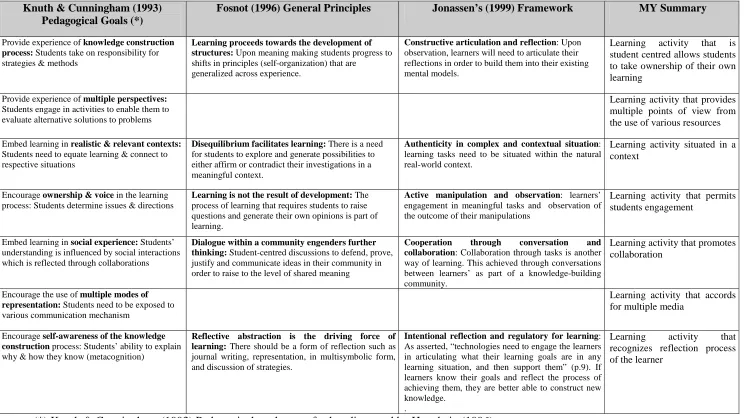
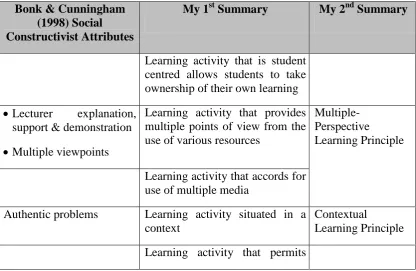
(24) Throughout the short period of time that mobile devices have been available, we are beginning to understand more about the nature of mobility (devices and users) and how this type of learning plays on the strengths of context, location, and immediate presentation of relevant information. Mobile learning definitions have developed to encapsulate the use of mobile devices in the curriculum to create learning spaces which can facilitate active learning and create meaning that overcome the limitations of time and space (Torrisi-Steele, 2006). These learning spaces are where learning activities take place. O’Malley et al. (2003) define mobile learning as “any sort of learning that happens when the learner is not at a fixed, predetermined location, or learning that happens when the learner takes advantage of the learning opportunities offered by mobile technologies” (p.6). This is the definition that is employed throughout this research, in which the learner is placed in the centre and directs his or her own learning within learning activities with the use of a mobile phone. This definition is deemed suitable for this research as central to the learning activities are the students using their own mobile phones. Learning support is a mechanism to assist students with meeting the course’s learning outcomes (Chin & Williams, 2006). In this study, there are basically two categories of learning support. The first is the management support that entails assistance for students to manage their learning, for example reminders and notifications of datelines through short messaging system (SMS). The second, on which the study focuses, is course support in the form of activities for students to engage further with the course content. There may also be other types of support such as pastoral support specifically for personal challenges or technical support to address technical issues. Nevertheless, these two types of support (personal challenges and technical support) are not be covered in this study which focuses only on supporting learning for HE students. Meanwhile Nor Aziah & Nik Suryani (2012) describe learning support elements as “elements in a learning environment that aid development of new knowledge, skills and attitudes when the individual interacts with information and the environment” (p.4). This is the description used for this study. Social constructivist learning principles refer to learning principles based on social constructivist theory. These learning principles found the basis of the learning activities for this study. A key part of HE students’ experience must relate to how they are taught and how they can be encouraged to reflect, to collaborate, and to experience multiple viewpoints 5.
(25) on the contexts of their studies, as proposed by social constructivist theory. The creation of these learning principles is discussed in detail in Section 3.4. The term mobile learning activities have been developed for this study. It means activities that involve use of a particular mobile phone application by HE students in constructing their learning. For example, students collaborating together to complete a project using SMS to communicate with each other. Mobile learning environment is another term used in this study. The design of mobile learning environment through social constructivist learning principles and mobile learning activities is elaborated in Chapter 4. This refers to the deployment of students’ own mobile phones as a learning support mechanism in the designated course. This environment is supported by learning principles based on theory. This deployment is in the form of learning activities designed to use selected mobile phone applications such as SMS, moblogs, and others. The mobile learning design guide term refers to a design framework for a mobile learning environment. The guide is to provide step-by-step direction in order to develop and implement mobile learning initiatives. These concepts used in this thesis are illustrated in Diagram 1 in a concept map. The map shows the interconnectivity of the main concepts to each other. The literature is based on learning design which is discussed in Chapter 2. Through social constructivist learning principles and proposed mobile learning activities, the design of mobile learning environment can be created. This process is explained in Chapter 3 of the thesis. The design process for this research and gave birth to the pedagogical guidelines for the mobile learning environment. The research process comes in the form of the interpretivist paradigm and also Design-based Research (DBR) as the research methodology. Diagram 1 also indicates the framework of this research. The research commences with several research rationales which are discussed in Section 1.3 of this chapter. Through the motivation of the research, the aims and research questions are derived.. 6.
(26) Diagram 1: Concepts Map of the Thesis Research Rationales Research Aim Research Questions. Literature Analysis Beetham (2007) Outline of Learning Activity Research Paradigm Interpretivism. Learning Environment (Malaysian HEIs). Learners (Malaysian HE Students). Theory Social Constructivism. Tool (Mobile Phone). Social Constructivist Learning Principles. Mobile Learning Activities. Design of Mobile Learning Environment Pedagogical Guidelines for Mobile Learning Environment. 7. Mobile Learning Design Guide. Research Process. Methodology Design-Based Research. ADDIE.
(27) 1.3 Research Rationales There are several justifications for this research. It was based on my personal motivation, and the need for student-focused studies within HEIs. It was also justified by the lack of research on mobile learning activities in HEIs, insufficient research information about mobile learning in Malaysian HEIs, and also the need for learning design research for HEI courses.. 1.3.1 Personal Motivations In my years of having many roles in the first private university in Malaysia, I have developed a deep interest in ICT in education after being part of the initial instructional design team for the deployment of the university’s elearning initiative. This compliments my academic background in the field of education in which I had gained a Bachelor of Education (B.Ed) in Teaching English as a Second Language (TESL) and also a Masters in Instructional Technology (MIT). I have found that students have taken up studying with the support of the internet very easily. It is my own observation that students are generally exposed to the internet in Malaysian schools during the weekly computer class, which is subject to the availability of facilities in schools. However, when we introduced elearning into the university, most students did not have issues with the implementation, and some even formed expectations in relation to this service. Therefore I believed that HE students would also be ready to accept mobile learning. Not only are the students familiar with the devices and the various applications offered by mobile phones, but they have also been found to grasp digital concepts easily. This assumption is supported by the Digital Youth project report (Ito et al., 2008). This 3-year ethnographic research project by the University of Southern California and the University of California, Berkeley found that social network and video-sharing sites, online games, and gadgets such as iPods and mobile phones are now fixtures of youth culture. In addition, these devices were used as avenues for extending social worlds, personalised learning, and independence. Although this study was based in the USA, the situation is similar to Malaysia’s context. Malaysian are seen to be exposed to digital devices and the ICT culture which will be discussed further in Section 2.3.3 and 2.4.3.. 8.
(28) I have many roles in this research. Not only I am a single researcher, but I am also the designer of the learning activities. To the participants I was introduced as a volunteer tutor. This means I was part of the group of instructors for their course, but I was not involved in assessing them. The participants were also informed of my role as a researcher. In playing different roles in research I needed to be constantly aware of my priorities in the various contexts of the research. Furthermore, being ethnically Malay and religiously Muslim, provided me an insider perspective in the context of the research that will be further discussed in Section 2.4.2. According to Wang & Hannafin (2005) ”researchers need to balance their roles as designers and researcher to ensure the practical constraints are considered, alternative perspectives are provided, and discipline in the inquiry is ensured” (p.10).. 1.3.2 The Need for Student-Focused Research on Adoption of ICT in HEIs Technology has moved forward rapidly in terms of functionality and speed of the internet with broadband connectivity; the internet is now part of everyday life in most developed countries. Developing countries like Malaysia have followed suit. Therefore as discussed by Somekh (2006) “human beings now use ICT tools routinely, so designing an education system that includes their use by students is increasingly important” (p.36), particularly in the higher education landscape, which is seen as the producer of knowledge workers for our knowledge society. This means technology-enhanced learning studies should include the use of familiar daily tools such as the mobile phone applications used by the students in this study in order to gauge how these tools can support students’ learning. It is the students’ voices that should be the focal point as they are the recipients of this type of delivery mechanism. For example, issues and challenges of this type of learning should be studied from the students’ perspectives in order to gauge their level of acceptance of it. According to Boud & Prosser (2002) many research projects using new technologies in HEIs teaching and learning adopt a teacher-focused rather than student-focused perspective in the process of converting the teaching and learning practices into a new form. The argument is that there is a need to “utilize knowledge of how students experience learning through the technologies” (Boud & Prosser, 2002, p.237). Hence in this research the focus is on formative evaluation of how the students perceived the deployed mobile learning activities to support their learning. Furthermore, Kennedy et al. (2008) stress that “students 9.
(29) may have particular ideas about how their mobile phones could be used to support their learning (e.g. texting marks or cancelled classes), and these may well be different from those of University staff (e.g. texting pre-tutorial questions)” (p.13). According to Laurillard (2007a) “M-learning, being the digital support of adaptive, investigative, communicative, collaborative, and productive learning activities in remote locations, proposes a wide variety of environments in which the teacher can operate” (p.172). This places importance on teacher input through good pedagogical design. However, teachers can lead but not direct towards more student-centred learning. Herington & Herrington (2007) recognise that “despite the significant potential of mobile technologies to be used as powerful learning tools in higher education, their current use appears to be predominantly within a didactic, teacher-centred paradigm, rather than a more constructivist environment” (p.4). This needs to change for a more student-centred type of learning because there is a need for further research on how mobile learning works for learners through the learning tasks and experiences that students most benefit from (Ryu & Parsons, 2008). Parsons & Ryu (2006) suggest that learning activities using mobile phones are ubiquitous part of life; the focus of the design should study the users’ experience in order to get students’ buy-in for the use of mobile phones for learning. Kukulska-Hulme, Traxler & Pettit (2007) suggest that learners should lead the design of mobile learning as they are already creating mobile learning experiences for themselves.. 1.3.3 The Need for Research on Mobile Learning to Support Learning in HEIs Zawacki-Richter, Brown & Delport (2007) reported on a survey of 88 HEIs from 27 countries on their expectations of mobile learning. One of the main concerns of these institutions was the impact of mobile technologies on teaching and learning. Of the 83 respondents, 64 believe that mobile learning will “be very helpful in enhancing teaching and learning independent of time and space” (p.3). However, they do not suggest how. Litchfield et al. (2007) have identified gaps within the mobile learning literature and proposed that further mobile learning research is much needed. Amongst these gaps it was discovered that most mobile learning studies are concerned with a single-focused attribute, for example, in fieldwork purposes and focused on a single technology (Kukulska-Hulme, 2008, and Clough et al., 2009). Most mobile learning studies are solely based on a single 10.
(30) mobile application be it SMS, podcasts or a classroom response system. Hence, it is believed that “a body of knowledge of learning and teaching principles and strategies is urgently needed to inform teachers wishing to utilize innovative mobile technologies and also to inform the development of national policy and pedagogical approaches about emerging mobile devices” (Litchfield et al., 2007, p.591). This is the essence of the proposed research study. It aims to derive a better understanding of effective implementation of mobile learning support for HE students through exploration of a series of mobile applications that the students select themselves and to provide a holistic framework for the development of these mobile learning activities within a course based on practical and theoretical principles. Roschelle (2003) proposes research that critically reviews the “economic plausibility of a ubiquitous, mobile, personal teacher and learning platform that will run all the best pedagogical applications” (p.270). Meanwhile Ryu & Parsons (2008) highlight the need for greater understanding of mobile learning designs founded on pedagogical requirements. This means that research should integrate the use of mobile technologies into a comprehensive pedagogical platform. According to Alexander (2004) the influence of mobile learning in HEIs is “the physical vs the digital, the sedentary vs the nomadic – the wireless, mobile, student-owned learning impulse cuts across our institutional sectors, silos, and expertise-propagation structures” (p.34). This means that advanced technology has an impact on the practice of teaching and may change the way students experience learning. Hence, Alexander (2004) emphasises the need to explore new approaches to learning with technology. Therefore this study aims to explore a group of mobile phone applications chosen by the students based on their familiarity and their perceived learning value. Through them mobile learning activities were designed. These activities were then implemented to gauge the students’ perceptions on their usefulness in supporting their learning. The outcome of the research is a set of pedagogical guidelines that can help those teaching in HEIs to map out potential mobile learning activities to support HE students’ learning. The need for pedagogical guidelines for a mobile learning environment had been emphasised by Cobcroft et al. (2006). Through the development of these guidelines, theoretical development for the design of mobile learning activities could be derived. 11.
(31) 1.3.4 The Need for Mobile Learning Research in Malaysia This research identified a gap in knowledge in the area of mobile learning in the context of Malaysian HEIs. Studies in this area are scarce, and the few to which I had access are small projects reportedly being carried out in the Malaysian HEIs. For example, mobile services being used to deliver library services at a public university (Shahriza, Karim, Darus, & Hussin, 2006) and a study that examines the differences in mobile learning use between heavy and light mobile phone users in Malaysian HEIs (Norbayah & Norazah, 2007). There was also Shamsul’s (2011) study that discusses the need to include cultural perspectives in the design of mobile learning for HE students in Malaysia. In Malaysia mobile learning in HEIs focuses mainly on the use of SMS. The Open University of Malaysia (OUM) has begun to introduce their version of mobile learning into a few of their courses (Zoraini, Peng, & Norziati, 2008). The initiative was intended to complement face-to-face tutorials and online discussions, which highlighted the usefulness of SMS (Zoraini, Lim & Woo, 2009). The largest known study of mobile learning is reported by OUM in which 13,200 students were surveyed on the use of SMS to support distance learners (Lim, Mansor & Norziati, 2011). The findings reported that Malaysian HE students generally are receptive to the initiative. Aznarahayu, Issham & Rozhan (2010) reported transfer of learning occurs with the use of SMS for distance learners in University Science Malaysia (USM). However, it appears that studies - which combine several mobile phone applications in a more holistic manner to support the delivery of learning for Malaysian HE (higher education) students - are under researched. There is a need to introduce mobile learning in Malaysian HEIs beyond the use of SMS. It was also not known whether Malaysian HE students, who are familiar with the mobile phone and its various applications, would also embrace the device as part of their learning. The problems that arise in designing and implementing mobile learning activities in Malaysia were not truly understood. Moreover, Malaysian HE students’ perceptions of adding another learning platform and how it could be best designed was not understood. This study attempts to address these gaps; in particular, to explore whether mobile learning activities are acceptable to Malaysian HE students. Through this study the first step towards a more holistic understanding of the implementation of mobile learning for Malaysian HE students can be determined. 12.
(32) The discussion on mobile learning centres around more developed countries and Traxler (2009) rightly states that there is a need for a conception of mobile learning that is based on the culture of a developing country like Malaysia. Ford & Leinonen (2009) recognise that mobile phones are an “important networked knowledge-exchange technology used in a developing world” (p.196). According to them, from the viewpoints of those in developing countries, “features such as limited or no dependence on permanent electricity supply, easy maintenance, easy-to-use audio and text interfaces, affordability and accessibility are the most important considerations for using mobile phones as potential learning tools” (p.196). Thus, research into the use of mobile phones to support learning in a country like Malaysia will produce understanding for any mobile learning initiatives embedded in a real-world context.. 1.3.5 The Need for Learning Design Research for HEIs Alexander (1999a) stresses the need for appropriate learning design in order to use technology to improve or enhance students’ learning experiences. This is because a planned and evaluated design would lead to more successful implementation of interventions with technology. There is a need to plan learning environments based on relevant learning activities and tools (Oliver & Herrington, 2003). It was acknowledged a few years ago that there is “little empirical work that can guide the design of learning settings that support knowledge construction” (Oliver et al., 2002, p.498), and this issue remains relevant to date. This means that more research on learning design is needed in order to foster technology implementation as echoed in Hannafin (1992) and Edelson’s (2002) suggestion that we need to broaden our understanding of the design of emerging technologies. Ravenscroft (2008) emphasises this need to design what he calls “new and powerful technology-mediated process and practice” (p.4) that could revolutionise the way learning is embraced by today’s learners. According to Barab & Squire (2004), educational design research is “a series of introduction approaches, with the intent of producing new theories, artifacts, and practices that account for and potentially impact learning and teaching in naturalistic settings” (p.2). Currently there is a need to design a learning environment whereby HE students can construct their knowledge by providing a range of tools and resources to navigate and manipulate to support their learning. However, the challenge at the moment is to link the practice of 13.
(33) technology enhanced learning and ground it in a learning theory. It is noted that design studies are expected to be able to make a theoretical contribution as they can address the gap between theory and practice (Mor & Winters, 2007, and Purao et al., 2008), and learning design is effective if it is based on sound underlying learning theory (Hannafin et al., 1997). There had been many criticisms on educational research especially the link between theory and practice, and design research can contribute to this need (Edelson, 2002, and van den Akker et al., 2006). This study is a step to fill this gap between theory and practice. A major challenge for technology-enhanced learning research is to communicate the potential of the tools in a pedagogical manner (Mor & Winters, 2007). Pedagogical foundations emphasise how an environment is designed and how the affordances of the chosen tools are made available in order to empower the learners with a wide choice of learning tasks with which to support their learning (Hannafin & Land, 1997, p.174). It is the focus of this research to explore the possibility of the affordances of mobile phones to support HE students’ learning and map it into a pedagogical framework. Hannafin & Land (1997) suggest that through design research, a researcher is able to produce “improved understanding of the foundations and assumptions of such systems” (p.172). Hence, through design research, I am also able to understand the learning environment of Malaysian HE students in order to be able to improve future technology interventions. Purao et al. (2008) state that learning design is a research approach that “values research outcomes that focus on improvement of a phenomenon as the primary research concern, and seek understanding of the phenomenon as a secondary outcome via the process of designing” (p.5). Thus, through this type of research not only do I achieve improvement in mobile learning interventions as a means to support HE students’ learning, but I am also able to comprehend the Malaysian HE students’ learning with technology.. 1.4 Research Aims Through the justification of the research rationales, the aims of this research were derived. In summary, it was noted that there was a need to explore the possibility of introducing mobile learning activities for Malaysian HE students, and through that gained an understanding of how mobile phone applications could support students’ learning in HEIs. Through this exploration, the preparedness of HE students to accept mobile learning as a 14.
(34) supportive mechanism and to identify issues in implementing a mobile learning environment could also be achieved. The main focus of the study is on the types of mobile learning activities, using available applications of mobile phones which can support HE students’ learning. The research capitalised on and deployed applications in the form of a series of organised activities to reinforce learning outside the classroom. These activities are conceptualised using social constructivist theory as explained further in Section 3.5. Recommendations for mobile learning applications and activities were derived from iterative cycles of design and development. The outcome of the research has been to produce pedagogical guidelines on which mobile learning activities could be designed and delivered via students’ mobile phones in a Malaysian HEI context. The research was conducted in the oldest university in Kuala Lumpur, Malaysia specifically in the Education faculty. The course in which the mobile learning environment was implemented was the Technology in Primary Education (PKEY3101) for B.Ed Teaching English as Second Language (TESL) students in the Faculty of Education. These students were third year pre-service teacher trainees who were training to teach English language in primary schools. The course aims to introduce the use of educational technology in the classroom. A more detailed illustration of the participants and the course is presented in Section 4.6 and 4.7 respectively of this thesis.. 1.5 Research Questions According to van t’Hooft (2009) mobile learning “is characterized by an active process, interaction with others, and transfer of learning to/learning in real-world situations” (p.171). Therefore research questions should be adjusted to accommodate this complexity. Van t’Hooft (2009) also emphasised that the priority for research questions in mobile learning should be the process of implementing mobile learning. Meanwhile Laurillard (2007b) points out the importance of mobile learning research questions that centre on the pedagogical aspect as a means to support the learning process and to exploit the richness of a ubiquitous environment. These factors were taken into account in developing the study’s research questions, which are:. 15.
(35) 1. How prepared are HE students in a Malaysian university to accept mobile learning activities as part of their course?. 2. How can social constructivism be applied to the design of mobile learning in a Malaysian HEI course?. 3. What are the issues and challenges in implementing mobile learning activities in a Malaysian HEI course?. 1.6 Scope and Significance of the Study The main focus of this study is the implementation of mobile learning activities for which the design and development of the activities are part of a research process. The design is based on available mobile phone applications such as SMS and podcasts that are made possible through the use of students’ mobile phones and are also considered suitable to support a HEI course. The applications were chosen on the basis of the comfort levels of the students targeted along with the perception of usefulness of the students themselves in the initial stage of the study. Besides that, preparedness of the participants along with issues that arise in implementing the learning activities in a mobile environment were also explored. The role of mobile phones in this study is as a supporting delivery tool intended to bring about a greater sense of ‘always-on’ learning and a wider context for learning opportunities. This means that learning is not restricted to the four walls of the lecture hall but it can be reflected and reconstructed anywhere (Naismith et al., 2001; Klopfer, Squire, & Jenkins, 2002; Kim, Mims, Holmes, 2006; Park, 2005; Thomas, 2005; Maag, 2006; Caudill, 2007; McConatha, Praul & Lynch, 2008; Goundar, 2011; and Hashemi et al., 2011). This research did not seek to measure the effectiveness of the applications that were selected to be embedded within a learning activity that uses mobile phones; however, it covers students’ perceptions of the usefulness of these applications in supporting mobile learning activities. The main focus was to establish pedagogical guidelines for mobile learning activities based on social constructivist theory deemed suitable for HE students in Malaysia to support their learning. 16.
(36) The study did not narrowly focus on a single mobile phone application, but on several applications in combination. Ehrmann (1995) further adds that research should not only involve creating strategies for teaching and learning with technology, but also finding which technologies are best to support these strategies for appropriate educational technology research. These mobile applications were chosen by the students in terms of their familiarity and their perceived usefulness to support their study. As noted in the research rationale, it is essential for student-focused research. The study presents the students’ points of view on the extent to which a specific learning activity using a specific mobile application or a combination thereof could help them to learn. Going beyond the practical design aspect of mobile learning activities, this research potentially extends and refines social constructivism as the theory underpinning the design of the activities. This research could shed new light on theoretical development as it bridges the gap between theory and practice. Furthermore this study is conducted in a specific context, thus it brings about further revelation to the field of mobile learning in Malaysia.. This study is timely as Malaysia aims to become a developed nation through the Vision 2020 policy (National Higher Education Strategic Plan 2020, Ministry of Higher Education, 2007). HEIs have to keep abreast of development in order to produce graduates who are skilled in using ICTs. There is also an absence of studies on ICT-led research in the area of higher education in developing nations such as Malaysia, especially in relation to the use of specific tools such as mobile phones. Even though this study is based on a single Malaysian context, it also contributes to research on understanding HE students’ use of mobile phone applications to support their learning globally, particularly in other developing countries.. The research contributes to the limited body of knowledge concerned with the use by HE students of mobile phones to support their learning. In the study, learning activities for mobile learning environment were developed and implemented. The findings of this study provide insights into implementation issues, particularly in terms of the types of mobile phone applications that could be used and the type of activities that could be designed based on these applications. Challenges and issues are also highlighted in order to provide a reality check on the complexity of designing and implementing a new delivery mechanism such as mobile learning in HEIs. 17.
(37) 1.7 Thesis Guide This section presents a guide to this thesis. The guide presents a map that not only navigates the reader through the research process, but also provides a pathway for the remaining chapters of this study. The thesis guide is as illustrated as Diagram 2, and the detailed explanation follows.. 18.
(38) Diagram 2: Structure of Thesis for Designing Mobile Learning Activities for HE Students Introduction. Chapter 1 Beetham(2007) Outline of Learning Acitivity. Chapter 3. Chapter 2. Design of Mobile Learning Guide. Social Constructivism Theory. Interpretivism Paradigm. Design Based Research Methodology. Social Constructivism Learning Principles. ADDIE – Design Implementation. Chapter 4. Stage 2: Data Collection Method. Stage 1: Data Collection Method. Data Analysis. Findings & Discussion. Conclusion & Pedagogical Guidelines for Mobile Learning Environment. 19. Chapter 5, 6, & 7. Chapter 8.
(39) Vrasidas (2001) states that interpretive research, as in this study, needs to provide a rough guide in order to communicate the purpose of the study to the reader of the thesis. Therefore, this thesis guide aims to show the inter-connectivity of the chapters with the aims of the research. The research background and rationale are discussed in this chapter (Chapter 1) as an introduction to this research. The research aims and research questions are also introduced to provide the direction of the research. The structure of the thesis through the thesis guide in Diagram 1 is further explained. The summary of the chapters and sections of the thesis guide discussed are explained as follows: Chapter 2. Literature Review: Learning Design for Mobile Learning Activities The first section of the chapter explores the concept of learning design specifically in terms of factors relating to and design requirements for mobile learning activities. The chapter then reviews three aspects of learning design which are: learning environment, the students and mobile learning. The learning environment of Malaysian HE students is explored through a review of HEIs and ICTs, the Malaysian HEI context and Malaysian HEIs and ICTs. The participants in the course, who constitute the Malaysian HE students’ context are also scrutinised in aspects of them as digital learners in HEIs, Malaysian HE students and Malaysian HE students’ use of ICT. Finally, mobile learning characteristics, its possibilities in offering learning support, and its challenges are also discussed.. Through the. literature, structure for designing mobile learning activities are elicited, along with issues that could be faced during the implementation at different stages of the research. Chapter 2 is linked to the chapter about the research process (Chapter 4) because the design of mobile learning activities was derived from the literature and also guided the implementation of the activities. Furthermore, the literature in Chapter 2 is reflected in the data analysis and discussion of the findings for this study.. 20.
(40) Chapter 3. Research Paradigm and Theoretical Perspective My research is founded on the interpretive paradigm. This chapter justify this approach. Furthermore, the theory utilised in this research, social constructivism, is discussed. This chapter presents the way in which social constructivist theory is interpreted to form learning principles. These learning principles were adopted as the foundation for the mobile learning activities.. Chapter 4. Research Process and Research Design Design Based Research (DBR) is the methodology used in this research.. The. ADDIE. (Analysis,. Design,. Development,. Implementation and Evaluation) Model is the instructional tool used to implement DBR. While the mobile learning design guide is also used in the two stage research process as part of the research’s design process. Data collection methods and ethical issues in the research are also explained. Finally, a description of the way in which data were analysed is presented in this chapter. Chapter 5. Stage 1 Results and Findings A rich description of the Stage 1 findings from the research process is provided in this chapter. The findings illustrate the data collection methods which were designed for the respective ADDIE phases of both stages. Stage 1 findings influenced the Stage 2 design of mobile learning activities.. Chapter 6. Stage 2 Results and Findings The findings from Stage 2 are described in this chapter. The presentation is similar to Chapter 5. A summary at the end of the chapter provides a reflection on the mobile learning activities’ implementation.. Chapter 7. Discussion This chapter ties the two stages together with the literature in 21.
(41) Chapter 2 and the theory (social constructivist learning principles) from Chapter 3. The discussion is guided by the research questions. Chapter 8. Conclusions, Limitations and Recommendations In this chapter the focus is on conclusions derived from the findings in which the mobile learning pedagogical design guidelines are produced. It then evaluates the design process and also the research process of the study. The limitations of the study are discussed and further directions for research in this field are also proposed. The summary wraps up the thesis.. Readers will be shown the thesis guide in the following chapters of the thesis in order to provide a better illustration of where the research presentation is at and how the concepts are interconnected in the research process.. 22.
(42) Chapter 2: Literature Review: Learning Design for Mobile Learning Activities Overview This chapter reviews literature that provides the groundwork for the design of mobile learning activities to support Malaysian Higher Education (HE) students. The chapter is part of the thesis structure shown in the diagram below: Diagram 2: Structure of Thesis for Designing Mobile Learning Activities for HE Students. The sections in this chapter aim to provide an understanding of, and act as building blocks for, the architecture of learning activities using the mobile phone in a Malaysian Higher Education Institutions (HEI) course. The first section is on the concept of learning design followed by discussion of the concept of learning activities to be designed as part of the foundation for this research. Through the literature on learning design activities there are four main factors identified as the basis of learning design. Three of the factors are. 23.
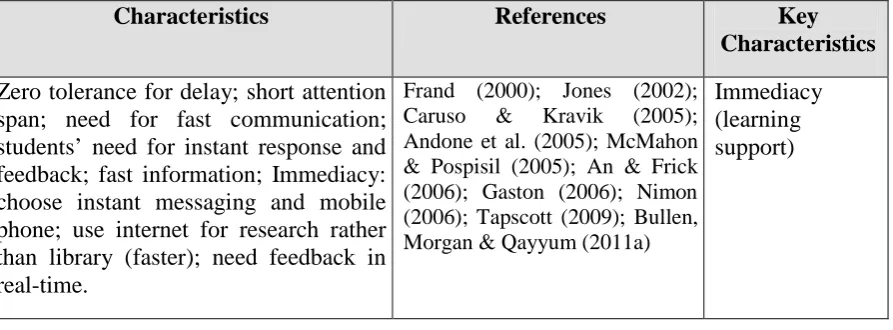
(43) discussed in this chapter, namely the learning environment, the learners and the tool. The fourth factor, theoretical principles, is discussed in Chapter 3. For each of the respective factors there are sub-sections which constitute the various aspects. For learning environment the discussion is about HEI and ICT, the Malaysian HEI context and Malaysian HEI and ICT. For learners’ factor, aspects of digital learners in HEIs, Malaysian HE students and Malaysian HE students’ use of ICT are discussed. Finally, for the tool factor the sub-sections are on mobile learning affordances, potential of mobile learning in HEIs, possible mobile learning activities in HEIs, issues and challenges of mobile learning in HEIs, and also the design of mobile learning environments.. 2.1 Learning Design Learning design is defined by Boud & Prosser (2002) as “a variety of structures using new technologies that support student learning experiences. Learning designs may be at the level of a whole subject, subject component or learning resources” (p.238). Whereas MacLean & Scott (2007) define it as “the process of designing effective learning experiences for a variety of contexts: in the classroom or laboratory, in the field, online and via standalone packages using a range of media” (p.187). This means that learning design is the design of structures for learning experiences in a targeted context while using various media or technology. Furthermore, Conole & Fill (2005) describe learning design as “a pedagogical model for a specific learning objective, target group and a specific context or knowledge domain. The learning design specifies the teaching and learning process, along with the conditions under which it occurs and the activities performed by the teachers and learners in order to achieve their required learning objectives” (p.5). In 2009, Cross & Conole depict learning design as “a range of activities associated with better describing, understanding, supporting and guiding pedagogic design practices and processes” (p.1). Learning design is also portrayed as the art of creating and sequencing learning activities in order to guide learners’ efforts to produce effective learning through selecting the best tools (JISC, 2004a). These descriptions of learning design resemble Koper & Olivier’s (2004) description that learning design is a pedagogical approach that positioned the learning process as central to its design. Learning design is also based on a complex real-world context in which a learning designer must be 24.
(44) mindful of the relationship between learner, learning environment and intended outcomes. (JISC, 2004a). Beetham & Sharpe (2007) take the discussion further by stating that design for learning is “the process by which teachers – and others involved in the support of learning – arrive at a plan or structure or design for a learning situation. The situation may be as small as a single task or a large as a degree course” (p.7). This means that design for learning is intentional and systematic. It also appears that there must be discussion between learners with cycles of practices, evaluation and reflection that will help to develop effective learning design. Learning design involves not only the learner but also the learning environment to produce learning situations or in this study noted as learning activities. Cross & Conole (2009) and Falconer, Finlay & Fincher (2011) noted that there are different approaches to designing learning in the field of technology-enhanced learning. The first is a more specific technical approach which focuses on building computer systems that can synthesize the delivery of learning resources and activities for computer-assisted learning (Falconer, Finlay & Fincher, 2011). An example of this is adopted by IMS Learning Design which aims to provide a framework of elements that can describe any design of a teachinglearning process (Caeiro, Anido & Llamas, 2003). The second approach focuses on pedagogy and student activity rather than learning content. This approach stresses the design process including the structure of design, learning situation, support, resources and so on in order to find effective ways of sharing innovative practice in technology-enhanced learning. This second approach is also recognised by Beetham (2007) as a way of understanding the components and relationships within a learning experience. This is because the focus of research in the implementation of technology is on activities by the learners and also how learners engage with them as active participants. This research adopts the second approach, focussing on the design of pedagogy-based mobile learning activities that support HE students’ learning. There are a few methods for designing learning. Conole et al. (2004) propose that pertinent stages to designing learning are: (1) reviewing learning theories; (2) identifying common characteristics across different learning theories; (3) building a model from these characteristics; (4) mapping learning theories to the model and identifying theory clusters; and (5) applying and testing the model to develop a learning design toolkit. An additional suggestion from Gorard & Taylor (2004) is that design activity is a creative process and that it involves continuous modifications as feedback is received, and designers reflect upon it. 25.
Figure
+7
Outline
Learning Design
Learning Activity Design
Characteristics of Digital Learners
Descriptions of Asian HE Students
Designing the Mobile Learning Environment
Interpretivist Research Paradigm for Mobile Learning Activities Research
Contextual Learning Principle
Implementation Phase (Stage 1: Mobile Learning Workshop)
Context of Study
Ethical Issues
Related documents
Evaluate the impact of several information sharing policies on the decisions of strategic customers whether to make advance reservation or not in a loss queue and whether to join or
The purpose of this study was the investigation of the growth ability of lactic acid bacteria (LAB), isolated from traditionally made cheese from Southeastern
Počet miest: 1 Dátum nástupu: ihneď Adresa pracoviska: Raková 406/, 02351 Vhodné pre: absolventa: Nie občana so ZP: Nie Zodpovedný pracovník: 0944517387 p. oprávnenie:
While there are numerous variations, the menu of options available to assess the impact of small enterprise initiatives on poverty is limited to the three basic methods shown in
This presentation and other related materials contain forward-looking statements within the meaning of the Private Securities Litigation Reform Act of 1995 and other federal
The main contribution of this study is to decrease income inequality in risk sharing network such as informal insurance through an analytical method, this study
A comparative study [16] on the development of calves treated with a milk- or fermented colostrum- based diet concluded that calves showed a constant and similar growth
Finally, it is to be underlined that some of the changes in gait patterns observed in young CMT patients in 18 months, might not be considered only as a direct conse- quence of
