DEVELOPMENT OF TRAINING PROGRAMMES
PROVIDED FOR ACADEMIC
STAFF OF LIBYAN UNIVERSITIES
Majda ELFERJANI
DEVELOPMENT OF TRAINING PROGRAMMES
PROVIDED FOR ACADEMIC
STAFF OF LIBYAN UNIVERSITIES
Majda ELFERJANI
School of the Built Environment, College of Science
and Technology
University of Salford, Salford, UK
Submitted in Partial Fulfilment of the Requirements of
the Degree of Doctor of Philosophy
I
Table of Contents
TABLE OF CONTENTS ... I
LIST OF TABLES ... V
LIST OF FIGURES ... VI
DEDICATION ... VII
ACKNOWLEDGEMENTS ... VIII
DECLARATION ...X
GLOSSARY OF TERMS AND ABBERIVATIONS ...XI
ABSTRACT ... 1
CHAPTER ONE ... 3
INTRODUCTION TO THE RESEARCH ... 3
1.1INTRODUCTION ... 3
1.2OVERVIEW OF HIGHER EDUCATION WITH A SPECIAL FOCUS ON CONSIDERABLY HIGH LEVEL LIBYA ... 3
1.3RESEARCH MOTIVATIONS... 4
1.4JUSTIFICATION FOR THE RESEARCH ... 5
1.4.1The Weak Libyan Higher Education System (LHES)... 5
1.4.2The Absence of Research in Libyan University TPs ... 6
1.4.3 Government Policy ... 6
1.6RESEARCH OUTLINE ... 8
1.6.1 Aim of the Research ... 8
1.6.2 Research Questions ... 8
1.6.3 Research Objectives ... 8
1.7RESEARCH METHODOLOGY ... 9
1.8DEVELOPMENT AND APPLICATION OF THE INTERVIEW PROTOCOL ... 11
1.8.1 Validity and Reliability of Data ... 12
1.8.2 Data Analysis ... 12
1.9EXPECTED CONTRIBUTION TO KNOWLEDGE ... 13
1.10STRUCTUREOFTHESIS ... 13
1.11EXCLUSIONS,CONSTRAINTS,RESERVATIONS AND LIMITATION ... 15
1.12CHAPTER SUMMARY ... 16
CHAPTER TWO ... 17
LITERATURE REVIEW... 17
2.1INTRODUCTION ... 17
2.2TRAINING PROGRAMMES:DEFINITIONS AND THE MAIN FEATURES ... 17
2.3EDUCATION,TRAINING AND DEVELOPMENT ... 18
2.4TEACHING AND LEARNING ... 19
2.5TRAINING PROGRAMMES WORLDWIDE ... 19
II
2.7TRAINING PROGRAMMES IN UKUNIVERSITIES ... 23
2.8PROFESSIONAL QUALIFICATIONS IN TEACHING &LEARNING ... 24
2.8.1POSTGRADUATE CERTIFICATE IN HIGHER EDUCATION (PGCHE) ... 25
2.9TRAINING PROGRAMMES IN LUS ... 27
2.10TRAINING PROCESS ... 29
2.11TRAINING ELEMENTS (CYCLE) ... 30
2.11.1 Training Needs ... 32
2.11.2 Programme Planning and Recording ... 34
2.11.3 Programme Design and Developing ... 34
2.11.4 Evaluation of Training Programmes ... 39
2.12SUPPORTIVE OF TRAINING LEGISLATION ... 40
2.13LEADERSHIP COMMITMENT ... 41
2.14FINANCE ... 43
2.15CONTINUING PROFESSIONAL DEVELOPMENT (CPD) ... 44
2.15.1Characteristics of successful unit of CPD ... 46
2.16TRAINING BENEFITS ... 47
2.17TRAINING BARRIERS ... 47
2.18CHAPTER SUMMARY ... 48
CHAPTER THREE ... 49
THE LIBYAN CONTEXT ... 49
3.1INTRODUCTION ... 49
3.2THE STATE OF LIBYA:GENERAL OVERVIEW ... 49
3.3LIBYAN REVOLUTION 17TH OF FEBRUARY ... 50
3.4OVERVIEW ON EDUCATION AND HIGHER EDUCATION SYSTEM IN LIBYA ... 52
3.4.1 Education System in Libya... 52
3.4.2 Higher Education System (LHES) ... 54
3.4.3 Objectives of LHE ... 57
3.4.4 The growth of student number in LHEIs ... 58
3.4.5 Higher Education Policies in Libya ... 59
3.4.6 Challenges in LHE ... 60
3.4.7 Academic Staff ... 61
3.4.8 The Impact of ICT in LHES (training tool) ... 65
3.4.9 E-learning ... 67
3.5CHAPTER SUMMARY ... 69
CHAPTER FOUR ... 70
METHODOLOGY OF STUDY ... 70
4.1INTRODUCTION ... 70
4.2DEFINITION OF RESEARCH METHODOLOGY ... 70
4.3RESEARCH PHILOSOPHY ... 71
4.4RESEARCH APPROACH ... 74
4.5RESEARCH STRATEGY ... 75
4.5.1 Single Case or Multiple Cases ... 77
4.5.2 Justifications for the Choice of a Single Case Study ... 77
4.5.3 Justification of Choice for Case Study Organisations ... 78
III
4.6.1 Questionnaire ... 83
4.6.1.1 Questionnaire design ... 84
4.6.2 The Interviews ... 84
4.6.2.1 The Advantages of the Semi-Structured Interview ... 85
4.6.2.2 The Disadvantages of the Semi-Structured Interview ... 86
4.6.2.3 Justification of Choosing the Semi-structured Interview for Data Collection ... 86
4.6.2.4 Designing the Interview Questions ... 87
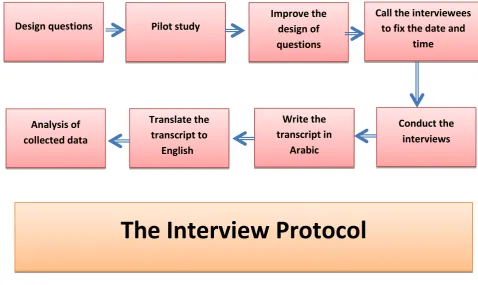
4.6.2.5 The Development of the Interview Protocol ... 88
4.6.2.6 The Interviewees (Research Sample) ... 89
4.6.3 Documentation ... 91
4.6.4 Triangulation ... 92
4.6.5 Justifications for Choice of Data Collection Methods ... 93
4.6.6 Ethical Approval ... 93
4.6.7 Pilot Study ... 94
4.6.8 Reliability, Validity and the Generalisability ... 95
4.6.9 Data Analysis ... 96
4.6.10 Conducting the Case Study ... 97
4.6.11 Chapter Summary ... 98
CHAPTER FIVE ... 99
FINDINGS: UK QUESTIONNAIRES AND INTERVIEWS ... 99
5.1INTRODUCTION ... 99
5.2FINDINGS OF THE QUESTIONNAIRE ... 99
5.2.1 The characteristics of the participants ... 100
5.2.2 About the certificate (PGCHE) ... 102
5.3FINDINGS OF THE INTERVIEWS WITH PGCHE HOLDERS IN THE UK ... 108
5.4FINDINGS OF THE INTERVIEWS WITH PROFESSIONALS (PROVIDERS) ... 112
5.4CHAPTER SUMMARY ... 121
CHAPTER SIX... 122
CASE STUDY FINDINGS ... 122
6.1INTRODUCTION ... 122
6.2RESULTS OF INTERVIEWS ... 123
6.2.1 Motivation for implementation of Training Programmes ... 123
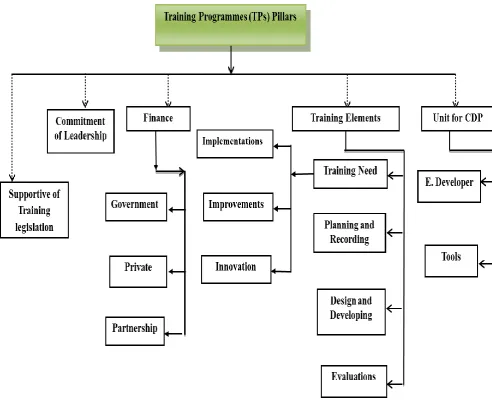
6.2.2 Supportive of Training legislation ... 125
6.2.3 Commitment of Leadership ... 126
6.2.4 Training Elements ... 128
6.2.5 Finance ... 134
6.2.6 Unit for CPD ... 135
6.3DOCUMENTARY ANALYSIS ... 136
6.4CHAPTER SUMMARY ... 137
CHAPTER SEVEN ... 138
DISCUSSION OF THE FINDINGS OF THE QUESTIONNAIRE AND INTERVIEWS IN UK .. 138
7.1INTRODUCTION ... 138
7.2DISCUSSIONS OF THE FINDINGS OF THE QUESTIONNAIRE ... 138
IV
7.2.2About the PGCAP, PGCert Certificate ... 140
7.3DISCUSSIONS OF THE INTERVIEWS WITH PGCHEHOLDERS IN THE UK ... 148
7.4DISCUSSIONS OF THE INTERVIEWS WITH PROFESSIONALS (PROVIDERS OR DEVELOPERS) ... 152
7.5CHAPTER SUMMARY ... 159
CHAPTER EIGHT ... 160
DISCUSSION OF CASE STUDY FINDINGS ... 160
8.1INTRODUCTION ... 160
8.2.MOTIVATION FOR IMPLEMENTATION OF TRAINING PROGRAMMES ... 160
8.3SUPPORTIVE OF TRAINING LEGISLATION ... 162
8.4COMMITMENT OF LEADERSHIP ... 164
8.5TRAINING ELEMENTS ... 166
8.6FINANCE ... 170
8.7UNIT FOR CONTINUOUS PROFESSIONAL DEVELOPMENT (CPD) ... 170
8.8CHAPTER SUMMARY ... 174
CHAPTER NINE ... 176
CONCLUSIONS AND RECOMMENDATIONS ... 176
9.1INTRODUCTION ... 176
9.2THE SUCCESS OF THE RESEARCH METHOD ... 176
9.3MEETING THE AIM AND OBJECTIVES AND ANSWERING THE RESEARCH QUESTIONS ... 177
9.4THE STATUS OF TRAINING PROGRAMMES IN TRIPOLI UNIVERSITY ... 179
9.5LACK OF LEGISLATION ... 179
9.6THE IMPEDIMENTS TO ACADEMIC STAFF TRAINING IN LIBYAN UNIVERSITIES ... 180
9.7ORIGINALITY ... 181
9.8FURTHER CONTRIBUTIONS TO KNOWLEDGE ... 182
9.9RECOMMENDATIONS ... 183
9.9.1 Recommendations for policy ... 183
9.9.2 Recommendations for University of Tripoli ... 184
9.10LIMITATIONS OF THE STUDY ... 185
9.11RECOMMENDATIONS FOR FURTHER RESEARCH ... 186
REFERENCES: ... 188
APPENDICES ... 210
APPENDIX 1: ETHICAL APPROVAL ... 211
APPENDIX 2: CONSENT FORM ... 212
APPENDIX 3: INTERVIEW QUESTIONS FOR THE PGCHE HOLDER (UK) ... 213
APPENDIX 4: INTERVIEW QUESTIONS FOR THE PROFESSIONALS (PROVIDERS) ... 214
APPENDIX 5: INTERVIEW QUESTIONS IN LIBYA ... 215
APPENDIX 6: EVALUATION SURVEY OF POSTGRADUATE CERTIFICATE ... 216
APPENDIX 7: FEEDBACK ON QUESTIONS: PILOT STUDY ... 224
V
LIST OF TABLES
No. Table Title Page
1 Table 1: Ranking of Education and Skill Base, Libya. 6
2 Table 2.1: SEDA values that must be demonstrated for accreditation 25
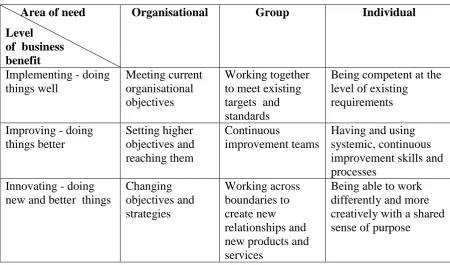
3 Table 2.2: Organizational, group and individual needs at the three levels of performance
33
4 Table 4.1: Contracting implications of positivism Interpretivism 73
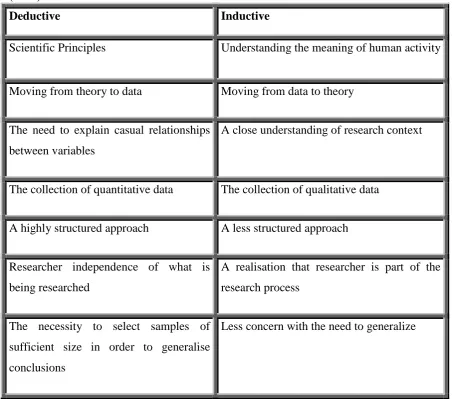
5 Table 4.2: Differences between Deductive and Inductive Approaches. 75
6 Table 4.3: Characteristics of different research strategies. 76 7 Table 4.4: Strengths and weaknesses of six sources of evidence 82
8 Table 4.5: Interviewee groups 91
9 Table 5.1 Main findings from characteristics of the participants 101 10 Table 5.2 Opinions of respondents about the programme 107 11 Table 5.3 Summary of the opinions of the respondents about the
training programme
112
12 Table 5.4 Summary of the opinions of the training programme providers
VI
LIST OF FIGURES
No. Figure Title Page
1 Figure 1.1: The Research Structure 15
2 Figure 2.1: Training Programmes Implementation Framework 30
3 Figure 2.2: Training Cycle 31
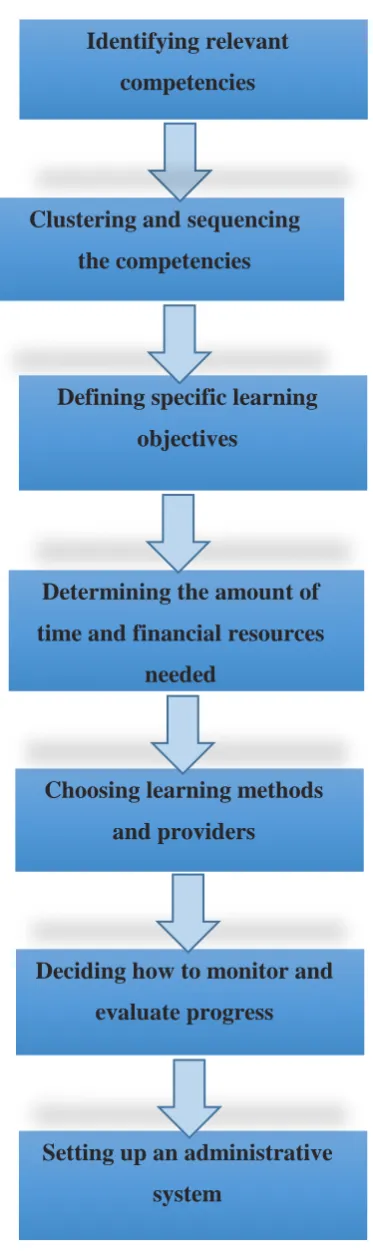
4 Figure 2.3: Designing a Training Programme 37
5 Figure 3.1: The Political map of Libya 52
6 Figure 3.2: The Libyan Educational Systems. 54
7 Figure 4.1: Research process 'Onion' 71
8 Figure 4.2: The Interview Protocol 89
9 Figure 5.1: Qualifications of respondents 100
10 Figure 5.2: Satisfaction with the programme 102
11 Figure 5.3: Expectations for employment opportunities after graduation
103
12 Figure 5.4: Systematic understanding of curriculum content by the participants
104
13 Figure 5.5: Development of personal skills for effective critical analysis by the participants
104
14 Figure 5.6: Improvement in teaching by the participants 105
15 Figure 8.1: A summary of factors that influence effective implementation of TP within Libyan universities.
VII
DEDICATION
I dedicate this thesis to my loving parents, Salem Buhager and Fathia Al-Ashhab,
who never ceased praying for me and wishing me all success during the research.
Through all the stages of my life, they never failed to provide me with the
VIII
ACKNOWLEDGEMENTS
„In the name of Allah, the Most Gracious and the Most Merciful say, "O Lord, Increase my Knowledge."‟
(Qur‟an, Surat Taha, 20:114)
All praise and deep thanks are due to Allah and may the peace and blessings be on the
most noble of Prophets and Messengers, our Prophet Muhammad, on his family and all
of his Companions. Glory is to Allah who has given me the strength, patience and
knowledge to continue and finish my PhD journey which started as an idea and led to a
five-year-long study process. It has changed my perspective of the world and
powerfully influenced my ambitions, direction and goals. I thank Allah, the Exalted, for
the completion of this PhD thesis. Alhamdulillah (Thanks be to God)!
It would not have been possible to write this PhD thesis without the help and support of
the kind people around me, to only some of whom it is possible to give particular
mention here.
I would like to express my deepest gratitude to my supervisor Les Ruddock for his
supervision and constant support. His invaluable help with constructive comments and
suggestions throughout the research and the writing of this thesis have greatly
contributed to their success.
I am using this opportunity to express my gratitude to my best friend Dr Nagat
Elmsallati for her inspiring guidance, invaluably constructive criticism, friendly advice
and unfailing help throughout the process; without her, I would not have finished this
thesis.
I cannot express enough thanks to Dr. Abdulbasit Khashkhusha for his continued
support and encouragement during the process of writing my thesis.
I would like to extend huge, warm thanks to my dearest friend Dr Fawzia Ledi; she was
IX
moments. I would also like to acknowledge my friend Aziza Safor for her support and
encouragement.
I would also like to acknowledge and thank my colleagues and friends at the University
of Salford for their support and much intellectually stimulating discussion, which have
contributed immensely to this research.
I would like to thank Mahesh Nair, for his precious critique and proofreading of this
thesis.
Completing this work would have been all the more difficult were it not for the support and friendship provided by the other members of the School of Built Environment in the
University of Salford. I am indebted to them for their help during my study.
I have a special feeling of gratitude towards my husband Youssef Ghassar, who formed
my vision and encouraged me in achieving my goal, with great patience at all times.
Particular thanks also goes to my sisters Sarah and Gihan and to my brothers Abdullah,
Wael, Sameh and Samih, who have never left my side and are very special. I wish to
record my special thanks and gratitude to my wonderful daughters Orjwan and Esra and
to my delightful sons Mohammed and Hassan, for being there for me throughout the
entire doctorate programme. I will always appreciate all the support that they have
provided and the encouragement that they have shown.
Special thanks are due to the professionals who participated in the questionnaire and
interviews in the UK and in University of Tripoli.
I would like to thank all the academic staff from UK and Libya who helped me during
the field study and provided valuable information which allowed me to undertake this
research.
Finally, I am grateful to the State of Libya and the authorities in Libyan Higher
Education for providing me with a scholarship that enabled me to pursue my
X
DECLARATION
I declare that this thesis has been composed by myself, that it has not been accepted in
any previous application for a higher degree, that the work of which it is a record has
been performed by myself, and that all sources of information have been specifically
acknowledge.
XI
GLOSSARY OF TERMS AND ABBERIVATIONS
AS Academic Staff
CQAA Centre for Quality Assurance and Accreditation
CETLs Centres for Excellence in Teaching and Learning
CSO Case Study Organisation
DfES Department for Education and Skills
GCR Global Competitiveness Report
GNC General National Congress
GPC General People‟s Committee
GPCE Committee of Education
HE Higher Education
HEA Higher Education Academy: government-
HEIs Higher Education Institutions
HESDA Higher Education Staff Development Agency
ILT Institute of Learning and Teaching: precursor of the HEA
ILTHE Institute for Learning and Teaching in Higher Education
ISD Institutional Staff Development Centre
LES Libyan Education System
LHES Libyan Higher Education System
LTSN Learning and Teaching Support Network
LUS Libyan universities
MHEE Ministry of Higher Education in Egypt
NASR National Authority for Scientific Research
PGCHE Postgraduate Certificate in Higher Education
PGCert Postgraduate Certificate
PSF Professional Standards Framework published by the HEA
SEDA Staff and Educational Development Association
TC Teaching Certificate
TPL Training programmes in Libya
TPs Training Programmes
1 ABSTRACT
This study examines the implementation of Training Programmes (TPs) for the
academic staff (AS) in Libyan Universities (LUs), where AS are key members of this
community and supporting their continuing professional development to underpin
excellence in learning and teaching is a high priority. A comprehensive analysis of the
problems linked to the implantation of TPs in Libyan institutions is performed. It is
obvious the pronounced TPs gap between Libya and the developed world due to social,
political and economic conditions in an Arab countries where the primary delivery
educational model is essentially traditional. Then possible ways of implementing
successfully TPs in Libyan educational institutions by considering successful UK
examples.
This study identify the necessary factors for the affective implementation of training
programmes in order to improve the performance of academic staff of Libyan
universities.. A single case study approach is adopted within one institution which is
Tripoli University (UoT). The methodology used in the research had quantitative and
qualitative. This study analyses data collected through a questionnaire with the holders
of the Postgraduate Certificate in Higher Education (PGCHE) in select fourteen UK
universities in order to investigate their opinion and perception about this Certificate,
followed by four semi-structured interviews with the PGCHE holder in order to clarify
their ideas and with three academic providers of such TPs to obtain more information
from different viewpoints. In addition, semi-structured interviews undertaken with 31
AS from UoT in Libya.
This study makes contributions to knowledge in: a) attempted to bridge the gap in
knowledge within the HE sector by providing an empirical understanding of the
phenomenon within this sector; b) the identification of barriers to the implementation of
TPs which led to; narrowing the gap in the knowledge in the field of academic training
about implementation-barriers in HE in generalthat has never been explored before ; c)
identifies issues around the improvement of existing universities in Libya and the
2
of ways that could improve HE in Libya and lead to education quality improvements for
Libyan society; e) The recommendations of this research could aid the Libyan
government to identify changes necessary in the Libyan HEIs in general so that they
achieve the level of their counterparts in the developed countries; f) identification of the
key factors affecting the implementation of TPs in LUs has helped in preparing the
framework provided by the researcher at the end of this thesis, which could be used
3
CHAPTER ONE
INTRODUCTION TO THE RESEARCH
1.1 Introduction
The purpose of this introductory chapter is to establish the background of the research
area, the aim, objectives, research questions, the rationale and justification for the
research, the expected contributions to knowledge that could emerge from the
completion of the research, a brief indication of the research methodology and the
overall layout and structure of the thesis. This research will identify the necessary
factors for the affective implementation of training programmes in order to improve the
performance of academic staff of Libyan universities.
1.2 Overview of Higher Education with a Special Focus on considerably high level Libya
Higher Education Institutions (HEIs) have a responsibility to ensure that AS have the
knowledge, skills and confidence to enhance their performance in delivering teaching.
A lack of competence and confidence in this area affects students and puts the
institution at risk of not meeting its legal responsibilities, increases the stress on AS and
may affect job progression Ref).
The main Higher education activities are teaching and learning, research, and
interaction with industry sectors and society (Lambert, 2003). However, developed
countries have reached an improving such activities towards better quality in teaching.
In these countries the teacher plays a supervisor‟s role and guides the process. However,
in the Libyan Higher Education Institutions (LHEIs), teaching and learning processes
still rely on traditional methods, and the teacher is considered to be at the core of the
educational process. There are numerous reasons behind using such traditional methods,
which include; shortage of laboratories and libraries; lack of training for AS in teaching
and learning methods, despite their high qualifications and specialised skills. These
4
finding it difficult to apply theory to practical work and to strike a compromise between
theory and practice (Alfnish et al., 1998).
The United Nations Development Programme (UNDP) argues that the progress of Arab
countries in the areas of scientific research and information technology is relatively
weak (UNDP, 2003).
There are also limitations in education, knowledge, technology, research and
development initiatives. Despite the differences among the Arab states in some issues,
they still have similarities in some issues. Libya, as one of the Arabic States, needs to
develop and improve the skills of the academic staff in Libyan universities, including
through the training of teachers in the use of advanced technology in teaching; LUs
should also incorporate regional and international expertise in HE Hollings (Centre for
International Dialogue, 2014).
UNDP, (2003) also mentions that accreditation remains a problem in some Arab states;
therefore the Libyan Government should give greater importance to the accreditation of
the HEIs, laboratories, inspection bodies, and certification bodies. Collaborating with
international accreditation bodies is key to improving the quality of these institutions.
LHEIs were faced with a lot of challenges. Knowing these challenges and barriers and
finding possible solutions may possibly enable stakeholders to become successful in
implementing the TPs for AS in LUs in the future.
Hence, the focus and analysis of this study are directed only to the challenges relating to
TPs for AS in LUs. It will be suggested in this study that the most important factors that
impact on the implementation of these programmes.
1.3 Research Motivations
The motivations for this research developed from the following:
5
There is a general agreement among Libyan experts on the importance of TPs for the AS in LUs; examples for this are OECD, (2009); Abudher, (2013); and
Akkari, (2014).
There are many challenges facing HE worldwide in general and the developing countries including Libya in particular.
Based on the experience of the researcher (as a staff member in an LU for six years and as head of department in a Kindergarten for four years), the various
problems that Libyan AS face could be minimised by identifying the factors that
affecting the implementation of TPs for AS in LUs.
1.4 Justification for the Research
Higher education in Libya is facing some major challenges which could have an impact
in the near future on the quality of the Higher Education System (HES) in Libya; these
could manifest as problems in the development of TPs of faculty members. This
research was done to meet the increased demands for quality improvement in HE,
necessitated by the rapidly evolving world of technology, modern means of
communication, and the globalisation of the labour market. These changes have brought
about major shifts in the patterns and methods of education and training in universities,
and thus have had great impact in determining the level of human development. On the
other hand, the state of Libyan universities has now deteriorated because of the
accumulation of problems and mistakes made by the previous regime, the poorly
organised management of HE in Libya, and the expansion in quantity by compromising
quality (Akkari, 2014). Thus there are a number of factors which a valuable area to
investigate, and thus validate this study.
1.4.1The Weak Libyan Higher Education System (LHES)
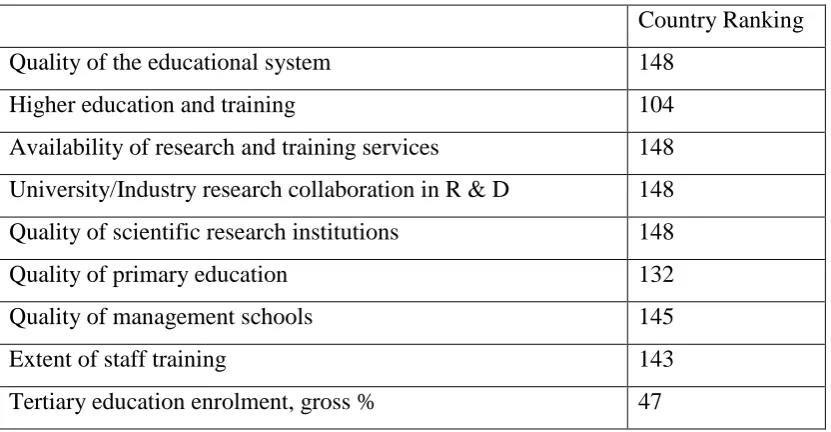
According to the Global Competitiveness Report (GCR, 2013-2014), Libya ranks 108th
out of 148 countries providing HE (Table 1), falling in the bottom third of countries
surveyed. Therefore, the Libyan Education System has failed to achieve its goals.
In HES there is no appropriate body setting standards and planning training for the
future skills required in the job market (Porter and Yergin, 2006; UNESCO, 2003).
6
management in Libya‟s HES. Furthermore, most of the members of the AS in the
Libyan HEIs do not receive adequate and effective TPs in teaching and learning
methods, despite being highly qualified in terms of scientific skills. To raise the
[image:19.595.86.502.213.429.2]standard of education in Libya, the quality of teaching staff needs to be improved.
Table 1. Ranking of Education and Skill Base, Libya. Source: Global Competitiveness
Report 2003-2014 (World Forum, 2014)
Country Ranking
Quality of the educational system 148
Higher education and training 104
Availability of research and training services 148
University/Industry research collaboration in R & D 148
Quality of scientific research institutions 148
Quality of primary education 132
Quality of management schools 145
Extent of staff training 143
Tertiary education enrolment, gross % 47
1.4.2The Absence of Research in Libyan University TPs
TPs in universities are an important part of the public education system in Libya. The
literature review has shown that there is very little research and literature available
covering the problems and issues related to TPs in Libya, particularly at HE level.
(Elzalitani, 2008). Also, UNDP, (2002), points out that Arab countries‟ progress
includes Libya in the areas of scientific research and technological development and
information communication technology is weak.
1.4.3 Government Policy
LES has become the focus of the Libyan government‟s strategy after the success of the
17th February revolution. The government believes that the universities can play a
crucial role in empowering individuals and communities by providing the advanced
7
(Barakat, 2011). During the 1990s, a network of public higher vocational education and
training colleges was set up to meet the need for rebuilding campus infrastructure and
facilities. This is illustrative of the Libyan authorities‟ acute awareness of the need to
raise the quality and standards in universities. Deputy to the Ministry of Higher
Education in Libya (MHEL) spoke at the “Future Libya Development Forum 2012: Infrastructure & Rebuild” conference that ended in Dubai in 28 Jun 2012, held under
the patronage of the Dubai Chamber of Commerce & Industry, it was announced by the
deputy minster that the main aim of Libya's higher education strategy is to set up a
knowledge-based Libyan society and to promote science-based industrial development.
It was also noted that, recognising the deteriorating quality of education at various
levels, “more effort is needed to prioritise effective teacher training”.
1.5 The scope of the research.
This research study was aimed to identify the necessary factors for the affective
implementation of training programmes in order to improve the performance of
academic staff of Libyan universities using University of Tripoli in Libya as a case
study. The researcher adopted a qualitative approach for the main part of the research,
while a quantitative approach was also used to validate and confirm the collected data.
In order to achieve the research aim, four objectives have been accomplished. By
reviewing the relevant literature the theoretical framework was enhanced, and then the
empirical work was carried out through two stages:
In the first stage this research started by distributing a survey questionnaire to answer
research question regarding what are the appropriate TPs for AS that implemented in
the UK universities. This questionnaire was distributed to the holders of the PGCHE in
fourteen pre-selected UK universities, followed by semi-structured interviews with
PGCHE holders and with four academic providers of this Certificate.
Then the second stage was carried out by collecting the data required in the case study.
The interviewees mainly The deputy of the minister of the HE; vice president of
university of Tripoli, dean of the faculty of economics and political science; heads of
departments; academic staff from the faculties: engineering; science; arts; economics
8
in order to gain in-depth information and a full picture of the responsibilities of all
people within the organisation. After collecting the data it was analysed according to
suitable methods which are discussed in Chapter 4 of this thesis.
The findings of the research have been discussed, using many tools for triangulation, to
understand the affective implementation of training programmes in order to improve the
performance of academic staff of Libyan universities. The initial theoretical framework
is revised accordingly to reflect the case studies' findings.
1.6 Research Outline 1.6.1 Aim of the Research
The aim of this study is to identify the necessary factors for the affective
implementation of training programmes in order to improve the performance of
academic staff of Libyan universities.
1.6.2 Research Questions
From the researcher‟s previous experience as a staff member in one of LUs, the
following questions emerge as being essential to answer the research aim:
What are the appropriate training programmes for AS that have been implemented in the universities in the developed countries such as the UK?
Why are there no appropriate training programmes for the academic staff in LUs?
What are the factors that affect the implementation of the training programmes for the AS in LUs?
What are the barriers that affect the implementation of training programmes?
1.6.3 Research Objectives
To meet the central aim of this research and to answer the research questions about TPs
for the AS in LUs, the specific objectives of the research were:
9
To identify the existing Training Programmes for AS in LUs; and to investigate the factors affecting their applicability.
To identify and explore the barriers affecting the implementation of the training programmes for AS in LUs.
To establish a theoretical framework based on the Training Programmes issues
that enable the introduction of TPs to the Libyan universities.
1.7 Research Methodology
There is no definite rule as to which methodological paradigm should be selected when
doing research, as the most suitable one will be determined by the nature and scope of
the research (Collis and Hussey, 2009). Easterby-Smith et al., (2008); Yin, (2009); and Hussey and Hussey, (1997) all indicate that selecting the research philosophy depends
on the nature and scope of the thesis, the research questions and the overall research
aim.
In order to address the objectives and answer the research questions the researcher
adopted a qualitative approach for the main part of this research, while a quantitative
approach was also used to validate and confirm the collected data, as well as to enhance
the research quality.
In the first phase this research commenced by distributing a survey questionnaire in
order to explore the first research question: What are the appropriate TPs for AS that
implemented in the developed countries‟ Universities such as UK universities? This
questionnaire was distributed to the holders of the Postgraduate Certificate in Higher
Education (PGCHE) in fourteen pre-selected UK universities in order to investigate
their opinions and perceptions about this Certificate. Semi-structured interviews were
conducted with PGCHE holders (in order to clarify their ideas) and with four academic
providers of this Certificate in order to obtain more information from different angles.
In the second phase Semi-structured, face-to-face interviews and documentation review
10
An interpretivism approach has been selected as the main research philosophy for the
following reasons:
1. This research falls within the remit of social sciences, as it deals with the beliefs,
perceptions of reality, attitudes and experience of people regarding the implementation
of TPs for the AS in a particular context. This orientation is supported by researchers
such as Hussey and Hussey, (1997); and Collis and Hussey, (2009).
2. The subject under investigation is not supported by an extensive theoretical
background, because of the originality of this research and the lack of previous research
on this subject. This idea has been suggested by Creswell, (2003).
Further, this research follows both deductive and inductive approaches; this approach
was adopted by researchers such as Sekaran, (2003) and Saunders et al., (2009). A list of factors necessary to investigate the implementation of TPs were derived from a
review of existing literature and then investigated deductively in the case study
institutions. Following this, the findings from the fieldwork were incorporated
inductively into the existing theory.
Among the different strategies adopted in social science research, the case study
strategy was selected to gain the depth of understanding of the information which was
necessary to identify and investigate the implementation of TPs for the AS in LUs.
According to Yin, (2009) the single case study research design is appropriate in several
circumstances, including representative or typical cases such as explored in this
research. This concept will be discussed in detail in Chapter 4.
In a case study the researcher has to identify the sources of evidence. As no one method
fits all studies, many specific requirements related to the nature and objectives of the
research determine the appropriate method to use. In this research semi-structured,
face-to-face interviews were selected as the main source of data collection, and supporting
documentation was sought for research validity. This approach will be justified in detail
11
It is believed by many experts in the area of research methodology that the questions
given by the researcher in interviews and/or questionnaires have to be subjected to a
pilot study to clarify the wording of the questions and to design and filter these
questions (Hussey and Hussey, 1997; Sekaran, 2003; Yin, 2009). Accordingly the
researcher conducted two pilot studies. The first piloting (for the questionnaire) was
conducted in the UK with six PhD students in Salford University, two of whom are
doing the PGCEH programme in this University. The second piloting (for the
interviews) was conducted with five PhD students who work as AS members in
different Libyan HEIs, and have experience in university teaching. The feedback from
the both pilot studies were used in redrafting the interview and questionnaire questions.
The data collected from the case study organisation was analysed according to suitable
methods which are discussed in Chapter 4of this thesis.
1.8 Development and Application of the Interview Protocol
Saunders et al., (2009) argue that the internal validity and reliability of data depends on the design and structure of questions, and on the strictness of the pilot testing. In this
research the following techniques were undertaken to satisfy this requirement:
An initial draft of the questions was created from a conceptual framework about TPs in
LUs derived from the literature review. These questions were modified following a
discussion with the supervisor and the Learning Development Unit (LDU) team at the
University of Salford who are knowledgeable in the area of TPs provided to AS in UK
HEIs (first pilot study). A second pilot study was conducted with five PhD students who
work as academic staff members in different Libyan HEIs in Libya. Questions were
then redrafted based on the feedback from the two pilot studies;
These the interview questions were translated from English to Arabic (transcripts were
later translated back into English). Ethical approval, in keeping with the rules of the
University of Salford, was applied for and granted before the field study was conducted.
12
fourteen selected UK universities. This was followed by interviews with these holders
of PGCHE, and with four academic providers of the PGCHE Certificate. After this, a
total of 31 interviews with the respondents from the case study organisation were
conducted. The interviewees included the two deputy ministers of the MHE, the heads
of TPs, deans, departmental heads, and lecturers.
1.8.1 Validity and Reliability of Data
Validity and reliability were strengthened by the use of the multiple sources of evidence
listed above. A draft transcript of each interview was validated by asking interviewees
to confirm that it reproduced accurately what they said during the interview. In addition,
the researcher attended a number of training courses held by the Research Institutes at
the University of Salford.
1.8.2 Data Analysis
There is no standard approach to analyse qualitative data. For instance, resist
categorising or coding their data, preferring to work from the transcripts of interviews
(Saunders, et al., 2009). Saunders, et al., (2009) also indicate that thoroughly reading and re-reading the transcripts or notes of qualitative interviews or observations is one
approach to analyse this type of data.
Collis and Hussy, (2009) state that the main methods of analysing qualitative data can
be classified into quantifying methods and non-quantifying methods that include
general analytical procedures. This method is suitable for all types of qualitative
research. Accordingly, in this research the classifying of the mass of qualitative data
collected into categories (topics) was originally based on the conceptual framework s
created from the literature review. This allowed the researcher to rearrange and analyse
the data systematically and strictly. The responses were analysed and then categorised
into distinctive groupings. Then the researcher converted the interviewees' responses
13 1.9 Expected Contribution to Knowledge
This is the first empirical study in Libya or other Arab countries that identifies and
addresses the TPs for the AS in the context of the country. Thus, this study has
attempted to narrow the gap in knowledge within the HE sector by providing an
empirical understanding of the phenomenon within this environment.
One main contribution to knowledge by this study is the identification of barriers to the
implementation of TPs for the AS in LUs, thus narrowing the gap in the knowledge in
the field of academic training about implementation-barriers in HE in general. These
barriers have not been mentioned before in existing literature.
The critical analysis of the LUs identifies issues around the improvement of existing
universities in Libya and the development of future Libyan universities; it also leads to
the potential identification of ways that could improve HE in Libya and lead to
education quality improvements for Libyan society. The recommendations of this
research could aid the Libyan government to identify changes necessary in the Libyan
HEIs in general so that they achieve the level of their counterparts in the developed
countries.
1.10 STRUCTURE OF THESIS
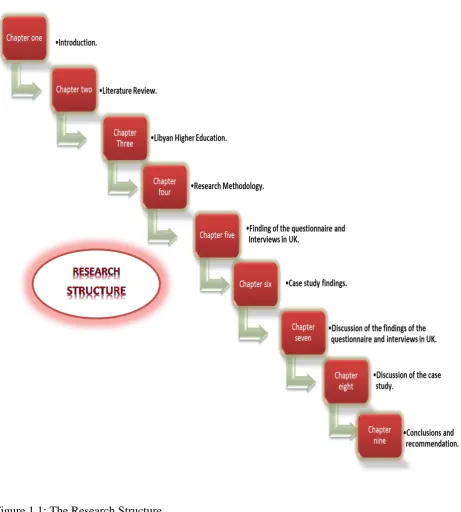
The structure of the thesis is shown in Figure 1.1 and it is organised as follows:
Chapter One has presented the introduction to this study, including the justification for
the research and the research aim and objectives. In addition, it has presented a short
description of the research methodology, the expected contributions to knowledge by
the study and the structure of this thesis.
Chapter Two comprises a review of the literature related to higher education and
training worldwide and issues related to the implementation the TPs for AS in LUs. The
chapter also analyses global patterns of AS training, with particular reference to Arab
and British TPs, in order to gain a deeper understanding of implementation issues in
14
Chapter Three provides information about the Libyan context. It gives an overview of
the country in terms of geographical location and historical background, and an
overview of its education system; the greatest emphasis is on the LHE sector and on
Libyan HE policies which challenge this sector.
Chapter Four presents the philosophies, strategies, and approaches applied in the study,
and justify the choices in these respects. It also discusses: issues related to research
design; the reasons for choosing the case study approach and a particular organisation
(Tripoli University); and the triangulation methods employed for data validation.
Chapter Five introduces the findings of the quantitative data obtained from the
questionnaire completed by the PGCHE holders from fourteen UK universities. This
data has been triangulated against the interviews with PGCHE holders as well as against
those with four academic providers of these certificates.
Chapter Six presents the findings of the empirical investigation for the case study using
interviews, observation and documentation.
Chapter Seven provides an in-depth discussion of the findings of the quantitative data
and draws together the results of the research, considering evidence from the literature
review, questionnaire and the semi-structured interviews.
Chapter Eight provides an in-depth discussion of the findings of the case study and
draws together the results of the research, considering evidence from the literature
review, semi-structured interviews and documentation.
Chapter Nine contains the conclusions of this research, the recommendations for future
15 Figure 1.1: The Research Structure
1.11 Exclusions, Constraints, Reservations and Limitation
This research was conducted to identify the key factors affecting the implementation of
TPs for AS in LUs. So this research is focused on only the AS in LUs, while excluding
16
The inability to record interviews of the case study on tape due to cultural constraints
can be regarded as a limitation since this may have led to important information being
missed and the analysis of the interviews being less detailed. In order to overcome this
limitation, the researcher, as recommended by Yin, (2009), wrote down as much
information as possible during the interviews, and on the very day of every interview,
transcribed all pieces of information and ideas and converted them into a form of
written record while they were still easy to recall. These records where then verified by
the interviewee.
This research is restricted to a single case study as the selected research strategy, hence
the findings can only be generalised to theory with any certainty (analytical
generalisation as Yin, 2003). Consequently, this study is less concerned about
generalisation towards other cases as discussed by Saunders et al., (2003).However, further research could use multiple case studies and possibly improve the research
process and the generalisability of its findings.
The Arab Spring is a revolutionary wave of political demonstration and protests
occurring in the Arab world that demands the replacement of dictatorial governments,
which have been in authority for more than twenty years, with elected governments
through fair not fake elections. This movement started in Libya on 17 February 2011.
Therefore, Libya is now governed by the General National Conference, and its priority
is to set a constitution for Libya. Recently many Libyan people have been looking for a
definition of legitimate government. This definition is still awaited at the time of
writing. All interviews and fieldwork took place during the Arab spring.
1.12 Chapter Summary
This introductory chapter has offered an insight into the research, highlighted the reason
why it is valuable for Libyan HE, thereby providing a rationale for conducting it. The
chapter has also considered the scope of the research, aim, objectives and the research
questions which helped achieve the achieve them. The expected contributions to
knowledge have been identified, and an indication of the methodology adopted has been
17
CHAPTER TWO LITERATURE REVIEW
2.1 Introduction
This chapter focuses on the review of existing literature related to the implementation of
academic staff training in universities worldwide, with specific reference to Arab
countries and the UK, in order to gain a deeper understanding of implementation issues
in LUs. The literature presented in this study helped in achieving the first three
objectives of this research. Moreover, it helped in developing the theoretical framework
which is the main aim of this study.
2.2 Training Programmes: Definitions and the Main Features
According to Osseo-Asare and Longbottom (2002), training is a key factor that in the
continuous acquisition of new knowledge and skills by all people, leading them towards
better performance. This section aims to give an overview of the literature on the
relationships between training and education, training and development and teaching
and learning.
Patrick (1992) defined training as the systematic development of the attitudes,
knowledge, skills and behaviour patterns required by an individual in order to perform
adequately a given task or job. Furthermore, Thomes, (1992) indicated that “training is
the bridge between an individual‟s present performance levels, required for the
organisation to be more effective in meeting the challenge of change and increasing
competition”. Likewise, Armstrong, (1996) clarifies training as a process undertaken by
people to enable them to perform better, and to make the best use of natural behaviour.
Whereas, Kitching and Blackburn, (2002) define training as attempt within or outside
the organisation which increases the job-related knowledge and skills of either
managers or employees.
However, the Glossary of Training Terms of the Manpower Services Commission,
U.K., (1981) has defined training as a "planned process to modify attitude, knowledge
18
activity or range of activities. Its purpose in the work situation is to develop the abilities
of the individual and to satisfy current and future manpower needs of the organisation".
According to Jain (1999), management training can be categorised into two groups. The
first group is formal training, which is mainly theoretical, undertaken to obtain
academic diplomas and degrees, where people prove their abilities academically and not
practically. The second group is informal training, which is mainly practical and
prepares a person to use the acquired academic knowledge efficiently and confidently.
Thus, formal education is not enough for the continuous development of a country‟s
human resources and intellectual capital, lifelong learning has become a necessity.
Cotterill, (2004), points out that if a deficit has been identified and a training need
established, a training objective has to be defined, training methods have to be chosen,
and the target level of proficiency has to be set.
Thus, training during work addresses the most important element in the educational
process of the teacher; this is the main factor which depends upon the success of
education in achieving their goals and their role in social and economic progress, so
teachers need to adapt to current developments, and benefit from all new knowledge and
technology, whether through self-growth, or through a training service.
However, training and education in addition to teaching are different factors of learning,
so it is important to give a brief introduction about these concepts and to identify in the
following sections how they are related.
2.3 Education, Training and Development
Hackett (2004) discusses the need to make a distinction between training and education,
as Hackett, added that since education and training can and do provide both sorts of
outcomes these days, the distinction between them is unrelated. Correspondingly,
development is to equip people with the knowledge and skills they might need later in
their careers, at a higher level in the organisation; in other words, it is to enable them to
19
According to Asare-Bediako (2002), employees must be trained, and where possible
developed to meet their own career needs and the need of the organization. Besides, it
must incorporate newly recruited staff into orientation programmes.
Hence, training is undertaken with the purpose of gaining a specific skill whereas
education is undertaken basically for furthering an individual‟s knowledge and/or
developing the individual‟s intellect.
2.4 Teaching and Learning
The distinction between teaching and learning is more important than between
education and training. Whilst Nicholls (2001) argues that teaching and learning have
not always been made explicit and explained, Hackett (2004) claims that teaching is
something we do to others, and learning is something we do for ourselves. Thus
learning describes personal growth, whereas training merely describes, and commonly
represents, the transfer of a knowledge or a skill for organisational gain, which
generally has nothing to do with the trainee. Furthermore, Cotterill (2004), adds that
training is not the same as teaching: it covers both teaching and learning.
2.5 Training Programmes Worldwide
According to the Business Dictionary, TPs provide a significant long-term training
activity which (as opposed to a training project) comprises of a series of courses, and
usually has a flexible time and cost budget.
Traditionally, the expertise in one‟s own discipline has been the most respected feature
of a university lecturer. In recent years, however, there have been argumentation about
the need to improve university lecturers‟ pedagogical thinking and skills as well. As a
consequence, training of university AS has recently become a widespread trend.
The dearth of research in this field is noticeable, leading to a lack of adequate evidence
of the effect of training on teaching. As Gilbert and Gibbs (1999) have stressed, there
20
improving university teaching. Evidence of impact is needed to guide educational
development units to design their courses since existing research in this field is rather
descriptive than evaluative.
Many western developed countries often have well-established and resourced central
units for academic staff development, generally called educational development units or
academic development centres.
According to Gosling & D‟Andrea, (2002), many western developed countries have
established centres whose main aim is to work with academics and departments for the
enhancement of teaching and learning. Educational Development Units (EDUs) in many
developed countries play an important role in providing award bearing programmes for
university teaching; in the case of the UK this is the Post Graduate Certificate in Higher
Education (PGCHE). Many countries, such as the UK and Sri Lanka, have made
decisions about making the pedagogical training of university teachers compulsory
(Gibbs & Coffey, 2004). In countries such as Norway and Sweden, initial training of
HE teachers is already compulsory (Rust, 2000).
University training in each country were varies (Trowler, 2005). In Finland, many
universities organise pedagogical training for their lecturers, but this training is not
obligatory. For instance, the strategy of the University of Helsinki (Strategic plan for the
years 2004–2006, University of Helsinki, 2003) states that every new lecturer should
have the possibility to participate in an introductory seminar on university teaching in
order to improve lecturers‟ pedagogical thinking and skills. Whereas, the training is
voluntary in Finland as well as in some countries such as Netherlands, Australia, and
New Zealand.
However, Trowler & Bamber (2005) used the Norway experience of compulsory HE
teacher training to illustrate some difficulties in implementing such a policy. They
clarify that due to the complex nature of HEIs, compulsory teacher training may not
21
compulsory teacher training needs to be prioritised and associated with other existing
policies and structures.
Bamber's (2002) empirical research on the issue of compulsory training in UK in HEI
shows similar trends. These included: a lack of management culture and practice to
consistently implement this proposal; the merely rhetorical support from educational
leadership; failure to prioritise the initiative amongst universities policy makers; the
divided opinion about the value of the training in an environment with competing
issues; the power of departmental heads to support or ignore the policy; and the way
new academic staff approved of such initiatives in principle but lacked the time and
sometimes enthusiasm to wholly commit to the process.
Trowler & Bamber (2005) mention that the Norwegian implementation of compulsory
training revealed a number of lessons. They found that there was initial resistance to
imposed rules and that institutional inertia across ten universities resulted in slow
implementation. There was also controversy about whether the training justified the
time invested in terms of the value it produced. Stakeholders did not come to an
agreement on many issues and there was no clear evidence to suggest that compulsory
training resulted in cultural change.
2.6 Training Programmes in the Arab World
There is a lack of literature on academic development initiatives in the Arab world, and
few existing HEI staff development centres, even in countries like Jordan that have a
long history of higher education (Berendt, 2005). In Egypt, which has the best known
HEIs in the Arabic world, poor training has caused a deficiency of highly qualified AS,
and this is one of the main reasons for the qualitative deterioration of education in
Egyptian universities (Baalawi, 2008 and Belal & Springuel, 2010).
UNDP (2002) points out that the progress of Arab countries should include that of
Libya, whose achievements in the areas of scientific research and technological
development and information communication technology (ICT) are relatively weak.
22
However, in 1991, an Arab Network for Staff Development was launched in agreement
with UNESCO; its main aim was to set up programmes for the pedagogical training of
university faculties in Arab universities (Hares, 1994). AS have disciplinary knowledge,
but they need assistance in applying this knowledge to enable effective student learning.
Furthermore, there is a lack of teaching and learning centres to provide guidance on
teaching strategies or on the latest innovations in the research literature. There is also a
shortage of resources available to assist development as a teacher in most Arabic
countries. As Weimer, (1997) explains, one of the most common assumptions in
academia that devalues teaching is the idea that teaching requires no initial training or
CPD. AS development is still in its early stages in the Arabic world.
Issus regarding teacher training, recruitment, and reimbursement are at the core of the
quality dilemma. Many countries face a shortage of teachers due partly to poor pay and
a lack of prestige associated with the profession. Enhancements in quality must be built
on the backs of strong faculty and greater attention is needed to address this problem. A
new emphasis on schools of education and teacher training should focus on building
partnerships to advance reform (Masri and Wilkens, 2011).
In addition, an apparent lack of teaching proficiency could potentially risk poor
information coming forward in future appraisal decisions. In the HE sector in recent
years, there has been extensive research about effective learning and teaching in HE
(Biggs, 2001; Biggs, 2003; Ramsden, 2003). The literature related to this research is not
widely known by the majority of academic ( Prosser and Trigwell, 2001) This situation
is surprising, given that higher academics receive little or no pedagogical training, even
though they spend more than 80% of their time teaching.
Training for university teachers is almost absent in Arab Universities. Moreover, faced
with the challenges of providing flexible enrolment and lifelong learning availability,
Arab HEIs have not been able to meet the new demands and requirements of their
societies. Thus the urgent need for in-depth reform of university structures is evident
23 2.7 Training Programmes in UK Universities
TPs for university teachers was a recurring theme in reports and national university
conferences from 1929-1956, gaining official recognition as a need in 1961 by the
University Grants Committee (Hale, 1964).
In recent years the training of university teachers has risen up the HE agenda, prompted
by the requirements of both the Dearing report (1997) and the governmental White
Paper, (2003). This concern is clearly demonstrated by an increased interest in the
quality of teaching in higher education, in which the role of professional development
has not only changed but has been given new dimensions and direction. These include
the need for new lecturers to enrol on induction courses and programmes that are
assessed in some way.
In this regard the Dearing Report, (1979) mentions that “We recommend that institutions of higher education begin immediately to develop or seek access to programmes for teacher training of their staff, if they do not have them and that all institutions seek national accreditation of such programmes from the Institute for Learning and Teaching in Higher Education”.
Following this up, a later report states that, “all students are entitled to be taught well and to be given the support they need to learn effectively” (DfES, 2006).
Since 2006, with the introduction of the UK Professional Standards Framework
published by the HEA (PSF) for teaching and supporting learning in HE, there is now a
requirement for all new teaching staff to receive accredited training that meets the
requirements of the UK PSF. The TPs are nationally designed, offering employees the
opportunity to enhance their career through a combination of training and assessment.
These programmes are similar for all UK universities. These programmes are for staff
with some previous experience.
Continuing Professional Development CPD of teaching and/or the support of learning in
HEIs in UK are funded to become members of the HEA. The programmes are designed
24
2.8 Professional Qualifications in Teaching & Learning
Some reviewers have characterised university teachers as the last of the „non-professions‟ (Baume, 2006), because elsewhere in education including non-HE areas of
post-compulsory education, all teaching staff are required to be qualified. In many
developed countries EDUs play a key role in providing award bearing programmes for
university teaching. There are many different awards with different titles in different
countries; in the UK this is the PGCHE.
In US universities teaching portfolios have formalised the basis for the CPD of AS or
faculties. However, the situation in the UK is different. For instance, the major focus
has been on the postgraduate level qualifications in teaching and learning. It is now
mandatory in most UK institutions for new AS to complete a Teaching Certificate. The
UK is not unusual in reflecting this picture, but the situation is changing and there has
been rising activity in promoting and delivering teaching development strategies,
especially since the 2003 English HE White Paper (DfES, 2003).
In Australia, Dearn et al., (2002) reported 11 different names for 21 programmes. The key model of a PGCHE includes the 60 credits accredited by the HEA in the UK; this
model is committed to improving the student learning experience by raising the status of
teaching, adding to the body of knowledge relating to pedagogy, enhancing professional
teaching practice, and facilitating networks and communities of practice in HEIs (HEA,
2014). This programme tends to be provided by some form of centralised educational
development unit, and to show similar learning outcomes, structures, content and
assessment methods (Baalawi, 2008).
Opportunities also exist in several cases to pursue such studies to postgraduate diploma
or master‟s levels. Nevertheless, certificate level programmes are the most popular. The
timescale over which such programmes have moved from piloting to mandatory
probationary requirements has been remarkably short, driven strongly by a government
focus on quality issues in HE, and generated by the report of the National Committee of
25
In most cases the courses are provided „generically‟ by a central team. The people who
have participated in Staff and Educational Development Association (SEDA) project
value the largely generic approach of furthermost HE courses. Most of the teaching and
learning issues that confront new teaching staff are generic in nature; staff on such
courses gain from working with colleagues through a wide range of disciplines.
Nevertheless, there has been a tendency to assume that participants can make the links
to their own disciplinary practice and can find meaning in the generic references that are
provided on these courses. They emphasise the scholarship of teaching and learning in
higher education (Fraser, 2005). From the Staff and SEDA accreditation philosophy
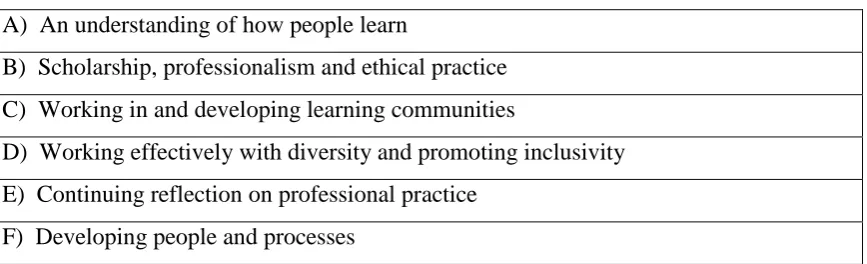
shown in Table 3, it is evident that the accreditation is based on values (similar values
underpin HEA accreditation) associated with the particular skills and competencies.
So participants requiring accreditation must demonstrate achievement of specific tasks.
Most significantly these must be underpinned by values in the Table. However, table
[image:38.595.84.518.453.585.2]2.1shows the values that must be demonstrated for accreditation.
Table 2.1: SEDA values that must be demonstrated for accreditation
A) An understanding of how people learn
B) Scholarship, professionalism and ethical practice
C) Working in and developing learning communities
D) Working effectively with diversity and promoting inclusivity
E) Continuing reflection on professional practice
F) Developing people and processes
2.8.1Postgraduate Certificate in Higher Education (PGCHE)
Resulting from the recommendation of the Dearing Report (Dearing, 1997), each
institution in the UK has been required to have in place some form of professional
development for all new academic staff relating to teaching and learning, and take
responsibility for initial professional development of teaching staff (e.g. through a
Postgraduate Certificate in Higher Education, and taking responsibility for training for