Full Length Research Article
REFUGEE MOBILITY, GLOBALIZATION AND ECONOMIC DEVELOPMENT
*Diana Loubaki
ISG, Department of Economics, University Marien NGouabi, Brazzaville (Congo)
ARTICLE INFO ABSTRACT
The article aim is to prove that Borjas (2016) estimation of migration rate close to 1 if labor mobility between the North and the South is fully allowed, matches with refugee mobility crisis faced by Western countries actually. An endogenous growth model with probability of migration is used to conduct the study. We find that, migration theories move toward a new paradigm based on refugee mobility crisis explanation in the economic literature. Since careers preferences and initial assets endowments play a great role in the decision to migrate, therefore, refugee mobility crisis is the excess unemployed labor force existence in the poor countries’ economic system since moving is risky if already hold a job. Conjugated to Western countries low growth rates and high unemployment rates as well as restrictive migration policy conducted, consequently, the UN 1951 asylum Convention needs to be reviewed.
Copyright©2017,Diana Loubaki. This is an open access article distributed under the Creative Commons Attribution License, which permits unrestricted use, distribution, and reproduction in any medium, provided the original work is properly cited.
INTRODUCTION
According to the UNHCR1, the number of displaced people worldwide reached 59.5 million by the end of 2014, up from 51.2 million in 2013 and from 37.5 million a decade ago. There is clearly, a crisis in Refugee mobility from developing countries such that Syria who represent the greater part of them, followed by Afghanistan, Iraq, Kosovo, Albania, Pakistan, Eritrea, Nigeria and Iran in European Union countries. In 2015, over 3,000 people died attempting the migration to Europe via the Mediterranean. Millions of them are “illegal migrants” and live an underground life without political, human or labor rights. Indeed, the total includes, asylum seekers, stateless persons, returned refugees, above all, only 60 million are refugees defined by the Refugee Convention (United Nations, 1951), others are not, thus, are “illegal migrants”. Unfortunately, there are not policies governing those situations (Jeffrey Sachs, 2016)).
*Corresponding author: Diana Loubaki,
ISG, Department of Economics, University Marien NGouabi, Brazzaville (Congo)
1 United Nations High Commissioner for Refugees
Indeed, this article aim is to examine Borjas (2016)2 research question i.e what types of gains or losses would accrue to the world’s population if countries decide to remove all legal barriers in labor mobility in international exchange plan and how will be affected development in the South which is a Developing country and growth in the North which is a
developed country?
The article departures from Borjas (2016)’s evaluation of the migration rate from the South to the North close to 1 if labor mobility is allowed to assess the fact that, migration theories like those based on human capital such that the brain drain as well as growth models with migration, have changed their paradigm which moved toward refugee mobility or asylum seekers dilemma where high skills endowments as incentives to migrate abroad have no more foundation in migration literature. The results highlights by this analysis are supported both by recent brain drain theories where the brain waste concept as emerged, thus highlights the fact that, the brain drain is ended (Docquier and Rapoport, 2007, Schiff, 2005; Garcia Pires 2015) as well as empirical observation on refugee
2 The Author work is a part of the new literature of Migration which begins in
the first decade of the 21th century after the brain drain success from the years 1960s to the years 2010 approximately, in the new literature of international migration, high skilled labor and simple work are considered to be the same in the World Debate on Migration issues in the globalized context of the economy.
ISSN: 2230-9926
International Journal of Development Research
Vol. 07, Issue, 02, pp.11571-11584, February,2017
DEVELOPMENT RESEARCH
Article History:
Received 17th November, 2016
Received in revised form 29th December, 2016 Accepted 04th January, 2017
Published online 28th February, 2017
Key Words:
Relative wages, asylum seekers, Refugee mobility,
mobility crisis, since asylum demands reached their highest level in this 21th century. The scientific contribution of the analysis holds on several aspects, first it is a macroeconomic model which attempts to legitimate scientifically the asylum seekers paradigm in migration theory in introducing it in growth theory literature. The Second contribution of the analysis, is the proof of the mutation occur in migration paradigm from standard labor mobility to the refugee crisis study, thus shows that the brain drain theory tends to its end since the first decade of the 21th century or may be before and growth models with migration ought to focus on asylum seekers now. Third, the analysis provides an empirical explanation to Borjas (2016) finding of high incentives to leave to Western countries, a phenomenon viewed through refugee mobility crisis in OECD countries. Finally, the analysis attempts to contribute to the International discussion on migration policy specifically to provide some insights on long run impact on growth and development around the world if the refugee convention is not reviewed in order to re-open the debate on how to face the crisis on refugee entry, thus on asylum seekers increase in developed world for population mobility to reach a stable equilibrium?. In the concern of this aspect, the model shows an efficient cooperation policy existence, (a*, b*) specifying that integration of foreigners may be successfully done, where a* and b* highlight the respective skilled and unskilled labors full integration both in the labor market and in the society because of cultural endowments differences.
Moreover, the article uses migration in growth models literature where the main problem raised is what might a government of a Western country do in regard to developing countries’ population mobility? Restrict the number of immigrants who come? Or might the government charge a fee for immigration? Would the fees according to the immigrants’ quantity or quality of human capital? How to integrate foreigners in the host country?. Unfortunately, migration in growth theory is unable to provide answers to those questions so that, this article aim is to re-open the debate on asylum seekers (a person who fear persecution for reasons of race, religion, social group, or political opinion, has crossed an international frontier into a country in which he or she hopes to be granted refugee status) in order to provide some answers to those questions since the analysis highlights some results able to help the social planner decide what policy to conduct or what decision to take depending on the objectives it is looking for. Indeed, this paper adopts the neoclassical concept of labor mobility due to the relative wages gap among the South and the North countries where it also adds the hypothesis of the excess unemployed heterogeneous labor3 existence in the South economic system due to Lewis, (1954) in order to provide better understandings of the actual migration crisis roots.
According to Lewis (1954)4, making a transfer of the excess unemployed labor force from the South to the North is a mechanics of economic development (that we’ll prove too) until factor price equalization is reached, thus after this locus, development emerges and growth accelerates which yield convergence in income around the world (Solow, 1956; Barro,
3 Both the brain drain and the neoclassical basic model adopts homogenous
labor force migration where the first theory focuses on high skilled labor essentially
4 Lewis (1954) original work adopts a transfer of excess unemployed labor
force from the traditional to the modern sector of production
1984, chapter 12; Baumol, 1986; DeLong, 1988; Barro, 1991a; Barro and Sala-i-Martin, 1991, 1992a, 1992b)5 and catching-up after is the process keeps going. Unfortunately, if labor mobility allowance operates in making the transfer of the whole excess unemployed labor force from the South to the North, then the North carries now, excess heterogeneous labor6 supply with lower relative wages than the South. Indeed, as the South is being developed, both skilled and simple work went back home since growth acceleration yields higher wage rates income with carriers better remunerated. Therefore, convergence occurs in the first step and may yields catching up in the second step. But if the process reverses i.e the South exhibits excess unemployed labor force again, due to high fecundity rate prevalence or demographic transition absence, added to low incentives to invest human capital and R&D conduction absence, then incentives to migrate from the South to the North, may increase again and reproduce the initial state.
Thus, incentives to migrate, highlights two feedback effects that yields oscillatory dynamics in periodicity over time. Since the globalized path oscillates over time and displays cycles with periodicity, current labor mobility from the South to the North in the globalized economy correspond to asylum seekers and no more on past migrants relied to the economic literature of migration until now, thus human capital causing skills differential no more play as a gain for the host country and a loss for the source country like stipulate the brain theorists before (Bhagwati and Hamada, 1974; McCulloch and Yellen, 1977), thus the crisis raised in refugee mobility led to the brain drain theory fall since rich countries exhibit actually low growth rates conjugates to high unemployment rate unable to absorb high heterogeneous asylum integration in the labor market. Consequently, the analysis uses heterogeneous labor force in order to show that actually, they face the same difficulties and constraints, so that it is no more fundamental to differentiate them in the literature of migration. Migration theory followed three directions mainly. The first direction is due to Harris and Todaro (1966) for internal migration. The
second direction is due to Wahl (1985), Behrman (1990), Schultz (1989) and Barro-Lee (1994) in the neoclassical growth models. The third direction is due to Grubel and Scott (1966) for international migrations focused on high skilled labor originally from developing country. The last analysis evocated mostly focused on the impact of high skilled migration abroad on the source country’s economic path, since they mostly choose to stay in developed countries for relative wages gap prevalence. That last theory, is called “the brain drain” and followed by authors like Kim, (1976), Bhagwati and Hamada, (1974); McCulloch-Yellen, (1977) and Delacroix Docquier, (2012) and so on who opt for losses for the source countries before. The theory was highly persuasive in the explanation of what development was about on the basis of the high skilled labor mobility and forms stretches during about 40 years i.e from the 1960s to 2000s7 and was deeply influential
5 Those authors stipulate that, convergence applies if a poor economy tends to
grow faster than a rich one, so that the poor country tends to catch up to the rich one in terms of levels of per capita income or product. This property corresponds to the concept of β convergence.
6
Heterogeneous labor concept where introduced in the standard brain drain analysis in Loubaki (2015)
7The first brain drain models dates back to the late 1960s and high education
among both economists and policymakers. Yet in the late 2000s, the mass of refugees entry in developed countries made the brain drain theory fall since the arguments supported by the theory were no more supported by empirical observations since the years 2000s, Docquier-Rapoport, (2007) argue that, the brain drain story does not necessarily need to hold and claim on brain waste and brain drain8 (Docquier and Rapoport, 2012; Schiff, 2005; Garcia Pires 2015) because when skilled workers migrate, they face the brain waste risk since their project may lead to an unskilled low remunerated job (Garcia-Pires, 2015) and adopts the fact that, education can be acquired in the source country (Beine-Docquier-Rapoport, 2008). At the same time, raised a third economic classification in countries’ economic development level called “the Emerging countries”, just after the boom in economic growth achieved by the 4 dragons in Asia i.e South Korea, Singapoor, Hong Kong and Taiwan around the years 2000s after the whole past Communism countries made their transition to market based economies with the fall of the Berlin Wall in 1989. The success of some such countries like Russia was so great, so that, it joins the G8 closed cycle and exhibits higher growth rates than countries like France which used to be classified among the 5th richest countries before, specifically between the 1945s and the 1975s when the golden economic growth age
took place broken by the two important oil shocks occurred in the years 1973s and 1979s.
Therefore, since the years 1980s, countries like France, Spain, Portugal, Greece,… keep regressing and face continuous unemployment rate increase and economic growth rate decrease unable to absorb domestic excess unemployed labor supply, a situation also due to the frequency of financial crisis which negative effects transmit to real economics. In contrast, high populated countries like China, became the best place to produce goods at lower costs and most Western Multinational Firms produce there and sell goods produced abroad, thus demand labor there where unemployment rate is lower and no more at home, finally most of Western countries have chosen to conduct restrictive immigration policy, even United State as promised Donald Trump, immigration policy restriction will be strengthened. Indeed, in the actual globalization context, factor mobility mostly concern goods exchange in international trade and no more labor force. Therefore, after 2010, dealing with heterogeneous labor force where the highest skilled were development providers raised empirical discussions in its validity (Acemoglu and Robinson, 2012; Borjas, 2014; Benhabib and Jovanovic, 2012). Therefore, the model present in this paper uses the article of Borjas (2016) result on migration crisis to open migration debate focused on
emphasize the benefits of free migration to the world economy. The second
wave comes less than a decade later under the leadership of Jagdish Bhagwati where a series of alternative models were developed throughout the 1970s to explore the welfare consequences of the brain drain in various institutional settings such as domestic labor markets rigidities, informational imperfections, as well as fiscal and other types of externalities (Bhagwati and Hamada, 1974; McCulloch and Yellen, 1977) and emphasize the negative consequences of the brain drain on the poor countries’ development path. The third wave has emerged since the mid-1990s and stipulates that, migration prospects can foster domestic enrolment in education in developing countries, raising the possibility for a brain drain to be beneficial to the source country. More recent contributions, in the years 2000 and 2010 however, argue that, the brain drain story does not necessarily need to hold (Docquier and Rapoport, 2007) and claim on brain waste and brain drain (Docquier and Rapoport 2012; Schiff, 2005; Garcia Pires 2015)
8 Migration lost its preliminary literature based on high skilled labor, thus
labor is now considered to be homogenous when looking for its issues in the world migration debate.
refugee mobility to highlight the migration theory mutation. The proof is provided through a theoretical growth model with probability of migration. Indeed, first, to capture the brain waste risk, we assume that, only the excess unemployed labor is transfer from the South (the developing country) to the North (the developed country) since careers preference and initial asset endowments play a great role in the decision to migrate to the North. Second, since migrate is risky (Docquier and Rapoport, 2007), the movers stock is bounded. Third, the Stolper-Samuelson factor prices equalization Theorem play in this analysis, as a mechanism of migration flow cease since relative wages turns out to be equal in the two countries i.e in the North and the South at a given time.
Consequently, several facts emerge first, development take-off is reached in the South at the point where relative wages in the two countries equalize on the space i.e, meaning that, all the excess unemployed labor is gone, then, migration flow stops and unemployed workers become increasingly high in the North. Convergence occurs and growth accelerates in the South since its relative wages become higher than in the North which highlights catching-up. Second, the Borjas (2016) analysis result such that, migration rate equals 95% percent if labor mobility is allowed between the South and the North, thus matches empirically with refugee mobility crisis observed in Western countries since actually both no mechanism able to stop the asylum seekers entries as well as successful integration are known, but the analysis shows that a solution can be found through cooperation with UNHCR. Third, the neoclassical equilibrium principle highlights population mobility leading to growth and development behavior such as processes describes a cycles with periodicity along the time and the space since phenomenon may reverse and repeat again indefinitely. Meaning that, in order to escape poverty due to unemployment absence in the North, the agents leave and go back home where new opportunities on career better remunerated are open i.e in the South.
Once macroeconomic stability is not settled yet i.e inflation get in, population grow faster than the equilibrium again and human capital remains low, since by assumption a job is generated through a given skills level only, then the South agents face poverty and leave again their country since the economic path is kept in a poverty trap again. Therefore, as a gap in growth rate reappear between the both countries, it can’t widen too much since demographic transition is already done and human capital accumulation sufficiently high and R&D conduction continuously done in the North which to maintain growth at a certain level compare to the South rapid economic regression. Consequently, while quantity keeps being chosen rather than quality in the choice of children in the South, the North eradicate now the previous excess unemployed labor because of growth mechanics evocated earlier and in contrast, the South which creates excess unemployed labor again, then once again, the North growth rate accelerates again while the South agents incentives to migrate increases again, the process may repeat indefinitely, so that it highlights feedback effects i.e cycles with periodicity in oscillatory dynamics path context.
support the actual refugee crisis in Western countries. Since the aim of this article is to prove the migration paradigm mutation too, the impact of migration on economic development studied introduces both relative wages differentials between the two countries and careers or jobs hold importance for the decision to migrate in contrast to the basic model where incentives to migrate are based on nominal wages only and a microeconomic model is used to contrast to this analysis which is macroeconomics. Therefore, the migration decision variables introduced in the analysis, slow incentives to leave and yields to the fact that, refugee mobility corresponds to excess unemployed labor force mostly. So that, when all the excess unemployed labor is out of the system, the bound on departure is reached and the remaining agents hold both jobs and/ or assets that they are not willing to leave.
Once the bounds on migration reached, factor price equalization theorem, cease to work which signal development take-off reached at some point in a given time on the space. After that locus, relative wages became higher in the South than in the North, thus accelerate growth and call back labor home. Indeed, the migration rate determined by Borjas in conjunction with the hypothesis and results highlight by the model, confirm that the brain drain theory is ended and refugee asylum paradigm took place, a paradigm where labor heterogeneity and human capital accumulation incentives have no more differentiation foundations in regard to its impact on growth and development in the economic literature. The literature used is growth model with probability of migration added with some ingredients provided from analysis like Borjas (2014, 2016); Acemoglu and Robinson (2012); Pritchett (2010) where labor force is homogenous. Standard brain drain literature where high skilled labor deserve a special care in growth and development studies (Docquier and Rapoport, 2007, Schiff, 2005; Docquier and Delacroix, 2012; Garcia-Pires, 2015) is also used. This present model also adds the Stolper Samuelson equalization factor price theorem where workers are treated in a heterogeneous way to capture mutations occurs both on growth in the concern of the North and development in the concern of the South as well as to see if the brain drain action still playing a great role in development of the source country debate.
However, migration to hold in a growth models, must assumes that, population and labor force don’t grow together at the same exogenous rate i.e population and labor force differ which contrast which the basic model due to Solow (1956) where they are the same since unemployment is not allowed. Therefore, migration can be captured in the neoclassical growth model through differentiation of population and the labor force which thus introduces fertility and mortality studies possibilities. The dynamics of the labor force mobility comes from the hypothesis of the wage rates differentials in different countries, thus raised incentives to migrate to the place where they are higher. Labor mobility cease when the gap in wage rate income in two different places disappears. Migration in growth literature analyze, mostly focused on gains and losses generated by population mobility. Indeed, using data from US, Japan and five European countries (France, Germany, Italy, Spain, United Kingdom), Barro and Sala-i-Martin, (1991); Braun, (1993) estimate the sensitivity of within country migration to differentials in per-capita income. The regression coefficient for the net migration rate on the log of initial per-capita income or product average is 0.012 per year. Hatton-Williamson (1994) examine the behavior of migration from 11
European countries to the United States from 1850 to 1913, their regression based on responses of immigration to proportional differentials in wage rates averaged, 0.008 per year. Dolado, Garcia and Ichimo (1994) examine the composition of immigration for 1960-1987 to 9 developed countries (Australia, Belgium, Canada, Netherlands, Sweden, Switzerrland, United Kingdom, United States) they observed that, the educated attainment of immigrants average about 87% of that of natives. Chiswick (1978) finds for USA census data in 1970 that, the school attainment of Foreign born men was 91% of that of natives. Borjas (1992) reports from USA census data that, the schooling of foreign born men, rose from 78% of natives in 1940 to 82% in 1950; 87% in 1960; 94% in 1970 and 93% in 1980. Borjas (1992) finds in the concern of immigration within a country, that the ratio of immigrants to native human capital is higher than international immigration do and that, young male immigration averaged 3% more years of education than the average.
Docquier and Delacroix, (2012) study migration and poverty correlation focused on human capital accumulation and find that, the return probability rate of the developing countries’ high skilled labor is only evaluated to 0.243%. Borjas (2016) evaluated immigration rate form the South to the North to attain 95% if population mobility is allowed without making a difference between skilled and unskilled labor. The effects of economic factors such as fertility and mortality are central in economic development, indeed Malthus population theory is introduced in growth theory by Wahl (1985), Behrman (1990), Schultz (1989) and Barro and Lee (1994), using OLG models where parents and children are linked through altruism, parents decide on the number of children to have since children production and rearing is costly specifically in parental time in particular in women time, then demographic transition occur because of that (Tamura, 1990; Becker, 1991, Dahan-Tsiddon, 1998). The children are also subject to quality and quantity meaning education acquisition at that preliminary level is also an engine of economic growth (Cervelatti and Sunde, 2015; Galor and Weil, 1996, 2000). Indeed, under development may come from quantity choice rather than quality in children procreation. Hansen-Prescott (2002) and Jones (2001) provide models where demographic transition explains industrial revolution occur in response to changing in the economic environment like the cost of rearing children measured on time spent, which reduce women opportunity to participle to the labor market. Then behavior in fertility rate impact in relation with growth is studied. Unfortunately, none of the models quoted as introduced refugee mobility in growth literature before this article in order to capture some insights to this dilemma. This model thus yields two results which are: first, it extended migration concept in growth literature through asylum seekers introduction. Second, it proves the migration paradigm mutation where skills endowments no more help the agent obtain asylum easier than the unskilled worker. Third, it highlights the brain drain theory unpopularity and inability to treat refugee crisis highlights by asylum seekers demand explosion. The article is organized as follows, section2 setup the model and section3 provides both results and discussions at the same time, section4 studies the equilibrium and section4 concludes on the analysis conducted.
The model
human capital investment is continuously accumulated and R&D conducted at any time. In contrast, the South is a developing country endowed with low levels of human capital explaining partly why the economic growth path is kept inside a poverty trap, thus also explain development absence added to some other mechanisms like democracy absence which at the end of the analysis, calls out International Convention of the countries of the whole world for cooperation on population stability on the space any time. Following Borjas (2016), labor mobility barriers are levy between the North and the South but because some agents are endowed with highest social careers levels and great assets in their country located in the South, they are not willing to move to the North in order not to face regression in social status levels, thus there exist bounds in migration incentives. That hypothesis holds both for the skilled and the unskilled agents.
Therefore, let total human capital stock at time t to be denoted,
Ht and simple work to be denoted, Lt with different level
within each category such that, we have
H
t
h
t1,
h
t2,...
h
tn
where
h
t1
h
t2
...
h
tn and forL
t
l
t1,
l
t2,...
l
tm
we also havel
1t
l
t2
...
l
tm, m≠n. There thus exist two variables or thresholds on ability level,
m j i l m l 1
1 <l*which is the world average ability level as well as on human capital level,
n i j h n h 11 <h* which is the world average human capital
level. Indeed,
l
h, are relied to i,j≥0 such that, migration stock is expressed by,
0 1 i i i t h hM where *
0 h h
hi
t
for
i
i
0are excess unemployed labor in the South, indeed
M
h
0
for
h
h
ti
0
where
h
i0h
*
t
andi
i
0 expresses the levelthrough which a job is ensured. Therefore, once this level reached, the rest remain home, so that we can write the excess unemployed skilled labor force candidate to leave such that,
0 1 i i i t hh
M
where
h
h
ti0 <h* and if the excess labor forcehas disappeared migration demand become,
M
h
0
and
h
h
h
ti0*
meaning that, incentives to migrate equal zeroat that level. Equivalently, let
0 1 j i i t ll
M
ifj
j
0 be theexcess unemployed labor force, since
l
l
tj0
<l* and
0
l
M
, for
l
l
l
tj*
0
for
j
j
0
1
i.e at that levels, incentives to migrate equal zero. Therefore, the job market law of motion yields thresholds existence through which the incentives to migrate equal zero. In home country, after that level, people are assumed to be employed and endowed of great careers and assets. Skilled agents may be Engineers in chief, Minister of important government department, Professors, etc,…or great assets and business owners for unskilled agent like having many stores, transportation cars or other businesses with high profits, which thus, maintain them home. Relative wages between the North and the South insteadof nominal wages used by Borjas, are consider in order to show that, first the author’s finding i.e a migration rate equals to 95% if labor mobility is allowed, matches with the refugee mobility crisis observed empirically, second the brain drain paradigm changes and becomes refugee mobility paradigm in migration science since the first decade of this 21th century,
third, poverty is creating asylum demand, so that, they are not included in the UN 1951 Convention, forth, refugees are excess unemployed labor of the South who try to escape poverty mostly. Now, variables are indexed with S to design the South variables and time is not used because the model is static. The aggregate production sector of the firms located in the South uses three production factors which are physical capital, KS simple labor, LS and human capital, HS to produce a
homogenous consumption goods. The aggregate production function used is of constant returns i.e homogenous of degree 1, expressed such that equation (1) i.e:
S S S
S
F
K
L
H
Y
,
,
……….(1)Profit maximization yields factor prices i.e the respective wage rates of the skilled and the unskilled labors as well as the
interest rate expressed such that,
S h S
H
F
w
which is theSouth skilled agent wage rate income;
S S
L
F
w
whichexpresses the South unskilled wage rate income as well as the
interest rate or the cost of capital hiring,
S
K
F
r
The respective relative wage rates income of the skilled and the unskilled labors between the North and the South are
expressed such that, h
S h N
w
w
for the skilled labor and
S N
w
w
for
the unskilled. In logarithm term they can be expressed such that equation (2) and (3)9 respectively, i.e
S h h h S h N hH
p
Ln
Ln
w
w
Ln
W
Ln
(
)
……..(2)
S SN
Ln
Ln
q
L
w
w
Ln
W
Ln
(
)
….….(3)Where
1
p
p
and
1
q
q
10express career
opportunities,
p
and
q
are the respective skilled and unskilled fractions of agents who migrate, thus1-
p
and 1-q
are the fractions of agents who stay home, therefore, at that level, migration incentives have no more foundations and yield
ML=MH=0 otherwise, ML=
q
L
S and MH=p
H
S . Moreover,9 Borjas (2016) didn’t consider relative wages, he did so based on nominal
wages only
10 This means that
,
0
,
1
p
p
and,
0
,
1
h,
are the slopes of the relative wages equations of the skilled and the unskilled respectively and
h,
[0,1] are the respective elasticity values of the skilled and the unskilled11.
Let the global relative wage R be such that,
W
W
R
h
then itcan be expressed such that equation (4) i.e
S h S hL
H
q
p
R
h h
………(4)In the closed economy, GDP at initial period, Y0 and at the
following period, once migration is done Y1 can help measure
the values of the losses or the gains generated from the departure of some agents to migration abroad that are expressed such that equations (5) and (6) i.e
SS h L
S H S h
dL
L
q
dH
H
p
Y
0 0 1
=
1 11
1
h S Sh
L
q
H
p
h h ……….(5)
SS h L
S H S h
dL
L
dH
H
Y
0 0 0
=
1 11
1
h S Sh
L
H
h ………(6)The Equilibrium Condition consist on render equal, those who leave and those who stay respectively for the skilled and the unskilled categories, it is expressed by equation (7) such that
S S h S S hqL
pH
L
q
H
p
h h
=1 ………(7)
Where Y1 is GDP after migration, whereas Y0 is GDP before
migration i.e at initial time, therefore the losses or the gain in GDP, ΔY can be expressed such that equation (8) i.e
1 0 Y
Y
Y
=
1 1
1 ) 1 ( 1 ) 1 ( S S h h L q H p h h ……..(8)
Some results are highlighted by the analysis before the closing of the whole macroeconomics model, presented in the following section.
RESULTS AND DISCUSSIONS
Proposition1: excess unemployed labor force transfer from the South to the North is a key for development take-off
Proof: according to equation (8), if 0<
p
q
,
<1, then ΔY is positive, there is a gain from the departure of the excess unemployed labor. Otherwise, if q,p tend toward 1 i.e all the11 Borjas (2016) assumes those values to be negative and we’ll see their
implications on development depending on their sign
excess unemployed labor left the country, then ΔY=0 which yields Y0=Y1 , the stationary equilibrium is reached, thus
development take-off is reached. Otherwise if
p
q
and
tend toward 0 i.e all the excess unemployed labor force still in the country, then GDP is a decreasing function over periods, indeed, the economic path may be kept in a poverty trap with unemployment increase, thus poverty increase too. Consequently, development occurrence is highlightedspecifically when
p
q
,
tend toward 1, excess unemployed labor transfer to from the South to the North is done, thus, is a key for development take-off.Definition1: the gain in growth rates due to the excess unemployed labor departure can be measure through the respective skilled and unskilled labors relative wages
expressed such that:
1
,*
h h h wW
W
g
and1
*
W
W
g
w Where * ,*
h S h N hw
w
W
and* *
S Nw
w
W
are the averageworld relative wages
Lemma1: according to definition1, the respective growth rates in per-capita income, depends on the movers entry levels and are thus defined by equations (9) and (10) i.e
1
hp
g
hw ………(9)
1
q
g
w ………..(10)Proof: according to definition1 and equations (2) and (3), the
per-capita growth income rate yields by the movers departure can be computed such that
h hp
H
H
p
W
W
g
S S h h h w
1
1
1
,* and
q
L
L
q
W
W
g
h S Sw
1
1
1
*
Therefore, if
p
q
,
tend toward 1, the growth rates reaches its steady state since it begin to go their positive values butreaches 0 before. Otherwise, when
p
q
,
tend toward 0, the growth rates are negative. Finally, when we have 0<
p
q
,
<1, then if the movers are high, then growth rates converge to the steady state, otherwise if they are low, the economic path still kept in a poverty trap with low growth rate and development retard.Proposition2: when the excess unemployed labor force leaves
the whole economic system of the South i.e when
p
q
and
the skilled and the unskilled in the South, is no more negative, thus becomes positive or at least equal to zero
DISCUSSIONS
Equation (9) and (10) increase in the fraction of movers which means that, the more the movers is, the higher per-capita income will be. Consequently, we can present the following
little discussion:if
0
p
(nobody leaves) then,g
wh
0
In this case, human capital is at that level, not high enough to generate a job. Indeed, in conformity with the literature of endogenous growth with human capital (Romer, 1990; Lucas, 1988; Eicher, 1996), development is absent since human capital accumulation is too low, the economy is kept in a poverty trap with development retard (Azariadis-Drazen,1990). If
1
p
(the whole excess unemployed labor is gone) thus,g
hw
0
In this case, human capital of the system still not high enough but, allow the economy to reach development take-off even growth still low because it isn’t driven by technological change which yields new innovations. Thus, joins the brain drain models which has emerged in the mid-1990s and stipulates that, migration prospects can foster domestic enrolment in education in developing countries, raising the possibility for a brain drain to be beneficial to thesource country. Finally, if
0
1
p
then,g
wh≤0 in this case, if
p
is low, then the country is under developed because unemployment rate is too high otherwise if
p
is high, then development enhanced, growth begins to increase and is no more negative because there still only high human capital required for the economic system to remain stable since it is a dynamic system which is now moving toward its frontier where unemployment is getting reduced. This result joins the brain drain models of the 1970s which had a pessimistic view in the concern of development in the source country when human capital goes abroad (Bhagwati and Hamada, 1974; McCulloch and Yellen, 1977). Similarly, according to theabove proposition, when
0
q
(nobody go abroad) thus,g
wis negative because there is high unemployment, thus joins the models which stipulate that population is not an engine of growth and development like Lewis (1954), Romer (1990), Dahan-Tsiddon (1998) and Galor-Weil (2000) for which demographic transition is the engine of economic growth but joins Boserup (1965) where population is an engine of
economic growth. If
1
q
(all the excess unemployed labor is gone), thus,g
w
0
, because there is no more excess unemployed labor in the economic system, thus poverty is being reduced. The transfer of the excess unemployed labor yields development in conformity to Lewis (1954), thus the departure of a great part of unskilled labor abroad makes the economy joins the stable equilibrium. This finding joins the standard brain drain model based on Grubel and Scott (1966) like Johnson (1967); Berry and Soligo, (1969) who conclude to a neutral impact of the brain drain on source countries.Loubaki (2015)12, extends the standard brain drain literature in allowing for international unskilled labor mobility and proves that heterogeneous labor force is an engine of growth both in
the source and in the host country. Finally, if
0
1
q
thus,w
g
<0 and highlight a situation where
q
is too high and growth too low for the country to absorb them alone, thus, cause development retard since poverty increases over time and tends to famine in poor countries, so that migration demand is high caused by an unequal income distribution in the country. In this case asylum seekers viewed empirically don’t necessarily fill the UN asylum Convention of 1951 because of poverty.In conclusion, in order to join Borjas (2016) result, we examine the case where all the excess unemployed labor is
gone i.e
q
+
p
=95%≈1, indeed the remaining labor fraction i.ep
q
5
%
0
, yields to the fact that, all the migrants are treated in the same way in the North i.e labor is considered to be homogenous and career preferences have no foundations there for their integration in the labor market. Several interpretations can be given in regard to that result, first Borjas finding matches with the fact that, all the Syrian refugees are willing to get inside Western countries if they could. So that, the relation between migration and growth using human capital turns now to focus on refugee mobility or asylum seekers integration and no more on standard migrants studies. Indeed, new research needs to be conducted in order to understand how growth can emerge from that new context.Second, in a normal country, this finding means that, a given Price Minister may be a candidate to leave home just for the pleasure of being settled in the North, they also may not be any more high status in the country because the North is able to offer more than that.
Thus yield to the country’s death since everybody left it. This finding contradicts those provided by the brain drain literature where human capital waste is relevant actually in high skilled incentives to migrate (Docquier and Rapoport, (2012), Garcia-Pires, 2015). Third, if the most part of population leaves the country, then per-capita income increases as well as careers opportunities, then join the diaspora behavior i.e high skilled labor native of developing countries are willing to go back home (Agrawal, Kapur and McHale (2008)). All those differences in migrants have not been made by the basic model. In the recent brain drain model, diaspora return is evocated and viewed empirically (Kugler and Rapoport,
2007); Foley and Kerr, 2008). In conclusion,
q
+
p
=95%≈1 is equivalent to excess unemployed labor force transfer from the South to the North mainly since, even not really studied, in poorest developing countries unemployment is often very high, around 30% or more if informal work is included. Therefore, if labor mobility is allowed without an efficient economic policy to guide the economic stability, the North will carry excess employed labor force too at a very high rate, so that relative wages decrease because of high labor supply existence than the demand which raises skills problems to adapt to new technology, so that, almost all the refugee inemergency, will accept low wages rates and create a competition with the host country’s native in the labor market. Indeed, wages will tend to decrease as well as skills. In contrast, at the same time, the South relative wages will increase, then both in income per-capita term and in development level, the North regress. Along that transition, the migrants go back home to capture higher wage rate income and contribute to growth and development increase in their country. They go back home until the wages rate income equalize the average world level required not to face poverty13, then a stable equilibrium emerges in the Southern economy until population increases again through mechanisms like excess fertility and low education which make the South regress again and tends toward poverty increase through which migration incentives to the North increases again.
Lemma2: the global South gain of migration caused by excess unemployed labor departure to the North, ΔG expressed by equation (11) yields convergence in a first time and catching up in the second time.
S S
h h
S S
G Y qW L p H W Y W H WL
* ,* 0
1 (1 ) (1 ) (11)
Proof: at the initial time before labor mobility allowance, the gain is,
0
Y
0
W
hH
S
WL
SAfter excess labor force gone, the gain becomes,
,* *
1
1
(
1
)
(
1
)
h S
S
p
H
W
L
W
q
Y
since the bothrelative wage rate are similar, thus used to make comparison with the previous period, indeed total gain between two periods, ΔG is expressed such that
G
=Y
1
Y
0
(
1
q
)
W
*L
S
(
1
p
)
H
SW
h,*S S h
WL
H
W
As presented by lemma2
Note that ΔG=Δ1–Δ0>0 which yields a positive gain from
excess unemployed labor departure
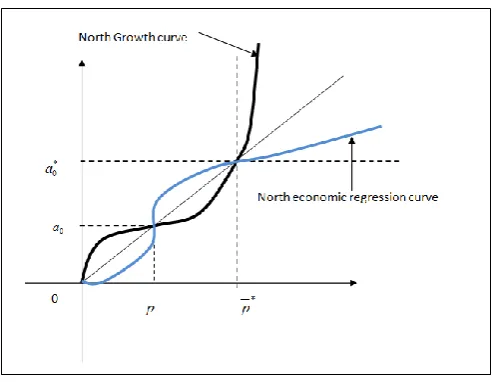
Figure1. Displays asylum crisis consequences in economic path
movements of the countries
Propostion3: according to lemma2, if ΔG=0 then convergence occurs until development frontier is reached, otherwise, if
13 See the World Bank measure used
ΔG>0 then the South growth path accelerates but without growth enhancing policy, the previous situation settled again so that asylum seekers dilemma is a dynamic path with cycles and periodicity over time since it yields ΔG<0 after.
Proof and explanation: According to lemma2, in equilibrium,
G0
Δ1=Δ0 which yields
0 S S
hH WL
W
Y = * ,*
1 (1 ) (1 )
h S
S p H W
L W q
Y
Setting the gain in GDP to be in equilibrium too i.e Y1=Y0 and
rearranging, it yields
p
W
W
W
h h h
,* ,*
and
q
W
W
W
* *
defined for
0
and
0
,**
W
hW
If
p
q
0
thenW
*
W
and
W
h,*
W
hconvergence in income terms emerges
Therefore, stationary equilibrium are highlighted by relative wages equalization, thus validate the Stolper-Samuelson Theorem of factor price equalization in labor exchange trade. Indeed, first, migration cease, second, excess labor supply is eradicated in the South economic growth path since development take-off locus is reached. In growth theory, this finding is due to Solow (1956) consequence which is convergence between poor and rich countries caused by the decreasing character of marginal capital productivity over time. Here, the convergence highlights is essentially caused by Lewis (1954) development solution. The South is moving toward its development frontier (Acemoglu, 2005). Otherwise, if the gain of the South is higher than that of the equilibrium, which can emerge when
p
1
and
q
1
thenh h
W
W
W
W
*
and
,*
, because the North still fully keeping asylum seekers in its system, since the equilibrium wage rate still higher in the North than in the South, excess unemployed labor force still willing to go there. Therefore as unemployed labor is leaving the country, the South development path is catching up the one of the North.Finally, if the system remains at its initial state, which can emerge when
0
p
1
and
0
q
1
thenh h
W
W
W
W
*
,*
and
, the equilibrium wage rate of the North is now under than that of the South if
p
and
q
are high. Therefore, the South excess unemployed labor has almost fully been absorbed by the North. In conclusion, sinceq
economic policy is conducted. In parallel, the North takes back his economic leading position that the South agents are once again willing to profit. If the North still open to labor mobility, the previous scenario will hold again, otherwise, they always will try to get inside the North system but no more as migrants but now as refugees seeking asylum. So that, the more the North will block their entry, the more they will be many to come and create a crisis observed today.
Lemma 3: the asylum demand acceptation functions, (
h,*,*
) depend on the capacity of the country’s integration plus their number conjugated to the relative cost generated, (
h,
) thus is linear function sin the respective skilled and unskilled expressed by equations (12) and (13) i.e0 ,*
a
p
h h
………(12) 0 *b
q
………(13)Where a0 and b0 are relative integration capacities of the
skilled and the unskilled in the host country
Proof of lemma3, the respective skilled and unskilled asylum decision i.e
h* and
* depends on integration possibilities,a0 , b0(respectively for the skilled and the unskilled) agent) as
well as on average level of acceptation which is a product of the asylum fraction,
p
and
q
(respectively of the skilled and of the unskilled) and the slope of the relative wages equations of the asylum seekers,
h and
(of the skilled and the unskilled respectively). Therefore, the respective asylum acceptation functions of the skilled,
h* and the unskilled,*
can be written such that:
h,*
p
h
a
0 and0 *
b
q
Explanation of lemma3: if
q
and
p
tend to 1, then a0 and b0are negative, otherwise if
q
and
p
tend to 0, thena
0
h,*>0 and
*=b0>0 and finally, if 0< q
,
p
<1 then if
p
is low, then a0 ≥0, otherwise, if
p
is high, then a0<0. Similarly, if q
is low, then b0 ≥0, otherwise, if
q
is high, then b0 <0.Moreover,
q
and
p
must establish at
0*
*
b
q
andh h
a
p
0 ,* *
for asylum seekers integration to besuccessful in the host country. Therefore, if both a0 and b0 are
negative, then
q
>
q
* and
p
>
p
*, thus are too high, indeed, asylum seekers demand functions are too high compare to the capacity to integrate them, thus many asylum seekers agents demand will be rejected since acceptation function are such that a0<0 and b0 <0., thus are above the equilibrium level.When
p
=
p
* and
q
=
q
*, indeed, the migration policybased on asylum seekers is successfully conducted. Therefore, we can announce the following proposition.
Proposition4: a successful asylum policy (a*, b*) able to ensure migrant’s integration exist, it is established through cooperation between UNHCR and Western host countries
expressed such that: * * *
1 0
n i i i a pa and
*
*
*
1 0
n i i ib
q
b
both for the skilled and the unskilled labors respectively.
Proof: cooperation between host Western countries and UNHCR aim is to oriented migrants in countries where a0 and b0 are able to ensure their integration in the labor market and
provide all required things for them to live a normal life. Indeed, assuming the Western country which accept to participate to this policy to be indexed by i such that i=1,2,…,n
then two vectors of integration capacity exist, which are
a a an
a 1, 2,..., and b
b1,b2,...,bn
so that, the deal is tomake a and b converge to a* and b* where
n i i ia p a 1 0 and
n i i ib q b 10, those expressions mean that asylum seekers are
located in different countries according to discussions conducted in international plan with the main refugees organism defense which is UNHCR. In order for the Western countries to fully absorb all the excess unemployed labor stock, we must have a0i→a0i* and b0i→b0i* for all i for that
assertion to be true, the following condition must be satisfied i.e each country must only accept a fraction of asylum seekers
such that
p
i = * ip
and q
i = q
i* for a given initial set of (a0i ,
b0i,
p
i,
q
i)iЄN thus, a successful refugees location in countries
where a0i=a0i* and b0i=b0i where
p
i = * ip
and q
i = q
i* for all i exist since at the aggregate level, it also yields
n i i ia
p
a
10 converge toward
*
*
*
1 0
n i i ia
p
a
and
n i i ib
q
b
10 converge to
*
*
*
1 0
n i i ib
q
b
Proposition5:according to lemma3 and both the growth and the brain literatures evocated in introduction, migrants and asylum seekers are different, and a crisis in labor mobility highlights, two things: migration paradigm change from migration to asylum seekers and excess unemployed labor crisis in the South country creating poverty, is the source of the problem
At initial time, a=a* and b=b* , there thus already exist migrants in the North originally from the South since a0 and b0
are different to zero and may corresponds from the years 1870s when began colonialism until the years 1960s when it ended-up i.e from the time when all the developing countries where under Western countries influence until their freedom.
When
q
>0 and