Open Access
Research article
Cognitive function during early abstinence from opioid dependence:
a comparison to age, gender, and verbal intelligence matched
controls
Pekka Rapeli*
1,2,7, Reetta Kivisaari
3, Taina Autti
3, Seppo Kähkönen
4,5,
Varpu Puuskari
6, Olga Jokela
1and Hely Kalska
7Address: 1Psychiatric unit for drug dependence, Department of Psychiatry, Helsinki University Central Hospital, Finland, 2Unit on Prevention and
Treatment of Addictions, Department of Mental Health and Alcohol Research, National Public Health Institute, Finland, 3Medical Imaging Center,
Helsinki University Central Hospital, Finland, 4BioMag Laboratory, Engineering Center, Helsinki University Central Hospital, Finland, 5Cognitive
Brain Research Unit, University of Helsinki, Finland, 6Department of Psychiatry, Helsinki University Central Hospital, Finland and 7Department
of Psychology, University of Helsinki, Finland
Email: Pekka Rapeli* - [email protected]; Reetta Kivisaari - [email protected]; Taina Autti - [email protected]; Seppo Kähkönen - [email protected]; Varpu Puuskari - [email protected]; Olga Jokela - [email protected]; Hely Kalska - [email protected]
* Corresponding author
Abstract
Background: Individuals with opioid dependence have cognitive deficits during abuse period in attention, working memory, episodic memory, and executive function. After protracted abstinence consistent cognitive deficit has been found only in executive function. However, few studies have explored cognitive function during first weeks of abstinence. The purpose of this study was to study cognitive function of individuals with opioid dependence during early abstinence. It was hypothesized that cognitive deficits are pronounced immediately after peak withdrawal symptoms have passed and then partially recover.
Methods: Fifteen patients with opioid dependence and fifteen controls matched for, age, gender, and verbal intelligence were tested with a cognitive test battery When patients performed worse than controls correlations between cognitive performance and days of withdrawal, duration of opioid abuse, duration of any substance abuse, or opioid withdrawal symptom inventory score (Short Opiate Withdrawal Scale) were analyzed.
Results: Early abstinent opioid dependent patients performed statistically significantly worse than controls in tests measuring complex working memory, executive function, and fluid intelligence. Their complex working memory and fluid intelligence performances correlated statistically significantly with days of withdrawal.
Conclusion: The results indicate a rather general neurocognitive deficit in higher order cognition. It is suggested that cognitive deficit during early abstinence from opioid dependence is related to withdrawal induced neural dysregulation in the prefrontal cortex and is partly transient.
Published: 24 February 2006
BMC Psychiatry 2006, 6:9 doi:10.1186/1471-244X-6-9
Received: 20 June 2005 Accepted: 24 February 2006
This article is available from: http://www.biomedcentral.com/1471-244X/6/9 © 2006 Rapeli et al; licensee BioMed Central Ltd.
Background
When opioids are used chronically as pain relievers they may cause mild cognitive deficits in attention, complex working memory, and episodic memory [1,2]. So far, there is no evidence that these effects would continue after cessation of oral opioid medication [3]. However, when opioids are abused, they are often used intravenously with frequent high doses and in parallel with other drugs of abuse. Not surprisingly, cognitive associations of chronic opioid abuse are more pronounced than in medical use. In studies concerning very recent or ongoing chronic opi-oid abuse there is even some, though not consistent, evi-dence for general intellectual decline [4,5]. More consistently, there is evidence for deficits in attention, working memory, memory, and executive function [6-8]. Again, the studies concerning abstinence from opioid abuse show better cognitive function than during opioid abuse [9-14]. However, there are important differences between early and late opioid abstinence, and these need more consideration. Vast majority of relapses back to opi-oid abuse in out-patient treatment settings take place dur-ing first weeks of abstinence [15,16]. Thus, the study of cognitive function within this time is relevant.
During early opioid abstinence somatic signs of with-drawal are first easily noticed and then gradually disap-pear. These include flu-like symptoms and changes in heart rate and blood pressure. The symptoms typically peak within three days from the last dose of intravenous heroin and within five days from the last dose of intrave-nous buprenorphine [17,18]. Instead, during late absti-nence, after first three weeks, somatic signs of opioid withdrawal are seldom observed but drug craving may still be present.
Early opioid abstinent patients often complain fatigue and poor concentrating. In agreement with this a cascade of neural dysregulations takes place during that time. The cascade starts with abrupt downregulation of mu opiate receptor activity together with elevation of gamma-ami-nobutyric acid (GABA) and dynorphin release in the stria-tum and the limbic system [19]. This is followed by increased release of noradrenaline in the locus couruleus and the bed nucleus of the stria terminalis paired with excessive glutamate release in the hippocampus and the anterior cingulate cortex. Marked reduction of dopamine activity in the mesolimbic system and its projections has an inverse relationship with a strong increase of dopamine, noradrenaline and serotonin content in the medial prefrontal cortex [20]. Finally, brain stress systems are activated due to noradrenergic activation of cortico-trophin releasing factor from the hypothalamus and the amygdala [21] In concordance with this an elevation of cortisol secretion takes place during early opioid absti-nence [22]. Against this background, it is surprising that
cognitive function during early opioid abstinence has been investigated only in one study.
In a study by Guerra et al. individuals with current heroin abuse showed deficits in attention, working memory, epi-sodic memory, and verbal fluency [9]. At retest 7–14 days after admission to rapid detoxification treatment their performance reached the level of controls. The results indicate a rapid recovery of cognitive function. However, practice effects were not controlled for.
There are more studies concerning cognitive function dur-ing late opioid abstinence. In Gerra et al. study patients with opioid abuse history were studied four months from detoxification [10]. Patients with antisocial personality disorder showed deficits in complex attention and in exec-utive function. Other patients showed no deficits. In Davis et al. study patients with six months of opioid absti-nence showed no specific cognitive deficits [11]. In Lee and Pau study previous heroin users with eight months of abstinence as well as in Pau et al. study with fourteen months of abstinence showed deficit in executive function [12,13] In Mintzer et al. study patients with nine months of opioid abstinence showed normal cognitive perform-ance expect in one task combining visual attention and flexibility [14]. Thus, in studies concerning late opioid abstinence executive function deficit has been most con-sistent finding.
The main aim of the present study was to explore cogni-tive function of individuals with opioid dependence dur-ing early abstinence in comparison to normal controls. The groups were matched for age, gender, and verbal intel-ligence (VIQ). On the basis of opioid withdrawal related neural cascade and earlier research deficits in working memory, episodic memory, and in executive function were expected. Non-optimal catecholamine levels in pre-frontal cortex may cause working memory deficit, espe-cially when together with hypercortisolism [23,24]. Executive function may be impaired because it is depend-ent on optimal noradrenaline function [25,26]. Also learning and memory may be impaired. Chronic exposure to opiates reduces the birth of new neurons in the dentate gyrus of the adult hippocampus, and this is known to affect learning and memory [27,28]. In addition, fluid intelligence was measured. It is known to be more sensi-tive to frontal lobe dysfunction than conventional execu-tive function tests [29-31]. Therefore, it was hypothesized that also fluid intelligence performance would be reduced.
month of cessation of opioid treatment [32]. Abnormal elevations of neural activity in the striatum and the amy-gdala reduce within 1 – 2 first weeks from opioid with-drawal [19]. In concert with this, high cortisol levels resume to normal levels within first weeks of abstinence [33]. Normal function of the catecholaminergic and GABAergic systems after few months of opioid abstinence has been reported with some exceptions concerning psy-chiatric co-morbidity [10,34-36]. Thus, the hypothesized cognitive deficits may show recovery. Therefore, we ana-lyzed correlations between cognitive performance and days of withdrawal; and between cognitive performance and subjective opioid withdrawal symptoms, whenever opioid dependent individuals performed worse than con-trols. In addition, as long-term neurotoxicity related to substance abuse is possible, correlations between dura-tion of opioid abuse or any substance abuse and cognitive performance were analyzed whenever patients performed worse than controls.
Methods
The participants of the study included 15 individuals with opioid dependence who were voluntary inpatients from Helsinki University Central Hospital drug detoxification unit and 15 controls. All participants were between ages 20 – 50 years. Participants with uncontrolled mixed sub-stance abuse, acute alcohol abuse, or acute axis I psychiat-ric morbidity according to Diagnostic and Statistical Manual of Mental Disorders (DSM-IV) not related to sub-stance were excluded. Also participants with severe brain injury, chronic neurological disease, with history of epi-leptic seizures, with human immunodeficiency virus (HIV), primary organic cognitive deficit, or magnetic objects contraindicative for magnetic resonance imaging (MRI) were excluded from the study. Each participant was evaluated by brain MRI, and participants showing lesions indicating vascular pathology or brain injury were excluded. The study protocol was accepted by the Ethics Committee of Helsinki University Central Hospital. A written informed consent according to the Declaration of Helsinki was obtained from all participants.
All participants with opioid dependence were voluntary patients from a series of consecutive patients admitted for potential methadone maintenance treatment. The patients were hospitalized for two weeks in a drug with-drawal unit before starting methadone substitution treat-ment. The criteria for this in our institute were a minimum age of 20 years, four years of documented opioid depend-ence, and failure of institutional or long-lasting outpatient opioid withdrawal. In the patient group there were several cases for all variants of hepatic viruses (A, B, or C). How-ever, none of these were in acute phase. All participants that were studied for HIV were negative. One patient refused to be tested for HIV. The patients had no neuro-logical complains. Two patients either refused to be tested or stopped inpatient treatment.
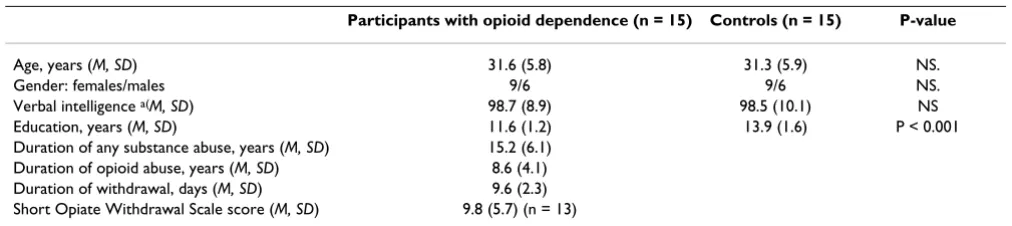
A control group matched for age, gender, and VIQ was recruited from the staff of our institution. The VIQ match-ing was based on Wechsler's revised intelligence scale (WAIS-R) vocabulary subtest [37]. None of the controls had abused illegal drugs, but all of them had taken alco-hol on social occasions. However, none of them met the criteria of abuse or dependence on alcohol. The controls were screened by psychiatric interview of having no his-tory of major psychiatric morbidity or substance abuse. Demographic variables of the groups are presented in Table 1. As a group the controls had more education than participants with opioid dependence.
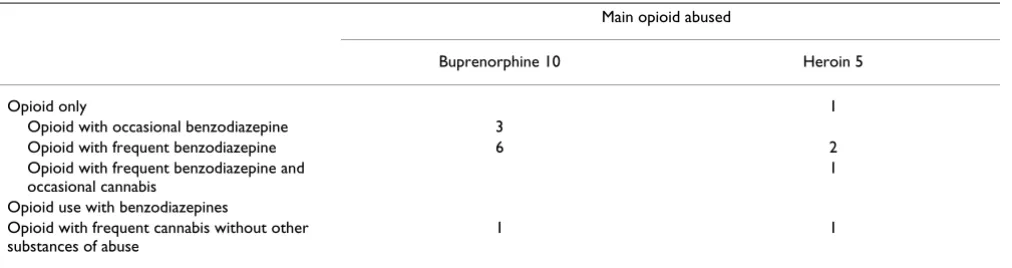
The dependence and other psychiatric diagnoses were done according to the Structured Clinical Interview (SCID) for DSM-IV axes I and II [38,39]. All patients met the DSM-IV criteria for opioid dependence. Nine patients also fulfilled the criteria for benzodiazepine dependence and four for cannabis dependence. One patient had all these three diagnoses. Self-reported recent month drug abuse was consistent with urine screening results. Table 2 shows recent month drug abuse in the patient group.
[image:3.612.52.558.608.721.2]During the inpatient period many participants with opi-oid dependence showed current mood or anxiety disorder symptoms. However, only two participants were classified
Table 1: Group demographics
Participants with opioid dependence (n = 15) Controls (n = 15) P-value
Age, years (M, SD) 31.6 (5.8) 31.3 (5.9) NS.
Gender: females/males 9/6 9/6 NS.
Verbal intelligence a(M, SD) 98.7 (8.9) 98.5 (10.1) NS
Education, years (M, SD) 11.6 (1.2) 13.9 (1.6) P < 0.001
Duration of any substance abuse, years (M, SD) 15.2 (6.1) Duration of opioid abuse, years (M, SD) 8.6 (4.1) Duration of withdrawal, days (M, SD) 9.6 (2.3) Short Opiate Withdrawal Scale score (M, SD) 9.8 (5.7) (n = 13)
as having other axis I diagnosis than substance-abuse. Both of these were depressive disorders not otherwise specified. When DSM-IV axis II diagnoses were evaluated, all patients met criteria for at least one personality disor-der. The most common of these was the antisocial person-ality disorder, which was diagnosed in all except three, who also had some features of antisocial personality dis-order.
Cognitive tests
A battery of cognitive tests included tests of working mem-ory, episodic memmem-ory, executive function, and fluid intel-ligence. All tests were administered according to standard instructions.
Working memory was measured by The Digit Span subtest from the Wechsler Memory Scale-Revised (WMS-R) and a computerized version of the Paced Auditory Serial Addition Task (PASAT) from the FORAMENRehab software package [40-42]. The Digit Span measures verbal working memory storage in relatively simple form. In the PASAT complex working memory functions are required: continuous storage of previous number, rapid arithmeti-cal processing, and executive control of interference from previous items or from ongoing adding process. Presenta-tion rate of a new number to be added with the previous one was one in every 1.6 second.
Verbal memory was measured by The delayed Logical Memory subtest of the WMS-R and the Rey Auditory Ver-bal Learning Test (the RAVLT) [40,43]. To avoid ceiling effect in the RAVLT only three learning trials of 15 word list were presented. The sum of the first three RAVLT trials was used as a parameter for immediate learning. Visual memory was measured by the Benton Visual Retention Test [44].
Executive function was measured using the modified Stroop task and the Ruff Figural Fluency Test [45,46]. The
interference time of the Stroop task was calculated by sub-tracting reading time of 50 non-colored words from nam-ing time of 50 colors printed in a different color than the one spelled by the letters by a procedure first described by Dodrill [47]. Thus, both color naming speed and interfer-ence from inhibition from not reading words are affecting the result. According to current research this procedure should be more prone to interference effect than subtract-ing from color namsubtract-ing [48]. The RFFT is a design fluency task measuring planning and fluency of action. A paper containing a series of squares with five dots in each one is presented. Then as many as possible unique figures are drawn by connecting at least two dots with straight line in each square.
Fluid intelligence was measured by the Culture Fair Intel-ligence Test (CFIT) also known as Cattell's Culture Fair test [49]. Version 2A was used. The CFIT includes a group of visuo-spatial reasoning tasks. The performance of the participant in these tasks reflects fluid or general intelli-gence needed in highly demanding novel problem solving situations. This test is sensitive to fluid intelligence deficit due to various origins. Dissociations between preserved standard intelligence measured by the Wechsler scales and by the poor CFIT scores have been shown in frontal lobe lesions as well as in normal ageing [30,50]
Procedure
[image:4.612.55.561.100.234.2]The psychiatric examination and diagnosis were done by trained psychiatrists at the detoxification unit. The day of cognitive testing was randomly chosen from days between 5 to 15 days from the last opioid dose. Tests were pre-sented alternating between difficult and easy ones, and verbal and nonverbal ones, and memory and non-mem-ory ones. To avoid fatigue, one pause was held during test-ing. Patients showing positive urine drug screening at initiation of withdrawal period were tested after negative drug screening for other drugs than those prescribed for them. On the test day morning at 8.00 patients completed Table 2: Recent month drug abuse in patient group (number of patients)
Main opioid abused
Buprenorphine 10 Heroin 5
Opioid only 1
Opioid with occasional benzodiazepine 3
Opioid with frequent benzodiazepine 6 2
Opioid with frequent benzodiazepine and occasional cannabis
1
Opioid use with benzodiazepines
Opioid with frequent cannabis without other substances of abuse
1 1
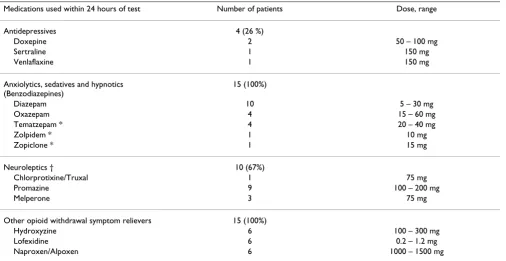
the 10-item Short Opiate Withdrawal Scale (SOWS) [51] measuring withdrawal symptoms. All patients were using symptom relieving or other psychotropic medication on the day of testing. Medication variables of the test day are presented in Table 3. The brain MRI scans were evaluated by two neuroradiologists. A consensus of opinion was formed in each case. Analyses of MRI results are reported separately [52].
Statistical analysis
Analysis of variance (ANOVA) was used to compare the raw scores of each cognitive test. Statistical significance was set at 0.05 (two-tailed). P-values of 0.05–0.1 were considered as a statistical trend. Effect sizes were calcu-lated with Cohen's d. Corrections for multiple compari-sons were not applied due to seminal nature of this study and the limited power afforded by small number of par-ticipants. Group difference in education was not covaried for, because the assumption of similar linear relation between education and cognitive performance in both groups needed for analysis of covariance (ANCOVA) was not met. All participants with opioid dependence had started substance abuse in their early teen years. Once the substance abuse history begins, early-onset substance abusers start to skip school lessons at primary school, get poor grades, and only few of them get a diploma from sec-ondary education. Thus, as a group, the participants with opioid dependence had less education than their VIQ comparable controls. Thus, group difference in education
does not give as reliable estimate about their primary intellectual capacity than VIQ. Whenever participants with opioid dependence performed significantly worse than control participants correlations between cognitive performance and variables of interest, were analyzed by the Pearson product-moment correlation coefficient. Sta-tistical analyses were done by SPSS staSta-tistical PC program, version 11.0.
Results
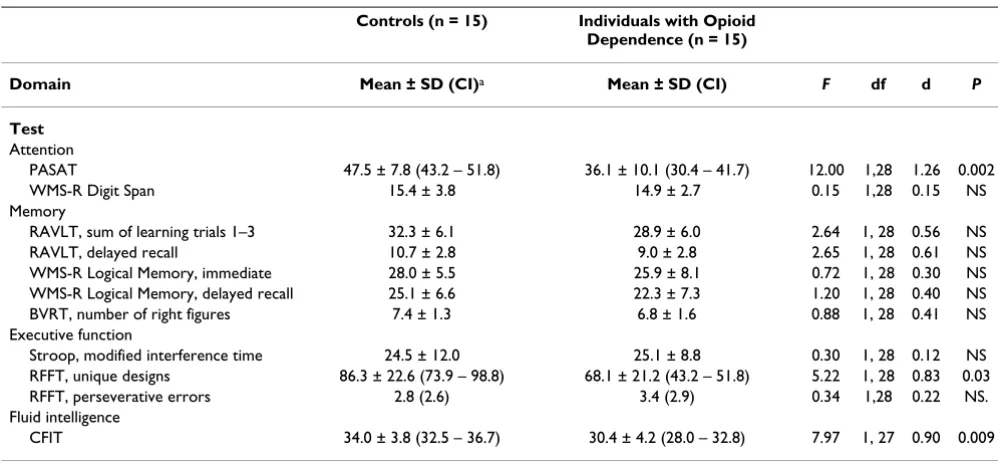
Table 4 shows that participants with opioid dependence performed significantly worse than control participants in fluid intelligence, measured by the CFIT, in complex working memory, measured by the PASAT, and in one executive function test, the RFFT.
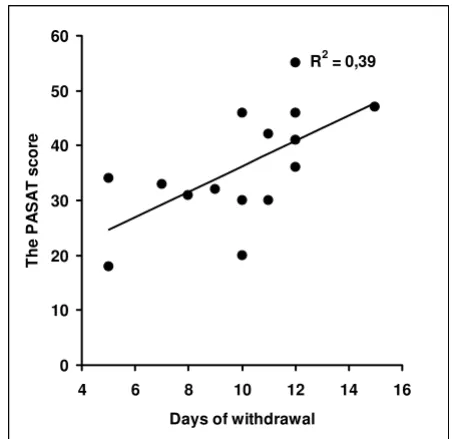
[image:5.612.55.561.458.719.2]Analysis of correlations between inferior cognitive per-formance and days of withdrawal showed statistically sig-nificant results with fluid intelligence measured by the CFIT performance and with complex working memory measured by the PASAT (R = .65, P = 0.009 and R = .63, P = 0.01, respectively). Figures 1 and 2 depict these correla-tions. However, reduced figural fluency performance in the RFFT and days of withdrawal showed no association (R = -.01, NS). The highest correlations between years of opiate abuse or years of any substance abuse and between inferior cognitive performances were found for the RFFT performance -.23 and -.31; respectively: Both of these were statistically non-significant. The correlations
Table 3: Medication within last 24 h before testing in patient group
Medications used within 24 hours of test Number of patients Dose, range
Antidepressives 4 (26 %)
Doxepine 2 50 – 100 mg
Sertraline 1 150 mg
Venlaflaxine 1 150 mg
Anxiolytics, sedatives and hypnotics (Benzodiazepines)
15 (100%)
Diazepam 10 5 – 30 mg
Oxazepam 4 15 – 60 mg
Tematzepam * 4 20 – 40 mg
Zolpidem * 1 10 mg
Zopiclone * 1 15 mg
Neuroleptics † 10 (67%)
Chlorprotixine/Truxal 1 75 mg
Promazine 9 100 – 200 mg
Melperone 3 75 mg
Other opioid withdrawal symptom relievers 15 (100%)
Hydroxyzine 6 100 – 300 mg
Lofexidine 6 0.2 – 1.2 mg
Naproxen/Alpoxen 6 1000 – 1500 mg
between the SOWS score and inferior cognitive perform-ance ranged from 0.08 to -0.13 (NS).
Discussion
Early abstinent opioid dependent individuals performed worse than normal controls in complex working memory, executive function, and fluid intelligence. Thus, the results support our main hypothesis of reduced cognitive per-formance in these areas during early opioid abstinence. The effect sizes of the group differences in these areas are similar or higher than the ones found in studies concern-ing current drug abuse [53]. The high positive correlations that were found between fluid intelligence performance or complex working memory performance and days of withdrawal support the hypothesis of transient cognitive deficit. Although correlations do not imply causality, they may give impetus for more detailed considerations.
If neurocognitive deficits related to opioid abuse are con-sidered to reflect a rather permanent neurotoxicity of opi-oid abuse, then the effect of abuse period under which the study was done (ongoing abuse vs. early abstinence vs. late abstinence) should be small. However, as reviewed in the background section neural dysregulations are pro-nounced during early opioid abstinence; and this is likely to affect cognition. This conclusion is supported by com-paring our complex working memory results to the results by Mintzer et al study in which a two-back working mem-ory task was employed [14]. In their study opioid depend-ent patidepend-ents treated with opioid agonist methadone showed working memory deficit, whereas patients with
nine months of opioid abstinence showed normal per-formance. Thus, there is some evidence that individuals with current opioid use or under early opioid abstinence show complex working memory deficit, whereas individ-uals who have reached late opioid abstinence do not show similar deficit. This is in agreement with the suggestion that neurocognitive deficits related to several drugs of abuse including opioids should be seen as recoverable limitations of neuronal plasticity rather than as more per-manent "lesion effect" [54].
The relevance of neurocognitive study results comes often from dissociations found between different functions. In this study three dissociations merit further consideration. First, early opioid abstinent patients were inferior to con-trols in fluid intelligence task though the groups were matched for VIQ. According to functional neuroimaging studies this indicates deficiencies in frontoparietal net-works needed in several demanding cognitive task [55]
The second dissociation was found between deficient per-formance in complex working memory task, the PASAT, and normal or nearly normal episodic memory perform-ance. Against our expectations there were no group differ-ences in immediate or delayed free recall tasks. Thus, it is possible that neural dysregulations in hippocampus dur-ing opioid withdrawal may not affect episodic memory.
[image:6.612.54.553.98.331.2]It has been suggested that stress system induced episodic memory impairment needs more chronic stress system abnormality than working memory impairment; and this Table 4: Comparisons of individuals with opioid dependence and controls on cognitive measures using ANOVA
Controls (n = 15) Individuals with Opioid Dependence (n = 15)
Domain Mean ± SD (CI)a Mean ± SD (CI) F df d P
Test Attention
PASAT 47.5 ± 7.8 (43.2 – 51.8) 36.1 ± 10.1 (30.4 – 41.7) 12.00 1,28 1.26 0.002
WMS-R Digit Span 15.4 ± 3.8 14.9 ± 2.7 0.15 1,28 0.15 NS
Memory
RAVLT, sum of learning trials 1–3 32.3 ± 6.1 28.9 ± 6.0 2.64 1, 28 0.56 NS
RAVLT, delayed recall 10.7 ± 2.8 9.0 ± 2.8 2.65 1, 28 0.61 NS
WMS-R Logical Memory, immediate 28.0 ± 5.5 25.9 ± 8.1 0.72 1, 28 0.30 NS
WMS-R Logical Memory, delayed recall 25.1 ± 6.6 22.3 ± 7.3 1.20 1, 28 0.40 NS
BVRT, number of right figures 7.4 ± 1.3 6.8 ± 1.6 0.88 1, 28 0.41 NS
Executive function
Stroop, modified interference time 24.5 ± 12.0 25.1 ± 8.8 0.30 1, 28 0.12 NS
RFFT, unique designs 86.3 ± 22.6 (73.9 – 98.8) 68.1 ± 21.2 (43.2 – 51.8) 5.22 1, 28 0.83 0.03
RFFT, perseverative errors 2.8 (2.6) 3.4 (2.9) 0.34 1,28 0.22 NS.
Fluid intelligence
CFIT 34.0 ± 3.8 (32.5 – 36.7) 30.4 ± 4.2 (28.0 – 32.8) 7.97 1, 27 0.90 0.009
a CI = confidence interval
would hold especially among young adults [56,57]. Dur-ing early opioid abstinence high stress system activation as shown by elevated cortisol level is common. It is espe-cially pronounced among individuals with antisocial per-sonality disorder [35]. Therefore, as nearly all patients studied were young adults (mean 31.5 years) and most of them (12/15) had antisocial personality disorder, ele-vated stress system activation during early opioid absti-nence may be related to the dissociation observed between complex working memory and episodic mem-ory.
The third dissociation was found between deficient com-plex and normal simple working memory performance: the PASAT and the Digit Span, respectively. In the PASAT both storage and central executive components of work-ing memory are needed [58]. The Digit Span task demands especially storage of the several items and cen-tral executive is involved to a lesser degree. Thus, we sug-gest that central executive component of working memory is impaired during early opioid abstinence while storage is intact.
There are some studies indicating that executive function deficit may be found during late opioid abstinence as well
[12,13]. This idea is in agreement with zero-correlation found between days of withdrawal and reduced figural fluency performance. In addition, the non-significant neg-ative correlations between figural fluency performance and duration of opioid abuse or any substance abuse (-.23 and -.31) are in line with earlier research showing negative association between opioid abuse severity and figural flu-ency performance [59]. A larger sample study concerning the relationship between opioid abuse or other substance abuse variables and fluency performance is warranted.
[image:7.612.321.548.96.316.2]The positive correlations that were between impaired complex working memory or fluid intelligence perform-ances and days of withdrawal are in agreement with the idea that the observed deficits in these domains may be partly transient. It is known that high cortisol levels may associate with working memory deficit [23,24]. It is also known that during early opioid abstinence cortisol levels are elevated but then start to normalize during second week of abstinence [33]. Thus, we suggest that cognitive deficit during early opioid abstinence may partly relate to high brain stress system activation during that time, and therefore is partly transient. In agreement with this idea, a recent experimental study showed that chronic stress sys-tem elevation leads to transient – not permanent – dys-function – of prefrontal dopamine system [60]. The authors suggest that this may negatively affect working Correlation between complex working memory test per-formance and days of withdrawal among individuals with early abstinence from opioid dependence
Figure 2
Correlation between complex working memory test performance and days of withdrawal among individu-als with early abstinence from opioid dependence
Note: PASAT = Paced Auditory Serial Addition.
R2 = 0,39
0 10 20 30 40 50 60
4 6 8 10 12 14 16 Days of withdrawal
Th
e PA
SA
T
s
co
re
Correlation between fluid intelligence test performance and days of withdrawal among individuals with early abstinence
from opioid dependence (N = 14) a
Figure 1
Correlation between fluid intelligence test perform-ance and days of withdrawal among individuals with early abstinence from opioid dependence (N = 14) a Note: CFIT = Culture Fair Intelligence Test. a = One outlier performance (17 points) highly discordant to his other per-formance was dismissed due to poor collaboration during the CFIT administration.
R2 = 0,43
20 25 30 35 40 45
4 6 8 10 12 14 16
Days of withdrawal
T
h
e
C
F
IT
sco
memory. Interestingly, working memory and fluid intelli-gence are highly associated [61].
Finally, the correlations found between opioid with-drawal symptoms as measured by the SOWS and cogni-tive performances were practically zero. It is possible that the SOWS reflects mostly peripheral aspects of opioid withdrawal syndrome.
Clinical implications
Higher order cognition and prefrontal cortex function are closely related. It has been suggested that when prefrontal cortex function gets "off line" in prolonged stressful situa-tions more habitual responses start to regulate behavior [62]. Thus, reduced higher order cognition and impulsive behavior during early opioid abstinence are likely to be associated. Therefore, screening of higher order cognitive functions by highly sensitive task like the PASAT could be used for treatment planning. In addition, pharmacologi-cal and behavioral interventions to improve working memory performance may improve opioid withdrawal outcomes as well [63,64].
Limitations
The small number of participants reduces the power to detect mild to moderate cognitive deficits. Previous ben-zodiazepine abuse or cannabis abuse that was common among our patient group may also affect the results of this study. Long-term cannabis abuse and benzodiazepine abuse both have adverse effect on cognitive function [65,66]. Current benzodiazepine medication at test was common. In normal population benzodiazepines have adverse affect on several cognitive functions. On the other hand, noradrenaline agonist lofexidine, which was given to the patients of this study, may improve reduced work-ing memory performance [63]. In our sample the fre-quency of personality disorders, and especially antisocial personality disorder was more common than known fre-quencies of these disorders among substance abusers. This also should be taken into account when comparing our results with other studies. The group matching procedure of our study was based on VIQ whereas in most other studies the matching is based on education. Though matching for VIQ or premorbid IQ is not totally excep-tional in opioid abuse studies [6,11], this should be taken into account when comparing our results with other stud-ies. Finally, the suggestion for transient cognitive deficit due to high stress system activation is very preliminary. Longitudinal studies with relevant cognitive and neuroen-docrine variables may determine if suggested associations between these variables exist.
Conclusion
Fluid intelligence, working memory, and executive func-tion deficit observed in opioid withdrawal patients during
first or second week from detoxification implicates a rather general cognitive deficit. We suggest that cognitive deficit during early opioid abstinence may be associated with known opioid withdrawal related neural dysregula-tions in the prefrontal cortex. Fortunately, relatively rapid recovery of cognitive function during opioid abstinence seems possible. Yet, the role of cognitive control during the narrow gateway to long-term opioid abstinence needs further studies.
Competing interests
The author(s) declare that they have no competing inter-ests.
Authors' contributions
PR was the main investigator collecting neuropsychologi-cal data. He was principally responsible for preparing the manuscript and performed statistical analysis. Together with authors TA, RK, and SK, he conceived the idea of this study.
HK and SK participated in the design of the study and also in writing the manuscript.
TA and RK carried out MRI investigations.
OJ and VP together with collaborators carried out psychi-atric investigations.
All authors read and accepted the manuscript.
Acknowledgements
This work was supported by the grants from the Alfred Kordelin Founda-tion and HYKS-Institute to the first author and from the Finnish Medical Foundation and the Yrjö Jahnsson Foundation to the R.K and T.A. We thank Professor VeijoVirsu for helpful comments during the research proc-ess and Senior Lecturer Pertti Keskivaaara for statistical advice.
References
1. Kamboj SK, Tookman A, Jones L, Curran HV: The effects of imme-diate-release morphine on cognitive functioning in patients receiving chronic opioid therapy in palliative care. Pain 2005,
117:388-395.
2. Sjogren P, Christrup LL, Petersen MA, Hojsted J: Neuropsycholog-ical assessment of chronic non-malignant pain patients treated in a multidisciplinary pain centre. European J Pain 2005,
9:453-462.
3. Chapman SL, Byas-Smith MG, Reed BA: Effects of intermediate-and long-term use of opioids on cognition in patients with chronic pain. Clin J Pain 2002, 18:S83-S90.
4. Grant I, Adams KM, Carlin AS, Rennick PM, Judd LL, Schoof K: The collaborative neuropsychological study of polydrug users. Arch Gen Psychiatry 1978, 35:1063-1074.
5. Rounsaville BJ, Jones C, Novelly RA, Kleber H: Neuropsychological functioning in opiate addicts. J Nerv Ment Dis 1982, 170:209-216. 6. Ornstein TJ, Iddon JL, Baldacchino AM, Sahakian BJ, London M, Everitt BJ, Robbins TW: Profiles of cognitive dysfunction in chronic amphetamine and heroin abusers. Neuropsychopharmacology
2000, 23:113-126.
decision-making cognition of chronic amphetamine abusers, opiate abusers, patients with focal damage to prefrontal cor-tex, and tryptophan-depleted normal volunteers: Evidence for monoaminergic mechanisms. Neuropsychopharmacology
1999, 20:322-339.
8. Strang J, Gurling H: Computerized-Tomography and Neu-ropsychological Assessment in Long-Term High-Dose Her-oin-Addicts. Brit J Addict 1989, 84:1011-1019.
9. Guerra D, Sole A, Cami J, Tobena A: Neuropsychological per-formance in opiate addicts after rapid detoxification. Drug Alcohol Depend 1987, 20:261-270.
10. Gerra G, Calbiani B, Zaimovic A, Sartori R, Ugolotti G, Ippolito L, Delsignore R, Rustichelli P, Fontanesi B: Regional cerebral blood flow and comorbid diagnosis in abstinent opioid addicts. Psy-chiatry Res 1998, 83:117-126.
11. Davis PE, Liddiard H, McMillan TM: Neuropsychological deficits and opiate abuse. Drug Alcohol Depend 2002, 67:105-108. 12. Lee TM, Pau CW: Impulse control differences between
absti-nent heroin users and matched controls. Brain Inj 2002,
16:885-889.
13. Pau CWH, Lee TMC, Chan SF: The impact of heroin on frontal executive functions. Arch Clin Neuropsychol 2002, 17:663-670. 14. Mintzer MZ, Copersino ML, Stitzer ML: Opioid abuse and
cogni-tive performance. Drug Alcohol Depend 2005, 78:225-230. 15. Kakko J, Svanborg KD, Kreek MJ, Heilig M: 1-year retention and
social function after buprenorphine-assisted relapse preven-tion treatment for heroin dependence in Sweden: a ran-domised, placebo-controlled trial. Lancet 2003, 361:662-668. 16. Krook AL, Brors O, Dahlberg J, Grouff K, Magnus P, Roysamb E, Waal
H: A placebo-controlled study of high dose buprenorphine in opiate dependents waiting for medication-assisted rehabili-tation in Oslo, Norway. Addiction 2002, 97:533-542.
17. Kleber HD: Opioids: Detoxification. In Textbook of substance abuse treatment, Second Edition Edited by: Galanter MG and Kleber HD. Washington D.C., The American Psychiatric Press; 1999:251-269.
18. San L, Cami J, Fernandez T, Olle JM, Peri JM, Torrens M: Assess-ment and manageAssess-ment of opioid withdrawal symptoms in buprenorphine-dependent subjects. Br J Addict 1992, 87:55-62. 19. Nestler EJ: Molecular basis of long-term plasticity underlying
addiction. Nature Rev Neurosci 2001, 2:119-128.
20. Espejo EF, Serrano MI, Caille S, Stinus L: Behavioral Expression of Opiate Withdrawal is Altered after Prefrontocortical Dopamine Depletion in Rats: Monoaminergic Correlates. Neuropsychopharmacology 2001, 25:204-212.
21. Cami J, Farre M: Drug Addiction. N Engl J Med 2003, 349:975-986. 22. Bearn J, Buntwal N, Papadopoulos A, Checkley S: Salivary cortisol during opiate dependence and withdrawal. Addict Biol 2001,
6:157-162.
23. Elzinga BM, Roelofs K: Cortisol-induced impairments of work-ing memory require acute sympathetic activation. Behav Neu-rosci 2005, 119:98-103.
24. Roozendaal B, McReynolds JR, McGaugh JL: The Basolateral Amy-gdala Interacts with the Medial Prefrontal Cortex in Regulat-ing Glucocorticoid Effects on WorkRegulat-ing Memory Impairment. J Neurosci 2004, 24:1385-1392.
25. Aston-Jones G, Cohen JD: An integrative theory of locus coeru-leus-norepinephrine function: Adaptive gain and optimal performance. Annu Rev Neurosci 2005, 28:403-450.
26. Bouret S, Sara SJ: Network reset: a simplified overarching the-ory of locus coeruleus noradrenaline function. Trends Neurosci
2005, 28:574-582.
27. Shors TJ: Memory traces of trace memories: neurogenesis, synaptogenesis and awareness. Trends Neurosci 2004,
27:250-256.
28. Eisch AJ, Barrot M, Schad CA, Self DW, Nestler EJ: Opiates inhibit neurogenesis in the adult rat hippocampus. PNAS 2000,
97:7579-7584.
29. Frenois F, Stinus L, Di Blasi F, Cador M, Le Moine C: A specific lim-bic circuit underlies opiate withdrawal memories. J Neurosci
2005, 25:1366-1374.
30. Duncan J, Emslie H, Williams P, Johnson R, Freer C: Intelligence and the Frontal Lobe: The Organization of Goal-Directed Behavior,. Cognit Psychol 1996, 30:257-303.
31. Duncan J, Johnson R, Swales M, Freer C: Frontal lobe deficits after head injury: Unity and diversity of function. Cognit Neuropsychol
1997, 14:713-741.
32. Fan XL, Zhang JS, Zhang XQ, Ma L: Chronic morphine treatment and withdrawal induce up-regulation of c-Jun N-terminal kinase 3 gene expression in rat brain. Neuroscience 2003,
122:997-1002.
33. Cami J, Gilabert M, San L, de la Torre R: Hypercortisolism after opioid discontinuation in rapid detoxification of heroin addicts. Br J Addict 1992, 87:1145-1151.
34. Harris AC, Gewirtz JC: Acute opioid dependence: characteriz-ing the early adaptations underlycharacteriz-ing drug withdrawal. Psy-chopharmacology 2005, 178:353-366.
35. Gerra G, Ceresini S, Esposito A, Zaimovic A, Moi G, Bussandri M, Raggi MA, Molina E: Neuroendocrine and behavioural responses to opioid receptor-antagonist during heroin detoxification: relationship with personality traits. Int Clin Psy-chopharmacol 2003, 18:261-269.
36. Gerra G, Ferri M, Zaimovic A, Giucastro G, Palladino M, Sartori R, Delsignore R, Maestri D, Marzocchi G, Brambilla F: GABAergic function in detoxified heroin addicts: relationship to anxiety disorders. Psychiatry Res 1998, 77:89-96.
37. Wechsler D: Wechsler Adult Intelligence Scale - Revised (WAIS-R). Finnish version. Helsinki, Psykologien Kustannus; 1993.
38. First MB GMSRLWJBBL: Structured Clinical Interview for DSM-IV, Axis I Disorders (SCID-I). New York, American Psychiatric Press; 1997.
39. First MB SRLGMWJB: Structured Clinical Interview for DSM-IV, Axis II Disorders (SCID-II). New York, American Psychiatric Press; 1997.
40. Wecshler D: Wechsler Memory Scale - Revised (WMS-R). Finnish version. Helsinki, Psykologien kustannus; 1996.
41. Gronwall DM: Paced auditory serial-addition task: a measure of recovery from concussion. Percept Mot Skills 1977, 44:367-373. 42. Koskinen SK, Sarajuuri JM: Computer-administered cognitive remediation in a frame of holistic neuropsychological reha-bilitation: FORAMENrehab programs. Acta Neurochir (Wien)
2002, 144:A20-A21.
43. Lezak M: Neuropsychological Assesment. New York, Oxford University Press; 1995.
44. Benton AL: The Revised Visual Retention Test. New York, Psy-chological Corporation; 1963.
45. Ruff RM: Ruff Figural Fluency Test. Professional Manual.
Odessa, FL, Psychological Assesment Resources; 1996.
46. Pulliainen V, Jokelainen M: Effects of phenytoin and car-bamazepine on cognitive functions in newly diagnosed epi-leptic patients. Acta Neurol Scand 1994, 89:81-86.
47. Dodrill CB: Neuropsychology of epilepsy. In Handbook of clinical neuropsychology Edited by: Fliskov SB BTJ. New York, John Wiley and Sons; 1981:366-395.
48. Botvinick MM, Cohen JD, Carter CS: Conflict monitoring and anterior cingulate cortex: an update. Trends Cogn Sci 2004,
8:539-546.
49. Measuring Intelligence with Culture Fair Tests. Manual for Scales 2 and 3. Champaign, Ill, Institute for Personality and Ability Testing; 1973.
50. Duncan J, Burgess P, Emslie H: Fluid intelligence after frontal lobe lesions. Neuropsychologia 1995, 33:261-268.
51. Gossop M: The development of a Short Opiate Withdrawal Scale (SOWS). Addict Behav 1990, 15:487-490.
52. Kivisaari R, Kahkonen S, Puuskari V, Jokela O, Rapeli P, Autti T: Mag-netic resonance imaging of severe, long-term, opiate-abuse patients without neurologic symptoms may show enlarged cerebrospinal spaces but no signs of brain pathology of vas-cular origin. Arch Med Res 2004, 35:395-400.
53. Verdejo-Garcia A, Lopez-Torrecillas F, Gimenez CO, Perez-Garcia M: Clinical implications and methodological challenges in the study of the neuropsychological correlates of cannabis, stim-ulant, and opioid abuse. Neuropsychol Rev 2004, 14:1-41. 54. Robinson TE, Kolb B: Structural plasticity associated with
exposure to drugs of abuse. Neuropharmacology 2004, 47:33-46. 55. Duncan J, Owen AM: Common regions of the human frontal
lobe recruited by diverse cognitive demands. Trends Neurosci
Publish with BioMed Central and every scientist can read your work free of charge "BioMed Central will be the most significant development for disseminating the results of biomedical researc h in our lifetime."
Sir Paul Nurse, Cancer Research UK
Your research papers will be:
available free of charge to the entire biomedical community
peer reviewed and published immediately upon acceptance
cited in PubMed and archived on PubMed Central
yours — you keep the copyright
Submit your manuscript here:
http://www.biomedcentral.com/info/publishing_adv.asp
BioMedcentral
56. McEwen BS: Stress, sex, hippocampal plasticity: relevance to psychiatric disorders. Clin Neurosci Res 2001, 1:19-34.
57. Wolf OT, Convit A, McHugh PF, Kandil E, Thorn EL, De Santi S, McE-wen BS, de Leon MJ: Cortisol Differentially Affects Memory in Young and Elderly Men. Behav Neurosci 2001, 115:1002-1011. 58. Audoin B, Ibarrola D, Ranjeva JP, Confort-Gouny S, Malikova I,
Ali-Cherif A, Pelletier J, Cozzone P: Compensatory cortical activa-tion observed by fMRI during a cognitive task at the earliest stage of MS. Hum Brain Mapp 2003, 20:51-58.
59. Verdejo A, Orozco-Gimenez C, Meersmans Sanchez-Jofre M, Aguilar de Arcos F, Perez-Garcia M: [The impact exerted by the sever-ity of recreational drug abuse on the different components of the executive function]. Rev Neurol 2004, 38:1109-1116. 60. Izzo E, Sanna PP, Koob GF: Impairment of dopaminergic system
function after chronic treatment with corticotropin-releas-ing factor. Pharmacol Biochem Behav 2005, 81:701-708.
61. Conway ARA, Kane MJ, Engle RW: Working memory capacity and its relation to general intelligence. Trends Cogn Sci 2003,
7:547-552.
62. Arnsten AFT: Catecholamine modulation of prefrontal corti-cal cognitive function. Trends Cogn Sci 1998, 2:436-447. 63. Barch DM: Pharmacological manipulation of human working
memory. Psychopharmacology 2004, 174:126-135.
64. Olesen PJ, Westerberg H, Klingberg T: Increased prefrontal and parietal activity after training of working memory. Nat Neu-rosci 2004, 7:75-79.
65. Solowij N, Stephens RS, Roffman RA, Babor T, Kadden R, Miller M, Christiansen K, McRee B, Vendetti J: Cognitive functioning of long-term heavy cannabis users seeking treatment. JAMA
2002, 287:1123-1131.
66. Barker MJ, Greenwood KM, Jackson M, Crowe SF: Cognitive effects of long-term benzodiazepine use: a meta-analysis. CNS Drugs 2004, 18:37-48.
Pre-publication history
The pre-publication history for this paper can be accessed here: