
1
A Review of Numerical Analysis of Friction Stir Welding
Xiaocong He1)※
, Fengshou Gu 2), Andrew Ball 2)
1) Innovative Manufacturing Research Centre, Kunming University of Science and Technology, Kunming, 650500, P. R. China
2) Centre for Efficiency and Performance Engineering, University of Huddersfield, Queensgate, Huddersfield, HD1 3DH, UK.
Abstract
Friction stir welding is a relatively new solid-state joining technique which is widely adopted in different industry fields to join different metallic alloys that are hard to weld by conventional fusion welding. Friction stir welding is a highly complex process comprising several highly coupled physical phenomena. The complex geometry of some kinds of joints and their three dimensional nature make it difficult to develop an overall system of governing equations for theoretical analyzing the behavior of the friction stir welded joints. The experiments are often time consuming and costly. To overcome these problems, numerical analysis has frequently been used since the 2000s. This paper reviews the latest developments in the numerical analysis of friction stir welding processes, microstructures of friction stir welded joints and the properties of friction stir welded structures. Some important numerical issues such as materials flow modeling, meshing procedure and failure criteria are discussed. Numerical analysis of friction stir welding will allow many different welding processes to be simulated in order to understand the effects of changes in different system parameters before physical testing, which would be time-consuming or prohibitively expensive in practice. The main methods used in numerical analysis of friction stir welding are discussed and illustrated with brief case studies. In addition, several important key problems and issues remain to be addressed about the numerical analysis of friction stir welding and opportunities for further research are identified.
Keywords: Friction Stir Welding; Numerical Analysis; Microstructure; Mechanical Behavior.
2
1. Introduction
There is an increasing need to design lightweight structures such as those in aircraft panels and vehicle body shells. Advanced joining technology is an integral part of the manufacturing processes of lightweight structures. Considerable effort has been expended to develop various joining processes and assess their suitability for use in lightweight structures [1-5].
Friction stir welding (FSW) is a solid-state joining technique which was invented at The Welding Institute (TWI), UK, in 1991 [6]. The FSW has been found to be effective for joining hard-to-weld metals and for joining plates with different thickness or different materials.
[image:2.595.187.391.389.535.2]In the FSW process a non-consumable rotating tool with a specially designed pin and shoulder is inserted into the abutting edges of workpieces to be joined and traversed along the line of the joint, as shown in Fig. 1 [7]. As the tool travels, heat is created by the contact friction between the shoulder and the workpiece, and by the plastic deformation of the materials in the stir zone. The high strain and heat energies experienced by the base metal during stirring causes dynamic recrystallization, which is the formation of new grains in the weld zone [6]. Although Fig. 1 shows a butt joint for illustration, other types of joints, as shown in Fig. 2, also can be fabricated by FSW [8].
Fig. 1. Schematic drawing of FSW process [7].
3
FSW is often a preferred joining technique not only for aluminum alloys [e.g. 9, 10] but also for other difficult-to-weld metals such as magnesium alloys [e.g. 11, 12], titanium alloys [e.g. 13, 14] and metal-matrix composites [e.g. 15, 16] etc.. The technique is now widely used in many industrial sectors such as marine, aerospace, railway, land transportation, etc. Some general information on the FSW is available from TWI [17].
FSW is a highly complex process comprising several highly coupled (and non-linear) physical phenomena. These phenomena include large plastic deformation, material flow, mechanical stirring, surface interaction between the tool and the workpiece, dynamic structural evolution and heat generation resulting from friction and plastic deformation. Multiple parameters greatly influence the quality of the FSW joints. Consequently, FSW has been the subject of a considerable amount of experimental and numerical study. Mishra and Ma [8] comprehensively reviewed both the FSW and friction stir processes. Nandan et al. [18] give a very comprehensive review on the process, structure and properties of FSW. Threadgill et al. [19] provided an exhaustive overview of the FSW of aluminum alloys and Çam [20] reviewed extensively FSW of other alloys.
The behavior of the FSW joints is not only influenced by the geometry of the tools and the joints but also by different process parameters. The complex geometry of some kinds of joints and their three dimensional nature make it difficult to develop an overall system of governing equations for predicting the behavior of the FSW joints. In addition, material non-linearity due to plastic behavior is difficult to incorporate because the analysis becomes very complex in the mathematical formulation. The experiments are often time consuming and costly. To overcome these problems, numerical analysis has frequently been used since the 2000s.
Some exciting developments in the numerical study of FSW have been accompanied by scientific research such as that at the University of South Carolina (United States) [e.g. 21-25], the University of Palermo (Italy) [e.g. 26-30], the Dalian University of Technology (China) [e.g. 31-35], and the Sharif University of Technology (Iran) [e.g. 36-40], etc. Numerical analysis has found widespread applications in FSW. Significant progress has been made in the fundamental understanding of both the FSW process and the properties of the resulting welded joints. However, no comprehensive review on numerical analysis of FSW has been reported so far.
4
2. FSW Process
The properties and performance of the FSW joints are dictated by the microstructure, which in turn is determined by the FSW process. The FSW process can normally be varied by changing the welding parameters. Therefore welding parameters must be selected that give the best possible microstructure. Furthermore an accurate knowledge of the FSW process is a prerequisite for reliable prediction of the weld dimensions, final microstructure and mechanical properties of the FSW joints. Due to the complexity of the FSW process, it is very difficult to gain insight into the joint during the actual forming process. Numerical simulation helps overcome this problem by providing an effective way of analyzing the formation of FSW joints [41].
2.1 Process Modeling Techniques
Simulating the FSW process is a complex problem which involves physical couplings between mechanics and heat transfer, very large deformations and strain rates in the stirring zone around the pin. Numerical simulation of the FSW processes enables estimation of different process parameters such as tool geometry and speeds etc. Simulation is not an easy task, however, since it involves the interaction of thermal and mechanical phenomena. Some established numerical modeling techniques have been developed that can explain and predict important features of the process physics involved in the FSW [e.g. 42, 43]. The FSW models cover a broad range of complexity, from the simple conduction heat transfer models [e.g. 44, 45], to the metal flow models [e.g. 46-49], to the fully coupled models [e.g. 50-52] in which the viscoplastic flow and the heat transfer are modeled for predicting temperature and residual stress distributions.
Several simplified numerical models were designed to elucidate various aspects of the complex thermomechanical phenomena associated with FSW. Scaling methods provided a balance of simplicity and accuracy. Scaling methods are based on the proper identification of the dominant parameters and their correct numerical description. The following phenomena were investigated in separate numerical models: (i) coupled friction heat generation; (ii) plastic flow slip zone development: and (iii) 3D heat and material flow. A simplified 3D heat and material flow model, based on the observations from the coupled friction heat generation model, was used to establish some initial insight regarding the heat and material flow [53]. The results, from the three subproblem areas were then generalised in the form of a simple parametric relationship between welding variables (i.e. travel and rotating speeds) and weld formation conditions. The findings from the study not only illuminate some of the important weld formation mechanisms in FSW, but also provide an effective framework for more focused investigations into some of the fundamental phenomena identified in the three subproblem areas. Clegrove and Shercliff [54-56] used scaling methods to propose timescales and developed a scaling law for heat input.
5
up to several thousand iterations. Scaling laws based on the governing equations of transport phenomena provide closed form mathematical expressions that capture the essence of a welding process explicitly. Despite the simplicity of the scaling models, they are capable of capturing correct trends and the order of magnitude of the unknown estimations in a problem. Moreover, they are capable of determining the dominant forces that act on the process studied. The range of validity of the scaling laws can be established based on a rigorous description of the limits of the asymptotic regimes. The scaling analysis can be applied into multiphysics and multicoupled problems related to FSW processes. A set of scaling laws for the coupled thermomechanical problem of FSW was introduced and compared with published data [57-59]. The maximum temperature was estimated using scaling analysis and compared with experimental and numerical results reported in the literature. A coupled phenomenological model of heat transfer and plastic flow around the pin in FSW was presented [60]. The approach is analogous to the boundary layer analysis in fluid mechanics, and is based on the methodology of scaling. The results are a set of novel closed-form expressions for the maximum temperature reached in the process, the thickness of the shear layer, the shear stress around the pin, the torque and the thermal effect of the shoulder. The ultimate purpose of this model is to provide simple and accurate expressions useful for providing a temperature and strain rate context for the metallurgical analysis of FSW and for the selection of process parameters when using FSW to join novel alloys.
The scaling expressions for the peak temperature in FSW can also be obtained by dimensional analysis. A dimensionless correlation has been developed based on Buckingham's pi-theorem [61]. The relationship can also be used for the selection of welding conditions to prevent melting of the workpiece during FSW. The correlation includes thermal properties of the material and the tool, the area of the tool shoulder and the rotational and translation speeds of the tool. The peak temperatures reported in the literature during FSW of various materials and welding conditions were found to be in fair agreement with the proposed correlation. Reynolds et al. [62] proposed weld pitch (a scaling law based on basic process parameters) as a single expression capturing most of the physics of FSW. An asymptotic analysis was performed to obtain power laws characterizing the flow around the tool [63].
6
effect of the mass scaling factor on the temperature field during the plunge stage in FSW was studied [66]. The optimization of 3D explicit FE analysis of FSW was obtained. The mass scaling factor has a significant influence on the computation time and the displacement of the tool. A reasonable temperature field can be obtained with less computation time when the mass scaling factor is 106. Avettand-Fènoël et al.’s study [67] presented three kinds of FSW beads between pure copper and 6082 aluminium alloys. Their structure was characterized at a multi-scale level by using a number of techniques. The tool placement was shown to govern the microstructure and the ensuing mechanical behaviour of the weld.
The investigation of the plunge stage of the tool during FSW enables an understanding of the nature of FSW, which is especially important for friction stir spot welding (FSSW). A basic platform in the form of a physical-based, coupled, thermo-mechanical model was developed and used to investigate thermo-mechanical behaviour during the FSSW of AA6082-T6 [68]. To cope with high calculation time and distortion of the mesh, built-in features of the code, mass scaling, ALE (Arbitrary Lagrangian Eulerian) and mesh re-mapping were used. With the help of this model, the effects of process parameters on the temperature-displacement behavior of the workpiece were studied. The role of interacting conditions at the tool-workpiece interface was emphasized and a simplified conceptual mechanism for the effects of process variables on the physical phenomena was presented. An advanced FE model can encapsulate complex FSW behavior and present various detailed aspects associated with the FE model such as contact modeling, material model and meshing techniques [69]. The numerical model is continuum solid mechanics-based, fully thermo-mechanically coupled and has successfully simulated the FSW process including plunging, dwelling and welding stages. Several field variables are quantified by the model including temperature, stress and strain. The equivalent load method based on the inherent strain approach was suggested as an efficient welding deformation and residual stress analysis method for large scale FSW structures of aluminum alloy Al6061-T6 sheet metal [70]. The results show fairly good agreements with those of existing FE analysis as well as the FSW experiments.
7
In the FE technology based on a three-field mixed formulation, the use of an independent nodal variable for the pressure field allows for an ad-hoc treatment of the incompressibility constraint. This is a mandatory requirement due to the isochoric nature of the plastic strain in metal forming processes. The highly non-linear stress field typically encountered in the FSW process was used as an example to show the performance of this new FE technology [73]. The numerical simulation of the FSW process was tackled by means of an Arbitrary-Lagrangian-Eulerian (ALE) formulation. A fully coupled thermo-mechanical analysis was introduced showing the heat fluxes generated by the plastic dissipation in the stir-zone (Sheppard rigid-viscoplastic constitutive model) as well as the frictional heat dissipation at the contact interface (Norton frictional contact model). Tracers were used to show the material flow around the pin allowing a better understanding of the welding mechanism.
In Uyyuru and Kallas’s article [74], the available literature on modeling of FSW was reviewed, followed by details of an attempt to understand the interaction between process parameters from a simulation study. The distributions of temperature, residual stress, strain, and strain rates were analyzed across various regions of the weld apart from material flow as a means of evaluating process efficiency and the quality of the weld. The distribution of process parameters is important in predicting the occurrence of welding defects, and locating areas of concern for the metallurgist. It was found that the lack of detailed material constitutive information and other thermal and physical properties in conditions such as very high strain rates and elevated temperatures seems to be the limiting factor while modeling the FSW process. A simple but robust moving mesh technique based on Eulerian formalism was proposed recently for the numerical modeling of the FSW process [75]. The mesh is composed of 2 parts: the first one called Ω1 which is fixed around the stirring zone and the second one called Ω2 which includes the base material in contact with the tool, as shown in Fig. 3(a). The second part Ω2 is circular with a radius RΩ2 and moves with a
8
[image:8.595.124.468.382.514.2]A sliding mesh, rotating together with the pin (ALE formulation), can be used to avoid the extremely large distortions of the mesh around the tool in the so called stirring zone while the rest of the mesh of the sheet was fixed (Eulerian formulation) [76]. The orthogonal subgrid scale (OSS) technique was used to stabilize the mixed velocity-pressure formulation adopted to solve the Stokes problem. This stabilized formulation can deal with the incompressible behavior of the material allowing for equal linear interpolation for both the velocity and the pressure fields. The material behavior was characterized either by Norton-Hoff or Sheppard-Wright rigid thermo-visco-plastic constitutive models. Heat convection and heat radiation models were used to dissipate the heat through the boundaries. Both the
Fig. 3. Moving mesh technique for the FE simulation of FSW[75].
(d). Velocity distributions around the pin (ms−1)for RΩ2=12mm (left) and RΩ2=15mm (right)
(b). Example of mesh between Ω1 and Ω2
(a). Partition of the mesh
(c). Temperature distributions (oC) for R
9
streamline-upwind/Petrov-Galerkin (SUPG) formulation and the OSS stabilization technique were implemented to stabilize the convective term in the energy balance equation. The numerical simulations presented are intended to show the accuracy of the proposed methodology and its capability to aid the study of real FSW processes where a non-circular pin is often used. The local adaptive mesh method was used for simulating the FSW process [77]. Based on the numerical result, the distribution of temperature, strain, stress and metal flow state of the specimen were obtained and the defects were forecast for the FSW process. The results showed that the temperature distribution of the workpiece is asymmetrical; strain distribution is not uniform throughout the thickness of the specimen, and severe plastic deformation exists in the welding zone.
Some finite element (FE) models use adjustable parameters that control the heat loss to the backing bar, as well as the heat input to the weld. Wang et al. described a method for determining these parameters by using a hybrid artificial neural network (ANN) coupled thermal flow process model of the FSW process [78]. The method successfully determined temperature dependent boundary condition parameters for a series of FSW in 3·2 mm thick 7449 aluminum alloy. The success of the technique depended on the method used to input thermal data into the ANN and the ANN topology. Using this technique to obtain the adjustable parameters of a model is more efficient than the conventional trial and error approach, especially where complex boundary conditions are implemented. Shojaeefard et al.’s paper [79] focused on the microstructural and mechanical properties of the FSW of AA7075-o to AA5083-o aluminium alloys. An ANN model was developed to simulate the correlation between the FSW parameters and mechanical properties. Performance of the ANN model was excellent and the model was employed to predict the ultimate tensile strength and hardness of butt joint of AA7075-AA5083 as functions of weld and rotational speeds. The multi-objective particle swarm optimization was used to obtain the pareto-optimal set. An apropos kinematic setting for different zones of the computational domain was introduced and an efficient coupling strategy was proposed for simulating the FSW process [80]. Heat generation via viscous dissipation as well as frictional heating was considered. The results of the simulation using the proposed model were compared with the experimental evidence. The effect of slip and stick condition on non-circular pin shapes was analyzed.
10
method to determine the velocity field and temperature distribution, with a modified Petrov-Galerkin formula employed to stabilize the temperature distribution. Strain hardening is incorporated using a scalar state variable for the isotropic strength that evolves with deformation as material moves along streamlines of the flow field. The influence of pin threads on the friction between the tool and the workpiece was modeled by supplementing the tangential tractions along the pin interface with axial tractions that depend on the pitch of the threads. An axis-symmetric 2D FE model with an adaptive re-meshing algorithm was proposed [84]. By using the proposed model, temperature distribution, the joining shape of the transverse section including toe flash on the surface and hook on the joining interface, can be simulated. The simulated results agree well with those of the experiment. Furthermore, the effects of clamp position and stirring direction on material flow and joining shape were investigated.
The FE method was used to study the selection of the constitutive models, the frictional coefficients, the contact models and the physical parameters [85]. The shape of the shoulder can affect the material flow obviously and a total of about 54.3% energy can be transformed into heat in FSW. When the physical parameters are further considered to be functions of temperature, the predicted temperature is lower than the one in which the physical parameters are constant. When the strain-hardening effect is considered, the equivalent plastic strain is decreased and the corresponding energy dissipated by plastic deformation is decreased. The effect of the frictional coefficient in predicting the temperature field in FSW/FSP is small for minor changes in the frictional coefficient. The computational costs in the simulation of FSW are affected by the mesh sizes, wave speed and also by the mesh distortions. Thus mesh distortions should be minimized in the numerical modeling of FSW to reduce the computational costs. A friction model was proposed for simulation of the FSW process [86]. The main feature of this approach is that it accurately computes the contact and frictional surface between the plate and the tool. FSW trials were conducted on an Al 6061 aluminum plate with an unthreaded concave tool. Forces and tool temperatures were accurately recorded at steady welding state, for different welding speeds. A first study using Norton's friction model showed the great sensitivity of welding forces and tool temperatures to friction coefficients, the need to take into account the changes brought to the contact surface by slight friction variations, the possibility of getting very accurate calibrations on forces, and the impossibility of properly rendering the temperature profile of the tool. On the other hand, the use of Coulomb's friction model enables realistic temperature profiles to be obtained and therefore a friction coefficient that offers an excellent agreement with experiments.
11
into account thermal, mechanical and material aspects was proposed and a 2D simulation based on this law is presented. The results showed qualitatively good agreement with observations on real nuggets. One of the main advantages of the DEM approach is the simplicity of the local input law compared with laws proposed at the continuous media mechanics level. Nevertheless, numerical aspects must be improved in order to carry out 3D simulations with reasonable calculation times. An innovative methodology for the semi-analytical calculation of the total heat generated during the FSW process was proposed [88]. The methodology includes a simple and straightforward procedure for the determining the heat produced during the stirring of the material. It combines the advantages of the conventional moving heat approach with those of alternative modeling approaches, (i.e. computational fluid dynamics or arbitrary Lagrangian Eulerian), while, simultaneously overcoming some of their main limitations. Moreover, the predicted FSW heat energy was introduced in a global 3D FE thermal model, which predicts the spatial temperature history developing in the welded parts during the process. The proposed methodology can be easily modified and used in FSW applications involving variable welded plate geometry, FSW tool type, joint type and process parameters.
The post-welding stress state, the strain history and the material conditions of FSW joints are often strongly idealized when used in subsequent modeling analyses, typically by neglecting one or more of the features above. But, it is obvious that the conditions after welding do influence the weld performance. The objective of Hattel et al.’s studies [89, 90] was to discuss some of the main conflicts that arise when taking both the post-welding material conditions and stress-strain state into account in a subsequent structural analysis. The numerical model of the FSW joint, employed a step-wise modeling approach to combine an in-situ weld simulation with a post-welding failure analysis. Using the commercial software ANSYS, a thermo-mechanical model was employed to predict the thermally induced stresses and strains during welding, while an in-house FE code was used to study the plastic flow localization and failure in a subsequent structural analysis. The coupling between the two models was made by mapping the post-welding stress-strain conditions predicted in ANSYS to those produced by the in-house code, using re-meshing techniques. A multi-scale simulation methodology was presented for the study of texture and the development of residual strain in the deformation of FSW material and includes a coordinated experimental program for model initialization and verification [91]. Based on elastoviscoplastic polycrystal plasticity implemented in a FE framework, the simulation methodology involves detailed tracking of selected elements in a relatively coarse macroscopic model followed by highly resolved simulations of the selected elements at the microscopic level. The results were compared with neutron diffraction data obtained by subjecting FSW specimens to a program of in situ loadings and unloadings.
12
obtained from the model helped in the understanding of the welding phenomena. The behaviors of aluminum alloys and stainless steel during FSW were overviewed using 2D Eulerian formulations coupling viscoplastic flow and heat transfer [95]. The plastic behaviors of the materials were complicated and the flow stresses depended on the deformation rate, the temperature and the deformation histories. Constitutive equations considering both strain hardening from the accumulation of crystal defects and softening from recovery or recrystallization were used to model the materials. Strength evolutions have a Voce-like saturation limit because of the severe plastic deformation during FSW process. The model equations for kinematics and temperature were solved using the standard FE method. The strength and temperature distribution vary with process conditions and constitutive equations. Stainless steel and AA6061 have different strengthening mechanisms. Modified constitutive equations were applied to reflect the microstructural features of each material. A modified FSSW process, with a spiral circular movement given to the tool after the sinking stage, was proposed [96]. In this research, a continuum-based numerical model for FSSW process was developed that is 2D Lagrangian implicit, coupled and rigid-viscoplastic. This model can be used to investigate the distribution of the main field variables, namely temperature, strain and strain rate, as well as the Zener-Hollomon parameter which, in turn, strongly affects the Continuous Dynamic Recrystallization (CDRX) process that takes place in the weld nugget.
13
methods somewhat alleviate these problems, allowing for an updated Lagrangian framework in the simulation. In particular, the accuracy will not be affected by mesh distortion. Some examples were shown on the performance of the Meshless methods.
The Johnson-Cook material strength model is frequently used in FE analyses of various manufacturing processes involving plastic deformation of metallic materials. However, this model displays serious shortcomings when used in the engineering analyses of various hot-working processes. An attempt was made to combine the basic physical-metallurgical principles with the associated kinetics to properly modify the Johnson-Cook material model, so that the model can be used in the analyses of metal hot-working and joining processes [100]. The model was next used to help establish relationships between process parameters, material microstructure and properties in FSW joints of AA5083 alloy. In Buffa et al.’s paper [14] an ANN was properly trained and linked to an existing 3D FE model for the FSW of Ti-6Al-4V titanium alloy, with the aim of predicting both the micro-hardness values and the microstructure of the friction stir butt welding (FSBW) joints while varying the main process parameters. A good agreement was found between experimental values and calculated results.
14
FSW process but did not have the capability to generate the expected high temperatures at the end of the plunging process.
In numerical analysis of FSW, the most frequently used method is the FE method or finite difference (FD) method. However, by employing these methods, it is difficult or troublesome to calculate the advective term for both momentum and temperature. It is also difficult to calculate large deformations of the material. Moreover, a complex process is required to analyze dissimilar joining, particularly with respect to substance transfer. To avoid these difficulties or troublesome processes, a particle method was adopted for simulating FSW involving dissimilar materials [105]. In the particle method, advective term, substance transfer and surface deformation are calculated automatically mainly because the Lagrangian approach is used. The effectiveness of this method was verified by some case studies. A 3D FSW process model for 2014 aluminum alloy was developed based on fluid mechanics [106]. The material transport in the FSW process was regarded as a laminar, viscous and non-Newtonian liquid flow passing a rotating pin. The results of the simulation showed that the material in the middle part of the weld flows vertically. In the retreating side, the material is pushed up and in the advancing side the material is pushed down. Visualisation experiments of material flow employing marker insert technology were used to validate the simulation results. Under higher welding speeds, material separated motion can be seen in the shoulder-pin transition part, and an actual welding void defect was observed at the same position in the weld seam.
Two contact models, the classical Coulomb contact model and the modified Coulomb contact model, were used in a fully coupled thermo-mechanical numerical model of the FSW and the suitabilities of the two models to simulate the FSW process were analyzed [107]. There is little difference between the numerical results of the two contact models for the FSW at low rotating speeds. In high rotating speed, the classical Coulomb contact model fails because the shear stress at the interface is not limited, but the modified Coulomb contact model may be used. A semi-analytical thermal model for the FSW was proposed [108]. The formulation of heat flow during the FSW process is based on generic solutions of the differential equation for heat conduction in a solid body, formulated for a point heat source with constant linear velocity. The heat generation was considered as a function of the tool-matrix interface temperature, which is calculated by means of a numerical routine written in MATLAB code. A comparison with the experimental measurements taken from the literature showed that the results from the present semi-analytical model are in good agreement with the test data.
15
establishment of process parameters, addressing the material flow analysis, with numerical coupling between fluid dynamics and solid mechanics; using the analytical iSTIR code; and a new, NDT, eddy currents probe, able to detect the typical FSW root imperfections. A FSW numerical simulation tool, based on Forge® F.E software, was developed [110]. Its main features are an Arbitrary Lagrangian Eulerian (ALE) formulation and an adaptive remeshing procedure based on error estimation. A 3D FSW simulation based on friction models calibration was presented using Eulerian and ALE formulation. Two friction models, namely Norton's and Coulomb's, were used to model friction in the tool-plate interface in aluminum alloy 6061-T6. Comparisons with experimental results considering various travel speed have been performed.
Many numerical models have been used to calculate the thermal field, distortion and residual stress in welded components but some modeling parameters such as the film coefficient and the thermal radiation of the work pieces may be technically difficult and/or expensive to measure experimentally. It is important to establish a systematic procedure to identify FSW process parameters. A simplified FE model for the analysis of a FSW thermal progress was proposed in which two parameters, tool heat input rate and heat loss through the backing plate, are identified as parameters to be optimized by the application of a generic algorithm [111]. A generic algorithm was used to evaluate the two thermal parameters. By comparing the FEM numerical results with experimental results, the FSW process thermal parameters have been successfully identified. This automatic parameter characterization procedure could be used to optimize the FSW process. A quasi-steady approach to FSW heat transfer modeling was proposed and implemented using FLUENT [112]. An idealized model of the mechanical dissipation heating in FSW was employed. Selected numerical predictions based on the model were shown to capture most of the features of corresponding experimental data available in literature. It can be concluded that the quasi-steady formula is an attractive alternative to more computationally intensive unsteady approaches to FSW modeling under some circumstances. A temperature function method based on a line-gauss heat source model has been reported [113]. The heat source control variable in the line-gauss model was changed from heat input to welding temperature. This led to more consistency between the simulated welding temperature field and experimental results in the width and thickness direction of model. This new high-efficiency simulation method was validated by a model of the FSW on Al alloy sheet.
2.2 Tool Design
16
and generates heat through friction and plastic deformation in a relatively thin layer under the shoulder surface. Tool geometry significantly affects the energy input, deformation pattern, plunge force, microstructures, and mechanical properties of FSW joints. Rai et al. [114] reviewed and critically examined several important aspects of FSW tools such as tool material selection, geometry and load bearing ability, mechanisms of tool degradation and process economics.
Fig. 4. A selection of tools designed at TWI. [17].
Whorl™ Cylindrical
Flared triflute™ A-skew™
MX triflute™
Re-stir™
a. Sketch of the utilized tool and
geometrical parameters b. The utilized FEM model.
[image:16.595.165.406.174.360.2]c. Welding force components vs. thickness ratio.
[image:16.595.162.405.492.694.2]17
The FSW process for tailored blanks of aluminum alloy was investigated by Buffa et al. [115] through a FE model developed by the authors. In particular FSW for sheets with different thicknesses was studied. For each setup a different welding tool was designed, an extra nuting angle was considered, and numerical simulations were performed in order to predict the feasibility of the process, the final shape of the welding blank, and the distribution of the main process variables. As shown in Fig. 5, a quite large range of different thicknesses can be successfully welded with good nugget integrity.
The most important geometric parameter in the FSW tool design is the shoulder diameter, which is currently designed by trial and error methods. The influences of shoulder diameter on thermal cycles, peak temperatures, power requirements, and torque during FSW processes are complex and remain to be fully understood. A criterion for the design of a tool shoulder diameter based on the principle of maximum utilization of supplied torque for traction was proposed and tested [116]. The optimum tool shoulder diameter computed from this principle using a numerical heat transfer and material flow model resulted in best weld metal strength in independent tests and peak temperatures that are well within the commonly encountered range. An optimum tool shoulder diameter was identified using a 3D, heat transfer and materials flow model [117]. The predictive capability of the model was tested by comparing the computed values of peak temperature, spindle power, and torque requirements for various shoulder diameters against the corresponding experimental data. The change in the values of these variables with shoulder diameter was correctly predicted by the model. The model was then used to identify the optimum tool shoulder diameter that facilitates maximal use of the supplied torque in overcoming interfacial sticking.
In the plunge stage, the larger the pin radius, the higher force and torque the tool experiences and the greater the amount of heat generated. The effect of changing the tool geometry parameters on thermo-mechanical behavior in FSW of AA5086 aluminum alloy was investigated numerically and experimentally by Jamshidi Aval et al. [37, 39]. The conical tool with the shoulder angle of 2° has been found to produce a larger deformation region as well as higher mechanical properties compared with the cylindrical tools employed in this research. The ratio of heat generation from plastic deformation to friction dissipation in the conical threaded pin is 44 per cent more than with a cylindrical pin of similar shoulder diameter. A 3D FE transient thermal analysis of FSW was presented for different tool geometries and process parameters [118]. Thermal history of FSW of 6-mm thick AA1100 plates for different tool geometries was calculated and tool geometry with a concave shoulder and conical pin was found to be preferable for the FSW of AA 1100. It is preferable to keep the tool pin diameter as small as possible to avoid occurrence of a wormhole defect. The effects of variation in tool geometry parameters, such as the tool shoulder surface angle etc., on the FSW process on AA2024 aluminum alloy were also investigated numerically [119].
18
metallurgical properties were investigated by varying the joint configuration and the tool geometry and rotational speed. It was found that using cylindrical-conical pin tools and the correct choice of the relative sheet positioning increased the welded nugget extension and integrity, thereby improving the mechanical performance of the joints. Experimental and numerical analyses were carried out on FSW magnesium alloy thin sheets using "pin" and "pinless" tools [121]. The effect of the different tool configurations and sizes, and welding parameters on mechanical properties of the joints was analyzed in detail. The results shown that the pin tool configuration, with a shoulder diameter of 8 mm, results in strength and ductility values higher than those provided by the “pinless” tool. A strong beneficial effect is obtained by increasing the shoulder diameter from 8 to 19 mm using the “pinless” configuration, whilst the FSW with the pin tool is critically affected by the welding conditions. Experimental and numerical campaigns were conducted to study the effect of the tool geometry and welding parameters on the properties of FSW joints of AZ31 magnesium alloy sheets [122, 123]. The results, presented in terms of tensile strength, ductility, micro-hardness values and the distribution of numerical field variables enable a deeper understanding of the behavior of FSW joints of this relatively new material, and can be used for a full optimization of the joints.
Tool and workpiece temperatures, torque, traverse force and stresses on the tools are affected by the FSW variables such as plate thickness, welding speed, tool rotational speed, shoulder and pin diameters, pin length and tool material. The large number of these variables makes the experimental determination of their effects intractable. A set of five neural networks were developed to calculate the peak temperature, torque, traverse force and bending and equivalent stresses on the tool pin for the FSW of an aluminium alloy [124]. The neural networks were trained and tested with the results from a well tested, comprehensive, 3D heat and material flow model. The predictions of peak temperature and torque were also compared with appropriate experimental data for various values of shoulder radius and tool revolutions per minute. The models can be used even beyond the range of training with predictable levels of uncertainty. In Debroy et al’s work [125], an ANN was trained and tested with results from a phenomenological model and was then used to generate tool durability maps that show the ratio of the shear strength of the tool material to the maximum shear stress on the tool pin for various combinations of welding variables. These maps show how the thicker plates and faster welding speeds adversely affect tool durability and how that can be optimized.
19
Mukherjee and Ghosh [128] designed a new process that uses a two-pin tool under the same shoulder to increase shear deformation within the workpiece. This configuration can enhance local heating where joining occurs. The design employs two closely spaced pins rotating in the same direction within the workpiece under a separately controlled shoulder. Prior to gathering considerable experimental data with the new equipment, a fully coupled thermo-mechanical 3D FE model was developed to compare the existing single-pin technology with the new technology of friction driven stitch welding. The results of this study indicated that the two-pin tool design with a separate shoulder, with the same direction of pin rotation, can be a superior design compared with the conventional single-pin FSW tool and could minimize damage to the tool material.
In FSSW processes, instead of moving along the weld seam, the tool only indents two overlapped parts. In some applications, this technology can be considered as a valid alternative for single point joining processes like resistance spot welding (RSW) and riveting processes. In the FSSW process a specially designed tool is brought into rotation and plunged straight down. Heat is generated as a result of friction between the tool and materials. Numerical simulation of the Al 6061-T6 FSSW process was carried out with the ADINA System [129]. The calculations were carried out for different tool stem radii and different angles of abutment. The influences of tool geometry parameters on the temperature field and the temperature gradient in the welded materials were analysed. An experimental and numerical study of the FSSW process for the lap-joining of thin aluminum sheets was carried out [130]. An experimental campaign was conducted on AA6060 T6 aluminum sheets having a thickness equal to 2 mm. The FSSW process was applied on pairs of overlapped sheets by varying the tool rotational speed, and by keeping fixed the other process parameters, such as axial feed rate, indentation depth, and dwell time. Preliminary tensile tests and metallurgical analyses were also performed to evaluate the quality of the joints as function of the chosen process parameters. A numerical model of the FSSW process was developed and implemented using the commercial FE code Deform 3D. The model parameters were set according to the experimental evidence.
20
A new idea was proposed for the FSW of the thin plate of AI alloy by using a rotational tool without a pin [132, 133]. Experiments were carried out using tools with an inner-concave-flute shoulder, a concentric-circles-flute shoulder and a three-spiral-flute shoulder, respectively. The grain size in the weld nugget zone attained by the tool with three-spiral-flute shoulder is nearly the same while the grain sizes decrease with the decrease of welding velocity. The displacement of material flow in the heat-mechanical affected zone by the tool with three-spiral-flute shoulder is much greater than for tools with an inner-concave-flute shoulder or a concentric-circles-flute shoulder. An Arbitrary Lagrangian Eulerian (ALE) formulation was developed to simulate the different stages of the FSW process with the FORGE3® F. E. software [134]. Friction parameters were identified for an Eulerian steady state simulation by comparison with experimental results. Simulation of the transient plunge and welding phases helps to better understand the deposition process that occurs at the trailing edge of the probe, and in particular the possible formation of voids. The flexibility and robustness of the model allows investigation of the influence of threads and tooling designs.
2.3 Welding Parameters
The main welding parameters, which can be controlled in the FSW process for a given tool, are the rotational speed and the traverse speed, the axial force of the tool shoulder on the workpiece, and the angle of the contact between the tool and workpiece. The tool rotation results in stirring and mixing of material around the rotating pin. The rotation of the tool moves the stirred material from the front to the back of the pin. Higher tool rotation rates generate higher temperatures because of greater frictional heating and result in more intense stirring and mixing of the material. These two parameters have considerable importance and must be chosen with care to ensure a successful and efficient FSW cycle. Except for the initial and the final periods of welding, heat is generated at a constant rate (assuming that the tool rotates and moves forward at a constant speed).
21
or the welding speed is decreased. With the increase of the angular velocity of the pin, the equivalent plastic strain is increased. The equivalent plastic strain is decreased with the increase of the translational velocity of the pin.
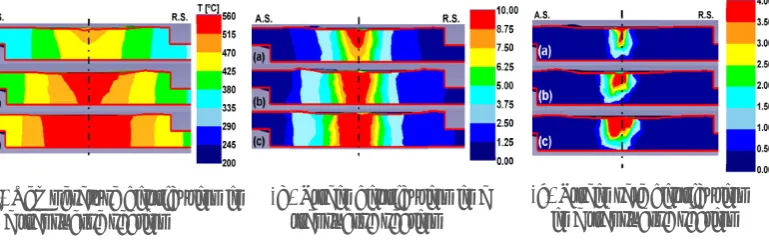
The FSW superplastic forming of AA6061-T6 sheet was investigated by means of physical experiments and mathematical simulations [137]. A selected range of tool rotating speeds of 500, 1000 and 2000 rpm was used for FSW. At a constant temperature of 550 °C and a constant pressure of 0.4 MPa, superplastic forming experiments were performed using a free forming die for the FSW joints. The proposed FE model was validated by comparison with experimental data. The effect of constant pressure, coefficient of friction, strain-rate and strain-rate sensitivity has been studied using the proposed FE model. The plunge stage of FSW was examined numerically by a dynamic explicit FE method with more attention to the temperature evolution [138]. The high temperature region around the stirred zone extended with increasing rotation speed. The range of the stirred zone changed little with variations of rotation speed and insertion time. The simulation result on the temperature field was in general agreement with the experimental one. A thermal model was developed to simulate FSW of pure copper plates with the thickness of 4 mm in the constant traverse speed of 25 mm/min and with five different tool rotation speeds [139]. A moving coordinate system was used for modeling the tool movement during the FSW process. The generated heat was used to model the grain growth in the copper plates, and the resulting mechanical properties of the copper plates. An analysis of metallographic images showed that increasing the speed of rotation results in an increase in grain size in the nugget zone. This confirmed the numerical results from the model.
Michopoulos et al.’s paper [140] presented the results of a sensitivity analysis that determines the effects of FSW processing parameters, such as the rotation speed and the traveling speed, on the resulting residual strain fields. The problem was
(a) Temperature distribution in a transverse section
(b) Strain distribution in a transverse section
[image:21.595.105.490.151.273.2](c) Strain rate distribution in a transverse section
22
modeled as a thermostructurally coupled problem via FE analysis of an elastoplastic workpiece under the influence of heat generated from the FSW process and taking into account the temperature dependent yield strength of the material. A coupled thermal viscoplastic model was used for the FE simulation of the FSW process of non-similar aluminum-copper sheets [141]. Tool speeds and temperature distribution were coupled and solved together using this method. The relationship between the tool speeds and the heat input during FSW was obtained by numerical analysis, and the stress contour relative to the temperature field and tool force was surveyed. A thermo-mechanical model was developed to predict the material deformations and temperature histories in the FSW process [142]. Numerical results indicated that the material particles on the top surface do not enter into the wake and just pile up at the border of the wake on the retreating side and this is the reason for the formation of the weld fash in FSW. Both increasing the rotating speed and decreasing the traverse speed can lead to an increase in the stirring effect of the welding tool, which can improve the quality of the FSW. When the traverse speed becomes higher, the rotating speed must also be increased to avoid any possible welding defects such as voids. Simultaneously increasing the rotation and translating speeds of the welding tool can lead to an increase in the residual stress.
A FE analysis program-WELDSIM was developed specifically for 3D nonlinear thermal and thermo-mechanical numerical simulations of the FSW process for 304L stainless steel [24]. Two cases with tool rotation speeds of 300 and 500 rpm were analyzed. Based on the experimental records of transient temperature at several specific locations during the FSW process for the 304L stainless steel, an inverse analysis method for thermal numerical simulation was developed. After the transient temperature field was determined, the residual stresses in the FSW plate were then calculated using a 3D elastic-plastic thermo-mechanical simulation. A comparison with the residual stress fields measured by the neutron diffraction technique showed that the results from the numerical simulation agreed well with the physical test data. A thermal history and distribution analysis of the preheating period of FSW of AZ31 magnesium alloy using FE method was presented [143]. Temperature history and distributions at different plunge speeds and rotation speeds were simulated and measured to determine the appropriate preheating parameters. When a rotating speed of 600 r/min and a plunge speed of 3mm/min is used, the maximum preheating temperature can reach about 450 °C, showing that the heat generated by the pin cannot be neglected during FSW. The proportion of heat generated by the pin was found to be about 15% of the total heat generated by the welding tool (including generated by the shoulder and the pin).
23
between the process parameters and the process variables can be well characterized by a nonlinear power relationship, and the dynamic responses can be well characterized by low-order linear equations. Experiments were conducted that validated the developed FSW dynamic models. The solid state bonding conditions obtained in FSW of AA5754-H111 butt joints were analyzed, considering the so-called zigzag line in the transverse section of the joints [145]. A wide range of experiments were carried out varying both the travel and rotation speeds of the tool. The effects of the process parameters on the mechanical properties of the joint were highlighted and micro-and macro-observations were used in order to explain the reasons for the enhanced mechanical properties found for the welded material. Numerical results derived from a FE model previously developed by the authors were utilized to point out the different mechanical and metallurgical behavior of the joints obtained. The microstructural aspects in AA2024-T3 friction stir butt welds were numerically and experimentally investigated [146]. A 3D CFD model was implemented to simulate temperature field, material flow, and microstructural aspects in an Eulerian framework. Recrystallized grain size was numerically predicted taking into account the Zener-Holloman parameter and experimentally measured by means of conventional metallographic techniques.
The FE modeling of material flow was used to understand the physical phenomena occurring during the dwell phase of FSW using thin sheets of 7075 aluminum alloy [7]. Numerical results were compared with reference experimental data including torque measurements and metallographic observations made at different tool rotation speeds. A comparison between the experimental and calculated torques shows that the contact condition depends on tool rotation speed. This result is supported by the differences between nugget grain size and nugget shape evolutions obtained with different tool rotation speeds. The effect of process parameters on the temperature distribution and the mechanical properties of aluminum alloy AA2014 FSW joints was investigated [147]. A 3D transient thermal model using ANSYS FE code was developed and experimentally validated to quantify the thermal history. Nine experiments based on full factorial design were performed to systematically study the influence of input parameters, such as tool rotational and traverse speed. Analysis of variance (ANOVA) was used to investigate the effect of varying input parameters on the thermal history and mechanical properties of the joints. The analysis indicated that the temperature under the tool was more strongly dependent on the tool rotational speed than the traverse speed. The results also indicated that the traverse speed had the greatest influence on mechanical properties. In Gök and Aydin’s recent study [148], a DEFORM 3D FE model was developed for simulating the FSW process on AZ31 magnesium alloy. The simulation was carried out with different rotational and traverse speeds. The proposed FE model has been validated against experimental data.
24
and after welding and the residual stresses in various positions in the welded samples were measured using a hole-drilling technique. It was found that tool rotation speed significantly affects the amount of residual tensile stress while varying the traverse speed mainly affects the distribution of residual transverse stresses. Also, both experimental and simulated results indicate that welding fixtures significantly affect the residual stress profiles as well as their magnitudes. A FE model using an adaptive re-meshing technique was used to investigate tool forces in FSW processes [149]. Results indicated that forces in the tool were greatest at the start of the translational stage. Of the three directional forces, the axial force is the most significant and the force perpendicular to the welding line is the minimum. The tool forces in the three directions are all increased with the increase in transverse speed and decreased with the increase in angular velocity. Veljic et al.’s paper [150] deals with the heat generation in Al2024-T3 plate under different tool rotating speeds and plunge speeds during the plunge stage of the FSW processes. A 3-D FE model was developed in the commercial code ABAQUS/Explicit using the arbitrary Lagrangian-Eulerian formulation, the Johnson-Cook material law, and Coulomb's Law of friction. Numerical results obtained in this work indicate a more prominent influence from the friction-generated heat. The slip rate of the tool relative to the workpiece material is related to this portion of heat. The material velocity, on the other hand, is related to the heat generated by plastic deformation.
A sequentially coupled FE model was used to study the residual stresses caused by the thermal cycling induced by FSW [151]. The predicted longitudinal stresses peaked at 300 MPa and had a "W" profile with tensile stress peaks in the weld and compressive stresses outside the weld. The application of 'hot' welding conditions, i.e. low welding speed and high rotational speed, increased the residual stresses significantly, mainly in the transverse direction. Conversely, 'cold' welding conditions resulted in lower residual stresses. The magnitude and distribution of the residual stresses predicted by the FE model were validated by neutron diffraction. Roy et al. [152] proposed a 3D thermal pseudo mechanical model formulated in an Eulerian frame considering a quasi-steady state approach to modeling FSW of AA6061 Aluminum alloy. The model was implemented using nonlinear FE code in Comsol Multiphysics v 4.1. The effect of different operating parameters on the FSW process was analyzed. The material flow was found to be enhanced by an increase in the traverse speed and the angular velocity of the pin, with a pronounced swirl on the advancing side. The distribution of equivalent plastic strain and dynamic viscosity was found to correlate with the distribution of the microstructure zones in the weld. The objective of Zhang et al.’s work [153] was to develop an understanding of FSW applied to thin plates so as to improve welding quality and increase production efficiency. The study was conducted by using FE modeling and temperature field analysis to obtain optimization parameters, and to monitor the force of the stirring spindle by using virtual instrument, multi-sensor data fusion.
25
simulated using a 3D thermo-mechanical FE model [154]. The model included the thermal effect of the tool-workpiece interaction along with axial load but ignoring the metal flow around the tool. The objectives of the model were to evaluate the temperature distribution and residual stress in the workpiece resulting from the thermal cycle and axial load during welding for various process parameters, and to study how residual stresses in adjacent roller expanded tubes are affected during FSW. An experimental setup was designed and manufactured to show the feasibility of the process in constrained size joints and to validate the numerical results. The response to temperature and force during the FSW of Invar 36 alloy was investigated numerically and experimentally [155]. Results indicated that increasing rotational speed results in increasing temperature and decreasing axial force. Rotational speed was found to have no obvious influence on the longitudinal force. Increasing the travelling speed produces increasing axial force and longitudinal force and a decreased trend of temperature out of the centre of the stir zone.
Material stirring and heat generation in the FSW processes induce significant alterations to microstructure and material properties. The influence of rotating and welding speed on microstructure, mechanical properties, and joint quality in AA2024-T3 FSBW joints were reported by Carlone and Palazzo [156]. Experimental data were presented and discussed, considering numerically computed temperature and strain rate distributions. The data provide useful information for setting parameters. A 3D numerical model for the FSW was developed using ABAQUS software to investigate the heat of plastic deformation [157, 158]. The effects of rotation and welding speeds on the temperature field when welding 2024-T3 aluminum alloy were systematically investigated. Temperatures were measured to validate the reliability of the model. Results showed that increasing the welding speed has a significant effect on the time to reach the peak temperature but the value of the peak temperature changes little. The temperature field during the welding of the overlap joint in a stringer and skin structure was studied for 7A04 Al alloy [159]. The results of numerical simulation showed that the welding temperature field is greatly influenced by the resting time of the rotating tool at the insertion position after the inserting process is finished. A simplified heat input numerical model was used to simulate the transient temperature field distribution and the feature points of thermal cycle curve of 4 mm Q235A steel FSW butt joints [160]. The heat input model and the simulation method were verified by comparing the simulation results and the feature point temperature curve measured by the thermocouple.
26
down force significantly reduces residual stress and the torque leads to the asymmetrical distribution of residual stress. On the other hand, mechanical loads absolutely change the residual distortion pattern from saddle state into anti-saddle state. Dissimilar intermixing during FSSW of Al 5754 and Al 6111 sheets was investigated both experimentally and numerically [163, 164]. It was proposed that dissimilar intermixing during the dwell period in FSSW results from the incorporation of upper (Al 5754) and lower (Al 6111) sheet materials at the top of the thread on the rotating pin. A ribbon of contiguous Al 5754 and Al 6111 lamella is moved downward via the pin thread as the tool rotates during the dwell period in the FSSW. A helical vertical rotational flow is created during the dwell period in the FSSW because the ribbon of contiguous Al 5754 and Al 6111 lamellae discharged from the bottom of the pin thread moves outward and upward before moving back toward the tool periphery and downward again.
A detailed design of a reluctance position sensor for determining the penetration of the welding tool in a FSW machine was proposed [165]. It functions by sensing the variations of the inductance of a coil due to the changes in the gap of the magnetic circuit created by the welding tool and the working bench. Intensive FE simulations were performed to decide the best configuration, including the geometry of the sensor, the winding of the coil and the properties of the magnetic materials. Static measurements in a functional prototype demonstrated the validity of the method and the design.
2.4 Tool Wear
As mentioned above, the geometry of the tool significantly affects the energy input, deformation pattern, plunge force, microstructures, and mechanical properties of FSW joints. Excessive tool wear during the FSW process is hindering the application of FSW to hard materials such as steel and titanium alloys. Most of the tool wear occurs during the plunge stage.
27
A FE model implementing the Johnson-Cook material constitutive law was used by Rice et al. [169] to investigate the shear stress and axial force experienced by the tool during the plunge phase of FSW into AISI 1045. The model in this research consisted of a deformable work-piece, deformable donor material, and a rigid tool. The numerical simulation data supports the concept of using a donor material to reduce tool wear and the need to implement this concept to experimental work for verification. Further research involving initial donor material experiments with Cu/Al were conducted by the same authors [170] to confirm the feasibility of applying this method to the FSW process. Images obtained by scanning electron microscopy (SEM) and energy dispersive X-ray spectroscopy (EDX) of the donor material showed no mixing of Cu with Al at the interface of the Al plate during the plunge. The images showed the formation of columnar grains and recrystallization of grains at the interface.
Although FSW is now widely used for the welding of aluminum and other soft alloys, premature tool failure limits its application to hard alloys such as steels and titanium alloys. The tool pin experiences severe stresses at high temperatures due to both the bending moment and torsion. It is shown that the optimum tool pin geometry can be determined from its load bearing capacity for a given set of welding variables, tool and work-piece materials. The traverse force and torque during FSW were computed using a 3D heat transfer and viscoplastic material flow model, considering the temperature and strain rate-dependent flow stress of the work-piece material [171]. These computed values were used to determine the maximum shear stress experienced by the tool pin due to the bending moment and torsion for various welding variables and tool pin dimensions. The proposed methodology was used to explain the failure and deformation of the tool pin in independent experiments for the welding of both L80 steel and AA7075 alloy. The results demonstrated that the short tool life in a typical FSW of steels is contributed to by low values for safety factors in an environment of high temperature and severe stress. An experimental study of tool life in the FSW of titanium alloys sheets provided useful insights [172]. Numerical simulation provided important information for the fixture design and analysis of experimental results. Tungsten and Rhenium alloy W25Re tools were found to be the most reliable among those considered. Scutelnicu et al.’s paper [173] addressed a comparative study on FSW and Tungsten Inert Gas (TIG) assisted FSW of copper. The base materials were preheated by an additional heat source and some remarkable advantages were obtained. These included as: faster and better plasticization of the base material, reduced FSW tool wear and clamping forces, faster welding speed and improved joint quality. The aim of the investigation was to develop two FE models, simulating the welding of copper by FSW and TIG-assisted FSW procedures. These are useful in predicting the temperature distribution, the peak temperature of the process and temperature changes in the cross section of the welded joints.
28
preheating on the temperature distribution and heat flux within the workpieces [174]. The energy deposited by the laser in the top plate does not penetrate into the bottom plate ahead of the tool due to the contact resistance between the plates. Hence, the thermal contact resistance, inherent in lap welds, controls the effectiveness of preheating. The effect of preheating on FSW of aluminum was investigated by varying the laser power and workpiece material while maintaining constant tool geometry and material. It was also found that the total power consumed in the process, defined as the sum of tool power and absorbed laser power, can decrease with preheating. Mandal et al. [175] proposed recently the "donor material" concept for reducing tool wear in the plunge phase. This works by providing localized preheating at the plunge area and using a softer material as a "donor." The process generates heat in a relatively soft "donor" material and the heat is transferred to the much harder workpiece material by conduction. This research includes several numerical simulations of the donor material concept with different donor materials and plain carbon steel as the workpiece. A Significant reduction in both axial force and contact pressure were needed when a donor material was used in the plunge area. The decreases in both axial force and contact pressure are very likely to contribute to decreasing tool’s wear.
2.5 Material Flow
Material flow plays a fundamental role in the FSW since it determines the effectiveness of the joints. Most of the material flow occurs through the retreating side and the transport of the plasticized material behind the tool forms the FSW joint. The material flow around the tool is very complex depending on the tool geometry, process parameters and material to be welded [176]. Thus it is very important to understand the material flow characteristics for optimal tool design and process parameter combinations. Several models of FSW processes have been developed for the calculation of heat transfer and materals flow [177-181].
29
Studies of material flow can provide valuable information about the material mixture and enable improvements in tool design and the selection of process parameters. Colegrove et al’s systematic papers [183-187] described the application of the computational fluid dynamics (CFD) code, FLUENT, to modelling 2D or 3D metal flow in FSW processes. A standard threaded tool profile was used for the analysis and features such as the tool rake angle, heat generation and heat flow were included. The primary goal was to gain a better understanding of the material flow around a complex FSW tool and to demonstrate the effect of the tool rake angle, and weld and rotation speed. The papers also demonstrated several novel modelling techniques. The first was the slip boundary condition in three dimensions, where a limiting shear stress was applied at the surface and the material was allowed to slip against the tool. The second involved adjusting the limiting shear stress so that the weld power of the model matched that obtained experimentally. The final technique was the inclusion of the temperature profile by interpolating the result from a thermal model. This obviated the need to solve the thermal profile in conjunction with the flow model. A CFD model of an aluminum-steel dissimilar butt weld was
[image:29.595.151.472.89.223.2]Fig. 7. (a) Tunneling cavity formation at the behind of the pin and (b) slot formation at advancing side behind the pin [182].
[image:29.595.183.414.311.432.2]30
implemented using the FE software Comsol v4.3 [188]. The model assumed a viscoplastic material behavior and was calibrated using temperature measurements for two different tool offsets (+0.5 and +1.5 mm) with respect to the joint line. The model can reproduce the maximum measured temperatures and heat imput, but the cooling rates are higher than the experimental ones. The simulated material flow is laminar and it is dependent on the tool geometry. The model can also provide information on the principal mechanism of heat generation for each material: friction in the steel and plastic deformation in the aluminum.
FE models based on solid mechanics were developed to study the flow patterns and the residual stresses in FSW processes [189, 190]. The flow of metal during FSW was investigated using tracer particles. It was shown that the flows on the advancing side and retreating side are different. After several rotations the material rotating around the nib sloughs off in the wake of the pin, primarily on the advancing side. A 3D numerical model was presented for the study of material flow in the FSW process [191]. Results indicated that the material in front of the pin moves upwards due to the extrusion effect of the pin and rotates with the pin. Behind the rotating tool, the material starts to move downwards and deposit in the wake. Most of the material flow in the FSW process is tangential. There is a swirl on the advancing side and with the increase of the translational velocity the inverse material flow on the advancing side becomes faster. The shoulder can increase the velocity of material flow in both radial direction and tangent direction near the top surface. The FSW process was modeled using a general purpose FE based program to produce a material thermal map and a corresponding mass flow [192]. Numerical thermal results were compared against experimental thermo-graphic maps and the numerical material flow results were compared using material flow visualization techniques, with acceptable agreement.
31
The evolution of texture during the FSW of stainless steel was investigated using a poly-crystal plasticity model [200, 201]. The influence of frictional conditions with the tool pin and shoulder on the flow in the through-thickness direction was examined in terms of their impact on the evolving crystallographic texture. Trends in the strengthening and weakening of the texture were discussed in relation to the relative magnitudes of the deformation rate and spin. The computed textures were compared to electron backscatter diffraction measurements and discussed with respect to their distribution along the orientation of the fibers and also with respect to the dominant texture components along the fibers. In a systematic study, a fully coupled thermo-mechanical model of the FSW process was developed [202, 203]. Results indicated that the rotation of the shoulder can accelerate the material flow near the top surface. The material deformation and the temperature field can also be related to the evolution of the microstructure. The texture and appearance of the FSW joints can correlate well with the equivalent plastic strain distributions on the top surface. The temperature field in the FSW process is approximately symmetrical around the welding line. The flows vary with differing thicknesses of material.
A study on the AA2024-T3 FSW process with different thicknesses of material was carried out [204]. The computed results showed that the material flow on the retreating and the front sides are higher. It follows that the slipping rates on the retreating and the front sides are lower than on the trailing and advancing sides. This is the reason why the heat fluxes on the trailing and the advancing sides are higher, which leads to higher temperatures in this region for both thin and thick plates. The energy entering the welding plate accounts for over 50% of the total energy and about 85% in the energy comes from the frictional heat in FSW of AA2024-T3. The balance of the heat is generated by mechanical effects. The FE method was used to model the material flow of alloy Al 6061-T6 in the FSW process and to establish the relationship between the flow of material and the angular velocity of the pin [205-207]. With an increase in the angular velocity, the material flow becomes faster. The material in front of the pin moves around in the direction of rotation and upward due to the extrusion effect of the pin. The material behind the pin is forced downward, during the continuous FSW process.
![Fig. 1. Schematic drawing of FSW process [7].](https://thumb-us.123doks.com/thumbv2/123dok_us/324068.1033486/2.595.187.391.389.535/fig-schematic-drawing-fsw-process.webp)
![Fig. 3. Moving mesh technique for the FE simulation of FSW [75].](https://thumb-us.123doks.com/thumbv2/123dok_us/324068.1033486/8.595.124.468.382.514/fig-moving-mesh-technique-fe-simulation-fsw.webp)
![Fig. 5. FSW for sheets with different thicknesses [115].](https://thumb-us.123doks.com/thumbv2/123dok_us/324068.1033486/16.595.165.406.174.360/fig-fsw-sheets-different-thicknesses.webp)
![Fig. 8. Comparison of simulated and experimental stir zone shape [182].](https://thumb-us.123doks.com/thumbv2/123dok_us/324068.1033486/29.595.151.472.89.223/fig-comparison-simulated-experimental-stir-zone-shape.webp)

![Fig. 12. Sketch of the used (a) joint and (b) tool geometries [303].](https://thumb-us.123doks.com/thumbv2/123dok_us/324068.1033486/48.595.156.378.566.691/fig-sketch-used-joint-b-tool-geometries.webp)
![Fig. 13. Longitudinal residual stress distribution (a) on the top surface and (b) in a transverse section of the joint—500 rpm and 225 mm/min case study [303]](https://thumb-us.123doks.com/thumbv2/123dok_us/324068.1033486/49.595.167.410.100.256/longitudinal-residual-stress-distribution-surface-transverse-section-joint.webp)
![Fig. 16. Specimen geometry and the finite element mesh for small scale yielding problem solving for the single edge notch, all the units are in mm [384]](https://thumb-us.123doks.com/thumbv2/123dok_us/324068.1033486/66.595.200.384.550.702/specimen-geometry-finite-element-yielding-problem-solving-single.webp)