Construction Materials and Technology Series 1 2018 ISBN 978-967-2183-19-8
89
CHAPTER 7
THE STUDY OF USED OF CERAMIC INDUSTRIAL WASTE AS
REPLACEMENT MATERIAL OF FINE AGGREGATE IN CONCRETE MIX
Muhammad Haikal Bin Mohd Fodzi1, Mohamad Luthfi Bin Ahmad Jeni1
Faculty of Engineering Technology
,
Universiti Tun Hussein Onn Malaysia
,
Parit Raja,
Batu Pahat,
86400 Johor
,
Malaysia.
7
.
1 INTRODUCTIONConcrete is a global material that underwrites commercial well-being and social development. These days, there two commonly used structural materials: concrete and steel [1]. Concrete which contains waste products as aggregate is called ‘Green’ concrete. Use of hazardous waste in concrete-making will lead to green environment and sustainable concrete technology and so such concrete can also be called as ‘Green’ concrete. Concrete are mostly used in construction engineering field because the used of the material are economics and have higher strength, durability and availability of raw materials. For this research, the concrete have been modified by replaced the fine aggregate with Ceramic Industrial Waste (CIW) in concrete mix.
Construction and Demolition (C&D) wastes contribute the highest percentage of wastes worldwide (75%) [2]. Ceramic industry produces 30% - 40% of waste from the manufacturing of the ceramic such as ceramic powder, sludge, and the rejected ceramic tiles. Most of the waste are discarded into landfill and this may cause contaminate the soil and the air. Today landfills were designed to minimize the contact with air and water required for degradation, thereby practically eliminating the degradation of waste. Ceramic industrial waste consider hazardous waste because of the dust created can cause health affect and environment degradation.
Construction Materials and Technology Series 1 2018 ISBN 978-967-2183-19-8
90 replacement material of fine aggregate in concrete mix.
7.2 OBJECTIVE AND SCOPE OF STUDY
The main objectives of this project were:
To determine the compressive strength of concrete mix that contains Ceramic Industrial Waste.
To determine the percentage of water absorption, density of concrete and optimum content of Ceramic Industrial Waste to be replace in concrete mix.
To differentiate and compare the concrete mix that contains Ceramic Industrial Waste with conventional concrete.
For this final year project focuses on ceramic industrial waste (CIW) as fine aggregate as replacement material in concrete mix. The CIW were crushed using Milling Jaw Crusher Machine for smooth particle of the waste as fine as the fine aggregate. The crushing CIW mixed with coarse aggregate, natural fine aggregate, cement and water to produce the concrete mix. Design of concrete mix was calculated using Concrete Mix Design (DOE Method). The percentage of concrete that contain CIW was set 0% for control sample while 10%, 20%, and 30%. Each percentage has 3 sample cubes for cube test. So that, the total of the cube test at age 7 and 28 days were 48 concrete cubes. The tests include slump test for fresh concrete mix and cube test for compressive strength, water absorption and density test of concrete. The dimension of the cube test used is 150mm x 150mm x 150mm.
7.3 LITERATURE REVIEW
CONCRETE
As we all know, concrete is materials that are widely used in construction field. 80% of the buildings are using concrete for the construction work. Nowadays, there are precast concrete or Industrial Building System (IBS) concrete type that use for make the work effective, easier and reduce time. Every year, concrete technology increasing with many creative ideas that follow the specifications of the conventional concrete. History of the concrete technology, concrete is widely used during Roman Empire. It is known as Roman Concrete or opus caementicium is made from quicklime, pozzolana and aggregate of pumice. The tests show that Roman Concrete had as much compressive strength as modern Portland-cement concrete with 20 MPa or 2,800psi [3].
Concrete is a composite material in which a binding material mixed in water on solidification binds the inert particles of well graded fine and coarse aggregate. Cement known as binding materials because of the high viscosity characteristics that can mix the materials perfectly. For normal concrete mix, sand used as fine aggregates while crushed stones and gravel used as coarse aggregate. When correctly proportioned, concrete is at first a plastic mass that can be cast or molded into nearly any size or shape. Upon hydration of the cement by the water, concrete becomes stone like in strength, durability, and hardness [4].
MODIFIED CONCRETE
Construction Materials and Technology Series 1 2018 ISBN 978-967-2183-19-8
91
In concrete technology, many types of modified concrete that have been created to compared the strength and durability of the modified concrete with normal concrete. Terms “modified concrete” is not modified 100% of the normal concrete, it just 20%-70% of the normal concrete will be modified. Usually for cementations material used for normal concrete is Ordinary Portland Cement (OPC) but for modified concrete it may use other type of material that have same properties with cement such as fly ash or easy cement. Gravel and crushed aggregate are widely used as coarse aggregate while river sand used in fine aggregate for normal concrete. For modified concrete, ceramic waste, fly ash, disc and others can be used as replacement material for aggregate in concrete mix. The most important thing that needed in modified concrete mix is the material can give some differences and have higher quality in strength and durability of the concrete.
CERAMIC INDUSTRIAL WASTE
Ceramic can be defined as the art that deals with the design and fabrication of objects made from fired clay. All type of earthenware (urn), stoneware and porcelain included the term of “ceramics” [5]. Ceramic Industrial Waste (CIW) is a waste that made during the manufacturing of this ceramics such as ceramic powders, ceramic sludge and the excessive clay. Ceramic waste powder is settled by sedimentation and then dumped away which results in environmental pollution [6].
To increase the sustainability in concrete technology, CIW are used as replacement materials for fine aggregates, coarse aggregates and cementations materials. In ceramic industry, about 15%-30% production goes as waste. Generally, ceramic materials contribute the highest percentage of waste within the Construction and Demolition wastes which is 54% [2]. Ceramic products are made from natural materials which contain a high proportion of clay minerals. These, through a process of dehydration followed by controlled firing at temperatures of between 700ºC and 1000ºC, acquire the characteristic properties of “fired clay” [18].
The selected ceramic industrial waste (sludge) are from the crushing process of gneiss, sludge from the cutting and polishing process of varvite, sludge from the process of filtration/clarification of potable water, and an iron-containing residual clay. The composition of the ceramic solid waste used will give positive effects with respect to environmental, economic issues and the sustainability of the concrete when it mixes together [7].
PROPERTIES OF CERAMIC INDUSTRIAL WASTE (CIW)
To reduce the usage of raw materials in concrete mix such as cement and gravel or sand as aggregates, CIW are widely used because of the common properties it have with the raw materials. Generally, CIW have common properties with the ceramic itself but it depend on what materials used in manufacturing the ceramics. Ceramics are high durability, strength and brittleness, high electrical and thermal resistance and have the ability to withstand the damaging effects of acids, oxygen, and other chemical because of their inertness properties. This shown that the usages of CIW in concrete mix is economical and reduces environmental pollution.
Construction Materials and Technology Series 1 2018 ISBN 978-967-2183-19-8
92
manufacturing process. Disposal of this sludge will increase environmental problems.
According to past results, addition of CIW in concrete mix decreases the strength characteristic of the concrete. The compressive strength increase with the increase of the CIW content till 20% replacement of fine aggregate and after that decrease in its strength. In conclusion, to increase the sustainability of the concrete technology, it is necessary to use the ceramic industrial waste as replacement material in concrete mix because of the production of this waste have been increase from day to day.
Table 7.1: Comparisons of Properties between Three Types of Materials
Property Ceramic Metal Polymer
Hardness Very High Low Very Low
Elastic Modulus Very high High Low
Density Low High Very Low
Corrosion Resistance High Low Low
Thermal Expansion High Low Very Low
Ductility Low High High
Source: (American Ceramic Society, 2014)
CONCRETE TEST
Concrete cube test can be divided into two types which are for the fresh concrete and hardened concrete test. For fresh concrete the slump test were conducted to determine the workability of fresh concrete for 7 and 28 days. Meanwhile, for hardened concrete 3 type of test were conducted which are the compressive strength test, water absorption test and density of the concrete test after curing for 7 and 28 days. The experiment was done to determine the compressive strength test of concrete cube. The percentage of water absorption was calculated by using the equation below:
For water absorption of concrete test were done to determine the percentage of water absorption of concrete. The calculation for water absorption test was measured by using calculation below:
Meanwhile for density test were done to determine the relative density of concrete cube. The density was calculated by using calculation below:
7.4 METHODOLOGY
Construction Materials and Technology Series 1 2018 ISBN 978-967-2183-19-8
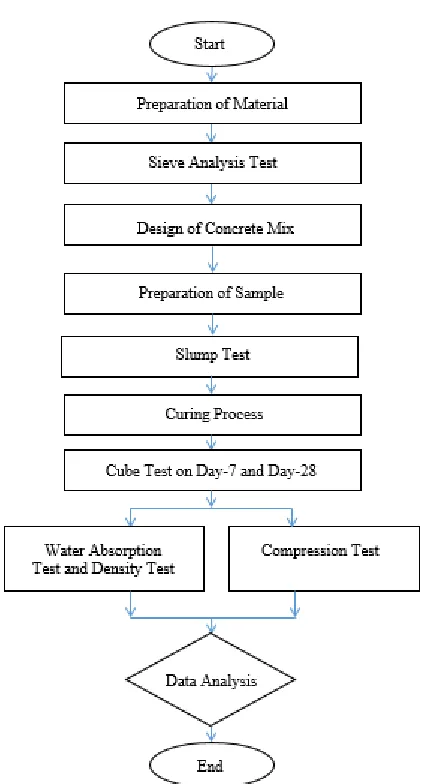
[image:5.597.192.405.127.519.2]93 process of the flowchart.
Figure 7.1: Flowchart of Methodology
PREPARATION OF MATERIAL
For this final year project, it is important to identify desirable properties and components and to be able to use factors involved in producing concrete and the methods employed in concrete production. The materials to produce concrete are basic materials which is cement, fine aggregate, coarse aggregate and water. Two types of fine aggregate are used for this project which is natural fine aggregate and crushed Ceramic Industrial Waste (CIW). These materials are prepared to ensure the experiment and laboratory test can carry out smoothly to achieve the objective studies.
Preparations of Replacement Material (Ceramic Industrial Waste)
Construction Materials and Technology Series 1 2018 ISBN 978-967-2183-19-8
94
temperature during the manufacturing process. The Ceramic Industrial Waste (CIW) was crushed using milling jaw crusher.
SIEVE ANALYSIS TEST
Sieve analysis test is used in grading the aggregates to get the suitable size of the coarse and fine aggregates that will be used in this experiment. Sieve analysis test was done to identify the distribution size of an aggregate and it was done according to British Standard BS410:2000 (Specification for Test Sieve)
DESIGN OF NORMAL CONCRETE MIX (DOE METHOD)
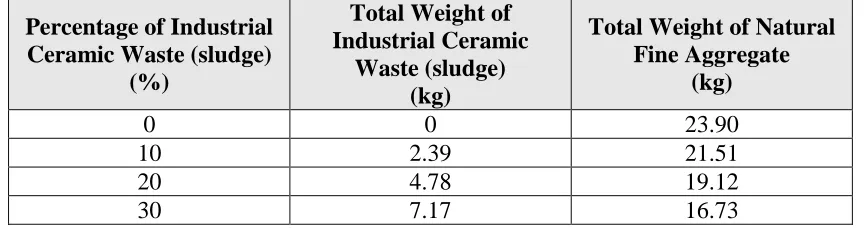
[image:6.597.78.512.341.443.2]The material of concrete mix are prepare based on quantities from DOE Method. Table 7.2 below shows the quantities material needed using British Standard Method for Concrete Mix Design (DOE Method) and Table 7.3 shows the total weight of CIW as replacement material for fine aggregate in concrete mix for per trial mix of 0.036 m3.
Table 7.2: The quantity of material base on DOE Method
Quantities Cement
(kg)
Water (kg or L)
Fine Aggregate
(kg)
Coarse Aggregate (kg)
10mm 20mm 40mm
Per m3 to
nearest 5kg 396 210 664 - 1130 -
Per trial mix of
0.036m3 14.26 7.56 23.90 - 40.68 -
Table 7.3: The total weight of Industrial Ceramic Waste (sludge) as replacement material of fine aggregate in concrete mix for per trial mix 0.036m3
Percentage of Industrial Ceramic Waste (sludge)
(%)
Total Weight of Industrial Ceramic
Waste (sludge) (kg)
Total Weight of Natural Fine Aggregate
(kg)
0 0 23.90
10 2.39 21.51
20 4.78 19.12
30 7.17 16.73
PREPARATION OF SAMPLE
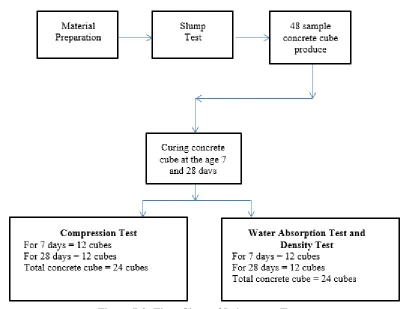
The total sample of concrete cube that used for this project is 48 cubes. Therefore, there were 24 cubes for Compression Test and 24 cubes for Water Absorption Test and Density Test. For water absorption test and density test used the same concrete cube. The concrete were immersed in curing tank for 7 and 28 days for curing process after the preparation of the sample.
LABORATORY TEST
[image:6.597.83.515.485.599.2]Construction Materials and Technology Series 1 2018 ISBN 978-967-2183-19-8
[image:7.597.99.504.90.399.2]95
Figure 7.2: Flow Chart of Laboratory Test
7.5 RESULTS AND DISCUSSIONS
SLUMP TEST
Slump test was done based on the procedures provided in BS EN12350-2:2009 (Testing fresh concrete: Slump Test) which is to test the workability of the fresh concrete. Table 7.4 shows the result of slump test obtained.
Table 7.4: Result of slump test obtained
Percentage of CIW (%)
Collapse Height
(mm) Type of Collapse
Degree of Workability
0 57 True Slump Medium
10 31 True Slump Medium
20 18 True Slump Low
30 16 True Slump Low
[image:7.597.83.515.543.642.2]Construction Materials and Technology Series 1 2018 ISBN 978-967-2183-19-8
[image:8.597.155.443.88.286.2]96
Figure 7.3: Graph of height of slump against percentage of Ceramic Industrial Waste (CIW) contain in concrete mix
According to graph on Figure 7.3, the workability of concrete mix decrease with addition of Ceramic Industrial Waste (CIW). This is because the characteristic of the CIW that have been observed through the experiment are very reactive towards water. Hence, the higher the percentages of CIW replace of fine aggregate in concrete mix, the lower the workability of the concrete.
COMPRESSIVE STRENGTH TEST
All the data collected from the compression test for 3 samples of each percentage of CIW in concrete mix was obtained to get the average strength of concrete. Figure 7.4 shows the graph of Compressive Strength against Percentage of Ceramic Industrial Waste (CIW) at the age of 7 and 28 days.
Figure 7.4: Graph of Compressive Strength against Percentage of Ceramic Industrial Waste (CIW) at the age of 7 and 28 days
[image:8.597.96.511.481.684.2]Construction Materials and Technology Series 1 2018 ISBN 978-967-2183-19-8
97
CIW contained in concrete mix. All of the percentage of CIW contained in concrete mix except 0% of CIW contained in concrete mix achieved the minimum compressive strength at age of 7 days which is according to [14], the minimum compressive strength of concrete at 7 days for grade concrete M30 is 20N/mm2.
The compressive strength of concrete at age 28 days decrease when the CIW started used in the concrete mix. 10% and 20% shows higher value of compressive strength compared to sample concrete. Meanwhile, 30% of CIW contained in concrete mix shows the lowest value of compressive strength. Hence, the highest compressive strength based on this project is 10% of CIW contained in concrete mix as replacement material of fine aggregate with 33.3N/mm2.
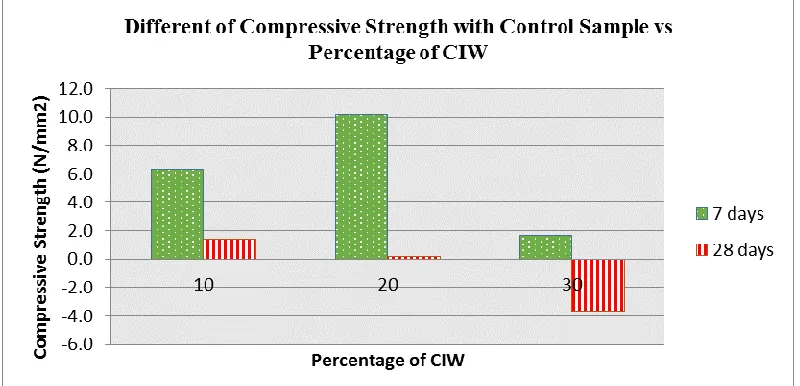
[image:9.597.99.499.372.565.2]Based on Figure 7.5, at age 7 days, 20% of CIW contained in concrete mix shows the highest difference value of compressive strength with control sample with positive value. All the percentages shows positive value of compressive strength at age 7 days which is they achieved the minimum strength of concrete because the minimum strength of concrete cube is at least 20 N/mm2 at the age of 7 days [14]. While, at age 28 days, 10% and 20% are positioned at positive state of the graph. This shown that, both of the percentages 10% and 20% of CIW contained in concrete mix achieved the minimum strength of designated concrete. Thus, 10% of CIW is the optimum content to be replaced as fine aggregate in concrete mix.
Figure 7.5: Graph of different of compressive strength with control sample against the percentage of Ceramic Industrial Waste (CIW) at the age of 7 and 28 days
WATER ABSORPTION TEST
The water absorption test was done based on procedures provide in BS 1881: Part 122: 1983 (Testing Concrete: Method for determination of water absorption).
Construction Materials and Technology Series 1 2018 ISBN 978-967-2183-19-8
98
[image:10.597.84.511.151.349.2]concrete moisture content. So that, the result may be varied because water absorption is strongly affected by environment temperature and concrete moisture content [17] that can cause incorrect evaluation of concrete performance.
Figure 7.6: Graph of percentage water absorption test against percentage of Ceramic Industrial Waste (CIW) at the age of 7 and 28 days
Figure 7.7: Graph of difference percentage of water absorption test with control sample against percentage of Ceramic Industrial Waste (CIW) at age of 7 and 28 days
[image:10.597.88.508.396.611.2]Construction Materials and Technology Series 1 2018 ISBN 978-967-2183-19-8
99
RELATION DENSITY OF CONCRETE CUBE WITH COMPRESSIVE STRENGTH TEST AND WATER ABSORPTION TEST
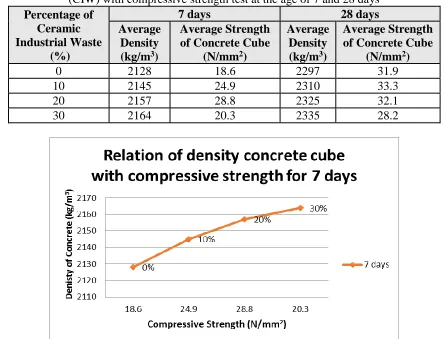
[image:11.597.74.519.241.580.2]According to Duggal [16], the basic density of concrete is classified as super heavy (over 2500 kg/m3), dense (1800-2500 kg/m3), light weight (500–1800 kg/m3) and extra light weight concrete (below 500 kg/m3). Based on Table 7.5, the percentage contained of Ceramic Industrial Waste (CIW) in concrete mix falls in the range of dense concrete or normal concrete which is between 1800-2500 kg/m3.
Table 7.5: Result of density of concrete cube with different percentage of Ceramic Industrial Waste (CIW) with compressive strength test at the age of 7 and 28 days
Percentage of Ceramic Industrial Waste
(%)
7 days 28 days
Average Density (kg/m3)
Average Strength of Concrete Cube
(N/mm2)
Average Density (kg/m3)
Average Strength of Concrete Cube
(N/mm2)
0 2128 18.6 2297 31.9
10 2145 24.9 2310 33.3
20 2157 28.8 2325 32.1
30 2164 20.3 2335 28.2
Figure 7.8: Graph of relation of density concrete cube with compressive strength at age of 7 days
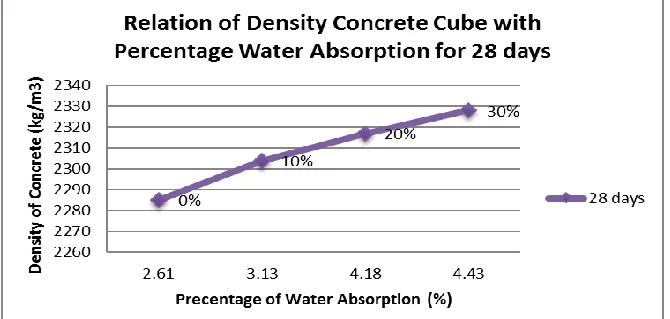
Based on Figure 7.8 and 7.9, the density of the concrete increase when the percentage of Ceramic Industrial Waste (CIW) contained in concrete mix increase. The compressive strength of the concrete is fluctuating and it does not affect the density. The density of the concrete depends on the weight of the concrete and the volume of the concrete. The presences of CIW affect the density of the concrete.
Construction Materials and Technology Series 1 2018 ISBN 978-967-2183-19-8
100
[image:12.597.134.467.136.323.2]mix for lower density is 10% of CIW. This is because it has lower density compared to 20% and 30% of CIW contained in concrete mix and lower percentage of water absorption.
[image:12.597.136.463.361.527.2]Figure 7.9: Graph of relation of density concrete cube with compressive strength at age of 28 days
Figure 7.10: Graph of relation density concrete cube with percentage of water absorption at the age 7 days
[image:12.597.132.467.574.734.2]Construction Materials and Technology Series 1 2018 ISBN 978-967-2183-19-8
101
7.6 CONCLUSIONS
The following conclusions were discussed from the study:
1. Slump test results gave the lowest value when increase the percentage of Ceramic Industrial Waste (CIW) replacing fine aggregate in concrete mix. This shown that, presence of CIW in the concrete mix will give poor workability to the concrete.
2. The first objective of this study is to determine the compressive strength of concrete mix that contains ceramic industrial waste. The comparison between concrete containing Ceramic Industrial Waste (CIW) with normal concrete shown that 10% of CIW contained in concrete mix is the optimum content of CIW to be replaced in concrete mix as fine aggregate. 10% of CIW achieved the optimum strength of designated concrete with grade 30.
3. The second objective of this study is to determine the percentage of water absorption, density of the concrete and the optimum content of Ceramic Industrial Waste (CIW) to be replaced in concrete mix. From the results obtained shows that 10% of the percentage containing CIW give the lowest percentage of water absorption test compared to 20% and 30% of percentage containing CIW. According to the results obtained, it can conclude that 10% of CIW contained in concrete mix have lower density compared to 20% and 30%. Based on the results of water absorption, compressive strength test and density test, it can be concluded that 10% of CIW containing in concrete mix is the optimum content to be replaced in concrete mix as fine aggregate compared with 20% and 30%. The
4. The last objective of this study is to compare the concrete containing Ceramic Industrial Waste (CIW) with conventional concrete. The comparison between concrete containing CIW with normal concrete shows that 10% of CIW it the optimum content of CIW to be replaced in concrete mix which is the most approaches to normal concrete results which is grade 30. 5. The concrete containing Ceramic Industrial Waste (CIW) is in the range of the normal
Construction Materials and Technology Series 1 2018 ISBN 978-967-2183-19-8
102 REFERENCES
[1] A.M. Neville & J.J. Brooks (2001). Concrete Technology. England. Prentice Hall
[2] Md Daniyal and Shakeel Ahmad (2015). Application of Waste Ceramic TileAggregates in Concrete. International Journal of Innovative Research in Science, Engineering and Technology. Volume 4, Issue 12.
[3] Cowan, Henry J. (Henry Jacob) & University of Sydney. Department of Architectural Science (1977). A history of masonry and concrete domes in building construction. Dept. of Architectural Science, University of Sydney, Sydney.
[4] George E. Thomas, PE (2012). Concrete Mix Design, Form Design and Engineering. PDHonline Course C291 (4 PDH)
[5] Solomon Musikant (1990). What Every Engineer Should Know About Ceramics. Paoli, Pennyslvania. Marcel Dekker, Inc.
[6] Amitkumar D. Raval , Dr.Indrajit N. Patel , Prof. Jayeshkumar Pitroda (2013). Concrete. International Journal of Engineering Trends and Technology (IJETT). Volume 4, Issue 6.
[7] J.A. Junkes , M.A. Carvalho , A.M. Segadães , D. Hotza (2011). Ceramic Tile Formulations from Industrial Waste. International Ceramic Review.
[8] The American Ceramic Society (2014). Structure and Properties of Ceramics. Retrieved from http://ceramics.org/learn-about-ceramics/structure-and- properties-of-ceramics.
[9] British Standard Institutions (BS) (2009) BS EN 12390-7:2009, Testing Hardened Concrete
Part 7 : Methods for Determination of Density of Hardened Concrete. London.
[10] British Standard Institutions (BS) (2000) BS 410:2000, Specification for Test Sieve. London
[11] British Standard Institutions (BS) (2011) BS 1881-113: 2011, Testing Concrete Part 113:
Method For Making and Curing No-Fines Test Cubes. London
[12] British Standard Institutions (BS) (2009) BS EN 12350-2:2009, Testing Fresh Concrete, Part 2: Slump Test. London.
[13] British Standard Institutions (BS) (1983) BS 1881-116: 1983, Testing Concrete Part 116:
Method for Determination of Compressive Strength of Concrete Cubes. London.
[14] Civilology (2017). Compressive Strength of Concrete. Retrieved from http://www.civilology.com/compressive-strength-of-concrete-cubes/
Construction Materials and Technology Series 1 2018 ISBN 978-967-2183-19-8
103
[16] Duggal, S.K.. (2008). Building Materials (3rd ed.). New Delhi, India: New Age International (P) Limited.
[17] Babak Mohammadi (2013). Development of Concrete Water Absorption Testing for Quality Control. Degree of Master Thesis. Concordia University Montréal, Québec, Canada.