Journal of Chemical and Pharmaceutical Research, 2018, 10(7): 110-117
Research Article
CODEN(USA) : JCPRC5
ISSN : 0975-7384
110
Effect of Growth Regulator on Morpho-Physiological Attributes of Chilli: A
Case Study
Prasann Kumar
1*, Shweta Pathak
2, Amarnath KS
1, Veerendra Brahma Teja P
1, Dileep B
1,
Kamal Kumar
1, Mani Singh
11
Department of Agronomy, School of Agriculture Lovely Professional University, Jalandhar,
144411, Punjab, India
2
Department of Plant Physiology, I.Ag. Sci., BHU, Varanasi, 221005, India
_____________________________________________________________________________
ABSTRACT
The present study was undertaken with F1 hybrid JUGNI-070 variety of chilli. This solanaceous vegetable was cultivated in order to observe the effect of four growth regulators viz; Indole-3-Acetic Acid, Gibberellic acid, Putrescine and Salicyclic acid of some parameters during kharif season of 2017-2018. The parameters are plant height, number of leaves, number of stem, number of fruits and average weight of the fruits. The field allotted was divided into ten ridges Rows 1-10. In R1-R2 was allocated as control, in R3-R4 IAA@ 1 ppm was sprayed and R5-R6 Salicyclic acid @ 1ppm was sprayed and R7-R8 Putrescine @ 1ppm was sprayed, R9-10 GA3 @1ppm was sprayed, all the plant growth regulators were sprayed once at 30 days after transplanting and the results were observed after 5th and 10th days of all rows. The data was collected from randomly selected plants of each rows and the mean data was calculated. The results obtained from each rows were compared. The results revealed showed significant improvement in overall growth and development of plant in R9 rows, where plant growth regulator GA3 was used as indicated by the increase in plant height, number of leaves and number of stems.Where as in R7-8 where Putrescine was sprayed there was no significant increase in overall growth and development of the plant only the number of bud formation was observed high i.e. whereas R5 & R6 where salicyclic was sprayed but there is no growth is observed, whereas R3-4 IAA were used in which it results the stem development is observed.
Keywords:Agriculture; Biotic; Chilli; Dose; Energy; Forage; Gap
INTRODUCTION
111
crop grown for its fruits, which are used in green as well as ripe dried form for its pungency. Chilli belongs to the genus Capsicum family Solanaceae. There are mainly four cultivated Capsicum species and they are originated from South America. Commercial cultivation of chilli is mostly confined to the tropical regions of the world, since it requires long and warm season for its growth and development. Chilli is known from prehistoric remains in Peru and was widely cultivated in Central and South America in early times. It was first introduced in India by Portuguese towards the end of 15th century. Now-a-day’s chilli has become an important crop all over India. In India Chilli is cultivated in all the states including Andhra Pradesh, Karnataka, Maharashtra, Orissa, Rajasthan, Tamil Nadu and West Bengal. Andhra Pradesh alone contributes 46 per cent of total chilli production of India. India produces 9.7 lakh tonnes of dry chilli from an area of 9.08 lakh hectares [4]. No country in the world has so much area and production of chilli as in India. In the world green chilli is grown over an area of 14.53 lakh ha with a production of 190.39 lakh tones, accounting for a productivity of 131.02 q per ha [4]. Chilli has a great genetic diversity for all fruits similar diversity per se exists for all phenotypic, biochemical and reaction to biotic and abiotic stresses in chilli germplasm appears in different sizes, shapes and colour. The fruit size of some varieties is more than hundred times that of others. The shape may be elongated or round, and distal end pointed, blunt or sucked in, corrugated, leathery or smooth may be the touch on outer skin.
MATERIALS AND METHODS
The present investigation was carried out under field condition in the “Agricultural Research Field, School of Agriculture, Lovely Professional University, Phagwara, and Punjab 144411. The Lovely Professional University is situated in the south of NH-1 (G.T. Road) in the state of Punjab at a distance of about 350 km from Delhi. The study area falls in chaheru village of kapurthala district. Chaheru village is situated between 31o15’ North latitude, 75o 42’ East latitude at an altitude of 228 meters above the mean sea level (MSL). The district lies in the center of Punjab and is situated between two rivers Sutlej and Beas. The soil of the village is alluvial and varies from coarse loamy to fine loamy. The total agriculture land of the district is 134 hectare. Major source of irrigation is tube wells, bore wells and then pump sets. Only 3% of land is irrigated by canals.
Climatic Condition
The area falls under sub humid area. The temperature reaches above 40 degree Celsius during summer and during winter the temperature goes down below 10 degree Celsius. The hottest month is June and the coldest month being January. The average temperature of the district is 23.8 degree Celsius and the average annual rainfall is 719mm. the highest rainfall is recorded in month of July and driest month is November. The temperature during transplantation was 28 degrees Celsius. Chilli is warm season crop and is susceptible to frost. The optimum temperature is 20-30 degree Celsius. When the temperature goes below 15 degree Celsius it severely affects the growth and development of the crop.
The methods and materials are used as follows:
Rising of nursery
112
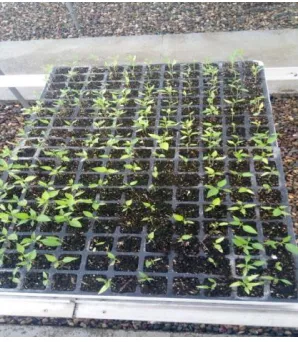
Figure 2: Raising the nursery of chilli plant (Source: Photograph by authors, Unpublished, 2018)
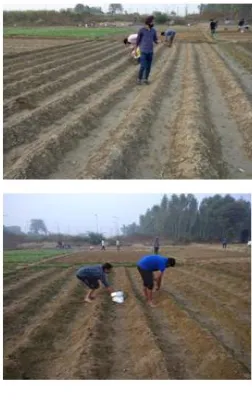
Figure 3: Field preparation for transplanting of chilli plant (Source: Photograph taken by authors, Unpublished, 2018)
Field preparation and transplanting
The weeds and previous crop stables were removed from the field. The experimental field was well prepared by one deep ploughing and two cross ploughing were given to improve field condition. The field was divided into 10 rows. When seedlings were of 30 days old they were transplanted to main field in rows at the depth of 2.5-3.0 cm. Row to Row and Plant to Plant distance was maintained at 90 X 90cm, respectively. 54 seedlings are transplanted in each row (figure 3).
Fertilizer application
[image:3.612.196.426.270.460.2]113
Figure 4: FYM and Vermicompost application in chilli field (Source: Photograph by authors, unpublished, 2018)
Weeding: First weeding was done at 15 days after transplanting with the help of ‘Khurpi’ and second weeding were done at 30 days old transplanting respectively. 10days after transplanting, irrigation was provided after transplanting in the field (Figure 5).
Figure 5: Irrigation and weeding in the chilli field (Source: Photograph by authors, Unpublished, 2018)
Intercultural Operation
Earthing up was done 20 days after transplanting so that the plant can get proper support and have proper growth and development . Vermi compost was applied to all the plants 10 days after transplanting to protect plant leaves.
Soil Testing
Total of four soil sample was collected from the plot number 30 which was allotted to us. The soil was then tested for pH, electrical conductivity. The soil Ec and pH was tested with the help of EC and pH meter.
Preparation of spray solution
114
Amount of formulation = Conc. required (%) X Volume required (lit.)
a. i. in the PGR
PGR used
Four plant growth regulator viz. IAA, Salicyclic acid, Putriscine and Gibberellic acid are used in the experiment. The different concentrations of these plant growth regulators are used during experimentation. The first foliar spray was done when the crop was 30 days old. The observation was taken for the growth and development of the plant. The following parameters are observed at 5 and 10 days after spraying of the plant growth regulator-
Plant Height
Number of leaves
Number of stems
Number of buds
Number of fruits
Average weight of fruits
The plot allotted to us has the area of 180 meter square. The plot was then further divided into 10 rows of equal length and breadth; there are ten numbers of rows and R-3, 4 the plant was sprayed with IAA @ 1 ppm. In the R5-6 all the plants was sprayed with salicyclic acid@ 1 ppm of water and the R7-8 all the plants were putriscine @1ppm of water, R9-10 all the plants were sprayed with Gibberellic acid@ 1ppm and R1-2 was left as control (Table 1).
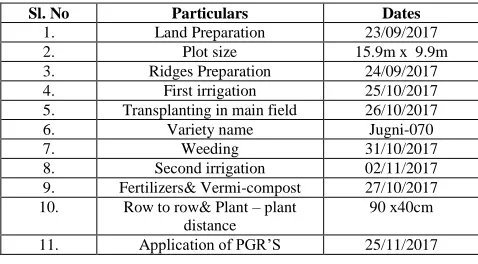
[image:5.612.186.425.359.491.2]Table 1: Calendar of the experiment
RESULTS AND DISCUSSION
Soil sampling and water sampling was both done from the samples collected from the field. Four samples were collected from the plot number 49 which was allotted to us. EC (electrical conductivity), OC (organic carbon), pH, AK (available potassium), AP (available phosphorous) was checked all the four samples and the average value was calculated (Figure 6).
Sl. No Particulars Dates
1. Land Preparation 23/09/2017 2. Plot size 15.9m x 9.9m 3. Ridges Preparation 24/09/2017 4. First irrigation 25/10/2017 5. Transplanting in main field 26/10/2017 6. Variety name Jugni-070
7. Weeding 31/10/2017
8. Second irrigation 02/11/2017 9. Fertilizers& Vermi-compost 27/10/2017 10. Row to row& Plant – plant
distance
90 x40cm
115
Figure 6: Result of soil sampling of collected soil samples (Source: Drawn by authors, unpublished, 2018)
The pH of soil is on average 7.3 which is normal to basic. The soil is open textured with high massive structure. This soil appears as brown or reddish brown, sandy loam.
Observation of Crop
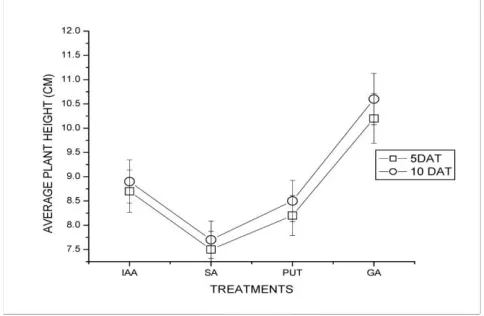
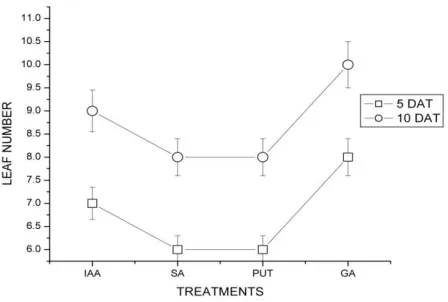
[image:6.612.203.445.438.596.2]Five plants were randomly selected from the 8 rows and observed after 5th and 10th day of first spray. The observation was based on the four parameters: height of the plants, number of leaves, number of stems and number of flower buds. The observation of a number of fruits and weight of fruits could not be done since the fruiting has not started yet. The data from all five plants were collected and the mean was taken out for each treatment so that a comparative study could be done. The data collected are represented in the graph given below. The figure 7, which is given below depicts the effect of PGR application at 30 days after transplanting. Five plants from each plot was selected and measured after 5 and 10 days of spraying. After the 5 days of spraying we can see the average plant height at R3-4 is 8.7 cm. In case of R-5, 6 the difference is from 7.5 cm as observed at 5 days of spraying. In R-7, 8 the difference is 8.2 cm. In R9-10 the average plant height is 10.2 cm. In graph 7, we can have a comparative study of the mean height of the plants where it can be observed that there is rapid growth of average plant height in R 1 - 10.
Figure 7: Average plant height of chilli (Source: Drawn by authors et al., 2018, unpublished, LSD: 5%)
116
[image:7.612.225.446.380.521.2]Figure 8: Average leaf number of chilli (Source: Drawn by authors et al., 2018, unpublished, LSD: 5%)
Figure 9 which is given below shows the mean number of branches at different days’ intervals of PGR application. The number of branches in plants also indicates the growth and development of the plant, thus healthier plants with high yields have a higher number of stems to support the maximum number of flowers and fruits. The average number of branches during the 5th and 10th days’ observation after the spray was high in R 2-3 and low control. We could see this by observing the data taken at 5th and 10th day after the spraying. On the 10th day after the spray the mean number of branches in the plants of R3-10 was five which is high compared to the mean of 2.6 number of branches present in control. In R5-6 the mean number was 4 neither low nor high. By this observation, we can say that the plot R3-10 sprayed by growth regulators had increased numbers of branches than R1-2 i.e. control.
Figure 9: Average branch number of chilli (Source: Drawn by authors et al., 2018, unpublished, LSD: 5%)
The result of this investigation clearly shows that the use of plant growth regulator 1 ppm IAA helped in rapid growth and development of the chilli crop. Whereas gibberellic acid@1 ppm helped in increasing the flowering and fruiting in chilli crop. Salicyclic acid sprayed at after 30 days of transplanting showed successful results in the growth promotion of the chilli crop. The result shows that the use of gibberelic acid increased the number of flower bud formation whereas it had no effect in the overall growth and development of the crop.
CONCLUSION
117
plants. The number of buds formation was not affected by the spray of GA3 since no drastic increase or decrease in bud formation was observed. Thus through our findings we can conclude that the use of 1 ppm GA3 of water as foliar spray at 30 days after transplanting increases the rate of growth and development of the plant by rapidly increasing the height of the plant, number of leaves, number of branches whereas the foliar spray of salicyclic acid of water during 30 days of transplanting rapidly increases the flower bud formation thus increasing the number of flowers. Thus plant growth regulators viz. IAA,salicyclic acid,putriscine and gibberelic acid @ 1 ppm can be recommended to chilli crop [9-11].
ACKNOWLEDGEMENT
Authors are thankful to Department of Agronomy, School of Agriculture, Lovely Professional University, Jalandhar, Punjab, for providing the support for this work.
REFERENCES
[1] Abeles FB, Morgan PW, Saltveit ME. J Agri. 1992, 11, 133-137.
[2] Akhtar H. Effect of Azotobacter inoculation and auxin precursor, L-tryptophan on the growth and yield of tomato (Lycopersicon esculentum L.). M.Sc. Thesis. Institute of Soil and Environmental Science, University of Agriculture, Faisalabad. 1994.
[3] Arshad M, Frankenberger WT. Plant and Soil.1990, 122, 219-227. [4] Arshad M, Frankenberger WT. Plant Soil.1991,133, 1-8.
[5] Davies PJ. The plant hormones: their nature, occurrence and functions. In: Davies PJ (ed.) Plant hormones and their role in plant growth and development. Martinus Nijhoff Publishers Dordrecht, the Netherlands 1987, 1-11. [6] Edison HS. The effect of growth regulator IAA on the growth and development of tomato fruit. Balai Penelitian
Hortikultura, Solok (Indonesia) 1991, 30, 9-11.
[7] Maharana T, P. Pati, GS Sahu. Envir Ecol.1990, 8, 1327-1328.
[8] Martens DA, Frankenberger WT. Soil boil Biochem.1993, 25, 1679-1687. [9] Parvez MA, Muhammad F, Ahmad MP. J Bio Sci.2000, 3(7), 1154-1155. [10]Patten CL, Glick BR. Appl Environ Microbiol.2002b, 68, 3795–3801.