© 2017, IRJET | Impact Factor value: 5.181 | ISO 9001:2008 Certified Journal
| Page 2151
Virtual Events using Laser Pointer
Abhishek Sinha
1, Prerna Punjabi
2, Snehal More
3, Jit Desai
4, Chanda Chouhan
51,2,3,4
Student, Dept. of Information Technology, Atharva College of Engineering, Maharashtra, India
5Asst. Professor,
Dept. of Information Technology, Atharva College of Engineering, Maharashtra, India
---***---Abstract -
As technology advances people are inclined towards finding new ways to interact with computer devices. People have developed a great interest in Virtual Events. Our system introduces the use of Laser Pointer for performing Virtual Events. Here we can use any surface such as the base of the Virtual Events and a gesture by Laser Light will be equivalent of using a keyboard. The system powered by the Laser Pointer uses a webcam to monitor the selected area and detects the laser light on any segment of the area and depending on the gestures performs a function.Keywords: Laser Pointer, Webcam, Gestures, Virtual, Interaction, Motion.
1.INTRODUCTION
Computer Systems are now days used by majority of people for work as well as for fun. Different types of input and output devices have been designed over the years with the main purpose of easing the interaction between computers and humans. In today’s world the two most commonly known are the keyboard and mouse [4]. Every new device can be seen as an attempt to make the computer more intelligent and making humans able to perform more complicated communication with the computer. This has become possible only due to the efforts made by computer professionals for creating user friendly successful human computer interfaces. As the complexities of human needs have turned into many folds and continues to grow so, the need for intricate programming ability and intuitiveness are
significant attributes of computer programmers to survive in a viable environment. The computer programmers have been incredibly successful in easing the communication between computers and human. With the surfacing of every new product in the market; it attempts to ease the complexity of jobs performed. Computer programmers have been avoiding this type of complex programs as the inclination was more on the speed than other modifiable features. The idea is to make computers understand human language and develop a user friendly human computer interfaces (HCI). Human computing interaction (HCI) is one of the important area of research were people try to improve the computer technology [8]. Nowadays we find smaller and smaller devices being used to improve technology.
2.SYSTEM ANALYSIS
2.1 Existing System
In existing system people use computers to perform an operation. At technologically advanced places there are systems such as Laser Keyboards but main drawback here is that such systems are very expensive for common people to use [7]. The currently developed system based on Laser Pointer is grid based which makes the system restricted to perform only limited operations [2].
2.2 Proposed System
© 2017, IRJET | Impact Factor value: 5.181 | ISO 9001:2008 Certified Journal
| Page 2152
public we make use of low price webcam and a laser pointerto perform an operation. Our system would be capable to map any flat surface as virtual keypad and translate laser stoke as key press [2]. A camera is used to record the location of the laser pattern, and then the laser pattern is detected. Once a pattern has been detected its trace is recorded spatially until the laser pointer is switched off. According to laser pattern, the application will be communicated with the system, and the system will perform some operation regarding the pattern. The operation will be like handling the system’s applications [3].
3. MOTION DETECTION ALGORITHM
There are various approaches for motion detection in a continuous image stream. Every part of them are based on comparing of the current image frame with one from the previous frames. To perform frame by frame motion detection our system uses AForge.Net Framework. Here the motion detection algorithm helps our system to be aware of the direction the laser gesture is been made. The four main directions i.e Left, Right, Bottom and Top will be assigned to an adjacent operation which will be applied to the running System Based Application. The working of the algorithm is based on the time frame of 1000ms. After every 1000ms the system compares the current frame with the previous frame from start of the laser gesture to end of it. Thus recognizing the direction the application shows the result based on the pattern. AForge.Net Framework provides with libraries that are required and are suitable to make the operation performance successful in real time. Another way of performing motion detection is by building the background of the scene and comparing each frame with the background but as the system should work in any place, area and condition, background based motion detection won’t be suitable here.
Fig. 1 Flow Chart
4.METHODOLOGY
4.1 User Module:-
The user runs the application
The user does the laser gesture on Selected Area in
Camera’s field view.
4.2 Webcam Module:-
The webcam will detect the gesture in real time[1].
© 2017, IRJET | Impact Factor value: 5.181 | ISO 9001:2008 Certified Journal
| Page 2153
We can set the attributes for the camera and
resolution settings or it would take directly from the video Properties file.
4.3 Laser Point Identifier Module:-
Here the camera captures a scene which is
segmented as frames.
Every time next frame gets compared with the
previous frame for the changes.
In this module we write program for pixel colour
change detection in frames.
Here we analyse the base frame pixel colours and
match with the next frame pixels.
Because of the brightness of laser point it gets
detected by our application.
4.4 Application Module:-
The application will detect the pattern.
After the detection of the pattern, some operations are performed on system.
The operations like handling the system installed
applications.
5.IMPLEMENTATION
Our system uses internal camera of the laptop or an external webcam to monitor the selected area. The Camera detects if any laser light comes to any segment and captures the frame and through motion detection identifies the direction in real time and performs the designated function. The system is .NET oriented that using a webcam detects when a laser pointer is in a specified hotspot and then does the equivalent of pressing a specified keyboard key [2]. Thus we can control system applications. The hotspots can be set by the user as well as the actions taken. We can make our wall as a remote control.
The User will start the application and then the Web Camera connects with the GUI which would be running on our motion detection algorithm from which the Laser point gesture is recognized [5]. Now the frame capturing is initialized and from the start point of the laser light till the end point where the laser pointer is switched off the direction of the gesture is known in real time.
The Background and then the color of the Laser is detected and separated from other light rays [6]. The separation of the laser with the background is done with the help of gray scaling. Thus the pattern of the Laser Gesture is matched and the action on the application is performed.
Fig. 2 The Main GUI of the system
[image:3.612.332.560.333.459.2] [image:3.612.334.561.503.629.2]© 2017, IRJET | Impact Factor value: 5.181 | ISO 9001:2008 Certified Journal
| Page 2154
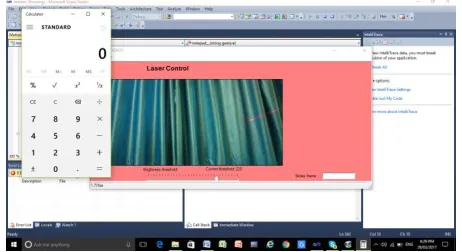
Fig. 4 The Camera starts and selects the area in the field viewof the camera
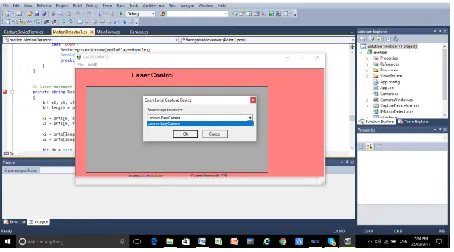
Fig. 5 The system applications to be controlled, this option should be selected.
Fig. 6 Laser Gesture making the application play the music.
Fig. 7 Laser Gesture making the application stop the music.
Fig. 8 By selecting application option, adjacent applications dedicated to a particular gesture can be opened
6.CONCLUSION
[image:4.612.316.563.61.229.2] [image:4.612.51.286.99.227.2] [image:4.612.331.562.270.396.2] [image:4.612.53.283.287.413.2] [image:4.612.54.283.477.600.2]© 2017, IRJET | Impact Factor value: 5.181 | ISO 9001:2008 Certified Journal
| Page 2155
REFERENCES
[1] M. S. Brown and W. K. H. Wong, "Laser pointer interaction for camera-registered multiprojector displays," IEEE Conference on September 2003, pp. I-913-16 vol.1.
[2] Manjunatha V and Prasanna Kumar M’s “Laser Powered Virtual Events”, IJARCSSE 2013, January - 2013, pp. 323-326
[3] Atul Chowdhary, Vivek Agrawal, Subhajit Karmakar, Sandip Sarkar “Laser Actuated Presentation System”, November - 2009
[4] Zeenat AlKassim’s Virtual Laser Keyboards: A Giant Leap Towards Human- Computer Interaction, IEEE 2013.
[5] Eshed Ohn-Bar and Mohan Manubhai Trivedi, “Hand Gesture
Recognition in Real-Time for Automotive Interfaces”, IEEETransactions on
Intelligent Transportation Systems 15 (6), 2368-2377, 2014.
[6] Ana Carla de Carvalho Correia, Leonardo Cunha de Miranda, Heiko
Hornung, “Gesture-based interaction in domotic environments”, 2011.
[7] TEDIndia 2009. “Pranav Mistry: The thrilling potential of SixthSensetechnology”.Available:
http://www.ted.com/talks/lang/en/pranav
_mistry_the_thrilling_potential_of_sixthsense_technology.html
[8] Radhika Bhatt, Nikita Fernandes, Archana Dhage “ Vision Based Hand Gesture Recognition for Human Computer Interaction” International Journal of Engineering Science and Innovative Technology (IJESIT) Volume 2, Issue 3, May 2013.
BIOGRAPHIES
Abhishek Sinha is currently pursuing final year of Bachelor of Engineering at Atharva College of Engineering from University of Mumbai. He has published the survey paper on which this research paper is based and it was titled “Laser Powered Virtual Events” which is published in IJERT special issue 2017, ICIATE conference proceedings 2017 Volume 5, issue 1. He is an Oracle Certified Java Programmer.
Prerna Punjabi is currently pursuing final year of Bachelor of Engineering at Atharva College of Engineering from University of Mumbai. She has published the survey paper on which this research paper is based and it was titled “Laser Powered Virtual Events” which is published in IJERT special issue 2017, ICIATE conference proceedings 2017 Volume 5, issue 1.
Snehal More is currently pursuing final year of Bachelor of Engineering at Atharva College of Engineering from University of Mumbai. She has published the survey paper on which this research paper is based and it was titled “Laser Powered Virtual Events” which is published in IJERT special issue 2017, ICIATE conference proceedings 2017 Volume 5, issue 1.
Jit Desai is currently pursuing final year of Bachelor of Engineering at Atharva College of Engineering from University of Mumbai. He has
published the survey paper on which this research paper is based and it was titled “Laser Powered Virtual Events” which is published in IJERT special issue 2017, ICIATE conference proceedings 2017 Volume 5, issue 1.
Chanda Chouhan is an Assistant Professor at Atharva College of Engineering, University of Mumbai.