Communication Sciences and Disorders
Dissertations Department of Communication Sciences and Disorders
Summer 1-6-2012
Predictors of Science Success: The Impact of Motivation and
Predictors of Science Success: The Impact of Motivation and
Learning Strategies on College Chemistry Performance
Learning Strategies on College Chemistry Performance
Shari B. Obrentz
Follow this and additional works at: https://scholarworks.gsu.edu/epse_diss
Part of the Educational Psychology Commons, and the Special Education and Teaching Commons
Recommended Citation Recommended Citation
Obrentz, Shari B., "Predictors of Science Success: The Impact of Motivation and Learning Strategies on College Chemistry Performance." Dissertation, Georgia State University, 2012.
https://scholarworks.gsu.edu/epse_diss/77
This dissertation, PREDICTORS OF SCIENCE SUCCESS: THE IMPACT OF MOTIVATION AND LEARNING STRATEGIES ON COLLEGE CHEMISTRY PERFORMANCE, by SHARI B. OBRENTZ, was prepared under the direction of the candidate’s Dissertation Advisory Committee. It is accepted by the committee members in partial fulfillment of the requirements for the degree Doctor of Philosophy in the College of Education, Georgia State University.
The Dissertation Advisory Committee and the student’s Department Chair, as representatives of the faculty, certify that this dissertation has met all standards of excellence and scholarship as determined by the faculty. The Dean of the College of Education concurs.
______________________________ ______________________________ Nannette Commander, Ph.D. Catherine J. Brack, Ph.D.
Committee Chair Committee Member
______________________________ ______________________________ Catherine Y. Chang, Ph.D. Daphne Greenberg, Ph.D.
Committee Member Committee Member
____________________________________ Date
____________________________________ Gwendolyn T. Benson, Ph.D.
Associate Dean of School and Community Partnership
Interim Chair, Department of Educational Psychology and Special Education
____________________________________ R.W. Kamphaus, Ph.D.
By presenting this dissertation as a partial fulfillment of the requirements for the
advanced degree from Georgia State University, I agree that the library of Georgia State University shall make it available for inspection and circulation in accordance with its regulations governing materials of this type. I agree that permission to quote, to copy from, or to publish this dissertation may be granted by the professor under whose direction it was written, by the College of Education’s director of graduate studies and research, or by me. Such quoting, copying, or publishing must be solely for scholarly purposes and will not involve potential financial gain. It is understood that any copying from or publication of this dissertation which involves potential gain will not be allowed without my written permission.
accordance with the stipulations prescribed by the author in the preceding statement. The author of this dissertation is:
Shari B. Obrentz 885 Briarcliff Road
Apartment 40 Atlanta, GA 30306
The director of this dissertation is:
Dr. Nannette Commander
Department of Educational Psychology and Special Education College of Education
Shari B. Obrentz
ADDRESS:
885 Briarcliff Road Apartment 40 Atlanta, GA 30306
EDUCATION:
Ph.D. 2011 Georgia State University
Educational Psychology M.S. 2005 Georgia State University
Professional Counseling
B.A. 2001 Washington University in St. Louis
Psychology, Spanish
PROFESSIONAL EXPERIENCE:
2005-Present Director, Learning Programs & Learning Specialist Emory College of Arts & Sciences, Atlanta, GA 2005-Present Independent Learning Strategies Consultant
Atlanta, GA
2005 GSU 1050 Discussion Group Leader Georgia State University, Atlanta, GA 2005 Study Abroad Graduate Assistant
Office of International Affairs
Georgia State University, Atlanta, GA
2004- 2005 Counseling Intern & Stress Management Consultant
Counseling Center
Georgia State University, Atlanta, GA 2003-2005 Life Skills Lab Manager
Counseling Center
Georgia State University, Atlanta, GA
PROFESSIONAL SOCIEITIES, ORGANZIATIONS AND CERTIFICATIONS: 2010-2011 American Educational Research Association 2010-Present Tutor Certification Committee Member (ATP) 2006-Present Learning Disabilities Association of Georgia 2006-Present The Association for the Tutoring Profession (ATP)
2006-Present Certified Master Tutor Trainer (ATP) 2005-Present American Counseling Association 2005-Present National Certified Counselor (NCC)
for the Tutoring Profession Conference, Orlando, FL.
Nikopoulos, B. & Obrentz, S. B. (2011, March) Types of Memory. Presented at The
Association for the Tutoring Profession Conference, Orlando, FL.
Obrentz, S. B. (2011, March) Tutor training: Do’s and don’ts, beginning and ending sessions, and session planning. Presented at The Association for the Tutoring
Profession Conference, Orlando, FL.
Obrentz, S. B., Commander, N., & Greenberg, D. (2010). Supplemental Instruction and High-Achieving Undergraduate Students: Who Benefits the Most? (Unpublished
residency project). Georgia State University, Atlanta, GA.
Obrentz, S. B. (2009, April) Do academic support programs really work? Evaluating peer-tutoring and SI programs controlling for academic preparedness. Presented
at The Association for the Tutoring Profession Conference, Albuquerque, NM.
Obrentz, S. B. & Fields, T. L. (2007, April) Who are we serving? How supplemental instruction and peer tutoring programs work together to serve the undergraduate community. Presented at The Association for the Tutoring Profession Conference,
Orlando, FL.
Newby, W. L. & Obrentz, S. B. (2006, March) Linking assessment to intervention: Targeting goals and structuring tutoring support for students with special needs.
Presented at The Association for the Tutoring Profession Conference, San Antonio, TX.
Brack, G. L., Hill, M. B., & Obrentz, S. B. (2004). Conflict resolution and negotiation.
PREDICTORS OF SCIENCE SUCCESS: THE IMPACT OF MOTIVATION
AND LEARNING STRATEGIES ON COLLEGE CHEMISTRY
PERFORMANCE by
Shari B. Obrentz
As the number of college students studying science continues to grow, it is
important to identify variables that predict their success. The literature indicates that
motivation and learning strategy use facilitate science success. Research findings show
these variables can change throughout a semester and differ by performance level, gender
and ethnicity. However, significant predictors of performance vary by research study and
by group. The current study looks beyond the traditional predictors of grade point
averages, SAT scores and completion of advanced placement (AP) chemistry to consider
a comprehensive set of variables not previously investigated within the same study.
Research questions address the predictive ability of motivation constructs and learning
strategies for success in introductory college chemistry, how these variables change
throughout a semester, and how they differ by performance level, gender and ethnicity.
Participants were 413 introductory college chemistry students at a highly selective
university in the southeast. Participants completed the Chemistry Motivation
Questionnaire (CMQ) and Learning Strategies section of the Motivated Strategies for
Learning Questionnaire (MSLQ) three times during the semester. Self-efficacy, effort
regulation, assessment anxiety and previous achievement were significant predictors of
chemistry course success. Levels of motivation changed with significant decreases in
metacognitive self-regulation skills and peer learning, and significant decreases in time
and study management and effort regulation. High course performers reported the highest
levels of motivation and learning strategy use. Females reported lower intrinsic
motivation, personal relevance, self-efficacy and critical thinking, and higher assessment
anxiety, rehearsal and organization. Self-efficacy predicted performance for males and
females, while self-determination, help-seeking and time and study environment also
predicted female success. Few differences in these variables were found between
ethnicity groups. Self-efficacy positively predicted performance for Asians and Whites,
and metacognitive self-regulation skills negatively predicted success for Other students.
The results have implications for college science instructors who are encouraged to
collect and utilize data on students’ motivation and learning strategy use, promote both in
AND LEARNING STRATEGIES ON COLLEGE CHEMISTRY
PERFORMANCE
by
Shari B. Obrentz
A Dissertation
Presented in Partial Fulfillment of Requirements for the Degree of
Doctor of Philosophy in
Educational Psychology in
the Department of Educational Psychology and Special Education in
the College of Education Georgia State University
Copyright by Shari B. Obrentz
ii
It is a pleasure to thank those who made the completion of this dissertation possible. I owe deepest gratitude to my committee chair and advisor Dr. Nannette
Commander, who spent countless days in the relentless pursuit of perfection; her advising and editing skills are second to none. She is an extraordinary mentor, and continues to inspire me to pursue higher education initiatives.
I also thank my committee members Dr. Cathy Brack, Dr. Catherine Chang and Dr. Daphne Greenberg, who supported me throughout this process. Their professional knowledge and feedback have challenged my thinking and strengthened the quality of this project.
Thank you friends and colleagues at Emory University. Dr. Wendy Newby is an unbelievable supervisor, mentor, and friend who encouraged me to apply to this Ph.D. program and supported me throughout the process of obtaining this degree. Professors Tracy Morkin, Douglas Mulford and Jeremy Weaver are the Introductory Chemistry professor who discussed research ideas with me and provided access to their classes and students.
iii
Page
List of Tables ... iv
List of Figures ... vi
Abbreviations ... vii
Chapter 1 MOTIVATION, LEARNING STRATEGIES AND SCIENCE LEARNING IN COLLEGE: A REVIEW OF THE LITERATURE ...1
Motivation and Science Learning ...5
Learning Strategies and Science Learning ...19
Studies Investigating Both Motivation and Learning Strategies ...25
Discussion ...36
References ...44
2 HOW MOTIVATION AND LEARNING STRATEGIES PREDICT INTRODUCTORY COLLEGE CHEMISTRY SUCCESS ...57
Method ...64
Results ...67
Discussion ...102
References ...113
iv Table
1 Time 1 Zero-order Correlations of Final Course Grades, Motivation,
and Learning Strategies...69
2 Time 2 Zero-order Correlations of Final Course Grades, Motivation, and Learning Strategies...70
3 Time 3 Zero-order Correlations of Final Course Grades, Motivation, and Learning Strategies...71
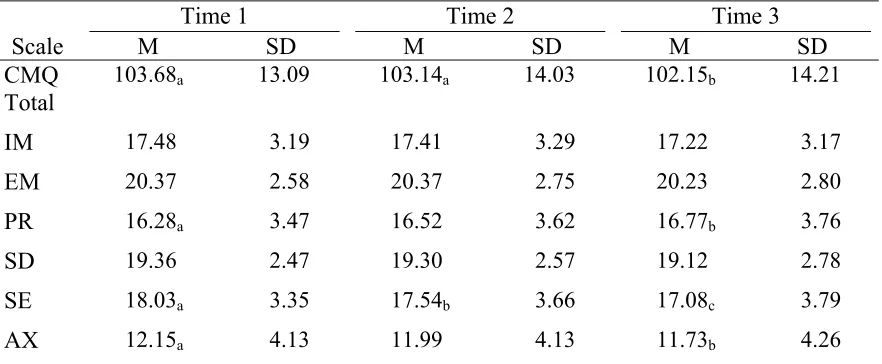
4 Mean Motivation Scores ...74
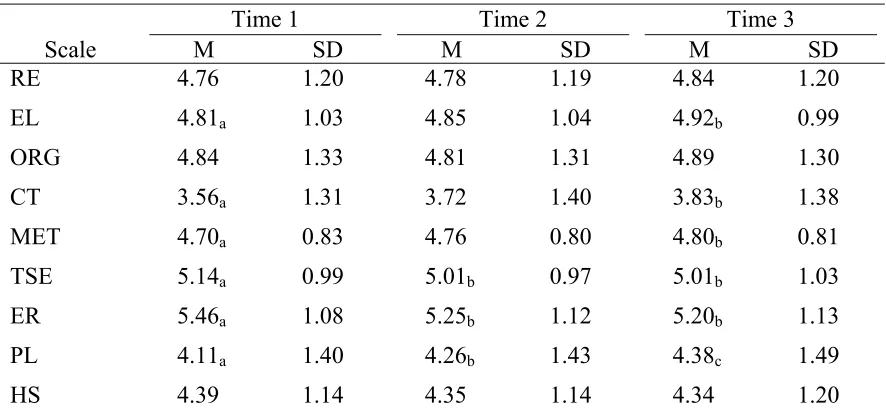
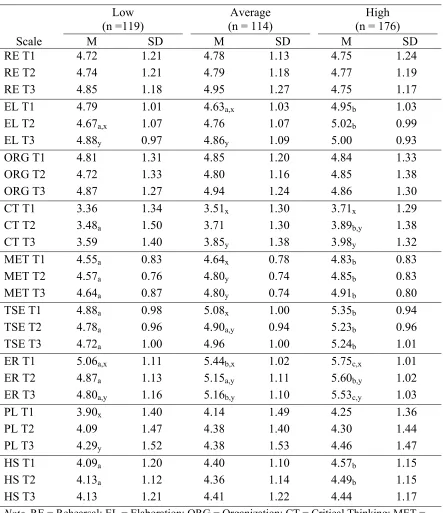
5 Mean Learning Strategies Scores ...75
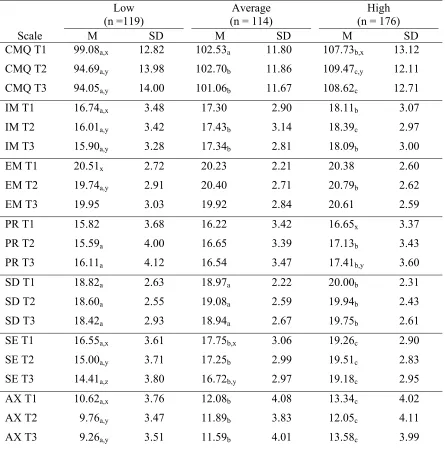
6 Mean Motivation Scores by Performance Level ...77
7 Mean Learning Strategies scores by Performance Level ...84
8 Mean Motivation Scores by Gender ...85
9 Mean Learning Strategies by Gender ...87
10 Time 1 Hierarchical Multiple Regression Analyses Predicting Final Course Grade from Previous Achievement, Motivation and Learning Strategies by Gender ...89
11 Time 2 Hierarchical Multiple Regression Analyses Predicting Final Course Grade from Previous Achievement, Motivation and Learning Strategies by Gender ...90
12 Time 3 Hierarchical Multiple Regression Analyses Predicting Final Course Grade from Previous Achievement, Motivation and Learning Strategies by Gender ...91
13 Mean Motivation Scores by Ethnicity ...94
14 Mean Learning Strategies Scores by Ethnicity ...96
15 Time 1 Hierarchical Multiple Regression Analyses Predicting Final Course Grade from Previous Achievement, Motivation, and Learning Strategies by Ethnicity ...98
v
vi
Figure Page
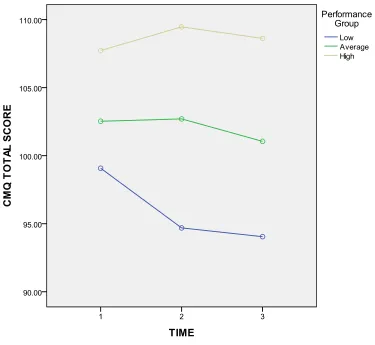
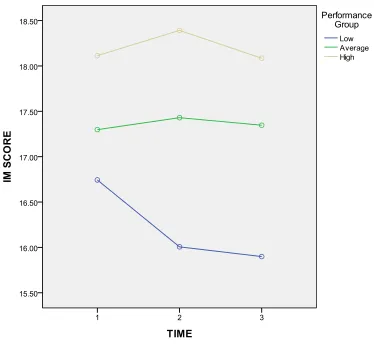
1 Time × Performance Group Interaction of CMQ Total Scores ...79
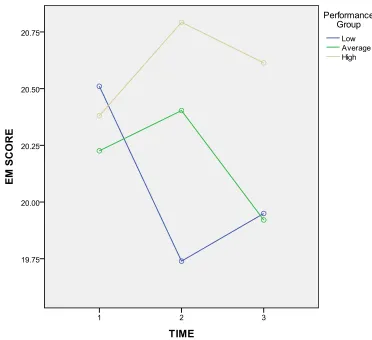
2 Time × Performance Group Interaction of Intrinsic Motivation Scores ...80
3 Time × Performance Group Interaction of Extrinsic Motivation Scores ...81
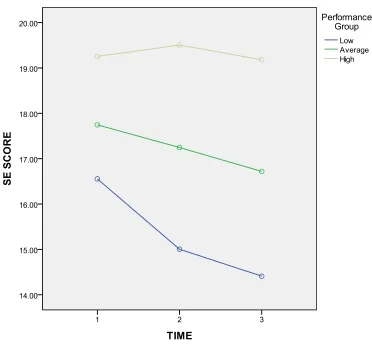
4 Time × Performance Group Interaction of Self-Efficacy Scores...82
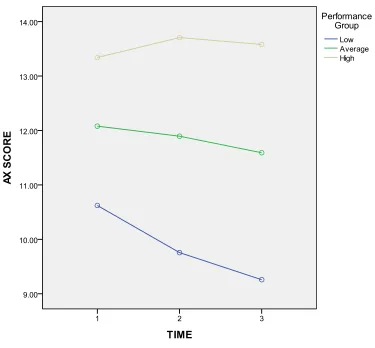
5 Time × Performance Group Interaction of Assessment Anxiety Scores ...83
vii AX Anxiety about chemistry assessment
CMQ Chemistry Motivation Questionnaire
CT Critical Thinking
EL Elaboration
EM Extrinsic motivation to learn chemistry
ER Effort regulation
GPA Grade Point Average
HS Help-seeking
IM Intrinsic motivation to learn chemistry
MET Metacognitive self-regulation skills
MSLQ Motivated Strategies for Learning Questionnaire
NAEP National Assessment of Educational Progress
ORG Organization
PL Peer learning
PR Relevance of learning chemistry to personal goals
RE Rehearsal
SD Self-determination to learn chemistry
SE Self-efficacy for learning chemistry
SRL Self-regulated learning
CHAPTER 1
MOTIVATION, LEARNING STRATEGIES AND
SCIENCE LEARNING IN COLLEGE:
A REVIEW OF THE LITERATURE
Although studied for decades (Robbins et al., 2004; Tai, Sadler, & Loehr, 2005),
predicting academic success in college warrants continuous research because student
populations are constantly changing, the criteria for academic success varies at each
institution, and expectations differ by course and professor (Burton & Ramist, 2001).
Moreover, the significant body of work that documents the consistent relationship
between academic performance and retention underlines the need for examining variables
that influence student achievement (Robbins, Allen, Casillas, Peterson, & Le, 2006;
Robbins et al., 2004). Awareness of these variables can inform professors and
administrators about student characteristics that influence who may succeed and those at
risk to fail. Such information allows for shaping instructional delivery and/or designing
support programs that foster student success and increase retention.
In a review of college success, Burton and Ramist (2001) found the strongest
academic predictors to be a combination of high school records and combined SAT
scores. Robbins et al. (2004) reported these factors “account for approximately 25% of
the variance when predicting first-year college GPA” (p. 262). Although high school
grades and SATs are considered strong predictors of college success, Prus, Hatcher,
Hope, and Grabiel (1995) noted that “70-80% of the variance in academic performance is
not predicted by these traditional measures” (p. 8). Additional variables that predict
more complete picture for predicting general academic success are motivation and
learning strategies (Robbins et al., 2004).
Determining what predicts college success in the specific discipline of science is a
more focused area of research that is increasingly important. It is now typically expected
that all college students “become scientifically literate citizens who are able to understand
the scientific issues… that confront them” (Glynn, Taasoobshirazi, & Brickman, 2009, p.
128) in the rapidly changing world of the 21st century. Students should also be able to
solve basic real world problems using scientific principles (Smith, Gould, & Jones,
2004). Yet, science performance for 12th graders on the National Assessment of
Educational Progress (NAEP) decreased between1996 and 2005 (National Center for
Education Statistics, 2009). In addition, the Program for International Student
Assessment (PISA) indicates that U.S. 15 year olds’ science literacy scores were below
average in 2006 (National Center for Education Statistics, 2009) and only reached the
average level in 2009 (National Center for Education Statistics, 2010).
As the number of students interested in studying science in college continues to
grow (Aud et al., 2010), identifying variables that predict success becomes more
important for retaining students in the sciences. A challenge for identifying these
variables is that students’ levels of interest in science vary, and many lack conceptual
understanding of scientific ideas and/or essential learning strategies (Bao et al., 2009;
Bleicher, Romance, & Haky, 2002; Schuss, 1999). Previous academic achievement,
measured by math SAT scores and/or high school grade point average (GPA), is a
significant predictor of college science success (Spencer, 1996; Tai et al., 2005). Another
topics in high school which prepare them for more meaningful college science learning
(Schwartz, Sadler, Sonnert, & Tai, 2008). Because measures of previous achievement do
not change, additional factors need to be considered once students matriculate in college
(Singh, Granville & Dika, 2002). Motivation and learning strategies in college science
courses can help fill the gaps in measurement of success left by math SAT scores, high
school GPAs or exposure to in-depth science material.
When studying motivation and learning strategies as predictors of college science
success, gender issues may provide additional valuable information. The gender gap in
academic science achievement has narrowed considerably since the 1970s, though
differences in achievement (Britner, 2008; Freeman, 2004), as well as stereotypes about
science courses being more favorable for males, still exist (DeBacker & Nelson, 2001;
Miyake et al., 2010; Nosek et al., 2009). Although female students enroll in more
advanced high school science courses (Freeman, 2004), they are less likely to enjoy them
(Freeman, 2004; Meece, Glienke, & Burg, 2006; Weinburgh, 2000). Males also
outperform females in elementary, middle and high school, and between 1996 and 2005
only small gains in science achievement were made by females (“Gender Differences in
Science,” 2009; National Center for Education Statistics, 2009). In 2007, scores from the
American College Test (ACT) indicated females were less prepared for college science
courses (“Gender Differences in Science,” 2009). This discrepancy between male and
female science achievement continues in postsecondary education where women are less
likely to major in science disciplines (Britner, 2008; Freeman, 2004; “Gender Differences
interest in the discipline may all affect how females approach studying science as well as
motivation to pursue degrees or careers in the field.
Ethnicity may also provide valuable information when studying motivation and
learning strategies as predictors of college science success. The discrepancy in science
performance by ethnicity is well documented (Barton, 2002; Bruschi & Anderson, 1994;
Stedman, 2009), and few gains have been made over the past decade to close the gaps
that still remain (Steadman, 2009). The NAEP science scores between 1996 and 2000
recorded differences between White and minority students averaging 37 points
nationally, more than one standard deviation, with a range in difference from 19-41
points with Whites earning the highest scores (Barton, 2002). Stedman (2009) also
reviewed NAEP science achievement from 1969-1999 reporting the Black-White gap in
science in 1999 remained almost as large as it was in 1969, again with Whites earning
higher scores. Similar patterns have been found between White and Hispanic students
(Stedman, 2009). In 2005, ethnicity trends indicated Whites earned higher science scores
than Blacks and Hispanics at all grade levels, with no gains by the non-White groups by
grade 12 from 1996-2005 (National Center for Education Statistics, 2009). Although
statistics continue to show differences in performance in elementary and secondary
settings, ethnic minorities are studying science in college in greater numbers than ever
before. The number of earned science degrees increased for almost all ethnic groups.
Moreover, the demographic information for students intending to major in science fields
is rising for Asian and Hispanic students and is stable for Black and American Indian
learning strategy use contribute to success can only help with retaining minorities in the
sciences, one of the major themes and goals in science education (Freeman et al., 2007).
This literature review discusses and critiques previous research on motivation
constructs and learning strategy use as predictors of successful college science learning.
The research on general academic success, a more robust area, is presented as the
foundation for predictors of college science success. Highlights include strengths of
science research that investigated both motivation and learning strategies within the same
study. Research that addresses levels of motivation and learning strategy use by gender
and ethnicity is also presented and critiqued. Finally, instructional considerations and
implications for future research are addressed.
Motivation and Science Learning
Motivation is one of the states that drives and sustains behaviors. In order for
students to be motivated to learn in any discipline, they must participate in activities that
are personally meaningful and worthwhile (Glynn & Koballa, 2006). By middle school,
students’ motivation to learn science is one of the most important predictors of science
course success (Britner & Pajares, 2006). In a study with 8th graders, motivation strongly
influenced science achievement (Singh et al., 2002). This trend continues in college.
Glynn, Taasoobshirazi, and Brickman (2007) investigated the relationship between
overall motivation to learn science and science GPA. Most students reported they were
motivated to study science not only because they thought it would be helpful for a career,
but also because they “found it relevant to their health, life and understanding of the
world” (p. 1098). When students found science courses were relevant to their careers,
2007). Another study found when college students reported lower motivation in science
courses their performance was lower as well (Glynn et al., 2009). Both studies concluded
that motivation to learn science positively related to college science performance. There
are many motivational constructs that could relate to academic success in college science.
However, researchers have identified intrinsic and extrinsic motivation, goal orientation,
task value, self-determination, self-efficacy and assessment anxiety as important
constructs for science learning (Glynn & Koballa, 2006; Glynn et al., 2009).
Intrinsic and Extrinsic Motivation
Motivation orientation, defined as intrinsic or extrinsic motivation, explains how
rewards affect students engagement with particular learning activities (Eccles &
Wigfield, 2002). Intrinsic motivation refers to performance of a task rewarded by
completing the task itself, whereas extrinsic motivation refers to performance of a task in
order to receive an external reward (Covington, 2000b; Murphy & Alexander, 2000;
Pittman & Boggiano, 1992; Ryan & Deci, 2000). Ryan and Deci stated that “intrinsically
motivated activities . . . provide satisfaction of innate psychological needs” (p. 57). When
intrinsically motivated, students engage in an activity because the task itself is interesting
or they feel rewarded by completing the task. In academic situations, intrinsic motivation
leads to deeper processing, greater mastery and better implementation of learning
strategies (Covington, 2000b). Intrinsically motivated students are also more likely to
persist with challenging tasks and other positive classroom behaviors as well as perform
better academically (Walker, Greene, & Mansell, 2006).
Extrinsic motivation generally drives behaviors when students complete tasks for
extrinsic rewards diminished intrinsic motivation. When rewards were given to students
for completing tasks that they were once intrinsically motivated to complete, their
motivation orientation shifted from intrinsic to extrinsic (Pittman & Boggiano, 1992). If
students are rewarded for participating in an intrinsically motivated task, they may begin
to think that a reward is necessary to complete that task and not persist unless the reward
is present. It has also been suggested that if rewards are given in a competitive
environment, e.g., to the best or fastest, students are rewarded for the wrong reasons
(Covington, 2000b).
Although early research concluded that extrinsic motivation was detrimental to
intrinsic motivation and performance, more recent research suggested that extrinsic
motivation is more complex. Ranging on a continuum from passive compliance to active
personal commitment, extrinsic motivation depends on whether a student wants to avoid
a negative consequence or sees value in the outcome that may be obtained (Ryan & Deci,
2000). As people mature in school and work environments more external rewards are
offered. It is often difficult to separate motivation orientation as many learning activities
have extrinsic rewards attached to them (Ryan & Deci, 2000). Extrinsically motivated
students who fall closer to active personal commitment on the continuum may be driven
to act primarily because of the reward. However, these rewards may also have some
intrinsic elements, (e.g. receiving an ‘A’ makes the student feel good).
Orientations seem to fall on opposite ends of one continuum. Students however,
can be simultaneously intrinsically and extrinsically motivated (Kaufmann, Agars, &
Lopez-Wagner, 2008; Lin, McKeachie, & Kim, 2002; Watson, McSorely, Foxcraft, &
(2008) investigated whether intrinsic and extrinsic motivation separately predicted first
quarter college cumulative GPAs. Intrinsic and extrinsic motivation correlated with and
predicted first quarter GPAs differently. A significant positive relationship between
intrinsic motivation and GPA was found, and there was a negative relationship between
extrinsic motivation and GPA (Kaufman et al., 2008). Instead of measuring global
academic success, Watson, McSorely, Foxcraft, and Watson (2004) studied the effects of
both intrinsic and extrinsic motivation on a specific college final course grade. They
found that higher levels of both motivation orientation variables positively correlated
with higher course grades (Watson et al., 2004).
Connecting motivation orientation to science performance, Garcia (1993) found
both intrinsic and extrinsic motivation positively predicted final course grades in organic
chemistry. In contrast, Yu (1999) found that intrinsic motivation negatively predicted
course performance in college chemistry. However, Lin, McKeachie, and Kim (2002)
evaluated whether different levels of intrinsic and extrinsic motivation affected final
course grades in several courses including college biology. Based on self-reports,
students were placed in a low, medium or high category for both intrinsic and extrinsic
motivation. Students with high intrinsic and medium extrinsic motivation outperformed
their peers with either low or high extrinsic motivation.
Goal Orientation
Goal orientation refers to the direction or type of achievement goals students set.
Achievement goals are influenced by the purpose for learning and can determine what
behaviors will be implemented to meet these goals, ultimately affecting achievement
and purpose by the goals that individuals seek out and the quality and intensity of
behavior will change as these goals change” (p. 174). Achievement goals are typically
divided into two orientations of learning and performance (Ames, 1992; Covington,
2000a; Eccles & Wigfield, 2002; Eppler & Harju, 1997; McGregor & Elliot, 2002).
Students who are learning goal-oriented want to increase their competence and
reach their goals by mastering new material (Murphy & Alexander, 2000) or improving
skills (Elliott & Dweck, 1988). In addition, students with high learning goals are more
likely to try or persist in using self-regulatory strategies (Ames, 1992) and participate in
more challenging tasks, even if they do not perceive they have the ability to complete
them (Dweck, 1986). Since these students are driven by effort rather than ability, it is
believed that learning goals support intrinsic motivation (Dweck, 1986).
Students who are performance goal-oriented either want to receive positive or
avoid negative judgments about their competence (Murphy & Alexander, 2000). Public
recognition is also extremely important to students with performance goals, especially
when students receive praise for performing well or better than peers (Ames. 1992). This
goal orientation does not always encourage learning, since perception of ability must
remain high in order to continue with learning tasks. If performance goal-oriented
students receive negative feedback or feel threatened, they will not continue with a task
(Dweck, 1986).
Learning and performance goals are independent from each other and should be
considered separate variables. Research consistently supported that learning goals
positively relate to academic success in college (Eppler & Harju, 1997; Ironsmith, Marva,
performance goals, however, sometimes yielded unexpected results and also led to
positive academic outcomes (Harackiewicz, Barron, & Elliot, 1998). Harackiewicz,
Barron, and Elliot, (1998) proposed that adopting both learning and performance goals
may actually lead to more success in college. Work by Ironsmith, Marva, Harju, and
Eppler (2003), supported that college students would be well served to adopt both
learning and performance goals. They found students who earned the best grades reported
high learning goals. Interestingly, students with both high learning and performance goals
and those with just high performance goals had no significant differences in final grades.
Finally, students who earned the lowest grades reported both low learning and
performance goals. Thus while having high learning goals is associated with high
performance, having high levels of either goal is better for performance than low
achievement goals in both areas (Ironsmith et al., 2003).
Schraw, Horn, Thorndike-Crist, and Bruning (1995) studied whether college
biology course performance differed by achievement goal orientation. Results indicated
that prior academic achievement accounted for most of the variance in final course
grades. However, when prior achievement was removed from the prediction model,
students with high learning versus performance goals earned higher final course grades.
These students also reported more strategy use than those with low learning goals, which
could explain why their performance was higher. The level of performance orientation
goals was not related to course achievement (Schraw et al., 1995). Zusho, Pintrich, and
Coppola (2003) found that while learning goals significantly correlated with final course
grades in college chemistry, no significant relationship was found with performance
Task Value
Task value explains whether course material or learning activities are personally
relevant to the student (Eccles & Wigfield, 2002) and provides interpretation for why the
task is interesting, important or useful. Attainment and utility are two key components
that influence whether a student values a task (Bonney, Klempter, Zusho, Coppola, &
Pintrich, 2005). Attainment describes why performing well on a task is important to the
student while utility qualifies whether tasks are useful, practical, or relevant (Eccles &
Wigfield, 2002). Interest in material also influences task value (Garcia & Pintrich, 1996).
Task value is essential for academic success as it can influence course selection
and learning activities which also influence performance (Pintrich, 2004). Students must
identify why performing well on a task is important and determine whether learning tasks
can support their personal or professional goals (Eccles & Wigfield, 2002). When task
value is high, students make the connection between learning and their present or future
personal goals, engage with material, put forth more effort, and ultimately reach higher
achievement (Bonney et al., 2005; Walker et al., 2006).
Pokay and Blumenfeld (1990) investigated the relationship between task value
and high school course achievement. While they did not find task value predicted course
success, it was positively correlated with self-concept and expectancy to perform. They
also found when task value was higher, students used more learning strategies. Garcia
and Pintrich (1996) investigated the relationship between task value and college course
achievement. Although it was not a significant predictor of course success, high task
DeBacker and Nelson (2001) investigated how task value impacted high school
science performance. They found that higher achieving students valued science more.
Several studies reported that college science students’ task value decreased during a
semester (Garcia, 1993; Yu, 1999; Zusho et al., 2003). Garcia (1993) and Yu (1999) did
not find task value significantly predicted success in organic chemistry or general
chemistry respectively. Zusho et al. (2003) however, reported task value not only
significantly predicted college chemistry success but was a stronger predictor than
previous achievement.
Self-determination
Academic self-determination is defined by how much control a student perceives
he or she has over learning (Glynn & Koballa, 2006). Self Determination Theory (SDT)
suggests that people innately strive for optimal stimulation, feeling competent and being
self-determinant, or having a sense of control over their behaviors (Eccles & Wigfield,
2002; Pittman & Boggiano, 1992). Lavigne, Vallerand, and Miquelon (2007) explained
that self-determination is comprised of both a perception of autonomy in the learning
environment and competence in the ability to perform a task.
Research with medical students enrolled in a practical doctor-patient interviewing
course provides an example of the impact of self determination (Williams & Deci, 1996).
When medical students felt more autonomous in the course, they reported stronger
psychosocial beliefs and more competencies about their interviewing skills. When these
students perceived that instructors supported their autonomy, they engaged in more
autonomous self-regulated learning and performed better with simulated patients
For success in science courses, Lavigne et al. (2007) argued that
self-determination plays a significant role in students’ overall motivation to learn science and
increases the likelihood of pursuing academic or professional careers in science. The
relationship between autonomy, motivation orientation, and college academic
performance was studied by Garcia and Pintrich (1996) in several disciplines, including
biology. Although not directly related to course achievement, they found that a sense of
autonomy was the strongest predictor of end of semester motivation orientation (Garcia
& Pintrich, 1996).
Black and Deci (2000) tested the relationship between self-determination and
performance in organic chemistry. In a self-report study, those students who perceived
greater autonomy at the beginning of the semester also perceived more competence and
interest in the course, as well as lower anxiety. Although starting autonomy levels did not
predict course achievement, students who gained a sense of autonomy throughout the
course earned higher grades. When students perceived that group leaders supported
autonomy, their own sense of autonomy, competence, and interest increased. Perceived
group leader support of autonomy was a stronger predictor of grades than ability (Black
& Deci, 2000).
Self-efficacy
Self-efficacy describes whether a student believes he or she can successfully
perform a specific task. Although similar to other expectancy constructs like self-concept
which explain students’ expectations about performance, “self-efficacy is defined in
terms of individuals' perceived capabilities to attain designated types of performances and
believe tasks can be accomplished and are more likely to proceed with the task. When
self-efficacy is low, or beliefs about successful completion are not present, tasks are
avoided (Bandura, 1997). Self-efficacy regulates the perception of difficulty and the
amount of effort and persistence for completing a task (Pajares, 1996). Pajares (2002)
summarized that self-efficacy is often more strongly related to performance than ability,
possibly because students with higher self-efficacy practice more self-regulation
including persistence, monitoring and adjustment of strategies.
For college students, self-efficacy can directly and indirectly affect academic
performance (Pajares, 1996). Self-efficacy is directly related to both expectations about
performance and academic performance itself for first year students (Chemers, Li-tze, &
Garcia, 2001). Although success in college is often measured by final course grades,
student achievement may also be defined by students’ ability to effectively solve
problems. In a study testing a model of successful problem-solving, researchers found
that high self-efficacy was a contributing factor to successful problem-solving
(Taasoobshirazi & Glynn, 2009).
Research supports that self-efficacy is related to science achievement at all grade
levels including college (Britner & Pajares, 2006). Decades ago, Lent, Brown and Larkin
(1984) found that college students with higher self-efficacy earned higher grades and
persisted in technical/scientific majors. Andrew (1998) studied the effects of self-efficacy
on science course performance, finding self-efficacy predicting nearly 18-24% of the
variance in final grades for nursing students. Both Yu (1999) and Zusho et al. (2003)
found self-efficacy to be a significant predictor of final chemistry grades, even beyond
Assessment Anxiety
Assessment anxiety occurs when the student fears the testing situation. Although
many models explain this anxiety through drives, attention, skill deficit, self-regulation
and self-worth, there is no one comprehensive model that includes all of the factors that
contribute to assessment anxiety (Chapell et al., 2005). Some reasons for the existence of
assessment anxiety include that the test taker is unsure about the testing situation, fears
the unknown and/or failure, or believes that tests are unfair (Berkley & Sproule, 1973).
Cassady and Johnson (2002) explained that assessment anxiety exists on two
dimensions; emotionality and worry. Emotionality pertains to the awareness of physical
symptoms (sweat, nausea, dizziness, heart racing, etc.) during or around the testing
situation. Worry or cognitive test anxiety pertains to the thoughts people have before,
during and after an evaluation. Examples of these thoughts include comparing
performance to others, considering the consequences of failing, having low levels of
confidence, general worry about the evaluation, feeling like performance will disappoint
a parent, feeling unprepared for an evaluation, and/or losing self-worth (Cassady &
Johnson, 2002).
Although some anxiety can be motivating and help students reach academic goals,
having too much or too little can be detrimental to learning and ultimately negatively
affect performance (Glynn & Koballa, 2006). Yerkes and Dodson (1908) explained that
the relationship between arousal or anxiety and performance is curvilinear. Some arousal
or anxiety helps performance but eventually hits a threshold and then begins to hurt
suffer. There is an optimal amount of arousal for different tasks which will change for
individuals and for tasks (Yerkes & Dodson, 1908).
Since first identified in the 1950s, many studies have investigated the relationship
between assessment anxiety and academic performance (Cassady & Johnson, 2002;
Hembree, 1988). In contrast to the motivation constructs that generally have positive
relationships with academic performance, assessment anxiety consistently negatively
correlated with academic performance from elementary to graduate school (Chapell et al.,
2005), even when controlling for ability (Berkley & Sproule, 1973).
Students studying science are not exempt from assessment anxiety or the negative
effects it can have on science performance. Garcia (1993) reported that assessment
anxiety negatively predicted final course grades in organic chemistry. Lin et al.’s (2002)
study with undergraduates that included biology students, found those who earned the
highest final course grades had low assessment anxiety. In a large study with 4,000
undergraduates including nearly 22% science majors, Chappell et al. (2005) found a
significant negative relationship between test anxiety and GPA. They concluded that test
anxiety is one of the motivation factors that negatively relates to academic performance.
Critique of Motivation and Science Learning Literature
A critique of motivation and science learning literature reveals several
methodological issues that exist across disciplines. It is important to take note of these
criticisms when interpreting results about what influences science learning. First, studies
do not always consider motivation constructs in conjunction with other related constructs.
There is a need to consider the affect of multiple aspects of motivation when
usually measured by self-reports which assumes science students can accurately identify
and report how they are feeling and what they are doing. Evaluating motivational
constructs over the course of a semester, or through several science courses, may reveal
whether students’ motivation to learn science is consistent or whether their self-opinions
change over time.
As the demographics of college science students continue to change, determining
differences in motivation for groups of students is necessary. Although some studies have
looked at differences in science motivation by gender (Yu, 1999) or ethnicity (Garcia,
1993), demographic variables are not always included (Zusho et al., 2003). Sample
selection and analyses by group within the sample could determine whether results are
applicable to all science students or just to specific populations.
Research needs to consider how both intrinsic and extrinsic orientations affect
science success and whether their predictive abilities are positive or negative. Because
science success is often measured by final course grades, an extrinsic reward, the role of
intrinsic motivation may not always be positive for science courses. Both learning and
performance goal orientations also have independent relationships with science course
grades. While learning goals positively relate to science success, the effect of
performance goals is still unclear (Schraw et al., 1995; Zusho et al., 2003). Additional
research considering both learning and performance goals in science courses is needed to
determine if in fact performance goals positively or negatively predict science
performance. Research may also consider whether the science classroom promotes
There is a clear positive relationship between task value and other motivational
constructs that relate to science success, but it is unclear whether task value can
consistently predict science success. Because task value depends on students’ current and
future goals, researchers need to consider why students enroll in science courses and
whether that reason affects task value. Several studies reported a decline in task value
throughout the semester (Garcia, 1993; Yu, 1999; Zusho et al., 2003). Future research
may compare task value of science courses between science and non-science majors to
determine if the decline is related to the types of students enrolled in the class.
Like task value, the direct relationship between self-determination and science
performance is less conclusive than other motivational constructs. Garcia and Pintrich
(1996) found self-determination was related to motivation orientation. Black and Deci
(2000) reported change in self-determination over the course of the semester was
important, especially for predicting other motivation constructs. More research at the
college level with specific science courses is needed on whether self-determination is a
significant factor in predicting success and its relationship to other constructs. As
self-determination deals with students’ sense of control over the learning situation, it would
be worthwhile to study its relationship to effort regulation or time and study management.
The research consistently reported that self-efficacy is one of the strongest
predictors of science performance. Measuring the changes in self-efficacy over the course
of a semester as well as identifying factors that increase or decrease self-efficacy could
determine when it is most important. Britner and Pajares’ (2006) also called for
investigating science self-efficacy considering more demographic variables such as age,
reported within specific science disciplines at the high school level (Britner, 2008),
additional research could investigate whether these differences continue in college.
Assessment anxiety is a motivational construct that most often negatively related
to science course performance. Because science students are constantly assessed and
there are techniques to reduce assessment anxiety, this motivation construct should not be
ignored. Future research needs to address whether assessment anxiety is more prevalent
in particular science courses, or with specific groups of students such as women or
minorities (Garcia, 1993; Yu, 1999). It is not clear whether assessment anxiety in science
courses is present from the beginning of the semester or develops over time.
Learning Strategies and Science Learning
Motivation constructs answer many questions about why students are driven to
learn but do not always explain the specific actions students take or perform to reach
learning objectives. Understanding which learning strategies relate to academic success
can add to the discussion on predictors of science achievement in college. Unlike
motivation constructs that at times seem innate and unchangeable, learning strategies may
be changed based on environment, task, or demands. Learning strategies can also be
taught in conjunction with course content (Bleicher et al., 2002), thus providing
interventions that would support academic success in specific classes.
Learning strategies are essential for science learning because they assist students
in mastering the foundation knowledge necessary for advancing within the discipline
(Miyake et al., 2010). In science courses students must retain basic information in order
to learn new and advanced material (Bleicher et al. 2002). Students are expected to not
inquiry (Taasoobshirazi & Glynn, 2009). Using strategies that develop and encourage
scientific ability helps students in their college science courses and prepare them to solve
real-life problems and tasks (Bao et al., 2009).
Self-Regulated Learning
Self-Regulated Learning (SRL), the process by which students practice
metacognitive skills or are aware of their cognition (Rickey & Stacy, 2000), includes four
phases of forethought, planning and activation, monitoring, and reflection (Schunk,
2005). SRL is an ongoing process in which strategies change as learning environments
and expectations change. SRL skills include, but are not limited to, self-evaluating,
organizing, goal-setting and planning, seeking information, keeping records, monitoring,
environmental structuring, implementing self consequences, rehearsing, memorizing, and
seeking assistance from teachers, peers and others (Young & Ley, 2005).
When students are self-regulated learners, they monitor what they learn and
implement study strategies at different stages in the learning process. This allows them to
remember information as well as connect new and previously learned material (Corno &
Randi, 1999; Pintrich, 2004). It is difficult to identify which SRL strategies are most
effective for every student, as defining adaptive and maladaptive strategies depends on
the student or learning situation. Students who self-regulate have a bank of strategies they
can modify to fit new information or complete a variety of academic tasks (Corno &
Randi, 1999; Zimmerman, 2008). Additionally, individual students can implement
different strategies and still reach the same result (Ablard & Lipschultz, 1998).
Prus et al. (1995) explored whether specific SRL strategies predicted freshmen
strategies significantly correlated with GPA. In conjunction with attitude, motivation, and
concentration, these strategies helped explain 12% of the variance in GPA. The presence
of learning strategies had important predictive value above and beyond the traditional
factors such as high school GPA and SAT scores (Prus, Hatcher, Hope, & Grabiel, 1995).
Although students who displayed more adaptive SRL strategies demonstrated
higher learning motivation, research indicated that students did not implement skills
consistently or even at all (Schunk, 2005). Zeegers (2001) found that first year college
students did not always implement strategies that will best support learning, but rather
chose strategies that fit their demanding schedules and help them keep up with their
workload. Students’ motivation as well as their ability to set and follow through with
goals also affects whether self-regulation occurs (Wolters, 1998). Bandura (1997) warned
that, “self-regulatory skills will not contribute much if students cannot get themselves to
apply them persistently in the face of difficulties, stressors, and competing attractions” (p.
233).
Persistently applying self regulation strategies in science courses is crucial as,
“failure on the part of students to examine their conceptual understanding and cognitive
processes that produce understanding cannot lead to learning scientific knowledge of a
conceptual nature” (Chin & Brown, 2000, p. 112). Because many science students have
not been taught active learning strategies beyond memorization, they may perform well
on rote tasks, but little else (Modell, 1996). If science instructors expect students to use
self-regulated skills, they may actually have to teach them as well as promote their use.
In order for science students to consistently use SRL strategies, they must be motivated to
Yu (1999) investigated whether a variety of self-regulation strategies predicted
performance in college chemistry. The study found that effort regulation (staying on task
even if there are distractions or interest fades) predicted final course grades (Yu, 1999).
Chen (2002) studied whether different self-regulation and study strategies predicted
success in a college lecture course with a lab component. For the lecture, only effort
regulation predicted final course grades. For the lab, only time and environment
management (when, how long, and where the student studied) predicted success (Chen,
2002). Zusho et al.’s (2003) analyses of learning strategy use reported the highest
performing college chemistry students implemented more rehearsal and elaboration than
both low and average performers.
Deep and Surface Learning
The use of specific SRL strategies can lead to deep or surface learning. Deep or
meaningful learning relies on the students’ ability to connect new material to previously
learned material, while surface learning allows students to memorize and recall
information without making connections (Ausubel, 1963). Deep learning approaches
often correlate with intrinsic motivation because of the emphasis on connecting new
information to what the learner personally knows. Surface learning approaches relate to
extrinsic motivation and focus on completing tasks without any attempt to make personal
connections (Chin & Brown, 2000).
Because learning occurs in many contexts, differences in approaches exist for
specific disciplines and tasks. However, students can only reach meaningful learning in
all disciplines when information is organized in a hierarchy which affords easy access as
not engage in the process of changing thoughts or ideas, resulting in unlearned material
and hindering future learning (Ausubel, 1963; Chin & Brown, 2000). It is also true for
science that in order for students to reach meaningful learning, they must practice a
variety of self-regulation skills for not only learning the material but reflecting on what
they understand (Chin & Brown, 2000).
Science courses require students to recall many facts and then connect old and
new concepts. Students often rely on surface strategies for memorizing facts (Zeegers,
2001) without any focus on content comprehension or connection. This poses a problem
for college science, because, if meaningful learning does not occur, students may not
truly understand the material and ultimately make necessary connections for solving
problems (Cavallo, Potter, & Rozman, 2004; Chin & Brown, 2000). The absence of
meaningful learning may be due to the manner in which material is presented or to the
lack of awareness of actual skills needed to reach meaningful learning levels (Bleicher et
al., 2002).
BouJaoude and Giuliano (1994) tested the relationship between two learning
approaches in college chemistry. They explored Meaning Orientation (MO), a deep
approach where students related ideas and had intrinsic motivation. They also examined
Reproducing Orientation (RO), a surface approach where students were bound to the
syllabus and had extrinsic motivation. MO scores were significant predictors of final
course grade, helping explain 32% of the variance in final exam scores. Because MO
scores predicted final course grades, the specific strategy of relating ideas was identified
for success in a science course. Interestingly, students with higher scores on both the MO
BouJaoude and Giuliano suggested that having a balance of MO and RO, or a
combination of deep and surface strategies, is most beneficial for science success.
Zeegers’ (2001) longitudinal study identified specific approaches to learning in
college science. He measured students’ deep approach (understanding by connecting
material to broader contexts) and surface approach (learning through memorization) over
three years and found changes over time. During the first year of the study, students’
surface learning approach increased while their deep learning approach decreased. The
deep approach returned to the students’ starting level between the second and third years,
while the surface approach remained stable. A positive significant relationship was found
between the deep approach and yearly GPA, and a small negative correlation was found
between surface learning and annual GPA (Zeegers, 2001). Although the surface
approach was used more by students, it did not prove to support successful science
learning.
Critique of Learning Strategies and Science Learning Literature
A critique of learning strategy use and science learning literature revealed
methodological issues that also exist in other disciplines. It is clear that science students
employ many deep and surface self-regulating strategies. While some researchers test
surface and deep learning approaches (BouJaoude & Giuliano, 1994; Zeegers, 2001),
others test specific strategies (Chen, 2002) or a cluster of strategies (Yu, 1999; Zusho et
al., 2003). As there are many skills that fall under the categories of deep and surface
learning, researchers need to identify the specific skills they are testing, so that it is clear
There is also variability in how science performance is measured. Measuring
performance via global GPA (Zeegers, 2001) or specific science course grade
(BouJaoude & Giuliano, 1994; Yu, 1999; Zusho et al., 2003) investigates two different
research questions. The former tests how skills relate to overall science success, while the
latter tests skills needed for a specific science course. The results could have different
implications for which skills instructors promote in different courses.
Although some researchers investigated and found differences in learning strategy
use in science courses by gender and ethnicity (Garcia, 1993; Yu, 1999), more studies are
needed to determine if these differences consistently affect science performance. Because
age and experience influence strategy use, researchers may want to consider these factors
when measuring performance (Linder & Harris, 1992; Zeegers, 2001). Considering
learning strategy use over time will help identify when skills develop or they are
beneficial to particular groups.
Finally, strategy use is often measured in isolation. Zeegers (2001) cautions
researchers that many factors impact strategy selection and students are often motivated
to implement only those strategies they think will lead to success. As motivation seems to
be a necessary but not sufficient factor for implementing learning strategies (Vollmeyer
& Rheinberg, 2006; Wolters, 1998), it is difficult to tease out whether SRL predicts
academic performance without considering motivational constructs that promote use of
certain strategies.
Studies Investigating Both Motivation and Learning Strategies
Investigating both motivation and learning strategies within the same study allows
studies by Pintrich and De Groot (1990) and Pokay and Blumenfeld (1990) measured
levels of motivation and learning strategy use with middle and high school students
respectively. Pintrich and De Groot found that motivation, cognitive engagement and
performance are connected. High self-efficacy and intrinsic motivation were related with
greater use of cognitive strategies and higher achievement for all graded tasks. High
test-anxiety was correlated with lower achievement on test scores (Pintrich & De Groot,
1990). Pokay and Blumenfeld found positive correlations between self-concept,
perceived value, and expectancies, which all related to course grades. They also found
that motivation and use of strategies at different times of the semester predicted
performance differently. They concluded that strategy use may need to change as the
demands of the course change (Pokay & Blumenfeld, 1990).
At the college level, researchers have investigated the predictive value of several
motivation constructs and learning strategies in science courses. Garcia (1993) surveyed
organic chemistry students at the beginning and end of the semester. While prior
achievement, mastery orientation and effort regulation were the strongest predictors of
final course grade, different variables predicted success at the beginning and end of the
semester. At the beginning of the semester, prior achievement (high school GPA, verbal
SAT and chemistry placement) and effort regulation positively predicted performance,
while rehearsal had a negative relationship with performance, explaining 26% of variance
in final course grade. At the end of the semester, both intrinsic and extrinsic goal
orientation and effort regulation positively predicted performance while test anxiety
Task value, rehearsal, metacognitive self-regulation strategies and time and study
environment management were not significant predictors of course success.
Yu (1999) investigated the predictive ability of motivation and learning strategy
use on final course grades in general chemistry. By the end of the semester, self-efficacy
was the strongest predictor of final course grade. Additionally, effort regulation also
positively predicted and intrinsic motivation negatively predicted final course grade.
When considered with previous achievement, motivation and learning strategies
accounted for 53% of the variance in final course grade. Task value, test anxiety, deep
processing skills and self-regulation were not significant predictors of course success.
Zusho et al. (2003) studied the changes in motivation, cognitive and
metacognitive self-regulation skills to determine what predicted final course grades in
college chemistry. Self-reports were collected at three times throughout the semester, and
results indicated that self-efficacy, task-value, performance goals, rehearsal and
elaboration decreased, while organization and metacognitive skills increased.
Self-efficacy, task value and rehearsal were significant predictors of final course grade and
explained 31% of the variance in final course grade when considered with previous
achievement. Mastery and performance goals, organization, elaboration and
metacognitive self-regulation skills did not predict performance. Students who earned the
highest final grades also reported higher self-efficacy, task value, mastery goals and deep
processing strategies.
Gender Differences in Motivation and Learning Strategy Use
Over 40 years of science research has produced different theories of why gender
concluded that women were afraid of success, by the 1970s, attribution theory explained
that girls did not attribute their success to ability, but to effort and hard work (Meece et
al., 2006). Meece, Glienke, and Burg (2006) explain that gender differences in
competency beliefs begin at an early age. Self-efficacy research also has shown that
males are more efficacious than females in science, even when females perform better
(Pajares, 2002). The differences in motivation to learn science between males and
females actually may exist because of stereotypes and socio-cultural factors rather than
gender (Meece et al., 2006; Miyake et al., 2010: Nosek, 2009; Pajares, 2002).
Additional factors that may lead to gender differences in strategy use in science
are modeling and expectation by both parents and teachers (Meece et al., 2006). Parents’
perceptions of the child’s ability can influence the child’s perception of ability, even if
achievement is controlled. When students perceive their ability to be low, they will not
persist or try new skills, which can perpetuate poor performance (Meece & Jones, 1996).
Although not as gender biased as they once were, teachers still may have different
expectations for males and females. For example, math teachers have been found to
emphasize the effort females put into their work. As a result, females may conclude that
their success is due to effort rather than ability (Meece et al., 2006).
DeBacker and Nelson (2001) investigated gender differences in high school
science. Females scored higher on measures of future value and teacher pleasing goals
than males. However, it is interesting that females still scored lower on perceived ability,
even if their science performance was not actually lower. Differences in motivation
results suggest that if students do not believe they have the ability to succeed, they will
not continue in the sciences (DeBacker & Nelson, 2001).
Britner (2008) also studied gender differences in motivation in several high
school science subjects. Differences in self-efficacy by gender and science course subject
were found. In earth sciences, females reported higher self-efficacy and earned higher
grades. In life science, females earned higher grades, but reported lower self-efficacy and
more anxiety. In physical science, there were no gender differences in grades or
self-efficacy, but females reported more anxiety. Self-efficacy scores predicted science grades
for males and females. Britner concluded that self-efficacy, although a strong predictor of
science achievement may need to be examined differently for males and females. These
findings suggest that females may need support in understanding academic successes and
achievements, as well as techniques to reduce anxiety (Britner, 2008).
Cavallo, Potter, and Rozman (2004) investigated differences in learning
approaches and motivational goals between male and female students enrolled in college
physics. Males earned significantly higher final course grades, and analyses of the
motivation constructs indicate gender differences as well. Although there was an increase
in all students’ learning goals, performance goals and concept understanding, males’
performance goals and concept understanding began and remained at higher levels than
females’. While self-efficacy did not significantly change from the beginning of the study
to the end, males’ scores were again always higher (Cavallo et al., 2004).
Zeyer (2010) explored the relationship between high school students’ cognitive
style and motivation to learn science. Cognitive styles include systemizing, the drive to
state. Although a significant relationship between motivation to learn science and higher
systemizing scores was reported, no gender differences in cognitive style or motivation to
learn science were found. Chapell et al. (2005) analyzed gender differences with reported
test anxiety and college academic performance. Even though females reported higher test
anxiety, they earned higher GPAs. Glynn et al. (2007) found no gender differences in
motivation to learn science, or science GPA for non-science majors. In another study by
Glynn et al. (2009) overall motivation did not differ by gender but females reported more
self-determination as well as lower self-efficacy and greater assessment anxiety. Thus,
results about how gender and motivation relate to each other are mixed.
Research on differences by gender in science learning strategy use is also
complex. Meece and Jones (1996) summarized several studies that found approaches to
learning science differ by gender, but results were not consistent. Early research reported
females favored surface approaches (arbitrary and not connecting new ideas), while
males’ approaches were deep (deliberately relating new information to what is known)
(Meece & Jones, 1996). However, more recent research reported females were in fact
using strategies that led to meaningful learning (Meece & Jones, 1996). Pajares (2002)
also found females more efficacious in using self-regulation skills. Contrary to both of
these studies, Zeegers’ (2001) reported that while college science students’ changed their
strategies over time, gender did not affect the change.
Several studies have considered the impact of gender on both motivation and
learning strategy use in science. Meece and Jones (2006) investigated differences in
achievement levels, motivation and learning strategy use of 5th and 6th grade students.