R E S E A R C H A R T I C L E
Open Access
An assessment of the use of
complementary and alternative medicine
by Korean people using an adapted version
of the standardized international
questionnaire (I-CAM-QK): a cross-sectional
study of an internet survey
Ju Ah Lee
1†, Yui Sasaki
2†, Ichiro Arai
3, Ho-Yeon Go
4, Sunju Park
5, Keiko Yukawa
6, Yun Kung Nam
3, Seong-Gyu Ko
2,
Yoshiharu Motoo
7, Kiichiro Tsutani
8and Myeong Soo Lee
9*Abstract
Background:In Korea, there are two types of medical doctors: one practises conventional medicine (hereafter called a physician), and the other practises traditional medicine (hereafter called a Korean medical doctor). This study aimed to compare the provision of complementary and alternative medicine (CAM) by these providers to CAM use per self-judgement in Korea.
Methods:We analysed 1668 Korean people via an internet survey with the Korean adopted version of the I-CAM-Q, namely, the International Questionnaire to measure use of CAM, to understand whether respondents used CAM based either on a prescription or advice from a physician or a Korean medical doctor or on self-judgement.
Results:In the previous 12 months, the proportions of respondents who were treated by a physician, who were treated by a Korean medical doctor and who were not treated by anyone were 67.9, 20.7 and 14.2%, respectively. Among the respondents who received CAM based on a prescription or advice from a physician, traditional Korean medicine practices and dietary supplements were commonly used; only a small percentage used other CAM therapies. Respondents who received CAM based on a prescription or advice from a Korean medical doctor showed similar results. Acupuncture and moxibustion, traditional Korean medicines (decoction), or cupping were more commonly used. Korean traditional medicines as over-the-counter (OTC) drugs were more commonly used by respondents who received CAM therapy based on a prescription or advice from a physician than by those who received CAM therapy based on a prescription or advice from a Korean medical doctor. A total of 74% of the responders used any CAM by self-judgement in the previous 12 months.
Conclusions:For the use of CAM in Korea, in addition to the Korean traditional medical care provided by Korean medical doctors, general physicians advised people regarding Korean traditional medical care and dietary supplements.
Keywords:Complementary and alternative medicine, Korea, I-CAM-Q
* Correspondence:[email protected];[email protected] †Ju Ah Lee and Yui Sasaki contributed equally to this work.
9Clinical Medicine Division, Korea Institute of Oriental Medicine, 1672
Yuseong-daero, Yuseong-gu, Daejeon 34054, Republic of Korea Full list of author information is available at the end of the article
Background
Traditional medicine is classified as complementary and alternative medicine (CAM) in many countries. However, in East Asian countries, such as Korea, Japan, and China, traditional medicine is now used not as CAM but as official medicine; nevertheless, in previous surveys of CAM use in these countries, almost all studies classified traditional medicine as CAM [1–17].
The reports on the utilization of CAM in South Korea (hereafter Korea) through 2011 have been reviewed by Kim SG et al. [1]. There have also been several other reports since 2011 [2–11]. However, most studies either report on the utilization of CAM in patients with specific diseases (e.g., cancer) or pro-vide an indirect report. According to a direct survey
on the utilization of CAM throughout Korea
(performed by Ock SM et al. [12]) in 2006, 74.8% of Koreans had used some type of CAM therapy in the past 12 months.
The results of the survey on the utilization of CAM may be significantly influenced by the manner of ques-tioning; moreover, the results of the surveys may vary greatly depending on the contents of the question-naires, even if the surveys are conducted in the same country [18]. Therefore, in an international group of CAM researchers, a standardized questionnaire, the International Questionnaire to measure use of Comple-mentary and Alternative Medicine (I-CAM-Q), was de-veloped to reduce questionnaire-related bias and to conduct an international comparison of the utilization
of CAM [19]. The use of the I-CAM-Q was originally
limited; then, several surveys on the utilization of CAM were conducted using this questionnaire in several countries [20–30]. As the type and circumstances of CAM may vary greatly according to differences in the cultural backgrounds of each country, an adapted version of the I-CAM-Q may be developed before implementation in a survey [23,27].
This paper describes the results of a survey in Korea on the use of CAM that includes Korean trad-itional medicine. This survey was carried out using the I-CAM-Q for the first time and included CAM providers’ viewpoints.
Methods
Development of draft questionnaire
Using the original I-CAM-Q for a survey of CAM without adapting it to the environment of Korea makes the I-CAM-Q not suitable. Therefore, we first developed the adapted version of the I-CAM-Q for Korea by referring to the I-CAM-QJ, the adapted
ver-sion of the I-CAM-Q for Japan [31]. We referred to
the I-CAM-QJ because Japan uses traditional
medicine derived from ancient China as the official medicine, and the cultural background for CAM is similar to that of Korea. To develop the I-CAM-QK
(Korean version of I-CAM-Q; Additional file 1), the
most important revision from the original I-CAM-Q
was the addition of “Korean medical doctor” as a
healthcare provider. In Korea, there are two types of
medical doctors’ licences: one is for conventional
medicine, and the other is for traditional medicine. Korean medical doctors can prescribe traditional Ko-rean medicines and practice acupuncture and moxi-bustion and provide other traditional remedies. In addition, in the option list, CAM treatments that are
used frequently, such as “Cupping”, in Korea were
added. The herbal medicines listed in the options were changed to the most commonly used ones in Korea by referring to the documents of the National Health Insurance Service of Korea [32]. Additionally, we changed the options in dietary supplements by re-ferring to the documents of the Ministry of Food and Drug Safety of Korea [33].
Validation and revision of questionnaire by a pilot interview survey
Using the draft questionnaire according to the above-mentioned policies, an interview survey was conducted involving 30 Korean people at Daejeon University and Semyung University (Semyung University, IRB No.
1608–07) in Korea between September 2016 and
December 2016. Based on the results of this survey, we slightly revised some terms of the questionnaires to prevent misunderstanding by the respondents.
Internet survey
Between February 24 and March 3, 2017, a survey com-pany in Japan (ANTERIO Inc.) conducted an internet survey using the I-CAM-QK.
The survey method was as follows. A tie-ups com-pany of Anterio has over 500,000 panels (willing part-ners for internet interviews) in Korea. For each generation, namely, people in their twenties, thirties, forties, and fifties/sixties, approximately 200 samples of both males and females were needed (200 × 2 × 4 = 1600). We excluded people who were over 69 years old because most of them in Korea might not use the internet and were not registered in the panel. We also excluded people who were under 20 years old because they might answer the questions incorrectly and were not registered in our panel. We collected the same number of answers from each generation/ sex for comparisons to surveys in other countries that we plan to perform.
those of the general population. No specific group of people was over-represented. There was no stratifica-tion such as according to the region of the country. The internet survey began by requesting 200 samples as the target number for each sex and generation group via e-mail. The questionnaire was e-mailed again to groups that had not been reached. People working in any of the following areas were excluded from the survey: medicine, media, advertising and market research. We excluded these people because they may have presumed the purpose of the survey and not answered honestly. The average time to an-swer was 28 min (median 7 min).
This internet survey was performed after obtaining the approval of the ethics committee of Nihon
Pharmaceutical University (approved number: 28–05)
and of the institutional review board (IRB) of the Sec-ond Affiliated Korean Medical Hospital in Chungju, Semyung University (Semyung University IRB No. 1702–01). Before initiation, this survey was registered
in the University Hospital Medical Information
Network in Japan (UMIN000026399).
Results
Demographics
Table 1 shows the attributes of the respondents. A
total of 1668 people were enrolled as respondents, who were equally distributed in each age group and
sex group. For their current health condition,
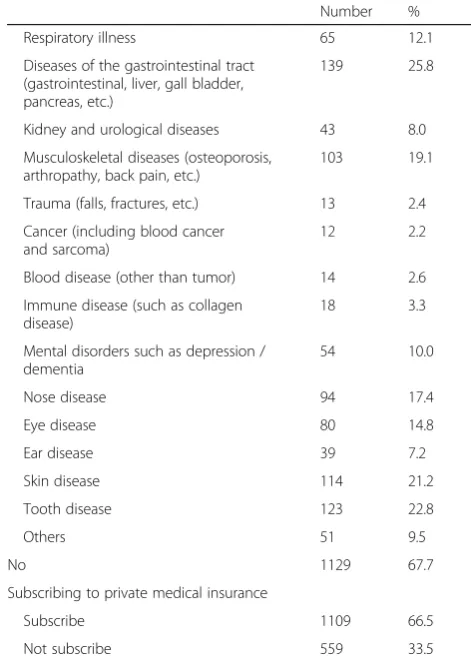
approximately 15% of respondents indicated that they were in ‘bad’ and ‘very bad’ health, while the rest indicated that they were at least in ‘acceptable’ health. Regarding educational background, the percentage of respondents who graduated from a university was approximately 60%. In terms of long-term disease/dis-orders, 32.3% of the respondents indicated that they
had at least one; hypertension, gastrointestinal
disease, dental disease and skin disease were com-monly found in high proportions (> 20% for each).
Healthcare providers
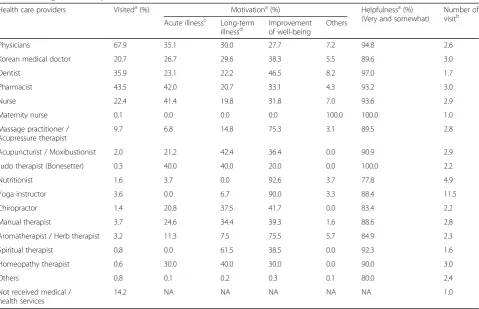
As shown in Table 2, 67.9% of respondents indicated
that they received medical care/health services from physicians in the last 12 months. On average, partici-pants visited 2.2 different health providers in the last 12 months. In contrast, 20.7% of respondents indi-cated that they received medical care/health services from Korean medical doctors in the last 12 months, which was equivalent to one-third of the respondents who received the services from physicians. Regarding services from providers other than physicians, the re-spondents received services from dentists, pharmacists and nurses (35.9, 43.5, and 43.5%, respectively). In terms of the services from CAM providers other than
Korean medical doctors, the percentage of respon-dents who received services from massage practi-tioners or acupressure therapists was relatively high, at 9.7%. However, the percentage of respondents who received CAM therapies from other providers was low, at < 4%.
For the reasons provided by respondents for seeing a Korean medical doctor, the percentage of those who reported improved well-being was high, while the per-centage of those who reported acute illness was low. The percentages of respondents who were satisfied with the services provided by physicians and Korean medical doctors were 94.8 and 89.5%, respectively.
CAM treatments received from physicians
The respondents who received medical services from physicians (1132 respondents) were asked to answer a question regarding ‘medical/healthcare services that were used based on the advice of physicians in the
last 12 months’ (Table 3). The most common CAM
used by these respondents was over-the-counter
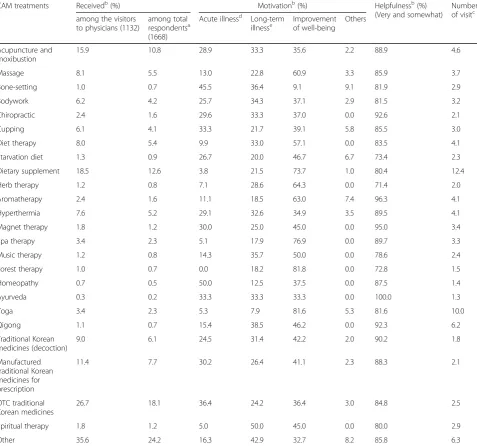
(OTC) traditional Korean medicine, which was used by 26.7% of the 1132 respondents, equivalent to 18.1% of all 1668 respondents. This was followed by dietary supplementation (18.5% of 1132 respondents; 12.6% of all respondents), acupuncture and moxibus-tion (15.9%; 10.8%), manufactured tradimoxibus-tional Korean medicine for prescription (11.4%; 7.7%) and traditional Korean medicines (decoction) (9.0%; 6.1%). Of the re-spondents who received traditional Korean medicines, the number of respondents who used OTC traditional Korean medicine was highest, whereas the number of respondents who used decoctions was lowest.
CAM treatments received from Korean medical doctors
The respondents who received services from Korean medical doctors (345 respondents) were asked to an-swer a question regarding ‘medical/healthcare services that were used based on the advice of Korean medical
doctors in the last 12 months’ (Table 4). The CAM
that the respondents used based on a prescription or advice from a Korean medical doctor, the availability of CAM other than traditional Korean medicine was low.
Self-help practices
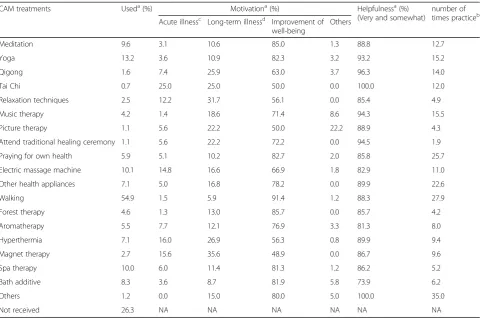
All 1668 respondents were asked to answer a
ques-tion regarding whether they engaged in ‘self-help
[image:4.595.58.283.95.726.2] [image:4.595.301.537.100.431.2]practices in the last 12 months’ (Table 5). The re-spondents who did not engage in such practices in the last 12 months made up 26.3% of the respon-dents; the rest engaged in some type of self-help practice. The most common self-help practice that the respondents reported was walking (54.9%). The least common self-help practices that at least 10% of the respondents reported were yoga, use of an electric massage machine and spa therapy (13.2, 10.1 and 10.0%, respectively). The proportion of respondents who engaged in self-help practices to improve their well-being was higher than that of the respondents who used CAM per a prescription or advice from physicians/Korean medical doctors.
Table 1Demographics
Number %
Total Number (Male/Female) 1668
Male / Female 831 / 837 49.8 / 50.2
Age (Male/Female)
20’s Male / 20’s Female 205 / 210 12.3 / 12.6
30’s Male / 30’s Female 210 / 217 12.6 / 13.0
40’s Male / 40’s Female 209 / 210 12.6 / 12.6
50~ 60’s Male / 50~ 60’s Female 207 / 200 12.4 / 12.0
Profession
Agriculture, fisheries, forestry, mining 16 1.0
Productions 242 14.6
Retails 86 5.2
Civil engineering and construction, Real Estate, Building Services, Transportation, Warehouse Logistics related
181 10.9
Communication industry, Software, Information processing, Other information service
105 6.3
Electricity, Gas, Heat supply Water supply 26 1.6
Finance, Insurance 39 2.3
Food, Accommodation, Travel services 26 1.6
Education, Learning support 155 9.3
Welfare 32 1.9
Housewife 281 16.8
Student 158 9.5
Unemployed 123 7.4
Others 198 11.8
Final Education
Middle school 15 0.9
High school 321 19.2
Special college 226 13.5
University 965 57.9
Graduate school 134 8.0
Others 7 0.4
Health condition
Very good 141 8.5
Good 562 33.7
Acceptable 708 42.4
Bad 241 14.4
Long-term diseases and disorders
Yes 539 32.3
Hypertension 140 26.0
Stroke (cerebral hemorrhage, cerebral infarction, etc.)
12 2.2
Heart disease 15 2.8
Diabetes 54 10.0
Dyslipidemia (hyperlipidemia) 54 10.0
Table 1Demographics(Continued)
Number %
Respiratory illness 65 12.1
Diseases of the gastrointestinal tract (gastrointestinal, liver, gall bladder, pancreas, etc.)
139 25.8
Kidney and urological diseases 43 8.0
Musculoskeletal diseases (osteoporosis, arthropathy, back pain, etc.)
103 19.1
Trauma (falls, fractures, etc.) 13 2.4
Cancer (including blood cancer and sarcoma)
12 2.2
Blood disease (other than tumor) 14 2.6
Immune disease (such as collagen disease)
18 3.3
Mental disorders such as depression / dementia
54 10.0
Nose disease 94 17.4
Eye disease 80 14.8
Ear disease 39 7.2
Skin disease 114 21.2
Tooth disease 123 22.8
Others 51 9.5
No 1129 67.7
Subscribing to private medical insurance
Subscribe 1109 66.5
Use of dietary supplements
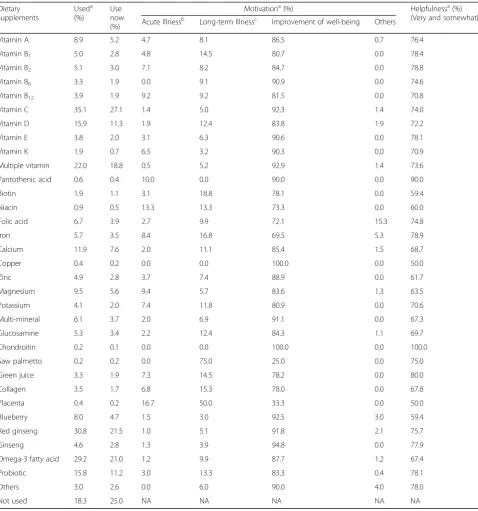
All 1668 respondents were asked to answer a question regarding which dietary supplements they used (Table6). The most common dietary supplement that the respon-dents used was vitamin C (35.1%), followed by red
gin-seng (30.8%), omega-3 fatty acids (29.3%) and
multivitamins (22.0%). These were all used to improve well-being. However, the percentage of respondents who indicated that it was helpful was < 80% (except in cases of dietary supplements, which few respondents used).
The respondents (1326) who indicated that they used dietary supplements were asked about their
pur-chasing methods; pharmacy was most common
(47.5%), followed by internet shopping (45.9%), drug-store (12.8%), supermarket (8.2%) and mail order (4.8%), which suggested that half or more of the re-spondents bought their dietary supplements at actual stores (table not shown).
Use of traditional Korean medicine
All 1668 respondents were asked to answer a question re-garding the type of traditional Korean medicine that they used in the last 12 months. The most common type was OTC manufactured Korean medicinal products (32.1%),
followed by prescribed manufactured Korean medicinal products (18.5%) and decoctions dispensed by a Korean medical doctor (18.2%) (data not shown).
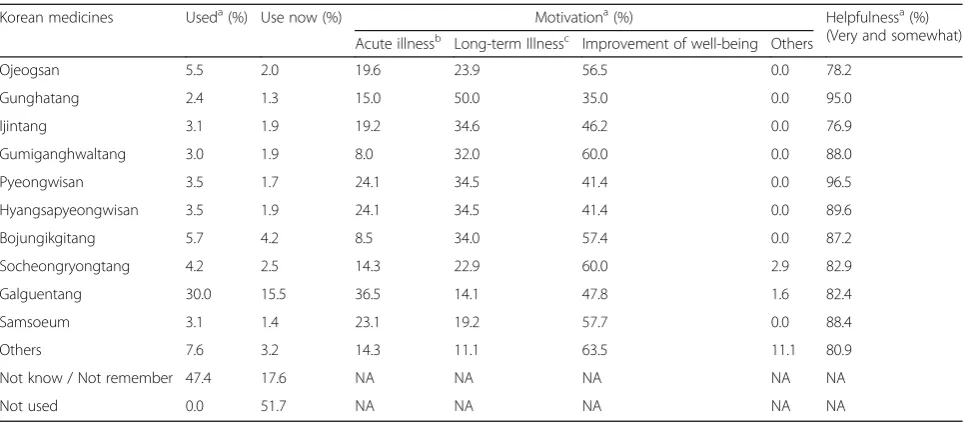
The 831 respondents who indicated that they had used traditional Korean medicine in the last 12 months were asked to recall the names of the specific medications
(Table 7). The most common type that they used was
galguentang (kakkonto in Japanese, ge-gen-tang in Chinese; 30.0%); the percentage of each other prescription that was used was < 6%.
Discussion
The I-CAM-Q used for our survey was not a question-naire to gain factual information on various kinds of CAM but a questionnaire regarding utilization, motivation and helpfulness by distinguishing‘CAM provided by whom’.
In Korea, unlike Western countries and Japan, a li-cence to practise traditional medicine, as well as a general physician’s licence, is authorised; thus, observ-ing how both types of licensed physician are involved in the use of CAM is interesting. Generally, the term
‘integrative medicine’ is used to combine medical care with CAM. However, in Korea, there may be multiple
[image:5.595.59.539.96.405.2]integrations, including an integration of ‘CAM,
Table 2Visiting health care providers
Health care providers Visiteda(%) Motivationa(%) Helpfulnessa(%) (Very and somewhat)
Number of visitb
Acute illnessc Long-term
illnessd Improvementof well-being Others
Physicians 67.9 35.1 30.0 27.7 7.2 94.8 2.6
Korean medical doctor 20.7 26.7 29.6 38.3 5.5 89.6 3.0
Dentist 35.9 23.1 22.2 46.5 8.2 97.0 1.7
Pharmacist 43.5 42.0 20.7 33.1 4.3 93.2 3.0
Nurse 22.4 41.4 19.8 31.8 7.0 93.6 2.9
Maternity nurse 0.1 0.0 0.0 0.0 100.0 100.0 1.0
Massage practitioner / Acupressure therapist
9.7 6.8 14.8 75.3 3.1 89.5 2.8
Acupuncturist / Moxibustionist 2.0 21.2 42.4 36.4 0.0 90.9 2.9
Judo therapist (Bonesetter) 0.3 40.0 40.0 20.0 0.0 100.0 2.2
Nutritionist 1.6 3.7 0.0 92.6 3.7 77.8 4.9
Yoga instructor 3.6 0.0 6.7 90.0 3.3 88.4 11.5
Chiropractor 1.4 20.8 37.5 41.7 0.0 83.4 2.2
Manual therapist 3.7 24.6 34.4 39.3 1.6 88.6 2.8
Aromatherapist / Herb therapist 3.2 11.3 7.5 75.5 5.7 84.9 2.3
Spiritual therapist 0.8 0.0 61.5 38.5 0.0 92.3 1.6
Homeopathy therapist 0.6 30.0 40.0 30.0 0.0 90.0 3.0
Others 0.8 0.1 0.2 0.3 0.1 80.0 2.4
Not received medical / health services
14.2 NA NA NA NA NA 1.0
Number of respondents: 1668 NANot Applicable
a
in the last 12 months,b
in the last 3 months,c
lasted less than 1 month,d
Western medicine and traditional medicine’, which is
provided by physicians, or an integration of ‘
trad-itional medicine and other CAMs’, which is provided by Korean medical doctors.
When Korean people receive treatment by physi-cians, they determine whether to consult a physician or a Korean medical doctor according to their disease and symptoms based on their own judgement. In this survey, 67.9% of respondents consulted a physician, and 20.7% consulted a Korean medical doctor in the last 12 months (Table 2). Considering that institutions for Korean medical care made up 21.9% of all medical
institutions in Korea in 2015 [34], these results were consistent with the proportion of respondents who consulted Korean medical doctors. The most common reason the respondents consulted a physician was acute illness, while the most common reason they consulted a Korean medical doctor was to improve well-being, which suggested that respondents used both types of specialists properly.
The CAM therapies that respondents used based on a prescription or advice from a physician or Korean medical doctor were traditional Korean medicine and
[image:6.595.60.538.100.546.2]dietary supplements (Tables 3 and 4). Notably, the
Table 3CAM treatments received by practice or advices of physicians
CAM treatments Receivedb(%) Motivationb(%) Helpfulnessb(%)
(Very and somewhat)
Number of visitc
among the visitors to physicians (1132)
among total respondentsa
(1668)
Acute illnessd Long-term
illnesse Improvementof well-being Others
Acupuncture and moxibustion
15.9 10.8 28.9 33.3 35.6 2.2 88.9 4.6
Massage 8.1 5.5 13.0 22.8 60.9 3.3 85.9 3.7
Bone-setting 1.0 0.7 45.5 36.4 9.1 9.1 81.9 2.9
Bodywork 6.2 4.2 25.7 34.3 37.1 2.9 81.5 3.2
Chiropractic 2.4 1.6 29.6 33.3 37.0 0.0 92.6 2.1
Cupping 6.1 4.1 33.3 21.7 39.1 5.8 85.5 3.0
Diet therapy 8.0 5.4 9.9 33.0 57.1 0.0 83.5 4.1
Starvation diet 1.3 0.9 26.7 20.0 46.7 6.7 73.4 2.3
Dietary supplement 18.5 12.6 3.8 21.5 73.7 1.0 80.4 12.4
Herb therapy 1.2 0.8 7.1 28.6 64.3 0.0 71.4 2.0
Aromatherapy 2.4 1.6 11.1 18.5 63.0 7.4 96.3 4.1
Hyperthermia 7.6 5.2 29.1 32.6 34.9 3.5 89.5 4.1
Magnet therapy 1.8 1.2 30.0 25.0 45.0 0.0 95.0 3.4
Spa therapy 3.4 2.3 5.1 17.9 76.9 0.0 89.7 3.3
Music therapy 1.2 0.8 14.3 35.7 50.0 0.0 78.6 2.4
Forest therapy 1.0 0.7 0.0 18.2 81.8 0.0 72.8 1.5
Homeopathy 0.7 0.5 50.0 12.5 37.5 0.0 87.5 1.4
Ayurveda 0.3 0.2 33.3 33.3 33.3 0.0 100.0 1.3
Yoga 3.4 2.3 5.3 7.9 81.6 5.3 81.6 10.0
Qigong 1.1 0.7 15.4 38.5 46.2 0.0 92.3 6.2
Traditional Korean medicines (decoction)
9.0 6.1 24.5 31.4 42.2 2.0 90.2 1.8
Manufactured traditional Korean medicines for prescription
11.4 7.7 30.2 26.4 41.1 2.3 88.3 2.1
OTC traditional Korean medicines
26.7 18.1 36.4 24.2 36.4 3.0 84.8 2.5
Spiritual therapy 1.8 1.2 5.0 50.0 45.0 0.0 80.0 2.9
Other 35.6 24.2 16.3 42.9 32.7 8.2 85.8 6.3
CAMComplementary and Alternative Medicine,NANot Applicable Number of parent population except(a)
is the visitors to physicians (1132)
b
availability of other CAM therapies was lower. One can expect Korean medical doctors to provide pre-scriptions and advice regarding traditional Korean medicine. However, physicians were shown to also provide prescriptions and advice regarding traditional Korean medicine. In Korea, as physicians cannot pre-scribe traditional Korean medicine directly, the previ-ous understanding was that physicians would advise people to receive traditional Korean medical care.
By expressing CAM therapy based on a prescription or advice from a physician or Korean medical doctor as the percentage of all 1668 respondents, comparisons
[image:7.595.58.541.96.549.2]could be made regarding whether CAM therapy was used based on a prescription or advice from a physician or a Korean medical doctor (Tables 3 and 4). The re-spondents who received acupuncture and moxibustion from physicians and/or Korean medical doctors made up 10.8 and 14.3% of all respondents, respectively, which indicated that the number of respondents who received a prescription or advice from a Korean medical doctor was higher. Similarly, 4.1 and 6.7% of all respondents received cupping from a physician or Korean medical doctor, respectively; 6.1 and 7.5% re-ceived traditional Korean medicine (decoction) based
Table 4CAM treatments received by practice or advices of Korean medical doctors
CAM treatments Receivedb(%) Motivationb(%) Helpfulnessb(%)
(Very and somewhat) Number of visitc
among the visitors to Korean medical doctors (345)
among total respondentsa
(1668)
Acute illnessd Long-term
illnesse Improvementof well-being Others
Acupuncture and moxibustion
69.0 14.3 33.6 33.6 29.8 2.9 89.1 4.6
Massage 11.6 2.4 20.0 27.5 50.0 2.5 95.0 2.7
Bone-setting 2.0 0.4 42.9 14.3 42.9 0.0 100.0 5.3
Bodywork 6.7 1.4 43.5 34.8 21.7 0.0 95.6 3.3
Chiropractic 7.5 1.6 30.8 50.0 11.5 7.7 88.5 2.3
Cupping 32.5 6.7 29.5 31.3 33.0 6.3 84.9 3.8
Diet therapy 7.0 1.4 8.3 29.2 62.5 0.0 91.6 8.2
Starvation diet 1.7 0.4 33.3 16.7 33.3 16.7 66.6 3.0
Dietary supplement 8.4 1.7 3.4 17.2 79.3 0.0 68.9 12.4
Herb therapy 1.7 0.4 0.0 33.3 66.7 0.0 83.4 2.0
Aromatherapy 2.9 0.6 0.0 20.0 80.0 0.0 80.0 3.0
Hyperthermia 15.4 3.2 24.5 39.6 30.2 5.7 90.6 4.2
Magnet therapy 4.3 0.9 26.7 46.7 26.7 0.0 93.3 5.8
Spa therapy 3.5 0.7 0.0 50.0 50.0 0.0 100.0 2.2
Music therapy 2.0 0.4 0.0 42.9 57.1 0.0 100.0 4.1
Forest therapy 2.0 0.4 28.6 28.6 42.9 0.0 100.0 2.1
Homeopathy 0.3 0.1 0.0 100.0 0.0 0.0 100.0 0.0
Ayurveda 0.9 0.2 0.0 33.3 66.7 0.0 66.6 2.3
Yoga 2.0 0.4 14.3 14.3 71.4 0.0 85.7 3.3
Qigong 2.0 0.4 28.6 57.1 14.3 0.0 71.4 7.1
Traditional Korean medicines (decoction)
36.2 7.5 19.2 30.4 48.8 1.6 87.2 2.8
Manufactured traditional Korean medicines for prescription
19.7 4.1 25.0 33.8 35.3 5.9 85.3 3.1
OTC traditional Korean medicines
10.4 2.2 19.4 36.1 44.4 0.0 91.7 5.4
Spiritual therapy 1.4 0.3 20.0 80.0 0.0 0.0 80.0 3.8
Other 4.7 1.0 50.0 50.0 0.0 0.0 100.0 1.0
CAMComplementary and Alternative Medicine,NANot Applicable Number of parent population except(a)
is the visitors to Korean medical doctors (345)
b
on a prescription or advice from a physician or Korean medical doctor, respectively, which also indicated that the number of respondents who received a prescription or advice from a Korean medical doctor was higher. Al-though both manufactured traditional Korean medi-cines for prescription and OTC Korean medimedi-cines are classified as traditional Korean traditional medical care, the percentage of respondents who received them from physicians was higher than that of respondents who re-ceived them from Korean medical doctors; 7.7 and 4.1% of all respondents received manufactured traditional Korean medicine for a prescription from a physician and a Korean medical doctor, respectively, and 18.1 and 2.2% of all respondents received OTC Korean medi-cines from a physician and a Korean medical doctor, respectively.
Notably, OTC Korean medicine was used predomin-ately based on the advice from physicians. Thus, Korean medical doctors originally provided direct prescriptions and procedures for legal traditional Korean medicine, but they did not provide advice for OTC Korean medi-cine that they did not prescribe themselves, as that role was filled by general physicians. By calculating the
proportion of dietary supplement use across all re-spondents in the same manner, we observed that Ko-rean medical doctors were largely uninvolved in the dietary supplement regimens of the respondents: 12.6 and 1.7% of respondents used supplements based on a prescription or advice from a physician and Korean medical doctor, respectively. The proportion of re-spondents who used all CAM therapies, other than acupuncture and moxibustion, cupping or traditional Korean medicines (decoction), based on a prescription or advice from a physician was higher than the pro-portion of respondents who used these CAM therap-ies based on a prescription or advice from a Korean medical doctor. However, because the absolute avail-ability of CAM therapies other than Korean medicine and dietary supplements was lower, assessing the data precisely was difficult.
[image:8.595.58.542.97.415.2]This study has several limitations. The study in-volved an internet survey and excluded people who were over 69 years old because they were not accus-tomed to internet use. We also excluded people who were under 20 years old because they might answer the questions incorrectly and were not registered in
Table 5Self-help practices
CAM treatments Useda(%) Motivationa(%) Helpfulnessa(%)
(Very and somewhat)
number of times practiceb
Acute illnessc Long-term illnessd Improvement of well-being
Others
Meditation 9.6 3.1 10.6 85.0 1.3 88.8 12.7
Yoga 13.2 3.6 10.9 82.3 3.2 93.2 15.2
Qigong 1.6 7.4 25.9 63.0 3.7 96.3 14.0
Tai Chi 0.7 25.0 25.0 50.0 0.0 100.0 12.0
Relaxation techniques 2.5 12.2 31.7 56.1 0.0 85.4 4.9
Music therapy 4.2 1.4 18.6 71.4 8.6 94.3 15.5
Picture therapy 1.1 5.6 22.2 50.0 22.2 88.9 4.3
Attend traditional healing ceremony 1.1 5.6 22.2 72.2 0.0 94.5 1.9
Praying for own health 5.9 5.1 10.2 82.7 2.0 85.8 25.7
Electric massage machine 10.1 14.8 16.6 66.9 1.8 82.9 11.0
Other health appliances 7.1 5.0 16.8 78.2 0.0 89.9 22.6
Walking 54.9 1.5 5.9 91.4 1.2 88.3 27.9
Forest therapy 4.6 1.3 13.0 85.7 0.0 85.7 4.2
Aromatherapy 5.5 7.7 12.1 76.9 3.3 81.3 8.0
Hyperthermia 7.1 16.0 26.9 56.3 0.8 89.9 9.4
Magnet therapy 2.7 15.6 35.6 48.9 0.0 86.7 9.6
Spa therapy 10.0 6.0 11.4 81.3 1.2 86.2 5.2
Bath additive 8.3 3.6 8.7 81.9 5.8 73.9 6.2
Others 1.2 0.0 15.0 80.0 5.0 100.0 35.0
Not received 26.3 NA NA NA NA NA NA
Number of respondents: 1668
CAMComplementary and Alternative Medicine,NANot Applicable
a
in the last 12 months,b
in the last 3 months,c
lasted less than 1 month,d
our panel. Thus, this internet survey does not com-pletely reflect the demographics of the Korean
popu-lation. Because we understand the difficulty in
reflecting the Korean demographics in this study, we changed the primary aim to a comparison among East Asian countries, and we are now surveying the same generations in these countries. In the future, this
[image:9.595.59.538.97.609.2]study will be useful with this outlook. For the survey to reflect genuine demographics, other methods, such as direct interviews, will be required. However, the direct interview may have many other difficulties, such as variations in the personality of the inter-viewer. Therefore, an actual conditional survey of CAM should be conducted from many standpoints.
Table 6Use of dietary supplements Dietary
supplements
Useda (%)
Use now (%)
Motivationa(%) Helpfulnessa(%) (Very and somewhat) Acute Illnessb Long-term Illnessc Improvement of well-being Others
Vitamin A 8.9 5.2 4.7 8.1 86.5 0.7 76.4
Vitamin B1 5.0 2.8 4.8 14.5 80.7 0.0 78.4
Vitamin B2 5.1 3.0 7.1 8.2 84.7 0.0 78.8
Vitamin B6 3.3 1.9 0.0 9.1 90.9 0.0 74.6
Vitamin B12 3.9 1.9 9.2 9.2 81.5 0.0 70.8
Vitamin C 35.1 27.1 1.4 5.0 92.3 1.4 74.0
Vitamin D 15.9 11.3 1.9 12.4 83.8 1.9 72.2
Vitamin E 3.8 2.0 3.1 6.3 90.6 0.0 78.1
Vitamin K 1.9 0.7 6.5 3.2 90.3 0.0 70.9
Multiple vitamin 22.0 18.8 0.5 5.2 92.9 1.4 73.6
Pantothenic acid 0.6 0.4 10.0 0.0 90.0 0.0 90.0
Biotin 1.9 1.1 3.1 18.8 78.1 0.0 59.4
Niacin 0.9 0.5 13.3 13.3 73.3 0.0 60.0
Folic acid 6.7 3.9 2.7 9.9 72.1 15.3 74.8
Iron 5.7 3.5 8.4 16.8 69.5 5.3 78.9
Calcium 11.9 7.6 2.0 11.1 85.4 1.5 68.7
Copper 0.4 0.2 0.0 0.0 100.0 0.0 50.0
Zinc 4.9 2.8 3.7 7.4 88.9 0.0 61.7
Magnesium 9.5 5.6 9.4 5.7 83.6 1.3 63.5
Potassium 4.1 2.0 7.4 11.8 80.9 0.0 70.6
Multi-mineral 6.1 3.7 2.0 6.9 91.1 0.0 67.3
Glucosamine 5.3 3.4 2.2 12.4 84.3 1.1 69.7
Chondroitin 0.2 0.1 0.0 0.0 100.0 0.0 100.0
Saw palmetto 0.2 0.2 0.0 75.0 25.0 0.0 75.0
Green juice 3.3 1.9 7.3 14.5 78.2 0.0 80.0
Collagen 3.5 1.7 6.8 15.3 78.0 0.0 67.8
Placenta 0.4 0.2 16.7 50.0 33.3 0.0 50.0
Blueberry 8.0 4.7 1.5 3.0 92.5 3.0 59.4
Red ginseng 30.8 21.5 1.0 5.1 91.8 2.1 75.7
Ginseng 4.6 2.8 1.3 3.9 94.8 0.0 77.9
Omega-3 fatty acid 29.2 21.0 1.2 9.9 87.7 1.2 67.4
Probiotic 15.8 11.2 3.0 13.3 83.3 0.4 78.1
Others 3.0 2.6 0.0 6.0 90.0 4.0 78.0
Not used 18.3 25.0 NA NA NA NA NA
Number of respondents: 1668 NANot Applicable
a
in the last 12 months,b
lasted less than 1 month,c
Conclusions
For the use of CAM in Korea, in addition to the trad-itional Korean medical care that is provided by Korean medical doctors, general physicians advised people re-garding traditional Korean medical care and dietary supplements.
Additional file
Additional file 1:English version of the I-CAM-QK. (DOCX 132 kb)
Abbreviations
CAM:Complementary and alternative medicine; I-CAM-Q: International Questionnaire to measure use of Complementary and Alternative Medicine; OTC: Over-the-counter
Funding
This research was supported by a Grant from the Japan Agency for Medical Research Development, Japan 2016 (16lk0310024h0001). MSL was supported by the Korea Institute of Oriental Medicine (K18043).
Availability of data and materials
The data are available from the authors upon reasonable request.
Authors’contributions
IA, KT and MSL conceptualized this study. IA, YS, KY, and YL drafted the I-CAM-QK from the I-CAM-QJ. JL, HG, SP, SG and ML validated the draft version of the I-CAM-QK by interview survey, made the revisions and created the final version. JAL, IA, YS, and ML made the web version and performed the internet survey. JAL, IA, YS, KY, YM, KT and ML wrote the manuscript. All authors critically com-mented on the manuscript and approved the final version.
Ethics approval and consent to participate
This internet survey was performed after obtaining the approval of the ethics committee of Nihon Pharmaceutical University (approved number: 28–05) and of the institutional review board (IRB) of the Second Affiliated Korean Medical Hospital in Chungju, Semyung University (Semyung University IRB No. 1702–01). Written informed consent was obtained from each study
participant prior to participation in the survey. All participants in the survey were asked on the first page of the questionnaire whether they agreed to participate in the study.
Consent for publication
Not applicable.
Competing interests
The authors declare that they have no competing interests.
Publisher’s Note
Springer Nature remains neutral with regard to jurisdictional claims in published maps and institutional affiliations.
Author details
1Department of Korean Internal Medicine, College of Korean Medicine,
Gachon University, Incheon, Republic of Korea.2Institute of Safety and
Effectiveness Evaluation for Korean Medicine, Department of Preventive Medicine, College of Korean Medicine, Kyung Hee University, Seoul, Republic of Korea.3Department of Pharmaceutical Sciences, Nihon Pharmaceutical
University, Saitama, Japan.4Department of Internal Medicine, College of
Korean Medicine, Semyung University, Jecheon, Republic of Korea.
5Department of Preventive Medicine, College of Korean Medicine, Daejeon
University, Daejeon, Republic of Korea.6Department of Health Policy and
Technology Assessment, National Institute of Public Health, Saitama, Japan.
7Department of Medical Oncology, Kanazawa Medical University, Ishikawa,
Japan.8Faculty of Health Sciences, Tokyo Ariake University of Medical and
Health Sciences, Tokyo, Japan.9Clinical Medicine Division, Korea Institute of
Oriental Medicine, 1672 Yuseong-daero, Yuseong-gu, Daejeon 34054, Republic of Korea.
Received: 26 March 2018 Accepted: 20 July 2018
References
1. Kim SM, Lee SH, Seo HJ, Baek SM, Choi SM. Research trend analysis of the prevalence of complementary and alternative medicine in Korea. J Korean Oriental Med. 2012;33:24–41. Korean
[image:10.595.57.540.97.308.2]2. Kang E, Yang EJ, Kim SM, Chung IY, Han SA, Ku DH, et al. Complementary and alternative medicine use and assessment of quality of life in Korean
Table 7Use of Korean medicines
Korean medicines Useda(%) Use now (%) Motivationa(%) Helpfulnessa(%) (Very and somewhat) Acute illnessb Long-term Illnessc Improvement of well-being Others
Ojeogsan 5.5 2.0 19.6 23.9 56.5 0.0 78.2
Gunghatang 2.4 1.3 15.0 50.0 35.0 0.0 95.0
Ijintang 3.1 1.9 19.2 34.6 46.2 0.0 76.9
Gumiganghwaltang 3.0 1.9 8.0 32.0 60.0 0.0 88.0
Pyeongwisan 3.5 1.7 24.1 34.5 41.4 0.0 96.5
Hyangsapyeongwisan 3.5 1.9 24.1 34.5 41.4 0.0 89.6
Bojungikgitang 5.7 4.2 8.5 34.0 57.4 0.0 87.2
Socheongryongtang 4.2 2.5 14.3 22.9 60.0 2.9 82.9
Galguentang 30.0 15.5 36.5 14.1 47.8 1.6 82.4
Samsoeum 3.1 1.4 23.1 19.2 57.7 0.0 88.4
Others 7.6 3.2 14.3 11.1 63.5 11.1 80.9
Not know / Not remember 47.4 17.6 NA NA NA NA NA
Not used 0.0 51.7 NA NA NA NA NA
Number of respondents: 831 NANot Applicable
a
breast cancer patients: a descriptive study. Support Care Cancer. 2012;20: 461–73.https://doi.org/10.1007/s00520-011-1094-z.
3. Kim JH, Nam CM, Kim MY, Lee DC. The use of complementary and alternative medicine (CAM) in children: a telephone-based survey in Korea. BMC Complement Altern Med. 2012;12:46.https://doi.org/10.1186/1472-6882-12-46. 4. Choi WS, Song SH, Son H. Epidemiological study of complementary and
alternative medicine (CAM) use for the improvement of sexual function in young Korean men: the Korean internet sexuality survey (KISS), part II. J Sex Med. 2012;9:2238–47.https://doi.org/10.1111/j.1743-6109.2012.02790.x. 5. Kim GW, Park JM, Chin HW, Ko HC, Kim MB, Kim JY, et al. Comparative analysis of
the use of complementary and alternative medicine by Korean patients with androgenetic alopecia, atopic dermatitis and psoriasis. J Eur Acad Dermatol Venereol. 2013;27:827–35.https://doi.org/10.1111/j.1468-3083.2012.04583.x. 6. Choi JY, Chang YJ, Hong YS, Heo DS, Kim S, Lee JL, et al. Complementary
and alternative medicine use among cancer patients at the end of life: Korean national study. Asian Pac J Cancer Prev. 2012;13:1419–24. 7. Baek SM, Choi SM, Seo HJ, Kim SG, Jung JH, Lee M, et al. Use of
complementary and alternative medicine by self- or non-institutional therapists in South Korea: a community-based survey. Integr Med Res. 2013; 2:25–31.https://doi.org/10.1016/j.imr.2013.02.001.
8. Kim SY, Kim KS, Park JH, Shin JY, Kim SK, Park JH, et al. Factors associated with discontinuation of complementary and alternative medicine among Korean cancer patients. Asian Pac J Cancer Prev. 2013;14:225–30. 9. Seo HJ, Baek SM, Kim SG, Kim TH, Choi SM. Prevalence of complementary
and alternative medicine use in a community-based population in South Korea: a systematic review. Complement Ther Med. 2013;21(3):60–71. https://doi.org/10.1016/j.ctim.2013.03.001.
10. Jeong MJ, Lee HY, Lim JH, Yun YJ. Current utilization and influencing factors of complementary and alternative medicine among children with
neuropsychiatric disease: a cross-sectional survey in Korea. BMC Complement Altern Med. 2016;16:91.https://doi.org/10.1186/s12906-016-1066-4. 11. Jang A, Kang DH, Kim DU. Complementary and alternative medicine use
and its association with emotional status and quality of life in patients with a solid tumor: a cross-sectional study. J Altern Complement Med. 2017;23: 362–9.https://doi.org/10.1089/acm.2016.0289.
12. Ock SM, Choi JY, Cha YS, Lee J, Chun MS, Huh CH, et al. The use of complementary and alternative medicine in a general population in South Korea: results from a national survey in 2006. J Korean Med Sci. 2009;24:1–6. 13. Yamashita H, Tsukayama H, Sugishita C. Popularity of complementary and
alternative medicine in Japan: a telephone survey. Complement Ther Med. 2002;10:84–93.
14. Togo T, Urata S, Sawazaki K, Sakuraba H, Ishida T, Yokoyama K. Demand for CAM practice at hospitals in Japan: a population survey in Mie prefecture. Evid Based Complement Alternat Med. 2011;591868https://doi.org/10.1093/ ecam/neq049
15. Fukui T. The Health and Labour Sciences Research in 2010. Research on the way of information dissemination of integrative medicine. Available at: http://hospital.luke.ac.jp/about/approach/pdf/ra16/research_activities_16_1. pdf. Accessed 3 Aug 2018.
16. Chang MY, Liu CY, Chen HY. Changes in the use of complementary and alternative medicinein Taiwan: a comparison study of 2007 and 2011. Complement Ther Med. 2014;22:489–99.https://doi.org/10.1016/j. ctim.2014.03.001.
17. Yeh ML, Lin KC, Chen HH, Wang YJ, Huang YC. Use of traditional medicine and complementary and alternative medicine in Taiwan: a multilevel analysis. Holist Nurs Pract. 2015;29:87–95.https://doi.org/10.1097/HNP.0000000000000071. 18. Eardley S, Bishop FL, Prescott P, Cardini F, Brinkhaus B, Santos-Rey K, et al. A
systematic literature review of complementary and alternative medicine prevalence in EU. Forsch Komplementmed. 2012;19(Suppl 2):18–28.https:// doi.org/10.1159/000342708.
19. Quandt SA, Verheor MJ, Arcury TA, Lewith GT, Steinsbekk A, Kristoffersen AE, et al. Development of an international questionnaire to measure use of complementary and alternative medicine (I-CAM-Q). J Altern Complement Med. 2009;15:331–9.
20. Bains SS, Egede LE. Association of health literacy with complementary and alternative medicine use: a cross-sectional study in adult primary care patients. BMC Complement Altern Med. 2011;11:138.https://doi.org/10. 1186/1472-6882-11-138.
21. Quandt SA, Ip EH, Saldana S, Arcury TA. Comparing two questionnaires for eliciting CAM use in a multi-ethnic US population of older adults. Eur J Integr Med. 2012;4:e205–11.
22. Opheim R, Bernklev T, Fagermoen MS, Cvancarova M, Moum B. Use of complementary and alternative medicine in patients with inflammatory bowel disease: results of a cross-sectional study in Norway. Scand J Gastroenterol. 2012;47:1436–47.https://doi.org/10.3109/00365521.2012.725092.
23. Re ML, Schmidt S, Güthlin C. Translation and adaptation of an international questionnaire to measure usage of complementary and alternative medicine (I-CAM-G). BMC Complement Altern Med. 2012;12:259.https://doi. org/10.1186/1472-6882-12-259.
24. Eardley S, Bishop FL, Cardini F, Santos-Rey K, Jong MC, Ursoniu S, et al. A pilot feasibility study of a questionnaire to determine European Union-wide CAM use. Forsch Komplementmed. 2012;19:302–10.https://doi.org/10.1159/ 000345839.
25. AlBedah AM, Khalil MK, Elolemy AT, Al Mudaiheem AA, Al Eidi S, Al-Yahia OA, et al. The use of and out-of-pocket spending on complementary and alternative medicine in Qassim province, Saudi Arabia. Ann Saudi Med. 2013;33:282–9.https://doi.org/10.5144/0256-4947.2013.282.
26. Shumer G, Warber S, Motohara S, Yajima A, Plegue M, Bialko M, et al. Complementary and alternative medicine use by visitors to rural Japanese family medicine clinics: results from the international complementary and alternative medicine survey. BMC Complement Altern Med. 2014;14:360. https://doi.org/10.1186/1472-6882-14-360.
27. Esteban S, Vázquez Peña F, Terrasa S. Translation and cross-cultural adaptation of a standardized international questionnaire on use of alternative and complementary medicine (I-CAM-Q) for Argentina. BMC Complement Altern Med. 2016;16:109.https://doi.org/10.1186/s12906-016-1074-4.
28. Bryden GM, Browne M. Development and evaluation of the R-I-CAM-Q as a brief summative measure of CAM utilisation. Complement Ther Med. 2016; 27:82–6.https://doi.org/10.1016/j.ctim.2016.05.007.
29. von Conrady DM, Bonney A. Patterns of complementary and alternative medicine use and health literacy in general practice patients in urban and regional Australia. Aust Fam Physician. 2017;46:316–20.
30. Wemrell M, Merlo J, Mulinari S, Hornborg AC. Two-thirds of survey respondents in southern Sweden used complementary or alternative medicine in 2015. Complement Med Res. 2017;24:302–9.https://doi.org/10.1159/000464442. 31. Arai I. Survey on the actual situation of utilization/provision of integrative
medicine and its health damage in Japan and other countries, and analysis from the viewpoint of social determinants of health. Research and Development Result Report of Grant from Japan Agency for Medical Research Development, Japan, 2016 (16lk0310024h0001).https://www. amed.go.jp/content/files/jp/houkoku_h28/0501051/h28_001.pdf. Accessed 3 Aug 2018.
32. Main Statistics of Ethical drug. Health Insurance Review and Assessment Service, News & Information, Statistics data. Korean. 2013.https://www.hira. or.kr/bbsDummy.do?pgmid=HIRAA020045010000&brdScnBltNo= 4&brdBltNo=2275. Accessed 3 Aug 2018.
33. Production results of health functional foods was 1.8 Trillion won, 12% increase from the previous year. Ministry of Food and Drug Safety, News & Notice. Korean. 2015.http://www.mfds.go.kr/index.do?mid=675&pageNo= 2&seq=32955&cmd=v. Accessed 3 Aug 2018.