Available online www.jocpr.com
Journal of Chemical and Pharmaceutical Research, 2014, 6(1):696-704
Research Article
CODEN(USA) : JCPRC5
ISSN : 0975-7384
A simple HPLC-UV method for the determination of clindamycin in
human plasma
Martina Mifsud
1, Janis Vella
1, Victor Ferrito
1, Anthony Serracino-Inglott
1, Lilian M. Azzopardi
1,
Nicolette Sammut Bartolo
1, Godfrey LaFerla
2and Carmel Sammut
31
Department of Pharmacy, Faculty of Medicine and Surgery, University of Malta, Msida
2
Department of Surgery, Faculty of Medicine and Surgery, University of Malta, Msida
3
Department of Toxicology, Mater Dei Hospital, Msida, Malta
____________________________________________________________________________________________
ABSTRACT
This study describes a simple high performance liquid chromatographic (HPLC) method for the determination of clindamycin in plasma. Analysis was carried out using a Varian® Pro Star HPLC unit equipped with an online degasser. A reversed-phase ACE® C18 column of dimensions 250x4.6mm, particle size 5µm was used. The mobile
phase was made up of 0.02M disodiumhydrogen phosphate buffer (pH of 2.9) and acetonitrile at a ratio of 71:29 v/v, running through the column at a flow rate of 1.5ml/min and with ultraviolet (UV) detection set at a wavelength of 195nm. Clindamycin was separated from plasma proteins by protein precipitation with ice cold acetonitrile. Clindamycin and the internal standard phenobarbitone eluted after 3.96 and 7 minutes respectively. The method was validated for linearity in the working concentration range of 0.5-20µg/ml. Linearity was observed with a coefficient of determination (r2) of 0.990. The recoveries obtained were all above 82% and the limit of quantification and limit of detection were 0.2µg/ml and 0.1µg/ml respectively.
Keywords: HPLC-UV, Clindamycin, Plasma, Protein Precipitation
____________________________________________________________________________________________
INTRODUCTION
In spite of over 50 years of widespread clinical use since its introduction in the late 60’s, Clindamycin, described chemically as (2S,4R)-N-{2-chloro-1-[(2R,3R,4S,5R,6R)-3,4,5-trihydroxy-6-(methylsulfanyl)oxan-2-yl]propyl}-1-methyl-4-propylpyrrolidine-2-carboxamide is a semi-synthetic derivative of Lincomycin and retains potent activity against many aerobic and anaerobic gram positive and gram negative pathogens which contribute to the development of skin and subcutaneous tissue infections, respiratory tract infections, septicaemia, abdominal infections and gynaecological infections [1].
sample preparation method. Final results presented
alternative method presents a shorter total run time. This method has a run time of less than 10 minutes which makes it more applicable for analysis of a larger number of samples. Such a method is to be later used for pharmacokinetic studies in patients suffering from Periphe
reproduced eliminating the use of liquid reagent and time consuming. Liquid
of large quantities of organic solvents and poorer recoveries when compared to protein precipitation [2 proposed method by Liu et al published in 1997 describes a sample preparation method using solid
(SPE) [10]. The sample was loaded onto a silica column, washed with deionized water and eluted with methanol several times. Silica columns used in solid phase extraction increase the costs of a study as they need to be replaced after every loading and elution and normally entail multiple preparation steps before the sample is eluted therefore lengthening the procedure.
The proposed method makes use of a UV
partition chromatography [24]. This type of detector is other detectors such as mass spectrometer detectors.
Commonly used organic solvents in mobile p
more expensive than methanol and is said to be slightly more toxic [2
absorbance when compared to most other organic solvents. This produces lower noise levels by the UV detector. It also produces lower column pressure when mixed with aqueous solutions. For this reason it was decided to use acetonitrile as the organic component in the mobile phase.
Clindamycin phosphate, known chemically as
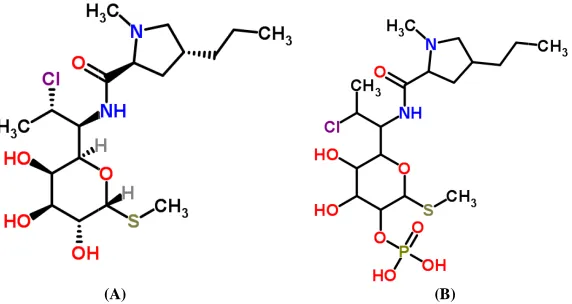
[image:2.595.166.452.394.546.2]phosphono-1-thiopentopyranoside, is the pro drug of clindamycin used in parenteral formulations. It is more hydrophilic than clindamycin. When administered intravenously it is rapidly hydrolyzed to the biologically active clindamycin free base by the phosphatase enzyme [10].
Figure 1:
Chemicals and Reagents
Acetonitrile and Orthophosphoric acid were obtained from Fisher Scientific (Leicestershire, UK). Ultrapure analytical grade type 1 water (r > 18M
UK). Disodium hydrogen phosphate from Scharlau (Sentmen Clindamycin hydrochloride powder
Germany) and standard Lincomycin powder from Sigma Aldrich (Steinheim, Germany) and 1 from Acros Organics (Belgium). All solvents were of HPLC grade standard.
HPLC Instrumentation
The study was carried out on a Varian ® Pro Star HPLC unit consisiting of an online degasser 01488), column oven (model no. 1510)
separated on a reversed-phase ACE® 5 C
sample preparation method. Final results presented a total run time of 18 minutes [15]. The
resents a shorter total run time. This method has a run time of less than 10 minutes which makes it more applicable for analysis of a larger number of samples. Such a method is to be later used for pharmacokinetic studies in patients suffering from Peripheral Arterial Disease. The proposed method is simple and can be readily reproduced eliminating the use of liquid-liquid extraction as a method of sample preparation which is known to be reagent and time consuming. Liquid-liquid extraction is associated with incomplete phase separations, the disposal of large quantities of organic solvents and poorer recoveries when compared to protein precipitation [2
published in 1997 describes a sample preparation method using solid
(SPE) [10]. The sample was loaded onto a silica column, washed with deionized water and eluted with methanol several times. Silica columns used in solid phase extraction increase the costs of a study as they need to be replaced loading and elution and normally entail multiple preparation steps before the sample is eluted therefore
e of a UV- visible detector - which is the most commonly used type of detector in . This type of detector is more easily found in most laboratories having an HPLC than as mass spectrometer detectors.
Commonly used organic solvents in mobile phases for HPLC are acetonitrile and methanol
more expensive than methanol and is said to be slightly more toxic [26]. It however presents with a lower LC grade absorbance when compared to most other organic solvents. This produces lower noise levels by the UV detector. It s lower column pressure when mixed with aqueous solutions. For this reason it was decided to use acetonitrile as the organic component in the mobile phase.
Clindamycin phosphate, known chemically as methyl 5-{2-chloro-1-[(1-methyl-4-propylprolyl)amino]pr
, is the pro drug of clindamycin used in parenteral formulations. It is more hydrophilic than clindamycin. When administered intravenously it is rapidly hydrolyzed to the biologically active
the phosphatase enzyme [10].
(A) (B)
Figure 1: Structure of Clindamycin (A) and Clindamycin Phosphate (B)
EXPERIMENTAL SECTION
Orthophosphoric acid were obtained from Fisher Scientific (Leicestershire, UK). Ultrapure analytical grade type 1 water (r > 18MΩ/CM) was obtained from Fisher Scientific (Loughborough, Leicestershire, UK). Disodium hydrogen phosphate from Scharlau (Sentmenat, Spain), standard Clindamycin Phosphate, standard Clindamycin hydrochloride powder and standard Phenobarbital powder- all from Sigma Aldrich (Taufkirchen,
and standard Lincomycin powder from Sigma Aldrich (Steinheim, Germany) and 1 from Acros Organics (Belgium). All solvents were of HPLC grade standard.
The study was carried out on a Varian ® Pro Star HPLC unit consisiting of an online degasser (model no. 1510) and UV-VIS detector (model 363, serial no. 00897).
phase ACE® 5 C18 HPLC column (25 cm length, 4.6mm internal diameter, and 5
a total run time of 18 minutes [15]. The following proposed resents a shorter total run time. This method has a run time of less than 10 minutes which makes it more applicable for analysis of a larger number of samples. Such a method is to be later used for pharmacokinetic ral Arterial Disease. The proposed method is simple and can be readily liquid extraction as a method of sample preparation which is known to be incomplete phase separations, the disposal of large quantities of organic solvents and poorer recoveries when compared to protein precipitation [23]. Another published in 1997 describes a sample preparation method using solid phase extraction (SPE) [10]. The sample was loaded onto a silica column, washed with deionized water and eluted with methanol several times. Silica columns used in solid phase extraction increase the costs of a study as they need to be replaced loading and elution and normally entail multiple preparation steps before the sample is eluted therefore
which is the most commonly used type of detector in easily found in most laboratories having an HPLC than
and methanol [25]. Acetonitrile is ]. It however presents with a lower LC grade absorbance when compared to most other organic solvents. This produces lower noise levels by the UV detector. It s lower column pressure when mixed with aqueous solutions. For this reason it was decided to use
propylprolyl)amino]propyl}-2-O-, is the pro drug of clindamycin used in parenteral formulations. It is more hydrophilic than clindamycin. When administered intravenously it is rapidly hydrolyzed to the biologically active
Orthophosphoric acid were obtained from Fisher Scientific (Leicestershire, UK). Ultrapure /CM) was obtained from Fisher Scientific (Loughborough, Leicestershire, at, Spain), standard Clindamycin Phosphate, standard from Sigma Aldrich (Taufkirchen, and standard Lincomycin powder from Sigma Aldrich (Steinheim, Germany) and 1-Octanol, 99% pure
Martina Mifsud et al
J. Chem. Pharm. Res., 2014, 6(1):696-704
______________________________________________________________________________
Chromatographic Conditions and Mobile Phase Preparation
The system was operated isocratically using a mobile phase consisting of a mixture of 0.02M disodium hydrogenphosphate buffer prepared at a pH of 2.9 (by the dropwise addition of orthophosphoric acid) and acetonitrile at a ratio of 71:29 v/v pumped at a flow rate of 1.5ml/min at 25°C. The sample was injected through a fixed sample loop having a volume of 50µl. The UV detector was set at 195nm.
Procedures
Clindamycin Hydrochloride vs Clindamycin Phosphate.
During method development of this analytical procedure which will be later used to quantify the amount of clindamycin in plasma of patients receiving intravenous clindamycin phosphate, it would be better to observe the chromatographic behaviour of the hydrochloride salt rather than the phosphate ester as in vivo, clindamycin is rapidly hydrolysed to the free base by the phosphatase enzyme [11]. Upon dissolving clindamycin phosphate in water, the clindamycin free base is not liberated unlike when clindamycin hydrochloride is dissolved. To observe this, in a separate chromatographic run, solutions of both clindamycin phosphate and clindamycin hydrochloride (100µg/ml each) were prepared in water and analysed using different chromatographic conditions. Chromatographic conditions consisted of a mobile phase made up of phosphate buffer (pH 3) and acetonitrile (70:30 v/v) at a flow rate of 1ml/min. The wavelength was set at 205nm and the temperature was set at 25°C. Analysis was conducted using an Agilent® 1200 Infinity series unit and separation took place on an ACE® 5 C18 HPLC column (250x 4.6mm;
5µm particle size).
Preparation of Stock Solutions
The stock solution was prepared by accurately weighing 100mg of the standard clindamycin hydrochloride powder and dissolving it in 100ml HPLC grade water (1mg/ml). A stock solution of Phenobarbital (known chemically as 5-ethyl-5-phenyl-1,3-diazinane-2,4,6-trione) was prepared by dissolving 100mg of Phenobarbital powder in 100ml of methanol.
Sample Preparation
Protein precipitation was chosen for the deproteinization of clindamycin in plasma. Drug- free plasma was spiked with clindamycin and the internal standard phenobarbital (50µl of 20µl/ml). Phenobarbital was chosen as the internal standard as it exhibits similar chromatographic behaviour to clindamycin under the conditions used. Three drops of 10M phosphate buffer at a pH of 4.00 were added to the spiked plasma followed by 1ml of ice cold acetonitrile. This was vortex- mixed for two minutes. The samples were centrifuged at 1300g for a total of 5 minutes. The clear supernatant was decanted into a clean glass container and placed in a Turbovap®LV water bath set at 50°C for evaporation of the organic layer. The dried residue was reconstituted with 100µl mobile phase, transfered to smaller test tubes and centrifuged again at 1300g for 2 minutes. The additional centrifugation step avoided premature contamination of the guard column and column. The clear supernatant (50µl) was injected into the HPLC unit and analysed.
Validation Parameters
The developed method was validated as per ICH guidelines [27] with respect to linearity, precision, selectivity, limit of detection (LOD) and limit of quantification (LOQ), recovery, accuracy and stability.
Linearity
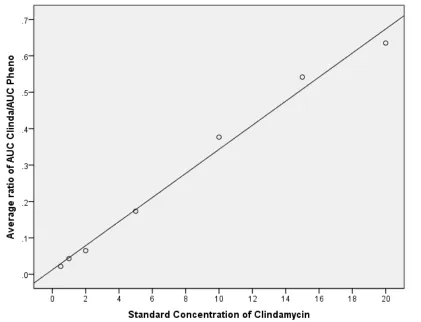
Seven calibration standards were prepared within the range of 0.5 to 20µg/ml (0.5, 1, 2, 5, 10, 15, 20 µg/ml) thus meeting the needs of the purpose of this study where the average minimum and maximum concentrations of clindamycin in human plasma range between 1.1 and 14.1 µg/ml respectively [28]. The standard curve was obtained by plotting the average ratio of the area under the peak (AUP) for clindamycin to that for phenobarbitone against concentration (µg/ml).
Precision
Accuracy and Recovery
Accuracy of the developed method was assessed in triplicate at three concentrations (15,10 and 1µg/ml). The percentage recovery was calculated by establishing the ratio of clindamycin detected (µg/ml) and the standard clindamycin concentration injected (µg/ml).
Selectivity
When testing for selectivity one is confirming that the method is measuring only what it is intended to measure and that the method is free from interferences which may lead to incorrect results [29]. This was done by running a blank run on drug free plasma and confirming the absence of a peak where clindamycin usually elutes.
Limit of Detection and Limit of Quantification
The limit of detection (LOD) and limit of quantification (LOQ) were determined by injecting decreasing concentrations of clindamycin and establishing the minimum level at which the analyte of interest can be easily detected and quantified respectively. This was done in triplicate every time.
Stability of spiked plasma samples
Three chosen concentrations (15, 5, 1 µg/ml) were analysed after 1 week and 4 weeks following storage at -20°C.
RESULTS AND DISCUSSION
Clindamycin Hydrochloride vs Clindamycin Phosphate
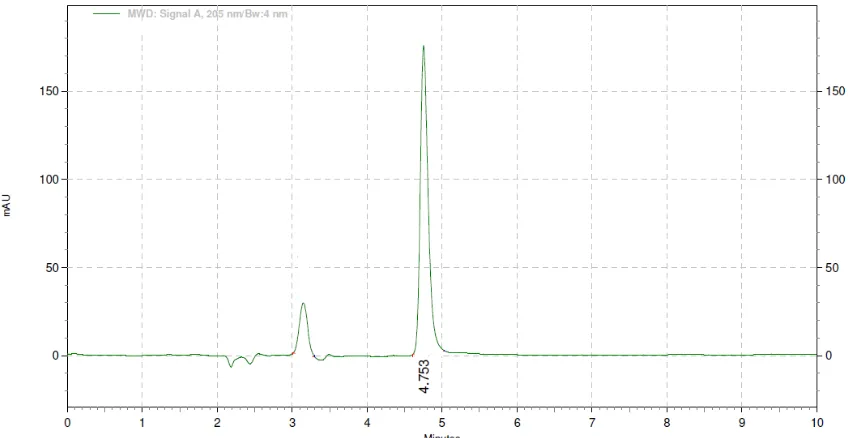
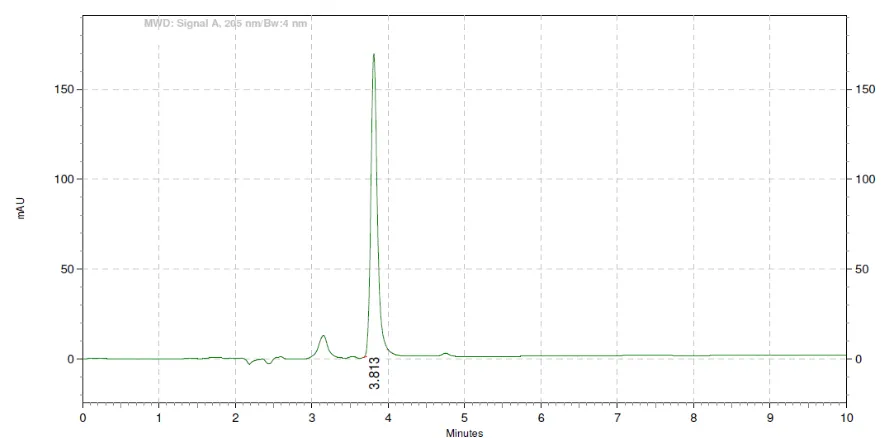
[image:4.595.95.519.393.612.2]When observing chromatographic results it could be noted that the peak given when the solution of clindamycin hydrochloride was injected eluted with a retention time which was longer (Fig. 2) than that of the peak given when clindamycin phosphate (Fig. 3) was injected. This means that upon dissolving in water, clindamycin hydrochloride liberates the more hydrophobic clindamycin free base whilst clindamycin phosphate does not. Method development for the quantification of active clindamycin in plasma to be then used for patient plasma samples would therefore be more appropriately done using the hydrochloride salt rather than the phosphate ester.
Martina Mifsud et al
J. Chem. Pharm. Res., 2014, 6(1):696-704
[image:5.595.81.524.68.287.2]______________________________________________________________________________
Fig. 3: Clindamycin Phosphate (100µg/ml) analyzed in Water
Optimization of chromatographic conditions
During method development clindamycin was eluting at 4.60 minutes whilst phenobarbitone was eluting after 14 minutes when passing through the column at a flow rate of 1ml/min. To make the method more time efficient the flow rate was increased to 1.5ml/min. This reduced the retention time of phenobarbitone to 7 minutes whilst still maintaining appropriate peak shape and resolution (Fig. 4).
Fig. 4: Chromatogram of Clindamycin (20 µg/ml) in plasma with Phenobarbitone as internal standard
Linearity
The calibration curve is given in Fig. 5 with the coefficient of determination r2 being 0.990 Table 1.
Table 1: Statistical (SPSS) results for Calibration Curve
R R Square Adjusted R Square Std. Error
[image:5.595.83.520.386.554.2]Fig. 5: Linearity Graph of Clindamycin in plasma (20, 15, 10, 5, 2, 1 and 0.5µg/ml)
Stability of Sample Solution
The clindamycin-spiked plasma was found to be stable after being stored at -20°C for 1 and 4 weeks respectively. Results showed that there was no significant change in the quantity of clindamycin detected in the three concentrations analysed (% RSD all under 5.4) Table 2.
Table 2: Stability of Plasma Sample
Concentration of Standard (µg/ml)
Post-preparation time (weeks)
Calculated Quantity of Clindamycin
(µg/ml) %RSD
15 1 14.89
15 15 5 5 5 1 1 1 1 1 1 1 1 1 14.76 14.63 4.84 4.90 4.90 0.92 0.95 0.50 0.40 1.27
1 1 0.96
15 15 15 5 5 4 4 4 4 4 14.86 14.80 14.86 4.90 4.88 0.23 0.40 5 1 1 4 4 4 4.92 0.90
0.89 5.40
1 4 0.99
Precision
[image:6.595.126.486.492.680.2]Martina Mifsud et al
J. Chem. Pharm. Res., 2014, 6(1):696-704
[image:7.595.219.393.89.166.2]______________________________________________________________________________
Table 3: Intraday Validation (n=5)
Conc (µg ml-1) Mean Conc. SD %RSD
20 20.07 0.26 1.29
15 15.19 0.50 3.32
10 10.40 0.65 6.22
5 4.63 0.29 6.28
2 1.81 0.08 4.22
1 1.04 0.08 8.04
[image:7.595.220.394.192.270.2]0.5 0.53 0.07 13.80
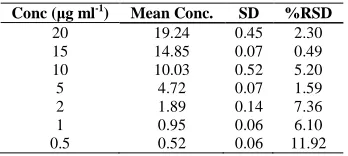
Table 4: Interday Validation Results Run Over 5 days
Conc (µg ml-1) Mean Conc. SD %RSD
20 19.24 0.45 2.30
15 14.85 0.07 0.49
10 10.03 0.52 5.20
5 4.72 0.07 1.59
2 1.89 0.14 7.36
1 0.95 0.06 6.10
0.5 0.52 0.06 11.92
Limit of Quantification (LOQ) and Limit of Detection (LOD)
Concentrations of LOQ and LOD were found to be 0.2µg/ml and 0.1µg/ml respectively.
Accuracy and Recovery
The quantitative recoveries of clindamycin in plasma achieved ranged from 82 to 107%. The mean recoveries for all three concentrations analyzed are given in Table 5.
Table 5: Recovery Studies
aMean concentration of three trials.
Selectivity
[image:7.595.104.518.502.657.2]The selectivity of the method was confirmed by analysing blank plasma and noting the absence of any peak at the retention time where clindamycin usually elutes (Fig. 6).
Fig. 6: Chromatogram of Blank Plasma
CONCLUSION
The proposed method is one which is reproducible and simple to use. It does not involve multiple sample preparation steps and utilises minimal amounts of organic solvents. When compared to other published methods, the newly developed method in this study had a relatively short retention time for clindamycin. The only two studies which had a shorter retention time for clindamycin were those by Martens- Lodenhoffer and Banditt and by Catena et al [12,17]. The former study, apart from making use of a higher temperature of the stationary phase, also made
Drug Content in µg ml-1 Mean Recovery (%)
Theoretical Practicala
15 14.90 97.67
10 9.93 99.07
method is later to be used to quantify clindamycin in the plasma of PAD patients who will probably be on poylpharmacy to treat co- morbidities, the use of a shorter column than the one used in this study could compromise resolution between different medications which elute. The results given by Catena et al for the retention time of clindamycin were difficult to correlate with the rest of the other parameters since in the article, the aqueous phase used in combination with methanol is not specified making interpretation of values dubious [17]. Using the developed method relatively low limits of detection and quantification were achieved. Although previously published methods for the analysis of clindamycin reported to achieve lower limits of detection and quantification [10,11] the ones attained in this one were adequate for the purpose of the study. The concentration of clindamycin in plasma over an 8 hour period ranges from 16µg/ml to 2µ g/ml [26]. The limit of quantification lies well below the lowest reported concentration for clindamycin in plasma and therefore this developed method serves well the intended purpose.
The use of such a proposed HPLC method may help in the tailoring of more individualised dosing of antibiotics in patients with peripheral artery disease where antibacterial dose reaching the site of infection may be compromised. In patients with peripheral artery disease, foot infections are common and effective use of antibacterial agents may reduce amputations [30]. However the distribution of the antibacterials in the peripheries changes in peripheral arterial disease from that in healthy individuals [31]. Development of methods such as the one proposed in this study which can be easily carried out to support clinical decisions in antibacterial dosing are useful. Future work aims to apply this simple and efficient method to quantify clindamycin in the plasma of PAD patients.
REFERENCES
[1] A Leelarasamee; W Tatong; N Kasattut; T Sriboonruang; DPN Ayudhaya. Journal of Medical Association of Thailand, 2006, 89(5),683-8.
[2] AGP Danielle; MAF Bruna; AMG Rayssa; BFC Vivielle; OP Karoline; SS Poliana et al. Journal Vascular Brasileiro, 2011,10(1),26-30.
[3] G Gatti; M Malena; R Casazza; M Borin; M Bassetti; M Cruciani. J Antimicrob Chemother, 1998, 42(11),3014-7.
[4] X Shao; X Xiaofeng; Z Song. Microchim Acta, 2007, 157,159-64. [5] YM Liu; YM Shi; ZL Liu; LF Peng. J Sep Sci., 2010, 33(9),1305-11.
[6] IHI Habib; MS Rizk; TRE El- Aryan. Pharm Chem J, 2011, 44(12),705-710.
[7] YY Tang; HF Lu; HY Lin; YC Shin; DF Hwang. Food Anal. Methods. 2012,5,1459-68.
[8] JF Flaherty; LC Rodondi; BJ Guglielmo; JC Fleishaker; RJ Townsend; JG Gambertoglio. Antimicrob Agents Chemother., 1988, 32(12),1825-9.
[9] ME Klepser; MA Banevicius; R Quintiliani; CH Nightingale. J Antimicrob Chemother, 1996, 40(8),1941-4. [10] C Liu; Y Chen; T Yang; S Hsieh; M Hung; E Lin. J Chromatogr B Biomed Sci Appli, 1997, 696(2),298-302. [11] MJ Chung, H Namgung, HD Choi, YR Song, SG Kim, JM Oh, WG Shin. Basic and Clinical Pharmacology and Toxicology. 2012, 110(6), 504-509.
[12] J Martens- Lobenhoffer; P Banditt. J Chromatogr B Biomed Sci Appl, 2001, 755(1),143-9. [13] M Cherlet; S Croubels; P De Backer. J Mass Spectrom, 2002, 37(8), 848-53.
[14] GC Batzia; GA Delis; A Koutsoviti- Papdopoulou. J Pharm Biomed Anal, 2004, 35(3), 545-54.
[15] K Na- Bangchang; V Banmairuroi; B Kamanikom, D Kiod. Southeast Asian J Trop Med Public Health, 2006,37(1),177-84.
[16] A Leelarasamee; W Tatong; N Kasattut; T Sriboonruang, DP NaAyudhya. J med Assoc Thai, 2006, 89(5),683-8.
[17] E Catena; G Perez; B Sadaba; JR Azanza; MA Campanero. J Pharm Biomed Anal, 2009, 50(4), 649-54. [18] S Thirumurugu; V Parthasarathy; DC Arumainayagam; R Manavalan. Journal of Chemical and Pharmaceutical Research, 2010, 2(4),147-153.
[19] J Platzer; B White. Journal of Pharmaceutical and Biomedical Analysis, 2006, 41(1), 84-8. [20] A Hornedo-Nunez; TA Getek; F Simenthl. Journal of chromatography A, 1990,503(l),217-25.
[21] AC Hogenboom; WMA Niessen; UAT Brinkman. Journal of Separation Science, 2001, 24 (5),331–54. [22] HF Buschges; G Schußler; V Larsimont; H Blume. Journal of Chromatography B: Biomedical Sciences and Applications, 1999, 724(2):281-6.
[23] F Pragst; M Herzler; BT Erxleben. Journal of Laboratory and Clinical Medicine, 2004, 42(11), 1325-40. [24] K Chandrul Kaushal; B Srivastava. Journal of Chemical and Pharmaceutical Research. 2010, 2(2), 519-545. [25] E Raval Kashyar; EVS Subrahmanyam; AR Sharbaraya. Journal of Chemical and Pharmaceutical Research, 2012, 4(2), 1090-1096.
Martina Mifsud et al
J. Chem. Pharm. Res., 2014, 6(1):696-704
______________________________________________________________________________
[28] D Zambrano. Clindamycin in the Treatment of Human Infections. 2nd Edition. Pharmacia and Upjohn Publishers, Michigan, 1997, 170-178.
[29] NATA Guidelines, Guidelines for the Validation and Verification of Quantitative and Qualitative Test Methods, Technical Note 17, Australia, 2012.
[30] S Rambhade; AK Chakraborty; UK Patil, A Rambhade. Journal of Chemical and Pharmaceutical Research, 2010, 2(6), 7-23.
[31] MC Zammit; L Fiorentino; K Cassar; LM Azzopardi; G LaFerla. Int J Low Extrem Wounds, 2011,10(3), 130-7.