S T U D Y P R O T O C O L
Open Access
The Stroke and Carer Optimal Health
Program (SCOHP) to enhance psychosocial
health: study protocol for a randomized
controlled trial
Catherine Brasier
1, Chantal F. Ski
1,2,3*, David R. Thompson
1,2, Jan Cameron
1, Casey L. O
’
Brien
2,3,
Nicola T. Lautenschlager
2,3,4, Graeme Gonzales
5, Ya-seng Arthur Hsueh
6, Gaye Moore
2,3, Simon R. Knowles
2,3,7,
Susan L. Rossell
7, Rachel Haselden
1,3and David J. Castle
2,3Abstract
Background:Stroke is a leading cause of disability and distress, and often profoundly affects the quality of life of stroke survivors and their carers. With the support of carers, many stroke survivors are returning to live in the community despite the presence of disability and ongoing challenges. The sudden and catastrophic changes caused by stroke affects the mental, emotional and social health of both stroke survivors and carers. The aim of this study is to evaluate a Stroke and Carer Optimal Health Program (SCOHP) that adopts a person-centred approach and engages collaborative therapy to educate, support and improve the psychosocial health of stroke survivors and their carers.
Methods:This study is a prospective randomised controlled trial. It will include a total of 168 stroke survivors and carers randomly allocated into an intervention group (SCOHP) or a control group (usual care). Participants randomised to the intervention group will receive nine (8 + 1 booster) sessions guided by a structured workbook. The primary outcome measures for stroke survivors and carers will be health-related quality of life (AQoL-6D and EQ-5D) and self-efficacy (GSE). Secondary outcome measures will include: anxiety and depression (HADS); coping (Brief COPE); work and social adjustment (WSAS); carer strain (MCSI); carer satisfaction (CASI); and treatment evaluation (TEI-SF and CEQ). Process evaluation and a health economic cost analysis will also be conducted.
Discussion:We believe that this is an innovative intervention that engages the stroke survivor and carer and will be significant in improving the psychosocial health, increasing independence and reducing treatment-related costs in this vulnerable patient-carer dyad. In addition, we expect that the intervention will assist carers and stroke survivors to negotiate the complexity of health services across the trajectory of care and provide practical skills to improve self-management.
Trial registration:ACTRN12615001046594. Registered on 7 October 2015.
Keywords:Carer, Collaborative therapy, Cost-effectiveness, Dyad, Psychosocial, Randomised controlled trial, Stroke
(Continued on next page)
* Correspondence:[email protected] 1
Centre for the Heart and Mind, Australian Catholic University, Melbourne, VIC 3000, Australia
2Department of Psychiatry, University of Melbourne, Melbourne, VIC 3010, Australia
Full list of author information is available at the end of the article
(Continued from previous page)
Abbreviations:AQoL-6D, Assessment of Quality of Life-6 dimensions; BFI-10, Big Five Inventory-10 item; BIPQ, Brief Illness Perceptions Questionnaire; Brief COPE, abbreviated version of the COPE Inventory; CASI, Carers Assessment of Satisfaction Index; CEQ, Credibility/Expectancy Questionnaire; EM, expectation-maximization; EQ-5D-3L, European Quality of Life-5 dimensions-3 levels; GSE, General Self-Efficacy Scale; HADS, Hospital Anxiety and Depression Scale; HCUQ, Health Care Utilisation Questionnaire; MCSI, Modified Caregiver Strain Index; MMRM, Mixed-effects Model, Repeated Measures; MMSE, Mini-Mental State Examination; MRS, Modified Rankin Scale; OHP, Optimal Health Program; QALY, quality-adjusted life year; RCT, randomised controlled trial; SCOHP, Stroke and Carer Optimal Health Program; TEI-SF, Treatment Evaluation Inventory-Short Form; TRIPOD, Translating Research, Integrated Public Health
Outcomes and Delivery; WSAS, Work and Social Adjustment Scale
Background
Stroke is the second leading cause worldwide of death (11 %) and serious long-term disability [1, 2]. The sig-nificant burden of stroke extends across individuals, families and health systems globally [2, 3]. For the carer, a sudden shift from an acute hospital stay to informal care is experienced, as a family member or significant other contends with a new role and a dependent loved one [4, 5]. Equally important are the healthcare profes-sionals who administer appropriate medical treatment and fulfil ongoing management and education roles for the stroke survivor across the illness trajectory [6]. How-ever, in an oversubscribed and under-resourced health environment other innovative support methods are war-ranted. The Stroke and Carer Optimal Health Program (SCOHP) will adopt a person-centred approach com-bining collaborative therapy and care co-ordination to support and improve the mental and physical health of stroke survivors and their carers.
Importance of the stroke-survivor-carer dyadic relationship The strength of the dyadic relationship is crucial for achieving optimal mental and physical health for both the stroke survivor and carer. Alongside the stroke survivor, the carer must adjust to the immediate and long-term effects that require varying degrees of assistance and a consequent reduction in occupational and social activities [4, 7]. The nonprofessional carer role is complex and under-recognised encompassing information provision, managing emotions, social support, health maintenance and problem solving [8, 9]. The new-found role of carer is accompanied by intricacies and interdependencies in-cluding potential role reversals and unexpected physical, cognitive and emotional demands [8–11]. In addition, studies continue to report that early hospital discharge combined with a lack of appropriate planning can ad-versely impact rehabilitation and contribute to carer bur-den [12, 13]. Subsequently, carers also experience adverse health effects with high rates of depression, anxiety, in-creased morbidity and mortality [13–15]. This is of great concern given that informal carer involvement in rehabili-tation is imperative to recovery.
Stroke psychosocial interventions
In recent years research into the field of stroke has shifted from a physical emphasis to include psychological ele-ments with a focus on carers; however, the stroke sur-vivor/carer dyad has received minimal attention. Further, the evidence base regarding the effectiveness of support interventions for carers and/or stroke survivors is insuffi-cient and inconsistent, primarily owing to methodological issues such as the diversity of intervention outcome mea-surements [6, 16, 17].
One of the most robust published studies was a rando-mised controlled trial of tailored psychoeducational modules and skill-building strategies (e.g. hands-on care-giver training and goal setting) delivered to 300 informal carers of stroke patients over three to five inpatient ses-sions and one home visit, which improved survivor and caregiver outcomes and reduced costs [18]. However, home visits are not always feasible and the individually tailored topics and goal setting focused more on the care of the stroke survivor than on the carer’s own self-care.
A recent critical analysis of 17 caregiver and 15 care-giver/stroke survivor dyad intervention studies produced evidence-based recommendations for the implementa-tion and future design of stroke informal caregiver and dyad interventions [6]. Based on American Heart Asso-ciation guidelines for classes and levels of evidence, in-terventions identified at the highest level of evidence were those that:
combine skill-building (e.g. problem solving, stress management, goal setting) with psychoeducational strategies
tailor interventions to the needs of stroke caregivers based on needs assessments along the continuum of care
deliver the program face to face and/or by telephone (when in-person contact is not possible)
offer an optimal number of sessions, which is between five and nine [6].
are, the mechanisms of effectiveness are rarely described [19]. A recent review evaluating the effectiveness of psy-chosocial interventions for informal carers found limited evidence regarding the effectiveness of psychosocial in-terventions, although psychoeducation, consisting of training in problem solving and stress coping, reduced depression and improved carer sense of competency at the trend level [16]. Overall, current limited evidence points towards more rigorous design of multidisciplinary psychosocial interventions, sustainability of outcomes and inclusion of the stroke survivor-carer dyad.
Translating Research, Integrated Public Health Outcomes and Delivery (TRIPOD)
This randomised controlled trial (RCT) is part of a larger
research program – TRIPOD – which will evaluate our
[image:3.595.306.540.595.732.2]Optimal Health Program (OHP) across three chronic con-ditions; namely stroke, diabetes mellitus and chronic kid-ney disease, including cost-effectiveness analyses. Based on a collaborative therapy framework [20], the OHP was originally developed to support people with mental illness [21, 22]. The initial trial, in an adult mental health service, demonstrated significant improvements in health and so-cial functioning, reduced hospital admissions and net cost savings per patient [22]. A key aspect of collaborative ther-apy is recognising that ‘recovery’ and chronic models of health care are not dichotomous [20]. With the intention of enhancing self-efficacy, self-management, care co-ordination and quality of life, the OHP has been adapted within the broader context of chronic disease. Thus, in the current series of trials our OHP is used to implement this therapeutic framework to enable clinicians and con-sumers to work systematically towards the achievement of optimal psychosocial health outcomes within mainstream health services [23]. The self-management foundations of the OHP are particularly relevant for adults affected by stroke and their carers who face the daily challenge of managing various and often simultaneous aspects of their disease such as managing multiple medications, cognitive training, ongoing appointments, and physiotherapy as well as coping with the emotional impact of stroke and their care regimen. This protocol describes an RCT (SCOHP) that has been designed to evaluate the OHP for those affected by stroke–survivors and carers.
Qualitative study: informing development of an optimal health program
Healthcare provider experiences of carers have been researched, but little is written about how these can in-form development of support programs. In collaboration with the National Stroke Foundation, Carers Victoria and three consumers (one carer and two stroke survivors) a qualitative study was undertaken to inform development of an Optimal Health Program (OHP) to support carers of
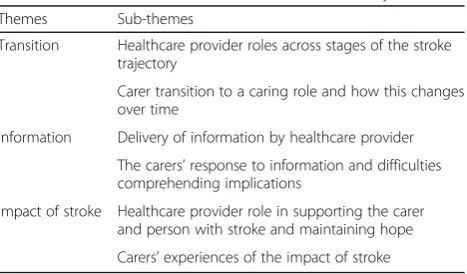
those who have experienced a stroke [24]. The aims of the qualitative study were to inform SCOHP by: (1) exploring healthcare provider perceptions of stroke carer roles and support needs and (2) examining carer needs across the stroke care trajectory. To achieve this, we conducted four semi-structured focus groups (n= 23) of stroke healthcare providers across acute, subacute, and community reha-bilitation services. Focus group facilitators used a semi-structured focus group schedule to guide discussions. Sessions were then recorded, transcribed, and analysed using thematic and content analysis. Table 1 shows the three key themes and sub-themes that emerged from the data, which highlight the distinct roles of healthcare pro-viders and carers.
The findings of this study were used to inform the de-velopment of the OHP, specifically in terms of having: staged information across the illness trajectory; flexible support during transition periods; and a balance of prac-tical tools and empathic communications around the im-pact of stroke. In summary, the discussions held with health providers supported the integration of an OHP for carers within existing stroke care services across acute and community settings.
Research aims
The aim of the study is to determine whether a stroke-specific OHP (SCOHP) improves the psychosocial health of stroke survivors and their carers, compared to usual care. The primary objective is to identify the impact of the OHP on levels of self-efficacy and quality of life for those affected by stroke. Secondary objectives are to evaluate the impact of the SCOHP on depression, anx-iety, social and workplace functioning, self-management, and illness perceptions of and coping with stroke, and carer strain and satisfaction.
In addition, a health economic cost analysis will be per-formed, assuming an Australia-wide implementation, to identify any cost savings of SCOHP over current practice. Quality-adjusted life years (QALYs) will be measured using the Assessment of Quality of Life-6D (AQoL-6D) [25] and European Quality of Life-5 dimensions-3 levels
Table 1Themes and sub-themes from thematic analysis
Themes Sub-themes
Transition Healthcare provider roles across stages of the stroke trajectory
Carer transition to a caring role and how this changes over time
Information Delivery of information by healthcare provider The carers’response to information and difficulties comprehending implications
(EQ-5D-3L) [26]. Process evaluation using focus groups will also be conducted with patients and clinicians to as-sess the effectiveness of the SCOHP, implementation, up-take and service delivery.
Methods
General design
This is a prospective randomised controlled trial to evaluate the effectiveness of the SCOHP for improving the psychosocial health of those who have experienced stroke and their carers. The SCOHP will be delivered as an 8-week individualised support program, with an add-itional booster session, and will be compared to usual care. Assessments will take place at baseline, 3, 6, and 12 months. The study protocol was approved by the St Vincent’s Hospital Human Research Ethics Committee (HREC-A 019/14). An executive steering committee (all authors) oversees project planning, conduct and ongoing data collation.
Setting
The study will be conducted at the neurology unit of St Vincent’s Hospital, a large metropolitan teaching hos-pital in Melbourne, Australia. Between 2011 and 2012, 737 patients were admitted to St Vincent’s Hospital, with
a principal diagnosis of stroke. The stroke unit at St Vincent’s Hospital, Melbourne will enable planned re-cruitment of 168 participants for the SCOHP program over a 2-year period.
Participants
A total of 84 patients diagnosed with stroke, and 84 carers of these patients, will be recruited into the RCT. For the purposes of this study, stroke is defined as cerebral infarc-tion or parenchymal haemorrhage confirmed by medical records. The following criteria are to be met for inclusion into the RCT: (1) diagnosis of stroke for patient or self-nominated carer of a stroke patient; (2) 18 years or older; (3) ability to converse in English without an interpreter or professional assistance; (4) absence of developmental disability or amnestic syndrome impairing their ability to learn from the intervention; and (5) absence of ser-ious comorbid illness, including severe forms of ap-hasia, as identified by the nurse unit manager, and cognitive impairment, as identified from medical notes scoring lower than 24 on the Mini-Mental State Exam-ination (MMSE) [27]. As the OHP adopts a holistic ap-proach to managing chronic disease, patients may enter the program at any stage along the continuum of care.
Power was calculated to detect a medium effect size of Cohen’sd= 0.50. This was chosen as a clinically meaning-ful effect size that may be compared with previous RCT research in the area of chronic disease management pro-grams [28]. Calculations assumed two primary outcomes (health-related quality of life and General Self-Efficacy Scale (GSE) scores), four assessment points (baseline, 3-month, 6-3-month, and 12-month), a study-wide type I error rate (α) of .05, and hence a type II error rate (β) of 0.20 (power of 0.80), a correlation of post-treatment scores with baseline measurements (ρ) of 0.81, and a two-tailed statis-tical test [29]. To detect an effect size of Cohen’sd= 0.50, 53 participants in each of the control and intervention groups will be required. Allowing for up to 20 % attrition, a total of 168 participants, or 42 carers and stroke survi-vors in control and intervention groups will be recruited.
Study procedures
Recruitment
[image:4.595.58.290.110.347.2]Potential patients who have been diagnosed with stroke and/or their carer will be identified by clinical staff (e.g. neurologist, nurse) and provided with a study flyer. Pa-tients and/or carers will be asked permission for a re-searcher to approach them to discuss the program in more detail. If agreeable, they will be approached, in-formed and formally consented by the research assist-ant. Study fliers will also be posted online through community organisations and will include contact de-tails for the research team. Participants from the com-munity may contact researchers directly to request
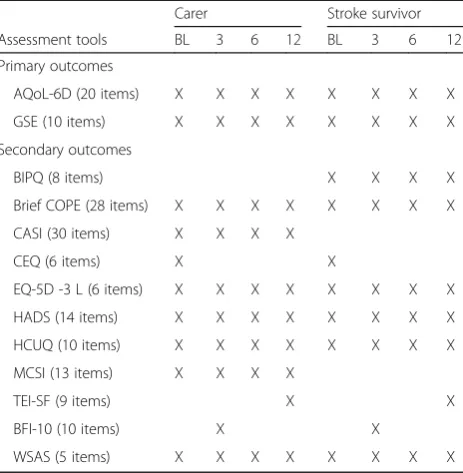
Table 2Primary and secondary outcome assessments and time points for SCOHP
Carer Stroke survivor
Assessment tools BL 3 6 12 BL 3 6 12
Primary outcomes
AQoL-6D (20 items) X X X X X X X X
GSE (10 items) X X X X X X X X
Secondary outcomes
BIPQ (8 items) X X X X
Brief COPE (28 items) X X X X X X X X
CASI (30 items) X X X X
CEQ (6 items) X X
EQ-5D -3 L (6 items) X X X X X X X X
HADS (14 items) X X X X X X X X
HCUQ (10 items) X X X X X X X X
MCSI (13 items) X X X X
TEI-SF (9 items) X X
BFI-10 (10 items) X X
WSAS (5 items) X X X X X X X X
AQoL-6DAssessment of Quality of Life-6 dimensions,GSEGeneral Self-Efficacy Scale,BIPQBrief Illness Perceptions Questionnaire,Brief COPEabbreviated version of the COPE Inventory,CASICarers’Assessment of Satisfaction Index,
CEQCredibility/Expectancy Questionnaire,EQ-5D-3LEuropean Quality of Life-5-dimensions-3 levels,HADSHospital Anxiety and Depression Scale,HCUQ Health Care Utilisation Questionnaire,MCSIModified Caregiver Strain Index,
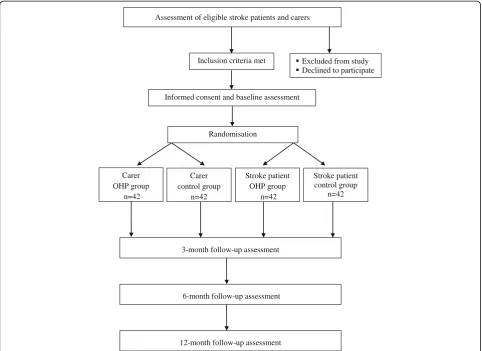
further information. Planned recruitment will occur over an 18-month period (see Fig. 1).
Consent
The process of consent will be in accordance with the Declaration of Helsinki. Nurse unit managers were con-sulted to determine a patient’s eligibility for the study. Senior clinicians and the research team were consulted in instances when it was unclear if an individual met the inclusion criteria. All eligible patients and carers will be fully informed that they are being asked to par-ticipate in an RCT. The procedures involved in the study, and the chances of being assigned randomly to one of two groups will be explained verbally and via an information sheet approved by the hospital’s Human Research Ethics Committee. A signed consent form will be obtained from each participant. Participants will be made aware of their right to withdraw from the study at any time without any effects on their clinical management.
Randomisation and blinding
Using a computer-generated block randomisation se-quence created by a researcher independent of the study, participants will be allocated to treatment or control group. The allocation sequence will be generated using random numbers and participants will be randomised progressively as they consent. Patients and carers will be randomized as dyads. Patients or carer will be random-ized alone if they are not participating as a dyad. Due to the nature and length of the intervention, it is not pos-sible to blind either participant or investigator to the treatment allocation.
Intervention: SCOHP
The SCOHP is delivered at a nominated place of conveni-ence by the participant i.e. home, hospital, community health centre. Dyads have the option of either receiving the intervention independently or together. The SCOHP comprises a modular format of eight sequential sessions plus a booster, based on a structured workbook. Partici-pants are encouraged throughout the program to identify
Inclusion criteria met
Informed consent and baseline assessment
Randomisation
Stroke patient OHP group
n=42
Stroke patient control group
n=42
3-month follow-up assessment Assessment of eligible stroke patients and carers
6-month follow-up assessment
12-month follow-up assessment Carer
OHP group n=42
Carer control group
n=42
Excluded from study Declined to participate
[image:5.595.57.540.362.713.2]areas of stroke- or carer-related health concerns on which they would like to focus. Sessions are approximately 1 hour in duration and held weekly, apart from the‘booster’ ses-sion, which is held 3 months after session 8. Learning is cumulative with each session designed to build on the previous session including tasks to complete between ses-sions, i.e. journaling and coping strategies (e.g. breathing exercises).
In summary, session 1 introduces SCOHP within the six domains of the‘Optimal Health Wheel’: social, phys-ical, emotional, intellectual, employment and spiritual as documented in the workbook. This session provides participants with the opportunity to explore and under-stand stroke self-management behaviour from a holistic perspective. Sessions 2 and 3 initiate development of a health plan exploring the implications and potential complications of stroke in terms of strengths and vulner-abilities, and understanding and monitoring disease im-pact (e.g. emotional burden and physical weakness). Session 4 focuses on medication management and meta-bolic monitoring. Session 5 expands the health plan to include key stroke partnerships and supports in the community and online (e.g. www.strokefoundation.co-m.au). Change enhancement is the focus in session 6, in terms of understanding past events and establishing new proactive avenues for change. The aim of session 7 is goal setting via creative problem solving and planning around the complexities of stroke. To cement a shift in focus of the person’s illness from being ‘dependent on’ services to being‘supported by’services, session 8 strate-gises stroke advanced care planning that incorporates wellbeing maintenance and sustainability. The goal of the‘booster session’(session 9) is to review health plans, consolidate progress, and reflect on achievements to-wards health-related goals.
A health professional (e.g. nurse, psychologist) trained in the approach (2-day workshop plus regular supervi-sion and fidelity checks) will facilitate each sessupervi-sion. The facilitator will draw on carer and stroke-specific infor-mation in concordance with individual circumstances. Examples include the relationship between depression and caregiving or physical impairments of stroke, avail-ability of stroke and carer supports in the community, and coping strategies for addressing anxiety and stress related to new roles and circumstances. The emphasis is on collaboration between facilitator and participant to arrive at goals for the program that stem from the par-ticipant’s main concerns and needs. The facilitator will encourage participants to identify their early warning signs of stress and illness and integrate healthy coping strategies to prevent the build-up of stress. Facilitators may also discuss and arrange referrals for other services in conjunction with the multidisciplinary team depending on participant needs. Additionally, facilitators will work with
the multidisciplinary team to coordinate visits. Partici-pants in rural and regional areas will have the option of participating in sessions via phone or Skype.
Control
The comparison group will receive usual care and no SCOHP intervention. As participants will be recruited from a variety of settings (hospital outpatients, commu-nity organisations) we anticipate variation in standard care received. To capture this variation, all participants will complete the Health Care Utilisation Questionnaire (HCUQ) [30] at each time point. Participants in the control group will have the option of completing the SCOHP at the end of the trial once evaluation is complete.
Outcome measurements
Table 2 details the primary and secondary outcome mea-sures and time points for carers and stroke survivors. Participants complete the measures independently un-less a specific request is made for assistance e.g. due to vision or motor skill impairment. Primary outcome mea-sures for both stroke survivors and carers are quality of life and self-efficacy. Health-related quality of life will be assessed using the (AQoL-6D) [25], which consists of six dimensions of health and a global‘utility’score and the EuroQol-5D (EQ-5D) [26]. Self-efficacy is to be assessed using the General Self-Efficacy Scale (GSE) [31] a meas-ure of perceived self-efficacy in response to daily chal-lenges and stressful life events. Secondary measures for both stroke survivors and carers are: coping strategies as measured using an abbreviated version of the COPE inven-tory, the Brief COPE [32]; symptom severity and caseness of depression and anxiety disorders as assessed using the Hospital Anxiety and Depression Scale (HADS) [33]; a 10-item measure of the Big Five personality dimensions (BFI-10) [34]; effect of an individual’s mental health on their ability to function via the Work and Social Adjustment Scale (WSAS) [35]; treatment expectancy and rationale credibility of the clinical study as assessed with the Cred-ibility/Expectancy Questionnaire (CEQ) [36]; perceived satisfactoriness of treatment as assessed using the Treat-ment Evaluation Inventory-Short Form (TEI-SF) [37]; and health care utilisation and its economic impact assessed by the Health Care Utilisation Questionnaire (HCUQ) [30]. Stroke survivors will also be assessed for cognitive and emotional responses to stroke using the Brief Illness Per-ceptions Questionnaire (BIPQ) [38]. In addition, carers will be assessed for carer strain using the Modified Caregiver Strain Index (MCSI) [39] and carer satisfaction as assessed by the Carer Assessment of Satisfaction Index (CASI) [40].
will be reviewed to determine stroke diagnostic informa-tion and clinical indices including the Modified Rankin Scale (MRS), which measures the degree of disability/de-pendence after a stroke.
Program assessment and treatment fidelity
The SCOHP facilitators will be trained in program deliv-ery, receive a structured manual/protocol and monthly group supervision with the clinical investigators (with individual supervision provided as needed in between group sessions). The purpose of supervision will be to discuss problems in study procedures and ensure stan-dardised activity. The SCOHP sessions will be audio re-corded with a random selection rated by independent assessors in compliance with the SCOHP protocol. Vari-ations from the protocol will be identified and relayed to the facilitator. Facilitators will complete a summary of each session using a standard template and send these notes to the research team. Session notes will include OHP topics covered, participant concerns raised, and needs for supervision. Additionally, content of sessions regarding participant requirement and concerns will be discussed at supervision meetings.
Post-intervention focus groups will be held for clini-cians and participants. Participants will be informed dur-ing consent (both written and verbal) of the option to participate in focus groups, and that the purpose is to ascertain an in-depth understanding of their experiences of the study, advantages and disadvantages of conducting the study/program in their services (for clinicians), and recommendations for components to include or exclude from the SCOHP. It will be made clear to participants when consenting that the number of focus groups will be limited; such that they will only be run until data sat-uration is achieved. It is envisioned that data satsat-uration will be reached after 2 to 3 focus groups, each contain-ing 8 to 12 individuals. To increase objectivity, focus group facilitators will be independent researchers who were not OHP facilitators. The pragmatic data analysis approach of Halcomb and Davidson [42] will be used for the purpose of focus group data analysis. In summary, identifying key passages and words will be independently analyzed, coded, and categorized (classifying key pas-sages and words within themes) drawing on pragmatic thematic analysis to form emergent themes.
Statistical analyses
Intention-to-treat analyses will be employed to prevent overestimation of efficacy. Categorical variables will be analysed using chi-squared tests (or Fisher’s exact test for small samples). A mixed-effects model, repeated measures (MMRM) approach will be used to examine the longitu-dinal profile of continuous variables at 3, 6 and 12 months post-baseline. For all MMRM analyses, baseline scores will
be used as covariates and the models will include prespe-cified fixed effects of treatment, clinician, and time, and treatment-by-time and treatment-by-clinician interactions. Secondary analyses using analysis of covariance will be conducted to compare change scores during treat-ment and follow-up phases for primary, secondary, and process outcomes using the fixed, continuous covariate of baseline score as well as the categorical fixed effects of treatment group, clinician, and treatment-by-clinician interactions.
Although the attrition rate is not expected to vary by treatment condition, we will attempt to identify key pre-dictors of attrition status (i.e. demographic and baseline clinical characteristics) and test for differences between conditions. Assuming the data are missing at random, several procedures offer effective approaches that may attenuate attrition. Maximum likelihood models (i.e. MMRM), with time as a random variable, allow the use of all available data from all assessments, reducing bias and increasing power [43]. In addition, multiple imputation procedures that utilise the expectation-maximization (EM) algorithm with bootstrap estimates of standard errors will be used to address attrition. The application of these pro-cedures can provide unbiased estimates, even in the face of substantial missing data [44].
A full economic evaluation will occur alongside the proposed RCT. Healthcare outcomes and costs will be compared between participants in the control and inter-ventional conditions. Healthcare system (medical record) and self-reported information via the HCUQ [30] will be used to generate analyses. The utility measurements of participant quality of life will be assessed using AQoL-6D [25] developed in Australia and the EQ-5D-3L [26] developed in Europe. The potential long-term (lifetime) impact on cost and effectiveness of intervention beyond the trial period will be extrapolated using the Markov process modelling method.
Discussion
services from acute to community care. Engaging with multiple clinicians can be a daunting task, both for pa-tients and informal carers. The SCOHP assists in nego-tiating this complexity by adopting a person-centred approach across the patient trajectory. In addition, stroke survivor and stroke carer psychosocial health is rarely studied as a dyad, thus this RCT is expected to make a sig-nificant contribution to improve the mental health and wellbeing of patients who have experienced stroke and their carers.
There are several strengths to this study protocol. Pri-marily, in the inclusion of the‘patient-carer dyad’tailored to each individual, for both intervention and assessment purposes. Integration and rollout of the RCT in a clinical setting was purposefully incorporated to identify the adaptability of the intervention to a‘real-world setting’, i.e. co-ordination and communication between departments. If successful, the simultaneous evaluation of RCTs across three of the most burdensome chronic conditions will provide evidence for the potential applicability of the intervention to extend to other chronic diseases. To our knowledge this is the first trial to include a comprehen-sive health economic cost analysis in the assessment of an educational, psychosocial intervention aimed at im-proving the mental and physical health of stroke survi-vors and their carers.
This series of trials follows common ethical principles applied in RCTs. Participants receive verbal and written information before consenting and before study proce-dures, they are not exposed to any risks, participation is voluntary and they may withdraw at any time without reason and without their usual care being affected in any way. Participants in the control group are also offered the intervention at the end of the follow-up period.
Trial status
Patient recruitment was ongoing at the time of manu-script submission. Data collection will continue until at least December 2017.
Acknowledgements
The OHP was developed at the Mental Health Research Institute from 2001 to 2007 and St Vincent’s Hospital from 2007 to date. The authors would like to acknowledge Serafino (Sam) Mancuso who provided expert statistical consultation.
Funding
This work was supported through the Australian Government’s Collaborative Research Networks (CRN) program.
Authors’contributions
DJC, CFS, NTL and DRT conceived the study. DJC developed the original OHP. GG, SLR, JC and SK contributed to study design. DJC, GM, RH and CLO designed the staff training protocol. YH designed the health economic analysis of the data. CB drafted the study protocol. All authors reviewed and approved the final manuscript.
Competing interests
The authors declare that they have no competing interests.
Author details
1Centre for the Heart and Mind, Australian Catholic University, Melbourne, VIC 3000, Australia.2Department of Psychiatry, University of Melbourne, Melbourne, VIC 3010, Australia.3Mental Health Service, St. Vincent’s Hospital, Melbourne, VIC 3065, Australia.4NorthWestern Mental Health, Melbourne Health, Melbourne, VIC 3052, Australia.5Department of Neurology, St. Vincent’s Hospital, Melbourne, VIC 3065, Australia.6Melbourne School of Population and Global Health, University of Melbourne, Melbourne, VIC 3010, Australia.7Department of Psychology, Swinburne University, Melbourne, VIC 3122, Australia.
Received: 8 October 2015 Accepted: 19 January 2016
References
1. University of Washington, Institute for Health Metrics and Evaluation. GBD Compare: Global Burden of Disease data visualizations. Global, deaths, both sexes, all ages, 2010 http://vizhub.healthdata.org/gbd-compare/ Accessed 1 Jan 2015.
2. World Health Organization. In: Mendis S, Puska P, Norrving B, editors. Global atlas on cardiovascular disease prevention and control. Geneva: World Health Organization; 2011.
3. Mozaffarian D, Benjamin EJ, Go AS, Arnett DK, Blaha MJ, Cushman M, de Ferranti S, Després J, Fullerton HJ, Howard VJ, Huffman MD, Judd SE, Kissela BM, Lackland DT, Lichtman JH, Lisabeth LD, Liu S, Mackey RH, Matchar DB, McGuire DK, Mohler 3rd ER, Moy CS, Muntner P, Mussolino ME, Nasir K, Neumar RW, Nichol G, Palaniappan L, Pandey DK, Reeves MJ, Rodriguez CJ, Sorlie PD, Stein J, Towfighi A, Turan TN, Virani SS, Willey JZ, Woo D, Yeh RW, Turner MB, on behalf of the American Heart Association Statistics Committee and Stroke Statistics Subcommittee. Heart disease and stroke statistics–2015 update: a report from the American Heart Association. Circulation. 2015;131(4):e29–322.
4. Ski C, O’Connell B. Stroke: the increasing complexity of carer needs. J Neurosci Nurs. 2007;39:172–9.
5. Lutz BJ, Young ME, Cox KJ, Martz C, Creasy KR. The crisis of stroke: experiences of patients and their family caregivers. Top Stroke Rehabil. 2011;18:786–97.
6. Bakas T, Clark PC, Kelly-Hayes M, King RB, Lutz BJ, Miller EL, on behalf of the American Heart Association Council on Cardiovascular and Stroke Nursing and the Stroke Council. Evidence for stroke family caregiver and dyad interventions: a statement for healthcare professionals from the American Heart Association and American Stroke Association. Stroke. 2014;45:2836–52. 7. Kniepmann K. Female family carers for survivors of stroke: occupational loss
and quality of life. Br J Occup Ther. 2012;75:208–16.
8. Low JT, Payne S, Roderick P. The impact of stroke on informal carers: a literature review. Soc Sci Med. 1999;49(6):711–25.
9. Camak DJ. Addressing the burden of stroke caregivers: a literature review. J Clin Nurs. 2015;24(17–18):2376–82. doi:10.1111/jocn.12884.
10. Ogunlana MO, Dada OO, Oyewo OS, Odole AC, Ogunsan MO. Quality of life and burden of informal caregivers of stroke survivors. HKPJ. 2014;32:6–12.
11. Cobley CS, Fisher RJ, Chouliara N, Kerr M, Walker MF. A qualitative study exploring patients’and carers’experiences of Early Supported Discharge services after stroke. Clin Rehabil. 2013;27(8):750–7.
12. Satink T, Cup EHC, de Swart BJM. Nijhuis-van der Sanden MWG. How is self-management perceived by community living people after a stroke? A focus group study. Disabil Rehabil. 2015;37(3):223–30. doi:10.3109/09638288.2014. 918187.
13. Wei N, Yong W, Li X, Zhou Y, Deng M, Zhu H, Jin H. Post-stroke depression and lesion location: a systematic review. J Neurol. 2014;262(1):81–90. 14. Greenwood N, Mackenzie A. An exploratory study of anxiety in carers of
stroke survivors. J Clin Nurs 2010, 19:2032–8.
15. Schulz R, Beach SR. Caregiving as a risk factor for mortality. JAMA. 1999;282:2215–9.
16. Cheng HY, Chair SY, Chau JP. The effectiveness of psychosocial interventions for stroke family caregivers and stroke survivors: a systematic review and meta-analysis. Patient Educ Couns. 2014;95(1):30–44.
18. Kalra L, Evans A, Perez I, Melbourn A, Patel A, Knapp M, Donaldson N. Training carers of stroke patients: randomised controlled trial. BMJ. 2004;328:1099.
19. Kirkevold M, Bronken BA, Martinsen R, Kvigne K. Promoting psychosocial well-being following a stroke: developing a theoretically and empirically sound complex intervention. Int J Nurs Stud. 2012;49:386–97. 20. Castle D, Gilbert M. Collaborative therapy: framework for mental health.
Br J Psychiatry. 2006;189:467.
21. Castle D, White C, Chamberlain J, Berk M, Berk L, Lauder S, Murray G, Schweitzer I, Piterman L, Gilbert M. Group-based psychosocial intervention for bipolar disorder: randomised controlled trial. Br J Psychiatry. 2010;196: 383–8.
22. Gilbert M, Chamberlain J, White C, Mayers P, Pawsey B, Liew D, Musgrave M, Crawford K, Castle D. Controlled clinical trial of a self-management program for people with mental illness in an adult mental health service–the optimal health program (OHP). Aust Health Rev. 2012;36:1–7.
23. Ski CF, Castle DJ, Lautenschlager NT, Moore G, Thompson DR. Caring for caregivers after a stroke. Int Psychogeriatr. 2015;27(1):1–4.
24. O’Brien CL, Moore G, Rolley JX, Ski CF, Thompson DR, Lautenschlager NT, Gonzales G, Hsueh YS, Castle D. Exploring healthcare providers’perceptions of the needs of stroke carers: informing development of an optimal health program. Top Stroke Rehabil. 2014;21:421–31.
25. Richardson J, Peacock S, Hawthorne G, Iezzi A, Elsworth G, Atherton DN. Construction of the descriptive system for the assessment of quality of life: a QoL-6D utility instrument. Health Qual Life Outcomes. 2013;10:38. 26. Konerding U, Elkhuizen S, Faubel R, Forte P, Malmström T, Pavi E, Janssen M.
The validity of the EQ-5D-3L items: an investigation with type 2 diabetes patients from six European countries. Health Qual Life Outcomes. 2014;12:181. 27. Bour A, Rasquin S, Boreas A, Limburg M, Verhey F. How predictive is the
MMSE for cognition performance after stroke? J Neurol. 2010;257:630–7. 28. Krause DS. Economic effectiveness of disease management programs: a
meta-analysis. Dis Manag. 2005;8:114–34.
29. Diggle P, Heagerty P, Liang K, Zeger S. Analysis of longitudinal data. 2nd ed. Oxford: Oxford University Press; 2002.
30. Hsueh A. Health Care Utilisation Questionnaire (HCUQ) based on Thorn JC, Coast J, Cohen D, Hollingworth W, Knapp M, Noble SM, Ridyard C, Wordsworth S, Hughes D. Resource-use measurement based on patient recall: issues and challenges for economic evaluation. Appl Health Econ Health Policy. 2013;11:155–61.
31. Schwarzer R, Jerusalem M. Generalized self-efficacy scale. In: Weinman J, Wright S, Johnston M, editors. Measures in health psychology: a user’s portfolio. Causal and control beliefs. Windsor: NFER Nelson; 1995. p. 5–37. 32. Carver C. You want to measure coping but your protocol’s too long:
consider the brief COPE. Int J Behav Med. 1997;4:92–100.
33. Zigmond AS, Snaith RP. The hospital anxiety and depression scale. Acta Psychiatr Scand. 1983;67(6):361–70.
34. Rammstedt B, John OP. Measuring personality in one minute or less: a 10-item short version of the Big Five Inventory in English and German. J Res Pers. 2007;41:203–12. Adapted from.
35. Mundt J, Marks I, Shear K, Greist J. The work and social adjustment scale: a simple measure of impairment in functioning. Br J Psychiatry. 2002;180:461–4. 36. Devilly G, Borkovec T. Psychometric properties of the credibility/expectancy
questionnaire. J Behav Ther Exp Psychiatry. 2000;31:73–86. 37. Newton J, Sturmey P. Development of a short form of the treatment
evaluation inventory for acceptability of psychological interventions. Psychol Rep. 2004;94:47–81.
38. Broadbent E, Petrie KJ, Main J, Weinman J. The brief illness perception questionnaire. J Psychosom Res. 2006;60:631–7.
39. Thornton M, Travis SS. Analysis of the reliability of the modified caregiver strain index. J Gerontol B Psychol Sci Soc Sci. 2003;58(2):127–32. 40. Nolan M, Grant G. Regular respite: an evaluation of a hospital rota bed
scheme for elderly people. Age concern institute of gerontology research paper, series 6. London: ACE Books; 1992.
41. Halcomb EJ, Davidson PM. Is verbatim transcription of interview data always necessary? Appl Nurs Res. 2006;19(1):38–42.
42. Nich C, Carroll K. Now you see it, now you don’t: a comparison of traditional versus random-effects regression models in the analysis of longitudinal follow-up data from a clinical trial. J Consult Clin Psychol. 1997; 65(2):252–61.
43. Schafer J, Graham J. Missing data: our view of the state of the art. Psychol Methods. 2002;7(2):147–77.
44. Schafer J, Graham J. Missing data: our view of the state of the art. Psychol Methods. 2002;7(2):147–77.
• We accept pre-submission inquiries
• Our selector tool helps you to find the most relevant journal
• We provide round the clock customer support
• Convenient online submission
• Thorough peer review
• Inclusion in PubMed and all major indexing services
• Maximum visibility for your research
Submit your manuscript at www.biomedcentral.com/submit