Psychology Theses Department of Psychology
8-12-2016
Pediatric Chronic Abdominal Pain Nursing: A
Mixed Method Analysis of Burnout
Nikita Rodrigues
Follow this and additional works at:https://scholarworks.gsu.edu/psych_theses
This Thesis is brought to you for free and open access by the Department of Psychology at ScholarWorks @ Georgia State University. It has been accepted for inclusion in Psychology Theses by an authorized administrator of ScholarWorks @ Georgia State University. For more information, please [email protected].
Recommended Citation
Rodrigues, Nikita, "Pediatric Chronic Abdominal Pain Nursing: A Mixed Method Analysis of Burnout." Thesis, Georgia State University, 2016.
ANALYSIS OF BURNOUT
by
NIKITA P. RODRIGUES
Under the Direction of Lindsey L. Cohen, PhD
ABSTRACT
Nurses are at increased risk for job burnout, which can lead to psychological and physical
problems, decreased quality of care, and premature exit from the profession. Studies have found
common predictors of burnout in multiple service occupations, but there are important
differences across settings. The current study used embedded mixed-method analyses to explore
burnout in a sample of nurses that work with patients with chronic abdominal pain. Thirty-two
nurses participated in focus groups and data analyses revealed the following six themes: negative
pain beliefs, barriers to effective pain management, nurse empathy/compassion, moral distress,
coping methods, and burnout. These themes were evaluated with proposed theoretical
frameworks and the extant literature to build the Pediatric Chronic Pain Nurse Burnout model.
The constructs in this model were then evaluated quantitatively via measures completed by 41
nurses. Analyses provided partial support for the model and highlighted areas for further
evaluation of burnout in nursing.
ANALYSIS OF BURNOUT
by
NIKITA RODRIGUES
A Thesis Submitted in Partial Fulfillment of the Requirements for the Degree of
Master of Arts
in the College of Arts and Sciences
Georgia State University
Copyright by Nikita P. Rodrigues
ANALYSIS OF BURNOUT
by
NIKITA P. RODRIGUES
Committee Chair: Lindsey Cohen
Committee: Lisa Armistead
Kevin Swartout
Electronic Version Approved:
Office of Graduate Studies
College of Arts and Sciences
Georgia State University
ACKNOWLEDGEMENTS
I would like to express my sincere gratitude to my advisor, Dr. Lindsey Cohen, for his
continued guidance and mentorship throughout this project. This project would not have been
possible without his support and encouragement. I would also like to thank my committee
members, Lisa Armistead, Ph.D. and Kevin Swartout, Ph.D. for their valuable insights,
suggestions, and feedback. Additionally, I would like to thank the nurses that participated in this
study, for openly sharing their experiences and filling out numerous questionnaires; I can only
hope that this work will benefit them as much as I have learned and grown from their insights. I
would like to acknowledge my CHAMP (Child Health and Medical Pain) lab mates, Meredith
Bishop, Laura Cousins, Sarah Martin, Effie Mougianis, and Sharon Shih, for their support,
friendship, and reassurance both in and outside of the lab; as well as thank my family, friends
and partner for their unwavering love and encouragement. Finally, I would like to thank Carolyn
TABLE OF CONTENTS
ACKNOWLEDGEMENTS ... v
LIST OF TABLES ... x
LIST OF FIGURES ... xi
1 Study One introduction ... 1
1.1 Overview of Pediatric Nursing ... 1
1.2 Burnout in Nursing ... 2
1.3 Pediatric Chronic Abdominal Pain Nursing ... 3
1.4 Burnout in Pediatric Chronic Abdominal Pain Nursing ... 6
1.5 Predictors of Burnout in Pediatric Chronic Abdominal Pain Nursing ... 8
1.6 Current Study and Aims ... 10
2 STUDY ONE METHODS ... 11
2.1 Participants ... 11
2.2 Procedures ... 12
3 STUDY ONE DATA ANALYSIS ... 14
4 STUDY ONE QUALITATIVE ANALYSIS ... 15
4.1 Negative Pain Beliefs... 17
4.2 Pain Management Barriers ... 18
4.3 Nurse Empathy/Compassion... 20
4.5 Burnout ... 24
4.6 Coping Methods ... 25
5 STUDY TWO INTRODUCTION ... 25
5.1 Primary Aims for Study Two... 28
6 STUDY TWO METHODS ... 32
6.1 Participants ... 32
6.2 Procedures ... 33
6.3 Measures ... 34
6.3.1 Background Information (Appendix C) ... 34
6.3.2 Moral Distress (Appendix D, E) ... 35
6.3.3 Pain Management Barriers (Appendix F) ... 36
6.3.4 Negative Pain Beliefs (Appendix G) ... 37
6.3.5 Perceived Social Support (Appendix H) ... 38
6.3.6 Empathy (Appendix I) ... 38
6.3.7 Self-Efficacy (Appendix J) ... 39
6.3.8 Negative Views of Hospital Environment (Appendix K) ... 39
6.3.9 Burnout (Appendix L) ... 40
6.3.10 Intent to Leave ... 40
7 STUDY TWO RESULTS ... 41
7.2 Primary Quantitative Results ... 46
7.2.1 Emotional Exhaustion ... 48
7.2.2 Depersonalization... 48
7.2.3 Personal Accomplishment ... 49
7.3 Exploratory Quantitative Results ... 49
7.3.1 Perceived Pain Management Barriers X Empathy Interaction ... 49
7.3.2 Perceived Pain Management Barriers X Hospital Environment Interaction 51 7.3.3 Negative Pain Beliefs X Empathy Interaction ... 52
7.3.4 Negative Pain Beliefs X Hospital Environment Interaction ... 52
8 STUDY ONE & TWO DISCUSSION ... 53
8.1 Descriptives and Demographics... 54
8.2 Intercorrelations between Primary Variables... 56
8.3 Intercorrelations of Model Predictors and Model Outcomes: Time on Unit, Moral Distress, Perceived Pain Management Barriers, and Negative Pain Beliefs ... 57
8.4 Intercorrelations of Model Moderators and Model Outcomes: Perceived Coworker Social Support, Empathy, Self-Efficacy, and Hospital Environment ... 60
8.5 Exploratory Moderation Analyses ... 62
8.5.1 Perceived Pain Management Barriers X Empathy Interaction ... 62
8.6 Study Limitations and Future Directions ... 63
9 CONCLUSIONS AND CLINICAL IMPLICATIONS ... 64
10 REFERENCES ... 66
11 APPENDICES ... 80
Appendix A Focus Group Script... 80
Appendix B IRB Consent for Quantitative Battery ... 83
Appendix C Background Information Form ... 84
Appendix D Moral Distress Inventory ... 85
Appendix E Moral Distress Thermometer... 87
Appendix F Modified Barriers to Optimal Pain Management ... 88
Appendix G Beliefs and Experiences about the Treatment of Chronic Pain ... 89
Appendix H Multidimensional Scale of Perceived Social Support ... 90
Appendix I Jefferson Scale-Revised ... 91
Appendix J Nurses’ Self-Efficacy in Managing Children’s Pain ... 93
Appendix K The Practice Environment Scale of the Nursing Work Index ... 94
LIST OF TABLES
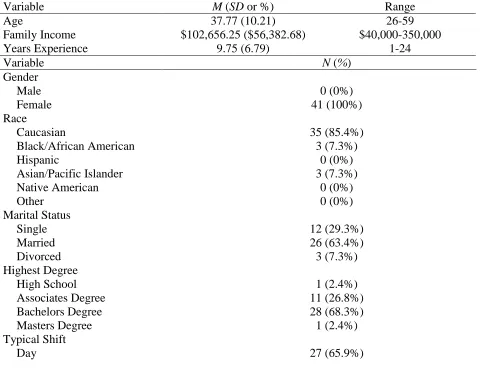
Table 1 Participant Demographic Data ... 41
Table 2 Variable Descriptive Data ... 42
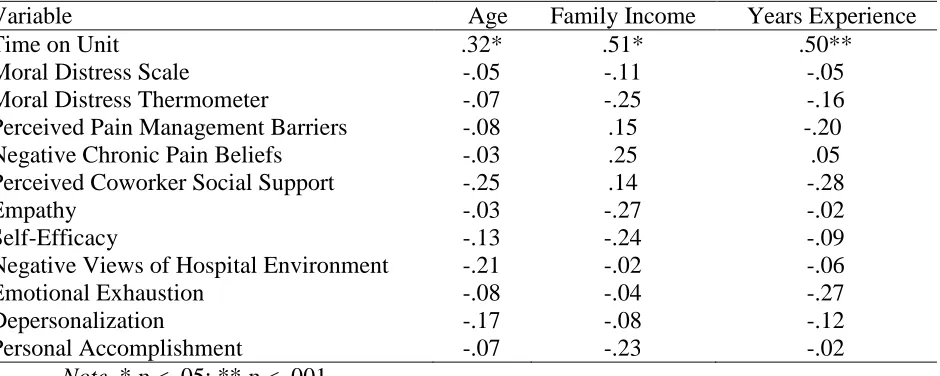
Table 3 Intercorrelations Among Age, Family Income, Years Experience, and Primary Variables ... 43
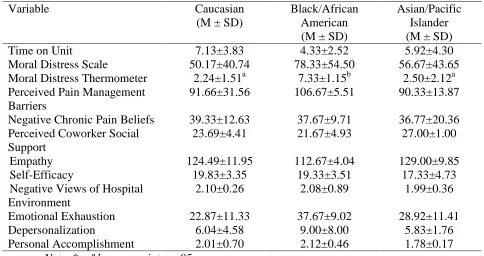
Table 4 Race/Ethnicity Mean Differences Among Variables ... 44
Table 5 Highest Degree Differences Among Variables ... 44
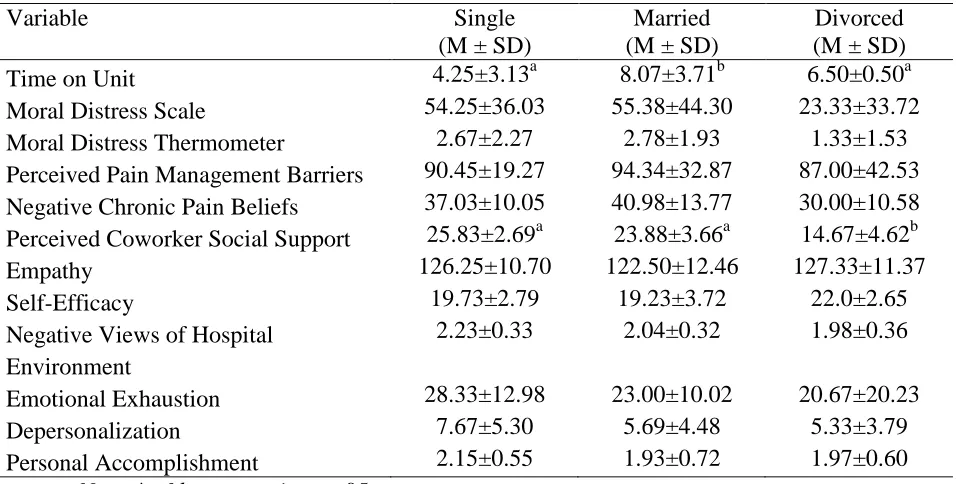
Table 6 Marital Status Mean Differences among Variables ... 45
Table 7 Typical Shift Mean Differences Among Variables ... 45
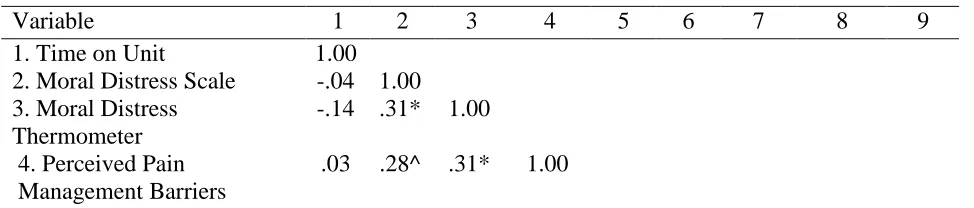
Table 8 Intercorrelations Among Primary Variables ... 46
Table 9 Intercorrelations between Primary Variables and Outcomes ... 49
LIST OF FIGURES
Figure 1 Outline of Focus Groups Conversation Flow. ... 16
Figure 2 The Proposed Pediatric Chronic Pain Nurse Burnout Model ... 26
Figure 3 Expected Directions of Bivariate Correlational Analyses Between Proposed Predictors,
Moderators, and Model Outcomes ... 30
Figure 4 Hypothesized moderations between barriers and emotional exhaustion ... 31
Figure 5 Hypothesized moderations between pain beliefs and emotional exhaustion ... 31
Figure 6 The Proposed Pediatric Chronic Pain Nurse Burnout Model with Measures. Note. MDS:
Moral Distress Scale; MDT: Moral Distress Thermometer; MSPSS: Multidimensional Scale of
Perceived Social Support; NWI-PES: Nursing Work Index of Practice Environment Scale; MBI:
Maslach Burnout Inventory ... 34
Figure 7 Found Directions of Bivariate Correlational Analyses Separated by Significance and
Alignment with Study Hypotheses ... 47
Figure 8 Barriers x Empathy Interaction ... 51
Figure 9 Barriers x Views of Hospital Environment Interaction ... 52
1 STUDY ONE INTRODUCTION
1.1 Overview of Pediatric Nursing
The nurse is a critical member of the pediatric healthcare workforce. There are over
3,000,000 registered nurses in the United States (U.S.) and approximately 200,000 work in
pediatrics (U.S. Department of Health and Human Services, 2010). In general, pediatric nurses
are charged with providing care for children and their parents. Nurses’ responsibilities are
multifaceted and dynamic, and duties might include implementing innovative,
developmentally-appropriate interventions; communicating sensitive information to patients and their families;
teaching health and illness-related care; and reducing the stress associated with illness (Christian,
2013; Muscari, 2005).
As health outcomes for sick children have continued to improve, pediatric nursing
has become increasingly focused on enhancing the quality of care by providing an environment
within the hospital for optimal growth and development, as well as meeting the health needs of
the patient (Price & Gwin, 2008). Most commonly, pediatric nurses are the “front-line” caretaker
providing the primary point of contact and support for patients and their families. In this
capacity, nurses often identify patients’ and their parents’ needs and express these to the
healthcare team. In addition, nurses often serve as the interventionist and conduct a number of
treatment protocols (e.g., monitoring vitals, administration of medication).
The pediatric health care setting is dynamic, multifaceted, and challenging, and can be
very rewarding for the pediatric nurse. Nurses enjoy developing strong relationships with
patients and families, and they reportedly feel a sense of comfort and accomplishment in
knowing that they have improved the lives of their patients and families through their nursing
also be challenging. Healthcare reforms, increased length of hospital stays, heightened acuity
levels in hospitalized patients, and changes in medical technology all contribute to pediatric
nurse stress and burnout (Broyles, 2008).
1.2 Burnout in Nursing
It is well established that nurses face stress in their work environment and therefore are at
risk for burnout (Cohen-Katz, Wiley, Capuapo, Baker, & Shapiro, 2005). Burnout is commonly
conceptualized as a state of physical, emotional, and mental exhaustion that occurs as a reaction
to demanding working conditions over an extended period of time (Schaufeli & Greenglass,
2001). Burnout has long been identified as a syndrome of emotional exhaustion,
depersonalization (cynicism and lack of empathy), and a decreased sense of personal
accomplishment (Maslach & Jackson, 1981). However, burnout is increasingly seen as
consisting of two core components: exhaustion and cynicism (Bakker, Demerouti, & Verbeke,
2004; Maslach, Schaufeli, & Leiter, 2001).
It is suggested that 40% of hospital nurses have burnout levels that exceed the norms for
health care workers (Aiken et al., 2001). The consequences of nurse burnout include negative
work attitudes, poor patient evaluations of the quality of care, and reduced productivity
(Bourbonnais, Comeau, & Bezina 1999; Leiter, Harvie, & Frizzell, 1998). These conditions can
threaten the quality of patient care and patient safety (Laschinger & Leither, 2006). Specifically,
nurses’ increased burnout affects their relationship with their patients, as it leads to less contact
and therefore a higher risk of incorrect medical treatment (West et al., 2006). For hospitals, nurse
burnout can be costly as it leads to increased tardiness, absenteeism, turnover, and difficulty in
both recruiting new and retaining current staff (Lake, 1998; Lee & Ashforth, 1996; Parker &
(Caine & Ter-Bagdasarian, 2003). Job dissatisfaction has been found to be four times greater
among hospital nurses than the average for all U.S. workers (Aiken et al., 2001). Not
surprisingly, 1 in 5 hospital nurses report that they intend to leave their current jobs within a year
(Aiken et al., 2001).
1.3 Pediatric Chronic Abdominal Pain Nursing
Nursing on an inpatient unit with pediatric chronic abdominal pain might be particularly
challenging. Chronic abdominal pain is widely prevalent and is the second most common pain
syndrome in children (Berger, Gieteling, & Benninga, 2007). It is estimated that chronic
abdominal pain occurs in 0.3% to 30.8% of children, depending on the diagnostic criteria
(Chitkara, Rawat, & Talley, 2005; Van Gessel, Gabmann, & Kroner-Herwig, 2011). Chronic
abdominal pain is typically characterized by the presence of chronic pain for at least 3 months,
with pain occurring at least once a week, in the absence of serious physical disease (Apley &
Naish, 1958). Nausea and vomiting are common symptoms, and pain has to be sufficiently
severe so that everyday functioning is impaired. Increasing numbers of children present to
hospitals and outpatient clinics with complaints of recurrent pain. A descriptive study by Coffelt,
Bauer, and Carrol (2013) indicated that the number of patients with chronic pain diagnoses
increased by 831% from 2004 to 2010; 39% had secondary diagnoses of abdominal pain and
65% had a gastrointestinal diagnosis. In this study, patients had a mean length of hospital stay of
7.32 days, and many (12.5%; ~467 patients) were readmitted within one year of their initial
discharge. Further, patients hospitalized for chronic pain underwent a mean of 3.18 procedures
with the most common procedures being an esophagogastroduodenoscopy with closed biopsy, a
Abdominal pain can be described as functional or organic. Chronic abdominal pain,
which is sometimes referred to as functional abdominal pain (FAP), occurs due to a sensitivity to
nerve impulses in the solar plexus (Drossman & Dumitrascu, 2006). FAP encompasses a group
of conditions characterized by chronic or recurrent symptoms that are not explained by
biochemical, anatomical, or structural abnormalities (Saps & Di Lorenzo, 2009). FAP can be
triggered by a virus or stress and can lead to symptoms including constipation, nausea, diarrhea,
gas, sweating, and a flushed or pale face. Whereas the specific reason for pain is unknown, food
intolerances, heredity, weakness of the immune system, and psychological issues can increase a
child’s susceptibility to developing FAP. Unfortunately, there is no cure currently available for
FAP, but it can often be managed through diet changes and certain medications. Stress reduction
efforts, like following a regular routine and diet, can also help control pain experiences. The poor
understanding of the causes of FAP, the range of difficult symptoms, and the lack of cure all
contribute to frustration and stress for the patient, family, and their healthcare team.
In addition to treating FAP, gastrointestinal units at children’s hospitals often treat other
chronic abdominal pain conditions including patients who present with inflammatory bowel
disease (IBD). IBD is a complicated group of diseases that includes Crohn’s disease, reflux,
ulcerative colitis, and indeterminate colitis. Nursing care for children with chronic abdominal
pain consists of educating the patient and family about the condition, symptoms, and coping
techniques; providing support and assurance that the experience is common and can possibly be
outgrown; and if applicable, developing a bowel program regime (Mandleco, 2011). Pain
management is an extremely vital aspect of nursing care of the pediatric patient. The nurse
assesses for the presence of pain, plans both pharmacological and non-pharmacological pain
plan, and then evaluates the effectiveness of the interventions (American Nurses Association
[ANA], 2001). The management of pain incorporates psychological, physical, and
pharmacological interventions. Although the main goal of the treatment for pain is to return the
child to a functional state that allows them to participate in life activities (e.g., return to school)
rather than focusing solely on pain reduction (Twycross, Dowden, & Stinson, 2013), hospital
policies and patient satisfaction often require nurses to predominately focus on the patient’s pain
experiences. Pharmacological interventions for chronic pain management include simple
analgesics, opioid analgesics, anticonvulsants, antidepressants, antiarrhythmics, anxiolytics, and
nerve blocks. Unfortunately, concerns have been expressed about the safety of long-term opioid
administration (Large & Schug, 1995). These concerns stem around issues of adverse side
effects, and the development of tolerance, addition, and/or drug diversion (Abs et al., 2000;
Ballantyne & Mao, 2003; Kalso, Edwards, Moore, & McQuay, 2004). Furthermore, a 2008
Cochrane review of pharmacological interventions for recurrent abdominal pain and irritable
bowel syndrome in children concluded that there is weak evidence for the efficacy of any
pharmacological agent in children with recurrent abdominal pain (Huertas-Ceballos, Logan,
Bennett, & MacArthur, 2008). Physical interventions include exercise, thermal stimulation,
physiotherapy, occupational therapy, massage, and acupuncture (Twycross et al., 2013).
Psychological interventions include education about pain diagnosis and coping, sleep hygiene,
relaxation, biofeedback, behavioral therapies, cognitive therapies, cognitive behavioral therapy,
Acceptance and Commitment Therapy, mindfulness therapy, family therapy, and psychotherapy
(Twycross et al., 2013). Pediatric abdominal pain nurses are often required to plan and
implement interventions across all three disciplinary modes of pain management, while
1.4 Burnout in Pediatric Chronic Abdominal Pain Nursing
The majority of studies on burnout in nursing have been conducted in specialized areas of
oncology, critical care, and mental health settings in adults (Kash et al., 2000, Kennedy &
Barloon, 1997, Kilfedder, Power & Wells, 2001; Pines & Maslach, 1978). Data are absent
regarding the prevalence of nurses’ rates of burnout when working with inpatient pediatric
chronic abdominal pain patients. Despite the availability of pain management medications,
studies have continued to find suboptimal pain management in chronic pain patients
(Schafheutle, Cantrill, & Noyce, 2001). Schafheutle et al. (2001) proposed two possible reasons
for inadequate care, including a) the absence of curriculum content related to pain management
in nursing and medical education, and b) faculty attitudes and beliefs related to chronic pain.
Suboptimal pain management can lead to increased patient distress, which can in turn be
distressing for caregivers (Ferrell-Torry & Glick, 1993). Similarly, due to the subjective nature
of pain reporting, nurses working with chronic pain populations often face difficult decisions
about pharmacological pain management.
Given the complicated presentation of chronic pain and the lack of relief provided solely
by pharmacological interventions (Huertas-Ceballos et al., 2008), nurses are faced with tough
decisions about pain management and often cannot effectively lower their patient’s pain while in
the hospital. Moreover, factors beyond the nurses’ control may hinder their ability to provide
optimal care for patients and families (Austin, Berum, & Goldberg, 2003). When nurses face
impediments to what they perceive as moral practice (e.g., providing patients with pain relief),
they may be subject to the frustration and inner turmoil of moral distress (De Villers & DeVon,
2012). Moral distress has been defined as the painful feelings and/or psychological
providing pain relief), but they cannot carry out that action because of obstacles (Jameton, 1984).
These obstacles to morally acceptable care can include a lack of time; reluctance from
supervisors; and/or being inhibited by the medical power structure, institutional policy, or legal
constraints (Corley, Minick, Elswick, & Jacobs, 2005). Both nurse moral distress and burnout
have been found to be related to decreased quality of care for the patient or client, as well as
psychological and physical problems for the service provider and eventual premature exit from
the profession (Aiken et al, 2001; Hamric & Blackhall, 2007; Medland, Howard-Ruben, &
Whitaker, 2004). It is therefore important to identify specific factors contributing to moral
distress and burnout in pediatric abdominal pain nurses in hopes of developing interventions to
better meet the needs of nurses.
In one qualitative study of nurses working with children with a variety chronic
conditions, 20 nurses were interviewed about their experiences with compassion-fatigue and
burnout (Maytum, Heiman, & Garwick, 2004). Nurses in this study identified personal and
work-related contributors to burnout and distress including seeing too many painful procedures,
witnessing too much sadness and death, and becoming overly involved and crossing professional
boundaries. They identified environmental stressors specific to chronic pain populations
including regular exposure to pain and suffering, ever-changing technology, and challenging
institutional and ethical issues. This study was an important first step in identifying prevalence of
burnout in nurse populations that work specifically with patients with chronic conditions;
however, the findings are limited because a) all chronic conditions were combined into one
sample, with no elaboration on the specific patient populations included and b) the results are
distinction was made between general chronic conditions and chronic conditions that had a pain
component.
1.5 Predictors of Burnout in Pediatric Chronic Abdominal Pain Nursing
Given the detrimental effects of stress and burnout in nursing, it is critical to identify
contributors that might be targeted for intervention. A number of stressors have been identified
including working long hours, having little power and control over patient care decisions,
providing emotional support to patient and families, and witnessing traumatic illness events and
patient deaths (Aiken et al., 2001; Aiken, Clarke, Sloane, Sochalski, & Silber, 2002; Decker,
Bailey, & Westergaard, 2002). These predictors for burnout have been identified in studies
combining large samples of nurses working across a range of settings and services; there are
likely important distinctions in stress and burnout when examining unique environments.
Unfortunately, there is a dearth of studies examining stress and burnout in nurses working with
specific pediatric populations.
Despite the lack of empirical evidence exploring burnout and distress in nurses who
specifically work with chronic abdominal pain patients, several theories can be applied to the
challenges these nurses face. Stanley and Pollard (2013) applied self-efficacy theory to nurse
management of pediatric pain. Bandura (1997) defined self-efficacy as a person’s beliefs in his
or her ability to perform a specific task successfully. Bandura posited that self-efficacy is
influenced by cognitive, affective, motivational, and self-actualization psychological processes.
When working with chronic abdominal pain patients, a nurse might reflect on and doubt his/her
self-efficacy, as often there is little success in long-term pain management. Extended exposure to
feelings of failure, and therefore decreased feelings of self-efficacy, could contribute to burnout
A recent body of literature has examined the role of attribution theory in relation to the
management of pain (De Ruddere, Goubert, Stevens, de C Williams, & Crombez, 2013;
Lundquist, Higgins, & Prkachin, 2002). Theories of attribution describe the processes by which
individuals explain the events that occur around them, traditionally focusing on the perceived
causality of behaviors and events (Finchman & Jaspars, 1980). Researchers evaluating
attribution theory in chronic pain populations has suggested that individuals who are perceived
as being responsible for their illness will evoke less sympathy and more anger from caretakers.
Subsequently, these caretakers will be less willing to help their patients. For example, De
Ruddere et al. (2013) reported that patients with undiagnosed conditions evoke less sympathy
and help from general practitioners and physiotherapists. Often, patients with chronic abdominal
pain do not receive specific medical diagnoses, which could contribute to negative attributions
from their healthcare providers. These attributions could result in more depersonalization, a core
feature of burnout that refers to the development of negative, cynical attitudes towards the
recipients of one’s service or care (Demerouti, Bakker, Nachreiner, & Schaufeli, 2000).
Additionally, some researchers have applied a framework of cognitive dissonance onto
the changes that nurses go through upon “socializing” into the practice environment when their
initial ideals about nursing are challenged by the realities of real-world practice (Mackintosh,
2006). Specifically, although nurses would enter the profession defining “caring compassion” as
a core feature of their job, MacIntosh et al. (2006) described a process in which nurses would
move away from the caring nature of nursing until they could develop a nursing identity that was
compatible with the complexity and challenges of their roles. Day, Field, Campbell, & Reutter
(2005) elaborated on this idea, by identifying that nurses moved away from defining care as
business standards, professional regulations and work environment expectations. Wilson and
McSherry (2006) looked specifically at the influences of clinical experience on nurses’
knowledge of pain. They elaborated on the situations that these nurses confront focusing on the
lack of control nurses have over pain management decisions, and in particular over choices
around medicating. When nurses have the knowledge that their patients are in pain, but cannot
manage their pain experience, it may generate a state of cognitive dissonance (Festinger, 1957).
Nurses may then distance themselves from the situation by denying their knowledge base, and/or
rationalizing and denying the patient’s pain reports (Wilson & McSherry, 2006). By removing
nurses’ autonomy and control over the situation, cognitive dissonance is likely to increase and
may result in defending or ignoring the stressor (i.e., the patient’s pain reports).
1.6 Current Study and Aims
It is well established that nurses’ experience increased workplace pressure, which puts
them at risk for chronic stress and job burnout. Burnout can lead to psychological and physical
problems, decreased quality of care, and premature exit from the profession (Aiken et al., 2001;
Medland, Howard-Ruben, & Whitaker, 2004). Studies have identified predictors of burnout in
multiple service occupations, but there are differences across settings that are critical to consider.
In this two-phase embedded mixed-methodology study, both qualitative and quantitative
methods were used to examine predictors of nurse distress and burnout when working with
pediatric patients with chronic abdominal pain. Mixed-methods research combines strengths
from both qualitative and quantitative approaches to obtain a richer understanding of human
experience, and this methodology has been identified as specifically valuable to understanding
the complex phenomena that occur within the health services field (Zhang & Creswell, 2013).
health services research - integration, connection, or embedding. Given the lack of empirical
research in burnout with chronic pain nurses, qualitative methodology, working from a
constructivist paradigm, was employed to gain insight into the complex dynamic phenomena of
burnout in pediatric chronic pain nurses. A constructivist paradigm allows the researcher to
recognize that reality is often socially constructed and therefore rely upon the participants’ views
of the situation to gain understanding (Creswell, 2012). Inductive qualitative methods better
allow for the recognition of previously unknown systems, explanations of why and how
phenomena occur, and the range of their consequences (Pasick et al., 2009). Then, via a
sequential embedded design, the results of the qualitative analysis and the extant literature were
used to develop a model of nurse burnout that could be assessed via a quantitative battery. The
quantitative portion of this embedded design was used to test and revise the emergent framework
for further study of the pediatric chronic pain nursing experience.
The overall purpose of study 1 was to use qualitative methods to evaluate predictors of
burnout in a sample of nurses that work with children with chronic abdominal pain. An inductive
qualitative approach was used to explore whether the nurses’ narratives included challenges to
pediatric chronic pain care that are in line with the models and theories of nurse distress in the
extant literature. However, as with most clinically based research, it was anticipated that there
would be multiple etiological pathways predicting distress and burnout.
2 STUDY ONE METHODS
2.1 Participants
This study employed framework analysis to determine commonalities and differences in
nurse focus group reports of contributors to and protectors against burnout. Participants included
admits youth with abdominal pain conditions (e.g., FAP, IBD). Hospital administration had
identified this unit as experiencing a high level of staff turnover and requested the support of
psychology services to determine contributing factors and points of intervention. All nurses
working on the gastrointestinal unit of Scottish Rite Children’s Hospital were invited to
participate in the focus groups, which were held during regularly scheduled staff meetings. Focus
groups were conducted until theoretical saturation occurred (Glaser & Strauss, 1967), at which
point no new narratives were emerging. Four focus groups were conducted with 8 nurses per
group (n = 32).
2.2 Procedures
Four separate focus group discussions were conducted over three scheduled staff
meetings. Nurses were informed prior to attendance about the research participation opportunity
and were read a waiver of documentation of consent that was approved through hospital
institutional review board (IRB) as sensitive information about job satisfaction would be
discussed, and signatures on consent forms would identify the participants. A script outlining
focus group procedure and confidentiality was read and research personnel documented verbal
consent (Appendix A). Focus groups typically lasted 60-75 minutes and were conducted using
open-ended questions to explore issues most important to the interviewees surrounding their
chronic pain nursing experiences. Semi-structured discussions were led by trained research staff
covering topics of contributors to nurse burnout, knowledge and use of non-pharmacological
pain management strategies, currently utilized coping methods for dealing with job frustration,
and ideas for effective interventions that could help alleviate nurse distress (Appendix A).
Research staff leading the discussions began the groups with the same broad statement: “Tell me
research participants largely motivated conversation, with prompts given as necessary. Group
discussions were audiotaped and a researcher was present to document any non-verbal
communication that may have been relevant for analysis. As reactivity is a concern when
conducting focus-group discussions, the audiotaping was acknowledged at the beginning of the
session but was not intrusive or overly apparent during discussion. Furthermore, we requested
that hospital management and unit leaders not be present for the focus groups in hopes of
increasing the likelihood of open and honest discussion. Confidentiality and benefits of honest
participation were highlighted during verbal consent.
The qualitative portion of this study focused on gaining an understanding of the shared
experience nurses had when working with patients with chronic abdominal pain and specifically
how this experience leads to burnout. The goals of this study align with a phenomenological
analytic method, with the focus on understanding the common, shared experience of the nurses
in the study (Creswell, 2013). By exploring the phenomenon of burnout on the unit, nurses were
asked to explain the “what” and “how” of their experiences while caring for children with
chronic abdominal pain (Moustakas, 1994). However, in the interest of going beyond simply
identifying common themes in the focus group discussions, the analysis was expanded to focus
on relationships between different elements of the data that would base expectations of construct
relationships for the explorative quantitative portion of the study. Thus, the qualitative analysis
of the focus-group data utilized the Framework Method, which can be adapted for use with a
phenomenological qualitative approach (Gale, Heath, Cameron, Rashid, & Redwood, 2013).
Although this method does not align with a particular epistemological, philosophical, or
theoretical approach, the Framework Method is most commonly used for the thematic analysis of
explanatory conclusions clustered around themes (Gale et al., 2013) and produces highly
structured outputs of summarized data (Pope, Ziebland, & Mays, 2000).
3 STUDY ONE DATA ANALYSIS
All data were tape-recorded, transcribed, anonymized, and then analyzed using the
framework approach. This consisted of five phases: 1) familiarization, 2) identification of a
thematic framework, 3) indexing, 4) charting, and 5) mapping and interpretation. The
familiarization state involved immersion in the data by the two coders. This included attending
focus group discussions, listening to the tapes, and re-reading the transcripts and field notes. In
developing the thematic framework, a combined inductive and deductive approach was utilized.
Specifically, topics from the interview topic guide (Appendix A) were suggested as themes, but
the coders also allowed for inductive theme development by allowing for open (unrestricted)
coding, followed by refinement of themes. Gale et al. (2013) suggests that a combined approach
is appropriate when the project has specific issues to explore (i.e., moral distress, barriers, ideas
for change), but also aims to allow for the discovery of unexpected aspects of the participants’
experience or the way they assign meaning to that phenomena. Furthermore, if topics from the
interview topic guide did not result in much discussion or identifiable thematic elements, they
were not forced upon the data (i.e., ideas for change did not apply to the data as this discussion
topic did not spur much unique conversation, but rather further identification of barriers). Both
coders were involved in thematic selection and met regularly during coding to revise the
thematic framework. Following thematic selection, indexing was done by systematically
applying the thematic framework to all interview transcripts. During this component, both coders
applied themes to sections of each of the four focus groups until reliability was achieved. In
after 25% of the data had been coded, and coders met to discuss any areas of confusion in the
codes and definitions. Below satisfactory agreement (κ < .60; Stemler, 2001), was resolved
through modifying the code conceptualization and thematic framework to ensure a better fit with
the data and an additional 25% of the data was double-coded. Once reliability was established,
one coder continued to index the remaining 50% of the data. During the charting phase, quotes
were lifted from its original context and rearranged according to theme. Finally, during the
mapping and interpretive phase, quotes were compared and contrasted and examined to develop
patterns and explanations within the data. Miles, Huberman, and Saldana (2014) identified
guidelines to help maintain objectivity when interpreting findings. They emphasized that logical
connections could be drawn between themes when patterns appear in multiple cases that are
found in expected places and counterexamples can be explained. Furthermore, they suggested
that produced networks could then be used to note the relationships between variables and
identify intervening variables. These processes were used to develop the proposed model
framework. Finally, focus group transcripts and codes were analyzed at a holistic level to look
for trends in conversation flow between focus groups. Analysis of the data was aided by the
computer software package Atlas.ti.
4 STUDY ONE QUALITATIVE ANALYSIS
The purpose of this study was to gain an understanding of the shared experience nurses have
when working with patients with chronic abdominal pain and specifically how this experience
leads to burnout. The analysis revealed the following six major themes: negative pain beliefs,
barriers to effective pain management, nurse empathy/compassion, moral distress, coping
methods, and burnout. Miles et al. (2014) identified parallelism across data sources as an
conducted independently with different nurses in each group and even different discussion
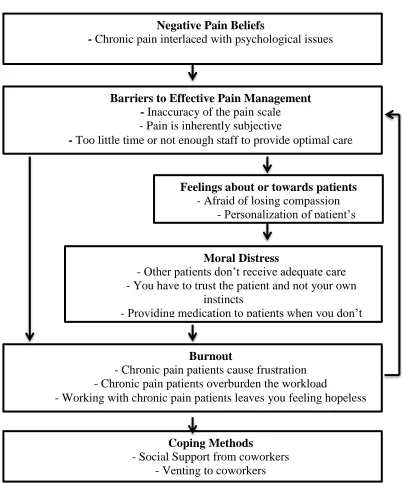
leaders, all four focus groups revealed similar progression in topic discussions (Figure 1). The
six themes will be discussed in line with the general flow of conversation. When applicable,
[image:28.612.87.490.194.677.2]emergent themes will be related to relevant theoretical models and the extant literature.
Figure 1 Outline of Focus Groups Conversation Flow. Negative Pain Beliefs
- Chronic pain interlaced with psychological issues
- Chronic pain patients don’t look like they’re in pain
Barriers to Effective Pain Management
- Inaccuracy of the pain scale
- Pain is inherently subjective
- Too little time or not enough staff to provide optimal care
Burnout
- Chronic pain patients cause frustration - Chronic pain patients overburden the workload
- Working with chronic pain patients leaves you feeling hopeless Moral Distress
- Other patients don’t receive adequate care - You have to trust the patient and not your own
instincts
- Providing medication to patients when you don’t believe they are in pain is distressing
Feelings about or towards patients - Afraid of losing compassion
- Personalization of patient’s experience
Coping Methods
4.1 Negative Pain Beliefs
Negative pain beliefs emerged as a prominent theme in all four focus groups. Specific to
the chronic pain population, nurses expressed frustration about the subjective nature of pain and
difficulties assessing pain which led to negative views their patients (i.e., finding them annoying,
not believing their pain reports, thinking they were drug-seeking). Interestingly, each focus
group began with one nurse describing the frustrations that arise when not believing a patient’s
pain report. For example, the respondent quoted below was the first to speak and the comment
was echoed in other focus groups:
“I’ll start. I think one of our biggest issues is, um, in nursing we learn that pain is
what the patient tells us it is, and unfortunately sometimes on our floor there’s a big
difference in what the patient is telling us their pain is and what their pain actually is. [FG
3]”
Similarly, in another focus group, a nurse began the discussion by saying:
“I think our biggest issue is with the chronic kids and their pain. Are they really
hurting that much? They feel like they’re a ten out of a ten on a pain scale, but just
looking at them, they don’t look like they’re in pain. They’re watching TV, they’re very
distractible, and as far as nursing goes, you’re supposed to rely on the patient and their
report of the pain to decide what to do for them, so it’s challenging. [FG 4]”
The negative pain belief theme included statements that referenced the interplay
of pain and psychological issues, the distrust of pain reports due to patient presentation, and the
beliefs that chronic pain patients are often seeking drugs and overly medicated. These comments
were frequent and align with the literature support for cognitive dissonance when managing a
autonomy in pain management decisions. This might serve the function of allowing the nurse to
distance herself from the patient. By adding the cognition that the patient is lying or
over-endorsing, she might reduce the dissonance experienced when potentially incorrectly medicating
a young patient. Several studies have identified misconceptions in nurses’ beliefs about pain
(Ferrell, McGuire, & Donovan, 1993; Layman, Horton & Davidhizar, 2006) but have not
examined the relations between these beliefs and moral distress or burnout.
Furthermore in line with the negative attribution theory, nurses often emphasized the
psychological aspects of pain along with their negative comments about patients. Given the lack
of understanding around the cause of chronic abdominal pain, chronic pain patients may evoke
less empathy and result in more depersonalization (Demerouti et al., 2000):
“I mean abdominal pain has so many potential causes and it can be so
psychological. This is a fabulous place to come if you happen to have psychologically
based abdominal pain because everyone’s really nice to you, there are fun things to do,
and it’s a break from anything in your life that sucks. So, no, your pain is never going to
go away.”
4.2 Pain Management Barriers
Often, discussions about negative pain beliefs led quickly to discussion of the barriers in
place to providing optimal care. Nurses in all four focus groups discussed barriers that they
perceived hindering their care. These included limitations of current pain assessments in
accurately measuring their patients’ pain, difficulties and issues of distrust with the parents of the
patients, and managing their time given the excessive time demands required by chronic pain
“Well, I’m frustrated. I get frustrated when I have a lot of other patients that really
need me. I feel like I’m almost wasting my time when I feel like they’re taking a lot of
my time and effort when I have to go give them pain medicine, when I know and see and
don’t think they’re actually in pain.”
Nurses discussed how parents can be barriers or impediments in their provision of
nursing services:
“I would say 90% of the time, parents are gonna believe whatever their child says.
So it becomes a very sticky situation from a nursing standpoint when the parent is feeling
that the pain their child is reporting is legitimate and from a nursing standpoint you kind
of have a strong suspicion that it’s not. I mean telling a parent that… they look at you
like, ‘I can’t believe you would ever suggest that my child is not reporting their pain
accurately.’ It’s a very sticky situation.”
Nurses also reported difficulties with the pain scale that contributed to the inability to
obtain accurate pain reports:
“And sometimes I wonder how true the pain scale is because I know at their age
that they’re supposed to be using the numeric scale versus the FLACC scale, but
sometimes I don’t really think that the kids really understand what the pain scale is.”
Another stated:
“Because this is the worst pain they’ve ever been in and to us it may look like a 3.
But if it’s the worst pain they’ve ever been in, then they’re like, ‘oh gosh, well I’m a 10
then.”
The barriers nurses described seemed to contribute both to their moral distress about the
pediatric nurses have continuously reported multiple barriers that interfere with their ability to
provide optimal pain management (Byrd, Gonsalez, & Parsons, 2009; Czarnecki et al., 2011;
Gimbler-Berglund, Ljusegren, & Enskar, 2008). However, no studies to date have examined how
these pain management barrier perceptions might relate to moral distress and burnout. Although
specific pain-related barriers have not been studied, general barriers to optimal care like
under-staffing, poor staff training, and monetary limitations (either in the form of hospital resources or
patient ability to pay for treatment) have been shown to contribute to both burnout and moral
distress in nurses (Burston, & Tuckett, 2012; Corley et al., 2005; Levert, Lucas, & Ortlepp,
2000).
4.3 Nurse Empathy/Compassion
Two divergent themes emerged in the area of nurse empathy and compassion. On the one
hand, nurses talked about their fears of losing or having already lost compassion for their
patients, and, on the other hand, nurses talked about actively trying to empathize and understand
their patients’ experience and behaviors.
Specifically, with discussions of loss of compassion, nurses often referenced
cognitive dissonance, although not using the exact term. For example:
“It’s frustrating and I know I also feel a lot of guilt because we got into this
business to make people feel better and we are sitting there judging and rolling our eyes.
It’s hard because that’s conflicting. We as nurses want to make them feel better, but then
in the back of my mind I’m like, ‘Oh, you’re so full of it.’ I don’t want to feel that way
about my patients, but sometimes it’s hard not to and so you try to get that. The
frustration and the guilty feeling of wanting to help but that feeling that you’re just
Nurses’ fears of losing compassion were often coupled with statements that this
loss of compassion increases as they spend more time on the unit:
“I was kind of blown away when I first started working here, realizing that these
types of issues with pain management with kids and with their parents. It just, you know,
it’s not something you think happens until you actually see it and so I think unfortunately
the more experience you have, usually the more negative experiences have with
children’s pain management and how their families handle it. And so you just kind of get
more and more set in your negative ways of seeing things.”
Contrary to this qualitative finding, studies of nurse burnout that have quantitatively
examined years of experience have either found no significant relation with burnout variables or
have found that more experienced workers have significantly lower burnout than less
experienced nurses (Breen & Sweeny, 2012; Laschinger, Wong, & Grau, 2013). Breen and
Sweeny (2012) hypothesized that more experienced nurses may have learned to better manage
their emotions during stressful situations than younger nurses, which would explain this finding.
Although many nurses spoke to losing compassion as they spent more time on the unit,
there were some nurse responses that evidenced an effort to empathize and understand their
patients’ behaviors:
“It’s disheartening and it’s sad. You just feel like with those kids you’re not
getting any headway with them. So it’s frustrating not only for us, but I think it’s also
frustrating to the patient. I think that’s why a lot times they act the way they do and they
lash out. It’s because they’re kind of feeling the same thing, but only a different
Nurses described being able to cope better with frustration when they were able to
empathize and take the perspective of their patients or their patients’ parents. Several studies
have found a negative relation between empathy and burnout (Astrom, Nilsson, Norberg, &
Winblad, 1990; Lee, Song, Cho, Lee, & Daly, 2002; Miller, Stiff, & Ellis, 1988).
“See I think because they’re chronically in pain, they get used to a certain amount
of pain at home all the time and they come here and they know that they can get
something for it that might actually help. So even when they’re playing and stuff like
that, there may be a degree of pain there that normally at home is not treated because they
don’t have the opportunity to do so.”
4.4 Moral Distress
Given the literature on moral distress (i.e., the feeling of distress that results from
knowing the right thing to do, but being prevented from doing so due to institutional constraints),
this concept was somewhat deductively examined as discussions of experiencing moral conflict
were led by research staff during the focus groups. That said, it is likely that this theme would
have emerged organically as nurses often discussed the distress surrounding medicating pain that
they were not sure even existed. This theme encompassed feelings around pain medication (both
over-medicating and incorrectly treating), time burdens that affected their care of other patients,
and the distress surrounding ignoring one’s own nursing instincts.
Nurses often discussed the distress over basing patient medication decisions on patient
pain reports and expanded on both sides of the issue: when they believe patients are
over-reporting and when they believe they are underover-reporting:
“I think that’s almost more taxing on our emotions. Like we mostly see where
and tired of it and feeling like you’re drugging someone you shouldn’t. But the other side
of it, that’s emotionally difficult to sit and see your patient like that.”
Discussions about moral distress often resulted in commenting on the lack of autonomy
nurses feel, specifically at times when their instincts do not align with patient reports and
hospital mandates:
“And I feel guilty for like a weird reason, by not being upfront and honest with
the family sometimes. ‘This is what I think is going on,’ and instead just kind of going
through the motions of what I’m supposed to do. ‘Oh, your pain is a 9 out of 10. Okay,
let me go get you the morphine.’ I’m never addressing the issues like ‘Hey mom, I think
your kid is not expressing their pain in the correct way.’ It’s sad to say it, but that takes so
much time and effort and risk to be able to do that and have those conversations that are
probably really needed and instead I feel guilty cause I’m just like, ‘Well, what can I do
about it?’ So I just go about my daily business and give the kid the pain meds while in the
back of my mind I’m rolling my eyes and thinking, ‘This is not, this is not the heart of the
problem.’”
Moral distress has been examined in various nursing populations (e.g., Austin et al.,
2008; Elpern, Covert, & Kleinpell, 2005), but to our knowledge, there has not been a study
examining moral distress in nurses who specifically work with pediatric pain patients. However,
in the general nursing moral distress literature, moral distress has been identified as a significant
contributor to nursing turnover, burnout, and exit from the nursing profession (Aiken et al., 2002;
Corley, 1995; Sundin-Huard & Fahy, 1999). This literature has mostly been conducted with
nurses who work with adult patients (e.g., Elpern et al., 2005; Hamric & Blackhall, 2007;
with cancer, intensive care, or neonatal populations (e.g., Austin et al., 2003; Caveliere, Daly,
Dowling, & Montgomery, 2010; Sabo, 2008).
4.5 Burnout
As evidenced above, feelings of burnout were often interlaced through all of the themes
and these feelings progressively strengthened as discussion continued during the focus groups.
The burnout theme included expressions of frustration, overburden of their workload, and the
general hopelessness of dealing with a chronic condition. Many nurses referenced the cyclical
nature of chronic pain and the lack of improvement they see in their patients:
“I think people’s frustration is too, you go home that night and you come back
and it’s just the same cycle over and over so we feel like we’re not really helping the
patient. We’re not doing what’s best for them. There’s no fix. It’s just this every time
they’re here and everyday we’re just doing the same things.”
These issues that lead to their frustration could relate to the self-efficacy theory (Stanley
& Pollard, 2013). Although nurses might be conducting their job correctly, they may not receive
the same reinforcement in feelings of self-efficacy when there is no cure and specifically when
they actually fear that they are contributing to the problem:
“In a lot of these kids you don’t see a difference. Actually they get worse. They
become more depressed, withdrawn, which stems them getting more and more pain
medicine because they’re combatting that along with their chronic pain. I don’t know if
4.6 Coping Methods
After extended discussions of contributors to their burnout experiences, nurses were
encouraged to discuss the coping methods they utilize to combat these negative feelings. Nurses
in every focus group strongly emphasized the social support that they receive on the unit:
“We watch out for each other and you don’t even have to ask for help.
Sometimes they can just see you and they pick up on it. Voicing our concerns and sharing
with each other and supporting each other is a very common thing... I think the main
reason, with everything else aside, I think the only thing that really keeps a lot us on our
floor is the camaraderie between our group.”
Several studies of nurse burnout have found that high levels of social support are
associated with low levels of burnout (Jenkins & Elliott, 2004; Kilfedder et al., 2001; Sullivan,
1993). Although all nurses brought this up as a positive coping method, there was a distinction
between those that discussed receiving actual support and those that just discussed being able to
complain or vent to their coworkers:
“The frustration, the weariness of the patients. Sometimes the patients are just so
taxing, the nurses have to vent. They have to let it out, so we vent with each other, which
is okay as long as we’re doing it in private. Not in front of patients, but it does affect
everyone.”
5 STUDY TWO INTRODUCTION
The themes identified in study one were evaluated in light of the applied
theoretical models and the extant literature to form a model of nurse burnout with specified
additional moderators were included upon review of the extant literature: self-efficacy and views
[image:38.612.106.570.128.417.2]of hospital environment.
Figure 2 The Proposed Pediatric Chronic Pain Nurse Burnout Model
Although Bandura’s theory of self-efficacy was expected to be applicable to this
population, self-efficacy did not arise as a theme from the preliminary analyses of the focus
group data beyond discussions of the hopelessness of patient’s prognoses. This may not be
surprising because talking about one’s own worth and abilities in a group of peers might be
viewed as bragging and thus be discouraged. In addition, the idea that self-efficacy decreases
burnout has been found in multiple studies (Van Dierendonck, Schaufeli, & Sixma, 1994;
VanYperen, 1998). Given the strong support for the role of self-efficacy in examining burnout, it
was included as a potential moderator of the relations between the suggested predictors and
self-efficacy beliefs and burnout and for self-self-efficacy to moderate the relations between the suggested
predictors and burnout.
Hospital environment also did not arise as a theme from the analysis of the focus
group data. Nurses spoke about environmental barriers that were specific to their patients’ pain
experiences, but did not raise issues specific to hospital management. While it is possible that
nurses are completely satisfied with the hospital environment, it is also possible that participants
did not feel comfortable voicing negative opinions about the hospital environment (e.g.,
management, staffing, organizational support) during a group setting in the hospital. In the
nursing burnout literature, hospital environment has been consistently identified as a major
contributor to increased burnout in nursing staff (Bogaert, Clarke, Willems & Mondelaers, 2012;
Bowers, Allan, Simpson, Jones, & Whittington, 2009; Kilfedder et al., 2001). In fact, a study
conducted by Kanai-Pak, Aiken, Sloane, and Poghosyan (2008) examined predictors of burnout
in 5,956 staff nurses in Japan and found that nurses in poorly staffed hospitals were 50% more
likely to exhibit burnout than nurses in better-staffed hospitals. Similarly, a study examining
favorable practice environments and burnout in psychiatric nurses found that higher ratings of
manager skill, leadership ability, and nurse-physician relations were significantly related to
decreased emotional exhaustion and depersonalization on measures of burnout (Hanrahan,
Aiken, McClaine, & Hanlon, 2010). Similar results are expected to be found with more negative
ratings of practice environment to be associated with higher burnout. Conversely, it is possible
that work environment did not appear as a theme in the qualitative focus groups because nurses
on this unit do not believe that their practice environment is an issue. If this is a case, a good
practice environment may be protecting against the predictors in the model from leading to
Additionally, intent to leave was included as a model outcome as job turnover has
been an identified issue on the unit. Not surprisingly, nurses did not discuss intention to leave
their jobs in the focus groups sessions, but a number of studies have shown that job turnover is
significantly higher among nurses experiencing burnout (Hasselhorn, Tackenberg, & Muller,
2003; Larrabee et al., 2003). If this same association is found, specific predictors and moderators
in the model can be examined in hopes of better predicting the likelihood of one leaving his/her
current job.
Prior to the administration of the quantitative battery, the research team met with
a select group of representatives from the nurse unit (nurse manager and charge nurses) to
discuss the results of the qualitative analysis. Miles et al. (2014) discusses testing the internal
validity, credibility, and authenticity of qualitative results through discussion with the people
being studied. At this stage of the study, the nurse staff consistently commented that the findings
from the analysis did allow the reader to vicariously live the nurses’ experience and accurately
depicted the views of the nurses on the unit. Given this validation, the research team moved
forward in attempt to further test validity of the findings, by triangulating the data with
quantitative data.
5.1 Primary Aims for Study Two
The purpose of the current study was to quantitatively examine the applicability of the
proposed model (Figure 2).Specifically, this study aimed to assess the unique contributions of
four identified predictors (time on unit, perceived pain management barriers, pain beliefs, and
moral distress) on burnout in nurses who work with pediatric patients with chronic abdominal
and/or hospital environment moderate the relations between each of the four predictors and
burnout.
Due to limitations of sample size (all inpatient pediatric GI nurses in Atlanta were
eligible for participation), and the number of different predictors and moderators included in the
model, advanced statistical techniques (e.g., structural equation modeling) were not appropriate.
Thus, correlational analyses with all study variables were conducted to examine whether the
predictive variables (proposed predictors and moderators) are related to the burnout outcome
variables (i.e., emotional exhaustion, depersonalization, and personal accomplishment) in the
expected directions (Figure 3). Given the qualitative findings and the review of the literature
outlined above, it hypothesized that time on unit, moral distress, perceived pain management
barriers, negative pain beliefs, and negative views of the hospital environment would be
positively correlated with emotional exhaustion and depersonalization and negatively correlated
30
Figure 3 Expected Directions of Bivariate Correlational Analyses Between Proposed Predictors, Moderators, and Model Outcomes
Furthermore, it was hypothesized that social support, empathy, and self-efficacy would
be negatively correlated with emotional exhaustion and depersonalization and positively
correlated with personal accomplishment. Subsequently, four predicted moderation relationships
were analyzed. Specifically, empathy and the hospital environment were examined as potential
moderators of the perceived pain management – emotional exhaustion relation (Figure 4). They
were also examined as potential moderators of the negative pain beliefs – emotional exhaustion
relation (Figure 5). Emotional exhaustion was chosen as the primary outcome variable as recent
literature has suggested that it provides the most consistent relationship within the burnout
nomological network (Halbesleben & Bowler, 2007).
Moral Distress Thermometer
Perceived Pain Management Barriers
Negative Pain Beliefs
Coworker Social Support
Empathy
Self-Efficacy
Negative Views of the Hospital Environment
Depersonalization Time on Unit
Moral Distress Scale
Moral Distress Thermometer
Perceived Pain Management Barriers
Negative Pain Beliefs
Coworker Social Support
Empathy
Self-Efficacy
Negative Views of the Hospital Environment
Personal Accomplishment Time on Unit
Moral Distress Scale
Moral Distress Thermometer
Perceived Pain Management Barriers
Negative Pain Beliefs
Coworker Social Support
Empathy
Self-Efficacy
Figure 4 Hypothesized moderations between barriers and emotional exhaustion
[image:43.612.179.468.383.625.2]It was expected that for those nurses who report increased empathy, there would not be a
significant relation between perceived pain barriers and emotional exhaustion. However, it was
hypothesized that perceived pain barriers would predict emotional exhaustion if there is
decreased empathy. Similarly, it was hypothesized that negative views of the hospital
environment would accentuate the positive relation between perceived pain management barriers
and emotional exhaustion whereas positive reports of the hospital environment would buffer pain
management barriers from impacting emotional exhaustion. It was expected that these same
relationships would be found in the following two moderation analyses, where negative pain
beliefs will be exchanged for perceived pain barriers.
6 STUDY TWO METHODS
6.1 Participants
Given logistical limitations on enrollment, the power analysis assumed that this study
would only have enough power to examine moderation effects individually with proposed
predictors and moderators. Thus, a power analysis (G-Power; Erdfelder, Faul, & Buchner, 1996)
was conducted to determine the sample that would be needed to detect a moderation effect. A
conservative medium effect size (f2) of .20 was chosen based on a prior effect of .19 found in a
prior study linking current stress exposure to nurse burnout, moderated by group cohesion (i.e.,
coworker social support; Li, Early, Mahrer, Klaristenfeld, & Gold, 2013). It was determined that
52 participants would provide adequate power (.80) to test this hypothesized effect. All nurses on
both GI units in CHOA hospital network were approached for study participation. Forty-one
nurses were enrolled in the study, thus the moderation analyses were underpowered. Results
from this study represent population parameters, as all eligible GI CHOA nurses enrolled in the
Participants included 41 nurses working at the CHOA hospitals. Twenty-seven nurses
were recruited from the CHOA Gastrointestinal unit at Scottish Rite Children’s Hospital and
fourteen nurses from Egleston Children’s Hospital. All nurses in each unit were eligible for
participation.
A waiver of documentation of consent was approved through the CHOA IRB as sensitive
information about job satisfaction was collected and a signature on the consent form would
identify participating nurses. An IRB approved cover letter (Appendix B) was attached to copies
of the quantitative battery that were administered at regularly scheduled staff meetings and
handed out on the unit. This cover letter outlines the goals of the study, a brief description of
questionnaires, issues of confidentiality, the risks and benefits of participation, and the right to
withdraw.
6.2 Procedures
The questionnaire battery and cover letter were administered at staff meetings for each
abdominal pain unit at Scottish Rite and Egleston hospitals or handed out on the unit to nurses
who were not present at the meetings. A research coordinator was present to assist in the
distribution and collection of questionnaire packets. In order to assist those who have difficulty
in following and understanding questions in assessment measures, the research coordinator was
trained on how to read and administer questionnaires in a way that was objective so as not to
influence the way nurses answer the questions. There was no monetary compensation for
6.3 Measures
The development of the questionnaire battery was a result of the thematic analyses and
subsequent literature review. Literature reviews were conducted to determine the best measures
[image:46.612.108.563.183.496.2]to quantitatively assess identified constructs in the proposed model (Figure 6).
Figure 6 The Proposed Pediatric Chronic Pain Nurse Burnout Model with Measures. Note. MDS: Moral Distress Scale; MDT: Moral Distress Thermometer; MSPSS:
Multidimensional Scale of Perceived Social Support; NWI-PES: Nursing Work Index of Practice Environment Scale; MBI: Maslach Burnout Inventory
6.3.1 Background Information (Appendix C)
Demographic data was collected using a demographic measure to assess age, gender,
ethnicity, race, country of origin, income, type of education, marital status, parental status, years