© 2018, IRJET | Impact Factor value: 6.171 | ISO 9001:2008 Certified Journal | Page 1185
Case description - a man lying on a road who has been run over
Ján Mandelík
11
PhDr., Department of Transport Safety, The University of Security Management in Kosice , Kosice, Slovak Republic
---***---Abstract -
The article concerns the traffic accident thatoccurred when a vehicle ran over a man lying in an illuminated area of a petrol station at night. It briefly describes the situation, environment and circumstances of the case. Further, the procedures and methodology a technical expert applied to determine the driver´s movement and consequently the movement of a vehicle and the activities of the driver at the start and while driving a car are portrayed. An assessment of the driver´s vision regarding the circumstances and the characteristics of a human eye is made. In addition, the characteristics of a human eye and eyesight are presented and the crypsis is evaluated as a phenomenon occurring in the identified circumstance, to which illustrative examples are presented. In the conclusion, the outcomes of the expert investigation and their explanation are stated.
Key Words
:
Vehicle, lying person, run over, lighting,vision, visual perception, human sight characteristics, crypsis
1. INTRODUCTION
Traffic accidents between a vehicle and a human being as a road user also include accidents involving running over a lying person. The most common occurrence is when a person is lying on a road at night and is run over by a vehicle. Usually, the only source of light are car headlights, and the speed of a car corresponds to the movement in a rural area. In this case, a technical expert can assess and evaluate the situation using standard methods. The described case cannot be classified as such. The accident happened at a petrol station at night; the place was illuminated, a 50-year old man was lying on the road,in the direction of travel of the Toyota Carina, which was moving
at a low speed. At the time of an accident, only the Toyota Carina and Skoda Fabia were at the petrol station. The Skoda Fabia was standing at the next fuel dispenser with its engine running. There was a witness sitting inside the Skoda Fabia. A man was run over and hit only by the front part of a vehicle since the driver stopped his car. The driver of the Toyota Carina was aware of the fact he had run over a lying person, however, he insisted he had not seen him, while before the moment the event occurred, walking out of the building he had passed by the place where the man had been lying. The witness described the initial position of a lying man saying the man had been lying still, i.e. motionless. The man who had been run over, did not know to express himself since he was under the influence of alcohol.
Even though the driver´s fault seemed to be undisputable, a technical expert was called upon. This article deals with the procedures and methods for analysing the course of events and their complex technical assessment and it can be assumed that it will be of benefit to technical experts, police departments and courts in their assessment of similar events because it is a highly complex and serious issue.
2. Documents submitted
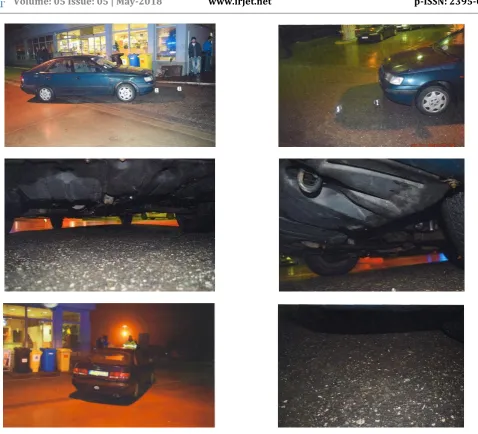
© 2018, IRJET | Impact Factor value: 6.171 | ISO 9001:2008 Certified Journal | Page 1186 Figure 1: Photographic documentation- the place where the man was run over and the vehicle
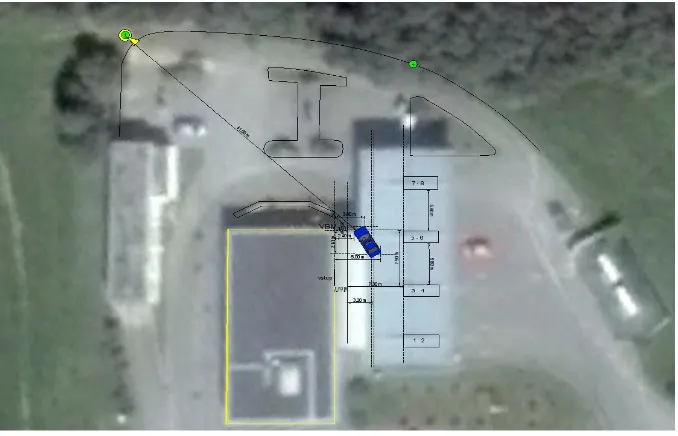
After that, additional inspection of the place the event occurred in was conducted (Fig. 2), the facts were established stating the source of light was installed in the opposite direction to the Toyota Carina travel at the distance of 60.1m, which at the time of the event illuminated the area. See Fig. 3.
[image:2.595.308.560.526.668.2]Figure 2: Overall situation at the petrol station
Figure 3: The position of a light source and the direction of illumination
2. Analysis of driver´s movement when walking
from the building and subsequent movement of a
vehicle
[image:2.595.36.288.611.740.2]© 2018, IRJET | Impact Factor value: 6.171 | ISO 9001:2008 Certified Journal | Page 1187 Figure 4: The overall situation at a petrol station
© 2018, IRJET | Impact Factor value: 6.171 | ISO 9001:2008 Certified Journal | Page 1188 Figure 5: The view of a car hitting a lying man and running him over.
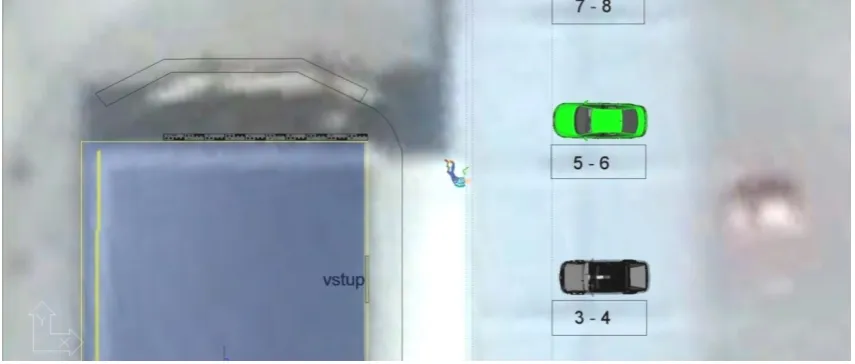
[image:4.595.74.524.280.412.2]After that, the Toyota Carina travel from the fuel dispenser to the place where the vehicle hit a lying man after 3.5 sec as shown in Fig.6 was calculated, considering that during the movement, the driver mainly concentrated on the Škoda Fábia that was standing at the fuel dispenser 5– 6 with its engine running, which should be given its way when driving.
Figure 6: The Toyota Carinaas moving to the place of accident and hitting a lying man
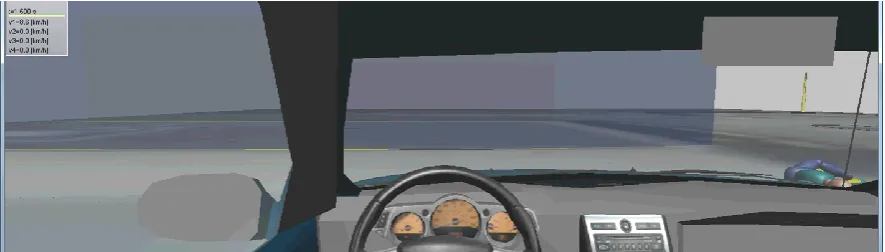
The driver´sviews of the place were as follows:
Figure 7: The driver´s view 3.5 sec prior hitting a lying man
[image:4.595.81.519.469.591.2] [image:4.595.77.520.622.748.2]© 2018, IRJET | Impact Factor value: 6.171 | ISO 9001:2008 Certified Journal | Page 1189 Figure 9: The driver´s view 1.2 sec prior hitting a lying man
3. Type of the light source illuminating the place
and visual field of a driver and its specification
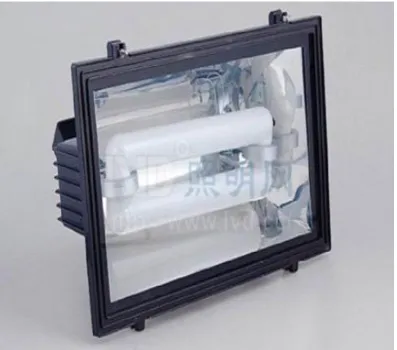
It has been observed that the source of light illustrated in Fig. 4 has a luminous flux 10 000 – 15 000 Lm (depending on the degree of pollution of reflexion surfaces).
This value can be compared with:
- the halogen headlamp, whose luminous flux is 1 000 Lm - the xenon headlamp whose luminous flux is 3 200to 3 500 Lm
It has been concluded that the luminous flux of the source was at least twice as high as the xenon headlamps, which at the distance 61.0 m had an impact on the driver´s visual perception while he was looking towards the light and this fact is an integral part of the course of accident.
Figure 10: Type of the source of light
[image:5.595.308.564.249.431.2]We could also determine that regarding the light source position, the man was lying in the driver´s field of vision as illustrated in Fig.5.
Figure 11: The position of the light source regarding the driver´ s field of vision
4. Visual perception of a driver
Vision is a dominant sense of a human being and visual perception the most important for driving a car, of course, with the support of other sensory inputs. It serves primarily for our orientation in space and provides information important for future decision making. The basic functions of a human eye include perception of brightness, details, contrasts, space and colours.
The complex process of visual perceptiongenerally includes the main features as follows:
-An eye orientates in its field of vision by micromovements
-Attention is drawn through the external stimulus from the surroundings (movement in particular)
-An eye receptor aims at and focuses on an interesting optical stimulus and based on detected optical parameters, prepares forreception
[image:5.595.63.262.473.648.2]© 2018, IRJET | Impact Factor value: 6.171 | ISO 9001:2008 Certified Journal | Page 1190 -In these junctions, the sensations are transformed to a
muscle contraction
-In this process, the central nervous system is constantly informed about the changed characteristics of the observed object and its surroundings, emits commands and continuously controls the adaptive state
Visual processing
Seeing (sight) does not mean visual processing since a human eye can register a lot of information, however, only a portion of it gets into the observer´s mind, primarily moving objects.
In immobile objects (which are not large or of distinctive shape, and which may not even be very contrasting and partially or completely blend with the backgroundat the time), they can be confused with such phenomena as: a light field of different intensity, a lit wet part of a road, a
also includes:
1) Blending into the background (background-matching), where the appearance corresponds with one or more types of backgrounds in terms of colour, brightness and patter.
2) Disruptive coloration, when by pattern matching false boundaries and contours are formed, and detection or recognition of an object/ its part, a real shape and contour is prevented.
Crypsis examples
Camouflaged and unmasked person in Fig.6
[image:6.595.73.534.467.655.2]Motionless person blended with environment in Fig.7
© 2018, IRJET | Impact Factor value: 6.171 | ISO 9001:2008 Certified Journal | Page 1191 Figure 12: Motionless camouflaged person
In a given case, the conditions for a cryptic effect were favourable, as the area of a petrol station was illuminated by uniform yellow light which „coloured“ the surface of all objects and surrounding areasto look yellow. This is proved by the fact that the driver when walking from the
building to his car did not see a motionless lying figure at the distance of 5.0 m ( it can be assumed that he was looking at his car as is the case with drivers).
Figure 14: The direction of a driver walking from the building to a vehicle
5. Conclusion
By the presented method, i. e. using the PC Crash calculation program and after that by assessing the lighting regarding thehuman beings´ visual perception in terms of the driver we have found out that:
Considering the light and other conditions at the scene, it could not be ruled out that:
- The driver of the Toyota Carina was not able to
recognise a man lying on the road while walking from the building having regard to his immobility, the nature of lighting at the petrol station, and walking direction regarding his car position
- The driver of the Toyota Carina could not see a
man lying on the road when he was driving his vehicle having regard to his immobility, the nature of lighting at the petrol station, the Škoda Fábia standing with its engine running, which he had to concentrate on, and the source of light illuminating his field of vision thus shining directly into his eyes.
[image:7.595.85.513.349.531.2]© 2018, IRJET | Impact Factor value: 6.171 | ISO 9001:2008 Certified Journal | Page 1192
References
1. PC Crash program – user manual
2. Ondris R.: Compare the results of experimental surveillance measurements with available software DP USI Brno