S T U D Y P R O T O C O L
Open Access
A randomised controlled trial assessing
the severity and duration of depressive
symptoms associated with a clinically
significant response to sertraline versus
placebo, in people presenting to primary
care with depression (PANDA trial): study
protocol for a randomised controlled trial
George Salaminios
1*, Larisa Duffy
1, Anthony Ades
2, Ricardo Araya
3, Katherine S. Button
4, Rachel Churchill
5,
Tim Croudace
6, Catherine Derrick
2, Padraig Dixon
2, Christopher Dowrick
7, Simon Gilbody
8, William Hollingworth
2,
Vivien Jones
2, Tony Kendrick
9, David Kessler
2, Daphne Kounali
2, Paul Lanham
1, Alice Malpass
2, Tim J. Peters
2,
Derek Riozzie
7, Jude Robinson
10, Debbie Sharp
2, Laura Thomas
2, Nicky J. Welton
2, Nicola Wiles
2and Glyn Lewis
1Abstract
Background:Depressive symptoms are usually managed within primary care and antidepressant medication
constitutes the first-line treatment. It remains unclear at present which people are more likely to benefit from antidepressant medication. This paper describes the protocol for a randomised controlled trial (PANDA) to investigate the severity and duration of depressive symptoms that are associated with a clinically significant response to sertraline compared to placebo, in people presenting to primary care with depression.
(Continued on next page)
* Correspondence:[email protected]
1Division of Psychiatry, University College London, 6th Floor Maple House, 149 Tottenham Court Road, London W1T 7NF, UK
Full list of author information is available at the end of the article
(Continued from previous page)
Methods/design:PANDA is a randomised, double blind, placebo controlled trial in which participants are
individually randomised to sertraline or placebo. Eligible participants are those who are between the ages of 18 to 74; have presented to primary care with depression or low mood during the past 2 years; have not received antidepressant or anti-anxiety medication in the 8 weeks prior to enrolment in the trial and there is clinical equipoise about the benefits of selective serotonin reuptake inhibitor (SSRI) medication. Participants who consent to participate in the trial are randomised to receive either sertraline or matching placebo, starting at 50 mg daily for 1 week, increasing to 100 mg daily for up to 11 weeks (with the option of increasing to 150 mg if required). Participants, general practitioners (GPs) and the research team will be blind to treatment allocation. The primary outcome will be depressive symptoms measured by the Patient Health Questionnaire-9 (PHQ-9) at 6 weeks post randomisation, measured as a continuous outcome. Secondary outcomes include depressive symptoms measured with the PHQ-9 at 2 and 12 weeks as a continuous outcome and at 2, 6 and 12 weeks as a binary outcome; follow-up scores on depressive symptoms measured with the Beck Depression Inventory-II, anxiety symptoms measured by the Generalized Anxiety Disorder-7 and quality of life measured with the Euroqol-5D-5L and Short Form-12; emotional processing task scores measured at baseline, 2 and 6 weeks; and costs associated with healthcare use, time off work and personal costs.
Discussion: The PANDA trial uses a simple self-administered measure to establish the severity and duration of
depressive symptoms associated with a clinically significant response to sertraline. The evidence from the trial will inform primary care prescribing practice by identifying which patients are more likely to benefit from antidepressants.
Trial registration: Controlled Trials ISRCTN Registry, ISRCTN84544741. Registered on 20 March 2014. EudraCT
Number: 2013-003440-22; Protocol Number: 13/0413 (version 6.1).
Keywords: Depression, Primary care, Antidepressants, Sertraline, Selective Serotonin reuptake inhibitors
Background
Depression is a common condition that affects be-tween 9% and 12% of the population at any one time [1] and is linked to higher rates of functional disabil-ity compared with most chronic medical illnesses [2]. Recent estimates suggest that depression is the lead-ing cause of disability in high and middle-income countries [3, 4]. Depressive symptoms are usually managed within primary care and antidepressant medication is often the first line of treatment [5]. Overall, around 80% of people presenting with de-pression in UK general practice receive antidepres-sants [5, 6].
A dramatic rise of antidepressant medication pre-scription has been observed in recent years. There was an increase of 7.2% between 2013 and 2014 [7], and in 2014 over 57 million antidepressant prescriptions were issued in England, at a cost of £265 million [8]. Similar increases in antidepressant consumption have been ob-served in other high-income countries. [9]. Studies in UK primary care linked databases have found that the rate of new prescribing over this period remained stable and the increase in numbers of prescriptions arose be-cause of an increase in the average duration of treat-ment with selective serotonin re-uptake inhibitors (SSRIs) [10, 11]. Given that individuals who receive antidepressant medication are likely to do so for long
periods, there is a need to identify those individuals who are more likely to derive a clinical benefit from antidepressants.
One hypothesis to guide prescription is that the re-sponse to antidepressants (compared to placebo) is greater in those with more severe illness. Results from systematic reviews of aggregate data and from individual patient data have provided inconsistent support for this
hypothesis [12–15]. One possible reason is that some
studies had a narrow range of baseline severity. This will reduce the power to detect an interaction between base-line severity and response even in large databases. A dif-ferent approach towards this question has been to
restrict trials to people with “minor” depression not
meeting the usual diagnostic criteria. A systematic re-view of studies of“minor”depression found no evidence for a beneficial treatment effect of antidepressants [16] consistent with the idea that there must be a lower threshold below which antidepressants are not effective. Given this conflicting evidence, we wish to test the hy-pothesis that the baseline severity of depression is likely to be a factor that can be used to predict benefit from antidepressant treatment.
meet the criteria for major depression. As a result the National Institute for Clinical Excellence (NICE) guidelines recommend SSRIs for“persistent subthreshold depressive symptoms”but give no definition of persistence [18].
Although general practitioners (GPs) have consider-able expertise in identifying depression [19, 20], it is well-known that the measurement of depression is no-toriously difficult using clinical assessment. This has led to the development of a whole range of standardised scales of varying length. Short, self-administered, ques-tionnaires such as the PHQ-9 [21] are not sufficiently detailed to assess severity and duration accurately. On the other hand, semi-structured standardized interviews designed to assess depressive symptoms and diagnostic criteria are lengthy and often require the interviewer to use expert psychiatric judgments, a task that is not feas-ible in primary care settings [22]. If we are to provide guidance to GPs about the severity and duration of de-pression that may respond to treatment with antidepres-sants then we require a standardised assessment that is sufficiently detailed but could be used in primary care.
The final area we want to investigate is neuropsycho-logical markers of antidepressant action. Harmer [23] and others have found consistently that antidepressants (both serotonin and noradrenaline drugs) acutely affect performance on emotion processing tasks, even though there is no subjective awareness of any change or im-provement in mood. For example, memory of positive words is increased within a few days of taking antide-pressants in healthy volunteers and in those with depression [24, 25]. The change in emotion-processing following antidepressant use is the reverse of that seen in depression and occurs before the onset of any clinical change in symptoms. Their theory suggests that the delay between the emotion-processing change and de-pressive symptoms depends upon the need to experience new events after the change of emotion processing has occurred. These markers of antidepressant response could be a factor that might be useful in predicting likely response to antidepressants.
Our overall aim is to improve the guidance for GPs and patients on who will benefit from treatment with antidepressants. We therefore propose to carry out a randomised controlled trial (RCT) to investigate the se-verity and duration of depressive symptoms that are
as-sociated with a clinically important response to
sertraline in people presenting to primary care with pression. We plan to assess severity and duration of de-pression using a standardised measure (the Revised Clinical Interview Schedule (CISR) [22]) that can be self-administered on a computer and completed by the pa-tient outside the consultation with the physician, so could potentially be used to guide assessment and pre-scription in primary care [26, 27]. Additionally, we want
to investigate the effects of antidepressants on measures of emotion processing that might mediate the thera-peutic effects and could also be a potential measure for predicting antidepressant response.
Our specific aims are:
1. To investigate the severity and duration of the depressive symptoms that are associated with a clinically important response to sertraline (compared to placebo) in people with depression 2. To investigate quality of life and the economic costs
associated with response to treatment with sertraline 3. To test the hypothesis that sertraline will lead to an
early change in emotion processing that will mediate any treatment effect on depressive symptoms
The long-term benefits of the trial will be in improving guidance/treatment recommendations for primary-care clinicians, thereby increasing the likelihood that a scription will lead to clinical benefit, while reducing pre-scriptions that are not needed. We will include adult patients presenting in primary care with depressive symptoms/low mood, who are not currently on antide-pressants (or in the previous 8 weeks) and the GP and/ or patient are unsure whether there will be significant clinical benefit from taking SSRI antidepressants.
Methods/design
Study design
PANDA is a randomised, double-blind, placebo-controlled study in which eligible participants are individually rando-mised to sertraline or placebo. The sertraline will be encap-sulated and matching placebo capsules will be produced in order to maintain the blind allocation during the study. Participants will be recruited from primary care practices across the UK in the areas surrounding our four trial sites: Bristol, London, Liverpool and York.
information and (2) reinforcement learning of reward and punishment (related to monetary rewards) that will be ad-ministered at baseline and then early on after 2 weeks, be-fore we expect to see any clinical response.
Sertraline is an SSRI that is licensed for the treatment of depression and has a well-established efficacy profile. A recent network meta-analysis suggested that, if any-thing, it was more efficacious and better tolerated than most of the other SSRIs [29]. As a result it is one of the recommended SSRIs to use as a first choice in the treat-ment of depression [18] and is very widely prescribed in primary and secondary care in the UK and elsewhere in the world.
We want to keep the inclusion criteria pragmatic and broad to reflect the current dilemma in clinical practice, so uncertainty of GP and/or patient about the possible benefits of antidepressants is the key entry criterion for the trial. We will not impose any additional criteria of severity and duration ourselves.
Inclusion and exclusion criteria Inclusion criteria
People will be eligible for inclusion if they are between 18 and 74 years (inclusive) of age; have presented to
primary care in the UK with depression at any point in the previous 2 years; and if there is clinical equipoise about the benefits of SSRI medication.
Exclusion criteria
People will be excluded if they have received antidepres-sant medication in the preceding 8 weeks; are unable to read, understand and/or complete questionnaires; suffer from other psychiatric disorders (i.e. psychosis, schizo-phrenia, bipolar disorder, mania, hypomania, dementia, eating disorder); suffer from major alcohol or substance abuse problems; are currently on contraindicated medi-cation (i.e. monoamine oxidase inhibitors within the pre-ceding 14 days or pimozide); suffer from poorly controlled epilepsy; have known allergies to sertraline, placebo or excipients; are concurrently enrolled in an-other investigational medicinal product (IMP) trial; are women who are currently pregnant or planning preg-nancy or lactating; have severe hepatic impairment; suffer from bleeding disorders such as haemophilia, Christmas disease or von Willebrand’s disease, or have past medical history of bleeding gastric or duodenal ul-cers or other significant bleeding disorders; or have had an episode of Torsade’s de Pointes.
[image:4.595.60.539.88.400.2]Recruitment of participants
Potential participants will be identified by GPs, who will invite patients at a consultation or perform a database search and mail out an invitation.
Method 1: in consultation
Given the patient’s permission for release of their contact details, the GP will directly refer potential participants by fax (or secure email) to the local trial centre. The re-searcher will contact the patient to confirm eligibility for the trial and arrange the baseline assessment visit.
Method 2: database search
GPs or practice administrative staff will carry out record searches to identify individuals for whom the GP has re-corded low mood or depression symptoms during previ-ous visits (within the last 2 years) and who are not currently on antidepressants. GPs will write to these in-dividuals so they can consider joining the study.
The mail-out procedure will involve an initial letter sent by the GP surgery to the identified patients, inviting them to participate in the trial, followed by a reminder invitation letter if there is no response, and a further telephone call to patients who have not responded either to the initial or reminder invitations. Patients will only be contacted by individuals employed either directly by the GP practice or employed by National Health Service (NHS) organisations.
Participant eligibility confirmation
Potential participants identified either at consultation or through a record search will receive a patient informa-tion sheet (PIS) that provides details of the study. If the patient agrees to be contacted by the research team, the GP will then complete and fax an eligibility form to the research team, confirming that the potential participant does not suffer from any psychiatric disorders or is on medication that would exclude them from the study. Po-tential participants will receive an additional phone call from a member of the research team to confirm eligibil-ity for the trial. Provided that they do not meet any of the exclusion criteria, patients will be invited to a base-line assessment with a researcher either at their own home, the general practice or University premises.
Baseline assessment
At the baseline meeting the researcher will explain the study in detail and obtain written informed consent to participate in the trial. Upon providing written consent, women of child-bearing age will carry out a pregnancy test. Participants will then undertake the following base-line assessments: a self-administered computerised clin-ical interview schedule (CISR) [22]; the PHQ-9 [21]; the Beck Depression Inventory-II (BDI-II) [30]; the Short
Form-12 (SF-12) [31], the EQ-5D-5L [32]; the Generalized
Anxiety Disorder-7 (GAD-7) [33]; and
emotional-processing tasks [24, 34].
Randomisation procedure and unblinding
Upon providing written consent and undertaking the baseline assessments, participants will be randomised to the trial by a member of the research team, and a letter will be sent to their GP to inform them of their patient’s enrolment.
Participants will be randomly assigned to one of the two treatments: (1) one × 50 mg encapsulated sertraline for 1 week followed by two × 50 mg encapsulated sertra-line for up to 11 weeks and then for a 2-week tapering period or (2) identical placebo regimen. If participants have not responded to treatment after the 6-week follow-up assessment, the medication can be increased to three × 50 mg encapsulated sertraline or identical pla-cebo in consultation with the Principal Investigator (PI).
Randomisation will be conducted by PRIMENT Clinical Trials Unit (CTU) using a remote computer-generated code (Sealed Envelope, https://sealedenvelo pe.com/). The randomisation will be stratified by severity and duration of depression and by research centre, with random block length. The pre-specified thresholds for stratification will be the CISR total severity score at baseline (0–11/12–19/20+) and depression duration (less than 2 years/2 years or more). The randomisation list will be held by Sealed Envelope. The random treatment allocation will then be sent to the central trial pharmacy (University Hospitals Bristol Pharmacy). Trial partici-pants, care providers and all members of the research team will be blinded to the trial treatment allocation. Trial medication will be sent by the trial pharmacy to the participant’s GP (or participant’s home in exceptional circumstances) following the baseline and 6-week visit and at 10 weeks (for those on the 150 mg dose).
Upon receipt of study medication, participants will be provided with a contact card so that treating clinicians who may be external to the study team can be unblinded to treatment allocation in case of a clinical emergency. If unblinding is required, a formal request by a physician will be made to the trial pharmacy (through the 24 hour contact number provided on the contact card) that has a
list of the participants’ treatment allocations. Study
opinion of the treating physician the code must be broken immediately, then this must be undertaken with-out further assessment. The treating physician will man-age the medical emergency as appropriate upon receipt of the treatment allocation.
The CI/PI or delegate will record any breaking of the code and reasons for doing so on the case report form (CRF)/data collection tool and in the site file. Code breaks will also be documented in the final study re-ports. The CI/investigating team will notify the trial Sponsor (University College London (UCL)) on a yearly basis through the monitoring process. Where possible, members of the research team should remain unblinded. When participants have ended the study and their out-come data have been entered into the database, they can request to be told their treatment allocation to placebo or active medication. This information will be provided to their GP by the central trial pharmacy, so the partici-pant will need to consult their GP and any further treat-ment can be discussed during that consultation. The trial team will remain blind to this information.
Treatment of participants
The IMP will be over-encapsulated sertraline and the matching placebo will be an identical capsule filled with an inert excipient. The placebo capsule will be identical to the encapsulated sertraline in dimensions and appear-ance, such that allocation concealment and blinding of the trial is maintained. Participants will be asked about adherence at all follow-up points and a pill count will be undertaken by a member of the research team at the 6-week and 12-6-week follow-up assessments. It will be re-quested that empty packaging and unused medicines are returned.
Follow-up assessments
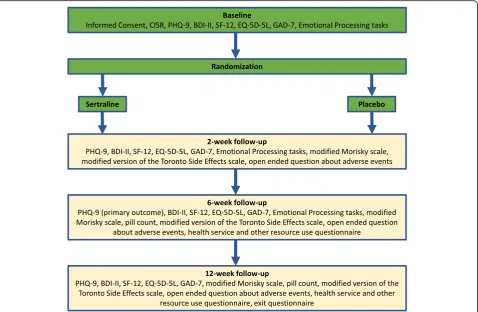
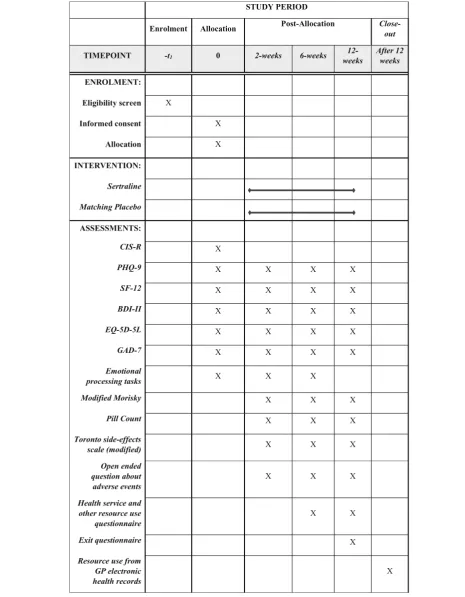
The research team will aim to conduct the follow-up as-sessments at 2, 6 and 12 weeks (see Table 1 for an over-view of the study process). Participants will continue to be invited to follow-up assessments unless they have withdrawn from the trial. Research follow-up assess-ments will take place either at the participant’s home, the general practice or University premises. The date of the assessments will be recorded and the analysis plan will include measures to investigate the timing of the follow-up appointments. Participants will continue to be followed up even if they have stopped taking the study medication.
The follow-up assessment schedule is as follows:
At 2 weeks: the PHQ-9, BDI-II, SF-12, EQ-5D-5L, GAD-7, emotional processing tasks, modified Morisky adherence measure [35], side effects of antidepressant medication based on a modified
version of the Toronto Side Effects scale as used in GENPOD [36]; open-ended question about adverse events and concomitant medication
At 6 weeks: the PHQ-9, BDI-II, SF-12, EQ-5D-5L, GAD-7, emotional processing tasks, modified Morisky adherence measure and pill count, side effects of antidepressant based on a modified version of the Toronto Side Effects scale as used in GENPOD, open-ended question about adverse events and concomitant medication, health service and other resource use
At 12 weeks: the PHQ-9, BDI-II, SF-12, EQ-5D-5L, GAD-7, modified Morisky adherence measure and pill count, side effects of antidepressant based on a modified version of the Toronto Side Effects scale as used in GENPOD, open-ended question about adverse events and concomitant medication, health service and other resource use
After 12 weeks: primary healthcare use data (prescribed medication, primary care visits) extracted from GP electronic health records covering the full period of participation in the trial
Data collection tools
CISR–revised clinical interview schedule
This is a self-administered, computerised assessment of psychiatric symptoms including depression, used at baseline only.
PHQ-9, BDI-II, SF-12, EQ-5D-5L and GAD-7
PHQ-9, BDI-II, SF-12, EQ-5D-5L and GAD-7 are self-administered written questionnaires.
Emotional processing tasks: memory for socially rewarding and socially critical information task [24]
Table 1Full schedule of questionnaires–table showing the questionnaires used in the PANDA study
Emotional processing tasks: reinforcement learning task [34]
This is assessed using a computerised task administered by a member of the research team. Each trial includes three events: the presentation of a fractal image, the presentation of a target and a probabilistic outcome. At the beginning of each trial, one of four possible fractal images is presented on a computer screen, which indi-cates whether the best choice in a subsequent target de-tection task is a go (pressing a key on the keyboard) or a no-go (withholding a response to the target). The fractal also indicates the valence of any outcome dependent on the participant’s behaviour (reward/no reward or punish-ment/no punishment). The meaning of fractal images (go to win, no-go to win, go to avoid punishment, no-go to avoid punishment) is randomised across participants, and participants have to learn these by trial and error. Participants are informed that the correct choice for each fractal image is either a go (button press) or no-go (withhold button press). Actions are required in re-sponse to a target circle that follows the fractal image. After a brief delay the outcome is presented (an upward arrow indicates a win, a downwards arrow indicates a loss and a horizontal bar indicates the absence of a win or a loss). On go-to-win trials, a button press is rewarded; on go-to-avoid-punishment trials, a button press avoids punishment; in no-go-to-win trials, with-holding a button press is rewarded and in no-go-to-avoid-losing trials, withholding a button press avoids punishment. The task consists of 240 trials in total (60 trials per condition). The participant can win between £1 and £10. These data can be analysed using computa-tional models [34].
Outcome measures Primary outcomes
1. Depressive symptoms measured using the PHQ-9 at 6 weeks as a continuous outcome
Secondary outcomes
1. Depressive symptoms with the PHQ-9 at 2 and 12 weeks
2. BDI-II as an alternative measure of depressive symptoms at all follow-up points
3. Anxiety symptoms measured using the GAD-7 at all follow-up points
4. Quality of life assessed using the EQ-5D-5L and SF-12 5. NHS costs associated with care, time off work and
additional care and personal costs
6. Emotional processing tasks scores at baseline and 2 and 6 weeks
Withdrawal from the trial
Participants may withdraw at any time but once dosing has occurred, every attempt should be made to continue assessments to ensure the safety of the individual con-cerned. Specific reasons for a participant withdrawing from the trial may be:
Voluntary discontinuation by the individual, who is at any time free to discontinue his/her participation in the study, without prejudice to further treatment
Risk to patients as judged by the investigator
Severe non-compliance with the protocol as judged by the local site PI
Incorrectly randomised individuals
Adverse events
Any person who withdraws will always be asked about the reason(s) for withdrawal and the presence of any ad-verse events. If possible, they will be seen and assessed by the local site primary investigator or delegate. Ad-verse events will be followed up and trial discontinuation will be documented in the appropriate CRF pages. If possible, participants who discontinue the study medica-tion before complemedica-tion should undergo the assessments and procedures scheduled for the follow-up visits. Once participants have stopped their trial medication, they may not resume trial treatment.
A patient may withdraw from the follow-up visits or they may withdraw their consent for any data collected to be used. Patients will be encouraged to allow data that have been collected before withdrawal to be used in the analyses. However, if consent to use data is also drawn, then these data will be discarded. Patients with-drawing from the study will revert to the care of their GP.
Trial medication
Packaging, labelling and dispensing
Medication packs will be labelled in accordance with ap-plicable regulations and the Medicines and Healthcare products Regulatory Agency (MHRA) approvals. Each medication pack will have a medicine ID number, ran-domly generated to ensure sertraline and placebo medi-cine packs are indistinguishable (e.g. avoid all placebo packs being assigned an odd number) and thus maintain allocation concealment. This random number will be generated by the CTU and provided to the manufacturer who will use it as a unique identifier for the IMP pack-ages and for the randomisation and code-break services.
oversee the packaging and posting of those packs. After
randomisation patient packs containing 6 weeks’supply
(90 capsules) of the trial medication will be posted by re-corded delivery to the participant’s GP surgery or, in ex-ceptional circumstances, their homes. After the 6-week
assessment has been completed a further 6 weeks’
medi-cation, including sufficient medication for the tapering period (90 capsules) will be posted by recorded delivery. All deliveries will be logged to ensure drug accountabil-ity. The trial medication will be shipped and stored in line with manufacturer’s stability data.
Full IMP accountability records will be maintained in the trial, and receipt, dispensing, distribution, return and destruction records will be maintained at the dispensing pharmacy. When the IMP arrives at the general practice it will be kept in a secure locked cabinet until collected by the participant. The receipt and collection of the IMP will be logged by the research team.
Concomitant medication
Sertraline should not be administered concomitantly with monoamine oxidase (MAO) inhibitors or within 2 weeks after discontinuation of MAO inhibitor therapy. Likewise at least 2 weeks should elapse before patients treated with sertraline are treated with MAO inhibitors. Participants in this study will not be treated with MAO inhibitors. Sertraline should not be administered con-comitantly with pimozide.
Co-administration with other serotonergic active substances (L-tryptophan, triptans, tramadol, linezolid,
lithium and St. John’s Wort – Hypericum perforatum
– preparations) may lead to an incidence of
serotonin-associated effects and participants will be advised not to take any of these medications for the duration of the trial.
Sertraline may increase the sedating properties of benzodiazepines and other sedatives (notably most anti-psychotics, antihistamine H1 antagonists, opioids). Par-ticipants will be advised that caution should be exercised when these medicinal products are prescribed together with sertraline and they should be alert to the possibility of over-sedation.
Sertraline may increase the central nervous system (CNS) depressant effect of alcohol. Participants will therefore be advised to be cautious in their intake of al-cohol while taking sertraline.
Co-administration of sertraline 200 mg daily with war-farin can result in a small increase in prothrombin time. If the participant is taking warfarin the GP will be asked to monitor prothrombin time when sertraline therapy is ini-tiated or stopped and provide the results to the local PI.
The risk of bleeding may be increased when medicines acting on platelet function (e.g. nonsteroidal anti-inflammatory drugs (NSAIDs), acetylsalicylic acid and
ticlopidine) or other medicines that might increase bleeding risk are concomitantly administered with SSRIs, including sertraline. The PI will decide whether the par-ticipant should be included in the study if they are also taking any NSAIDs or other medicines that might in-crease bleeding risk.
Participants will be allowed to take hypnotic medica-tion along with the trial medicamedica-tion. The GP will con-firm other medication that the participant is taking in order to assess contraindications to sertraline before the baseline assessment. Participants will be asked about any concomitant medication at all follow-up points.
Adverse events (AEs)
All AEs (untoward medical occurrences in a patient or clinical trial participant administered a medicinal product, which do not necessarily have a causal relationship with this treatment) will be recorded by a structured assess-ment in the follow-up assessassess-ments at 2, 6 and 12 weeks. If a participant consults the GP with a known AE it will be recorded in the medical notes only but not communicated to the PI unless specifically requested. This will include any AEs that occur during the tapering period after the 12-week assessment. As this trial is a trial of a licensed medication with a well-established safety profile that is used within its licensed indication, AEs will not be re-corded in the CRF apart from those AEs of special interest included in the follow-up assessments.
Patients will be asked about serious adverse events (SAEs) at each visit using open-ended questions. All SAEs will be recorded in the CRF and the Sponsor’s SAE log. The SAE log will be reportable to the Sponsor once a year. The PI or delegate at trial sites will inform the CI of any SAEs. The CI or an appropriate member of staff will complete the SAE form and will send it to the Sponsor via email within 24 hours of becoming aware of the event. The CI/PI may contact the patient’s GP, depend-ing upon the nature of the SAE, to obtain more informa-tion on the adverse event. All suspected unexpected serious adverse reactions (SUSARs) must be notified to the Sponsor within 24 hours. The Sponsor will notify the main Research Ethics Committee (REC) and the MHRA of all SUSARs. SUSARs that are fatal or life-threatening must be notified to the MHRA and REC within 7 days after the Sponsor has learned of them. Other SUSARs must be reported to the REC and MHRA within 15 days after the Sponsor has learned of them.
Statistical analysis
screened, eligible, randomised and followed up at each time point.
Our primary outcome will be the PHQ-9 at 6 weeks. We will use a mixed-effects generalised linear modelling framework as it is appropriate for repeated measures data [38, 39]. The analyses will include ad-justments for baseline PHQ-9 score and the stratifica-tion variables (severity in three categories, durastratifica-tion in two categories and centre). As we want to estimate the relationship between the CISR depression score and treatment, we will include this in the model (be-ing aware of the possibility of collinearity) and will also use robust multivariate techniques.
We will carry out further analyses to assess the sen-sitivity of any results to the modelling assumptions and the covariance structure. This will be relevant to both the primary and secondary analyses. For the pri-mary analysis we will carry out the analysis without the CISR depression severity measure in order to examine the robustness of the findings. We will examine the extent of individual heterogeneity in the longitudinal outcomes, if any. We will also examine interactions between baseline severity and treatment outcome within the model.
Other approaches to investigate include modelling the data with a linear regression model with different link functions in which log PHQ-9 is used for the outcome and baseline, and using a linear regression model with and without an interaction term. We will also carry out a sensitivity analysis by adjusting for any variables that are not balanced at baseline (themselves ascertained through descriptive statistics only). The duration of the depressive episode is mea-sured before randomisation using the CISR assess-ment at baseline. The CISR includes a question about duration after each symptom section. After the de-pressive symptoms section the question asks about the following categories: less than 2 weeks, between 2 weeks and 6 months, between 6 months and 1 year, between 1 and 2 years, between 2 and 5 years, be-tween 5 and 10 years and more than 10 years. Dur-ation will be investigated as an additional parameter in the model used for the primary analysis.
Missing data: we will carry out sensitivity analyses to investigate the possible impact of missing data. The two main approaches will be to adjust for baseline variables associated with missing outcome data and also to use multiple imputation. We will make strenuous efforts to reduce the amount of missing data and in our power cal-culations have estimated that there will be up to 10% missing data at 6 weeks. In a similar previous trial (GENPOD) we obtained 91% follow up at 6 weeks [36].
Secondary analyses: the following secondary analyses will be conducted adjusting for the baseline measure of
the outcome variable, stratification and minimisation variables:
– PHQ-9 score as a continuous outcome at 2, 6 and 12 weeks in a repeated measures analysis
– PHQ-9 score as a binary outcome where remission is defined as scoring < 10 on the PHQ-9 at 2, 6 and 12 weeks in a repeated measures analysis
– BDI-II score as a continuous outcome at 2, 6 and 12 weeks in a repeated measures analysis
– BDI-II score as a binary outcome (BDI-II <10) at 2, 6 and 12 weeks in a repeated measures analysis
– GAD-7 scores as a continuous outcome at 2, 6 and 12 weeks in a repeated measures analysis
– SF-12 physical and mental component scores at 2, 6 and 12 weeks in a repeated measures analysis
– Self-reported global improvement at 2, 6 and 12 weeks in a repeated measures analysis
– A mediation analysis to investigate whether scores on the emotional processing tasks at 2 weeks mediate a therapeutic effect on PHQ-9 at 6 and 12 weeks [40]
The choice of regression model will depend upon the outcome. Distributional assumptions appropriate for positive continuous outcomes will be investigated in-cluding those that model proportionate reduction of symptoms. The SF-12 is usually modelled using linear regression as this seems a good fit to the data. Logistic regression will be the used for the analysis of binary out-come data.
Economic analysis
The economic evaluation will estimate costs from the NHS and social services perspective based on a review of medical notes and from responses to service and resource-use questionnaires. Unit costs will be obtained from published national sources where possible [41–43]. Cost will be expressed in pounds sterling, valued in the most recent available unit costs, adjusted for inflation where necessary. The EQ-5D-5L collected at baseline and 2, 6 and 12 weeks will be used to calculate quality adjusted life years (QALYs). EQ-5D-5L assesses quality of life in five domains and an index score is derived using a UK value set [44].
depict the probability that sertraline is cost-effective at different values of this threshold. We will use net bene-fit regression [47] to explore the interaction between baseline symptom severity and duration and the cost-effectiveness of sertraline. If necessary, we will estimate cost-effectiveness models under multiple imputation of data, using imputation models as for the analysis of the primary trial outcome.
We will also conduct a descriptive, non-inferential “cost-consequences” analysis [48]. This will compare the primary and secondary outcomes of the trial, and the QALY outcomes described above, with costs to the NHS, social services and individual participants.
Justification of sample size
We propose to use a model that will estimate a propor-tionate reduction in PHQ-9 score as the treatment ef-fect, so we can analyse the data without using an interaction term. The results from previous meta-analyses suggest that the effect size of SSRIs versus pla-cebo is about an 11% reduction in the Hamilton Rating Scale for Depression (HAM-D) score [49]. In the Fournier meta-analysis [12], the reduction is about 17% (personal communication, Jay Fournier). We have there-fore taken the 11% estimate as the more conservative option in order to inform our power calculation. Our best estimate of the minimal clinically important differ-ence (MCID) from the PANDA cohort study is that this corresponds to a 14 percentage points (95% CI 10 to 17 percentage points) reduction in score on the PHQ-9 (unpublished results but see [50] for a description of the approach). Therefore giving the power for effect sizes of 11 and 14 percentage points is reasonable and conserva-tive in the light of the confidence limits and the previous results from the systematic review.
An 11 percentage-point difference corresponds to a difference in proportions of 0.89 and this is −0.117 on the natural logarithm scale. A 14% difference corre-sponds to 0.86 and−0.15 on the natural logarithm scale. We have estimated the SD of the logarithm of PHQ-9 scores using existing data from the PANDA cohort study in a Poisson regression in which the follow-up PHQ-9 scores are the outcome and the baseline scores are an offset variable. This led to an estimate of SD of 0.32− 0.34 for the log PHQ9. Given the uncertainty in estimat-ing SDs we have also included estimates assumestimat-ing an SD of 0.4. We have assumed a normal distribution as this will be a good approximation to the Poisson distribution for the sample sizes involved.
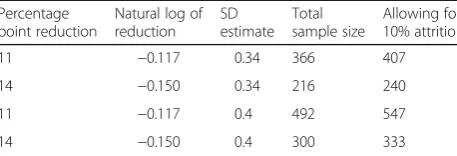
Table 2 gives our estimates of sample size assuming a significance level of 5% (two sided) and power of 90%. Given the uncertainties surrounding many of the assump-tions, we chose to recruit a sample of 547 participants.
Data handling and quality assurance
The trial sponsor is UCL and it takes primary responsi-bility for ensuring that the design of the study meets ap-propriate standards and that arrangements are in place to ensure appropriate conduct and reporting. A moni-toring plan has been agreed with the Sponsor. The trial will be run in accordance with Good Clinical Practice (GCP) and current regulatory guidance. All data at the site will be handled according to the Data Protection Act 1998 and UCL Information Security Policy and Trust Information Governance Policy. The investigators have full access to all the data and are under no restric-tions in their use of the data. We are open to approaches from bona fide researchers to have access to the data providing this is consistent with our ethics and regula-tory approvals.
Publication policy
The funder, National Institute for Health Research (NIHR), is informed of the publications before they are submitted to journals. The co-applicants have agreed a publication policy. Publications will conform to the International Committee of International Journal Editors (ICMJE) guidelines for reporting and authorship.
Ethics, regulatory approvals and reporting
[image:11.595.306.535.110.188.2]The Sponsor will ensure that the trial protocol, patient information sheet, consent form, GP letter and submit-ted supporting documents have been approved by the appropriate regulatory body (MHRA in the UK) and the main research ethics committee, prior to any patient recruitment. The protocol and all agreed substantial protocol amendments were documented and submitted for ethical and regulatory approval prior to implementa-tion. Ethical approval was obtained from the National Research Ethics Service committee, East of England -Cambridge South (ref: 13/EE/0418). Clinical trial authori-zation was given by the MHRA. The trial Sponsor is UCL. The trial has been registered with EudraCT Number 2013-003440-22, ISRCTN84544741. The protocol adheres to the Standard Protocol Items: Recommendations for Intervention Trials (SPIRIT). The SPIRIT Checklist is available as an Additional file 1.
Table 2The sample size estimates for the PANDA trial with a variety of assumptions
Percentage point reduction
Natural log of reduction
SD estimate
Total sample size
Allowing for 10% attrition
11 −0.117 0.34 366 407
14 −0.150 0.34 216 240
11 −0.117 0.4 492 547
It is the responsibility of the CI/PI or designee at each site to ensure that all subsequent amendments gain the necessary approval. This does not affect the individual clinician’s responsibility to take immediate action if thought necessary to protect the health and interest of individual patients.
The trial investigators and institutions will permit trial-related monitoring, audits, REC review, and regula-tory inspections, providing direct access to source data/ documents. Trial participants are informed of this dur-ing the informed consent discussion.
Within 90 days after the end of the trial, the CI/Sponsor will ensure that the main REC and the MHRA are notified that the trial has finished. If the trial is terminated prema-turely, those reports will be made within 15 days after the end of the trial. The CI will supply the Sponsor with a summary report of the clinical trial, which will then be submitted to the MHRA and main REC within 1 year after the end of the trial.
There is a Trial Steering Committee chaired by Professor Carolyn Chew-Graham of Keele University. The other in-dependent members are Professor Ian Anderson, Dr Evan Kontopantelis, Professor Anne Rogers and Mr Paul Lanham. The Independent Data Monitoring Committee is chaired by Prof Chris Williams of Glasgow University. The other members are Professor Richard Byng and Dr Obi Ukoumunne.
Insurance
The UCL holds insurance against claims from participants for injury caused by their participation in the clinical trial. Participants may be able to claim compensation if they can prove that UCL has been negligent.
Discussion
PANDA is a pragmatic primary-care trial with broad in-clusion criteria, aiming to address important aspects of current clinical practice. Trial participants will be re-cruited from a wide range of primary care settings across the four study sites, based in urban, rural, affluent and deprived areas across the UK, thus minimizing selection bias. Given that the main treatment effect of sertraline occurs within 6 weeks, our primary outcome will be measured at the 6-week follow-up assessment. We have included a follow-up assessment at 2 weeks to obtain an early account of potential adverse events and the first signs of clinical response and at 12 weeks to obtain evi-dence of any sustained benefits of antidepressant treat-ment. Self-report measures will be used to assess clinical outcome in order to eliminate potential observer bias. As common adverse effects of sertraline may lead to in-advertent unblinding, we will ask trial participants at each follow-up period to indicate to which treatment arm they believe they have been allocated.
Given the increasing rates of antidepressant prescrip-tion across the UK and the clinical challenge associated with accurately assessing depressive symptoms during short consultation appointments, there is a need to iden-tify which patients presenting to primary care with de-pression are more likely to benefit from a course of antidepressants. Our study will use a simple, self-administered, computerised assessment to establish the severity and duration of depressive symptoms and inves-tigate any association with a clinically significant re-sponse to sertraline. The evidence from the trial will be used to inform primary-care prescribing practice by identifying which patients are more likely to benefit from antidepressants and using assessments that have the potential to be used in primary care.
Trial status
The trial began recruiting participants in January 2015 and will be ongoing until August 2017. At the time of writing (June 2017), 161 general practices have been ac-tively involved in PANDA and 573 participants have been randomised into the study. It is expected that data collection will be completed in November 2017.
Additional file
Additional file 1:SPIRIT 2013 Checklist: recommended items to address in a clinical trial protocol and related documents. (DOC 122 kb)
Abbreviations
AE:Adverse event; BDI-II: Beck Depression Inventory-II; CI: Chief Investigator; CISR: Clinical Interview Schedule-Revised; CNS: Central nervous system; CONSORT: Consolidated Standards of Reporting Trials; CRF: Case report form; EQ-5D-5L: Euroqol 5D-5L; GAD-7: Generalized Anxiety Disorder-7; GCP: Good Clinical Practice; GENPOD: Genetic and Clinical Predictors of Treatment Response in Depression study; GP: General Practice/Practitioner; HAM-D: The Hamilton Rating Scale for Depression; IMP: Investigational medicinal product; INMD: Incremental net monetary benefit; MAO: Monoamine oxidase inhibitor; MCID: Minimal clinically important difference; MHRA: Medicines and Healthcare Products Regulatory Agency; NICE: National Institute for Clinical Excellence; NIHR: National Institute for Health Research; NHS: National Health Service; NSAID: Nonsteroidal anti-inflammatory drug; PANDA: What Are the Indications for Prescribing Antidepressants that will Lead to a Clinical Benefit?; PHQ-9: Patient Health Questionnaire-9; PI: Principal Investigator; PIS: Patient information sheet; PRIMENT CTU: PRIMENT Clinical Trials Unit; QALY: Quality adjusted life year; REC: Research Ethics Committee; SAE: Serious adverse event; SD: Standard difference; SF-12: Short Form-12; SSRI: Selective serotonin re-uptake inhibitor; SUSAR: Suspected unexpected serious adverse reaction; UCL: University College London
Acknowledgements
Funding
The study is funded by the NIHR. The PANDA trial is independent research commissioned by the NIHR Programme Grant for Applied Research (RP-PG-0610-10048). The views expressed in this publication are those of the author(s) and not necessarily those of the Sponsor, NHS, NIHR or Department of Health. The funder had no role in the study design, data collection, data analysis, interpretation of data or writing of the report.
Availability of data and materials Supporting datasets are currently unavailable.
Trial Sponsor
Mr Shriram Velamuri, Joint Research Office, 1stFloor Maple House, Suite A,
149 Tottenham Court Road, London, W1T 7ND. Email: [email protected]
Authors’contributions
GS drafted the first version of the manuscript. All authors contributed in editing the first version of the manuscript and read and approved the final manuscript. All authors contributed to the design, management and conduct of the trial.
Ethics approval and consent to participate
The study has been approved by the National Research Ethics Service committee, East of England - Cambridge South (ref: 13/EE/0418). Clinical trial authorization was given by the MHRA. Written informed consent will be obtained from each participant prior to any study-related procedures.
Consent for publication Not applicable
Competing interests
The authors declare that they have no competing interests.
Publisher’s Note
Springer Nature remains neutral with regard to jurisdictional claims in published maps and institutional affiliations.
Author details
1Division of Psychiatry, University College London, 6th Floor Maple House, 149 Tottenham Court Road, London W1T 7NF, UK.2School of Social and Community Medicine, University of Bristol, Oakfield House, Oakfield Grove, Bristol BS8 2BN, UK.3Institute of Psychiatry, Psychology and Neuroscience, Kings’College London, Denmark Hill, London SE5 8AF, UK.4Department of Psychology, University of Bath, 10 West, Bath BA2 7AT, UK.5Centre for Reviews and Dissemination, University of York, Heslington, York YO10 5DD, UK.6School of Nursing and Health Studies, University of Dundee, Airlie Place, Dundee DD1 4HJ, UK.7Institute of Psychology Health and Society, University of Liverpool, Waterhouse Building Block B, Liverpool L69 3BX, UK.
8Department of Health Sciences, University of York, Seebohm Rowntree Building, Heslington, York YO10 5DD, UK.9Faculty of Medicine, University of Southampton, Aldermoor Health Centre, Southampton SO16 5ST, UK. 10
Department of Sociology, Social Policy and Criminology, University of Liverpool, Eleanor Rathbone Building, Bedford Street South, Liverpool L69 7ZA, UK.
Received: 29 June 2017 Accepted: 22 September 2017
References
1. McManus S, Meltzer H, Brugha T, Bebbington P, Jenkins R. Adult psychiatric morbidity in England 2007: results of a household survey. Leeds: NHS Information Centre; 2009. p. 1–274.
2. Wells KB, Stewart A, Hays RD, Burman A, Rogers W, Daniels M, et al. The functioning and well-being of depressed patients: results from the medical outcomes study. JAMA. 1989;262:914–9.
3. Murray CJ, Vos T, Lozano R, Naghavi M, Flaxman AD, Michaud C, et al. Disability-adjusted life years (DALYs) for 291 diseases and injuries in 21 regions, 1990-2010: a systematic analysis for the Global Burden of Disease Study 2010. Lancet. 2012;380(9859):2197–223.
4. Mathers CD, Loncar D. Projections of global mortality and burden of disease from 2002 to 2030. PLoS Med. 2006;3(11):e442.
5. Kendrick T, Dowrick C, McBride A, Howe A, Clarke P, Maisey S, et al. Management of depression in UK general practice in relation to scores on depression severity questionnaires: analysis of medical record data. BMJ. 2009;338:b750. 6. Kendrick T, Stuart B, Newell C, Geraghty AW, Moore M. Did NICE guidelines
and the Quality Outcomes Framework change GP antidepressant prescribing in England? Observational study with time trend analyses 2003–2013. J Affect Disord. 2015;186:171–7.
7. Tallon D, Wiles N, Campbell J, Chew-Graham C, Dickens C, Macleod U, et al. Mirtazapine added to selective serotonin reuptake inhibitors for treatment-resistant depression in primary care (MIR trial): study protocol for a randomised controlled trial. Trials. 2016;17:66.
8. Prescribing and Medicines Team, H.a.S.C.I.C. Prescriptions dispensed in the community: England 2004-14. NHS Digital; 2015.
9. OECD. Health at a glance 2013: OECD indicators. OECD publishing; 2013. 10. Mars B, Heron J, Kessler D, Davies NM, Martin, RM, Thomas KH, et al.
Influences on antidepressant prescribing trends in the UK: 1995–2011. Social psychiatry and psychiatric epidemiology. 2017; 52(2):193-200.
11. McCrea RL, Sammon CJ, Nazareth I, Petersen I. Initiation and duration of selective serotonin reuptake inhibitor prescribing over time: UK cohort study. Br J Psychiatry. 2016;209(5):421–6.
12. Fournier JC, DeRubeis RJ, Hollon SD, Dimidjian S, Amsterdam JD, Shelton RC, et al. Antidepressant drug effects and depression severity: a patient-level meta-analysis. JAMA. 2010;303(1):47–53.
13. Khan A, Leventhal RM, Khan SR, Brown WA. Severity of depression and response to antidepressants and placebo: an analysis of the Food and Drug Administration database. J Clin Psychopharmacol. 2002;22(1):40–5. 14. Kirsch I, Deacon BJ, Huedo-Medina TB, Scoboria A, Moore TJ, Johnson BT.
Initial severity and antidepressant benefits: a meta-analysis of data submitted to the Food and Drug Administration. PLoS Med. 2008;5(2):e45. 15. Rabinowitz J, Werbeloff N, Mandel FS, Menard F, Marangell L, Kapur S. Initial
depression severity and response to antidepressants v. placebo: patient-level data analysis from 34 randomised controlled trials. Br J Psychiatry. 2016;209(5):427–8. 16. Barbui C, Cipriani A, Patel V, Ayuso-Mateos JL, van Ommeren M. Efficacy of
antidepressants and benzodiazepines in minor depression: systematic review and meta-analysis. Br J Psychiatry. 2011;198:11–6.
17. de Silva LM, Hotopf M. A comparison of active drugs for the treatment of dysthymia. Cochrane Database Syst Rev. 2003;3:CD004047.
18. National Institute for Health and Care Excellence: Clinical Guidlines. London: The British Psychological Society and The Royal College of Psychiatrists; 2004.
19. Mitchell AJ, Vaze A, Rao S. Clinical diagnosis of depression in primary care: a meta-analysis. Lancet. 2009;374(9690):609–19.
20. Wittchen H-U, Höfler M, Meister W. Prevalence and recognition of depressive syndromes in German primary care settings: poorly recognized and treated? Int Clin Psychopharmacol. 2001;16(3):121–35.
21. Kroenke K, Spitzer RL, Williams JB. The PHQ-9: validity of a brief depression severity measure. J Gen Intern Med. 2001;16(9):606–13.
22. Lewis G, Pelosi AJ, Araya R, Dunn G. Measuring psychiatric disorder in the community: a standardised assessment for use by lay interviewers. Psychol Med. 1992;22:465–86.
23. Harmer CJ, Goodwin GM, Cowen PJ. Why do antidepressants take so long to work? A cognitive neuropsychological model of antidepressant drug action. Br J Psychiatry. 2009;195(2):102–8.
24. Harmer CJ, Shelley NC, Cowen PJ, Goodwin GM. Increased positive versus negative affective perception and memory in healthy volunteers following selective serotonin and norepinephrine reuptake inhibition. Am J Psychiatry. 2004;161(7):1256–63.
25. Harmer CJ, O’Sullivan U, Favaron E, Massey-Chase R, Ayres R, Reinecke A, et al. Effect of acute antidepressant administration on negative affective bias in depressed patients. Am J Psychiatry. 2009;166(10):1178–84.
26. Lewis G. Assessing psychiatric disorder with a human interviewer or a computer. J Epidemiol Community Health. 1994;48:207–10. 27. Thomas HV, Lewis G, Sharp D, Watson M, Bell TS, Lyons I, et al.
Computerised patient-specific guidelines for management of common mental disorder in primary care: a randomised controlled trial. Br J Gen Pract. 2004;54(508):832-7.
28. Taylor MJ, Freemantle N, Geddes JR, Bhagwagar Z. Early onset of selective serotonin reuptake inhibitor antidepressant action: systematic review and meta-analysis. Arch Gen Psychiatry. 2006;63(11):1217–23.
antidepressants: a multiple-treatments meta-analysis. Lancet. 2009; 373(9665):746–58.
30. Beck AT, Steer RA, & Brown, GK. Manual for the Beck Depression Inventory-II. San Antonio: Psychological Corporation; 1996.
31. Ware Jr JE, Kosinski M, Keller SD. A 12-Item Short-Form Health Survey: construction of scales and preliminary tests of reliability and validity. Med Care. 1996;34(3):220–33.
32. Devlin NJ, Brooks R. EQ-5D and the EuroQol Group: Past, Present and Future. Appl Health Econ Health Policy. 2017:1–11.
33. Spitzer RL, Kroenke K, Williams JB, Lowe B. A brief measure for assessing generalized anxiety disorder: the GAD-7. Arch Intern Med. 2006;166(10): 1092–7.
34. Guitart-Masip M, Economides M, Huys QJ, Frank MJ, Chowdhury R, Duzel E, et al. Differential, but not opponent, effects of L-DOPA and citalopram on action learning with reward and punishment. Psychopharmacology. 2014; 231(5):955-66.
35. Wiles N, Thomas L, Abel A, Ridgway N, Turner N, Campbell J, et al. Cognitive behavioural therapy as an adjunct to pharmacotherapy for primary care based patients with treatment resistant depression: results of the CoBalT randomised controlled trial. Lancet. 2013;381:375–84.
36. Lewis G, Mulligan J, Wiles N, Cowen P, Craddock N, Ikeda M, et al. Polymorphism of the 5-HT transporter and response to antidepressants: randomised controlled trial. Br J Psychiatry. 2011;198:464–71. 37. Schulz KF, Altman DG, Moher D. CONSORT 2010 statement: updated
guidelines for reporting parallel group randomised trials. BMC Med. 2010;8(1):18.
38. Hardin JW, Hilbe JM, Hilbe J. Generalized linear models and extensions. Stata press; 2007.
39. McCullagh P, Nelder J. Generalised linear models II. London: Chapman and Hall; 1989.
40. Dunn G, Emsley R, Liu H, Landau S, Green J, White I, et al. Evaluation and validation of social and psychological markers in randomised trials of complex interventions in mental health: a methodological research programme. 2015.
41. Joint Formulary Committee. British National Formulary. London: BMJ Group and Pharmaceutical Press; 2008.
42. Curtis L. Unit costs of health and social care 2009. PSSRU, University of Kent; 2009. 43. Department of, H. National schedule of reference costs 2009-10 for NHS
Trusts and PCTs combined. 2011. Available from: http://www.dh.gov.uk/en/ Publicationsandstatistics/Publications/PublicationsPolicyAndGuidance/DH_ 123459.
44. Devlin N, Shah K, Feng Y, Mulhern B, van Hout B. Valuing health-related quality of life: an EQ-5D-5L value set for England. 2016.
45. Willan AR, Lin D. Incremental net benefit in randomized clinical trials. Stat Med. 2001;20(11):1563–74.
46. McCabe C, Claxton K, Culyer AJ. The NICE cost-effectiveness threshold. Pharmacoeconomics. 2008;26(9):733–44.
47. Hoch JS, Dewa CS. Advantages of the net benefit regression framework for economic evaluations of interventions in the workplace: a case study of the cost-effectiveness of a collaborative mental health care program for people receiving short-term disability benefits for psychiatric disorders. J Occup Environ Med. 2014;56(4):441–5.
48. Coast J. Is economic evaluation in touch with society’s health values? BMJ. 2004;329(7476):1233.
49. Hamilton M. A rating scale for depression. J Neurol Neurosurg Psychiatry. 1960;23(1):56.
50. Button KS, Kounali D, Thomas L, Wiles NJ, Peters TJ, Welton NJ, et al. Minimal clinically important difference on the Beck Depression Inventory–II according to the patient’s perspective. Psychol Med. 2015;45(15):3269–79.
• We accept pre-submission inquiries
• Our selector tool helps you to find the most relevant journal • We provide round the clock customer support
• Convenient online submission • Thorough peer review
• Inclusion in PubMed and all major indexing services • Maximum visibility for your research
Submit your manuscript at www.biomedcentral.com/submit