NONINVASIVE METHODS FOR EARLY DETECTION OF AIRWAY INFLAMMATION RELATED TO
CLEANING WORKERS OCCUPATIONAL ENVIRONMENT
1,*
Cynthia Mafra Fonseca de Lima, MD, MsC,
3Elayne de FatimaMaçaira, MsC,
6
Fabio Fernandes Morato MD, PhD and
1
Department of Medicine - LIM20, University of Sao Paulo, School of Medicine, Sao Paulo
2,3,4
Fundacentro, Department
5,6,7
Clinical immunology and allergy division, University of Sao Paulo, School of Medicine, Sao
ARTICLE INFO ABSTRACT
Background:
asthma. Predisposing factors are not fully understood and it is important to produce evidence that this risk is work
inflammation in asymptomatic cleaning workers and to determine the efficacy of noninvasive methods to detect early pulmonary inflammation.
comparing sputum cytology,
performed during the work period and after vacations. FEV1 values
though those values were within normal limits, in both periods. There was a reduction in the values the FeNO measurements after vacations (pre 16.3 ± 9.7 and post 13.8 ± 7.8, p <0.05) and a reduction of inflammatory cells count in the induced sputum
0.01, p <0.05 Lymphocytes: pre 0.16 ± 0.35 and post 0.01 ± 0.09, p <0.05 Macrophages: pre 0.421 ± 0, 47 and post 0.235 ± 0.30, p <0.05.
which the
abnormalities. Noninvasive methods such as counting of cells after induced sputum and FeNO measures showed to be promising tools for the detection of pulmonary inflammatio
still require standardization. Copyright © 2019, Cynthia Mafra Fonseca de Lima
permits unrestricted use, distribution, and reproduction
INTRODUCTION
There is consistent evidence from epidemiological studies conducted at different sites that professional cleaners are at a high risk of developing asthma (Lipinska-Ojrzanowska 2014). They comprise a large workforce in many countries. In Brazil, it is estimated that 11 thousand companies provide cleaning services for homes, commercial buildings and industries, employing around a million cleaning professionals, which represents 1.5 million economically active population of the formal working sector (Zock, 2005). In the Metropolitan Region of São Paulo City, the prevalence of asthma among cleaners ranged from 3% to 40% according to the time accumulated in non-domestic professional cleaning work, with a risk > 71% for those that have been working for 6.5 years or
*Corresponding author: Cynthia Mafra Fonseca de Lima
Department of Medicine - LIM20, University of Sao Paulo, School of Medicine, Sao Paulo - SP, Brazil.
ISSN: 0975-833X
Article History:
Received 16th December, 2018
Received in revised form 13th January, 2019
Accepted 17th February, 2019
Published online 31st March, 2019
Citation: Cynthia Mafra Fonseca de Lima, MD, MsC, Beatriz Mangueira Saraiva of airway inflammation related to cleaning workers occupational environment
Key Words:
Occupational exposure,
Inflammation, Working environment
s
RESEARCH ARTICLE
NONINVASIVE METHODS FOR EARLY DETECTION OF AIRWAY INFLAMMATION RELATED TO
CLEANING WORKERS OCCUPATIONAL ENVIRONMENT
Cynthia Mafra Fonseca de Lima, MD, MsC,
2Beatriz Mangueira Saraiva
Elayne de FatimaMaçaira, MsC,
4Elizabete Medina Coeli Mendonça, MD, PhD,
Fabio Fernandes Morato MD, PhD and
7Clovis Eduardo Santos Galvao, MD, PhD
LIM20, University of Sao Paulo, School of Medicine, Sao Paulo
Fundacentro, Department of Medicine, São Paulo - SP, Brazil
Clinical immunology and allergy division, University of Sao Paulo, School of Medicine, Sao
ABSTRACT
Background: There is consistent evidence that cleaning workers are at high risk of developing asthma. Predisposing factors are not fully understood and it is important to produce evidence that this risk is work-related. Objective: To assess whether the work environment induces pulmonary inflammation in asymptomatic cleaning workers and to determine the efficacy of noninvasive methods to detect early pulmonary inflammation. Methods: Sixty
comparing sputum cytology, fractional exhaled nitric oxide (FeNO) values
performed during the work period and after vacations. Results: We observed a significant increase in FEV1 values after the vacation period (pre 2.90L ± 0.57L and post 2.94L ± 0.61L, p <0.05), eve though those values were within normal limits, in both periods. There was a reduction in the values the FeNO measurements after vacations (pre 16.3 ± 9.7 and post 13.8 ± 7.8, p <0.05) and a reduction of inflammatory cells count in the induced sputum (Eosinophils: pre 0.019 ± 0.05 and post 0.003 ± 0.01, p <0.05 Lymphocytes: pre 0.16 ± 0.35 and post 0.01 ± 0.09, p <0.05 Macrophages: pre 0.421 ± 0, 47 and post 0.235 ± 0.30, p <0.05. Conclusion: We observed that the occupational environment to which the studied population was exposed caused inflammation in the airways without functional abnormalities. Noninvasive methods such as counting of cells after induced sputum and FeNO measures showed to be promising tools for the detection of pulmonary inflammatio
still require standardization.
et al. This is an open access article distributed under the Creative in any medium, provided the original work is properly cited.
There is consistent evidence from epidemiological studies different sites that professional cleaners are at a
Ojrzanowska et al.,
. They comprise a large workforce in many countries. In Brazil, it is estimated that 11 thousand companies provide homes, commercial buildings and industries, employing around a million cleaning professionals, which represents 1.5 million economically active population of In the Metropolitan ce of asthma among cleaners ranged from 3% to 40% according to the time domestic professional cleaning work, with 71% for those that have been working for 6.5 years or
Cynthia Mafra Fonseca de Lima,
LIM20, University of Sao Paulo, School of
more when comparing to those that have been working for less than one year (Maçãira, 2007
studies have shown that some workers
to low levels of irritants in the workplace. However, few studies have shown some correlation between these low levels of exposure and development of asthma. The most persuasive evidence for irritant-induced asthma related to chron exposure to moderate levels of irritants is provided by epidemiological studies with workers exposed to cleaning agents (Siracusa et al., 2013
cleaning activity was the main occupation in terms of numbers of cases of occupational asthma among women, and cleaning products were the most cited agents in a study that evaluated occupational asthma in the period between 1995 and 2000 (Mendonca et al., 2003). Currently, the diagnosis of work related asthma is based mainly on
demonstration of functional changes through spirometry tests and non-specific and specific Broncho provocation tests, in International Journal of Current Research
Vol. 11, Issue, 03, pp.2412-2417, March, 2019
DOI: https://doi.org/10.24941/ijcr.33799.03.2019
Cynthia Mafra Fonseca de Lima, MD, MsC, Beatriz Mangueira Saraiva-Romanholo, PhD et al. 2019. “Noninvasive methods for early detection cleaning workers occupational environment”, International Journal of Current Research
Available online at http://www.journalcra.com
z
NONINVASIVE METHODS FOR EARLY DETECTION OF AIRWAY INFLAMMATION RELATED TO
CLEANING WORKERS OCCUPATIONAL ENVIRONMENT
Beatriz Mangueira Saraiva-Romanholo, PhD,
Elizabete Medina Coeli Mendonça, MD, PhD,
5Kalil, Jorge,
Clovis Eduardo Santos Galvao, MD, PhD
LIM20, University of Sao Paulo, School of Medicine, Sao Paulo - SP, Brazil
SP, Brazil
Clinical immunology and allergy division, University of Sao Paulo, School of Medicine, Sao Paulo - SP, Brazil
There is consistent evidence that cleaning workers are at high risk of developing asthma. Predisposing factors are not fully understood and it is important to produce evidence that this k environment induces pulmonary inflammation in asymptomatic cleaning workers and to determine the efficacy of noninvasive Sixty-seven workers were evaluated by FeNO) values and spirometry tests, We observed a significant increase in after the vacation period (pre 2.90L ± 0.57L and post 2.94L ± 0.61L, p <0.05), even though those values were within normal limits, in both periods. There was a reduction in the values of the FeNO measurements after vacations (pre 16.3 ± 9.7 and post 13.8 ± 7.8, p <0.05) and a reduction (Eosinophils: pre 0.019 ± 0.05 and post 0.003 ± 0.01, p <0.05 Lymphocytes: pre 0.16 ± 0.35 and post 0.01 ± 0.09, p <0.05 Macrophages: pre 0.421 ± We observed that the occupational environment to studied population was exposed caused inflammation in the airways without functional abnormalities. Noninvasive methods such as counting of cells after induced sputum and FeNO measures showed to be promising tools for the detection of pulmonary inflammation, although they
Creative Commons Attribution License, which
more when comparing to those that have been working for less
, 2007). Several epidemiological studies have shown that some workers are continually exposed to low levels of irritants in the workplace. However, few studies have shown some correlation between these low levels of exposure and development of asthma. The most persuasive induced asthma related to chronic exposure to moderate levels of irritants is provided by epidemiological studies with workers exposed to cleaning
., 2013). In the city of São Paulo, cleaning activity was the main occupation in terms of numbers occupational asthma among women, and cleaning products were the most cited agents in a study that evaluated occupational asthma in the period between 1995 and 2000 Currently, the diagnosis of work-related asthma is based mainly on the clinical history, the demonstration of functional changes through spirometry tests specific and specific Broncho provocation tests, in
INTERNATIONAL JOURNAL OF CURRENT RESEARCH
addition to peak flow measurements in and off the workplace (Cartier, 2003). The monitoring and assessment of airway inflammation are important investigational tools of occupational asthma. Until recently, airway inflammation has been studied through invasive methods such as bronchial lavage and biopsy. The invasive nature of these investigations has limited their use in clinical practice. The use of noninvasive methods, such as the study of induced sputum and the determination of FeNO (fractional exhaled of Nitric Oxide), has been used for the study of inflammatory changes in asthma. Initially used in research, its clinical applications have been increasingly studied (Lemière, 2002). Currently, these methods have been used in research as markers of pulmonary inflammation also in occupational asthma. One of its potential uses is the possibility of early diagnosis of occupational asthma, considering that the inflammatory changes seem to occur before clinical symptoms and functional pulmonary alterations (Lemière et al., 2000). Thus, we hypothesized that frequent exposure, even at low doses of irritants, would represent a continuous aggression to the airway mucosa, causing an "overload" of the protective mechanisms, breaking the homeostasis of the airways that could lead to the development of asthma. This study aimed to investigate the functional and inflammatory response of the airways to exposures to inhaled substances present in the work environment, comparing the assessments before and after exposure.
MATERIALS AND METHODS
Study Design: This is a cross-sectional study considering two
moments: before the worker leaves on vacation, and after a period of 30 days away from the workplace. Each worker was contacted at the workplace, two weeks prior to his/her vacation, when questionnaires, aeroallergens skin prick tests, spirometry tests and noninvasive measures were used to evaluate lung inflammation. During the holiday period the worker was instructed to record daily peak expiratory flow measures as well as to avoid exposure to household cleaners or other exposures to irritating substances and dust. The worker was re-evaluated, one day before returning to work, following the same sequence of tests.
Study Population: Two hundred and fourteen cleaning
workers from a company that provides the outsourced service to a private University which has 6 units (campuses) located in the city of São Paulo, were invited to participate in the study. The products used for cleaning are strictly the same. Individuals with respiratory tract infections and asthmatic exacerbations at the time of the interview, or asthmatics receiving inhaled corticosteroids in the last 8 weeks were not eligible to take part of this study.
Questionnaires: Information on respiratory symptoms was
collected using a translation of the Medical Research Council (MRC) questionnaire (Medical Research Council. Questionnaire on respiratory symptoms, 1976) and International Study of Asthma and Allergies in Childhood (ISAAC) asthma and rhinitis modules. The asthma module had previously been validated in Portuguese (Maçãira, 2005). Additionally, information about symptoms onset and cleaning-related airway symptoms were obtained. Information on the workers’ employment histories and the characteristics of their current non-domestic cleaning work was obtained by means of
a modified job-specific questionnaire that had been used within the European Community Respiratory Health Survey (ECRHS) (Ribeiro, 2007).
Skin Prick Tests
Skin prick tests were performed using a panel of ten allergens: Dermatophagoides farinae (100 BU/ml), Dermatophagoi despteronyssinus (100 BU/ml), Blomiatropicalis (not standardized), Periplanetaamericana (1%), Blatellagermanica (1%), cat epithelium (100 BU/ml), dog epithelium (100 BU/ml), pollen (100 BU/ml) and Aspergillus fumigatus (5%), Latex ( Prickit – International Pharmaceutical Immunology do Brasil S. A. – IPI-ASAC ). A positive response was defined as a mean wheal diameter 3 mm larger than negative control, read after 20 min (Bernstein, 1995).
Assessment of Pulmonary Inflammation - Fractional
exhaled of Nitric Oxide (FeNO): The FeNO measurements were obtained by electrochemical reaction on a sensor of direct reading in the NIOX-MINO portable device and performed according to the recommendations of the ATS13.
Assessment of Pulmonary Inflammation - Induced sputum:
The subjects inhaled hypertonic solution for sputum sample collection according to the recommendations of the Working Groups concluded at the meeting of American Thoracic Society14. The vial containing the sputum was kept in a box with ice, and the material was processed up to 2 hours after sputum collection and cytology was performed according to a previously described technique15.It was the last test to be performed, so as not to interfere in the result of spirometry.
Spirometry: For Pulmonary function tests it was used an
electronic pneumotachograph (Kokopneumotachspirometer, PDS Medical Instruments, Louisville, USA), according to the recommendations of the American Thoracic Society (ATS) and the Brazilian Society of Pulmonology and Tisiology.
Ethical aspects: This study was approved by the Ethics
Committee for Analysis of Research Projects of the institution where it was carried out. All participants signed an informed consent form before starting the study. At the end of the study, the final results and conclusions were shared with the Participating Company's Department of Occupational Medicine, obeying the secrecy rules of clinical research in Brazil.
RESULTS
Of the 214 workers who were invited to participate in the study, from June 1012 to June 2014, sixty-seven (31.3%) volunteers signed the informed consent and 62 (28.9%) volunteers completed the full evaluation, the majority being female. The age distribution of the studied population, presented an average of 40.2 years, with a standard deviation of 7.6 years (median = 40.5, minimum: 20 and maximum: 57).Table 1 summarizes the characteristics for each group of individuals. From the total sample (n = 67), 32.8% (n = 22) reported being smokers and 56.7% non-smokers. However, among non-smokers, 15.6% (n = 7) reported being former smokers. In total, 55.2% had rhinitis, 13.4% were considered as having related rhinitis and 19.4% as having work-aggravated rhinitis.
Table 1. Distribution of subjects according to age, gender, time of work, symptoms of asthma, atopic and smoking status
Characteristics Casuistics (N=67) N (%) Smokers (N=22) N (%) Non smokers (N=45) N (%) Atopics (N=38) N (%) NonAtopics (N=38) N (%)
Age (mean SD) 40,2 7,6 39,2 8,0 40,7 7,5 40,6 7,9 39,5 7,2
Gender
Male 11 (16,4) 06 (27,3) 05 (11,1) 04 (10,5) 07 (7,1)
Female 56 (83,6) 16 (72,7) 40 (88,9) 34 (88,1) 22 (75,9)
Time ofwork
≤6years 37 (55,2) 12 (54,5) 25 (55,6) 19 (50) 18 (62,1)
6years 30 (44,8) 10 (45,5) 20 (44,4) 19 (50) 11 (37,9)
Questionnaires 30 (55,2) 11 (50) 19 (42,2) 22 (57,9) 08 (27,5)
Asthma
Work-related 06 (8,9) 03 (13,6) 03 (6,7) 03 (7,9) 03 (10,3)
Work-aggravated 04 (5,9) 0 (0) 04 (8,9) 03 (7,9) 01 (3,5)
[image:3.842.73.749.228.354.2]ISAAC 15 (22,4) 05 (22,7) 10 (22,2) 10 (26,3) 05 (17,2)
Table 2. Reported symptoms and their relation to cleaning products and other agentes in the work environment
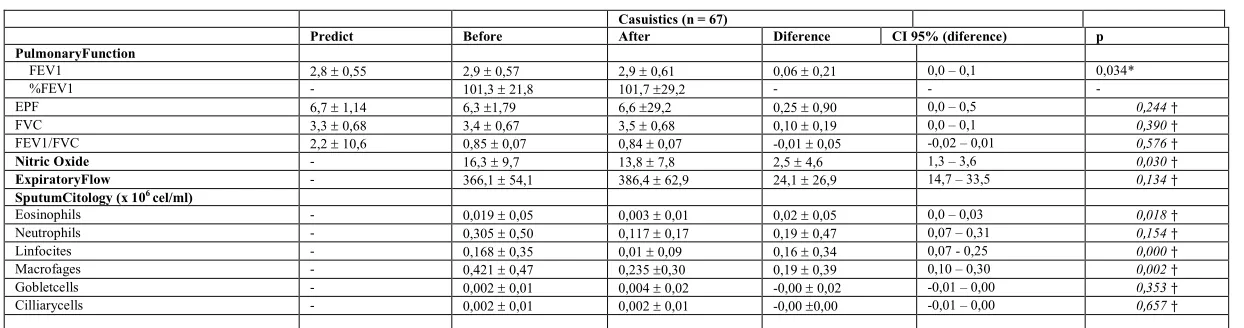
Table 3. Evaluation of pulmonary function, exhaled nitric oxide andsputumcytologyofcleaningworkersbeforeandafterthevacationperiod.
Casuistics (n = 67)
Predict Before After Diference CI 95% (diference) p
PulmonaryFunction
FEV1 2,8 0,55 2,9 0,57 2,9 0,61 0,06 0,21 0,0 – 0,1 0,034*
%FEV1 - 101,3 21,8 101,7 29,2 - - -
EPF 6,7 1,14 6,3 1,79 6,6 29,2 0,25 0,90 0,0 – 0,5 0,244†
FVC 3,3 0,68 3,4 0,67 3,5 0,68 0,10 0,19 0,0 – 0,1 0,390†
FEV1/FVC 2,2 10,6 0,85 0,07 0,84 0,07 -0,01 0,05 -0,02 – 0,01 0,576†
Nitric Oxide - 16,3 9,7 13,8 7,8 2,5 4,6 1,3 – 3,6 0,030†
ExpiratoryFlow - 366,1 54,1 386,4 62,9 24,1 26,9 14,7 – 33,5 0,134†
SputumCitology (x 106 cel/ml)
Eosinophils - 0,019 0,05 0,003 0,01 0,02 0,05 0,0 – 0,03 0,018†
Neutrophils - 0,305 0,50 0,117 0,17 0,19 0,47 0,07 – 0,31 0,154†
Linfocites - 0,168 0,35 0,01 0,09 0,16 0,34 0,07 - 0,25 0,000†
Macrofages - 0,421 0,47 0,235 0,30 0,19 0,39 0,10 – 0,30 0,002†
Gobletcells - 0,002 0,01 0,004 0,02 -0,00 0,02 -0,01 – 0,00 0,353†
Cilliarycells - 0,002 0,01 0,002 0,01 -0,00 0,00 -0,01 – 0,00 0,657†
FEV1: Forced Expiratory volume in the first second; EPF: Expiratory Peak Flow; FVC: Forced Vital capacity; Mean SD; * T Student test;† Mann Whitney non parametric test.
Fatores de Exposição
Reportedsymptoms Dust Hypochlorite Remover Multiusercleaner Disinfectant Stone cleaner Latexgloves Degreaser PerfumedSpray Detergent Carpetcleaner
Drycough 06 (8,9) 17 (25,8) 02 (2,9) 0 (0) 01 (1,5) 0 (0) 02 (2,9) 01 (1,5) 01 (1,5) 0 (0)
Catarrhcough 01 (1,5) 05 (7,6) 01 (1,5) 0 (0) 0 (0) 0 (0) 0 (0) 0 (0) 0 (0) 01 (1,5) 0 (0)
Wheezing 02 (2,9) 04 (6,1) 02 (2,9) 0 (0) 0 (0) 0 (0) 0 (0) 01 (1,5) 1 (0) 01 (1,5) 0 (0)
Chesttightness 02 (2,9) 04 (6,2) 01 (1,5) 01 (1,5) 0 (0) 01 (1,5) 0 (0) 0 (0) 01 (1,5) 01 (1,5) 01 (1,5)
Dyspnea 05 (7,5) 09 (13,6) 0,2 (2,9) 0 (0) 01 (1,5) 01 (1,5) 0 (0) 01 (1,5) 01 (1,5) 01 (1,5) 0 (0)
Sneezing 18 (27,3) 14 (21,2) 02 (2,9) 0 (0) 0 (0) 01 (1,5) 0 (0) 0 (0) 02 (2,9) 0 (0) 0 (0)
Coryza 08 (12,1) 11 (16,7) 01 (1,5) 0 (0) 0 (0) 0 (0) 0 (0) 0 (0) 0 (0) 0 (0) 0 (0)
Nasal Obstruction 08 (12,1) 16 (24,2) 01 (1,5) 0 (0) 0 (0) 01 (1,5) 0 (0) 0 (0) 01 (1,5) 0 (0) 0 (0)
Nasal burning 07 (10,5) 22 (33,3) 02 (2,9) 01 (1,5) 0 (0) 02 (2,9) 0 (0) 0 (0) 0 (0) 01 (1,5) 0 (0)
Throatirritation 06 (8,9) 17 (25,8) 02 (2,9) 01 (1,5) 0 (0) 0 (0) 0 (0) 03 (4,5) 0 (0) 01 (1,5) 0 (0)
Eyeirritation 03 (4,5) 29 (43,9) 02 (2,9) 02 (2,9) 0 (0) 0 (0) 0 (0) 01 (1,5) 01 (1,5) 01 (1,5) 0 (0)
Skinirritation 0 (0) 11 (16,7) 01 (1,5) 0 (0) 0 (0) 02 (2,9) 05 (7,5) 0 (0) 0 (0) 01 (1,5) 0 (0)
[image:3.842.104.726.379.543.2]Regarding the diagnosis of asthma based on the questionnaire responses, 14.9% (n = 10) workers were diagnosed as asthmatics. According to the report of onset of symptoms and reporting of symptoms in the work environment, 8.9% of the volunteers studied were considered as having work-related asthma and 5.9% with work-aggravated asthma. Concerning the symptoms associated to exposure in the work environment, 10.4% (n = 07) reported symptoms only in the lower airways, 32.8% in the upper airways only, and 28.4% in both. Eleven subjects reported skin irritation (16.4%) and, 11 (16.4%) denied any symptomrelated to the work environment. Seventy percent (70.2%; n = 47) reported symptoms in contact with hypochlorite and 31.3% (n = 21) reported symptoms when exposed to dust. Among the participants, the frequency of reporting of symptoms related to the use of other products used in the work was: remover (6%), multiuse cleaner (4.5%), disinfectant (1.5%), stone cleaner (6%), latex glove (6%), degreaser (6%), perfumed spray (4.5%), detergent (1.5%) and carpet cleaner (3%). Those data were summarized in Table 2, considering that each individual can present more than one symptom for each product. The effects resulting from the exposure of cleaning workers to substances from the working environment were assessed before and after the vacation period through lung function tests, measurement of the exhaled nitric oxide fraction and cytology of induced sputum.
For comparison and evaluation of improvement of the pulmonary function, the results of each individual's exams were collected in the Pre-vacation moment (exposure to the agents of the work environment) and Post-vacation (Interval without exposure to agents of the work environment). Only the FEV1 measurement obtained a symmetrical distribution and was compared by the Student's t-Test for paired samples, the other variables were analyzed by the Mann-Whitney test. Despite the values within normality, considering the predicted value, the present study observed a significant improvement in the pulmonary function of the volunteers studied when they were away from the workplace, with a significant increase in FEV1 (p <0.034). The positive response to the bronchodilator in the Pre-vacation period was 4% (n = 02) and 2% (n = 01) in the post-vacation period. A reduction in FeNO values after the holiday period (p = 0.030) was observed. Differential cytology in induced sputum also showed significant reduction of eosinophils, lymphocytes and macrophages for the overall sample after the holiday interval (Table 3). Skin tests were positive for at least one allergen in 38 volunteers, and
Blomiatropicalis was the most frequent sensitizing allergen,
followed by Dermatophagoi desfarinae and Dermatophagoi
despteronyssinus.
DISCUSSION
Assessing the airways inflammatory status of the studied population using the proposed noninvasive methods, we observed a significant reduction of eosinophils, lymphocytes and macrophages after the vacation period, as well as a reduction in the values of the FeNO measurement. Only 31.3% of the invited employees accepted to participate in this study and 28.9% completed the full evaluation. We believe that the methodology of induced sputum may have contributed to the greater number of withdrawals in the participation of this study. It is a laborious method for the researcher and uncomfortable for the research subject, according to volunteers. Some studies have confirmed the association between exposure to occupational agents and the presence of
eosinophilic airway inflammation after exposure in individuals with occupational asthma. The addition of induced sputum to peak flow monitoring increases the specificity of this test when compared to specific bronchoprovocation (Lemiere et al., 1999). Eosinophils have been shown to increase in individuals with occupational asthma when they are in the work environment and decrease when removed from exposure, changes that are not observed in asthmatic patients without occupational asthma16.However, the magnitude of eosinophil elevation that may be considered clinically significant is not yet clearly established. An increase in absolute eosinophil counts of 0.26 x 10⁶/mL compared to baseline values achieved a sensitivity of 82% and specificity of 91.7% to predict a 20% drop in FEV1 (Lemiere et al., 2001). It has already been shown that individuals who remain symptomatic after withdrawal from exposure have more sputum inflammation than individuals who become asymptomatic shortly after away from the workplace exposure (Maghni et al., 2004). On the other hand, inflammatory changes related to several occupational exposures have been demonstrated in asymptomatic individuals. Other studies have investigated changes in sputum cytology between periods of exposure and withdrawal from the working environment in healthy workers exposed to low molecular weight agents (Quirce et al., 2010). In our study, differential sputum cytology showed a significant reduction of eosinophils, lymphocytes and macrophages after the vacation period, which corroborates the hypothesis that the continuous exposure of asymptomatic cleaning workers to the occupational environment promotes inflammatory changes that precede clinical symptoms.
The measurement of the exhaled air condensate has been pointed out as a potential marker of lung injury caused by occupational exposure. Corradi et al. (2012) detected an increase in biochemical changes related to inflammation or oxidative stress in the group of asymptomatic cleaners compared to the control group20. Several studies have shown evidence of higher levels of exhaled nitric oxide in patients with respiratory diseases compared to the healthy population. The measurement of FeNO has been an additional tool for the diagnosis and management of asthma (Corradi et al., 2011). Although the role of measurement of exhaled NO levels has not yet been established, an increase in healthy individuals has been demonstrated through occupational exposure to both sensitizing agents (organic dusts) 22 and irritants (solvents) 23. In a recent study with cleaning workers, Vizcaya D, et al. (2013), found an increase in exhaled NO levels among workers in the control group (without asthma), related to contact with some irritants in the workplace (Vizcaya et al., 2013). In the absence of consensus on the reference values to be used, Corradi M, et al. (2011), suggested, based on a meta-analysis study, the following reference values for occupational use: values above 25.8 ppb as a kind of borderline measure of normality, from which it would require attention. Already higher values (41.0 ppb), would be indicative of abnormalities (Corradi et al., 2011). The manufacturers of the Aerocrine brand NO meter (Aerocrine SV, Solna, Sweden), used in our study, propose that a value less than 25 ppb would be indicative of adequate control of eosinophilic inflammation in asthmatic patients. Other authors reported that some asthmatic patients maintain values persistently higher than 50 ppb, despite the treatment, emphasizing the importance of an individualized approach (Turner, 2008). In our study, this method proved to be useful to detect a decrease in lung inflammation after the holiday period. Interestingly, according
to the cutoff point mentioned above, the average of the FeNO values found before the holidays would be within normal limits. This can be explained by the fact that our volunteers are asymptomatic and it corroborates the hypothesis that the chronic exposure of cleaning workers to the work environment induces a pulmonary inflammation that precedes the symptoms. We did not find functional abnormalities, but we observed an increase in FEV1 after the holiday period. It is important to note that spirometry values in both pre- and post-vacation periods were normal. This was expected, since the study sample consisted of asymptomatic volunteers. Based on the answers to the questionnaires, our results reinforce previous studies in cleaning workers, in which this activity was associated with work-related asthma and other studies that related this profession to the risk of developing asthma1. However, our prevalence was slightly higher than that found in a previous study conducted in the city of São Paulo (11%) (Maçãira, 2007) and that found in another study that evaluated the prevalence of asthma among cleaners in 14 countries (14%)(Zock et al., 2002). However, the sensitivity of the use of questionnaires for the diagnosis of occupational asthma has been discussed (Malo et al., 1991). We have shown some suggestive evidence that the occupational environment to which non-domestic professional cleaning workers are exposed causes inflammation in the airways of asymptomatic workers. This inflammation can be measured by noninvasive methods such as cell counting after induced sputum and FeNo before changes appear in FEV1, although these methods still require standardization. It is important to produce evidence that this risk is related to work and not to social conditions or other competing factors, to know the underlying pathological abnormality, and to investigate possible agents. The accumulation of this knowledge will allow proposing measures to replace or control the use of the agents involved and prevent the occurrence of new cases unnecessarily. In addition, the use of new non-invasive techniques may facilitate the treatment, and early diagnosis of cases.
Funding: This study was supported by grant 2009/16180-2
from the São Paulo State Science Funding Agency (FAPESP).
Conflict of interest: The authors have no conflict of interest to
disclosure.
Key Points
There was a significant reduction of inflammatory cells after the vacation period, in the airways of asymptomatic cleaning workers, as well as, a reduction in FeNO values suggesting that the exposure to the occupational environment could promote inflammatory changes that precede clinical symptoms.
No functional lung abnormalities, could be observed, since we assessed asymptomatic individuals, but there was an increase in FEV1 values after the holiday period
Noninvasive methods such as counting of cells after induced sputum and FeNO measures showed to be promising tools for the detection of pulmonary inflammation, although they still require standardization.
REFERENCES
American Thoracic Society. 2006. ATS Workshop proceedings: Exhaled nitric oxide and nitric oxide
oxidative metabolism in exhaled breath condensate. Proc Am Thorac Soc., 3:131-145.
Bernstein IL., Storms WW. 1995. Practice parameters for allergy diagnostic testing. Joint Task Force on Practice Parameters for the Diagnosis and Treatment of Asthma. The American Academy of Allergy, Asthma and Immunology and the American College of Allergy, Asthma and Immunology. Ann Allergy Asthma Immunol., 75:543–625.
Cartier A. 2003. Diagnosing occupational asthma. Allergy Clin Immunol Int.,15:197-202.
Corradi M., Gergelova P., Di Pilato E., Folesani G., Goldoni M., Andreoli R. et al., 2012. Effect of exposure to detergents and other chemicals on biomarkers of pulmonary response in exhaled breath from hospital cleaners: a pilot study Int Arch Occup Environ Health., 85:389-396.
Corradi, M., Gergelova P., Goldoni M., Mutti A. 2011. Exhaled Nitric Oxide in Occupational Respiratory Medicine and Environmental Health: State of Art, Critical Reviews in Environmental Science and Technology., 41(20):1820-1842.
Lemière C. 2002. Non-invasive assessment of airway inflammation in occupational lung diseases. CurrOpin in Allergy and Clin Immunol., 2:109-114.
Lemière C. 2007. Induced sputum and exhaled nitric oxide as noninvasive markersof airway inflammation from work exposures. Curr Opin Allergy and Clin Immunol., 7:133-137.
Lemiere C., Chaboillez S., Malo JL. and Cartier A. 2001. Changes in sputum cell countsafter exposure to occupational agents: what do they mean? J Allergy Clin Immunol., 107:1063-1068.
Lemière C., Chaboilliez S., Trudeau C. 2000. Characterization of airway inflammation after repeated exposures to occupational agents. J Allergy Clin Immunol., 106:1163-1170.
Lemiere C., Pizzichini MM., Balkissoon R. et al., 1999. Diagnosing occupational asthma: use of induced sputum [see comments]. Eur Respir J., 13:482-488.
Lipinska-Ojrzanowska A., Wiszniewska M., Świerczynska-Machura D., Wittczak T., Nowakowska-Świrta E., Palczynski C. et al. 2014. Work-related Respiratory Symptoms Among Health Centres Cleaners: a Cross-sectional Study. Int J Occup Medand Environ Health., 27(3):460-466.
Maçãira EF., Algranti E., Mendonça EMC., Bussacos MA. 2007. Rhinitis and asthma symptoms in non-domestic cleaners from the Sao Paulo metropolitan area, Brazil. Occup Environ Med., 64(7):446-53.
Maçãira EF., Algranti E., Stelmach R. et al., 2005. Determining the score and cut-off point that would identify asthmatic adults in epidemiological studies using the asthma module of the International Study of Asthma and Allergies in Childhood questionnaire. Jornal Brasileiro de Pneumologia, 31:477–85.
Maghni K., Lemiere C., Ghezzo H. et al., 2004. Airway inflammation after cessation of exposure to agents causing occupational asthma. Am J RespirCrit Care Med., 169:367-372.
Malo JL., Ghezzo H., L’Archeveque J., Lagier F., Perrin B., Cartier A. 1991. Is the clinical history a satisfactory means of diagnosing occupational asthma? Am Ver Respir Dis.,143:528-532.
Medical Research Council. 1976. Questionnaire on respiratory symptoms. London: MRC.
Mendonca EMC., Algranti E., Freitas JBP. 2003. Occupational asthma in the City of Sao Paulo, 1995-2000, with special reference to gender analysis. Am J Ind Med., 43:611-17. Pizzichini E., Pizzichini MMM., Leigh R., Djukanovic R. and
Sterk PJ. 2002. Safety of sputum induction. Eur Respir J., 20:9S-18S.
Quirce S., Lemiére C., de Blay F., del Pozo V., Gerth Van Wijk R., Maestrelli P. et al., 2010. Noninvasive methods for assessment of airway inflammation in occupational settings. Allergy, 65:445-458.
Ribeiro M., Angelini L., Robles-Ribeiro PG. et al., 2007. Validation of the Brazilian-Portuguese Version of the European Community Respiratory Health Survey in Asthma Patients. Journal of Asthma., 44:371–375. Sastre J., Costa C., del Garcia Potro M., Aguado E., Mahillo I.,
Fernández-Nieto M. 2013. Changes in exhaled nitric oxide after inhalation challenge with occupational agents. J Investig Allergol Clin Immunol., 23(6):421-7.
Siracusa A., De Blay F., Folletti I., Moscato G., Olivieri M., Quirce S. et al., 2013. Asthma and exposure to cleaning products – a EuropeanAcademy of Allergy and Clinical Immunology task force consensus statement. Allergy, 68:1532-1545.
Turner S. 2008. Exhaled nitric oxide in the diagnosis and management of asthma. Curr Opin Allergy Clin Immunol 8:70-76.
Vizcaya D., Mirabelli, MC., Orriols R., Antó JM., Barreiro E., Burgos F., et al., 2013. Functional and biological characteristics of asthma in cleaning workers, Respiratory Medicine., 107(5):673-683.
Zock JP. 2005. World at work: Cleaners. Occup and Environ Med., 62:581-584.
Zock JP., Kogevinas M., Sunyer J. et al., 2002. Asthma characteristics in cleaning workers, workers in other risk jobs and office workers. Eur Respir J.,20:679-85