Performance comparison of three artificial neural network
methods for classification of electroencephalograph
signals of five mental tasks
Vijay Khare1, Jayashree Santhosh2, Sneh Anand3, Manvir Bhatia4
1Department of Electronics and Communication Engineering, Jaypee Institute of Information Technology, Noida, India; 2Computer Services Centre, Indian Institute of Technology, Delhi, India;
3Centre for Biomedical Engineering, Indian Institutes of Technology, Delhi, India; 4Department of Sleep Medicine, Sir Ganga Ram Hospital,New Delhi, India.
Email: [email protected]; [email protected]; [email protected]; [email protected] Received 4 November 2008; revised 4 December 2009; accepted 7 December 2009.
ABSTRACT
In this paper, performance of three classifiers for classification of five mental tasks were investigated. Wavelet Packet Transform (WPT) was used for fea-ture extraction of the relevant frequency bands from raw Electroencephalograph (EEG) signal. The three classifiers namely used were Multilayer Back propa-gation Neural Network, Support Vector Machine and Radial Basis Function Neural Network. In MLP-BP NN five training methods used were a) Gradient De-scent Back Propagation b) Levenberg-Marquardt c) Resilient Back Propagation d) Conjugate Learning Gradient Back Propagation and e) Gradient Descent Back Propagation with movementum.
Keywords: Electroencephalogram (EEG); Wavelet Packet Transform (WPT); Support Vector Machine (SVM); Radial Basis Function Neural Network
(RBFNN); Multilayer Back Propagation Neural Network (MLP-BPNN); Brain Computer Interface (BCI)
1. INTRODUCTION
Brain Computer Interface (BCI) system have the poten-tial to offer a new nonmuscular communication channel, which enable severely handicapped persons to commu-nicate with their external surroundings using the brain’s electrical activity measured as electroencephalogram (EEG) [1,2,3,4,5]. There are various types of EEG based BCIs. Evoked potentials (EPs) based BCI depend on the brain’s response to external events. Two types of evoked potentials have been widely explored in the field of BCI, namely P300 and Steady State Visual Evoked Potential (SSVEP). P300 is a electrical potential that appear 300 ms after task-related stimuli at Centro-Parietal location. The amplitude of the P300 depends on the frequency of
vision and a combination of these, as a communication platform [6,7,8,9]. Effective attempts have been made to achieve successful BCI systems based on bioelectric signals. They were mainly to help patients with various neuromuscular disorders by providing them a way of communication to the world, through extracting infor-mation about their intensions. So far the accuracy of the classification has been one of the main pitfalls of the existing BCI systems, since it directly affects the deci-sion made as the BCI output. The speed &accuracy could be improved by implementing better methods for feature extraction and classification [10].
In this study, wavelet packet transform method was used to capture the information of mental tasks from eight channel EEG signals of nine subjects. The coeffi-cients of wavelet packet transform were used as the best fitting input vector for classifiers. The three classifiers (MLP-BP NN , SVM and RBFNN ) were used to com-pare the performance in discrimination of five mental tasks.
2. METHODOLOGY
2.1. SubjectsNine right-handed healthy male subjects of age (mean 23yr) having no sign of any motor- neuron diseases were selected for the study. A pro-forma was filled in with detail of their age & education level as shown in Table 1 The participants were student volunteers for their avail-ability and interest in the study. EEG data was collected after taking written consent for participation. Full ex-planation of the experiment was provided to each of the participants.
2.2. EEG Data Acquisition
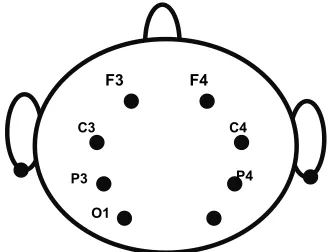
[image:2.595.340.506.83.209.2]EEG Data used in this study was recorded on a Grass Telefactor EEG Twin3 Machine available at Deptt. of Neurology, Sir Ganga Ram Hospital, New Delhi. EEG recording was done for five mental tasks for five days, from ten selected subjects. Data was recorded for 10 sec during each task and each task was repeated five times per session per day. Bipolar and Referential EEG was recorded using eight standard positions C3, C4, P3, P4,
Table 1. clinical characteristics of subjects.
Subject No. Subject Name Age Educational Status
1 Subject 1 22 BE
2 Subject 2 21 BE
3 Subject 3 23 BE
4 Subject 4 27 M.TECH
5 Subject 5 23 BE
6 Subject 6 22 BE
7 Subject 7 27 M.TECH
8 Subject 8 22 BE
9 Subject 9 22 BE
Figure 1. Montage for present study.
O1 O2, and F3, F4 by placing gold electrodes on scalp, as per the international 10–20 standard system of elec-trode placement as shown in Figure 1 The settings used for data collection were: low pass filter1 Hz, high pass filter 35 Hz, sensitivity 150 micro volts/mm and sam-pling frequency fixed at 400 Hz. The reference elec-trodes were placed on ear lobes and ground electrode on the forehead. EOG (Electooculargram) being a noise artifact, was derived from two electrodes placed on outer canthus of left and right eye in order to detect and eliminate eye movement artifacts.
2.3. Experiment Paradigm
An experiment paradigm was designed for the study and the protocol was explained to each participant before the experiment. In this, the subject was asked to comfortably lie down in a relaxed position with eyes closed. After assuring the normal relaxed state by checking the status of alpha waves, the EEG was recorded for 50 sec, col-lecting five session of 10sec epoch for the relaxed state. This was used as the baseline reference for further analysis of mental task. The subject was asked to per-form a mental task on presentation of an audio cue. Five session of 10sec epoch for each mental task were re-corded (as shown in Figure 2). The whole experimental lasted for about one hour including electrodes place-ment.
Data collected from nine subjects performing five mental tasks were analyzed. The following mental tasks were used.
Relaxed:The subject was asked to relax with their eyes closed. No mental or physical task to be performed at this stage.
Arithmetic Task:The subject was asked to perform arithmetic simple (trivial multiplication) and arithmetics
Figure 2. Timing of the protocol.
10ms 10ms
Relax Mental Task
Sec…
0 10 20
C3 C4
P4 P3
O1
[image:2.595.56.284.593.722.2]complex (nontrivial multiplication).An example of a trivial calculation is to multiply 2 by 3 and nontrivial task is to multiply 49 by 78. The subject was instructed not to vocalize or make movements while solving the problem. EEG signal were recorded corresponding.
Geometric figure Rotation:The subject was given 30 seconds to see complex three dimensional objects, after which the object was removed. The subject was in-structed to visualize the object being rotated about an axis.The EEG signals were recorded during this period.
Movement Imagination: The subject was asked to plan movement of the right hand and corresponding EEG signals were recorded during this period.
2.4. Feature Extraction
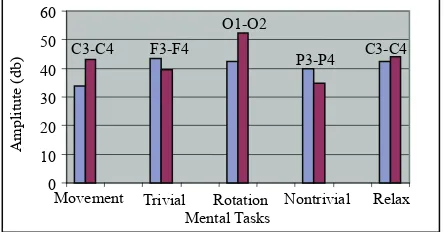
The frequency spectrum of the signal was first analyzed through Fast Fourier Transform (FFT) method. The FFT plot of signals from the all electrode pairs were observed and maximum average change in EEG amplitude was noted as shown in Figure 3.
For relaxed, the peaks of power spectrum almost co-incide for central area in the alpha frequency range (8–13 Hz) [11,12]. EEG recorded with relaxed state is considered to be the base line for the subsequent analysis. Mu rhythms are generated over sensorimotor cortex during planning a movement. For movement imagery of right hand, maximum upto 50% band power attenuation was observed in contralateral (C3 w.r.t C4) hemisphere in the alpha frequency range (8–13 Hz) [13]. For geo-metrical figure rotation, the peak of the power spectrum was increased (upto 100%) in right hemisphere rather than left in the occipital area for the alpha frequency range (8–13 Hz) [22]. For trivial multiplication, the peak of the power spectrum was increased (75%) in left hemisphere rather than right hemisphere in the frontal area for the alpha frequency range (8–13 Hz) [23]. For non trivial multiplication, the peak of the power spec-trum was increased (120%) in left hemisphere rather than right hemisphere in the parietal area for the alpha frequency range (8–13 Hz).
[image:3.595.309.540.80.218.2]The data was preprocessed using Wavelet packet transform to extract the most relevant information from the EEG signal [14]. By applying Wavelet packet trans
[image:3.595.310.538.241.380.2]Figure 3. Maximum average change in amplitude of PSD.
[image:3.595.311.537.405.543.2]Figure 4. Wavelet coefficient for relax task.
Figure 5. Wavelets coefficient for right hand movement task.
Figure 6. Wavelets coefficient for geometrical figure rotation task.
60
F3-F4
O1-O2
50 C3-C4 C3-C4
P3-P4 40
30 20
10 0
Movement Trivial Rotation Nontrivial Relax Mental Tasks
Amplitute (db)
[image:3.595.310.539.570.707.2] [image:3.595.60.282.589.705.2]Figure 8. Wavelets coefficient for complex arithmetic task.
form on the original signal wavelet coefficients in the (8–13 Hz) frequency band at the 5th level node (5, 3) were obtained as shown in Figures 4-8 We were able to reduce 1 second of EEG data to 21 coefficients. The signal was reconstructed at node (5, 3). These coeffi-cients are scaled and used as the best fitting input vector for classifiers.
2.5. Classifiers
We have compared three classifiers: Multilayer Back propagation Neural Network (MLP-BPNN), Support Vector Machine and Radial Basis Function Neural Net-work to discriminate various mental activities. All three classifier were fed with the same dimensional feature data under identical conditions.
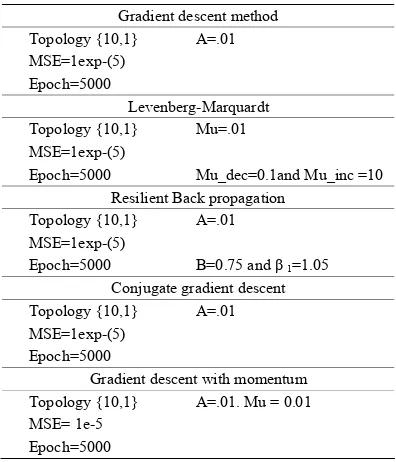
1) Multilayer Back propagation Neural Network For this classifier, a two layer feed forward neural network was used with topology of {10, 1} 10 neurons in hidden layer and 1 neuron in output layer. The neural network was designed to accept a 21 element input vec-tor and give a single output. The output neuron was de-signed to give 0 for baseline (relax task) and 1 for men-tal task. The five different training methods used for this classifier were Gradient Descent, Levenberg-Marquardt, Resilient Back propagation, Conjugate Gradient Descent and Gradient Descent back propagation with movemen-tum [15,16,17]. Parameter used for five training methods of neural network for classification of five mental tasks as shown in the Table 2.
2) Support Vector Machine
Input data as two sets of vectors in an n-dimensional space, an SVM will construct a separating hyperplane in that space, one which maximizes the margin between the two data sets.The solution of the SVM is based only on those data points that are at the margin and called sup-port vectors [18].
A kernel is utilized to map the input data to a higher dimensional feature space so that the problem becomes linearly separable. The kernel plays a very important role in the performance of the SVM applications. In the pre-sent study linear and polynomial kernel functions have
Table 2. Parameter used for different algorithms with
to pology{10,1}.
Gradient descent method Topology {10,1} Α=.01 MSE=1exp-(5) Epoch=5000
Levenberg-Marquardt Topology {10,1} Mu=.01 MSE=1exp-(5)
Epoch=5000 Mu_dec=0.1and Mu_inc =10 Resilient Back propagation
Topology {10,1} Α=.01 MSE=1exp-(5) Epoch=5000 Β=0.75 and β1=1.05
Conjugate gradient descent Topology {10,1} Α=.01 MSE=1exp-(5) Epoch=5000
Gradient descent with momentum Topology {10,1} Α=.01. Mu = 0.01 MSE= 1e-5
Epoch=5000
work (RBFNN) classifier was used. A two layer network was implemented with 21 input vectors, a hidden layer with Gaussian activation function consisting as many as hidden neurons as input vectors and one neuron in the output layer [19].The output layer has 1 neurons and neuron gives output as 1 for a particular task. In case of relax task, this value is 0.
2.6. Performance
The study evaluated the performance of three classifiers for classification of five mental tasks. 60% of entire EEG data (five sessions, five mental tasks with nine subjects) was taken as training data. Remaining 40% of EEG data was taken as test data and the performances were recorded. The entire analysis of the recorded data was carried out using Matlab® 7.0 from Mathworks Inc., USA.
Performance (RC) is calculated in percentage (%) as ratio between correctly classified patterns in the test set to the total number of patterns in the test set [20].
set test in the patterns of
number Total
patterns test classified correctly
of Number Rc
3. RESULTS & DISCUSSION
[image:4.595.325.523.105.336.2]excellent signal analysis tool, especially for non station-ary signals. Hence in the present study, WPT was used for feature extraction [21].
As per literature [11,12,13,22,23] most prominent area of brain for domain of information during five mental tasks was shown in Table 3 For relaxed, the peaks of power spectrum almost coincide in central area at a par-ticular base frequency .For arithmetic simple (trivialmul-tiplication), it was observed that the amplitude of the power spectrum for alpha frequency range (8–13 Hz) increased left hemisphere rather than right hemisphere in frontal region.
For arithmetic complex (non trivialmultiplication), it was observed that the amplitude of the power spectrum for alpha frequency range (8–13 Hz) increased left hemisphere rather than right hemisphere in parietal re-gion. For geometrical figure rotation, the peak of the power spectrum in the alpha frequency range (7–13 Hz) increased right occipital area. For movement imagery, the peak of the power spectrum in the alpha frequency range (7–13 Hz) had an attenuation central area.
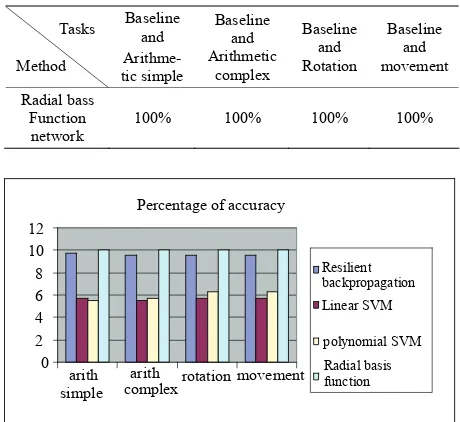
The present study was a comparison of three classifi-ers to discriminate five mental tasks effectively. Tables 4-6 shows the performance of neural network with resil-ient back propagation training method, support vector machine and radial bases function Neural Network for classifying of mental tasks w.r.t baseline as shown in Figure 9.
From Tables 4-6 we can say that RBF neural network method has best performance among all the classifiers for classification of mental tasks w.r.t baseline. By using RBF Neural Network 100% accuracy was obtained. While classification ,Resilient back propagation training method showed better performance than other (Gradient Descent method Levenberg-Marquardt, Conjugate Gra-dient Descent and GraGra-dient Descent back propagation with movementum) back propagation training methods.
Table 3. Domain of information.
Tasks information Domain of (Contralateral/ Ipsilateral)
Type of change in amplitude of alpha rhythm(8-13 H ) Movement
Imagination Central Contralateral Decreased
Arithmetic
Simple Frontal, Ipsilateral Increased
Geometrical figure
rota-tional
Occipital Ipsilateral Increased
Arithmetic
complex parietal Ipsilateral Increased
[image:5.595.310.538.95.272.2]Base line Occipital, Central Contralateral Coincide
Table 4. Comparisons of different NN training methods.
Tasks Method Baseline and Arithme-tic simple Baseline and Arithmetic complex Baseline and Rotation Baseline and movement Gradient Descent Back Propagation
95% 95% 87.5% 90%
Leveberg-
Marquardt 95% 90% 90% 92.5%
Resilient Back
Propa-gation 97.5% 95% 95% 95%
Conjugated
Gradient BP 97.5% 92.5% 92.5% 92.5%
GD BP with
[image:5.595.310.535.302.385.2]Momentum 95% 95% 90% 90%
Table 5. Comparisons of different kernel function.
Tasks Method Baseline and Arithme-tic simple Baseline and Arithmetic complex Baseline and Rotation Baseline and movement Linear
Function 57.5% 55% 57.5% 57.5%
Polynomial
[image:5.595.308.538.409.620.2]Function 55% 57.5% 62.5% 62.5%
Table 6. Performance using radial basis function.
Tasks Method Baseline and Arithme-tic simple Baseline and Arithmetic complex Baseline and Rotation Baseline and movement Radial bass Function network
100% 100% 100% 100%
Figure 9. Performance of comparision using three classifiers.
4. CONCLUSIONS
This for various applications of BCI systems, it is nec-essary that EEG feature related to the human intentions were to be uniquely identified as accurate as possible. In this study, nine healthy male subjects were selected to investigate three classifiers of discriminating five mental
0 2 4 6 8 10 12 arith simple arith
complexrotation movement
Resilient backpropagation Linear SVM
Percentage of accuracy
tasks (relaxed state, movement imagery of right hand, geometrical figure rotation, arithmetic simple task, arithmetic complex task) effectively.
The result showed the performance of neural network with resilient back propagation training method, support vector machine and radial bases function Neural Net-work for classifying of mental tasks w.r.t baseline. RBF (Radial Basis Function) neural network method has best performance among all the classifiers for classification of mental tasks w.r.t baseline. By using RBF Neural Network 100% accuracy was obtained. While classifica-tion, Resilient Back Propagation training method showed better performance than other (Gradient Descent method, Levenberg-Marquardt, Conjugate Gradient De-scent and Gradient DeDe-scent Back Propagation with movementum) back propagation training methods. The main conclusion is that the Radial baisis function net-work was found to be most suitable in various applica-tions of BCI systems.
5. ACKNOWLEDGEMENTS
The authors would like to acknowledge their gratitude to the staff of EEG Laboratory at Sir Ganga Ram hospital, New Delhi for the help in carrying out the experiment.
REFERENCES
[1] Lotte, F., Congedo, M., Lecuyer, A., Lamarche, F., Ar-naldi, B. (2007) A review of classification algorithms for EEG bases brain computer interface. Journal of Neural Engineering, 4, 1-13.
[2] Wolpaw, J.R., Birbaumer, N., Farland, D.J., McPlurtscheller, G., Vaughan, T.M. (2002) Brain com-puter interfaces for communication and control. Clinical Neurophys, 767-791.
[3] Pfurtschelle, G., Flotzinger, D. and Kalcher, J. (1993) Brain computer interface a new communication device for han- dicapped people. J Microcomput. Applicate, 16, 293-299.
[4] Wolpaw, J.R., Vaughan, T.M. and Donchin, E. (1996) EEG based communication prospects and problems. IEEE Transactions on Rehab. Engineering, 4, 425-430. [5] Keirn, Z.A. and Aunon, J.I. (1990) A new mode of
com-munication between man and his Surroundings. IEEE Transactions on Biomed. Eng, 37, 1209-1214.
[6] Wolpaw, J.R., Leob, G.E., Allison, B.Z. Donchin, E. Turner, J.N. (2006) BCI meeting 2005-wokshop on sig-nals and rerecording methods. IEEE Transactions on
Neural Systems and Rehabilitation Engineering, 14,
138-141.
[7] Muller, G.R., Scherer, R., Braunesis, C., Pflurtscheller, G. (2005) Steady state visual evoke potential based commu-nication impact of harmonic frequency components. Journal of Neural Engineering, 2, 123-130.
[8] Elean, A., Curran and Jamaica Strokes (2003) Learning to control brain activity: a review of the production and
control of EEG components for driving bain compute in-terface systems. Journal of Brain and Cognition, 51, 326-336.
[9] Wolpaw, J.R., Farland, D.J., McVaughan, T.M. (2003) The wads worth centre brain computer interface research and development program. IEEE Transactions on Neural System and Rehabilitation Engineering, 11, 204-207. [10] Boostani, R., Graimann, B., Moradi, M.H, Plurfscheller,
G. (2007) Comparison approach toward finding the best feature and classifier in cue BCI. Journal of Medical and Biological Engineering and Computing, 45, 403-413. [11] Pfurtscheller, G., Neuper, C., Schlogl, A. and Lugger, K.
(1998) Separability of EEG signals recorded during right and left motor imagery using adaptive auto regressive parameters. IEEE Transactions on Rehabilitation Engi-neering, 6, 316-325.
[12] Palaniappan, R. (2006) Utilizing gamma band to improve mental task based brain-computer interface design. IEEE Transactions on Neural Systems and Rehabilitation En-gineering, 14, 299-303.
[13] Santhosh, J., Bhatia, M., Sahu, S., Anand, S. (2004) Quantitative EEG analysis for assessment to plan a task in ALS patients, a study of executive function (planning) in ALS. Journal of Cognitive Brain Research, 22, 59-66. [14] Akay, M. (1995) Wavelet in biomedical engineering.
Journal of Annals of Biomedical Engineering, 23, 529-
530.
[15] Ravi, K.V.R. and Palaniappan, R. (2006) Neural network classification of late gamma band electroencephalogram features, Journal of Soft Computing A Fusion of Founda-tions. Methodologies and Applications, 10, 163-169. [16] Haykin, S. (2000) Neural Network a comprehensive
foundation. 2nd edition, Prentice Hall.
[17] Hagen, M., Demuth, H. and Beale, M. (1996) Neural Network design. Boston MA, PWS Publishing.
[18] Zhou, S.M., Gan, J.Q., Sepulveda, F. (2008) Classifying mental tasks based on features of higher-order statistics from EEG signals in brain-computer interface. Informa-tion Sciences: an InternaInforma-tional Journal, 178, 1629-1640. [19] Chen, S., Cowan, C.F.N. and Grant, P.M (1991). Or-thogonal least squares learning algorithm for radial basis function networks. IEEE Transactions on Neural Net-works, 2, 302-309.
[20] Cheng, M., Gao, X., Gao, S., Xu, D. (2002) Design and implementation of a brain computer interface with high transfer rates. IEEE Transactions on Biomedical Engi-neering, 49, 1181-6.
[21] Ting, W., Zhenga, Y.G, Bang-huaa, Y., Hong, S. (2008) EEG feature extraction based on wavelet packet decom-position for brain computer interface. Measurement, El-sevier Journal, 41, 618-625.
[22] Nikolaev, A.R. and Anokhin, A.P. (1998) EEG frequency ranges during reception and mental rotation of two and three dimensional objects. Neuroscience and Bheaviour Physiology, 29, 203-223.