[Date]
Migration and welfare state
Analysis of the socio-economic impact of
migration on different welfare state models
Beatrice Ferdinandi (s1741667)
1
Migration and welfare state
A
nalysis of the socio-economic impact of migration on different welfare state
models
Beatrice Ferdinandi
S1741667
[email protected]
Submitted in partial fulfilment of the requirements for the degree of Master of Science, program European Studies, University of Twente
2015-2016
Supervisor:
Dr. Marinus R.R. Ossewaarde, Associate Professor in Sociology
Second reader:
2
Abstract: the phenomenon and the presence of migrants, which tend to leave their
own country for several reasons, such as wars, civil conflicts or economic
instability, in some states has been always subject to variation in time and
quantity. This thesis presents research regarding the question: what is the
impact of migration on social policies in countries belonging to different
welfare state regimes? Through the qualitative and quantitative
interpretation of several data set, gathered from statistics, reports and
laws, it will be tested whether different conditions and factors could have
an influence on the policies’ outcome according to various welfare state
regimes. Overall the findings of this research indicate that the presence of
migrants can affect the economic and social life of different countries.
3
List of abbreviations
ALMP Active Labour Market Policy
AMIF Asylum, Migration and Integration Fund
CEAS Common European Asylum System
CEFR Common European Framework of Reference for Languages
CFSP Common Foreign and Security Policy
CIDOB Barcelona Center for International Affairs
CPIA Centri Provinciali d’Istruzione degli Adulti
DG Directorate General
EAEC (Euratom) European Atomic Energy Community
EC European Community
ECRE European Council on Refugees and Exiles
EEC European Economic Community
EIF European Fund for the Integration of non-EU immigrants
ESF European Social Fund
EU European Union
EUROSTAT Statistical Office of the European Communities
GDB German Federation of Trade Unions (Deutscher Gewerkschaftsbund)
GDP Gross Domestic Product
ILO International Labour Organization
MIPEX Migrant Integration Policy Index
MPG Migration Policy Group
MS Member State
NELM New Economics of Labour Migration
NGO Non-Governmental Organisation
OECD Organisation for Economic Co-Operation and Development
PISA Programme for International Student Assessment
SFI Swedish for Immigrants
SVR The Expert Council of German Foundations on Integration and Migration
(Sachverständigenrat deutscher Stiftungen für Integration und Migration)
TCN Third-County National
TEAM Tessera Europea di Assicurazione Malattia (European Health Insurance
Card)
UK United Kingdom
4
List of figures
Figure 1: Esping-Anderson Welfare State Regime. Source: from http://mapchart.net/. ... 20
Figure 2: Esping-Anderson and Gal Welfare State Regime. Source: from http://mapchart.net/. ... 20
Figure 3: Data-set for the qualitative analysis. Source: Own compilation... 29
Figure 4: Coding scheme. Source: Own compilation. ... 33
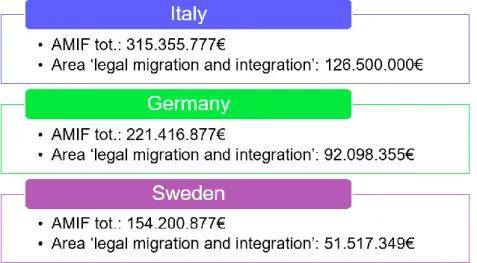
Figure 5: AMIF data from DG migration and Home Affairs, 2014. Source: Own compilation. ... 52
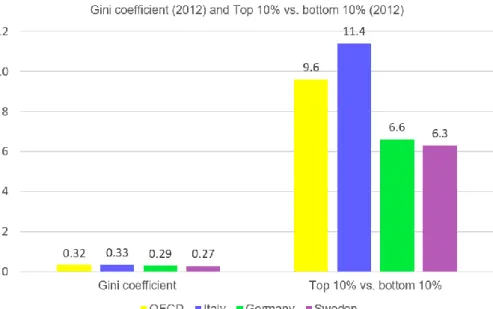
Figure 6: Gini Coefficient and Top 10% vs. bottom 10%, OECD, 2012. Source: Own compilation. 53 Figure 7: Over-qualification gap between foreign- and native-born population, 2012. Source: Mipex, 2015. ... 55
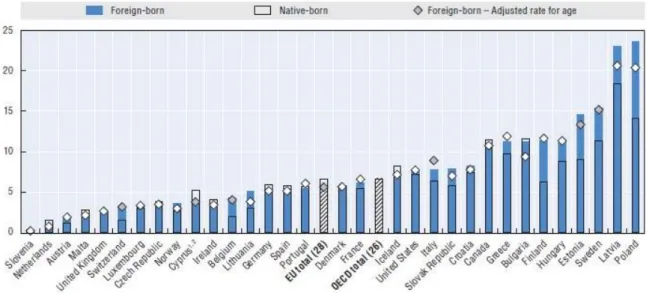
Figure 8: Obstacles to getting a suitable job by migration status, labour status and educational attainment level, 2014. Source: Eurostat. ... 56
Figure 9: Foreign- and native-born adults who report unmet medical needs, 2012. Source: OECD, 2015. ... 56
Figure 10: Foreign- and native-born adults who report unmet medical needs, OECD, 2015. Source: Own compilation. ... 57
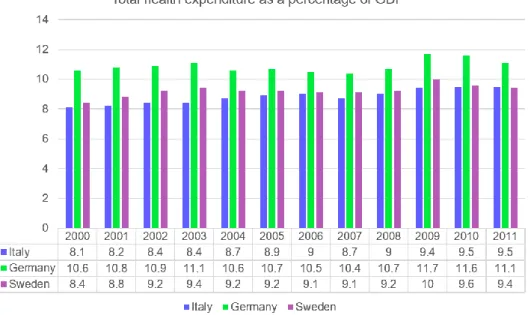
Figure 11: Total health expenditure as a percent of GDP, ILO. Source: Own compilation. ... 58
Figure 12: Employment rates of foreign-born population aged 15-64 not in education by educational level, 2012-13. Source: OECD, 2015. ... 60
Figure 13: Native- and foreign-born unemployment, OECD, 2014. Source: Own compilation. ... 61
Figure 14: percentage of self-employment rate by place of birth (native- and foreign-born), 2009-2011, OECD. Source: Own compilation. ... 62
Figure 15: GDP, 2016. Source: Eurostat. ... 63
Figure 16: Immigration in Germany, Italy and Sweden, 2016. Source: Eurostat... 63
5
Table of Contents
1. Introduction ... 7
1.1 Background of the research problem ... 7
1.2 Research question ... 8
1.3 Approach ... 10
2. Theoretical framework ... 14
2.1 Migration: between transnational bonds and integration ... 15
2.2 Legislation at the European Union level ... 16
2.3 Development and evolution of welfare state theories ... 18
2.4 Migratory historical background in Italy, Germany and Sweden ... 21
2.5 Conclusion ... 25
3. Methods ... 27
3.1 Data collection ... 28
3.2 Data analysis ... 30
3.2.1 Education ... 32
3.2.2 Health ... 33
3.2.3 Labour market ... 33
3.3 Conclusion ... 34
4. Results and discussion I ... 35
4.1 Part I: qualitative analysis ... 35
4.1.1 Access to education and recognition of foreign qualifications ... 38
4.1.2 Language and integration courses ... 40
4.1.3 Accession to basic health service and role of non-governmental actors ... 42
4.1.4 Type of contracts available for migrants, sectors open to migrants to work in and willingness of employers to hire third-country nationals ... 44
4.1.5 Family reunification ... 48
4.2 Conclusion ... 49
5. Results and discussion II ... 51
5.1 Part II: quantitative analysis ... 51
5.1.1 Emphasis on education ... 54
5.1.2 Health care functioning ... 56
5.1.3 Employment/unemployment rates and relation between Gross Domestic Product and migration’s flows ... 59
5.2 Conclusion ... 65
6. Concluding chapter ... 67
6.1 Summary of findings ... 67
6
6.3 Suggestions/recommendations ... 73
7. References ... 76
7
A critical aspect of managing migration is the successful integration of legally residing immigrants and their descendants. At the same time immigration policy can contribute to the success of integration policy. It is vital for Member States to
maintain and further develop societies in which newcomers feel welcome, which are defined by a spirit of mutual understanding and accommodation, and where
there are clear expectations of all residents – new and old. (Council of European Union, 2004, p.15)
1. Introduction
The echo of the dramatic geopolitical changes in Northern Africa and Middle-East occurred in the
past ten years, lately reached Europe with what probably is the greatest migration since World War
II. The aftermath of this event is still to be seen, however this migration certainly had and will
significantly affect countries that see their population fleeing and host countries both.
1.1 Background of the research problem
Whether used as ramp or dreamed as final destination, most of the countries in the European Union
(EU) are deeply influenced by this long and complex diaspora. Most of EU Member States (MSs)
coping with this phenomenon are interested in promoting a fruitful integration into the host society. However, due to differences among the social structures of EU MSs and to variation of migration’s
features over time, integration into host societies is extremely challenging and in continuous
evolution. Moreover, migration can have influence on the approach of states, throughout changes in
their social policies. Integration is a two-ways process: it starts with the willingness of migrant to fit into the new society but it is governments’ duty to develop the right environment that allow the final
integration, through the establishment of social bridges and bonds. These bonds are important as
basis for emotional support and self-confidence for a foreigner: knowing someone in the host country
or maybe even just experience act of kindness from a stranger, may have a positive influence on the
behaviour and attitude of migrants, leading them to feel more confident and secure in the new
environment. This integration process may be built only if trust and reciprocity exist: in order to create
bridges between different groups real chances are necessary for people in order to spend time
together and exchange opinions and useful information and resources (Strang & Ager, 2010).
Moreover, immigrant workers, even the less-skilled, are usually welcomed during the years of boom
previous to the financial crisis, but they turned into easy targets for xenophobes and populists when
the economic situations degenerate (Gaston & Rajaguru, 2013). When it comes to migrant
integration into host societies, employers have an important role in the whole process of
socio-cultural incorporation. Heckmann (2005) found four separate dimensions of immigrant integration:
structural dimension, namely their rights and access to institutions in the host country; cultural
8
interactive integration, namely the network of relations that a migrant will establish with natives; and
the identification integration, which refers to the feeling of belonging within a social system (van
Riemsdijk, Basford & Burnham, 2016).
This sociological approach is well established in the EU, in fact, the European Council on Refugees
and Exiles (ECRE) stated that, on one side, refugees and migrants must be prepared and aware of
the radical changes of lifestyle; but, on the other side, there is also a need from the host governments
to adapt their institutions. The process of integration involves different steps: presence of the
conditions to participate in the new society and the actual involvement and the perception to be
finally admitted in the host society. Social structures and institutions differ across Europe, but at the
same time common characteristics can be extrapolate. Arrangements between state, market and
family at qualitative level will find in the study of different countries. Therefore, the welfare state conceived by Esping-Anderson is more than a mechanism to correct the structure of inequality: “it is, in its own right, a system of stratification (Esping-Anderson, 1990, p.23)”. The study carried out
by Esping-Anderson identified three different welfare state models (namely the
conservative-corporatist one, the social-democratic one and the liberal one). In addition to this three different
welfare state models, Ferrera (1996) and then Gal (2010) added a fourth welfare regime, taking into
account the role of family network into the society. This fourth regime is known as Southern
Mediterranean and include countries such as Cyprus, Israel, Italy, Greece, Malta, Portugal, Spain
and Turkey.
In order to be able to observe discrepancies in how different welfare state regimes (WSR) handle
the massive incoming flow of people, it can be seen also the role of the government in the general
picture, sometimes perceived as single actor, autonomous from transnational ties, which can decide
to implement or drop policies, or though as part of a more general mechanism. In addition, several
factors can be depicted that have influence in the overall choice of the government, such as “bureaucratic choices made by the government, international relations, absorption capacity of the local host community, and national security consideration (Jacobsen, 1996, p.660)”. The centrality of the government regarding migrants’ integration policies and welfare decisions, is seen also in the
provision of access of, or exclusion from, the general welfare support: EU MSs act more gently
toward some migrants while discourage others with a different nationality (Geddes, 2003).
1.2 Research question
Integration is not a one-way phenomenon, therefore, to fulfil it there is a need for the collaboration
of two sides: on one side, migrants have to give up part of their being and their culture, and on the
other side, the government has to modify their social policies and adapt their institutions to welcome
them. These modifications in social policies could be taken as qualitative and quantitative indicators
of the level of integration of migrants in a given welfare state regime. Therefore, the relevant research
9
What is the impact of migration on social policies in countries belonging to
different welfare state regimes?
With reference to the main research question, two sub-questions, which would contribute to clarify
the overall findings, can be added:
- To what extent do third-country nationals have an influence in determine the policy migration
outcomes of a country?
- To what extent can findings from the analysis index and statistics be linked to different welfare
state models?
The two sub-questions will investigate more in depth the behaviour of different welfare state regimes,
using as a start the previous knowledge developed by authors such Esping-Anderson and Ferrera.
Both sub-questions will develop new insights, just with a different angle: the first sub-question is
focused on the qualitative part of the analysis, while the second one will analyse statistics and graphs
to gain quantitative results. The just mentioned research question is formulated as general one, but
its character needs detailed analysis to reach the development of new insights, so the two
sub-questions, which are the basis for the chapters 4 and 5, were formulated to provide a more detailed answer. Therefore, when ‘social policies’ is taken as main aspect to analyse, what is implied is how
the flow of migrants might have positive or negative influence on the overall host society and how
different countries might experience various behaviours towards them. The social policies wanted to
be inspected are focused on specific sectors, as a consequence it will see if the health sector is
influenced by the presence of migrants, by looking at the health expenditures as a percentage of the
total gross domestic product (GDP) of a settled country; it will also see if the education sector is
influenced by the presence of migrants within a country and if it could be depicted a change in the
labour market, by looking at employment/unemployment rates of natives and migrants. As regard to
the three countries chosen as setting for this study, what can be seen is that they belong to different
welfare regimes: Italy to the Southern Mediterranean model, Germany to the
conservative-corporatist model and Sweden to the social democratic model; the countries selected play a major
role in their welfare category. Italy was picked as representative for the Southern Mediterranean
model since the relevant role in receiving migrants, while Germany and Sweden were thought to be
the perfect exponent for the other models of welfare regimes: Germany for being one of the major
European countries where migrants want to settle and Sweden for its well-known reputation of
country of equality and universalism. In addition, the information gathered for these three countries
will allow a broad comparison, covering a wide spectrum of fields.
The academic debate existing about the integration of migrants in different host country has been
object of several studies, but most of them were focused on single country approach or referred to
old, and archaic, view of the welfare state models or regimes. Since the flow of migrants is growing
10
filled by adding a recent comparison among different EU MSs. The research question will try to provide extensive knowledge of the migrants’ integration process and how this has influence on the
welfare state (for major hint look at the social expenditure as a proportion of GDP, which captured
the essence of a welfare state and check differences across settled countries). By answering the
main research question, the outcome will contribute to the evolution of the theory about the influence
that external factors might have on welfare state (starting with the division of Esping-Anderson); in
addition, throughout the analysis of several data a thorough idea will be given on how different
sectors can contribute to success or hamper the integration of migrants.
The research question was found with the purpose of adding new insights in the academic debate
and the outcomes are thought to be important and crucial, above all because the migration is a
phenomenon that started in Europe around four decades ago but has ongoing effects still now.
Moreover, the findings of other studies took into consideration Italy as part of the conservative
welfare state and as a consequence their results were different from the outcomes that are expected
from this research question. Here the presence of several welfare state regimes highlights, in
addition to the original work of Esping-Anderson, also the research of Ferrera and Gal, which added
another typology of welfare state: the Southern Mediterranean. In the light of this findings, this
research question tries to developed new insights on how the integration process of migrants can
affect social policies of a country, by taking information and data about Italy, Germany and Sweden
in a country case comparison study. Moreover, the new division of welfare state, namely the
presence of Italy as part of the Southern Mediterranean welfare type, will provide a new framework
in which analyse data and a more recent country comparison experience.
1.3 Approach
The current situation that Europe is facing, involves both migrants and refugees, but the label distinction between terms, ‘refugee’ in one corner, and ‘migrant’ in the other, could easily create
confusion. It is hard for a government that lack consensus binding on a legal level for who is a
refugee, decided when a person is not a refugee anymore, above all for actual twisted circumstances
which sees the predominant role of the governments as main agencies to respond to such crisis
(Cole, 2015; Zetter, 2007). The clear definition of refugee is found in the 1951 Geneva Convention Relating to the Status of Refugee, described as a person who: “owing to well-founded fear of being
persecuted for reason of race, religion, nationality, membership of particular social group of political
opinion, is outside the country of his nationality and is unable or, owing to such fear, is unwilling to avail himself of the protection of that country (Article 1, Geneva Convention, 1951)”. As regard to the
unit of analysis of this study (migrants), it must be noticed that nowadays the flow of refugees, which
tried to reach Europe as a life line, is massive, and seemed to be a more interesting field to study.
However, the data for the refugee integration into host countries are not always available in the
11
Since ‘refugee’ as a category could easily fit in the more general ‘migrant’ one, together with ‘forced migrants’ for example, focus on integration of migrants and on how different countries deal with
migration in their social policies, seemed the best choice. The dependent variables, crucial for the
deep understanding of how the level of integration of migrants can variate in relation to different
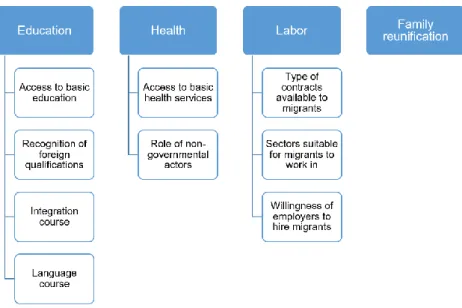
welfare state environments, were borrowed from the study of Ager and Strang of 2008. Some key
areas in the public sector (in this specific case: education sector, health sector and labour sector)
can be observed and the modification in these areas are analysed as indicator of migrants’
successful integration in the host society. The way in which different countries respond to the
incoming flow of people, by modifying their own social structure and infrastructures, could be
explained through the presence of different welfare state regimes. Ager and Strang study was
chosen for the relevance of the topic debated; but what is missing from their work is the comparison
among different countries and within different frameworks than just United Kingdom (UK). Therefore,
to fix this gap, attention was focused on EU as a setting and, to make the findings broader and more realist as possible, it was decided to rely on Esping-Anderson, Ferrera and Gal’s work.
Relevant data were gathered having as a purpose migrants and policies related to them in several
states, all done in order to provide a clearer picture of the level of integration in different host
countries and to see how EU MSs belonging to several welfare state regimes face migration and the
following integration. The most valuable option was to refer to both qualitative and quantitative data,
which will provide an exhaustive analysis of the same problem from two separate and independent
perspectives. Qualitative data were found as online documents1, while laws and agreements were
selected according to the relevance that could have had in order to answer the main research
question. Quantitative data were gathered by web-browsing site of important organisations, such as
the Organisation for Economic Co-Operation and Development (OECD) or the International Labour Organization (ILO). Reports used to make a comparison among countries were: the “Indicators of Immigrant Integration 2015”, the “International Migration Outlook 2015”, and the “Migrant Integration Policy Index 2015”. To lead the analysis further, it was also look at the Statistical Office of the European Communities (Eurostat) website, in particular the general “Migrant Integration statistics”;
report and statistical index were selected for the pertinence of the objectives studied.
Welfare state as field of interests gained more and more attention, started in the 1990s with
Esping-Anderson, and continued until these days. Several reports and investigations made it possible to
control the evolution of the original models and the application in the modern states; but most of the
times, authors were inclined to focus on just welfare state types without extending their knowledge
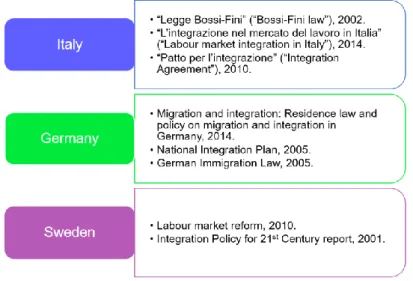
1They included for Germany: “Residence law and policy on migration and integration in Germany”, the “National Integration
Plan” of 2005 and the “German Immigration Law” of 2005; for Italy: the “Bossi-Fini” law of 2002, an OECD document named “L’integrazione nel mercato del lavoro in Italia” (“Labour Market Integration in Italy”), the “Patto per l’integrazione” of 2010 (“Integration Agreement”); and for Sweden: the “Labour market reform” of 2010, the Integration Policy for 21st Century
12
to other closed field. Here comes handy to see how another external phenomenon, such as
migration, can have an influence within the EU MSs and their different welfare state regimes. Since
it is not possible to consider qualitative data in a quantitative way and vice versa, the approach that
suits best the research question was the mixed method approach. As regard to the qualitative part,
the method chosen was the content analysis, carrying on through the analysis of online policy
documents for each country. In order to analyse if there are similarities or differences among the approach of distinctive states that lead to migrants’ integration, the study carried by Ager and Strang
was selected as tool to code other documents, by means of an appropriate coding scheme. For the
quantitative part, the method chosen was the descriptive analytical approach of pooled data obtained
from Eurostat, ILO and OECD on inflow of foreign population employment/unemployment compared with the natives’ ones, health expenditure as percentage of GDP and obstacles that migrants faced
when they search for a job. This method was chosen as the most suitable approach since its aim is
to generate evidences, based on the theoretical framework, which will measure if there is a relationship between the WSRs and the level of migrants’ integration2.
General and particular data and statistics were compared to see if the public expenditure in a country
has different outcomes related to both migrants and natives. The data evaluated were chosen
according to a precise pattern: the subject of the report had to be relevant to the field explained in
the research question; the more recent the documents the better the results for the overall picture;
as regard to the qualitative information, laws and policy documents were observed, while for the
quantitative data, reports from OECD and Migrant Integration Policy Index (Mipex) and online
statistical database, such as Eurostat, were conceived as main sources for numerical data and
information. However, migration is not only a national phenomenon, but it involves more general
laws and several actors, therefore it implies the necessity of a superior entity with peculiar power,
that works without having boundaries in mind and national perspectives as main mind-set. With this
view in mind, it is helpful to have a look at the directives and regulations present at the European
level, such as the Blue Card directive or the one for the family reunification, and see how Italy,
Germany and Sweden react at the national level to them, by adapting or not their policies as regard to migration and migrants’ integration.
In order to answer to the research question already presented in this chapter, the overview will
proceed in the following manner. In the second chapter a theoretical framework is necessary,
especially if some background theory and knowledge about the phenomenon, that will be explored
and explained, want to be added. When some theoretical information had been specified, the third
chapter will describe methods, data collection and data analysis, with the definition of the several
13
variables used in this study and additional information about where the data were found and why
they were thought to be important. Following, in the fourth and fifth chapters of this research, they
will be carefully gathered and analysed the needed data, with a comparison of three different
countries scenario (Italy, Germany and Sweden); in addition, it will be also examined qualitatively
the possible policy outcomes in all of these States using a coding scheme. The sixth chapter will be
a summary of the entire study: conclusions will be drawn, starting from the theories and the
information presented in various studies, and it will further give attention to what it is new about this
research (what could add to the general context in the subject of integration, particularly in the social
field). At the end, advices will be suggested to improve the integration process in its complexity and
14
2. Theoretical framework
To analyse the impact of flow of migrants in the variables of interests (health, education and labour),
a theoretical framework is needed and this chapter aims at providing such a framework. The
theoretical approach used to conduct the analysis is based on findings from the field of migration
sociology, in particular findings by Ager and Strang about the integration of migrants in the UK will
form the theoretical framework. Even though these findings are developed for the English context,
their results and theory can be used as a useful theoretical background for answering the relevant
research question. As will be shown, Ager and Strang found more than three areas of interests to
evaluate the level of integration of migrants but here the focus will be on the three that can also found
within OECD reports, EU legal measures and Mipex of 2015. The focus of this research will be on structural integration of migrants into EU host countries and in the policies’ adaptation of each EU MSs with different welfare state models as a basis. Even if the latest news reported the refugees’
situation in Europe as the newest crisis to study, it would be tricky and difficult find enough data to make a comparison among countries. For this reason, the attention of the study was on the migrants’
side, where the amount of information available is tested back in the days and, therefore, made the
comparison easier. An overview of theories about welfare state will be provided in order to figure it out how migration and migrants’ integration in host societies can be shaped according to different
welfare state regimes.
In this chapter the focus will be on the explanation of concepts relevant to understand the logic
behind the development of new insights. As starting point, a general overview of migration as a
phenomenon will be given, with attention on the transnational ties and social bonds that help
migrants to feel integrated into the host societies and a brief mention to some features of migration
theories, which grant different reasons for migrants to leave their native country and to put effort or
not to stay and fit in the host society. Then a general summary of the main characteristics of different
welfare state regimes will be added, to help understand which differences can be highlighted within the approach of countries belonging to different welfare state types toward migrants’ integration: is
crucial to know the main features of them if some differences want to be stressed. Moreover, the
approach of Italy, Germany and Sweden within different fields of interests will be added. At the end,
a summary of the overview of the chapter will be found.
In order to create a solid basis to further proceed with the analysis of data and answer the research
question, several concepts needed to be introduced. The overview provided by this theoretical
chapter will help in developed a framework on which build new insights: to better understand how
migrants can have or cannot have a major impact on different welfare state system, other concept need to be explained, such as the relevance of transnational ties, the role of the EU as rules’
generator, the main characteristics of the models taken into account and the migratory history of the
15
relevance of transnational ties will give the picture of how migrants might or might not feel part of a
host society; therefore, it will contribute to the knowledge of how foreigners could face various
experiences. At the same time, knowing which are the detailed elements of the three welfare state
models chosen, will grant the necessary expertise to deeply comprehend and interpret the gathered
data and further create new insights.
2.1 Migration: between transnational bonds and integration
In order to clarify the distinction between migrants and refugees, the work of Hein de Haas (2010)
can be reported, whom affirmed that migration is often considered more than a simplistic strategy
which short-term survival purposes. Rather, he stated that the phenomenon of migration is often believed as a migrants’ deliberate decision to improve the ground life conditions, make investments
possible and help to reduce variation in the family income; but it can be seen also as a way out to
assure a broader range of assets and properties for the entire family, against future possible shocks.
Moreover, one of the major aspects of differentiation between a migrant and a refugee is that a
refugee usually tends to fled his own home country because of some uncontrollable external
phenomena, regardless the individual willingness, while a migrant can be pushed to leave his country
for economic reason and not only for political instability or the presence of war and conflicts in the
native country.
The phenomenon of migration could be used as a starting point to understand integration in the host countries of reference: migrants’ transnational ties could be seen as more or less significant, but still
central in the impact that transnationalism has on the entire process of integration, creating a relation of mutual co-existence. There is a correlation between migrants’ decision to leave their country and
the willingness to create and maintain transnational ties with people from their home country;
therefore, integration and transnationalism, both forms of social process, have a direct tie between
each other. The level of integration is linked with the full participation in the labour market, and even though the focus is on the integration process, also the impact on the migrants’ lives and the societies they choose to live in can be shown. The focal point is the ‘functional’ aspect of the whole process, the one “that include how migrants are incorporated into societal structures (e.g. labour market, education) (Bivand Erdal & Oeppen, 2013, p.871)”.
Migrant integration process refers to the entire procedure of adapting in a new country and
subsequent new environment, in a political and social way. Since transnationalism is linked also to
adaptation, in particular to modified circumstances followed from migration in a defined spatial distances, four different position can be highlighted within this relationship. The ‘alarmist’ view,
according to which functional ties make migrants loyal to both their country of origin and the country
of settlement, prevent them for a full integration in the host society, especially when ideological or real conflict between the two countries are detected. The ‘less alarmist but also pessimistic’ position,
16
use immediately their knowledge and skills in the country of settlement, relying on the transnational network of ties to survive. The ‘positive’ view, when transnationalism and integration are seen as
mutually supportive: one example could be how return visits of transnational character are able to create resources that can be further invested in integration. The ‘pragmatic’ approach, according to
which the reality that migrants experienced is more nuanced than a basic and simplified choice
between just two realities (Bivand Erdal & Oeppen, 2013).
The linkage between integration and transnationalism can be deeply analysed also as an example of typology of social connection. Ager and Strang (2004) divided the ‘social connection’ field in three branch: the ‘social bridges’ (relations with members of other communities, such as transnational ties with people from their home state); ‘social bonds’ (connections with people within a community); and ‘social links’ (relations with institutions in general, including also services provided in the context of
local and central framework). The possibility to being kept in touch with people from your home
country, thanks to the development of new technology, has increased the chance to create even a
transnational social space, where it is more likely to maintain and develop genuine relationship,
particularly in the first period of arrival in the host country (Wahlbeck, 2002). The relevance of social
bonds with natives is raised above all the other ties that they might experience, since it let migrants
able to facilitate the whole process of cultural adaptation and gain access also to external assets
and let them spread information freely, while the transnational ties with co-ethnics tends to
strengthen the sense of solidarity and reciprocity (Kanas, van Tubergen & Van der Lippe, 2011).
Ager and Strang (2004) might also have the answer to the question ‘how could it be detected if a migrant is completely integrated within the host society?’, since they look at the achievement of three
specific features:
An individual or group is integrated within a society when they: achieve public
outcomes within employment, housing, education, health etc. which are equivalent
to those achieved within the wider host communities; are socially connected with
members or a (national, ethnic, cultural, religious or other) community with which
they identify, with members of other communities and with relevant services and
functions of the state; and have sufficient linguistic competence and cultural
knowledge, and a sufficient sense of security and stability, to confidently engage
in that society in a manner consistent with shared notions of nationhood and
citizenship. (Ager & Strang, 2004, p.5)
2.2 Legislation at the European Union level
The role of the EU in the overall integration of migrants into host countries might appeared marginal,
however, it is more important than what it seems after a first look. The European Union has different
17
decision-making process of national entities. Therefore, if the fact that the EU spends part of its funds
to help its MSs in improving the already existed policies and boosting them to became more efficient,
then its role will be clearer. Starting from the 1960s, a narrowing pattern for legal migration into EU countries is observed and, in addition, an even stricter categorisation with regard to migration’s
politics and welfare (Geddes, 2003). The European Council meeting at Tampere in 1999 was the
milestone to affirm the basis for the launch of a more specific solution, in the broad Common Foreign
and Security Policy (CFSP), to deal with the phenomenon of migration, namely the Common
European Asylum System (CEAS) in two phases: a stage to promote harmonisation of determined
key elements of asylum policy and another one, part of The Hague Programme, conceived as a fully
integrated EU broad asylum system, able to recognise a unified status for all those people who
granted asylum in the EU (Hatton, 2009). Of all this process, there are several directives and
regulations that are interesting: one for all the Directive 2013/33/EU of the European Parliament and
of the Council (known also as Reception Conditions Directive), that established the original terms for
access to employment and training, housing, and health and education services for asylum seekers
that have not been yet recognise as refugees.
Other crucial directives to mention when assimilation and integration of migrants is the specific goal
are: the Council Directive 2003/86/EC on the right to family reunification (since having the family by
their side might affect other aspects of social life and boost the willingness to fit into the new society);
another Council Directive (2003/109/EC) is the one concerning the status of third-country nationals
who are long-term residents in a new country, important since it settled and aimed to provide wide
and more detailed information on their situation; but also the so-called Blue Card Directive (Council
Directive 2009/50/EC), which established the needed conditions to entry the EU with the perspective
of getting a highly qualified employment. Also important is the European Fund for the Integration of
non-EU immigrants (EIF), which aims to promote co-operation at the European level, and to improve
benefits of immigration by successfully integrated migrants into host countries3; and the Asylum,
Migration and Integration Fund (AMIF), set up for the period 2014-20, whose purpose is to support
legal migration to EU MSs through the promotion of effective integration of non-EU nationals and to
strengthen the CEAS by ensuring that the field legislation is applied at every level.4
Some MSs tried to adapt themselves to the new regime introduced by the CEAS by bringing their
policies into line with the new EU legislation; but most of the times that was just a response to
pressure from parties or due to deficiencies already present in the system (Hatton, 2009). One of
3With a budget of EUR 825 million for the years 2007-13, the EIF wants to support both national and EU initiatives to
improve the integration of non-EU immigrants into host societies (all EU countries participate in the EIF, except for Denmark) (Retrieved from the official website of the European Commission: http://ec.europa.eu).
4With a budget of EUR 3137 billion for the entire period of seven years, this Fund will promote the decisive and productive
18
the reason why the EU wanted to change the existing system was to be able to control in a tightest
manner the spontaneous movement of people, once they have crossed its borders. Levy (2010)
stated that this willingness to monitor the movements of the flow of people inside their own territory,
after the Treaty of Amsterdam, meant the development of a working system where the state could
assign an exclusive responsibility for checking asylum claims; it also meant the establishment of a
minimum standard required in order to receive them at the best of their real possibilities.
Even though the EU framework is essential to build general guidelines, which MSs will then integrate
in their own legislation, it is not an easy process to follow, especially since every country belong to
the EU decides how much sovereignty give up in order to achieve common goals (and the amount
of decision-making power that they tend to control is usually inversely proportional to the importance
of the matter treated). National governments try to achieve social policy goals through direct
provision, regulation (which usually sets minimum standards as a threshold), and fiscal policies (namely taxing and spending), moreover “social inclusion or social integration is seen primarily as
responsibility for Member States, but with complementarity EU support, for example, in terms of spreading best practice and supporting innovation.” (Kleinman, 2002, p.97) However, for a field such
as migration policy and integration of migrants, the intergovernmental cooperation is the driving force
to accomplish better results and tried to harmonise national policies all over Europe: not every EU
MS is equipped at the same level for the arrival of huge number of migrants, and not every country
has the same resources available to deal with an increased flow of third-country nationals (TCNs).
Therefore, cooperation among MSs is relevant, as much as the funds accessible, which must be
given in proportion with the level of emergency and actual use that country will perform.
The fields of interest are different between national level and the European one: within the national
governments, decisions made about welfare mainly regards to issue such as employment, health
care and education, which are still peripheral to the European agenda (Kleinman, 2002). Since the
main focus here is how migrants can have an impact into different welfare state regimes, consequent
societies and their policies, it is relevant to look at some key questions, such as migrations origins
and the socio-cultural adaption of migrants. The presence of network in another country could have an influence in the migrants’ decision to choose or not that country as a destination of settlement,
directly linked to transnational ties and the possibility to be reunited with family. Furthermore, this
might give a proper explanation of why migration patterns are not distributed evenly across the EU
MSs, and rather, how they tend to create a migration regime (Kurekova, 2009).
2.3 Development and evolution of welfare state theories
It is fundamental to explain that welfare state as we know it, was built after the Second World War,
according to national traditions, to legitimize nation state in the post-war period, by reconstructing
societies and government from the scratch. The classification of welfare state relevant here is the
19
Gal. Welfare state regimes are based on four dimensions: decommodification refers to a person’s
ability to achieve a specific standard of living independently from market participation; stratifying
effect of social policies; role of market, family and state in providing social services and relationship
between employment and welfare state. Esping-Anderson laid out three different types of welfare states to which different countries belong to. One type is defined as ‘liberal’ welfare state, which has
as main characteristics modest social-insurance plans and means-tested assistance. In these state,
people belonging to the working class and state dependents are receiving benefits, while the state
supports the market, in both passive (by assuring a minimum) and active (by financing welfare
schemes of privates) way. Within the liberal welfare states, a stratification can be detected, but at
the same time also an equality of poverty among recipients of welfare state. States belonging to this
model are United States, Canada, Japan, Switzerland and Australia.
Another type is the ‘conservative-corporatist’ welfare state, which experiences the willingness to
maintain status differentials, with a detachment of the market from the welfare and a stratification
system in different classes, gender (male breadwinner model) and occupations. The state as an actor is able to sustain the market as a welfare’s provider; hence, the role of private insurance was
reduced and play at the edge (Schulzek, 2012). The role of the Church is fundamental and will shape
and modify the environment by giving importance to preservation of the traditional family: it is not
unusual to see family benefits encourage motherhood rather than fatherhood, since the father has
the duty to provide for the entire family. In this perspective, the role of the state is downsized: family has to take care of itself and the state will interfere only when the family’s capacity is used up. States in this model are Austria, Belgium, France, and Germany. On the other hand, the ‘social democratic’
welfare regime is based on the widening of social rights also to middle classes and universalism:
social benefits are provided for all social classes, lead to a high level of distribution of minimum
wages, huge employment in the public sector and high female labour participation. The state does not plan to intervene after the family’s capacity is exhausted, but it will socialize the cost of
family-hood in a preventive way and it will take care of children, elders and helpless (Schulzek, 2012).
Scandinavian countries (Sweden, Denmark, Finland, Norway) and the Netherlands are the type of
states found in this category.5
The Southern Mediterranean welfare regime is an extension of the three basic models of welfare state, described by Esping-Anderson, and it experiences distinctive features such as “generations
living long together in one household, high institutionalization of marriage, low female employment
20
in the formal labour market and high continuity in female employment patterns, family-oriented
attitudes, high valuation of children, relation between generations seen more in terms of obligations, and importance of Church-related values (Karamessini, 2007, p.3)”. Family is perceived as source of solidarity (it is a family’s duty to take care of child and elderly) and within it, the role of the male
breadwinner is central. At the same time, labour market segmentation that creates inequalities in
social protection and employment, can be perceived. Moreover, influence peddling is present in the
public sector, throughout cash benefits or jobs assignment, and it lead to a complete inefficiency of
the welfare state institutions (Karamessini, 2007).
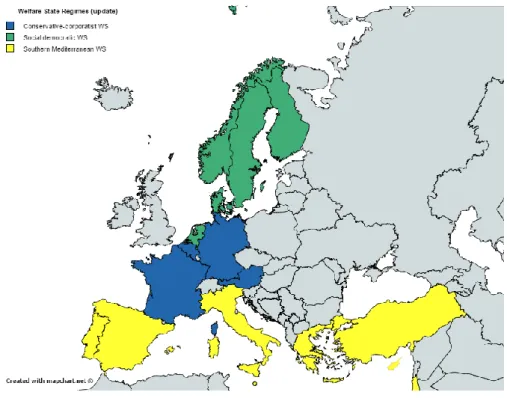
Figure 1: Esping-Anderson Welfare State Regime. Source: from http://mapchart.net/.
21
In the above Figure 1 and Figure 2 countries belonging to different welfare state are highlighted,
followed first the Esping-Anderson classification (Figure 1) and then the extension of Ferrera and
Gal (Figure 2).
To understand the complex mechanism behind the functioning of welfare states, Begg, Mushövel & Niblett (2015) identified three functions: the ‘Robin Hood’ function, aimed at redistributing the wealth
from members who owned it to others that faced a life of deprivation (in pursuing it the state will protect the poor); the ‘piggy bank’ function, which aims to reassure citizens that want to spread their income safely over their lifetime; and the ‘social investment’ function, that let the state invest in social
capital, such as primary school and university. The comprehensive idea behind the integration of
migrants into host societies rests on the concept of social-equity, accomplished through power
redistribution, knowledge redistribution or income redistribution (central since it aims to guarantee a
minimum grade of living for citizens). The actor suitable to even out the gap present in the modern
societies, is nonetheless the state itself, more likely to aim at equality through a greater reduction of
income-inequality (Veenhoven, 1992). In addition to the redistributive functions of a welfare state,
the goal of protecting the most vulnerable individuals among the entire population can also be added.
Even though, the welfare state is a noble concept, in the EU there is a growing fear that in the long
run it could reveal unsustainable for the MSs own finance; therefore, there is a need to reform the
entire system since the high welfare spending (which includes pensions, healthcare, social housing
and support for the poor) could affect the MSs budget.
2.4 Migratory historical background in Italy, Germany and Sweden
A factor that can hamper the assimilation of a migrant in the host society is the assumption that
different ethnicity might be a threat for the welfare state, and this had been influential for several
years, however empirical evidences are hard to find. One of the authors that wanted to study this
correlation was Keith Banting, who found out that political institutions and their functioning determine
more the development and survival of welfare state than ethnic homogeneity. There is an interwoven
relationship between welfare state and its public support: welfare state depends on the public opinion
of their citizens but at the same time the type of welfare regime can influence the public opinion6. He
observed also that a country which needs migrants to boost their development will generally have
liberal immigration policies and at the same time a country with developed social system will allow migrants’ integration in their own social system more easily. In pursuing this goal government will
provide similar social rights for foreign- and native-born population (Morissens, 2008).
When not only EU is taken as framework, international comparative studies of welfare state regimes
have produced three main findings: EU citizens with a negative attitude towards immigrants are also
6For example, if the welfare state will provide benefits to most people thorough universal benefits and services, it is
22
critical of welfare; the ‘protection thesis’, when natives asked more from the government in order to
compensate the perceived economic pressure associated with the arrival of new migrants; and the
relationship between the support of native for welfare and migration that can be mitigated also by
the national context (Schmidt-Catran & Spies, 2016). Welfare regimes help to build distinct type of
state and, for what matters here, the effect of welfare programs can be observed on immigration,
particularly if migration is free or restricted in a country. There are two possible solutions: the first
option involves a free-migration regime, where the welfare state has capital and attracts both
unskilled and skilled migrants; in the second option the welfare state is perceived as generous,
therefore it will attract unskilled migrants, whose belief is to gain more benefits from the welfare state
than what they have to pay in taxes for the same benefits (Razin & Wahba, 2011).7
Italy is one of the countries chosen for a comparison; some standout characteristics of the Italian
welfare state are the low social expenditure as a percentage of the GDP if compared with the EU
average, the low than average use of means-tested benefits8 and the particular model of the salaries,
which allows a low percentage of social benefits. The arrangement inside the expenditure also
changes, since Italy focuses its welfare resources on pensions and the role of the male household,
who is considered to be the only one qualified to choose the most suitable channel to invest in, is
critical and central to take care of the entire family. Immigration policy in Italy started developing in
the early 1980s, and the first National Immigration Act passed in 1986. There are several categories
of migrants in the Italian welfare state, which usually experienced different types of rights and duties: from the ‘undocumented migrants’ who have just emergency medical care and basic education for their children; to asylum seekers, refugees and ‘temporarily protected persons’ who are entitled to
special national assistance programs for a certain period but most of the time are taken care by
non-governmental organisations (NGOs); to immigrants with resident permit or residence card, which are
entitled with the highest grade of national benefits (Sciortino, 2004).
The first trace of income support system in Italy is from the 1960s, with focus on employment
protection for male breadwinner within the more general scheme protection for unemployed. Then a
further step was made through the creation of a Wage Guarantee Fund (CIG) in 1969 to take care
of temporarily unemployed people through earning compensation; whilst there is a difference if a
worker is dismissed individually or not. The prosperity of a country depends on the size and quantity
of the total workforce available, therefore aging countries, such as Italy, will experience slower
economic growth, with a high impact also on the pension system: more pensioners but less
contributors. Another pivotal feature of the Italian welfare system was the establishment of pension
7It worth specified what is an ‘immigration policy regime’, since it is relevant for the theoretical framework. ‘Immigration
policy regime’ or ‘incorporation regime’ is the one that controls immigrants’ inclusion or exclusion from the society. This regime involves rules, which enable immigrants to become citizens, with work and residence permits (Dainsbury, 2006).
8“The percentage of benefits that are payable only after means testing in Italy is less than half the European average
23
funds in 1993 and the radical change in the pensions’ system in the 1995, which shifted from a
defined-benefit scheme to a notional defined-contribution scheme: in the new system, benefits derive from the amount of contributions paid throughout a worker’s career, capitalised at average growth
rate of GDP over the previous five years; characteristics relating to the healthcare system,
highlighted how they overall provide full coverage of the population since 1980s. The reforms
initiated in the 1990s aimed to introduced contributory schemes and opened the pensions to private
funds. In the employment protection sector, Italy since 1993 tried to develop opportunities in the
labour market through temporarily employment and other atypical forms of works; but high level of
labour market segmentation still remains, while social security system fragmentation has been
decreased (Mazzola et al., 2015; Karamessini, 2007).
German immigration politics has as main feature the rejection to see Germany as an immigration
country, and the absence of an immigration policy; however, the situation changed in the late 1990s
when the government decided to approve the first immigration law (Geddes, 2003). Germany as a
country with conservative-corporatist welfare regime, demands requirements for naturalisation,
permanent resident or acquiring asylum. It also put emphasis on the importance of employment and
self-sufficiency, by denying citizenship to applicants with inadequate income. Moreover, when an
immigrant decided to reach Germany as a final destination, he/she must be aware that they expected
from him/her to integrate completely in the society, by giving up part of their identity and language, process called ‘assimilation’ rather than ‘integration’ (Schmidt-Catran & Spies, 2016); in addition, as
a rule, to be fully naturalised in Germany, the migrant has to forsake their previous citizenship.
Regarding the labour market, German government receives help from the unions which, to avoid
competition for jobs, most of the time are willing to incorporate foreign workers.
The present welfare state in Germany is the result of some retrenchment measures in the 1990s,
which included cutting language courses from a year to six months or reduction on direct financial
assistance. Moreover, the immigration policy regime in Germany is considered to be exclusionary,
with rights based just on lineage (ius sanguinis) (Sainsbury, 2006). Welfare models are changing in
time, and the so-called Hartz reform, from the name of the Volkswagen head of human resources in
charge with the work of an expert commission, is the proof. This reform in 2005 wanted to merge the
unemployment assistance provision for the long-term unemployed and the social assistance for
those without job. From this panel of expert, emerged a new and layered social protection system
(Hemerijck, Palm, Entenmann & van Hooren, 2013). Since 2005, the German government decided
to invest roughly 25% of its annual GDP in social expenditures, leading the country in the top ranking
within the EU; this social spending is shared among the three pillars of the German welfare state,
meaning old-age pensions, assistance for the unemployed and public health and disability insurance
24
Nowadays immigration is a phenomenon presents heavily in the worldwide framework, therefore one
of the main goal of governments is trying to reconcile migration with a generous welfare state.
Sweden can be the perfect example to explain this endeavour: regarding the financial aspect, even
if the taxes are high, people choose not to emigrate because of them; and taxes are needed to pay
for benefits, such as pensions or medicine. Here it can be handy to introduce the concept of ‘magnetic effect9’ by Borjas, who stated that a welfare programs will attract both qualified and
unqualified people, in addition a strong magnetic effect, together with no control at the borders, would
lead the government to bankruptcy. Borjas (1999) theorised the “welfare magnet” hypothesis,
according to which countries with high social security attract more migrants (better insurance of
unemployment risks as a pull factor) and these flows are formed by a high percentage of low-skilled
migrants (negative selection) (Skupnik, 2014).
Even though, the Swedish welfare system provides high benefits, these are entitled to refugees and
asylum seekers and not available for migrants, until they have a national registration number. During
the post-war period, Sweden begun to receive large groups of refugees, then, between the late
1950s and the early 1970s immigration was carried out by labour migrants. Starting in the 1960s,
Sweden developed a specific policy approach, based on universalism, to integrate migrants into the
society through a direct and immediate access to the labour market and the provision of social rights,
which allows migrants to foster the belonging to a national community (contemporary they wanted
to maintain a cultural diversity within the society as a form of respect towards migrants); in return the
Swedish governments wanted the migrants to be self-sufficient (Borevi, 2014). During the 1990s, Sweden had to face some welfare state retrenchment that led to a reduction in the migrants’
employment rate, with a consequent decrease in earning and in access to benefits based on
participation in the labour market (Sainsbury, 2006).
In order to solve its current situation, Sweden could put effort in combat discrimination and ensure
equal opportunity; reform labour market and make it more flexible; carry on welfare reforms and
separate the distribution of social rights from the open access to the labour market (Legrain, 2008). Moreover, “welfare states with extensive social rights and generous benefits have more incentive to
integrate immigrants in a fast manner since a failing integration of this group in the labour market
would come at a high cost. This is especially true when benefits are financed by taxes (Morissens, 2008, p.18).” Sweden already allowed free migration when, in 2008, decided to reform radically the
immigration law, and let migrants from outside the EU come to the country. The idea behind this
decision was to create simplistic procedure to recruit non-EU workers, based on the transparent and
25
flexible demand of the labour market: applicants that want a work permit, need to receive first an
offer of employment. Work permits would last maximum four years, and then migrants would be able
to apply for permanent residency (Legrain, 2008).
A comparison among different WSRs can be made according to the willingness to invest: while in
the Southern Mediterranean type there is a risk inside the investment between the risk of reduction in services’ supply and the risk of reduction of their demand10; in the social democratic welfare
regimes, the state is the one that absorb the service productivity differentials by providing services;
while in the conservative welfare regimes, the differentials in productivity will operate as a boost for
self-production among households. One difference that can be depicted between Sweden and
Germany is about the entitlements: in Sweden benefits go only to Swedish residents, while in
Germany benefits could be extended to family members who do not necessarily live in the country
(Sainsbury, 2006).
2.5 Conclusion
The purpose of this chapter was to consider the theoretical framework, which will provide the basis
to observe findings in the chapters 4 and 5. The first step was to have a look at the overview of
migration as a phenomenon, give a general hint about the relationship between migration and
transnational ties, and the importance of social bonds among migrants and people inside the host country. When the dimension of the relevant concept has been clarified, ‘migration’ in this case, the
useful step was to take into consideration the relevant aspects of migration, with highlighted different
perspectives and ideologies. Moreover, since the focus of this research is to see what is the level of
integration that migrants can experience in host country and how policies could be affected by the
presence of migrants and by the WSR, other studies were looked, among the ones that choose the same field of expertise, to evaluate the level of migrants’ integration and the national policy regimes.
The emphasis was pinpointed on the relevance of social bonds, both at transnational level and with
natives, in different spheres. As a last addition to this theoretical framework, an explanation of
welfare state models was needed to explain distinct type of environment where migrants try to
integrate; then an outline of the three countries chosen ended this chapter.
This theoretical framework will help to understand and depicted the differences, if they exist, in the
approach of countries from several welfare state models; besides, it will serve as basis for the development of new insights regarding the migrants’ integration process and how policies can be
affected by the view of governments belonging to different welfare state regimes. This framework
and the information given with it, handled the discussion that will take place in the third chapter about
the most suitable approach and in the fourth and fifth chapters as regard to the analysis of the data
found: the basis on which built new knowledge in the field of impact of migrants into different societies
26
will lead from this theoretical framework. The theoretical insights developed starting from the
description of migration theories and continued with the outline of different welfare state regimes,
will provide the needed context to analysed the current situation in Italy, Germany and Sweden;
moreover, this framework and the consequent analysis of documents, law, reports and statistics
27
3. Methods
In order to answer the aforementioned research question and find out if and how the level of migrant
integration changes when different welfare state models are picked, a suitable methodological
approach is necessary. The following section will present the methods of data collection and data
analysis needed to answer the main research question. The overall purpose here is to see if there
is a correlation between countries belonging to different models of welfare states and the approach
of the EU countries (Italy, Germany and Sweden) to the integration of migrants in their society, by
looking at three different sectors (health, education and labour).
The mixed method approach, using ‘case study’ as main research design, was chosen; the
differentiation of welfare state models could be helpful to develop a theory, according to which the
level of integration of migrants is subject to changes in various countries, according to their welfare
state model. Since a qualitative approach alone will not lead to a clear and complete picture, the
presence of the quantitative part in the mixed method approach will be taken as an advantage to
answer the research question. Two separate methods will be taken into account, one qualitative and
one quantitative, to give an exhaustive response and to provide more developed insights: using only
the qualitative part of the analysis can provide a theoretical framework, which can, and will, be
integrate with the proofs coming from the analysis of statistics and graphs. The qualitative approach
selected was the content analysis, throughout the use of a coding scheme, that help in highlighting
the key sector to further investigate. The quantitative approach chosen was the descriptive analytical
approach of pooled data, since the quantitative data were enormous, these data were analysed and
compared to find a pattern or a confirmation that different countries have various attitudes regarding migrants’ integration into their societies. The study carried by Ager and Strang was used as main
basis to approach the subject in the qualitative part, it identifies ten main domains, each underlines
a different aspects of integration; the details of the three ones chosen as dependent variables for the
quantitative analysis will follow.
The selection of countries was not made by random choice, but based on the works of
Esping-Anderson, Ferrera and Gal: the first division of countries based on welfare state model, made by
Esping-Anderson, gathers together countries with the same characteristics and the same welfare
state model and left a general picture of the understanding of welfare models; however, it must be
added that he worked in the 1990, and his work needed to be revised and modified. Here comes handy to refer to Gal’s work (2010), where he used a different classification of the welfare state
models, with an extension represented by the Southern Mediterranean welfare state. It is important to noticed that two ‘old’ models and one ‘new’, by referring to a single country for each model, were