Royal College of Surgeons in Ireland
e-publications@RCSI
Psychology Reports Department of Psychology
1-1-1988
Pathways to child hospitalization : psychological,
social and medical factors associated with the
admission to hospital of children with
gastroenteritis : a study of mothers and doctors.
Hannah McGee
Royal College of Surgeons in Ireland
Michael Fitzgerald
Trinity College Dublin
This Report is brought to you for free and open access by the Department of Psychology at e-publications@RCSI. It has been accepted for inclusion in Psychology Reports by an authorized administrator of
e-publications@RCSI. For more information, please [email protected]. Citation
— Use Licence —
Attribution-Non-Commercial-ShareAlike 1.0
You are free:
• to copy, distribute, display, and perform the work. • to make derivative works.
Under the following conditions:
• Attribution — You must give the original author credit.
• Non-Commercial — You may not use this work for commercial purposes.
• Share Alike — If you alter, transform, or build upon this work, you may distribute the resulting work only under a licence identical to this one.
For any reuse or distribution, you must make clear to others the licence terms of this work. Any of these conditions can be waived if you get permission from the author.
Your fair use and other rights are in no way affected by the above.
This work is licenced under the Creative Commons Attribution-Non-Commercial-ShareAlike License. To view a copy of this licence, visit:
URL (human-readable summary):
•http://creativecommons.org/licenses/by-nc-sa/1.0/
URL (legal code):
•http://creativecommons.org/worldwide/uk/translated-license
PATHWAYS TO CHILD HOSPITALIZATION
psychological, Social and Medical Factors associated with the Admission to Hospital of Children with Gastroenteritis: a study of mothers and doctors.
Hannah McGee,
B.A. (Mod)., Ph.D.
and
Michael Fitzgerald,
M.B., M.R.C. Psych.
(1988)
This project was funded by the Health Education Bureau (whose functions are now transferred to the Health Promotion Unit, Department of Health) and facilitated in accommodation and services by the Eastern Health Board.
Enquiries to:
Health Promotion Unit, Department of Health Hawkins House '
( i i )
Many t h i n g s c a n w a i t . The c h i l d c a n n o t .
R i g h t now i s t h e t i m e h e r b o n e s a r e b e i n g f o r m e d . Her b l o o d i s b e i n g made.
And h e r s e n s e s a r e b e i n g d e v e l o p e d . To h e r we c a n n o t s a y ' T o m o r r o w ' . Her name i s ' T o d a y ' .
G a b r i e l a M i s t r a l
THE AUTHORS
H a n n a h M c G e e i s a r e s e a r c h p s y c h o l o g i s t whose work f o c u s e s o n a s p e c t s o f h e a l t h a n d m e d i c a l c a r e . S h e h a s c o m p l e t e d a d c c t o r a t e on p s y c h o l o g i c a l a s p e c t s o f r e c o v e r y f r o m s u r g e r y a r J h a s w o r k e d a t t h e D e p a r t m e n t o f P s y c h o l o g y , T r i n i t y C o l l e g e , D u b l i n . Her p r e s e n t a p p o i n t m e n t i s a s a r e s e a r c h f e : l o w / l e c t u r e r a t t h e D e p a r t m e n t of P s y c h o l o g y , Royal C o l l e g e o f S u r g e o n s i n I r e l a n d , D u b l i n .
. (iii)
.
CONTENTSACKNOWLEDGEMENTS OUTLINE O F STUDY
SUMMARY O F HAIN FINDINGS AND RECOMMENDATIONS
Section I
Introduction
1.1 Introduction
...
1...
1.2 Effects of Hospitalization on Young Childcen 9
1.3 Background to the Present Study
...
19 1.4 The Present Study...
29Section 2
Doctors' Decision-making o n the Management of Gastroenteritis
...
2.1 Introduction 34
2.2 Decision Making
...
35 2.3 Methodology...
402 . 4 Findings
...
4 22.5 Discussioc
...
7 02.6 Summa r y
...
8 2Section 3
Family Circumstances associated with Hospital o r Home Care Management of Childhood Gastroenteritis
Introduction
...
Litecatuce Review...
Management and Undecstanding of Illness in Childcen..
Family Stcuctuce...
Genecal Family Enviconment of Children...
Family Health...
...
Methodology
...
Findings
The Families Studied
...
The Gastcoentecitis Episode...
...
Family Stcuctuce
...
Genecal Family Enviconment of Childcen
Section 4
General Discussion
Introduction 205
Group Differentiation
...
206Maternal Anxiety
...
209...
~ o s p i t a l i s a t i o n 213
Casualty Department Use
...
216G.P. Gastroenteritis Management
...
217Out-patient Facilities
...
221Gastroentecitis Management in the Context of the -
Current Irish Health Care Situation
...
227References
...
232Appendices 247
Appendix 1 Gastroentecitis Vignette Information
Appendix 2 Doctors ' Interview Schedule
Appendix 3 Mothers' Interview Schedule
ACKNOWLEDGEMENTS
P r i m a r y a c k n o w l e d g e m e n t i n t h i s p r o j e c t g o e s t o m o t h e r s o f y o u c g c h i l d r e n who s o w i l l i n g l y g a v e o f t h e i r t i m e a n d p r i v a c y a n d t o d o c t o r s who a l s o made t i m e i n b u s y s c h e d u l e s . C a s u a l t y D e p a r t m e n t
i n t e r v i e w s w e r e c o n d u c t e d w i t h t h e p e r m i s s i o n a n d c o o p e r a t i o n o f t h e h o s p i t a l s c o c c e r n e d . T h a n k s t o D r . H a r r y C r a w l e y o f t h e f o r m e r H e a l t h E d u c a t i o n B u r e a u a n d t o Mr K i e c a n H i c k e y , P r o g r a m m e M a n a g e r , G e n e r a l H o s p i t a l s , E a s t e r n H e a l t h B o a r d f o r s u p p o r t i n g t h e p r o j e c t ; t o M s A n n a May H a r k i n , H e a l t h P r o m o t i o n U n i t , D e p a r t m e n t o f H e a l t h f o r h e r a d v i c e a n d e d i t o r i a l a s s i s t a n c e w i t h t h e r e p o r t . I n i t i a l d i s c u s s i o n o n t h e p r o j e c t was p r o v i d e d b y M s . Anne C l e a r y , D r s . M i c h a e l B o l a n d , J o h n D i l l o n , C i a r a n L y n c h , C o n o r O ' H a n l o n , P r o f . M a c g a c e t S t a c e y a n d M s . R u t h T o c o d e . T h e a u t h o r s a r e g r a t e f u l t o Dc. J o h n C u l l e n a n d Mr. Mack C u l l e n f o r s t a t i s t i c a l a n a l y s i s ; Mr. Tony K i n s e l l a f o r i n i t i a l s t a t i s t i c a l a d v i c e ; M s . C a t h e r i n e R o n a y n e f o r d a t a e n t r y ; M s . C a t h e c i n e R y a n , M s . J o d i e Young a n d M s . Mary O ' R e g a n f o r t y p i n g ; M s . J o y c e B u t l e r , M s . C l a c e O ' N e i l l a n d M s . F i o n a G a l l a g h e r f o r t h e c o d i n g o f i n t e r v i e w s ; D r . S e a m u s O ' D e a f o r c o o r d i n a t i n g d o c t o r s ' s y m p t o m a t o l o g y r a t i n g s ; a n d M s . Ant? P u r c e l l f o r H o s p i t a l I n - P a t i e n t E n q u i r y d a t a .
Outline of Study
*
Gastroenteritis is a common self-limiting illness o f childhood. Hospital treatment, except in severe cases, involves treatment which is the same as that given at home
-
on medical advice or on parents' own knowledge.Nevertheless, in Ireland over 2 , 0 0 0 young children are
hospitalized annually with this diagnosis. The objective o f
this study was to examine the reasons for the
hospitalization of young children with gastroenteritis, with a view to decreasing the incidence of medically unnecessary admissions.
Doctors and mothers were interviewed. For GPs and Casualty Doctors (the primary providers of the medical management of gastroenteritis), management decisions and the factors
influencing them were systematically evaluated. Family and home circumstances of children hospitalized for
yastroenteritis were compared with the circumstances of families managing gastcoenteritis at home. Combining the two sources of information the major role of the individual doctor in the management of gastroenteritis emerged. The findings of the present study indicate that there is
considerable scope for improvement in present
.
gastroenteritis management. Possible improvements have been suggested at the level of GPs' and mothers' management, and at the level of management intermediate between the GP and hospitalization. These suggestions have been made in the.
light of the current situation in health care in Ireland.The report consists of four main sections. The problem of gastro- enteritis as it is relevant to this study is
outlined in Section I . The background and the research work co~cerning doctors and their decision-making is presented in the next s e c t i o ~ (Section 2 ) . Following this is a detailed comparison of the child and family circumstances of those with gastroenteritis who have been managed at home and in hospital (Section 3). The final section (Section 4 )
SUMMARY OF MAIN FINDINGS AND RECOMMENDATIONS
A. Doctors' Decision-making on the Management
-
of Gastroenteritis
(i) The sample studied broadly reflectt?d the structure of the Irish medical population making
yastroenteritis referral decisions (i.e. GPs acd Casualty Department doctors).
(ii) Gastroenteritis in the under twos is a considerable consumer of doctors' time. An average of seven cases weekly is seen by each doctor working i~
Children's Casualty Departments, and 4.4 cases .ace seen weekly by GPs. Such cases represent 2.4% of GPs weekly consultations.
(iii) Large differences in gastroenteritis management and in referral rates exist between doctors, in both an experimental situation (paper patients/vignettes) and in their own reported practice policy.
(iv) Most childhood gastroenteritis is managed at home with Oral Rehydration Therapy (ORT) and patient
recall. Ten per cent (10%) of actual and 218 of
.
vignette cases are referred to hospital, and 16% ofdoctors use medication in gastroenteritis management on some occasions.
-
( v ) Vignette analysis revealed that severe medical symptomatology was the most important patient factor in gastro- enteritis referrals. The next factors (and more important than moderate
symptomatology) were young age of child, single mother and anxious mother; all being of equal
influence in hospital referrals. The cumulative effect of these non-medical factors was not
additive, the presence of one 'vulnerability' factor having by far the most important effect on referral rates.
(vi) Functional, as opposed to structural, non-medical factors are the important general family
-
(viii)-
(vii) Negative previous experiences of gastroenteritis (including vocational training in a hospital centre for gastroenteritis) is the most important doctor factor in determining a GP's management decision. The othec important factors are estimates of the severity of the disease generally and the workload of the doctor. Busier GPs (although not because they are also GMS GPs) refer more patients to hospital. General belief about the severity of gastroenteritis is also the most importapt factor
in hospital doctor referral decisions.
(viii) When characteristics of doctocs and non-medical characteristics of families ace considered
togethec, characteristics of doctors account for almost all GP variability in cefercal rates and over one third of hospital doctor vaciability.
(ix) Casualty Department cefecral rates to hospital are significantly highec than GP cefeccal rates and ace accounted for by one of two Casualty Depactments refecriny more than twice the level of vignettes and patient population cases to hospital. Reasons for this appear to reflect the organisational
differences in Casualty Department management rather than broadly differing attitudes or demographic characteristics of doctors.
Half of the doctors queried did not have a clear belief in the detrimental effects of
hospitalization on young children. Beliefs on this issue wece not related to any doctor variables such as experience or education.
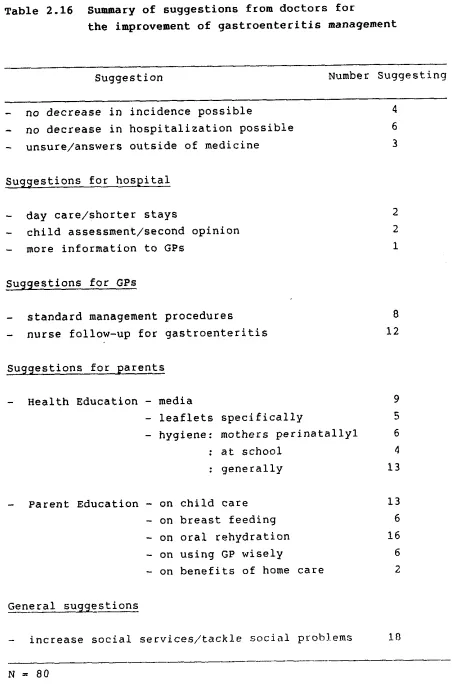
(xi) Doctors' suggestions foc the improvement of the gastro- enteritis situation centre on education for parents in hygiene and oral rehydration.
H. Family Circumstances associated with Hospital o r Home Care Management o f Childhood Gastroenteritis
( 1 ) Cor!siderable overlap existed betweec family
characteristics of hospital and home cace groups, as revealed both by discriminant acalysis and
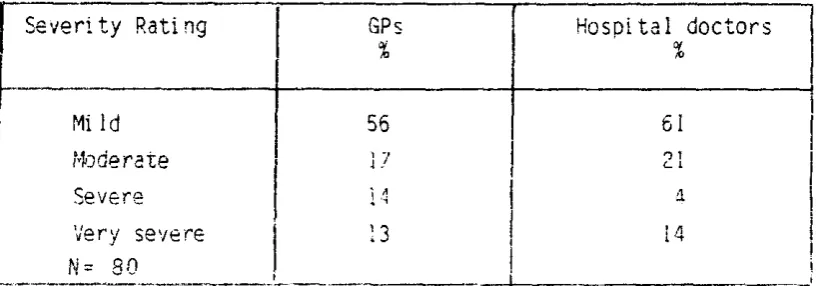
single variable comparisons. By doctors' ratings, Lhece were no differences ir the severity of the yastroecteritis symptomatology oL hospitalized childre? and those who wece manayed at home.
Herce, much of the hospital/home care distinctions
ir! this study were not made by family or medical severity criteria.
( i i ) Of those variables which did differentiate hospital and home care groups social contact variables
appeared to have the major role. Those with fewer social acd leisure contacts and poorer family of origin relationships were more likely to have a child hospitalized for gastroenteritis.
(iii) Both groups of mothers were well, and equally well, aware of the negative influence of hospitalization o? youcg childre? generally. Evidecce suij,jested that the more positive attitudes of hospital cace mothecs to the current hospitalization of their child reflected ir? part current family
circumstacces and ic part a coycitive strategy aimed a t alleviating their concern over the ~ e g a t i v e effects of hospitalizatioc or childre?. Similar numbers of mothers did/would visit ard stay with their child for most of the day auricg
hospitalization.
( i v ) In seeking help for gastroenteritis hospital care mothecs acted more rapidly and used less routine medical services (i.e. home, and late night, visits) than home care counterparts. Similar numbers of mothecs in both groups knew that oral rehydration was the treatment for gastroenteritis.
General attitudes to pregnancy and birth
experiences of both families were similar. After birth, however, breast feeding and immunization levels were significantly higher for home care families.
(vii) Child temperament, child management, attitudes to child care and help from fathers with child care tasks were the same for hospital and home care groups.
(viii) The marital status of both groups was similar but the hospital care group was youpger, less well
educated, of lower occupational status, moce likely to be unemployed and unemployed f o r longer periods and to have larger families.
General material circumstances and neighbourhood facilities/ services o f hospital care families were poorer than for home cace families.
General marital and family environment measures were similar for both gcoups of families with the exception that levels of friction/irritability were higher in hospital care families.
Health behaviour and attitudes but not health status differentiated hospital and home care
families. - Home care families had a higher level of healthy behaviour and moce positive attitudes t o health.
(xii) On measures of psychological health, hospital care mothers were significantly more distressed
generally than their home cace counterparts o r a GP p o p u l a t i o ~ sample.
(xiii) Interviewer ratings found gastroenteritis handling, general parenting, family health orientation and family hygiene levels to be poorer for the hospital cace group. Meanwhile, no d i f f e r e ~ c e s existed
between gcoups o n ratings of family stress,
-
(xi)-
RECOMMENDATIONS
( 1 ) To provide clear gastroenteritis management
instructions on a leaflet for distribution by doctors during a gastroenteritis consultation.
This should be aimed at decreasing maternal anxiety and increasing compliance with specific
instructions.
To provide outpatient facilities as an intermediary between General Pcactitionec/Casualty Department management and inpatient treatment of
gastroenteritis.
( 3 ) To educate medical staff about the non-medical
factors (such a s sensitization) which influence their management decisions.
( 4 ) To provide adequate opportunities for social
SECTION 1
SECTION 1: INTRODUCTION
1.1 INTRODUCTION
Acute gastroenteritis is a serious health problem of
children on a global scale. Defined as a:
"clinical syndrome of diarrhoea/vomiting of acute
onset, often accompanied by fever and constitutional
disturbance, which is of infective origin and is not
secondary to some primary disease process outside the
alimentary tract".
(Walker-Smith, (1978)
It is estimated to be responsible for 5-18 million infant
deaths yearly in Third World countries (Rhode and Northrup,
1976). Deaths in developed countries are very much less
common, e.g. 132 babies under one year in Englandpales in
-
1978, and 15 in Ireland (Fitzgerald, Kearney, Mahony,
OfHalloran and Barry, 1982). Yet gastroenteritis is among
the ten leading causes of childhood death in developed
countries (cf. Tarlow, 1981). Furthermore it is second
only to respiratory disease as a cause of non-surgical
paediatric hospitalization in developed countries (Vaughan,
1976). The main source of infection in developed countries
is the Rotavirus (#moo, Olding-Stenkvist and Kreuger,
1986) which was first discovered in the early 1970s. The
_
increased incidence of gastroenteritis during the wintermonths is accounted for by the increased action of this
virus at this time (Kapikian, Kim, Wyatt, Cline, Arrobio,
Brandt, Rodriguex, Sack, Chanock and Parrott, 1976).
The main clinical problem with gastroenteritis is
dehydration, evident from sunken eyes and fontanelle, loss
of skin turgor and drying lips. At the extreme this may
lead to hypernatraemia (an excess of sodium in the body
This can precipitate neurological damage and death. Hence
the main aim of treatment is to maintain a fluid and
electrolyte balance in the body. This is achieved by
taking the child off non-human milk products which contain
lactose levels sufficient to aggrevate the alimentary canal
causing further fluid loss through diarrhoea. Instead oral
fluids are at frequent intervals to balance those lost
through vomiting and diarrhoea. Soft drinks are often used
effectively in mild cases of dehydration while more
persistent cases may need a glucose - electrolyte solution
of which there are now a number of proprietary brandnames
readily available without prescription at chemists. The introduction of these solutions, termed oral replacement
therapy (ORT), has revolutionized the care of
gastroenteritis in recent decades. Routinely children are
treated with oral fluids only for periods of 24-48 hours;
milk and solids are then gradually re-introduced over two
to three days, a process called regrading. The treatment
of gastroenteritis with drugs is not now recommended.
Antibiotics, the most widely used drug type, are now seen
to be ineffective since most cases of gastroenteritis are
not bacterial (e.g. only 4% and 16% in studies by Morrisson
and Little, 1981 and Ellis, Watson and Mandal, 1984
respectively). Furthermore, antibiotics have no effects on
the clinical course of gastroenteritis and may even prolong
the diarrhoea in some cases (Mandal, Fry and Frazer, 1985).
Neither have antimotility drugs been seen to be beneficial
in treating gastroenteritis (Mandal, 1981). Children who
have become dehydr&ted and for whom this process is not
being reversed by ORT, often because of vomiting or refusal
to drink, may need intravenous fluid therapy (IV). This is
always provided in a hospital context. However, IV
treatment is necessary for only a small proportion of
children. As Booth and Cutting (1984) suggest:
"probably less than 5% of those who are severely
dehydrated, and those with intractable vomiting,
Tarlow's (1981) estimate is less than 10%. The numbers of
children in various studies who were treated intravenously
vary from 3% (Ironside, Tuxford and Heyworth, 1970), 7%
(Ellis, Watson, Mandal, Dunbar and Moraski, 1984), 17%
(Morrison and Little, 1981), 28% (Tripp, Wilmers and
Wharton, 1977) to 33% (Uhnoo et al., 1986). The latter two studies mention the use of out-patient departments for the
less severely ill patients thus highlighting the fact that
IV usage values represent a combination of severity levels
of gastroenteritis and the severity of hospital admission
policies. Hospital admission itself is only recommended in
about 10% of cases seen by GPs according to Wheatley
(1968). At one rehydration centre Khattab (1987) estimated
that only 4% of attendances need hospitalization. Thus, as with other illnesses, hospitalization represents the tip of
the symptom iceberg in gastroenteritis. In a longitudinal
national study of over 13,000 British children in the early
19705, 2.7% were admitted to hospital for gastroenteritis
at least once in their first five years, 1.5% in the first
year alone (Taylor, Wadsworth, Golding and Butler, 1982).
Are the large numbers of hospitalizations for
gastroenteritis actually necessary for an acute illness not
requiring specialized medical skills for its curtailment?
Duffy, Byers, Riepenhoff-Talty, La Scolea, Zielezuy and
Ogra (1986) report on the self-limiting nature of Rotavirus
qastroenteritis (four to six days) and Uhnoo et al. (1986)
report the same fi&re (median five days) i r r e s p ~ c t i v e of
in or out-patient status. A s Morrison and Little (1981)
point out, cases seen in hospital presumably are the worst
cases seen by GPs, yet 83% recovered quickly on ORT in
their study; a full 29% well enough to be discharged home
within twenty-four hours.
A close examination of hospitalization information suggests
a decreasing severity of gastroenteritis of late. Tripp et
al. (1977) compare their incidence of hypernatraemia and of
convulsions with those of previous studies and conclude a
(1977) examine the incidence of severe dehydration and
hypernatraemia within a single unit over five years and
show a dramatic decrease in levels. Ellis et al. (1984)
also compare a single unit in 1967 and 1982 and compile
four studies of 1967, 1971-1972, 1971-1975 and 1982 showing
decreases in a variety of severity indicators of
gastroenteritis. Interestingly for the 1971-1975 study
(Pullen et al., 1977) and the Ellis study of 1982, 62% and
52% of children respectively had pre-admission symptoms of
three days or more which suggests that a greater proportion
of children were admitted earlier to hospital in 1982.
Such data is not available for the other studies. Ellis et
al. also comment on a 67% increase in gastroenteritis
hospitalization in the Greater Manchester area in the years
1976-1981 despite no increase in birth rate. They suggest
that doctors who are now vocationally trained in
paediatrics may be more sensitized to the possibly negative
consequences of gastroenteritis from their educational
experiences.
Numbers of Children Hospitalized for Gastroenteritis
In one service, for the winter period, 3% of non-planned acute medical admissions, i.e. through Casualty, from GPs
or emergency services are for gastroenteritis. Five per
cent ( 5 % ) of admissions directly from parents are for
gastroenteritis (Wynne and Hull, 1977). In the same study
9% (from medical sources) and 22% (from parents) of
admissions were prQmarily for social reasons with disease
symptoms providing the excuse rather than the reason for
admission. Another study over a whole year found that 16%
of all admissions under one year old were for gastro-
enteritis infections ( ~ l o y d et al., 1981): gastroenteritis
was second only to respiratory tract infections (25%) as
the major disease category in admissions for this age
group. Gastro- enteritis also accounts for 11% of all
GASTROENTERITIS - GENERAL PRACTICE
Whitehouse and Hodgkin (1985) found that gastroenteritis
accounted for 1.4% of all general practice consultations.
One general practice study of infants less than six months
old over a winter period showed that 20% of consultations
were for gastroenteritis and two of the five hospital
admissions in the period were for dehydration (Wright et
al., 1987). For infants less than six weeks old
non-routine visits to an out-patient maternity hospital
unit also may show levels of gastroenteritis or
gastroenteritis-like symptoms. Twelve per cent (12%) o f attenders were there for vomiting and/or diarrhoea and 8 %
for poor feeding (Curtis, Clarke and Matthews, 1987).
Seventy-nine per cent (79%) of those with
vomiting/diarrhoea were sent home on Dioralyte (ORT) or
dilute feeds; the remainder were reassured.
Another way of presenting the levels of gastroenteritis in
the community is that 54% of babies have one or more
accident or diarrhoea/vomiting in the first year and 2.4%
of these are admitted to hospital (Eaton-Evans and Duqdale,
1987). It is difficult to estimate the level of
gastroenteritis in the community which never reaches the
doctor. However, parallels can be drawn from surveys of
general infant symptomatology. A Sheffield study showed
that 2% of babies will have two medical symptoms in any one
P.
day and about half of these will be seen by a GP; about one in twelve babies with any symptoms see a doctor (Lloyd,
Pursall and Emery, 1981). This corresponds well with
Wheatley's 11968) estimate that only about 10% of
gastroenteritis is seen by GPs. Mayall (1986) also found a
high level of gastro- intestinal problems in young children
over a three month period (17% of all medical conditions in
that period). It ranked second in severity to respiratory
tract infections plus ear infections (14%), and 6 1 of 135
children suffered gastrointestinal symptoms. ~ h u s , almost
one of every two children had gastrointestinal symptoms in
At the level of prevention of gastroenteritis,
breastfeeding has been advocated as of primary importance
and this issue is now considered below.
Breastfeeding and Gastroenteritis
some writers attribute great significance to the benefits
of breastfeeding in the context of gastroenteritis. A
~ r i t i s h Medical Journal Editorial (1977) stresses the
'supreme importance of breastfeeding' in the prevalence of
gastroenteritis while an Irish article commented that there
"little doubt that most of our infants owed their
admission to hospital to being deprived of the
immunoglobulins and the other protective substances
present in human milk." ( p . 156)
Fitzgerald et al., (1982)
However, there is a need to separate clearly the benefits
of breastfeeding and that of social class since
breastfeeding occurs so often with accompanying beneficial
environments. Eaton-Evans and Dugdale (1987) in Australia found no differences in diarrhoea/vomiting for the four age
quarters to one year old by social class or by type of
feeding. Within the three to six month group lower social
i'i
class groupings who bottle-fed did have significantly more
diarrhoea/vomiting than their upper class bottle-feeding
counterparts. Under six months old breast and mixed
bottle-feeding versus bottle only was associated with
significantly fewec incidences of diarrhoea/vomiting but
from six to twelve months old there was no effect. Thus
they summarize that for early groups only:-
"the absence of breast milk influenced the incidence
of diarrhoea/vomiting and the presence of other milks
Another study of Rotavirus-induced gastroenteritis reported
similar incidences for breast- and bottle-fed babies - 20%
and 19%, (Duffy et al., 1986). However, the clinical
course was better for breast-fed babies; 90% of them rated
as having mild illness while only 36% of bottle-fed babies
fell into this category. A third study showed that
controlling for social indices reduced the relationship
between breastfeeding and gastroenteritis admissions from a
significance of p = .001 to p = .08 (Taylor et al., 1982).
They concluded that the effects of breastfeeding were more
beneficial in 'less sterile' environments. These three
studies do provide some evidence for the value of
breastfeeding in counteracting gastroenteritis but also
illustrate that breastfeeding cannot be seen to be a wonder
solution to the problem of gastroenteritis.
In summary, gastroenteritis is a very common disorder of
infancy which in the main is mild and self-limiting. It
can be, and is generally, managed at home with minimal
medical expertise and supervision. Yet it still accounts
for a large and increasing number of childhood
hospitalizations and this despite more widely available
home oral rehydration solutions now. This fact is
disturbing from a financial point of view, especially in
these times of decreases in health services budgets, and
more importantly because of evidence of the detrimental
impact of hospitalization on young children. A brief discussion of bothpthese factors follows.
Financial Implications of Gastroenteritis flanayement
The cost factor is relatively self-evident. To make
comparisons, a hospital day in the infectious diseases
hospital under study costs the State approximately £ 8 0
(hospital administration, personal communication). Surgery
visits during working hours for General Medical Services
(GMS) patients cost the State £3.85 or at the most £10.86
gastroenteritis to GMS patients cost the State between
£5.70 and £14.60 for most urban dwellers who live within
three miles of their doctor.
Since average hospital stays for gastroenteritis under two
years of age in Ireland are 10.2 days (Health ~ e s e a r c h
Board, personal communication), the average cost of such
hospitalizations using this hospital's estimates is £816
plus the cost of the call or calls to a referring agent
(i.e. doctor or Casualty Department). Even in the extreme
of two daily house calls (one in the day time and one in
the evening) for ten days to a patient remote from the
doctor's surgery (i.e. more than ten miles away) the cost
to the State (£352) would be less than half that of
hospitalization
.
These costs do not even consider theexpense to families of having a child in hospital in terms
of travel, effort and work time lost (often a cost to the
State also).
The second disturbing factor about the large numbers of
gastroenteritis admissions, as mentioned earlier, is
evidence of the negative effects of hospitalization on
1.2. THE EFFECTS OF HOSPITALIZATION O N YOUNG CHILDREN
Widespread attention was first drawn to the impact of
hospitalization on young children by the publication of
James Robertson's "Young Children in Hospital" in 1958.
This was followed in 1959 by the Platt Report
-
An EnglishMinistry of Health report on the welfare of children in
hospital. Both of these documents emphasized the negative
consequences of hospitalization on young children and
stressed the need to minimize such hospitalization. Where
hospitalization was necessary they stressed the importance
of allowing and encouraging unrestricted parental visiting
and the provision of facilities for parents to stay in
hospital. These recommendations were made in an era where
parents were allowed little access to children in hospital
(often only one weekly visit) and where the opinion was
prevalent that hospital visiting merely upset children and
parents alike and was thus not to be encouraged. Around
this time a research study by Prugh, Staub, Sands,
Kirschbaum and Lenihan (1953) showed the impact of
hospitalization on children under restricted visiting
regulations (one weekly visit of two hours) by comparing
these children with children hospitalized after the
introduction of an 'experimental' type of ward nursing
practice. This latter was in effect a significantly more child-centred approach involving daily visiting, a nursery
school teacher providing a play programme and psychological
preparation for and support during difficult medical
procedures. DurinF, and immediately following,
hospitalization 92% of the traditionally treated children
versus 68% of the child-centred category showed significant
disturbances in behaviour not present prior to
hospitalization ( p
<
.01). Three months later thesefigures had decreased to 58 and 44% respectively. Across a
range of types of disturbances during hospitalization (such
as restlessness, aggression and feeding disturbances)
withdrawal was the category of disturbance most influenced
by type of visiting with more than twice the numher of
children under restricted visiting being withdrawn.
yet here also both incidence and intensity of anxiety were
lower for the child-centred visiting approach. Besides the
direct benefits to children of unrestricted visiting
opportunities, this new type of policy may have encouraged
in parents an increased appreciation of the benefits of
visiting their children since 20% of the restricted
visiting group in contrast to 3% of the child-centred group
never visited their children in hospital. Another study
(Douglas, 1975) involving a national cohort of children
(the British National Cohort, 1946) and their first five
years' hospitalizations reflects similar findings.
Forty-seven per cent (47%) were allowed no visitors at all
and only 166 were allowed unrestricted visiting.
Unrestricted visiting resulted in fewer behaviour prohlems
on returning home from hospital and this was most
noticeable when children were hospitalized for more than
one month; 25% of those having unrestricted visiting
facilities in comparison with 50% of those where no
visiting was allowed, had behaviour problems on discharge.
Attitudes and practices have changed considerably since
that time with, for example 61% of Irish hospitals having
unrestricted visiting (i.e. more than eight hours daily)
and 42% having some general facility for overnight parental
accommodation by 1976 (Cleary and O'Hare, 1978). This is
not to say that the situation is now ideal since for
instance some 13% of children were accommodated in adult
beds in Ireland in,.1976 (Cleary and O'Hare, 1973) and
approximately one quarter in the U.K. in the early 1980s
(Tyrell, 1985).
However, more recent studies of the effects of
hospitalization on young children are now considered in the
light of changing policies in the childfs environment in
hospital. A number of questions punctuate the research findings
-
Is hospitalization per se responsible fordifferences in children's concurrent and later behaviour?
What are the main observed differences in hehaviour? Do
demographic and social factors such as age, social class
and family discord influence the impact of hospitalization
These children were born in 1959 and 1960, some thirteen
years or more after the Douglas sample. Single admisssions
under five years of age did not result in increased
emotional or conduct disturbances over those children with
no admissions. However multiple admissions differed
significantly from both these groups on emotional
disturbance (teachers' ratings) and on both emotional and
conduct disturbance (parents' ratings) at age ten. Thus,
for young children hospitalized over a decade apart and
using different methods of assessing disturbance, there
emerges a strikingly similar picture of prolonged or
repeated early hospitalization being responsible for
disturbances of behaviour into the second decade of these
children's lives. These studies also show that short
single stays in hospital do not have any appreciable impact
on the later behaviour of children.
It is possible that hospitalization may be a concomitant
rather than a cause of later problems of behaviour.
or
instance families with multiple problems are more likely to
have had experiences of early childhood hospitalization
(Douglas, 1975; Earthrowl and Stacey, 1977) and
rehospitalization (Quinton and Rutter, 1976). However,
Quinton and Rutter showed that multiple admissions to
hospital are still linked to emotional disturbance when
family disadvantage had been controlled for in their study.
Single hospitalizations did not have lasting effects for
any social group. Similarly Douglas (1975) assessed
mothers' care and Kanagement of their child at four and the
general cleanliness of child and home at six. The
relationship between early hospitalization and adolescent
disturbances still persisted when these influences were
controlled for.
The impact of the illness in itself might also be a factor
predisposing to subsequent behaviour problems for children,
a factor possibly confounded with hospitalization.
However, Mrazek (1984) showed that severely asthmatic youne
children with multiple hospitalizations did have increased
Accepting that long or repeated hospitalization does have
an influence on children in and of itself, the next issue
is the type of influences which it has. There are many
ways to characterize such influences. Prugh et al. (1953)
provided a list of eleven common disturbances during
hospitalization, anxiety being the most common, followed by
feeding and toileting problems, then irritability and
restlessness. Vernon, Schulman and Foley (1966) factor
analyzed responses on twenty-eight items taken from
pertinent behaviours in six previous studies and produced
six general factors; general anxiety and regression,
separation anxiety, sleep anxiety, eating disturbance,
aggression towards authority and apathy-withdrawal. The
single most important factor was separation anxiety.
Douglas (1975) found children to be more nervous ( 2 8 % ) ,
more difficult (24%) and to have more sleep problems (9%)
on hospital discharge. He also examined ratings of being
troublesome, a poor reader, delinquent and having an
unstable job in adolescence and found a variety of changes
as was discussed earlier. Finally Brown (1979), again by
factor analysis on data from a widespread of research
information and methodologies, summarized three dimensions
of response to hospitalization - withdrawal, mobility and
distress.
Not all changes in children's behaviour following
hospitalization are negative. Brown (1979) presents
evidence of improvement in the behaviour of children
following surgery and in Douglas's (1975) study some 10% of
children were seen as having improved in behaviour on
return from hospital. However, the overall picture is of
negative consequences with for instance estimates
calculated from Douglas's findings on Table 1.1 showing
that long or repeated hospitalizaticns resulted in a 482
increase in recorded delinquency at adolescence over
non-hospitalized or single short-stay hospitaliz,ed peers.
Estimates of Quinton and Rutter ( 1 . 9 7 6 ) indicate that 4.32
of the child population experience multiple
hospitalization show disturbances of behaviour in later
childhood. Thus some 1.7% of the total child population
show disturbances which have arisen from repeated
admissions to hospital.
Factors Which Influence the Impact of Hospitalization
A number of factors might plausibly influence the impact of
hospitalization on children. A major contender is age.
The early study by Prugh et a1 (1953) examined children
aged two to twelve. Those aged two and three showed the
highest incidence of severe reactions to hospital with
decreases with increasing age of children. Also the
'experimental' or unrestricted visiting schedule had its
most beneficial effect on older children. Thirty-seven per
. .
cent (37%) of two and three year olds still had severe
reactions to hospital despite frequent visiting and child
centred activities (versus 50% of controls). Vernon et
al.'s (1966) study covers a wider range of ages (0-16
years). Their factor analyses indicate a curvilinear
relationship between changes folloving hospitalization and
age with the age six months up to four years being the most
negatively affected, ages four and five are next, then
those less than six months old and then six to eight year
olds. The 9-16 year age group actually benefited from
hospitalization. This overall pattern was most clearly
shown in the separation anxiety factor. Douglas (1975)
also presents his data in a way that shows clearly the
influence of age in years to age five. For single
admissions of less than one month duration, each of his
adolescent measurement dimensions - troublesome, poor
reading, delinquency and unstable job - was highest for
those children hospitalized before two years old. Only
'unstable job' appears to be influenced by hospitalizations
of over one week in children under six months old. Scaffer
and Callender (1959) compared children hospitalized under
six months old with those hospitalized from six months to
one year of age and they found hospital to have a later
impact only on children over six mcnths old. here appears
old is not generally detrimental to children (cf. Douglas
1976: Mrazak (1984)), information which corresponds to the
finding that separation anxiety begins only after this
period (Emde, Gaensbauer and Harmon, 1976). However, Prugh
in 1976 contended that no adequate study had yet been made
of children under six months old. Mrazak himself pointed
out that asthmatic children in his sample who were
hospitalized during the first six months of life had
significantly more subdued and passive styles of
interaction in the pre-school years than had asthmatic
children with later hospital stays, a finding he felt was
some cause for clinical concern. At present the evidence
is insufficient to make definitive statements about
hospitalization of those under six months old. However, it
is quite clear that children from six months to four years,
i.e. the pre-school years, are at greatest risk from
hospitalization. This evidence is plausibly explained hy a
number of psychological perspectives on child development
as Mrazek (1984) outlines. The fact that Douglas' (1975)
study is the most comprehensive to date (and is
subsequently verified by that of Quinton and Rutter, 1976) and the fact that this study illustrates that higher
percentages of under twos are at long term risk than two to
five year olds from hospitaliz,ation is of special concern
for this particular project. This is so because, as
already mentioned, the majority of the population
hospitalized for gastroenteritis are under two years old.
NO sex differences in the effects of hospitalization on
children have been found (Douglas, 1975; Vernon et al.,
1966). Other risk or vulnerability factors for the effects
of hospitalization which have been described are:
relatively unsatisfying relationships with parents; very
severe stress in hospital (Prugh et al., 1953); dependency
on mother; stress to the child at home on admission
(Douglas, 1975); disadvantaged homes (Quinton and Rutter,
1976); little previous experience of separation; anxious
mothers; only and youngest children and extended family
households (Stacey, Dearden, Robinson and Pill, 1970). It
a greater likelihood of being admitted to hospital as
described earlier, are also those for whom hospitalization
in itself is most damaging. In Quinton and Rutter's (1976)
words:-
"repeated hospital admission was eight times as common
in emotionally disturbed children from homes with high
psychosocial disadvantage but only three times as
common in those from more favoured homes". (p. 455)
Given the damaging effects of hospitalization as outlined
above, the question now arises as to how these effects can
be lessened or eradicated.
Detrimental Effects o f Hospitalization: Prevention
One simple answer to the detrimental impact of
hospitalization on a community-wide level is to decrease
the number of childhood hospitalizations and the other on a
secondary level, is to change the hospital environment to
better suit young children for whom hospitalization is
absolutely necessary.
Decreasing Hospitalization
A s Prugh (1976) suggests, many children are admitted to
hospital for non-medical reasons and thus for lack of
appropriate services. It has been estimated for instance
that over one third of hospitalizations for acute
illnessess in pre-schoolers could safely be managed at home
(Field and Miller, 1969).
There is also evidence that childhood hospitalization is
increasing rather than decreasing in frequency.
Information from the three national cohort studies in
England show admission rates of 18% before age five in 1946
(Douglas and Blomfield, 1958), 45% before age seven in 1958
(Davie, Butler and Goldstein, 1972) and 26: before age five
in 1970 (Golding and Haslum, 1986). Douglas (1975)
sample and over an eighteen year period (1946-1964) there
is evidence that early childhood admissions were increasing
with time in this group (11% in 1946 versus 19% in 1964).
Furthermore, although overall length of hospital stay had
decreased considerably in that time, the proportion of
children experiencing long or repeated admissions is no
less and may actually be greater in recent times ( 7 versus
9%). This same trend of increased hospitalization in the
past decades has also been commented on in the Irish
situation by Barry and O'Halloran (1977). In Ireland in
1984 the Hospital In-patient Enquiry Scheme (HIPE), with an
85% hospital coverage, recorded 16,822 hospitalizations for
children under one and 9,078 for those aged one to two, a
total of 25,900 child admissions in a population of just
over 131,000 such children (Health Research Board, personal
communication).
Changing the Hospital Environment
Changing the hospital environment is also very powerful in
changing its impact on young children. Prugh et al.'s,
(1953) early study showed the benefits of a more
child-centred hospital policy with extended visiting times,
etc., as outlined earlier. Appointing a single nurse as
the main hospital contact person for each child was also
shown to be effective in reducing anxiety and increasing
co-operation over standard nursing care in a study by
Visintainer and Wolfer (1975). Another option is to admit
a parent to hospital with a sick child. This reduced post
hospital disturbances after tonsillectomy in a study by
Brain and Maclay (1968). The influence of parents on their
children in hospital was the focus of an experimental study
around childhood surgery by Skipper and Leonard (1968).
They compared regular nursing care for parents (which
included moderate amounts of information) with nursing care in which the nurse spent an extra five minutes with mothers
at admission to discuss their feelings and PL-ovjde
information if needed. Nurses also met these mothers later
on admission day, before the child returned from theatre,
discharge. The children (aged three to nine) whose mothers
were given extra attention had lower blood pressure levels
before and after surgery and at discharge and were less
psychologically distressed as measured by other indices
such as vomiting and voiding. These children also vomited
less and recovered more rapidly at home in the week
following surgery. Thus an intervention aimed at
alleviating the anxieties of mothers had a direct bearing
on their child's physical health and recovery from surgery.
The present study aims t o provide a better understanding of
the reasons for hospitalization of young children with
gastroenteritis with a view to finding appropriate methods
of safely decreasing such hospitalizations.
The decision to hospitalize a child for gastroenteritis
involves the activities of both parents and doctors. Thus,
the situation needs to be addressed from the viewpoint of
both parties to fully understand how decisions on the
management of gastroenteritis are taken.
The plan of the study was to select a geographical area
from which hospitalizations for gastroenteritis could be
investigated by interviewing:-
( a ) doctors responsible for the management of gastro-
enteritis in children from the area;
( b ) mothers of young children from the area who had
children hospitalized during the study period; and
( c ) mothers of young children from the area who used
medical services, excluding hospitalization, for
1.3 BACKGROUND TO THE PRESENT STUDY
-
THE PROBLEN OFCHILDHOOD GASTROENTERITIS IN IRELRND
The problem of gastroenteritis was drawn to the attention
of one of the authors (MF) by the clinical observation of a
.
history of hospitalization for gastroenteritis in manyyoung children attending an urban child psychiatry clinic.
Similar observations were made by Douglas (1975) in his
major analysis of hospital admissions in England.
Two recent Irish studies (Barry and O'Halloran, 1977 and
Fitzgerald, OrHalloran, Kearney, Barry and OrMahony, 1982)
have quantified the problem of hospitalization for
gastroenteritis. They documented trends in the management
of gastroenteritis in the major treatment centre in the
South-West of Ireland over a thirteen year period
(1965-1978). These trends indicated cause for concern.
.
Barry and OfHalloran's (1977) initial article illustrated that a 97% increase in gastroenteritis admissions ofchildren under one had occurred in Cork between 1965 and
.
1972 alongside an 8% increase in birth rate. They
concluded that the doubling of admission figures was due to
the admission of many less seriously ill babies in 1972
rather than an increase in the incidence of severity of
gastroenteritis. They came to this conclusion for a number
of reasons:-
( a ) the numbers of children needing IV treatment and the numbers of deaths remained approximately the same;
( b ) length of stay was much shorter in 1982 without
changes in the consultant or in gastroenteritis
management in that period; and
( c ) older infants formed a higher proportion of 1972
1
Two major features of concern emerged from the study.
firstly, the fact that the incidence of severe
gastroenteritis and mortality had remained relatively
stable despite increases in material standards and in child
care training for mothers over the time period gives cause
for worry. Secondly, the authors reported the impression
that more parents were anxious to have their children
hospitalized for gastroenteritis in the latter year.
Actually increases in hospitalizations from 1965-1972 were
accounted for by the relative increase in the number of
babies from the higher social classes. The authors
suggested education in methods of infant feeding with
particular emphasis on breast-feeding and the provision of
an out-patient service at the hospital were the most
fruitful methods of tackling the problem.
The same team report on the efficiency of such methods six
years later (Fitzgerald et al., 1982). Numbers of
admissions decreased by 26% from 417 to 309 in that period
(1972-1978) accompanied by shorter hospital stays; for
instance 24% of infants were discharged within one week in
1972 in comparison with 47% in 1978. This substantial.
improvement was credited mainly to the setting up of a
gastroenteritis out-patient clinic in the hospital in 1974
which allowed:-
( a ) doctors to refer babies to the clinic rather than
directly for admission;
( b ) allowed the hospital to safely discharge children
earlier from the ward with clinic follow-up; and
(c) gave medical and nursing staff the opportunity to
instruct mothers in feeding and hygiene skills.
Some 22% of those referred to St. Finharr's in 1978 were
treated in this out-patient clinic. rn parallel to tllcse
findings breast-feeding increased in the area from 2 - 2 3 ; in
Despite the positive impact of the out-patient clinic on
the management of gastroenteritis, reasons for concern are
still in evidence. Firstly, the overall numbers of
.
children referred to the hospital had not changed from 1972t o 1978 ( N = 357 and 355) thus indicating the same reliance
.
on hospital care (albeit now partly out-patient) over theperiod studied. Furthermore, the numbers of babies
requiring IV in 1972 and 1978 were twenty eight and thirty
eight respectively or 2.7 and 3.5% of the infant population a t risk in these years. Thus severity of the illness, and
by definition pre-hospital management had not improved over
this period.
A s the authors state:
"there still remains an apparent reluctance on the part
of some family doctors and some mothers to look after
babies suffering from diarrhoea in the home." (p. 157)
-
Fitzgerald et al., (1982)
"
Thus while the hospital services had improved their
management of gastroenteritis in the period outlined,
pre-hospital (i.e. GP and family) handling of the problem
had not changed. Hence it is at these levels that further
efforts are required if one is aiming to reduce the
necessity for hospital service usage for gastroenteritis.
This aim corresponds to Department of Health policy as
outlined in the recent "Health
-
The Wider Dimensions"(1986) document. This calls for a focus on preventitive
services and on the management of health problems a t the
lowest level of complexity. Thus gastroenteritis as an
acute and self-limiting infectious disease should be
tackled at a preventitive and home management level. This
study is an attempt to provide the knowledge base for such
prevention and home management initiatives.
Before outlining the study the size of the problem on a
The Problem of Gastroenteritis in Ireland
Because a major proportion of those hospitalized for
gastroenteritis are children under two (49%; HIPE figure,
personal communication) and because gastroenteritis is an
infectious disease requiring official notification below
this age group in both the Republic and Northern Ireland,
the figures are based on the under age two population as is
the present study.
The number of notifications of the disease in the Republic
and in Northern Ireland for the past twenty years is
presented in Figure 1.1. It should be borne in mind that
notification rates are a broad picture of the pattern of
disease over time rather than exact levels as
[image:36.593.48.554.343.801.2]under-reporting is a common feature of such schemes.
Figure 1.1 Notifications of gastroenteritis in children
under 2 for the Republic and Northern Ireland
However the reported patterns are strikingly similar for
both parts of the country, with the exception of the 1980s.
This is probably explained by a substantial increase in the
reimbursement rate for such reporting in the Republic in
the 1980s (personal communication, Department of Health)
rather than any real change in the pattern of
.
gastroenteritis in the Republic. The patterns also show a general decrease and levelling off of the incidence ofgastroenteritis over the past twenty years.
Hospitalization rates for gastroenteritis have not
decreased however in that time period. There are no
consistent national sources of information on
hospitalizations until the setting up of the Hospital In-Patient Enquiry scheme in the 1970s. However some
earlier reports provide an indication of hospitalization
levels through the years since gastroenteritis management
would generally be confined to major infectious diseases
centres. The 1948 annual report of the then Dublin Fever
Hospital in Cork Street indicates an annual range of 22-174
-
total hospitalizations for gastro-enteritis from 1940-1949 (numbers of children under one ranged from 18-141 in theseyears). By the mid 1960s the approximate annual intake of
*
under twos for the combined Dublin centres of Cherry
Orchard and Vergemont hospitals was 554 (Medical Research
Council, undated). The main centre for gastroenteritis
management in Cork also saw an increase in admissions from
212 children under one in 1965 to 309 such children in 1978
(Fitzgerald et al., ,1982). More recent national (Republic
of Ireland) figures are shown in Table 1.2 illustrating
that in the 1980s well over 2,000 children under two are
Table 1.2 Numbers hospitalized for gastroenteritis
in the Republic of Ireland
Age Group
I
I
I
< 1
I
1 - 2I
> 21
TotalI
I
I
1216
1
-I
I
-I
I
-
I
1598
1
-
I
I
-I
1
4311I
1916
1
666I
1
2528I
1
4710I
1859
1
6611
I
2520I
1
5045I
1679
1
550I
1
2229I
1
4689I
I
I
*cf. Fitzgerald et al., (1982). Other figures from HIPE
records.
It appears that the numbers of gastroenteritis admissions
for the under twos may have peaked in 1982 and now be on
the decline although it is probably too early to make a
definite statement on this. Cherry Orchard hospital
figures (as the National Infectious Diseases Centre) also
show a decrease in admissions for the under two's from
1,658 in 1983, 1,583 (19841, 1,507 (1985) to 1,476 (1986).
Despite these promising figures the numbers of young
children hospitalized for an illness which only rarely
requires hospital technology or medical expertise to
manage, represents a serious problem.
Duration of hospital stay over the same period has changed
in a direction opposite to the numbers hospitalized. From
an average of 34 days hospitalization for the under twos in
the mid-sixties (Medical Research Council), hospital stay
[image:38.619.87.494.190.405.2]Table 1.3 Average length of stay (days) in
hospital for gastroenteritis
Age Group
1
<
1I
1-2I
TotalI
I
I
I
I
1
19811
14.9I
I
-
1
I
9.9I
1
1982I
1
14.0I
I
8.5I
1
9.6I
1
1983I
1
12.2I
1
7.8I
1
8.6I
1
1984I
1
11.4I
I
6.61
I
8.0I
I
I
I
I
I
I
I
Again here there is evidence of continuing decline in
length of hospital stay throughout the 1980s. Nonetheless
gastroenteritis in the under twos would have cost Cherry
Orchard Hospital alone over one million pounds in present
day terms for the year 1984. (1,583 children multiplied by
.
eight days average stay multiplied by £80 daily cost).Attention is now focused on information from the hospital
under study.
Hospital Records Analysis
Detailed analysis of hospital admission records was
undertaken for the first four months of 1986 to provide
further information on the numbers, origins and sources of
referral of the population to be studied. A total of 353
children under two were hospitalized in this four month
(49%) of them were from Dublin. The biggest grouping of
these (35%) were from Dublin West. There were sixteen children of travellers with no fixed abode, seven of these
from the West Dublin area.
Among the admissions from the Dublin area, there was a pre-
ponderance of boys (58%) as is typical in gastroenteritis populations. The average age of settled children was 8.1
months and of travelling children 5.4 months. Length of
hospital stay was 7.7 days on average for the settled
community and 23.1 days for the travelling community. To
further emphasise the difference between the two groups
settled children went home as early as one day after
admission and never later than twenty-seven days while the
children of travellers were never discharged less than ten
days after admission and one child spent fifty-five days in
hospital with acute gastroenteritis.
The hospital does not operate an out-patient department
thus hospital attendances come from other sources. Thirty
per cent (30%) of patients were 'unbooked' or
self-referrals, 33% were from Casualty Departments of
children's hospitals, 31% from GPs, 4% from baby clinics in
maternity hospitals, 2% from a medical deputizing service
and one child from a convalescent home. Twenty-nine per
cent (29%) of the seventy-eight GP referrals were made by a total of six doctors with referral numbers ranging from
three to seven patients in that four month period. Such
figures tentatively suggest different styles of
gastroenteritis management.
The hospital admissions analysis provided a number of
useful pointers for the construction of the study.
Firstly, it provided a time frame within which to estimate
the pace with which a sample for study would be available.
Secondly, it identified the surrounding hinterland of the
hospital as an area with a relatively high usage of the
service. A third point it brought to light was multiple
referrals from a small number of G P s ; this information may
management. Fourthly, it illustrated that Casualty
Departments of children's hospitals are the source of a
considerable number of gastroenteritis referrals and as
such are deserving of attention in the study. Finally
large differences between the settled and travelling
children were obsezved. A number of factors combined to
.
prompt the decision not to include travelling children inthis study:-
(a) numbers of travelling children hospitalized in the
time period available would be very small;
(b) discussion with doctors suggested that a comparison group of mothers with childhood gastroenteiitis
managed at home would be very difficult to obtain as
most doctors automatically referred travelling
children to hospital with this complaint;
(c) obtaining interviews may have been very difficult
because of different value systems and wariness on the
part of travellers of official questioning;
.
(d) a mobile medical service had recently been introducedto the travelling community with the aim of providing
regular local advice and thus providing doctors with
the options of regular check-ups rather than immediate
hospitalization of at-risk children;
( e ) a health education service on child and family care for travellers was also in preparation, a ten minute
video on gastroenteritis being part of the package;
and
(f) a major study of health and welfare of travellers had
just commenced in Ireland.
Thus, in all, the problem of gastroenteritis was seen as
L
being different in the travelling community and as being in
From the pointers just mentioned on the appraisal of
hospital admission records, the structure of the study took