© 2019, IRJET | Impact Factor value: 7.211 | ISO 9001:2008 Certified Journal | Page 330
SOLID STATE FERMENTATION FOR PRODIGIOSIN PRODUCTION USING
Serratia marcescens
Nittu B Aniyan
1,, Hitha K
1, Shirly K Thomas*
1
PG student, [M. Tech- Environmental Engineering and Management], Department of Civil Engineering, UKF
College of Engineering and Technology, Kollam, Kerala, India
1
PG student, [Msc Biotechnology], KVM College of Science and Technology, Cherthala, Alappuzha, Kerala, India
*
Research Director, Biovent Start up, Kariyavattom Campus, Trivandrum, Kerala, India
---***---Abstract -
The rapid increase in population leads to anincrease in waste development. Food waste are produced in every stage of food processing like production, processing, retailing and also while consuming. Hotels also play a major role in the production of food waste. Generation of food waste should be reduced, reused and recycled. This study deals with the pigment production of Serratia marcescens using food waste as substrate in a solid state fermentor. S. marcescens is a species of Gram negative bacteria in the family Enterobactericeae. It produces red coloured pigment called Prodigiosin. Prodigiosin have antibacterial, anti- fungal, anti- neoplastic, anti- proliferative, anti- oxidant and anti- malarial activity. In this study the food waste along with several inert materials were tested for maximum pigment production. The food waste is dried in oven at a temperature of 65°C and powdered. The combination of fibers in the food waste generates sufficient aeration for the pigment production. Several fibers like sugar cane bagasse, coconut fiber, tender coconut fiber, rice husk, saw dust, plantain waste and palm oil fiber were used. After the initial screening the results showed that saw dust, palm oil fiber and rice husk has maximum pigment production. After the final screening it was observed that the rice husk when used as an inert material resulted in maximum pigment than other selected fibers. Several combinations of food waste and fibers were tried for optimum Prodigiosin production.
Key Words
:
Solid state fermentation, Prodigiosin,
Serratia, Food waste, inert material
1.
INTRODUCTION
The rapid increase in population leads to an increase the waste development. The kitchen waste contributes to the major part of the waste. These organic wastes from houses and restaurants are arising in huge amount which leads to several environmental problems. Conversion of this waste to value added product is more eco-friendly approach [4]. Chlorophyll which gives green colour to the leaves and Heamoglobin which gives red colour to the blood are natural pigments . Pigments are most commonly used in paints, ink and for colouring plastic, fabrics, cosmetics, food etc.
Pigment changes colour by reflection or transmission of light according to the wave length selective absorption. Nowadays the fabrics are dyed mainly with synthetic pigments. Recently there is a high demand for natural pigment. Natural pigments which are mainly obtained from plants and microorganisms are very useful in this scenario. The plants and microorganisms produce more eco- friendly and sustainable pigments.
The coloured pigments like carotenoids, melanins, flavins, phenazines are produced by microorganisms. The artificial pigments are very toxic in nature on the other hand microbial pigments are safer to use [5]. The pigment production using microorganism are easier to grow using cheaper medium, it is independent of weather conditions and has important industrial applications [2].
Serratia is a Gram negative bacteria belong to Enterobactericeae family. It produces red coloured pigment called as prodigiosin. It is mainly seen in air, water, soil, plants and animals. [3]. Prodigiosin is a group of tripyrole red pigment which contains a common 4- methoxy 2, 2 bipyrrole ring system.
The mono and bipyrrole were synthesized separately and they assembled to form prodigiosinas a bifurcated process. The media used commonly for the production of prodigiosin pigment is Nutrient broth and Peptone glycerol broth. Prodigiosin is reported as anti-bacterial, anti- fungal, anti- neoplastic, anti- proliferative, anti- oxidant and anti- malarial activity.
© 2019, IRJET | Impact Factor value: 7.211 | ISO 9001:2008 Certified Journal | Page 331
2. MATERIALS AND METHODS
2.1
Sample Collection
Vegetarian and non- vegetarian foods waste was collected from twenty three different places like hotels, bakeries and households. The waste was dried in the oven at a temperature range of 65° C to 80° C and powdered. The powdered samples were combined together to make a representative sample (A), by weighing equal amount of different food waste samples collected.
Solid waste fermentation was carried out along with different fibers (as inert material) such as Sugarcane bagasse, Rice husk, Plantain fiber, Palm oil fiber, Tender coconut fiber, Coconut fiber and Saw dust. Sugarcane bagasse was obtained from the juice shop, Rice husk obtained from the Rice factory. Plantain fiber was obtained from the agricultural waste. Palm oil fiber was obtained from Palm oil industry at Anchal, Kollam. Tender coconut fiber and coconut fiber were obtained from the street juice shops. The fibers were collected, dried in sunlight and crushed to produce the solid waste sample.
2.2 Inoculum prepration
Serratia marcescens for the pigment production was obtained from Biovent, Department of Biotechnology, Karyavattom Campus, Thiruvananthapuram. Nutrient agar slants was used for the growth and regular maintenance of Serratia. The bacteria was inoculated to the Nutrient broth and kept for 24 hours and was used as the inoculum for Prodigiosin production.
2.3
Screening of
Fibers with Food waste
The combined food waste sample (A) was mixed with selected fibers as given in Table-1. The sample for initial screening was taken as 10g of A, 4g of each fibers and 20ml of distilled water [1]. The pH was adjusted to 8 and autoclaved. lml of the 24hr inoculum was added to each flask, tapped well and kept in dark for 72 hours at 28°C [1].
Table- 1: Food waste: Fiber Combinations used for Initial Screening
Food Waste Fiber Food waste:
Fiber
A Coconut fiber Ac
A Palm oil Apl
A Plantain fiber Apf
A Rice husk Ar
A Saw dust Asd
A Sugarcane bagasse As A Tender coconut fiber Atc
2.4 Optimization of food waste and rice husk for
incubation time
For the optimization of incubation time, 2.5 g of food waste, 1g of rice husk and 5ml of distilled water were added to different conical flasks and the pH was adjusted to 8, autoclaved. 250 µl of the inoculum was added to each flask and then kept in dark at 28°C. The samples were duplicated and different incubation intervals like 24 hours, 48 hours, 72 hours and 96 hours were studied.After 24, 48, 72 and 96 hours of incubation 22.5 ml of acidified methanol was added to each flask and was shaken in a rotary shaker [New Brunswick scientific classic series] for about one hour. The samples were then kept for for 15 minutes and was then filtered through Whatsman filter paper 110mm and the supernatant was collected which was further centrifuged [Centrifuge 5804 R] at 10,000 rpm for 10 minutes. The pigment was extracted and O.D was measured at 532nm using Thermo Scientific Multiskan Go.
2.5 Optimization of Food waste and Rice husk for
pH
2.5g food waste, 1 g rice husk and 5 ml of distilled water was added to 100ml conical flasks and each set in duplicate was adjusted at various pH like 6, 7, 8 and 9 . Inoculum size used was 250 µl.Incubation time was 96 hrs and the temperature was 28° C. After incubation the pigment was extracted and O.D was read at 532 nm as mentioned above.
2.6 Optimization of Food waste and Rice husk for
Inoculum size
2.5g food waste, 1 g fiber, 5 ml of distilled water was added to 100 ml conical flask the pH was adjusted to 7 and it was autoclaved. The inoculums size was optimized by adding various percentage of inoculum as shown in Table-2. The incubation temperature was 28° C, incubation time was 96 hrs. Pigment was extracted and O.D was taken at 532 nm as mentioned above.
Table- 2: Inoculum Size taken for Optimization
Inoculum size (%) Inoculum Size (µl)
1 25
2 50
3 75
4 100
5 125
6 150
7 175
8 200
9 225
10 250
12 300
© 2019, IRJET | Impact Factor value: 7.211 | ISO 9001:2008 Certified Journal | Page 332
2.7 Optimization of Food waste and Rice husk for
Moisture content
To 2.5g of food waste and 1g fiber different percentages of moisture was adjusted to as given in Table 3. pH was set at 7 and the medium was autoclaved. The inoculum size was 25µl, the incubation time was 96 hrs and the temperature was 28°C. Pigment was extracted and O.D was taken at 532 nm as mentioned above.
Table -3: Moisture Content Used for Optimization Study Moisture content (%) Moisture content(ml)
160 4
200 5
240 6
280 7
320 8
2.8 Optimization of Food waste and Rice husk for
Carbon Source
The moisture content of the media was taken as 240% from previous study and was added to 2.5g of food waste and 1 g fiber. Carbon source used for optimization were 0.5 µl of Castor oil, Sunflower oil, Coconut oil, Palm oil and Gingelly oil. These were added to different flask in duplicate. The pH was set at 7and was autoclaved. The inoculums size used was 25µl and the temperature was 28°C. After 96 hours of incubation pigment was extracted and O.D was taken at 532 nm as mentioned above.
2.9 Optimization of Food Waste and Rice husk for
Nitrogen Source
Sunflower oil was selected as the best carbon source and was added to the previously optimized media. Nitrogen source was optimized by adding 0.5g of Yeast, Peptone, Beef extract Rastrigella fish waste, Sardine fish waste and combination of Sardine and Rastrigella fish waste. The temperature kept was 28°. After 96 hours of incubation pigment was extracted and O.D was taken at 532 nm as mentioned above.
3.
RESULTS AND DISCUSSIONS
3.1 Screening of Fibers with Food waste
The result obtained after initial screening of food waste: fiber combinations are given in Table-4. From the initial screening based on visual appearance it was found that rice husk and saw dust combination with food waste sample produce more pigment than the other combinations. Plantain fiber and Palm oil fiber combinations produce less Prodigiosin pigment than food waste sample with Saw dust
and Rice husk. Sugarcane fiber also produced very less pigment. Tender coconut fiber and coconut fiber has no relevant pigment production. The inert material selected for further work after the initial screening was rice husk. Table- 4: Categorization of Food Waste: Fiber Combinations Based on Pigment Production
[+++] [++] [+] [0]
Ar Apf As Ac
Asd Apl --- At
Where, [+++]= Dark red, high pigment production, [++]= Pink colour, less pigment production, [+] = pale pink, pigment production is very less.
3.2 Optimization of Food waste and Rice husk for
Incubation time
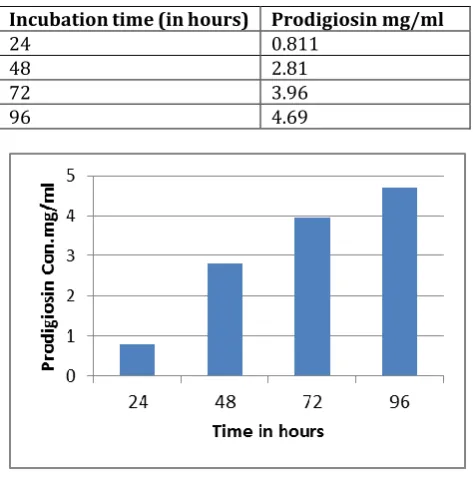
[image:3.595.304.541.400.639.2]96 hours of incubation period showed the maximum
Prodigiosin production of 4.69mg/ml as given in
Table-5 and Chart-1.
Table- 5: Optimization of Incubation Time
Incubation time (in hours) Prodigiosin mg/ml
24 0.811
48 2.81
72 3.96
96 4.69
Chart -1: Optimization of Incubation Time
3.3
Optimization of Food waste and Rice husk for
pH
© 2019, IRJET | Impact Factor value: 7.211 | ISO 9001:2008 Certified Journal | Page 333 Table- 6: Optimization of pH
pH Prodigiosin mg/ml
6 5.09
7 8.08
8 6.18
9 7.43
Chart-2: Optimization of Food waste and Rice husk for pH
3.4 Optimization of Food waste and Rice husk for
Inoculum size
The maximum pigment production was obtained at an inoculums size of 1 % (25µl) with a prodigiosin content of 6.00 mg/ml and was selected for further work. The results was given in Table-7 and Chart-3.
Table-7: Optimization of Inoculum Size
Inoculum size
(%) Inoculum size(ml) Prodigiosin mg/ml
1 25 6.00
2 50 2.63
3 75 5.86
4 100 5.07
5 125 4.43
6 150 4.38
7 175 4.04
8 200 4.33
9 225 3.52
10 250 3.22
12 300 2.94
14 350 3.90
Chart-3: Optimization of Inoculum Size
3.5 Optimization of food waste and rice husk for
moisture content
The maximum pigment production of 8.18 mg/ml was obtained at moisture content of 240% as given in Table-8 and Chart-4.
Table-8: Optimization of Moisture Content
Moisture
content (%) content(ml) Moisture Prodigiosin mg/ml
160 4 1.67
200 5 4.29
240 6 8.18
280 7 5.07
320 8 5.10
0 1 2 3 4 5 6 7 8 9
160 200 240 280 320
P
rod
ig
ios
in
C
on
.m
g/
m
l
% Moisture
© 2019, IRJET | Impact Factor value: 7.211 | ISO 9001:2008 Certified Journal | Page 334
3.7 Optimization of Food waste and Rice husk for
Carbon source
The maximum pigment production of 7 mg/ml was obtained by the addition of Sunflower oil as carbon source as shown in table-9 and Chart-5.
Table-9: Optimization of carbon source Carbon Sources Prodigiosin mg/ml
Control 6.55
Coconut oil 5.31
Castor oil 4.64
Palm oil 5.20
Sunflower oil 7.00
Chart-5: Optimization of Food waste and Rice husk for Carbon source
3.8 Optimization of Food waste and Rice husk for
Nitrogen source
In this study the maximum pigment production was obtained without the addition of any nitrogen source as given in Table-10 and Chart-6.
It was observed that even though the optimization of various parameters favored the production of the prodigiosin the overall production rate was decreased after few months. This may be due to the reduction in the shelf life of the powdered food waste material and this aspect need to be studied before further optimization.
Table- 10: Optimization of Food waste and Rice husk for Nitrogen source
Sl.No. Nitrogen
Sources Prodigiosin mg/ml 1 Control
without
carbon 7.89 2 Control with
carbon 7.12
3 Beef 2.57
4 Yeast 1.01
5 peptone 1.40
6 Sardine 5.39
7 Rastrigella 4.80 8 Combination 5.54
Chart-6: Optimization of food waste and rice husk for nitrogen source
© 2019, IRJET | Impact Factor value: 7.211 | ISO 9001:2008 Certified Journal | Page 335 pigment production. The maximum production was obtained
at a temperature of 28° C and at a pH of 8 in a similar study [1], but in this study the pH 7seems to be the best. Kitchen waste itself is a rich source of carbon which and has the capability to produce prodigiosin pigment [3]. The pigment production was highest after 36 hours and the pigment production decrease after 30° C in another study [3].They observed maximum production between pH 7 and 9 [3]. Peptone used as a nitrogen source showed an increase in the pigment production in a study [3].
4. CONCLUSIONS
Solid state fermentation study of food waste and fibers is a useful approach in waste management. The prodigiosin is a medicinally important pigment which has anticancerous, antioxidant, antibacterial in nature. By this method the food waste can be converted into a useful product. The study showed that the combination of food waste with rice husk produce more pigment than saw dust, plantain waste, palm oil fiber, sugarcane fiber, coconut and tender coconut fibers. Further optimization study of food waste and rice husk need to be conduct for optimum prodigiosin.
REFERENCES
[1] F. Xu., S. Xia, Q. Yang, “ Startergy for obtaining
inexpensive prodigiosin production by Serratia marcescens’, International Conference on chemical, biological and environmental engineering, Vol. 20, 2011, 32-36.
[2] J. U. Vora., N. K. Jain and H. A. Modi, ‘Extraction,
characterization and Application studies of red pigment of halophile Serratia marcescens KHIR KM035849 isolated from Kharaghoda soil’, International Journal of pure and applied bioscience, Vol.2, 2014, 160- 168.
[3] M. H. Bharmal., N. Jahagirdar and K. Aruna ,” Study on
optimization of prodigiosin produced by Serratia marcescens MSK1 isolated from air”, International journal of advanced biological research, Vol.2, 2012, 671-680.
[4] S. Xia., E. Venoy and Q. Yang, “ Kitchen waste as a novel
available substrate for Prodigiosin production by Serratia marcescens”, Earth and Environmental Science, Vol. 171, 2018, 1- 8, doi:10.1088/1755-1315/171/1/012037.
[5] T. Suryawanshi., V. Nair., P. Patel and A. Durve Gupta, “