Three distinguished members of an outstanding disk pack family
Single cartridge, six and eleven-
and performance - because only one way to make disk packs
high disk packs. Disk packs each carries the unmistakable at Caelus; and that is the very
unsurpassed in workmanship Caelus® trademark. We know of best way possible.
"'~,:I,
~~~
ClEWS·MEMORIES, INC. P.
O. Box 6297, San Jose, California 95133. Telephone (408) 298-7080Tell a friend about
Colorado Instruments.
Better yet-bring him to the
Fall Joint Computer Conference (Booth
no.
2520)
where he can find out for himself.
We're the best in source data collection sys-tems, although most of your 'friends probably don't know we exist. We've been "off in a corner" perfecting!
But we've proven ou rselves to a number of the country's leading companies. * By solving some problems in simple ways that would intrigue you. So we're ready to widen our circle-show a lot more people how we can fill the gap between them and their computers.
they eliminate man-hours. Increase accu-racy. Decrease costs.
They are simply designed. And easily op-erated. Modularly designed. And
easily adapted.
Here, we can only touch upon a few of the advantages of our brand of source data collection. At the Conference, we'll be demonstrating them all.
So bring a friend to Booth No. 2520 at the F.J.C.C.
Our systems are uniquely de-signed for speed, accuracy and reliability. They collect data di-rectly from its source - the man on the job - and transmit it to the computer. On-line. Or
off-line. 3120 BADGE READING STATION
We'll show him how we've helped others solve their prob-lems. With time and attendance recording. With production re-porting. With inventory control and materials ordering. With purchasing and receiving. By eliminating the need for keypunching,
record keeping and pad-in-hand inventories,
More important, we'll show him how we can help him! *Names available upon request.
Filling the gap between people and computers.
COLORADO
.00
INSTRUMENTS
ONE PARK STREET. BROOMFIELD, COLORADO 80020. (303) 466-1881
CI-246
2
departments
Calendar 9
Letters to the Editor 13
Look Ahead 17
Perspective 71 News Scene 123
Hardware 155 Software 173 Literature 181 Washington Report 195 World Roundup 201 People 205 Books 209 Index to Advertisers 215 The Forum 220
NOV. 15
J
,1970
volume 16 number 15
GENERAL
22 Anatomy of a Merger
GE had lots of plans for its computer operations before the faction in favor of selling out to Honey-well won the battle. Here are some details of the planning and maneuvering that preceded the agreement.
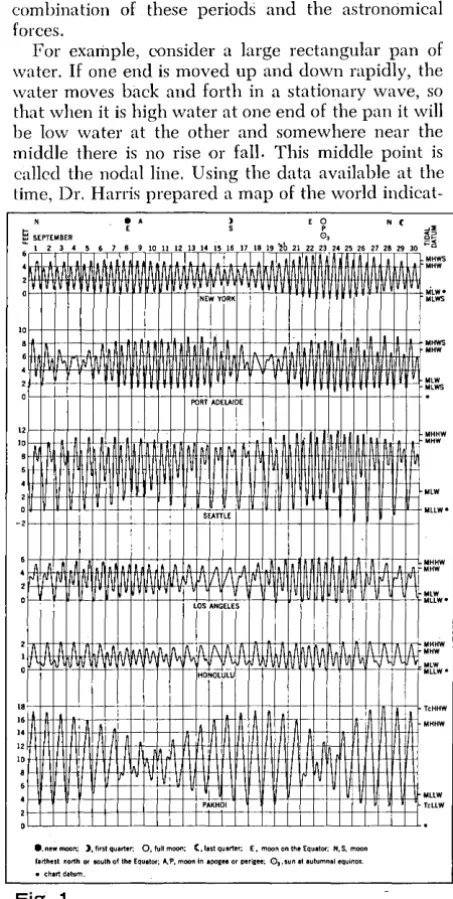
32 The Great Brass Brain
After 56 years of operation without errors or down-time, the Coast and Geodetic Survey machine for predicting tides has been retired in favor of a CDC
6600.
66
OCR-A vs. OCR-B
The long-simmering conflict between advocates of the two type fonts comes to a small boil in this Letters to the Editor type article wherein every-one who wanted to has his say.
80
Fall Joint Computer Conference
The emphasis will be on. communications equip-ment in FJCC exhibits in Houston. Large scale devices will be scarce. Our product preview de-scribes new equipment which will be introduced for the first time. And for gourmets going to the show who don't know Houston, our guide to the city's eateries is a must.
Conference particulars and descriptions of tech-nical sessions appear in the Nov. 1 issue.
DATAMATIGlN®
113 Data Transmission
A conference report.118 ABA Conference
Bar Association hits hard at inadequacies of regu-latory system for communications at annual meet-ing of Committee on Law and Technology.
!JECHNICAL
40 Tape Transports
Standardized digital cassettes may be the answer to the need for lower cost tape transports de-manded by rapid expansion of minicomputer and remote terminal market. Some design problems and approaches to their solution.
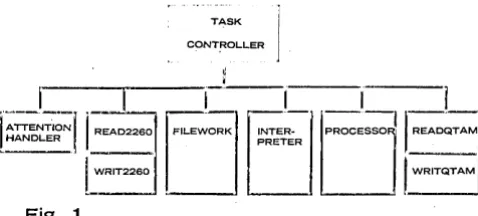
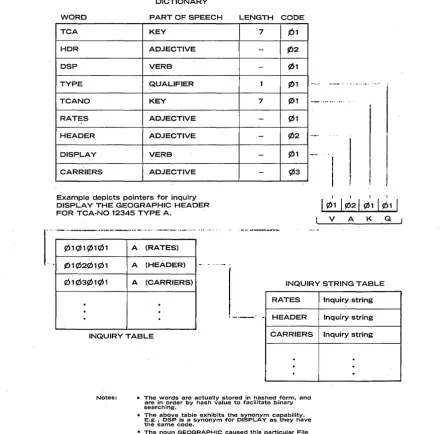
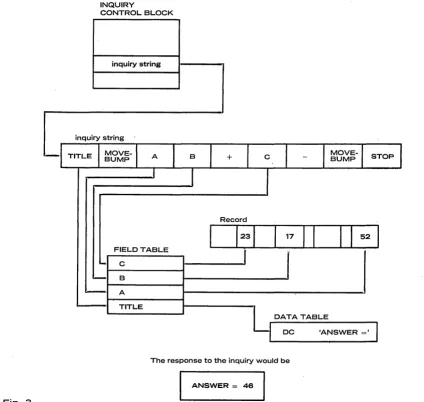
54 Remote Inquiry of Data Bases
They started with the problem of file maintenance update verification - now the designers claim to have developed a simple, flexible, and efficient generalized inquiry system.
'M
iANAGEMENT
: ...
. J
47
MIS: Data Bases
User acceptance of Generalized Data Base Man-agement .Systems is "cautious but growing." The
November 15,1970
r .
potential these systems have for improving com-munication with the computer could be a factor in the development of MIS. But first a common system needs to be developed.
1
C
:OMMENTARV
.... J
71
Perspective
The Canadian computer industry has been lagging in growth in recent years, but estimates from var-ious prominent figures up north put the future growth at a pessimistic 30% a year all the' way to 50% for services.
The Pentagon finally issued an RFP for the fabled World Wide Military Command and Con-trol computer systems and everything seems about ready to roll right now, although probably not for a while.
About the Cover
We've got it all together now! Photographer Richard Ley's puzzle pieces come up Texas, bright and clear, as setting for this year's Fall Joint Com-puter Conference.
NOVEMBER 15, 1970
volume
16
number
15
EDITOR
EDITORIAL STAFF
EDITORIAL OFFICES
GRAPHIC DESIGN
AND PRODUCTION
CIRCULATION
35 Mason Street Greenwich, Conn. 06830
PUBLISHER
ASSISTANT PUBLISHER
1=1# ...
5
Circulation audited by Business Publications Audit-~
M cm cr, Amencan Business Press, Inc . ... b . . ABP JIIIII'4
DATAMATICN~hisissuel15,381coPies
ROBERT B. FOREST
Managing Editor EDWARD K. YASAKI
Senior Associate
Editors WILLIAM J. ROLPH TOM McCUSKER
Special Features
Editor ANGELINE PANTAGES
Associate Editors AUBREY DAHL RICHARD A. McLAUGHLIN EDITH D. MYERS JOHN .T. WATERHOUSE
Copy Editor JANET EYLER
Assistant Editors ANNE WILKS MICHAEL WILLIAM CASHMAN
Eastern Editors JOHN WESSLER F. BARRY NELSON
New England
Editor W. DAVID GARDNER
Washington Editor PHIL HIRSCH
Midwestern
Editor LAWRENCE RAGAN
PEARCE WRIGHT
European Editor Australian
Editor FREDERICK A. BLAND
Contributing Editors
Editorial Adviser
HOWARD BROMBERG
ROBERT V. HEAD
PHILIP H. DORN LOUIS B. MARIENTHAL
DANIEL D. McCRACKEN
F. G. WITHINGTON
PAUL ARMER
ROBERT P. BIGELOW
ROBERT L. PATRICK
Technical
Consultant LOWELL AMDAHL
HEADQUARTERS: 94 S. Los Robles Ave., Pasadena, Calif. 91101, Phone: (213) 681·8486; EASTERN: 35 Mason St., Greenwich, Conn. 06830, (203) 661·5400; NEW ENGLAND: 19 Marlborough St., Boston, Mass. 02116, (617) 267·9414; WASHINGTON: 9805 Singleton Dr., Bethesda, Md. 20034, (301) 365·8671; MIDWESTERN: 407 S. Dearborn St., Chicago, III. 60605, (312) 922·8245. FOREIGN: 65, Hi" Road, Chelmsford, Essex, England; 322, Park Regis, Park St., Sydney, NSW 2000, Australia.
Art & Production Director
CLEVE MARIE BOUTELL
Director of Circulation Circulation
Manager
FRANK De CARLO
MAE VAN RENNES
GARDNER F. LANDON
JAMES M. MORRIS
Production
Manager MARILEE PITMAN
Production
Assistants GLORIA CASTAGNA LOUISE T. O'CONNOR
Marketing Research
Director DOUGLAS DeCARLO
DATAMATION is published twice monthly on or about the first and fifteenth day of every month by Thompson Division, Technical Publishing Company, 1301 South Grove Ave., Barrington, I "inois 60010; Arthur L. Rice Jr., President; Gardner F. Landon, Executive Vice President. Executive, Circulation and Advertising offices, 35 Mason Street, Greenwich, Conn. 06830 (203) 661·5400. Editorial offices, 94 So. Los Robles Avenue, Pasadena, California 91101. Published at Chicago, III.
DATAMATION is circulated without charge by name and title to certain qualified individuals who are employed by companies involved with automatic information handling equipment. Available to others by subscription at the rate of $25 annually in the U.S. and Canada. Reduced rate for qualified students. Foreign subscriptions are on a paid basis only at a rate of $38 annually. No subscription agency is authorized by us to solicit or take orders for sbbscriptions. Controlled circulation paid at Columbus, O. and Form 3579 to be sent to Technical Publishing Company, p.O. Box 2000, Greenwich, Conn. 06830. Copyright 1970, Technical Publishing Company. Microfilm copies of DATAMATION may be obtained from University Microfilms, Inc., 313 No. First St., Ann Arbor, Michigan. . Printed by Beslow Associates, Inc.
It draws about everything but salary.
Being versatile has' done a lot to make CalComp's 718 flatbed pIot-ter the world's most popular.,
Being accurate hasn't hurt, either.
And in many applications, you'll
never need finer resolution. But if you do, there's our new 728 flatbed plotter.
Same great size, but with laser-calibrated accuracy. Guaranteed.
Naturally, when you choose from six differ-ent CalComp flatbed plot-ters and 25 separately-defined sys-tems, you pay for only the precision you need to do the job. On jobs like these, for example.
Mapping. For resource explora-tion, highway design, and all gov-ernment and civil engineering.
Mask design and cutting. For integrated circuit packaging.
CPM/ PERT networks. For space, military and construction applica-tions.
NC simulation. For numerical control program verification.
CalComp is the leader in com-puter graphics. With sales, service and comprehensive software sup-port in 34 cities around the world.
And with the greatest variety of computer-controlled plotters any-where. Drum plotters, COM plotters, and since 1966, Flatbed plotters.
So call your nearest CalComp man today. And ask him to size up your drafting requirements.
CIRCLE 125 ON READER CARD
Maybe our versatile 718 flatbed plotter is exactly what you need.
If not, there's our exact 728.
•••••••
TEACH YOUR COMPUTER TO DRAW.California Computer Products, Inc., Dept.D-13, 2411 West La Palma Avenue, Anaheim, California 92801.
Sigma 6:
first the software, then the computer.
Crazy.
Develop a lot of expensive software packages,
put them out in the field, pro.ve them in
demand-ing user environments, then build a computer
to run them on.
Who does that?
Us.
Sigma 6 is our business computer. Designed
for high-throughput commercial batch work,
to-gether with remote job entry, and interactive time
sharing.
Sigma 6 uses all the software developed for
Sigma 5 and 7. Including operating systems for
batch only or concurrent batch and time sharing;
powerful Cobol and Fortran compilers; several
systems for structuring and manipulating files
and large data bases. Plus mathematical and
simulation packages.
To run these systems efficiently we gave Sigma
6 byte-string
d~cimalarithmetic (as well as
float-ing poinO, memory mappfloat-ing, dual-access
mem-ory, an independent input/output processor, and
many other high-performance hardware features.
We also gave it an aston-
X 0 5.
ishingly low price.
.
We went into business
backwards and came out
Xerox Data Systems
a he ad.
EI Segundo, CaliforniaOur new file management system is so simple
even your boss can use
it.
.
We call it MANAGE. MANAGE keeps you in
charge of creating and maintaining your data
base. But it lets you r boss do h is own retrieval.
He doesn't have to be an expert and he doesn't
have to write programs. All he has to do to get
the information he needs, when he needs it, is
to fill in a couple of simple forms. (Even his
secretary can learn how.) Which means you
can get out of the exception report and
one-time-problems business for good.
MANAGE is a complete system for
creat-ing, maintaining and retrieving files and
gen-erating complete or summary reports. It's
designed to run on Sigma 5 or 7 computers,
and it will accept most of your existing files
without conversion to a new format.
All of which ought to make you very happy.
And as for your boss,
xes
once he has learned
to use MANAGE, he'll
wonder how he ever
-managed without it.
Xerox Data Systems EI Segundo, CaliforniaThe Banking
Business is sold
on Weber
computer flooring.
Our access flooring. is the base of operations, so to speak, for a big chunk of the
bank-ing industry's data processbank-ing. We've put the floor under computers for the Bank of America
and the Federal Reserve. And we're in "Nationals" and "First Nationals" from Vermont to
California and from Texas to Minnesota. In fact, you can find Weber computer room flooring
in over 150 banks spread over 20 states. 0 Now, despite the bankers' reputation for
tight-fistedness, there's a lot more to their choice of Weber flooring than just price. Competitive
we are-but with more than just price. For instance, we offer more options in basic
sup-port systems and floor panel constructions to meet varying load requirements. And a greater
range of finish floorings. We've also earned our reputation for on-time delivery and
start-to-finish job responsibility. 0 What's more, as a unit of Walter Kidde & Company, you can
depend upon our long-range stability. That means we'll be around when you need add-on's
and service in years to come.
0
Write for our new Bulletin 205. Weber Technical Products,
Division of Walter" Kidde & Company, 1340 Monroe Avenue, Grand Rapids, Michigan 49502.
WEBER TECHNICAL PRODUCTS
DIVISION OF WALTER KIDDE & COMPANY, INC.~!
DATE EVENT/SPONSOR LOCATION
Nov. 15-16 ACM Data Description Houston
& Access Workshop
Nov. 16 ACM Computer Hous"ton Graphics Workshop
Nov. 16 ACM Symposium Houston Academic Education/
Computer Science
Nov. 17-19 Fall Joint Houston Computer Conference
Nov. 19-20 DPMA Conference 70 New York City Empire Division
!
Nov. 20-26 Bienniallnt/l. Milan, Italy Instr. & Automation
Exhibition
Nov. 23-25 ADP Military Camp Hill, Pa. Activities Symposium
Nov. 30- IBFI 3rd Int'I. Hollywood Dec. 2
I
Forum on Data Beach, Fla. Communications
i
!
I
I
Dec. 1-3 DPSA Seminar, New York City j Data Input with I
I
Plastic Cardsi
Dec. 7-9 I NEC 26th Annual Chicago
i Conf. & Exhibition :
I
II
!
;Dec. 7-9
I
IEEE Open Workshop: Bethlehem, Pa. Fault Detection in ;
Dig. Circuits & Sys. j
i i
Dec.9-11
I
IEEE, ACM Simulation New York CityI
I
;
Applications Conference
i
I
I
I
,Jan. 12-14
I
4th Hawaii Int'l. HonoluluI
I
Conference on II
System Sciences!
1
Feb. 9-11
I
COMPSO East New York City !I
I
Feb. 15-19 Computer Display Frankfurt, i
I
IEquipment Exhibit Germany !
I I I
I
I
Ii I
March 10-121 4th Annual Tampa, Fla.
I
I
, Symposium SimulationI
INovember
15,
1970CONTACT
,
Dr. E. F. Codd IBM Research Lab Monterey & Cottle Rds. San Jose, Calif.
i
Jackie Potts Box 933, Blair Sta.
i Silver Spring, Md. 20910
Dr. J. Robert Jump Rice Univ.
P.O. Box 1892 Houston, Tex. 77001 AFIPS
210 Summit Ave. Montvale, N.J. 07645' Conference '70 P.O. Box 1926 Grand Central Sta. New York, N.Y. 10017 U.S. Commerce Dept. BIC-932
Washington, D.C. 20230 FMSO (Code 901)
Mechanicsburg, Pa. 17055
IBFIIPIA Center 1730 N. Lynn St. Arlington, Va. 22209
DPSA
1116 Summer St. Stamford, Conn. 06905 Nat'l. Electron. Conf. Oakbrook Exec Plaza #2 1121 W. 22nd St. Oak Brook, III. 60521 F. M. Towell
Western Electric Co. 555 Union Blvd. Allentown, Pa. 18103 IEEE
345 E. 47th St. New York, N.Y. 10017
HICSS-4 Univ. of Hawaii
Honolulu, Hawaii 96822
Computer Exposition, Inc. 37 W. 39th Sf.
New York, N.Y. 10018 U.S. Commerce Dept. BIC-932
Washington, D.C. 20230
Annual Simulation Symp. P.O. Box 1155
Tampa, Fla. 33601
I
Ii
I
I
COST $40, members $50, others $40, members $45, others$22, members $30, others
$20, members $40, others
Unknown
Unknown
$30, federal; state, local
10
Here's the first computer system you can
start with and stay with . .. through changes
in requirements and technology.
Look at its featu res:
NEW STANDARD OF EXPANDABILITY. Hardware and
soft-ware modules easily added as requirements increase. No longer necessary to buy capability far beyond your current needs-or to start over periodically with a new and bigger compute!". The C-System permits virtually unlimited expansion.
ADAPTABILITY. Accommodates technological advances in
computers, peripherals, and end-devices without change in basic system.
UNMATCHED SOFTWARE FLEXIBILITY. Modularity of
,sof~ware permits easy adaptation and expansion to user's requirements. Customer is able to define and use problem-oriented languages. Complete operating system already availdlble.
Collins C-System
a computer that's
eliminating the
"generation" concept
INTEGRATED COMMUNICATIONS. Communications are an integral element of the system (just as processing, storage, etc.). No geographical limitation. Combines all aspects of com-munication, computation, and control.
ADVANCED MICROCIRCUITRY. Collins has one of world's leading MaS/thin film/planar facilities.
NEW LEVEL OF RELIABILITY. Not really new at Collins. Our computers have served round-the-clock in airline, railroad, and government facilities for years-with total downtime measured in minutes.
SYSTEM EFFICIENCY. The C-System automatically assigns
and distributes work throughout the network to assure maximum utilization of facilities.
You can start with a small system for a single application (the C-System can work with your existing computer equipment), or you can establish a total system for your entire operation. Contact us. Collins Radio Company,
Dept. 300, Dallas, Texas 75207. E
Phone: (214) 235-9511. ~~
COLLINS
~
ANOTHER REASON TO THINK COLLINS WHEN YOU THINK COMPUTER SYSTEMS
You've got the best computer for the job . ..
Why not buy the
best plotting system?
Used in a time sharing mode,
1he PTC-4 Plotter/Teletypewriter Controller linked to the DP-1 Digital Plotter provides 11" wide reproducible graphs, charts, and drawings at a remote location-direct from the computer.
$5900 ffI ~
DP-1 $3500
Offline plotting in addition to computer 110 capability
The MTR-9 is a superior system offering faster plotting yet uses less computer time. New END- STEPtm MODE software reduces computer time and tape lengths by 10:1. Operates with any speed incremental plotter. Has high speed search with block selection. 7 or 9 track IBM format. Operates with the
DP-1 " DP-5 or DP-3 22" wide, 300 increment per second plotter.
MTR-9 $21,000. OP-3 $6.400.
©@)0\01J[§)[S@)lJ..
with
me!
OP-5 $11,000.
...->9
(..../ Plotting online Is 4 times faster
o
v with the Ultra High Speed DP-5 Incremental Plotter. Designed for computer graphics, it plots at a continu.-ous speed of 1200 in crements per second. No special programs required. Step size is factory set at .005" or .0025".Q
Offline plotting Is now an economic r~._IItY
with the MTR-2 Magnetic Tape Re.§der. I t operates with
£.tile'
DP-1, DP-3 and DP-5 Plotters to form a complete offline system. The MTR-2 accepts IBM com-pati b!e tapes.rru@M~~@[Ji)
I
DIVISION OFBAUSCH&LDMB~
InSTrumenT
49~O T E R M I N A L A V E N U E , B E L L A I R E , T E X A S 7 7 4 0 1
( 7 1 3 ) B S ? 7 4 0 3 C A B L E H O I N C O
Visit us at Booth No. 1201, FJCC, Houston, Texas
LETTERS
IBMbarrassed
Sir:
How's that again? "At the point that errors are encouraged during com-pilation, the compiler generates a call to an error routine. . . . " ( P. 56, GC28-6596-4 1B~1 System/360 FORTRAN IV Library Subprograms.) WALTER C. DAUGHERITY
Cambridge, Massachusetts
Hallett Hollereth
Sir:
In reply to Mr. Robert Bufford's re-quest in the Aug. 15 issue (p. 14). He may be interested to hear of an all magnetic tape system of consid-erably earlier vintage than 1966, even though in Canada. In Septem-ber 1958, I began my programming career with the Ontario Hydroelec-tric Commission here in Toronto. Their UNIVAC II was installed the
pre-vious spring.
Off-line paper tape to magnetic-tape converters were used to handle data transmitted from area offices, and UNITYPERS were the key tape devices producing all other input. The tapes and reels were all metallic and exceedingly heavy. All output was also on magnetic tape; the print-ers were operated off-line.
My first iIltroduction to punched cards was when I became employed by a company using IBM equipment in January 1965. Can you imagine a programmer with over six years' ex-perience unable to decipher a Hol-lerith punched-card?
JULIE HALLETT
Toronto, Canada,
APLause
Sir:
I missed the byline on the "Whither APL" article in your September 15 issue and was halfway through it when I started asking myself, "I wonder who the author is; whoever it is really knows programming lan-guages and really knows how to write." So then I turned the page and there was a picture of the only possi-ble answer to my question-Dan Mc-Cracken.
November
15,
1970If Dan is planning to write a book on APL, that is an item well worth add-ing to his list of its advantages. CHRISTROPHER J . SHAW
Los Angeles, California
Census suspense
Sir:
As an individual who has written to you previously on the subject of Census data (Aug. 15, p. 13), I feel that Mr. Rappeport (American Civil Liberties Union) was also speaking to me in his defense of the present status of the Census (Sept. 15, p. 13). As much as I respect the ACLU for its work, that organization has occasionally been shortsighted in its failure to criticize programs which may not be a danger now but are
likely to become so in the future. I believe that the continuation of the Census in its present form is such a danger.
As data collected by the Census become more and more technically accessible (via various kinds of soft-ware and hardsoft-ware advances) it be-(X)mes more and more difficult to say that those data should not be
ac-cessed. Can Mr. Rappeport honestly say that if the technology were avail-able, the court system would, for ex-ample, deny the Justice Department the right to access Census files to find out where particular individuals re-sided in 1950, 1960 and 1970, if it
could be demonstrated that such formation were in the "national in-terest''? I am certain that the ACLU would oppose such a move, but it would be a bit too late. From "na-tional interest/security" ra"na-tionales, it would be fairly easy to move on to "organized crime," "narcotics," and other issue areas generally considered to be important. Once such prec-edents become established, it would be a rather small step for other gov-ernmental agencies to find uses. Fi-nally, if one admits the possibility of corruption (and I'm aware of the past good history of the Census Bureau in this regard), the "sacred" nature of such data files will surely be violated. (This progression ig-nores additional pressures that will come from the recurrent efforts to develop a national data bank from
which omission of Census data is but a dream.)
As a Political Scientist, I am aware of many of the nondangerous uses to which aggregate Census data can be put. The temptation (to which Mr. Rappeport has succumbed) is cer-tainly there to overlook the potential
harm which might be the result of the existence of Census data banks. I differ from Mr. Rappeport (and, un-fortunately, many others) in that I feel that the "potential" is terribly close to becoming a certainty.
I hope that I am not able to say "I told you so" fifteen years from now.
It would give me very little pleasure. MICHAEL R. LEAVITT
Evanston, Illinois
Fearless attack
Sir:
Until I see a signed, written state-ment or hear it straight from the jackass's mouth, I refuse to believe that a man of H. R. J. Grosch's intel-ligence ... at least a 110 or U5 I.Q. . . . would risk the alienation of the world's newest technical elite, the world's potentialiy most powerful group-who literally have their fin-gers on the buttons of power-who if
they were sufficiently organized and united among themselves would be very hard, in a highly computerized state, to keep under control; the only group who possess the proven capa-bility, as amply demonstrated during the past 15 years, of transforming managerial hot air and arm-waving into working programs (subject of course to the speed of light and the fact that there are only 24 hours in a day) by making such a stupid, back-stabbing; asinine statement as re-ported in the July 15, '70 issue of DATAMATION (i.e., "Programmers are jerks!") .
I mean, when one's primary and secondary talents (aside from the above-mentioned God-given artistry) consist of providing comic relief (i.e., panel discussions) he tween technical papers presented hy one's peers, only a moron, a fool, or a hrain tortured and twisted by senility or insanity would allow what's left of the
pseudo-random neurons in his brain to com-mand hot-air to be passed over a long hollow tube in real time before a live audience and shout out for all the world to hear: "Programmers are jerks!"
However, if this alleged
Two
reas ns
,
ow. prices an
low
maintenance costs.
2.
Designed For The Office Environment
Diablo Series
30
removable
andup-keepcosts.Repairsa.re
disk drives have fewer moving
simplified .. thanks.tQ
qia~l()J~
parts. The two sub-assemblies
quickreplacernent-typ~im~in~shown contain all the high-
tenance.Quiet;compactaP9
speed moving parts. Spindle
cool,9iabloDiskQriyes9pn7
speed and head 'position ing
sume.l~s~th~n1qqV\f5.>tp9w~r.
are entirely electronically controlled. Poten-
Power
suppl.ies.aresirnpleancjiD~'S8en~i\l~.tiometers, belts, puneysand field adjustments
DiabloDisk9rjvesareClyaiiabl.eif)~it~.er.11pq
are eliminated. Fewer parts mean Jess space
or
2200SPI.
capacities,proyiding1gQri24rnH~,is· ·needed. Four Diablo Model
See Diablo·Disk·Drives
AfTheFJCC
liqn.9.it~p~rsarfri9g~~tRR~
3t
Disk Drives can be stacked
Spac~s
2326
&2328~
c0l1'lpI~t~iDfprmati9.nang~Rr~
in .•
~.
single desk-high cabinet.
cificatjon~i>.~rite Dl.<...,.~ysT··
The
buift-i.n.
si
rnPI
ic
ity of
D
i
ab
f 0t
e
m
s,ll1g.~g45 OOlflqu~~r~.al'Diskprivesmakes them .more
BoureYElrcj; fTlf;iyward
Letters ...
phemy is true, I know not what the reaction of others wiII be to this latest Communistic-Capitalistic Plot, aided and abetted no doubt by the effete, troglody-tical, hornswogging editors of D-ATMdATION, to depress the salar-ies of the professional programmer and attempt to make him the scape-goat for the economic, political, ra...: cial, and religious ills of the world; but as for myself, I say: "PROGHAM-MERS OF THE WORLD UNITE! THE WORLD IS OUHS FOH THE TAKING!" J. WOLFGANG VON HOLSTEINOVITCH P.S.: Just to be safe, would somebody please slip a muzzle on Herb and start the Pasteur treatments before he bites a programmer!
Omission improbable
Sir:
In the July 15 (pp. 87-98) issue Mr. Cecil Frost has presented an excel-lent survey of computers designed and/ or ruggedized for military ap-plications. We wish to bring to your attention the omission of a very ver-satile avionic computer, the AN/ AYK-8, designed and manufactured by \Vestinghouse's Systems Develop-ment Division. Because of its modu-lar structure and general purpose de-sign, this computer, while originally designed for airborne fire cClntrol, has developed into a family of machines which are being used on several Air Force and Navy programs. Designed in 1969 to MIL-E-5400 specifications, over 30 computers of the AN/ AYK-8 family have come off our production lines.
The Westinghouse AN/ AYK-8 is an 18-bit general purpose computer with 51 indexable instructions. It is comprised of four basic functional modules: a standard control proces-sor module, a standard memory module containing 4096 words (ex-pandable to 64K words by using 16 modules) , a standard power supply module and an input! output module comprised of standard printed circuit boards auginented by a few special interface boards to satisfy the unique requirements of each application. GEOHGE SHAPInO
Baltimore, At aryland
Syncing circuits
Sir:
In The Forum of Septem her 15th, Mr. J. Robert Logan wondered why
November
15,
1970parallel logic is not used more often. He implicitly defined patallel logic as logic which does not contain storage elements and feedback lines.
That parallel logic has not found more common usage is not the fault of the designer but is associated with basic properties of sequential cir-cuits: In recent years researchers have been successful in developing methods for designing sequential cir-cuits requiring a minimal number of feedback lines. In the case of syn-chronous sequential circuits this number is at most one but is nearly always that nUmJel:; however, the minimization of feedback lines is usually achieved at the expense of increasing the number of storage ele-ments required.· Asynchronous se-quential circuits can be designed without storage elements, but the minimal number of feedback lines
varies from circuit to circuit and iner-tial delays may be needed to avoid hazards. If a stable state of a circuit is allowed to be represented by a set
of unstable states then an asynchro-nous sequential circuit can be de-signed using a single feedback line. Unfortunately, such a circuit rcquires the use of inertial-delay elements having threshold properties that may be realizable only by circuits involv-ing amplifiers amI feedback.
H. ALLEN CilHTIS
'Villiamsbllrg, Virginia
Porno comment
Sir:
Please callcel my subscriptiotl imme-diately. I do not intelld to be humili-ated again hy having my wife discov-er that DATA~IATIO;\; nms hexadecimal pornography. In case yon can't figure
it out, I'm talking about "A New Constrained Art Form: The Hexa-decimal Core Dump," in the Sept. 15 issue (p. 57).
I read it, thought it was clever, and forgot about it until I heard my wife cackling uncontrollably one night while I'm minding my own business, reading a printout. Seems she had stumbled onto the story, written with the letters, A, B, C, D, E, and F, about a man in bed and the conversation he has with his girl-friend-but you published it, so you remember.
I tried to explain that it had to do with food poisoning, but then she read it to me her way. I read it to her
my way, and all she said was,"Your way takes a lot more imagination than my way."
And to think that you ran it right under the picture of a man who has just graduated from seminary! ! ! KOH AMAR JACHWEG
Re citation
Sir:
The following citation sho11ld be added to th~ introductioll of my
paper entitled "The Pipeline amI Parallel Computer," which appeared in the April 1970 editioll of DATA~IATION.
"The fact that the pal'aIIel and pipeline computer designs have inherent limitations which render their performallce very sensili\'e to problem ai1d programming formu-lation was first pointed out to the author bv Dr. Tien Chi Chell, a result which Dr. Chen derived from his extensive unpuhlished re-search on the subject." ,
The citation was omitted as the result of an oversight on the part of the author.
\VILLIAM R. GHAHAM
Santa Af onica, California
APL polisher
Sir:
Your puhlication of Dan Mc-Cracken's (~xcdlellt article "\Vhither APL" (Sept. IS, p . . S:3) should be very valuahle ill hrillging API. to the attention of your readers.
One additional COlllment should he passed along to your readers: Don't make the mistake of thinking you can hecome familiar with APL by reading about it. You have to llse
APL to appreciate it. Even a/tr;r
us-(C olltillur;d on rJagc 20.'3)
I
= C"-\ W'~
"""
en 0.>
0">
""'" ~,
en ~~
C'> .b.,
""-~
,....,
... :>
"""
WE DON'T CARE
WHICH DECK YOU USE
,
New system/3 card storage is ready and waiting in the Tab Auxiliary products line. Just another case in point for Tab's rightful
leadership role in data processing auxiliary equipment. Being first comes next to
being best at Tab. So rest easy, because our system/3 card storage, will give the same reliable, quality performance as our standard card files. You'll always be a winner.
Send today for your free System/3 Planning Kit-'//' scale floorplans, equipment templates -everything you need to plan an efficient System/3 facility. Write:
Tab Products Company,
T...,
2690 Hanover Street, . . .
.-;a
Palo Alto, California 94304 PROD U C T S CO.LOOK ... ?AHEAC
WATSON ALL ABOUT, IVAN?
STRIKE THREE ON 360 DESIGN TEAM
COURT MAKES EARTHSHAKING SOFTWARE PATENT DECISION
PL/I WINS A FEW, LOSES A FEW
November 15,1970
Thomas J. Watson's two-day visit to Moscow didn't
produce any computer business and the IBM chairman
told the press he doesn't think there's a market in
Russia at present. Observers wonder at this
negative stance in view of Moscow's negotiations
with Siemens and Olivetti and its recent orders to
ICL (Aug. 15, p. 171). But in true IBM
tradition--never to come back without an order -- Watson could
have swung a deal to sell typewriters, which the
Commerce Dept. took off its restricted list of
exports this summer. Meanwhile, rumors persist that
the Belgrade secret police are installing a
360/40--presumably for nonmilitary use.
The last of the three key 360 architects has left
IBM. He's Gene Amdahl, most recently an IBM fellow
since a supercomputer project he was working on was
shot down in June '69. He was preceded out by
Fred Brooks and Gerrit Blaauw. An alleged conflict
of interest was reported a key point in bringing
about the latest separation: IBM felt Gene's pOSition
on the board of Compata (run by his brother, Lowell)
was somehow a conflict. Gene, in two stints, was
with IBM some 12 years. He has served on the Compata
board for five. IBM's revenue last year was close
to $7.2 billion; Compata's roughly $1 million. It's
believed Amdahl (Gene), on vacation at this writing,
will form a company of his own.
Another blow for software patentability has been
struck by the Court of Customs and Patent Appeals.
October 8, in a decision regarding a seismic data
correction method, the 'court took a strong"er stance
on patenting mental processes than that in the
hallmark Prater
&
Wei decision (Jan. 1969, p. 78
and April 1969, p. 174). Overturning a Patent
Office decision that inventor A. W. Musgrave's
method was unpatentable because it involved mental
processes, the court said "all that is necessary, in
our view, to make a sequence of operational steps
a single 'statutory process'
within 35-USC-IOl is that it be in the
technological arts so as to be in consonance with
the Constitutional purpose to promote the
progress of 'useful arts.' "
Judge Phillip Baldwin, a member
o~the court,
agreed with the results but not the reasoning. He
noted that in the second Prater deciSion, the court
did not decide "whether claims drawn to a process
consisting entirely of a sequence of purely mental
steps would fit within the ambit of the law.
The majority now proposes to answer this question
in the affirmative, regardless of the fact that the
case could be decided on very narrow grounds
--as a machine-implemented process.
PL/I is being used (though not exclusively) in 2,000
shops around the country. And in Europe we hear more
IBM customers are hooked on PL/I than on COBOL. There
have been some defectors, but their major argument
LOOK AHEAD
18
USERS GET ANTSY OVER CODASYL AND ANSI
RUMORS AND RAW RANDOM DATA
against PL/I -- that it locks them into IBM equipment
-- is gradually being dissipated. CDC and
Burroughs have announced their compilers will be
ready in the first half of '71, and Siemens also
has one in the works. Univac's a maybe, and Honeywell
and NCR are resisting.
The PL/I standards effort, under ANSI's X.3.Jl
and ECMA's TC-IO committees, continues. The general
content of the standard should be decided by year
end. By mid-'71, the committees should have defined
the language they want to standardize. After that
there'll be polishing and subset definition. If all
goes well, the standard will be proposed the end
of 1972.
Some users are upset that they don't know the details
of CODASYL's 13 proposals for extensions to COBOL.
They include vital data communications and
asynchronous processing extensions. ANSI's X.3.J.4
COBOL committee will be considering ·some or all of
them next month in Ft. Lauderdale. The only document
in which the proposals have been published, CODASYL
COBOL Journal of Development, #llO-GP-la, is published
by the (get this) Canadian Dept. of Defense, Ottawa.
Potter Instrument, instead of going for off-line
print stations, plans to come out with a hard-wired
communications controller (IBM 27S0-like) that
interfaces with IBM 360s and 370s ••• More rumors
on IBM's "evolutionary" new operating system are
floating out. NSOS, which should be out within two
years, will be paged and provided virtual memory
management. As expected, 370 will have relocatable
hardware; users suspect it's there already •••
IBM's SE force is rumored down to 4,500 and
evolutionarily ••• dropping Digital Equipment Corp.
should soon announce a remote batch terminal for
the time-sharing PDP-IO. As might be expected, the
PDP-S/I will be the heart of the terminal, which
will also include a synchronous line interface, card
reader, line printer, and software. The price
--around $50K ••• The dropping of Applied Data
Research's plans to sell its West Coast subsidiary,
Programmatics, Inc., to Computer Machinery Corp. was
attributed by CMC's president Jim Sweeney to a
"change in circumstances." That change might be due
to ADR's healthier financial position after the $2
million settlement of the suit against IBM (Oct. 1,
p. 72) ••• Informatics president Dr. Walter Bauer,
concerned that Justice has made no effort to learn
the nature and" extent of damage the independent
software firms claim IBM has done to them,
plans to contact Justice himself to see if
an input can be established.
The advent of a reported $lllO/mo. IBM
System 3 with ledger card input means that IBM
is going after the market for big accounting machines,
led by Burroughs and NCR. It could also herald a
line of dedicated System 3s, handling
perhaps credit cards, badge reading, etc.
At this very moment, critical data in your tape files may be deterior-ating. Until Memorex Quantum came along, there wasn't much you could do about it.
Now there's Quantum CX. It protects against lost data two ways.
November 15,1970
First, with the proven Quantum oxide coating that's more resistant to "growing errors': Second, with a a new back coating. It reduces errors caused by static-attracted contaminants and by debris from back scratches.
It costs more to make a tape the way Quantum CX is made. But remem-ber, the premium you pay really isn't for the tape. It's for the insurance.
CIRCLE 46 ON READER CARD
. ,
For more information on Quantum CX, write: Memorex Corporation, Information Media Group, Memorex Park, Santa Clara, California 95050.
1,998 character display (27 lines of 74 characters each) on a 12-inch screen.
A true stand-alone unit-includes communications interface and modular power supply,
Inside Story of the Video Display Terminal that
·Ieaves all the oth'ers behind.
Switch-selectable full- or half-duplex operating modes.
Selectable transmission rates-110, 150,300,600 or 1200 baud. Adjustable up to 9600 bps.
rwo-Ievel video intensity. Useful for form fillout; Computer-derived )rotected data is lower intensity; operator-entered data is brighter. ;elective scrolling at any .line when. under program control; lutomatically at line 1, unless otherwise directed.
'utomatic tabulation in form fillout directs cursor to next entry point.
3 remote monitors may be connected without amplifiers. With amplifiers added, the number is unlimited.
Individual TV adjustments conveniently located up front for optimum operator comfort.
~eliable solid-state circuitry assures virtual trouble-ree operation. Maintenance is as easy as opening
Quiet, solid-state keyboard in Teletype terminal format may be operated remotely.
1 draWer.
fiigh-speed, random-access core memory (2048 x 8) provides flexibility 3nd efficiency consistent with all the unique design features of the
I~azeltine 2000.
Plus: Low Costl
$88 per month (12-month rental) plus
$20
maintenance.We'll be happy to demonstrate the Hazeltine 2000 in your offices.
Hazeltine
2000
Im~ltine
Corpomtion
Little Neck, N.Y. 11362 Phone (212) 423-4800
22
The planning and the
plotting that led to
HoneYlNell's acquisition of
GE's computer operations
Anatomy of a Merger
Money talks. And when it· does it usually has something very important to say.
For instance: When Honeywell, Inc.,
Ie;
l . .
....
announced last May that it would take over the heart of General Electric's computer opera-tions, Honeywell's stock promptly plunged $16.50 the next day and closed at $86.50. The following day, as the word got around and as the proposed merger-takeover was examined in closer detail, Honeywell stock nose-dived another 9 points. Meanwhile, Gen-eral Electric's stock remained fairly stable, although it dropped slightly.The public had spoken on the proposed combine in the only manner in which it could express itself. Actually, the negative reaction should not have been too surprising given Honeywell's history as operating a well-managed and profitable computer business and General Electric's unmatched reputation among the mainframe companies of fumbling and bumbling with its unprofitable computer operation. Obviously, many feared a dilution 'in Honeywell's earnings while it digested the General Electric portion.
Also, it should be noted that the announcement took virtually eve~yol1e by surprise. The computer industry rivals the CIA in its fetish for secrecy and the merger negotiations must go down as a textbook ex-ample of a well-kept industrial secret.
There was, however, one inadvertent slip. In March, Stephen F. Keating, president of Honeywell, was vacatioriing in Arizona, as had been his habit for years. Although Keating had known that Honeywell and General Electric were quietly talking about
get-by W. David Gardner, New England Editor
ting together, he was not directly involved-at that point, at any rate-in the negotiations. When a group of industrial leaders in Phoenix offered to take Keat-ing on a to~r of the business side of Phoenix, the Honeywell executive gladly accepted.
The agenda included a tour of. General Electric's information Systems ,Equipment Division in Phoenix. Keating was ushered around the plant by the divi-sion's vice president and general manager, John F. Burlingame, and almost immediately the Honeywell exycutive with the distinctive appearance (tall, grey-haired and handsome) was recognized by several former Honeywell employees who had been hired over to GE. The visit created a good deal of internal
speculation at the Phoenix plant, but when nothing happened the hilk soon dropped off and Honeywell's and General Electric's secret was safe until the firms decided to announce it several weeks later.
Like all stories, this story of the Honeywell-General Electric combine-far and away the largest merger in the history of the computer industry-must have a
b~ginning. Since General Electric instigated the whole thing, it is perhaps best to start off with Gen-eral Electric and since. Hilliard W. Paige was the top man in General Electric's computer effort, it is there-fore best to start with him.
In September of 1969, Paige, then vice president and group executive oT GE'S Information Systems Group, delivered a surprisingly bullish report on his firm's computer operation to a group of security analysts in New York. The report was surprising in that Paige was able to say that GE was doing much
better in the field than it had generally been thought to be doing. "In terms of progress toward profitabil-ity," said Paige, "the installed value of (GE) equip-ment has been rising at an average rate of 22% a year in recent years, while losses have been cut substantial-ly ~ach year." .
Paige reported thqt GE'S 200 line was profitable and that its Italian operation, which makes small business computers, was not only profitable, but was "the most successful" unit in GE'S computer operation. Also, some time-shared service centers were profitable.
And then the surprise of surprises: Paige said the Bull-GE operation in France was "rapidly approach-ing profitability." Bull-GE had become a favorite whipping boy of American business publications and the French unit's image in the U.S. appeared to be that of a company wallowing hopelessly in red ink. Paige turned out to be right, too, on the subject of Bull-GE's impending profitability, although the profit was marginal in 1969.
The security analysts listened attentively as Paige tempered his optimism somewhat by saying that some segments of GE'S business were "several years away" from the break-even point and he declined to predict when the Information Systems Group as a whole would become profitable. The me~ting, though, was a fairly typical example of a security analysts meeting-that is, the good news outweighed the bad news. Besides the strides GE was making with its operations, Paige and his associates ticked off additional favora-ble information on the group's progress. It was stated flatly that GE'S 400 line would be "very profitable"
November
15,
1970even though it wasn't at that time; the 600 line-off to a slow and bumpy start-was having a good year and the firm's over-all computer orders in the U.S. were up ~n% from the previous year and the order backlog was up 87%.
Paige was clearly after that number two position behind IBM. "When we achieve that position," he said
confidently, "profitability will no longer be a prob-lem."
In late 1968 and early 1969, GE top management had been easing Paige into the top spot in the Infor-mation Systems Group-and easing
J.
Stanford Smith out-even while Paige still held his post as general manager of GE'S Missile and Space Division. At the time of the security analysts' meeting in September of.. . he declined to predict
when the Information Systems
Qroup as a whole would
become profitable.
1969, Paige had been in charge of the Information Systems Group for about six months. Paige is an aerospace man,. not a computer man, and aerospace computers are to electronic data processing as Saturn rockets are to the airline industry-expertise in one does not necessarily guarantee expertise in the other. In this regard, then, GE remained true to its
24
Anatomy of a Merger . . .
tional management approach to the Information Sys-tems Group by naming a non-computer man to head up the group. .
But the important point here is that Paige and GE were extremely bullish about the company's computer operations in September of 1969. Nevertheless, in less than six months, Paige and General Electric would throw in the towel as far as continuing the operation was concerned and GE top management would be shopping around the computer industry to unload the Information Systems Group or as much of it as any-one would take. In short, GE, after pouring hundreds of millions of dollars into its computer operation without ever reaching the break-even point, would provide the computer industry with its very own Bay of Pigs .
. Shortly after Paige assumed control of the Informa-tion Systems Group, he decided to convene a broad
4.;; M@ ¥ P T
Paige and GE were extremely
bullish about the company's
computer operations in
September of 1969.
spectrum seminar or "think-in" for the entire group. Not surprisingly, it was an old military-aerospace technique-getting everyone together from various branches to attempt to reconcile differences and set out anew toward a common goal. The ultrasecret operation was given the code name of Project Shailgri-La and General Electric took over much of the Dip-lomat Hotel in Hollywood, Fla., where the sessions were conducted. Richard M. Bloch, general manager of GE'S Advanced Development and Resources Plan-ning Division, and a former Honeywell man, \vas assigned to run Project Shangri-La. (The Shangri-La proceedings were so secret that they were locked up in bank vaults at night.)
The central idea behind Project Shangri-La was to develop a master plan for an advanced product line
(APL), not to be confused with the language of the
same initials. As in most companies, different factions within GE'S computer operations displayed sibling rivalry from time to time. But in the Information Systems Group these were magnified by GE'S profit-and-loss-center approach, which understandably tended to make individual units within the larg-er group somewhat independent. Furthlarg-ermore, the international units-particularly Bull-GE-displayed even greater independence, based largely on a combi-nation of the P&L structure, national pride, and dis-tance between GE'S headquarters in the U.S. and the international units' headquarters on the Continent.
"We knew there would be a real dog fight," recalls one eX-GE man who was at Shangri-La. "You know what computer design people are like. Each one has his own idea of how to build a computer."
Even before Shangri-La officially got under way. the Advanced Development and Resources Planning Division was pushing for strong central control for development. of the new line. In addition, central
control was proposed for software development, which has traditionally been scattered throughout GE. From the start, the independent factions within GE did not look happily upon the idea of strong central control, perhaps understandably so because it would lessen their independence.
Before the start of Shangri-La, bedrooms in the
1&9% miSE 1#44+£1
The Shangri-La proceedings
were so secret that
they were locl-<ed up
in banl-< vaults at night.
Diplomat East were revamped into conference rooms. Bloch moved his staff from New York to Hollywood, a worldwide communications center was established and the session, scheduled to meet for three months, had some 60 permanent participants from all units within the Information Systems Group. Others, from Paige on down through the group's middle manage-ment, paid occasional visits. The 60 permanent partic-ipants were divided into five teams of 12 each with representatives from each GE computer operation on each team. Each team was given a color-there was a blue team, a red team, a yellow team and so forth.
.. . the session, scheduled to
meet for three months, '
had some 60 permanent
participants.
A
\Vith the ground rules set, Shangri-La got under way. "Shangri-La was definitely not a vacation," another eX-GE man remembers. "Florida in the summer isn't a vacation. Often the participants were working 18 hours a day seven days a week."
Shangri-La completed its mission in that a master plan for an advanced product line was hammered out (hammered out is the appropriate phase here). Bloch had set down three basic goals for the APL to achieve. and the master plan was drawn up with the thought of fulfilling the three objectives. First, the APL was planned primarily as a major assault on Colossus IBM
and, as such, the machines would stress compatibility with IRM equipment. Second, the new equipment
would be aimed at picking up 10% of the computer market-enough to firmly place GE in the second place in the industry. And, finally, there would be, as one Shangri-La participant called it, "reasonable compati-bility" with GE'S existing lines, enough to keep GE'S customers from moving over to a competitor. The emphasis throughout, though, would be on taking business away from IBM.
The original plan called for eight machines, A through H, starting with a terminal (A) and extend-ing through a broad-scale series to supercomputers
(G and H). The terminal, which would have MaS circuitry, was to rent for $500 to $1,300 a month, be compatible with the whole line, and could be con-velted to a self-standing unit. There was talk of the crt terminal having a wireless radio communications
The original plan called
for eight machines . ..
capability and of special versions, including one with a stenographic keyboard.
Machines Band C were combined at Shangri-La into machine B/C, a computer that would rent from $1,300 to $5,000 a month and be designed primarily as an upgrade for users of IBM'S Model 360/20 and model 1130. The logic circuitry was to have been advanced TTL (54/74 Series) and the
B/e
machine was to have received heavy design and manufactur-ing support from CE Information Systems Italia.The APL'S center machine (D) and the first sched-uled for announcement-introduction in late 1972 and deliveries in late 1973-was to have a monthly rental between $4,000 and $15,000 and was aimed directly at IB~ls .'360/50 customers. The logic circui-try was to be an advanced TTL design with a 12
nsec cycle time. Bull-cE was slated to have key de-velopment and manufacturing roles in the D machine project.
The E and F machines were aimed at IPM'S 65 through 85 customers. The circuitry would have been
EeL. The E and F machines were scheduled to come
Qut further along the line with a heavy contribution from CE'S Phoenix operation, which, it was thought, would be busy enough anyway in the early 1970s with the 400 and 600 Series and product enhance-ments of those two lines. .
The G and H computers were to have been super-computers for high level time-sharing. The planning for these, however, was not thoroughly worked out in the master plan, and their future status was being held in abeyance and was therefore vague.
It was proposed that the entire product line be software compatible from the top to the bottom of the line. The APL master plan also included a full set of
peripherals ranging from mass storage and magnetic tape units to printers and card equipment. Through-out the line, semiconductor memories would be used where possible.
But one of the most interesting features to come from Shangri-La was a proposed data
communica-tions network called Network Service Supplement
('NSS). The NSS was proposed for availability with each ll1achine in the APL series and was essentially a
remote shared-access information system. One of the chief advantages of NSS was that it would be available
to the small user-a user, for instance, who might be leasing the A terminal for just $500 a month. Nor-mally, such a small user could not have been offered a place in the over-all line at such a low price, but NSS
November
15,
1970"vOlild have done this for him,. and, in the process, hopefully, hook him on CE equipment for good. The NSS plan called for the establishment of several large resource centers connected to a communications net-work. Each user would have had terminal capabili-ties. For large customers, NSS would have the advan-tage of being able to handle their overflow require-ments.
Although the APL was aimed primarily at replacing
IBM'S 360/20, 25 and 1130, its secondary target was all Model 360s using disc operating systems (DOS)
and operating system .'360 (as). The pricing was important, too. The' participants at Shangri-La de-cided that the equipment would have to.have about a 30% price-performance advantage over IBM equip-ment and, further, the method of conversion from IBM
to CE equipment would have to be inexpensive and
simple.
Project Shangri-La very likely produced the most comprehensive and boldest master plan for an assault on IBM ever prepared-certainly far more ambitious
than anything any of the other Se-ven Dwarfs were even considering. It was a program that, if successful, would almost surely catapult GE into the number two
position behind IBM. And because of its sheer bulk in size and financial resources, CE with $8.5 billion in
annual revenues was in a better situation than any other computer company to wage a broad campaign against IB~L
However, the risks (e.g., the costs) were frighten-ing, even for a General Electric. The cost of imple-menting the master plan was generally placed at
,
But one of the most
interesting features to
come from Shangri-La was
, 9
a proposed data communications
network called
Network Service Supplement . ..
$450 to $500 million on the low side, spread out over six or seven years. But many figured costs would be even higher than that. The costs would have included the design and development of the machines, market-ing development plans, and the establishment of pro-duction lines, but not the actual costs of producing the machines.
Bloch stood for an "all or nothing" implementation of the Shangri-La master plan-either go with it or get out of the computer business. Bloch's supporters viewed him as a conceptual genius, as the man who would lead GE into the Promised Land of computer profits. They felt he had the broad knowledge of the industry and, furthermore, the chutzpah to parlay the
APL into a winner for CE. Bloch's approach, however, was said to be based largely on the belief that the rich (IBM) were getting richer and the poor (the Seven Dwarfs) were getting poorer vis-a.-vis IBM, and that only a massive assault could hope to reverse the trend for anyone of the dwarfs. Bloch's. detractors felt