SYNTHESIS AND ANTIMICROBIAL
THEIR CORRESPONDING 1,3
*Naruka
Department of Pharmaceutical and Medicinal Chemistry, Faculty of Pharmaceutical Sciences,
ARTICLE INFO ABSTRACT
Formamidine disulfide was synthesized by oxidizing thiourea in the presence of potassium permanganate. It was then reacted with various aldehydes to give formamidine disulfide Schiff bases. Each Schiff base was then condensed with maleic anhydride and p
corresponding 1,3
benzaldehyde Schiff base was not synthesized as a result of low yield. The antimicrobial activities of the schiff bases were better than t
were better than those of the phthalic anhydride oxazepine derivatives. This shows that the imine group (
the 3
(Z)methylylidene]}bis(3
(@25mn/dl). At 200mg/dl, which is the highest concentration
show a level of activity. In between these two extreme concentrations antimicrobial activity of these analogues against
Copyright©2016, Naruka S. Yakubu andDr. Afolabi.
unrestricted use, distribution, and reproduction in any medium, provided the original work is properly cited.
INTRODUCTION
Schiff bases are condensation products of primary amines with carbonyl compounds and they were first reported by Schiff
[Cimerman et al., 2000] in 1864. The common structural
feature of these compounds is the azomethine group with a general formula RHC=N-R1, where R and R1 are alkyl, aryl, cyclo alkyl or heterocyclic groups which may be variously substituted. The electrophilic carbon atoms of aldehydes and ketones can be targets of nucleophilic attack by amines. Schiff bases have been widely reported to have biological properties such as antibacterial, antifungal (Sari et al., 2003 and Verma
et al., 2004) and herbicidal and plant growth regulatory
properties (Shayma et al., 2011). The seven (7) membered heterocyclic ring system 1,3-oxazepine has been report many literatures (Al-Rubaay, A.K., 2008 and Toshio 1977). 1,3-oxazepine derivatives also show biological activities against different types of bacteria, in addition to their uses as inhibitors of some enzymes (Tomma
this work formamidine disulfide Schiff basess are synthesized and condensed with maleic and phthalic anhydrides to yield their corresponding 1,3-oxazepine derivatives.
*Corresponding author: Naruka S. Yakubu,
Department of Pharmaceutical and Medicinal Chemistry, Pharmaceutical Sciences, University of Jos, Nigeria.
ISSN: 0975-833X
Article History:
Received 27th March, 2016
Received in revised form 23rd April, 2016
Accepted 24th May, 2016
Published online 30th June,2016
Key words:
Schiff base, 1,3-oxazepine, Formamidine disulfide, Aldehydes, Maleic anhydride, Phthalic anhydride.
Citation: Naruka S. Yakubu andDr. Afolabi, E. O.
corresponding 1,3-oxazepines”, International Journal of Current Research
RESEARCH ARTICLE
ANTIMICROBIAL ACTIVITY OF FORMAMIDINE DISULFIDE SCHIFF BASES AND
THEIR CORRESPONDING 1,3-OXAZEPINES
Naruka S. Yakubu and
Dr. Afolabi, E. O.
Department of Pharmaceutical and Medicinal Chemistry, Faculty of Pharmaceutical Sciences,
University of Jos, Nigeria
ABSTRACT
Formamidine disulfide was synthesized by oxidizing thiourea in the presence of potassium permanganate. It was then reacted with various aldehydes to give formamidine disulfide Schiff bases. Each Schiff base was then condensed with maleic anhydride and p
corresponding 1,3-oxazepine derivatives respectively. The phthalic anhydride derivative of benzaldehyde Schiff base was not synthesized as a result of low yield. The antimicrobial activities of the schiff bases were better than the oxazepines. Those of the maleic anhydride oxazepine derivatives were better than those of the phthalic anhydride oxazepine derivatives. This shows that the imine group (-C=N-) is responsible for antimicrobial activity in schiff bases. More so, the best
the 3-nitro benzaldehyde derivative that is; 1,1’{disulfanediylbis[carbonimioylnitrilo (Z)methylylidene]}bis(3-nitrobenzene), for all the organisms used at the lowest concentration (@25mn/dl). At 200mg/dl, which is the highest concentration used, all the compounds synthesized show a level of activity. In between these two extreme concentrations antimicrobial activity of these analogues against E.coli began to show a trend.
This is an open access article distributed under the Creative Commons Att use, distribution, and reproduction in any medium, provided the original work is properly cited.
Schiff bases are condensation products of primary amines with carbonyl compounds and they were first reported by Schiff ., 2000] in 1864. The common structural feature of these compounds is the azomethine group with a 1, where R and R1 are alkyl, aryl, cyclo alkyl or heterocyclic groups which may be variously substituted. The electrophilic carbon atoms of aldehydes and ketones can be targets of nucleophilic attack by amines. Schiff e biological properties ., 2003 and Verma ., 2004) and herbicidal and plant growth regulatory
The seven (7) membered oxazepine has been reported in Rubaay, A.K., 2008 and Toshio et al., oxazepine derivatives also show biological activities against different types of bacteria, in addition to their uses as inhibitors of some enzymes (Tomma et al., 2009). In k formamidine disulfide Schiff basess are synthesized and condensed with maleic and phthalic anhydrides to yield
oxazepine derivatives.
Department of Pharmaceutical and Medicinal Chemistry, Faculty of
Experimentation
Melting points were determined on Gallen Kamp melting point apparatus and were uncorrected.
recorded with Shimadzu FTIR 8400 spectrophotometer GC-MS spectra were recorded on GCMS
SHIMADZU, JAPAN
Synthesis of formamidine disulfide
Prepared acidified KMnO4 was slowly added into the conical
flask containing a solution of thiourea until a purple color was obtained. After about 30-45 minutes NaHCO
water were added until the solution turned a red litmus paper blue.
(1)
Scheme (1): Oxidation of thiourea
International Journal of Current Research
Vol. 8, Issue, 06, pp.33166-33172, June, 2016
INTERNATIONAL
Dr. Afolabi, E. O.2016. “Synthesis and Antimicrobial activity of Formamidine disulfide Schiff bases and their
International Journal of Current Research, 8, (06), 33166-33172.
ACTIVITY OF FORMAMIDINE DISULFIDE SCHIFF BASES AND
Department of Pharmaceutical and Medicinal Chemistry, Faculty of Pharmaceutical Sciences,
Formamidine disulfide was synthesized by oxidizing thiourea in the presence of potassium permanganate. It was then reacted with various aldehydes to give formamidine disulfide Schiff bases. Each Schiff base was then condensed with maleic anhydride and phthalic anhydride to yield oxazepine derivatives respectively. The phthalic anhydride derivative of benzaldehyde Schiff base was not synthesized as a result of low yield. The antimicrobial activities of he oxazepines. Those of the maleic anhydride oxazepine derivatives were better than those of the phthalic anhydride oxazepine derivatives. This shows that the imine ) is responsible for antimicrobial activity in schiff bases. More so, the best schiff base is 1,1’{disulfanediylbis[carbonimioylnitrilo nitrobenzene), for all the organisms used at the lowest concentration used, all the compounds synthesized show a level of activity. In between these two extreme concentrations antimicrobial activity of these
access article distributed under the Creative Commons Attribution License, which permits
Melting points were determined on Gallen Kamp melting point apparatus and were uncorrected. The FTIR spectra were recorded with Shimadzu FTIR 8400 spectrophotometer. The MS spectra were recorded on GCMS-QP2010 PLUS
ynthesis of formamidine disulfide
was slowly added into the conical flask containing a solution of thiourea until a purple color was 45 minutes NaHCO3 and distilled
water were added until the solution turned a red litmus paper
(1) (2)
Oxidation of thiourea
INTERNATIONAL JOURNAL OF CURRENT RESEARCH
Synthesis of 1,1’{disulfanediyl bis [carbon imidoyl nitrilo (z) methylylidene]}dibenzene
Two grams of formamidine disulfide (2) was dissolved in 5ml dilute methanol. 10ml of benzaldehyde (30) was then added into the solution in a conical flask and warm on a water bath for about 15minutes with continuous stirring. On cooling, crystals formed, filtered off, allowed to dry and melting point determined.
(3) (4) (5)
Scheme (2): Reaction FMDS and benzaldehyde to yield FDB
FMDS; formamidine disulfide, FDB; 1, 1’{disulfanediylbis [carbonimidoy l nitrilo (Z)methylylidene]}dibenzene. Other derivatives were prepared by the same method (see table)
Synthesis of 3 ‐ (n ‐ n ‐ 4, 7 ‐ dioxo ‐ 2 ‐ phenyl ‐ 2, 3, 4, 7 ‐
tetrahydro‐ 1, 3 ‐ oxazepine ‐ 3 carboximidoyl disulfanyl
carboximidoyl) ‐ 2 ‐ phenyl ‐2, 3, 4, 7 ‐ tetrahydro ‐1, 3 ‐
oxazepine‐4, 7‐dione
A mixture of the prepared Schiff base, FDB (5) (0.027M) and Maleic anhydride (0.00726M) were dissolved in 20ml dry toluene and the mixture was refluxed for about 3hrs. Excess solvent was distilled and the precipitate obtained was filtered after cooling, recrystallized in ethanol and melting point was determined.
(6) (7) (8)
Scheme (3): Reaction of FDB with Maleic anhydride to yield
FDBma
FDB:1,1’{disulfanediylbis[carbonimidoylnitrilo(Z)methylylid
ene]}dibenzene
FDBma:3‐(N‐N‐4,7‐dioxo‐2‐phenyl‐2,3,4,7‐tetrahydro‐1,3‐ox
azepine‐3‐carboximidoyldi
sulfanylcarboximidoyl)‐2‐phenyl‐2,3, 4,7‐ tetrahydro‐1, 3‐oxazepine‐4,7‐dione
Phthalic anhydride was then used instead of maleic anhydride to prepare more 1,3-oxazepine derivatives using the same method of preparation.
RESULTS AND DISCUSSION
Formamidine disulfide Schiff bases are prepared by condensation of formamidine disulfide with aromatic aldehydes to give the azomethine/imine compounds (scheme 1) and identified by melting point (see Table 1), FTIR and
GC-MS. The reaction is followed by disappearance of (CO)
absorption band at (1690-1720) cm-1 with the appearance of (CN) absorption band at (1645-1649) cm-1 (see Table 2). Derivatives of oxazepine are prepared by reaction of maleic anhydride with Schiff bases derivatives (Scheme 3). It was
noted disappearance of the azomethine (CN) absorption band
and appearance of the (CO) absorption band at (1670-1730) cm1. The compounds of oxazepine derivatives are identified by m.p. (see Table 1), and other important FTIR absorptions of compounds are shown in Table 2. The summary of the mass spectra fragmentation pattern of two Schiff bases (FDN and FDT) and two 1,3-oxazepines (FDNma and FDNpa) are summarized as (9), (10) and (11), (12) respectively. Thus;
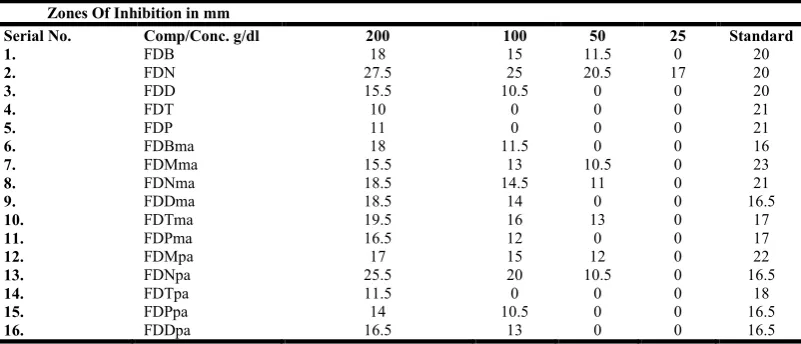
The minimum inhibitory concentration (MIC) of the Schiff bases and 1,3-oxazepines is summarized in Tables (1) to (3) while the minimum bactericidal concentration is summarized in Tables (4) to (9)
Generally, the antimicrobial activity reveals that the Schiff bases exhibited superior Minimum Bactericidal Concentration (MBC) activity against the three organisms (E. coli, Staph.
aureus, and A. niger) used compared to the 7-membered ring
compounds.
Table 1. Antimicrobial activity; MIC
Organism: Escherichia coli
Zones Of Inhibition in mm
Serial No. Comp/Conc.(mg/dl) 200 100 50 25 Standard
1. FDB 20 16 13 9.5 20
2. FDN 27 25 20 15.5 20
3. FDD 11 0 0 0 21
4. FDT 12.5 9 0 0 21
5. FDP 17.5 15 12 0 21.5
6. FDBma 30 26 12 0 20
7. FDMma 17 16 9.5 0 20
8. FDNma 20 17.5 14 10.5 20
9. FDDma 30 24.5 15 0 17
10. FDTma 17 13.5 0 0 17
11. FDPma 22 19 12.5 0 16
12. FDMpa 16 12.5 11 0 16
13. FDNpa 24.5 20 13 0 18
14. FDDpa 25 20 14 0 17
15. FDTpa 17.5 12 0 0 18
[image:3.595.88.514.340.512.2]16. FDPpa 26 23.5 16.5 0 16
Table 2. Antimicrobial activity; MIC
Organism: Staphylococcus aureus
Zones Of Inhibition in mm
Serial No. Comp/Conc. mg/dl 200 100 50 25 Standard
1. FDB 14.5 12 9 0 20.5
2. FDN 25.5 24.5 18 13 20
3. FDD 10.5 0 0 0 20
4. FDT 10 0 0 0 21.5
5. FDP 16 13 9.5 0 20
6. FDBma 20.5 13 9.5 0 20
7. FDMma 14 11.5 0 0 23
8. FDNma 17 13 10 0 21
9. FDDma 16 12 0 0 17
10. FDTma 13.5 10 0 0 17
11. FDPma 17.5 13 0 0 16
12. FDMpa 13 10.5 0 0 22
13. FDNpa 21 12.5 0 0 16
14. FDDpa 21 12.5 0 0 16
15. FDTpa 10 0 0 0 18
16. FDPpa 17.5 13 0 0 16
Table 3. Antimicrobial activity; MIC
Organism: Aspergillus niger
Zones Of Inhibition in mm
Serial No. Comp/Conc. g/dl 200 100 50 25 Standard
1. FDB 18 15 11.5 0 20
2. FDN 27.5 25 20.5 17 20
3. FDD 15.5 10.5 0 0 20
4. FDT 10 0 0 0 21
5. FDP 11 0 0 0 21
6. FDBma 18 11.5 0 0 16
7. FDMma 15.5 13 10.5 0 23
8. FDNma 18.5 14.5 11 0 21
9. FDDma 18.5 14 0 0 16.5
10. FDTma 19.5 16 13 0 17
11. FDPma 16.5 12 0 0 17
12. FDMpa 17 15 12 0 22
13. FDNpa 25.5 20 10.5 0 16.5
14. FDTpa 11.5 0 0 0 18
15. FDPpa 14 10.5 0 0 16.5
[image:3.595.101.502.571.743.2]Table 4. Antimicrobial Activity; MBC of FDB and FDBma
GRADE (1,2,3 OR 4)
NAME STRUCTURE E.c S.a A.n COMMENT
FDB S N H S NH N
N 1 2 2 Effective
FDBma S N H S NH N N O O O O O O
[image:4.595.114.476.277.507.2]2 3 3 Fairly Effective
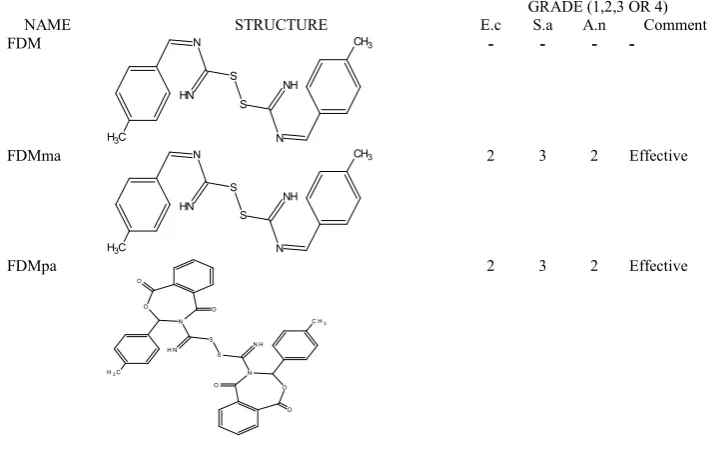
Table 5. Antimicrobial Activity; MBC of FDM, FDMma and FDMpa
GRADE (1,2,3 OR 4)
NAME STRUCTURE E.c S.a A.n Comment
FDM S N H S NH N N C H3
CH3 - - - -
FDMma S N H S NH N N C H3
CH3 2 3 2 Effective
FDMpa S N H S N H N N O O C H3
C H3
O O
O O
[image:4.595.93.489.546.786.2]2 3 2 Effective
Table 6. Antimicrobial Activity: MBC of FDD, FDDma and FDDpa
GRADE (1,2,3 OR 4)
NAME STRUCTURE E.c S.a A.n Comment
FDD S N H S NH N N N CH3 C H3 N C H3
CH3 4 4 3 Poorly
Effective FDDma S N H S N H N N N
C H3
C
H3
N C
H3
C H3
O O O O O O
2 3 3 Fairly Effective FDDpa S N H S N H N N N
C H3
C
H3
N C
H3
C H3
O O O O O O
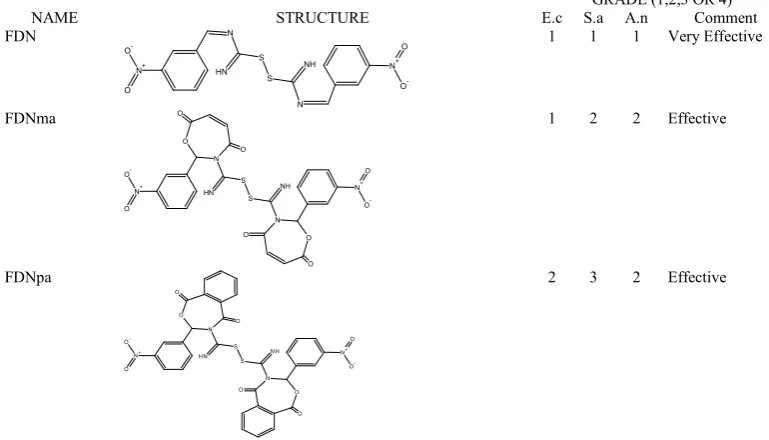
Table 7. Antimicrobial Activity: MBC of FDN, FDNma and FDNpa
GRADE (1,2,3 OR 4)
NAME STRUCTURE E.c S.a A.n Comment
FDN S N H S NH N N N+ O -O N+ O -O
1 1 1 Very Effective
FDNma S N H S NH N N O O N+ O -O N+ O -O O O O O
1 2 2 Effective
FDNpa S N H S N H N N O O N+ O -O N+ O -O O O O O
[image:5.595.108.489.342.537.2]2 3 2 Effective
Table 8. Antimicrobial Activity: MBC of FDP, FDPma and FDPpa
GRADE (1,2,3 OR 4) NAME STRUCTURE E.c S.a A.n Comment
FDP 2 2 4 Effective
FDPma S N H S N H N N O O O O O O O O O O
2 3 3 Fairly Effective
FDPpa S N H S N H N N O O O O O O O O O O
2 3 3 Fairly Effective
Table 9. Antimicrobial Activity; MBC of FDT, FDTma and FDTpa
GRADE (1,2,3 OR 4)
NAME STRUCTURE Ec S.a A.n Comment
FDT S N H S NH N N O O O O O O C H3 C H3 CH3 CH3 CH3 C
H3 3 4 4 Poorly Effective
FDTma S N H S NH N N O O O O O O O O C H3 C H3 CH3
C H3 CH3
CH3 C H2 CH2 CH2 C H2
3 3 2 Fairly Effective
FDTpa S N H S NH N N O O O O O O O O C H3 C
H3 CH3
C
H3 CH3
CH3
O O
O O
And the MBC activity against the gram negative organism,
E. coli is better relative to activity against Staph. aureus. FDN
(a Schiff base), consistently exhibited better antimicrobial activity compared to all the other synthetic compounds. Histogram plots of zones of inhibition against Schiff bases and 1,3-oxazepines at various concentrations (see Fig. 1 to 12) further explains the activity of the Schiff bases and the 7-membered ring compounds.
Conclusion
In this work, Schiff bases and 1,3-oxazepiness were synthesized, characterized by melting point, FTIR and mass fragmentation pattern. Although all the synthetic compounds exhibited some degree of antimicrobial activity (against E.coli,
S.aureus and A.niger) FDN-a Schiff base, exhibited the best
activity compared to the rest of the compounds.
REFERENCES
Al-Rubaay, A.K. 2008. "Synthesis and spectroscopic study of benzotriazole derivatives", Al-Mustansiriya J. Sci., Vol.19, No.4, pp.33-40.
Cimerman Z, Milijami S, Galic N. 2000. Schiff Bases Derived from Amino Pyridines as SpectroFlourimetric Analytical
Reagents. Croatica Chemical Acta., 73(1):81-95
Sari N, Guerkan. P. and Aslan, S. 2003. Transition Metal
Chemistry, 28,468-474.
Tomma, J. H.; Rouil, I. and Al-Dujaili, A. H. 2009. "Synthesis and Mesomorphic Behavior of Some Novel Compounds Containing 1,3,4-Thiadiazole and 1,2,4-Triaqzole rings",
Mol. Cryst. Liq. Crys., 501:3-19.
Toshio Mukai, Tsutomu Kumagai,and Osamn Seshimoto, 1977. "Photochemical and thermal reactions of some hetrocycles containing C=N=O or N=C=O group", Pure &
Appl. Chem., vol.49, pp.287-304.
Varma, A.J., S.V. Deshpande and J.F. Kennedy, 2004. Metal complexation by chitosan and its derivatives: A review.
Carbohydr. Polym., 55: 77-93