ISSN Online: 2333-9721 ISSN Print: 2333-9705
DOI: 10.4236/oalib.1104976 Nov. 26, 2018 1 Open Access Library Journal
Research on the Optimization of After-Sales
Parts Supply Chain Management Based on
Supplier Management
—Taking SAIC General Motors After-Sales Parts as an Example
Zhongxiu Yu
1*, Yameng Chen
21SAIC General Motors Corporation Limited, Shanghai, China 2Shanghai University of Engineering Science, Shanghai, China
Abstract
Nowadays auto parts industry supply chain management is becoming a booming industry which is full of opportunities and challenges. As a network node of supply chain, the reasonable optimization of the supplier not only af-fects the after-sales parts operating costs, operating performance, competitive strategy and the future development, but also affect the entire supply chain logistics cost, logistics strategy and competition strategy. Supply chain man-agement research for Supplier manman-agement can effectively guide the auto parts manufacturers of the business environment, foster strengths and cir-cumvent weaknesses, assess the situation, seize the moment, and gather more intense market competition in the future always maintain their advantage. Therefore, deeply studying the related theory of automobile after-sales spare parts supply chain, combined with the status quo and development trend of the automobile and accessories market in China, then optimization the basic model and operation strategy of automobile customer service parts supply chain in China, has a very important practical significance. Based on the cus-tomer service parts supply chain of SAIC General Motors, we analyze the op-eration characteristics and the status quo of this company; analyze the exist-ing problems in the supply chain of the company’s after-sales parts. Firstly due to the historical reasons, and the lack of overall concept of the supply chain, supplier order delivery rate is low, information feedback is not timely, inventory pressure is high, and supply chain management system is imper-fect. Secondly the incomplete information and inaccurate predictions lead to unreasonable warehouse storage; inventory turnover rate is low. Finally, the market demand and the information are not shared caused low company’s accessories sales and high proportion of transport costs. In the aspect of
op-How to cite this paper: Yu, Z.X. and Chen, Y.M. (2018) Research on the Optimization of After-Sales Parts Supply Chain Management Based on Supplier Management—Taking SAIC General Motors After-Sales Parts as an Example. Open Access Library Journal, 5: e4976. https://doi.org/10.4236/oalib.1104976
Received: October 9, 2018 Accepted: November 23, 2018 Published: November 26, 2018
Copyright © 2018 by authors and Open Access Library Inc.
This work is licensed under the Creative Commons Attribution International License (CC BY 4.0).
DOI: 10.4236/oalib.1104976 2 Open Access Library Journal
timization design, firstly we analysis and improve reasonable management of suppliers, inventory structure, major items of operating costs and existing problems in SAIC General Motors. In the optimization design, we firstly analyse reasonable management of suppliers in order to reduce costs and in a timely manner to meet the market demand; Then the information integration of the parts system can scientifically synthesize information to reasonably predict sales volume, satisfy inventory optimization and strengthen coopera-tion with suppliers; Finally, adjust the structure of spare parts inventory ac-cording to the contact with the supplies; improve the company’s inventory turnover rate, to make the whole supply chain inventory structure more rea-sonable accessories, so as to reduce the company’s operating costs, improve customer satisfaction rate and satisfaction.
Subject Areas
Supply Chain Management
Keywords
Supply Chain Management, Aftermarket Parts Supply Chain, Supplier Management
1. Introduction
1.1. The Research Background
perso-DOI: 10.4236/oalib.1104976 3 Open Access Library Journal
nalized and timely customer needs.
1.2. A literature Review of Foreign Research
Since the 1930s and 1940s, scholars and experts from various countries have be-gun to study supply chain management, and look for the root causes and solu-tions of problems from various perspectives of the supply chain based on differ-ent issues. Since then, a large number of supply chain managemdiffer-ent models with the core of supply chain have been developed and utilized. As an important node of supply chain management, supplier has attracted many scholars to conduct research on their evaluation and management.
In 2005, the survey report published by DELL focused on the issue of extract-ing the interests of suppliers. It pointed out that the traditional increase of DPO will cause suppliers to lower their product financing costs and raise the price of products. The existing value chain model will lead to the rise of DPO chain reac-tion. The rise of the chain reaction, the biggest damage to the interests will be the manufacturers of primary products, which is very unfavorable for the healthy development of the entire industry, and pointed out that enterprises should be closely linked with suppliers and customers. In 2010, David M. Katz studied the impact of supply chain finance on improving supplier relationships in a survey entitled “Strengthening Supplier Relationships through Supply Chain Finance”, which fully illustrated the development and application of supply chain and business processes in the management of working capital suppliers. Kessler and Chakrabatri [1] believed that under the cooperation of suppliers, companies can better identify potential technical problems and accelerate the development of new products and respond to market demands; Yli-Renko [2]
studies showed that the creation, acquisition and utilization of knowledge can be promoted by building cooperative networks with suppliers. Miotti and Sachwald
[3] found that collaboration with suppliers and customers had a positive effect on sales of innovative products through the second European Community In-novation Survey (CIS-2). Naude [4] proposed five dimensions to evaluate the quality of supplier partnership: trust, demand satisfaction, supply chain integra-tion, power and profit, and the main characteristics of successful partnerships are constraints, coordination and trust, communication quality and participa-tion, and conflict resolution. In terms of evaluation methods, DEA (Data Enve-lopment Analysis), as a non-parametric statistical method for dealing with mul-tiple input and mulmul-tiple output problems, is currently widely used in the evalua-tion and selecevalua-tion of suppliers [5] [6]. Tam [7] proposed to use the Analytic Hierarchy Process (AHP) to comprehensively evaluate the supplier’s product quality, production capacity, product structure, marketing situation and market influence, and then select the best supplier.
DOI: 10.4236/oalib.1104976 4 Open Access Library Journal
changed from single project asset management to comprehensive asset man-agement. How to optimize the internal project, extend to supply chain manage-ment, combined with enterprise marketing and strategic level, how to maximize the value of the company through working capital supplier management and working capital management supplier performance evaluation has not been clearly studied.
1.3. A literature Review of Domestic Research
China’s related research on supply chain management started slightly later. Chen (1999) pointed out in the research that the fundamental purpose of supply chain management is to improve customer service capabilities, give full play to the operational capabilities of the entire supply chain, and strive to im-prove customer responsiveness and service quality with minimum service costs. Yang (2005) found that the supply chain plan is closely controlled, and the sup-plier management information system should be introduced in time to coordi-nate the relationship between suppliers in the supply chain to ensure the timeli-ness and efficiency of procurement management to the maximum extent. And logistics information system to integrate supply, purchase and purchase lead time issues, to ensure that the company’s parts procurement is timely, accurate and efficient. Luo et al. (2009) believed that enterprise supply chain cost man-agement should focus on key procurement indicators such as delivery quantity, purchase time, delivery location, etc., and timely send them to suppliers through information, and manage information through suppliers. The system will check the specific location of the goods in time to ensure that the production and supply of the goods are closely connected. Tang et al. (2010) proposed to use the third-party logistics model (TPL), correlation model for supplier inventory deci-sion-making and customer satisfaction analysis, put forward supply chain man-agement principles and constraints to establish. Wang (2014) stressed that in the supply chain procurement environment, it is necessary to focus on supplier se-lection, assessment, appraisal and incentive work, taking supplier relationship management as the starting point, adopting bidding procurement, bargaining procurement and strategic procurement, carefully select cost-effective suppliers, strengthen the efficient connection of material production, cost control and supplier relationship management, and bring the cost-saving and cost control leverage effect of procurement management. Pei [8] proposed an activity-based costing (ABC) method to solve supplier evaluation and selection problems. Li
[9] proposed a consistent method for transforming the evaluation information of all decision makers into a binary semantic variable based on fuzzy theory to solve the supplier’s overall supply performance evaluation problem. Jia [10]
DOI: 10.4236/oalib.1104976 5 Open Access Library Journal
evaluation is often ambiguous to a certain extent. Xiong [12] studied the rela-tionship among manufacturer trust, control mechanism and supplier perfor-mance, and analyzed the role of control mechanism as a guarantee mechanism of trust in improving supplier performance. Xie [13] focused on the quality of cooperation between suppliers and enterprises, and conducted a study on the unification of behavioral commitment and attitude commitment evaluation in the cooperation process. Zhang [14] studied the relationship between supplier cooperation and competitive advantage from three dimensions: strategic pro-curement, information sharing and supplier participation. Xiong [15] combined with the development of the automotive industry, proposed that a good supplier relationship can improve the performance of its product innovation through organizational learning.
Summing up the relevant research literature, we can find that the current re-search on supply chain management is from a separate to comprehensive transi-tion, has formed a channel and supply chain management as the core manage-ment model. As the evaluation criteria of supply chain managemanage-ment are chang-ing, the reform and development of supply chain management with channel as the core is taking shape. However, the research on Supply Chain Management based on supplier management in China is still imperfect, and there is no estab-lished gap in the establishment of a complete supplier management system. To be sure, supplier management is the constraints and key to supply chain man-agement, and building a reasonable supplier management system is the focus of improving enterprise supply chain management. Supplier management promo-tion is an important part of enterprise development strategy, and after-sales ac-cessories service as an important part of the company’s after-sales business. The quality and speed of supplier delivery directly affect the customer’s after-sales experience. It is the significance of this paper to develop the management capa-bilities of suppliers, enhance the operational cooperation of suppliers, and estab-lish and improve the evaluation mechanism of suppliers.
1.4. Significance
DOI: 10.4236/oalib.1104976 6 Open Access Library Journal
Supplier management is an important part of supply chain management. If the supplier management is insufficient, it will cause some corresponding prob-lems. This situation will not only improve the quality and efficiency of the ser-vice, but also hinder the company’s room for improvement. In-depth study of the supply chain management of SAIC General Motors’ aftermarket parts will help improve the company’s management efficiency and management level. On the other hand, it also provides a basis for the combing of the business philoso-phy of similar companies in China and the formulation of strategic planning. The purpose is to enable enterprises to reduce operating costs, improve supplier operational coordination capabilities and service quality, establish and improve supplier evaluation mechanisms, and achieve the enhancement of corporate core competitiveness and sustainable development.
1.5. Methods
Research methods mainly include: 1) Theoretical research
From the perspective of the overall supply chain optimization, the main me-thods and technologies for supplier management include: effective customer re-sponse (ECR), supply chain inventory control technology (VMI and JMI), col-laborative planning, forecasting and replenishment (CPFR) and JIT procure-ment and distribution.
2) Investigate the status quo and find out the bottleneck
From the perspective of planning and supplier management, we will sort out the process breakpoints and management blind spots in the current operation. In the process, it is necessary to carry out the research from the perspective of SAIC General Motors and from the perspective of suppliers, and fully investigate the supplier’s understanding and implementation of the existing SOR and the effectiveness and rationality of the existing performance appraisal system.
2. Theoretical Overview
2.1. The Definition of Supply Chain Management (SCM)
The broad definition of supply chain management encompasses the entire value chain, which describes the procurement and supply management processes throughout the process from raw material extraction to end of use. Baatz further extends supply chain management to the recycling or reuse of materials. Supply chain management focuses on how to enable suppliers to leverage their processes, technologies and capabilities to enhance their competitiveness and collaborate on product design, manufacturing, logistics and procurement man-agement functions within the organization. When all the strategic organizations in the value chain form a unified knowledge entity and run through the entire supply chain network, the operational efficiency of the enterprise will be further improved.
DOI: 10.4236/oalib.1104976 7 Open Access Library Journal
of logistics in different functional areas within an organization, and strengthens the relationship between strategic suppliers through manufacturers and distrib-utors to final consumers. By leveraging the capabilities and technology of direct strategic suppliers, especially early involvement of suppliers in the product de-sign phase, it has become an effective means of improving the efficiency and competitiveness of manufacturers.
2.2. The Content of SCM
In general, supply chain management content should include the following as-pects:
1) Strategic management of supply chain. Supply chain management itself be-longs to the problem of enterprise strategy. Therefore, when selecting and par-ticipating in the supply chain, it is necessary to consider the issue from the height of the enterprise development strategy.
2) Information management. Information and the quality and speed of infor-mation processing are the key to whether an enterprise can benefit from the supply chain, and also the pivotal to achieve the overall benefits of the supply chain.
3) Customer management. It is the starting point of supply chain. As men-tioned earlier, supply chain originates from customer demand, and finally cus-tomer demand, so supply chain management is to meet cuscus-tomer demand as the core operation.
4) Inventory management. Supply chain management is the use of advanced information technology to collect information on all aspects of the supply chain and market demand, and reduce the error in demand forecasting. Control logis-tics with real-time, accurate information, reduce or even eliminate inventory (“virtualization” of inventory), thereby reducing inventory holding risk.
5) Relationship management. By coordinating the node enterprises in the supply chain and changing the traditional “one-way beneficial” consciousness when trading between enterprises, the node enterprises can conduct transactions on the basis of coordinating the cooperative relationship. Thus, the overall transaction cost of the supply chain can be effectively reduced, the global opti-mization of the supply chain can be realized, and the profit of the node enter-prises in the supply chain can be increased, thus achieving a win-win effect.
6) Risk management. Information asymmetry, information distortion, market uncertainty and other political, economic, legal and other factors lead to the op-erational risks of node enterprises in the supply chain; we must take certain measures to avoid these risks as far as possible.
2.3. Supply Chain Logistics Management Technology
1) Effective customer response (ECR)
DOI: 10.4236/oalib.1104976 8 Open Access Library Journal
produced. The core of ECR is to require suppliers and retailers to pay attention to the needs of consumers, shift their energy to understanding and demanding consumers’ needs, and make consumers less money, time, energy and risk.
2) Vendor managed inventory (VMI)
VMI is to transfer the decision-making power of the customer to the supplier, and the supplier executes the decision-making power of the inventory instead of the distributor or wholesaler; VMI is to apply the supplier’s ability to manage the inventory. JMI is a risk sharing management model of supply chain. It empha-sizes the participation of both sides to make inventory plan together, so that every manager (supplier, manufacturer, distributor) in the supply chain process considers the coordination of each other, and then maintains the consistency of inventory among the adjacent nodes of the supply chain.
3) Joint managed inventory (JMI)
CPFR is a management technology based on supply chain integration. It ap-plies a range of processing and technical models to provide a collaborative process that spans the entire supply chain. Improve the predictive accuracy by jointly managing business processes and sharing information to improve the accuracy of forecasting, ultimately improving supply chain efficiency, reducing inventory and increasing consumer satisfaction.
4) JIT Procurement and distribution
JIT purchasing is an advanced mode of purchasing and supplying. Its basic idea is to provide the right goods at the right time, in the right place, in the right quantity and in the right quality. It evolved from just-in-time production and was a continuous improvement to eliminate inventory and unnecessary waste. Punctual supply is necessary for just-in-time production. Therefore, just-in-time purchasing is an inevitable requirement of just-in-time production management mode.
3. Analysis of the Problems in the Management of SAIC
General
Motors’s Aftermarket Parts Suppliers
3.1. Overview of Supplier Management
DOI: 10.4236/oalib.1104976 9 Open Access Library Journal
3.2. General Situation of SAIC General Motors Aftermarket Parts
The components of SAIC General Motors’ aftermarket parts supply chain man-agement include four parts: parts sales strategy, parts sales coordination, parts logistics, parts planning and control. The planning and control of accessories is the core of the entire business process. The Parts Sales Strategy Department is the key to affecting parts control. Since the quantity of finished parts is easily af-fected by factors such as supply and market, the inefficient supply of parts is the main problem of low efficiency, the urgent sales task, the high requirements of production technology, and the higher requirements for the supply of parts. As the supply department of the supply company, because some parts are non-standard parts and need to be ordered from outside, it will inevitably lead to outsourcing production, which is one of the potential risks affecting the delivery progress. The effective connection between outsourcing services and production is the main way to resolve this contradiction.
3.3. Supply Chain Management Mode and Composition
SAIC General Motors’ aftermarket parts supply chain management and brand sales, Pan Asia after-sales engineering, manufacturing departments, parts sales collaboration, parts logistics, parts planning and control, finance and procure-ment are closely related. It is a manageprocure-ment system that includes the division of responsibilities between these departments and the daily business development.
SAIC General Motors’ aftermarket parts supply chain management capital flow system begins with the bank and ends with an online settlement platform or an offline store. The logistics system starts from the parts supplier and passes through the logistics and transportation links and sales links to the consumers. First, the dealers propose product orders that are oriented to meet the needs of the market consumers, detailing the types of products, quantity, arrival time and so on, coordinated by the accessory planner to suppliers at home and abroad as well as SAIC General Motors production workshops, then through its produc-tion, and the corresponding raw material ordering, storage space arrangements.
3.4. Supply Chain Organization Structure and Management
Process
SAIC General Motors’ aftermarket parts supply chain management and brand sales, Pan Asia after-sales engineering, manufacturing departments, parts sales collaboration, parts logistics, parts planning and control, finance and procure-ment are closely related. It is responsible for the construction of the manage-ment system for the division of responsibilities and the daily business develop-ment of these departdevelop-ments.
DOI: 10.4236/oalib.1104976 10 Open Access Library Journal
First, the dealers propose product orders that are oriented to meet the needs of the market consumers, detailing the types of products, quantity, arrival time and so on, coordinated by the accessory planner to suppliers at home and abroad as well as SAIC General Motors production workshops, finally, through its ar-rangement of production, as well as the corresponding raw material ordering, storage space arrangement and so on.
3.5. Problems in Supplier Management
1) Large inventory pressure
The high inventory pressure makes it impossible to maintain a low stock level of inventory, which is closely related to the “bullwhip effect”. Due to this infor-mation impact, upstream suppliers tend to maintain higher inventory levels than downstream suppliers. The existence of the “bullwhip effect” will have serious consequences for enterprises, thus weakening the competitiveness of enterprises.
The main reasons for the high inventory pressure are:
a) The revision of demand forecast is not accurate; in the traditional supply chain, each node enterprise always uses its direct downstream demand informa-tion as the basis for its own demand forecast. Due to incomplete informainforma-tion, wholesalers and distributors can also make more inventory decisions, leading manufacturers to produce more products.
b) Order batch decision is not wise; in the supply chain, each company will order upstream, in order to reduce order frequency, reduce costs and avoid the risk of out of stock, sellers often order in accordance with the best economic vo-lume. At the same time, suppliers often require sellers to order in a certain number or period of time. At this time, in order to obtain the goods as soon as possible or the goods are obtained in full, or in case of emergency, the order may increase the order quantity and increase the inventory.
c) Price fluctuations lead to increased inventory pressure.
d) The shortage game; when the demand for certain products in the market increases, retailers and distributors will predict that these goods will be in short supply, which will lead to an increase in orders. However, when the demand cooled down or the shortage ended, the large order quantity suddenly disap-peared, causing errors in demand forecasting and judgment, resulting in in-creased inventory pressure.
2) Order delivery rate failed to meet expected goals
The reasons for the low order delivery rate, the unsuccessful delivery of some suppliers or the inability to deliver the distributors in time are mainly due to the following reasons:
a) The delivery of raw materials is not timely and the delivery is not timely; because the raw materials are not timely, the production may not be completed on time, resulting in failure to deliver on time.
DOI: 10.4236/oalib.1104976 11 Open Access Library Journal
products is more.
3) Supply chain management system is unperfect
The purpose of implementing supply chain management is to reduce the or-der arrival and delivery cycle, improve flexibility, reduce waste and increase profits. Whether these objectives can be achieved depends on whether effective coordination can be achieved and the risk caused by uncertainty can be reasona-bly controlled, which is also the key to the supply chain management system to solve the problem. Although SAIC GM has unified operating guidelines and system documents for supplier management, the uneven implementation of suppliers can not be satisfactory. Therefore, SAIC GM should perfect its own management mechanism according to its own environment.
4) Information feedback and docking are not timely
The lack of physical technology facilities in the supply chain can lead to delays in existing information feedback systems. There may be some financial, statistic-al reports, indicators and supply and demand information released in a timely manner, and biased on post-mortem analysis; feedback is not timely, resulting in increased decision-making errors. On the one hand, suppliers have low coopera-tion and do not play a full synergy. Suppliers cannot obtain informacoopera-tion on supply and demand through unified channels. On the other hand, due to the in-sufficient attention of suppliers to after-sales parts, the feedback of problems encountered in the process of parts supply is not timely, and there is no suppli-er’s information docking, and it is impossible to deal with related problems of suppliers in time. There is no systematic documentation of the supplier’s prob-lems for real-time capture and follow-up processing.
4. SGM Aftermarket Parts Supplier Management Solution
Optimization
4.1. Supplier Management Demand Analysis and Target Design
1) Demand analysis
DOI: 10.4236/oalib.1104976 12 Open Access Library Journal
quantity of the corresponding parts, and finally sends the ordered order infor-mation to the supplier for ordering.
The customer (dealer), through the order provided by the system, enables the sales department to develop a corresponding sales and demand plan (annual forecast plan). Fluctuations in demand in the aftermarket lead to uncertainty in the customer’s order forecast. Even if forecast based on sales history data, it is impossible to fully accurately analyze future order trends and changes in cus-tomer demand. Although it has certain reference value, it also affects the accu-racy of the prediction results. Shanghai General Motors Pure Parts Co., Ltd. plans the forecast for the next time period on a monthly or weekly basis. De-pending on the part properties (frequency of delivery and cycle, etc.), the acces-sory system will issue a purchase order for the next cycle to the supplier based on the actual market demand and inventory of the part. Then, according to the historical demand situation and the inventory consumption situation, the re-vised plan predicts the supplier stocking reference.
2) Target design
The optimization of the supply chain process of SAIC General Motors’ after-market parts requires the design and optimization of the supply chain in the en-tire logistics and information process of SAIC General Motors’ aftermarket parts, including product specifications, custom types and quantity confirmation. The main purpose is to achieve logistics cost savings between suppliers and en-terprises while meeting customer needs.
In the process of supply chain management, SAIC General Motors’ after-sales accessories need to be configured with an adjusted operating system based on information functions and division of labor between different departments. The system transmits information between upstream and downstream of the supply chain of SAIC General Motors’ aftermarket parts, complements the functions of different departments, coordinates the work objectives and resource allocation of each department, strengthens customer demand response, ensures timely in-formation transmission, and ensures that the overall efficiency of the supply chain is improved.
This paper mainly analyzes the specific problems existing in the management of SAIC General Motors’ aftermarket parts suppliers. Through the investigation of the status quo, field visits and other means to find out the bottleneck, form an improvement plan, and implement the solidification, so as to effectively solve the problem and achieve the desired goal. Therefore, the research objectives of this paper are mainly divided into two levels: business level and strategic level.
a) Business level:
DOI: 10.4236/oalib.1104976 13 Open Access Library Journal
b) Strategic level:
Comprehensively improve the supplier’s performance appraisal management system and focus on supply capacity mining; Establish an effective supplier management mechanism to improve the coordination of suppliers;
To create a collaborative management platform for Shanghai GM and sup-pliers’ after-sales service accessories to promote communication and fol-low-up mechanisms.
4.2. Supply Chain Management General Plan Design
SAIC General Motors aftermarket parts information management system can be divided into system setting function, basic data function, management function, total warehouse management function, workstation management function, re-port management function, etc. according to functions. By setting the operation rights of different types of users, users can log in with a password and then op-erate according to different positioning functions of their own rights. The details are as follows.
1) Customer (dealer, etc.) order
According to the product quantity, category, delivery address and other in-formation in the sales orders of each workstation or e-commerce website, the customer can provide the sales product requirements and submit the informa-tion to the informainforma-tion system. The demand informainforma-tion will be released to the warehouse, inventory management personnel, and customer service personnel at the same time to realize the information obtained by multiple parties at the same time. Corresponding to the real-time situation of different regional inventory, the warehouse organization arranges packaging/shipment to customers. Inven-tory managers assess whether inter-pool transfers are required. The customer service personnel accept feedback such as the customer’s out of stock/missing, internal coordination and related personnel to solve and so on. Simultaneous information transfer can solve the problem of information lag to the greatest ex-tent, and facilitate the decision-making and work execution of multiple depart-ments.
2) Supplier shipment plan release
The supplier shipping planner checks the finished product inventory in the system according to the sales order demand, and obtains the order planning of the additional product after confirmation by the inventory manager. Based on past sales records and current product promotion plans, the sales department usually forecasts the sales of products for the next four weeks. The main purpose is to reduce the over-order by flexible order planning. The confirmation of the delivery date is also adjusted according to the changes in production conditions and orders. In order to deal with the abnormal handling of order status in time, an order period plan of about 30% is usually made.
3) Spare parts planning and control management
DOI: 10.4236/oalib.1104976 14 Open Access Library Journal
parts purchase cycle is long. Parts planning and control management are mainly divided into two aspects: supplier and procurement information management. The supplier consists of two parts, a local supplier and an overseas supplier. Purchasing information management mainly maintains supplier information and main parts data such as lead time, minimum packing quantity, minimum order quantity, unit price, payment terms and trading conditions in the system. It should be noted that once the order factor or the external environment causes problems in the purchase of raw materials, the purchasing personnel need to be in close contact with the supplier to confirm whether they can deliver the goods according to the order, or temporarily transfer the goods from the supplier to maximize the number of customers required by dealers. At the same time, the system will automatically display the engineering alternatives to the relevant warehouse management personnel, engineering personnel, sales personnel and customers.
4) Logistics management
The logistics center realizes the uniform deployment and sorting of finished parts and warehouses. The management personnel of the logistics center inven-tory receive the ordering time, arrival time and corresponding quantity of the accessories through the information system. Therefore, it is possible to prepare the site for the receipt of the accessory order in advance, and verify the informa-tion of the warehousing accessories and import them into the system. In terms of storage and assembly of finished products, the management staff arranges the delivery of warehouses and accessories by receiving the goods transfer informa-tion from 4S shops/Deco dealers/car workshops from different regions, and au-tomatically deducts the inventory quantity. The warehouse and accessories fi-nished product information is notified to the financial personnel through the system, which facilitates timely settlement. The inventory status of the finished goods warehouse and accessories can be opened to the supplier through the in-formation management system, so that the supplier can understand the inven-tory status of the entire supplier and arrange the raw material stocking and fi-nished product production arrangements in time.
5) Warehouse management
The sorting scheme proposed by the logistics center was finally realized in the warehouses in each region. It is an important principle of warehouse manage-ment to ensure the accuracy of the finished products in the process of receiving, transferring and clearing, and the storage environment of the finished parts. Regularly perform the positioning and counting of the finished parts and the in-ventory, and enter the corresponding information into the warehouse manage-ment system to ensure that the accounts match.
6) Financial management system
DOI: 10.4236/oalib.1104976 15 Open Access Library Journal
different businesses according to different human and technical capital. 7) File information management
The file information management system can be divided into system prepara-tion funcprepara-tions, sales funcprepara-tions and other funcprepara-tions according to the funcprepara-tional flow. Among them, the system preparation function mainly records the update of the file information and the insertion of the new function, and records infor-mation such as the sales order, the production cycle of the finished parts, and the inspection result of the raw material quality. The sales function is mainly to de-termine the sales order and query historical data, etc., so that the sales depart-ment can manage the customer and the sales plan.
4.3. SGM Aftermarket Parts Supply Chain Management
Implementation
Measures
1) Management manual
SAIC General Motors’ aftermarket parts supplier management requirements regulations include supply capabilities, supply chain problem communication, transportation, packaging, library management and break point management. The supply chain problem communication includes parts planning and fore-casting, description of parts orders, problem reports, material shortage alarms, supplier evaluations and claims. The management manual begins with the fol-lowing three aspects.
a) Process document
Identify the overall process and applicable scenarios;
Identify the actions, requirements, time and responsible parties of each step of the process;
Stipulate that the supplier completes the necessary operations in the corres-ponding system;
Standardize the modification of the original data and clarify the approval process.
b) Supplier problem communication
According to the types of common problems, develop a FAQ knowledge base to solve 80% of the regular problems of suppliers;
The remaining 20% of the difficult problems are coordinated by special per-sonnel to avoid multiple docking;
Form a preliminary knowledge management system. c) Supplier performance indicators
Translating internal requirements into performance indicators for suppliers, following SMART principles (specific, measurable, achievable, relevant, time-bound);
Grab the data collected from the system on a monthly basis to increase transparency for suppliers.
2) Supplier evaluation system
DOI: 10.4236/oalib.1104976 16 Open Access Library Journal
and standards, resulting in some projects that are not understood, opaque and unfair. Secondly, there will be problems such as the lack of effective trace ability and review of the original data, the audit system and the understanding of the supplier, and the inability to implement follow-up in a timely manner. There-fore, it is still necessary to continuously adopt a method of refining the process and specifying the responsible party to improve the standardization and visuali-zation of the entire process. The future can be optimized from the following two aspects:
a) Refine KPIs, especially the breakdown of delivery cycles: ASN, visualiza-tion, delivery accuracy, safety stock reducvisualiza-tion, communication coordinavisualiza-tion, demand forecasting, engineering quality, etc.;
b) Design reward and punishment mechanisms, specify the frequency and method of settlement, so as to achieve a more fair, easy to accept and enforce the purpose.
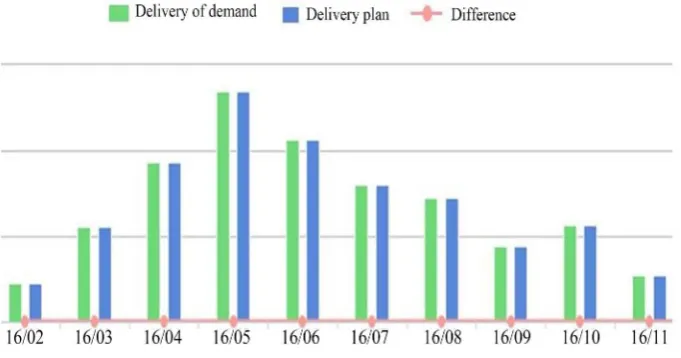
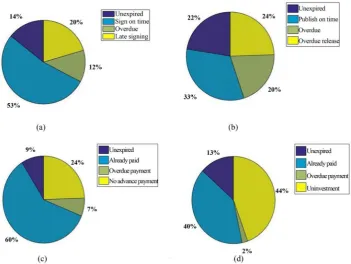
At present, SAIC General Motors has initially formed a visualized executive management and performance review, as follows (Figures 1-3).
3) Trainning
In order to meet the needs of the company’s operations, strengthen supplier relationships, and conduct training in phases. After the SAIC General Motors leads the supplier, this training can be gradually standardized and scrolling. The training has the following objectives:
a) Training activities to meet the needs of suppliers for strategic development of the company;
b) Training activities to meet the needs of the company’s annual operations; c) Training activities to meet the knowledge, skills, attitudes and experience required by the supplier to perform his or her job at a highlevel;
d) Training provided by the company to meet the needs of suppliers and achieve its supply chain planning goals.
[image:16.595.198.539.524.703.2]4) Electronic journals
DOI: 10.4236/oalib.1104976 17 Open Access Library Journal
[image:17.595.185.537.71.335.2]Figure 2. (a) Contract signing; (b) Manufacturing bill of materials; (c) Advance payment progress; (d) Feeding progress.
Figure 3. Supplier audit results distribution.
Regularly build electronic mobile communication channels, improve the uti-lization rate of the existing “supplier communication platform”, and make a second development, and put the management manual and performance ap-praisal generated in the project online and mobile.
[image:17.595.210.529.383.552.2]DOI: 10.4236/oalib.1104976 18 Open Access Library Journal
chain literature selection (technical sharing, cost reduction strategy, collabora-tive experience), improvement cases, individual or colleccollabora-tive recognition, etc.
5. SGM Aftermarket Parts Supply Chain Management Plan
Implementation Guarantee and Effect Evaluation
5.1. Supply Chain Management Plan Implementation Measures
1) Form a reform plan and implement solidification
a) Develop customized supply chain and operation management related training, guide the refined improvement of daily management operations by typical sup-pliers, improve the enthusiasm of business cooperation, and improve the deli-very ability of suppliers;
b) Form a standardized management system and system, improve the effi-ciency and strength of SAIC General Motors’ management of suppliers, and strengthen the relationship and visualization with suppliers. Need to refine the requirements of supplier management, the entire implementation process, process modularization, module data, data operation, operation system, and fi-nally form a standardized management document;
c) Improve the supplier’s data management evaluation mechanism, strengthen the penetration and influence of the existing performance appraisal mechanism, and prepare for the long-term and in-depth development of supplier capabilities and the on-line docking of SAIC General Motors after-sales team big data appli-cation analysis.
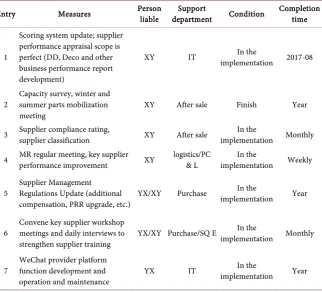
On the basis of the above programs, we will have a solid theoretical founda-tion and then refine the implementafounda-tion measures. The specific refinement measures are as follows (Table 1).
2) The supplier quality management work is carried out in sub-items a) Routine AR product sampling (oil oil/maintenance products/plastic); b) Market risk case response (law enforcement inspection);
c) Market parts quality problem feedback processing (ASC\FMC\PAC and other feedback parts quality defects);
d) Supplier engineering problem score evaluation (mainly based on supplier error issued/market risk case/parts quality problem feedback several aspects of evaluation);
DOI: 10.4236/oalib.1104976 19 Open Access Library Journal
Table 1. Detailed implementation of supplier management.
Entry Measures Person liable department Support Condition Completion time
1
Scoring system update; supplier performance appraisal scope is perfect (DD, Deco and other business performance report development)
XY IT implementation In the 2017-08
2 Capacity survey, winter and summer parts mobilization
meeting XY After sale Finish Year
3 Supplier compliance rating, supplier classification XY After sale implementation Monthly In the
4 MR regular meeting, key supplier performance improvement XY logistics/PC & L implementation In the Weekly
5 Supplier Management Regulations Update (additional
compensation, PRR upgrade, etc.) YX/XY Purchase
In the
implementation Year
6 Convene key supplier workshop meetings and daily interviews to
strengthen supplier training YX/XY Purchase/SQ E
In the
implementation Monthly
7 WeChat provider platform function development and
operation and maintenance YX IT
In the
implementation Year
parts PRR”. For some major cases, it can be raised to “Customer Satisfaction PRR” and”CS1/CS2”.
3) Organize ASCM training camp
The purpose of the event is through a series of games and discussions, SAIC General Motors after-sales accessories planners can better understand the power of innovation in the process. With the team’s company, analyze the problem and solve the problem, so that in the future work, we can better use the strength of the team to innovate and think. The training continuously cultivates employees’ innovative thinking ability through four aspects: participation, science, continu-ity, and fun. Subsequent plans to organize suppliers to participate in the ASCM training camp.
5.2. Supply Chain Management Plan Implementation Guarantee
To ensure that the ultimate benefits are realized, internal resources need to be configured to conduct and maintain day-to-day operations management and to ensure that project results are effective in the long term.
For the training section, focus on potential supplier selection, training course organization, training course tracking, and supplier participant feedback;
DOI: 10.4236/oalib.1104976 20 Open Access Library Journal
For the electronic publications section, use the management of existing com-munication platforms (such as supplier account rights management, simple maintenance of systems and data), data collection, editing and distribution of electronic publications.
In the process of company supply chain optimization, it also involves the management of warehouses, the adjustment of personnel, the adjustment of pol-icies and the transformation of working methods. These changes will have some problems and obstacles in the implementation process, which requires the co-operation and support of many parties.
5.3. Effectiveness Evaluation of Supply Chain Management
1) Digital management
First of all, the supplier’s materials, quotations, platform data, monthly reports and other digital processing, the enterprise can easily determine the current op-erating conditions. Secondly, strengthen the management of existing suppliers, the various departments of the enterprise should play a supervisory role, suppli-ers’ products in the enterprise to achieve “transparency”, and constantly urge suppliers to improve the quality of their products. Long term strategic partner-ship has been established for outstanding suppliers.
a) The edition of “KPI Monthly Report” was revised according to the KPI changes in 2017, and KPI sections of “logistics”, “engineering” and “marketing” were added. The score of “plan” was adjusted. The weight distribution of total score is adjusted. The KPI rule text is adjusted.
b) Registration platform mobile version. In order to enable supplier partners to fill in the application materials immediately during the activities and meet-ings, a mobile registration website and two-dimensional code were developed to facilitate supplier handwriting. The supplier can register on the registration platform by applying for registration of SAIC General Motors enterprise micro signal and scanning the two-dimensional code. The mobile version interface ad-justs the page structure according to the use habits of mobile phones. The con-tent of the mobile version is consiscon-tent with that of the computer version.
2) Simplify complex work processes
DOI: 10.4236/oalib.1104976 21 Open Access Library Journal
and the obstacles caused by slow communication. It also gives employees more time and energy to focus on their work area.
3) Data comparison before and after
a) 2017 ASN, the average satisfaction rate of orders increased by a percentage point
It can be seen from Table 2 that the management of the supplier through the internship has improved the ASN one-time satisfaction rate, the weekly satisfac-tion rate of the order, and the secondary satisfacsatisfac-tion rate. Among them, the ASN one-time satisfaction rate is the most significant.
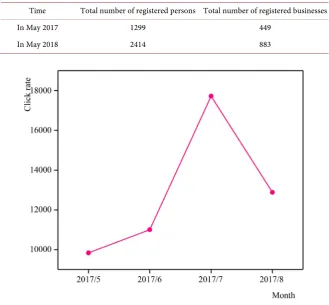
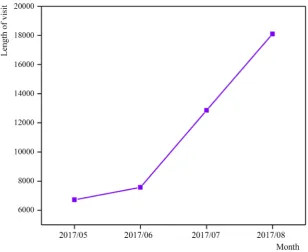
[image:21.595.207.542.329.369.2]b) Comparison of number of registered people and number of businesses It can be seen from Table 3 that the total number of registered merchants and the total number of registered merchants in May 2018, compared with May 17, nearly doubled. This has played a great role in information sharing and timeli-ness of supply management for aftermarket parts. Figure 4 and Figure 5 show the number of hits and visits to vendors’ platforms. Figure 4 and Figure 5 show
Table 2. The average satisfaction rate of orders increased by a percentage point.
Month (average) ASN once satisfied rate satisfaction rate Order weekly satisfaction rate Order once
[image:21.595.209.539.400.705.2]Raise percentage point 6.00% 2.50% 3.60%
Table 3. Comparison of number of registered people and number of businesses.
Time Total number of registered persons Total number of registered businesses
In May 2017 1299 449
In May 2018 2414 883
DOI: 10.4236/oalib.1104976 22 Open Access Library Journal
Figure 5. Supplier platform access time.
that the total number of hits and visits to vendors’ platforms has increased over the past 17 years.
6. Summary
This paper takes SAIC General Motors spare parts after-sales as the research ob-ject, and optimizes the supplier management problems in the current supply chain management. It is hoped that SAIC General Motors spare parts after-sales in the entire industry can be outstripped by this way. Through the analysis, we find that the company has the problems of high inventory pressure, low order delivery rate, not timely information docking, and imperfect supply chain man-agement system. Through further optimization analysis, the new spare parts in-formation module is redefined, the spare parts inventory structure and source are adjusted, the inventory turnover rate is increased, and the mode of receiving and processing orders is adjusted and improved. In terms of improving the eco-nomic benefits of spare parts and reducing logistics costs, this case can provide some guidance and reference for other similar enterprises. The article is summa-rized as follows:
1) The current supply chain situation of spare parts of SAIC General Motors is analyzed theoretically, and the problems existing in the operation of spare parts supply chain of SAIC General Motors are analyzed qualitatively, and the causes of the problems are put forward.
2) On the basis of actual management, the optimization plan of SAIC GM af-termarket supply chain management is put forward.
DOI: 10.4236/oalib.1104976 23 Open Access Library Journal
evaluation of the scheme is summarized, hoping to provide reference for similar enterprises.
Conflicts of Interest
The authors declare no conflicts of interest regarding the publication of this pa-per.
References
[1] Kessler, E.H. and Chakrabarti, A.K. (1996) Innovation Speed: A Conceptual Model of Context, Antecedents, and Outcomes. Academy of Management Review, 21, 1143-1191. https://doi.org/10.5465/amr.1996.9704071866
[2] Yli-Renko, H., Autio, E. and Sapienza, H. (2001) Social Capital, Knowledge Acqui-sition, and Knowledge Exploitation in Young Technology-Based Firms. Strategic Management Journal, 22, 587-613. https://doi.org/10.1002/smj.183
[3] Miotti, L. and Sachwald F. (2003) Co-Operative R&D: Why and with Whom? An Integrated Framework of Analysis. Research Policy, 32, 1481-1499.
https://doi.org/10.1016/S0048-7333(02)00159-2
[4] Naude, P. and Buttle, F. (2000) Assessing Relationship Quality. Industrial Market-ing Management,29, 351-361. https://doi.org/10.1016/S0019-8501(00)00112-7 [5] William, H., Xu, X.W. and Prasanta, K.D. (2010) Multicriteria Decision Making
Approaches for Supplier Evaluation and Selection: A Literature Review. European Journal of Operational Research, 202, 16-24.
https://doi.org/10.1016/j.ejor.2009.05.009
[6] Wu, C. and Barnes, D. (2011) A Literature Review of Decision-Making Models and Approaches for Partner Selection in Agile Supply Chains. Journal of Purchasing & Supply Management, 17, 256-274. https://doi.org/10.1016/j.pursup.2011.09.002 [7] Tam, C.Y. and Tummala, V.M. (2011) An Application of the AHP in Vendor
Selec-tion of a TelecommunicaSelec-tions System. International Journal of Management Science,29, 171-182.
[8] Ou, P.Y., Wang, Y.L. and Wang, P.X. (2007) The Study of Supplier Selection and Evaluation Based on ABC Approach. Management Review, 19, 46-51.
[9] Li, L.H. and Jiang, J. (2012) A Fuzzy Measuring Method Based on 2-Tuple Linguis-tic Consistency for Supply Performance of Military Product Suppliers. Systems En-gineering-Theory & Practice, 32, 373-379.
[10] Jia, Y.N. and Sun, P. (2015) Supplier Quality Evaluation Algorithm Based on BP Neural Network. Statistics & Decision, No. 4, 172-174.
[11] Wang, M. and Li, Y. (2015) Evaluation of Suppliers with Fuzzy Inputs and Outputs Based in DEA Game Cross-efficiency Model. Industrial Engineering and Manage-ment, No. 1, 95-99.
[12] Yan, X. (2010) Relationships among Trust, Control Mechanism and Supplier Per-formance. Management Review, 22, 113-120.
[13] Xie, F., Liu, Z. and Huang, T. (2011) A Study on Relationship Quality Commitment Model in Supplier Relationship Management. Journal of Systems & Management, 20, 490-495.
DOI: 10.4236/oalib.1104976 24 Open Access Library Journal [15] Xiong, S., Yi, S. and Guo, J. (2010) Effects of Supplier Relationship on Production