K-SVD: Dictionary Developing Algorithms for
Sparse Representation of Signal
Miss. Snehal G.Patil1, Prof. A. G. Patil2
1
PG Student, 2Dept. of Electronics & Telecommunications Engineering in P.V.P.I.T Budhgaon
Abstract: In recent year, there has been growing interest in study of sparse representation of signals. In spare representation having overcomplete dictionary that contain prototype signal-atoms, signals are elaborated by sparse linear combinations of these atoms. There are many applications in sparse representation, which include compression, consistency in inverse problems, feature extraction, and more. Proposed work concentrated on study purpose of pursuit algorithms that decompose signals with respect to a given dictionary D. For developing method, the SVD algorithm generalizing the means clustering process. K-SVD is a mathematical method that develop the algorithm alternates between sparse coding data using the dictionary D and apply process for updating the dictionary atoms to get the correct data. After updated dictionary columns which is combined with an update of the sparse representations. The developed K-SVD algorithm is adaptable. It can also work with any type of pursuit method.
Keywords: Basis pursuit, dictionary, FOCUSS, K-means, K-SVD, matching pursuit.
I. INTRODUCTION
Sparse representations using learned dictionaries D are being more helpful with success in various type of data processing and machine learning applications. The accessibility of large amount of training data necessitates the development of suitable, robust and better dictionary learning algorithms. For algorithmic stability and generalization of dictionary learning algorithms we are using two cases:1.Complete: a system {yi} in X is complete if every element in X can be arbitrarily well in norm by linear combinations of elements in {yi}.2.Overcomplete: if removal of an element from the system {yi} results in a complete system. The arbitrary approximation in norm can be thought as a representation somehow.
K-SVD algorithm for studying dictionaries D. We explained its development and analysis, and formalized applications to establish its usability and the advantage of trained dictionaries D. Diversities of the K-SVD algorithm for learning structural constrained dictionaries are also showcased. Out of those constraints are the non-negativity of the dictionary and shift invariance property. K-SVD deals with development of a state-of-the art image denoising algorithm. This case study is important as it nourishes the message that the general model of sparsity and redundancy, along with fitted dictionaries as also used here, It is the good practical applications in image processing.
II. LITERATURE REVIEW
R. Coifman, [1] this article combines the Haar -Fisz transform with Bayesian wavelet shrinkage to obtain a new method for modelling the evolutionary wavelet spectrum of a locally stationary wavelet process. new method produces excellent and stable spectral estimates and this is demonstrated via simulated data and on differenced infant electrocardiogram data.
A major additional benefit of the Bayesian paradigm is that we obtain rigorous and useful credible intervals of the evolving spectral structure.
We show how the Bayesian credible intervals provide extra insight into the infant electrocardiogram data.E. P. Simoncelli [2] Orthogonal wavelet transforms have recently become a popular representation for multi-scale signal and image analysis. One of the major drawbacks of these representations is their lack of translation invariance: the content of wavelet subbands is unstable under translations of the input signal.
adaptive signal repressentations. With a dictionary of Gabor functions a matching pursuit defines an adaptive time-frequency transform.They derive a signal energy distribution in the time-frequency plane, which does not include interference terms, unlike Wigner and Cohen class distributions. A matching pursuit isolates the signal structures that are coherent with respect to a given dictionary.
III. ALGORITHM FOR K-SVD
In atom decomposition process sparse representation coding is the process for finding the coefficient based on signal y having the dictionary D by using the equation(P0) min ||x||0 subject to y = Dx.where ||·||0 is the l^0 norm, counting the nonzero entries of a vector.To detecting the sparse representation coding signal have to prove an NP hard problem .It means NP-hard considered as H . For polynominal extracted L towards H another thing it can be solved in polynominal time it require a reduction since completion of NP problem conversion of G towards H .Few years ago pursuit algorithm have been processed .it consist of MP and OMP .These are the simple and easy method .It involves computness of inside production in between signal and column of D .Second popular method is basis pursuit using equation 1 And replace the l^0 norms with l^p norms put the values of P less than equal to Hence overall problem will become iterative method based on reweighted least square that handle the l^p norm and weighted norm.
1) Generalization of K –Means Algorithm: Relative information of sparse representation and vector quantization are considered as cluster of mean error signal. In clustering, a set of descriptive vectors {dk}k=1K is learned. In the sparse representation atom
of signal focusses on decompose the signal and in future system all signal coefficient multiply by only one. It can be variant of the vector quantization coding method called gain-shape VQ, where this coefficient may be fluctuate. K-means process applies two steps per each iteration: i) given {dk}k=1K to their nearest neighbor and ii) given that as update {dk}k=1K . In sparse coding
initially find the coefficient dictionary by using above equations. When upgraded dictionary familiar with constant coefficients.
In this proposed system all algorithms are differs each other .That are useful in calculation of updating dictionary .It is the easiest way to find the dictionary in various manner.
2) Maximum Likelihood Methods: In this method of construction of dictionaries D.The relation always suggest that y=Dx+ v .In
sparse representation consist of Gaussian white residual vector v also various with σ. There are two consideration in specific manner that are independently with each other and provide the equation
( | ) =∏ ( | ) (1)
The second assumption is critical and refers to the “hidden variable” .The ingredient of the likelihood function are computed using the relation
( | ) = ( , | ) ( | , ). ( ) (2)
By assuming relation 2 we have
( | , ) = . 1
2 || − ||
For dictionary D the equation of algorithm approaches towards the dictionary entries .That coefficient near about the zero mean. This situation can be done by constraining the l^2-norm .For iteration there are two steps i) By using gradient method need to find the coefficients Xi and then ii) upgraded dictionary using the equation
( )= ( )− ( ( ) − )
This idea of iterative refinement, mentioned before as a generalization of the -means algorithm, was later used again by other researchers, with some variations. .The MOD method: The MOD approach tries to update a dictionary D based on the current coefficients W.
|| − ||
The optimal dictionary is obtained by solving the following equation.
|| ||
A. K-mean Algorithm
Obtain possible codebook using data sample by nearest neighbor for solving , {|| − | | } subject to ∀ , =
. -Fix C(0) ∈
-set J=1 do the process upto next step.Sparse coding initialize values of Y.
( −1), 2( −1) … … . ( −1)
= { |∀ ≠ , || − || < || − ||
C Update the steps: In every column k in C(x-1) update it by ( )=
| |=
∑
∈
- Set J=J+1 sentation MSE per is defined as
=∑ = || − ||
, {|| − || } ∀ , =
This algorithm using the K-SVD is flexible in dictionary D for pursuit algorithm. It is simple and designed using K-means algorithm. When it comes under the algorithm at that time raise the gain-shape VQ and again reproduces the K-means algorithm. It is highly durable becouse of coding and updated gaussian method. Algorithm steps are coherent with each other, K-SVD algorithm derive description of direct extension
The approaches to dictionary D design that have been described in two steps
1) Sparse Coding: Producing sparse representations matrix X, given the current dictionary
2) Dictionary Update: Updating dictionary atoms, given the current sparses representations.
B. K-SVD Algorithm
Task- Find the best dictionary to represent the data samples
, {|| − || } ∀ || || ≤
Initialization: set the dictionary matrix C(0) ∈ with normalized l^2columns. Sparse Coding Stage
{|| i− xi|| } || || ≤ Codebook Update stage: k=1, 2….K in D(J-1) modify it by
1) Use the atom in group of signal = { 1≤ ≤ , ( )≠0}
2) Find the complete error matrix Ek by = − ∑ 3) Avoid Ek by selection of respective column and find
4) Apply SVD decomposition = ∆ Choose the updated dictionary column dk to be the first column of U. Update the Coefficient vector to be the first column of V multiply by ∆(1,1).
5) Set J=J+1
Fig1:Siganl representation of Coefficent Y vs atom d
Fig 2: K-SVD using magnitude of signal
Under an overcomplete basis the decomposition of a signal is not unique, but this can some advantages. One is that there is greater exibility in capturing structure in the data. Instead of a small set of general basis functions, there is a larger set of more specialized basis functions such that relatively few are required to represent any particular signal. These can form more compact representation, because each basis function can describe can amount of structure in the data.
[image:4.612.203.411.302.578.2]Unique ending the best representation in term so fan overcomplete basis is a challenging problem. It requires both an objective for decomposition and an algorithm that can achieve that objective. Decomposition can be expressed ascending a solution to x=As. where x is the signal, A is a (non-square) matrix of basis functions (vectors), and s is the vector of coefficient.
Fig 3: Block diagram of K-SVD
IV. RESULTS AND DISCUSSION
The comparison between computed dictionary and original dictionary can be done from the algorithm .Found closest column using the l^p norms which measure the distance of different dictionary.
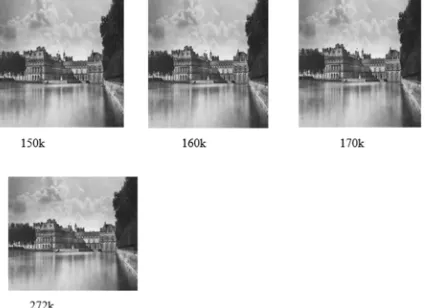
[image:4.612.161.452.616.723.2]From the figure 4.1 the value 1k which indicates that initialize the image at noisy level .After applying the K-SVD algorithm .The image move towards the fine image then only we can add the pixels and remove unwanted pixels .
Fig 5: Images at different k values
By using the K-SVD algorithm compute the l^p norm signal .These the values of 2 -norms decreases with respect to K-mean values. In graph 2 distance from origin is less than the 0.01.The cycle repeat upto 50 times .The result for K-SVD algorithm at noisy level which has compression ratio value at 5.000122.In this proposed system the graph 1 indicates the pixel k values at 1.057064. Root mean square error values at 1.019946 found with respect to rank value k.
V. CONCLUSION
In over complete dictionaries K-SVD algorithm generates the problem using the given set of signal .In result we shown an algorithm of SVD for training the dictionaries which is suitable for the related problems. We found the different dictionaries from the K-SVD algorithm .The all the dictionaries are well suitable for image processing applications such as remove the unwanted pixels and compression .
In discrete cosine transform implement the non –decimated haar and unitary DCT. By using this dictionary images are enhanced and compressed .Generally this dictionary are commonly used to need research in future work .In pursuit method connection between the calculated dictionaries .All experiment reported this system can be produced using MATLAB software which are easily available in websites .In proposed system tried to make all design part of K-SVD will become a faster .We compressed each and every image in dictionaries by using the image coding methods.
Generally this problem occurs in image processing application .Our proposed system is useful for remove the unwanted pixel and add the missing pixels into image. Further more to discover some other methods of sparse representation signal that develop algorithm efficiently also further study is needed.
REFERENCES
[1] R.. Coifman et.al. “Translation invariant denoising,” in Wavelets and Statistics. New York: Springer-Verlag, 1995 [2] E. P. Simoncelli et.al.” Shiftable multi-scale transforms,” IEEE Trans. Inf. Theory.
[3] J. L. Starcko et.al. “The curvelet transform for image denoising,” IEEE Trans. Image Process., vol. 11. [4] B.A. Olshausen et.al.,” coding with an overcomplete basis set: a strategy employed”
[5] S. Mallat “Matching pursuits with time frequency dictionaries, ”IEEE Trans. [6] B. D. Rao “An affine scaling methodology for best basis selection,” IEEE Trans
[7] K. Engan, S. O. Aase, and J. H. Hakon-Husoy, “Method of optimal directions for frame design,”in IEEE Int.Conf.Acoust.,Speech,Signal Process., 1999, vol. 5, pp. 2443–2446.
[8] K. Engan, B. D. Rao, and K. Kreutz-Delgado, “Frame design using focuss with method of optimal directions (mod),”in Norwegian Signal Process. Symp., 1999, vol