Statistical Post Editing and Dictionary Extraction:
Systran/Edinburgh submissions for ACL-WMT2009
Loic Dugast*,** and Jean Senellart*
*SYSTRAN S.A.
La Grande Arche 1, Parvis de la D´efense
92044 Paris La D´efense Cedex
France
Philipp Koehn**
**School of Informatics University of Edinburgh
10 Crichton Street, Edinburgh United Kingdom
Abstract
We describe here the two Sys-tran/University of Edinburgh submissions for WMT2009. They involve a statistical post-editing model with a particular han-dling of named entities (English to French and German to English) and the extraction of phrasal rules (English to French).
1 Introduction
[image:1.595.336.526.229.363.2]Previous results had shown a rather satisfying per-formance for hybrid systems such as the Statis-tical Phrase-based Post-Editing (SPE) (Simard et al., 2007) combination in comparison with purely phrase-based statistical models, reaching simi-lar BLEU scores and often receiving better hu-man judgement (Gerhu-man to English at WMT2007) against the BLEU metric. This last result was in accordance with the previous acknowledgment (Callison-Burch et al., 2006) that systems of too differing structure could not be compared reliably with BLEU. We participated in the recent Work-shop on Machine Translation (WMT’09) in the language pairs English to French and German to English. On the one hand we trained a Post-Editing system with an additional special treat-ment to avoid the loss of entities such as dates and numbers. On the other hand we trained an addi-tional English-to-French system (as a secondary submission) that made use of automatically ex-tracted linguistic entries. In this paper, we will present both approaches. The latter is part of on-going work motivated by the desire to both make use of corpus statistics and keep the advantage of the often (relative to automatic metrics’s scores) higher rank in human judgement given to rule-based systems on out-of-domain data, as seen on
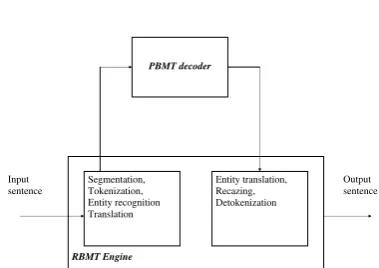
Figure 1: Translation with PBMT post-editing
the WMT 2008 results for both English to French and German to English (Callison-Burch et al., 2008).
2 Statistical Post Editing systems
2.1 Baseline
The basic setup is identical to the one described in (Dugast et al., 2007). A statistical translation model is trained between the rule-based transla-tion of the source-side and the target-side of the parallel corpus. This is done separately for each parallel corpus. Language models are trained on each target half of the parallel corpora and also on additional in-domain corpora. Figure 1 shows the translation process.
Here are a few additional details which tend to improve training and limit unwanted statistical ef-fects in translation:
• Named entities are replaced by special tokens on both sides. By reducing vocabulary and combined with the next item mentioned, this should help word alignment. Moreover, en-tity translation is handled more reliably by the rule-based engine.
vo-cabularies of the rule-based output and the reference translation) is used to produce an additional parallel corpus (whose target is identical to source). This was added to the parallel text to improve the word alignment.
• Rule-based output and reference translations are lowercased before performing alignment, leaving the recasing job up to the rule-based engine.
• Singleton phrase pairs are deleted from the phrase table to avoid overfitting.
• Phrase pairs non cohesive regarding entities are also discarded. We make the hypothe-sis that entities are always passed to the tar-get language and all entities in the tartar-get lan-guage originate from the source lanlan-guage. This point is discussed in section 2.2.
We will discuss some of these details further in the upcoming sections.
Due to time constraints, we did not use the Giga French-English Parallel corpus provided for the workshop. We only made use of the News Com-mentary and the Europarl corpora. We used ad-ditional in-domain news corpora to train 5 grams language models, according to the baseline rec-ommendations. Weights for these separate models were tuned through the Mert algorithm provided in the Moses toolkit (Koehn et al., 2007), using the provided news tuning set.
2.2 Trimming
In a statistical translation model, trimming of the phrase table had been shown to be beneficial (Johnson et al., 2007). For our post-editing model, we can afford to perform an even more aggressive trimming of the phrase table, since the rule-based system already provides us with a translation and we only aim at correcting the most frequent er-rors. Therefore, we suppress all unique phrase pairs before calculating the probabilities for the fi-nal phrase table.
2.3 Avoiding the loss of entities
Deleted and spurious content is a well known problem for statistical models (Chiang et al., 2008). Though we do not know of any study prov-ing it, it seems obvious that Named Entities that would be either deleted or added to the output out of nowhere is an especially problematic kind of
Rule-Based French Reference French
ent date et
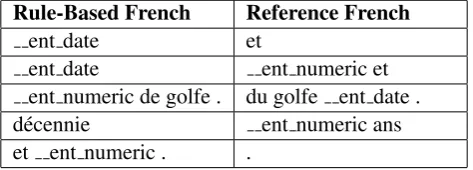
[image:2.595.307.544.63.148.2]ent date ent numeric et ent numeric de golfe . du golfe ent date . d´ecennie ent numeric ans et ent numeric . .
Table 1: Examples of problematic phrase pairs
error for the translation quality. The rule-based translation engine benefits from an entity recogni-tion layer for numbers, dates and hours, addresses, company names and URIs. We therefore ”trim” (delete) from the extracted phrase pairs any item that would not translate all entities from the source (i.e. the RBMT output) to the target or add spuri-ous entities which were not present in the source side of the phrase pair. Table 1 illustrates the kind of phrase pairs that are excluded from the model. For example, the first phrase pair, when applied, would simply erase the date entity which was ex-pressed in the source sentence, which we of course do not want.
3 Rule Extraction
The baseline Systran rule-based system is more or less a linguistic-oriented system that makes use of a dependency analysis, general transfer rules and dictionary entries, and finally a synthe-sis/reordering stage. The dictionary entries have long been the main entry point for customization of the system. Such lexical translation rules are fully linguistically coded dictionary entries, with the following features attached: part-of-speech, inflection category, headword and possibly some semantic tags. Table 2 displays a sample of manually-entered entries. These entries may both match any inflected form of the source and gen-erate the appropriate (according to general agree-ment rules and depending on the source analysis) target inflection.
POS English French headword English headword French
Noun college level niveau d’´etudes universitaires level niveau
Adverb on bail sous caution on sous
[image:3.595.71.522.62.120.2]Verb badmouth m´edire de badmouth m´edire
Table 2: Example dictionary entries
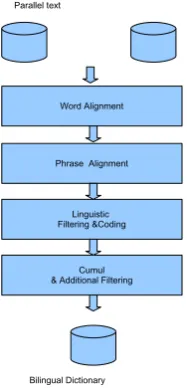
Figure 2: Extraction pipeline: from parallel texts to bilingual dictionary
3.1 Manual customization through dictionary entries
The Systran system provides a dictionary coding tool (Senellart et al., 2003). This tool allows the manual task of coding entries to be partially au-tomated with the use of monolingual dictionaries and probabilistic context-free grammars, while al-lowing the user to fine-tune it by correcting the au-tomatic coding and/or add more features. How-ever, this remains first of all a time-consuming task. Moreover, it is not easy for humans to select the best translation among a set of alternatives, let alone assign them probabilities. Last but not least, the beneficial effect on translation is not guaran-teed (especially, the effect on the rule-based de-pendency analysis).
3.2 Automatic extraction of dictionary entries
The problem consists of selecting relevant phrase pairs from a set, coding them linguistically and as-sign them probabilities. The extraction setup as depicted in figure 2) starts from a parallel cor-pus dataset. The baseline procedure is followed
(word alignment using GIZA++ and use of com-mon heuristics to extract phrase pairs (Koehn et al., 2007)) to extract phrase pairs. At this stage the ”phrases” are plain word sequences, not nec-essarily linguistically motivated. Some statistical information is attached to each phrase pair: fre-quency of the pair and lexical weights in both di-rections. Each unique phrase pair is then pro-cessed by our dictionary coding tool which tries to map both word sequences to a given category. If both sides are mapped to the same category, the phrase pair, now lemmatized, is retained as a bilin-gual entry. Otherwise, the candidate is excluded. Given that a bilingual entry with a same lemma may have various inflectional forms in corpus, we then sum the lemma counts. Finally, in the current setup, we only keep the most frequent translation for each source.
For our secondary submission for English-French, we extracted such entries from both the News Commentary and the Europarl corpus.
3.3 Validation of dictionary entries
The coding procedure, when applied to phrase pairs extracted from the corpus instead of man-ually entered entries, may generate rules that do not lead to an improved translation. Recall that we start from an existing system and only want to learn additional rules to adapt to the domain of the bilingual corpus we have at our disposal.
Now the problem consists of building the opti-mal subset from the set of candidate entries, ac-cording to a translation evaluation metric (here, BLEU). Unlike the Mert procedure, we would like to do more than assign global weights for the whole set of translation rules, but instead make a decision for each individual phrasal rule.
[image:3.595.101.195.167.362.2]System BLEU
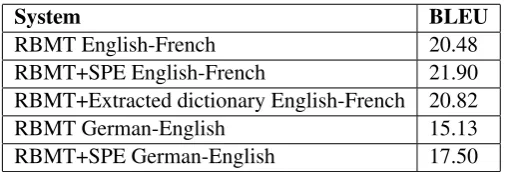
RBMT English-French 20.48 RBMT+SPE English-French 21.90 RBMT+Extracted dictionary English-French 20.82 RBMT German-English 15.13 RBMT+SPE German-English 17.50
Table 3: Compared results of original RBMT system,post-editing and dictionary extraction: real-cased, untokenized NIST Bleu scores on the full newstest2009 set(%)
System
nc-test2007
(news commen-tary)
test2007
(eu-roparl)
newstest2009
(news)
RBMT 24.88 22.75 20.48
RBMT +Dictionary extracted from News Commentary 26.54 - 20.57 RBMT +Dictionary extracted from Europarl - 25.55 -RBMT +Dictionary extracted from NC and Europarl, priority on NC 26.65 - 20.82
Table 4: Results of dictionary extraction for English-French: real-cased, untokenized NIST Bleu scores (%)
Algorithm 1Dictionary Validation Algorithm
1: n=1
2: forn=1 to Nmaxdo
3: map all n-gram entries to parallel sentences 4: translate training corpus with current
dic-tionary
5: foreach entrydo
6: translate all relevant sentences with cur-rent dictionary, plus this entry
7: compute BLEU scores without and with
the entry
8: end for
9: Select entries with better/worse sentences
ratio above threshold
10: add these entries to current dictionary 11: end for
4 Results
[image:4.595.173.426.61.147.2]BLEU scores of the dictionary extraction exper-iments for the English-French language pair and three types of corpora are displayed in table 4. Table 3 shows results on the news test set. Post-editing setups were tuned on the news tuning set.
5 Conclusion and future work
fea-tures, such as constraints of lexical subcategoriza-tion as they already exist in the manually entered entries. Finally, we would like to try combining the dictionary extraction setup with a Statistical Post-Editing layer to see if the latter supersedes the former.
Acknowledgement
We would like to thank the anonymous reviewers for their comments and corrections.
References
C. Callison-Burch, M. Osborne, and P. Koehn. 2006. Re-evaluating the role of bleu in machine translation research. InIn proceedings of EACL 2006.
Chris Callison-Burch, Cameron Fordyce, Philipp Koehn, Christof Monz, and Josh Schroeder. 2008. Further meta-evaluation of machine translation. In
Proceedings of the Third Workshop on Statisti-cal Machine Translation, pages 70–106, Columbus, Ohio, June. Association for Computational Linguis-tics.
David Chiang, Steve Deneefe, Yee S. Chan, and Hwee T. Ng. 2008. Decomposability of translation metrics for improved evaluation and efficient algo-rithms. InProceedings of the 2008 Conference on Empirical Methods in Natural Language Process-ing, pages 610–619, Honolulu, Hawaii, October. As-sociation for Computational Linguistics.
Lo¨ıc Dugast, Jean Senellart, and Philipp Koehn. 2007. Statistical post-editing on SYSTRAN’s rule-based translation system. InProceedings of the Second Workshop on Statistical Machine Translation, pages 220–223, Prague, Czech Republic, June. Associa-tion for ComputaAssocia-tional Linguistics.
Lo¨ıc Dugast, Jean Senellart, and Philipp Koehn. 2008. Can we relearn an rbmt system? InProceedings of the Third Workshop on Statistical Machine Transla-tion, Columbus, Ohio, U.S.A., June. Association for Computational Linguistics.
Howard Johnson, Joel Martin, George Foster, and Roland Kuhn. 2007. Improving translation qual-ity by discarding most of the phrasetable. In Pro-ceedings of the 2007 Joint Conference on Empirical Methods in Natural Language Processing and Com-putational Natural Language Learning (EMNLP-CoNLL), pages 967–975, Prague, Czech Republic, June. Association for Computational Linguistics.
Philipp Koehn, Hieu Hoang, Alexandra Birch, Chris Callison-Burch, Marcello Federico, Nicola Bertoldi, Brooke Cowan, Wade Shen, Christine Moran, Richard Zens, Chris Dyer, Ondrej Bojar, Alexandra Constantin, and Evan Herbst. 2007. Moses: Open source toolkit for statistical machine translation. In
ACL 2007, demonstration session.
Jean Senellart, Jin Yang, and Anabel Rebollo. 2003. Technologie systran intuitive coding. Inin Proceed-ings of MT Summit IX.
M. Simard, C. Goutte, and P. Isabelle. 2007. Statisti-cal phrase-based post-editing. Inproceedings of the NAACL-HLT. 2007. NRC 49288.