Volume 3, No. 4
November 1998
Newsletter of the Climate Variability and Predictability Programme (CLIVAR)
Exchanges
In this issue:
A milestone in CLIVAR development
The Economic Value of Seasonal
Fore-casts
U.S. appoints Science Steering
Commit-tee
On the Support of Ocean Modelling for
Climate Research: A report on progress
and proposed developments
Second session of JSC/CLIVAR Working
Group on Coupled Modelling
A Decade of Progress on the Western
Pacific Warm Pool Coupled System:
The CLIVAR/GEWEX COARE‘98
Con-ference
Euroclivar - 6th Session
The NASA Workshop on Decadal
Cli-mate Variability
VAMOS/SAMS Workshop
Conference Announcements
- 4th International Conference on
Modelling of Global Climate
Change and Variability
- IUGG-99
CLIVAR Calendar
1
2
6
8
10
12
13
14
17
18
18
19
20
A milestone in CLIVAR development
T
he International CLIVAR ConferenceAs I write this piece for CLIVAR Exchanges the ICPO staff in Southampton and Hamburg are busily mak-ing preparations for the CLIVAR Conference that is now only a few weeks away. Trying to keep the diverse com-munity of CLIVAR scientists up to date with the evolving Conference plans has been difficult but what we do seem to have succeeded in doing is stimulating countries to start to formulate their national plans. Our present esti-mates show that we will have around 50 countries repre-sented, spanning all the continents and encompassing some countries that will bring to bear large research re-sources and many more that will ultimately benefit from CLIVAR research. The first national CLIVAR planning documents are ready. It promises to be a stimulating meeting and one that will set the scene for the first phase of CLIVAR implementation.
The Conference will follow closely after the 4th meeting of the Conference of the Parties in Buenos Aires and the issues discussed there and in meetings in the run-up to the next IPCC assessment will highlight the imme-diate relevance of CLIVAR science to a wide range of is-sues.
Important Notice:
From January 1st, 1999, please direct all correspond-ence with the ICPO to:
International CLIVAR Project Office Southampton Oceanography Centre
Empress Dock,
SOUTHAMPTON SO14 3ZH, United Kingdom
CLIVAR
- Exchanges
V
olume 3 No. 4, November 1998
The contents of this issue of CLIVAR Exchang-es highlight the wide range of preparatory and plan-ning activities that are being carried out. I am pleased also to see an example of a practical application CLI-VAR science.
I hope that soon we will have many more people putting their early science results in Exchanges.
International Project Office News
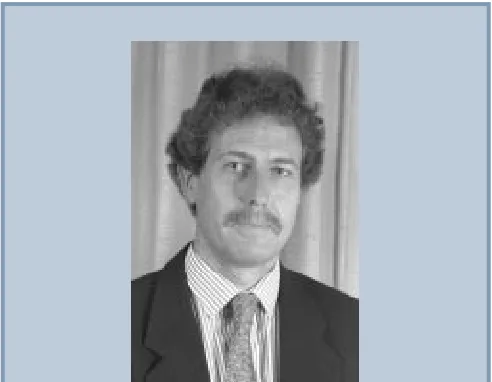
The turn of the year will also mark some signif-icant changes in the staffing of the ICPO. The first happy announcement I can make is that in January Prof. Dr. Fredrick Semazzi will join the ICPO in Southampton as the CLIVAR Senior Scientist.
Prof. Dr. Semazzi was born in Uganda, April 28th, 1953 where he attended school at Kings College, Budo. He studied Meteorology at the University of Nairobi in Kenya. After graduating from the Univer-sity of Nairobi, he was appointed Lecturer in the same department and soon took up a post-doctoral research associateship at NASA Goddard Space Flight Center on a National Academy of Sciences fellowship. In 1989/90, Dr. Semazzi was an Associate Director in the Climate Dynamics Program of NSF before taking up a faculty position as an associate professor in the department of mathematics and the department of Ma-rine, Earth, and Atmospheric Sciences (MEAS) at the North Carolina State University. In 1997 he took sab-batical leave from NCSU and spent the year at the WMO Secretariat in Geneva, Switzerland, as head of the Climate Information and Prediction Services Project (CLIPS).
Dr. Semazzi's research focus is in climate mod-elling and the development of atmospheric numerical models. Over the last four years, he has been directing the development of a non-hydrostatic semi-implicit semi-Lagrangian variable resolution global atmos-pheric prediction model and adaptation of the nested modelling approach for regional climate prediction.
As many of you will already have seen from the last edition of Exchanges, we have recruited Mrs. Sandy Grapes as our CLIVAR Secretary/Executive Assistant in Southampton. Sandy comes to CLIVAR
from her previous post in the University where she did a similar job for a large medical project. She had pre-viously had experience in accountancy and so the CLIVAR finances should be in good hands. The Con-ference preparations have “thrown her in at the deep end” as we say, and this has meant that she has already corresponded with hundreds of CLIVAR scientists around the world.
The transition of the ICPO from Hamburg to Southampton has of course some rather sad conse-quences. The most significant of these is that at the end of the year Anne Stephan who has been the CLI-VAR project administrator from the very start of the ICPO will be leaving CLIVAR. Anne brought her own international flair to the Office. She was widely travelled, spoke several languages and took a deep cultural interest in the people and affairs of the many nations she dealt with. I want to pay tribute to her con-tribution to the Project Office over the years. She has been most helpful to me, as she has been to the previ-ous ICPO Directors, and to all of the CLIVAR com-munity. I am sure that you join me in wishing her well for the future.
The link with Hamburg will not end completely since Andreas Villwock will continue to work as a project scientist until the end of 1999. All of the ICPO staff will be in Paris supporting the Conference.
In summary
So, as we enter 1999 we will start to match the national commitments to CLIVAR against the objec-tives outlined in the Initial Implementation Plan. We will be able to assess where CLIVAR implementation can progress rapidly and where more resources will be needed to meet our objectives. It promises to be an ex-citing time.
John Gould, Director, ICPO
The Economic Value of Seasonal Forecasts
T.N. Palmer, C. Brankovic and D.S. Richardson ECMWF, Shinfield Park, Reading, RG2 9AX, UK
1. Introduction
V
olume 3 No. 4, November 1998
CLIVAR
- Exchanges
This note, part of a more extensive paper (Palmer et al., 1998), discusses the application of output from en-sembles of seasonal integrations obtained as part of the European Union PROVOST (PRediction Of cli-mate Variations On Seasonal and interannual Times-cales) project, to an idealised decision model discussed in Katz and Murphy (1977). Effectively, utility is expressed in terms of the economic value of the forecasts to a hypothetical user.
The set of PROVOST data analysed in this study comprises 120-day 9-member ensemble inte-grations from four different atmospheric global circu-lation models, run over 14 winter seasons from the period 1979-93 (using as atmospheric initial condi-tions data from the ECMWF 15-year reanalysis). These four models are: the ECMWF IFS model, the UKMO Unified Model, and the Météo-France Arpège model at two different resolutions (T42 and T63). A 36-member multi-model ensemble has been con-structed from these 4 sets of integrations.
2. Decision Model Analysis
Consider a potential forecast user who is able to take some specific protective or precautionary action against the impact of some meteorological condition or ‘event’ E. In the seasonal context, examples of E
could be: the seasonal-mean rainfall is one standard deviation lower than normal, or seasonal mean tem-perature is above average. If the user was from the ag-riculture sector, then possible action could be to plant drought-resistant crops as a precaution against the oc-currence of drought, or to spray for aphid growth as a precaution against the occurrence of a mild winter. Suppose we have available an ensemble of seasonal forecasts. For each member of the ensemble, E is pre-dicted to occur, or not to occur. The ensemble as a whole provides a forecast probability p(E) of E, based on the fraction of ensemble members in which E oc-curs.
Suppose that taking precautionary action against the occurrence of E incurs a cost C irrespec-tive of whether or not E occurs. (Crop spraying incurs a cost; planting drought-resistant crops may incur a cost because seed is more expensive, and possibly also because of reduced yield.) However, if E occurs and no precautionary action has been taken, then the user incurs a loss L (Crops lost through aphid damage, or drought). The user wishes to maximise economic return. By how much would the PROVOST data, if it were representative of real- time forecast information, have increased economic return?
To determine this, we summarise results from a simple decision-model analysis. First we need to
de-termine probabilistic hit and false-alarm rates associ-ated with E, given the PROVOST ensemble data. This can be done as follows. Suppose we assume that E is forecast to occur if the forecast probability exceeds some threshold, i.e. p>pt (and is forecast not to occur if p <pt). By varying pt we calculate the fraction of times H = H(pt) that E is forecast and E occurs, and F =F(pt), the fraction of times E is forecast and E does not occur.
On this basis, the user’s expected mean expense (per unit loss) M(pt), based on a decision to take pre-cautionary action if p>pt can be shown to be
where o is the climatological frequency of E.
Given only o, it can be shown that the user should al-ways take precautionary action if C/L < o, and never take precautionary action if C/L > o. We now define the value V(pt) of forecast information to be a measure of the reduction in M(pt) over the mean expense using climatological information only. V(pt) is then normal-ised by the value of a perfect deterministic forecast. (Hence, for a forecast system which is no better than climate, V = 0; for a perfect deterministic forecast sys-tem V = 1). Again, it can be shown that
For a given user, i.e. for a given cost-loss ratio C/L, the optimal value for the user is given by
Vopt=max(V(pt)).
3. The Value of PROVOST data
Here we study the value associated with two very simple events: the 850hPa temperature anomaly is below normal (E<0), and the 850hPa temperature anomaly is below -1K (E<-1). The hit and false alarm rates are evaluated using forecast output from all extratropical northern hemisphere grid points.
In Fig. 1 (page 4), V(pt) and Vopt are shown for
E<0, as a function of C/L, based on ECMWF ensemble data only. The thin lines show the individual graphs
V(pt) for pt = 0.1,0.2, ... , 0.9. For small pt, the graph indicates positive value for users with C/L between about 0.2 and 0.5, but no value for users with higher
C/L. Conversely, for large pt, V(pt) is positive for users with C/L between about 0.5 and 0.8. The envelope function Vopt shows value for all users with C/L be-tween about 0.2 and 0.8. The ability of the ensemble forecast to provide this envelope function Vopt
illus-M p( )t F p( )t C L
---- 1( –o) H p( )t o 1 C L
----–
– +o
=
V p( )t
min C L
---- o, F p
t
( )C
L
---- 1( –o)
– H p( )t o 1 C L
----– –o +
min C L
---- o, oC
L
----–
Fig.1: V(pt) for pt = 0.1, ... , 0.9, together with the optimal envelope value Vopt, for E<0.
Extra-tropical Northern Hemisphere grid points.
Fig.2: Vopt for E<-1. Individual-model ensembles and multi-model ensembles. Extratropical
Northern Hemisphere grid points.
0.0 0.2 0.4 0.6 0.8 1.0
C/L 0.0
10.0 20.0 30.0
value
Value of PROVOST. DJF 7992. ECMWF
T850 anom < 0 K DJF NH (bias removed)
max value p*=0.1, .., 0.9
0.0 0.2 0.4 0.6 0.8 1.0
C/L 0.0
20.0 40.0 60.0
value
Value of PROVOST. DJF 7992
T850 anom < 1 K DJF NH (bias removed)trates the benefit of probabilistic forecasts over deter-ministic forecasts. The value of a deterdeter-ministic forecast would be no better than that given by a single
V(pt) curve; a deterministic forecast has only one hit and false-alarm rate for given E.
It can be noted that Vopt peaks for users with C/L ~ 0.5, which is the climatological frequency of E<0. It can be noted that climatological information (which can only be used to say whether the user should either always or never take precautionary action) is of no value to users whose cost-loss ratio is close to the cli-matological frequency of E. In this sense it is not sur-prising that the value of PROVOST data is largest for users whose cost/loss ratio C/L ~ o.
Fig. 2 (page 4) shows Vopt for E<-1 for all the in-dividual-model ensembles and for the multi-model ensemble. It can be seen now that maximum value oc-curs for users with C/L ~ 0.2, the climatological fre-quency of E<-1. It can also be seen that the value of the multi-model ensemble data exceeds that of any of the individual models for most cost/loss ratios between 0 and 0.6. Note that the scale of the ordinate axis is dif-ferent in Figs. 1and 2. The value of forecasts of the
E<-1 event is higher than that of the E<0 event for
C/L ~ o.
To be more concrete about these results, suppose that a user with C/L ~ 0.2 estimated that (s)he could save 1 million dollars through precautionary action assuming a hypothetical perfect deterministic forecast of E<-1. Then, on the basis of the PROVOST multi-model en-semble data, about 300,000 dollars could actually be saved.
As shown in Palmer et al. (1998), value is im-proved if one restricts to ENSO years.
Discussion
We have considered two rudimentary events, and have evaluated them over a rather extensive re-gion. Specific users may well require more complex and/or specific events and the user’s domain of inter-est will be much smaller (in principal it may be re-stricted to a single model grid point). However, for all such events and domains the techniques outlined in this paper can be readily adapted. Of course, the data used in this study is somewhat idealised since the in-tegrations have been made with observed prescribed sea surface temperatures. The next phase would be to apply this type of decision-model analysis to output from coupled ocean-atmosphere model ensembles. One result from the analysis is that multi-model en-sembles generally have higher value than single mod-el ensembles. From a practical point of view, this stresses the need for a synthesis of the available
sea-sonal forecasts into a single multi-model multi-initial-condition ensemble probability forecast.
Acknowledgements
We acknowledge the help of Jean-Yves Caneill (Eléc-tricité de France), Michel Déqué (Météo-France) and Mike Harrison (United Kingdom Meteorological Of-fice), for assistance in planning these ensemble exper-iments, and making data from their models available. This work was supported by the European Union En-vironment and Climate Programme under contract CT95-0109.
References
Katz, R. W., and Murphy, A. H., 1997. Forecast value: pro-totype decision-making models. In Economic value of weather and climate forecasts, Katz, R. W., and Murphy, A. H., Eds. Cambridge University Press, 222 pp
Palmer, T.N., C. Brankovic and D.S. Richardson, 1998: A probability and decision-model analysis of PROVOST sea-sonal multi-model ensemble integrations. Submitted Q. J. Roy. Meteo. Soc.
[image:5.595.311.557.354.545.2]U.S. Appoints Science Steering Committee
U
nited States federal agencies understand that the CLIVAR science programme offers an opportunity to cooperate in a comprehensive study of climate varia-bility and change. The Department of Energy (DoE), National Aeronautics and Space Agency (NASA), National Oceanic and Atmospheric Administration (NOAA) and the National Science Foundation (NSF) have formed an inter-agency coordinating group for CLIVAR as part of the U.S. Global Change Research Program. This agency cooperation is made necessary by the breadth of the CLIVAR programme that aims to understand the causes of climate variability, to im-prove predictability of this variability, to extend pre-instrumental climate records into the past, and to un-derstand and predict the climate changes caused by growth of radiatively active gases and aerosols in the atmosphere. While individual agencies have unique missions, the CLIVAR goals are shared by the inter-agency group as scientifically timely and important.The inter-agency group has appointed a Science Steering Committee (SSC) to advise on implementing the U.S. effort in CLIVAR. U.S. scientists support all three CLIVAR programmes (GOALS, DecCen and ACC) and there is interest and activity in all the CLI-VAR Principal Research Areas (PRAs) as well as in connecting and expanding some PRAs. The SSC has recommended participation in the full international effort with a focus on understanding and predicting seasonal-to-interannual climate variability but with appropriate efforts in decadal variability and anthro-pogenic change.
Within the U.S., the best developed plans ad-dress prediction of ENSO (G1), variability of the Pan-American Monsoon (G3), decadal modulation of ENSO (bridging G1 and D4), and seasonal-to-decadal variability in the Atlantic sector (G1, D1, D2 and D3). Efforts in seasonal-to-interannual variability include global modelling and empirical studies coupled with continuation of the TAO Array plus enhanced obser-vations in the Atlantic and Pacific Oceans. Pan-Amer-ican monsoon studies are integrated with the VAMOS programme and with new tropical ocean observations. Modest expansions of the modelling, empirical and observational work in these efforts will support stud-ies of decadal variability (D1-D4). A majority of the U.S. work in Anthropogenic Climate Change will be based on a coordinated modelling effort. Planning and pilot studies for the Asian-Australian monsoon (G2) will be initiated. Other areas, such as African Climate Variability (G4) and extending studies of the
thermo-haline circulation (D3) to include changes in the Arc-tic, are of great interest and current activity, but the SSC hopes other nations will take the lead in develop-ing and implementdevelop-ing a strategy to satisfy CLIVAR objectives in these areas.
Many ingredients of research in the individual PRAs are common to them all. The U.S. should sup-port integrating efforts such as development of mod-els and data assimilation techniques, design and implementation of improved observing systems, and continuation of present satellite and in-situ observa-tions. CLIVAR research is interdisciplinary, so close cooperation is required with operational activities in the World Weather Watch, GCOS, GOOS, GODAE and Argo and with complementary research pro-grammes such as GEWEX and PAGES. In particular, the U.S. CLIVAR programme is predicated on contin-uation and evolutionary improvement of (a) satellite and in situ measurements that support operational analyses of the atmosphere, (b) satellite measure-ments of sea surface topography and surface winds over the ocean, and (c) the TAO array.
The SSC has recommended the following spe-cific elements of U.S. CLIVAR:
A. Global Seasonal-to interannual predictability ENSO and Monsoons
-The present efforts in diagnosis and experimen-tal forecasting of ENSO should continue. Mainte-nance and evolution of the TAO array and satellite measurements of the surface wind field and sea sur-face topography are crucial to this effort. Changes to these systems should have sufficient overlap for care-ful assessment. Deliberate expansion of studies of the American Monsoon should proceed, extending first to the Pacific cold-tongue and stratus region because of its relevance for ENSO prediction, and then to the American Monsoon region and into the tropical At-lantic. Studies of the Austral-Asian Monsoon system will proceed through a phased approach, beginning with pilot studies and development of international collaborations.
B. Decadal Modulation of ENSO
Continuation and evolution of TAO array time series are vital elements of this programme.
C. Climate variability in the Atlantic sector
The U.S. should contribute significantly to the study of climate variability in the Atlantic sector, fo-cusing specifically on the North Atlantic Oscillation and Tropical Atlantic Variability. A coordinated up-per ocean observing system in the tropical Atlantic ex-tending throughout the North Atlantic Ocean and coupled with a basin-wide ocean data assimilation ef-fort will be required. Modelling and limited observa-tions to define and understand climate-scale variability in the deep ocean should be included.
D. Sustained observations
Success of CLIVAR depends, in part, on the continuation and enhancement of the atmospheric ob-serving network (including the World Weather Watch network) and this should be a high priority for U.S. CLIVAR. Improvements are needed to this and other observing systems. A legacy of CLIVAR should be a Global Climate Observing System that is evolution-ary, providing observations for operational and re-search purposes and to assess the impact of its elements. Priorities for observations that are not yet available in an operational context are:
• Enhancement of the atmospheric weather observa-tion network to make it adequate for long term monitoring of climate variability;
• Measurements of temperature and salinity in the upper 1500 meters focused in the subtropical Pacific (35oS to 40oN) and Atlantic (35oS to 65oN);
• Satellite altimetry of sufficient accuracy (1-2 cm) and duration (at least the next 20 years) to detect decadal changes in ocean circulation, the polar ice sheets and mean sea level;
• Sustained, accurate measurements of surface vec-tor winds over the ocean;
• Complete and accurate measurements of surface fluxes of heat, freshwater, energy and momentum at select ocean and land sites, including improved measurements of cloud properties and soil mois-ture;
• Collection of long time series from the ocean at select Eulerian stations and from repeat ocean sec-tions.
Two implementation activities are planned. First, instruments should be deployed to meet the needs of particular CLIVAR PRAs. Second, in coop-eration with international and non-CLIVAR pro-grammes, U.S. CLIVAR should build toward a
sustained, global climate observing system. In both these activities, U.S. CLIVAR should promote strong ties between observational, modelling and data assim-ilation activities. In particular, the upper ocean ob-serving system should evolve in the context of vigorous data assimilation activity. There must be free, open and timely exchange of data from all sus-tained observing systems.
E. Climate Modelling
In addition to a continuing aggressive pro-gramme of numerical experimentation, effort should be put into improving coordination of modelling work. Effort should be made to facilitate open and ready access to well-documented models, data assim-ilation systems, simulations, and observations. A common programming paradigm should be adopted to facilitate exchange of model modules such as phys-ical parameterisations.
F. Data Set Development
A fundamental objective of the U.S. policy on data management should be the free, open and timely exchange of CLIVAR related data and products. The U.S. should have a strong policy of keeping as much data as possible in the public domain and limiting the time that data can be restricted. Support should be giv-en for developmgiv-ent of comprehgiv-ensive, long-term data sets by improving the quality and volume of the his-torical database through data archeology, supporting the development and evaluation of data sets, develop-ment of integrated proxy records and continuing to re-analyse historical data and satellite-based products for the atmosphere and ocean.
The SSC will be working vigorously to coordi-nate the plans of various programmes and individual efforts that will make up U.S. CLIVAR.
Present membership is: David Battisti (Univ. Wash-ington) and Russ Davis (Scripps Institute of Oceanog-raphy) (co-chairs), Tom Ackerman (Pennsylvania State Univ.), Robert Dickinson (Univ. Arizona), Jim Hurrell and Jeff Kiehl (National Center of Atmos-pheric Research), William Kessler (NOAA Pacific Marine Environmental Lab.), Michele Rienecker (NASA Goddard Space Flight Center), Walter Robin-son (Univ. Illinois), Peter Schlosser (Lamont Doherty Earth Observatory), Jagadish Shukla (Center for Ocean-Land-Atmosphere Studies) and Robert Weller (Woods Hole Oceanographic Institution).
On the Support of Ocean Modelling for
Climate Research:
-A report on progress and proposed
developments-D. Webb (Southampton Oceanographic Centre, UK), J. Willebrand (U. Kiel, Germany)
S
ummaryThis document discusses how future develop-ment, testing and validation of ocean models for cli-mate research may be best encouraged and supported by the WMO and WCRP. It is based on the successful “Workshop on Ocean Modelling for Climate Re-search” held at NCAR in August 1998.
Background to the Workshop
The ocean is a key component of the climate system, having a role both in moderating and in gen-erating climate anomalies. The modgen-erating effect comes primarily from the large thermal inertia of the ocean which allows it to store a significant amount of heat in its surface layers. This works even if there are no currents in the ocean.
In contrast climate anomalies are often pro-duced by ocean currents. These can transport the stored heat of the ocean surface layers over large dis-tances, the heat then released producing significant ef-fects on the climate system. Thus ocean currents are responsible for the El Niño and for the present warm climate of Western Europe. They are also responsible for many of the major climate changes in the Earth’s past.
For these reasons the ocean component is al-ways an important part of the coupled models used for climate change prediction. This is why the WCRP has encouraged the development, improvement and test-ing of ocean models for many years through the WOCE and TOGA programmes. The WOCE pro-gramme in particular has been responsible for the de-velopment of ocean models suitable for the mid- and high-latitude oceans and for long climate runs.
However WOCE has now entered its final anal-ysis stage, the WOCE NEG is no longer in existence and many of its responsibilities are being transferred to CLIVAR and the WGCM. As part of this process, WOCE and the WGCM jointly proposed and support-ed a workshop on “Ocean Modelling for Climate Studies”. As well as continuing to encourage the im-provement of ocean models and the transfer of knowl-edge to the climate modelling community, it was hoped that this would also help to clarify how future support for ocean modelling should best be organised
within the WCRP.
The Boulder Workshop
The Workshop on “Ocean Modelling for Cli-mate Studies” was held at NCAR in the USA between August 10th and 13th 1998. The meeting was organise by Dr. C. Boening of the Alfred Wegener Institute, Bremerhaven, Germany, with the local NCAR sup-port of Dr. P. Gent and Dr. W. Large.
The workshop brought together sixty four invit-ed experts representing the climate modelling, ocean modelling, and observational communities. The workshop focused on the problem of realistically rep-resenting the ocean's role in climate variability at dec-adal time scales. It tried to understand how well different aspects of ocean dynamics need to be repre-sented. It also tried to see how current and future ob-servational datasets could be used to guide the development of improved models.
A summary report of the meeting is attached. A full report will be published later through the WCRP system. During the meeting there was a detailed and often animated discussion on a wide range of relevant issues. We concentrate here on three areas relevant for planning purposes. These are the problems of model resolution, the parameterisation of processes in coarse resolution climate models and the proposals for a new ocean model intercomparison project.
Model Resolution
In recent years, many of the major improve-ments in ocean models have resulted from advances in available computer power. Previously there had been insufficient power for running ocean size models which could resolve the Rossby radius of the ocean. However, results from a number of such models are now available and these have stimulated oceanogra-phy in a number of important areas.
First, by convincing the sea going community of the realism of ocean models, they are encouraging de-tailed validation studies against field data. These in turn are leading to further improvements in the mod-els.
im-proved representation of ocean topography that is now possible.
The high resolution models also allow detailed studies of thermohaline processes which have long term effects on the climate system. These include deep convection at high altitude and the overflow of water from the Nordic and Mediterranean seas into the Atlantic. However, many of these processes have very small scales and, although the increase in model reso-lution has helped, they are unfortunately still repre-sented poorly in even the highest resolution models.
Parameterisation in Coarse Resolution Models
Although the increase in computer power allows single runs of high resolution models, coupled climate models continue to use coarse resolution oceans which do not resolve the Rossby radius. This is be-cause climate studies require long and repeated runs which often last many hundreds of years.
An advantage of combining expertise from both types of model is that results from the high resolution can be used to validate coarse resolution model re-sults. They can also be used to develop better param-eterisations for the coarse models. One of the most successful of these is the Gent and McWilliams pa-rameterisation scheme for ocean eddies and this at-tracted a lot of attention during the workshop.
There was also lengthy discussion of deep con-vection, overflow and bottom boundary layer schemes suitable for both high and coarse resolution models. Recent intercomparisons of ocean models show that large differences in the final results are often associat-ed with the poor representation of near bottom effects. A related area of concern is the reduced heat transport found in low resolution models. Further re-search is needed on why this occurs and how it may be overcome. As with other errors, this produces signifi-cant changes in the mean state of the ocean which in turn affect the response of the ocean to changes in the atmospheric forcing.
Key processes occurring at just one or two grid-points.
Studies of ocean models indicate that the ther-mohaline circulation is often dominated by poorly represented processes which are taking place at a very small number of oceanographic grid points. Thus deep convection often only occurs at one or two grid points in the North Atlantic. Mixing in the overflows may be dominated by just one gridpoint. Under these conditions there is little chance for errors in different parts of the model to cancel.
As a result, model performance can often de-pend on a fortuitous choice of parameters. For this reason at present we have little confidence that a mod-el that works wmod-ell under one set of conditions will work well under different conditions due, say, to cli-mate change.
Given the additional problems in parameterising these processes and the other effects of model resolu-tion it is believed that the coarse resoluresolu-tion ocean models presently used for climate research are sus-pect. As a consequence of this, predictions of large changes in ocean circulation and the state of the ocean based on the behaviour of such models should be treated with caution.
The meeting also expressed concern about the methods used in climate change research where the system is started from an “equilibrium” initial condi-tion in which the ocean state is far removed from the present ocean. As the climate change runs are gener-ally shorter than the initial run required to reach this ‘equilibrium state’, it seems likely that studies starting from the present ocean state would be more accurate and informative.
Ocean Model Intercomparison Project
The possibility of starting a new Ocean Model Intercomparison Project (OMIP) was discussed. Re-ports were given by people involved in earlier OMIP projects, the most comprehensive of which was the European DYNAMO project. This compared the per-formance of high resolution level, isopycnic and sig-ma co-ordinate models of the North Atlantic.
There were concerns about the large amount of effort required and possible lack of publications from such a project. However, previous experience with such projects had shown that if they are tightly fo-cused and organised, they often lead to useful and publishable results. Thus the CME, DYNAMO and Met Office intercomparisons had all produced useful results and stimulated further model developments. For the future two possibilities were discussed. The first was to encourage self-organising OMIPs like the ones referred to above. The second was to set up fixed framework with specified model extent, surface forc-ing and time scale and which provides resources for storage and analysis of results. A combination of both approaches may be possible.
Future support for ocean modelling
The 1998 workshop was very productive. There was much discussion of the problems facing climate modellers and it is expected that this will help stimu-late further improvements in ocean model perform-ance. However, it was also obvious that more thought needs to be given to how such initiatives be continued in the future. When WOCE finishes it could be taken on as a responsibility of the WGCM, but although very important, it remains only a minor part of the WGCM’s broad range of responsibilities.
For this reason we believe that a new group is required which can give its full attention to the prob-lems discussed above and to other probprob-lems that arise. We propose that the new group be set up, under WGCM and WOCE, and that it should be given re-sponsibility for the development of ocean models for climate research. The area of responsibility needs to include decadal and longer time scales and also in-clude ocean processes at mid- and high-latitudes. Thus we would expect the group to collaborate with the Arctic NEG in validating ocean models under ice, but it should not clash with the tropical El Niño inter-ests of the CLIVAR-NEG-1.
The terms of reference of the new group could include:
1. To stimulate the development of ocean models for research in climate and related fields, with a focus on decadal and longer time scales at mid- and high-latitudes.
2. To encourage investigations of the effect of model formulation on the results of ocean models, mak-ing use of sensitivity studies and intercomparisons. 3. To promote interaction amongst the ocean model-ling community and between this and other com-munities through workshops and other activities. 4. To stimulate the validation of ocean models when
used in stand alone mode and as part of a coupled ocean-atmosphere model, using oceanographic data and other methods, and to advise on the obser-vational requirements of such studies.
5. To publicise developments in ocean models amongst the climate modelling community. 6. To collaborate with other WMO committees in
areas of overlapping responsibility.
7. To advise on ocean modelling and related issues and to report on its activities to the WOCE-SSG and the JSC/CLIVAR WGCM.
Second session of JSC/CLIVAR Working
Group on Coupled Modelling
Melbourne, 16-17 October 1998
T
he second session of the JSC/CLIVAR Working Group on Coupled Modelling (WGCM) was held in conjunction with two other relevant meetings which certainly helped in setting the scene for the WGCM discussions. The first of these was the tenth annual modelling workshop of the Australian Bureau of Me-teorology Research Centre, 12-13 October 1998, and which, taking advantage of the visit of members of WGCM to Melbourne, was on the subject of coupled climate modelling. A large number of coupled model-ling groups were represented and participants were treated to comprehensive presentations of the cou-pling process, air-sea interaction and coupled model initialization, simulations of decadal and centennial variability in coupled models, and, finally, accounts of recent results from and diagnoses of climate change experiments.The second meeting was a workshop on the Coupled Model Intercomparison Project (CMIP), 14-15 October, that was organized by WGCM itself to re-view the latest results from the models involved in CMIP, to assess findings from the intercomparison subprojects, and to discuss the future directions for CMIP. In various presentations, it appeared that the absence or the inclusion of flux adjustments in models was not a major factor in the representation of such as-pects as the seasonal cycle or Pacific variability. In many models, although several phenomena seen in the coupled ocean-atmosphere system such as the North Atlantic Oscillation, El Niño-like variability, and the Antarctic Circumpolar Wave are reproduced, the simulation of high and low frequency climate var-iations models is generally less than observed. As to the future of CMIP, the view of participants was that much more remained to be done fully to exploit the data base of results that had now been gathered and, possibly, by collecting additional subsets of data in CMIP1 and CMIP2, rather than embarking on a third phase of CMIP in which new transient coupled model integrations, albeit with more realistic scenarios, would be proposed.
synop-tic and intra-seasonal variability. In addition, updated or new CMIP1 or CMIP2 integrations would be ac-cepted. In the future, consideration will be given to a general request for additional parameter fields (e.g. to enable the diagnosis of cloud forcing). The evolution of proposed scenarios of greenhouse gas changes and aerosol loading will also be monitored in preparation for a possible third phase of CMIP that might be launched in 1999 or 2000.
Further results were also available from the intercomparison of slab-ocean model doubled CO2 equilibrium experiments, organized by WGCM. The pattern of response of the zonal average change of air temperature, water vapour and clouds was similar among models, but there were significant disagree-ments in the amplitude of the changes and their de-tailed distribution. The increase in downwelling long-wave radiation in the doubled CO2 atmosphere was generally compensated by increases in surface tem-perature and evaporative cooling. Zonal average pre-cipitation changes show broadly greater tropical and less mid-latitude precipitation although there were major discrepancies at regional and local scales.
WGCM noted with interest the main conclu-sions and recommendations from the Workshop on “Ocean Modelling for Climate Studies”, held in Boul-der, CO, USA, in August 1998 (see previous article). The resolution required in an ocean model satisfacto-rily to represent ocean eddy heat transport and to re-solve key processes such as overflows and deep ocean convection (which may occur at only one or two grid points and dominate the long-term behaviour of the model) continues to be an outstanding issue. To en-courage investigations of the effect of model formula-tion on ocean simulaformula-tions, requiring organizaformula-tion of sensitivity studies and model intercomparisons, WGCM saw merit in the proposal to set up a joint WGCM/WOCE ocean modelling group. The direct relationship WGCM has been building up with the ocean modelling community, essential in fostering the refinements needed in the ocean components of cou-pled climate models, would be maintained by the reg-ular participation of at least the chairman and another representative of the ocean modelling group in WGCM sessions.
WGCM also reviewed the latest results from the Paleoclimate Modelling Intercomparison Project (PMIP). In the case of the mid-Holocene climate, PMIP simulations show a northward displacement of the desert-steppe transition zone over North Africa, qualitatively consistent with estimates inferred from detected biome shifts, but strongly underestimated in extent, mainly because of the omission of the
vegeta-tion, surface hydrology and ocean temperature feed-backs in the climate system in the simplified PMIP experiments. Consideration is being given to rerun-ning the experiments with coupled ocean-atmosphere-vegetation models. In the experiments aimed at simu-lating the Last Glacial Maximum, the prescribed sea surface temperatures (based on CLIMAP estimates) appear to produce too weak a cooling over land. When sea surface temperatures are computed with a mixed-layer ocean model, cooler ocean and land conditions, in agreement with available data, were generated in four out of nine simulations. The WGCM encouraged the continued development of this activity. More gen-erally, the need to extend the climate record further back in time by exploiting proxy data was strongly stressed. In particular, a much higher time resolution of climate variability that has occurred over about the past 1000 years was necessary. The WGCM wished its views in this respect to be placed before the planned joint PAGES/CLIVAR meeting in 1999 where the paleodata and modelling communities would consider how to establish an appropriate record over the last millennium.
All participants expressed gratitude and appre-ciation to the Australian Bureau of Meteorology Re-search Centre for hosting these three meetings, the excellent organization and arrangements, and the fa-cilities and hospitality offered.
R. Newson, Joint Planning Staff of WCRP
A Decade of Progress on the Western Pacific
Warm Pool Coupled System:
The CLIVAR/GEWEX COARE98 Conference
M
ore than 150 meteorologists and oceanographers from eight nations met in Boulder, Colorado from 7-14 July, 1998 to share results of their research using TOGA COARE (Coupled Ocean-Atmosphere Re-sponse Experiment) data, and to assess the impacts of the experiment which was conducted in the western equatorial Pacific from November 1992 through Feb-ruary 1993. The team of COARE scientists collected unique, high-quality observations of the upper ocean, the air-sea interface, and the atmosphere in the warm pool region. Based on the Conference, a much better understanding of the coupled ocean-atmosphere sys-tem in the tropics will result.Scientific sessions addressed
• large scale coupled aspects of the Western Pacific warm pool (including its east-west migrations as part of ENSO) including predictability;
• the dynamics and air-sea interactions of the 30-60 day intraseasonal oscillation (ISO), which is par-ticularly strong over the warm pool;
• precipitation, radiation and clouds, and the organi-zation of convection;
• diurnal variability in the warm pool system; • air-sea fluxes and budgets of heat, freshwater/salt,
and momentum;
• warm pool response to wind and buoyancy forcing; • parameterisations, and multiple scale interactions.
Invited presentations reviewed progress to-wards the four goals of COARE, and assessed the leg-acy of COARE for CLIVAR, GEWEX, numerical weather prediction, satellite remote sensing, and in situ observing technology. Significant progress has been made in synthesizing the results of COARE re-search, and a substantial legacy has been left in the form of the datasets, the literature (more than 200 pa-pers to date), improvements to the hierarchy of mod-els, and improvements to observing systems and their application (e.g., new bulk flux algorithm improves use of bulk met observations; new satellite retrieval
methods).
Highlights of the scientific discussions were:
• closure of interfacial, ocean and atmosphere budg-ets of heat and moisture to better than 10 Wm-2 and 25% of the rainrate, on biweekly and longer time scales
• determination of flux component phasing during the ISO and the identification of the importance of air-sea interaction within the ISO
• the success of cloud-resolving models at simulat-ing realistic cloud structures and surface fluxes • significant progress towards improving the
physi-cal basis for convective parameterisations in atmospheric GCMs using COARE observations together with cloud resolving and single-column models
• evidence for the potential importance of high fre-quency forcing, such as diurnal heating, in govern-ing longer-term SST tendencies
• demonstration of the need to consider the role of freshwater flux, the depth-dependent absorption of solar radiation, and the shallow thermohaline vari-ability when predicting SST in the warm pool • new insights into mixing processes and the
evolu-tion of turbulence in the upper ocean, made possi-ble by the abrupt capping of the upper ocean by stable, fresh layers during heavy rain
• the relative importance of air-sea interaction and wind-forced Kelvin waves in the warm pool as compared to reflected Rossby waves during the onset of some ENSO warm events, including the 1997-98 event
• the impact of the COARE dataset and resulting parameterisations on numerical weather prediction analyses and forecast skill
• the resolution of the global Vaisala rawinsonde humidity problem discovered during COARE
Project Office has led to its wide-spread use.
A committee worked prior to and during the meeting to specifically identify gaps and unfulfilled objectives, and to suggest methods for dealing with them. Considering these as opportunities for pro-grammes such as CLIVAR and GEWEX, the most compelling are:
• Development of an improved convection algorithm for atmospheric GCMs to link with the COARE Bulk Flux algorithm
• Identify the source of dry air intrusions in the warm pool region, and their influence on the tropo-sphere and convection.
• A quantitative description of warm pool oceanic variability on 100km to 1000km scales.
• Inclusion of the hydrological cycle in coupled models that are capable of simulating mean and varying conditions in the warm pool region. • Understanding the principal mechanism of air-sea
coupling in the ISO.
• Understanding of convection under suppressed conditions and the transition to the active phase. • Accurate time series and small space/time scale
flux fields for forcing ocean models and for vali-dating atmospheric models.
• Examination of low wind conditions and horizon-tal variability of SST.
• Assessment of the importance of meso-scale con-vective systems in controlling the local and remote evolution of upper ocean temperature, salinity and current structure.
• Development of a reference surface for altimetry analysis of surface currents
• Inadequate salinity measurements to fully explore the salinity variability and influence on ocean dynamics.
• Transitioning the COARE bulk flux algorithm to operational NWP models, and the scaling of the parameterisations to larger domains with extension to wind speeds >12 m/s.
• Insuring that results from COARE are used to improved turbulence, convective and radiative parameterisations in operational and coupled cli-mate models.
• Explicit consideration of the optical properties of the upper ocean and their role in governing SST. • Extension of COARE results and
parameterisa-tions to other regions (eastern Indian ocean, east-ern Pacific)
• Comparison of COARE data and results to that of other field experiments past and future to expand the range of conditions that can be studied. • Determination of the role of microphysical cloud
processes in convection.
• Meso-scale data assimilation of shipboard radar data
• Implementation of rawinsonde humidity correction procedures for the global historical dataset
Focused working group meetings continued or initiated efforts to address some of the major remain-ing challenges, and to expand the applicability and ap-plication of COARE results. The GEWEX Cloud Systems Study Working Group 4 met during the con-ference. A group met twice to develop a proposal to the WCRP to set up a Coupled Ocean-Atmosphere Boundary Layer working group to expand on the suc-cess of COARE and focus on continued improve-ments in the boundary layer parameterisations in climate and NWP models, and in air-sea flux climatol-ogies. Another group met to develop plans towards as-similation, analysis and modelling of COARE upper ocean data.
In summary, the consensus of COARE98 was that COARE has been a huge success. The design and execution of the COARE IOP was successful, and the investment made in the resources that collected the data are beginning to have a tremendous return. While certain objectives remain to be met, progress has been rapid. It is believed that most of the identified remain-ing challenges are highly relevant to the scientific ob-jectives of CLIVAR and GEWEX, so it is hoped that these programmes will continue to assimilate COARE results and investigators. The proceedings of COARE98, including the review papers and extended abstracts of the contributed papers, will be published as a WCRP Report.
Roger Lukas, Univ. of Hawaii, USA Frank Bradley, CSIRO, Australia
Euroclivar - 6th Session
T
he Euroclivar committee has held its sixth meeting in Horley, South England on 29 and 30 October 1998. The aim of that meeting was the formulation of a final set of recommendations for a European contribution to CLIVAR. A draft document had been available for some time, and had been presented already in April, at the European Geophysical Society meeting in Nice, and in October, at the European Climate Science Con-ference in Vienna. However, the report needed to be completed with results from recent workshops. In to-tal, Euroclivar has organised eight workshops: • Atlantic Ocean DecCen Variability (in parallel• Past Climate Data
• Climate Change Detection and Attribution • The Role of the Atlantic in Climate Variability • African Climate Variability
• Climatic Impact of Scale Interaction for the Tropi-cal Ocean/Atmosphere System
• Data Assimilation in Ocean Models
Reports of these workshops are either available, or in print.
The Euroclivar document starts by spelling out the European interest in CLIVAR. The arguments are: 1. Natural fluctuations of the climate of Europe have many very significant consequences for safety, health, infrastructure, agriculture, energy, econ-omy.
2. Natural climate fluctuations elsewhere in the world have European implications through geophysical, socio-economic and political mechanisms.
3. Improved prediction and detection of anthropo-genic climate change will provide a firmer scien-tific basis for active emission, mitigation and adaptation policies.
It then continues with an identification of the main scientific issues. In particular, Euroclivar rec-ommends that high priority be given to the following topics:
1. European and Atlantic variability; 2. Global teleconnections; and 3. Anthropogenic climate change.
The executive summary ends with the following recommendations:
“To achieve the Euroclivar objectives, the establish-ment of an integrated observational network is imper-ative. This network, to be implemented in cooperation with nations adjacent to the Atlantic, should include: 1. an extensive network of profiling floats in the
Atlantic;
2. an operational tropical Atlantic array of moored atmosphere/ocean observing stations (PIRATA); 3. basin-wide measurements of the Atlantic water
mass and circulation variability at critical latitudes; continuation, at the present level, of the ocean/ atmosphere observations with voluntary observing ships; and
4. continuous contribution of satellites to the global coverage of the ocean and atmosphere.
In addition, past climate variability needs to be reconstructed, using both the instrumental and the paleoclimatic records.
Reliable regional climate change predictions cannot be achieved without enhanced European col-laboration and substantial increases in computing
re-sources. These are needed so that multi-century simulations can be made with sufficient complexity, that important climatic features, physical processes and regional details are resolved. In addition, ensem-bles of integrations must be made to estimate the im-pact on climate predictions of uncertainties in initial conditions and model formulation. The computational requirements for such simulations cannot be met from purely national resources. It is therefore strongly rec-ommended that a European Climate Computing Facil-ity be established.”
The detailed recommendations can be found in Anderson et al. (1998) and also on the Euroclivar website (http://www.knmi.nl/euroclivar). Euroclivar is now looking forward to the implementation of its recommendations under the Fifth Framework Pro-gramme. Euroclivar is supported by the European Commission under the Environment and Climate pro-gramme (1994 - 1998).
Reference
Anderson, D., L. Bengtsson, P. Delecluse, J.-C. Duplessy, T. Fichefet, S. Joussaume, J. Jouzel, G. Komen, M. Latif, L. Laursen, H. Le Treut, J. Mitchell, A. Navarra, T. Palmer, S. Planton, A. Ruiz de Elvira, F. Schott, J. Slingo, J. Wille-brand, 1998. Climate Variability and Predictability Re-search in Europe, 1999 - 2004: Euroclivar recommenda-tions. KNMI, De Bilt, The Netherlands.
G. Komen, KNMI, De Bilt, The Netherlands
The NASA Workshop on
Decadal Climate Variability
Williamsburg, VA, USA; 22-25 September 1998
I
ntroductionat decadal-multidecadal time scales has the potential to interact with anthropogenic climate change; and 4. it is possible/likely that some societies are more vul-nerable to decadal climate anomalies than to shorter-term climate anomalies because of those societies' re-silience against shorter-term variability.
As an indication of its importance, several na-tional and internana-tional Workshops on decadal cli-mate variability have been organized in the 1990s to assess the progress of research in this area and to de-velop research programmes. One of the major compo-nents of the International CLIVAR project is the study of decadal to centennial scale climate variability.
The objectives of the present Workshop were, 1. to bring together researchers active in decadal cli-mate variability and continue the discussions begun in April 1996 in the JCESS-CLIVAR Workshop and in the various CLIVAR meetings that have taken place since then; 2. to provide inputs to NASA's Earth Sci-ence Enterprise from the decadal climate variability research community; and 3. to continue to develop an integrated framework of research in the description, physics, prediction, and societal applications of dec-adal climate variability; and its interaction with sea-sonal-to-interannual and anthropogenic climate phenomena.
There were approximately 50 participants in this Workshop, 38 of whom made oral presentations on various aspects of decadal climate variability and its societal impacts. In addition to the oral presentations, there were six sessions in which various aspects of decadal climate variability were discussed. The par-ticipants included programme managers from NASA and NOAA. Dr. Andreas Villwock represented the In-ternational CLIVAR project. A Report of the Work-shop containing summaries of presentations and discussions, Workshop conclusions, Workshop rec-ommendations, and extended abstracts of presenta-tions is being prepared and will be available before the end of this year. A summary of the major conclusions and recommendations is presented here.
Workshop conclusions
1. The relative shortness and uneven quality of the instrument-measured climate record hampers our ability to quantify characteristics of global climate variability at decadal and longer time scales. 2. Nevertheless, analyses of this
instrument-meas-ured climate record has shown that there are glo-bal-scale, decadal and interdecadal variations in SST, rainfall over continents, SLP, upper-ocean heat content, near-surface winds over oceans, and surface temperatures over the U.S. The SST and
upper-ocean heat content anomalies appear to rotate in the oceanic gyre circulations in observa-tions and in the NCAR-DOE global coupled ocean-atmosphere model. The interdecadal SST variations appear to modulate tropical cyclone activity in the Pacific region.
3. There are also regional-scale patterns of SST, SLP, rainfall over continents, near-surface winds, and sea ice variations at decadal-multidecadal time scales in the Atlantic.
4. The ENSO phenomenon, its predictability, and its influence on the North American, Australian, and Asian climates exhibit strong, decadal-multidec-adal variations. The strength of the ENSO-droughts connection in eastern U.S., southern Cali-fornia, and the Mississippi River valley has fluctu-ated at multidecadal time scales during the 20th century. Observations suggest that the above-men-tioned decadal climate anomalies in the tropical-subtropical Pacific may be responsible for modula-tions of ENSO.
5. The following ‘targets’ appear promising for fur-ther investigations.
(i) Decadal variability of ENSO, its predictability, and its teleconnections
(ii) Decadal variability of the Asian-Australian monsoons and the ENSO-monsoon relationship (iii) Decadal variations in the North Pacific and North Atlantic climate systems, and the associ-ated global rainfall anomalies
(iv) A decadally-varying, meridional teleconnec-tion pattern involving the tropical South Atlan-tic SSTs, SLP variations over the North Atlantic, deep convection in the Labrador Sea, sea ice and heat flux perturbations in the Green-land-Iceland-Norwegian Seas, and possibly the cross-equatorial SST gradient in the tropical Atlantic.
6. Further investigations with instrument-measured and paleoclimate data sets, and a variety of analy-sis techniques are necessary to further clarify char-acteristics of these ‘targets’, other global- and regional-scale decadal climate variations, and the relationship(s) between them.
7. Recent observational and modelling work has not shown evidence of coupled ocean-atmosphere modes of decadal variability in the extratropics. The model results suggest that integration of atmospheric forcings by the ocean may be the pri-mary mechanism of decadal SST variability in the extratropics.
thermohaline circulation at 50-70 years time scale; observations suggest that phase-locking between these internally-generated climate variations and multidecadal solar irradiance variations may be responsible for the observed multidecadal climate variations.
9. A GISS GCM experiment suggests that the Earth's climate may be sensitive to 0.1%-0.25% variations in solar irradiance at multidecadal time scales. Approximately half the globally-averaged surface temperature increase during the last 100 years may be attributable to solar irradiance increases. 10.A preliminary assessment indicates that there is
low predictability of decadal climate anomalies in dynamical, coupled ocean-atmosphere models; however, a statistical predictability study shows high-skill, multiyear-lead time predictability of decadal SST variations in the tropical Atlantic. 11.Analyses of satellite data products based on
infra-red and microwave sounder radiance profiles show that inter-satellite calibration and analysis are required to get meaningful results on long-term cli-mate variability. However, inherent uncertainties in using operational satellites due to orbit drift, instrument degradation, and inadequate sampling remain major problems.
12.Assimilation of satellite altimetric sea level obser-vations by ocean general circulation models has demonstrated the utility of sea level data in esti-mating subsurface thermal and velocity fields. Data assimilation is a powerful tool for synthesiz-ing various satellite observations in providsynthesiz-ing long-term global ocean analysis for climate research.
Workshop recommendations
1. A strategy to provide decade(s)-long, space-based, geophysical data products should be developed by space agencies. This encompasses the need to work carefully to maintain calibration and valida-tion for long periods despite changes in technol-ogy, agency responsibility, and evolving science requirements. Long, global, well-maintained instrumental time series are critical to climate stud-ies.
2. It is important to maintain high-quality measure-ments of sea surface height and extend the time series of global ocean winds. These are important quantities in decadal climate variability and in dec-adal variability of ENSO. A programme to demon-strate the feasibility of making high-accuracy, global measurements of sea surface salinity and precipitation from space-based platforms is needed
as well. Solar irradiance variations must be tracked and compared with climate records.
3. In support of this space-based observing pro-gramme, there should be an in-situ measurement/ calibration programme using buoy- and float-mounted instruments. In view of the observations and model results showing a likely association between the subtropical gyres, and decadal SST and upper-ocean heat content anomalies, exten-sions of the TAO and PIRATA arrays to the equa-torward sides of the subtropical gyres is worth considering. To observe gyre circulations and potential subduction processes, globally-deployed PALACE floats in the Atlantic and the Pacific are required that would reside along a particular sub-surface density sub-surface and profile to the sub-surface intermittently. The assimilation of these space-based and in-situ observations in global ocean-atmosphere models should be an integral part of this programme.
4. More effort is needed to develop and rigorously analyse global ocean-atmosphere models to under-stand mechanisms of decadal climate variability; its predictability; and its interaction with ENSO, its predictability, and its global teleconnections. 5. U.S. scientists and their international collaborators
need increased support for development of global instrumental and proxy databases through funding of special projects, including data archaeology and rescue projects. A hierarchy of quality-controlled ocean, atmosphere, and land data sets ranging from the basic data sets containing original measure-ments to various levels of derived data sets should be established; and the usefulness of each level of data should be assessed for various types of appli-cations. The databases developed as a result of such projects will support efforts in climate system modelling and remote sensing.
6. There should be a programme to rigorously ana-lyse these historical (instrument-measured and proxy) data sets to quantify characteristics of dec-adal climate variability, decdec-adal variability of ENSO and its teleconnections, and to conduct empirical predictability studies.
The last two recommendations should be given a very high-priority. They are relatively inexpensive and will be the most useful in the near term.
VAMOS/SAMS Workshop
- Executive Summary -
22-24 October 1998, Miami, Florida, USA
T
he first meeting of the VAMOS Working Group on the South American Monsoon System (SAMS) took place at NOAA/AOML (Atlantic Oceanographic and Meteorological Laboratory), Miami. The workshop was convoked to promote interaction and coordinate efforts of scientists interested in advancing the under-standing and predictability of summer precipitation over South America.The goals of the meeting were:
1. to assess the current state of knowledge on the South American Monsoon,
2. to identify gaps in this knowledge and field experi-ments (existing or already planned) designed to close these gaps,
3. to prioritize problems and
4. define special observing needs and numerical experiments as required for specific topics.
The workshop report is intended to further de-velop the science and implementation planning for VAMOS that was initiated with the CONAM meeting in Mexico City in 1997 and the VAMOS workshop earlier this year in São Paulo. A special session on the South American Monsoon Systems will take place during the 6th International Conference on Southern Hemisphere Meteorology and Oceanography, to be held April 3-7, 2000, in Santiago, Chile, to expose the science plans to a broad audience of interested scien-tists, further develop implementation planning, and entrain greater participation in the programme.
The meeting was attended by E. H. Berbery (U. Maryland), M. Douglas (NOAA/NSSL), D. Enfield (NOAA/AOML), R. Garreaud (JISAO and U. Chile), A. Grimm (U. Paraná, Brazil), C. Jones (UCSB), V. E. Kousky (NOAA/NCEP), R. Lawford (NOAA/OGP), B. Liebmann (CDC, U. Colorado), R. Mechoso (UCLA), G. Miranda (Institute of Ecology, Bolivia), K. Mo (NOAA/NCEP), M. Nicolini (U. Buenos Aires, Argentina), J. N-Paegle (U. Utah), M. Patterson (NOAA/OGP), G. Podesta (RSMAS), P. Silva-Dias (U. São Paulo, Brazil) and C. Vera (U. Buenos Aires, Argentina).
Participants demonstrated a keen interest in ad-vancing knowledge on the SAMS through a pro-gramme of complementary activities on empirical studies, enhanced observational systems and develop-ment of numerical models that address the unique challenges presented by the South American steep orography and variable surface conditions.
The workshop discussed components, evolution and variability of SAMS, the relative importance of the Altiplano and Amazon heat sources, atmospheric teleconnections between the Americas during austral summer, numerical modelling applications for the re-gion and ocean-atmospheric interactions. Current plans for a two-months field-experiment of the low-level jet east of the Andes was extensively discussed as well as a proposal for an expanded observational network for five years to improve monitoring of cli-mate variability over the region. The discussion was lively and indicative of the support and interest that this research topic currently generates in several South-American countries and the USA. The role of international initiatives such as those of CLIVAR through VAMOS, the IAI and national funding insti-tutions was also addressed. There was a general con-sensus in the readiness of the region to embark and support collaborative research on SAMS.
Such readiness is partly due to the enhanced re-gional awareness on the impact that summer precipi-tation and its variations have on water resource management, energy production, agriculture and health. In addition, links between summer precipita-tion over South America and inter-annual to intrasea-sonal processes such as El Niño-Southern Oscillation (ENSO), Atlantic sea surface temperatures and the Madden-Julian Oscillation are indicative of the inher-ent predictability of this precipitation regime. Improv-ing the knowledge on these physical processes is a pre-requisite to substantial gains in the prediction of summer rains.
To better understand the dynamics of these links it is necessary to more completely quantify these rela-tionships in the historical record. This quantification should be multidisciplinary and involve assessments of related variability in water resources, agricultural yields, tropical diseases and availability of energy. The impact of rainfall and temperature variability on human activities needs to be determined to assess vul-nerability and to develop prediction techniques for better resource management.
The discussion isolated the following questions that limit our understanding of the SAMS:
• dynamical processes responsible for the onset, demise and character of the monsoon over different regions of South America.
• cause-effect relationships for monsoon modula-tions in scales from intraseasonal to interdecadal, including teleconnection patterns that span the Pan-American region.
time scales, including the role of low-level flow in the vicinity of the Andes
• physical processes that cause the organization of nocturnal meso-scale convective systems in the La Plata river basin, and whether these are linked to low-level jets similar to those found over the North American plains.
• effect of the ITCZ and Atlantic SSTs in the modu-lation of the SAMS
• land-surface effects in various time scales.
The workshop discussion identified inadequate observations (both in quality and coverage) as well as limited availability of historical data over South America as the current most limiting factors to ade-quately address these questions. This situation will be partly alleviated in the future with the LBA experi-ment over Amazonia, availability of TRMM measure-ments and other products obtained by remote platforms. The workshop discussion identify as main priorities the recovery of precipitation and surface temperature data which in some countries go back to the beginning of the 20th century and endorsement of currently planned activities to enhance climate moni-toring and deploy a field experiment on the low-level jet east of the Andes.
Julia N.-Paegle, U. Utah
Conference Announcements
4th International Conference on Modelling of
Global Climate Change and Variability
13-17 September 1999
Max-Planck-Institut für Meteorologie, Hamburg
F
our years after the “Third International Conference on Modelling of Global Climate Change and Variabil-ity”, we are pleased to invite the scientific community involved in climate research to meet in Hamburg once again. The conference will provide an opportunity to present new research results in this field and to discuss recent developments and plans for the future.The Programme Committee, chaired by Lennart Bengtsson, Lydia Dümenil, and Klaus Hasselmann invites contributions on any of the following subjects:
1. Development and Validation of Comprehensive Climate Models and Emerging Issues
• Atmosphere, Oceans and Sea-ice
• Atmospheric Chemistry (Aerosols, Sulphur Cycle,
Ozone, etc.) • Biosphere
• Bio-geochemical Cycles • Modelling Paleo-climates
2. Modelling of the Seasonal to Interannual Cli-mate Variability (CLIVAR GOALS)
• ENSO: Extending and Improving Predictions (G1) • Variability of the Asian-Australian Monsoon
Sys-tem (G2)
• Variability of the American Monsoon Systems (G3)
• African Climate Variability (G4)
3. Modelling Decadal to Centennial Climate Varia-bility (CLIVAR DecCen)
• North Atlantic Oscillation (D1) • Tropical Atlantic Variability (D2) • Atlantic Thermohaline Circulation (D3)
• Pacific and Indian Ocean Decadal Variability (D4) • Southern Ocean Climate Variability(D5)
4. Prediction, Detection and Attribution of An-thropogenic Climate Change (CLIVAR ACC)
• Climate Change Prediction (A1)
• Climate Change Detection and Attribution (A2) • Integrated Assessments
• Prediction of Extremes
Each subject will be introduced by an invited re-view lecture. Abstracts for rere-viewing (1 page contain-ing authors’ names, affiliation, address, e-mail address and telephone/facsimile numbers) should be received in duplicate by 1 March 1999 at the address listed below.
In order to receive further circulars for this con-ference, please notify us before 31 January 1999.
Dr. Lydia Dümenil Conference Coordinator Max-Planck-Institut für Meteorologie
Bundesstrasse 55 D-20146 Hamburg Phone: +49-40-41173-310
Fax: +49-40-41173-366
e-mail address: [email protected] Internet:
IUGG99
18 - 30 July 1999 University of Birmingham, UK
O
n the 22nd General Assembly of the International Union of Geodesy and Geophysics (IUGG 99) at the University of Birmingham, UK, 18th to 30th July 1999 there will be number of CLIVAR related ses-sions. Enclosed please find a selection of the most rel-evant ones. In addition, please check out the IUGG99 website at:http://www.bham.ac.uk/IUGG99/
Note that the deadline for submission of abstracts is
15 January 1999 !!
Global Change and Predictability (U2)
Convenor: Chris Rapley, Director, British Antarctic Survey, High Cross, Madingley Road, Cambridge CB3 0ET, UK, tel.: +44(0)1223-251524; fax: +44(0)1223-350456, Email: [email protected]
Data Assimilation in Meteorology and Oceanogra-phy (JSP05)
Convenors:
Paola Malanotte-Rizzoli, Massachusetts Institute of Technology, l4l6 Department of Earth, Atmospheric and Planetary Sciences, Cambridge, MA 02139, USA, FAX: (617) 253- 4464; Email: [email protected]
Philippe Courtier, Laboratoire d'Oceanographie Dy-namique et de Climatologie, Université Pierre et Marie Curie, 4 Place Jussieu, 75252 Paris Cedex, France, Tel.: +33 1 44 27 70 73; fax: +33 1 44 27 38 05; Email: [email protected]
Ocean/Atmosphere variability and predictability (JSP25)
The symposium will be divided into three parts: a) ENSO variability
b) Seasonal-Decadal variability c) Decadal-Centennial variability Convenors:
a) Michael Davey, Hadley Centre, Meteorological Of-fice, London Road, Bracknell, RG12 2SY, UK, Tel.