53rd DIRECTING COUNCIL
66th SESSION OF THE REGIONAL COMMITTEE OF WHO FOR THE AMERICAS Washington, D.C., USA, 29 September-3 October 2014
Provisional Agenda Item 4.2 OD345
22 September 2014 Original: English
STRATEGIC PLAN OF
THE PAN AMERICAN HEALTH ORGANIZATION 2014-2019
Amended, September 2014
Note: The amended version of the Strategic Plan includes a set of revised indicators. These are the result of collaboration with Member States through the Countries Working Group (CWG), established by the 153rd Session of the Executive Committee and composed of 12 Member States and PASB. The CWG and PASB refined the definition and baseline and target values of the indicators. This built on the consultative process undertaken with countries and territories in the development of the original Strategic Plan 2014-2019 approved by the 52nd Directing Council (2013). The CWG was composed of the Bahamas, Brazil (chair), Canada, Chile, Costa Rica, Ecuador, El Salvador (co-chair), Jamaica, Mexico, Paraguay, Peru, and the United States of America.
STRATEGIC PLAN OF THE PAN AMERICAN
HEALTH ORGANIZATION
2014-2019
Amended
September 2014
“Championing Health: Sustainable Development and Equity”
Pan American Health Organization
1
CONTENTS
Page
I.
Foreword by the Director
...5
II.
Executive Summary
...7
III.
Introduction
... 12
IV.
The Context
... 17
Political, Economic, Social, and Environmental Context ...17
Social Determinants of Health ...18
Demographic Trends ...20
Health and Environment ...21
Regional Health ...22
The Health System Response ...24
Status of the PAHO Strategic Plan 2008-2013 ...26
V.
Strategic Agenda
... 30
Strategic Overview ...30
Impact Goals and Strategic Focus ...34
Organization of the Plan ...38
Priority Setting ...40
VI.
Categories, Program Areas, and Outcomes
... 43
Category 1 -
Communicable Diseases
... 43
Scope ...43
Context ...43
Key Stakeholders’ Analysis ...49
Strategies for Technical Cooperation ...49
Cross-Cutting Themes and Strategic Approaches in Health ...50
Assumptions and Risks ...53
Category 1. Communicable Diseases: Program Areas and Outcomes ...54
1.1 HIV/AIDS and STIs ...54
2
Category 1 -
Communicable Diseases
(cont.)1.3 Malaria and Other Vector-borne Disease ...55
1.4 Neglected, Tropical, and Zoonotic Diseases...55
1.5 Vaccine-Preventable Diseases ...56
Category 2 - Noncommunicable Diseases and Risk Factors
... 57
Scope ...57
Context ...57
Key Stakeholders’ Analysis ...61
Strategies for Technical Cooperation ...62
Cross-Cutting Themes and Strategic Approaches in Health ...62
Assumptions and Risks ...63
Category 2. Noncommunicable Diseases and Risk Factors: Program Areas and Outcomes ...65
2.1 Noncommunicable Diseases and Risk Factors ...65
2.2 Mental Health and Psychoactive Substance Use Disorders ...67
2.3 Violence and Injuries ...67
2.4 Disabilities and Rehabilitation ...67
2.5 Nutrition ...67
Category 3 - Determinants of Health and Promoting Health throughout
the Life Course
... 68
Scope ...68
Context ...68
Key Stakeholders’ Analysis ...74
Strategies for Technical Cooperation ...75
Cross-Cutting Themes and Strategic Approaches in Health ...77
Assumptions and Risks ...77
Category 3. Determinants of Health and Promoting Health throughout the Life Course: Program Areas and Outcomes ...80
3.1 Women, Maternal, Newborn, Child, Adolescent, and Adult Health, and Sexual and Reproductive Health ...80
3.2 Aging and Health ...81
3.3 Gender, Equity, Human Rights, and Ethnicity ...81
3.4 Social Determinants of Health ...81
3
Category 4 - Health Systems
... 83
Scope ...83
Context ...83
Key Stakeholders’ Analysis ...87
Strategies for Technical Cooperation ...88
Cross-Cutting Themes and Strategic Approaches in Health ...89
Assumptions and Risks ...90
Category 4. Health Systems: Program Areas and Outcomes ...92
4.1 Health Governance and Financing; National Health Policies, Strategies, and Plans ...92
4.2 People-Centered, Integrated, Quality Health Services ...92
4.3 Access to Medical Products and Strengthening of Regulatory Capacity ..92
4.4 Health Systems Information and Evidence ...93
4.5 Human Resources for Health ...93
Category 5 - Preparedness, Surveillance, and Response
... 94
Scope ...94
Context ...94
Key Stakeholders’ Analysis ...97
Strategies for Technical Cooperation ...98
Cross-Cutting Themes and Strategic Approaches in Health ...99
Assumptions and Risks ...101
Category 5 - Preparedness, Surveillance, and Response: Program Areas and Outcomes ...102
5.1 Alert and Response Capacities (for IHR) ...102
5.2 Epidemic- and Pandemic-Prone Diseases ...102
5.3 Emergency Risk and Crisis Management ...102
5.4 Food Safety ...103
5.5 Outbreak and Crisis Response ...103
Category 6 - Corporate Services/Enabling Functions
... 104
Scope ...104
Context ...104
Key Stakeholders’ Analysis ...109
Strategies for Delivering Corporate Services/Enabling Functions ...111
Cross-Cutting Themes ...112
4
Category 6 - Corporate Services/Enabling Functions
(cont.)Category 6. Corporate Services/Enabling Functions: Program Areas and Outcomes
6.1 Leadership and Governance ...113
6.2 Transparency, Accountability, and Risk Management ...114
6.3 Strategic Planning, Resource Coordination, and Reporting ...114
6.4 Management and Administration ...114
6.5 Strategic Communication...114
VII. Ensuring Efficient and Effective Implementation of the Plan
... 115
VIII. Monitoring, Assessment, and Reporting
... 117
Acronyms and Abbreviations
... 119
Annexes
Annex I. Key Lessons Learned from Previous Plans...124Annex II. Programmatic Priority Stratification Framework ...128
Annex III. List of Countries and Territories with their Acronyms ...132
5
PAHO STRATEGIC PLAN 2014-2019
I.
Foreword by the Director
1. As the Pan American Health Organization (PAHO) renews its commitment to improving the health of the peoples of the Region of the Americas, it builds upon important past achievements, the strengths of its Member States, and the competence of the Pan American Sanitary Bureau (PASB). With many complex challenges at hand and much work to be done, it is my great pleasure to present the Organization’s Strategic Plan for the period 2014-2019, entitled “Championing Health: Sustainable Development and
Equity.” This ambitious Plan is the product of intensive consultation and collaboration with Member States and staff across the Organization. While ensuring a country focus, it provides a clear direction for the coming years, allowing the Organization to remain in the forefront of efforts to improve the health and quality of life of the Region’s peoples. 2. In developing this Plan, the Organization continues to be responsive to Member States and to the Region’s public health priorities while ensuring programmatic alignment with the World Health Organization’s global health objectives. Furthermore, the Plan defines the accelerated actions required for the final push to achieve the Millennium Development Goals by 2015 and the new strategic interventions required for improving health in the post-2015 development agenda.
3. The Region of the Americas has made sustained progress in addressing the determinants of health and improving the health of its population. Human development indicators are improving, employment income is rising, there is notable progress on reducing poverty and inequality, and significant advances have been made toward achieving universal primary education. All of these factors have a positive impact on health. Together with these social advances, the Region has seen positive trends in health indicators, including declines in infant and maternal mortality, a reduction in HIV morbidity and mortality, falling rates of tuberculosis, and a reduced burden of malaria in countries where that disease is endemic. The elimination from the Region of several neglected infectious diseases is within reach, an achievement that will benefit future generations.
4. While we celebrate these important milestones, we all recognize that much remains to be accomplished. This Plan details how the Organization, together with its Member States, will build upon our collective successes and address the remaining gaps in an equitable and sustainable manner. For example, an important challenge facing the Region over the next six years is to halt and reverse the epidemic of chronic noncommunicable diseases. Our Member States have shown considerable leadership on this issue, which has dramatic social and economic impacts on individuals, families, communities, and health services, and demands an integrated, multisectoral response. The rights-based approach is fundamental to ensure fairness and equity in these efforts. Attaining universal health coverage is therefore a key commitment embedded in the Strategic Plan.
6
5. The leadership, involvement, and ownership of the Member States will be critical for the success of this Strategic Plan. Accordingly, the Plan establishes the joint responsibility and commitment of Member States and PASB to support the range of interventions needed to sustain progress and meet new challenges. The Plan also details targets and indicators by which the performance of the Organization (both Secretariat and Member States) will be assessed. In this way, the Plan reflects PAHO’s ongoing commitment to a results-based approach, leading to improved efficiency, effectiveness, accountability, and transparency.
6. Through ongoing collaboration and dialogue with the range of stakeholders, we will build upon and implement this Plan together. Our commitment to sustainable development and health equity depends upon the Organization’s leadership and its ability to build a broad coalition with engaged partners across sectors. The Strategic Plan 2014-2019 recommits PAHO to improve the health of the peoples of the Americas in the years to come.
7
II.
Executive Summary
7. Under the theme “Championing Health: Sustainable Development and Equity,” the Pan American Health Organization (PAHO) Strategic Plan (“the Plan”) sets out the Organization’s strategic direction, based on the collective priorities of its Member States and country focus, and specifies the results to be achieved during the period 2014-2019. The Plan also establishes the commitments made by PAHO Member States and the Pan American Sanitary Bureau (PASB), thus serving as the basis for developing biennial Program and Budgets to implement the Plan.
8. The Plan is a product of extensive collaboration and consultation between Member States and PASB. A Member States Countries Consultative Group, appointed by PAHO’s Executive Committee (EC), provided strategic and technical input in the crafting of the Plan and its first Program and Budget (PB 2014-2015). National consultations were also conducted, enabling all countries and territories to provide their input to the documents to be presented to the Directing Council. More than 1,100 health professionals participated from 48 countries and territories across the Region. Member States and PASB will work jointly over the next six years to deliver the results set forth in the Plan. 9. The Plan responds to both regional and global mandates. As a result, its strategic agenda represents a balance between PAHO’s response to the regional priorities established in the Health Agenda for the Americas 2008-2017, other regional mandates set by PAHO Member States, the collective national priorities identified in PAHO’s Country Cooperation Strategies (CCS), and the programmatic alignment with the General Programme of Work (GPW) of the World Health Organization (WHO). The Plan is also consistent with the parameters of the main intergovernmental agreements for development operations of the United Nations system. The development and implementation of the Plan are guided by PAHO’s vision, mission, values, and core functions.
10. This Plan will enable PAHO to build on the public health gains achieved in the Region and on lessons learned from previous planning periods to guide interventions that address new and existing challenges. The Plan will support the continuing effort to increase the accountability, transparency, and effectiveness of PAHO’s work in line with its Results-based Management (RBM) framework and the new PAHO Budget Policy. 11. The Plan adapts the WHO results chain, clearly identifying the relationship between planning instruments at different levels as well as the accountability and respective responsibilities of the PAHO Member States and PASB. Because the Plan is a joint commitment of PAHO Member States and PASB, results will be derived from the implementation of individual countries’ plans and strategies (at national or subnational level), PASB operational plans, and the collective efforts of the Organization in collaboration with other partners.
8
12. An analysis of the leading health gains, gaps, and trends in the Region was the basis for defining the strategic agenda and corresponding interventions outlined in the Plan. The analysis draws on recent information in Health in the Americas 2012, the Mid-term Evaluation of the Health Agenda for the Americas 2008-2017, a review of the Country Cooperation Strategies, and a review of reports on PAHO’s strategies and plans of action, among other sources.
13. With a vision focused on healthy living and well-being, the Plan seeks to catalyze changes in the health system response in the Region that transcend the traditional disease-oriented approach. Toward this end, the Plan addresses emerging health issues linked to current changes in the Region, advances a new development model based on equity and environmental sustainability, and reaffirms health as a key element in sustainable development.
14. The Plan focuses on reducing health inequities, both within and between countries and territories. Specific actions to tackle these inequities include those recommended by the Commission on Social Determinants of Health. A multisectoral approach is at the center of the effort to address the social determinants of health and is applied as a cross-cutting strategic approach in the Plan. Health in All Policies is also a key strategy that emphasizes coordinated planning and interventions across all sectors and between levels of government with a view to influencing the social determinants that are beyond the direct responsibility of the health sector. The Plan also outlines key public health strategies, such as health promotion, primary health care, and social protection in health. 15. In line with PAHO’s commitment to advancing universal health coverage, and in light of achievements by Member States toward this goal, the Plan embraces the progressive realization of universal coverage as a central approach. This will enable the Region to consolidate advances in maternal and child health and control of communicable diseases, reduce the burden of chronic diseases with innovative models of care that include prevention and health promotion, and reduce gaps in access to and utilization of health services.
16. The Plan highlights four cross-cutting themes (CCTs): gender, equity, human rights, and ethnicity. These programmatic approaches will be applied across all categories and program areas to improve health outcomes and reduce inequities in health. The Plan also makes full use of the new PAHO Budget Policy and the “key countries” concept. In line with the principles of equity and Pan American solidarity, the Plan identifies eight key countries—Bolivia, Guatemala, Guyana, Haiti, Honduras, Nicaragua, Paraguay, and Suriname—where the Organization will place greater emphasis on its technical cooperation to ensure that gaps are closed. Taking into account that countries and territories in the Region have different health situations and needs, the Plan identifies target countries and territories by outcome indicators to focus the Organization’s technical cooperation on specific public health issues.
9
17. Aligned with the impact goals at the global level (as expressed in the WHO 12th GPW 2014-2019), and addressing the specific goals for the Region, the Plan outlines nine impact goals for the period 2014-2019:
I. Improve health and well-being with equity II. Ensure a healthy start for newborns and infants III. Ensure safe motherhood
IV. Reduce mortality due to poor quality of health care
V. Improve the health of the adult population with an emphasis on NCDs and risk factors
VI. Reduce mortality due to communicable diseases
VII. Curb premature mortality due to violence, suicides, and accidents among adolescents and young adults (15-24 years of age)
VIII. Eliminate priority communicable diseases in the Region IX. Prevent death, illness, and disability arising from emergencies
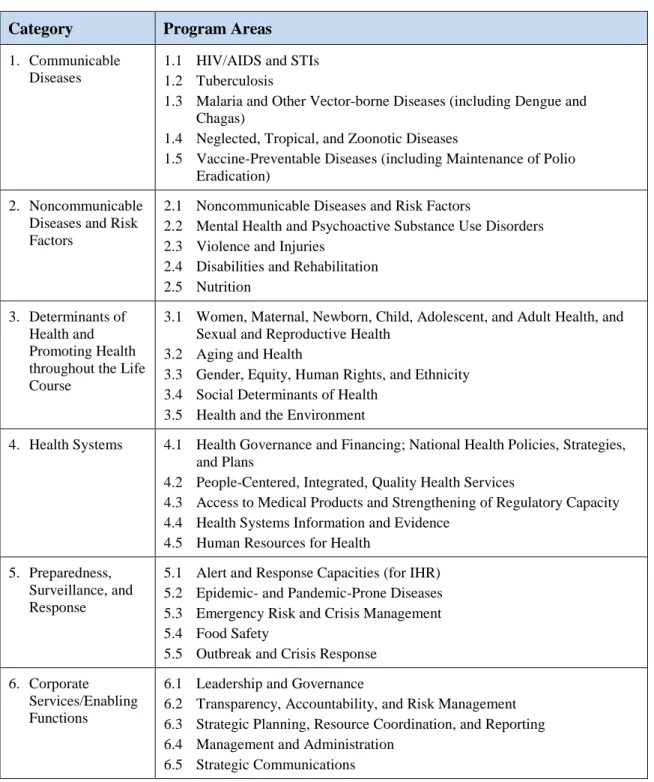
18. The Plan’s programmatic structure is organized in six categories and 30 program areas (five per category). The 30 program areas represent the priorities for the Organization during the six-year period covered by the Plan. These program areas were identified by Member States as part of the development of the WHO 12th GPW 2014-2019, with further consultation to reflect regional specificity. The six categories are as follows:
I. Communicable diseases: Reducing the burden of communicable diseases, including HIV/AIDS, sexually transmitted infections, and viral hepatitis; tuberculosis; malaria and other vector-borne diseases; neglected, tropical, and zoonotic diseases; and vaccine-preventable diseases.
II. Noncommunicable diseases and risk factors: Reducing the burden of noncommunicable diseases, including cardiovascular diseases, cancers, chronic lung diseases, diabetes, and mental health disorders, as well as disability, violence, and injuries, through health promotion and risk reduction, prevention, treatment, and monitoring of noncommunicable diseases and their risk factors.
III. Determinants of health and promoting health throughout the life course: Promoting good health at key stages of life, taking into account the need to address the social determinants of health (societal conditions in which people are born, grow, live, work, and age), and implementing approaches based on gender equality, ethnicity, equity, and human rights.
IV. Health systems: Strengthening health systems based on primary care; focusing health governance and financing toward progressive realization of universal
10
health coverage; organizing people-centered, integrated service delivery; promoting access to and rational use of health technologies; strengthening health information and research systems and the integration of evidence into health policies and health care; facilitating transfer of knowledge and technologies; and developing human resources for health.
V. Preparedness, surveillance, and response: Reducing mortality, morbidity, and societal disruption resulting from epidemics, disasters, conflicts, and environmental and food-related emergencies by focusing on risk reduction, preparedness, response, and recovery activities that build resilience and use a multisectoral approach to contribute to health security.
VI. Corporate services/enabling functions: Fostering and implementing the organizational leadership and corporate services that are required to maintain the integrity and efficient functioning of the Organization, enabling it to deliver effectively on its mandates.
19. For each category, the document sets forth the scope, the context by program area, key stakeholders’ analysis, strategies for technical cooperation, cross-cutting themes, strategic approaches in health, and assumptions and risks. This is followed by tables presenting outcomes and outcome indicators for each program area within the corresponding category. A list of baseline and target countries and territories, defined through national consultations, accompanies each outcome indicator. The baseline year is 2013 or the year for which the most recent data are available. The year is indicated for those indicators without 2013 data.
20. Recognizing that the Plan will be implemented in a context of limited resources, and responding to the recommendations of Member States to focus the work of the Organization on priorities where PAHO clearly adds value, the Plan establishes a prioritization framework to complement the PAHO Budget Policy.
21. PASB has set out nine overarching leadership priorities to guide its convening and brokering role in relation to the SP 2014-2019:
(a) Strengthen the health sector’s capacity to address the social determinants of health, utilizing the Health in All Policies strategy and promoting increased community participation and empowerment.
(b) Catalyze the progressive realization of universal health coverage, with emphasis on the eight key countries, including promotion and preventive interventions. (c) Increase intersectoral and multisectoral action for prevention and care of
noncommunicable diseases.
(d) Enhance the core capacities of countries to implement the International Health Regulations of 2005.
11
(e) Accelerate actions for the elimination of priority communicable diseases in the Region.
(f) Conclude work on the health-related Millennium Development Goals and influence the integration of health in the post-2015 agenda for sustainable development.
(g) Strengthen the health sector’s capacity to generate information and evidence to measure and demonstrate progress on healthy living and well-being.
(h) Leverage the knowledge and expertise in countries of the Region for the provision of technical cooperation, sharing successful experiences and lessons learned. (i) Increase accountability, transparency, efficiency, and effectiveness of the
Bureau’s operations.
22. The Plan outlines the different factors that will be required to ensure its efficient and effective implementation, including strategies for technical cooperation, roles and responsibilities of PASB and Member States, funding of the Plan (using a programmatic approach to mobilize flexible resources), and risk management.
23. The Plan also includes the Organization’s monitoring, assessment, and reporting framework for 2014-2019. PAHO’s performance will be assessed by measuring progress toward the attainment of the impact goals, outcomes, and outputs set out in the Strategic Plan 2014-2019, using 26 impact indicators and 79 outcome indicators and corresponding targets.
12
III.
Introduction
24. The Pan American Health Organization (PAHO) Strategic Plan (“the Plan”) is the Organization’s highest-level planning instrument, as approved by its Governing Bodies. The Plan sets out the Organization’s strategic direction, based on the collective priorities of its Member States, and specifies the results to be achieved during the planning period. The Plan also establishes the commitments made by the PAHO Member States and the Pan American Sanitary Bureau (PASB), thus serving as the basis for developing the biennial Program and Budgets to implement the Plan. The Plan is country- focused and a product of collaboration and consultation with Member States and incorporates contributions of staff at all levels of PASB.
25. The PAHO Strategic Plan 2014-2019 (SP 2014-2019) responds to both regional and global mandates. As a result, its strategic agenda represents a balance between PAHO’s responses to the regional priorities established in the Health Agenda for the Americas (HAA) 2008-2017, other regional mandates set by PAHO Member States, the collective national priorities identified in analyses of PAHO’s Country Cooperation Strategies (CCS), and programmatic alignment with the General Programme of Work (GPW) of the World Health Organization (WHO). The Plan is also consistent with the parameters of the main intergovernmental agreements for development operations of the United Nations (UN) system. The development and implementation of the Plan are guided by PAHO’s vision, mission, values, and core functions. The Plan lays down the framework for championing health, sustainable development, and equity, and for advancing toward the goal of universal health coverage. It incorporates the determinants of health as an all-encompassing theme that cuts across all its components.
26. The SP 2014-2019 will enable PAHO to continue building on the public health gains achieved thus far in the Region of the Americas (“the Region”). It will also enable PAHO to guide interventions that address both new and existing challenges affecting the Region. The Plan will continue to build on PAHO’s rich experiences and on lessons learned during previous planning periods. It will support the continuing effort to increase the accountability, transparency, and effectiveness of PAHO’s work, in line with its Results-based Management (RBM) framework and the new PAHO Budget Policy.
27. The SP 2014-2019 represents an important milestone in enhancing the alignment and synchronization with WHO planning, programming, and budgeting processes, given that—for the very first time—WHO’s GPW has been developed prior to PAHO’s Strategic Plan. The Plan also benefitted from input provided by the Mid-term Evaluation of the Health Agenda for the Americas that was conducted in 2012. Furthermore, the SP 2014-2019 is shaped by the vision of the new PASB Director, “Championing Health in the Americas: Sustainable Development and Equity”; by the push toward achieving the Millennium Development Goals (MDGs); and by the role of health in the post-2015 development agenda. Other key inputs include a review of regional public health strategies and plans of action. The Plan will also contribute to strengthening the United
13
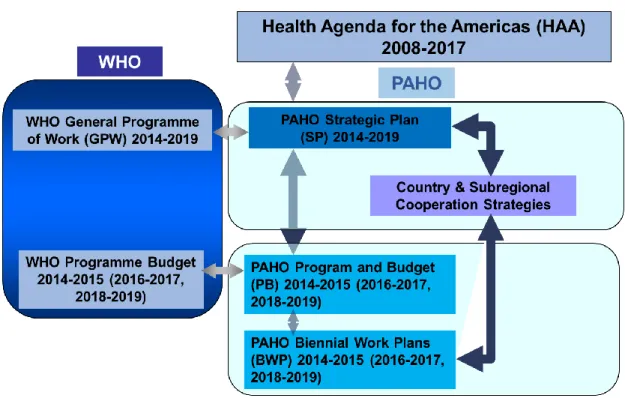
Nations development system in line with the Quadrennial comprehensive policy review of operational activities for development of the United Nations system (A/67/226). 28. Figure 1 shows the key elements of PAHO planning frameworks and their alignment with the Health Agenda for the Americas 2008-2017 as well as with WHO’s planning frameworks. The SP 2014-2019 will be implemented over the course of three consecutive programs and budgets (2014-2015, 2016-2017, and 2018-2019). Increased alignment and harmonization between the Strategic Plan and the CCSs is an important aspect of the formulation and implementation of the Plan. The Biennial Work Plans (BWPs) are operational plans developed by PASB entities to implement the Program and Budget, and by extension the PAHO Strategic Plan.
Figure 1. PAHO and WHO Planning Frameworks
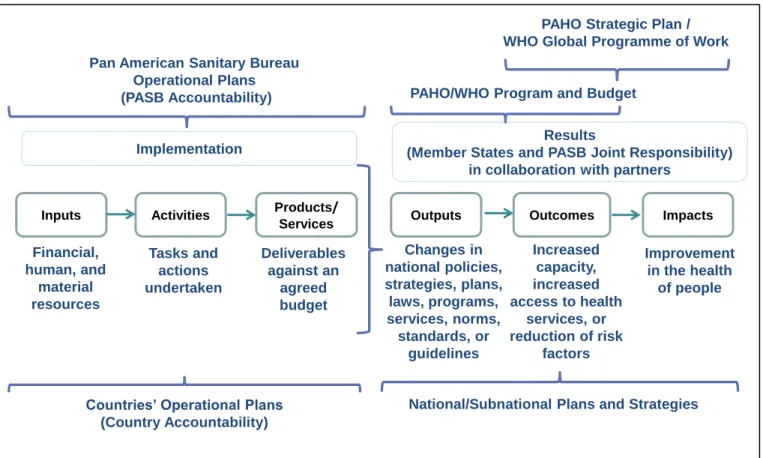
29. Results chain: The SP 2014-2019 adapts the WHO results chain, clearly identifying the relationship between planning instruments at different levels as well as the accountability and respective responsibilities of PAHO Member States and PASB. Because the Plan is a joint commitment of PAHO Member States and PASB, results will be derived from the implementation of individual countries’ plans and strategies (at national or subnational level), PASB operational plans, and the collective efforts of the Organization, as shown in Figure 2. Section VIII includes details on monitoring, reporting, accountability, and transparency for the Plan.
30. The Strategic Plan and the Program and Budget together cover the complete chain of results. The Strategic Plan contains impact and outcome results with their respective
14
indicators, while the PB outlines the outputs that Member States and PASB agree jointly to achieve in a particular biennium, as well as the biennial outcome indicator targets.
Figure 2. PAHO/WHO Results Chain
31. Impacts are sustainable changes in the health of populations, to which PAHO Member States, PASB, and other partners contribute. Such changes will be assessed through impact indicators that reflect a reduction in morbidity or mortality or improvements in well-being of the population (e.g., increases in people’s healthy life expectancy). Consequently, implementing the PAHO Strategic Plan will also contribute to both regional and global health and development.
32. Outcomes are collective or individual changes in the factors that affect the health of populations, to which the work of the Member States and PASB will contribute. These include, but are not limited to, increased capacity, increased service coverage or access to services, and/or reduction of health-related risks. Member States are responsible for achieving outcomes, in collaboration with PASB and other PAHO partners. The outcomes contribute to the Plan’s impact goals. Progress made toward achieving
Inputs Activities Outputs Outcomes Impacts
Results
(Member States and PASB Joint Responsibility) in collaboration with partners
Financial, human, and material resources Tasks and actions undertaken Deliverables against an agreed budget Increased capacity, increased access to health services, or reduction of risk factors Improvement in the health of people Pan American Sanitary Bureau
Operational Plans
(PASB Accountability) PAHO/WHO Program and Budget
PAHO Strategic Plan / WHO Global Programme of Work
Products/ Services Changes in national policies, strategies, plans, laws, programs, services, norms, standards, or guidelines
Countries’ Operational Plans (Country Accountability)
National/Subnational Plans and Strategies Implementation
15
outcomes will be assessed with corresponding indicators that measure changes at national or regional level.
33. Outputs are changes in national systems, services, and tools derived from the collaboration between PASB and PAHO Member States, for which they are jointly responsible. These outputs include, but are not limited to, changes in national policies, strategies, plans, laws, programs, services, norms, standards, and/or guidelines. The outputs will be defined in the respective PB and will be assessed with a defined set of output indicators that will measure PASB’s ability to influence such changes.
34. For Category 6 (Corporate Services/Enabling Functions), the outputs and outcomes will reflect institutional changes that support the efficient and effective delivery of technical cooperation by the Organization in the other five programmatic categories. 35. PASB operational plans include the following components:
(a) Products and services: deliverables against an agreed budget for which PASB is directly accountable during the biennium. Products and services are tangible and observable.
(b) Activities: actions that turn inputs into products or services.
(c) Inputs: resources (human, financial, material and other) that PASB will allocate to activities and that produce products or services.
36. The operational planning components are necessary in order to achieve the outputs and contribute to the outcomes and impacts. PASB operational planning components are not included in the Organization’s PB; they are included in the operational plans of the different PASB entities (offices, departments, or units) Member States participate directly in PASB operational planning process through the PAHO/WHO Representative Offices.
37. Risks and assumptions: The full results chain is predicated upon a number of risks and assumptions. For example, they include the premise that resources and country collaboration are in place to ensure that interventions contribute to and achieve the outputs and outcomes as outlined in the Plan. This will contribute to the realization of the impact results and by extension the strategic vision of the Plan.
38. Lessons learned: The PAHO SP 2014-2019 builds on experiences and lessons learned from previous plans, programs, budgets, and other high-level planning instruments and processes, including those of WHO. Particular emphasis has been placed on the lessons learned from the PAHO Strategic Plan 2008-2013, given that this was the first plan to have been implemented using the Results-based Management approach and the first to be aligned with WHO’s planning and budgeting processes. The application of these lessons will be essential for the successful implementation of the Plan and for continuing improvement in the efficient and effective management of the Organization. Key lessons learned are outlined below, and Annex I includes additional details.
16
(a) Increased ownership and involvement of Member States in the development and implementation of the Plan, particularly in setting priorities and targets, is critical for successful implementation of the Plan.
(b) Implementation of all aspects of the RBM framework is necessary and should be accompanied by simplification of processes, improvements in the quality of indicators, delegation of authority, and mechanisms for accountability.
(c) Enhanced programmatic alignment with WHO will facilitate better program management, optimization of resources, and improved monitoring and reporting processes.
(d) Greater coherence is needed between the Strategic Plan and the different planning frameworks, including the CCSs and regional plans and strategies.
(e) Allocation of resources should be improved, according to programmatic priorities and using objective prioritization criteria and methodology.
(f) A basic level of funding for country presence, as addressed in the new Budget Policy, should be ensured by the Organization in order to effectively deliver technical cooperation programs to Member States.
(g) National Voluntary Contributions should be included in the Program and Budget to provide a full appreciation of the contribution of the Member States to the work of the Organization.
(h) Efforts to increase efficiencies should be continued, including through cost containment measures, use of technology and innovation, and new modalities of technical cooperation.
17
IV.
The Context
39. Over the past decade the Region of the Americas has made sustained progress in improving the health of its population, but it still faces important gaps and emerging issues that countries are attempting to solve both individually and collectively. This analysis highlights the leading health gains, gaps, and trends in the Region as the basis for defining the strategic agenda and corresponding interventions outlined in the Strategic Plan 2014-2019. The analysis draws on recent information in Health in the Americas 2012, the Mid-term Evaluation of the Health Agenda for the Americas 2008-2017, a review of the Country Cooperation Strategies, and a review of reports on PAHO’s strategies and plans of action, among other sources.
Political, Economic, Social, and Environmental Context
40. The Region continues to move toward greater democracy, with notable progress in a number of areas. Countries are undertaking reviews of their constitutional frameworks and initiating more transparent electoral and participatory processes. There is a gradual trend from electoral democracy toward participatory democracy, with growing decentralization, greater community empowerment, redistribution of power, and new concepts of citizenship.
41. Countries of the Region are participating in various alliances, initiatives, and blocs based on geographic proximity and/or on shared commercial, cultural, or political interests. Countries are playing a more prominent role in global strategic blocs such as the Organisation for Economic Co-operation and Development (OECD), the Group of 20 (G20), the forum for Asia-Pacific Economic Cooperation (APEC), and the BRICS group (Brazil, Russia, India, China, and South Africa). Furthermore, new partnerships and forums have recently emerged within the Region, including the Bolivarian Alliance for the Peoples of Our America (known by its Spanish acronym, ALBA), the Union of South American Nations (UNASUR), and the Community of Latin American and Caribbean States, which coexist with older regional and subregional entities.
42. There is a shift in the communications environment in the Region, driven by the rapid expansion of Internet access, growing use of mobile communications, and increased access to online information and services. New and emerging methods of communication emphasize interactive platforms, two-way communication, and the sharing of content, news, and feedback. Increasing time is spent on social networking sites, especially among women, and social media are redefining the way we think about communication in the area of health and health risks. While these trends offer new opportunities to communicate, learn, and exchange information, they are also influencing changes in culture, lifestyles, behavior, and consumption patterns, with direct impact on people’s health.
43. Since the 1990s, Latin American and Caribbean countries have made structural changes that include adjustments to social security, trade, tax, and finance programs. In
18
some cases these have included massive privatizations. These changes have not always been coupled with public investments in health, education, infrastructure, and environmental protection. This highlights the need for structural changes that increase support to and harmonization of these vital sectors. Although still controversial, evidence suggests that public investments in the health and human capital of poor people have contributed substantially to reducing poverty in many Latin American countries.
44. Countries of the Region are becoming increasingly integrated into the global economy, a process that is considered to hold potential benefits for Latin America. Although Latin American countries did not escape the effects of the global economic and financial recession, they weathered the crisis more successfully than other regions of the world, showing faster signs of recovery. Between 2008 and 2010, most of the Region’s countries implemented anticyclical economic policies to counteract and mitigate the cycle. Such measures protected, and in some cases even expanded, public social spending. Of particular note are conditional cash transfer programs, which by 2010 amounted to 3% of total gross domestic product (GDP) in Latin American countries. 45. Due to the unfavorable international context, economic growth in Latin America and the Caribbean slowed during 2012, although the positive trend continues. Regional GDP grew by an estimated 3.1% in 2012, about 1 percentage point lower than in the preceding year. The slowdown affected most of the South American countries, whose GDP growth was estimated at 2.7% in 2012 (1.8 percentage points less than the 4.5% registered in 2011). By contrast, the countries of Central America registered a growth rate similar to the preceding year, while the Caribbean showed slightly higher growth. This lower performance of the largest economies in South America decisively influenced the regional trend. Despite the slowdown of GDP growth in the Region, most of the countries maintained a positive growth rate, which is mainly explained by the dynamics of domestic demand and, to some extent, by the relatively favorable performance of investments and exports in some countries.
Social Determinants of Health
46. Income, employment situation, education, and housing are among the most relevant social determinants of health, with influence on other intermediate and proximal determinants of health.
47. Human development indicators are improving in the Region. Between 2000 and 2012, the Human Development Index (HDI) value increased from 0.683 to 0.741 in Latin America, 0.632 to 0.687 in the Caribbean, and 0.906 to 0.935 in North America. Latin America has reached what the United Nations Development Programme (UNDP) considers to be a high level of human development (0.711). However, differences still exist within and between countries, as shown by the lower HDI figures for the Caribbean countries.
19
48. Despite these encouraging indicators, poverty and inequities continue to be challenges for the Region. Some recent evidence qualifies Latin America and the Caribbean (LAC) as the most inequitable region in the world, with 29% of the population below the poverty line and the poorest 40% of the population receiving less than 15% of total income. On the other hand, evidence points toward an overall reduction in income inequality. During the first decade of this century, income inequality declined in most Latin American countries.
49. Despite the level of macroeconomic stabilization, there is recognition of the need to intensify reforms in certain critical areas—fiscal, labor, and social protection, among others.
50. The increase in employment income and the effect of redistributive income policies implemented through programs that provide progressive and sustained conditional cash transfers to the most vulnerable groups have had a positive impact on poverty and inequality levels in the Region.
51. The overall unemployment rate decreased for women and men in most countries of LAC in 2012. However, gender gaps persist in employment, as unemployment among women continues to be 1.4 times the male unemployment rate. By the third quarter of 2012, the regional unemployment rate was 7.7% for women and 5.6% for men. A decline was also observed in the unemployment rate for young people, which moved from 15.2% to 14.3%. Despite this progress, there are still concerns about the exclusion of young people from the labor market, as youth unemployment is triple that of the adult population.
52. Payroll employment continued to grow more vigorously than self-employment in some of the countries, which is an indication of labor market modernization and the growth of the formal sector in these countries. Nonetheless, informal employment remains important in many countries. Consideration has to be given to the quality of employment and workplace conditions in both the formal and informal sectors.
53. Education and health are interrelated cornerstones of development. A boost in educational levels is associated with improvements in population health and increases in productivity, social mobility, poverty reduction, and citizenship building. In LAC, significant advances have been made toward achieving universal primary education. By 2010 such coverage reached 95%, with some countries having up to 99%. The school lag—measured by the number of girls and boys who drop out of primary school or do not finish their last year in the period assigned—is very important for the health sector. Adolescent pregnancy is most concentrated among girls who have dropped out of school, and the highest child mortality and morbidity rates are seen in children born to adolescent mothers. Various studies find that completing secondary education constitutes the bare minimum of schooling that a person needs to improve his or her living conditions.
20
54. Gender equity and ethnic equity are increasingly a part of the political agendas of many of the Region’s countries. There has been greater empowerment and recognition of the rights and contributions of women, of indigenous and Afro-descendant populations, and of groups of diverse sexual orientation, including lesbians, gays, and transgender persons. In particular, more women have assumed leadership positions: in 2011, five of the Region’s countries were governed by women. However, the number of women who hold elected positions at all levels is still insufficient, as only about 20% of such posts in LAC were filled by women in 2010.
55. In LAC, women account for the majority of caregivers (90%) to the elderly. They shoulder a physical and economic burden that is not remunerated or acknowledged. Available evidence indicates that with the aging of the population, the epidemic increase in chronic diseases and disability, and the limited institutional response, women’s unremunerated workload in providing elder care will continue to rise.
56. Poverty reduction programs have promoted women’s greater control over their resources, including access to health care and education. In the Region of the Americas, women as a group have surpassed men in terms of schooling. However, these gains are not fully reflected in economic well-being, especially in terms of wages, where women continue to lag behind men.
57. Some 1,100 indigenous groups live in the Region. Indigenous people represent 10% of the total population in LAC, 4% in Canada, and 1.6% in the United States. Regardless of their country of residence, indigenous and other ethnic groups, along with Afro-descendants, suffer varying degrees of social exclusion and vulnerability. According to the World Bank, some of these populations receive only 46% to 60% of what nonindigenous populations earn. Given the current levels of poverty and social exclusion among discriminated ethnic groups, it can be expected that negative impacts on health will persist across generations.
Demographic Trends
58. Between 2005 and 2012, the Region’s total population rose from 886 million to 954 million inhabitants. However, a relative deceleration in demographic expansion is underway. From 1.3% in 1995-2000, average annual population growth at the regional level dropped to 1% in 2005-2012.
59. Between 2005 and 2012, the Region’s total mortality rate declined, from 6.9 to 5.9 per 1,000 population. The total fertility rate for the same period dropped from 2.3 to 2.1 children per woman. Demographic changes show different evolutionary gradients from country to country.
60. Between 2005 and 2012, life expectancy in the Americas for both sexes is estimated to have risen from 72.2 to 76.4 years—a four-year increase in one decade—
21
with an additional increase of 6.5 years projected for 2050. However, significant differences between countries persist.
61. In 2012, more than 100 million people over 60 years of age lived in the Region. By 2020 this figure is expected to double, and more than half of these people will live in Latin America and the Caribbean. Consequently, total dependency ratios are increasing. In 2010, the estimated total dependency ratio in LAC was 53.3, while in North America it was 49.0. By 2050, these figures are expected to rise to 57.0 and 67.1, respectively. In 2010, the highest proportion of dependency in the Region occurred among lower-income populations—which, in a pessimistic scenario, could help perpetuate the cycle of poverty. 62. Latin American countries without exception have an advantageous demographic situation for economic development, the so-called demographic bonus. The first phase of this process is characterized by a ratio of more than two dependents for every three economically active persons. In the second phase, regarded as the most favorable, the dependency ratio reaches a low level of fewer than two dependents per three active persons and remains steady. In the third phase the ratio is still favorable, with fewer than two dependents per three active persons, but it is changing because of the increasing number of old people. Overall, Latin America is in the second phase. This phase started by the beginning of the 21st century and is expected to last until the end of the 2011-2020 decade, when the third phase is expected to start and extend to the early 2040s.
Health and Environment
63. In tandem with population growth, urbanization is having a direct influence on the environment and its sustainability. Almost 80 percent of the LAC population lives in urban areas, but there are considerable variations within the Region, across subregions and countries. Countries and territories with highly urbanized populations (over 77%) include Anguilla, Argentina, Bermuda, Brazil, Canada, Cayman Islands, Chile, Guadeloupe, Mexico, Peru, Puerto Rico, United States, Uruguay, U.S. Virgin Islands, and Venezuela. Those with low urbanization (below 50%) include Antigua and Barbuda, Aruba, Barbados, British Virgin Islands, Grenada, Guatemala, Guyana, Montserrat, Saint Kitts and Nevis, Saint Lucia, Saint Vincent and the Grenadines, and Trinidad and Tobago.
64. The Region of the Americas has already reached the Millennium Development Goal for access to improved drinking water sources and basic sanitation and is on track to reach the sanitation target for 2015. However, marked inequalities persist within and between countries. While addressing inequalities in access to drinking water and basic sanitation, the Region also needs to tackle other environmental issues with a direct impact on health:
(a) Solid waste management remains a concern. Hazardous waste without prior treatment is frequently disposed of alongside common waste in many LAC countries.
22
(b) Regarding ambient and indoor air pollution, it is estimated that more than 100 million people in the Region are exposed to concentrations of environmental contaminants exceeding the recommended limits in WHO air quality guidelines. Indoor air pollution from the burning of solid fuels is the environmental risk with the greatest disease burden in LAC.
(c) Pesticide contamination is a prevalent problem in the Region. It has been most extensively documented in Central America, where 33 million kilos of active ingredient were imported each year between 1977 and 2006. Seventy-seven percent of these are persistent organic pollutants that should be eliminated, according to the Stockholm Convention.
(d) Control and management of chemical risks is particularly related to the growth of mining activity. In Latin America, mining increased from 4.3% of regional GDP in 2001 to 6.1% in 2011. Although the expansion of mining is positive from an economic point of view, it has direct and indirect impacts on health and the environment that can result in higher costs to public health. This means that impact assessments are essential.
65. Vulnerability to natural disasters and the effects of climate change is a global problem. Of the 63 cities in LAC with one million or more inhabitants, 38 are in areas at greatest risk for at least one type of natural disaster. Many populations in situations of socioeconomic vulnerability are settled on lands that are potentially affected by climate change. Higher rainfall caused by extreme weather phenomena connected to climate change leads to increased deposits of chemical contaminants such as nutrients and fertilizers in coastal zones, supporting the proliferation of toxic algal blooms. These changes have implications for food and nutrition security and safety and for safe drinking water, as well as for the prevalence of vector-borne diseases.
Regional Health
66. Given the 2015 target date for the MDGs, 84% of the time for achieving these goals has already passed. The Region has made progress but challenges remain, mostly related to inequities in health within and between countries.
(a) Infant mortality continues to decline in the Region. In Latin America and the Caribbean, the Infant Mortality Rate (IMR) fell from 42 per 1,000 live births in 1990 to 16 per 1,000 in 2011, a 62% reduction. Even lower IMRs are observed in Barbados, Canada, Chile, Costa Rica, Cuba, the United States, and Uruguay (5 to 12 per 1,000 live births), while the highest rates are in Bolivia and Haiti (40 to 45 per 1,000 live births).
(b) Maternal mortality has declined in the Region but remains too high. Many countries will fail to meet the MDG target by 2015. The regional Maternal Mortality Ratio (MMR) declined from 140 per 100,000 live births in 1990 to 80 in 2010, a 41% reduction. However, the trends differ between countries. The leading causes of maternal mortality remain associated with quality of care.
23
(c) Estimates of new HIV infections in the countries of the Region reflect a reduction in morbidity and mortality. In 2011, the Region accounted for nearly 6% of all new HIV infections worldwide. Certain populations face higher deleterious impact, including men who have sex with men (MSM), sex workers, and mobile populations.
(d) Between 2000 and 2011, the Region reported a 58% reduction in morbidity and a 70% reduction in mortality from malaria. The majority of countries with endemic malaria have successfully reduced the disease burden, but challenges remain. (e) Member States have made progress in tuberculosis (TB) control. In 2011
the detection rate was 81% of the cases estimated by WHO for the Region of the Americas. Despite this progress, multidrug-resistant tuberculosis and HIV-associated tuberculosis pose serious challenges that must be addressed. TB control is hindered by the persistence of social inequities and vulnerabilities, notably poverty, migration, and limited access to health services, especially among vulnerable populations such as drug users, homeless, mentally ill, and ethnic minorities.
(f) Regarding sustainable access to safe water and basic sanitation, access to improved water sources was 96% in the Region in 2010 (99% in urban areas and 86% in rural areas). Coverage of improved basic sanitation was at 88% (91% in urban areas and 74% in rural areas). However, concerns about water quality continue; as of 2010, 36 million people in the Region did not have access to drinking water fit for human consumption. Approximately 120 million lacked improved wastewater and sewage disposal services, and nearly 25 million people in LAC defecate outdoors. Low safe water and sanitation coverage tends to be observed among people in lower income quintiles. Water, sanitation, and hygiene, particularly for the most vulnerable populations, needs ongoing support.
67. The Region faces an important burden of noncommunicable diseases (NCDs), with an estimated 250 million people suffering from at least one of them. In 2010, more than 75% of health care costs were due to chronic conditions.
(a) Cardiovascular diseases (CVDs) are the leading cause of death from NCDs. Premature deaths from CVDs are more frequent among men than women and occur at the age of greatest productivity, causing severe economic and social damage.
(b) Malignant neoplasms are the second leading cause of death in the countries of the Americas. Cancers of the lung, stomach, colon, and breast are the leading contributors to cancer mortality. Incidence of cancers, particularly cervical and prostate cancers, is highest in low- and middle-income countries. The incidence of malignant neoplasms depends on complex interrelationships among biological, genetic, and lifestyle factors.
(c) Diabetes mellitus causes around 242,000 deaths annually in the Region. Studies estimate that 22,000 of these deaths (8%) could be avoided through early
24
detection and treatment, especially in people younger than 50 years of age. Forecasts indicate that the number of people with diabetes in the Americas will increase from 62.8 million in 2011 to over 91 million in 2030.
(d) Chronic kidney disease (CKD), caused mainly by complications of diabetes and hypertension, has increased in the Region. From 1990 to 2010, disability-adjusted life years (DALYs) due to CKD increased 20% in the United States and 58% in LAC. Many Central American countries have recognized the need to better understand and control a severe type of CKD that is unrelated to diabetes and hypertension. This severe disease primarily affects young men working in the agricultural sector, a situation that is having a dramatic social and economic impact on families, communities, and health services.
68. Shared risk factors for NCDs are tobacco consumption, harmful use of alcohol, unhealthy diet, and physical inactivity. Of particular concern are the rapid and deleterious changes taking place in food consumption and eating habits across the Region. These shifts affect broad sectors of the population, especially low-income and less-educated people. Serious efforts to address the risk factors must undergird the effort to halt NCDs. 69. Violence, including gender-based violence, is a growing problem and a major public health challenge in the Region. Between 1999 and 2009, it is estimated that over 5.5 million people died from external causes (those distinct from natural causes and recognized as avoidable, including homicides, accidents, and suicides). Three and a half million of these deaths (64%), an average of 319,000 per year, occurred among youth and adults 10-49 years of age. Of total deaths from external causes, 84% were among males, five times more than among women. The most frequent external causes were homicides (33%) and land transport accidents (26%).
The Health System Response
70. The Region’s health systems are characterized by their segmentation, manifested by a variety of financing and affiliation mechanisms. The supply of health services is also fragmented, with many different institutions, facilities, or units that are not integrated into the health care network. Both of these characteristics increase the inequity in access and reduce efficiency in health care delivery and service management.
71. The underlying reasons for this segmentation and fragmentation are complex. They frequently reflect systemic factors of a social, political, and economic nature that have been accumulating over time. In this context, the health services themselves become an important health determinant. Health services have the potential to help improve equity insofar as they advance universal coverage financed through progressive public resources that reduce out-of-pocket expenditures to a minimum and eliminate discriminatory practices and differential quality of care.
72. In recent years, the Region’s countries have progressed toward the universalization of health systems through policy reforms and changes that emphasize
25
the right to health and the reaffirmation of primary health care (PHC). The importance of effectively implementing the values and principles of the PHC strategy, particularly through comprehensive and multisectoral approaches to address the determinants of health, is widely recognized. Nonetheless, several challenges persist, particularly with respect to how to advance toward comprehensive service coverage, reduce copayments and other out-of-pocket expenses, and guarantee similar benefits to all. Other important challenges include improvements to the quality of care and tailoring the response capacity of the services to health care demand.
73. The Region has reaffirmed the primary health care strategy and the goal of Health for All, and several countries of the Region are making substantive efforts to incorporate PHC into their renewed health care models. In some countries, however, PHC practice has been limited to offering first-level care, frequently to low-income groups, with only a few health promotion and preventive activities. Such an approach compromises the response capacity during health crises.
74. The most recent period has been characterized by a sustained dynamism in developing human resources policies, strategies, and plans in tune with global, regional, and national priorities. There is broad consensus in the Region on the steering role of the health authority for strengthening human resources. This implies seeking strategic coherence in the organization of health systems and services while building a close relationship with training institutions. This approach has brought about an effective expansion of coverage through multidisciplinary family and community health teams, which are responsible for a given population and territory in rural, urban, outlying, and remote areas. Although the countries of the Region have made progress in the area of human resources for health (HRH), they have not yet achieved a satisfactory composition or distribution of their health workforce.
75. Throughout the history of LAC, expanding health service coverage has been the main objective for several countries. Evidence indicates, however, that quality of care is also pivotal for maintaining and improving individual and population health.
76. From 2005 to 2010, total health expenditure in LAC as a percentage of GDP rose from 6.8% to 7.3%. During the same period, average public health expenditure in LAC increased from 3.3% to 4.1% of GDP. Expenditure was significantly higher in Canada (8.4% of GDP) and the United States (8.0% of GDP) in 2010.
77. In 2010, total per capita health expenditure ranged from US$ 901 in Bolivia to $2,711 in the Bahamas, $5,499 in Canada, and $8,463 in the United States. Although per capita expenditure is relevant, no linear relationship exists between the amount spent and health outcomes. Other variables also carry great weight, among them social protection policies (or lack thereof), health system management and organization, the scope of
26
public health programs and health promotion activities, and regulation of the health market.
78. Out-of-pocket health expenditures in LAC dropped from 3.5% to 3.2% of GDP from 2005 to 2010. Direct out-of-pocket expenditures have an impoverishing effect on families. Experience indicates that providing universal coverage and pooling funds constitute the best options for protecting families’ finances when they face catastrophic medical expenses.
79. Although LAC countries have moved forward in formulating and implementing pharmaceutical policies over the past five years, only a few have updated them. In 2008, estimates show that in LAC, average annual per capita out-of-pocket expenditures for medicines amounted to $97, ranging from $7.50 in Bolivia to over $160 in Argentina and Brazil. The use of generic drugs in the Region has not advanced as much as desirable, partly due to limited incentives and inadequate regulatory frameworks.
80. The countries of the Americas differ widely in terms of the coverage and quality of their health information systems. A 2008 study revealed that 7 of 26 countries have improved their vital statistics registries, exceeding 85% coverage at the national level. Seven other countries only record up to 50% of these events, or one of every two births or deaths. The low number of births in health facilities in some countries and the limitations of statistical offices make it difficult for countries to improve the recording of vital statistics. In terms of data quality, a recent regional assessment showed that only 19 countries studied provided good data. Regarding vital statistics, a recent analysis in the Region shows that there is a growing awareness of the importance of registering all vital events and that coverage of births tends to rise when (a) the country accepts the right to identity as a human right, and (b) other sectors of society such as education and health require registration of these vital events. Regarding death registry, the monitoring of the commitments made by the countries to achieve the MDGs, especially in relation to infant and maternal mortality, has motivated countries to increase coverage.
Status of the PAHO Strategic Plan 2008-2013
81. As previously noted, the SP 2014-2019 builds upon progress toward the achievement of the objectives and results set forth in the SP 2008-2013. The final assessment of the SP 2008-2013 revealed that the Organization maintained a consistent implementation rate throughout the three biennia covered by the Plan. By 2013, seven of the 16 Strategic Objectives (SOs) were fully achieved (with 100% of targets met or exceeded) and nine partially achieved. Of the nine partially achieved, eight reached over 75% of their indicator targets; and only one (SO1–communicable diseases) attained less than 75% of its targets. Out of 90 Region-wide Expected Results (RERs), 75 (83%) were fully achieved and 15 were partially achieved. Of the 256 RER indicator targets for 2013, a total of 233 (91%) were reached. Not only were they reached, but 127 of them (54%) were exceeded.
27
82. The 15 RERs partially achieved were as follows:
1.1 Equitable access to vaccines: challenges with achieving 95% coverage at subnational level.
1.3 Prevention, control, and elimination of neglected diseases and communicable diseases: targets related to leprosy, elimination of human rabies transmitted by dogs, surveillance of preparedness for emerging zoonotic diseases, and domiciliary infestation index not achieved.
1.6 International Health Regulations (IHR) and epidemic alert and response: 6 countries met the requirements and 29 requested extensions.
2.1 Prevention, treatment, and care of HIV/AIDS and TB: ART (antiretroviral therapies) coverage for HIV not achieved; challenges with TB treatment success and low antenatal care and surveillance systems for congenital syphilis.
3.4 Interventions for chronic noncommunicable conditions: target for cost analysis studies on violence not achieved.
6.2 Surveillance of major risk factors: 27 out of 30 countries developed national surveillance systems using the Global School Health Survey to produce routine reports on health risk factors that affect youth.
6.3 Prevention and reduction of tobacco use: 19 out of 23 target countries implemented regulations on the packaging of tobacco products and updated at least one component of their tobacco surveillance system; 5 more countries (out of 35) need to achieve the target.
6.5 Prevention and reduction of unhealthy diets and physical inactivity: there were challenges in advancing national policies to promote healthy diets and physical activity (only 9 out of 20 countries achieved the indicator).
9.4 Nutrition plans and programs: 21 out of 25 target countries reported nutritional interventions in their programs for responding to HIV/AIDS and other epidemics. 10.1 Intercultural health policies: only 5 countries reported progress with integrating
intercultural considerations into policies and PHC-based health systems.
11.2 Health information systems: 20 out of 27 target countries implemented the PAHO Core Health Data Initiative.
11.3 Access, dissemination, and utilization of health information, knowledge, and scientific evidence for decision making: target number of countries monitoring the health-related MDGs was not achieved.
11.5 PAHO as the broker for public health information and knowledge: The regional information platform is installed but pending review and adjustment for Phase II implementation/corporate coordination and roll out.
12.1 Access to medical products and health technologies: unrealistic target (17) set for number of countries to achieve 100% voluntary nonremunerated blood donations; 12 out of 17 achieved.
28
13.2 Basic indicators and information system for HRH: the expected number of countries participating in the HRH Observatories Network was not achieved (29 out of 36 achieved).