Embedding compassionate
care in local NHS practice:
developing a conceptual model
through realistic evaluation
Juliet MacArthur
Chief Nurse Research and Development, NHS Lothian; Lecturer in Clinical Academic Research, University of Edinburgh, UK
Heather Wilkinson
Professor of Dementia Practice and Partnership, Edinburgh Centre for Research on the Experience of Dementia and Centre for Research on Families and Relationships, University of Edinburgh, UK
Morag A Gray
Emeritus Professor, Faculty of Health, Life and Social Sciences; Edinburgh Napier University, UK; University of Liverpool, UK
Gerri Matthews-Smith
Senior Lecturer, The Business School, Edinburgh Napier University, UK
Abstract
The aim of this study was to critically analyse the impact of the ‘Leadership in Compassionate Care Programme’ and offer a conceptual model of factors that can embed compassionate care in contemporary health care environments. This three-year initiative (2008–2011) was designed to embed compassionate care in both practice and pre-registration education. Using a realistic evaluation approach this longitudinal qualitative study involved data collection in eight participating wards. The ‘level of adoption’ of the Programme varied across the wards, which pointed to key context and mechanisms that were influential in embedding compassionate care. Contextual factors that promoted adoption of the Programme were stability, support and leadership. The most important mechanisms were appreciative inquiry coupled with skilled facilitation. Powerful practice development techniques focused on articulating and demonstrating values; giving patients, relatives and staff a voice to express their experiences and emotions; and instituting effective feedback mechanisms. In the high adopting wards the main outcomes included personalisation of patient care, an increased sense of involvement for relatives and ‘caring conversations’ becoming an accepted part of working practice. Embedding and sustaining
Corresponding author:
Juliet MacArthur, Western General Hospital, Crewe Road, Edinburgh EH4 2XU, UK. Email: [email protected]
!The Author(s) 2016 Reprints and permissions: sagepub.co.uk/journalsPermissions.nav DOI: 10.1177/1744987116678901 journals.sagepub.com/home/jrn
compassionate care demands strategic vision and investment in a local infrastructure that supports relationship-centred care, practice development and effective leadership at all levels.
Keywords
appreciative inquiry, compassionate care, in-patient, practice development, realistic evaluation
Introduction
Concern about the delivery of compassionate care in the United Kingdom (UK) National Health Service (NHS) has become a focus of debate (Holmes, 2013; Patients Association, 2011) and internationally there has been similar alarm about patients’ care experiences in hospitals and care homes (Clarfield et al., 2001; Lown et al., 2011; Youngson, 2008). The failures in care highlighted in the Francis Report (2013) raised major questions about leadership and organisational culture and how these impact on the quality of care.
The aims of this paper are to present a critical analysis of the ‘Leadership in Compassionate Care Programme’ (LCC Programme) and offer a conceptual model of factors that can enhance organisational capacity to develop and sustain a culture of compassionate care. The LCC Programme was a 3-year initiative developed in partnership between a health board in Scotland and one higher education institution, and was designed to embed compassionate care in practice and pre-registration education. Adopting Pawson and Tilley’s (1997) realistic evaluation approach, this longitudinal qualitative study analysed the experiences and outcomes of eight wards participating in the Programme during 2008 to 2011. Despite its local focus, the study has implications for wider policy and practice through recognition of the reality of delivering of compassionate care in contemporary health care environments.
Background
At the inception of the LCC Programme in 2007 the term ‘compassion’ was not strongly linked to patient experience, although ‘dignity’ was a key concept for the expression of concern about the care of older people (Agnew, 2007; Reed and McCormack, 2007) and the focus of a number of initiatives (Department of Health, 2009; Healthcare Commission, 2007). Related work underway in the UK included the development of the ‘Person-Centred Nursing Framework’ (McCormack and McCance, 2010), the implementation of the ‘Point of Care Programme’ (Firth-Cozens and Cornwell, 2009) and Patterson et al.’s (2010) longitudinal study examining the cultural context of care in acute hospital settings. Compassion was later identified as a key component of NHS quality strategy (Scottish Government, 2010) and a ‘core NHS value’ (Department of Health, 2009). Furthermore, in the UK it was at the centre of national nursing strategy (Department of Health, 2012) and a commission on the future of nurse education (Royal College of Nursing, 2012).
Youngson (2014) defines compassion as ‘the humane quality of understanding suffering in others and wanting to do something about it’. A central characteristic is that of being an active emotion demanding a response, rather than simply an awareness of the plight of
another. Other definitions emphasise the importance of relationships, values and how people perceive their care (Department of Health, 2012). Recent research has sought to define compassionate care from the perspectives of patients, staff and students (Bramley and Matiti, 2014; Curtis et al., 2012; Van der Cingel, 2011), develop a conceptual model for compassionate relationship-centred care (Dewar and Nolan, 2013) and identify educational approaches to enhance compassionate interactions with patients (Adamson and Dewar, 2015; Betcher, 2010; Sheild et al., 2011).
At an international level hospital work environments have been linked to quality of care (Aiken et al., 2012). In the UK Patterson et al. (2010) recognised the pressures within acute hospitals highlighting tension between ‘pace’ and ‘complexity’ (Williams et al., 2009), which they found made ‘often conflicting and paradoxical demands’ on those delivering care (Patterson et al., 2010: 48). Firth-Cozens and Cornwell (2009) similarly argued that the emphasis on targets as opposed to the totality of patient experience had the potential to exert a profoundly negative effect on the culture of care and staff morale. In an international meta-ethnographic study Bridges et al. (2013) found little understanding of the conditions in which high quality, compassionate in-patient care is delivered within acute care settings. There has been little research addressing what is required to embed and sustain a culture of compassionate care within the reality of modern health care environments.
Leadership in Compassionate Care (LCC) Programme
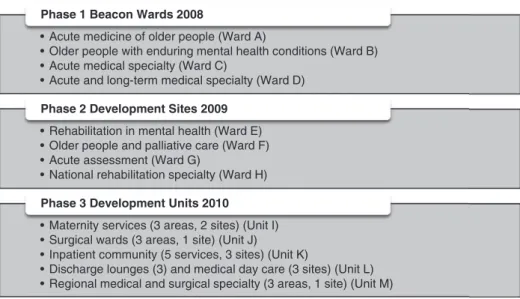
The LCC Programme, which was funded by a benefactor, aimed ‘to embed compassionate care as an integral aspect of all nursing practice and education’ (Edinburgh Napier University and NHS Lothian, 2012: 14) and included establishing ‘Beacon Wards’ to showcase excellence in compassionate care. It was conducted as a 3-year research study underpinned by the theoretical principles of action research (Meyer, 2000), relationship-centred care (Nolan et al., 2006) and appreciative inquiry (Cooperrider et al., 2008). The Programme involved engagement with a wide range of participants, including patients, relatives, NHS staff, lecturers and student nurses (Dewar et al., 2011b; Edinburgh Napier University and NHS Lothian, 2012; Smith et al., 2010). A total of 33 clinical settings were involved (Figure 1), with direct participation of 106 individuals.
The study reported in this paper, which was a separate entity to the LCC Programme action research study, aimed to critically analyse the impact of the complex interventions undertaken by the LCC team in order to understand factors that had the potential to embed and sustain compassionate care. The research focused primarily on the Beacon Wards (A–D) and Development Sites (E–H). The purpose and selection methods of these wards are outlined in Box 1.
Four senior nurses and a lead nurse delivered the LCC Programme working alongside staff in each ward/unit for 7–9 months conducting the action research and facilitating innovative practice development approaches, including:
. emotional touchpoints (Dewar et al., 2011a) – eliciting stories based on an individual’s emotional experience of a number of ‘touchpoints’;
. beliefs and values clarification (Edinburgh Napier University and NHS Lothian, 2012: 38) – facilitation of staff groups to develop a common shared purpose/vision and understand how these influence practice and culture;
. photo elicitation (Dewar, 2012) – using photographs to prompt discussions about the meaning of compassionate care, with statements subsequently being displayed as ‘positive care practices’.
Research questions
The research questions addressed in this paper are:
(1) What are the views, experiences and perceptions of participating stakeholders of the impact of the LCC Programme?
(2) How are the mechanisms used in the LCC Programme seen to influence the outcomes in different clinical settings?
• Acute medicine of older people (Ward A)
• Older people with enduring mental health conditions (Ward B) • Acute medical specialty (Ward C)
• Acute and long-term medical specialty (Ward D)
Phase 1 Beacon Wards 2008
• Rehabilitation in mental health (Ward E) • Older people and palliative care (Ward F) • Acute assessment (Ward G)
• National rehabilitation specialty (Ward H)
Phase 2 Development Sites 2009
• Maternity services (3 areas, 2 sites) (Unit I) • Surgical wards (3 areas, 1 site) (Unit J)
• Inpatient community (5 services, 3 sites) (Unit K)
• Discharge lounges (3) and medical day care (3 sites) (Unit L) • Regional medical and surgical specialty (3 areas, 1 site) (Unit M)
Phase 3 Development Units 2010
Figure 1. Phases and clinical settings involved in the Leadership in Compassionate Care (LCC) Programme.
Box 1. Purpose and selection methods of Beacon Wards and Development Sites. Beacon Wards
Expected to demonstrate excellence in compassionate caring, with a view to sharing and spreading effective practice to other areas. Wards selected through evidence and demonstration of i) caring environment, ii) collaborative and effective team working and iii) staff development.
Development Sites
Purpose was test methods and processes understood from the Beacon phase and to develop relationship-centred, compassionate care practice. Wards required to demonstrate a commitment to support change and develop practice at senior level and within the multidisciplinary team.
(3) What are the early signs of sustainability of the LCC Programme?
(4) What factors can be drawn into a conceptual model for enhancing organisational capacity to develop and sustain a culture of compassionate care?
Methods
Methodology
The study was based on realistic evaluation (Pawson and Tilley, 1997), a theory-driven research approach that places emphasis on understanding the context within which an intervention takes place. Rather than seeking to answer whether a programme has ‘worked’ (or not), realistic evaluation is designed to provide detailed answers to the question of ‘why a programme works, for whom and in what circumstances’. The theoretical underpinning of realistic evaluation is founded on the link between the context (C) within which the programme is being delivered and the ideas and opportunities known as mechanisms (M) that the programme brings, which in turn lead to the programme outcomes (O). Pawson and Tilley (1997) describe these as CMO configurations.
Consideration of the insider–outsider perspective
An important feature of the study was that of the investigator (JM) being an insider– outsider researcher (Corbin-Dwyer and Buckle, 2009): being an insider to the organisation through employment in a lead research role, having a close working relationship to the LCC Team but with no specific role in Programme delivery. This gave the opportunity to engage with a wide range of stakeholders while possessing an in-depth knowledge of the organisational context. Remaining an outsider to the Programme, along with a systematic approach to the inquiry and regular supervision, maintained an independent perspective on impact.
Research design
A qualitative, longitudinal research design was adopted, with data collection undertaken in three phases with a time lag of approximately 6 months to the implementation of the LCC Programme. Table 1 outlines data collection methods and outputs, all of which were obtained in the field, giving an opportunity to observe the clinical environments and review tangible signs of the implementation of the LCC Programme.
The combination of data collection methods were focused on building up a picture of the context of each ward, the mechanisms utilised by the LCC team and the outcomes for patients, relatives, ward staff and the charge nurse. Patients and relatives were not included as direct research participants in this study since within the design the key ‘subjects’ were deemed to be the nursing staff. Insight into the impact and outcomes of the LCC Programme for patients and families were obtained through specific questioning of staff and identification of outcomes from the other data collection sources. The longitudinal nature of the study allowed examination of the CMO configurations prospectively with the possibility of drawing conclusions on issues of early sustainability of the LCC Programme and its aim of embedding compassionate care in practice.
It was anticipated that one of the outputs of using Pawson and Tilley’s (1997) realistic evaluation methodology would be the generation of a conceptual model of enabling factors to enhance organisational capacity to deliver compassionate care. This model would be the type of ‘middle range theory’ developed through analysis of CMO configurations that Blamey and Mackenzie (2007) describe as generalisable mechanisms that explain why groups of individuals (within a particular context) respond in a relatively predictable way to an intervention (or an aspect of an intervention).
Sample
In their realistic evaluation framework, Pawson and Tilley (1997: 161) identify three stakeholder groups and these were used to identify the purposive sample for the semi-structured interviews:
. subjects(on the receiving end of the LCC Programme mechanisms) – charge nurses (CN) and nurse managers in the Beacon Wards and Development Sites (n¼14);
. practitioners (translating the Programme theories into practice) – senior nurses (SN) within the LCC Programme (n¼7);
. policy makers(influencing the direction of the Programme) – senior individuals (PM) in the NHS organisation and higher education institution (n¼5).
Participants were invited to participate by email and gave written consent prior to taking part. Semi-structured interviews (n¼39) and focus groups (n¼3) lasted from 57 minutes up to 2 hours.
Ethics
Ethical approval was sought from the Scotland A Research Ethics Committee (07/MRE00/ 120) and the partner university’s Faculty Ethical Committee. Management approval
Table 1. Data collection methods and research outputs. Data collection method Research output Semi-structured interviews
with key stakeholders
Views, experiences and perceptions of LCC Programme
Understanding practice development tools in action
Outcomes for patients, relatives and staff Informal observation of
practice in clinical settings
Outputs from engagement with LCC team – patient stories, photo-elicitation
Developments in practice
Attendance at LCC meetings Views and experiences of LCC team
Emerging themes on compassionate care from action research Review of research outputs
from LCC team
Emergent understanding of compassionate care in practice
Development of practice development methods
that have potential to impact on embedding compassionate care Attendance at LCC conferences Outcomes for clinical teams of participation in LCC Programme
was obtained from the local Research and Development Office (2007/P/UO/03). The main ethical issues were confidentiality and preservation of anonymity in a relatively small sample group.
Level of adoption
An important aspect of the study was to understand the ‘level of adoption’ of the LCC Programme in each ward according to the following criteria:
. engagement with the LCC Programme during the period of facilitation;
. engagement with the LCC team once the initial period of facilitation had come to an end;
. self-association with the LCC Programme, including self-identification as a Beacon Ward/ Development Site;
. continued adoption of the appreciative approaches within the setting;
. continued use of some of the key LCC Programme techniques.
Analysis
Data were subjected to thematic analysis (Boyatzis, 1998), involving initial immersion in the interview transcripts (n¼42) and field notes by the researcher (JM). Analysis was inductive and used the realistic evaluation framework (context, mechanisms and outcomes) and research questions to create an initial organisational structure. Data were coded, recorded and managed in QSR NVivo 9, generating 833 open codes that were organised into categories and themes. The main themes emerged from analysis of the contextual elements of the CMO configurations within and across the eight wards and how these interplayed with the Programme mechanisms, leading to the overall outcomes for different patients, families and staff.
To maximise trustworthiness all interviews were digitally recorded and transcribed verbatim. The rigour of the preliminary coding framework was enhanced by the supervisors (HW, MG) independently coding a number of initial transcripts.
Results
Sample characteristics
Data relating to Wards A–D were collected over 3 years and for Wards E–H over 2 years. The findings presented in Table 2 are based on interviews, access to data management systems and wider organisational knowledge recorded in field notes. The eight wards were heterogeneous in terms of specialty, size, bed occupancy, length of stay, team composition, management support and experience of the leader.
Level of adoption
There were varying degrees of adoption of the LCC Programme, which in turn provided insight into both impact and factors that embed compassionate care in clinical settings.
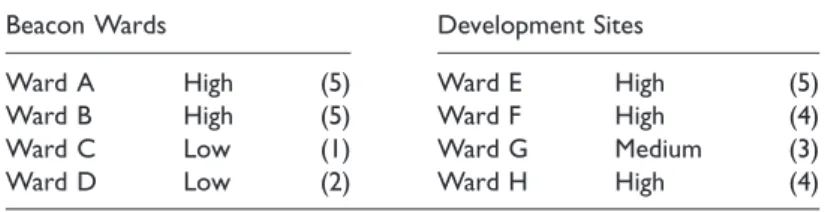
According to the criteria previously outlined, wards were judged to be ‘high’ (4–5 criteria), ‘medium’ (¼3 criteria) or ‘low’ (2 criteria) adopters as follows:
Table 2. Summary of contextual information and characteristics of the Beacon Ward and Development Sites.
Ward (level of adoption)
Patient group Ward profile: number of beds; % occupancy; average length of stay (where data available) Team characteristics and involvement in LCC Programme Management support Experience of leader Ward A High Older people Acute medicine 24 beds 95.1% 19.4 days Established team Strong involvement multidisciplinary team
Mainly stable but some change Supportive at higher level New charge nurse Ward B High Older people Mental health 30 beds Long stay Established team Minimal multidisciplinary involvement Stable and supportive at immediate and higher level
Established charge nurse Ward C Low Mainly older people Acute medical specialty 22 beds 90% 8.7 days Established team Stable multidisciplinary team – no medical staff involvement Variable and number of changes Supportive at higher level Acting charge nurse Ward D Low Mixed age Acute and
long-term medical specialty 46 beds 122.1% 6.6 days Established nursing team Minimal multidisciplinary involvement Variable and number of changes Supportive at higher level Experienced charge nurse during year 1 Two changes of charge nurse during years 2 and 3 Ward E High Mixed age Mental health rehabilitation 25 beds Medium stay Established nursing and multidisciplinary team Strong involvement Strong at all levels New charge nurse
Beacon Wards Development Sites
Ward A High (5) Ward E High (5)
Ward B High (5) Ward F High (4)
Ward C Low (1) Ward G Medium (3)
Outcome categories
There were three outcome categories:
(1) Relationships – changes between groups and individuals over time as a result of the exploration of the meaning of compassionate care and the introduction of methods for giving and receiving feedback.
(2) Care delivery – new approaches, attitudes and behaviours influenced by practice development techniques that placed emphasis on values and expression of emotions. (3) Developments in practice – specific action projects that had been initiated by staff as a
result of the action research elements of the LCC Programme.
Views, experiences and perceptions of the impact of the LCC Programme
Where there were high levels of adoption of the Programme the outcomes for different stakeholder groups were palpable and served to indicate key elements of compassionate care for patients, relatives and staff. Conversely where there was a low level of adoption the experiences of the participants were less positive and outcomes were more limited. An important feature of the Programme was the opportunity to elicit the views, experiences and perceptions of patients, families and staff. The charge nurse in Ward A talked of‘hearing the patient’s voice and hearing the staff’s voice’which led to ‘being open to listening and open to trying new ideas, grasping opportunities as they arise’(CN1).Successful engagement impacted the wards in different ways, with the primary focus being improvements in care for patients and families; as the charge nurse in Ward E reflected,
Table 2. Continued.
Ward (level of adoption)
Patient group Ward profile: number of beds; % occupancy; average length of stay (where data available) Team characteristics and involvement in LCC Programme Management support Experience of leader Ward F High Older people Frail health Continuing/ palliative care 34 beds Long stay Established nursing team Minimal multidisciplinary involvement
Stable and very supportive at immediate and higher level
Experienced charge nurse Ward G Medium Mixed age Acute assessment 72 beds 70.6% 0.6 days
Very large team Regular turnover of medical and nursing staff Partial involvement Mainly stable but some change Supportive at higher level Three charge nurses, only one directly involved in LCC Programme. Ward H High Mixed age Rehabilitation National centre 19 beds Medium to long stay Small established multidisciplinary team Good involvement Good local management support Several changes in leadership New charge nurse
‘the compassionate care [Programme] is actually educating me, and you’re learning how to take care forwards’(CN5).
Through understanding the meaning of compassion it became evident that being treated compassionately was important for patients, familiesandstaff. One of the LCC senior nurses proposed that when delivering compassionate care‘you really understand the whole situation, the whole context you’re working in. What it means to you, the person, the family’(SN6). In keeping with the underpinning principle of relationship-centred care (Nolan et al., 2006), improving relationships between staff and patients, staff and families and among staff themselves was core to embedding compassionate care. As the charge nurse in Ward F reflected, an overriding aspect of her experience of the LCC Programme was the focus on
‘relationships with everyone that you come into contact with’ (CN6).
Listening to patients. For patients, it was the opportunity to express their feelings as well as having individual needs met through the personalisation of care that enhanced their experience of compassionate care. One of the senior nurses designed and introduced an ‘All About Me’ sheet to elicit more detailed background information about older people in order to support staff to deliver person-centred care; for example‘a lot of our patients can’t vocalise what they want to wear but we know what their favourite colour is, so we can try and put something on them with their favourite colour’ (Ward F, CN6). The various practice development techniques equipped staff with new approaches to listening to patients and responding to their care needs. This was recognised in Ward E by one of the policy makers who saw staff ‘actually listening to patients and hearing what they are saying, in terms of making changes to their management’ (PM3). This was echoed by the charge nurse recognising that previously staff ‘were talking but we weren’t listening’, whereas now they had‘become better listeners. More looking for solutions rather than problems, so a much more appreciative way as well’(CN5).
Relationship with relatives. This emerged as an important issue at the outset of the Programme and several wards felt their relationships with relatives were poor, with a great deal of contact being reactive rather than proactive. During activities such as ‘beliefs and values clarification’ and ‘emotional touchpoints’ some staff admitted anxiety when approaching relatives, with fear of criticism or eliciting complaint. This was acknowledged by one charge nurse following an interview with a family using emotional touchpoints, ‘the daughter said ‘‘sometimes you avoid us’’. And to be honest we probably did, because you knew there were problems coming’ (Ward B, CN2). In each of the high adopting wards the systems and processes were introduced to enhance proactive engagement; these included charge nurse ward rounds, key workers, regular phone calls to families, involvement in completion of ‘All About Me’ documents, and sharing information with family members that had been obtained during interviews with patients using emotional touchpoints. The charge nurse described the impact of the latter for one mother, saying‘[she] felt their son was being well looked after, that some of the needs she didn’t even know existed were being discovered and met. We couldn’t have done that had we not started looking a bit deeper and listening a bit more’(Ward E, CN5).
Supporting staff and stimulating reflection. Where staff had the opportunity to fully engage in the LCC Programme there were encouraging consequences both at an individual and team level. For individuals a crucial change was increased confidence to challenge practice not considered to be compassionate, positive risk taking to support personalised care and
open discussions about care. The charge nurse in Ward E remarked that staff were‘working within codes of conduct yes, but weren’t afraid of repercussions if they didn’t get it just so. . .[it] just allowed people a bit of freedom’(CN5).Although not universal, there were examples of very profound individual outcomes, for example ‘if I look at [nurse] the change in her is the enthusiasm that she has, this reconnecting with her profession, this understanding of compassion that she believes in, and that she can articulate’(SN1).
At a team level a strong emphasis on communication and staff support became embedded in the high adopting wards, with some introducing new systems such as daily ‘catch up’ meetings and in Ward A a weekly reflective session with the hospital chaplain. Some of the practice development activities were designed to facilitate what the LCC team termed ‘caring conversations’ and served to encourage team discussions focused on improving practice; for example, in Ward F‘we really think and stimulate an awful lot of conversation and discussion. . . what we can do to take it [LCC Programme] ahead and really getting everyone on board and involved’(CN6).
Influence of LCC Programme mechanisms on outcomes
The mechanisms influencing the outcomes of the LCC Programme included the ways of working and specific practice development techniques. The underpinning theoretical framework was very important, particularly appreciative inquiry and relationship-centred care. Appreciative inquiry offered a fresh approach to examining care practices and giving real time feedback, which gave staff confidence in their care. The adoption of the Senses Framework (Nolan et al., 2006) to introduce the concept of relationship-centred care left a lasting impression on many of those involved. The facilitation skills of the senior nurses focused on building trusting relationships in each ward area and demonstrated sensitivity to local context, something described as ‘subtle leadership’ (Ward E, CN5). Of additional influence was the pace of implementation with focus on investing time in initial groundwork with ward teams, and recognition at senior level that implementing cultural change takes time. This was emphasised by one of the policy makers in saying‘this is a very deep and fundamental thing and it needs time for people to be able to appreciate, understand and get to grips with on a personal level within the ward and areas’(PM5).
Other influential mechanisms were the practice development techniques that focused on the identification and sharing of care values (i.e. ‘beliefs and values clarification’, use of imagery and the development of ‘positive care practices’). Perhaps the most successful mechanisms were those that led to ‘hearing the voice’ of patients, families and staff though ‘emotional touchpoints’ and sharing stories. As a result of all these approaches staff in the high adopting wards received regular feedback on their delivery of compassionate care, which in turn influenced communication systems and the routine introduction of ‘caring conversations’. As the charge nurse in Ward F commented, ‘I know that we give good care but now we’ve got the evidence to show [it]’(CN6).
Sustainability
Indicators of sustainability reflected the ‘level of adoption’ criteria through continued engagement with the LCC Programme, self-identification as a Beacon Ward or Development Site, sustaining an appreciative approach and use of practice development techniques to engage with patients, families and staff. The long-term use of ‘emotional touchpoints’ was a clear
illustration of this: for example, being used to augment traditional nursing and medical assessments of patients in Ward E; becoming part of the personal development planning process in Ward A; adoption as a feedback mechanism with families expressing concerns across many settings; and as a method for seeking student feedback in Ward H.
Leadership emerged as the most significant factor influencing sustainability of the LCC Programme, principally at charge nurse level. A common element in the low and medium adopting wards (Wards C, D and G) were ongoing changes in leadership, the impact of which was summed up by one of the senior nurses: ‘where there hasn’t been consistent and continuous leadership they’ve absolutely struggled (SN2). Successful leadership was particularly enhanced by participation in the 12-month LCC Leadership Programme that ran in parallel to the Beacon Ward/Development Site work, especially if this was extended beyond the charge nurses. During the Programme Wards E and H were also subject to managerial changes at ward and directorate levels yet remained high adopters largely as a result of succession planning based on shared values and an established ethos of compassionate care. The new charge nurse in Ward H reflected on her position: ‘I find myself in a different place, a different role and I feel confident to do it. I feel a lot more ready to take on more difficult situations than I would have been. I think because they see me as a leader taking this[LCC Programme]forward. . .I feel very proud as well, of the work we’ve done’(CN8).
Other important factors were an expectation of change and development by senior managers as a result of participating in the LCC Programme. Where the managers were engaged and interested in local activities and outcomes the charge nurses felt empowered to drive care forward, even if this involved taking what might be perceived as positive risks because they were‘given trust to [have] that autonomy to go on and make mistakes and learn from them’ (Ward E, CN5).
Conceptual model
The findings have led to the development of a conceptual model of factors that can enhance organisational capacity to develop and sustain a culture of compassionate care (Figure 2). This model is centred on a ‘compassionate core’ where the needs of patients, relatives and staff are viewed as being on the one hand distinct, and on the other inter-related. The data demonstrated that in order to embed and sustain this type of compassion there needed to be a sustained focus on relationship-centred care mediated through ‘relational practice’ and ‘relational inquiry’. The charge nurse was pivotal to these processes through their leadership skills and engagement with the LCC Programme. The LCC Programme itself brought the practice development expertise with its strong reliance on expert facilitation and the use of creative tools and techniques to support patients, relatives and staff to explore and express the meaning of compassionate care, and bring about responsive changes in practice. In order to embed and sustain this type of work there was crucial investment in infrastructure and leadership at both strategic and local level.
Discussion
This research study was conducted at a time when there was limited research focusing on what is required to embed and sustain a culture of compassionate care within contemporary healthcare environments. It adds to a growing body of work building the evidence base of
what compassionate care means to different stakeholders, including bereaved relatives, nurses, doctors and lecturers (Crowther et al., 2013; Masterson et al., 2014; Post et al., 2014; Smith et al., 2014) and a recognition of the need for cultural change within complex health systems (Patterson et al., 2010; The King’s Fund, 2013).
Compassionate core
As the conceptual model illustrates, embedding and sustaining compassionate care within the complexity of health care organisations depends on addressing the needs of i) the patient, ii) their relative(s) and iii) the staff caring for them. For example, it was evident in the high adopting wards that staff were working in environments where they had shared values, were reflective, respected each other’s contribution, were open in their exploration of ways to
enhance care, were encouraged to give feedback, supported each other and were in turn supported by their managers. Converseley, where some or all of these elements were lacking progress with implementation of the LCC Programme was limited, regardless of the input of the senior nurse. Such findings accord with Christiansen et al.’s (2015) study into barriers and enablers for compassionate care in which they delineate individual and relational factors, organisational factors and leadership and team factors as being vital.
Enhancing organisational capacity for compassionate care
In order to support this ‘compassionate core’, these four layered and interconnected elements of the conceptual model need to be put in place in order to strengthen organisational capacity to deliver compassionate care.
Relational practices: Relational work and relational inquiry. Relationship-centred care (Nolan et al., 2006) had been at the foundation of the LCC Programme. This study illuminated the importance of ‘relational work’ (Parker, 2002) and ‘relational inquiry’ (Doane and Varcoe, 2007) in sustaining interpersonal relationships. Parker (2002) describes relational work between care providers and recipients through the use of open-ended questions, reflective listening and empathy to establish rapport and develop understanding. Doane and Varcoe (2007) argue that where there is a focus on individual nurse–patient relationships there may be little consideration of the personal and contextual factors that can make fostering trusting, fruitful and therapeutic relationships challenging. Relational inquiry is put forward as a mechanism which integrates responsive, compassionate, therapeutic relationships and ethical competent nursing by foregrounding the ways in which the personal and contextual factors shape both patients’ and nurses’ capacities for connection. The creation of what Doane and Varcoe (2007) describe as ‘relational spaces’ was achieved in the LCC Programme through the use of techniques such as emotional touchpoints (Scottish Health Council, 2014) and the integration of the Senses Framework (Nolan et al., 2006) as the foundation of the LCC Leadership Programme.
Leadership. The charge nurses had a strong part to play in influencing the adoption of the LCC Programme, which accords with the acknowledgement of the crucial role they play in determining the quality of patient care (Royal College of Nursing, 2009). There has been recognition of a diminution in the authority of the charge nurse (Bradshaw, 2010; Francis, 2013) with calls that they should work in a supervisory capacity (Royal College of Nursing, 2010). Whilst the charge nurses in the LCC Programme did not formally have this status, within the high adopting wards their roles strongly mirrored the fundamental elements in terms of being visible and accessible; working alongside the team to facilitate learning; monitoring and evaluating standards; providing regular feedback and creating a culture to sustain person-centred, safe and effective care.
Practice development. Manley et al. (2008) present practice development as a systematic process of transformative action towards developing person-centred cultures that focus on changing people and practice rather than just systems and processes. They argue that it is practice development that has the potential to translate complex organisation and strategic agendas into practice through input of facilitators who have the skills and ability to address culture change. Within the LCC Programme the facilitation and critical analytic skills of the
senior nurses were fundamental to its success, as was the appreciative inquiry approach that they adopted (Trajkovski et al., 2013).
Strategy. Luxford et al. (2011) argue that strong, committed senior leadership is a critical factor in changing and sustaining a more patient-centred approach, whilst Powell et al. (2009) highlight that managers need to be actively involved in quality improvement initiatives for both symbolic and practical purposes. One of the defining features of the LCC Programme was that it had strong strategic leadership through an effective Steering Group and it was included as a key objective for the Health Board. Whilst high-level strategic support is vital, Burston et al. (2011) emphasise the need for a hybrid of approaches to change involving a blend of top-down and bottom-up leadership to sustain behaviour change. This was seen in the high adopting wards where local Compassionate Care Groups were established and required reporting of outcomes and accountability.
Limitations
The main limitation of this study is that it did not include any primary data collection with patients or relatives. Rather, the perspectives of patients and families were drawn from secondary data that were made available from two sources: first from the perspectives of the senior nurses and charge nurses during interviews when they described patients and relatives’ stories and experiences; and second through analysis of the action research findings that the LCC team published internally during the data collection phase of this study.
Conclusion
Compassionate care is central to debates about care delivery in the NHS and other health care systems. There have been recommendations for professional and leadership development of existing staff and for innovative methods for the selection and preparation of future generations of nurses. What has been less clear is the organisational infrastructure that is needed to embed and sustain a focus on compassionate care alongside all the other health service pressures and priorities.
The LCC Programme was one of the earliest focused ‘interventions’ that took a systematic approach to investigating the complex issue of compassionate care and through this developed an evidence-based approach to practice development that could be implemented across a range of specialties. It was, in part, the heterogeneity of the practice settings involved in the Programme that has enhanced the potential impact of these findings.
Given the fact that the debate surrounding enhancing compassionate care remains a live at both policy and practice levels within the UK and elsewhere, there is a need for evidence-based recommendations that offer real insight into enabling cultural and practice changes within the NHS. Discussions of compassionate care have rightly centred on the experiences of patients and relatives. This research has generated a dynamic, practice-based model for strengthening organisational capacity for compassionate care. It demonstrates that focusing on the needs of staff and supporting them to develop and work within a shared culture of compassion is instrumental to the sustained delivery of compassionate care. This demands a strategic vision for compassionate care that recognises and values the role of relationships and invests in practice development and leadership at all levels.
Key points for policy, practice and/or research
. Compassionate nursing care has become a major focus of public, professional and political concern in the UK and internationally.
. To date there has been little research into the impact of dedicated complex interventions aimed at enhancing compassionate care within contemporary health care environments.
. The new knowledge derived from a realistic evaluation (Pawson and Tilley, 1997) of the ‘Leadership in Compassionate Care Programme’ undertaken in Scotland provides a conceptual model for strengthening organisational capacity for the delivery of compassionate care.
. The ‘compassionate core’ of this model recognises compassionate care as focused on meeting the needs of patients, of relativesand of staff.
. The findings illustrate that embedding and sustaining compassionate care demands strategic vision and investment in a local infrastructure that supports relationship-centred care, practice development and effective leadership at all levels.
Declaration of conflicting interest
The author(s) declared no potential conflicts of interest with respect to the research, authorship, and/or publication of this article.
Funding
The author(s) disclosed receipt of the following financial support for the research, authorship, and/or publication of this article: This work was supported by funding for a PhD studentship from the Centre for Integrated Healthcare Research and NHS Lothian.
References
Adamson E and Dewar B (2015) Compassionate care: Student nurses’ learning through reflection and the use of story.
Nurse Education in Practice15(3): 155–161.
Aiken LH, Sermeus W, Van der Heed K, et al. (2012) Patient safety, satisfaction, and quality of hospital care: Cross sectional surveys of nurses and patients in 12 countries in Europe and the United States.British Medical Journal
44(e1717): 1–14.
Agnew T (2007) Dignity in care: A genuine commitment?
Nursing Older People18(12): 17–18.
Betcher DK (2010) Elephant in the Room Project: Improving caring efficacy through effective and compassionate communication with palliative care patients.MEDSURG Nursing19(2): 101–105.
Blamey A and Mackenzie M (2007) Theories of change and realistic evaluation: Peas in a pod or apples and oranges?
Evaluation13(4): 439–455.
Boyatzis RE (1998)Transforming Qualitative Information: Thematic Analysis and Code Development. Thousand Oaks, CA: SAGE. Bradshaw A (2010) Is the ward sister role still relevant to the
quality of patient care? A critical examination of the ward
sister role past and present.Journal of Clinical Nursing
19(23–24): 3555–3563.
Bramley L and Matiti M (2014) How does it really feel to be in my shoes? Patients’ experiences of compassion within nursing care and their perceptions of developing
compassionate nurses.Journal of Clinical Nursing23(19–20): 2790–2799.
Bridges J, Nicholson C, Maben J, et al. (2013) Capacity for care: Meta-ethnography of acute care nurses’ experiences of the nurse-patient relationship.Journal of Advanced Nursing
69(4): 760–772.
Burston S, Chaboyer W, Wallis M, et al. (2011) A discussion of approaches to transforming care: Contemporary strategies to improve patient safety.Journal of Advanced Nursing67(11): 2488–2495.
Christiansen A, O’Brien MR, Kirton JA, et al. (2015) Delivering compassionate care: The enablers and barriers.
British Journal of Nursing24(16): 833–887.
Clarfield AM, Bergman H and Kane R (2001) Fragmentation of care for frail older people – an international problem. Experience from three countries: Israel, Canada, and the
United States.Journal of the American Geriatric Society
49(12): 1714–1721.
Cooperrider DL, Whitney D, Stavros JM (2008)Appreciative Inquiry Handbook for Leaders of Change. Brunswick Ohio: Crown Custom Publishing Inc.
Corbin-Dwyer S and Buckle JL (2009) The space between: On being an insider-outsider in qualitative research.
International Journal of Qualitative Methods8(1): 54–63. Crowther J, Wilson KC, Horton S, et al. (2013) Compassion in
healthcare – lessons from a qualitative study of the end of life care of people with dementia.Journal of the Royal Society of Medicine106(12): 492–497.
Curtis K, Horton K and Smith P (2012) Student nurse socialisation in compassionate practice: A grounded theory study.Nurse Education Today32(7): 790–795.
Department of Health (2009)The NHS Constitution for England: The NHS Belongs to Us All.Available at: http:// collections.europarchive.org/tna/20090216230913/http:/ www.dh.gov.uk/en/Healthcare/NHSConstitution/index.htm (accessed 17 March 2016).
Department of Health (2012) Compassion in practice: Nursing, midwifery and care staff. Our vision and strategy. Available at: http://www.england.nhs.uk/wp-content/uploads/2012/12/ compassion-in-practice.pdf (accessed 26 February 2016). Dewar B (2012) Using creative methods in practice
development to develop and understand compassionate care.
International Practice Development Journal2(1): 1–11. Dewar B and Nolan M (2013) Caring about caring:
Developing a model to implement compassionate relationship-centred care in an older person care setting.
International Journal of Nursing Studies50(9): 1247–1258. Dewar B, MacKay R, Smith S, et al. (2011a) Use of emotional
touchpoints as a method of tapping into the experience of receiving compassionate care in a hospital setting.Journal of Research in Nursing15(1): 29–41.
Dewar B, Pullin S and Tocher R (2011b) Compassion: Can it be defined and measured?Nursing Management17(9): 30–35. Doane GH and Varcoe C (2007) Relational practice and
nursing obligations.Advances in Nursing Science30(3): 192–205.
Edinburgh Napier University and NHS Lothian (2012)
Leadership in Compassionate Care Programme: Final Report.
Available at: http://researchrepository.napier.ac.uk/5935/1/ CompCare_Fin_Rept_All_Apr_13.pdf (accessed 27 February 2016).
Firth-Cozens J and Cornwell J (2009)The Point of Care: Enabling Compassionate Care in Acute Hospital Settings. London: The King’s Fund.
Francis R (2013)Report of the Mid Staffordshire NHS Foundation Trust Public Inquiry Executive Summary. London: The Stationery Office.
Healthcare Commission (2007)Caring for dignity: A national report on dignity in care for older people while in hospital. Commission for Healthcare Audit and Inspection. Available at: http://i.telegraph.co.uk/telegraph/multimedia/archive/ 00669/nwards127_pdf_669224a.pdf (accessed 26 February 2016).
Holmes D (2013) Mid Staffordshire scandal highlights NHS cultural crisis.The Lancet381(9866): 521–522.
Lown B, Rosen A and Marttila JJ (2011) An agenda for improving compassionate care: A survey shows about half patients say such care is missing.Health Affairs30(9): 1772–1778.
Luxford K, Safran DG and Delbanco T (2011) Promoting patient-centered care: A qualitative study of facilitators and
barriers in healthcare organizations with a reputation for improving the patient experience.International Journal of Quality in Health Care23(5): 510–515.
McCormack B and McCance T (2010)Person-centred Nursing: Theory and Practice. Oxford: Wiley Blackwell.
Manley K, McCormack B and Wilson V (2008)International Practice Development in Nursing and Healthcare. Oxford: Blackwell Publishing Ltd.
Masterson A, Robb E, Gough P, et al. (2014) Inspiring senior nurses to lead the delivery of compassionate care.Nursing Older People26(8): 26–31.
Meyer J (2000) Qualitative research in healthcare: Using qualitative methods in health related action research.British Medical Journal320(7228): 178–181.
Nolan M, Brown J, Davies S, et al. (2006)The Senses Framework: Improving Care for Older People through a Relationship-centred Approach. GRIP: University of Sheffield. Available at: http://shura.shu.ac.uk/280/ (accessed 27 February 2016).
Parker VA (2002) Connecting relational work and workgroup context in caregiving organizations.Journal of Applied Behavioural Science38(3): 276–297.
Patients Association (2011)We’ve been listening, have you been learning?Available at: http://www.patients-association.org. uk/wp-content/uploads/2014/08/Patient-Stories-2011.pdf (accessed 26 February 2016).
Patterson M, Nolan M, Rick J, et al. (2010)From Metrics to Meaning: Culture Change and Quality of Acute Hospital Care for Older People. Report for the National Institute for Health Research Service Delivery and Organisation programme. Available at: http://www.netscc.ac.uk/hsdr/ files/project/SDO_FR_08-1501-93_V01.pdf (accessed 26 February 2016).
Pawson R and Tilley N (1997)Realistic Evaluation. London: SAGE Publications.
Powell AE, Rushmer RK and Davies HTO (2009)A systematic narrative review of quality improvement models in healthcare. Social Dimensions of Health Institute of the University of Dundee and St Andrews: NHS Quality Improvement Scotland. Available at: http://www.healthcareimprovement scotland.org/previous_resources/hta_report/a_systematic_ narrative_review.aspx (accessed 5 November 2016). Post SG, Ng LE, Fischel JE, et al. (2014) Routine, empathic
and compassionate patient care: Definitions, development, obstacles, education and beneficiaries.Journal of Evaluation in Clinical Practice20(6): 872–880.
Reed J and McCormack B (2007) Editorial: The
importance of dignity.International Journal of Older People Nursing2(3): 61.
Royal College of Nursing (2009)Breaking down barriers, driving up standards: The role of the ward sister and charge nurse. Available at: https://www2.rcn.org.uk/__data/assets/ pdf_file/0010/230995/003312.pdf (accessed 28 February 2016).
Royal College of Nursing (2010)Making the business case for ward sisters/team leaders to be supervisory to practice. Available at: https://www2.rcn.org.uk/__data/assets/pdf_ file/0005/414536/004188.pdf (accessed 28 February 2016). Royal College of Nursing (2012)Quality with compassion:
The future of nursing education. Report of the Willis Commission on Nursing Education. Available at: http://www. williscommission.org.uk/__data/assets/pdf_file/0007/495115/ Willis_commission_report_Jan_2013.pdf (accessed 5 November 2016).
Scottish Government (2010)The Healthcare Quality Strategy for NHS Scotland. Available at: http://www.gov.scot/
Resource/Doc/311667/0098354.pdf (accessed 26 February 2016).
Scottish Health Council (2014)Emotional Touchpoints. Available at: http://www.scottishhealthcouncil.org/patient__ public_participation/participation_toolkit/emotional_ touchpoints.aspx#.VtH5glJJbAM (accessed 27 February 2016).
Sheild RR, Tong I, Tomas M, et al. (2011) Teaching communication and compassionate care skills: An innovative curriculum for pre-clerkship medical students.Medical Teacher33(8): 408–416.
Smith S, Dewar B, Pullin S, et al. (2010) Relationship centred outcomes focused on compassionate care for older people within in-patient care settings.International Journal of Older People Nursing5(2): 128–136.
Smith S, Gentleman M, Loads D, et al. (2014) An exploration of a restorative space: A creative approach to reflection for nurse lecturers focused on experiences of compassion in the workplace.Nurse Education Today34(9): 1225–1231.
The Kings Fund (2013)The Francis Inquiry: Creating the right culture of care. Available at: http://www.kingsfund.org.uk/
projects/francis-inquiry-creating-right-culture-care (accessed 28 February 2016).
Trajkovski S, Schmied V, Vickers M, et al. (2013)
Implementing the 4D cycle of appreciative inquiry in health care: A methodological review.Journal of Advanced Nursing
69(6): 1224–1234.
Van der Cingel M (2011) Compassion in care: A qualitative study of older people with a chronic disease and nurses.
Nursing Ethics18(5): 672–685.
Williams S, Nolan M and Keady J (2009) Relational practice as the key to ensuring quality care for frail older people: Discharge planning as a case example.Quality in Ageing and Older Adults10(3): 44–55.
Youngson R (2008) Futures debate: compassion in healthcare – the missing dimension of healthcare reform?NHS Confederation Futures Debate Series Paper 2.Available at: http://www.nhsconfed.org//media/Confederation/Files/ Publications/Documents/compassion_healthcare_future08. pdf (accessed 26 February 2016).
Youngson R (2014)Cynical about Compassion. Available at: http://heartsinhealthcare.com/cynical-compassion/ (accessed 26 February 2016).
Juliet MacArthur is Chief Nurse for Research and Development in NHS Lothian and Lecturer in Clinical Academic Careers, School of Health in the Social Sciences, University of Edinburgh. This combined role is focused on building capacity in clinical academic careers for nurses, midwives and allied health professionals. Her research interests include general hospital care of people with a learning disability, compassionate care and discharge of people to care homes.
Heather Wilkinson is Professor at Edinburgh Centre for Research on the Experience of Dementia (ECRED) and Co-director of the Centre for Research on Families and Relationships, University of Edinburgh. She has several areas of research interest within an overall focus on the experience of people with dementia and improving the care experience.
Morag A Gray has over 30 years experience in Higher Education and was one of the management team that oversaw the Leadership in Compassionate Care Project at Edinburgh Napier University. She is now an Emeritus Professor.
Gerri Matthews-Smith is a Senior Lecturer at Edinburgh Napier University and Fellow of the Higher Education Academy. She has an interest in developing research studies that impact on practice and in the community. She is also an experienced doctoral supervisor and including the current study has supported studies to completion in areas such as health and social care integration, hip fracture in the elderly, mindfulness in long term conditions and early onset dementia.