Reducing Risks in Public-‐Private
Partnerships.
08
Fall
Prepared By: Tayeba Maktabi
Master of Public Policy Candidate
The Sanford School of Public Policy
Duke University
Faculty Advisor: Frederick Mayer, Ph.D.
Disclaimer: This student paper was prepared in 2014 in partial completion of the requirements for the Master’s Project, a major assignment for the Master of Public Policy Program at the Sanford School of Public Policy at Duke University. The research, analysis, and policy alternatives and recommendations contained in this paper are the work of the student who authored the document, and do not represent the official or unofficial views of the Sanford School of Public Policy at Duke University. Without the specific permission of its author, this paper may not be used or cited for any purpose other than to inform the client organization about the subject matter. The author relied in many instances on data provided by the client and related organizations and makes no independent representations as to the accuracy of the data.
Table of Contents
ABBREVIATIONS ... 3
EXECUTIVE SUMMARY ... 4
I. PPP BACKGROUND ... 6
i. Public-Private Partnership ... 6
ii. The Risks of PPPs ... 8
iii. Reducing Risks ... 10
Table 1: Elements for Reducing Risk in PPP. ... 12
II. POLICY QUESTION: ... 16
III. METHODS: ... 16
IV. CASE STUDIES ... 18
Bangladesh ... 18 Nepal ... 22 Tanzania ... 28 Uganda ... 32 V. LESSONS LEARNED ... 36 VI. LIMITATIONS ... 37 VII. CONCLUSION ... 38 VII. BIBILOGRAPHY ... 40
ABBREVIATIONS
AED: Academy for Educational Development (now FHI 360) ART: Antiviral Therapy
BAFF: Business Alliance on Food Fortification
CARE: Cooperative for Assistance and Relief Everywhere
COUNSENUTH: Centre for Counseling, Nutrition, and Health Care CSO: Civil Society Organizations
DHO: District Health Officer
EPI: Expanded Programme of Immunization GAIN: Global Alliance for Improved Nutrition
GAVI: Global Alliance for Vaccines and Immunisation HIPS: Health Initiative for the Private Sector
IBFAN: International Baby Food Action Network JICA: Japan International Cooperation Agency JSI: John Snow Inc. (Research and Training Institute) MDG: Millennium Development Goals
MoHP: Ministry of Health and Population MoF: Ministry of Finance
MOU: Memorandum of Understanding
N-MARC: Nepal Social Marketing and Franchise Project NFA: National Fortification Alliances
NFHP II: Nepal Family Health Program NGO: Nongovernmental Organization NTD: Neglected Tropical Diseases
OECD: Organisations for Economic Co-operation and Development PATH: Program for Appropriate Technology in Health
PPIAF: Public-Private Infrastructure Advisory Facility PPP: Public-Private Partnership
PPP CU: PPP Coordination Unit PPP FU: PPP Financial Unit
RUTF: Ready-to-Use Therapeutic Foods TAG: Technical Advisory Group
TFNC: Tanzania Food and Nutrition Centre
UCNTD: Uniting to Combat Neglected Tropical Diseases UN: United Nations
USAID: U.S. Agency for International Development WB: World Bank
EXECUTIVE SUMMARY
PUBLIC PRIVATE PARTNERSHIP
Public-private partnerships (PPPs) can be a powerful tool for finding solutions to complex social challenges. PPP can essentially be defined as the partnership between public institutions and private sector corporations. Typically, these partnerships are seen as a way to share risks and collaborate expertise, best practices, and resources to deliver services in a more cost-effective and efficient manner by getting more “value for money”. PPPs can also provide new resources, build capacity, and improve existing systems to help governments meet development goals.
However, along with the benefits that PPPs can bring are inherent risks that can lead to
derailment of program goals and even eroding larger developmental achievements of countries. While research on PPPs is still scarce, a few studies by World Bank, OECD, and others have illuminated some important aspects of PPPs to help future partnerships be more effective at reducing risks.
Risks of PPP
Over the years, PPPs have begun to expand its reach across various domains and regions. Today, PPPs can vary in structure, form, scope, and location. However, despite these differences, the risks faced by PPPs share some common themes. Risks such as poor governance, misaligned priorities, underrepresentation of public sector in decision-making, poor communication streams, lack of coordination and cooperation between partners, insufficient and unsustainable financing, and lack of support from leaders can lead to derailment of PPPs.
Reducing Risks of PPP
While these risks exist in many partnerships, governments and PPP leaders can institute various measures designed to minimize them as much as possible. Table 1 (page 12) highlights some of the key elements for reducing risks in PPPs. Based on literature research of best practices and case studies, Table 1 provides guidance for minimizing risks from the initial stages of PPPs to the end. For example, when partnerships are established it is important to make sure partners share similar goals and that they bring value to the project. Additionally, during the implementation phase, PPPs can reduce risks by instituting monitoring and evaluation mechanisms. Finally, risks can be reduced at the end of PPPs by ensuring sustainability through training, knowledge
transfer, and creating a clear exit strategy for partners.
CASE STUDIES:
Four case studies on PPPs from Bangladesh, Nepal, Tanzania, and Uganda were analyzed based on elements from Table 1 to determine whether these PPPs were successful at reducing risks and to identify which elements were crucial to risk reduction. Each case study was analyzed based on the roles of stakeholders, the funding models, the risks faced by the partnership, and what factors in the partnership reduced these risks.
LESSONS LEARNED
Analyses from the four case studies have highlighted some important lessons for reducing risks in future PPPs. It appears that while all the elements in Table 1 are important for reducing risks in PPPs, there were a number that were largely salient in the case studies analyzed here.
Particularly noteworthy was the role and involvement of the government in PPPs, the importance of robust communication streams, the necessity of creating a sense of ownership and trust
between partners in the project, and ensuring sustainable funding systems to reduce risks and guarantee success of PPP programs.
For example, in some of the cases, having a strong government presence in the program reassured other partners that they could rely on the government to provide resources and
funding for program implementation. Sufficient policies, regulations, frameworks, fiscal and non-fiscal support, communication, and government engagement were necessary to hold partners accountable and minimize risks.
Furthermore, in all of the cases, robust communication channels were vital for risk reduction. In both the Bangladesh and Nepal cases there were strong mechanisms for open communication channels, which helped reduce risks by keeping partners engaged and invested in the PPP
project. In addition, insufficient funding also created a great risk for PPP programs. For example, in Uganda the lack of sufficient funding from the government limited the scope and capacity of the program. Therefore, governments and donors need to ensure sufficient funding and resources are available to implement the program successfully.
CONCLUSION
PPPs vary greatly across scope, structure, implementation, and goals, which makes it rather difficult to predict future risks or work to eliminate risks in PPPs altogether. However, research has shown that PPP leaders can take a number of preventive steps to minimizing risks before they create challenges in the future. Some of these steps have been highlighted in Table 1 of this report. Furthermore, the examination of case studies using Table 1 as a guide surfaced four common elements that were key to reducing risks in PPPs: the role and involvement of the government, robust communication streams, building a sense of ownership and trust between partners in the project, and sustainable funding systems appeared critical to minimizing risks in each case. Therefore, partnerships will have a greater chance of sustainability and program success if they focus on improving these areas of the PPP.
I. PPP BACKGROUND
As social issues become more challenging and complex, traditional systems and frameworks are no longer enough to tackle these evolving problems. Government-only solutions seem to have become less effective in addressing current challenges in poverty, health, and education. It seems that a more collaborative effort is required to address these ever-changing problems. Recently, international agencies and governments have begun considering the private sector as a source of new perspectives and solutions to help tackle the complexity of these growing challenges.
Public-Private Partnerships (PPPs) have emerged as a solution to the lack of government capacity and resources in providing public goods and services to underserved communities. Over the years, government collaborations with private sector have led to profound impacts in improving lives of vulnerable populations. Furthermore, international organizations such as the UN and World Bank have served as stewards of these partnerships and have pushed for greater multi-stakeholder collaboration to improve delivery of services. For example, Kofi Annan, former UN Secretary General, ushered greater engagement with private sector, urging leaders that PPPs should be seen as a mutual, symbiotic relationship: “[The idea that the] U.N. needs business and business needs the U.N. . . . is as relevant today as it was six years ago.” (Compact, 2006) He led an ambitious agenda to bring more corporate leaders to the discussion table through efforts such as establishing the UN Global Compact and urging private sector to do their part in helping countries achieve the global Millennium Development Goals (MDG).
i. Public-Private Partnership
Public-Private Partnerships (PPPs) can essentially be defined as the partnership between public institutions and private sector corporations to address social challenges. According to the World Bank, “Broadly, PPP refers to arrangements, typically medium to long term, between the public and private sectors whereby some of the services that fall under the responsibilities of the public sector are provided by the private sector, with clear agreement on shared objectives for delivery of public infrastructure and/ or public services…Public-Private Partnerships mobilize private sector resources—technical, managerial, and financial—to deliver essential public services such as infrastructure, health and education.”(Bank, 2014) Another definition from the Organisation for Economic Co-operation and Development (OECD) states, “Public-Private Partnerships can be viewed in a broad way as covering most interactions between the private and the public sectors and in a more narrow way as focusing on particular sets of risk-sharing and financial relationships.” (OECD)
In recent years, the definitions of “public” and “private” have become broader and more encompassing of nongovernmental organizations (NGOs), civil society organizations (CSOs), donors, and other players who are also involved in public projects and service delivery. However, for the purpose of this research, “public-private partnerships” will be narrowly defined to mean strictly the relationship between government entities and the private sector (corporations and businesses).
Typically, PPPs are seen as a way to share risk and collaborate expertise, best practices, and resources to deliver services in a more cost-effective and efficient manner by getting more “value for money”. The idea of government and private sector coming together to address various
problems is not new. PPPs are salient in infrastructure projects, which typically constitute central or local governments contracting infrastructure development projects to private sector
companies. PPPs have also become more visible in healthcare and health delivery, typically through partnerships with companies such as pharmaceutical and medical device firms, food and beverage companies, or technology companies. And more recently, PPPs have also begun to emerge in environmental and climate change projects. These are just a few of the many PPPs that have developed over the last few years.
Case studies and research on PPPs by U.S. Agency for International Development (USAID), World Bank, OECD, and others reveal vast amounts of information on the organizational structure, governance models, strengths, and weaknesses of PPPs. A recent report by McKinsey & Company analyzed 15 global PPPs and interviewed 60 leaders in this field. Their study highlighted various forms and structures that PPPs can take (Figure 1 & 2). For example, partnerships can range from two partner collaborations to as many as hundreds of partner alliances (example: Global Compact). Leadership varies as well with each PPP. Some are governed by one secretariat, while a committee or board leads other PPPs. Partnerships also differ in the length of work, ranging from a few months to years, or even indefinite. Structure of PPPs can be flexible too, ranging from informal alliances to partnerships based on rigid contracts. Finally, PPPs can also differ along focus areas, scope, geography, issues, methods, country
specific vs. global, and governance structures. However, despite their differences, PPPs also share some common themes such as providing a space for shared decision-making, partner investment, sharing risks, reducing costs, etc. (McKinsey&Co., 2009)
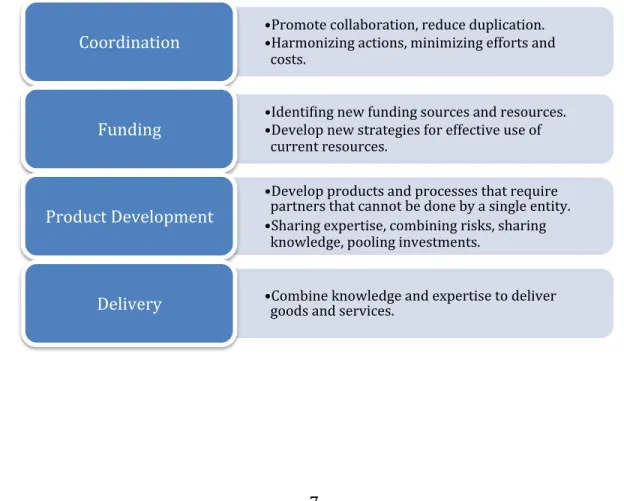
Figure 1 below shows four main categories of PPPs identified by McKinsey & Co.
• Promote collaboration, reduce duplication.
• Harmonizing actions, minimizing efforts and
costs. Coordination
• IdentiQing new funding sources and resources.
• Develop new strategies for effective use of
current resources. Funding
• Develop products and processes that require partners that cannot be done by a single entity. • Sharing expertise, combining risks, sharing
knowledge, pooling investments. Product Development
• Combine knowledge and expertise to deliver
goods and services. Delivery
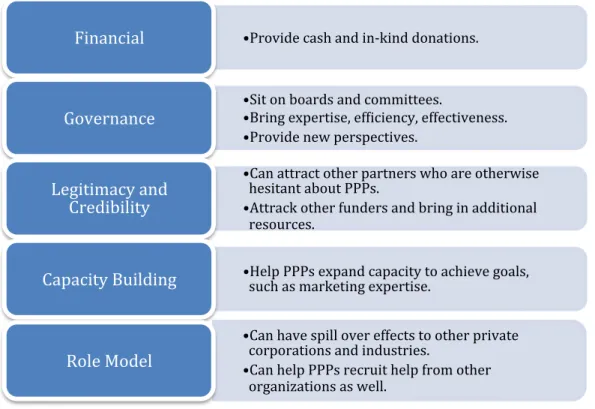
Figure 2 depicts the role of private sector and its contribution to PPPs.
ii. The Risks of PPPs
PPPs can have numerous benefits for the public sector; however, there are also various risks that can come along when private and public sector work together. In his analysis of global health PPPs, Kent Buse states that one of the biggest risks in PPPs is misalignment of partnership missions and objectives with government priorities. (K. Buse, 2007) Most private sector partners want quick, results-based activities that are not always efficient or effective and fail to consider the sensitivity of the environment, epidemiological evidence, or structural problems faced by countries. On the other hand, government agendas usually focus on improving systemic issues and delivery mechanisms that lead to larger, more sustainable improvements for populations at large. This misalignment of priorities leads to poor harmonization of partner agendas and forces partners to work in contrast rather than jointly to address broad social challenges. Furthermore, if private partners create new mechanisms for delivering programs rather than utilizing or improving existing systems, it will lead to duplication of efforts, waste of resources, and reduce streamlining of work channels thereby creating higher transactions costs. Partnerships need to align goals of PPP with those of the government, focus on underlying barriers, and work on harmonizing actions.
Another risk is that of misaligned incentives. Because PPPs are often seen as a public relations opportunity, private sector may not have the same goals or interest as other stakeholders. PPPs can also prove a profitable enterprise for some private sector partners. For example, the PPP
• Provide cash and in-‐kind donations. Financial
• Sit on boards and committees.
• Bring expertise, efQiciency, effectiveness. • Provide new perspectives.
Governance
• Can attract other partners who are otherwise
hesitant about PPPs.
• Attrack other funders and bring in additional
resources. Legitimacy and
Credibility
• Help PPPs expand capacity to achieve goals,
such as marketing expertise. Capacity Building
• Can have spill over effects to other private
corporations and industries.
• Can help PPPs recruit help from other
organizations as well. Role Model
Uniting to Combat Neglected Tropical Diseases (UCNTD) aims to pool together financial resources for R&D and vaccine development to eliminate Neglected Tropical Diseases (NTD). Donors such as pharmaceutical and technology companies could see this PPP as an opportunity to increase revenue streams by financing projects that utilize their products. (Joseph, 2012) In these cases, conflict of interest becomes a massive issue and can have large negative consequences on the effectiveness of PPPs, including leading to the derailment of the partnership entirely. Furthermore, the concept of power dynamics in partnerships can also play a large role in
determining the success of PPPs. In partnerships where private sector donors sign the paychecks, they hold considerable decision-making power and influence over other partners. This shift of power from public sector to the private sector can lead to a greater focus on the priorities of the private sector and allow them to push forward agendas that may differ from those of the
government. Additionally, because private sector often lack the contextual understanding and cultural sensitivity of the region they are working in, it can hamper the PPP from creating deeper and more sustainable changes. (K. Buse, 2007) However, improving efficiency and the
effectiveness of PPP governance and leadership can greatly minimize these risks. Good governance measures such as identifying appropriate partners, clearly specifying roles and responsibilities for each partner, developing proper monitoring and evaluation schemes, creating appropriate systems for managing conflicts of interests, and improving transparency in decision-making processes can help to reduce various risks that may hinder the success of PPPs.
However, risks within the governance of PPPs itself also prove to be another challenge that hinders the success of partnerships. Some PPPs do not fully and equally represent the voice of all stakeholders in boards or other areas of decision-making. Kent Buse’s research found that in a number of PPPs, organizations such as WHO and low-income and middle income countries are poorly represented. This diminishes their influence and weight in the decision-making process, and fails to reflect the various voices and diverse perspectives of stakeholders. Buse also found that private sector had a higher representation on boards, sometimes comprising up to 25% of the board members. This forces decisions to become more private sector-centric and reduces the importance and weight of the public voice. (Bank, 2014) Incorporating more equitable
representation of stakeholders on governance boards will help reduce some of these risks. Another challenge that is often faced by PPPs is the myopic focus on specific issues rather than trying to address underlying systemic challenges or identifying root causes of the problem. Public sector partners need to use their resources and expertise to push for wider structural changes that impact delivery and address local problems at the source. A myopic focus doesn’t allow for larger and sometimes more important changes such as local capacity building, which is crucial to the long-term success of these programs. Furthermore, a myopic focus on a specific issue can also create parallel structures and take up limited government resources that could go to more productive uses. Partners need to work on improving the existing systems of the country and expanding government capacity rather than simply delivering products and treatments, which have limited sustainability or long-term benefits.
Additionally, over the years the idea of private sector as the key to solving complex development challenges has appeared to vilify the public sector. Buse argues that the more PPPs champion private sector as providing necessary resources and enhancing capacity to improve numerous challenges in developing countries, the less people value the role of the public sector. In reality, PPPs can sometimes hinder the concept of global public responsibility by “diminish[ing] [the]
sense of the public nature of global health initiatives.” (Bank, 2014) Furthermore, PPPs reduce the influence of international organizations such as the UN, which removes an important voice in the development arena. Finally, the removal the public voice creates PPPs with a myopic focus on specific issues excluding important elements necessary to addressing the larger challenges faced by vulnerable populations. Public sector is important for contributing information and expertise about the local context and social nuances of developing communities.
Buse also argues that inadequate finances seems to be another hindering mark of PPPs. PPPs tend to create overly ambitious goals and objectives but are limited in achievement due to the lack of financial resources. Even if donors do pledge to fund portions of the plan, when it comes time to provide the funds, they often renege on their commitments. (K. Buse, 2007) In addition, most funding for these PPPs come mainly from foundations, which are not sustainable funding sources. Ensuring sustainable and timely funding for PPP projects is central to making them successful.
And finally, Buse argues that while private sector may be fully engaged and invested in PPPs, lack of support from corporate leaders inside of the companies may hinder the level of engagement of staff. If corporate leaders do not see PPPs or their work as a priority for the company, it can limit the level of commitment from staff necessary to make PPPs successful.
While these are just some of the major and more salient risks that come with PPPs, there are numerous others that hinder the success of partnerships, such as the risk of mission creep where PPPs expands their reach to priorities that were not the original intent of the PPP mission. However, this paper will limit its scope to just those mentioned above.
iii. Reducing Risks
Despite the risks that may arise from PPPs, there is critical value added from private sector engagements in public projects. For one, private sector can help bring projects to scale, reducing costs and enhancing delivery. Private sector can also improve efficiency and effectiveness in system delivery and implementation. It can also enhance technical expertise for product development and dissemination. For example, Unilever helped improve hygiene and hand washing in developing countries through specialized marketing campaigns and research
techniques that were originally developed for its U.S. market. (K. Buse, 2007) In addition, private sector can enhance work streams, share risks, improve workforce, enhance governance, and create new markets. With increased globalization, collaboration is necessary in addressing joint problems that require private sector involvement and where private sector is a main stakeholder or beneficiary. (McKinsey, 2005)
In the global health sphere, PPPs play an important role in improving health systems and delivering necessary medicines. Private sector has contributed greatly to helping bring health issues to the forefront of development agendas, increasing funding, catalyzing research and development, improving health delivery systems, reducing cost of health interventions, increasing efficiency and effectiveness, enhancing capacity, and developing international healthcare
standards. (Kent Buse, Hein, & Drager, 2009) But even while private sector engagement with governments have provided many successes in improving healthcare, developing policies and protocols that reduce risks are essential to the long-term benefits and success of PPPs.
Research conducted by the World Bank (PPIAF), OECD, USAID, and others provide possible methods to reduce some of these risks both on the part of governments and the private sector. For example, among its recommendations, the OECD advises governments be a “prudent fiscal actor” and to ensure that PPPs are the best “value for money”. It also recommends that
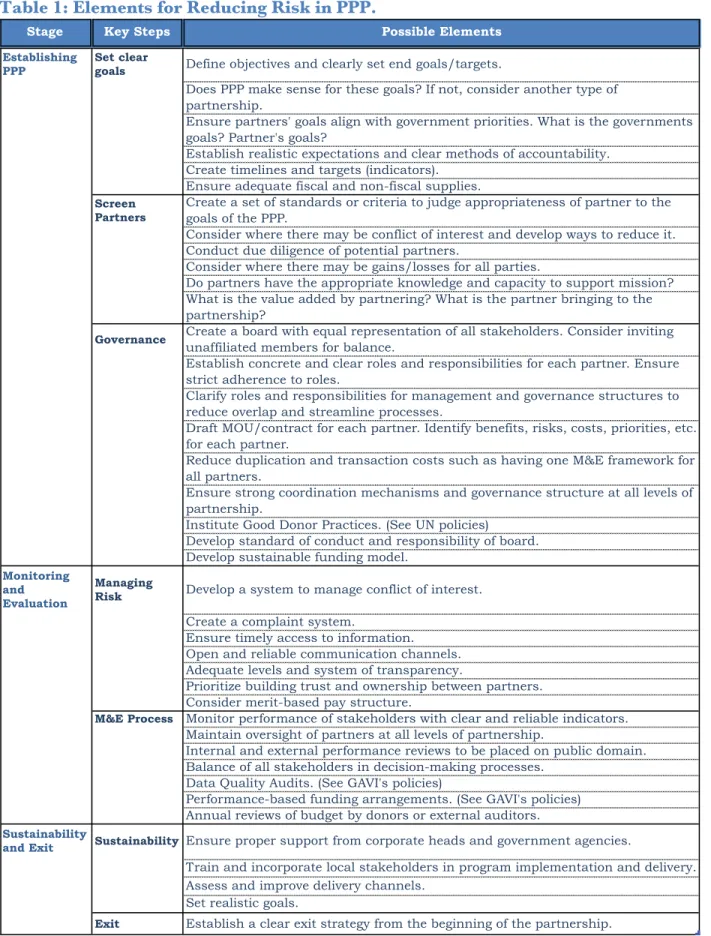
governments should engage in PPPs where there is a sufficient transfer or sharing of risks, suggesting that risks should be transferred to the party best capable of managing them. (OECD) Based on these research studies, Table 1 below provides an outline for reducing risk at various stages of the PPP engagement.
Table 1: Elements for Reducing Risk in PPP.
Stage Key Steps Possible Elements
Establishing
PPP Set clear goals Define objectives and clearly set end goals/targets.
Does PPP make sense for these goals? If not, consider another type of partnership.
Ensure partners' goals align with government priorities. What is the governments goals? Partner's goals?
Establish realistic expectations and clear methods of accountability. Create timelines and targets (indicators).
Ensure adequate fiscal and non-fiscal supplies.
Screen Partners
Create a set of standards or criteria to judge appropriateness of partner to the goals of the PPP.
Consider where there may be conflict of interest and develop ways to reduce it. Conduct due diligence of potential partners.
Consider where there may be gains/losses for all parties.
Do partners have the appropriate knowledge and capacity to support mission? What is the value added by partnering? What is the partner bringing to the partnership?
Governance unaffiliated members for balance.Create a board with equal representation of all stakeholders. Consider inviting
Establish concrete and clear roles and responsibilities for each partner. Ensure strict adherence to roles.
Clarify roles and responsibilities for management and governance structures to reduce overlap and streamline processes.
Draft MOU/contract for each partner. Identify benefits, risks, costs, priorities, etc. for each partner.
Reduce duplication and transaction costs such as having one M&E framework for all partners.
Ensure strong coordination mechanisms and governance structure at all levels of partnership.
Institute Good Donor Practices. (See UN policies)
Develop standard of conduct and responsibility of board. Develop sustainable funding model.
Monitoring and Evaluation
Managing
Risk Develop a system to manage conflict of interest.
Create a complaint system.
Ensure timely access to information. Open and reliable communication channels. Adequate levels and system of transparency.
Prioritize building trust and ownership between partners. Consider merit-based pay structure.
M&E Process Monitor performance of stakeholders with clear and reliable indicators. Maintain oversight of partners at all levels of partnership.
Internal and external performance reviews to be placed on public domain. Balance of all stakeholders in decision-making processes.
Data Quality Audits. (See GAVI's policies)
Performance-based funding arrangements. (See GAVI's policies) Annual reviews of budget by donors or external auditors.
Sustainability
and Exit Sustainability Ensure proper support from corporate heads and government agencies.
Train and incorporate local stakeholders in program implementation and delivery. Assess and improve delivery channels.
Set realistic goals.
a. Establishing PPP
One of the key concerns raised about private sector involvement in PPPs is the risk of misaligned incentives and priorities. Table 1 illustrates a few measures public sector can take to ensure that private sector’s priorities align with the national goals of the project. First, public sector should “partner with a purpose.” (McKinsey&Co., 2009) This means that they should ensure private sector partners are appropriate for the project, they contribute necessary resources and expertise, and that their interests align with the goal and priorities of the project.
Determine what each partner can bring to the partnership (financial support, skills, expertise, increased capacity, supply chains, etc.). Conducting due diligence, laying out interests clearly, and clearly defining roles and responsibilities are some of the ways to measure a partner’s fit with the goals and mission of the PPP. If they don’t fit, consider another form of partnership such as one-time limited engagement collaborations.
PPPs should also make sure that their mission is clear and goals concrete. Whenever possible, they should create results-based objectives and set clear timelines for completion. In defining their objectives and goals, it is important that they be as clear and specific as possible, making sure to outline each partner’s contribution explicitly. Setting expectations for each partner should be discussed in the initial meetings and shared with all partners.
Additionally, it is important to establish a strong governance system with a governing body, such as a board or lead group. The Global Alliance for Improved Nutrition (GAIN)’s Business
Alliance on Food Fortification (BAFF), for example, has such a system in place. “BAFF has two co-chairs from the private sector-one from Unilever and one from Coca-Cola-who, as agreed by BAFF’s corporate members, take a leadership role in decision-making and shaping the direction of BAFF in close coordination with representatives of both GAIN and WBI. The co-chairs are accountable for consulting the full corporate membership and reporting on decision-making. Each partner is held accountable for its actions on specific in-country projects that rarely involve all BAFF members. Each partner in turn is held accountable by its management and stakeholders; for example, GAIN is accountable to its Board, and the companies to their shareholders.” (Bekefi, 2006)
If there is a risk of overrepresentation of private sector or threat of low levels of public voice in the decision-making process, consider heightening public sector representation to create a balance of voices on decision-making boards. The board should have equal representation of all stakeholders and, when possible, include members who are unaffiliated with the PPP to bring an objective, outside perspective to the board. Once you have identified appropriate partners and clarified clear roles and responsibilities, formalize partnerships with contracts such as MOUs (See USAID Global Development Alliance for more information on MOU contracting).
Finally, the role and capacity of governments is crucial to the success of any PPP. Without proper support from governments, a PPP has little chance for success. Therefore, it is important that governments are dedicated to PPPs projects from the initial phase to the end. Additionally, governments must have capable personnel to carry out PPP projects effectively, and enough
capacity to ensure that PPPs are successful. Governments must also put in place proper PPP policies and strategies that not only help promote PPPs but also ensures its success. It is also important that governments be able to clearly identify and originate projects, accurately analyze individual projects based on resources and need, manage transactions, and be able to monitor and enforce contracts. In addition to this, governments must also be able to secure proper finances for PPP projects. Greater government investment in a project will help pull in private partners and build trust between partners. Finally, it is important that governments maintain open channels of communication, which is critical for developing trust and encouraging partner engagement in the project.
b. Monitoring and Evaluation
Table 1 also depicts proper monitoring and evaluation mechanisms that should be set up to ensure success of PPPs. First, it is important that monitoring happens regularly and consistently. Performance indicators should be created from the beginning and used to evaluate performance of partners throughout the PPP project. For example, GAIN created a Performance Framework based on international best practices that measures performance across 17 indicators. These indicators were measured against 8 targets for the organization to improve nutrition and served as a guide for measuring performance and maximizing impact. Furthermore, an independent panel of experts reviewed the data and offered advice on performance measurement and
improvement of programs. Performance indicators were also included in annual reports. (Bekefi, 2006) Examples such as these illustrate the importance and weight of measuring performance for the success and sustainability of PPPs. Performance indicators and monitoring systems can also be used as a tool to communicate progress to other stakeholders and the public. (McKinsey, 2005)
Furthermore, rules and consequences should be clearly laid out and strictly adhered to. This clarifies expectations for each partner and ensures that each partner is contributing to the success of the PPP. It is also important to create a complaint system and a clear mechanism to manage conflict of interest. These systems are important for ensuring accountability and promoting good performance of partners in the partnership.
Furthermore, it is important that there is strong coordination and communication mechanisms at every level of the partnership, not just at the top or bottom but one that moves longitudinally as well as laterally. Open and reliable channels of communication are also important for building trust and engaging partners to a greater extent in the PPP project. Public Hearings used by CARE International is a great example of open communication:
“In Nepal, CARE uses ‘Public Hearings’ to explain to communities how much funding they had for the program, how it was spent, the results they achieved and what rights people have to monitor their work. This worked very well in the Nepalese context where there is a culture of speaking out, and communities themselves later adopted this practice in order to hold their leaders to account.” (CARE, 2014)
Finally, it is important that any decision impacting the project be published on a public domain and is available in a timely manner. Budgets and performance reviews, as well as, annual reports should also be published and available for the public to access. And lastly, it is important that performance be linked to a merit-based pay system to reduce corruption and enhance
accountability and transparency in the partnership. Monitoring and evaluation mechanism such as these will ensure long-term sustainability and success of the partnership.
c. Sustainability and Exit
To ensure PPP sustainability, it is important for partners to implement a few critical processes such as those highlighted in Table 1. Annual reviews are important to identify weaknesses and gaps in the partnership. Leaders should react appropriately to these reviews by seeking ways to improve these weaknesses and fill the gaps. Additionally, it is important that reviews are
conducted regularly and inactive partners removed to improve the efficiency of the partnership. Leaders should be mindful that quality is more important than quantity.
Furthermore, partners should remain flexible to the changing dynamics of the partnership and adjust when necessary by streamlining and simplifying where possible. Furthermore, leaders should work to create a committed workforce who feels engaged in the partnership and the project. PPP leaders both in the public and private sector need to encourage and support staff through all levels of the partnership. This is important for establishing trust and credibility within the PPP so that staffers and external stakeholders feel committed to the PPP and support its work. Moreover, engaging private sector from the initial phase to the end of the project and at all levels is important for creating a sense of ownership and trust between partners and ensuring
sustainability of the PPP.
Sustainability also depends on the impact that partners are making and how invested they feel in the work that they are doing. Promoting and encouraging the value of the partners’ contribution to long-term social impact or emphasizing their role in helping underserved communities can help facilitate greater engagement and support from private sector partners. By showing partners that their work is contributing to improving lives, it can motivate staffers and encourage more commitment to the end results of the project.
Additionally, it is important that PPP work to train and incorporate local actors as much as possible. This helps facilitate knowledge transfer and enforces sustainability of the project. Local partners should also be sought and trained to help diffuse the program further in the local communities. When possible, partners should work with local governments to improve deliver channels and enhance the capacity of existing program delivery systems. GAIN is a great example of transferring institutional knowledge where ever possible. GAIN works with governments at the national and local level to set up national fortification alliances (NFAs), a coalition of civil society, private sector, and public sector groups that encourage local business engagement in nutrition programs. To ensure that appropriate foods are fortified, GAIN requires that countries establish NFAs prior to receiving any grant funding from the organization. This ensures that properly fortified foods are available through markets mechanisms at the local level. (Bekefi, 2006)
Finally, it is important to establish and maintain realistic goals throughout the entire project. This will keep expectations grounded and reduce challenges that may arise in the future. It is also crucial to maintain a mechanism of continuous review at all levels of the program. This will help share knowledge, update progress, and keep partners engaged through the entire PPP lifecycle. Lastly, when missions and goals have been achieved, establish proper exit systems for partners. It
is important to develop a clear exit strategy in the beginning so that partners know how and when the exit process will transpire.
II. POLICY QUESTION:
What tools can reduce risks in public-private partnerships?
III. METHODS:
This analysis will comprise of case studies comparing four PPPs implemented in Bangladesh, Nepal, Tanzania, and Uganda.
Case Studies: Country Selection
A preliminary comparison was conducted across countries based on the availability of PPP case studies in the global health domain. The preliminary review narrowed down country cases to ten countries with various PPP models. In order to ensure that countries could be comparable, countries were controlled based on three development indicators: GDP per capita, population, Rural/Urban ratio. Using data collected by the World Bank on World Development Indicators, comparison graphs of each indicator were used to find commonalities among countries. From this comparison, four countries showed similarities along these three indicators: Tanzania, Uganda, Nepal, and Bangladesh.
Figure 3: GDP growth per year. World Bank DataBank. 2014
0 2 4 6 8 10 12 14 1990 1991 1992 1993 1994 1995 1996 1997 1998 1999 2000 2001 2002 2003 2004 2005 2006 2007 2008 2009 2010 2011 2012 GD P Grwoth (% an n ual) Year GDP Growth Bangladesh Nepal Uganda Tanzania
Figure 4: Population Growth per year. World Bank Databank, 2014
1
Figure 5: Rural Population per year. World Bank Databank, 2014
Case Studies: Country Analysis
Cases from all four countries were analyzed based on elements of reducing risks outlined in Table 1. The analysis identified risks in each PPP and looked at how each country approached these risks, determining whether elements from Table 1 were used, and if so, how successful they were in reducing risks. In particular, the analysis aimed to identify the elements from Table 1 that were especially important to reducing risks and isolated common themes between cases. A
1 World Development Indicators was collected from the Databank: www.worldbank.org
0 0.5 1 1.5 2 2.5 3 3.5 4 Popul at ion Grow th (annual %) Year
Population Growth
Bangladesh Nepal Tanzania Uganda 0 10 20 30 40 50 60 70 80 90 100 1990 1991 1992 1993 1994 1995 1996 1997 1998 1999 2000 2001 2002 2003 2004 2005 2006 2007 2008 2009 2010 2011 2012 % Tot al R ura l Pop ul at ion YearRural Population (% total)
Bangladesh Nepal Uganda Tanzania
summary of the strengths and weaknesses for reducing risks are laid out in Tables 2, 3, 4, and 5 at the end of each case.
In determining risks and risk reduction, each case study examined the following questions: 1. Who are the stakeholders and what are their roles?
2. How is funding allocated? 3. What are the risks?
4. How did the partnership address these risks?
In some of these cases, a complete analysis of each point laid out in Table 1 could not be made due to the limitations in accessing data on the case. However, each case gives a general
understanding of the factors that were important for determining risk reduction in the
partnership, the challenges faced by the partnership, whether the PPP was successful in reducing risks, and where the partnership could have improved to be more effective at reducing risks.
IV. CASE STUDIES
Bangladesh
The Government of Bangladesh has come a long way in terms of development. In the late ‘70s and early ‘80s, the government began to realize that lack of access to healthcare and limitations in government capacity to deal with these issues created a huge barrier to its development. Therefore, it began to embrace the idea of PPPs hoping that what the government could not do, the private sector could accomplish. Currently, the country has numerous PPP initiatives. With about 4000 NGOs working on an array of policy issues, the opportunity for PPPs have
dramatically increased over the last two decades.
Structurally, the Government of Bangladesh has established a PPP Unit under the Ministry of Finance. The Unit is responsible for overseeing PPP projects and supporting them with fiscal and non-fiscal resources. The current PPP Unit oversees funds for PPPs and works “on behalf of the Government to monitor budget implications of upcoming PPP projects and manage any
contingent liability exposure that the government may deem appropriate to support PPP project financing. In this role the PPP Unit provides critical support to overall public financial
management by providing inputs to the national Medium-Term Budgetary Framework.” (Bangladesh, 2014)
a. Case Background
The Expanded Programme of Immunization (EPI) was launched in Bangladesh in 1974 to battle six diseases: neonatal tetanus, polio, diphtheria, measles, tuberculosis, and pertussis. To
accelerate vaccinations through this program, the Government of Bangladesh began to engage other partners to expand its reach to more people.
The EPI program was effective in reaching a large portion of the Bangladesh population through the PPP. This was in part due to the efficiency and engagement of the partners within the
partnership. With the national government overseeing the program, other partners worked closely with each other and with local governments to improve delivery of the EPI program to reach more communities.
b. Who are the stakeholders and what is their role?
There were four primary stakeholders in the EPI program: Bangladesh government, donors, NGOs, and the private sector.
The Government of Bangladesh initiated the EPI program and recruited the aid of local and national NGOs to expand the program reach to remote populations. International donors joined to provide funding for program implementation. Private sector joined in the partnership to assist in advocacy and community mobilization.
Figure 6: EPI Stakeholder Diagram. (Osman, 2008)
The government’s main role was providing policy guidelines, steering the program, coordinating partners and their work, and monitoring the program. It has invested in both financial and technical resources to support the EPI program, as well as, the purchasing and supplying of vaccines to NGOs. The government was also responsible for providing human resource support, infrastructure, cold chain system and logistical assistance to partners in the partnership. At the national level, the government provided policy guidelines and coordinated partners in the EPI program. At the local level, the government was responsible for program design and
coordination of partners in the community. However, both local and national agencies were responsible for monitoring and supervising NGOs and other partners at their respective levels.
International organizations and donors including WHO, UNICEF, USAID, JICA, GAVI, and the Swedish Government provided valuable financial support for the EPI program. With the proper resources, the EPI program was able to roll out efficiently, have adequate supplies, and sufficient staff to oversee the program logistics and delivery.
The NGOs played the greatest role in program reach and success. They worked with the government at its inception to recruit donors, engage private sector, and effectively implement the program. In addition, they trained staff and volunteers, provided immunization services, mobilized resources, measured and reported progress to local governments, and disseminated information to expand community awareness. They also monitored and evaluated the program to ensure accuracy and adhesion to policies.
While the private sector wasn’t involved in program rollout and implementation phases, they were responsible for advocacy and community mobilization. They worked on improving awareness in the community through social media and advertisements. Over time, other
companies joined in the efforts as well, leading to higher levels of awareness in the communities.
Figure 7: Role of Stakeholders. (Osman, 2008)
c. How is funding allocated?
Both the government of Bangladesh and external donors provided funding for this program. About 42% of the funding came from the government and the rest was covered by USAID, WHO, UNICEF, JICA, and the Swedish government.
d. What are the Risks?
While the EPI PPP was successful in expanding immunization to remote villages, there were various risks that the program faced. First, there was the question of government capacity. Given that the government lacked the resources and ability to achieve 100% immunization levels on its
own, would it have the capacity to coordinate an expansion of the program and manage partners in the PPP? Second, the limited resources of the government threatened the success of reaching 100% immunization levels, especially in the remotest of villages. Third, the risks that inevitable arise when many partners work together also threatened the EPI program from achieving its goals, including how to manage competing priorities and misaligned incentives of partners. Fourth, securing sustainable funding sources was a great risk in the partnership. What would happen if donors reneged on their commitments or not enough funds were raised? Such risks would certainly impede the PPP’s goals.
e. How did the partners address these risks?
The EPI program was successful at immunizing communities and has received international acclaim for its achievements. Nationwide, the program reached almost 100% of the population in awareness of the program. The scale and depth of the program has also been considered noteworthy. By 1991, 62% of Bangladesh had been immunized as apposed to 2% in 1985. Overall, the quality of immunization remains high, there exists an excellent cold chain system, and the logistics of program delivery remain efficient and effective.
There have been a number of factors that have led to the success of this program. For one, keeping partners relevant and consistent with the work and goals of the program contributed greatly to the success that was achieved through the EPI program. Ensuring that partners’ goals aligned with the objectives of the program helped remove conflict of interest within the partnership and kept partners invested in the work that they were contributing towards the partnership. Furthermore, the role of each partner was clearly laid out, which eliminated confusion and created consensus among partners.
Additionally, the strong commitment and engagement on the part of the government contributed greatly to immunizing large portions of Bangladesh communities. The active involvement of local governments in mobilizing communities and resources further pushed the program along. This support from the government gave NGOs and program implementers the resources and staff they needed to attain results. The strong role of the government helped establish trust in the program and aided in attracting other partners to the partnership, including international donors and private sector. The government also created a performance award, which provided an incentive system to encourage partners to improve performance.
The strong coordination efforts by the Government of Bangladesh and NGOs further helped make the EPI program successful. The government provided sufficient funding, technical support, and adequate resources for NGOs in the community. This created a smooth flow of resources and timely delivery, which helped NGOs immunize communities in an effective and efficient manner. In addition, strong collaboration and coordination efforts among partners reduced redundancy and waste in the EPI program. It also contributed to greater partner engagement and commitment to the program, which enhanced the efficiency and effectiveness of the program.
Another factor that led to the success of the EPI program was the strong communication streams between partners, which helped build a sense of ownership, mutual trust, and respect in the partnership. Regular meetings kept stakeholders informed on the progress of the program and helped in keeping lines of communication open and transparent for sharing updates and results at the local level. Strong communication streams also created consensus among stakeholders
about the goals and mission of the program. Partners became more engaged and invested in the program, and played an active role in reaching out to communities and increasing immunization numbers.
Another crucial element of the program that led to its success was the strong monitoring and accountability framework. On top of the robust monitoring processes of the government, the
systematized supervision by local government, NGOs, and donors helped ensure accountability of partners and stakeholders. Local officials visited sites regularly to supervise the program. In addition, NGOs set up their own monitoring system, which included vaccine records, daily performance records, and monthly progress reports. These were published and reported to government officials monthly. Graphic data tracking progress were also posted in control rooms to ensure goals and results were being met. Furthermore, donors also sent representatives regularly to monitor and evaluate the program and to confirm that partners were meeting program goals and objectives.
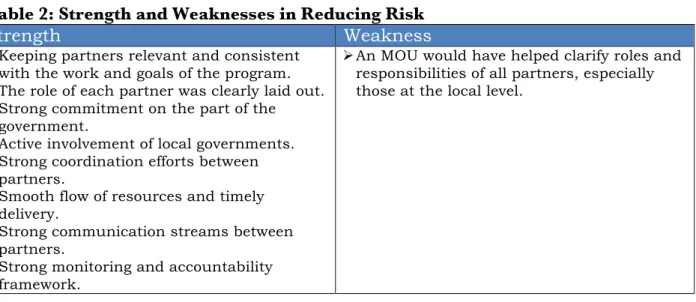
Based on this analysis and the criteria in Table 1, some strengths and weaknesses for the EPI program have been highlighted in Table 2. The Strength column highlights aspects of the program that were crucial to the success of the program, while the Weakness column lists areas that need to be improved to make the program more effective and less risky for partners.
Table 2: Strength and Weaknesses in Reducing Risk
Strength Weakness
ØKeeping partners relevant and consistent
with the work and goals of the program.
ØThe role of each partner was clearly laid out.
ØStrong commitment on the part of the
government.
ØActive involvement of local governments.
ØStrong coordination efforts between
partners.
ØSmooth flow of resources and timely
delivery.
ØStrong communication streams between
partners.
ØStrong monitoring and accountability
framework.
ØAn MOU would have helped clarify roles and
responsibilities of all partners, especially those at the local level.
This case study analysis was based on data collected by F. Osman for PPPs in health service delivery in Bangladesh. (Osman, 2008)
Nepal
The government of Nepal has made major headways in establishing PPPs in Nepal. In an
attempt to improve development through the engagement of the private sector, Nepal established a specialized governmental agency with a PPP Centre to advise and monitor partnership
programs in the country.
The National Planning Committee on PPP leads the development of PPP units by promoting policies that support PPPs and ensuring that new and existing PPPs are aligned with national
agendas and agency policies. The National Planning Committee is also responsible for
establishing effective coordination among government agencies, promoting communication with private sector and stakeholders, reviewing and monitoring PPPs, and assessing market
opportunities for PPPs.
Within the PPP agency is the PPP Centre, which is responsible for promoting and supporting PPPs. The Center also establishes PPP guidelines, identifies potential PPP opportunities, and reviews and develops PPP capacity. Additionally, it also offers guidance and resources for new PPPs, develops contracts, assists in the management of PPPs including monitoring and
evaluation, and reports updates and progress on existing PPPs.
Moreover, the Ministry of Finance (MoF) plays an integral role in the establishment of PPPs. The MoF oversees the budget and funding aspects of PPPs and ensures that business plans are
sustainable and meet national policy requirements for PPPs. The MoF also reviews procurement plans, risk allocations, funding needs, and works with stakeholders to find and fill gaps in budgets and funding.
While the government has a strong system in place, it is still fairly inexperienced in the world of PPPs. The country also lacks a robust private sector interested in investing in PPPs, institutional capacity, and policies that enable PPPs to take place. (Nepal, 2011)
a. Case Background
With funding from USAID and guidance from John Snow Research and Training Institute Inc., the Nepal Ministry of Health and Population (MoHP) established the Nepal Family Health Program II (NFHP II) in 2007. The program was designed to assist the MoHP in “increasing access to public sector family planning and maternal newborn and child health services at [the] community level.” (Tuladhar, 2013)
One of the initial projects of NFHP was to assist MoHP with data collection on the usage of chlorohexidine for newborn umbilical cord care and to design a program to distribute
chlorohexidine to the public. Data collected from this study found that Chlorohexidine reduced umbilical cord infections by about 30%, which meant that usage of Chlorohexidine on newborn umbilical cords could reduce infant mortality. With this data, the MoHP decided to promote the use of Chlorohexidine through a massive Newborn Health Strategy campaign that would
disseminate information on the use of Chlorohexidine for newborns.
The challenge became how to manufacture Chlorohexidine locally. The MoHP worked with the NFHP II to develop a strategy to engage private pharmaceutical companies in the program. However, gaining the interest of these companies was rather difficult. For one, the
pharmaceutical companies were concerned that manufacturing a small quantity of Chlorohexidine would be very costly if the initial program tests didn’t succeed, with no immediate prospect of large scale sales of the product. Secondly, Chlorohexidine had to be produced and sold at low enough prices that poor communities would have access to them. This meant that pharmaceutical companies would have to produce at a loss without any potential financial support from donors or the public sector. And finally, the pharmaceutical company would have to register the drug with the government and invest in the development of the product.
NFHP II was working with pharmaceutical companies within N-MARC on developing family planning contraceptives aimed at improving maternal and child health. From this work, NFHP II identified five companies who could manufacture Chlorohexidine. From these five, Lomus emerged as the best private sector partner to work with because of their interest in entering the development sector and the high quality of their products. There was no formal contract, just a verbal agreement between Lomus and NFHP II to manufacture Chlorohexidine. The
partnership between Lomus and MoHP was very informal and was overseen by an outside consultant, Academy for Education and Development (AED), and NFHP II.
Engaging Lomus in the partnership was challenging at first because Lomus was initially concerned that the production of Chlorohexidine wouldn’t benefit them in the long run. However, the existing relationship between Lomus and N-MARC played a catalytic role in getting Lomus interested and engaged in the project. During the initial stages of involving Lomus, the Project Director at NFHP II and N-MARC Program Manager approached Lomus with data on Chlorohexidine and the impact it could have saving newborns. These initial meetings were crucial for convincing Lomus of the importance of the project and its impact. In addition, the involvement with JSI and AED helped Lomus understand the bigger picture and future prospects of their investment. The fact that N-MARC was engaged with Lomus about potential future collaborations further helped strengthen Lomus’ commitment to engaging in this initiative. Therefore, even though the production of Chlorohexidine would not yield large profits, the relationships cultivated through this program could open future market opportunities for Lomus.
b. Who are the stakeholders and what is their role?
There were seven primary stakeholders in the partnership: Government of Nepal, Lomus, JSI, AED, NFHP II, N-MARC, and donors.
NFHP II and N-MARC worked with the government, donors, and communities to provide necessary guidance for program implementation, as well as, conducting data collection on the
Government: Fiscal Support and Monitoring Lomus: Chlorohexidine Creation JSI: Program Implementation and Expertise AED: Support and
Supervision of Chlorohexidine
Production. USAID/Donors:
Network (N-‐ MARC) and Fiscal
effectiveness of Chlorohexidine for umbilical cord care. These two organizations were mainly responsible for implementing the program and delivering Chlorohexidine to the community. They also tracked progress and performance of clinics, and monitored Lomus to ensure proper delivery of supplies to community clinics.
Nepal’s government agencies (MoPH, Department of Drug Administration, Department of Health Services, and Family Health Division) played a supporting role by monitoring partners and ensuring that the partnership met all fiscal and logistical requirements. They also provided necessary resources and guidance on program implementation and delivery. Furthermore, the government worked closely with Lomus and engaged them in the Technical Advisory Group (TAG) meetings. Finally, the government agencies monitored and tracked performance of all stakeholders and measured program outcomes.
JSI played a large role in the implementation of the Chlorohexidine program and providing program expertise. They were responsible for overseeing the program design and recruiting and engaging partners in the program. Furthermore, JSI monitored stakeholders, measured progress, and worked with NGOs to collect data on program outcomes. AED, on the other hand,
managed private sector manufacturing of Chlorohexidine. In coordination with PATH, they were responsible for auditing Lomus, monitoring performance, assessing the quality of Chlorohexidine, and assisting Lomus getting drug approval.
Finally, Lomus Pharmaceuticals developed and supplied Chlorohexidine for the program. They were mainly responsible for making sure that there was adequate supplies of Chlorohexidine available and ensuring timely delivery of supplies. However, Lomus became more involved as the program progressed, attending TAG meetings and monitoring partners to ensure supplies were adequate and delivery systems were robust.
c. How is funding allocated?
Program costs were covered through a matching grant from USAID. However, USAID funding was limited and could not be applied to product purchasing. This forced Lomus and NGOs to look for additional sources of funding to cover the drug costs. In addition, Lomus also had to cover some of the manufacturing costs.
d. What are the Risks?
This program was multifaceted and had many stakeholders involved which created numerous risks. The government of Nepal, for example, had to deal with the uncertainty of engaging the private sector, managing multiple stakeholders, negotiating competing interests of partners, and determining whether the program would prove successful. There was also the additional risk of Lomus’ monopoly power in the Chlorohexidine market and what that would mean for product quality. For Lomus, there was a risk in investing in a project that would reap little or no profit, or even prove costly to them. Finally, similar to governmental concerns, NGOs had to guarantee that Lomus wasn’t only seeking fiscal gains but that they were committed to the long-term aspects of the project. If Lomus deterred from their commitment, it could derail the entire project.
e. How did the partners address these risks?
While the Chlorohexidine program had some initial challenges in engaging the right private sector, it was nonetheless quite successful in implementation and product delivery. It was
acknowledged from the beginning that this would be a risky business venture for private sector. However, engaging Lomus who was interested in this work, understood its importance, and was committed to improving lives helped make the program successful. Lomus had to take a risk knowing that there was little prospect of making a profit and even producing at a loss.
The engagement and commitment from Lomus helped establish trust with NGOs and the government. NGOs involved Lomus in other related projects, which establish its reputation as a trustworthy private sector partner. The government also began engaging Lomus in some of its national programs, which opened new markets for Lomus. Additionally, international organizations and other governments learned about the success of the Chlorohexidine program, which opened even more opportunities for Lomus. Therefore, even though Lomus had to accept a financial loss in the Chlorohexidine program, it led to more profitable market access in the future.
NFHP and N-MARC’s critical role in cultivating trust between the private sector and other partners was crucial to the success of this program. Project managers from these organizations were effective at establishing trust in the partnerships by having frequent meetings with Lomus early on. When other partners, especially government and donors, witnessed the engagement and
commitment from Lomus, they too accepted Lomus as an important player in the program. As the project progressed, Lomus’ role became more integrated and involved in the partnership. The government broadened the role of Lomus in the partnership by making them active members of TAG. TAG met frequently to provide technical advice and guidance to the program. The opportunity to be involved in these discussions gave Lomus a greater sense of ownership in the project. It helped Lomus better understand the impact it was having in Nepal’s public health. This
realization made Lomus hold other stakeholders accountable as well by following up with NFHP about the progress of the program, monitoring supplies, and ensuring timely production of Chlorohexidine to meet demand. Lomus, as well, felt that stakeholders trusted and welcomed them in the partnership.
“ During the four-year span, Lomus was successful in gaining appreciation from all the stakeholders. Key informants from the DoHS, PMWH, and USAID shared that there were no concerns with regards to involving Lomus in the Chlorohexidine program at any stage. According to USAID, given the positive relationship with Lomus during phase 1, that relationship should continue with the 2011 scale-up initiative, the Chlorohexidine Navi Care Project. Therefore, Lomus was approached by NFHP and later on became a partner in the new program. It should also be noted that Lomus has been supplying various other products to DoHS, with no concerns regarding product quality or price.” (Tuladhar, 2013)
The TAG meetings weren’t just important for engaging Lomus but increased engagement and communication between other stakeholders as well. Constant communication between all stakeholders was crucial to reducing misinformation and building trust. In addition, village development committee groups also played an important role in engaging partners with the community. This helped integrate the program fully into the villages and hold partners accountable to the people. In addition, the high degree of engagement from the government’s various agencies was crucial to holding stakeholders accountable, ensuring transparency, and keeping an open communication system. This constant stream of information flow helped establish strong relationships between all stakeholders.
Another factor that minimized risk was the relevance and consistency of the partners’ interest in the project. All the stakeholders were invested in the project, passionate about the issues, and committed to improving the health of Nepal’s citizens. Lomus was interested in expanding its work to public health and development. In making this clear from the beginning, it helped reduce risks because partners knew what to expect from Lomus and what their interests were. Relevancy of partners combined with constant communication and a rigorous participatory process that engaged all stakeholders from the beginning had an enormous impact on reducing risks in the partnership. Furthermore, monitoring and evaluation conducted by stakeholders as well as outside consultants was crucial to the success of the program. In addition to the government monitoring PPP progress, the NGOs also monitored program delivery and implementation. Additionally, AED brought in an external U.S. pharmaceutical regulatory assurance company to monitor Lomus’ manufacturing facility and guarantee product quality. The government also regulated Lomus’ facilities and products to ensure it met national drug standards. On the other end, Lomus had its own quality monitoring system of Chlorohexidine production. In addition, Lomus also monitored program implementation conducted by NGOs to ensure adequate supply and timely product delivery. These various levels of monitoring ensured accountability of all stakeholders, not just the private sector.
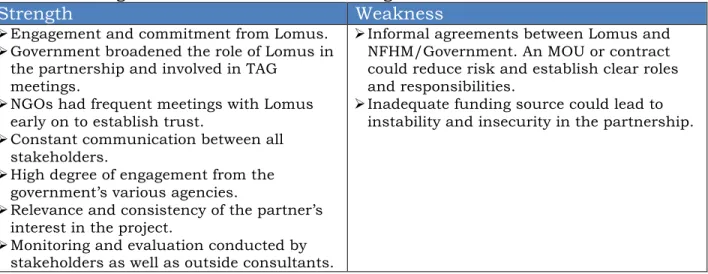
Table 1 was used to analyze how effective Nepal’s Chlorohexidine PPP was at reducing the various risks it faced. The strengths and weaknesses of the PPP program are listed in Table 3. The Strength column highlights a few of the possible elements that have made the Nepal case successful in reducing risks, while the Weakness column lists challenges faced by the PPP and possible tools from Table 1 that could have helped them to reduce these risks.
Table 3: Strength and Weaknesses of Reducing Risk
Strength Weakness
ØEngagement and commitment from Lomus.
ØGovernment broadened the role of Lomus in
the partnership and involved in TAG meetings.
ØNGOs had frequent meetings with Lomus
early on to establish trust.
ØConstant communication between all
stakeholders.
ØHigh degree of engagement from the
government’s various agencies.
ØRelevance and consistency of the partner’s
interest in the project.
ØMonitoring and evaluation conducted by
stakeholders as well as outside consultants.
ØInformal agreements between Lomus and
NFHM/Government. An MOU or contract could reduce risk and establish clear roles and responsibilities.
ØInadequate funding source could lead to
instability and insecurity in the partnership.
This case study analysis was based on data collected by S. Tuladhar for PPP in Chlorohexidine Navi Care Program in Nepal. (Tuladhar, 2013)