UNDERSTANDING BEEF CATTLE EFFICIENCY: I) UNDERSTANDING PHYSIOLOGICAL AND DIGESTIVE FACTORS AFFECTING RESIDUAL
FEED INTAKE AND II) TANNIN SUPPLEMENTATION: EFFECTS ON ANIMAL PERFORMANCE, FERMENTATION, AND CARCASS TRAITS
A Dissertation by
WIMBERLEY KAY KRUEGER
Submitted to the Office of Graduate Studies of Texas A&M University
in partial fulfillment of the requirements for the degree of DOCTOR OF PHILOSOPHY
August 2009
UNDERSTANDING BEEF CATTLE EFFICIENCY: I) UNDERSTANDING PHYSIOLOGICAL AND DIGESTIVE FACTORS AFFECTING RESIDUAL
FEED INTAKE AND II) TANNIN SUPPLEMENTATION: EFFECTS ON ANIMAL PERFORMANCE, FERMENTATION, AND CARCASS TRAITS
A Dissertation by
WIMBERLEY KAY KRUEGER
Submitted to the Office of Graduate Studies of Texas A&M University
in partial fulfillment of the requirements for the degree of DOCTOR OF PHILOSOPHY
Approved by:
Chair of Committee, Gordon E. Carstens Committee Members, Robin C. Anderson
T. David Forbes Luis O. Tedeschi Intercollegiate Faculty
Chair, Stephen B. Smith
August 2009
ABSTRACT
Understanding Beef Cattle Efficiency: I) Understanding Physiological and Digestive Factors Affecting Residual Feed Intake and II) Tannin Supplementation: Effects on
Animal Performance, Fermentation, and Carcass Traits. (August 2009) Wimberley Kay Krueger, B.S., Texas A&M University
Chair of Advisory Committee: Dr. Gordon E. Carstens
Objectives of this study were 1) to characterize the relationship between beef cattle efficiency, namely residual feed intake (RFI), and digestive, microbial, and fermentation parameters in growing beef calves and 2) to examine the effects of added dietary hydrolysable or condensed tannin on animal performance and efficiency, fermentation and carcass and non-carcass traits. To accomplish the first objective, multiple RFI studies were conducted and in all studies RFI was calculated as the
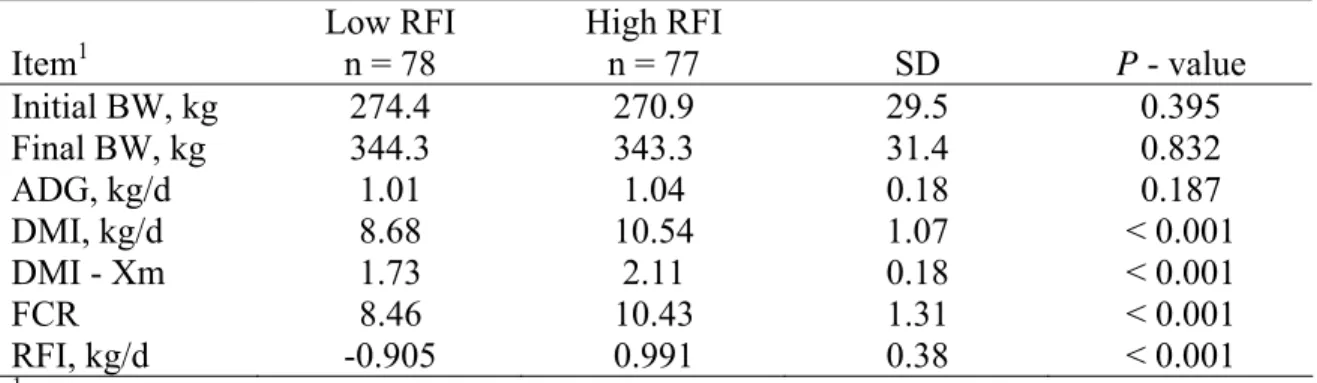
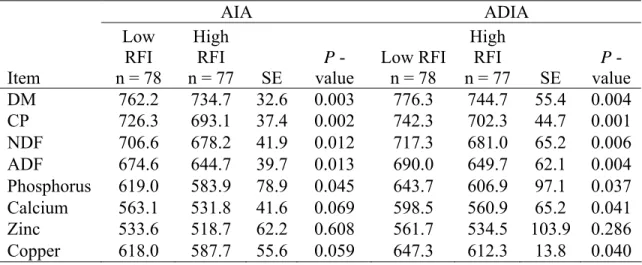
difference between actual and expected dry matter intake (DMI) based on average gaily gain (ADG) and body weight0.75(BW). A total of 187 head selected out of a population of 600 head of growing beef calves were evaluated for diet and nutrient digestibility, ruminal and fecal volatile fatty acids (VFA) concentrations and methane producing activity (MPA). Low RFI calves consumed less DMI and had lower feed conversion ratios (FCR) as compared to high RFI calves. Low RFI calves also had higher diet and nutrient digestibilities compared to high RFI calves. Residual feed intake was negatively correlated with diet and nutrient digestibilities such that more efficient animals had
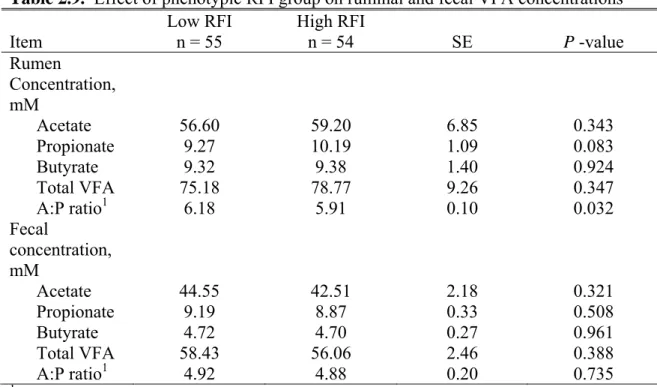
higher digestibilities. Low RFI calves tended to have lower ruminal propionate and higher acetate:propionate ratios when fed a high-forage diet. Calves with divergent RFI did not have different gross microbial populations as evidenced by the
Firmicute:Bacteriodetes ratio, but low RFI calves tended to have higher fecal Prevotella
spp. and lower fecal Spirochaetes and ruminal Cyanobacteria. The importance of these subtle shifts in microbial ecology is not evident at this time and more research is needed to fully elucidate the interaction of host and microbes to fully grasp the importance of minor microbial deviations. No differences in 3 h MPA were detected in low vs. high RFI calves but low RFI calves had higher fecal MPA when sampled at 24 h; however, calculated methane emissions were lower for low RFI calves. Tannin supplementation had no effect on animal performance and efficiency, ruminal fermentation VFA
concentrations, MPA, or ammonia concentrations in finishing beef steers. There was also no detrimental effect of tannins on carcass traits; however, hydrolysable tannin supplementation resulted in increased empty rumen mass. Results from these studies indicate that diet and nutrient digestibility are affected by RFI such that more efficient calves had higher DMD, microbial ecology is responsive to RFI such that minor
microbial shifts were observed, and tannin supplementation, at the current inclusion rate, had no effect on animal and carcass performance.
DEDICATION
ACKNOWLEDGEMENTS
I owe my success to God, who has blessed me in countless ways and provided me with strength, courage, and the will to go on. Through Him, all things are possible.
I would also like to thank my committee for all of their guidance and assistance throughout the course of this research: Dr. Carstens, chair, and members Drs. Forbes, Anderson and Tedeschi. Every one of you contributed to my growth, each in different ways, and for that, I am thankful.
Thanks and gratitude is extended to Kristin Clemens, Ph.D. Kristin helped me through many interpersonal conflicts and taught me how to learn from each situation, grow from it, and ultimately to stand up for myself. With her help, I learned that I deserve respect and I am a strong woman. That strength grows every day. The Thesis and Dissertation Support Group is also acknowledged; they were a wonderful ray of hope and the unbiased support system that I needed while I was writing.
Much love and gratitude goes to my wonderful dogs. They never judged, were always there, and provided unlimited kisses when I needed them. I enjoy their company, the activities that we do together, and their unconditional love. What better support and therapy can one hope for!
Many people, almost too numerous to list, helped me succeed in my research endeavors while here at Texas A&M. Firstly, I would like to thank Al Boning for instilling in me the self confidence and analytical prowess that I have today. Without his guidance and knowledge, I would not be the accomplished laboratory person that I am. I
would also like to thank Carrie Hensarling for her help and support in laboratory analyses as well as for her understanding. Additionally, thanks go to Lisa Slay who coordinated and helped with data collection, sample processing and provided a shoulder during some of the most frustrating times. I also wish to thank two ladies that I hold near and dear to my heart. I found comfort in both of your arms and yall made me feel like I had a second mom to go to; special thanks to Candice Moore and Shirley Levi. Also, thanks to Troyce Wilson; he lent an ear and was a great listener. Amy Hill also holds a special place in my heart. I spent some of the best time with her while I was in Florida and I cherish that time we spent together. We fit well together, think alike, enjoy herding sheep and cattle, and had a great time doing it all! I have found someone that I am proud to add to my inner circle of confidants.
Many thanks go to my fellow graduate students that helped me along the way: Phillip Lancaster, Flavio Ribeiro, Willy Horne, Shane Horrocks, Brandi Bourg, Cody Miller and Robynne Gomez. Yall saw me though my journey, though the tears, and through to success; thanks. Countless other graduate students helped during fecal collections and I am thankful for their help. Phillip and Willy were very generous with their statistical help and I appreciate that, and Brandi was always eager to help. Special thanks are extended to Robynne, though, for almost every fecal sample I processed, she helped with in some way…Thanks!
My family is special to me and deserves extra thanks. My grandmother, Katie Leathers, and mother, Gena’ Leathers, are two of the strongest people I know and have been excellent examples of how to be a strong woman and how to make a way for
myself. My mother instilled in me the ability to make a way for myself and not depend on anyone to do it for me. She was a great example for me to learn how to pick myself up and dust myself off. For that, I am very grateful. My brother, Reece Dunn, and niece, Trinity Dunn, have offered many laughs and a shoulder a time or two, during my tenure here, and I am proud to call them my brother and niece. Alfred and Susan
Krueger and Kenton Krueger, my father-in-law, mother-in-law, and brother-in-law, have all offered support and kindness during my doctoral work and I thank them for that. My sister, Patricia Burbano, has been with me through all the ups and downs and I can always count on her. She is a strong woman and I am very proud to be connected to her. Lastly, my husband, Nathan Krueger, deserves kudos, awards, and many thanks for enduring this time. He has lent a shoulder to cry on, been a sounding board for ideas, and read many scientific drafts for corrections and such. I would not be the person I am today without him. Thank you for your love and patience. I love you!
NOMENCLATURE
A:P Acetate : propionate ratio
Ac Acetate
ADF Acid detergent fiber
ADFD Acid detergent fiber digestibility
ADG Average daily gain
ADIA Acid detergent insoluble ash
AIA Acid insoluble ash
APA Ammonia producing activity
BES α-Bromoethanesulfonic acid
bTEFAP Bacterial tag-encoded FLX 16s rDNA amplicon pyrosequencing
BW Body weight
By Butyrate
CFU Colony forming unit
CH4 Methane
CP Crude protein
CPD Crude protein apparent digestibility
CT Condensed tannin
DGGE Denaturing gradient gel electrophoresis
DM Dry matter
DMI Dry matter intake
DMI-Xm Dry matter intake as a multiple of maintenance f Fecal
FBW Final body weight
FCR Feed conversion ratio (kg feed/kg gain)
FT Fat thickness
G:F Gain : feed (kg gain/kg feed)
GE Gross energy
GIT Gastrointestinal tract
HCW Hot carcass weight
HT Hydrolysable tannin
IBW Initial body weight
IU International unit
KPH Kidney, heart, and pelvic
LW Live weight
M Maintenance
ME Metabolizable energy
MPA Methane producing activity NDF Neutral detergent fiber NDFD Neutral detergent fiber digestibility
NH3 Ammonia
PCR Polymerase chain reaction
ppm Part per million
Pr Propionate
r Ruminal
PRP Proline-rich salivary protein
REA Ribeye area
RFI Residual feed intake
SF6 Sulfahexaflouride
spp. Species
trt Treatment
VFA Volatile fatty acid
TABLE OF CONTENTS Page ABSTRACT ... iii DEDICATION ... v ACKNOWLEDGEMENTS ... vi NOMENCLATURE……….. ix
TABLE OF CONTENTS ... xii
LIST OF FIGURES... xv
LIST OF TABLES ... xvi
CHAPTER I INTRODUCTION AND LITERATURE REVIEW... 1
Understanding Physiological and Digestive Factors Affecting Residual Feed Intake... 1
Introduction ... 1
Biological Sources of Variation in RFI... 3
Feed Efficiency and Diet Digestibility... 6
Feed Efficiency and Microbial Ecology... 9
Mitigating Methane Production in the Ruminant... 13
Tannin Supplementation: Effects on Animal Performance, Fermentation, and Carcass Traits ... 21
Introduction ... 21
Tannin Effect on Growth and Composition of Gain ... 22
Tannin Effect on Microbial Populations ... 25
Tannin Degradation in the Rumen, Microbial Tannin Toxicity, and Tannase Activity ... 29
Tannin Effect on Ruminal Fermentation... 32
CHAPTER Page
II RELATIONSHIPS BETWEEN RESIDUAL FEED INTAKE AND APPARENT NUTRIENT DIGESTIBILITY, IN
VITRO METHANE PRODUCING ACTIVITY, AND VFA
CONCENTRATIONS IN GROWING BEEF ANIMALS ... 34
Introduction ... 34
Materials and Methods ... 35
Animals and Management ... 35
Estimates of Digestibility... 38
VFA, Methane, and pH Analysis... 38
Chemical Analysis and Calculations ... 39
Statistics ... 40
Results and Discussion... 43
Implications... 74
III ASSOCIATIONS BETWEEN FEED EFFICIENCY AND GUT MICROBIAL ECOLOGY AND FERMENTATION PARAMETERS IN FEEDLOT STEERS ... 75
Introduction ... 75
Materials and Methods ... 77
Animals and Management ... 77
Rumen Fluid and Feces Collection for bTEFAP Analysis ... 77
Rumen Fluid and Feces Collection for Methane, VFA, and Ruminal APA Analysis... 80
Statistics ... 81
Results and Discussion... 81
Methane and Ammonia Producing Activity, VFA, and pH ... 89
CHAPTER Page IV EFFECTS OF HYDROLYSABLE AND CONDENSED TANNINS
ON ANIMAL PERFORMANCE, RUMINAL FERMENTATION, AND CARCASS AND NON-CARCASS TRAITS IN STEERS
FED A HIGH-GRAIN DIET ... 100
Introduction ... 100
Materials and Methods ... 102
Animals... 102
Animal Performance ... 102
Ruminal Fermentation Parameters... 104
Carcass and Non-Carcass Traits ... 105
Statistical Analysis... 105
Results and Discussion... 106
Animal Performance ... 106
Ruminal Fermentation Parameters... 109
Carcass and Non-Carcass Traits ... 115
Implications... 122
V SUMMARY ... 123
REFERENCES... 126
LIST OF FIGURES
FIGURE Page 1.1. Contribution of various mechanisms to the variation in
residual feed intake... 4 3.1. The interaction of RFI group and sampling time for fecal MPA ... 91 4.1. The interaction of treatment*day for ruminal butyrate molar proportions 111
LIST OF TABLES
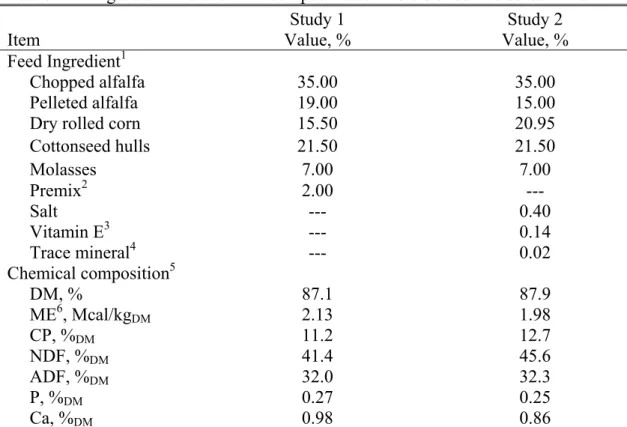
TABLE Page 2.1. Ingredient and chemical composition of the diets fed in studies 1 and 2... 37 2.2. Descriptive statistics (mean ± SD) for traits measured during the two
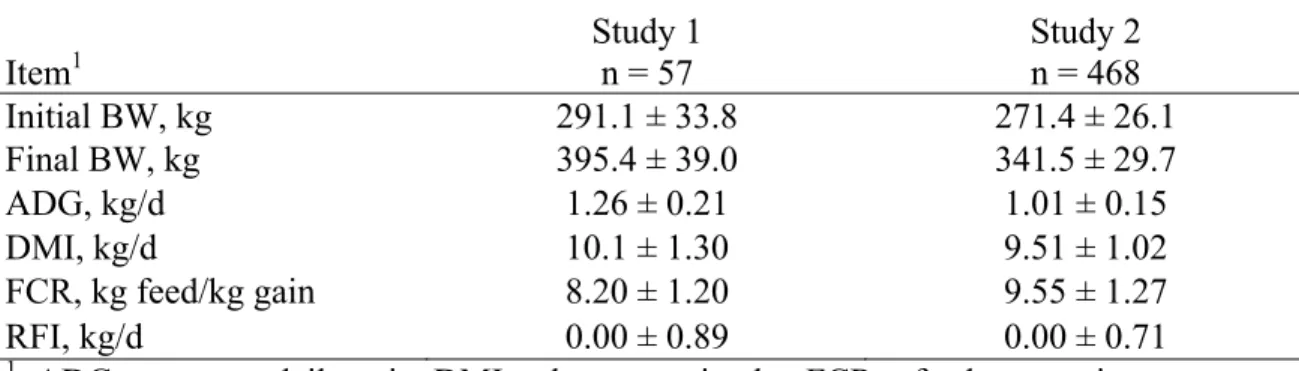
70-d experimental trials in growing beef animals ... 44 2.3. Descriptive statistics for selected low and high RFI
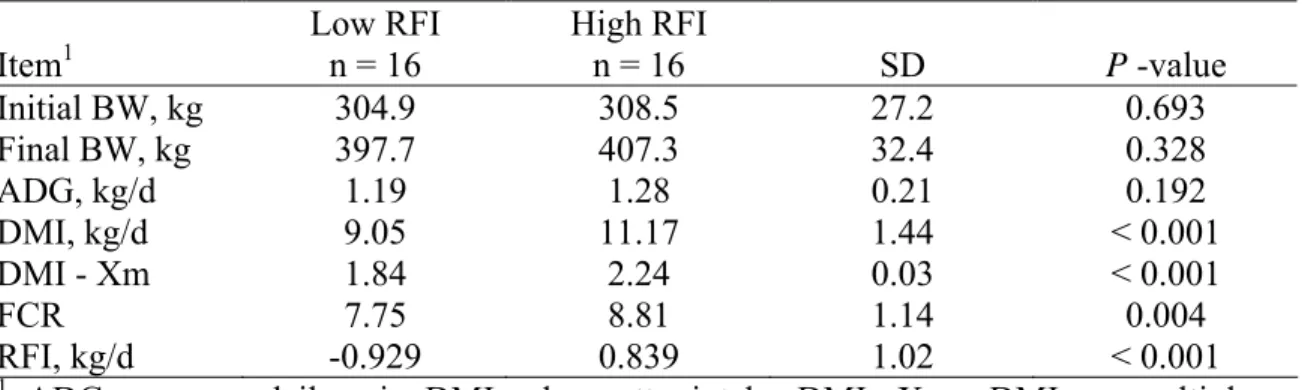
digestibility steers in Study 1 (Santa Gertrudis steers) ... 45 2.4. Digestibility estimates of various nutrients measured in Study 1
(g/kg DM) using AIA as an internal marker in growing Santa
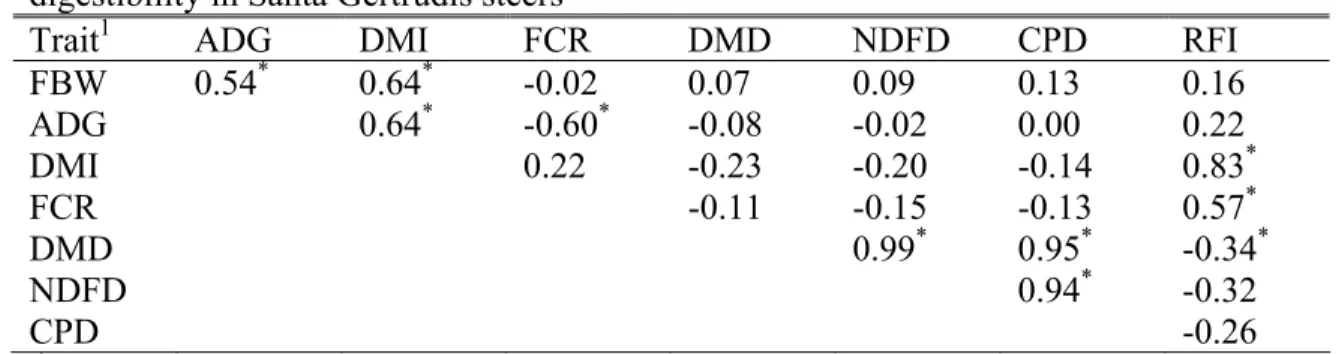
Gertrudis steers... 46 2.5. Phenotypic correlations among performance, feed efficiency traits,
and digestibility in Santa Gertrudis steers... 48 2.6. Descriptive statistics for selected low and high RFI digestibility
heifers in Study 2 (Brangus heifers)... 49 2.7. Digestibility estimates of various nutrients measured in Study 2
(g/kg DM) using two internal markers in growing Brangus heifers ... 51 2.8. Ruminal and fecal pH and in vitro methane producing activity
in Study 2 for years 2, 3, and 4... 52 2.9. Effect of phenotypic RFI group on ruminal and fecal
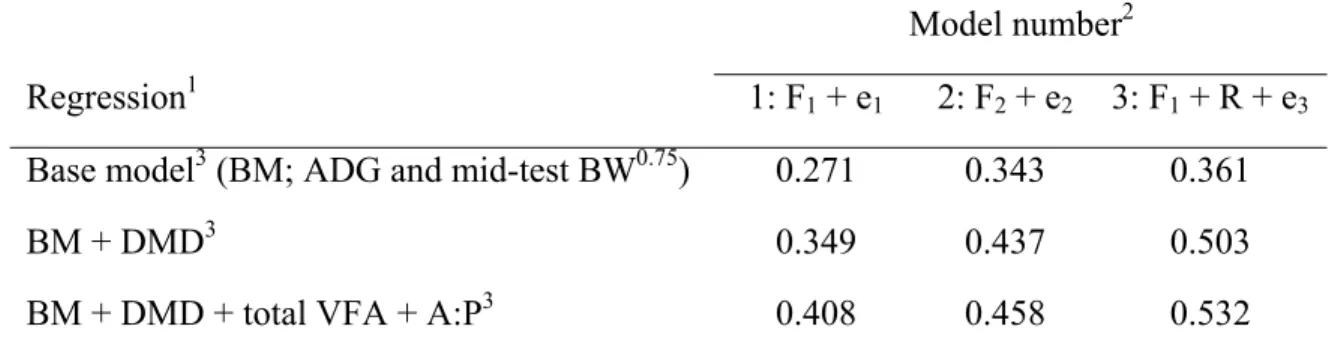
VFA concentrations... 54 2.10. Percentage of variation explained (R2) by different models to derive
expected DMI for growing Santa Gertrudis steers... 55 2.11. Percentage of variation explained (R2) by different models to derive
expected DMI for growing Brangus heifers for years 1, 2, 3, and 4... 56 2.12. Percentage of variation explained (R2) by different models to derive
TABLE Page 2.13. Phenotypic correlations among animal performance, feed efficiency
traits, AIA digestibility, and fermentation parameters in growing
Brangus heifers... 60 2.14. Phenotypic correlations among animal performance, feed efficiency
traits, ADIA digestibility, and fermentation parameters in growing
Brangus heifers... 63 3.1. Ingredient and chemical composition of the experimental diet ... 78 3.2. Descriptive statistics for the traits measured on all animals (n = 170) ... 82 3.3. Descriptive statistics for the traits measured on selected low (n = 6)
and high RFI steers (n = 6)... 83 3.4. Microbial genus (percent) quantified in the rumen fluid of low and
high RFI steers fed a finishing ration ... 85 3.5. Microbial genus (percent) quantified in the feces of low and high
RFI steers fed a finishing ration ... 86 3.6. Rumen fluid and fecal bacteria grouped by phylum ... 87 3.7. Effect of RFI on microbial phyla in low and high RFI steers fed a
finishing ration ... 88 3.8. Effect of RFI on in vitro methane producing activity (MPA) and
ammonia producing activity (APA) ... 90 3.9. Effect of RFI group on rumen and fecal pH and VFA concentrations ... 92 4.1. Ingredient composition of total mixed ration (g/kg DM)... 103 4.2 Effects of source of tannin on animal performance and feed efficiency
traits in finishing steers ... 107 4.3. Effects of source of tannin on rumen fermentation parameters (n = 12) ... 110 4.4. Effects of source of tannin on selected carcass traits ... 116 4.5. Effects of source of tannin on selected visceral organs ... 117
CHAPTER I
INTRODUCTION AND LITERATURE REVIEW
Understanding Physiological and Digestive Factors Affecting Residual Feed Intake
Introduction
The goal of animal agriculture is to maximize the value of product outputs relative to the costs of inputs. Since the primary input costs for beef production systems are feed, animal efficiency has been a key driver of animal production for years.
Production efficiency can be improved either by increasing product output or by decreasing inputs. It has long been recognized that it is more beneficial to maintain efficient animals. Mather et al. (1959) estimated the feed saved in raising 20 dairy heifers with above average efficiency vs. 20 heifers with below average efficiency would save enough feed to maintain two more cows and produce 310 kg more butterfat in a complete milking period. More recently, Crews (2005) estimated that it costs $38.00 less to feed an efficient bull for 150 d compared to an inefficient bull. That translates into significant input costs that can be saved by focusing on animal efficiency.
Residual feed intake (RFI) is a feed efficiency trait that can be used to select efficient cattle. Koch et al. (1963) reported RFI to be a superior measure of feed efficiency due to its independence of component traits, BW and ADG. Selection for improved feed efficiency based on RFI will not alter mature cow size unlike using feed ____________
conversion ratio (FCR; feed:gain), which is highly correlated with growth traits, such that selection using FCR increases cow mature BW and cow maintenance (Herd and Bishop, 2000). Residual feed intake is the difference between actual feed intake and expected feed intake based on energy requirements for growth rate and body size. In a given contemporary group, some animals with similar BW and ADG will consume less feed than expected (more efficient; negative RFI) while others will consume more feed than expected (less efficient; positive RFI). Residual feed intake is a moderately heritable trait (h2 ~ 0.3 to 0.4) and several studies have demonstrated that sufficient genetic variation does exist in RFI among the beef population to merit genetic selection (Archer et al., 1999; Arthur et al., 2001b, c; Herd and Bishop, 2000).
Genetic variation in rumen dilution rate appears to exist in sheep (Kahn, 1996; Orskov et al., 1971; Smuts et al., 1995; Thompson et al., 1989) and cattle (Orskov et al., 1988). Smuts et al. (1995) reported that the retention time of digesta in the rumen was heritable in sheep (h2 ~ 0.45 to 0.6). Messiner et al. (1996) observed large inter-animal variation in amino acid and glucose availability in the duodenum of corn-fed steers. These studies suggest that this variation was associated with inherent differences in rumen retention time but not with feed intake. Kahn et al. (2000) found that differences in the supply of amino acids was associated with variation in efficiency of microbial production in sheep genetically selected for divergence in fleece weights. There is also evidence of genetic differences in starch digestion in low vs. high RFI animals (Channon et al., 2004). There is ample evidence to believe that there is room for genetic selection when it comes to animal efficiency and diet digestibility and utilization.
Biological Sources of Variation in RFI
Herd et al. (2004) summarized the biological basis for phenotypic variation in RFI in beef cattle (Figure 1.1); digestion accounted for 14% of the biologic variation in RFI, 9% to heat increment, 5% to retained energy, 5% to activity, with the largest proportion (67%) allocated to “other processes” like protein turnover, mitochondrial proton leakage, ion pumping, etc.
Genetic variation in maintenance energy requirements of cattle has been shown to exist (Carstens et al., 1987; Hotovy et al., 1991). Body composition also affects an animal’s energy requirement; variation in composition of gain and resulting body
composition can influence the efficiency of nutrient utilization (Herd and Arthur, 2009). In beef steers selected for divergent RFI, Richardson et al. (2001) reported that carcass chemical composition was correlated with RFI such that steers from low RFI parents had less empty-body fat and more empty-body protein than steers from high RFI parents. They concluded that variation in carcass chemical composition accounted for 5% of the variation in DMI while the balance was due to heat production. Basarab et al. (2003) reported that steers with high RFI had 6.4% more empty body fat than steers with low RFI fed a finishing ration.
Other (66-67%) Digestibility (10-15%) Activity (5-10%) Body composition (5%) Heat increment of feeding (10%)
Figure 1.1. Contribution of various mechanisms to the variation in residual feed intake (Herd et al., 2004).
Variation in maintenance energy requirements may be caused by variation in visceral organ mass. Burrin et al. (1990) reported that the weights of liver, kidney, stomach, and small intestine respond to level of energy intake. Visceral organ mass accounts for approximately 6 to 10% of BW but accounts for 40 to 50% of whole body O2 consumption (Burrin et al., 1990). During nutrient restriction, metabolic activity of the liver is decreased primarily by reductions in liver size (Burrin et al., 1990), and results in a decrease in the relative contribution of the liver to whole-body O2
consumption (Burrin et al., 2007). Studies that have examined the association between RFI and proportional weights of visceral organs have provided inconsistent results. Basarab et al. (2003) reported that low RFI steers had 7.8% lower (P < 0.05) liver mass compared to the high RFI steers (6.06 vs. 6.57 kg), and 7.6% less stomach and intestines combined. White (2006) reported that Branvieh crossbred calves of differing RFI had similar liver and gastrointestinal weight. Ribeiro et al. (2007) also reported similar liver weight in low and high RFI calves but high RFI calves had heavier gastrointestinal tract weights compared to low RFI calves. Richardson et al. (2001) reported similar
gastrointestinal tract and internal organ weight for steer progeny of parents selected for RFI.
Variation in heat production can also occur due to variation in activity. Luting et al. (1991) determined that 79% of the genetic variation in RFI in chickens was related to differences in activity. Hens with low RFI were less active compared to hens with high RFI. Richardson et al. (2000) reported that approximately 10% of the observed
less active than high RFI calves. Arthur et al. (2001a) calculated that approximately 5% of the variation in RFI was accounted for by daily distance walked and time spent standing and ruminating.
Differences in thermoregulation may also contribute to observed variation in RFI. Luiting et al. (1994) reported that hens with low RFI were less active, had less nude body area, and were slightly better feathered suggesting that ability to conserve body heat in low RFI chickens may explain variations in RFI. Schaefer et al. (2005) reported that cows with low RFI had 9% lower average dorsal temperatures as compared to high RFI cows. However, Brown (2006) observed no differences between high and low RFI steers in hair density, fiber, and curvature as well as dorsal infrared digital thermal images.
Collectively, results from these studies demonstrate that animal variation in RFI is the result of differences in a multitude of biological processes that contribute to observed phenotype differences. In experiments with cattle that differ by 6 to 7% in feed intake following a single generation of divergent selection for RFI, measuring the biological processes (i.e. digestibility, visceral organ mass, energy expenditure) that contribute to observed differences in DMI between divergent selection lines is a challenge (Herd et al., 1997; Herd et al., 2004; Richardson et al., 1998).
Feed Efficiency and Diet Digestibility
Diet digestibility is a function of dietary gross energy intake and fecal energy losses (NRC, 1996). Factors that can influence digestibility include level of intake, passage rate, environmental conditions, breed differences, and diet characteristics, to
name a few. The DMI of calves with high (> 0.5 SD) RFI is typically 15 to 20% greater than the DMI of calves with low (< 0.5 SD) RFI (Basarab et al., 2003; Brown, 2006; Kolath et al., 2006; Nkrumah et al., 2004; White, 2006). The increase in DMI of calves with high RFI may affect apparent dry matter digestibility (DMD) leading to the
possibility that the difference in DMD observed in divergent RFI calves is due to a level of intake effect.
In ruminants, it is generally recognized that as DMI increases DMD decreases (NRC, 2001), primarily due to a reduction in the amount of time digesta spends in the rumen (Staples et al., 1984). Robertson and Van Soest (1975) found a decrease of 5% units in DMD when feeding level of a mixed diet was increased from maintenance to 2X maintenance. In dairy cattle fed a total mixed ration, for each multiple of maintenance increase in DMI there was a 4% unit decrease in diet digestibility (Tyrrell and Moe, 1975). However, diets high in fiber are less affected by the depression in DMD when feeding level increases (Colucci et al., 1982). This is primarily because cell solubles and N digestibility account for the majority of depression in digestibility as DMI increases. Galyean et al. (1979) fed a feedlot diet to dairy-beef crossbred steers at maintenance, 1.33X, 1.67X, and 2X maintenance. There was an overall decrease in DMD as DMI increased; however, there was no difference in DMD at the 1X and 1.33X maintenance levels or at the 1.67X and 2X maintenance levels. This would indicate that if the difference in the feeding level is negligible, (i.e. 1.67X vs. 2X) there is not a significant effect of DMI on DMD.
Channon et al. (2004) presented evidence to suggest differences in starch digestibility in divergent RFI steers fed a high energy feedlot diet. Angus and Angus-cross steer progeny of parent lines selected for either low or high RFI were used. The authors used fecal pH and fecal DM as a proxy for lower gut starch fermentation. When starch is fermented in the hindgut, fecal pH (Degregorio et al., 1982) and fecal DM are likely to be decreased leading to diarrhea (Huber, 1976). Steers with low RFI (from efficient parents) had higher fecal pH and fecal DM compared to high RFI steers (from inefficient parents) suggesting that the calves from more efficient parents fermented more starch in the rumen. This provides evidence of genetic differences in starch digestion. Channon et al. (2004) suggested that measuring fecal starch would have been useful to quantify as fecal starch has been shown to be closely associated with total tract starch digestibility [R2 = 0.95; (Zinn, 1994)]. In cattle fed a high roughage pelleted ration (70 alfalfa hay:30 wheat mixture), Richardson et al. (1996) reported a 1% unit difference in DMD between steers with low compared to high RFI. They estimated that this difference in DMD equated to a 2.3% reduction in DMI in steers weighing 450 kg gaining 1.3 kg/d. Nkrumah et al. (2006) reported a tendency (P = 0.1) for low RFI
Contentinal x British crossbred steers fed a high energy feedlot ration to have 6% higher DMD compared to high RFI steers. There was also a tendency (P = 0.09) for low RFI
steers to have 7% higher apparent CP digestibility. Numerically, calves with low RFI had higher NDF and ADF digestibility compared to calves with high RFI but this
difference did not approach significance due to the low fiber concentration of the feedlot diet. In monogastrics, differences in DMD are minimal and not important sources of
variation in RFI [chickens (Katle, 1991; Luiting et al., 1994) and pigs (De Haer et al., 1993)].
Feed Efficiency and Microbial Ecology
There has been recent interest in the association between the gut microbiome and obesity in mice and humans (Ley et al., 2005; Turnbaugh et al., 2009). These studies have revealed the importance of the interaction between the host and the microbiome. Ley et al. (2005) reported that obese mice (ob / ob) had phylum level alterations in the
cecum microflora characterized by decreased Bacteriodetes and increased Firmicutes. They also speculated that there was an increased ability to harvest energy from poorly fermentable polysaccharides. This was confirmed by Turnbaugh et al. (2006). They demonstrated increased acetate and butyrate in ob / ob mice as well as decreased fecal
energy concentration indicating that a microbiome dominated by Firmicutes (or low proportions of Bacteriodetes), a signature feature of obesity, are better able to extract energy from the diet leading to increased adiposity. Obese humans, similar to mice, also have an increased proportion of Firmicutes and decreased Bacteriodetes, which is
responsive to weight loss; as weight loss increases, the proportion of Bacteriodetes increases (Ley et al., 2006). These studies demonstrate that obesity may have a
microbial component. Additionally, Turnbaugh et al. (2009) reported that obese humans have decreased proportions of Bacteriodetes, increased Actinobacteria, and similar proportions of Firmicutes compared to lean humans. Natural selection for a microbiome low in Bacteriodetes, as is the case in obesity, results in decreased level of bacterial diversity and altered representation of bacterial genes and metabolic pathways as the
level of functional diversity in a microbiome is significantly linked (R2 = 0.81) to the proportion of Bacteriodetes (Turnbaugh et al., 2009). Collectively, these data indicate that there is an undeniable interrelationship between host genetics, diet, environment, and the microbiome in energy utilization.
Consequently, there is also interest in understanding the relationship between RFI and microbial ecology and resulting VFA profiles to explain possible biological sources of variation in RFI. Guan et al. (2008) reported that Angus, crossbred, and Charolais calves, fed a high corn finishing ration, had distinctive ruminal fluid microbial populations based on RFI. Not only were differences noted between RFI groups, but low RFI steers were more similar to each other based on Dice similarity index (Dsc = 91% similarity) than high RFI steers (Dsc = 71% similarity). When additional data was collected on ruminal digesta from Charolais and Hereford-Angus crossbred steers that were raised at a different location but under similar conditions, denaturing gradient gel electrophoresis (DGGE) bacterial clustering based on RFI group was observed in the rumen digesta samples; clustering based upon RFI group was also observed in the rumen fluid samples. Additionally, when the digesta DGGE profiles were compared, two clusters formed, based on specific breed. To examine the effect of breed type in the initial rumen fluid samples, breed information was included; when correlated to the DGGE profiles, no direct correlation was observed. When the DGGE profiles of only the Angus calves were compared, clear separation patterns were observed for low and high RFI steers. This gives evidence of a host-microbe interaction such that the
study were fed the same diet and raised in a similar environment under the same
management conditions in both experiments (i.e. rumen fluid sampled steers and rumen digesta sampled steers). Guan et al. (2008) also demonstrated that divergent RFI calves had different VFA profiles. Low RFI calves had increased total VFA (P = 0.06), acetate (P = 0.07), butyrate (P < 0.001), and valerate (P = 0.01) concentrations. The authors interpreted these data to indicate a causal relationship between microbial ecology and resulting VFA profile in calves of divergent RFI. Methane was not measured in the previous study but the increased butyrate production is not only a measure of bacterial fermentation and rumen epithelial absorption (Brockman, 1993), but can serve as an alternative H+ sink in the rumen to dispose of reducing equivalents (Mathison et al., 1998) and possibly decrease ruminal methane production.
Dry matter intake alone may also play a role in microbial diversity. McEwan et al. (2005) used day-length sensitive Soay sheep to demonstrate a change in microbial population in response to a photoperiod. Sheep that were allowed 8 h light consumed 42% less DMI as compared to sheep exposed to 16 h light (729 vs. 1277 ± 54 g DMI). Denaturing gradient gel electrophoresis analysis showed that there was a distinctive cluster difference in low vs. high intake sheep as well as an accompanying alteration in VFA profile. Sheep exposed to 8 h light had decreased total VFA, acetate, propionate, butyrate, valerate and caproate concentrations compared to sheep exposed to 16 h light. This provides indirect evidence of an effect of level of DMI on the microbiome but the authors offer tentative reasons why this may not be the case: 1) circulating hormones in low vs. high DMI sheep, due to photoperiod, may cross the rumen epithelia and
influence the microbial population and serve to differentially modify ruminal bacteria, 2) available substrate is at a lower limit for a particular population of bacteria in the low DMI sheep that is not limited in the high DMI sheep, and 3) high DMI sheep have a component of the diet that has a differential outflow rate compared to low DMI sheep serving to alter the high DMI sheep’s microbiome. Interestingly, there was minimal diversity in the ciliate population in low vs. high DMI sheep.
Inter-animal variation in ruminal production of methane may also result in differences in metabolizable energy that contribute to variation in RFI. Variation in DMI explains a large proportion of the variation in methane production (Blaxter and Clapperton, 1965; Ellis et al., 2007). Diet digestibility plays a role in determining total methane emissions (Iqbal et al., 2008; Johnson and Johnson, 1995). Nkrumah et al. (2006) reported that calves fed a feedlot ration differed by 6% units in DMD between low and high RFI calves and low RFI calves lost less methane as a proportion of GE than high RFI calves (3.19 vs. 4.28 ± 0.3% of GE lost as CH4). Hegarty et al. (2007) also noted that low RFI calves lost 25% less CH4 as compared to high RFI calves fed a high barley feedlot ration; however, this was only significant if RFI was calculated over the 15 d CH4 sampling period vs. the 70 d RFI. The authors attribute this lack of significance to altered DMI during the intensive cattle handling procedures needed to use the SF6 tracer method to quantify methane production. Together with the intake modification of the SF6 method and a high daily variation in methane production (Vlaming et al., 2008), it may be pertinent to delay methane measures in calves of divergent RFI until after a 70 d test or other methods should be employed (i.e. whole
animal calorimetry). Results from this study illustrate the challenges to quantify animal variation in methane production. Studies have not been conducted to examine the association between RFI and methane production and VFA profile concurrently. Theoretically, a low RFI calf would be expected to produce less methane (due to both level of intake and increased diet digestibility) and have an altered VFA profile, perhaps having increased propionate. Literature is lacking relating the efficiency of microbial growth and animal efficiency; however, Kahn et al. (2000) demonstrated that increased microbial growth was associated with genetic selection for increased fleece weight in sheep. Variation in the efficiency of microbial growth may also explain biological differences in RFI in ruminant animals.
Mitigating Methane Production in the Ruminant
Methane production in the ruminant is a necessary process to maintain
homeorhesis in the rumen. It is a way to avoid hydrogen accumulation and subsequent inhibition of microbial dehydrogenases. Methane production in the rumen serves to decrease the partial pressure of H+ in the rumen (Van Nevel and Demeyer, 1996) and stoichiometrically equates to:
CO2 + 8 H → CH4 + 2 H20
Methanogenic bacteria are very efficient at scavenging all available H2 in the rumen thus allowing normal fermentation to continue (Mathison et al., 1998). If NADH were allowed to accumulate in the rumen and no alternative way to dispose of reducing equivalents were available, more reduced products such as lactate and ethanol would accumulate thus decreasing organic matter digestion and microbial growth (Wolin et al.,
1997). An alternative pathway for the disposal of reducing equivalents is through acetogenesis (Van Nevel and Demeyer, 1996) and stoichiometrically equates to:
2 CO2 + 8 H → CH3COOH + 2 H20
Acetogenesis is present in the hindgut of termites and mammals and is an important H+ sink in hindgut fermentation (Ljungdhal, 1986). However, H2-oxidizing acetogenic bacteria are present in the rumen of sheep and cattle; they are easily outcompeted for H2 as they grow fermentatively on organic substrates and will not actively consume
hydrogen until preferred substrates have been exhausted (Van Nevel and Demeyer, 1996).
Several ways to mitigate methane production in the ruminant have been
proposed; they include: alternative electron acceptors, halogenated methane analogues, use of ionophores, ruminal defaunation, addition of dietary unsaturated fatty acids, modification of feeding practices, selection to improve feed efficiency, vaccination, probiotics, and tannin supplementation.
Alternative electron acceptors include the organic acids fumarate and malate, inorganic sulfur, and nitrates/nitrites. Fumarate is a metabolic precursor to propionate and may provide alternative hydrogen sinks to decrease methane in vitro (Asanuma et al., 1999; Lopez et al., 1999) and in vivo (Bayaru et al., 2001); however, results are conflicting (Beauchemin and McGinn, 2006). Mathison et al. (1998) note that
stoichiometrically, it is not economically feasible to include enough fumarate in the diet to channel electrons completely away from methanogens but may be important by having a stimulatory effect on certain microbial species. Malate is stimulatory to
Selenomonas ruminantium (Linehan et al., 1978) and malate supplementation in vitro
increased propionate and decreased methane (Martin and Streeter, 1995). Inorganic sulfur can act as an electron acceptor by:
SO4-2 + 8 e- + 10 H+ → H2S + 4 H20
Sulfate reducers are capable of using hydrogen at lower partial pressures than
methanogens, easily outcompeting methanogens for electrons; however, the maximum tolerable level of sulfur in the diet is low, limiting its use as a potential methane reducer (Van Nevel and Demeyer, 1996). Nitrate reducers serve as terminal electron sinks by:
NO3- + 8 e- + 10 H+ → NH4 + 3 H20
Nitrates easily outcompete methanogens for terminal electrons resulting in reduced methane emissions when nitrate is fed (Takahashi and Young, 1991). However, absorbed nitrates can interfere with oxygen transport; nitrate supplementation would need to be highly controlled.
α-Bromoethanesulfonic acid (BES) has been one of the most widely studied halogenated methane analogs. α-Bromoethanesulfonic acid is a potent inhibitor of methanogenesis because it is structurally similar to the co-factor mercaptoethanesulfonic acid (HS-coenzyme M) used by methanogens (Taylor et al., 1974). However, some mutant strains of methanogens are resistant to BES (Smith and Mah, 1981).
Additionally, there is an adaptation to prolonged administration of BES severely limiting its use as a methane inhibitor (Mathison et al., 1998).
Ionophores, such as monensin and lasalocid interfere with Gram positive bacteria while Gram negative bacteria are less sensitive due to the additional protection of the
outer membrane of the cell wall. These ionophores interfere with ion transport across the cell wall and disrupt transmembrane ion gradients (Van Nevel and Demeyer, 1996) resulting in a shift in microbial population towards less sensitive microbes that tend to produce propionate by diverting electrons from methane. The use of ionophores also raises the question of feeding antibiotics to cattle for prophylactic purposes and their possible subsequent effect on human health (Moss et al., 2000).
Ruminal defaunation may decrease the energy loss as a proportion of gross energy from 7.9 to 5.5% (Kreuzer, 1986). Newbold et al. (1995) estimated that from 9 to 25% of methane production originates from ciliate-associated methanogenic bacteria. Additionally, some rumen ciliates have endosymbiotic methanogens that account for 1 to 2% of the host ciliate volume (Finlay et al., 1994). The authors calculated that protozoa present at concentrations of 5 X 10⁵ per mL could account for up to 37% of the total methane production in the rumen of sheep. Methanogens commonly colonize the outside of ciliates resulting in a symbiotic relationship such that the ciliates provide hydrogen substrate to the methanogens and the methanogens decrease the partial pressure of hydrogen locally to help maintain ciliate enzyme reactions. This
methanogen-ciliate association has been observed in cattle (Vogels et al., 1980) as well as sheep (Stumm et al., 1982). Defaunation may serve to decrease methanogens but the ability to keep animals ciliate-free will severely limit its application as a way to decrease methane production.
Addition of dietary unsaturated fatty acids decrease methane production both by offering an alternative electron sink and direct toxic effects on methanogens (Henderson,
1973). Fatty acid supplementation often decrease the number of ciliate protozoa (Broudiscou et al., 1990; Czerkawski and Breckenridge, 1975), possibly leading to decreased methane emissions. Johnson and Johnson (1995) stated that dietary fat sources fed to sheep and cattle decrease methane emissions; however, it is a result of decreased substrate fermentation rather than a direct effect of diverting electrons to hydrogenate unsaturated fatty acids or toxic effects of fatty acids on methanogens. This was also reported by Beauchemin and McGinn (2006). Unsaturated dietary lipids may serve to decrease methane production but added fat must not be so high as to decrease fiber digestion.
Modifications of feeding practices can alter methane production by ruminants. Concentrate diets vs. forage diets will decrease methane production (Russell, 1998; Van Kessel and Russell, 1996). Diet characteristics also affect methane production. Mature dry forages tend to produce more methane than young dry forages; short chopped or pelleted diets produce less methane compared to long chop; leguminous forages produce less methane compared to grass forages, and silage produces more methane compared to dry conserved forages (Mathison et al., 1998). Increased feeding frequency (i.e. more meals throughout the day) decreases methane production and increases propionate production (Sutton et al., 1986).
Increasing the level of animal productivity can also mitigate methane emissions by ruminants. Beef calves gaining faster on a high quality diet will produce less methane than beef calves gaining slower on the same diet or on diets of poorer quality per unit of feed intake (Mathison et al., 1998). Additionally, increasing milk production
in dairy cows will reduce the amount of methane produced per kg of milk. Kirchgessner et al. (1995) suggested that doubling of yearly milk production from 5,000 to 10,000 kg of milk per year would only increase methane production by 5% (i.e. from 110 to 115 kg per year), but reduce methane per unit of milk by 48%.
Vaccination against microbes involved in lactic acidosis was reported (Shu et al., 1999). Immunized cattle had higher feed intakes, lower concentrations of lactate and lower numbers of Streptococcus bovis and Lactobacillus spp. demonstrating that ruminal
microbial ecology can be altered in response to vaccination. Gnanasampanthan (1993) demonstrated that ruminal protozoa could be controlled by immunization. The author did note that inducing a salivary antibody response is critical for immunological control of protozoa in the rumen. Decreasing the number of protozoa by vaccination may be an effective strategy to reduce methane production in ruminant animals.
One of the most common probiotics used as a microbial feed additive is
Aspergillus oryaze. The effects of Aspergillus oryaze on rumen fermentation and animal
production are wide ranging. Aspergillus oryaze has been shown to reduce methane by
50% in a RUSITEC system (Frumholtz et al., 1989). The decrease in methane was directly related to the decrease in the protozoal population. However, addition of
Saccharomyces cerevisiae to an in vitro system initially reduced methane production by
10% but this effect was transient (Mutsvangwa et al., 1992). Due to the variable
responses seen with different probiotics, more research is needed to determine if a yeast extract will have a long-term effect on methanogenesis as well as the economics of feeding a probiotic.
A number of reports have demonstrated that enteric methane production in ruminants is reduced when supplemented with tannins (Hess et al., 2006; Min et al., 2006; Puchala et al., 2005). However, these studies were conducted with forage-fed animals where up to 12% of GE may be lost as methane. Methane loss on a high corn finishing ration is generally assumed to be approximately 3% of GE according to Johnson and Johnson (1995). Woodward et al. (2001) demonstrated that the feeding of
Lotus corniculatus (2.6% CTDM) and Lotus pedunculatus (8% CTDM) decreased methane
production in sheep and late lactation dairy cows. Sheep fed L. corniculatus lost 3.9%
GE as methane vs. the control sheep fed cut perennial ryegrass that lost 6.2% GE as methane. Dairy cows fed L. pedunculatus silage lost 27 g CH4/kg DMI vs. control cows
fed perennial ryegrass silage that lost 35.7 g CH4/kg DMI. This may be due to both a direct effect on methanogens (Field et al., 1989) as well as altered fiber fermentation (Newbold and Rode, 2006).
Tavendale et al. (2005) found that two strains of methanogens,
Methanobrevibacter ruminantium YLM-1 and DSM1093 were sensitive to polymeric
CT ( > 12 mean degree of polymerization based on thiolysis) such that polymeric CT was bacteriostatic for strain YLM-1 and toxic for strain DSM1093, even after prolonged culture periods. In vitro methane production was also 30% lower in L. pedunculatus
tubes vs. Medicago sativa incubations (8.8 vs. 12.5 mL CH4; 0.05 g CT per in vitro
incubation vial) resulting in decreased hydrogen accumulation in the CT treated vials. Additionally, pH was numerically lower in Lotus vs. Medicago treatment (6.21 vs. 6.48); Lotus supplemented vials also had lower propionate, butyrate, valerate, isobutyrate and
isovalerate concentrations compared to Medicago supplemented vials. The results of
these trials indicate that condensed tannins have a direct bacteriostatic effect on methanogens as well as an indirect effect of decreased pH on methanogenesis as evidenced by no further increase in reduced organic acids (propionate and butyrate).
Ruminal methanogens lose their ability to take up H2 at low pH (Russell, 1998). Van Kessel and Russell (1996) reported that at pH of less than 6.0, methanogens were not able to produce methane and concluded that diets that were able to decrease rumen pH to below 6 may be a viable strategy to reduce methane emissions from ruminants. At low pH, there is an accumulation of H2 and no effect on propionate indicating that low pH drives a decrease in methnaogenesis and not just an increase in H2 competition via increased propionate production (Russell, 1998). Methane production was found to be positively correlated with acetate:propionate ratio (r2 = 0.80) which is dependent on pH; as pH decreases, the acetate:propionate ratio decreases resulting in decreased methane production (Russell, 1998).
Hess at al. (2003) decreased methane production by 50% in RUSTIEC in vitro systems inoculated with 15 g Calliandra calothyrsus/L (4.1 g CT/L) vs. control systems.
Alterations in VFA profile were also observed. Acetate was increased while propionate, butyrate, and isobutyrate were decreased relative to control systems that contained
Brachiaria dictyoneura, devoid of CT. The acetate:propionate ratio and pH was similar
for CT treated and control systems (7.13 vs. 7.11, 2.9 vs. 2.7, respectively). Condensed tannin systems had 23% lower organic matter degradation as compared to control systems (174 vs. 227 mg OM/g supplied). Decreased OM degradation would also lead
to decreased methane production; however, there was still a 35% reduction in methane per unit of OM apparently degraded indicating that CT supplementation reduced
methane production not only via reduced fermentation activity but through direct action on methanogens.
Tannin Supplementation: Effects on Animal Performance, Fermentation, and Carcass Traits
Introduction
Tannins are a complex group of polyphenolic compounds that plants have evolved to avoid animal consumption (Foley et al., 1999). Tannins are commonly referred to as plant secondary compounds (as well as oxalates, terpenes, saponins, to name a few) and may have positive or negative effects on animal production.
Originally, the term “tannin” was applied to any substance that was able to tan leather; however, currently, it is generally used to denote any naturally occurring substance of high molecular weight and contains a large number of phenolic hydroxylic groups to enable it to form effective cross-links with proteins (Swain, 1979). Tannins are
classified into two categories: hydrolysable and condensed (HT and CT, respectively). Hydrolysable tannin consist of a carbohydrate core with phenolic carboxylic acids bound by ester linkage and CT consist of oligomers of flavon-3-ols and related flavanol
residues (Mueller-Harvey and McAllan, 1992). Tannins are ubiquitous in nature and are widely found in many forages, fodders, and agroindustrial wastes.
Tannin Effect on Growth and Composition of Gain
Elevated dietary tannins can result in decreased DMI, growth and damage to the gastrointestinal tract (Hervas et al., 2003; Mcleod, 1974; Robbins et al., 1991). In rats, Mitjavila et al. (1977) demonstrated that tannin supplementation reduced intestinal permeability; this could lead to decreased nutrient absorption and lowered DMI as well. Reduced DMI is thought to be caused by the astringent taste and decreased palatability possibly resulting in food avoidance (Kumar and Singh, 1984). Many mammals, especially browsers, are able to produce proline-rich salivary proteins (PRP) that are able to bind to dietary tannins to inactivate them (Austin et al., 1989). It is the binding of PRP and tannins that produce the astringent taste (Prinz and Lucas, 2000) and subsequent food avoidance. Cattle and sheep are devoid of PRP (Makkar, 2003) so the decrease in DMI due to the astringent taste mechanism associated with tannins may not occur in cattle and sheep. However, other proteins are present in the saliva of cattle fed tannin-rich diets which have a high affinity for tannins but are not rich in proline; these salivary proteins tend to form soluble tannin-protein complexes (Makkar, 2003).
Additionally, the reduction in DMI due to tannins may be a learned avoidance related to gastric upset (Provenza et al., 1990; Villalba and Provenza, 2001). This was demonstrated in goats fed blackbrush (Coleogyne ramosissima); when new growth
blackbrush (high in CT) was fed, intake decreased over time indicating post-ingestive distress (Provenza et al., 1990). Villalba and Provenza (2001) demonstrated that lambs can sense the negative impacts that CT ingestion has and learn to consume polyethylene glycol (complexes with tannins to inactivate them) in conjunction with the tannins, to
ameliorate the malaise caused by tannin ingestion. When tannins were not offered in the diet, polyethylene glycol consumption was decreased indicating a self-medicating ability of the lambs. There is definite evidence of preference of consuming diets low in tannin when given a choice. In goats offered basal diet and added CT diet in two individual feed pans, goats routinely selected the basal diet over the added CT diet and when they did consume the CT diet they consumed less of the tannin added diet (Provenza et al., 1990). Frutos et al. (2000) intra-ruminally dosed sheep with Quebracho CT (0.75 g/ kg LW) for 60 d and found no gross or histological evidence of toxicity; however, in sheep fed Quebracho CT at 3 g/kg LW, DMI was decreased and were weak and depressed by d 5, and were harvested on d 8. Ewes had striking digestive tract lesions throughout and altered blood chemistry (Hervas et al., 2003).
Tannins can cause a decrease in ADG due to lowered DMI and toxicity in sheep (Hervas et al., 2003). Frutos et al. (2004) demonstrated no effect of chestnut tannin on lamb carcass traits when fed approximately 0.84 g tannin/kg LW. Additionally, there was no effect of HT supplementation on ADG, feed efficiency, and length of finishing period. Individual weights of offal (blood, skin, fat depots, and parts of the GIT) did not differ in weight between control and chestnut treated finished lambs. Chemical
composition and energy concentration of the empty body weight was not different between control and HT treated lambs. Maxson et al. (1973) demonstrated decreased DM, CP, and TDN digestibility in steers fed a high corn finishing ration (0.51 %DM tannin) or a high tannin sorghum finishing ration (2.15%DM tannin). Average daily gain was decreased (P < 0.05) in tannin supplemented steers and F:G was numerically higher.
Additionally, dressing percent, hot carcass weight, and yield grade was reduced by tannin supplementation.
McBrayer et al. (1983) fed heifers varying levels of peanut skins (0.4, 2.2, or 3.9% tanninDM) were fed for 100 d. Heifers fed the tannin supplemented diet had lower ADG, DMI, and higher F:G. Diet DM and CP digestibility was also reduced with peanut skin supplementation. However, in steers supplemented with peanut skins (0.6, 1.7, or 2.7% tanninDM) for 84 d, there was no detrimental effect of added tannin on ADG, F:G, dressing percent, marbling score, yield grade, quality grade, and back fat thickness. However, DM digestibility was reduced for the added peanut skin diets. Additionally, heifers grazing ryegrass pasture that were supplemented with corn plus peanut skins (0.91 kg corn, 0.91 kg peanut skins) for 112 d had higher ADG compared to corn (1.82 kg corn) supplemented heifers.
Chickens fed high-tannin sorghum also showed no effect of tannins on carcass traits or yield of organs (Kumar et al., 2005). In rats fed graded levels of high tannin sorghum (3.76% CT), Larrain et al. (2007), observed no detrimental effects of tannin supplementation on BW, ADG, G:F, and average daily feed intake when fed for only two weeks. When rats were fed for ten weeks, no difference in G:F between control and tannin diets; however, the 35% high tannin sorghum diet resulted in heavier (P = 0.05)
rats at d 70, higher ADG and intake during the first two weeks of the study; because G:F was not different at any time point, greater feed and energy intake seems to be driving higher ADG. In finishing pigs, Cousins et al. (1981) demonstrated increased feed intake and F:G and similar ADG when fed a high tannin sorghum diet (3.4% tanninDM)
compared to pigs fed corn. Collectively, these studies indicate that the response to tannin supplementation is varied and depends on type of tannin, rate of supplementation, and species and in many cases suggest that tannin supplementation at low rates do not have a detrimental effect on economically important carcass and non-carcass traits.
Tannin Effect on Microbial Populations
Tannins have many and diverse effects on microbial populations both in vitro and in vivo. Henis et al. (1964) found an antimicrobial effect of carob pod tannin extract on Cellvibrio fulvus (a celluloytic bacterium) in vitro; tannin addition also resulted in
morphological changes indicating tannin effect on this bacterium. Alteration in gut microbial population was demonstrated in rats, fed CT at 20 mg/kg diet. There was a shift in fecal microbial population favoring Enterbacteriaceae and the Bacteroides
species (Smith and Mackie, 2004). Decreased celluloytic and proteolytic activity was also observed by Tagari et al. (1965) with carob pod extract in an artificial rumen indicating some effect on the microbial population. McSweeney et al. (2000) fed sheep a diet of 30% Calliandra calothyrsus and the population of Rumminococcus spp. and Fibrobacter spp. were decreased but fungi, protoza and proteolytic bacteria were less
affected. When polyethylene glycol was added to neutralize the tannin effect, bacterial populations were restored. Additionally, post feeding concentrations of branch chained VFA were decreased in Calliandra supplemented sheep possibly due to protein binding
by the Calliandra.
Sotohy et al. (1997) reported that the number of total bacteria in the rumen of goats decreased when they were fed Acacia nilotica, a tannin-rich plant. The decrease in
bacterial population was directly proportional to the amount of Acacia nilotica fed.
Condensed tannins extracted from Sainfoin (Onobrychis viciifolia) inhibited growth and
cell-associated proteolytic activity of Butyrivibrio fibrisolvens A38 and Streptococcus bovis 45S1 with little effect on Prevotella ruminicola B14 and Ruminobacter
amylophilus WP225.
Tannin degrading bacteria have been described. Brooker et al. (1994) isolated a tannin degrading bacterium from feral goats grazing Acacia aneura. This bacterium was
also isolated from feral camels but not from domestic goats or sheep in the area. The specialized bacterium, similar to Streptococcus bovis, was determined to be a new
species of Streptococcus and was named Streptococcus caprinus. In vitro, the bacterium
grows in a medium with at least 2.5% (wt/vol) tannic acid or condensed tannin. This would be equivalent to an animal consuming 1 kg of plant material containing 12.5% condensed tannin. S. caprinus was found to be at low concentrations in the rumen at 2 x
106 cfu/mL. Odenyo and Osuji (1998) isolated three strains of tannin degrading bacteria from sheep, goat, and antelope in East Africa. Animals had been grazing Acacia aneura, Acacia angustissima, and Calliandra callothyrsus. All three isolates (EAT2, ES3, and
EG19) were able to grow in media that contained up to 8 g of condensed tannin/L. Thirty grams of hydrolysable tannin/L in a medium would be equivalent to 15% tannin in the diet of a ruminant (Nelson et al., 1995). Isolates were able to degrade up to 15 g tannic acid/L and tolerated 30 to 70 g of tannic acid/L, which is equivalent to 15 to 35% tannin in feed. The tannin degrading specialty of the isolates is evident as the content of
tannins in feedstuffs (i.e. sorghum, Vicia faba, sal and rapeseed meals, carob, and forage
legumes) range from less than 1% to 50% tannin on a DM basis (Giner-Chavez, 1996). Nelson et al. (1998) isolated tannin degrading bacteria from Sardinian sheep, Honduran and Columbian goats, white-tailed deer from upstate New York, and Rocky Mountain elk from Oregon. Six isolates were identified; four of the six were members of the genus Streptococcus and were most closely related to S. bovis and S. gallolyticus
[new research found S. caprinus to be S. gallolyticus; (Sly et al., 1997)]. One isolate fell
into the Firmicute phylum and the sixth isolate was a member of the family
Enterobacteriaceae. The bacteria were isolated from different geographical locations
indicating that presence of tannin degrading bacteria is not restricted by climate, geography, or host animal as long as tanniniferous forage is consumed. Tannin
degrading bacteria could not be isolated from cows on low tannin diets. However, Goel et al. (2007) isolated tannin degrading bacteria from the feces of goats that were not fed tannin-rich diets. A 24 h enrichment with 1% tannic acid was performed which may have facilitated their identification; an enrichment was not noted in Nelson et al. (1998).The lack of tannin substrate in low tannin diets may indicate that tannin-degrading bacteria are very specialized and are only needed at low levels to detoxify tannins. This is quite similar to the detoxifying effect of Synergistes jonesii in leucaena
(mimosine) toxicity when animals graze Leucaena leucocepaala (Allison et al., 1992).
In animal populations that are not adapted to Leucaena, Synergistes jonesii is not present
so it is not surprising that tannin degrading bacteria were not isolated from cattle consuming low tannin diets.
Wiryawan et al. (1999) demonstrated that rumen fluid from tannin adapted animals transferred to naïve animals serves as inoculum resulting in tannin degrading bacteria colonization and decreased negative effects of high dietary tannins much like rumen fluid transfer from Leucaena adapted ruminants in Hawaii served as inoculum for
Australian ruminants suffering from mimosine toxicity (Jones and Megarrity, 1986). Brooker et al. (1995) further demonstrated that not only could rumen fluid from tannin adapted goats be used to inoculate sheep, but that S. gallolyticus established a stable
population of 104 to 105 cfu/mL of rumen fluid provided the sheep were fed a tannin-rich
Acacia diet. When sheep were turned out onto low tannin-pasture, S. gallolyticus
declined to 103 to 104 cfu/mL. When sheep were returned to a high tannin diet, S.
gallolyticus was reestablished at 105 cfu/mL rumen fluid. Additionally, sheep inoculated
with either rumen fluid from tannin-adapted goats or pure cultures of S. gallolyticus had
higher nitrogen and dry matter digestibility when fed Acacia than un-inoculated sheep or
sheep inoculated with S. bovis, a tannin-sensitive bacterium.
McSweeney et al. (1999) isolated 15 bacterial genotypes from sheep and goats fed Calliandra calothyrus. All isolates were able to grow in either the presence of tannic
acid or condensed tannin. Only two were able to grow in both tannic acid and condensed tannin fortified agar plates. The strains isolated were proteolytic, but the authors were unable to demonstrate degradation of calliandra-protein complexes or fermentation of in situ complexed calliandra protein.
Condensed tannin from Lotus corniculatus decreased the rate of proteolysis and
Condensed tannin was added in vitro at 0, 50, 100, 200, 400 and 600 µg CT/mL. At the 200 µg/mL treatment, bacterial growth was significantly reduced. At the 50 and 100 µg/mL treatment, there was a transient, synergistic effect of the CT such that increased microbial activity was observed in some strains. Various studies have also shown that low-level CT supplementation (100 – 200 µg/mL) increases microbial growth and enzyme activity (Bae et al., 1993; Jones et al., 1994; Oh and Hoff, 1986). Mole and Waterman (1985) suggest this could be due to structural changes in the substrate protein due to its protein-CT interaction allowing easier access of proteolytic enzymes to their substrate. Additionally, dietary condensed tannins (less than 2 – 3% dietDM) have been shown to have benefit in ruminants as they serve to protect high quality dietary protein from microbial attack in the rumen making the protein available for small intestinal absorption (Barry and Blaney, 1987).
Tannin Degradation in the Rumen, Microbial Tannin Toxicity, and Tannase Activity
Hydrolysable tannins are usually degraded via enzymatic degradation by ruminal microflora with considerably less degradation of condensed tannins (Goel et al., 2005). Many times, ruminal bacteria are able to grow on HT but not CT leading to a lack of information on CT toxicity to rumen microbes. Condensed tannins have a more deleterious effect on digestibility than HT whereas HT cause varied toxicoses due to ruminal degradation (Kumar, 1991). Hydrolysable tannins degrade to gallic acid, pyrogallol, phloroglucinol, and finally, to acetate and butyrate (Bhat et al., 1998). Condensed tannins undergo limited ruminal action; CT degrade to quercetin,
phloroglucinol, 3-hydroxy-5-oxohexanoate and finally to acetate and butyrate (Bhat et al., 1998).
Three mechanisms of tannin toxicity in the rumen bacterial population have been suggested: 1) altered enzyme activity, 2) altered biological membranes, and 3) metal ion depravation. Altered enzyme activity via enzyme inhibition is the most common
mechanism. Reed (1995) demonstrated that cell wall associated enzymes are less affected by tannins compared to extracellular enzymes. Decreased activity in ruminal urease, carboxymethylcellulase, protease, glutamate dehydrogenase, and alanine
aminotransferase in response to tannin treatment was reported by Makkar et al. (1988). Additionally, tannins have been shown to inhibit pectinases, cellulases, β-galactosidases and proteases (Bell et al., 1965; Smart et al., 1961). In rats, tannins decrease activity of trypsin and α-amylase but not lipase, indicating that tannins have little affinity for lipase (Horigome et al., 1988). Tannins also have the ability to alter membrane function by inhibiting entry of substrates via decreased membrane permeability; this results from the formation of tannin complexes with cell wall protein (Goel et al., 2005). Scalbert (1991) reported that tannins exert their antimicrobial properties by iron depletion thus reducing the activity of metalloenzymes in the microbial cells.
Skene and Brooker (1995) isolated the anaerobe Selenomonas ruminantium
ruminantium from feral goats browsing tannin-rich Acacia sp. The bacterium was the
first rumen bacteria shown to have tannin acylhydrolase (tannase) activity. When the bacterium was cultured with tannic acid, a hydrolysable tannin, gallate accumulated in the media, indicating that the bacterium had the ability to cleave hydrolysable tannin but
not to further utilize the end products for energy. Goel et al. (2007) isolated bacterial strains that produced tannase and gallate decarboxylase from the feces of goats on a low tannin diet suggesting that the tannin-degrading bacteria are part of the normal
microflora of the feral goats and that the tannin-degrading enzymes are inducible with the addition of tannin acid in vitro.
Tannase catalyze the hydrolysis reaction of the ester bonds present in
hydrolysable tannins (Aguilar et al., 2007). Condensed tannins are not acted upon by classical anaerobic tannase but require oxygen for their degradation (Contreras-Domínguez et al., 2006); however negligible amounts of CT are acted upon by rumen microbes. Tannase (tannin acyl hydrolase) is produced by various fungi, yeast, and bacteria. No ruminal fungi or yeast have been identified that have tannase; however, numerous anaerobic bacteria have been isolated (Goel et al., 2007; Osawa et al., 1995a; Osawa et al., 1995b; Skene and Brooker, 1995). The fungus Aspergillus niger van
Tieghem with tannase activity was identified from the feces of hill cattle fed largely
Quercus incana (oak) leaves (Bhat et al., 1996). The authors note that feces were
directly taken from the rectum and deposited into sterilized jars and the possibility of feed or fodder contamination with this fungus was examined. The authors conclude that the fungus was isolated because it is part of the normal flora in these hill cattle and not from contamination. The ability to commercially synthesize and harvest tannase may lead to detannification of high tannin feedstuffs rendering them more useful to any given animal.
Tannin Effect on Ruminal Fermentation
It is reported in the rat, that grape seed extract CT effectively decreased cecal pH and increased total cecal VFA concentration; specifically it increased acetate and
decreased propionate and butyrate (Tebib et al., 1996). However, the physiologic differences in rats may limit inferences concerning cattle. Sheep supplemented with
Elaeis guineense (18 g/kg DM CT; average 0.11 mg tannin/kg LW) showed a decrease
in rumen pH sustained 5 h post ingestion and increased ammonia concentrations; rumen pH began to return to pre-feeding levels after 5 h (Osakwe et al., 2004). Increased total VFA was also observed. Makkar et al. (1995) showed lowered VFA production in vitro when tannins were added (0.8 mg/mL) to the medium with CT decreasing VFA
production to greater extent that HT. There was also a substantial decrease in the proportions of acetate and propionate. Growing beef cattle fed a forage based diet supplemented with either 0, 1, or 2% DM with Quebracho tannin, showed no effect on total VFA concentration (Beauchemin et al., 2007), but the molar proportion of acetate was decreased as was the acetate:propionate and ruminal ammonia. Waghorn and Shelton (1997) fed 0.68 g CT/kg LW to sheep for 32 d; no effect of CT was observed on VFA concentrations or ammonia in these sheep.
Conclusion
Collectively, these studies indicate a lack of knowledge and understanding of the biological mechanisms that affect animal efficiency. Many biological processes interact together to explain RFI. Diet digestibility may help to explain variation in observed RFI as well as energy losses via methane emissions, microbial populations, and VFA profile in growing beef calves of divergent RFI. It is evident in the literature that RFI can be a tool to improve the efficiency of beef production; however, more research is needed to better understand the mechanisms that contribute to RFI as well as how to modify them. Additionally, tannin supplementation may be a management strategy to improve animal efficiency by altering VFA production or reducing energy losses via methane production in beef cattle. Thus, the objectives of this dissertation were to examine the relationship between RFI and physiological and digestive parameters in growing beef calves as well as to characterize the effects of dietary tannins on live animal performance and
efficiency, fermentative characteristics, and subsequent carcass traits in finishing beef calves.