Lithium or an atypical antipsychotic drug in the
management of treatment-resistant depression:
a systematic review and economic evaluation
SJ Edwards, V Hamilton, L Nherera and N Trevor
VOLUME 17 ISSUE 54 NOVEMBER 2013 ISSN 1366-5278
the management of treatment-resistant
depression: a systematic review and
economic evaluation
SJ Edwards,
*
V Hamilton, L Nherera and N Trevor
BMJ Technology Assessment Group (BMJ-TAG), London, UK
*Corresponding authorDeclared competing interests of authors: SJE was an employee of AstraZeneca UK Ltd until August 2010. AstraZeneca holds the marketing authorisation for Seroquel®(quetiapine), an atypical antipsychotic
drug that is included in this report.
Published November 2013
DOI: 10.3310/hta17540This report should be referenced as follows:
Edwards SJ, Hamilton V, Nherera L, Trevor N. Lithium or an atypical antipsychotic drug in the management of treatment-resistant depression: a systematic review and economic evaluation. Health Technol Assess2013;17(54).
Health Technology Assessmentis indexed and abstracted inIndex Medicus/MEDLINE, Excerpta Medica/EMBASE, Science Citation Index Expanded(SciSearch®) andCurrent Contents®/
ISSN 1366-5278 (Print) ISSN 2046-4924 (Online) Five-year impact factor: 5.804
Health Technology Assessmentis indexed in MEDLINE, CINAHL, EMBASE, The Cochrane Library and the ISI Science Citation Index and is assessed for inclusion in the Database of Abstracts of Reviews of Effects.
This journal is a member of and subscribes to the principles of the Committee on Publication Ethics (COPE) (www.publicationethics.org/). Editorial contact: [email protected]
The full HTA archive is freely available to view online at www.journalslibrary.nihr.ac.uk/hta. Print-on-demand copies can be purchased from the report pages of the NIHR Journals Library website: www.journalslibrary.nihr.ac.uk
Criteria for inclusion in theHealth Technology Assessmentjournal
Reports are published inHealth Technology Assessment(HTA) if (1) they have resulted from work for the HTA programme, and (2) they are of a sufficiently high scientific quality as assessed by the reviewers and editors.
Reviews inHealth Technology Assessmentare termed‘systematic’when the account of the search appraisal and synthesis methods (to minimise biases and random errors) would, in theory, permit the replication of the review by others.
HTA programme
The HTA programme, part of the National Institute for Health Research (NIHR), was set up in 1993. It produces high-quality research information on the effectiveness, costs and broader impact of health technologies for those who use, manage and provide care in the NHS.
‘Health technologies’are broadly defined as all interventions used to promote health, prevent and treat disease, and improve rehabilitation and long-term care.
The journal is indexed in NHS Evidence via its abstracts included in MEDLINE and its Technology Assessment Reports inform National Institute for Health and Care Excellence (NICE) guidance. HTA research is also an important source of evidence for National Screening Committee (NSC) policy decisions.
For more information about the HTA programme please visit the website: www.hta.ac.uk/ This report
The research reported in this issue of the journal was funded by the HTA programme as project number 10/30/01. The contractual start date was in July 2011. The draft report began editorial review in June 2012 and was accepted for publication in October 2012. The authors have been wholly responsible for all data collection, analysis and interpretation, and for writing up their work. The HTA editors and publisher have tried to ensure the accuracy of the authors' report and would like to thank the reviewers for their constructive comments on the draft document. However, they do not accept liability for damages or losses arising from material published in this report.
This report presents independent research funded by the National Institute for Health Research (NIHR). The views and opinions expressed by authors in this publication are those of the authors and do not necessarily reflect those of the NHS, the NIHR, NETSCC, the HTA programme or the Department of Health. If there are verbatim quotations included in this publication the views and opinions expressed by the interviewees are those of the interviewees and do not necessarily reflect those of the authors, those of the NHS, the NIHR, NETSCC, the HA programme or the Department of Health.
© Queen’s Printer and Controller of HMSO 2013. This work was produced by Edwardset al.under the terms of a commissioning contract issued by the Secretary of State for Health. This issue may be freely reproduced for the purposes of private research and study and extracts (or indeed, the full report) may be included in professional journals provided that suitable acknowledgement is made and the reproduction is not associated with any form of advertising. Applications for commercial reproduction should be addressed to: NIHR Journals Library, National Institute for Health Research, Evaluation, Trials and Studies Coordinating Centre, Alpha House, University of Southampton Science Park, Southampton SO16 7NS, UK.
Published by the NIHR Journals Library (www.journalslibrary.nihr.ac.uk), produced by Prepress Projects Ltd, Perth, Scotland (www.prepress-projects.co.uk).
Professor Tom Walley Director, NIHR Evaluation, Trials and Studies and Director of the HTA Programme, UK
NIHR Journals Library Editors
Professor Ken Stein Chair of HTA Editorial Board and Professor of Public Health, University of Exeter Medical School, UK
Professor Andree Le May Chair of NIHR Journals Library Editorial Group (EME, HS&DR, PGfAR, PHR journals)
Dr Martin Ashton-Key Consultant in Public Health Medicine/Consultant Advisor, NETSCC, UK
Professor Matthias Beck Chair in Public Sector Management and Subject Leader (Management Group), Queen’s University Management School, Queen’s University Belfast, UK
Professor Aileen Clarke Professor of Health Sciences, Warwick Medical School, University of Warwick, UK
Dr Tessa Crilly Director, Crystal Blue Consulting Ltd, UK
Dr Peter Davidson Director of NETSCC, HTA, UK
Ms Tara Lamont Scientific Advisor, NETSCC, UK
Professor Elaine McColl Director, Newcastle Clinical Trials Unit, Institute of Health and Society, Newcastle University, UK
Professor William McGuire Professor of Child Health, Hull York Medical School, University of York, UK
Professor Geoffrey Meads Honorary Professor, Business School, Winchester University and Medical School, University of Warwick, UK
Professor Jane Norman Professor of Maternal and Fetal Health, University of Edinburgh, UK
Professor John Powell Consultant Clinical Adviser, National Institute for Health and Care Excellence (NICE), UK
Professor James Raftery Professor of Health Technology Assessment, Wessex Institute, Faculty of Medicine, University of Southampton, UK
Dr Rob Riemsma Reviews Manager, Kleijnen Systematic Reviews Ltd, UK
Professor Helen Roberts Professorial Research Associate, University College London, UK
Professor Helen Snooks Professor of Health Services Research, Institute of Life Science, College of Medicine, Swansea University, UK
Please visit the website for a list of members of the NIHR Journals Library Board: www.journalslibrary.nihr.ac.uk/about/editors
Abstract
Lithium or an atypical antipsychotic drug in the management
of treatment-resistant depression: a systematic review and
economic evaluation
SJ Edwards,* V Hamilton, L Nherera and N Trevor
BMJ Technology Assessment Group (BMJ-TAG), London, UK *Corresponding author
Background:Patients with treatment-resistant depression (TRD) are those with major depressive disorder that has not responded adequately to treatment. The causes of depression are not fully understood, although there is evidence to suggest that depression is a complex interaction among biological, genetic, psychosocial and environmental factors. Strategies available for the treatment of patients with TRD include pharmacological, non-pharmacological, and psychological and psychosocial interventions.
Pharmacological treatment options include switching to a different antidepressant, the addition of another antidepressant of a different class, or use of an augmenting agent, such as anticonvulsants, lithium or atypical antipsychotics (AAPs). However, there is limited evidence available on the effectiveness of these strategies in the treatment of TRD.
Objectives:To estimate the clinical effectiveness and cost-effectiveness of augmentation of selective serotonin reuptake inhibitor (SSRI) antidepressant therapy with either lithium or an AAP drug in the management of people with treatment-resistant unipolar depression, defined as failure to respond to two or more antidepressant drugs in their current episode of depression.
Data sources:Databases searched were Cochrane Central Register of Controlled Trials (CENTRAL), EMBASE, MEDLINE, PsycINFO and NHS Economic Evaluation Database (NHS EED). All databases were searched from inception to August 2011. Additional data were obtained from manufacturers.
Review methods: Systematic reviews of studies evaluating clinical effectiveness, economic analyses and quality of life (QoL) were executed. Quality assessment according to predefined criteria was undertaken independently by two reviewers. Pairwise meta-analyses and mixed-treatment comparisons (MTCs) using bothfixed- and random-effects models were undertaken based on intention-to-treat analyses. A probabilistic de novo mathematical model was developed to synthesise the available data on costs and clinical outcomes from the UK NHS perspective over a 1-year time horizon (8 weeks of acute treatment captured by a decision tree and 10 months of maintenance treatment captured by a Markov model).
Results:Twelve randomised controlled trials (RCTs) were identified in the review of clinical effectiveness literature; 10 considered SSRI + AAP compared with SSRI + placebo/no treatment, one considered SSRI + AAP compared with SSRI + lithium and one considered SSRI + lithium compared with SSRI + placebo. The RCTs included in the primary analyses usedfluoxetine as the background SSRI and olanzapine as the AAP. Results of the MTC showed a non-significant trend in favour of lithium augmentation for response [lithium a priori odds ratio (OR) 1.29; 95% credible interval (CrI) 0.11 to 5.32; lithium post hoc OR 4.15; 95% CrI 0.25 to 20.34 (the trial informing the comparison with lithium reported response using two different definitions)], mean change in Montgomery–Åsberg Depression Rating Scale score from baseline (mean difference−1.47, 95% CrI−9.10 to 6.41) and all-cause withdrawals (OR 0.74, 95% CrI 0.10 to 2.66). Four economic evaluations (none directly addressing the review question) and 17 studies that reported on
QoL were identified and summarised in narrative reviews. The results of the de novo modelling indicate that augmentation of SSRI with lithium dominates augmentation of an SSRI with AAP (i.e. it resulted in cost savings of £905 per person per year and generated more health benefits, estimated to be
0.03 quality-adjusted life-years). However, sensitivity analyses showed that the model was highly sensitive to changes in acute treatment efficacy (response and remission) or discontinuation. The model was not sensitive to changes in other parameters.
Limitations:In patients with TRD, there is a lack of direct evidence comparing the clinical effectiveness of augmenting an SSRI with an AAP compared with augmenting with lithium. RCTs were identified which facilitated comparison of adding AAP with adding lithium via a MTC. However, variations in the definitions of response implemented in the RCTs, together with differences in patient baseline characteristics across RCTs, introduce bias into the analysis. The direction and extent of the bias is uncertain.
Conclusions:Augmentation of SSRIs with lithium or AAP is likely to be beneficial in people with TRD. Clinical evaluation based on the limited evidence identified in this research indicates no statistically significant difference between the two augmentation strategies. Cost-effectiveness analyses suggest that augmentation with lithium is less expensive and more effective than augmentation with AAP. However, the uncertainty in the clinical estimates of discontinuation and treatment response is reflected in the model results. A RCT comparing the two augmentation strategies, reporting relevant outcomes, including QoL, is needed.
Study registration:PROSPERO CRD42011001464.
Contents
Glossary. . . . List of abbreviations. . . . Scientific summary. . . . Chapter 1 Background
Description of health problem Incidence and prevalence Current service provision Current service cost
Description of technology under assessment Chapter 2 Definition of the decision problem
Decision problem
Overall aims and objectives of assessment
Chapter 3 Assessment of clinical effectiveness
Methods for reviewing effectiveness Results
Chapter 4 Assessment of cost-effectiveness
Economic literature review Quality-of-life literature review
Chapter 5 De novo economic analysis
Introduction Model overview Model structure Effectiveness data Costs Sensitivity analysis Results
Health economics discussion Chapter 6 Overall discussion
Statement of principal findings Summary of economic findings
Strengths and limitations and uncertainty of the assessment Chapter 7 Conclusions
Implications for service provision Suggested research priorities Acknowledgements References ix xi xiii 1 1 2 3 4 6 11 11 12 13 13 17 45 45 55 65 65 65 67 68 74 81 85 92 97 97 101 101 105 105 105 107 109
Appendix 1 Final protocol
Appendix 2 Literature search strategies for the clinical review
Appendix 3 Copy of data extraction form
Appendix 4 Table of excluded clinical effectiveness studies with rationale
Appendix 5 Quality assessment of clinical trials
Appendix 6 Summary of trials included for each outcome in the network meta-analysis
Appendix 7 Health economics literature search strategies
Appendix 8 Quality assessment of included studies (cost-effectiveness studies)
Appendix 9 Table of excluded health economics studies with rationale
119 141 147 155 159 169 171 181 187
Glossary
Cost-effectiveness acceptability curves A graph that plots a range of possible cost-effectiveness thresholds on the horizontal axis against the probability (chance) that the intervention will be cost-effective on the vertical axis. In technology appraisals, cost-effectiveness acceptability curves are a means of
representing the uncertainty surrounding the cost-effectiveness estimates in relation to the decision.
Cost-effectiveness model An explicit mathematical framework, which is used to represent clinical decision problems and incorporate evidence from a variety of sources to estimate costs and health outcomes.
Discounting Costs and benefits incurred today are usually valued more highly than costs and benefits occurring in the future. Discounting health benefits reflects society's preference for benefits to be
experienced in the present rather than the future. Discounting costs reflects society's preference for costs to be experienced in the future rather than the present.
Dominance An intervention is dominated if it has higher costs and worse outcomes than an alternative intervention.
Incremental cost-effectiveness ratio The ratio of the difference in the mean costs of a technology compared with the next best alternative to the differences in the mean outcomes.
Mixed-treatment comparison An analysis that compares two or more interventions using a combination of direct evidence (from head-to-head trials of the interventions of interest) and indirect evidence (trials that do not compare the interventions of interest directly in head-to-head trials but have a common comparator).
QT interval Time interval on an electrocardiogram that represents the interval between the start of the electrical stimulation of the ventricles (the Q wave) and the end of the recharging of the electrical cycle in the heart (the T wave).
Quality-adjusted life-year An index of survival that is adjusted to account for the patient's quality of life during this time. Quality-adjusted life-years have the advantage of incorporating changes in both quantity and quality of life and are used to measure benefits in cost–utility analysis.
List of abbreviations
5-HT 5-hydroxytryptamine
AAP atypical antipsychotic drug
ATHF antidepressant treatment
history form
BAP British Association of
Psychopharmacology
b.i.d. twice daily
BMI body mass index
BNF British National Formulary
CCDAN Cochrane Collaboration
Depression, Anxiety and Neurosis Review Group CCDANCTR CCDAN Controlled Trials
Register
CCMD-3 Chinese Classification of Mental Disorders,Version 3
CEAC cost-effectiveness
acceptability curve
CI confidence interval
CMHT community mental
health team
CRHTT Crisis Resolution and Home Treatment Team
CrI credible interval
DIC deviance information
criterion
DSM (-III, -IV) Diagnostic and Statistical Manual of Mental
Disorders-Third and Fourth Edition
ECG electrocardiogram
ECT electroconvulsive therapy
EQ-5D European Quality of Life-5 Dimensions
ER extended release
GP general practitioner
HAMD Hamilton Depression Rating
Scale
HCP health-care professional
HRQoL health-related quality of life HSUV health-state utility value
HTA Health Technology
Assessment
HUI Health Utilities Index
ICD-10 International Classification of Diseases,Tenth Revision
ICER incremental
cost-effectiveness ratio
ITT intention to treat
LLFDI Late-Life Function and Disability Instrument
MADRS Montgomery–Åsberg
Depression Rating Scale
MeSH medical subject heading
MD mean difference
MDD major depressive disorder
MTC mixed-treatment
comparison
NHS EED NHS Econonic Evaluation Database
NICE National Institute for Health and Care Excellence
NMS neuroleptic malignant
syndrome
OD once daily
OR odds ratio
OWSA one-way sensitivity analysis PICO population, intervention,
p.o. per os
PP per protocol
PRISMA Preferred Reporting Items for Systematic Reviews and Meta-Analyses
PSA probabilistic sensitivity analysis
Q-LES-Q Quality of Life Enjoyment and Satisfaction
Questionnaire
QALY quality-adjusted life-year
QoL quality of life
QUOROM Quality of Reporting of Meta-analyses
QWB Quality of Well-Being Scale
QWB-SA self-administered Quality of Well-Being Scale
RCT randomised controlled trial
RR relative risk/risk ratio
SD standard deviation
SE standard error
SF-36 Short Form questionnaire-36 items
SG standard gamble
SIP Sickness Impact Profile
SNRI serotonin–norepinephrine reuptake inhibitor
SSRI selective serotonin reuptake inhibitor
STAR*D Sequenced Treatment
Alternatives to Relieve Depression TMS transcranial magnetic stimulation TRD treatment-resistant depression TSD Technical Support Document
TTO time trade-off
WFSBP World Federation of
Societies of Biological Psychiatry
WHOQOL-BREF World Health Organization Quality of Life Assessment
Scienti
fi
c summary
Background
Patients with treatment-resistant depression (TRD) are those with major depressive disorder (MDD) that has not responded adequately to treatment. However, there is much uncertainty regarding what constitutes the definition of TRD and whether or not, for example, a patient with a failure to respond to two antidepressants from the same class could be defined as treatment resistant. The focus of this review is patients with unipolar TRD and, for the purposes of this report, TRD has been defined as a failure to respond to two or more antidepressants in the current episode of depression.
No UK-specific data on the incidence or prevalence of TRD are available in the literature. However, it is understood that up to two-thirds of patients diagnosed with MDD will have a suboptimal response to
first-line treatment with antidepressant drugs. The World Federation of Societies of Biological Psychiatry guidelines for biological treatment of unipolar depressive disorders state that‘as many as 50% of
non-responders to afirst antidepressant trial also fail to respond to a second, different course of treatment’. There are several strategies available for the treatment of patients with TRD. These strategies include pharmacological, non-pharmacological, and psychological and psychosocial interventions. Pharmacological treatment options include switching to a different antidepressant, the addition of another antidepressant of a different class, or use of an augmenting agent, such as anticonvulsant drugs, lithium or atypical
antipsychotic drugs (AAPs).
This report contains a health technology assessment of lithium and AAPs used as augmentation therapies in the management of patients with TRD who are already taking selective serotonin reuptake inhibitor (SSRI) antidepressant therapy.
Objectives
The objective of the project was to estimate the clinical effectiveness and cost-effectiveness of augmentation of SSRI antidepressant therapy with either lithium or an AAP in the management of people with
unipolar TRD.
The project was split into four distinct pieces of work:
l systematic review of clinical effectiveness of interventions
l systematic review of cost-effectiveness of interventions
l systematic review of quality-of-life (QoL) studies in depression
l de novo economic model.
Methods
Search methodsA systematic review of the literature was carried out to identify potentially relevant randomised controlled trials (RCTs) comparing augmentation of SSRI antidepressant therapy with either lithium or an AAP in the management of people with unipolar TRD. Databases searched were EMBASE, MEDLINE, PsycINFO and the Cochrane Central Register of Controlled Trials (CENTRAL). In addition, the registries of the Cochrane Collaboration Depression, Anxiety and Neurosis Review Group were searched. The NHS Economic Evaluation
Database (NHS EED) was also searched for the economic evaluation studies. All searches were performed from the date of database inception to August 2011. Further data were obtained from manufacturers. Inclusion decisions, quality assessment and data extraction were undertaken independently by two reviewers according to predefined criteria.
Clinical effectiveness
Standard pairwise meta-analysis was conducted using afixed-effects model as the primary analysis. Mixed-treatment comparisons (MTCs) were conducted using afixed- and random-effects model, with the bestfitting most appropriate model chosen for the reporting of results. The systematic review was registered on PROSPERO (CRD42011001464).
Cost-effectiveness
A de novo mathematical model was developed to synthesise the available data on costs and clinical outcomes from the UK NHS perspective. The model adopted a 1-year time horizon, consisting of 8 weeks of acute treatment (captured by a decision tree) and 10 months of maintenance treatment (captured by a Markov model). The primary outcome of interest was the cost per quality-adjusted life-year (QALY) gained. The model required data on the outcomes of remission, response and discontinuation. Acute efficacy data used in the model were derived from the MTC carried out as part of this review. As a result of a paucity of clinical effectiveness data, a novel sampling approach was used to generate the probabilities required for the economic model. The approach involved sampling the treatment effect [change in MADRS
(Montgomery–Åsberg Depression Rating Scale) score from baseline] of each augmentation strategy (from a distribution of possible effects) and calculating the proportion of patients (in a cohort of 1000 for each treatment arm) that would achieve remission or response during the acute treatment phase. The model assumed that outcomes in the maintenance phase were treatment independent.
Results
Clinical effectiveness
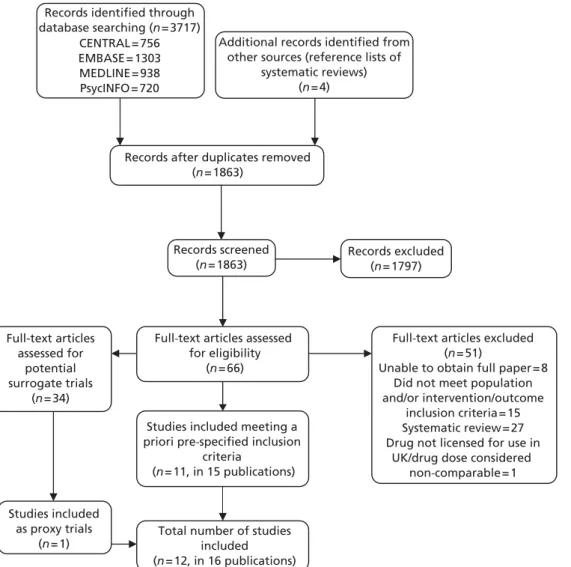
Twelve RCTs were identified in the review of clinical effectiveness data. Ten RCTs considered SSRI + AAP compared with SSRI + placebo/no treatment. Of the remaining two RCTs, one was a comparison of SSRI or serotonin–norepinephrine reuptake inhibitor (SNRI) + AAP with SSRI or SNRI + lithium and thefinal RCT compared SSRI + lithium with SSRI + placebo. Six of the 10 SSRI + AAP trials were included in the primary analysis; the remaining four RCTs were included in a class-based sensitivity analysis. Of the trials considering lithium augmentation as a comparator, only one was included in the primary analysis. All six trials considering augmentation with an AAP included in the primary analysis evaluatedfluoxetine (SSRI) + olanzapine (AAP). Furthermore, the lithium trial included in the primary analysis usedfluoxetine as the background SSRI in both the comparator group and lithium augmentation group.
Results for selective serotonin reuptake inhibitor plus atypical antipsychotic compared with selective serotonin reuptake inhibitor alone
(pairwise comparison)
Five RCTs reported response based on the MADRS and the remaining RCT used the Hamilton Depression Rating Scale. The results of the meta-analysis (fixed effects) demonstrated a statistically significant benefit for
fluoxetine + olanzapine over fluoxetine alone [odds ratio (OR) 1.48; 95% confidence interval (CI) 1.13 to 1.94] with a moderate level of statistical heterogeneity (I2= 53%;p= 0.07).
Five RCTs reported the outcome of remission. Fixed-effects meta-analysis demonstrated a statistically significant increase in remissions in patients treated with olanzapine +fluoxetine compared withfluoxetine alone (OR 1.77; 95% CI 1.27 to 2.47) with no statistical heterogeneity (I2= 0%;p= 0.75). Data on relapse
Four RCTs reported least square mean difference (MD) from baseline in MADRS score at study end point. Fixed-effects meta-analysis resulted in a statistically significant MD of−2.04 (95% CI−3.25 to−0.82) in favour offluoxetine + olanzapine. However, there was a high level of heterogeneity that was statistically significant (I2= 73%;p= 0.01).
Fixed-effects meta-analysis offive trials found that olanzapine augmentation therapy was associated with a non-statistically significant increase in discontinuations (OR 1.25; 95% CI 0.91 to 1.71) with no statistical heterogeneity (I2= 0%;p= 0.51).
Selective serotonin reuptake inhibitor plus lithium compared with selective serotonin reuptake inhibitor plus placebo response (pairwise comparison)
The single trial comparingfluoxetine + lithium with fluoxetine alone used two definitions of response, one prespecified primary analysis and one post hoc analysis. Results of the primary and post hoc analyses for response data indicated a non-significant trend in favour of lithium augmentation compared with SSRI alone (OR 1.48; 95% CI 0.37 to 5.95 and OR 3.85; 95% CI 0.80 to 18.62, respectively). Data on remission or relapse rates were not available.
The MD in change in MADRS score from baseline betweenfluoxetine + lithium compared withfluoxetine alone was−3.79 (95% CI−11.25 to 3.67) −a non-significant improvement from baseline score with
fluoxetine + lithium compared withfluoxetine alone.
Data on all-cause withdrawals demonstrated fewer withdrawals with a lithium augmentation strategy than withfluoxetine alone, although this difference was statistically non-significant (OR 0.68; 95% CI 0.15 to 3.16).
Mixed-treatment comparison (selective serotonin reuptake inhibitor plus atypical antipsychotic compared with selective serotonin reuptake inhibitor plus lithium)
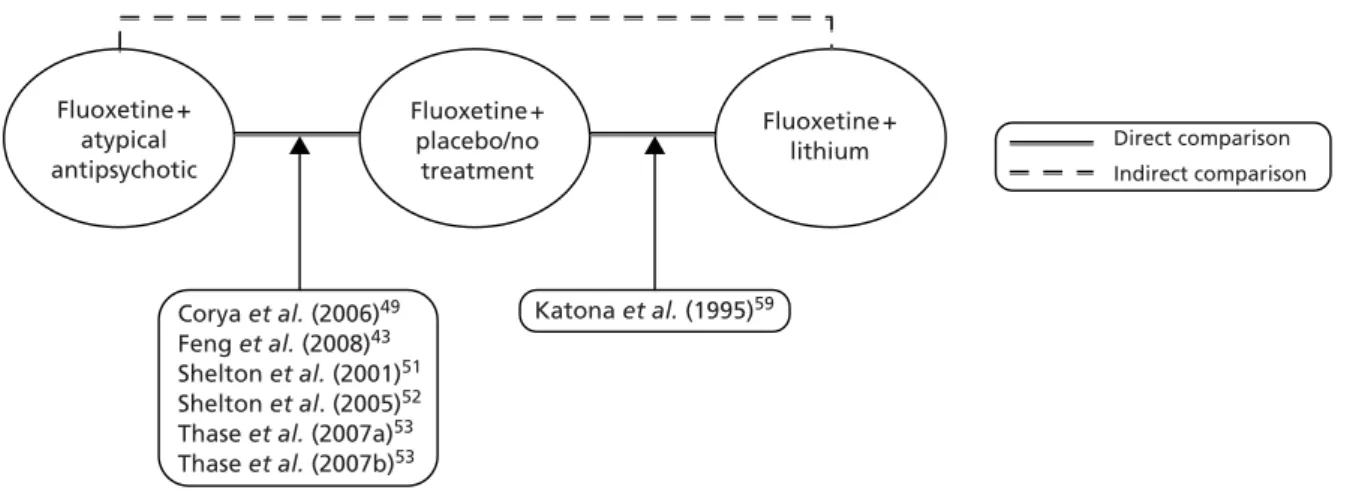
Seven RCTs were included in the MTC: six for SSRI + AAP compared with SSRI alone and one RCT for SSRI + lithium compared with SSRI alone. Two separate analyses for the outcome of response were conducted because the trial informing the comparison with lithium reported response using two criteria. Analyses of response (random-effects model) using the lithium primary analysis and the lithium post hoc analysis data showed a non-significant trend in favour of treatment with lithium [OR 1.29; 95% credible interval (CrI) 0.11 to 5.32 and OR 4.15; 95% CrI 0.25 to 20.34, respectively].
Five trials were included in the analysis for mean change in MADRS (four RCTs were AAPs and one was a lithium RCT). The random-effects model resulted in a weighted MD of−1.47 (95% CrI−9.10 to 6.41) for the mean change in MADRS score from baseline forfluoxetine + lithium compared withfluoxetine + olanzapine, which suggests a statistically non-significant trend in favour of lithium augmentation. However, the wide 95% CrI indicates a high level of uncertainty in this estimate of treatment effect and so the results should be interpreted with caution.
Six trials reported data on all-cause withdrawals. Thefixed-effects model results suggested a statistically non-significant trend in favour of augmentation with lithium (OR 0.74; 95% CrI 0.10 to 2.66) compared with augmenting with AAP.
Various sensitivity analyses were carried out, including analyses assuming class effects of SSRIs and AAPs, analysis of RCTs in which patients had experienced two or more failures to antidepressants in their current episode, and analysis of RCTs reporting response based on MADRS score. Results of most sensitivity analysis were consistent with the results of the primary analysis. However, the result of the sensitivity analysis assuming a class effect for SSRIs and AAPs for the outcome of mean change in MADRS differed from the primary analysis, identifying a statistically non-significant trend in favour of treatment with SSRI + AAP [MD 1.27; 95% CrI−1.88 to 4.68 (random-effects model)].
Cost-effectiveness
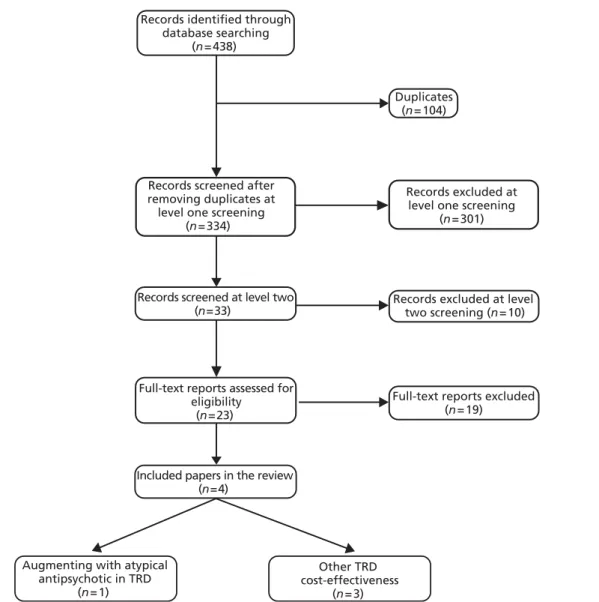
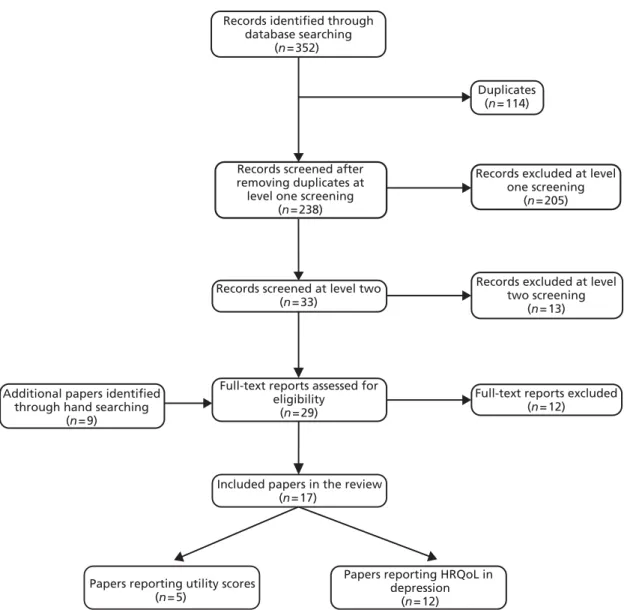
The systematic literature review identified four economic evaluations in the management of TRD and
five studies that reported utility values for different levels of depression severity and treatment response. Of the economic evaluations, none directly addressed the review question but all were used to inform the modelling methods. Of the health-state utility values studies, one was used in the QALY calculations of the de novo model.
The monthly cost of the commonly prescribed SSRIs and AAPs varied substantially, whereas the costs of monitoring were modest. The annual cost per patient treated with SSRI + lithium was estimated to be £4739 compared with £5644 for those treated with SSRI + AAP. The difference in cost between the two
augmentation strategies is around £905 per person per year, in favour of augmentation with lithium (lithium augmentation is cheaper) and translates to savings of £75 per person per month.
The results of the de novo modelling indicate that augmentation of SSRI therapy with an AAP is dominated by augmentation of an SSRI with lithium. The difference in costs is modest (cost savings £905 per person per year) and the difference in QALYs is estimated to be 0.03 QALYs. It appears there is no uncertainty about the dominance result, as lithium augmentation provided more benefits than AAP augmentation in all probabilistic runs. One-way sensitivity analysis showed that changes in costs had a minimal impact on the overall results, whereas changes in acute efficacy or discontinuation could potentially reverse the direction of the cost-effectiveness results. For example, assuming a low level of acute response (i.e. using the upper CrI) for the treatment effect of lithium (vs. SSRI alone; MD−12.58, 95% CrI−33.0 to 7.84) resulted in AAP augmentation having incremental cost-effectiveness ratios of < £20,000/QALY compared with lithium augmentation, as opposed to the base case in which lithium dominates. A similar result was observed when a high level of acute response for AAP was assumed (i.e. using the lower CrI) for AAP treatment effect (vs. SSRI alone; MD−11.22, 95% CrI−30.13 to 7.69). However, lithium remained dominant in most of the sensitivity analyses performed.
Discussion
The major weakness of this analysis is the lack of head-to-head data on the effectiveness of the comparison of SSRI + AAP with SSRI + lithium in patients with TRD. The MTC results demonstrate a non-significant benefit of augmenting with lithium compared with augmenting with AAP for most of the outcomes assessed. These results should be interpreted with caution, as the definitions of response and characteristics of patients included in the lithium RCTs differed from those used in the AAP RCTs. The inclusion of slightly different populations and definition of response may bias the results in favour of lithium; however, it should be noted that extent of the bias remains unknown.
The economic analysis found that augmenting with lithium was cheaper and more effective than augmenting with AAP. However, these results should be interpreted with caution in light of the
sensitivity of the model to changes in the efficacy parameters and the uncertainty around the clinical data. In addition, it is expected that the price of AAPs will fall once generic versions of branded treatments are available. It is also important to note that the trials included in the MTC did not report on all of the outcomes of interest for the economic model and consequently some of the required parameters were generated using sampling methods that have not been previously validated. There was also a paucity of RCT data on follow-up and maintenance treatment.
Conclusions
The results of this review support the conclusion that augmentation of SSRIs with lithium or AAP is likely to be beneficial in people with TRD, defined as a failure to respond to two or more antidepressants in the current episode of depression. However, based on the limited number of RCTs identified, the clinical
evaluation suggests there is no statistically significant difference between the two augmentation strategies. There is a general paucity of trial data available in patients with TRD for SSRI + lithium and SSRI + AAP. The cost-effectiveness results suggest that augmentation with lithium is cheaper and more effective compared with augmenting with AAP. However, the results are not definitive because the model is sensitive to the clinical effectiveness parameters of discontinuations and treatment response. The cost-effectiveness of SSRI + lithium and SSRI + AAP will need to be reconsidered if further trial data become available.
Suggested research priorities
A RCT in patients with TRD that compares SSRI + lithium with SSRI + AAP for response, remission and discontinuation in both the acute and maintenance phases of treatment is needed. In addition, data on relapse rates in the long term would be beneficial. Adverse events and QoL data should also be prioritised as part of the research.
Study registration
This study is registered as PROSPERO CRD42011001464.
Funding
Funding for this study was provided by the Health Technology Assessment programme of the National Institute for Health Research.
Chapter 1
Background
Description of health problem
The focus of this review is the acute-phase treatment of patients with unipolar treatment-resistant depression (TRD). Patients with TRD are those with major depressive disorder (MDD) that has not responded adequately to treatment. However, there is much uncertainty regarding what constitutes the definition of TRD and whether or not, for example, a patient with a failure to respond to two antidepressants from the same class could be defined as treatment resistant.1,2For the purposes of this report, TRD has been defined as a
failure to respond to two or more antidepressants in the current episode of depression, the definition used in the 2003 National Institute for Health and Care Excellence (NICE) clinical guideline on the treatment and management of depression in adults (CG23).3This definition for TRD was also reported by the authors of a
large systematic review of 42 randomised trials to reflect the consensus within the literature (26 trials)4and in
the World Federation of Societies of Biological Psychiatry (WFSBP) guidelines5for biological treatment of
unipolar depressive disorders. In addition, the WFSBP guidelines5state that‘as many as 50% of
non-responders to afirst antidepressant trial also fail to respond to a second, different course of treatment’. However, there is a general lack of clarity or consensus around the length of treatment required prior to treatment being defined as a failure and also the impact of historical treatment failures on the definition of future episodes of TRD, i.e. whether or not TRD should be diagnosed based on antidepressant failures that have occurred in only the current episode of depression.
Pathophysiology
The aetiology of depression is not fully understood, although there is evidence to suggest depression is a complex interaction among biological, genetic, psychosocial and environmental factors.2The highest
rates of depression typically occur in people between 25 and 44 years old, and females are twice as likely as males to experience depression,2although how thesefigures relate to the subgroup of patients with
TRD is difficult to know owing to the lack of epidemiological data and the lack of a consistent definition for TRD. Family history of depression is also a risk factor for depression2and a previous history of MDD
increases the risk of future episodes (i.e. relapses).6In addition, it has been reported that patients with
depression have increased morbidity and mortality.2For example, they are more likely to die from
cardiovascular disease7or suicide.8
Diagnosis and assessment of response to treatment
People presenting with depression may complain of depressed mood, loss of interest or pleasure, feelings of guilt or low self-worth, suicidal ideation, disturbed sleep or appetite, low energy and poor concentration. Depression can be diagnosed clinically using different criteria. The most commonly used criteria are the DSM-IV (Diagnostic and Statistical Manual of Mental Disorders-Fourth Edition published by the American Psychiatric Association)9and the ICD-10 (International Classification of Diseases, Tenth Revision) criteria
developed by the World Health Organization (WHO).10The DSM-IV system requires at leastfive out of nine
symptoms for a diagnosis of major depression, including at least one of the following two symptoms: low mood; or loss of interest and pleasure.9A diagnosis of moderately severe depressive episode using the
ICD-10 classification system requires the presence of at least three out of ten depressive symptoms, including at least two of the following three symptoms: low mood; loss of interest and pleasure; or loss of energy.10
In both cases, symptoms should be present for at least 2 weeks and each symptom should be present at sufficient severity for most of every day (Box 1 shows the full diagnostic criteria).
The recommended treatment goal in depression is to reach remission, which is defined as the relative absence of clinical symptomatology and is usually determined by reaching a certain score on a treatment response rating scale.11,12Response to treatment in TRD is commonly measured by a reduction of at
Rating Scale (MADRS).14Both scales are designed to be administered via a clinical interview and consist of a
list of symptoms of depression which the clinician must assess the patient for during the interview. The clinician then rates the patient's symptoms on the scales provided for each symptom and adds up the individual scores to provide the overall score. In both cases, the lower the score, the less severely depressed the patient. The definition of remission on the HAMD is typically defined as a score of≤7 on the 17-item version of the HAMD.15However, there is currently no consensus on a definition of remission for the
MADRS,15although clinical expert advisors reported that scores of≤10 on the MADRS are commonly used.
Incidence and prevalence
The current NICE clinical guideline on the treatment and management of depression in adults (CG90)16states
that there are 130 people with depression per 1000 of the NHS population, although only 80 people per 1000 of the population actually consult their general practitioner (GP). A survey carried out by the Social Survey Division of the Office for National Statistics on behalf of the Department of Health, the Scottish Executive and the National Assembly for Wales in 200017reported a prevalence of the diagnosis of depressive
BOX 1 Diagnostic and Statistical Manual of Mental Disorders-Fourth Edition9and ICD-1010diagnostic criteria
The DSM-IV diagnostic criteria for major depressive disorder
l Depressed mood most of the day, nearly every day, as indicated either by subjective report (e.g. feels sad or empty) or observation made by others (e.g. appears tearful).
l Markedly diminished interest or pleasure in all, or almost all, activities most of the day, nearly every day (as indicated either by subjective account or observation made by others).
l Significant weight loss when not dieting or weight gain (e.g. a change of > 5% of body weight in a month), or decrease or increase in appetite nearly every day.
l Insomnia or hypersomnia nearly every day.
l Psychomotor agitation or retardation nearly every day (observable by others, not merely subjective feelings of restlessness or being slowed down).
l Fatigue or loss of energy nearly every day.
l Feelings of worthlessness or excessive or inappropriate guilt (which may be delusional) nearly every day (not merely self-reproach or guilt about being sick).
l Diminished ability to think or concentrate, or indecisiveness, nearly every day (either by subjective account or as observed by others).
l Recurrent thoughts of death (not just fear of dying), recurrent suicidal ideation without a specific plan, or a suicide attempt or specific plan for committing suicide.
The ICD-10 diagnostic criteria for moderate depressive episode
l persistent sadness or low mood;and/or
l loss of interests or pleasure
l fatigue or low energy
l disturbed sleep
l poor concentration or indecisiveness
l low self-confidence
l poor appetite
l suicidal thoughts or acts
l bleak and pessimistic views of the future
disorder of 28 per 1000 of the survey population. A comparison in the report17was made to an earlier survey
conducted in 1993, in which the prevalence of depressive disorder was reported as 23 per 1000 people, thus suggesting that either the prevalence of depression in the UK is rising or that depression is being diagnosed more frequently. A study looking at depression in England in the adult population in 200018
reported the total number of people suffering from depression in England to be 2,661,468, based on calculations using 1998 data from the Office for National Statistics. The study also reported that 72% of people with depression were female, and 20% were in the 35- to 44-year age band.18In CG9016it is
reported that the prevalence of depression also varies considerably according to sex and a wide range of social and economic factors (e.g. it is higher in females and in unemployed people). However, it should be noted that the statistics reported above reflect the total clinical spectrum of depression and, as such, encompass patients with mild, moderate and severe depression, and thus those with TRD represent only a subgroup of these. No data specific to the UK incidence or prevalence of TRD were identified, which is possibly because there is no widely agreed definition for TRD.1
Current service provision
There are several pharmacological treatment strategy options for patients with TRD not achieving adequate response with antidepressants. In theBritish National Formulary(BNF)19it is stated that:
Failure to respond to initial treatment with an SSRI [selective serotonin reuptake inhibitor] may require an increase in the dose, or switching to a different antidepressant. Failure to respond to a second antidepressant may require the addition of another antidepressant of a different class, or use of an augmenting agent [such as lithium, aripiprazole (unlicensed), olanzapine (unlicensed), quetiapine or risperidone (unlicensed)], but such adjunctive treatment should be initiated only by doctors with special experience of these combinations.
Other potential treatment options suggested in CG9016include augmenting with a different agent, such as
anticonvulsants, pindolol (Visken®, Amdipharm), triiodothyronine, benzodiazepines, buspirone or
atomoxetine (Strattera®, Eli Lilly), or the use of electroconvulsive therapy (ECT) or psychological and
psychosocial interventions such as cognitive–behavioural therapy.
Relevant national guidelines
The key clinical guideline for depression in adults in the UK is the NICE clinical guideline on the treatment and management of depression in adults (CG90; extracts from this guideline have been reproduced here with permission);16this guideline is the updated version of CG23.3It should be noted that in CG9016a
decision was taken to no longer use the term‘treatment-resistant depression’,
as there were concerns that the term implies there is a‘natural cut-off between people who respond to one or two antidepressants compared with those who do not’, and that this‘is not supported by the evidence, and the term may be taken by both doctors and patients as a pejorative label’.16As a result,
in CG9016it was decided to approach the problem of inadequate response by considering sequenced
treatment options rather than by a category of patient. This is reflected throughout CG9016by use of the
label‘inadequate response to initial interventions’.
The recommendations in CG9016for the sequencing of drug treatments in patients with an initial inadequate
response are presented inBox 2, together with the additional recommendations for monitoring when treatment with lithium or atypical antipsychotic drugs (AAPs) is chosen.
In addition to the NICE clinical guideline (CG90) for the treatment and management of depression in adults,16
there are guidelines published by the British Association of Psychopharmacology (BAP).20The BAP 2008
guidelines20provide similar advice to CG9016on the use of augmentation therapy in TRD, although they
do not specifically mention a definition of how many treatment failures are required for a diagnosis of TRD (Box 3).
A key problem highlighted in both of the guidelines16,20is that there is limited randomised controlled trial
(RCT) evidence comparing the different potential augmentation treatments and thus there is currently much uncertainty as to which augmentation therapy is the most clinically effective and/or cost-effective in the management of TRD.
Current service cost
No data were identified that reported specifically on the economic impact of TRD in the UK. However, the report of a survey carried out by the Social Survey Division of the Office for National Statistics in 200017
estimated the total cost of adult depression to be over £9B, including around £370M of direct treatment costs. It also estimated that there were 109.7 million working days lost and 2615 deaths as a result of BOX 2 The NICE guideline, CG90.16National Institute for Health and Care Excellence (NICE).Depression: the
treatment and management of depression in adults (update). CG90. London: NICE; 2009. URL: http://guidance.nice. org.uk/CG90. Reproduced with permission
1.8.1.1 When reviewing drug treatment for a person with depression whose symptoms have not adequately responded to initial pharmacological interventions:
l check adherence to, and side effects from, initial treatment
l increase the frequency of appointments using outcome monitoring with a validated outcome measure
l be aware that using a single antidepressant rather than combination medication or augmentation is usually associated with a lower side effect burden
l consider introducing previous treatments that have been inadequately delivered or adhered to, including increasing the dose
l consider switching to an alternative antidepressant.
Combining and augmenting medications
‘Augmentation’is when an antidepressant is used with a non-antidepressant drug and‘combination’is when two antidepressants are used together.
1.8.1.6 If a person with depression is informed about, and prepared to tolerate, the increased side effect burden, consider combining or augmenting an antidepressant with:
l lithiumor
l an antipsychotic such as aripiprazole,aolanzapine,aquetiapineaor risperidone,aor
l another antidepressant such as mirtazapine or mianserin. 1.8.1.7 When prescribing lithium:
l monitor renal and thyroid function before treatment and every 6 months during treatment (more often if there is evidence of renal impairment)
l consider ECG [electrocardiogram] monitoring in people with depression who are at high risk of cardiovascular disease
l monitor serum lithium levels 1 week after initiation and each dose change until stable, and every 3 months thereafter.
a In this guideline, drug names are marked with an asterisk if they do not have UK marketing authorisation for the indication in question at the time of publication (October 2009).
BOX 3 The BAP 2008 guidelines20
Augmentation/combination treatment (A)
l Consider adding a second agent especially if:
¢ there is partial/insufficient response on the current antidepressant (D) and
¢ there is good tolerability of current antidepressant (D);
¢ switching antidepressant has been unsuccessful (D)
l establish the safety of the proposed combination (S)
l choose the combinations with the best evidence-basefirst (S)
l consider adding lithium (A), olanzapine (A), quetiapine (B), risperidone (B), aripiprazole (B), triiodothyronine (B) or mirtazapine (B) being aware that the evidence mainly supports lithium and triiodothyronine added to TCAs [tricyclic antidepressants] and the other drugs added to SSRIs.
Notes:
1. Developed from Shekelleet al.1999.
2. Categories of evidence for causal relationships and treatment:
l Evidence from meta-analysis of randomised controlled trials,aat least one large, good quality, randomised controlled trialaor replicated, smaller, randomised controlled trials*
l Evidence from small, non-replicated, randomised controlled trials,aat least one controlled study without randomisation or evidence from at least one other type of quasi-experimental study
l Evidence from non-experimental descriptive studies, such as uncontrolled, comparative, correlation and case-control studies
l Evidence from expert committee reports or opinions and/or clinical experience of respected authorities 3. Proposed categories of evidence for non-causal relationships:
l Evidence from large representative population samples
l Evidence from small, well designed, but not necessarily representative samples
l Evidence from non-representative surveys, case reports
l Evidence from expert committee reports or opinions and/or clinical experience of respected authorities 4. Strength of recommendation:
l A. Directly based on category I evidence
l B. Directly based on category II evidence or extrapolatedbrecommendation from category I evidence
l C. Directly based on category III evidence or extrapolatedbrecommendation from category I or II evidence
l D. Directly based on category IV evidence or extrapolatedbrecommendation from category I, II or III evidence
l S. Standard of good practice.
a Randomised controlled trials must have an appropriate control treatment arm; for primary efficacy this should include a placebo condition.
b Extrapolation may be necessary when evidence is only indirectly related, covers only a part or the area of practice under consideration, or has methodological problems or is contradictory.
depression in 2000.17Thesefigures represent the whole spectrum of depression and so the actual costs of
TRD are likely to be much lower, although it could reasonably be expected that the costs per patient would be significantly higher for patients with TRD compared with the costs of treatment of mild depression. This assumption is supported by reports that patients with TRD use a disproportionately larger share of health-care resources and cost employers more in lost productivity than patients with MDD who respond to treatment.2,21
A more recent economic review was conducted by the King's Fund in 2006 to estimate expenditure on mental health, including depression, in England up to 2026.22This study22estimated the total costs for
depression, including prescribed drugs, inpatient care, other NHS services, supported accommodation, social services and lost employment. The total cost of services for depression in England in 2007 was estimated to be £1.7B, with costs projected to reach £3B by 2026.22Moreover, addition of costs attributable to lost
employment increased the estimated cost of depression in 2007 to £7.5B (projected to reach £12.2B by 2026).22Thesefigures are consistent with a more recent report by the UK Mental Health Foundation in
November 2010;23this reported that depression costs‘the UK economy over £9 bn a year in lost earnings–
an increase of £4 bn since 1999, and a rise of over £500 m in the last year alone’. Thefigures for the UK Mental Health Foundation report23were calculated by the Research Service of the House of Commons
Library. The estimates identified for the costs of depression are all consistent with a statement in CG9016that
the indirect costs of depression far outweigh the health service costs.
Description of technology under assessment
The technologies under assessment in this report are lithium and AAPs used as augmentation therapies in the management of patients with TRD taking concomitant SSRI antidepressant therapy. All of the treatments under investigation in this review are available as oral tablet or liquid formulations.19Some of the AAPs
(aripiprazole, olanzapine and risperidone) are also available for administration parenterally (e.g. intravenously or intramuscularly). The current usage in the NHS of lithium and AAPs as augmentation therapies in TRD varies across different regions. This is likely to be due to the absence of national guidelines or treatment pathways recommending a preference for either augmentation strategy for TRD. The NICE clinical guideline on depression in adults (CG90)16recommends the following AAPs to augment the effectiveness of SSRIs in
TRD: aripiprazole (Abilify®, Bristol-Myers Squibb); olanzapine (Zyprexa®, Eli Lilly); quetiapine (Seroquel®,
AstraZeneca); and risperidone (Risperdal®, Janssen).
The augmentation therapies that are the focus of this report have been evaluated in patients who have failed to respond to two or more antidepressants in their current episode of depression. Clinical advisors for this report have suggested that augmentation with lithium or an AAP in TRD may be commenced after either one or two antidepressant failures in the current episode of depression, depending on the patient's medical history and current clinical status. However, the clinical advisors reported that, in their experience, as many as 50% of patients who fail on an initial SSRI will respond to a second SSRI. The experts thus consider that the population of patients with failure to respond to two or more previous antidepressants in their current episode of depression represents an appropriate population in which to evaluate the clinical effectiveness and cost-effectiveness of augmentation with either lithium or AAP.
The NICE clinical guideline on depression in adults (CG90)16reports on the use of augmentation agents after
an initial inadequate response to treatment of depression, although this is not further defined. In these patients, CG9016recommends that augmentation with lithium or an AAP could be considered as a potential
treatment strategy. In addition, it is considered by the clinical experts for this report that, at this time, lithium is used less frequently in the NHS than AAPs in the treatment of patients with TRD.
The duration of augmentation therapy is variable, and is partly dependent on the length of time until remission is reached. For this review, it is anticipated that treatment with any augmentation agent should be for a minimum of 4 weeks prior to thefinal efficacy assessment, and treatment with AAPs in particular is
recommended for a minimum of 4 weeks before discontinuation due to lack of efficacy.19Usually, it is
expected that augmentation therapy would be discontinued after a period of time in remission, although there is currently no set duration for this maintenance of treatment. Clinical advisors for this report suggest that treatment should be maintained for around 6 months post diagnosis of remission. CG9016also
suggests that treatment should be continued for at least 6 months after remission, and in patients at risk of relapse treatment should be continued for at least 2 years. In clinical practice, augmentation of antidepressants may occur in primary, secondary or tertiary care, and is usually in an outpatient setting. In CG9016it is recommended that augmentation therapy should be started only in primary care in
consultation with a consultant psychiatrist. Clinical experts for this report estimate that approximately 70% of patients with TRD will receive care from their GP and a community mental health team (CMHT). Of the remaining patients, it is estimated that 20% will be seen by Crisis Resolution and Home Treatment Teams (CRHTTs), which provide intensive home-based support, and the remainder of patients would receive inpatient care. Follow-up for patients with TRD is usually dependent on the patient's clinical need and also the requirement for monitoring associated with the individual augmentation therapy, which is discussed in more detail below.
Selective serotonin reuptake inhibitors
The SSRIs licensed for use in the UK are citalopram, escitalopram,fluoxetine,fluvoxamine, paroxetine and sertraline. They are all available in England and Wales as both generic and branded drugs: citalopram (Cipramil®, Lundbeck); escitalopram (Cipralex®, Lundbeck);fluoxetine (Prozac®, Lilly); fluvoxamine
(Faverin®, Abbott Healthcare); paroxetine (Seroxat®, GlaxoSmithKline); and sertraline (Lustral®, Pfizer). SSRIs
work by selectively inhibiting the reuptake of serotonin [5-hydroxytryptamine (5-HT)]; hence, they are termed SSRIs. SSRIs are commonly usedfirst-line for treating depression as they are better tolerated and are safer in overdose than other classes of antidepressants.19In particular, the SSRIs are less sedating and
have fewer antimuscarinic and cardiotoxic effects than tricyclic antidepressants.19Side effects of SSRIs include
gastrointestinal effects (e.g. nausea, vomiting, abdominal pain, diarrhoea, constipation), anorexia, rash, dry mouth, anxiety, headache, insomnia, tremor, dizziness, asthenia, drowsiness, convulsions, sexual dysfunction, urinary retention, sweating and hyponatraemia.19
SSRIs are recommended for use with caution in patients with epilepsy, cardiac disease, diabetes mellitus, susceptibility to angle-closure glaucoma, a history of mania or bleeding disorders, or taking drugs that increase the risk of bleeding.19SSRIs are associated with a risk of seizures and should therefore be used with
caution in those receiving concurrent ECT.19
Lithium
Lithium is used in the UK to augment antidepressants in patients with TRD, although this is an unlicensed indication.19Lithium is more commonly used for its licensed indication as a mood-stabilising agent,
although the precise mechanism of action of lithium remains unknown.
Lithium is available in both generic and branded formulations in England and Wales. These are as follows: lithium carbonate (Camcolit®, Norgine; Lithonate®, Teva UK; Liskonum®, GlaxoSmithKline; Priadel®
tablets, Sanofi-aventis); and lithium citrate (Li-Liquid®, Rosemont; Priadel®liquid, Sanofi-aventis).
Lithium salts have a narrow therapeutic–toxic ratio and therefore serum lithium concentrations should be monitored regularly during treatment.19Levels should be measured 12 hours after the dose with the aim of
achieving a serum-lithium concentration of 0.4–1 mmol/l.19The BNF recommends that routine‘serum-lithium
monitoring should be performed weekly after initiation and after each dose change until concentrations are stable, then every 3 months thereafter’.19It should also be noted that different lithium preparations have
different bioavailability and so caution is required when changing the lithium preparation.19
Renal function should also be monitored at baseline and every 6 months thereafter as lithium is excreted renally, and so renal impairment could cause lithium levels to build up, leading to toxicity.19Serum lithium
there is sodium depletion or dehydration. Long-term use of lithium has been associated with thyroid disorders and mild cognitive and memory impairment.19Therefore, long-term treatment requires careful
assessment of risk and benefit, and monitoring of thyroid function every 6 months.19
Side effects of lithium therapy include gastrointestinal disturbances,fine tremor, renal impairment, polydipsia, leucocytosis, weight gain, cognitive dulling, hyperparathyroidism, hyperthyroidism,
hyperglycaemia, hypermagnesaemia and hypercalcaemia.19The signs of lithium toxicity include blurred
vision, anorexia, vomiting, diarrhoea, muscle weakness, polyuria and increasing drowsiness eventually leading to coma.19
It is recommended that lithium is avoided if possible in patients with renal impairment and used with caution in patients with cardiac disease; QT-interval prolongation; conditions with sodium imbalance (e.g. Addison's disease); diarrhoea; vomiting; intercurrent infection; concurrent ECT treatment; psoriasis; and myasthenia gravis.19In addition, caution is recommended in the use of lithium in surgical patients, patients on diuretics
and the elderly.19
Atypical antipsychotic drugs
As discussed above for lithium, AAPs can similarly be used as adjunctive therapies to antidepressants in the treatment of patients with TRD. AAP drugs are also known as the second-generation antipsychotic drugs and act on a range of receptors in comparison with thefirst-generation antipsychotic drugs that
predominantly act on only one type of receptor. The only AAP licensed for use in the UK as an adjunctive treatment in MDD is quetiapine.19However, there are several other AAPs that are used as unlicensed
treatments in patients with unipolar TRD, including aripiprazole, olanzapine and risperidone. In addition, there are other AAPs classed as second-generation antipsychotic drugs that could also potentially be used, albeit unlicensed.
Most of the AAPs are still patented and thus are available only as branded drugs. The AAP drugs available for use in England and Wales are as follows: amisulpride (Solian®, Sanofi-aventis); aripiprazole (Abilify®,
Bristol–Myers Squibb); clozapine (Clozaril®, Novartis; Denzapine®, Merz; Zaponex®, Teva UK); olanzapine
(Zyprexa®, Lilly); paliperidone (Invega®, AstraZeneca); quetiapine [Seroquel®, AstraZeneca; Seroquel XL®
(modified release), AstraZeneca]; risperidone (Risperdal®, Janssen-Cilag). In addition to these AAPs,
ziprasidone (Geodon®/Zeldox®, Pfizer) is used elsewhere in Europe, but is not licensed or used routinely for
any indication in the UK. As this report is focused on treatments available for use in the NHS, ziprasidone will not be discussed further in this section.
The choice of AAP medication is usually influenced by the patient's medication history, and consideration of individual patient factors, for example, the risk of particular side effects such as weight gain or impaired glucose tolerance. As previously discussed, AAPs each act on different receptors. These are summarised inTable 1.
TABLE 1 Mode of action of the AAPs19
AAP Mechanism of action
Amisulpride Selective dopamine receptor antagonist with high affinity for mesolimbic D2and D3receptors
Aripiprazole Dopamine D2partial agonist with weak 5-HT1apartial agonism and 5-HT2Areceptor antagonism
Clozapine Dopamine D1, dopamine D2, 5-HT2A, alpha-1 adrenoceptor, and muscarinic-receptor antagonist
Olanzapine Dopamine D1, D2, D4, 5-HT2, H1- and muscarinic-receptor antagonist
Paliperidone Metabolite of risperidone; dopamine D2, 5-HT2A, alpha-1 adrenoceptor, and H1-receptor antagonist
Quetiapine Dopamine D1, dopamine D2, 5-HT2, alpha-1 adrenoceptor, and H1-receptor antagonist
Full blood count, urea and electrolytes, and liver function test monitoring are required at the start of therapy with antipsychotic drugs, and then annually thereafter.19In addition, clozapine requires differential white
blood cell monitoring weekly for 18 weeks then fortnightly for up to 1 year, and then monthly as part of the clozapine patient monitoring service.19Blood lipids and weight should also be measured at baseline, at
3 months, and then yearly, and fasting blood glucose should be measured at baseline, at 4–6 months, and then yearly.19Patients taking clozapine or olanzapine should have fasting blood glucose tested at baseline,
after 1 month's treatment, and then every 4–6 months.19It is also advisable to monitor prolactin
concentration regularly. Blood pressure monitoring is also advised before starting therapy and frequently during dose titration of antipsychotic drugs, and ECG monitoring may also be required if the patient has cardiovascular risk factors.19
There are numerous side effects associated with AAP drugs and the side effects contribute significantly to the reasons for non-adherence to therapy.19
Most antipsychotic drugs increase prolactin concentration because dopamine inhibits prolactin release, but aripiprazole reduces prolactin because it is a dopamine-receptor partial agonist.19Risperidone and
amisulpride are most likely to cause symptomatic hyperprolactinaemia.19The clinical symptoms of
hyperprolactinaemia include sexual dysfunction, reduced bone mineral density, menstrual disturbances, breast enlargement and galactorrhoea.19
Other side effects associated with AAPs include cardiovascular side effects, such as tachycardia, arrhythmias and hypotension.19Hyperglycaemia and sometimes diabetes can occur, particularly with clozapine,
olanzapine, quetiapine and risperidone.19All antipsychotic drugs may cause weight gain, although the risk
and extent varies, with clozapine and olanzapine being the most commonly associated with weight gain.19
Clozapine and quetiapine can cause postural hypotension (especially during initial dose titration), which may be associated with syncope or reflex tachycardia in some patients.19Hypersalivation is also associated with
clozapine therapy.19In addition, other possible side effects include drowsiness, agitation, restlessness,
increased appetite, insomnia, dizziness, headache, confusion, gastrointestinal disturbances, venous thromboembolism, and antimuscarinic symptoms (e.g. dry mouth, constipation, difficulty with micturition, blurred vision and also, very rarely, precipitation of angle-closure glaucoma).19Neuroleptic malignant
syndrome (NMS) is a rare, but potentially fatal, side effect of all antipsychotic drugs and requires discontinuation of the antipsychotic drug.19NMS is characterised by hyperthermia, afluctuating level of
consciousness, muscle rigidity, pallor, irregular pulse, tachycardia, sweating and urinary incontinence. It is recommended that AAPs are used with caution in patients with cardiovascular disease, a history of epilepsy or those on concomitant drugs that increase the QT interval (on an ECG).19In addition, caution is
required in the elderly owing to an increased risk of mortality associated with antipsychotic drugs and an increased risk of other serious side effects.19
Anticipated costs associated with intervention
The direct costs associated with the interventions under review (SSRIs, AAPs and lithium) are limited to the price of the individual tablet or liquid formulations, as there is no requirement for them to be administered in a specialised setting. In addition, there are some costs associated with the monitoring requirements of each therapy, although these costs vary between lithium and AAPs, as well as among the individual AAPs. The costs of the interventions along with the wider costs associated with each intervention are discussed in detail in the cost-effectiveness section of this report (seeChapter 5,Drug costs).