September 1997
COMBATING
TERRORISM
Federal Agencies’
Efforts to Implement
National Policy and
Strategy
September 26, 1997
The Honorable Ike Skelton House of Representatives The Honorable John Glenn Ranking Minority Member
Committee on Governmental Affairs United States Senate
The threat of terrorist attacks against U.S. citizens and property both at home and abroad has been an issue of growing national concern. As you requested, we reviewed U.S. efforts to combat terrorism. This report provides information on national policy and strategy to combat terrorism and federal agencies’ roles and responsibilities in implementing them. Specifically, the report discusses agencies’ programs and activities to (1) prevent and deter terrorism;
(2) respond to terrorist threats or incidents; and (3) manage the consequences of a terrorist act, especially involving weapons of mass destruction. The report also provides information on interagency coordination mechanisms intended to facilitate information sharing and enhance operational links. We plan to discuss issues concerning the funding of federal agencies’
terrorism-related programs and activities in a separate report. Our related work on Department of Defense programs was reported to you separately in Combating Terrorism: Status of DOD
Efforts to Protect Its Forces Overseas (GAO/NSIAD-97-207, July 21, 1997).
We are sending copies of this report to appropriate congressional committees, federal agencies discussed in the report, and other interested parties. If you have any questions about this report, please contact me at (202)-512-3504. Major contributors are listed in appendix XIII.
Richard Davis
Director, National Security Analysis
Purpose
The threat of terrorist attacks against U.S. citizens and property is ahigh-priority U.S. national security and criminal concern. The bombings of the New York City World Trade Center, a federal building in Oklahoma City, and a U.S. military facility in Saudi Arabia, among others, prompted increased emphasis on the need to strengthen the federal government’s ability to effectively combat terrorism, both at home and abroad. The terrorist attack in the Tokyo subway system using a nerve agent raised additional concern over major U.S. cities’ preparedness for incidents involving weapons of mass destruction—weapons using nuclear,
biological, or chemical agents. At the requests of Congressman Ike Skelton and Senator John Glenn, Ranking Minority Member, Senate Governmental Affairs Committee, GAO reviewed U.S. efforts to combat terrorism.
Specifically, GAO identified federal agencies’ programs and activities to
(1) prevent and deter terrorism; (2) respond to terrorist threats or incidents; and (3) manage the consequences of a terrorist act, especially involving weapons of mass destruction. GAO also identified interagency coordination processes and groups intended to facilitate information sharing and enhance operational links. GAO was also asked to identify interagency processes intended to ensure efficient allocation of funding and resources. These matters will be discussed in a report to be issued later.
Background
U.S. policy on combating terrorism has been evolving for about 25 years.In June 1995, the President issued Presidential Decision Directive 39(PDD 39), the central blueprint for the U.S. counterterrorism strategy.
PDD 39 restated standing U.S. policy and elaborated a strategy for
combating terrorism and measures to implement it. The U.S. strategy consists of three main elements: (1) reduce vulnerabilities and prevent and deter terrorist acts before they occur; (2) respond to terrorist acts that do occur, including managing crises and apprehending and punishing terrorist perpetrators; and (3) manage the consequences of terrorist attacks. The strategy also incorporates consideration of weapons of mass destruction across the three elements.
In addition, Congress passed legislation stating that certain acts of terrorism are federal crimes no matter where they are committed, requiring or permitting sanctions on countries that support or sponsor terrorism, delineating agency roles and responsibilities, and authorizing and/or appropriating funds. Congress has appropriated funds to enhance federal agencies and local capabilities to prevent, deter, counter, and
manage the consequences of terrorist attacks, including those involving weapons of mass destruction.
Results in Brief
Under sponsorship of the National Security Council (NSC), variousinteragency groups have been formed to coordinate the efforts of the more than 40 federal agencies, bureaus, and offices that combat terrorism. The intelligence community also has an Interagency Intelligence Committee on Terrorism. These interagency groups and committees meet to coordinate policy, plan interagency activities, share intelligence and other
information, and coordinate responses to certain crises.
Many programs and activities have been developed or used to carry out the three elements of the U.S. strategy for combating terrorism. Key federal efforts to prevent and deter terrorist acts include gathering, sharing, and disseminating intelligence information on terrorist threats and keeping foreign terrorists and materials from entering the United States. Federal efforts to respond to terrorist incidents and to manage the consequences of terrorist incidents include designating lead agencies for crisis response, establishing interagency quick-reaction support teams, creating special operational teams or units, developing contingency plans, and conducting interagency or single agency training and exercises. For both crisis management and consequence management, federal efforts include special teams and units to deal with weapons of mass destruction, whether they are nuclear, biological, or chemical weapons. Federal agencies are also involved in programs to assess the capabilities of state and local jurisdictions to immediately respond to and manage the
consequences of domestic terrorist incidents involving weapons of mass destruction and provide them training and assistance.
GAO’s Analysis
Formal Coordination for
Federal Policy Issues and
Activities
More than 40 federal departments, agencies, and bureaus have some role in combating terrorism. The NSC is the overall interagency coordinator for
U.S. policy issues on combating terrorism for federal efforts to respond to terrorist incidents abroad or domestic incidents with foreign involvement. The NSC sponsors an Interagency Working Group on Counterterrorism, led by the State Department. The working group oversees subgroups
activities, exercises, international consequence management, and
transportation security. The NSC also has a link with interagency forums to coordinate intelligence information sharing within the intelligence
community. The Director of Central Intelligence coordinates intelligence community issues and information sharing through a Counterterrorist Center and an Interagency Intelligence Committee on Terrorism. The Federal Emergency Management Agency also recently established a
separate Senior Interagency Coordination Group on Terrorism to deal with interagency domestic consequence management issues.
Federal Efforts to Reduce
Vulnerabilities, Prevent
and Deter Terrorist Acts
Under PDD 39, the Attorney General led a study to examine possible terrorist threats to the critical U.S. infrastructures, which include the banking and finance system, the water supply, telecommunications, and five other infrastructures. An executive order established a
government-private sector presidential commission to identify ways and means to protect these critical national infrastructures from physical and cyber attack, with participation from 10 federal agencies and the private sector.
Other federal efforts to prevent and deter terrorism include (1) protecting and enhancing the security of personnel and buildings, (2) disrupting terrorist activities through various programs and approaches,
(3) preventing terrorists and their materials from entering the United States, (4) training and assisting U.S. and foreign personnel to combat terrorism, and (5) promoting international cooperation in fighting
terrorism. Specific examples of federal programs include: the Department of State’s efforts to protect U.S. diplomatic posts and persons overseas, the Federal Aviation Administration’s efforts to ensure the security of civilian aviation, and the Treasury Department Office of Foreign Assets Control’s efforts to administer economic sanctions against state sponsors of terrorism and foreign terrorist organizations.
Managing Terrorist Crises
and Conducting Criminal
Investigations
Operationally, federal efforts to combat terrorism are organized along a lead agency concept. Regarding crisis response to terrorist attacks, the Department of Justice, through the Federal Bureau of Investigation (FBI),
has the lead for crisis management of domestic terrorist incidents in the United States and for forming a Domestic Emergency Support Team. The Department of State has the lead role for managing terrorist incidents abroad and for forming a Foreign Emergency Support Team. Depending on the nature of the threat or incident, numerous other agencies, including
specially trained U.S. military forces, the FBI’s Critical Incident Response
Group, the Department of Energy’s Nuclear Emergency Search Team, the Department of the Treasury’s Bureau of Alcohol, Tobacco, and Firearms, and others, may be called upon to provide support as needed. For
example, in the event of a nuclear terrorist threat or incident, the Department of Energy deploys one of several teams to provide expert advice and assistance in dealing with the device. The domestic and foreign emergency support teams are designed to rapidly deploy key federal personnel and equipment to the scene of a terrorist incident. The teams operate under sets of draft guidelines that detail each agency’s roles and responsibilities during an incident, including command and control of operations. While the Foreign Emergency Support Team has operated, trained, and exercised for 11 years, the Domestic Emergency Support Team is newly formed and is now beginning to organize, train, and exercise. In cases of terrorist activity perpetrated against U.S. individuals or interests, the Attorney General and Department of Justice leads federal efforts to pursue, apprehend, and prosecute terrorists, generally through the appropriate U.S. Attorney’s Office and the FBI. Other federal law enforcement agencies (e.g., various Treasury Department elements), also have investigative jurisdiction over a number of terrorism-related areas and would work with FBI in the investigation.
Managing the
Consequences of Terrorist
Incidents
Unlike crisis management of terrorist incidents, the federal government does not have primary responsibility for consequence management, but it supports state and local governments in domestic incidents and host governments in international incidents. As some federal agencies respond to a crisis and seek to bring the perpetrators to justice, other agencies manage the consequences of an incident. In domestic incidents, the Federal Emergency Management Agency takes the lead to marshal and coordinate federal emergency assistance to state and local authorities. The Federal Response Plan, which has an annex on terrorist incidents, outlines the roles, responsibilities, and emergency support functions of various federal agencies for consequence management. For example, the
Department of Health and Human Services may be called upon to support a locality with a medical response team, and the Environmental Protection Agency may be asked to help deal with certain chemical contaminants and to clean up a site. In international terrorist incidents, the State Department is the lead agency, assisted by the Agency for International Development. Other agencies may also provide support, including the Department of Defense and other agencies that would provide consequence management support domestically, such as the Department of Health and Human
Services, the Environmental Protection Agency, and the Department of Energy. A series of interagency exercises are used to test and improve consequence management response capabilities, with recent emphasis on dealing with terrorist incidents involving weapons of mass destruction. In response to legislative requirements, the Department of Defense and other agencies are preparing to provide local first responders in numerous U.S. cities with training and assistance to manage the consequences of
weapons of mass destruction.
Recommendations
GAO is making no recommendations in this report.Agency Comments
The Departments of State, Justice, Treasury, Health and Human Servicesand Energy;FBI; Federal Emergency Management Agency; the Central
Intelligence Agency; and the Agency for International Development reviewed a draft of this report and provided written comments. Their comments, and GAO’s responses, appear in appendixes IV to XII. The Department of Defense also provided written comments, but the department requested that GAO not print them due to references to classified material. The National Security Council, Environmental Protection Agency, and Department of Transportation also reviewed a draft of this report and discussed it with GAO staff but did not provide
written comments. In general, these agencies stated that the report accurately portrays U.S. policy on combating terrorism and the roles and missions of the various federal agencies involved. For example, the Department of Defense stated that the report “is a concise, well-written document that fully encompasses the National process for combating terrorism.” These agencies also provided technical corrections, which GAO
Executive Summary
2Chapter 1
Introduction
12
The Threat of Terrorism at Home and Abroad 12
Federal Agencies Define Terrorism Differently 16
U.S. Policy and Implementing Guidelines on Combating Terrorism
17
Key Federal Agencies Involved in Combating Terrorism 20
Interagency Coordination That Occurs Through the NSC and in the Intelligence Community
22
Objectives, Scope, and Methodology 25
Chapter 2
Efforts to Prevent and
Deter Terrorism
26
Vulnerability of Critical National Infrastructure to Be Assessed 26
Federal Agencies’ Roles and Responsibilities to Protect U.S. Persons and Facilities
27
Federal Agencies Use Various Approaches to Disrupt Terrorist Activities
30
Government Agencies Attempt to Prevent Terrorists From Entering the United States
34
Training and Assistance Programs to Combat Terrorism 35
International Community Has Actively Worked to Combat Terrorism 38
Chapter 3
Crisis Management in
Terrorist Incidents
39FBI Leads Crisis Management for Domestic Incidents 39
State Department Leads Crisis Management in International Incidents
48
Arrest and Criminal Prosecution of Terrorists 53
Chapter 4
Managing the
Consequences of
Terrorist Incidents
56
Managing the Consequences of Domestic Incidents 56
Managing the Consequences of International Incidents 64
Consequence Management Exercises 66
Appendixes
Appendix I: U.S. Policy on Combating Terrorism 70Appendix III: Support Agencies’ Capabilities Related to Weapons of Mass Destruction
79
Appendix IV: Comments From the Department of State 81
Appendix V: Comments From the Department of Justice 82
Appendix VI: Comments From the Federal Bureau of Investigation
87
Appendix VII: Comments From the Department of the Treasury 92
Appendix VIII: Comments From the Federal Emergency Management Agency
98
Appendix IX: Comments From the Department of Health and Human Serices
100
Appendix X: Comments From the Department of Energy 101
Appendix XI: Comments From the Central Intelligence Agency 103
Appendix XII: Comments From the U.S. Agency for International Development
105
Appendix XIII: Major Contributors to This Report 107
Related GAO Products
111Tables
Table 2-1: Members of the Interagency Intelligence Committee onTerrorism
32
Table 2.2: Terrorism-related Training and Assistance Programs 37
Table 3.1: Federal Agencies’ Involvement in Investigations Related to Terrorism
54
Table 4.1: The Federal Government’s Organizations for Crisis Management and Consequence Management of a Domestic Terrorist Incident.
59
Table 4.2: Consequence Management Roles and Missions of Federal Agencies that Support FEMA in a Domestic Terrorist Incident.
61
Figures
Figure 1.1: U.S. Casualties of International Terrorism Attacks,1991-96
13
Figure 1.2: Terrorist Incidents in the United States, 1980-95 14
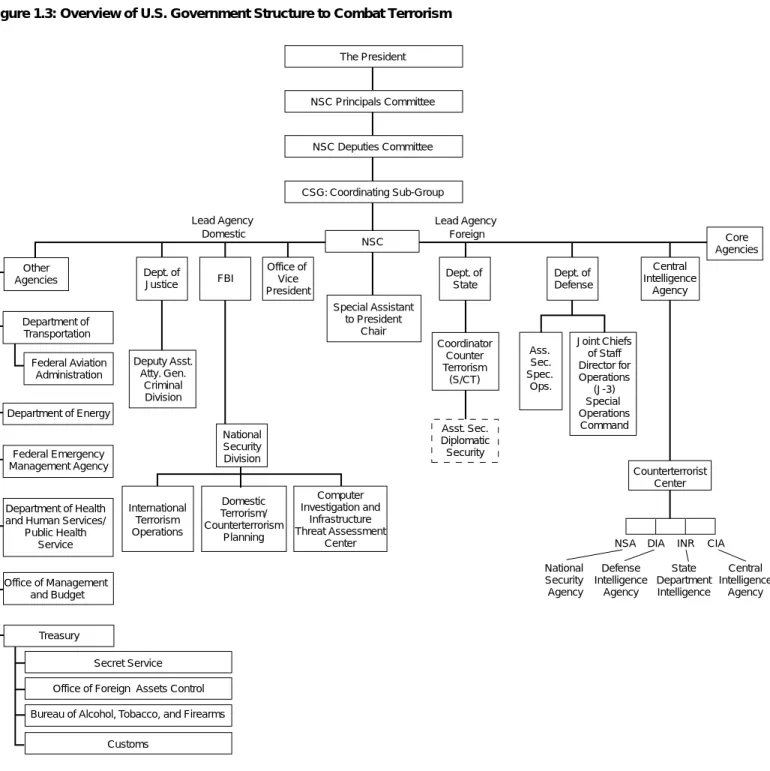
Figure 1.3: Overview of U.S. Government Structure to Combat Terrorism
21
Figure 1.4: National Security Council Organization to Coordinate Federal Efforts to Combat Terrorism
23
Figure 3.1: FBI Crisis management 41
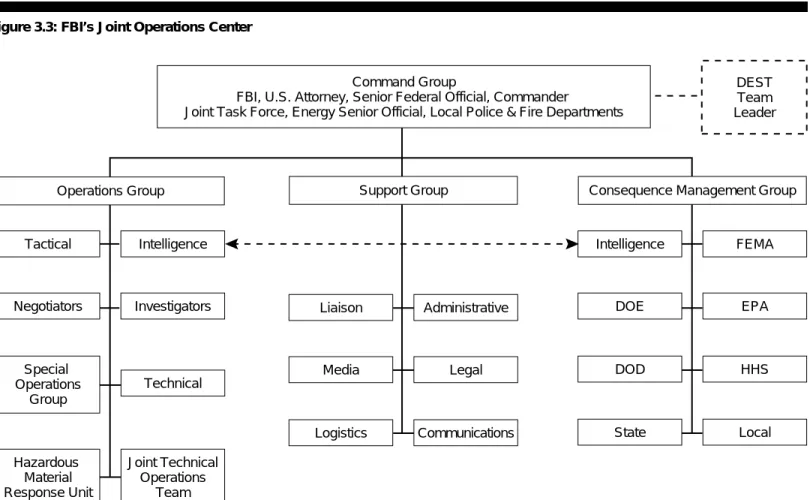
Figure 3.3: FBI’s Joint Operations Center 44
Figure 4.1: Initial 27 Cities Scheduled to Receive Nunn-Lugar-Domenici First Responder Training.
69
Abbreviations
ATF Bureau of Alcohol, Tobacco, and Firearms
BC biological or chemical CIA Central Intelligence Agency
DEST Domestic Emergency Response Team DOD Department of Defense
DOE Department of Energy
EPA Environmental Protection Agency
EST Emergency Support Team FAA Federal Aviation Administration
FBI Federal Bureau of Investigation
FEMA Federal Emergency Management Agency
FEST Foreign Emergency Response Team GAO General Accounting Office
HHS Health and Human Services
INS Immigration and Naturalization Service
NBC nuclear, biological, and chemical NSC National Security Council
OFDA Office of Foreign Disaster Assistance OMB Office of Management and Budget
PDD Presidential Decision Directive SWAT Special Weapons and Tactics
USAID U.S. Agency for International Development WMD Weapons of Mass Destruction
As the Cold War era ended, the threat of terrorism became a high-priority U.S. national security and criminal concern, both at home and abroad. The federal government does not have a single definition of terrorism, and agencies use different terms to describe protective and deterrent programs and activities and countermeasures against the threat of terrorist attack.1
U.S. policy and strategy for dealing with terrorism, along with the nature and perception of the terrorist threat, has been evolving since the 1970s. A variety of presidential directives, implementing guidance, executive orders, interagency agreements, and legislation provide the complex framework for the programs and activities to combat terrorism in more than 40 federal agencies, bureaus, and offices. Formal interagency
coordination is managed at the National Security Council (NSC), which also sponsors a number of interagency working groups on certain terrorism matters. For intelligence issues related to terrorism, the Community Counterterrorism Board’s Interagency Intelligence Committee on Terrorism is the mechanism for interagency coordination among U.S. military, regulatory, law enforcement, and intelligence agencies.
The Threat of
Terrorism at Home
and Abroad
While the number of terrorist incidents both worldwide and in the United States has declined in recent years, the level of violence and lethality of attacks has increased. The State Department reported that the number of international terrorist incidents has fallen from a peak of 665 in 1987 to 296 in 1996, a 25-year low.2 Of the 296 international incidents during 1996,
73 were against U.S. persons and facilities overseas. But casualties resulting from international terrorist incidents during 1996 were among the highest ever recorded—311 persons killed and 2,652 wounded.3 Of
those, 24 Americans were killed and 250 Americans were wounded. Similarly, between 1989 and the end of 1993, there were 23 recorded acts of terrorism in the United States, and for 1995, the Federal Bureau of Investigation (FBI) reported only one domestic terrorist incident in the
United States—the bombing of a federal building in Oklahoma City. That incident—the most destructive ever on U.S. soil—killed 168 and wounded 500 persons. Figure 1.1 shows State Department statistics on U.S.
casualties of international terrorism from 1991 through 1996, and figure 1.2
1In addition, Congress has defined the term terrorism in several federal statutes. The definitions vary
somewhat depending on the particular context.
2State Department statistics only include terrorism involving citizens or the territory of more than one
country. As a result, these numbers do not include incidents of domestic terrorism worldwide.
3The deaths of 90 people and injuries of 1,400 people in 1996 were caused by a single truck bombing in
Sri Lanka. Because the bombing wounded some U.S., Japanese, and Dutch citizens, this was counted as an international terrorist incident.
shows FBI statistics on domestic terrorist incidents in the United States
from 1980 through 1995.
Figure 1.1: U.S. Casualties of International Terrorism Attacks, 1991-96 1100 0 25 900 700 50 75 100 125 150 175 500 300 250 225 200 7 16 2 7 6 10 60 24 250 1004 1 5 Number of Casualities 1991 Year 1992 1993 1994 1995 1996 Legend Dead Wounded a
aThese are casualties from the World Trade Center bombing in New York City.
Figure 1.2: Terrorist Incidents in the United States, 1980-95 80 81 82 83 84 85 86 87 88 89 90 91 92 93 94 95 0 10 20 30 40 50 60 29 42 51 31 13 7 25 9 9 4 7 5 4 12 0 1 Calendar year Number of incidents
Note: As of September 1997, FBI officials said that 1996 data was not available. Source: FBI.
In its annual report on international terrorism, the State Department noted a continuing trend toward more ruthless attacks on mass civilian targets and the use of more powerful bombs.4 State also noted that finding clear
patterns in terrorism is becoming more difficult. The FBI’s most recent
report discussing domestic U.S. terrorism notes an upsurge in rhetoric from domestic right-wing extremist groups, many members of which believe they are being displaced by the rapidly changing U.S. culture, or hate or fear of the federal government.5 Also, the intelligence community
4Patterns of Global Terrorism 1996, U.S. Department of State, April 1997.
5Terrorism in the United States 1995, Department of Justice, Federal Bureau of Investigation. As of
has issued classified National Intelligence Estimates on the terrorist threat.6
In 1995 and 1996, about one-fourth of international terrorist attacks were against U.S. targets, and historically, the United States has not been immune from terrorist acts. However, certain key, large-scale incidents at home and abroad since 1993 have dramatically raised the profile of U.S. vulnerability to terrorist attack. For example, the February 1993 bombing of the World Trade Center in New York City raised the specter of foreign terrorism in the United States. The April 1995 bombing of the federal building in Oklahoma City turned attention to domestic sources of terrorist threats and violence. The June 1996 truck bombing of a U.S. military housing facility near Dhahran, Saudi Arabia, prompted a reexamination of DOD programs to protect its forces and installations overseas.7 The 1995 terrorist use of a nerve agent in the Tokyo subway
elevated concerns about the greater likelihood of terrorist’s use of weapons of mass destruction (nuclear, biological, and chemical) and the need to shore up U.S. federal and cities’ capabilities to respond to and manage such incidents.
One expert noted there are three schools of thought on the terrorist threat: (1) some believe the threat and likelihood of terrorist attack is very low and does not pose a serious risk ; (2) others believe the threat and likelihood of terrorist attack is high and could seriously disrupt the U.S. national and economic security; and (3) still others believe assessments of the threat and vulnerability to terrorist attack need to be accompanied by risk assessments to rationally guide the allocation of resources and attention. The expert further stated that such risk assessments would include analyses of vulnerability and susceptibility to terrorist attack and the severity of potential damage.
According to U.S. intelligence agencies, conventional explosives continue to be the weapon of choice for terrorists. Although the probability of their use may increase over time, chemical and biological materials are less 6The intelligence community includes the Office of the Director of Central Intelligence, the Central
Intelligence Agency, the National Security Agency, the National Imagery and Mapping Agency, the National Reconnaissance Office, the Defense Intelligence Agency, other offices within the Department of Defense (DOD) for the collection of specialized national intelligence through reconnaissance programs, the intelligence elements of the Army, the Navy, the Air Force, the Marine Corps, the FBI, the Department of the Treasury, the Department of Energy, the Bureau of Intelligence and Research of the Department of State, and such other elements of any department or agency as may be designated by the President or jointly by the Director of Central Intelligence and the head of the department or agency concerned.
7For more information, see our recent report Combating Terrorism: Status of DOD Efforts to Protect
likely terrorist weapons because they are more difficult to weaponize and the results are unpredictable. Agency officials also noted that terrorist’s use of nuclear weapons is the least likely scenario, although the
consequences could be disastrous.
Federal Agencies
Define Terrorism
Differently
Federal agencies use different definitions of terrorism. The State Department uses a statutory definition of terrorism: premeditated, politically motivated violence against noncombatant targets by
subnational groups or clandestine agents, usually intended to influence an audience.8 The
FBI more broadly defines terrorism as “the unlawful use of
violence, committed by a group of two or more individuals against persons or property to intimidate or coerce a government, the civilian population, or any segment thereof, in furtherance of political or social objectives.”
FBI’s definition of terrorism is broader than State’s definition, in that the
terrorist act can be done by a group of two or more individuals for social as well as political objectives. Because of this broader definition, the FBI
includes in its annual reports on terrorism in the United States acts such as bombings, arson, kidnapping, assaults, and hijackings committed by persons who may be suspected of associating with militia groups, animal rights groups, and others.
Federal agencies also use different terms to describe their programs and activities for combating terrorism. For example, FBI uses
“counterterrorism” to refer to the full range of its activities directed against terrorism, including preventive and crisis management efforts. On the other hand, DOD uses the term “counterterrorism” to refer to offensive
measures to prevent, deter, and respond to terrorist attack and
“antiterrorism” to cover defensive measures to reduce the vulnerability of individuals and property to terrorist acts. For purposes of this report, we use the term “combat terrorism” to refer to the full range of federal programs and activities applied against terrorism, domestically and abroad, regardless of the source or motive.
8See 22 U.S.C. Sec. 2656f(d). The term noncombatant includes military personnel who at the time of
the incident are unarmed and/or not on duty. This legislation also requires the State Department to submit annual reports to Congress on international terrorism.
U.S. Policy and
Implementing
Guidelines on
Combating Terrorism
U.S. policy to combat terrorism has been evolving since the 1970s but became formalized in 1986 with the Reagan administration’s issuance of National Security Decision Directive 207. This directive resulted from the findings of the 1985 Vice President’s Task Force on Terrorism, which highlighted the need for improved, centralized interagency coordination of the federal government’s significant assets to respond to terrorist
incidents. The directive was primarily focused on crisis response to
terrorist incidents abroad. It tasked an NSC sponsored Interagency Working Group to coordinate the national response and designated lead federal agencies to respond to and resolve terrorist incidents overseas and domestically. The State Department was reaffirmed as the lead agency for international terrorism policy, procedures, and programs, and the FBI, through the Department of Justice, was reaffirmed as the lead agency for dealing with acts of domestic terrorism.
National Level Executive
Branch Policy and Strategy
Presidential Decision Directive 39 (PDD 39), signed in June 1995, built upon
the previous directive and elaborated a national policy, a strategy, and an interagency coordination mechanism and management structure to combat terrorism. It also expanded on roles, responsibilities, and mechanisms to combat domestic terrorism. PDD 39 continues the basic
U.S. policy of no concessions to terrorists, pressure on state sponsors of terrorism, and application of the rule of law to terrorists as criminals. It also states that the U.S. policy is to deter, defeat, and respond vigorously to all terrorist attacks on U.S. territory and against U.S. citizens, whether they occur domestically, in international waters or airspace, or on foreign territory.
The strategy consists of three main elements: (1) reduce vulnerabilities and prevent and deter terrorist acts before they occur; (2) respond to terrorist acts that do occur—crisis management—and apprehend and punish terrorists; and (3) manage the consequences of terrorist acts, including restoration of capabilities to protect public health and safety, essential government services, and emergency relief. The strategy incorporates the need to deal with terrorist’s use of weapons of mass destruction (WMD) with nuclear, chemical, and biological substances across the three main elements.
PDD 39 directs agencies to undertake specific measures regarding each
element of the strategy. It also reaffirms lead agency responsibilities for responding to domestic (FBI, through the Department of Justice) and
consequences of domestic terrorist attacks (Federal Emergency
Management Agency (FEMA)). PDD 39 further charges the State Department to work closely with other governments to carry out U.S. policy to combat terrorist threats. The PDD also states that agencies directed to participate in operations and activities to combat terrorism shall bear the cost of their participation, unless otherwise directed by the President. It further directs the Director, Office of Management and Budget (OMB), to report on the
adequacy of funding for programs related to combating terrorism and assigns OMB ongoing responsibility to ensure that certain technology
research, development, and acquisition efforts associated with efforts to combat terrorism are adequately funded.
On reducing vulnerabilities, PDD 39 directed the Attorney General to
identify and review the vulnerability to terrorist attack of critical national infrastructures, such as telecommunications, transportation, and banking and financial institutions. The Attorney General identified eight critical infrastructures that, if attacked, could significantly affect the national and/or economic security. This review resulted in Executive Order 13010 on protection of the critical infrastructure, which formed a
government-private sector commission to further review vulnerabilities and propose solutions, as appropriate. In addition, all department and agency heads have been directed to ensure that their personnel and facilities are protected against terrorism. These efforts to identify vulnerabilities and protect persons and facilities are further discussed in chapter 2.
For crisis management, the PDD also discusses interagency,
multidisciplinary Domestic and Foreign Emergency Support Teams, DEST
and FEST. These quick-response teams are to include expertise and
capabilities that are tailored to the specific conditions of the threat or incident, including WMD. For domestic terrorist incidents, the Attorney
General, through the FBI, is to lead the operational response, while also performing law enforcement and investigative efforts to pursue,
apprehend, and punish the terrorist perpetrators as criminals. The goal is to terminate terrorist attacks before the terrorists can accomplish their objectives or to capture them, while seeking to minimize damage and loss of life and provide emergency assistance. For international terrorist incidents, the Secretary of State is to lead U.S. crisis management abroad. These interagency teams and the federal role in responding to and
The PDD also directed FEMA to ensure the Federal Response Plan is
adequate for consequence management activities in response to terrorist attacks against large U.S. populations, including those in which weapons of mass destruction are involved. FEMA is also to ensure that state’s response plans and capabilities are adequate and tested. These efforts to manage the consequences of terrorist incidents are further discussed in chapter 4.
Appendix I contains an unclassified abstract of PDD 39.
Implementing Guidance on
Combating Terrorism
The FBI and State Department have drafted but not finalized detailed implementing and operational guidelines for domestic and international crisis management of terrorist incidents. FEMA coordinated an annex to the Federal Response Plan that deals with how the federal government will assist state and local authorities in managing the consequences of a terrorist attack in the United States. In addition, key agencies such as DOD, FBI, and the State Department have drafted or are drafting various
concepts of operations and guidelines to deal with terrorist incidents at home and abroad, including those involving WMD. Further, numerous interagency agreements have been formulated over the years on
operational and other matters relating to terrorism. For example, the FBI, the Department of Energy (DOE), and DOD have an agreement defining
specific areas of responsibility and procedures for responding to emergencies involving improvised nuclear devices within the United States, and the Departments of Justice and Transportation have a memorandum of understanding on notification of terrorist threats to domestic transportation entities.
Legislation on Combating
Terrorism
While there is no single, comprehensive federal law explicitly dealing with terrorism, Congress has passed a series of laws dealing with various aspects of terrorism. These laws were enacted to ensure that the
perpetrators of certain terrorist acts are subject to punishment no matter where the acts occur; require or permit sanctions on countries supporting or sponsoring terrorism; delineate agency roles and responsibilities; and authorize and/or appropriate funding for agencies to carry out their responsibilities.9 Congress recently passed legislation with significant
terrorism components, such as the Antiterrorism and Effective Death
9For more information on historical and recent terrorism-related legislation and proposals, see
Terrorism: Background and Issues for Congress, Congressional Research Service Issue Brief for Congress, 95086, Updated January 13, 1997.
Penalty Act of 1996,10 which includes provisions prohibiting terrorists’
fund-raising and financial transactions and other assistance to terrorists, procedures for removing alien terrorists from the United States, and expanded and strengthened criminal prohibitions and penalties pertaining to terrorism. In addition, Title XIV of the National Defense Authorization Act for Fiscal Year 199711 (commonly called Nunn-Lugar-Domenici) directs
the Secretary of Defense to assist federal, state, and local government agencies with training, advice, equipment, and other actions to shore up domestic local capabilities to respond to and manage consequences of a terrorist incident with WMD. For example, DOD is to provide expert advice to assist federal, state, and local agencies to develop chemical and biological defense programs and assist the Public Health Service to organize Metropolitan Medical Strike Teams. Appendix II provides citations of selected legislation pertaining to terrorism.
Key Federal Agencies
Involved in
Combating Terrorism
Many intelligence, policy-making, law enforcement, defense, and regulatory agencies are involved in implementing the national policy to combat terrorism. Figure 1.3 is adapted from NSC’s overview of the U.S.
government structure to combat terrorism and illustrates the key federal agencies and offices with roles and missions in that effort. Chapters 2, 3, and 4 of this report further discuss the agency roles, responsibilities, programs, and activities along the functional lines of PDD-39’s strategy for
combating terrorism.
10P.L. 104-132, April 24, 1996. 11P.L. 104-201, September 23, 1996.
Figure 1.3: Overview of U.S. Government Structure to Combat Terrorism
Department of Health and Human Services/
Public Health Service The President NSC Principals Committee NSC Deputies Committee CSG: Coordinating Sub-Group NSC Dept. of Defense Dept. of State Dept. of Justice FBI National Security Division Office of Vice President Central Intelligence Agency Coordinator Counter Terrorism (S/CT) Deputy Asst. Atty. Gen. Criminal Division Joint Chiefs of Staff Director for Operations (J-3) Special Operations Command Ass. Sec. Spec. Ops. Counterterrorist Center Special Assistant to President Chair Core Agencies Other Agencies Lead Agency Foreign Lead Agency Domestic Domestic Terrorism/ Counterterrorism Planning Computer Investigation and Infrastructure Threat Assessment Center International Terrorism Operations Asst. Sec. Diplomatic Security Defense Intelligence Agency State Department Intelligence National Security Agency Central Intelligence Agency DIA INR CIA NSA Department of Transportation Federal Aviation Administration Department of Energy Federal Emergency Management Agency
Bureau of Alcohol, Tobacco, and Firearms Secret Service
Treasury Office of Management
and Budget
Office of Foreign Assets Control
Customs
Interagency
Coordination That
Occurs Through the
NSC and in the
Intelligence
Community
Formal interagency coordination of national policy and operational issues to combat terrorism occurs through the NSC. The NSC’s Coordinating Sub-Group of the Deputies Committee is comprised of representatives from State, Justice, DOD, Joint Chiefs of Staff, Central Intelligence Agency (CIA), and FBI. Any single member can call a session of the Coordinating
Sub-Group. By invitation, depending on the issue or incident, representatives from Transportation, Treasury, Health and Human Services, Energy, and FEMA may attend meetings of the Coordinating Sub-Group. The Coordinating Sub-Group deals with and tries to reach consensus on terrorism policy and operational matters and makes recommendations to the Deputies Committee or through the National Security Advisor to the President.
As shown in figure 1.4, a standing Interagency Working Group for Counterterrorism, a policy group chaired by State Department’s
Coordinator for Counterterrorism, is to oversee the activities of several interagency subgroups. CIA’s Counterterrorist Center is NSC’s link to the
Interagency Intelligence Committee on Terrorism, which operates under the oversight of the Community Counterterrorism Board, which is part of the Counterterrorist Center. The Interagency Intelligence Committee on Terrorism is to advise and assist the Director of Central Intelligence in coordinating national intelligence on terrorism issues and to promote effective use of intelligence resources for this purpose. This Committee is composed of representatives of the intelligence, law enforcement, and regulatory communities and oversees several subcommittees. As figure 1.4 illustrates, the Interagency Intelligence Committee on Terrorism has seven subcommittees or groups.
Figure 1.4: National Security Council Organization to Coordinate Federal Efforts to Combat Terrorism
National Security Council (NSC)
NSC Principals Committee (Cabinet level)
NSC Deputies Committee
Coordinating Sub-Group NSC Chair
(State, Justice, Defense, Joint Staff, CIA, and FBI. FAA , Treasury, Health and Human Services, FEMA and Energy as required)
Interagency Working Group for Counterterrorism State Dept. Chair-Asst. Sec. level
(NSC, Defense, Justice, Treasury, Energy, Transportation, Joint Staff, CIA, FAA, and FBI)
Exercises Subgroup
Technical Support Working Group
Consequence Management Working Group
Aviation Security Working Groupa
Maritime Security Working Groupa
Ground Transportation Working Groupa
Community Counterterrorism Board (CCB) CCB Chair-Interagency Intelligence Committee on Terrorism (State, Energy, Joint Staff, FBI, FAA, DEA, NSA, DIA, Coast Guard,
Secret Service, Customs, SOCOM, and 29 others. See table 2.1 for complete list of member agencies.)
Research and Development Subcommittee
Information Handling Advisory Group
Technical Countermeasures Subcommittee
Chemical, Biological, Radiological Threat Subcommittee
Warning Subcommittee
Analytic Training Subcommittee
Requirements Subcommittee
aMeet as required.
We did not evaluate the operation of the groups or subcommittees or the effectiveness of the coordination mechanisms, but we obtained
information on them and the scope of their functions. Under the
Interagency Working Group on Counterterrorism, the Exercises Subgroup is co-chaired by State and FBI. The Subgroup’s quarterly meetings are
attended by representatives from the 20 agencies that participate in major counterterrorism exercises. The group deals with issues relating to each agency’s exercise objectives, discusses after-action report items and lessons learned that have an impact on interagency operations, and plans future exercises. The Technical Support Working Group coordinates certain research and development activities across the
antiterrorism/counterterrorism community in seven categories of
terrorism-related products. The seven categories are: (1) assault support, (2) explosive detection and disposal, (3) investigative support and
forensics, (4) personnel protection, (5) physical security and
infrastructure protection, (6) surveillance collection and operations support, and (7) WMD countermeasures. While the group is to coordinate
and ensure against duplication of about $30 million12 in terrorism-related
projects, it is not responsible for oversight, coordination, or ensuring against duplication of the full range of research and development efforts in these fields governmentwide. Projects in the Technical Support Working Group’s purview represent a minor share of all terrorism-related research and development being conducted across the federal government.
Recently, a Consequence Management Working Group focused on
international incidents was formed, and State Department officials expect this standing group to be very active in the future. The Aviation Security, Maritime Security, and Ground Transportation Security Working Groups meet on an as-needed basis, particularly to coordinate and establish the U.S. positions on matters to be discussed in multilateral forums such as summits of The Eight.13
Operationally, NSC serves as the focal point for immediate emergency interagency coordination under the following conditions: to activate a State Department-led FEST in the event of a terrorist incident overseas and to establish an FBI-led DEST to respond to domestic terrorist incidents with
an international or foreign connection. In these cases, a special NSC group feeds critical information to the NSC Deputies Committee, which in turn
12According to participants in the Technical Support Working Group, DOD is the largest contributor of
funds to the projects under the group’s purview. Planned funding for these projects increases from $19.3 million in fiscal year 1997 to $31.5 million in 1998 and to $41.3 million in fiscal year 2002.
13This group, formerly known as the “Group of Seven” Western industrial countries (or G7), now
includes Russia and is known as “The Eight.” Members other than Russia include Canada, France, Germany, Italy, Japan, the United Kingdom, and the United States.
makes recommendations to the President. However, if domestic terrorism incidents involve U.S. perpetrators, the FBI Director, in coordination with the Attorney General, is responsible for authorizing an FBI-led DEST and the
crisis response. Such cases are not coordinated through the NSC
mechanism.
Objectives, Scope,
and Methodology
Our objectives were to review U.S. efforts to combat terrorism by specifically looking at programs and activities to (1) prevent and deter terrorism; (2) respond to terrorist threats or incidents; and (3) manage the consequences of a terrorist act, especially involving weapons of mass destruction. In reviewing these activities, we used PDD-39 to scope our effort. We obtained information through documentation and interviews of officials at the Departments of State, Treasury, Justice, Defense, Energy, Transportation, and Health and Human Services; the CIA; Environmental
Protection Agency; and FEMA. We also identified interagency coordination processes and groups intended to facilitate information sharing and enhance operational links. To ascertain the interagency coordinating mechanisms and their scopes, we met with NSC, the Department of State, FBI, and intelligence community officials. We also discussed the
coordinating mechanisms with participating agency officials.
We met with former government officials from the counterterrorism community and attended congressional briefings, conferences, and symposiums on terrorism issues. We did not evaluate the effectiveness of the programs or activities discussed in this report. We performed a separate review of DOD’s force protection efforts and have reported
separately on these matters.14 We also did not include in our scope issues
pertaining to information security.
Some of the information we obtained was classified and could not be incorporated in this report. We used this information, however, to help corroborate unclassified data we obtained and our analyses. We did not independently verify agencies’ statistical data. We performed our work in accordance with generally accepted government auditing standards between October 1996 and July 1997.
14Combating Terrorism: Status of DOD Efforts to Protect Its Forces Overseas (GAO/NSIAD-97-207,
One of the most important goals of U.S. national policy is to reduce its citizens’ and properties’ vulnerability to terrorism, at home and abroad, and to prevent and deter terrorist incidents. The federal government has a number of initiatives intended to reduce the vulnerability of its domestic and overseas facilities to accomplish this goal. In recognition of the importance of certain national infrastructures to the defense, economic security, and public welfare of the United States, a presidential
commission was created to develop a national strategy to protect the nation’s critical infrastructures.
To disrupt terrorist activities before they occur and prevent terrorists from entering the United States, the federal government has programs to reduce the capabilities and support available to terrorists. Federal agencies have programs to gather intelligence on and monitor the activities of terrorists and to coordinate their information and efforts, to impose economic sanctions and embargoes to disrupt the ability of terrorists to raise funds, and to scrutinize persons crossing U.S. borders for possible affiliation with terrorist groups.
A number of U.S. agencies offer training and technical assistance in combating terrorism for U.S. and/or foreign law enforcement and other personnel, often as part of broader law enforcement or other curricula. U.S. counterproliferation programs and activities are intended to help prevent terrorists’ access to WMD.
Vulnerability of
Critical National
Infrastructure to Be
Assessed
PDD 39 chartered an interagency group, chaired by the Attorney General, to
study the vulnerabilities of government facilities and critical national infrastructure to terrorist threats. These threats were divided into two categories: (1) bombings and other physical threats to tangible property and (2) computer-based electronic attacks on the information or
communications components that control the infrastructures. The group determined that the incapacity or destruction of any of the following eight critical infrastructures would have a debilitating impact on the defense or economic security of the United States: telecommunications;
transportation; electric power systems; water supply systems; banking and financial systems; gas and oil supplies (storage and transportation);
emergency services systems (including medical, police, fire and rescue); and continuity of government and government operations.
The group recommended that a follow-on task force be established to examine ways to reduce the vulnerability of these critical national
infrastructures, much of which are owned and/or operated by the private sector. In July 1996, the President signed an executive order1 establishing
a joint government and private sector Commission to develop a national strategy to protect the country’s critical infrastructures from a spectrum of threats, including terrorism. The Commission is to have representatives from 10 government agencies and the private sector. The Commission encountered delays as the private sector Chairman was not appointed until December 1996. As of September 1997, Commission staff told us that 18 of the 20 commissioners had been appointed, and the Commission’s deadline for submitting its recommendations to the President had been extended to October 1997.
The executive order recognized the need to improve coordination of existing infrastructure protection efforts while the Commission is conducting its analysis and the President is considering its
recommendations. As a result, the President established an interagency Infrastructure Protection Task Force to undertake this interim mission. The FBI chairs this Task Force, which complements its existing mission to operate the Infrastructure Vulnerability/Key Asset Protection Program, the origins of which date to 1985 in response to a continuing threat of
terrorism directed at U.S. critical facilities. The program is designed to maintain information on critical facilities throughout the United States to assist in contingency planning should these facilities become terrorist targets.
Federal Agencies’
Roles and
Responsibilities to
Protect U.S. Persons
and Facilities
PDD 39 directs federal agencies to ensure that the people and facilities
under their jurisdiction are protected against terrorism. The PDD specifies certain agency roles and responsibilities for enhancing security. In addition, various federal agencies are involved in protective and preventive measures for major special events, such as multilateral economic conferences.
In PDD 39, the President charged the Secretary of Transportation to reduce vulnerabilities affecting the security of airports in the United States; all aircraft, aviation, maritime shipping under U.S. control2; and rail, highway,
mass transit, and pipeline facilities. For example, the Federal Aviation Administration (FAA), through the Department of Transportation, is
1Executive Order 13010, Critical Infrastructure Protection, July 15, 1996.
2The U.S. Coast Guard is responsible for domestic ships’ and port facilities’ security to reduce their
vulnerability to terrorist attack and for assessing the vulnerability to terrorist attack of foreign ports frequented by U.S. cruise ship passengers.
charged with reducing vulnerabilities to terrorism pertaining to civil aviation. This includes not only U.S. airports and U.S.-flagged carriers, but also foreign airports served by U.S. carriers and foreign-flagged carriers with routes to the United States. For example, FAA educates and advises commercial carriers on methods to prevent and deter terrorism. In addition, FAA assesses the adequacy of U.S. and foreign carriers’ security programs, makes recommendations, and provides assistance to enhance security at U.S. and foreign airports.3
In the aftermath of the destruction of Trans World Airlines Flight 800, President Clinton created the White House Commission on Aviation Safety and Security, known as the Gore Commission, to examine ways to
enhance aviation security overall, including measures to protect against terrorism. Some of the Commission’s recommendations reported to the President in February 1997 focused on terrorism. For example, they called for (1) developing an automated passenger profiling system, (2) increasing the frequency of passenger inspections, and (3) increasing reliance on canine teams and equipment to detect explosives likely to be used by terrorists.
The FAA; intelligence community; Bureau of Alcohol, Tobacco, and
Firearms (ATF); Customs; and the airlines are now implementing the Commission’s recommendations. For example, by the end of fiscal year 1997, 98 additional Customs inspectors are to be stationed at 14 major U.S. airports that have heavy international passenger traffic. Equipped with X-ray vans, radiation detectors, and other anomaly-detection equipment, these Customs officials are expected to increase searches of passengers, baggage, and cargo leaving the United States. Similarly, FAA plans to
procure 54 certified explosives detection devices. In addition, both FAA and ATF are expanding their canine programs for explosives detection.4
PDD 39 directed the Secretary of State to reduce vulnerabilities affecting the security of all personnel and facilities at nonmilitary U.S. government installations abroad as well as the general safety of American citizens abroad. As part of the State Department’s overall responsibility to directly and indirectly protect U.S. personnel and facilities at diplomatic posts, its Bureau of Diplomatic Security develops security construction and
protection standards. The Bureau also develops security procedures for 3In addition, civil aviation security liaison officers in 16 locations worldwide are the primary contact
between U.S. embassies and foreign governments on civil aviation security matters.
4For additional information on detection technologies, see Terrorism and Drug Trafficking:
Responsibilities for Developing Explosives and Narcotics Detection Devices (GAO/NSIAD-97-95, Apr. 15, 1997).
U.S. overseas embassies and missions and monitors their implementation. The security standards incorporate an array of programs pertaining to terrorism and other threats, including the use of armored vehicles,
emergency plans and exercises, and transit security. The Bureau manages the many overseas regional security officers and has its own intelligence unit, which assesses the threat for U.S. posts overseas. Worldwide, about 1,400 Marine Corps security guards and 13,000 local guards provide around-the-clock security for U.S. diplomatic missions abroad.
Also, State’s Bureau of Diplomatic Security maintains relationships and communications with U.S. corporations with operations overseas, and in some countries, U.S. business concerns have established forums to work with the regional security officers on security matters, including terrorism. In addition, while the Secret Service typically protects visiting heads of state, the Bureau of Diplomatic Security is to protect lower-level foreign dignitaries visiting the United States. Because these officials frequently travel together, the two agencies coordinate their missions during these visits.
The Secretary of Defense is to reduce vulnerabilities affecting the security of all U.S. military personnel (except those assigned to diplomatic posts abroad, who are the responsibility of the State Department) and facilities both abroad and within the United States. According to PDD 39 and by
directive, all DOD personnel and their families and facilities are to be protected against terrorist acts.5 Specific security standards are left to the
discretion of the regional military commander, recognizing that the mission, threat level, and specific circumstances would determine the level of force protection at each facility. In response to a Downing
Assessment Task Force6 recommendation concerning the Khobar Towers
bombing, DOD and the State Department are reviewing their
responsibilities to protect U.S. military personnel assigned overseas.
PDD 39 also directed the Secretary of the Treasury to reduce vulnerabilities
by preventing unlawful traffic in firearms and explosives, by protecting the President and other officials against terrorist attack and by enforcing laws controlling the movement of assets, and imports and exports of goods and services under Treasury’s jurisdiction.
5DOD Directive 2000.12, DOD Combating Terrorism Program, September 15, 1996.
6The Downing Assessment Task Force was created by Secretary of Defense Perry to examine the facts
and circumstances surrounding the June 25, 1996, bombing of Khobar Towers, Dhahran, Saudi Arabia, in which 19 U.S. personnel were killed and about 500 were wounded. The Task Force reported its findings in an August 30, 1996, report.
The federal government also provides protection at special events held within the United States and abroad. Federal agency responsibilities to prepare for special events will vary based upon the venue and the officials that attend. Such events may include presidential inaugurations, political conventions, sporting events, and international conferences. In general, primary responsibilities for event security rest with the local authorities in domestic events and host governments in events abroad. For domestic events, the FBI plays a major role in crisis management planning, preparation, and implementation, in coordination with state and local authorities and other federal agencies. For example, DOD, DOE, FEMA, Department of Health and Human Services (HHS), and the Environmental
Protection Agency (EPA) sent personnel and advisors to prepare for and monitor the 1996 Olympics in Atlanta, Georgia. For events abroad, the State Department is the lead agency to coordinate federal agency assistance for overseas events in which the United States participates, such as the 1992 Olympics in Barcelona, Spain. If the President or other U.S. officials, as defined by statute,7 attend the event, the Secret Service
has primary responsibilities for security planning and implementation in the areas specifically visited by such persons, again, in coordination with local, state, and other federal agencies like FBI, DOD, and others.
Responsibility to protect foreign officials visiting the United States is split: the Secret Service protects heads of state, and State’s Bureau of
Diplomatic Security protects other foreign dignitaries.
Federal Agencies Use
Various Approaches
to Disrupt Terrorist
Activities
The federal government disrupts terrorist activities in several ways. Intelligence and law enforcement agencies collect and disseminate information about suspected terrorists and their activities. Recent U.S. laws make it more difficult for terrorist organizations to raise funds in the United States, and under certain circumstances, the government has frozen or confiscated terrorist financial assets. In addition, the government can take covert and military action against terrorist groups or countries that sponsor them.
FBI and CIA Gather
Intelligence on Terrorist
Groups and Threats
Intelligence is a crucial component of the federal government’s efforts to combat terrorism, and the collection and analysis of intelligence on terrorist threats is among the highest priorities. In accordance with
PDD 39, the FBI is the principal agency that monitors the activities of
terrorist groups operating within the United States. The CIA is responsible for gathering intelligence overseas.
The FBI is expanding its counterterrorism programs. In addition to hiring
additional agents, in January 1996, the FBI restructured its approach to deal with terrorism. Three sections in FBI’s National Security Division manage
counterterrorism programs: one focused on foreign threats, another focused on domestic threats in the United States, and another focused on computer investigations and infrastructure protection. These sections are designed to provide real-time operational and analytical capabilities to enhance the federal government’s ability to prevent acts of terrorism in the United States. According to the FBI, its program, among other things,
supports ongoing field investigations, formulates threat warnings and alerts based on intelligence information, and disseminates this information to other law enforcement agencies.
The FBI monitors domestic groups and individuals that it believes pose a terrorist threat and collects intelligence on suspected foreign terrorists operating within the United States. According to Justice officials, the FBI’s program focused on suspected foreign terrorists frequently involves surveillance under the Foreign Intelligence Surveillance Act. To safeguard individuals’ rights, Justice Department prosecutors are not to be privy to information obtained during the surveillance. However, if an investigation reveals the occurrence of or plans for significant criminal
activity—terrorism-related or otherwise—this information can be
provided to federal prosecutors. For example, plots to bomb the Holland and Lincoln tunnels and the George Washington Bridge in New York and a federal building in New York City were detected during an investigation initiated under the Foreign Intelligence Surveillance Act.
The Director for Central Intelligence’s Counterterrorist Center at the CIA
was established in 1986 to collect, analyze, and distribute national
intelligence on terrorism, and use this information to support U.S. efforts to penetrate, disrupt, and ultimately destroy terrorist organizations worldwide. In addition, the Center prepares intelligence reports on terrorist groups and countries that support terrorism that are made
available to other intelligence and law enforcement agencies. For example, the Center issues a monthly classified review of international terrorism developments and provides other analysis on terrorist groups, capabilities, or incidents as needed.
Intelligence Agency
Cooperation
To enhance the processing, analyzing, and distributing of intelligence information, more than 40 federal agencies, bureaus, and offices have joined the Interagency Intelligence Committee on Terrorism
(see table 2.1). Members of this Committee share information on the activities of terrorist groups and countries that sponsor terrorism and assess indications of terrorist threats.
Table 2-1: Members of the Interagency
Intelligence Committee on Terrorism Advanced Research Projects Agency National Reconnaissance Office
Bureau of Alcohol, Tobacco, and Firearms National Security Agency Central Intelligence Agency National Security Council
Drug Enforcement Agency Office of the Secretary of Defense Defense Intelligence Agency Office of the Vice President Defense Information Systems Agency U.S. Special Operations Command Defense Special Weapons Agency U.S. Army
Department of Commerce U.S. Air Force Department of Energy U.S. Capitol Police Department of Health and Human Services U.S. Coast Guard Department of Justice U.S. Customs Service Department of State U.S. Central Command Department of Transportation U.S. Information Agency Department of Treasury U.S. Marshals Service Environmental Protection Agency U.S. Marine Corps Federal Aviation Administration U.S. Navy
Federal Emergency Management Agency U.S. Postal Service
Federal Bureau of Investigation U.S. Supreme Court Marshal’s Office Immigration and Naturalization Service U.S. Secret Service
Joint Chiefs of Staff White House Communications Agency Nuclear Regulatory Commission White House Military Office
Source: Agency documents.
The sharing of terrorism-related intelligence is expected to be facilitated by agencies’ detailing staff to one another’s organizations. The
counterterrorism units located at the FBI and CIA have representatives from numerous other federal agencies. For example, more than a dozen
agencies have representatives at the CIA Counterterrorist Center.
Moreover, the FBI manages standing joint terrorism task forces to facilitate
an exchange of intelligence and coordinate activities across the law enforcement community within a specific geographic area. Conceived in the 1980s, these task forces are currently located in 13 metropolitan areas throughout the country and are staffed by federal, state, and local law enforcement officers.
The intelligence community disseminates threat warnings through various channels. CIA’s Counterterrorist Center has created a new Threat Warning Group in the Community Counterterrorism Board. This group analyzes threat reports, coordinates them with the intelligence community, and distributes them to senior U.S. policymakers. In addition, the FBI
cooperates with federal, state, and local law enforcement through its threat and warning channels. The FBI manages the Terrorist Threat
Warning System, which communicates terrorism-related information to other law enforcement agencies. The FBI told us it also disseminates
unclassified terrorism threat and warning information to law enforcement agencies nationwide through its teletype National Law Enforcement Telecommunications System. According to FBI, in 1996, 13 such messages were delivered. FBI also transmits information to U.S. businesses on the
potential for terrorism through its Awareness of National Security Issues and Response Program. Established in 1996, this program is a facsimile network linking FBI field offices to more than 5,000 businesses.
U.S. Sanctions Can Disrupt
Terrorists’ Financial
Operations
The Department of the Treasury’s Office of Foreign Assets Control develops, administers, and, along with the Customs Service, enforces economic sanctions and embargo programs against state sponsors of terrorism, foreign terrorist organizations and their supporters, and attempts to deny them access to U.S. economic and financial markets.8
The Office has administered economic sanctions programs against state sponsors of terrorism beginning in 1950 when sanctions against North Korea were declared. The Office currently administers sanctions programs against North Korea, Cuba, Iran, Iraq, Libya, Sudan, and Syria. More than $3 billion in assets are blocked as a result of these sanctions programs.9
The Office’s ability to block in-process transactions depends largely on privately owned financial institutions adhering to the terms of blocking orders and the ability to impose civil penalties for failure to comply. Recent legislation10 expands on existing prohibitions pertaining to
financing terrorists. For example, it prohibits U.S. persons from lending financial support to foreign terrorist organizations and requires domestic financial institutions to freeze the funds of designated foreign terrorist organizations and their supporters.
8The Office does not have a domestic terrorism role; it focuses exclusively on foreign-based terrorism. 9For more information on sanctions, see Economic Sanctions: Effectiveness as Tools of Foreign Policy
(GAO/NSIAD-92-106, Feb. 19, 1992).
Covert and Military
Actions Can Be Used
Against Terrorists
Another means of preventing and deterring future terrorist activity is to strike directly at terrorist organizations through covert action. CIA covert action is the execution of operations to influence events in another country in which it is deemed important to mask the U.S. government’s involvement. Congress has supported such action in recent legislation, urging the President to “use all necessary means, including covert action and military force, to disrupt, dismantle, and destroy international
infrastructure used by international terrorists, including overseas terrorist training facilities and safe havens.”11
Military action is also used to disrupt terrorist activities. Special
Operations Forces have a statutory counterterrorism mission, which may include preemptive military attacks on terrorist targets. The United States has also taken retaliatory military action against state sponsors of
terrorism. For example, in 1986 the United States attacked targets in Libya in retaliation for several Libyan terrorist actions, including the bombing of a discotheque in Germany that killed several off-duty U.S.
servicemembers. In 1993, the United States used military force against Iraqi targets when it became clear that Iraq was responsible for a foiled plot to assassinate former President Bush when he visited Kuwait.
Government Agencies
Attempt to Prevent
Terrorists From
Entering the United
States
The federal government leverages existing functions of the State Department, U.S. Customs Service, and the Immigration and
Naturalization Service (INS) to prevent terrorists and terrorist materials
from entering the United States.
First, the State Department is responsible for denying terrorists and their supporters entry visas.12 State Department’s Bureau of Intelligence and
Research has a “TIPOFF” program to declassify sensitive intelligence and law enforcement information and enter it into State’s Consular Lookout and Support System. The Bureau of Consular Affairs and overseas consular officers use this information to monitor visa applications and detect known or suspected terrorists as they apply for visas overseas.
11The Antiterrorism and Effective Death Penalty Act of 1996 (P.L. 104-132), Section 324.
12The Immigration and Nationality Act, as recently amended by the Antiterrorism and Effective Death
Penalty Act of 1996, allows the State Department to deny a visa (i.e., exclude entry) to a foreigner who is a known or suspected terrorist or is a representative or member of a designated foreign terrorist organization. Congress requires that a report be submitted each time the Department denies a visa on terrorist grounds.