Biologicals and Biosimilars
Differences and implementation of the regulatory requirements in
the European Union versus those in the United States with special
consideration and analysis of the implementation and
improvement of safety standards for biosimilar products
Dissertation
zur
Erlangung des Doktorgrades (Dr. rer. nat.) der
Mathematisch-Naturwissenschaftlichen Fakultät der
Rheinischen Friedrich-Wilhelms-Universität Bonn
vorgelegt von
Marlene Schulzensohn
aus GörlitzDie vorliegende Arbeit wurde in der Zeit vom Februar 2014 bis April 2017 unter der Leitung von Herrn Prof. Dr. Harald G. Schweim am Lehrstuhl für Drug Regulatory Affairs des Pharmazeutischen Instituts der Rheinischen Friedrich-Wilhelms-Universität Bonn angefertigt.
Angefertigt mit Genehmigung der Mathematisch-Naturwissenschaftlichen Fakultät der Rheinischen Friedrich-Wilhelms-Universität Bonn
1. Gutachter: Herr Prof. Dr. Harald G. Schweim
2. Gutachter: Frau PD Dr. rer. nat. Gudrun Ulrich-Merzenich Tag der Promotion: 25.01.2018
Hiermit versichere ich, daß ich diese Arbeit selbständig und ohne jede unerlaubte Hilfe angefertigt habe und daß diese oder ähnliche Arbeit noch keiner anderen Stelle zur Prüfung vorgelegt wurde.
Ort, Datum
Acknowledgements
I would like to thank especially Professor Dr. Harald G. Schweim for his support and for allowing me latitude.
This dissertation would have not been possible without the patience and motivation of my husband Stefan. I would like to thank to my friend Jennifer Firth, she was always a grandiose teacher and a fantastic and admirable mentor to me. Jennifer, many thanks to you for your efforts and valuable support over the many years we have known each other.
Table of Contents
Table of Contents ... 6 List of Abbreviations ... 10 List of Figures ... 13 List of Tables ... 14 1 Introduction ... 15 2 Historical background ... 18From the beginning of biotechnology to the first therapeutic 2.1 monoclonal antibody ...18
3 Meanings and exemptions ... 20
Meaning of the term safety standards ...20
3.1 Exemptions ...20 3.2 4 Definitions ... 21 Biotechnology-derived ...21 4.1 Definitions in the European Union ...21
4.2 Definitions in the USA ...22
4.3 5 Current status and market figures for biotechnology-derived products ... 23
Current market figures and future trends ...23
5.1 6 Biological products and biotechnology-derived medicinal products ... 26
Biological products ...26
6.1 Biosimilar products ...27
6.2 Specialties of biotechnology-derived products ...28
6.3 The manufacturing process of biotechnology-derived products ...30
6.4 7 The regulatory framework in the European Union and the USA ... 34
Institutions and structures within the European Union ...34
7.1 Regulatory overview ...35
7.2 Other important documents ...36
7.3 Responsible Authorities ...38
7.4 The role of the International Council on Harmonization ...39
7.5 Clinical Trials ...40
7.6 USA institutions and structures ...42
7.7 Regulatory Overview ...43
7.8 Other important documents ...44
7.9 Responsible Authorities ...45
7.10 Clinical Trials ...46
7.11 8 Approval procedures for medicinal products ... 47
Authorization procedures in the European Union ...47 8.1
The Centralized Procedure ...47 8.1.1
The Decentralized Procedure ...49 8.1.2
The Mutual Recognition Procedure ...49 8.1.3
National authorization procedures ...50 8.1.4
Approval procedures for biological and biosimilar products ...50 8.1.5
Format and content of an application dossier ...51 8.1.6
The biosimilar product application – The time point of submission 8.1.7
and market access ...52 Meeting regulatory authorities ...53 8.1.8
Approval procedures in the USA ...54 8.2
The New Drug Application ...54 8.2.1
The Abbreviated New Drug Application ...54 8.2.2
The Biologics License Application ...55 8.2.3
8.2.3.1 The 351(k) applications (section 351(k) of the PHS Act) ...56 Approval procedures for biological and biosimilar products ...57 8.2.4
Format and content of a Biologics License Application ...57 8.2.5
The biosimilar product application – The time point of submission 8.2.6
and market access ...59 Meeting regulatory authorities ...59 8.2.7
9 The main legislation for biotechnology-derived products ... 61 Directive 2001/83/EC and Regulation (EC) No 726/2004 ...61 9.1
21 CFR 600 - 680 ...62 9.2
Comparison of the overall safety relevant regulatory requirements 9.3
established by legislation ...63 Pharmacovigilance – Significant activities to ensure the safety of
9.4
biotechnology-derived products...64 10 Implementation of the regulatory requirements ... 67 The density of regulation and the implementation of EU legislation ...67 10.1
The density of regulation and the implementation of US legislation ...69 10.2
11 The ICH guidelines for biotechnology-derived products ... 72 The ICH quality guideline documents ...72 11.1
The ICH safety guideline documents ...73 11.2
12 Analysis of EMA scientific guidance documents ... 74 The EMA scientific guidance documents for biological innovator
12.1
products with main focus on mAbs ...74 The EMA scientific guidance documents for biosimilar products
12.2
13 Analysis of publicly available FDA guidance documents ... 80 The FDA guidance documents for biological innovator products
13.1
with main focus on mAbs ...80 The FDA guidance documents for biosimilar products ...82 13.2
14 Analysis and comparison of the identified EMA and
FDA guidance documents ... 84 Analysis of the overall safety relevant regulatory requirements ...84 14.1
Overall summary of overall safety relevant regulatory requirements ...97 14.2
Analysis of the non-clinical safety considerations ... 101 14.3
Overall summary to non-clinical safety considerations ... 106 14.4
Analysis of the clinical safety requirements ... 107 14.5
Overall summary of clinical safety requirements ... 119 14.6
Analysis of the quality considerations ... 121 14.7
Overall summary to safety relevant quality considerations ... 127 14.8
15 Improvement potential and suggestions ... 130 Improvement potential in the European Union and USA ... 130 15.1
Improvement potential in the European Union ... 133 15.2
Improvement potential in the USA ... 135 15.3
16 Conclusion and Outlook ... 136 Conclusion ... 136 16.1 Outlook ... 137 16.2 List of References ... 139 List of Appendices ... 165
List of Abbreviations
ADCC Antibody-dependent cell-mediated cytotoxicity (Fc-associated function)
AMG Arzneimittelgesetz (German Drug Law) ANDA Abbreviated New Drug Application ANX Appendix II condition
BfArM Federal Institute for Drugs and Medical Devices BIAM Biosimilar Initial Advisory Meeting
BLA Biologics License Application BPD Biosimilar Product Development BsUFA Biosimilar User Fee Act
BWP Biologics Working Party
CAGR Compound Annual Growth Rate CAT Committee for Advanced Therapies
CBER Center for Biologics Evaluation and Research
CDC Complement-dependent cytotoxicity (Fc-associated function) CDER Center for Drug Evaluation and Research
CFR Code of Federal Regulations
CHMP Committee for Medicinal Products for Human Use
CHO Chinese Hamster Ovary
CMC Chemistry, Manufacturing, and Controls
CMS Concerned Member State
COMP Committee for Orphan Medicinal Products
CP Centralized Procedure
CSTR Continuous stirred-tank reactor
CT Clinical Trial
C-terminus Carboxyl-terminus (The end of an amino acid chain terminated by a free carboxyl group (-COOH))
CTFG Clinical Trials Facilitation Group
CVMP Committee for Medicinal Products for Veterinary Use DNA Desoxyribonucleic acid
DCP Decentralized Procedure
EC European Commission
EDQM European Directorate for the Quality of Medicines & HealthCare
EEA European Economic Area
ELISA Enzyme-linked immunosorbent assay EMA European Medicines Agency
EPAR European public assessment reports ERMS European Risk Management Strategy
EU European Union
Fab Antigen binding (Fab) fragment Fc Fragment crystallizable
(F)FD&C Act (Federal) Food, Drug and Cosmetic Act FDA Food and Drug Administration
FUMs Follow-Up Measures
GCP-V Good Clinical Practice-Verordnung (Provision) GDUFA Generic Drug User Fee Amendments
GKV Gesetzliche Krankenversicherung (Spitzenverband) (statutory health insurance)
GMO Genetically modified organism GMP Good Manufacturing Practice
GxP Good x Practice (x is for e.g., Distribution; Clinical; Manufacturing; Laboratory)
HMPC Committee on Herbal Medicinal Products
ICH International Council on Harmonization, formerly known as International Conference on Harmonization
ICSR Individual Case Safety Report
IMPD Investigational Medicinal Product Dossier INN International Nonproprietary Names IND Investigational new drug application LEG Legally binding measure
MA Marketing Authorization
MAA Marketing Authorization Applicant mAbs Monoclonal Antibodies
MAH Marketing Authorization Holder
MEA Additional pharmacovigilance activity in the Risk-Management Plan
MRP Mutual Recognition Procedure
N- terminus NH2-(amine)-terminus (The start of a protein or polypeptide terminated by an amino acid with a free amine group (-NH2)) NCA National Competent Authority
NCE New Chemical Entity
NDA New Drug Application
PAES Post-authorization Efficacy Study PAMs Post-authorization Measurements PASS Post-authorization Safety Study PDCO Pediatric Committee
PDUFA Prescription Drug User Fee Act PEI Paul-Ehrlich-Institute
PHSA Public Health Service Act
PRAC Pharmacovigilance Risk Assessment Committee
REC Recommendation
REMS Risk Evaluation and Mitigation Strategies
RMS Reference Member State
SARs Suspected Adverse Reaction
SmPC Summary of Product Characteristics SOs Specific Obligations
SUSARS Suspected Unexpected Serious Adverse Reaction TSE Transmissible spongiform encephalopathy
US United States
USA United States of America USAN United States Adopted Name
USC United States Code
USP United States Pharmacopeia
USP-NF United States Pharmacopeia and The National Formulary WHO World Health Organization
List of Figures
Figure 1 Major steps in production of biotechnology-derived products ... 32
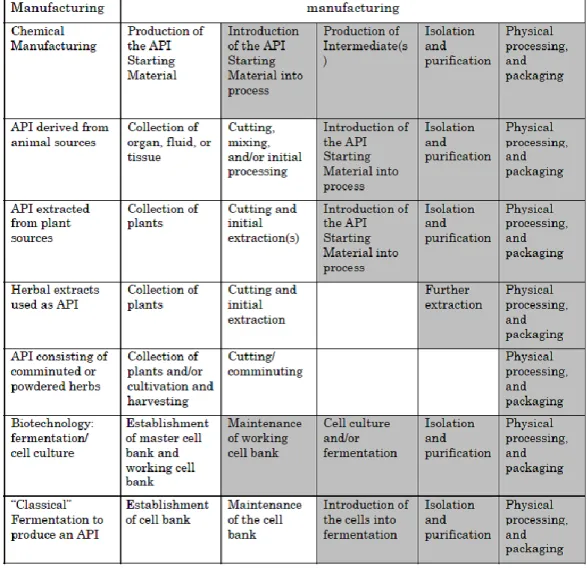
Figure 2 Application of GMP-requirements to active pharmaceutical ingredients ... 33
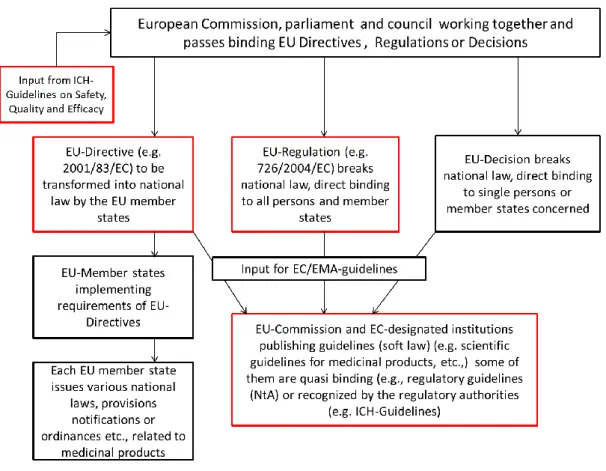
Figure 3 Density of regulation, implementation structures and relations within the EU ... 68
List of Tables
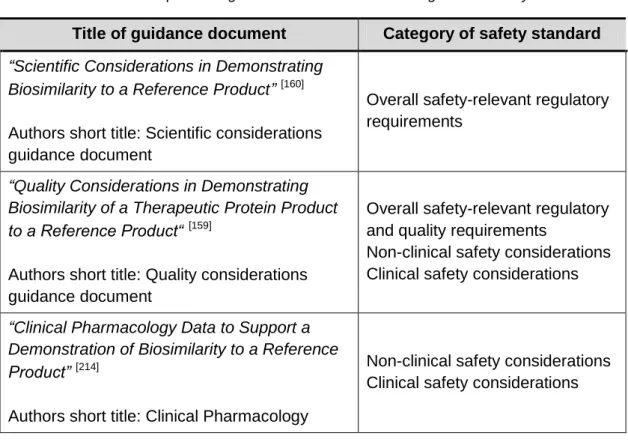
Table 1EMA biosimilar products guidance documents and categories of safety standards 78 Table 2 FDA biosimiliar products guidance documents and categories of safety standards 82
1 Introduction
Manufacturers of medicinal products need to know and follow specific legal and regulatory requirements if they want to place their medicinal products on the European Union (EU) or United States of America (USA) market. In the EU, medicinal products shall be safe, effective and consistent in quality. [1] Medicinal products in the USA are required to be safe and effective for its intended use and additionally, with regard to biological medicinal products; scientific evidences must show that the manufactured product meets the determined requirements of safety, purity, and potency. [2] [3]
Additionally, for biosimilar products, the imitator products of the biological innovator products which are available after the biological innovator´s product patent has expired, the biosimilarity to the reference product, the biological innovator product, must be established in a comparable manner. Typically this is done through specific non-clinical and clinical testing as outlined in the applicable scientific guidance documents published by the regulatory authorities. In contrast to the biological innovator product, the marketing approval requirements for the biosimilar products are simplified in terms of reduced dossier requirements and the clinical study requirements are also simplified. [4]
Evidence that all these requirements are met must be submitted with the product application and will be reviewed during the applicable regulatory approval procedure. [5]
The EU and USA have their own distinct regulatory requirements and procedures that must be met prior to placing medicinal products on the market. These market-specific pre-authorization safety requirements include most importantly drug product-specific requirements to clinical and non-clinical testing. In addition, other general safety-relevant regulatory requirements and quality considerations impacting the safety profile of a biological or biosimilar medicinal product must be met prior to medicinal product gaining access to the market.
After the marketing approval has been granted for the desired market, there are market-specific post-authorization regulatory requirements. For example, extended monitoring requirements, post-authorization safety (PASS) or -efficacy studies
[1]
Regulation (EC) No 726/2004 "Whereas" chapter (14); OJ L 136, 30.4.2004, p. 1, Consolidated version 05.06.2013;
http://ec.europa.eu/health//sites/health/files/files/eudralex/vol-1/reg_2004_726/reg_2004_726_en.pdf
[2]
21 CFR §310.303(a); April 2014; https://www.gpo.gov/fdsys/pkg/CFR-2014-title21-vol5/pdf/CFR-2014-title21-vol5-chapI.pdf
[3]
42 USC §262(a)(2)C)(i); April 2015;
http://uscode.house.gov/view.xhtml?req=%28title:42%20section:262%20edition:prelim%29%20OR%20%28 granuleid:USC-prelim-title42-section262%29&f=treesort&edition=prelim&num=0&jumpTo=true
[4]
ICH GCG ASEAN Training Workshop on ICH Q5C, 30-31 May 2011, Kuala Lumpur; Alberto Ganan Jimenez & Brigitte Brake;
http://www.ich.org/fileadmin/Public_Web_Site/Training/ASEAN_Q5C_workshop_May_2011/SESSION_IVa_ Biosimilars.pdf
[5]
21 CFR §601.2(a); April 2015; https://www.gpo.gov/fdsys/pkg/CFR-2015-title21-vol7/pdf/CFR-2015-title21-vol7-part601.pdf
(PAES), may have to be performed to further monitor and prove the ongoing safety and effectiveness of the approved medicinal product.
In addition to these requirements, various other safety-related regulatory requirements apply in both, the pre- and post-authorization phase. Examples include authority inspections, naming and labeling requirements, and variation reporting requirements.
All member states of the European Union are subject to the European Economic Area (EEA) law. On the European Union level the Regulation (EC) No 726/2004 and the Directive 2001/83/EC are the most essential and comprehensive regulations for medicinal products within the EU. The Regulation (EC) No 726/2004 covers the authorization and surveillance of safety of medicinal products. The Directive 2001/83/EC covers a broad range of requirements for all human medicinal products and it defines the essential requirements that must be met.
In addition to the applicable EU-Regulations and EU-Directives, EU-Decisions are also legally binding to the EU-member states. To complete the European pharmaceutical regulatory framework, several other instruments (e.g., Recommendations, Opinions, or European Medicines Agency (EMA) guidelines) which are not legally binding, are available for and applicable to medicinal products in the EU. [6]
In the USA, the Federal Food, Drug, and Cosmetic Act, (FD&C Act) is federal law and the basic regulation for medicinal products. The FD&C Act is enforced by the Code of Federal Regulations (CFR). These legally binding rules and regulations, also named administrative law, regulate most of the medicinal products under the FD&C Act. The regulations for the marketing approval of these, typically chemically synthesized products, are found in 21 CFR Parts 300 – 499. [7] In addition, certain biological medicinal products are also regulated thereunder.
As indicated, some biological medicinal products, e.g., products containing biotechnology-derived enzyme human Imiglucerase as active ingredient, are also subject to the FD&C Act. [8] These types of biological products gain their marketing approval through the “New Drug Application” (NDA) process like chemically-synthesized products. But many biological medicinal products (e.g., medicinal products containing the biotechnology-derived enzyme human Galsulfase as active ingredient or medicinal products containing biotechnology-derived monoclonal antibodies (mAbs) as active ingredient such as Infliximab) are not primary subject to the FD&C Act but rather to the Public Health Service Act (PHS Act). [9] [10] Section 351 of the PHS Act serves as the basic regulation for biological products which are
[6]
Procedure for European Union Guidelines and related Documents within the Pharmaceutical legislative Framework; Doc. Ref. EMEA/P/24143/2004 Rev. 1 corr;
http://www.ema.europa.eu/docs/en_GB/document_library/Scientific_guideline/2009/10/WC500004011.pdf
[7] Food and Drugs, Parts 200 – 499; PART 314; April 2014;
https://www.gpo.gov/fdsys/pkg/CFR-2014-title21-vol5/pdf/CFR-2014-title21-vol5-chapI.pdf
[8]
CEREZYME, (NDA) 020367; May 1994;
https://www.accessdata.fda.gov/scripts/cder/daf/index.cfm?event=browseByLetter.page&productLetter=C
[9]
NAGLAZYME, (BLA) 125117; May 2005;
https://www.accessdata.fda.gov/scripts/cder/daf/index.cfm?event=browseByLetter.page&productLetter=N
[10]
REMICADE, (BLA) 103772; August 1998;
not regulated under the FD&C Act. [11] Products covered by the Public Health Service Act obtain marketing approval through the Biologics License Application (BLA) process. The Public Health Service Act is federal law and is enforced by the Code of Federal Regulations as well. The FDA regulations for marketing approval of these biological medicinal products are established in the 21 CFR Parts 600 – 680.
[12]
To complete the US-American pharmaceutical regulatory framework, several other instruments like FDA guidance documents which are not legally binding, are available for and applicable to medicinal products in the USA.
In addition to the EU- and US-market specific binding and non-binding regulatory requirements the overarching guidelines of the International Council on
Harmonization of Technical Requirements for Registration of Pharmaceuticals for Human Use (ICH) are applicable to both markets as well. [13]
Both the EU- and the US-market have complex pharmaceutical legislation and various regulations. Opportunities for the improvement of safety standards are available in both markets; especially in the area of biosimilar products.
In the following, a regulatory overview is provided of how a biotechnology-derived medicinal product is brought to both, the EU- and the US-market. The applicable legislation and relevant scientific documents to identify safety relevant requirements is analyzed, and differences between both markets with respect to the identified safety standards, namely overall safetyrelated regulatory standards, clinical safety -and non-clinical safety requirements -and quality considerations are critically examined. A special focus is made on [1] the information that is available for biosimilar monoclonal antibodies (mAbs), and [2] the overall improvement of safety standards for biosimilar products.
Within the introductory chapter, a scientific and regulatory overview is given that introduces in the regulatory framework and the complexity of biotechnology-derived medicinal products.
The main chapter identifies significant overall safety requirements established by legislation and gives attention to the specific safety requirements established in EMA- and FDA scientific guidance documents which were categorized into [1] overall safety-relevant regulatory requirements, [2] clinical safety and [3] non-clinical safety testing requirements and [4] quality considerations. The chapter analyzes the available information to the mentioned categories of safety standards for biosimilar products. Finally, potential improvements to the safety standards of biosimilar products are addressed.
The final chapter summarizes and discusses the most significant safety relevant facts and provides a conclusion and outlook.
[11]
42 USC § 262; April 2015;
http://uscode.house.gov/view.xhtml?path=/prelim@title42/chapter6A/subchapter2/partF&edition=prelim
[12]
Title 21 Food and Drugs Parts 600-799; April 2014; https://www.gpo.gov/fdsys/pkg/CFR-2014-title21-vol7/pdf/CFR-2014-title21-vol7.pdf
[13]
2 Historical background
This chapter introduces the biological medicinal products of today; starting with the historical beginning of the development of biotechnology through the development of the first biotechnology-derived medicinal products.
From the beginning of biotechnology to the first therapeutic
2.1
monoclonal antibody
It all began with beer. The cradle of modern biotechnology is more than 6.000 years old and began when the Sumerian in Mesopotamia started brewing beer with sprouted grain and after fermentation obtained the first alcoholic beverage. The first beer recipes were documented 4.000 years ago and up to 20 different beer varieties were produced. [14] [15]
A couple of thousand years later, the medic Robert Koch (1843-1910) developed bacteriological techniques like culture plate technology with solid, transparent nutrient media, and the incubator. He also discovered the tuberculosis pathogen. [16] In parallel, the “Father of genetics" Johann Gregor Mendel (1822-1884), performed research in the field of genetics and formulated the rules of heredity. [17]
Then, in 1908, medic and Nobelist Paul Ehrlich (1854-1915) formulated the potential of antibodies and the concept of “magic bullets” during his cancer research work. He was searching for chemical substances with particular affinities for morbifical organisms, like the antitoxin-toxin (antibody-antigen) relationship, where the chemical substances would go directly to the organisms for which they are aligned.
[18] An important method for the production of monoclonal antibodies was the
hybridoma-technology developed by G. Köhler and C. Milstein in 1975. [15] [19] For further information please refer to Appendix A.
Of significant importance for the drug sector was the year 1977. Genentech, the pioneer biotechnology-company, produced the first human protein (Somatostatin) in E. coli bacteria. [20] [21] Later, in 1982, the same company produced the first recombinant DNA-derived human insulin which was licensed to Eli Lilly and received FDA approval in 1985 for the recombinant growth hormone Protropin®. [20] [21] In 1986, the murine Muromonab-CD3 (trade name Orthoclone OKT3®) by Janssen-Cilag received FDA approval; this was the worldwide first monoclonal antibody for therapeutic purpose and was intended to treat acute steroid-resistant rejection
[14]
Frühgeschichte; February 2016; http://www.brauer-bund.de/index.php?id=21
[15] „Biotechnologie für Einsteiger“; Renneberg, Reinhard; Berkling, Viola; 2013; ISBN: 978-3-8274-3047-2 [16]
Robert_Koch; https://de.wikipedia.org/wiki/Robert_Koch
[17]
Gregor_Mendel; https://de.wikipedia.org/wiki/Gregor_Mendel
[18]
Paul Ehrlich – Biographical; http://www.nobelprize.org/nobel_prizes/medicine/laureates/1908/ehrlich-bio.html
[19]
Hybridom-Technik; https://de.wikipedia.org/wiki/Hybridom-Technik
[20]
A History of Firsts; http://www.gene.com/media/company-information/chronology
[21]
reactions. [22] For more information on the historical development of biotechnology, please refer to Appendix B. Currently, monoclonal antibodies are produced by recombinant methods using the DNA cloning in expression systems as explained in
Appendix C in which antibodies are produced in-vitro in bacteria- or cell cultures and selected by phage-display-screening. [15]
Major developments in production techniques and scientific methods resulted in pharmaceutical achievements. Since the first mAb-approval in 1986, many other biotechnology-derived monoclonal antibodies have been developed and approved for a broad range of diseases. In Germany and the EEA 46 monoclonal antibodies have been approved as of February 12, 2016. [22] [23] According to the information of the organization Biotech within Research-Based Pharmaceutical Companies, known as vfa.bio, as of January 20, 2016, a quantity of 191 medicinal products, including biosimilar products, with 151 active substances have been approved in Germany that are genetically-engineered. Such products are also called biopharmaceuticals.
[24]
In the USA, 56 biological medicinal products obtained Biologics license (BLA) from the FDA between 2008 and 2015. [25]
[22]
Muromonab-CD3; https://de.wikipedia.org/wiki/Muromonab-CD3
[15] „Biotechnologie für Einsteiger“; Renneberg, Reinhard; Berkling, Viola; 2013; ISBN: 978-3-8274-3047-2 [23]
Monoklonale Antikörper; Februar 2016; http://www.pei.de/DE/arzneimittel/immunglobuline-monoklonale-
antikoerper/monoklonale-antikoerper/monoklonale-antikoerper-node.html?gts=3257586_list%253Dtitle_text_sort%252Bdesc [24]
Zugelassene gentechnische Arzneimittel in Deutschland; Januar 2016; http://www.vfa.de/de/arzneimittel-forschung/datenbanken-zu-arzneimitteln/amzulassungen-gentec.html
[25]
NDA and BLA Calendar Year Approvals; (February 2016; 2014 and older reports are in the FDA Archive) http://www.fda.gov/Drugs/DevelopmentApprovalProcess/HowDrugsareDevelopedandApproved/DrugandBiol ogicApprovalReports/NDAandBLAApprovalReports/ucm373413.htm
3 Meanings and exemptions
This chapter describes the term safety standards for biological medicinal products and provides information on exempted biological medicinal products.
Meaning of the term safety standards
3.1
Safety standards are established in both the EU and the USA in the form of requirements and considerations established by legislation, regulation and regulatory and scientific guidance documents which apply to a medicinal product during the different authorization phases. The pre-authorization phase occurs before a biological medicinal product gains market access; the post-authorization phase occurs after the medicinal product has successfully obtained marketing approval. Some safety requirements such as the Good Manufacturing Practice (GMP) apply in both phases, pre- and post-authorization.
The term safety standard relates to the safety relevant regulatory and scientific requirements that must be met prior and within the regulatory approval process of biotechnology-derived drug products in order to gain marketing approval and post-authorization. Some post-authorization safety requirements, like the extended monitoring and post-authorization studies, may apply only to certain specific biotechnology-derived products such as to novel active substances, others may be applicable to all marketed medicinal products (e.g., reporting requirements). To receive marketing approval, the safety, efficacy and quality of a biotechnology-derived drug product must be demonstrated. In addition, for biosimilar products, biosimilarity to the reference product, the biological innovator product, must be established in a comparable manner. Typically this is done through specific non-clinical and non-clinical testing as outlined in the applicable scientific guidance documents about non-clinical, clinical and quality issues, published by the EMA and FDA, the regulatory authorities of the European Union and the USA. Overall safety relevant regulatory requirements are established by legislative documents and may also potentially impact the safety of biotechnology-derived products.
Exemptions
3.2
Immunological medicinal products, (e.g., vaccines, toxins, serums, allergen products), human blood and plasma products, (e.g., clotting factors), advanced therapy medicinal product like gene – and cell therapeutics are exempted and not discussed. Further, therapeutic synthetic peptide products of 40 or fewer amino acids covered by the US PHS Act and biotechnology-derived products covered under the FD&A Act are not considered.
4 Definitions
This chapter defines the terms “biotechnology-derived”, “medicinal product”, “biological product” and “biosimilar” within the European Union and the USA. Please note, the term biotechnology-derived product refers to both, the biological innovator product and the biosimilar product. All definitions of this chapter can be found cited in Appendix D.
Biotechnology-derived
4.1
Biotechnology-derived medicinal products are products like high-molecular-weight proteins and polypeptides which themselves or their active substance is produced by biotechnological production processes. These biotechnology-derived products are typically produced by genetically-engineered living systems. In the European Union, the concerned products are mentioned in Article 3(1) of Regulation (EC) No 726/2004 and defined in point 1 of the Annex of the mentioned Regulation and include for example products developed by recombinant DNA technology and by hybridoma and monoclonal antibody methods. [26]
Within the USA, the considered biotechnology-derived products are covered by the Public Service Health Act and they are defined by the regulations of the Food and Drug Administration as “specified biological products”. [27]
Those products include for example therapeutic recombinant DNA-derived products and monoclonal antibodies for in vivo use.
Definitions in the European Union
4.2
The Directive 2001/83/EC provides the regulatory basis and legal definition of the term “medicinal product”. [28]
The term “biological” legally is defined in Appendix I of Directive 2001/83/EC and the regulatory basis is provided there. The active substance of biological products is a biological substance that comes from a biological source. [29]
The term “biosimilar” is defined in the EMA similar products guidance document in section 3.1. A biosimiliar product contains a version of the active substance of an EEA authorized biological innovator product and therefore, is biosimilar and not bio-identical to that reference product. Similarity of the biosimilar product to the
[26]
Regulation (EC) No 726/2004 Article 3(1) and Point 1 of the Annex; OJ L 136, 30.4.2004, p. 1, Consolidated version 05.06.2013 ; http://ec.europa.eu/health/files/eudralex/vol-1/reg_2004_726/reg_2004_726_en.pdf
[27]
21 CFR §601.2(a); April 2014; http://www.gpo.gov/fdsys/pkg/CFR-2014-title21-vol7/pdf/CFR-2014-title21-vol7-part601.pdf
[28]
Directive 2001/83/EC Title I, Definitions of Article 1; OJ L 311, 28.11.2001, p. 67, Consolidated version 16/11/2012 ;
http://ec.europa.eu/health/files/eudralex/vol-1/dir_2001_83_consol_2012/dir_2001_83_cons_2012_en.pdf
[29]
Directive 2001/83/EC Part I, Appendix I, section 3.2.1, subsection 3.2.1.1(b); OJ L 311, 28.11.2001, p. 67, Consolidated version 16/11/2012;
reference product must be established by comparative testing regarding the quality properties, biological activity, safety and efficacy. [30]
Definitions in the USA
4.3
The definition of “drug” in the Federal Food, Drug and Cosmetic Act (FFD&C Act) also applies for biological products which are covered under the PHS Act. [31] The PHS Act provides the regulatory basis and legal definition of the term “biological product” and “biosimilar”. [32]
The term “biological product” comprises various biological sources such as virus, toxin, blood, proteins or trivalent organic arsenic compounds, etc. The term “biosimilar” refers to a biosimilar product that is highly similar to a FDA approved biological innovator product and for which no clinically meaningful differences were observed between the biosimilar product and the reference product with regard to its safety, purity, and potency.
[30]
Guideline on similar biological medicinal products; CHMP/437/04 Rev 1, 23 October 2014;
http://www.ema.europa.eu/docs/en_GB/document_library/Scientific_guideline/2014/10/WC500176768.pdf [31] 21 USC §321(g); April 2015; http://uscode.house.gov/view.xhtml?req=%28title:21%20section:321%20edition:prelim%29%20OR%20%28 granuleid:USC-prelim-title21-section321%29&f=treesort&edition=prelim&num=0&jumpTo=true [32]
42 USC §262 (i)(1), 42 USC §262 (i)(2)(A),(B); April 2015;
http://uscode.house.gov/view.xhtml?req=%28title:42%20section:262%20edition:prelim%29%20OR%20%28 granuleid:USC-prelim-title42-section262%29&f=treesort&edition=prelim&num=0&jumpTo=true
5 Current status and market figures for
biotechnology-derived products
The chapter describes the importance of biotechnology-derived products in medicine, their impact on the health expenses and market trends. Please note, the overall term biopharmaceutical products refer to all recombinant-DNA derived medicinal products.
Current market figures and future trends
5.1
The range of the recombinant DNA-derived medicinal products is huge and includes, for example [1] hormones (e.g., insulin, erythropoietin); [2] monoclonal antibodies like the biologic response modifiers (BRMs); [3] recombinant clotting factors; [4] enzymes such as -Glucosidase; and [5] diverse recombinant vaccines e.g., against Hepatitis B and cervical cancer. The therapeutic application of these products is multifarious and covers a broad range of diseases such as auto-immune generated diseases like rheumatoid arthritis, multiple sclerosis and diabetes; types of cancer like Non-Hodgkin-Lymphoma; as well as metabolism- and clotting disorders and osteoporosis. [24]
It is very likely that the market of biopharmaceutical products (biological products including mAbs, other recombinant DNA-derived proteins; and biotechnological and genetically engineered vaccines) will continue to grow in the future. According to the information provided in the vfa.bio 10th Biotech Report summarizing the development of the German medical biotechnology, 155 biopharmaceutical products were approved in 2005 compared to 226 products in 2014. [33] Simultaneously, biopharmaceutical sales rose from 2.6 billion Euros in 2005 to 7.5 billion Euros in 2014. [33] Biopharmaceutical sales rose by 7% in 2014 from 2013 in real terms compared to the total pharmaceutical market with a grow rate of 6.6% in 2014 from 2013 in real terms. The percentage of Biopharmaceuticals in the pharmaceutical market grew from 21.4% to 22.0%. [33]
With respect to monoclonal antibody products, the vfa.bio 10th Biotech Report describes an increasing number of mAbs in the pipeline; in 2005 there were 79 mAbs and in 2014 there were 357 mAb products. [33] In addition, the biopharmaceutical share of the market rose from 12% in 2005 to 22% in 2014. [33] The US-market is the market leader in the production of biopharmaceuticals followed by Germany. [34] [35] According to the forecast information of IMS institute
[24]
Zugelassene gentechnische Arzneimittel in Deutschland; Januar 2016; http://www.vfa.de/de/arzneimittel-forschung/datenbanken-zu-arzneimitteln/amzulassungen-gentec.html
[33]
Medizinische Biotechnologie in Deutschland 2005 - 2015 - 2025: Bedeutung für Patienten, Gesellschaft und Standort; 10.Biotech-Report ; June 2015; http://www.vfa-bio.de/download/bcg-report-2015.pdf
[34]
Biopharmazeutika - Hightech im Dienst der Patienten; October 2010; http://www.vfa-bio.de/vb-de/aktuelle-themen/branche/biopharmazeutika-hightech-im-dienst-der-patienten.html
[35]
Global Outlook for Medicines Through 2018; Murray Aitken; Michael Kleinrock; Jennifer Lyle; Deanna Nass; and Lauren Caskey from imsHealth; November 2014; http://www.imshealth.com/en/thought-leadership/ims-institute/reports/global-outlook-for-medicines-through-2018#ims-form
for healthcare informatics (IMS Health™) published in November 2014, it is anticipated that the total global expenses for medicinal products will increase to $1.3 Trillion from 2014 to 2018 (an increase of approximately 30% from 2013), and that specialty drug products, e.g., biotechnology-derived products, will constitute 40% of the total global growth. [35]
According to Transparency Market Research, another market research company, the US biopharmaceuticals market value was estimated with US$ 90 billion in 2012 and is expected to grow at a compound annual growth rate (CAGR) of 11% by 2018 which means further expansion of the biopharmaceutical market. [36] This is also supported by the fact that while the FDA licensed only four biological products via Biologics License Application (BLA) approval in 2008, they licensed 11 in 2014 and 12 in 2015. [25] Information to increasing growth of the global biopharmaceuticals market is also provided in a global market study published by the company Persistence Market Research (PMR). Here, the value of the global biopharmaceuticals market was estimated with US$ 161,851.6 billion in 2014 and is now expected to grow at a compound annual growth rate (CAGR) of 9.4% to achieve US$ 278,232.9 billion by 2020. [37]
Growth of the total US-pharmaceutical market is expected to be 5-8% compound annual growth rate (CAGR) through 2018 compared to the German market which is expected to be 2-5% CAGR while 1-4% CAGR is expected for the five EU countries Germany, France, Italy, U.K. and Spain together through 2018. [35] Global spending growth is expected to be 4-7% compound annual growth rate through 2018. [35] While the value of the biopharmaceuticals market is steadily growing, the financial resources that the statutory health insurances (GKV) dedicate for prescribed biotechnology-derived products are also increasing. [38] According to information from the German Barmer Gmünder Ersatzkasse (Barmer GEK) annual report of 2015, 13% of drugs expenditures are spent for biopharmaceutical products with increasing trend. [39] Between the years 2013 - 2014, the Barmer GEK spent 39.2 % of their total expenses, which was 1.73 billion Euros, for 3.5 % of prescribed biological products. [39] Annual financial expenditures of 30 000 Euros and more per patient (e.g., Lenalidomid therapy for cancer treatment) for biological products are typical. [39] The high prices in the biological products sector are caused by their high
[35]
Global Outlook for Medicines Through 2018; Murray Aitken; Michael Kleinrock; Jennifer Lyle; Deanna Nass; and Lauren Caskey from imsHealth; November 2014; http://www.imshealth.com/en/thought-leadership/ims-institute/reports/global-outlook-for-medicines-through-2018#ims-form
[36]
US Biopharmaceutical Market - Global Industry Size, Market Share, Smart Trends, Analysis And Forecast 2012 – 2018; http://www.transparencymarketresearch.com/us-biopharmaceutical-market.html
[25]
NDA and BLA Calendar Year Approvals; February 2016; (2014 and older reports are in the FDA Archive); http://www.fda.gov/Drugs/DevelopmentApprovalProcess/HowDrugsareDevelopedandApproved/DrugandBiol ogicApprovalReports/NDAandBLAApprovalReports/ucm373413.htm
[37]
Global Market Study on Biopharmaceuticals: Asia to Witness Highest Growth by 2020; Years 2014-2020; May 2015; http://www.persistencemarketresearch.com/market-research/biopharmaceutical-market.asp
[38]
Pressemitteilung; December 2015;
http://presse.barmer- gek.de/barmer/web/Portale/Presseportal/Subportal/Laender/Einstieg-BaWue/Pressemitteilungen-Archiv/Archiv_202015/151230-arzneimittelreport-ulm/151230-pm-download,property=Data.pdf
[39]
BARMER GEK ARZNEIMITTELREPORT 2015; Schriftenreihe zur Gesundheitsanalyse Band 32, Arzneimitteldaten aus den Jahren 2013 bis 2014 ; June 2015;
https://www.barmer.de/blob/37954/60143006d7108440f02512a6a80fcaea/data/pdf-arzneimittelreport-2015.pdf
development- and manufacturing costs which are up to US$ 1.6 billion for novel biopharmaceuticals until market access is achieved. [40] [33]
Due to the high cost of biological products and the desire to widen patient access and choice, great hopes are being set in biosimilar products, the imitator products of the biological innovator products. Biosimilar products may access the market after the patent expiration of the first-in-market product that is intended to be used as reference product. The active substance of these imitator products may be a version of that of the reference product and therefore it is bio-similar but not bio-identical to those of the reference product. [30] While their production is also cost intensive as they are not as inexpensive to manufacture as most chemically-synthesized generic drugs; they tend to be cheaper than the biological innovator product. [41]
The first EMA approved biosimilar was Omnitrope® (Somatropin) in 2006, and the first EMA approved biosimilar monoclonale antibodies were InflectraTM by Hospira and Remsima by Celltrion in June, 2013. [42] [43] Currently the EMA has approved 19 biosimilar products within the EEA region. [44] A list of EMA-approved biosimilar products and innovator biological products as of January 2016 is available on the vfa-bio website. [24]
In the US- market the first biosimilar product was approved by the FDA on July 24, 2014 (Zarxio by Sandoz, a Filigrastim preparation). [45] [46] Currently, there is one FDA approved biosimilar mAb product “Inflectra”. [47] And a few regulatory submissions have been accepted by the FDA for review. [48] [49]
[40]
The current State of Innovation in the Pharmaceutical Industry; Wilsdon, T; Attridge, J.; Chambers, G., Charles River Associate (CRA) International, June 2008
[33]
Medizinische Biotechnologie in Deutschland 2005 - 2015 - 2025: Bedeutung für Patienten, Gesellschaft und Standort; 10.Biotech-Report ; June 2015; http://www.vfa-bio.de/download/bcg-report-2015.pdf
[30]
Guideline on similar biological medicinal products; CHMP/437/04 Rev 1, 23 October 2014 ;
http://www.ema.europa.eu/docs/en_GB/document_library/Scientific_guideline/2014/10/WC500176768.pdf
[41]
Kostenvorteil; Februar 2016; http://probiosimilars.de/biosimilars/kostenvorteil/
[42]
Omnitrope somatropin Authorization details; EMEA/H/C/607; April 2006; http://www.ema.europa.eu/docs/en_GB/document_library/EPAR_-_Summary_for_the_public/human/000607/WC500043689.pdf
[43]
EMA Approves First MAb Biosimilars; July 2013; http://www.biopharma-reporter.com/Markets-Regulations/EMA-Approves-First-MAb-Biosimilars
[44]
Originalpräparate und Biosimilars (zugelassen in der EU); Januar 2016; http://www.vfa.de/download/biosimilars-uebersicht-originalpraeparate.pdf [24]
Zugelassene gentechnische Arzneimittel in Deutschland; Januar 2016; http://www.vfa.de/de/arzneimittel-forschung/datenbanken-zu-arzneimitteln/amzulassungen-gentec.html
[45]
FDA Accepts First Biosimilar Application Filed under Section 351(k) of the Public Health Service Act; Jula 2014; http://www.klgates.com/fda-accepts-first-biosimilar-application-filed-under-section-351k-of-the-public-health-services-act-07-28-2014/
[46]
Court allows Sandoz to launch first US Biosimilar in September; Zachary Brennan; July 2015;
http://www.biopharma-reporter.com/Markets-Regulations/Court-allows-Sandoz-to-launch-first-US-biosimilar-in-September
[47]
FDA approves Inflectra, a biosimilar to Remicade; April 2016;
http://www.fda.gov/NewsEvents/Newsroom/PressAnnouncements/ucm494227.htm
[48]
FDA accepts Sandoz regulatory submission for a proposed biosimilar etanercept; Novartis; October 2015; https://www.novartis.com/news/media-releases/fda-accepts-sandoz-regulatory-submission-proposed-biosimilar-etanercept
[49]
Hospiras Remicade copycat up for review as US biosimilars March on; Dan Stanton; February 2015; http://www.biopharma-reporter.com/Markets-Regulations/Hospira-s-Remicade-copycat-up-for-review-as-US-biosimilars-March-on
6 Biological products and biotechnology-derived medicinal
products
This chapter provides an overview to biological products, biosimilar products and the structural specialties and complexity of biotechnology-derived products that may explain their regulatory handling.
Biological products
6.1
The active substance of all biological products is of biological nature which comes from a biological source and this includes products like immunological medicinal products, human blood and plasma products, and advanced therapy medicinal products, which are exempted and not further and discussed. [28]
Although many biological and biosimilar products are produced with biotechnological methods today, three examples for biological products which were produced with non-biotechnological methods in the past will be provided below to demonstrate the timely and financial effort their production has needed. The examples include biological products exempted in section 3.2.
Clotting factor VIII
The genetic disease Hemophilia A affects only males. The defect leads to a shortage of the clotting factor VIII which causes that already a minor injury could lead to life-threatening bleeding. In the past, the clotting factor VIII was extracted from human donor blood. A bleeder needs a clotting factor VIII amount of 2 mg per week and about 6 litres of human donor blood contain only 1 mg of clotting factor VIII which means that 24 blood donors are necessary per week to provide the needed clotting factor assumed each donor gives 500 ml blood. [15] Beside of the huge production costs there are several health risks associated with this way of production such as serious virus infections with AIDS or Hepatitis. Currently, recombinant clotting factor VIII is biotechnologically produced e.g., in genetically-engineered Chinese Hamster Ovary (CHO) cells, and on market since 1992. [15] [50]
Interferon
Another example is the production of Interferon. Interferon is a protein produced by the human body, and among other things, responsible to stimulate the immune system in order to defense viruses and tumor cells. Interferon was identified by A. Isaacs and J. Lindemann in 1957. In the 70s K. Cantell developed a technique to produce interferon from human blood by infecting leucocyte of human blood donors with a virus. Then, the interferon which was produced by the human cells was collected and purified. To produce 0,5 Gramm of interferon with this method, a
[28]
Directive 2001/83/EC Title I, Definitions of Article 1; OJ L 311, 28.11.2001, p. 67, Consolidated version 16/11/2012 ;
http://ec.europa.eu/health/files/eudralex/vol-1/dir_2001_83_consol_2012/dir_2001_83_cons_2012_en.pdf
[15] „Biotechnologie für Einsteiger“; Renneberg, Reinhard; Berkling, Viola; 2013; ISBN: 978-3-8274-3047-2 [50]
volume of 50 000 litres of donor blood plasma was needed. [15] In 1979, C. Weissmann succeeded to produce interferon by bacterial synthesis in E. coli. In contrast, now a volume of only 10 litres bacteria culture solution were enough to produce 0,5 Gramm interferon. Since 1983 different types of biotechnology-derived interferon and recombinant interferon are available on market and used in various therapeutic areas such as autoimmune diseases, virus infections or cancer. [15] [51]
Paclitaxel
Paclitaxel is an extract of the bark of the pacific yew tree and was identified in 1962 by A.S. Barclay and is used in the chemotherapeutic Taxol which was first approved by the FDA in 1992 for the therapy of metastatic ovarian.[52] The Paclitaxel is able to block cancer cells but is only in limited quantity available in one tree. The bark of 12 yew trees would be necessary to extract 1 Gramm of the active substance with the initial production process. [53] So, bark of hundred thousands of old and slow growing pacific yew trees would be needed for the extraction of the active substance to treat US-American patients with ovarian cancer for one year. [15] To save natural resources several researches were done and in 1992 a semisynthetic method developed by R. Holton was patented which used needles of the European yew tree. [15] Since 2002 it is possible to produce the active substance biotechnologically in fermenters by using cell cultures of the yew tree. [54] The Paclitaxel production in bacteria or yeast is still in research. [55]
Today, many biological innovator products and biosimilar products are produced by complex biotechnological genetically-engineered processes on the basis of biological living source materials, e.g., animal or plant cells, and microorganism such as bacteria or yeast. These biotechnology-derived products are complex in their molecular structure.
Biosimilar products
6.2
After the biological innovator´s product patent has expired biosimilar products may apply to gain market authorization. Biosimilar products are imitator products of the chosen reference biological innovator product, and contain a version of the active substance. Due to unavoidable minor differences in the production of biosimilar products (e.g., diversified production processes, differing production parameters or producing source organisms- or cell-lines), it is not possible to make biosimilar products bio-identical to their biological innovator products. Thus, the non-identical structure of the active substance of biosimilar products may lead to differences in strength with consequences to the dose needed for the same efficacy as the referenced innovator product has, or to a different retention time in blood; but also to
[15]
„Biotechnologie für Einsteiger“; Renneberg, Reinhard; Berkling, Viola; 2013; ISBN: 978-3-8274-3047-2
[51]
Interferone; https://de.wikipedia.org/wiki/Interferone
[52]
Success story Taxol® (NSC 125973); December 2016;
https://dtp.cancer.gov/timeline/flash/success_stories/s2_taxol.htm
[53]
Paclitaxel; https://de.wikipedia.org/wiki/Paclitaxel
[54]
Paclitaxel aus Fermentern; 2002, Ausgabe 34; http://www.pharmazeutische-zeitung.de/index.php?id=pharm5_34_2002
[55]
Biologische Pharmaproduktion; Max-Planck-Gesellschaft, München, April 2015; https://www.mpg.de/9169009/biologische_pharmaproduktion
clinical safety relevant differences (e.g., differences in or as yet unknown unwanted adverse effects). [56] The EMA guidance document for similar products – non clinical and clinical issues mentions those differences in the qualitative or quantitative nature of product-related versions could impact biological functions of the biotechnology-derived product and may have an effect on immunogenicity and hypersensitivity potential. Thus, such potential should be evaluated in clinical studies as animal studies are not suitable to predict such potential.[57]
Therefore, it is of major importance to establish comparable biosimilarity from the proposed biosimilar product to the chosen reference product by demonstrating comparability of their quality attributes and biological activity, as well as clinical safety and efficacy. If differences between the proposed biosimilar product and the reference product are detected during testing, it must be demonstrated that these differences have no relevant impact to the biosimilar product clinical safety and / or its efficacy.
Theoretically, any biotechnology-derived product may be demonstrated to be biosimilar to a chosen reference product, especially highly purified products that can be thoroughly characterized. [30] However, in practice, the biosimilar approach is not feasible for all biotechnology-derived products. Not all products proposed to be biosimilar are physico-chemically and biologically characterizable to the extent needed to establish comparable biosimilarity between both products. For other biotechnology-derived products again, only little clinical and regulatory experience is available to use this approach. [30]
Many biosimilar products are intended for the long-term treatment of chronic diseases; but clinical safety studies conducted prior to authorization are normally not sufficient to detect and to identify rare adverse effects. Therefore, many biosimilar products are subject to an extended and strict pharmacovigilance course. Typically, during the biosimilar products post-approval phase, the marketing authorization holder (MAH) is required to closely monitor the clinical safety of the biosimilar product in a continuous fashion and also to evaluate the products benefit-risk-balance. [57] Additionally, post-authorization safety and / or efficacy studies may be necessary and more intensive monitoring and labeling may be required by regulatory decision.
Specialties of biotechnology-derived products
6.3
In contrast to chemically-synthesized products, biotechnology-derived products (e.g., mAbs, recombinant DNA-derived proteins) are manufactured using genetically-engineered living production systems in biotechnological manufacturing processes of high complexity. Three major facts can be identified for biotechnology-derived showing the differences to common medicinal drugs, and each fact may
[56]
Biopharmazeutika Hightech im Dienst der Patienten; vfa - Die forschenden Pharmaunternehmen, December 2010 http://www.vfa.de/download/broschuere-biopharmazeutika.pdf
[57]
Guideline on similar biological medicinal products containing biotechnology-derived proteins as active substance: non-clinical and clinical issues; EMEA/CHMP/BMWP/42832/2005 Rev1, 18 December 2014 , http://www.ema.europa.eu/docs/en_GB/document_library/Scientific_guideline/2015/01/WC500180219.pdf
[30]
Guideline on similar biological medicinal products; CHMP/437/04 Rev 1, 23 October 2014,
impact the final biological product. These three facts are: [1] the application of living and genetically-engineered production systems for production purpose; [2] the complexity of the biotechnological manufacturing process; and [3] the structural complexity of the manufactured biological product.
There are various living systems such as bacteria, yeast, animal or human cells, viruses, or transgenic animals or plants used as production systems for biological products. These living and genetically-engineered systems react very sensitively to variability in environmental parameters like temperature, ph- value, nutrient supply, or concentrations of oxygen or carbon dioxide gas; and to contamination like adventitious agents introduced from outside by accident into the bio-system, or any impurities from inside the bio-system itself arose from lysis of dead cells. Therefore, it is of high importance to adequately and continuously control the biotechnological manufacturing process conditions including the cell culturing process of the source material. Here, the inheritance of the living system should be known in terms of any possible prior contacts with viruses or any other contaminations. Uncontrolled process conditions may change cell functions or characteristics (e.g., protein synthesis, glycosylation’s or cell metabolism) and this may lead to different product results than expected.
The manufacturing process provides a range of uncertainties and differences that may impact the biotechnology-derived product and its molecular structure, including its primary structure, any higher order structures, glycosylation’s and other (post-translational) modifications, as well as product-related- and process-related impurities. Typically, the molecular conformation of a biological product protein is a three-dimensional structure (3D-structure) that results from molecule folding. Several interactions influence the folding of the molecule such as different types of bonding (e.g., amide bonding, disulfide bonding, hydrogen bonding) or other physicochemical interactions (e.g., van der Waals force, hydrophobic interactions). Proteins may be unstable in their molecular structure which leads to the circumstance that their molecular conformation can be impacted and shifted easily. This may happen by subtle environmental events such as varying temperatures, sheer forces, energy exposure (e.g., sunlight) or by minor changes to any process steps such as the used culture media, type of aqua or stirring rate in the fermenter. In consequence, the overall considerations regarding the manufacturing process should be comprehensive in nature and should include process steps like cultivation parameters and medium including starting / source material and raw materials, fermentation, purification, filtration, active substance, and final product.
The differences of biotechnology-derived products in comparison to chemically-synthesized products and the challenges of biotechnological manufacturing processes are recognized in published guidance documents by both, the FDA and the EMA.[58][59]
[58]
Frequently Asked Questions About Therapeutic Biological Products, Question 10: How is the manufacturing process for a biological product usually different from the process for drugs?; July 2015;
http://www.fda.gov/Drugs/DevelopmentApprovalProcess/%20HowDrugsareDevelopedandApproved/Approv alApplications/TherapeuticBiologicApplications/ucm113522.htm
[59]
EU guidelines for Good Manufacturing Practice for Medicinal Products for Human and Veterinary Use; Ref. Ares(2012)778531 - 28/06/2012 ; http://ec.europa.eu/health/files/eudralex/vol-4/vol4-an2__2012-06_en.pdf
Resulting from interactive processes and other process influences (e.g., varying parameters, impurities) during the biotechnological manufacturing process or after, the produced biotechnology-derived product may vary in its complexity, structure and properties. These differences may be a result from amino acids modifications to the N-or C-terminus ends of the intact protein molecule; from diverse carbohydrate moieties attached to the protein (e.g., by post-translational glycosylation’s) that resulting in protein heterogeneity or by modifications of any higher order structures. Overall, any (post-translational) modifications or degradations of changing the protein structure, including modifications to the amino acid sequence, may raise clinical safety issues such as triggering immunogenicity. Immunogenicity is considered a significant clinical safety concern for biotechnology-derived products as it may cause a loss of efficacy or may lead to serious adverse events such as anaphylaxis or cytokine release syndrome. [60] [61] Other factors to be considered due to their role in inducing immune reactions include the final product formulation and packaging, protein aggregation; adduct generation and impurities. [61]
The most significant specifics of biotechnology-derived products are listed below: Large molecules of high complexity
Typically high molecular weight
Complex source/starting material and raw material
Produced/synthesized in or extracted from living cell or microorganisms Many critical manufacturing process steps that are more challenging to
control
Multistep purification process aiming removal of a broad range of product – and process related impurities and adventitious agents
Characterization of molecule structure less easily and limited due to high protein molecule variability, difficult to reproduce
Molecular structure may remain partially unknown / incomplete defined, high complex and dynamic 3D- structure often instable and influenced by environmental parameters, posttranslational modifications likely, high natural and process induced variability of function and structure of the molecule Heterogeneous compositions, variants may be included
Potentially immunogenic due to structural differences or alterations of the protein molecule, any impurities / adventitious agents, any environmental events, or formulation related issues
The
manufacturing
process
of
biotechnology-derived
6.4
products
Biotechnology-derived products are typically produced by genetically-engineered living systems by means of genetically modifications to cell-lines or cell-constructs. There are various genetically-engineered living systems used as production systems (expression systems) for recombinant proteins such as bacteria, yeast, animal or
[60]
Immunogenicity Assessment for Therapeutic Protein Products; Guidance for Industry, August 2015; http://www.fda.gov/downloads/drugs/guidancecomplianceregulatoryinformation/guidances/ucm338856.pdf
[61]
Guideline on Immunogenicity assessment of biotechnology-derived therapeutic proteins; EMEA/CHMP/BMWP/14327/2006 Rev1;
human cells, viruses and even insect cell lines. [62] Also the use of transgene plants and transgene animals like goats is common in the production of biotechnology-derived products. [63] Typically, after the living organism (e.g., bacterial cells) has been genetically modified by inserting the necessary amino acid sequences into the host cell, the host cell can produce the desired protein. The most suitable genetically-engineered cell-line is then further processed in a biotechnological process of high complexity. The commercialized culturing of the cell-lines is typically carried out in large scale bio-reactors, also called fermenters. There are various types of bioreactors available that can be classified based on their mode of production; for example, batch process-, continuous process- and fed-batch (semi-continuous) process. The most established bioreactor-model is the continuous stirred-tank reactor (CSTR). [15] After cell-culturing and fermentation, the harvested proteins are purified and formulated into the final product.
The typical biotechnological production process can be separated into two main sections, the first step “up-stream” process followed by the second step “down-stream” process. [64] [65] This is visualized in Figure 1. It should be noted that any changes to the up-stream process steps (e.g., cell bank preparation or fermentation) may influence the downstream process steps such as production and purification, and ultimately influence the final product.
[63]
EPAR ATryn antithrombin alfa; EMA/403685/2016, EMEA/H/C/000587, June 2016;
http://www.ema.europa.eu/docs/en_GB/document_library/EPAR_-_Summary_for_the_public/human/000587/WC500028255.pdf
[15] „Biotechnologie für Einsteiger“; Renneberg, Reinhard; Berkling, Viola; 2013; ISBN: 978-3-8274-3047-2 [64]
Vorlesung „Biotechnisch hergestellte Arzneimittel“, Unterlagen zum Weiterbildenden Studiengang „Master of Drug Regulatory Affairs“; Folie 43 von 183, May 2012; Brake, Frau Dr. Brigitte
[65]
Overview of Upstream and Downstream Processing of Biopharmaceuticals; Prof. Ian Marison; March 2016;
Figure 1 Major steps in production of biotechnology-derived products
Each process step must be well controlled because the entire production process defines the quality of the final product. The biotechnological production process must fulfill the strict requirements of the Good Manufacturing Practice (GMP) as described in the relevant ICH Q7 guideline at an early stage of the process as shown in Figure 2 and presented in the ICH Q7 guideline. [66] The GMP requirements are further detailed in the CFR regulations in 21 CFR 210 and 211 and in the European GMP guidelines.[59]
[66]
Good Manufacturing Practice Guide for Active Pharmaceutical Ingredients; ICH Q7;
http://www.ich.org/fileadmin/Public_Web_Site/ICH_Products/Guidelines/Quality/Q7/Step4/Q7_Guideline.pdf
[59]
EU guidelines for Good Manufacturing Practice for Medicinal Products for Human and Veterinary Use; Ref. Ares(2012)778531 - 28/06/2012; http://ec.europa.eu/health/files/eudralex/vol-4/vol4-an2__2012-06_en.pdf
Selection of producing organism
Genetically modify the selected organism
Growing a cell line from modified organism
Growing a large quantity of cells from cell line
(cell banking)
P rio r-p ro ce ss st eps
Vial from cell bank
Fermentation
(cell culturing of protein producing organizm)
Harvesting
(by separating the desired protein from the cells)
Protein- filtration/-solubilization and –refolding
Isolating the desired protein
(through various chromatographic separating
techniques and gel filtration)
Up strea m proc es s
Purifying the collected protein products
(through diverse filtration steps)
Virus inactivation/-removal
Bioanalytical testing
Pharmaceutical formulation
Filling
Do w n strea m p ro ce ssFigure 2 Application of GMP-requirements to active pharmaceutical ingredients ©by ICH [66]
[66]
Good Manufacturing Practice Guide for Active Pharmaceutical Ingredients; ICH Q7; November 2000; http://www.ich.org/fileadmin/Public_Web_Site/ICH_Products/Guidelines/Quality/Q7/Step4/Q7_Guideline.pdf
7 The regulatory framework in the European Union and the
USA
Within this chapter, information is provided on the regulatory environment, framework and information on the responsible regulatory authorities in the European Union and the USA.
Institutions and structures within the European Union
7.1
The European Union today consists of 28 sovereign and independent member states which together form a joint federation of countries. [67] The EU and Norway, Liechtenstein and Island constitute together the European Economic Area (EEA). The early structures of the European Union were established in 1950 by Belgium, France, Germany, Italy, Luxembourg and the Netherlands. [68] The joint federation of the member states of the European Union works in the following way; the member states delegate some of their powers, in terms of decision making, to the institutions of the European Union with the aim that decisions that are of interest for the European Union level, can be made democratically at that level. The three main institutions involved in EU legislation and their primary responsibilities are listed below: [69]
The European Parliament: Represents the EU´s citizens and is involved in law-making procedures and acts;
The European Council: Represents the governments of the individual member countries and is involved in law-making procedures and setting political orientation; and
The European Commission: Represents the interests of the European Union as a whole and is involved in law-making procedures.
The legally binding acts created and released by the European Union are usually adopted through the “Ordinary legislative procedure” in which the European Commission proposes the legislation in question and the European Council and the European Parliament passes the acts. [70] [71] Finally, the passed acts of the European Union need to be implemented by the individual EU-member states.
[67]
Alle EU-Länder im Überblick; Generaldirektion für Kommunikation der Europäischen Kommission; March 2015; http://europa.eu/about-eu/countries/member-countries/index_de.htm
[68]
Die Geschichte der Europäischen Union; Generaldirektion für Kommunikation der Europäischen Kommission ; March 2015; http://europa.eu/about-eu/eu-history/index_de.htm
[69]
EU institutions and other bodies; Communication department of the European Commission; March 2015; http://europa.eu/about-eu/institutions-bodies/index_en.htm
[70]
Ordinary legislative procedure; European Parliament; February 2015;
http://www.europarl.europa.eu/external/appendix/legislativeprocedure/europarl_ordinarylegislativeprocedure _howitworks_en.pdf
[71]
Consolidated Version of the Treaty on the Functioning of the European Union; Article 289, Official Journal C 326, 26/10/2012 P. 0001 – 0390; December 2007;