Pay Satisfaction in Higher
Education: A Gendered and
Social Constructionist Approach
Maria Jane Smith
PhD
University of York
Social Policy and Social Work
June 2018
2 The gender pay gap is a persistent feature of the labour market however evidence indicates that women are often more satisfied with their pay than men, suggesting a 'paradox of the contented female worker'. There is a range of theories which hypothesise that women's behaviour or characteristics are the 'cause' of this paradox and which simultaneously neglect how the workplace might contribute towards pay satisfaction. This body of work has adopted a positivist, 'top down' and quantitative approach but has failed to provide convincing evidence to support the theories proposed.
Arguing that there are weaknesses in the approach previously adopted, the research presented in this thesis adopted an alternative ontological position. Utilising social constructionism to conceptualise gender, work and pay, a mixed method approach was used, comprising of a survey and follow up qualitative interviews with staff at two UK universities. Influenced by feminist research methodology, the research aimed to ensure that pay satisfaction was approached and understood from the point of view of those being researched. As well as examining previous theories, the research also investigated alternative approaches to understanding this paradox.
The findings indicated that women were often more satisfied with their pay than men. However, both male and female low paid workers were also often more satisfied than higher paid workers. Support was not found for previous theories of the paradox which had focussed upon female behaviour, but did find that beliefs about the 'value' of different occupations affected expectations of pay and influenced satisfaction levels. In addition, amongst higher paid staff, a high workload and the perception of a lack of autonomy contributed to relatively low pay satisfaction whilst lower paid staff were reassured that their own pay, although low, was reasonable given their lighter workload.
3
CONTENTS
Abstract 2 List of Contents 3 List of Tables 9 List of Figures 17 Acknowledgements 21 List of Appendices 22 Declaration 23 References 320LIST OF CONTENTS
Chapter 1 Introduction 241.1 Gender, work and pay: an historical overview 24
1.2 The 'paradox of the contented female worker' 25
1.3 An alternative approach to the study of the gender pay 28
paradox
1.4 Research questions and research methods 29
1.5 Summary of main findings 32
Chapter 2 Literature Review 34
2.1 Introduction: What is pay satisfaction? 34
2.2 Evidence for the 'paradox of the contented female worker' 36
2.3 Critique of the evidence: Constructing a narrative of women as 40 the cause of the paradox
2.4 Explanations for the paradox: Overview 43
2.5 'Differential inputs' theory 44
2.6 'Same gender referents' theory 46
4
2.9 Critique of the theories: Perpetuating the narrative that women 53
are the cause of the paradox 2.10 Women and Work: The relevance of the paradox today 55
2.11 Is work orientation and pay satisfaction formed at work or 59
outside of it? 2.12 Women's orientation to work 64
2.13 The decline of work? 66
2.14 Social Constructionism 69
2.15 The social construction of gender 71
2.16 The social construction of work and pay 75
2.17 The meaning of occupational group: status and social class 84
2.18 Literature review summary 86
Chapter 3 Methodology 89
3.1 Methodological Critique of pay paradox research 89
3.2 Overview of PhD methodology 92
3.3 Women and men are both the focus of the research 95
3.4 Choosing the sample 96
3.5 Questionnaire design: Pay satisfaction as a multi-dimensional 101
phenomenon 3.6 Questionnaire design: Understanding the paradox 102
3.7 Designing the qualitative interviews 105
3.8 Survey Distribution 108
5
3.11 Undertaking and analysing the qualitative interviews 114
3.12 Reliability, validity and 'trustworthiness' 117
3.13 Ethics 119
Chapter 4 Pay satisfaction 122
4.1 Introduction 122
4.2 Dimensions of pay satisfaction: Evidence from the survey 123
4.3 The gender pay paradox and other patterns of pay satisfaction 124
4.4 Is the gender pay paradox consistently seen across 133
occupational and salary groups? 4.5 Is the gender pay paradox seen amongst full-time and 139
part-time staff? 4.6 Conclusions 143
Chapter 5 At Work 145
5.1 Introduction 145
5.2 Pay referents, occupational segregation and their relevance 146
to pay satisfaction 5.3 Do people choose same gender pay referents? 147
5.4 How useful is the concept of pay referents? 148
5.5 Is gendered occupational segregation linked to pay 150
satisfaction? 5.6 The single pay spine: A standardised referent that affects 157
perceptions of entitlement 5.7 The problem of re-grading 165
6
5.9 Who has autonomy at work? Evidence from the survey 169
5.10 Who has autonomy at work? Evidence from the qualitative 172
interviews
5.11 Is there a link between autonomy at work and pay satisfaction: 173 Evidence from the survey
5.12 The pursuit of control and academic workload: Evidence from 185 the qualitative interviews
5.13 Restructuring, 'flexibility' and uncertainty 188
5.14 Occupational 'respect' and the connection with pay 190
satisfaction: Evidence from the survey
5.15 The experience of 'respect': Evidence from the qualitative 196 interviews
5.16 Pay levels at the two universities and the link with pay 201 satisfaction:
5.17 The experience of working at the two universities: Is there a 202 connection to pay satisfaction? Evidence from the survey and
qualitative interviews
5.18 Conclusions: Is there a connection between the workplace and 205 pay satisfaction?
Chapter 6 Home Lives 209
6.1 Introduction 209
6.2 Having and caring for dependent children: Is there a 210
7
6.3 'Choosing to care': Pathways of lesser and greater 219
resistance. Evidence from the qualitative interviews
6.4 What is meant by 'input' and can it be measured and 224
compared? Evidence from the qualitative interviews
6.5 Domestic Chores: Is there a relationship with pay satisfaction? 225 Evidence from the survey
6.6 Is there an association between breadwinner status and pay 227 satisfaction? Evidence from the survey
6.7 Is the male breadwinner ideology accepted and is there a link 234 with pay satisfaction? Evidence from the qualitative interviews
6.8 Social Attitudes: Is there a connection with pay satisfaction? 240 Evidence from the survey
6.9 Conclusions: Do home lives affect pay satisfaction? 241
Chapter 7 Orientation to Work 244
7.1 Introduction 244
7.2 Do women value money less than men and do they work for 246
money to pay for luxury items? Evidence from the survey
7.3 Is there a connection between working for money for luxury 250 items and pay satisfaction? Evidence from the survey
7.4 Are women more likely to work for social reasons than men 254 and is this linked to pay satisfaction? Evidence from the survey
7.5 Does working for social reasons increase pay satisfaction? 259 Evidence from the qualitative interviews
8 from the qualitative interviews
7.7 Do women seek flexible employment? Is this linked to pay 266
satisfaction? Evidence from the qualitative interviews
7.8 Is work orientation static? Evidence from the qualitative 268 interviews
7.9 Who works for intrinsic rewards? Evidence from the survey 271 7.10 Does working for intrinsic or extrinsic reward link with pay 275
satisfaction? Evidence from the survey
7.11 Work, identity and intrinsic satisfaction: Evidence from the 285 qualitative interviews
7.12 Conclusions: Is work orientation connected to pay satisfaction? 290
Chapter 8 Discussion and Conclusion 293
8.1 Summary of the research 293
8.2 Women are not the only group to present 'paradoxical' patterns 296 of satisfaction
8.3 The pay paradox does not occur on all dimensions of pay 296
satisfaction
8.4 The effect of beliefs about occupational 'value' on pay satisfaction 298
8.5 Control over the amount of work 301
8.6 Interviewee narratives suggested no connection between 303
childcare/domestic responsibilities and pay satisfaction
8.7 Was there evidence to support any of the existing theories 305 for the gender pay paradox?
9
8.8 Strengths of the research 308
8.9 Limitations, weaknesses and methodological improvements for 309 future research
8.10 A note on positionality 313
8.11 Wider relevance and implications of the research 315
LIST OF TABLES
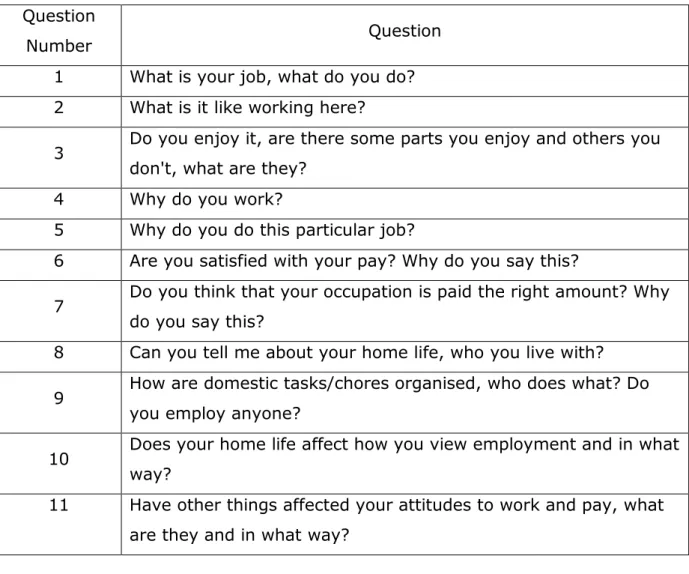
Chapter 33.1 Qualitative interview questions 107
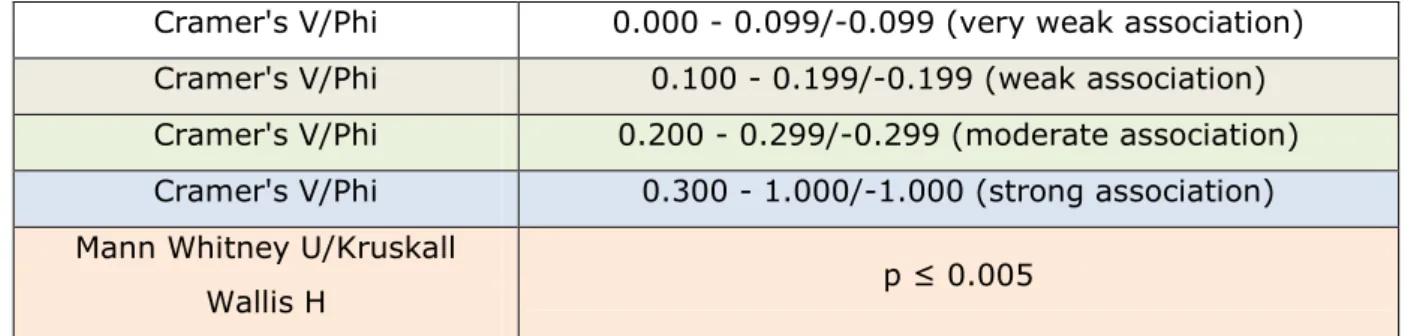
3.2 Colour coding of association/statistical significance 112
Chapter 4
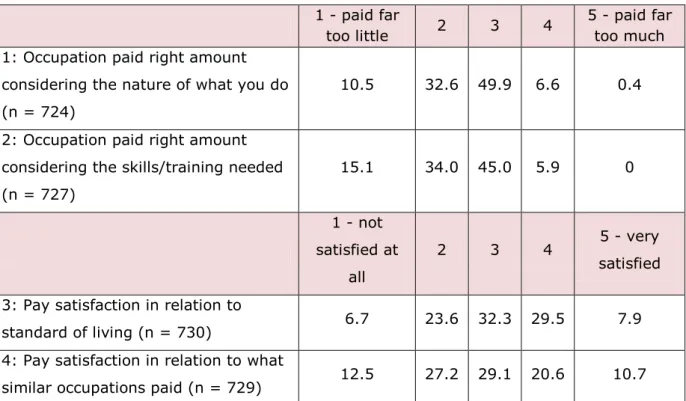
4.1 Pay satisfaction levels 123
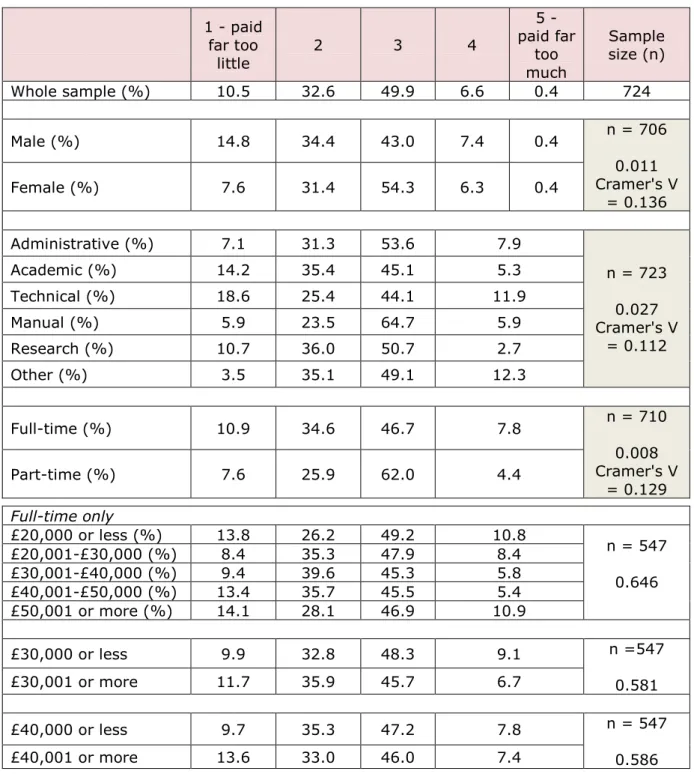
4.2 Perceptions of occupational pay considering the nature of what 127 you do by gender, occupational group, type of employment and
salary: Chi Square p values and Cramer's V
4.3 Perceptions of occupational pay considering the skills/training 128 needed by gender, occupational group, type of employment and
salary: Chi Square p values and Cramer's V
4.4 Pay satisfaction in relation to standard of living by gender, 129 occupational group, type of employment and salary: Chi Square
p values and Cramer's V
4.5 Pay satisfaction in relation to what similar occupations receive 130 by gender, occupational group, type of employment and salary:
10 type of employment and salary: Mean Ranks
4.7 Personal pay satisfaction by gender, occupational group, type 132 of employment and salary: Mean Ranks
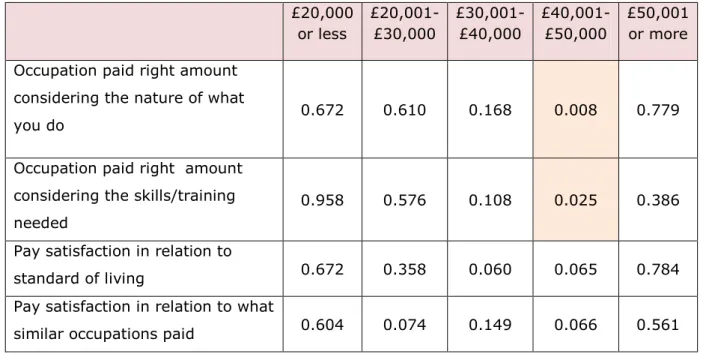
4.8 Gender by pay satisfaction amongst salary groups: Chi Square 134 p values and Cramer's V (full-time only)
4.9 Gender by pay satisfaction amongst salary groups: Mann 136
Whitney U p values (full-time only)
4.9a Gender by pay satisfaction amongst those who earn £40,001- 136 £50,000: Mean Ranks (full-time only)
4.10 Gender by pay satisfaction amongst occupational groups: 137 Chi Square p values and Cramer's V
4.11 Gender by pay satisfaction amongst occupational groups: 139 Mann Whitney U
4.11a Gender by pay satisfaction amongst administrative staff: 139 Mean Ranks
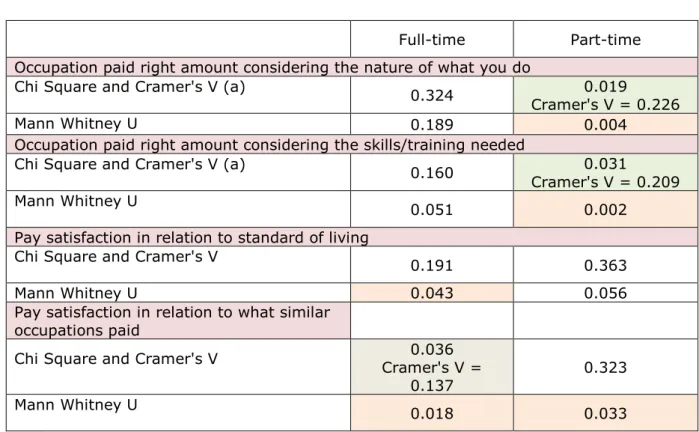
4.12 Gender by pay satisfaction amongst full-time and part-time 141 staff: Chi Square and Mann Whitney U p values, Cramer's V
4.12a Gender by pay satisfaction amongst full-time and part-time 141 staff: Mean Ranks
Chapter 5
5.1 Occupational segregation by gender, occupational group, type 152 of employment and salary group: Chi Square p values and
11 5.2 Occupational segregation by pay satisfaction: Chi Square p 153
values and Cramer's V
5.3 Occupational segregation by pay satisfaction: Mean Ranks 154
5.4 Occupational segregation by pay satisfaction amongst males 155 and females: Chi Square and Kruskall Wallis H p values,
Cramer's V
5.4a Occupational segregation and pay satisfaction amongst 156
females: Mean Ranks
5.5 Occupational segregation and pay satisfaction amongst 157
occupational groups: Kruskall Wallis H p values
5.5a Occupational segregation and pay satisfaction amongst 157
administrative staff: Mean Ranks
5.6 Control over the amount of work by gender, occupational 170 group, type of employment and salary: Chi Square p values and
Cramer's V
5.7 Control over the type of work by gender, occupational group, 171 type of employment and salary: Chi Square p values and
Cramer's V
5.8 Control over the amount of work by pay satisfaction: Chi 177 Square p values and Cramer's V
5.9 Control over the amount of work by pay satisfaction: 178
12 males and females: Chi Square and Kruskall Wallis H p values,
Cramer's V
5.10a Control over the amount of work by pay satisfaction amongst 180 females: Mean Ranks
5.11 Control over the amount of work by pay satisfaction amongst 180 those who earn above and below £30,000: Chi Square p values
and Cramer's V (full-time only)
5.12 Control over the amount of work by pay satisfaction amongst 182 salary groups: Kruskall Wallis H p values (full-time only)
5.12a Control over the amount of work by pay satisfaction amongst 182 those who earn £30,001-£40,000 and £50,001 or more:
Mean Ranks (full-time only)
5.12b Control over the amount of work by pay satisfaction amongst 183 those who earn £40,001-£50,000: Mean Ranks (full-time only)
5.13 Control over the amount of work by pay satisfaction amongst 183 occupational groups: Chi Square and Kruskall Wallis H p values,
Cramer's V
5.13a Control over the amount of work by pay satisfaction amongst 185 academics: Mean Ranks
5.14 Perceptions of occupational respect: Chi Square p values and 193 Cramer's V
13 5.16 Perception of occupational respect by pay satisfaction: Mean 195
Ranks
5.17 University worked at by control over the amount of work 203 amongst academics: Mean Ranks
Chapter 6
6.1 Do you have dependent children by gender, occupational 212
group, type of employment, breadwinner status and salary: Chi Square p values and Cramer's V
6.2 Are you the main carer of these children by gender, 213
occupational group, type of employment, breadwinner status and salary: Chi Square p values and Cramer's V
6.3 Dependent children by pay satisfaction: Chi Square p values 214 and Cramer's V
6.4 Dependent children by pay satisfaction: Mean Ranks 215
6.5 Are you the main carer of children by pay satisfaction: Chi 216 Square p values and Cramer's V
6.6 Are you the main carer of these children by pay satisfaction: 217 Mean Ranks
6.7 Dependent children/are you the main carer of children by pay 218 satisfaction amongst males and females: Chi Square and
Cramer's V, Mann Whitney U/Kruskall Wallis H p values
14 6.7b Are you the main carer of children by pay satisfaction in 219
relation to standard of living amongst women: Mean Ranks
6.8 Breadwinner status by gender, occupational group, type of 230 employment and salary: Chi Square p values and Cramer's V
6.9 Breadwinner status by pay satisfaction: Chi Square p values 231 and Cramer's V
6.10 Breadwinner status by pay satisfaction: Mean Ranks 232
6.11 Breadwinner status by pay satisfaction amongst salary groups: 232 Chi Square p values and Cramer's V (full-time only)
Chapter 7
7.1 Who works for money for essential items and money for 248
luxury items? Chi Square p values and Cramer's V/Phi
7.2 Who works for money to provide for 'myself' and for money to 249 provide for other family members? Chi Square p values and
Cramer's V/Phi
7.3 Work for money for luxury items by pay satisfaction: Chi 251 Square p values and Cramer's V
7.4 Work for money for luxury items by pay satisfaction: Mean 252 Ranks
7.5 Work for money for luxury items by pay satisfaction amongst 252 males and females: Chi Square, Mann Whitney U p values and
15 women: Mean Ranks
7.6 Who works for social aspects? Gender, occupation, type of 256 employment, salary group: Chi Square p values and Phi
7.7 Work for social aspects by pay satisfaction: Chi Square and 257 Cramer's V
7.8 Work for social aspects by pay satisfaction: Mean Ranks 258
7.9 Work for social aspects by pay satisfaction amongst males and 258 females: Chi Square, Mann Whitney U p values and Cramer's V
7.9a Work for social aspects by pay satisfaction in relation to 259 standard of living
7.10 Who works for enjoyment of the work or fulfilment/ 273
self-esteem? Gender, occupational group, type of employment, salary group: Chi Square and Cramer's V/Phi
7.11 'If you were to win the lottery would you continue with your job 274 at the university?' Gender occupational group, type of
employment, salary group: Chi Square and Cramer's V
7.12 Work for enjoyment of the work itself by pay satisfaction: 276 Chi Square and Cramer's V
7.13 Work for fulfilment or self-esteem by pay satisfaction: 277
Chi Square and Cramer's V
7.14 'If you were to win the lottery would you continue with your 278 job at the university?' by pay satisfaction: Chi Square and
16 7.15 Work for enjoyment of the work itself/fulfilment or self-esteem 279
by pay satisfaction: Mean Ranks
7.16 'If you were to win the lottery would you continue with your 279 job at the university?' by pay satisfaction: Mean Ranks
7.17 Work for enjoyment of the work itself by pay satisfaction 280 amongst males and females: Chi Square, Mann Whitney U p
values and Cramer's V
7.17a Work for enjoyment of the work by pay satisfaction amongst 281 males and females: Mean Ranks
7.18 Work for fulfilment/self-esteem by pay satisfaction amongst 282 males and females: Chi Square, Mann Whitney U p values
and Cramer's V
7.18a Work for fulfilment/self-esteem by satisfaction with pay in 283 relation to standard of living amongst males and females:
Mean Ranks
7.19 'If you were to win the lottery would you continue to work at 284 the university?' by pay satisfaction amongst males and females:
Chi Square, Mann Whitney U p values and Cramer's V
7.19a 'If you were to win the lottery would you continue to work at 285 the university?' by pay satisfaction in relation to standard of
17
LIST OF FIGURES
Chapter 44.1 Gender by perceptions of occupational pay considering the 134 nature of what you do amongst those who earn £30,001 or
more (full-time only)
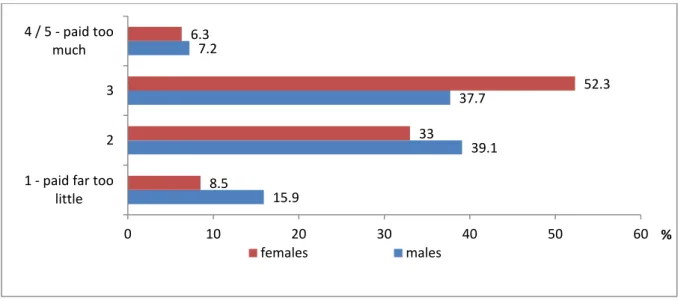
4.2 Gender by pay satisfaction in relation to what similar 134
occupations receive amongst those who earn £40,000 or less (full-time only)
4.3 Gender by perceptions of occupational pay considering the 138 skills and training needed amongst administrative staff
4.4 Gender by pay satisfaction in relation to standard of living 138 amongst administrative staff
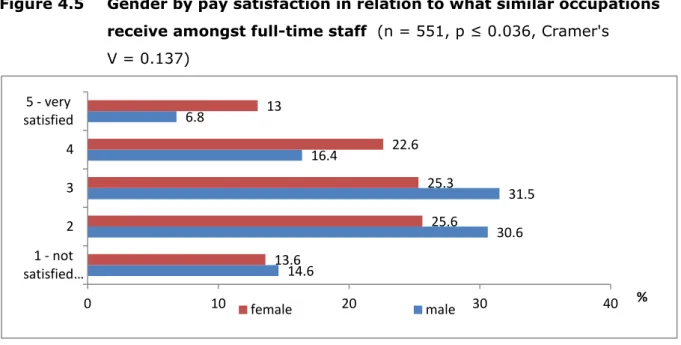
4.5 Gender by pay satisfaction in relation to what similar 142
occupations receive amongst full-time staff
4.6 Gender by perceptions of occupational pay considering the 142 nature of what you do amongst part-time staff
4.7 Gender by perceptions of occupational pay considering the 142 skills and training needed amongst part-time staff
Chapter 5
5.1 Occupational segregation by perceptions of occupational pay 155 considering the skills and training needed amongst women
5.2 Occupational segregation by pay satisfaction in relation to 156 what similar occupations receive amongst women
18 occupational pay considering the nature of what you do amongst
women
5.4 Control over the amount of work by perceptions of 181
occupational pay considering the nature of what you do amongst those who earn £30,001 or more (full-time only)
5.5 Control over the amount of work by pay satisfaction in relation 181 to standard of living amongst those who earn £30,001 or more
(full-time only)
5.6 Control over the amount of work by pay satisfaction in relation 181 to what similar occupations receive amongst those who earn
£30,001 or more (full-time only)
5.7 Control over the amount of work by perceptions of occupational 184 pay considering the nature of what you do amongst
administrative staff
5.8 Control over the amount of work by pay satisfaction in relation 184 to standard of living amongst academics
Chapter 6
6.1 Dependent children by pay satisfaction in relation to standard 218 of living amongst women
6.2 Breadwinner status by perceptions of occupational pay 233
considering the nature of what you do amongst those who earn £30,001 or more (full-time only)
19
6.3 Breadwinner status by perceptions of occupational pay 233
considering the skills/training needed amongst those who earn £30,001 or more (full-time only)
6.4 Breadwinner status by perceptions of occupational pay 233
considering the nature of what you do amongst those who earn £40,000 or less (full-time only)
6.5 Breadwinner status by perceptions of occupational pay 234
considering the skills/training needed amongst those who earn £40,001 or more (full-time only)
6.6 Breadwinner status by pay satisfaction in relation to what 234 similar occupations receive amongst those who earn £40,001
or more (full-time only)
Chapter 7
7.1 Work for money for luxury items by perceptions of 253
occupational pay considering the skills/training need amongst women
7.2 Work for money for luxury items by pay satisfaction in relation 254 to standard of living amongst women
7.3 Work for money for luxury items by pay satisfaction in relation 254 to what similar occupations receive amongst women
7.4 Work for social aspects by pay satisfaction in relation to 259 standard of living amongst men
20 occupational pay considering the nature of what you do amongst
men
7.6 Work for enjoyment of the work itself by perceptions of 281 occupational pay considering the skills/training needed amongst
women
7.7 Work for fulfilment/self-esteem by perceptions of 282
occupational pay considering the nature of what you do amongst men
7.8 Work for fulfilment/self-esteem by pay satisfaction in relation 283 to standard of living amongst men
7.9 Work for fulfilment/self-esteem by pay satisfaction in relation 283 to standard of living amongst women
7.10 'If you were to win the lottery would you continue to work at 284 the university?' by pay satisfaction in relation to standard of
living amongst males
7.11 'If you were to win the lottery would you continue to work at 285 the university?' by pay satisfaction in relation to standard of
21
ACKNOWLEGEMENTS
I would like to thank my supervisor, Dr. Zoe Irving for her support, advice and faith in me, for which I am infinitely grateful. Also thanks to Dr. Caz Snell for additional support.
Thank you to Ash and Arran for being fabulous.
Thank you to the 731 people who completed my survey and the twenty two people who were interviewed for this research study.
22
Appendix 1 Survey questionnaire 346
Appendix 2 University pay and the gender pay gap 358
Appendix 3 Universities in the UK and the participating 361
universities
Appendix 4 Information sheets and interview consent form 366
Appendix 5 Survey profile 369
Appendix 6 Interviewee profiles 373
Appendix 7 University worked at and pay satisfaction 395
Appendix 8 Household chores and pay satisfaction 405
Appendix 9 Breadwinner role and pay satisfaction 410
23
DECLARATION
I declare that this thesis is a presentation of original work and I am the sole author. This work has not previously been presented for an award at this, or any other, University. All sources are acknowledged as references.
24
CHAPTER 1 INTRODUCTION
1.1 Gender, work and pay: an historical overview
Historically, a division of labour between men and women has been almost universal, although the exact nature of this division has changed and developed over time. In pre-industrial economies in Western societies, the household functioned as a unit of production and women, men and children all contributed towards the financial well being of the household. Tasks were separated on the basis of age or gender, but there was no separation between the home and workplace (Wharton, 2012). With the advent of the industrial revolution, the development of factory production brought an exodus from rural areas to the towns and cities and at the same time, waged work, rather than household production, became the locus of economic activity (Grint and Nixon, 2015). This structural change in the labour market was accompanied by a rise in an ideology which purported that there were natural differences between men and women, resulting in men being naturally suited to the role of household financial provider (Crompton, 1997), whilst women were ideally suited to domestic duties (Grant and Nixon, 2015) and too mentally fragile for activities outside of the home (Perkins Gilmore, 2017 [1892]). However, for working class women, factory jobs were a source of income and often whole families were employed, albeit with a single, all inclusive, wage paid to the father or head of household (Wharton, 2012).
After the First World War, it became even more uncommon for married women to have paid work due, in part, to the decline in job opportunities in domestic service coupled with legislation which excluded women from some forms of manufacturing work (Crompton, 1997). However, subsequent changes and developments in the labour market such as the decline in traditional manufacturing (Giddens and Sutton, 2013) and a rise in white collar employment (Lewis, 1984) challenged this ideology and altered these employment trends. In the United Kingdom, by the 1970's, over half of women aged 16-64 were in paid employment (Office for National Statistics, 2018) and the Equal Pay Act of 1970 coupled with the Sex Discrimination and Employment Protection Acts of 1975 made it illegal to treat women less favourably with regard to pay, promoted equality of outcome, made it unlawful to dismiss a
25 woman because of pregnancy and introduced statutory maternity provision. However, in spite of these developments, public opinion remained, at least partially committed to the male breadwinner ideology and the belief that women's maternal and domestic roles should take priority over her working life. For example, in 1984, 64% of the public believed that a mother should stay at home when there is a pre-school child (Park et al., 2013). At the same time, in spite of the Equal Pay Act, inequality in pay, driven by both horizontal and vertical gendered occupational segregation, still existed. Even by 1997, the difference between the hourly full time earnings of men and women, as a proportion of men's earnings was still 17.4% (Office for National Statistics, 2017d).
1.2 The 'paradox of the contented female worker'
It was into this wider context of social change and persisting inequality that scholarly interest into women's apparently 'paradoxical' patterns of pay satisfaction emerged in the 1980s (discussed in detail in sections 2.2-2.9). The 'paradox of the contented female worker' was noted and named by social psychologist Faye Crosby (1982) and refers to women's relatively high work and pay satisfaction in spite of the fact that, in general, they are paid less than men. Researchers from the academic disciplines of Economics, Management Studies and Psychology pursued the exploration of this idea and subsequently, working in a positivist tradition collected and/or analysed quantitative data in order to measure the extent of the paradox. The results of these studies often suggested that women have greater, or at least equal, work and pay satisfaction to that of men (for example, Phelan, 1994; Clark, 1997; Buchanan, 2005). However, there is also evidence to suggest that the paradox is more likely to occur in lower paid occupations (Varca et al., 1983; Graham and Welbourne, 1999; Smith, 2009). A number of explanations have been put forward to explain this phenomenon. It has been suggested that women have lower 'input' into work resulting in them perceiving lower pay as equitable (Major and Konar, 1984) or that women tend to compare their pay to other similarly low paid women rather than more highly paid men (Crosby, 1982; Zanna, Crosby and Lowenstein, 1987; Buchanan, 2005), a tendency which is further amplified by gendered occupational segregation (Bylsma and Major,1992; Phelan, 1994). It has also been suggested
26 that women have lower expectations than men and therefore, that they are more easily satisfied (Phelan, 1994). Alternatively, it has been suggested that women do not value money as much as men (Phelan, 1994) either because they seek flexible, rather than highly paid, work (Bender et al., 2005) or because they are more likely to be secondary breadwinners (de Vaus and McAllister, 1991). However, empirical evidence for these explanations has not been convincing (Phelan, 1994; Mueller and Wallace, 1996; Buchanan, 2005). Additionally, research interest into the 'paradox of the contented female worker' has declined since the early 1990s, possibly because it is believed that steady, linear and unequivocal progress towards equal pay is being achieved (Clark, 1997; Williams et al., 2006) and thus, this 'paradox' will soon no longer exist. However, this optimism is perhaps misplaced. Although there are less studies of the gender pay paradox in the contemporary setting than there were thirty years ago, the evidence suggests that it does still exist (Davison, 2014; Khoreva and Tenhiälä, 2016). In addition, as discussed in detail in section 2.10, although there is clearly evidence of increasing equality, there is also evidence of continuing inequality. For example, in spite of the fact that there is a long term trend of an increasing number of women in paid employment (Crompton, 1997) and a liberalisation of social attitudes (Park et al., 2013), evidence suggests that the gender earnings gap (the difference between average hourly full-time earnings of male and female employees, as a proportion of men's earnings) is persisting (Office for National Statistics, 2017d). There is also evidence that middle class women have achieved greater equality than working class women (Perfect, 2012; Lanning et al., 2013). In addition, this inequality at work is mirrored by the persistence of inequality within the home, with women still undertaking the majority of childcare (Mencarini and Sironi, 2012; Park et al., 2013). As a consequence, women are more likely to work part-time than men and to divide their time between unpaid domestic work and paid work (Sands, 2013).
As well as the continued existence of the gender pay paradox and persisting gender inequality at work and in the home, there are further reasons why a new study of this gender pay paradox might be desirable. In particular, as shown in sections 2.2-2.9, the paradox appears to have been subjected to a gendered conceptualisation, because it is perceived of as an issue that affects women, but
27 not men. Furthermore, women's satisfaction is considered paradoxical in comparison to men's 'normal' dissatisfaction. This would appear to be a reflection of a dominant gendered discourse that positions women as irrational, governed by their emotions and not conversant with the material world. Men, on the other hand, are considered at ease in the material and public world and also in possession of scientific rationality (Ramazanoglu and Holland, 2010). Implicit within this body of research, is also the suggestion that the paradox is caused by women's own behaviour; be that their level of input, their choice of pay referent, their expectations or their 'values'. There is also the implication that if women were to change their behaviour, then the gender pay paradox would not exist. Women's perceptions or behaviour are thus, regarded as flawed whilst men's behaviour is not considered worthy of consideration or explanation. This way of conceptualising the paradox has not only neglected men but has also resulted in the potential impact of the workplace itself and wider patterns of gendered inequality being overlooked.
Furthermore, this narrow focus has been exacerbated by a top down quantitative approach which has denied research participants the opportunity to challenge the narrative that the gender pay paradox is the consequence of women's behaviour. Nor have research participants been given the opportunity to explain and describe how evaluations of pay satisfaction are actually made. Statistics have been collected and analysed but the views of the participants themselves have not been considered important to understanding the paradox. Feminist researchers have noted that such quantitative approaches tend to impose interpretations upon participants (Yeatman, 1994) and neglect the perceptions of those who are being researched (Reinharz, 1992). Furthermore within the quantitative approach, it has also been assumed that the gender pay paradox can be studied effectively with either a single concept of satisfaction (Clark 1997; Smith 2009) or with a range of questions that have been subsequently combined into an 'overall' category (Oshagbemi, 1997; Young, 1999). It has not been considered that different dimensions of pay satisfaction may not all produce evidence of the gender pay paradox and that this might be significant to understanding this phenomenon.
Thus, evidence for the contemporary existence of the gender pay paradox, persisting gender inequality at work and home, coupled with the problematic
28 approach of previous researchers, all suggests that a new study of the gender pay paradox is needed. Furthermore a new study, undertaken with an alternative methodology could potentially provide new insight into a paradox which has hitherto not been satisfactorily explained.
1.3 An alternative approach to the study of the gender pay paradox
The shortcomings of previous research identified above suggested little merit in replicating the same approach as previous scholars. Therefore, the research reported in this thesis, as well as examining the home lives of research participants, also considered the potential impact of the workplace upon pay satisfaction. Additionally, this research adopted a different ontological and methodological approach to that utilised by previous researchers.
First of all, it was necessary to ensure that this new study was not unnecessarily focussed on the behaviour of women. Therefore, the literature review was not confined to paradox research but also included theory and research on attitudes and orientation to work more generally. This review suggested that pay satisfaction might be formed equally in the workplace and outside of it (discussed in section 2.11). In addition, recent changes in work, and in particular the growth of insecure employment is arguably changing attitudes to work and pay (section 2.13). Additionally, by examining literature on women's orientations to work, it was clear that discussion of women's attitudes to work and pay should not be dominated by women's maternal and domestic role (section 2.12).
Secondly, the literature review suggested that a social constructionist approach could potentially provide new insights to a study of pay satisfaction. Previous gender pay paradox research has been based in objectivist ontology and positivist epistemology, whereby social phenomena are considered to be external to human beings and beyond their reach or influence. Paradox researchers have thus, tended to rely on quantitative and statistical methods because this is an approach that is useful for measuring the extent of a phenomenon and testing for evidence that either supports or disputes hypotheses (Dahlberg and McCaig, 2010). Social constructionism, as discussed in section 2.14, is an ontological position which argues that social phenomena are constructed by human action (Crotty, 1998) and thus 'reality' is continuously
29 under revision. From this perspective, gender (discussed in detail in section 2.15) cannot simply be viewed as a straightforward means of dividing a population into two groups who are self evidently 'different' from each other (Stacey and Thorne, 1985). Instead, gender is a social construct that defines men and women as oppositional and binary (Ridgeway, 2011). Gender is fluid, changeable and an ongoing and provisional process whereby masculinity and femininity are constructed, reproduced and acted out on a daily basis (West and Zimmerman, 1987; Butler, 1990). Conceptualising gender as an ongoing social construction, is a helpful approach because it enables, not only measurement of differences in levels of pay satisfaction, but also an understanding of how gender might influence pay satisfaction.
A social constructionist approach is also a helpful way of understanding pay levels for different types of work. In section 2.16, it is argued that pay levels for particular jobs are not 'neutral' facts, nor are they a reflection of the intrinsic worth or value of any particular job but instead are related to the social construction of gender. Some jobs are understood to require 'feminine' skills whilst other jobs are seen to require 'masculine' skills. Pay levels tend to reflect this and those jobs which require 'feminine' skills are generally paid less than those that are understood to need 'masculine' skills (Acker, 1990). Furthermore, beliefs about the value of different types of work may be considered a 'doxa,' which is a social construct that has become naturalised and 'self-evidently' true (Bourdieu, 1995 [1972]). This 'doxa' may encourage those on low pay to feel that their own pay, although low, is appropriate to the work that they do and thus 'satisfactory'.
Adopting a social constructionist approach led to the development of a mixed method research methodology. This approach enabled the collection of 'measurable' pay satisfaction data but also aided understanding of how and why individuals make particular evaluations of pay satisfaction.
1.4 Research questions and research methods
The review and critique of paradox literature generated five research questions. In one sense, these research questions were similar to those asked by previous researchers because they sought to ascertain the extent of the gender pay paradox and whether there was support for previous explanations. However,
30 unlike previous research, the questions aimed to ascertain if the paradox existed when participants were asked about their pay satisfaction in different ways. Additionally, rather than merely focussing on seeking evidence for previous explanations, this research was also open to the possibility of finding new explanations. From the outset, it should be clear that, although previous paradox research has sometimes blurred the boundaries between pay and work satisfaction, this research is focussed on pay satisfaction alone.
The research questions which form the basis of this thesis are as follows; 1. Is there current evidence for the gender pay paradox?
2. Is this evidence (or lack of it) consistent for different dimensions of pay satisfaction?
3. Is this evidence (or lack of it) consistent across occupational groups, salary groups and part-time/full-time employees?
4: If the paradox still exists, is there evidence to support the theories that have been proposed?
5: Is there evidence to suggest alternative explanations for gender differences in pay satisfaction?
A mixed method approach, comprising a survey and follow up qualitative interviews, was developed. A major advantage of this approach was that it provided tools that could potentially challenge the assumption that the gender pay paradox can be understood with the use of a one dimensional measure of pay satisfaction. The inclusion of qualitative research aimed to capture the subjective and nuanced nature of pay satisfaction (Freeman, 1978) but the issue was also addressed directly within the survey itself. As explained in section 3.5, a range of pay satisfaction questions were asked and analysed separately. These questions focussed not only on personal pay satisfaction but also perceptions of the level of occupational pay and in due course, proved to be of great significance to understanding the gender pay paradox.
This approach also enabled open-minded enquiry that was not unnecessarily focussed on women. This included 'bottom up' methods that were sympathetic to feminism (Reinharz, 1992; Yeatman, 1994) and gave a voice to research participants. In addition, it was not assumed that women are the 'cause' of the paradox or that they should be the main focus of efforts to explain it. As
31 discussed in section 3.3, men and women were asked the same questions in both the survey and interviews. In addition (section 3.9), quantitative pay satisfaction data was routinely analysed in relation to other variables including occupational group, salary and type of employment (whether they worked part-time or full-part-time). All issues raised by the qualitative interviewees were included in the analysis, whether or not they specifically related to gender (as explained in section 3.11). Furthermore, this approach was underscored by referring to the 'gender pay paradox' rather than the 'paradox of the contented female worker'. The latter terminology was avoided because it neglects men and also carries implications of women's irrationality and unsuitability for the paid labour market. Previous paradox researchers have tended to use regression techniques in order to predict the determinants of pay satisfaction, however this research did not adopt this analytical approach. Regression techniques imply a level of certainty which does not fit well with social constructionism. Therefore a range of descriptive statistics including frequencies, Chi Square, Phi/Cramer's V and Mann Whitney U/Kruskall Wallis H were used (discussed in greater detail in section 3.9). The qualitative interviews were analysed both thematically and using a 'narrative' approach, the latter of which suggests that pay satisfaction and all aspects of a person's life need to be viewed holistically (discussed in section 3.11). This approach drew upon the work of Riceour (1991) and Lawler (2002) who argued that people use narratives to interpret and understand the world. These narratives link events together in a way that make sense to individuals, provide a 'plotline' through their lives and subsequently helped the researcher to understand how individuals make pay satisfaction evaluations.
Finally, the research was undertaken with staff working at two universities in the United Kingdom. As discussed in further detail in section 3.4, universities were considered appropriate for a study of the gender pay paradox because they employ a wide range of people in a variety of occupations making it relatively easy to make comparisons between different occupational groups as well as between the genders. In total, 731 survey questionnaires were completed and 22 follow up in-depth qualitative interviews were conducted with a range of staff including academic, administrative, technical, manual and research staff.
32
1.5 Summary of main findings
The findings suggested that women, as a whole, are often more satisfied with their pay than men. However, these 'paradoxical' patterns were also observed amongst low paid employees in general, irrespective of gender. Furthermore, paradoxical patterns of satisfaction were not consistent across different measures of pay satisfaction. They were apparent when satisfaction was conceptualised in relation to perceptions of 'appropriate' pay for an occupation but not when satisfaction was conceptualised in relation to material need. Furthermore, beliefs regarding how much different occupations should be paid were influential upon evaluations of pay satisfaction.
The research findings also suggested that the level of autonomy experienced at work could also help to explain low satisfaction amongst the more highly paid. In particular, a lack of control over the amount of work amongst academics was associated with pay dissatisfaction. Furthermore, the high workload of academics was observed by those in lower paid jobs and encouraged them to think that their own pay was reasonable, given their lighter workload.
There was no support found for previous explanations of the paradox. In particular, there was no evidence to suggest that women's high satisfaction was linked to their 'input', their choice of pay referents, their 'expectations' or the degree to which they valued money. Indeed, the findings of the research challenge the suggestion that there is a gender pay paradox at all. Instead, the evidence suggests that patterns of satisfaction are influenced by occupational and salary group to a greater degree than they are by gender. However, gendered occupational segregation makes 'paradoxically' high satisfaction appear to be a feature of women's employment.
The data collected in this research is presented in four empirical chapters. Chapter four presents data on the levels and patterns of pay satisfaction and chapter five discusses the relationship between the workplace and pay satisfaction. Chapter six considers the home lives of the research participants and the relationship that this has with pay satisfaction whilst chapter six examines the work orientations of participants. However, before the findings of this research are presented, chapter two provides full details of the literature
33 review and chapter three gives more information regarding the methodological approach.
34
CHAPTER 2 LITERATURE REVIEW
2.1 Introduction: What is pay satisfaction?
This literature review presents a description and critique of the gender pay paradox research (sections 2.2-2.9), arguing that there are problems with the way that this body of research has been conceptualised and conducted. It also argues that, although gender inequality has decreased, it has not been eradicated and therefore a contemporary study of the gender pay paradox is still relevant (section 2.10). The subsequent sections of this literature review consider relevant research and theory from a wider range of sources than previous gender pay paradox studies have utilised. It is argued that a study of the gender pay paradox must be contextualised into knowledge of wider attitudes and orientations to work. Thus, as well as considering the home lives of research participants, research in this area must examine the role that the workplace plays in forming pay satisfaction (sections 2.11-2.13). Finally, this chapter presents an ontological approach to the study of the gender pay paradox that has the potential to avoid the problems of previous research in this area and to simultaneously offer new insight (sections 2.14- 2.17). It is argued that a social constructionist approach provides a way of understanding gender that will aid understanding of how evaluations of pay satisfaction are made. At the same time, it will also enable understanding of why some occupations are paid more than others and how this might relate to pay satisfaction.
However, before considering the gender pay paradox literature in detail, it is of value to consider the assumption implicit within the study of 'paradoxical' patterns of satisfaction, that women, or indeed anyone who earns less money than others, should be less satisfied. This assumption relies upon the standard utilitarian belief that 'utility' (the degree of satisfaction or discomfort) increases commensurate with pay and decreases if hours of work increase (Jones and Sloane, 2007). In this utilitarian scenario, there is no room for variation between individuals concerning how much money is desired. However, evidence clearly suggests that there are variations because employees who receive the same level of compensation as each other will not necessarily have the same level of pay satisfaction (Shaw et al., 1999). Furthermore, higher pay does not automatically equate with higher pay satisfaction (Judge et al., 2010). Therefore
35
perceptions of pay, rather than just the amount of pay are important and a more nuanced consideration of pay satisfaction is required.
A useful way to think about pay satisfaction involves the idea of discrepancy. Lawler (1971, 1981) saw pay satisfaction as the discrepancy between how much a person thinks they should receive and how much they actually receive. Thus for example, if a person's perception of how much they think they should receive is greater than the amount they actually receive, then dissatisfaction will result. Lawler argued that pay satisfaction is a function of both a person's perceived job 'inputs' and the characteristics of the job. Thus, satisfaction is linked with ideas of 'fairness' and may also arise from comparing one's work and pay with other individuals. Another useful way to think of pay satisfaction is to consider whether there are differences in the amount of money that different people 'need'. Arguably, some individuals may 'need' more money than others, thus for example those with a greater number of dependents may need more than others (Jasso and Rossi, 1977; Alves and Rossi, 1978). Indeed, in the first half of the twentieth century, men were often paid a 'family' wage, an arrangement supported by both employers and trade unions (Lurie, 2016). A third way of considering pay satisfaction is by making use of the concept of relative deprivation. This approach suggests that people's dissatisfactions are not merely the outcome of absolute conditions. Instead, dissatisfaction depends upon with whom comparisons are made (Crosby, 1982).
As well as thinking about pay satisfaction in terms of perceptions of discrepancy, need or relative deprivation, scholars of satisfaction have also argued that pay satisfaction must be measured as a multi-dimensional phenomenon. Thus, researchers have developed standardised questionnaires in order to specifically measure a number of aspects of pay, which can then be combined to produce an 'overall' score of pay satisfaction. For example, the Heneman and Schwab (1985) approach measures satisfaction with four different aspects of pay; pay level, benefits, pay raises and pay structure/administration at their place of work by asking participants how satisfied they are with a range of pay related issues. Thus, the financial reward itself is broken down into a number of different components. An alternative questionnaire, the Job Description Index (Bowling Green State University, 2009) gives less attention to the details of what pay actually comprises and instead grants more attention to perceptions and
36 understandings of what satisfaction is. For example, it asks participants to agree or disagree with a range of statements on pay including; 'fair,' 'barely live on income,' 'bad,' 'comfortable' and 'less than I deserve'.
Thus, pay satisfaction is a far more complex issue than is implied by the utilitarian suggestion that women, or indeed any group of people with low pay,
should be more dissatisfied than others. However, in spite of this, a body of work, mainly undertaken in the 1980s and 1990s argued that women have 'paradoxical' patterns of satisfaction because they earn less than men, but have greater or equal levels of pay satisfaction. The following two sections describe the research evidence for the gender pay paradox and argue that the phenomenon has been inaccurately conceptualised as an issue indicative of women's 'paradoxical' satisfaction. Furthermore, it is also argued that the research is flawed because differences between men's and women's satisfaction levels are generally ascertained using only one measure of pay satisfaction.
2.2 Evidence for the 'paradox of the contented female worker'
The 'paradox of the contented female worker' was noted and named by social psychologist, Faye Crosby. In her study (Crosby, 1982), she conducted over 400 interviews with working women, working men and housewives living in one affluent suburb in the USA. Examining the discrepancy between the outcomes desired and received, comparison with others, past experience, future expectations and sense of entitlement, Crosby observed that women are either equally or more satisfied with their pay and jobs than men. This satisfaction amongst her sample was apparent in spite of the fact that, in general, women experience poorer pay and lower levels of authority than men.
Although Crosby coined the phrase 'the paradox of the contented female worker,' she wasn't the first scholar to actually note the difference between men's and women's job satisfaction. Conducting multivariate analysis of survey data from approximately 400 public sector employees in the USA, Sauser and York (1978) suggested that although there were differences in the work satisfaction levels of men and women, there were also links with education, age and pay grade. However, the idea that women's satisfaction levels were at odds with the realities of their employment aroused significant interest, particularly in the academic disciplines of Psychology, Economics and Management Studies.
37 Subsequently, a number of studies in the 1980s and 1990s followed which statistically measured the levels of work and/or pay satisfaction of both men and women. Others sought to theorise and test explanations for the paradox. This scholarly work has often argued that satisfaction is a 'useful' outcome for businesses and corporate interests (Loscocco and Spitze, 1991; Oshagbemi, 2000; Nguyen et al., 2003) that will decrease absenteeism and turnover whilst boosting production (Mueller and Kim, 2008). At other times, the research has suggested that, if gender pay inequality is to be eradicated, it is important to understand, why the pay paradox occurs. For example, Jo Phelan, referencing Karl Marx's belief that recognition of inequality is important before change can occur, argued that 'It is important to know whether women accept their inferior status in the workplace, and if so, why' (Phelan, 1994 p.95). Although the majority of studies have been conducted in the United Kingdom or the USA, evidence for the paradox has also been found in Kenya (Mulinger and Mueller, 1998), China (Loscocco and Bose, 1998) and Kuwait (Mettle, 2001).
However, evidence for the paradox is not always found (for example, Westover, 2012). Furthermore, evidence is often found amongst lower paid groups of women but not amongst others (for example, Varca et al., 1983; Welbourne et al., 1999; Smith, 2009). The confusion is not helped by a blurring of the difference between 'work' and 'pay' satisfaction. Scholars have examined both the generic subject of job satisfaction, of which pay satisfaction is a part (for example, Bender et al., 2005) and pay satisfaction by itself (for example, Young, 1999). Both areas of research refer to 'the paradox of the contented female worker'. Additionally, a significant feature of paradox research is that scholars have tended to work within a positivist tradition and have either collected their own quantitative data (for example Crosby, 1982; Phelan, 1994) or else have undertaken secondary statistical analysis of large scale national data sets (for example, Clark, 1997). With the exception of the original Crosby study (1982), the use of qualitative approaches has largely been eschewed whilst the research findings have mostly been presented in short articles or papers with little critical discussion of the wider context of inequality.
The following six research studies have all found evidence of the gender pay paradox. Firstly, Phelan's (1994) study of approximately 2000 employees from one multinational company, all working in the North East of the USA found
38 evidence that, although women's salaries were lower than men's, their levels of satisfaction were not. Secondly, from an analysis of British Household Panel Survey data, Clark (1997) suggested that women are more satisfied than men with most aspects of work, including pay. Similarly, analysis of data from the 1986 Social and Economic Life Initiative Household Survey in the UK, examined perceptions of whether people felt themselves to be underpaid, over paid or paid equitably. The conclusions indicated that men were more likely to feel that they were underpaid (Sloane and Williams, 2000). A fourth study of 615 'financial officers' in one public school area of the USA, suggested that whilst underpaid male employees were aware and sensitive about their low pay, the same was not true of female employees (Young, 1999). Finally, Bender et al. (2005) examined data from the National Study of the Changing Workforce in the USA and found that women expressed greater job satisfaction than men.
However, in other studies, researchers have presented inconclusive results. For example, an analysis of data from the USA International Social Survey Program, found the connection between gender and job satisfaction to be statistically insignificant (Westover, 2012). Furthermore, a meta analysis of 203 job satisfaction studies from the past 35 years concluded that the discrepancy in pay satisfaction between men and women was less significant than between whites and minority ethnic groups (Williams et al., 2006).
There is also evidence to suggest that the paradox is not uniformly distributed across all groups of women. In particular, there are variations by occupation and/or income groups. For example, research with almost 400 graduates in the USA, five years after leaving college, suggested that lower paid women were more satisfied with their pay than lower paid men, although the reverse was true amongst higher paid individuals (Varca et al., 1983). Analysis of a more recent staff satisfaction survey at a UK university found evidence of the pay paradox amongst administrative staff but not amongst academics (Smith, 2009). Finally, a study of 260 participants from two companies in the USA, before and after traditional pay scales were abolished in favour of a 'gainsharing' system, found evidence of the gender pay paradox before the change to the new system, but this was predominantly amongst women working in low paid occupations (Graham and Welbourne, 1999). Indeed, occupational grade in itself has been linked to variations in pay satisfaction, although again, the results are not
39 consistent. For example, analysis of the British Household Panel Survey suggested those who earned above two thirds of the median wage had lower overall job satisfaction but higher pay satisfaction than others (Leontaridi and Sloane, 2003). The British Household Panel Survey was again examined in 2007 and researchers found that that lower paid staff had higher work satisfaction but, again lower pay satisfaction (Jones and Sloane, 2007). Conversely, analysis of the European Household Panel Survey suggested lower overall job satisfaction amongst lower paid workers (Diaz-Serrano and Cabral Vieira, 2005). Finally, a meta analysis of 86 studies, examining whether pay level was associated with pay satisfaction, suggested that those with higher pay do not necessarily have higher pay satisfaction (Judge et al., 2010).
There has also been research on the influence of gendered occupational segregation on pay satisfaction although the evidence is, again, inconsistent. Analysis of data from the National Study of the Changing Workforce in the USA, suggested that those who work in female dominated industries are more likely to express greater overall work satisfaction (Bender et al., 2005). Similarly, a study of approximately 3500 factory workers in the USA suggested that women who work in female dominated environments are more satisfied with their pay than those who work in mixed gender settings (Loscocco and Spitze, 1991). However, recent research in Australia suggested that although women who worked in 'feminised' occupations reported high levels of enjoyment, they were more dissatisfied with their pay than women who worked elsewhere (Dockery and Buchler, 2015).
Finally, part-time employment is more likely to be a feature of women's employment than men's (Sands, 2013) and it has been suggested that women who work part-time have a lower commitment to work, are prioritising their home lives and thus are easily satisfied with their jobs (Hakim, 1991). However, when hours of work were analysed by researchers to see if they were connected to the paradox, evidence suggested that they were not (Phelan, 1994; Mueller and Wallace, 1996; Buchanan, 2005). In addition, there is mixed evidence regarding the impact of working part-time upon the satisfaction of both men and women. A survey of almost 500 employees working as salespeople (Wotruba, 1990) and a survey of approximately 5000 employees working in a variety of occupations in the retail sector (Martin and Sinclair, 1997) both found greater
40 job satisfaction amongst part-time employees. However, a study of 8500 hospital workers found that part-time workers were less satisfied with their pay than full-time workers (Steffy and Jones, 1990). Overall, it is unclear whether the paradox occurs more frequently amongst part-time staff, perhaps because part-time workers are not heterogeneous (Tilly, 1991, 1996) and include household 'supplementers', students, 'moonlighters' (those that have more than one job) and those who are the primary earner (Martin and Sinclair, 2007). Additionally, there is a fluidity and movement between full-time and part-time groups (Steffy and Jones, 1990).
Although, the evidence for the gender pay paradox is occasionally contradictory and imprecise in how pay and work satisfaction are conceptualised and defined, there are some conclusions that can be drawn. Clearly, when women are taken as a group and their pay satisfaction is compared to men, there is often evidence of them being equally or more satisfied with their pay than men. The evidence would also suggest that this is more likely to occur amongst those working in lower paid occupations. On the other hand, the evidence concerning occupational segregation and part-time working is less clear. Taken as a whole, the evidence raises an important question; given that women are more likely than men to be working in low paid jobs (Sands, 2013), why has there been so much focus on women rather than inequality within the labour market? Indeed, the evidence does not inarguably suggest that the paradox is an issue of gender alone, suggesting that there are a number of deficiencies in paradox research which need to be addressed.
2.3 Critique of the evidence: Constructing a narrative of women as the cause of the paradox
Given that the focus on women has not been driven by the evidence available, it is possible that the ontological and methodological approaches adopted by paradox researchers have hindered their ability to critically assess whether gender is central to so-called 'paradoxical' patterns of pay satisfaction. On the whole, paradox research has tended to adopt a positivist approach; data is collected, analysed, hypotheses tested and the results are presented. However, there has been little critical discussion of several key areas, such as the nature of gender, why some occupations are dominated by women or why some
41 occupations are paid more than others, all of which need to be critically considered to ensure that researcher assumptions do not influence research design, analysis or conclusions. To a degree, these topics are absent from paradox studies because they are not part of the everyday discourse of the academic disciplines within which this research has developed. However, this omission has had consequences for the quality of the research. In particular, it has resulted in dominant gendered discourse being uncritically reflected in the gender pay paradox research. This is clearly apparent in the way that this subject area was named as 'The paradox of the contented female worker'. This naming has, by default, defined women as paradoxical and illogical whilst the behaviour of men, which is no more or less 'paradoxical' than women's, is not questioned. Positioning men in the normative position and women as the anomaly in academic literature is not unusual (Feldberg and Glenn, 1970) and is most probably linked to 'common sense' beliefs about male and female roles in the family (Crompton, 1997) and the enlightenment belief that men possess scientific rationality whilst women are governed by their emotions (Ramazanoglu and Holland, 2010). This flaw is not unique to paradox research and positivism has often been criticised for both transmitting and reinforcing gender inequality (Harding, 1986) and reproducing dominant discourses (Jayaratne, 1993; Webb et al., 2008). It is also recognised that both 'whiteness' and 'maleness' are dominant in academia and exert considerable influence over the formation of knowledge (Burton, 2015).
Secondly, scholars have argued that pay satisfaction is multi-dimensional and some have developed standardised questionnaires for measuring a range of dimensions of satisfaction. For example, the Heneman and Schwab approach uses the idea that pay satisfaction comprises of a four different components of pay (Heneman and Schwab, 1985) and the Job Descriptive Index asks participants to agree or disagree with a range of statements about pay (Bowling Green State University, 2009). These approaches have been used by some scholars of the gender pay paradox, for example Graham and Welbourne (1999) used the Heneman Schwab approach whilst Young (1999) and Oshagbemi (1997) both used the Job Description Index. However, the gender pay paradox has been measured using one 'overall' level of satisfaction which is achieved by combining these multiple variables. Alternatively, other scholars have used only